 Shop My Favorite Non-Toxic Gifts Of 2026!
SKL is reader supported. When you buy through links on our site, we may earn affiliate commission. Learn more here.
On the hunt for truly non-toxic rain boots made with safer materials like natural rubber or PVC-free alternatives? Then you are in the right place!
I’ll be honest — rain boots weren’t something I used to think twice about. They felt like one of those “grab whatever works” purchases.
But once I started looking more closely at the materials, I realized just how many conventional rain boots are made with PVC and plasticizers that don’t exactly align with a lower-tox lifestyle.
The tricky part is that most brands don’t make this obvious. You’ll see terms like “waterproof” or “durable rubber,” but very little transparency about what’s actually being used.
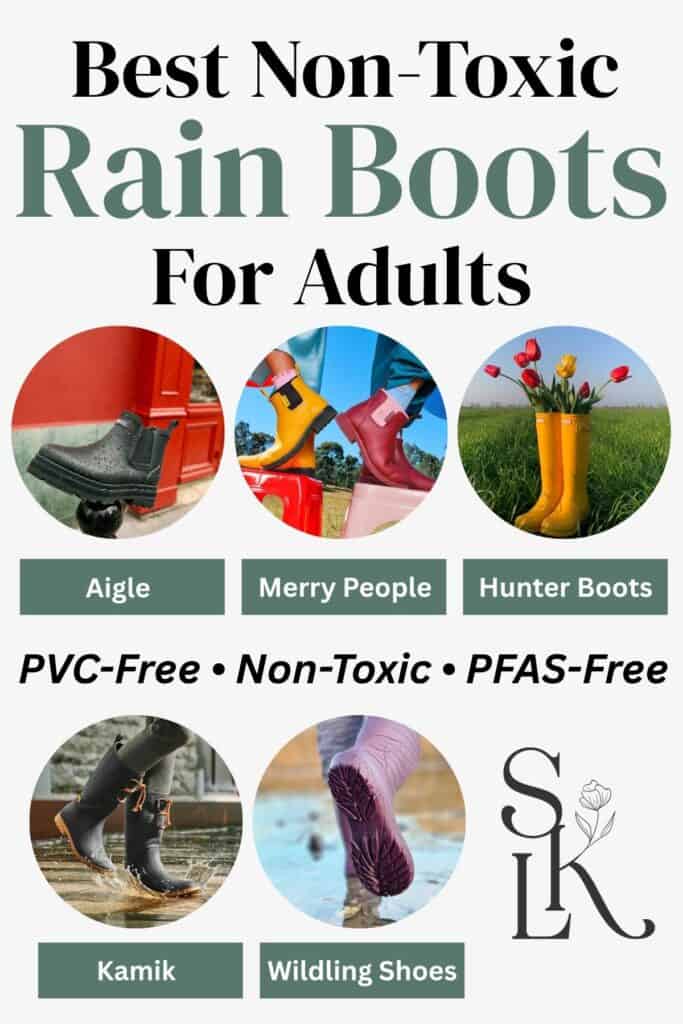
My Top Picks: Non-Toxic Rain Boots For Adults
- Best Natural Rubber Rain Boots That Prioritize Material Safety: Aigle
- Best Everyday Rain Boots That Balance Style & Comfort: Merry People
- Best Long-Lasting Rain Boots With A Proven Track Record: Hunter Boots
- Best Budget-Friendly Non-Toxic Rain Boots That Still Perform: Kamik
- Best Lightweight Minimalist Rain Boots That Don’t Feel Bulky: Wildling Shoes
The good news is that there are better options out there. From natural rubber rain boots to newer PVC-free materials, there are better options out there for both adults and kids.
Looking For Non-Toxic Rain Gear For Kids?
If you’re also shopping for little ones, I’ve put together a full guide to the best non-toxic kids’ rain gear, including boots, jackets, and puddle-ready essentials made with safer materials.
👉 Check out the guide here: Best Non-Toxic Kids Rain Gear.
In this guide, I’ve narrowed it down to a small group of rain boots that prioritize safer materials, transparency, and real-world wear.
Whether you want something classic and long-lasting or lightweight and easy for everyday use, these are the ones I would actually reach for.
Best Non-Toxic Rain Boots For Adults: At a Glance Comparison
Mobile Users: Scroll to see full comparison →
| Brand | Best For | Materials | Price |
|---|---|---|---|
| Aigle | Natural rubber + long-term durability | Natural Rubber | Polyester/Cotton Blend or Polyamide Lining | $110+ |
| Merry People | Everyday comfort + stylish wear | FSC-Certified Natural Rubber | Neoprene Lining | $140+ |
| Hunter Boots | Classic rain boots that last for years | Natural Rubber | Recycled Polyester Lining | $85+ |
| Kamik | Budget-friendly waterproof protection | Synthetic Rubber (PVC-Free) | Polyester, Fleece, or Neoprene Lining | $65+ |
| Wildling Shoes | Lightweight, flexible, minimalist feel | SEBS Rubber | Recycled Polyester Lining | $99 |
What Materials To Look For In Non-Toxic Rain Boots
When choosing the best non-toxic rain boots, the materials matter more than anything else. This is what determines whether a pair is actually a safer option or simply marketed that way.
After researching footwear for years, a few materials consistently stand out as better choices.
Natural Rubber (Best Overall)
Natural rubber is one of the most reliable materials for non-toxic rain boots.
It comes from the sap of rubber trees and avoids many of the additives commonly found in plastic-based footwear. High-quality natural rubber boots are naturally waterproof, durable, and free from PVC and phthalates.
This is what you will typically see used by brands like Aigle, Merry People, and Hunter Boots. If material safety is your top priority, natural rubber is usually the best place to start.
PVC-Free Synthetic Rubber (Best Budget Alternative)
If natural rubber is not the right fit for your budget, PVC-free synthetic rubber is a practical alternative. These materials are designed to provide waterproof protection without relying on PVC or phthalates.
Brands like Kamik use these compounds to create more accessible rain boots with a lower toxic load. While still synthetic, they are a meaningful improvement over conventional plastic options and work well for everyday wear.
SEBS (Lightweight, Flexible Option)
SEBS, or styrene-ethylene-butylene-styrene, is a newer material used in more minimalist rain boots.
It is PVC-free, BPA-free, and noticeably more flexible than traditional rubber. This creates a lightweight feel that is often more comfortable for daily use.
You will see this material used in brands like Wildling Shoes, where the focus is on natural movement and flexibility. These boots tend to be best suited for everyday rain, travel, and lighter conditions.
What To Avoid In Conventional Rain Boots
Some materials commonly used in rain boots are associated with higher chemical exposure or lower transparency.
PVC (Polyvinyl Chloride)
PVC is widely used in conventional rain boots because it is inexpensive and easy to manufacture.
It is often combined with additives to improve flexibility and performance, which can increase overall chemical exposure.
It is also less environmentally stable throughout its lifecycle compared to other materials.
Phthalates
Phthalates are commonly used to soften plastics and are frequently associated with PVC-based products.
Because they are not chemically bound to the material, they can transfer over time through regular use.
PFAS (Waterproof Treatments)
PFAS are sometimes used in waterproof coatings to repel water.
These compounds are known for their persistence and are often referred to as “forever chemicals” due to how long they remain in the environment.
If you want to better understand how PFAS show up in everyday products and why they’re a concern, I break it down more in my PFAS guide.
Limited Material Transparency
In some cases, brands use general terms like “waterproof materials” or “synthetic upper” without clearly identifying what is actually being used.
When material details are unclear, it becomes more difficult to evaluate safety and overall quality.
After looking closely at materials, construction, and real-world performance, a handful of brands consistently stood out for more than just how they’re made.
What mattered just as much was how they held up during everyday use, from rainy errands to muddy, unpredictable conditions. I kept coming back to options that strike a balance between safer materials and practical, real-life wear.
These are the non-toxic rain boots that feel worth investing in because they’re comfortable, reliable, and made with more transparency than most of what’s out there.
The Best Non-Toxic Rain Boots For Adults (2026)
1. Aigle — Best Natural Rubber Rain Boots
Best For: Long-lasting natural rubber rain boots with traditional craftsmanship
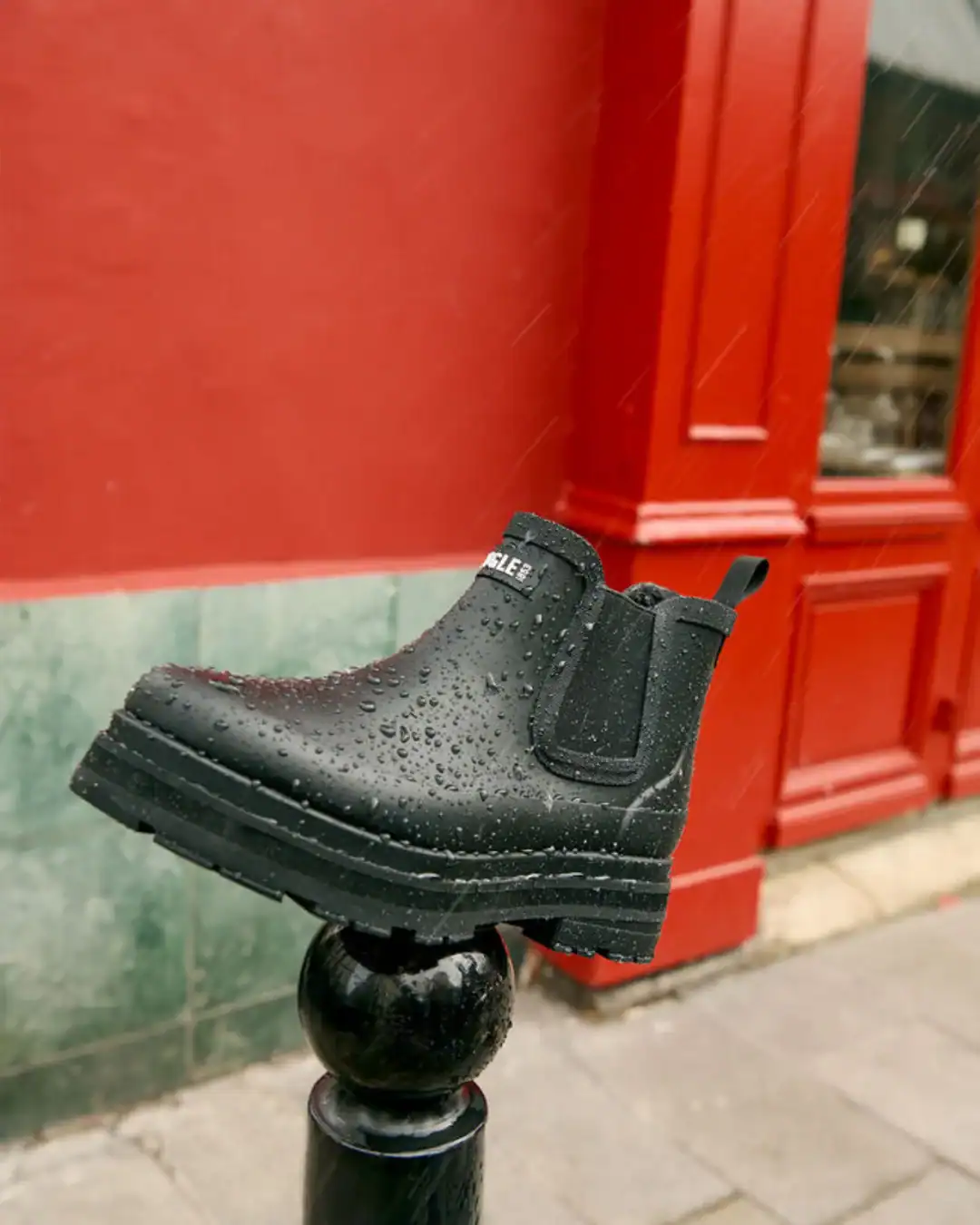
There’s something reassuring about a brand that has been making rain boots for over a century — and Aigle really leans into that expertise.
Their boots are handcrafted in France using primarily natural rubber, making them one of the better options if you’re trying to avoid PVC-heavy rain boots and reduce exposure to unnecessary chemicals.
Each pair is individually tested for waterproofing, and you can feel that durability right away.
The rubber is sturdy without being overly stiff, giving these natural rubber rain boots a more structured, supportive fit than softer everyday styles.
If you’re regularly outside in wet or muddy conditions, these are the non-toxic rain boots that tend to hold up over time — not just for a single season.
Price & Sizing
$110+ | Women’s US 4-9.5 | Men’s US 6-15
Materials
Natural Rubber | Polyester & Cotton Blend or Polyamide Lining | Rubber Outsole
Location/Shipping
France | Ships To The United States & Internationally
2. Merry People — Best Everyday Stylish Rain Boot
Best For: Comfortable, everyday rain boots you’ll actually want to wear

If you’ve ever avoided wearing rain boots because they felt clunky or overly “outdoorsy,” Merry People is usually the one that changes your mind.
Their signature Chelsea-style boots are made from FSC-certified natural rubber, giving you that waterproof protection without relying on PVC or heavy synthetic materials.
What stands out most is how easy they are to wear day-to-day.
The neoprene lining adds flexibility and comfort, and the built-in arch support makes a noticeable difference if you’re on your feet a lot.
They feel much more like a regular boot — just fully waterproof.
These are the kind of non-toxic rain boots you can throw on for errands, school drop-offs, or travel without feeling like you’re gearing up for a storm.
Price & Sizing
$140+ | Women’s US 5-14 | Men’s US 4-13
Materials
FSC-Certified Natural Rubber | Neoprene Lining | Rubber Outsole
Location/Shipping
Australia | Ships To The United States & Internationally
3. Hunter Boots — Best Long-Lasting Rain Boots With A Proven Track Record
Best For: Classic natural rubber rain boots that are built to last
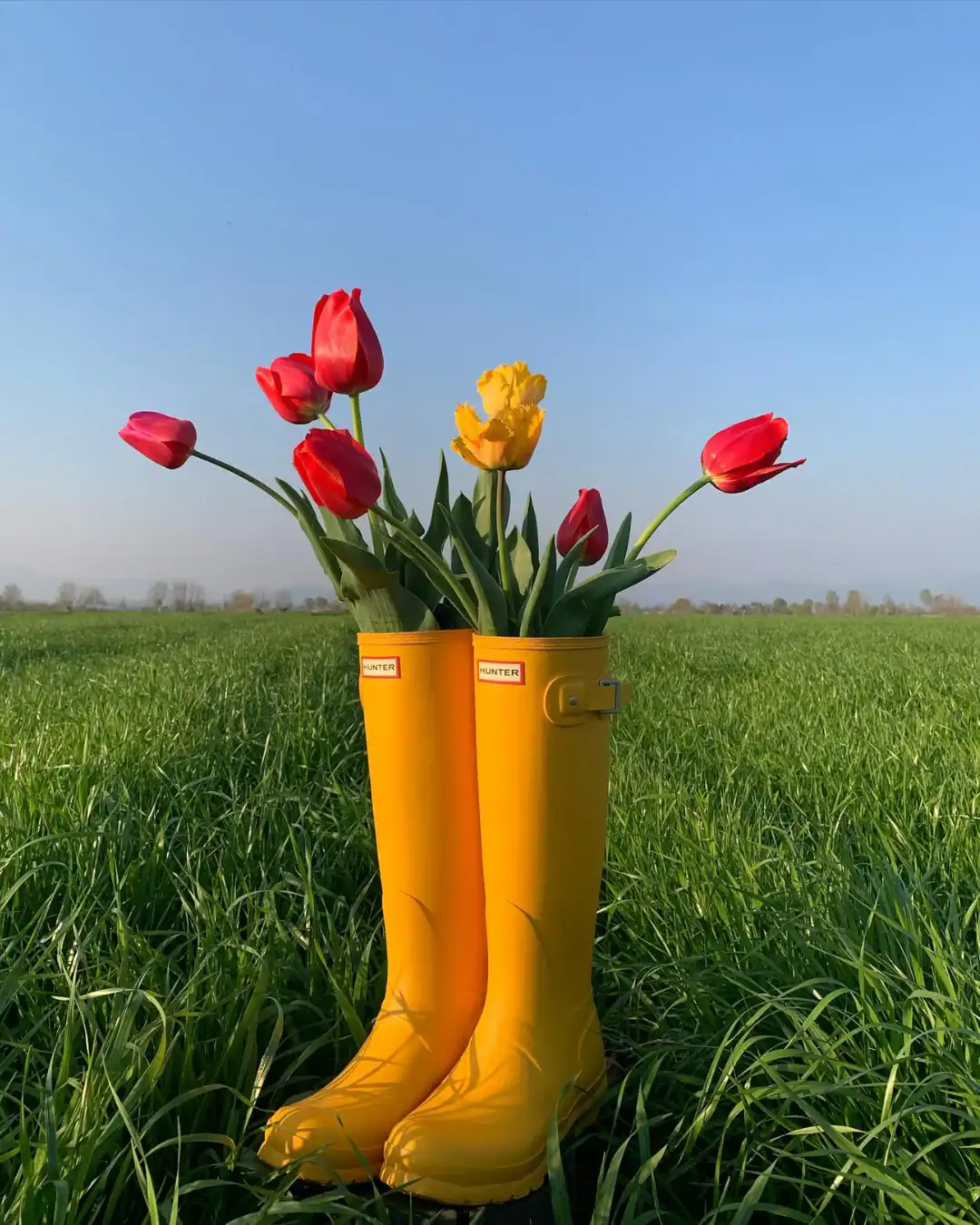
There’s a reason Hunter Boots has been a go-to for generations.
Their boots are made with FSC-certified natural rubber, offering a more responsible alternative to the PVC-heavy rain boots that are still widely sold.
What sets Hunter apart is consistency. The construction feels solid, the waterproofing holds up over time, and the design hasn’t needed to change much because it simply works.
Compared to softer, more flexible styles, these have a slightly more structured feel — which many people prefer for all-day wear in wet conditions.
If you want something reliable that you won’t have to replace every year, these non-toxic rain boots are one of the safest bets.
Price & Sizing
$85+ | Women’s US 5-11 | Men’s US 7-13
Materials
Natural Rubber (Select Styles FSC-Certified) | Polyester Lining | Rubber Sole
Location/Shipping
United Kingdom | Ships To The United States & Internationally
4. Kamik — Best Budget-Friendly Non-Toxic Rain Boots That Still Perform
Best For: Affordable, PVC-free rain boots for everyday use

If you’re trying to find non-toxic rain boots that don’t come with a high price tag, Kamik is one of the most reliable options out there.
Instead of PVC, they use a synthetic rubber that’s both waterproof and phthalate-free, which is a meaningful step up from most budget rain boots.
They’re lightweight, easy to slip on, and designed for real-life use — whether that’s walking the dog, commuting in the rain, or just needing something practical by the door.
Some styles also incorporate recycled materials, which adds to their overall sustainability profile.
These aren’t trying to be luxury boots — but they’re dependable, comfortable, and significantly cleaner than many similarly priced alternatives.
Price & Sizing
$65+ | Women’s US 5-11 | Men’s US 6-13
Materials
PVC-Free Synthetic Rubber (GROUND-CTRL Rubber™) | EVA Foam Footbed | Polyester, Fleece, or Neoprene Lining
Location/Shipping
Canada | Ships To The United States & Internationally
5. Wildling Shoes — Best Lightweight Minimalist Rain Boots That Don’t Feel Bulky
Best For: Flexible, lightweight rain boots with a barefoot feel
US Customers: Use discount code SKL10 to save $10!
EU Customers: Use discount code SKL5 to save €5!
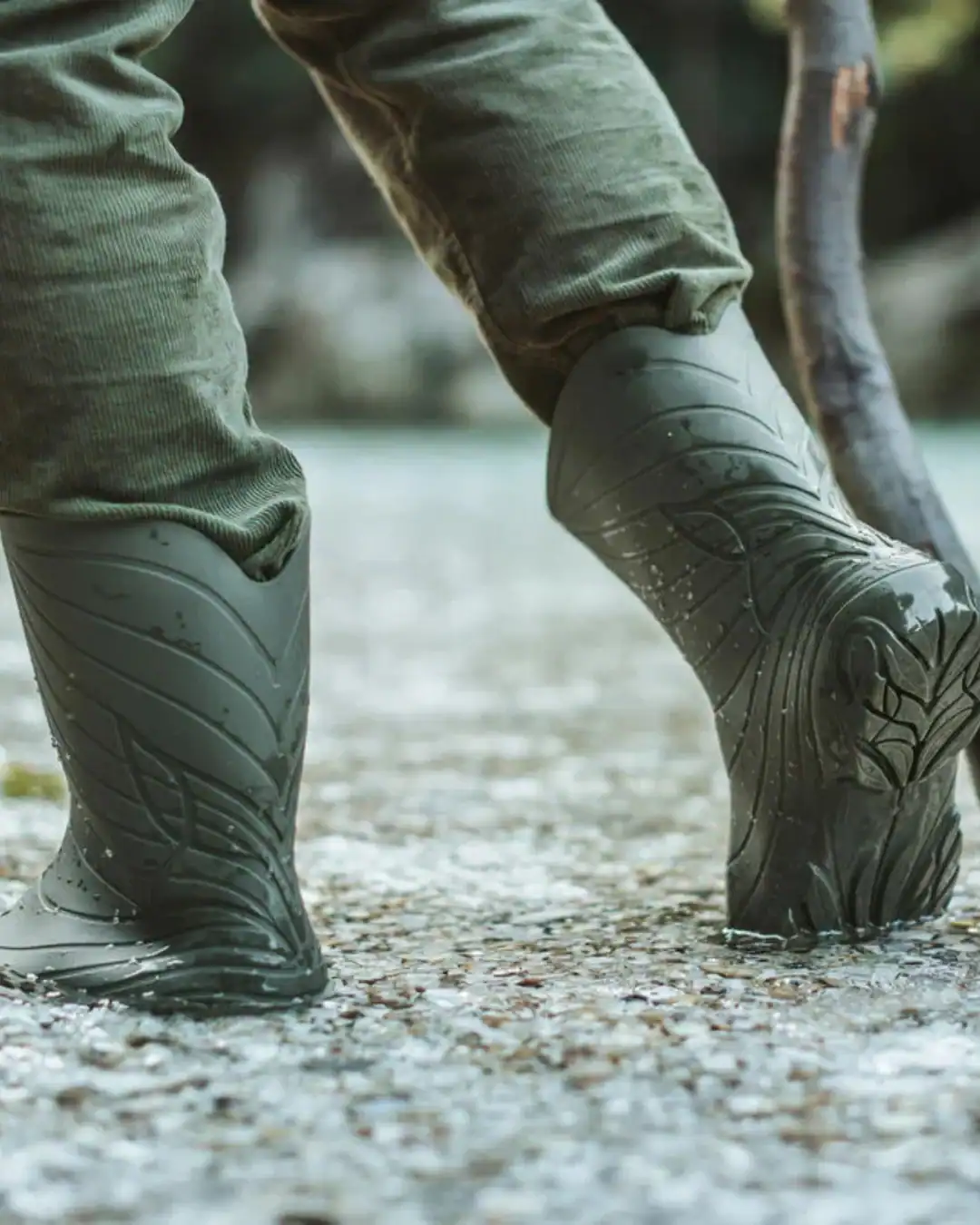
If traditional rain boots feel too stiff or bulky, Wildling Shoes offers something completely different.
Their waterproof styles are made from SEBS — a PVC-free synthetic rubber alternative — which keeps water out while staying incredibly lightweight and flexible.
What really stands out is how natural they feel on your feet.
The wide toe box and flexible sole allow for more movement compared to structured rubber boots, making them a great option if you prefer a more minimalist or barefoot-style shoe.
That said, these aren’t your typical heavy-duty rain boots.
They’re better suited for everyday rain, wet grass, and puddles rather than rugged, muddy conditions — which is exactly what makes them so easy to reach for.
Price & Sizing
$99 | Women’s 5-11.5 | Men’s US 4-10.5
Materials
100% SEBS Rubber | 100% Recycled Polyester Lining
Location/Shipping
Germany/United States | Ships Internationally
How I Chose The Brands On This List
When I was narrowing down the best non-toxic rain boots, I focused on a few things that actually matter in real life, not just what brands claim on their product pages.
First, I looked closely at the materials. Many conventional rain boots are made with PVC or unclear synthetic blends, so I prioritized brands that use natural rubber or clearly disclose PVC-free alternatives. If a brand wasn’t transparent about what their boots were made from, it didn’t make the list.
I also paid attention to how these boots perform outside of marketing claims. Rain boots need to be truly waterproof, comfortable enough for everyday wear, and durable enough to last more than a single season. There’s no point in choosing a “sustainable” option if it wears out quickly.
Another big factor was consistency. Some brands may offer one good product, but I focused on those that have a track record of using safer materials across their footwear and maintaining quality over time.
Finally, I considered accessibility. While there are a few premium options out there, I wanted to include a range of price points, so this list is actually useful for everyday life, not just ideal scenarios.
At the end of the day, every brand here met a simple standard I use for my own home: I would feel comfortable wearing these regularly and recommending them without hesitation.
Frequently Asked Questions About Non-Toxic Rain Boots
The safest rain boots are typically made from natural rubber or PVC-free materials.
Natural rubber is considered the best option because it avoids phthalates and other plastic additives commonly found in conventional rain boots.
Some rain boots can contain materials like PVC, phthalates, or other chemical additives.
These substances are often used to make boots flexible and waterproof, but they can increase overall chemical exposure.
Choosing non-toxic rain boots made from safer materials helps reduce this risk.
Many conventional rain boots are made from PVC because it is inexpensive and widely available.
However, more brands are now offering PVC-free rain boots made from natural rubber or alternative synthetic materials.
Natural rubber rain boots are generally considered a better option because they are free from PVC and phthalates.
They are also durable, naturally waterproof, and often more environmentally responsible when sourced properly.
PVC-free rain boots are made without polyvinyl chloride, a plastic material commonly used in traditional rain boots.
Instead, they use natural rubber or alternative synthetic compounds designed to reduce chemical exposure.
Waterproof boots can be safe for daily wear depending on the materials used.
Boots made from natural rubber or PVC-free materials are typically a better choice for regular use compared to those made with conventional plastics.
Natural rubber is widely considered the best material for non-toxic rain boots.
It provides waterproof protection without relying on harmful plastic additives and tends to be more durable over time.
Vegan rain boots are not always non-toxic. While they avoid animal materials, they are often made from synthetic compounds.
It is important to check whether they are also PVC-free and made with safer materials.
Yes, many non-toxic rain boots are designed to be just as durable, if not more so, than conventional options.
Natural rubber boots, in particular, are known for their longevity when properly cared for.
Look for clear material transparency from the brand.
Non-toxic rain boots will typically highlight natural rubber or PVC-free materials and avoid vague terms like “synthetic upper” without further explanation.
Still Deciding?
If you’re still narrowing it down, here’s a quick way to choose based on what matters most to you:
- Aigle → Best for long-lasting natural rubber and traditional craftsmanship.
- Merry People → Best for everyday comfort and easy, stylish wear.
- Hunter Boots → Best for a reliable, classic rain boot that holds up over time.
- Kamik → Best for a budget-friendly option that still avoids PVC.
- Wildling Shoes → Best for a lightweight, flexible rain boot with a minimalist feel.
Final Thoughts On Choosing Non-Toxic Rain Boots
Finding the best non-toxic rain boots doesn’t have to be overwhelming, but it does require looking past the usual marketing and paying attention to materials.
The biggest shift is simply knowing what to look for.
Once you understand the difference between natural rubber, PVC-free alternatives, and synthetic materials, it becomes much easier to spot which boots are actually a safer choice and which ones are just labeled that way.
The good news is that you don’t have to sacrifice comfort or style to make a better decision.
Whether you prefer something classic and long-lasting or lightweight and easy to wear every day, there are solid options that balance performance with more thoughtful materials.
At the end of the day, it’s less about finding a perfect product and more about choosing something that reduces unnecessary exposure while still fitting into your real life.
Even small swaps like this can make a meaningful difference over time.
Continue Your Non-Toxic Footwear Journey
If you’re working toward a more intentional, lower-tox wardrobe, these guides can help you take the next step:
- Barefoot Shoes — Flexible, minimalist footwear designed to support natural movement without unnecessary materials.
- Kids Barefoot Shoes — Durable, non-toxic options for running, playing, and everyday wear across all seasons.
- Sustainable Slippers — Comfortable, low-tox options for home made with safer materials and thoughtful design.
- Sustainable Shoe Brands For Women — A curated list of brands prioritizing better materials, transparency, and long-term wear.
Small changes add up — and even swapping out everyday footwear can make a meaningful difference over time.
📌 Save This Guide For Later
If you’ve ever wondered what your rain boots are actually made of, this is one of those guides worth coming back to.
This breakdown of the best non-toxic rain boots covers the materials that matter most — like natural rubber vs. PVC — along with what to avoid and which brands are actually more transparent.
Save it for later so you have it on hand when you’re ready to choose safer, everyday rain boots without the guesswork.
Sources & Further Reading
If you’ve ever tried to figure out what rain boots are actually made of, you’ve probably noticed how little most brands share.
A lot of the time, you’ll see general terms like “rubber” or “synthetic materials,” without much clarity on whether that means natural rubber, PVC, or something else entirely.
That’s part of what led me to dig deeper into the materials behind waterproof footwear and what long-term exposure can look like.
These are some of the resources I kept coming back to while researching rain boot materials, chemical exposure, and what safer alternatives actually mean in practice:
- Environmental Protection Agency: Research on PFAS, chemical exposure, and how these substances persist in the environment.
- Centers for Disease Control and Prevention: Information on phthalates and how repeated exposure can affect the body over time.
- National Institutes of Health: Studies on endocrine disruptors and long-term exposure to everyday chemicals.
- European Chemicals Agency: Data on PVC, plasticizers, and chemical safety regulations.
- Agency for Toxic Substances and Disease Registry: Toxicological profiles for substances commonly used in plastics and synthetic materials.
- Forest Stewardship Council: Standards for responsibly sourced natural rubber.
- OEKO-TEX: Certification for materials tested for harmful substances.

Steal My Non-Toxic Cleaning Checklist!
Believe us, it’s the BEST…. and it’s free. Does it really get any better than that?! Sign up for our newsletter and get this free checklist to clean your home without any harmful chemicals!