 Shop My Favorite Non-Toxic Gifts Of 2026!
SKL is reader supported. When you buy through links on our site, we may earn affiliate commission. Learn more here.
Non-toxic candles were one of the first swaps I made when I started paying closer attention to the air inside our home.
I used to buy candles almost entirely by scent. If one smelled like vanilla, cedar, or something cozy and fall-ish, into the cart it went. I never thought much about the fact that I was lighting it in an enclosed room and breathing whatever came off the wax, wick, and fragrance for the next few hours.
That changed once I started researching indoor air quality.
The EPA lists burning candles as a source of indoor particulate matter, and laboratory studies have measured ultrafine particles, VOCs, formaldehyde, benzene, PAHs, and other combustion byproducts from burning candles.
The amount varies considerably depending on the candle, wick, fragrance, ventilation, and how steadily it burns.
As the founder of Sustainably Kind Living and a mom of three, I’ve spent more than a decade researching lower-tox products for our home.
For this update, I compared and tested more than 15 non-toxic and “clean” candles, looking at wax, fragrance ingredients, wick materials, certifications, scent throw, soot, burn quality, transparency, and price.
Only five made this list.
SKL top picks, in a nutshell…
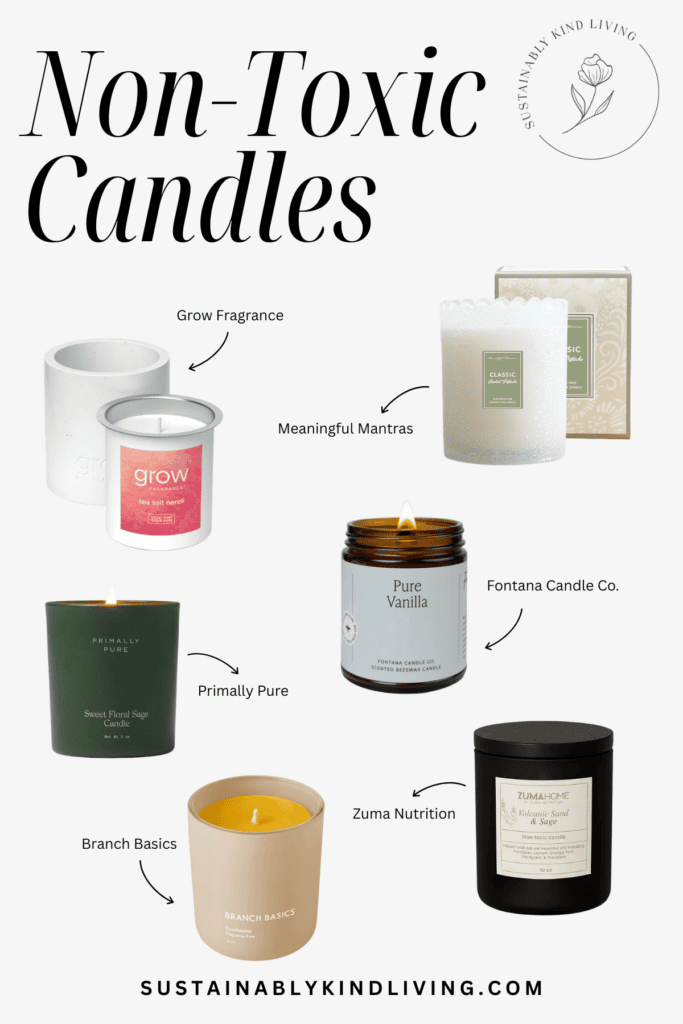
- Best Non-Toxic Candle: Fontana Candle Co.
- Best Fragrance-Free Non-Toxic Candle: Branch Basics
- Best Non-Toxic Candle for Strong Natural Scent: Primally Pure
- Best Budget-Friendly Non-Toxic Candle: Meaningful Mantras
- Best Plant-Based Fragrance Candle: Grow Fragrance
I purposely didn’t choose five candles that were basically interchangeable. Each one earned its spot for a different reason, which should make it much easier to choose based on how you actually use candles at home.
Best Non-Toxic Candles: At a Glance Comparison
Mobile Users: Scroll to see full comparison →
| Brand | Best For | Wax Type | Scent Type | Price |
|---|---|---|---|---|
| Fontana Candle Co. | Cleanest fully non-toxic candle (verified ingredients) | Beeswax + Coconut Oil | Essential Oils | $26+ |
| Branch Basics | Fragrance-free, non-toxic candle (lowest exposure) | Beeswax | None (naturally unscented) | $49 |
| Primally Pure | Strong natural scent without synthetic fragrance | Beeswax + Coconut Wax (Blend) | Essential Oils | $46+ |
| Meaningful Mantras | Budget-friendly non-toxic candle | Coconut Wax | Essential Oils | $17+ |
| Grow Fragrance | Plant-based fragrance candle (synthetic alternative) | Soy + Coconut Oil (Blend) | Plant-Based Fragrance | $35+ |
Why I’m Picky About What I Burn Inside My Home
Here’s the part candle marketing tends to gloss over: burning a candle is combustion.
And combustion creates particles.
The EPA specifically lists candle burning as a source of indoor particulate matter and recommends ventilation when candles or incense are burned indoors.
Research backs that up. A 2021 Environmental International study tested 24 combinations of candle waxes and fragrances and detected particulate emissions plus compounds including formaldehyde, benzene, and PAHs.
Most modeled concentrations under typical conditions stayed below applicable guidance values, but researchers still identified exceptions for compounds including nitrogen dioxide, acrolein, and benzo[a]pyrene.
Another study found that when a candle burns poorly or the flame becomes unstable, soot and black-carbon emissions can increase substantially. Wax and wick composition also affected the emissions researchers measured.
So no, I don’t think any burning candle should be marketed as literally “zero emission.”
What I can control is what I burn, how transparent the formulation is, how the candle performs, and whether unnecessary fragrance chemicals, dyes, or poorly disclosed wax blends are part of the equation.
That is what “non-toxic candle” means on SKL.
Safe vs. Not
Toxic Ingredients In Candles
You’d think something as simple as a candle would be safe, but most candles come with hidden ingredients that can impact your health and indoor air quality.
Here’s why they can be so harmful to your health:
- Paraffin Wax → One of the most common waxes out there, paraffin is a byproduct of petroleum. When burned, it can release known toxins like benzene and toluene, compounds linked to respiratory irritation and long-term health concerns.
- Synthetic Fragrance → “Fragrance” on a label can mean dozens of undisclosed chemicals. Many contain VOCs (volatile organic compounds) that pollute your indoor air and may trigger headaches, asthma, or hormone disruption.
- Phthalates → These plasticizers are often added to make scents last longer, but they’ve also been linked to hormone disruption and other health issues.
- Dyes & Colorants → Bright colors may look pretty, but they often rely on artificial dyes that can release unwanted chemicals when burned.
- Metal-Core Wicks → Lead wicks were banned in the U.S. back in 2003, but some imported candles may still contain metal cores. A safe wick should be 100% cotton, wood, or hemp.
Safe Ingredients To Look For
- Clean Wax: Look for candles made with beeswax, soy wax, or coconut wax. These burn more cleanly than paraffin (a petroleum byproduct) and tend to last longer, too.
- Safe Scents: The best non-toxic candles are scented with essential oils or natural botanical extracts. Skip anything that just says “fragrance” on the label—especially if it doesn’t say phthalate-free.
- Natural Wick: Opt for wicks made from cotton, hemp, or untreated wood. Avoid anything with a metal core, which can release harmful particles when burned.
- Simple Ingredients: Fewer is better. A short, transparent ingredient list is a good sign, and often means fewer allergens and irritants in your space.
- PFAS-Free (Forever Chemicals): Some candles may contain PFAS compounds, which persist in the environment and the body. Look for PFAS-free candles to avoid these concerning chemicals.
Not all non-toxic candles are created equal, and after testing a wide range of options, a few brands consistently stood out.
Some are better for a stronger scent, others for subtle everyday use, and a few are just incredibly well-made and worth the investment.
What you’ll notice about every option below is that material transparency comes first.
These are brands that clearly disclose what they use, avoid vague fragrance claims, and hold up in real-life use without sacrificing performance.
👉 Pro Tip: Many non-toxic candles burn more slowly than conventional ones, so while they may cost more upfront, you’ll often get more hours per ounce (and less soot on your walls).
The 5 Best Non-Toxic Candles I Tested
1. Fontana Candle Co. | Best Non-Toxic Candle Overall
Best For: Anyone who wants the strongest combination of ingredient transparency, third-party screening, and real-world candle performance.
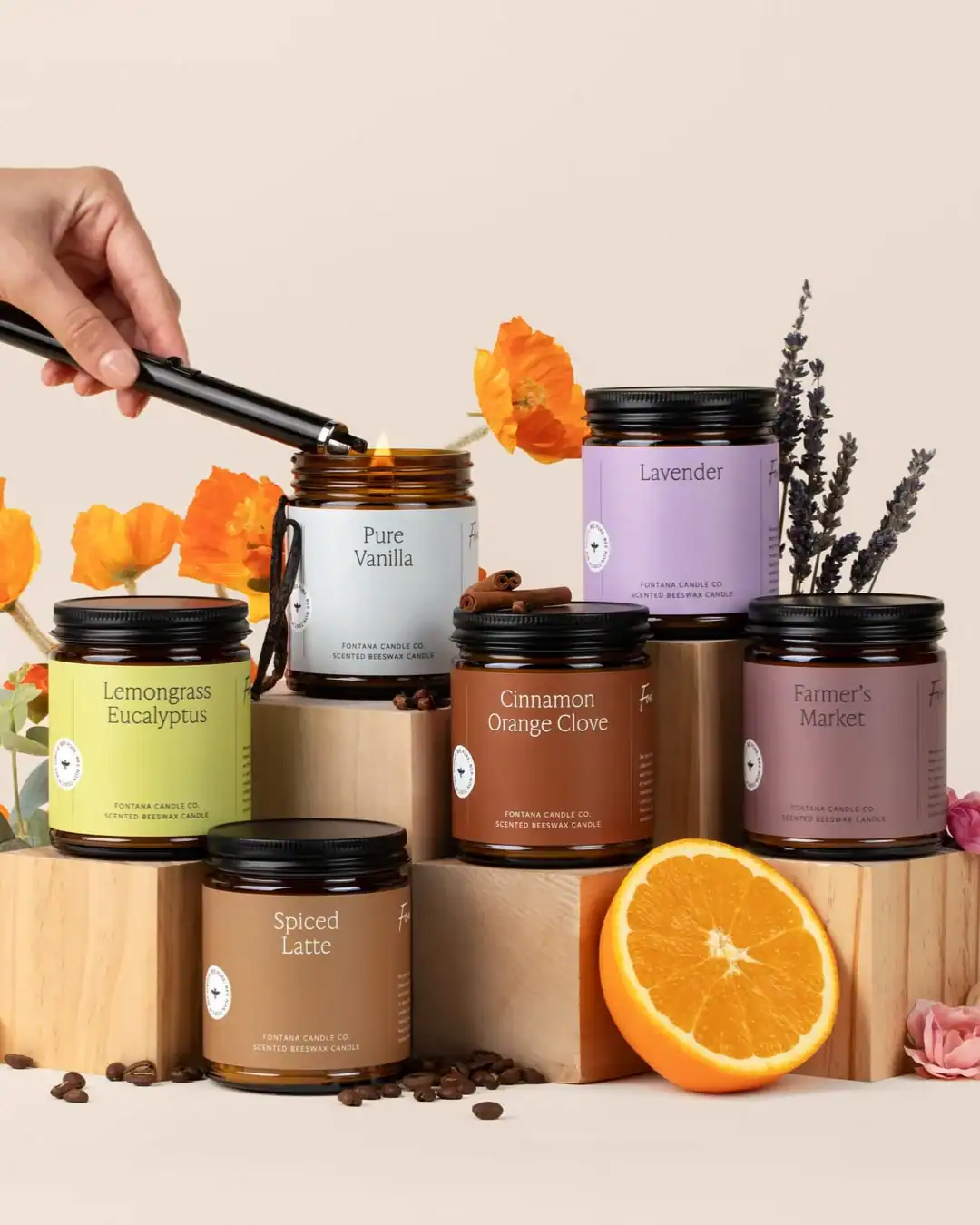
I tested plenty of candles that called themselves clean. Fontana was one of the few where I didn’t have to keep digging to figure out what was actually inside.
The formula is unusually simple: beeswax, coconut oil, essential oils, and a wooden wick. Fontana is also MADE SAFE certified, which gives it an independent screening layer that most candle companies simply do not have.
In actual use, this is the candle I kept coming back to when I wanted scent without that heavy, perfumey feeling I associate with many conventional candles.
The essential-oil scent is noticeable, but the ingredient list is still short enough that I know exactly what I’m bringing into the room.
Price
$26+
Ingredients
Beeswax | Coconut Oil | Essential Oils | Wooden Wick | MADE SAFE® Certified
Location/Shipping
United States | Ships To Canada
2. Branch Basics | Best Fragrance-Free Non-Toxic Candle
Best For: Fragrance-sensitive households or anyone who wants a candle without added scent.
Use the discount code SKL to save 15%!
Branch Basics won’t make your living room smell like a pumpkin-spice bakery.
That is exactly the point.
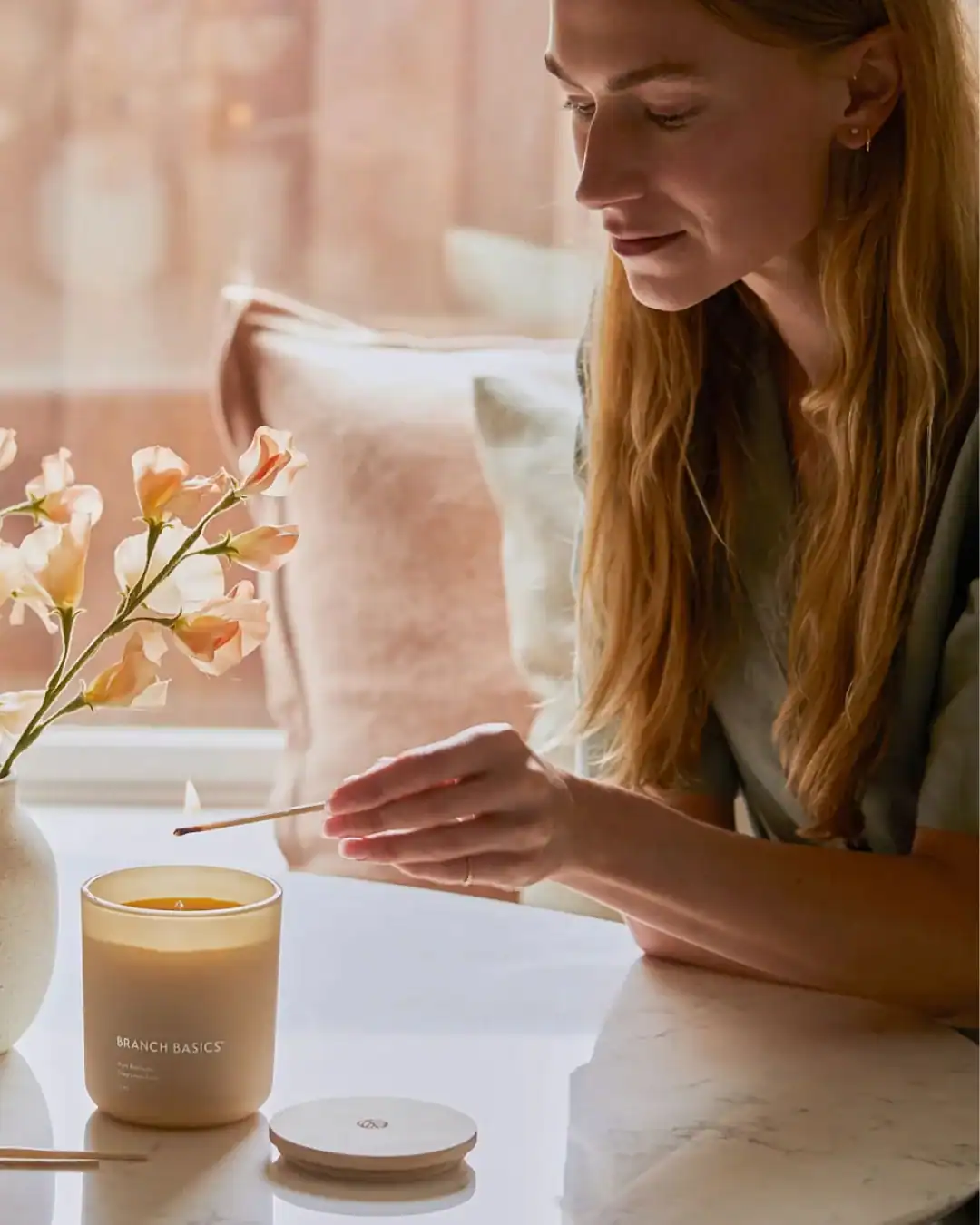
It’s made with 100% pure beeswax and an organic cotton wick, with no added fragrance, essential oils, dyes, or masking scents.
After testing so many scented candles back-to-back, I appreciated this one even more. There are days when I want the glow of a candle without adding another smell to the house, especially when we’ve been cooking, cleaning, or already have other scented products around.
There is a faint natural beeswax aroma, but nothing I would consider fragranced.
Price
$49
Ingredients
100% Pure Beeswax | Organic Cotton Wick
Location/Shipping
United States | Ships To Canada
If You’re Starting to Question What’s in Your Home Air…
If you’re looking to make a few thoughtful changes, these guides can help make the transition feel a lot less overwhelming.
I’d start with non-toxic air fresheners, since fragrance is one of the most common hidden exposure points, then take a closer look at the fragrance loophole to better understand what brands aren’t required to disclose.
3. Primally Pure | Best Strong-Scented Non-Toxic Candle
Best For: Anyone moving away from conventional scented candles who still wants a room-filling fragrance.
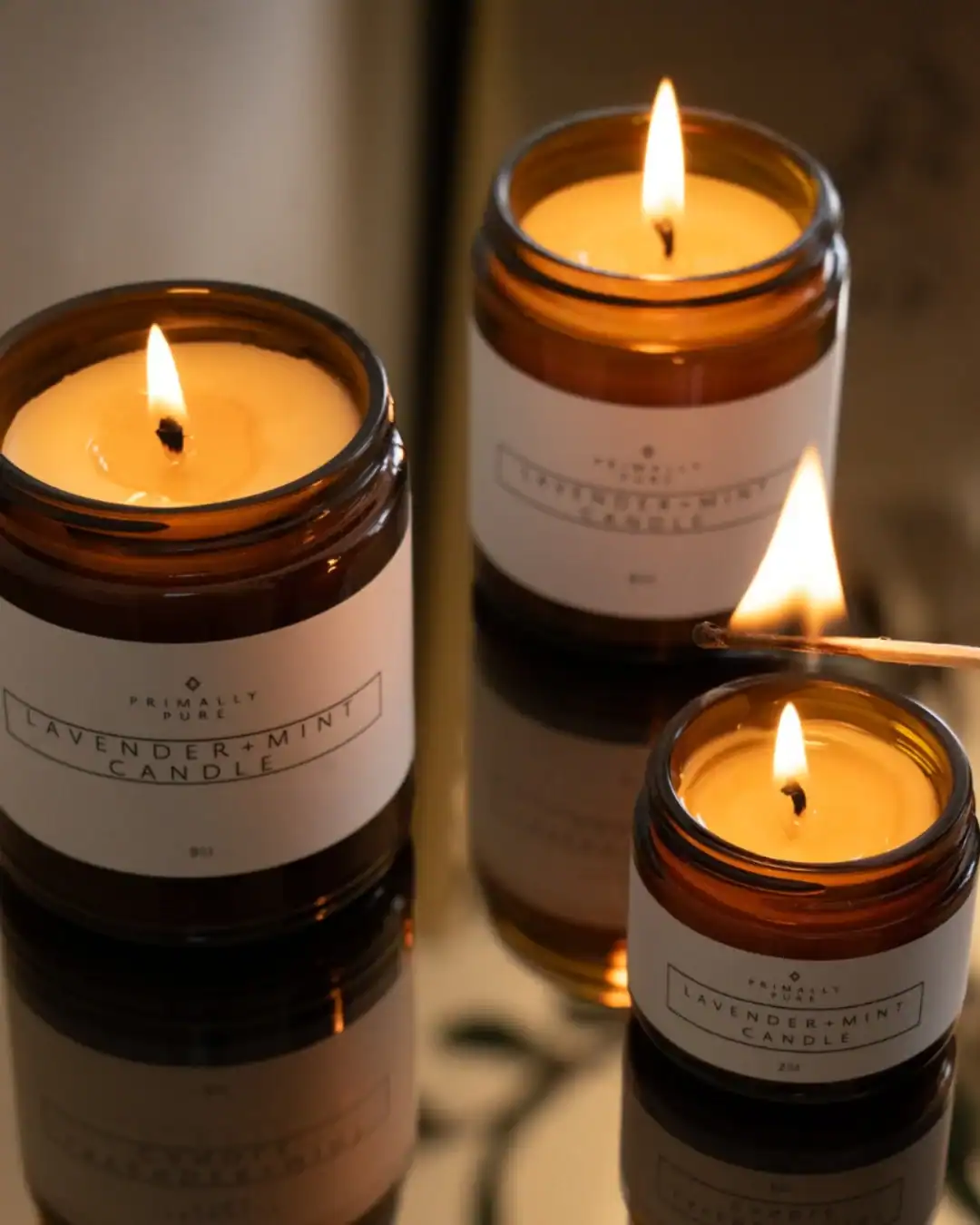
This was the candle that answered one of my biggest complaints about natural candles: sometimes I can barely smell them.
Primally Pure uses a beeswax and coconut wax blend scented with organic essential oils, and its scent throw was noticeably stronger than most of the essential-oil candles I tested.
That makes it the one I’d give to someone who loves scented candles and does not want their cleaner replacement to feel disappointing.
You’re getting a much more noticeable fragrance experience than Branch Basics or many minimalist essential-oil candles, without moving back to a conventional synthetic fragrance blend.
Price
$46+
Ingredients
Beeswax + Coconut Wax (Blend) | Essential Oils | Cotton Wick
Location/Shipping
United States | Ships Internationally
4. Meaningful Mantras | Best Affordable Non-Toxic Candle
Best For: Anyone who wants a cleaner candle without spending $30 to $50 every time.
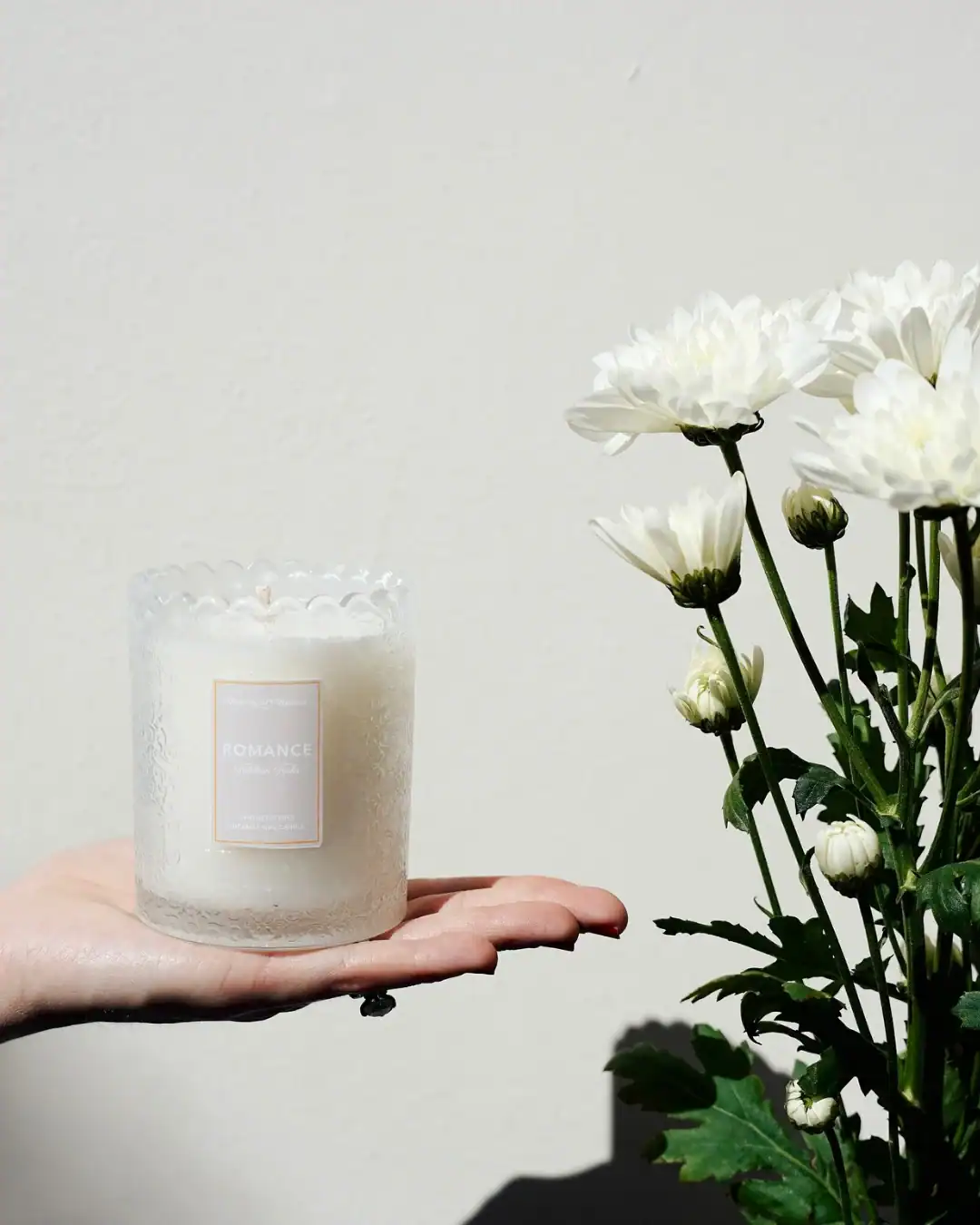
One thing I did not want this guide to become was a list of expensive candles that makes a safer swap feel inaccessible.
Meaningful Mantras earned its place because it gives you coconut wax, essential oils and plant extracts, and an unbleached cotton wick starting around $17.
It does not have the same third-party certification story as Fontana, so I wouldn’t pretend the two are equivalent.
But compared with many conventional candles in the same general price range, I much prefer what Meaningful Mantras is doing with its materials and ingredient disclosure.
Price
$17+
Ingredients
Coconut Wax | Essential Oils & Plant Extracts | Unbleached Cotton Wick
Location/Shipping
United States | International Orders Available Upon Request
5. Grow Fragrance | Best Plant-Based Fragrance Candle
Best For: Anyone who wants a stronger fragrance experience but is not committed to essential-oil-only candles.
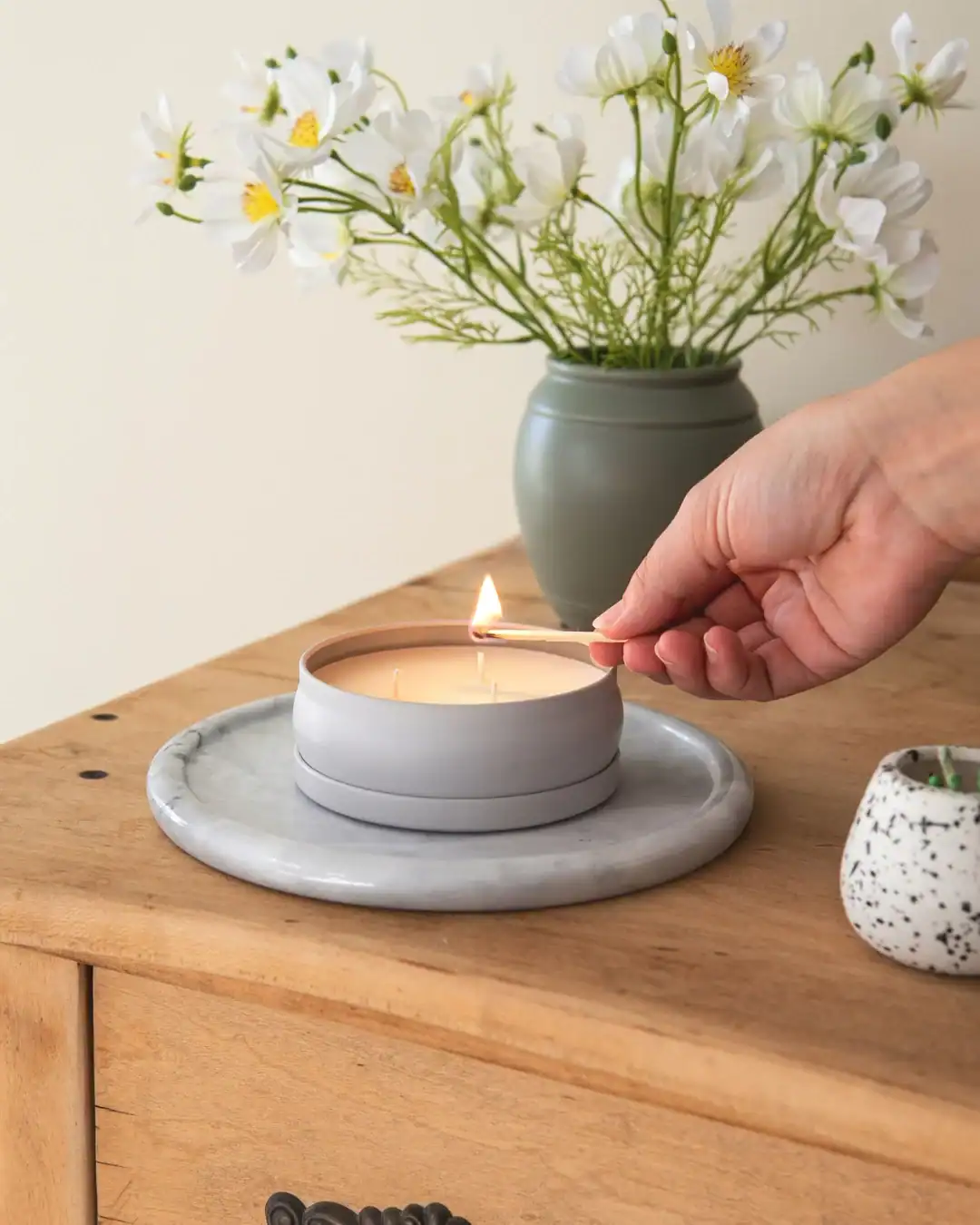
Grow Fragrance is the outlier on this list, and I think that distinction is important.
Instead of relying solely on essential oils, Grow uses a plant-based fragrance system with a soy and coconut wax blend.
In testing, this made it one of the better bridges between a traditional highly scented candle and the much subtler natural candles I usually recommend.
I still rank Fontana higher for ingredient simplicity and transparency, and Primally Pure higher if you specifically want essential oils.
But if the reason you keep going back to conventional candles is that you genuinely want to smell them across the room, Grow makes more sense than pretending scent strength doesn’t matter.
Price
$35+
Ingredients
Soy + Coconut Oil (Blend) | Unbleached Cotton Wick
Location/Shipping
United States
❌ Popular Candle Brands We Don’t Recommend
These are some of the most popular candle brands on the market, but they didn’t meet my standards for a non-toxic candle.
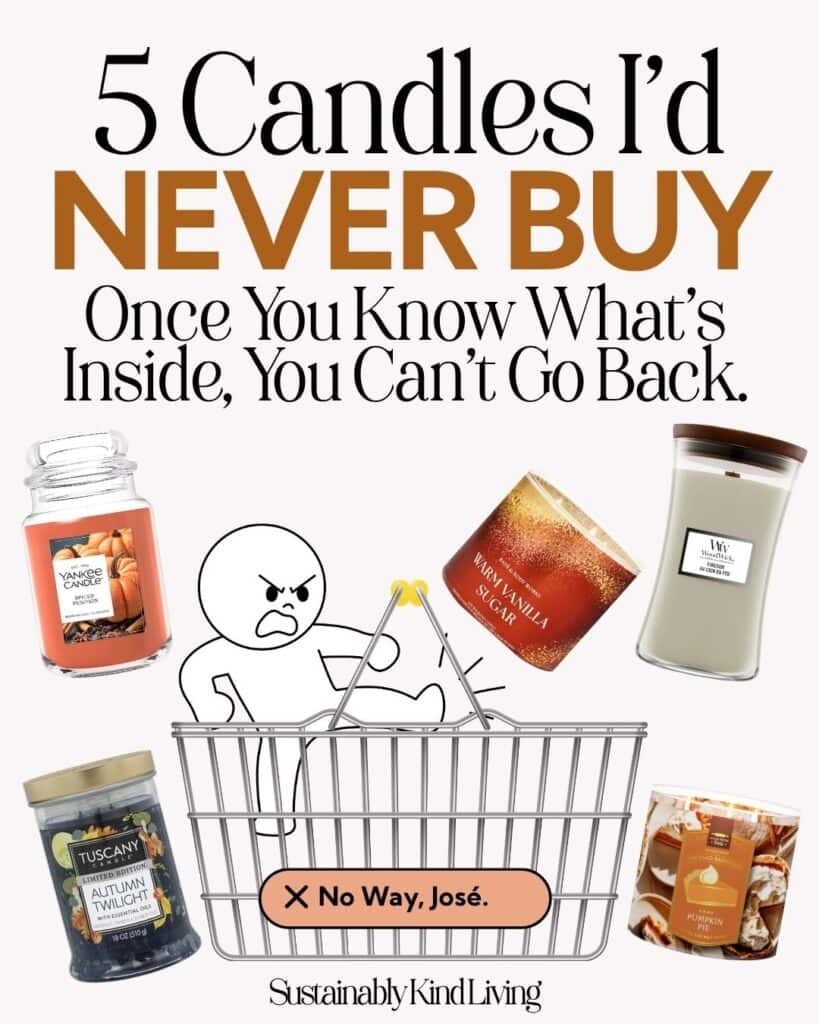
The biggest issues I found were paraffin wax, proprietary wax blends, high concentrations of fragrance oils, undisclosed fragrance formulas, and fragrance chemicals I would rather not intentionally burn inside my home.
Yankee Candle
Why It Didn’t Qualify: Yankee has improved its newer candles and now uses a “premium plant wax blend” with no added phthalates, parabens, formaldehyde, or sulfates.
But the brand still does not disclose exactly what is in that proprietary wax blend or the full fragrance formulation behind its room-filling scents.
For something I am burning and breathing for hours at a time, “plant wax blend” and fragrance notes are not enough transparency for me.
Better Alternative: Grow Fragrance if you love Yankee’s stronger scent throw but want a much more transparent plant-based fragrance candle.
Tuscany Candle
Why It Didn’t Qualify: Tuscany openly states that its candles contain wax, dye, and fragrance, with proprietary wax blends made from either paraffin or soy/paraffin. The company also says a single fragrance may contain 12 to 70 individual ingredients and that it does not share detailed ingredient lists. That combination of petroleum-based wax, added dye, and an undisclosed fragrance mixture is exactly what I avoid in candles.
Better Alternative: Meaningful Mantras for an affordable coconut-wax candle scented with essential oils and plant extracts instead.
Goose Creek Candle
Why It Didn’t Qualify: Goose Creek describes its candles as a proprietary soy wax blend and says they are highly scented with fragrance oils and essential oils. The problem is that “soy” and “essential oils” sound reassuring while the rest of the wax blend and full fragrance formula remain undisclosed. With a candle specifically designed to pump fragrance throughout a large room, I want to know much more about what is creating that scent.
Better Alternative: Primally Pure if you want a noticeably strong scent throw without conventional fragrance oils. Their candles use a beeswax and coconut wax blend scented with essential oils.
Bath & Body Works
Why It Didn’t Qualify: Bath & Body Works markets its candles as a “soy wax blend,” but its own candle FAQ says the main wax ingredients are vegetable wax, paraffin wax, and soy, and specifically notes that its Signature Collection candles are not considered soy candles. The brand also advertises a high concentration of rich fragrance oils, without giving me the fragrance transparency I want for something burning inside my home.
Better Alternative: Primally Pure if you love Bath & Body Works for strong seasonal scents but want beeswax, coconut wax, and essential oils instead of paraffin and heavily fragranced wax.
WoodWick Fireside Candle
Why It Didn’t Qualify: WoodWick markets Fireside with a premium plant wax blend, essential oils, and no added phthalates or parabens. But its own European safety disclosure identifies fragrance chemicals including eugenol, cinnamaldehyde, and isoeugenol and carries the warning “May cause an allergic skin reaction.” It also lists additional fragrance chemicals that you would never know were present from the clean-sounding “plant wax + essential oils” marketing alone.
Better Alternative: Fontana Candle Co. if you want that cozy wooden-wick experience with a far simpler formula of beeswax, coconut oil, essential oils, and a wooden wick.
How I Researched and Tested These Non-Toxic Candles
I started with more than 15 candles, not five.
That matters because it gave me enough comparison points to notice where the real differences were.
First, I checked what each company disclosed about its wax, wick, fragrance system, dyes, additives, and certifications. If I couldn’t figure out what the candle was made from without emailing customer service or reading through vague FAQs, it immediately lost points.
Then I actually burned them.
I paid attention to scent throw, how evenly the wax melted, whether the wick behaved normally, visible soot, tunneling, how the scent changed while burning, and whether I actually wanted to light the candle again after the testing was technically finished.
That last part matters more than it sounds.
A perfectly transparent candle that nobody in my house enjoys is not useful. Neither is a gorgeous, strongly scented candle that gives me no meaningful information about what creates that scent.
I also compared value. A $50 candle has to give me something a $20 candle does not, whether that is certification, formulation quality, burn time, scent performance, or genuinely exceptional transparency.
The five candles above were the ones that made the strongest case for themselves across those criteria.
The Truth About “Clean” Candles (Greenwashing to Watch For)
Candles are one of those categories where greenwashing shows up a lot, and it’s not always obvious.
Here are a few things I’ve learned to look out for:
- “Soy Blend” Candles: This often means the candle still contains paraffin (petroleum-based wax), even if soy is listed first.
- Vague “Fragrance” Labels: Even candles labeled as “clean” or “natural” can still use undisclosed fragrance blends, which may contain phthalates or VOCs.
- Essential Oil Claims Without Proof: Some brands highlight essential oils but still mix them with synthetic fragrance behind the scenes.
- Eco-Friendly Packaging Distractions: Sustainable packaging doesn’t always mean the candle itself is non-toxic.
If a brand isn’t clearly explaining what’s inside the candle, that’s usually your sign to look closer.
Frequently Asked Questions About Non-Toxic Candles
For the lowest fragrance exposure, I’d choose an unscented beeswax candle with a simple cotton wick, like Branch Basics. Any burning candle creates combustion emissions, so ventilation and proper wick care still matter.
To spot a potentially toxic candle, check the label for a few key red flags:
Paraffin wax (often labelled as just “wax” or “blend”) is derived from petroleum and may release harmful VOCs like benzene and toluene when burned.
Synthetic fragrance is another concern. Unless a brand specifies that it uses essential oils or “phthalate-free fragrance,” it’s often a chemical blend with little transparency.
Bright dyes, glitter, and metal-core wicks are also signs of a lower-quality candle.
When in doubt, simpler is better. A short ingredient list and certifications like MADE SAFE are great indicators of a cleaner burn.
Not necessarily. While soy wax itself is a cleaner-burning alternative to paraffin, some soy candles still contain synthetic fragrance, dyes, or metal-core wicks.
Look for soy candles that are 100% soy (not a soy blend), scented with essential oils, and free from phthalates and synthetic additives.
Yes! Non-toxic candles made with real essential oils can smell amazing—just more natural and subtle than synthetic fragrances.
Many brands now offer creative blends like citrus-lavender, eucalyptus-cedar, or pumpkin-spice made entirely from botanical extracts.
The term “fragrance” can legally hide dozens of chemicals, including phthalates, VOCs, and allergens.
Unless the label specifies “essential oil-based” or “phthalate-free fragrance,” it’s best to steer clear. Opt for brands with full transparency about their scent ingredients.
Some cheaper candles may contain PFAS through treated wicks, wax coatings, or synthetic fragrance ingredients.
Look for brands that are explicitly labelled PFAS-free and avoid products that don’t share a full ingredient list.
Trim the wick to ¼ inch before each burn, let the wax pool reach the edge of the container (especially on the first burn), and avoid burning candles for more than 4 hours at a time. Store them in a cool, dry place with the lid on.
No, Bath & Body Works candles are not considered non-toxic.
While they’re widely loved for their strong seasonal scents, many of their candles contain paraffin wax (a petroleum derivative) and synthetic fragrance blends that may include phthalates or other VOCs.
These ingredients can contribute to indoor air pollution when burned and may trigger headaches, asthma, or hormonal disruption for some people.
Beeswax gives me a simple wax base I generally prefer, but beeswax alone does not make a candle automatically non-toxic. I still check the fragrance, wick, dyes, additives, and how transparent the brand is.
I would not choose a candle based on the word “soy” alone. Emissions depend on much more than wax type, including formulation, wick, fragrance, ventilation, and burn conditions. I prefer fully disclosed soy or coconut blends over mystery wax blends.
Yes. The EPA identifies burning candles as a source of indoor particulate matter, and controlled studies have measured particles and gaseous pollutants during candle use.
Some do. A 2025 study examining candle emissions detected DEP in all of the candle samples researchers tested, although levels varied significantly among products. That is one reason I prioritize brands that specifically disclose how their scents are made.
Not automatically. Essential oils are still volatile aromatic compounds, and some people are sensitive to them. I prefer essential oils because the scent source can be much more transparent, not because “natural” automatically means harmless.
Black residue is soot, which usually means the candle is not burning efficiently. Research shows unstable or stressed candle flames can produce substantially more black carbon and particulate emissions, so trim your wick and keep candles away from strong drafts.
No. The CPSC banned lead-cored candle wicks in 2003, including imported candles.
That is not what I do in my own home. I choose better-disclosed candles, trim the wick, avoid visibly sooty burns, ventilate the room, and do not keep candles burning all day. If someone in your household is very sensitive to fragrance or combustion particles, skipping candles entirely is still the lowest-exposure option.
Still Deciding? Start Here
If you’re not quite sure which candle to choose, here’s a quick way to narrow it down:
- Cleanest Fully Non-Toxic Candle: Fontana Candle Co.
- Fragrance-Free, Lowest Exposure: Branch Basics
- Stronger Scent Without Synthetics: Primally Pure
- Best Budget-Friendly Non-Toxic Candle: Meaningful Mantras
- Alternative To Synthetic Fragrance: Grow Fragrance
Sometimes it just comes down to how you want your space to feel: barely-there and calming, or a little more noticeable and cozy.
More Than Scent: A Safer Way to Glow
Candles have a way of making everything feel a little cozier. And when they’re non-toxic, you can enjoy that glow without second-guessing what’s in the air.
Choosing cleaner candles made with safe, natural ingredients means you get all the cozy vibes of fall (think pumpkin spice, cedarwood, vanilla) without the synthetic fragrance, paraffin, or hidden chemicals.
It’s one of those simple swaps that feels good right away and supports your space, your health, and your peace of mind.
So light your favorite, take a deep breath, and settle into the season. You’ve earned it.
Continue Your Non-Toxic Home Routine
If you’re creating a cleaner, lower-tox home, these guides can help you take the next step:
- Non-Toxic Air Fresheners: Safer ways to freshen your home without synthetic fragrance or hidden chemicals.
- Home Air Purifiers: High-performing purifiers that remove VOCs, allergens, and everyday pollutants.
- Fragrance Loophole Explained: What “fragrance” really means—and how to spot safer, transparent products.
- Non-Toxic Perfume: Cleaner scents without synthetic fragrance or unnecessary additives.
- Sustainable Home Decor: Low-toxic, responsibly made decor for a healthier home.
📌 Save This Guide For Later
Candles are one of those things most of us don’t think twice about, until you start looking a little closer at what’s in them.
I put this guide together to make that process easier, from understanding why paraffin and synthetic fragrance can be an issue to finding candles that are actually made with cleaner, more transparent ingredients.
Save it so you have a go-to reference the next time you’re choosing a candle for your home.
Sources & Further Reading
The research behind this guide comes from a mix of regulatory data, scientific studies, and what I’ve learned after looking closely at how candles actually affect indoor air quality.
If you’re someone who likes to understand the why behind safer swaps, these are the sources I found most helpful when digging into fragrance chemicals, VOCs, and what really gets released when a candle burns.
- United States Environmental Protection Agency (EPA) — Indoor Air Quality & Volatile Organic Compounds https://www.epa.gov/indoor-air-quality-iaq/volatile-organic-compounds-impact-indoor-air-quality
- Centers for Disease Control and Prevention (CDC) — Volatile Organic Compounds (VOCs) https://wwwn.cdc.gov/tsp/substances/ToxChemicalListing.aspx?toxid=7
- California Air Resources Board (CARB) — Indoor Air Pollution & Consumer Product Emissions https://ww2.arb.ca.gov/our-work/programs/indoor-air
- Agency for Toxic Substances and Disease Registry (ATSDR) — Toxicological Profiles (Benzene, Toluene, etc.) https://wwwn.cdc.gov/TSP/ToxProfiles/ToxProfiles.aspx?id=40&tid=14
- National Institutes of Health (NIH) / PubMed — Household Air Pollution Research https://pmc.ncbi.nlm.nih.gov/articles/PMC12552420/
- National Institutes of Health (NIH) / PubMed — Emissions from Scented Candles Study https://pmc.ncbi.nlm.nih.gov/articles/PMC10783381/
- Environmental Working Group (EWG) — Fragrance & Hidden Chemicals https://www.ewg.org/news-insights/news/2023/07/what-fragrance
- Made Safe — Certification & Ingredient Screening https://madesafe.org/
- International Fragrance Association (IFRA) — Fragrance Safety Standards https://ifrafragrance.org/initiatives-positions/safe-use-fragrance-science/ifra-standards

Steal My Non-Toxic Cleaning Checklist!
Believe us, it’s the BEST…. and it’s free. Does it really get any better than that?! Sign up for our newsletter and get this free checklist to clean your home without any harmful chemicals!