 Shop My Favorite Non-Toxic Gifts Of 2026!
SKL is reader supported. When you buy through links on our site, we may earn affiliate commission. Learn more here.
If you’re looking for non-toxic cooking utensils, it’s probably because something already felt a little off.
Maybe it was a plastic spatula melting at the edges, a weird smell when cooking on high heat, or just realizing how often these tools come into contact with your food — without ever really questioning what they’re made of.
Because once you do look closer, you start to notice how many conventional utensils rely on materials like nylon, plastic, and low-quality silicone — especially in products designed for convenience, not long-term use.
These are the tools we use every single day, often at high heat, often without thinking twice.
When I started paying more attention to what was in my kitchen, utensils were one of the easiest (and most overlooked) places to make a switch — and one of the most immediately noticeable.
If you’re just getting started, I break this down more in my non-toxic living for beginners guide, where I walk through the simplest swaps to start with.
In this guide, I’m sharing the best non-toxic cooking utensils made from wood, stainless steel, and high-quality silicone — along with what to avoid and how to choose options that actually hold up over time.
The Best Non-Toxic Cooking Utensils I’d Buy Again
- Best Wooden Utensil Set With Built-In Storage: Caraway
- Best PFAS-Free Cooking Utensils (Plastic Alternative): 360 Cookware
- Best Non-Toxic Silicone Utensils For Everyday Cooking: Our Place
- Best Stainless Steel Cooking Utensils For High-Heat Cooking: All-Clad
- Best Artisan Wooden Cooking Utensils: DaTerra Cucina
Why I Started Paying Attention to My Cooking Utensils
For me, this wasn’t some big overnight kitchen overhaul. It started small — noticing that same plastic spatula getting softer over time, or catching a weird smell when cooking on higher heat.
At first, it didn’t feel like a big deal… just one of those things you don’t really question. But the more I paid attention, the harder it was to ignore.
Cooking utensils are something we use constantly — often multiple times a day — and they come into direct contact with our food, usually at high heat. And yet, they’re one of the most overlooked tools in the kitchen.
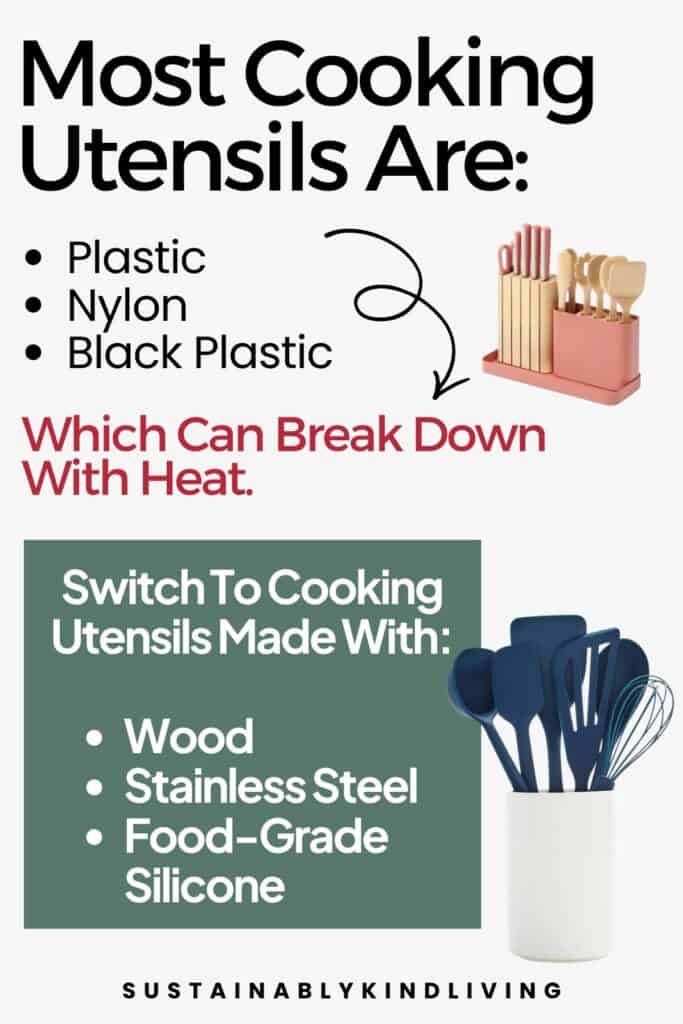
A lot of conventional utensils are made from plastic, nylon, or synthetic blends that aren’t really designed for long-term heat exposure.
Over time, those materials can start to break down — sometimes subtly, sometimes visibly — and that’s where concerns around things like BPA, phthalates, or PFAS-based coatings come in.
And because this is happening during everyday cooking, those exposures aren’t just one-time. They’re repeated, small, and easy to overlook.
Once I realized that, switching to safer materials felt like one of the simplest changes I could make.
Wood, stainless steel, and high-quality silicone don’t just feel better to cook with — they hold up better over time and don’t come with the same question marks.
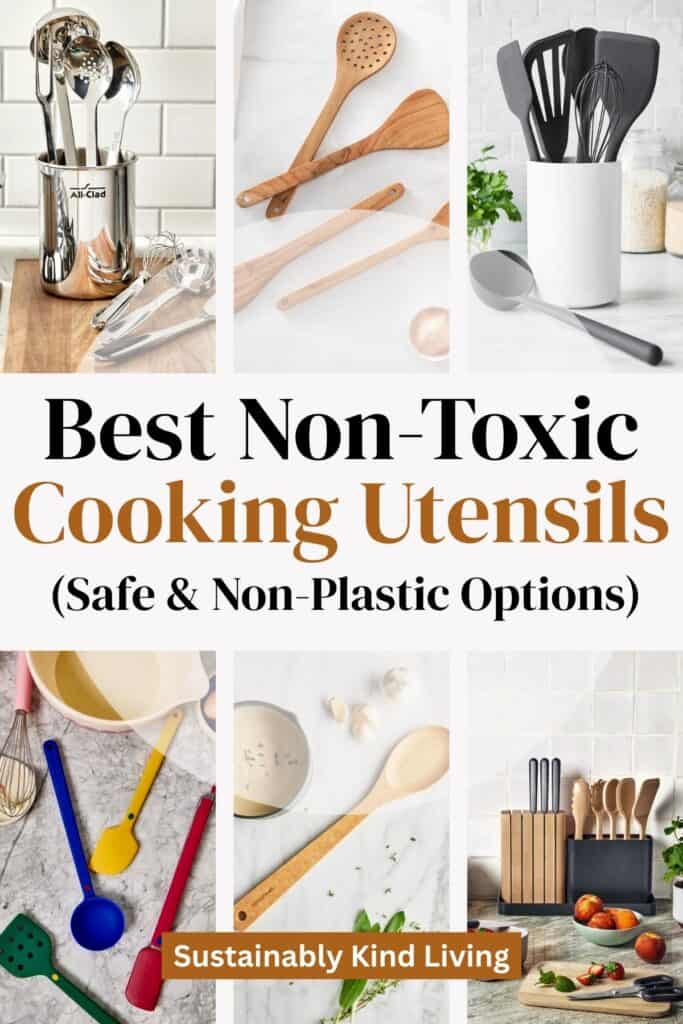
Toxic Chemicals Hiding in Cooking Utensils
Once you start noticing how certain utensils wear down with heat, it raises some obvious questions about what they’re made of.
When cooking utensils are exposed to heat, oils, and repeated use, some can release compounds that have been studied for their effects on the body — especially with long-term, low-level exposure.
BPA & Plastic Additives
BPA (bisphenol A) is commonly used in certain plastics and has been widely studied for its role as an endocrine disruptor, meaning it can mimic hormones like estrogen in the body.
Research has linked BPA exposure to potential impacts on hormone balance, metabolism, and reproductive health — which is why many countries have restricted its use in food-contact materials.
If you want a deeper breakdown, I cover this more in my BPA guide, including where it shows up beyond kitchen tools.
Phthalates in Flexible Plastics
Phthalates are used to make plastics softer and more flexible, but they don’t stay chemically bound to the material. That means they can leach out over time, especially with heat and fat (which is relevant for cooking).
They’ve also been studied as endocrine disruptors, with research linking exposure to hormone disruption, reproductive effects, and developmental concerns.
This is why phthalates are restricted in many children’s products — but they can still show up in some kitchen materials.
PFAS in Treated or Nonstick Materials
PFAS (including PFOA) are often referred to as “forever chemicals” because they don’t break down easily in the environment or the human body.
They’ve been linked in research to immune system effects, thyroid disruption, increased cholesterol levels, and potential cancer risk with long-term exposure.
I go deeper into this in my PFAS guide, including how it shows up in cookware and other everyday products.
PVC & Chlorine-Based Plastics
Polyvinyl chloride (PVC) is another plastic sometimes used in lower-cost materials.
When heated, it can release chlorine-based compounds, and its production often involves additives that raise additional health and environmental concerns.
Melamine and Heat Sensitivity
Melamine is used in some plastic dishware and utensils because it’s lightweight and durable.
But under high heat, it can break down and release formaldehyde, which is not something you want anywhere near your food.
Why This Actually Matters in Everyday Cooking
None of this is about fear — it’s about frequency.
These aren’t products you use once in a while. They’re tools you use every day, often multiple times a day, usually at high temperatures.
So even if the amount released at any given time is small, the exposure is:
- Repeated
- Consistent
- And directly tied to your food
That’s what makes cooking utensils one of the easiest — and most impactful — places to make a safer swap.
What Are the Safest Cooking Utensil Materials?
The safest cooking utensils come down to a few materials that are stable under heat and don’t rely on coatings or plastic blends.
- Wood — Naturally non-toxic, durable, and gentle on cookware (especially olive wood or beechwood).
- Stainless Steel — One of the most inert materials; won’t leach, react, or break down under high heat.
- High-Quality Silicone — Safe when it’s platinum-cured and filler-free, but this is where quality really matters.
Switching to these materials doesn’t require changing how you cook — just what you cook with.
How I Chose These Non-Toxic Cooking Utensils
Not everything labeled “non-toxic” actually holds up once you start looking a little closer.
So instead of relying on marketing claims, I focused on how these utensils perform in a real kitchen — and what they’re actually made of.
Just like with non-toxic cookware, bakeware, and even things like air fryers, the details matter more than the label. I’ve found that materials, heat stability, and overall transparency tend to tell you a lot more than packaging ever will.
I prioritized brands that are transparent about their materials (not just “BPA-free”), and that avoid unnecessary coatings, fillers, or plastic blends — especially in products designed for heat.
I also looked at how each material behaves over time.
- Does it stay stable at higher temperatures?
- Does it show signs of breakdown with regular use?
Because that’s where a lot of the differences start to show.
And of course, durability mattered. If something warped, chipped, or didn’t hold up after repeated use, it didn’t make the list.
From there, it really came down to what I actually reach for in my own kitchen — the pieces that feel reliable, easy to use, and built to last.
If a brand felt vague, over-marketed, or didn’t fully back up its claims, I left it out.
8 Best Non-Toxic Cooking Utensil Brands
1. Caraway — Best Wooden Utensil Set With Built-In Storage
Best For: Organized, aesthetic kitchens using ceramic or nonstick cookware
Use the discount code SKL to save 10%!
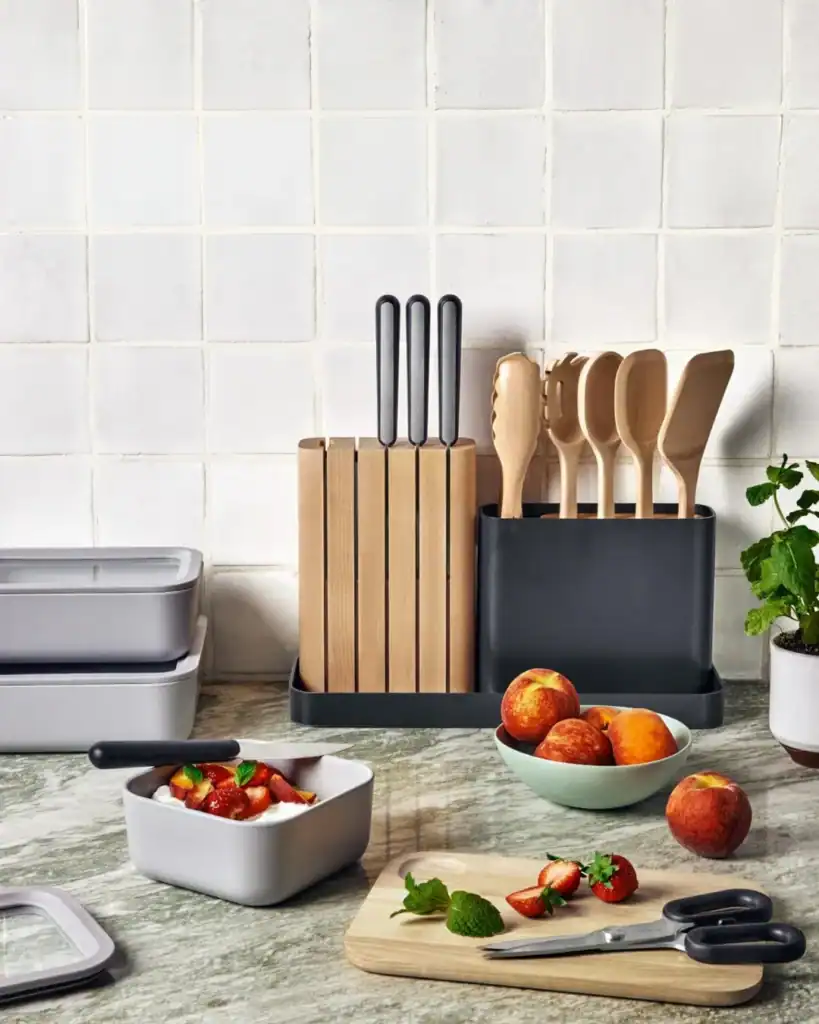
One of the things Caraway does really well is solve a problem most utensil sets ignore — where everything actually goes.
Their wooden utensils are made from FSC-certified birch wood and come with a thoughtfully designed storage system that keeps everything contained and easy to reach.
They’re lightweight, smooth, and gentle on ceramic or nonstick surfaces, which makes them ideal for everyday cooking without worrying about scratches.
What stood out to me is how often I actually reach for them — not just because they’re functional, but because they’re already right there on the counter, neatly stored and ready to use.
Price
$145 (5 pc) | $445 (14 pc)
materials
FSC-Certified Birch Wood
location/shipping
United States | Select International Shipping
My Personal Review
Our team tried and tested the Caraway knife and cutlery set, and it has exceeded all of our expectations.
The quality is the highest in all of the brands listed, and it is also the most aesthetically pleasing.
I now use my set every single day in my own kitchen. Just be sure to hand-wash the wooden utensils (not dishwasher safe).
2. Our Place — Best Non-Toxic Silicone Utensils For Everyday Cooking
Best For: Flexible, nonstick-safe tools you can use daily
Use discount code SKL10 to save 10%!
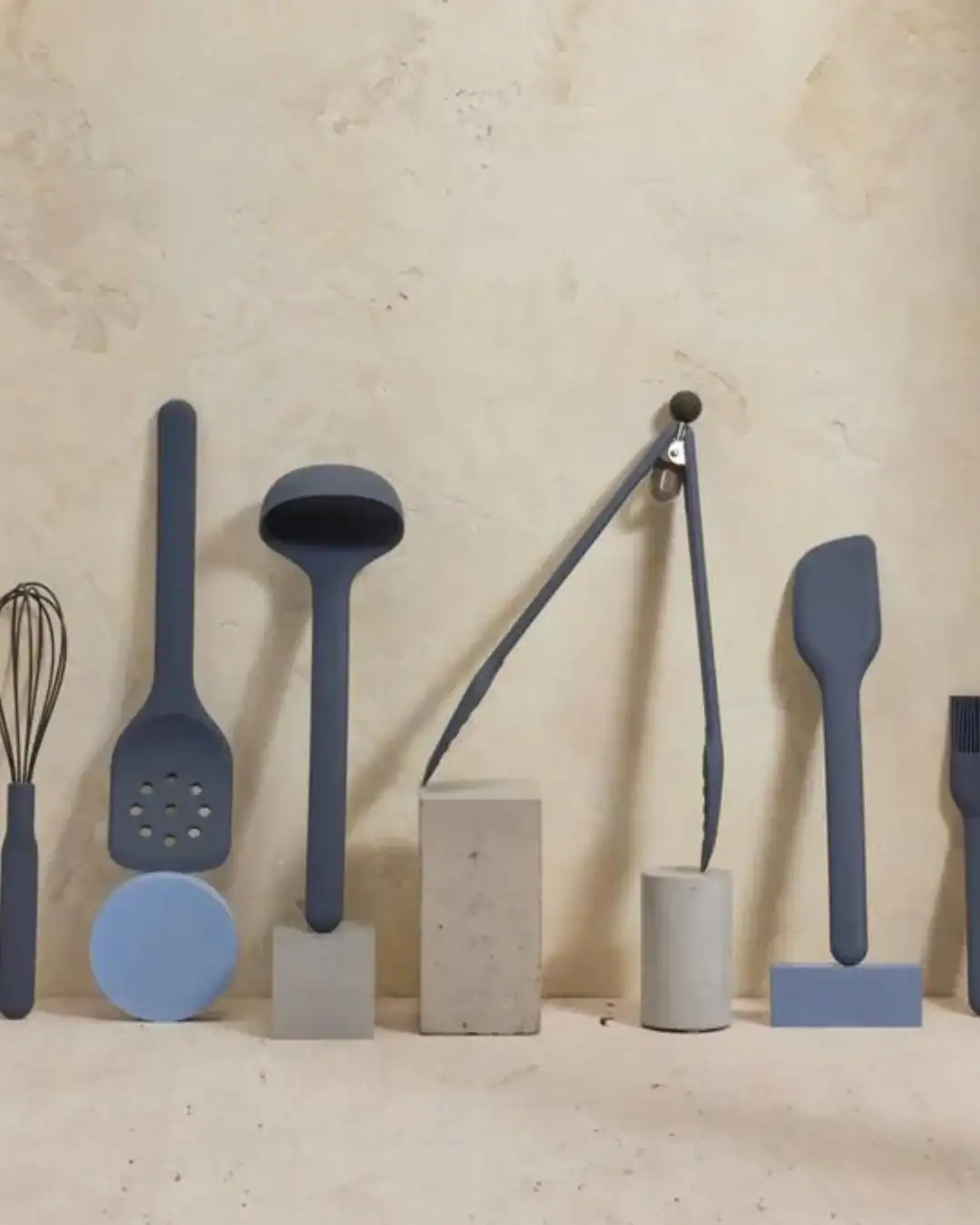
Silicone is one of those materials where quality really matters — and Our Place does a good job of getting it right.
Their utensils are made from BPA-, BPS-, and phthalate-free silicone, designed to be soft enough for nonstick cookware but sturdy enough to actually use without feeling flimsy.
They also offer spoons and spatulas separately, made from 100% natural beechwood.
These are the kinds of utensils that work across almost everything — quick meals, slower cooking, and anything involving delicate surfaces.
Price
$85 (6 pc) | $15+ (2 pc)
MATERIALS
Silicone | 100% Natural Beechwood
Location/Shipping
United States | Ships To Canada, The United Kingdom & Australia
3. All-Clad — Best Stainless Steel Cooking Utensils For High-Heat Cooking
Best For: High-heat cooking and long-term durability
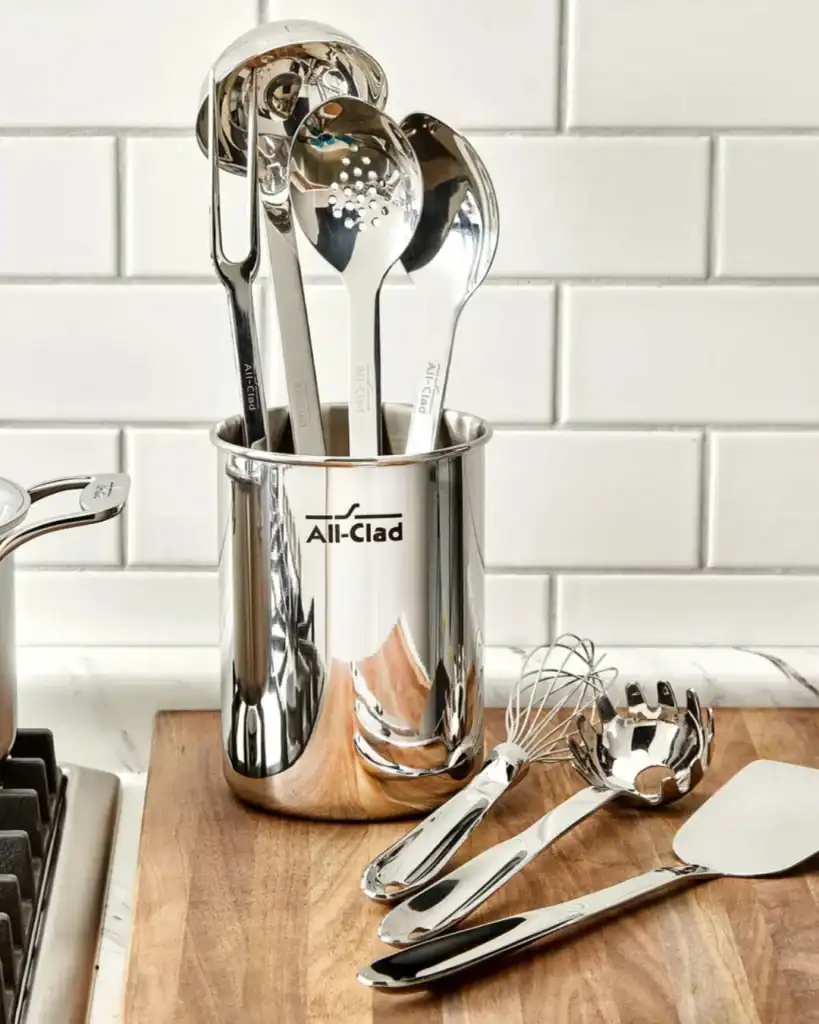
If you cook at higher temperatures or want something that will last for years, stainless steel is hard to beat — and All-Clad does it exceptionally well.
Their utensils are made from polished 18/10 stainless steel, which is known for being stable, non-reactive, and extremely durable.
These are the tools you reach for when you’re searing, sautéing, or doing anything where heat is a factor — without worrying about melting, warping, or breakdown.
They do have a bit more weight to them, but that’s part of what makes them feel solid and reliable.
Price
$99.99 (5 pc)
MATERIALS
18/10 stainless steel
location/shipping
United States | Ships Internationally Via Amazon
4. DaTerra Cucina — Best Artisan Wooden Cooking Utensils
Best For: Natural, hand-crafted utensils with a more traditional feel
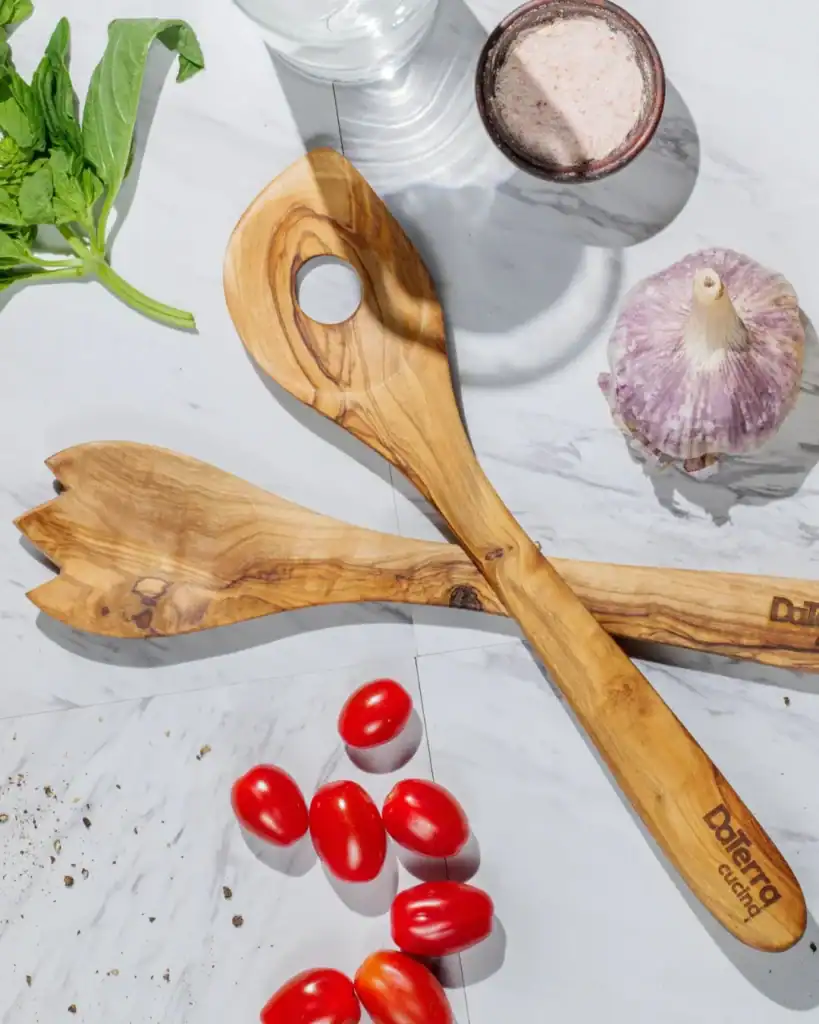
DaTerra Cucina leans into a more traditional approach with their olive wood utensils — and you can feel the difference right away.
Each piece is made from natural Mediterranean olive wood, with unique grain patterns and a slightly heavier, more solid feel compared to lighter wood options.
They’re completely free from synthetic coatings and gentle enough for nonstick cookware, but still sturdy enough for everyday use.
This is less about matching sets and more about having a few really well-made tools that last.
Price
$54 (5 pc)
MATERIALS
100% Solid Olive Wood
location/shipping
United States
5. GreenPan — Best Silicone Utensils For Ceramic Cookware
Best For: Protecting ceramic nonstick surfaces while still having structure
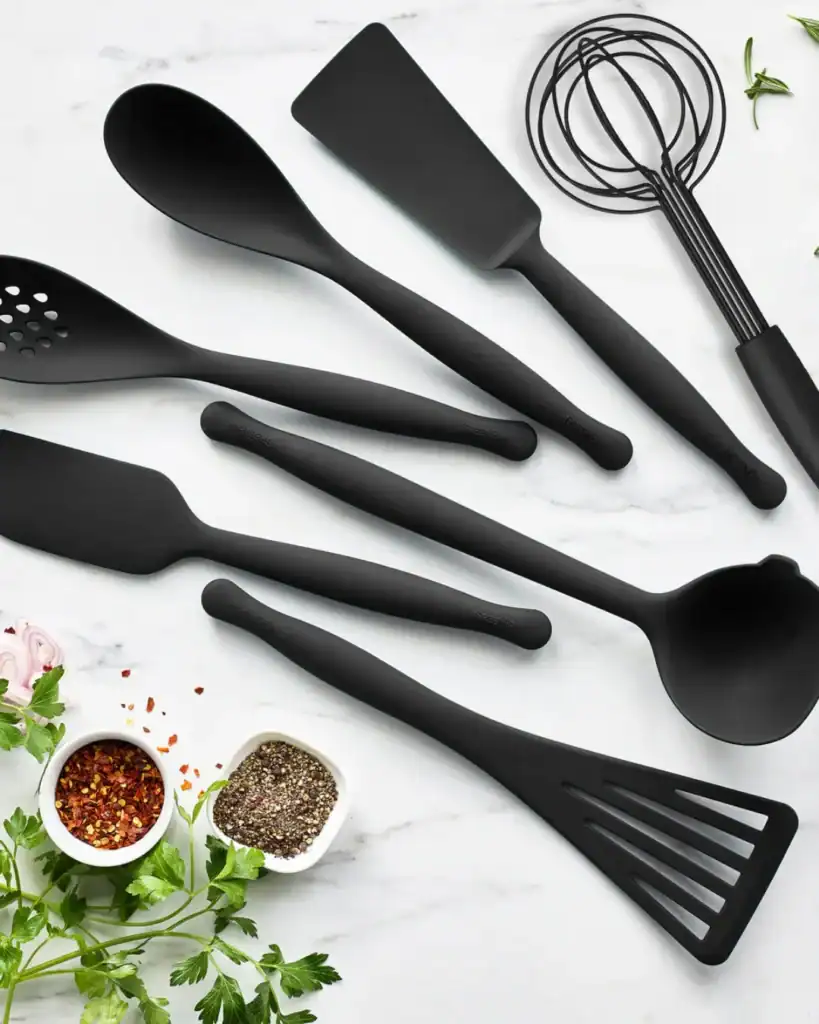
If you’re using ceramic nonstick cookware, softer utensils aren’t optional — they’re necessary.
GreenPan’s silicone tools are designed with that in mind, combining a flexible outer layer with a reinforced core for added stability.
They’re heat-resistant, easy to clean, and hold their shape well over time, which isn’t always the case with lower-quality silicone.
What stands out most is how they feel in use — not floppy or overly soft, but still gentle enough for delicate surfaces.
Price
$139.99 (8 pc)
MATERIALS
BPA-Free Platinum Silicone
location/shipping
United States | Ships Via Region-Specific Websites Only
6. 360 Cookware — Best PFAS-Free Cooking Utensils (Plastic Alternative)
Best For: Avoiding plastic entirely while still having durable, everyday tools
Use discount code SKL15 to save 15%!
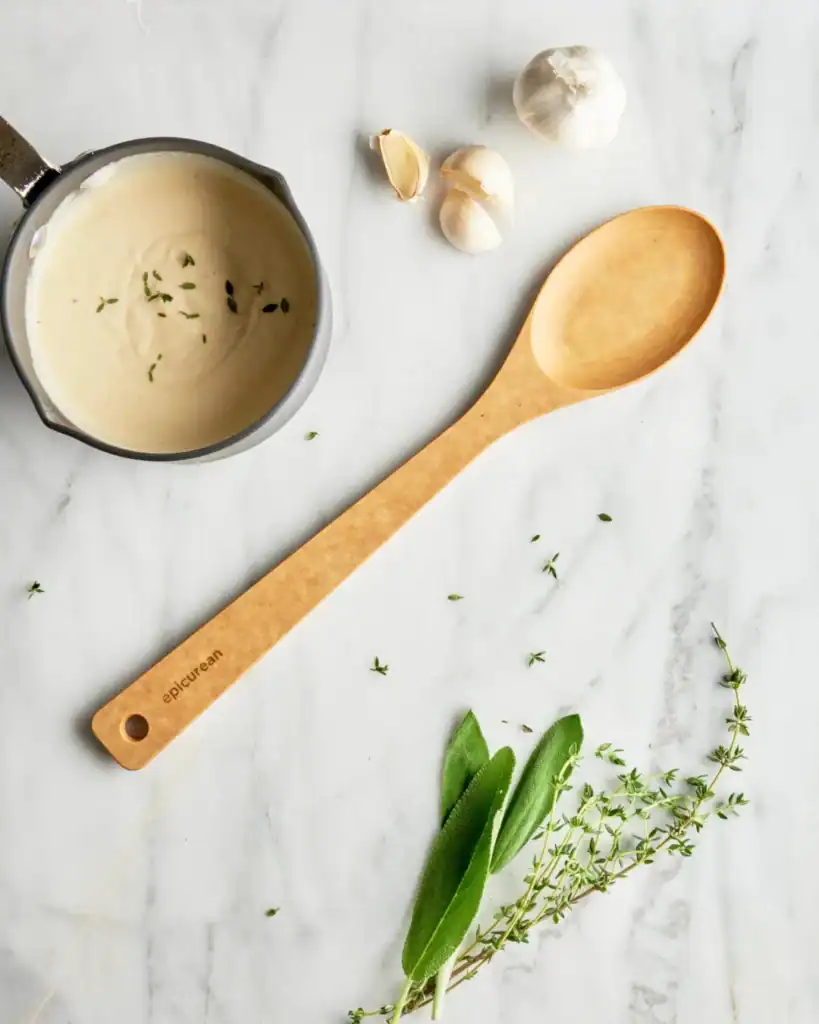
If you’re trying to move away from plastic altogether, 360 Cookware is one of the few brands doing something genuinely different.
Their utensils are made from Richlite, a compressed paper composite that’s completely free from PFAS, PFOA, and PTFE — but still durable enough for regular cooking.
It has a similar feel to wood, but with a bit more structure and resistance to wear over time, especially with frequent use.
It’s not as common as other materials, but that’s kind of the point — it fills a gap for people who want something sturdy without relying on plastic or silicone.
Price
$18.99+ (per piece)
materials
Richlite
location/shipping
United States | Select International Shipping
7. Great Jones — Best Modern Silicone Utensils
Best For: Higher heat cooking with silicone + a more elevated design feel
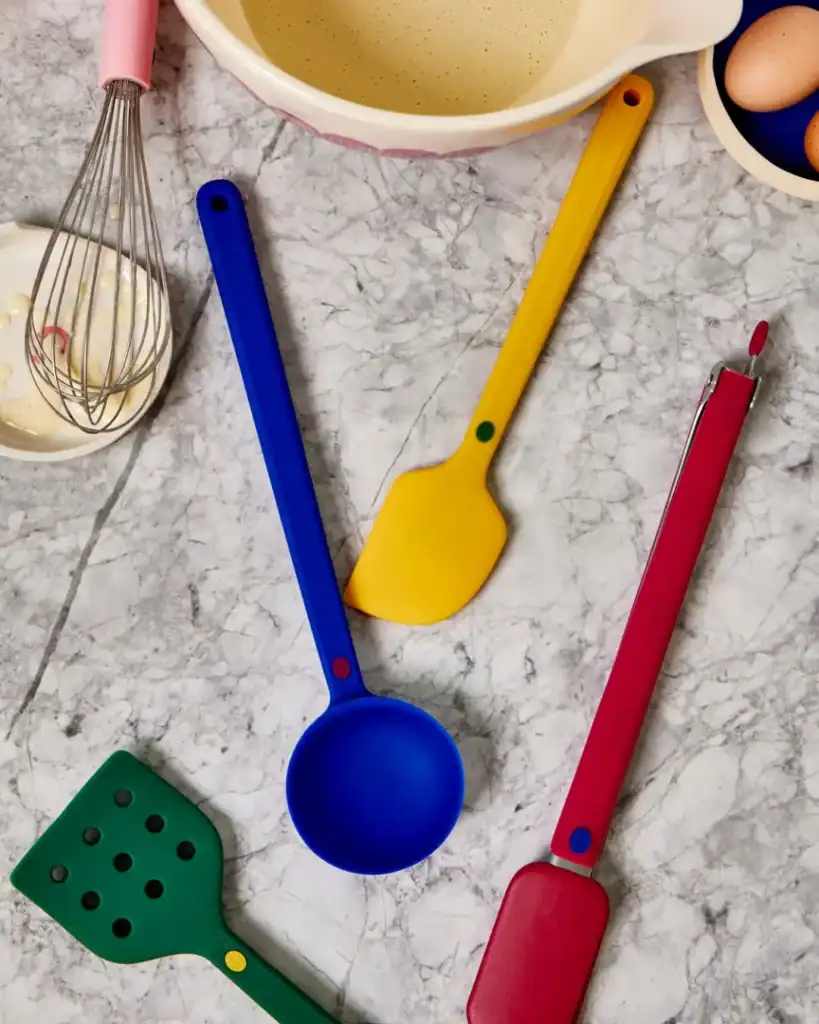
Some silicone utensils feel like an afterthought — these don’t.
Great Jones uses food-grade silicone that’s designed to handle higher heat, paired with a stainless steel core so the utensils hold their shape during use.
That added structure makes a noticeable difference, especially for everyday cooking where flexibility alone isn’t enough.
There’s also a design element here that feels more intentional — clean, minimal, and something you don’t feel the need to tuck away.
Price
$20 (per piece)
MATERIALS
Food-Grade Silicone & Stainless Steel
location/shipping
United States
8. Public Goods — Best Budget Wooden Cooking Utensil Set
Best For: A simple, affordable entry into non-toxic kitchen swaps
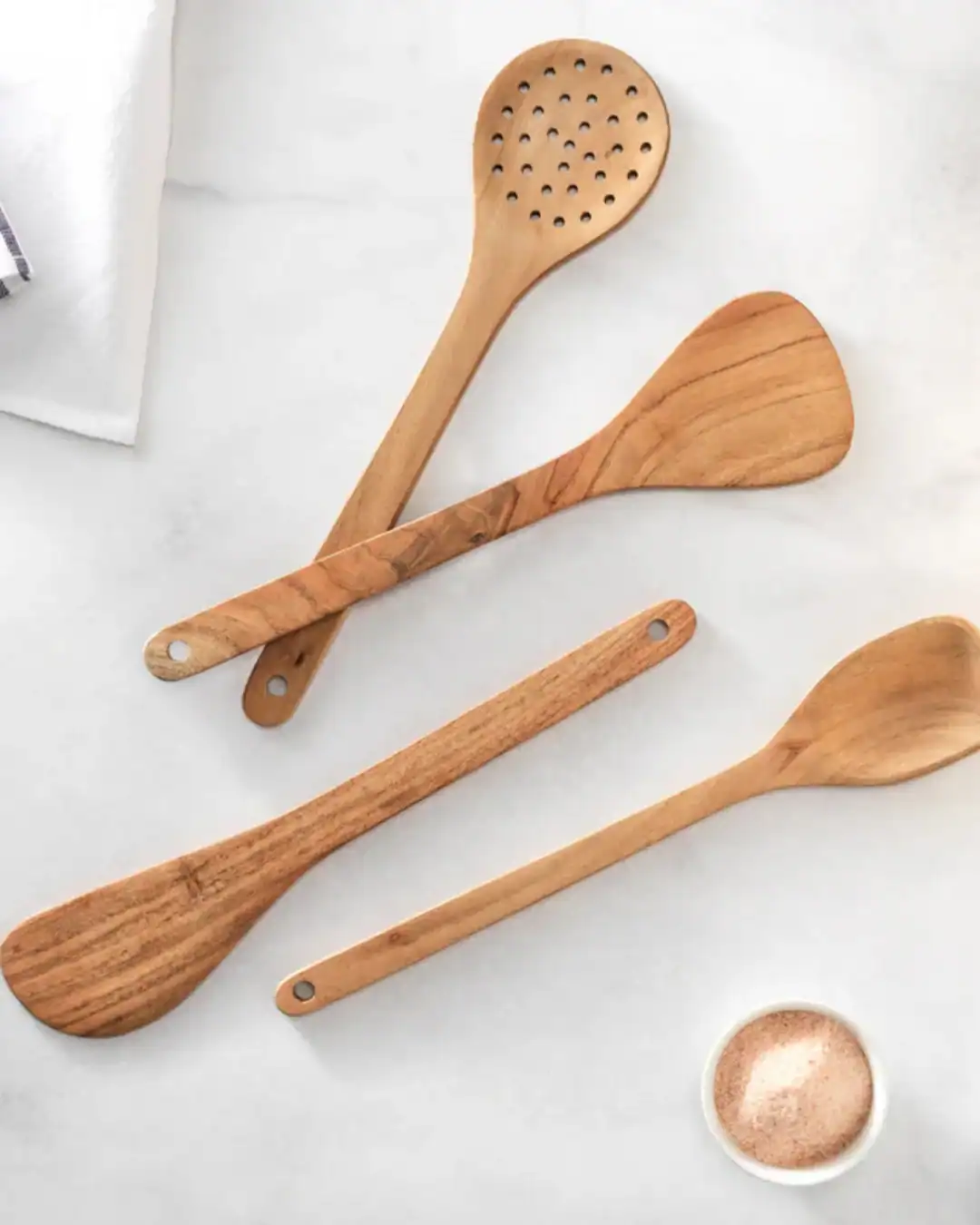
Not everything has to be an investment piece — and Public Goods keeps things straightforward.
Their wooden utensil set is made from sustainably grown acacia wood, with no added coatings or complicated design — just simple, functional tools that work.
They’re lightweight, comfortable to use, and easy to incorporate into a daily cooking routine.
It’s the kind of set that makes the switch away from plastic feel approachable, not overwhelming.
Price
$29.95 (4 pc)
Materials
Sustainably Grown Acacia Wood
Location/Shipping
United States | Ships To Canada
How To Care For Non-Toxic Cooking Utensils
Once you switch to safer materials, a little care goes a long way in keeping them in good shape.
- Wood Utensils — Hand wash only and dry right away. Every so often, apply a food-safe oil (like mineral oil) to prevent drying or cracking.
- Stainless Steel — Dishwasher-safe and very low maintenance. For stuck-on residue, a simple soak or gentle scrub is usually enough.
- Silicone Utensils — Most are dishwasher-safe, but if you notice any buildup or odor, a quick soak in warm water with baking soda can help refresh them.
Taking care of your utensils not only helps them last longer, but also keeps the materials stable — which is the whole point of choosing non-toxic options in the first place.
The Greenwashing Problem With “Non-Toxic” Cooking Utensils
This is where things can get a little misleading.
A lot of kitchen utensils are marketed as “non-toxic,” but when you look closer, that label isn’t regulated in any meaningful way.
So brands can use it… without actually explaining what the product is made of.
You’ll often see terms like:
- “BPA-free”
- “food-grade”
- “eco-friendly”
And while those sound reassuring, they don’t always tell you the full story.
“BPA-free,” for example, doesn’t mean a product is completely free from other plastic-based compounds. It just means one specific chemical has been removed — often replaced with something similar.
The same pattern shows up across the kitchen — from cookware and bakeware to dinnerware and even food storage containers. The label sounds clean, but the materials underneath aren’t always clearly explained.
And silicone is no different. High-quality, platinum-cured silicone can be a great option. But lower-quality versions can contain fillers or blended materials that aren’t always disclosed.
And unless a brand is transparent, it’s hard to tell the difference. Even wooden utensils can be misleading if they’re treated with synthetic coatings or finishes that aren’t clearly labeled.
What I’ve found is that the safest brands tend to be the most straightforward.
They clearly state:
- What materials do they use
- What do they avoid
- How their products are made
No vague language. No over-promising.
Because at the end of the day, these are tools you’re using directly in your food — often at high heat, every single day. And that’s not something I’m willing to guess on.
Frequently Asked Questions About Non-Toxic Cooking Utensils
The safest cooking utensils are made from materials that are stable under heat and don’t rely on chemical coatings — like solid wood, stainless steel, and high-quality (platinum-cured) silicone. These materials don’t break down easily or leach into food during cooking.
Yes — but quality matters. Food-grade, platinum-cured silicone is generally considered safe and heat-stable, while lower-quality silicone can contain fillers that may degrade over time.
Some plastic utensils can release chemicals when exposed to heat, especially if they contain BPA, phthalates, or other additives. This risk increases with repeated use and higher cooking temperatures.
It’s best to avoid low-quality plastic, nylon, melamine, and utensils with unknown coatings. These materials can degrade with heat and aren’t always transparent about what they contain.
Yes — when properly cared for, wooden utensils are safe and naturally resistant to bacteria. Regular washing and occasional oiling help maintain their durability and cleanliness.
Stainless steel is one of the safest materials you can use. It’s non-reactive, extremely durable, and doesn’t leach chemicals into food, even at high temperatures.
“BPA-free” only means the product doesn’t contain that specific chemical — it doesn’t guarantee the material is free from other plastic-based compounds or additives.
Yes, certain materials can leach small amounts of chemicals when exposed to heat, oils, or repeated use. This is more common with plastics and lower-quality synthetic materials.
Bamboo can be a safe option, but it depends on how it’s processed. Some bamboo utensils use adhesives or resins, so it’s important to choose brands that are transparent about their materials.
Wood and high-quality silicone are the best options for nonstick surfaces. They’re gentle, won’t scratch coatings, and are stable under typical cooking temperatures.
Look for brands that clearly disclose materials, avoid vague marketing terms, and don’t rely on coatings or plastic blends. Transparency is usually a better indicator than labels like “eco-friendly” or “green.”
Still Deciding?
If you’re not sure which non-toxic cooking utensils to choose, here’s a quick way to narrow it down:
- Caraway → Best if you want a clean, organized setup with built-in storage.
- Our Place → Best for everyday silicone tools that work across nonstick cookware.
- All-Clad → Best for high-heat cooking and long-term durability.
- DaTerra Cucina → Best for natural, handcrafted wooden utensils with a more traditional feel.
- 360 Cookware → Best if you’re avoiding plastic entirely and want a PFAS-free alternative.
Final Thoughts on Choosing Non-Toxic Cooking Utensils
Upgrading to non-toxic cooking utensils is one of those small changes that ends up having a bigger impact than you expect.
These are tools you use every single day — often without thinking twice — so choosing materials that are stable, durable, and truly safe just makes sense.
The good news is, it doesn’t have to be complicated. Whether you lean toward wood, stainless steel, or high-quality silicone, the goal isn’t perfection — it’s simply being more intentional about what comes into contact with your food.
And once you make the switch, it’s one of those things you don’t really go back on.
Continue Your Non-Toxic Home Journey
If you’re working toward a healthier, lower-toxin kitchen, these guides can help you take the next step:
- Non-Toxic Cookware — Safer pots and pans without PFAS or heavy metals.
- Non-Toxic Bakeware — What to use (and avoid) for high-heat baking.
- Non-Toxic Food Storage — Safer alternatives to plastic containers.
- PFAS Water Filters — Reduce contaminants in your drinking and cooking water.
Small changes add up — and each step moves you closer to a cleaner, healthier home.
📌 Save This Guide for Later
If you’re slowly upgrading your kitchen, this is one of those guides worth coming back to.
This breakdown of the best non-toxic cooking utensils covers what to avoid, which materials are actually safe, and the brands that are doing it right — without the greenwashing.
Save it for later so you have it on hand the next time you’re replacing everyday kitchen tools.
Sources & Further Reading
When it comes to something as everyday as cooking utensils, I always think it’s worth understanding what the research actually says — especially around heat exposure and food contact materials.
Here are some of the most helpful, science-backed resources I’ve come across while researching safer kitchen tools:
- U.S. Food & Drug Administration (FDA) — A helpful overview of how materials used in cookware and utensils are regulated and evaluated for safety. https://www.fda.gov/food/food-ingredients-packaging/food-packaging-other-substances-come-contact-food-information-consumers
- National Institute of Environmental Health Sciences (NIEHS) — Breaks down how BPA interacts with the body and why it’s considered an endocrine disruptor. https://www.niehs.nih.gov/health/topics/agents/sya-bpa/index.cfm
- Centers for Disease Control and Prevention (CDC) — Explains how phthalates are used in plastics and how exposure can occur through everyday products. https://aspe.hhs.gov/cdc-phthalates-factsheet-b1
- Environmental Protection Agency (EPA) — A deeper look into PFAS (“forever chemicals”), including their persistence and potential health effects. https://www.epa.gov/pfas
- Agency for Toxic Substances and Disease Registry (ATSDR) — Simplified toxicology summaries that help connect research findings to real-world exposure. https://www.atsdr.cdc.gov/index.html
- European Food Safety Authority (EFSA) — Offers a more precautionary, research-based perspective on materials used in food-related products. https://www.efsa.europa.eu/en/topics/topic/food-contact-materials
- Environmental Working Group (EWG) — A practical, consumer-friendly breakdown of where PFAS show up and how to reduce exposure. https://www.ewg.org/what-are-pfas-chemicals

Steal My Non-Toxic Cleaning Checklist!
Believe us, it’s the BEST…. and it’s free. Does it really get any better than that?! Sign up for our newsletter and get this free checklist to clean your home without any harmful chemicals!







Discovering the latest insights on kitchen safety and eco-conscious living in the insightful blog “12 Safest Non-Toxic Cooking Utensil Brands of 2024, Tested & Reviewed.” Explore the benefits of using Organic Bamboo Products for a healthier culinary experience.
Help please.
We use a vita mix for protein smoothies. My husband is thrifty and not wanting to waste, has used the plastic vita mix spatulas for years to scrape every last drop.
Having become more aware of toxic materials being ingested from many sources and noticing chips on the edges of all these spatulas, we are now trying to find a safe scrapper spatula.
Please advise considering the blades of the vita mix are very sharp and his scraping every last drop is likely to make contact with those blades inevitable.
Thank you so much for any suggestions and or help you might offer.
Best regards,
Cynthia and Robert
Hi Cynthia! Great question. So vitamix also has an ergonomic food grade silicone spatula (with an iron core) on their site for around $11.95. I would suggest swapping out the plastic spatula for that one 🙂 I want to note that the reviews on the spatula are all over the place – some folks swear by it and others just couldn’t figure it out. The curvature is meant to scrape every last bit from under and around those sharp blades – let me know if you try it and how it works out for you!