 Shop My Favorite Non-Toxic Gifts Of 2026!
SKL is reader supported. When you buy through links on our site, we may earn affiliate commission. Learn more here.
You’d think finding a safe, non-toxic sunscreen for kids and babies would be easy until you actually start reading the ingredients.
Because once you do, you quickly realize how many products marketed as “gentle,” “natural,” or even “kid-friendly” still rely on chemical UV filters, synthetic fragrance, and other ingredients that don’t belong on sensitive, developing skin.
As a mom of three, nothing matters more to me than protecting my kids’ health, which is why I’ve spent years digging into sunscreen formulas that are actually safe for babies, toddlers, and older kids.
SKL Top Picks, In A Nutshell…
If you’re short on time, these are the non-toxic sunscreens I recommend most for kids and babies based on ingredient safety, performance, and real-life use:
- Most Trusted Sunscreen For Kids & Babies: Earth Mama Organics
- Best Non-Toxic Sunscreen For Beach Days & Adventures: Raw Elements
- Best Heavy Duty Mineral Protection: Badger Balm
- Best Widely Available Mineral Sunscreen: Think Sun
And because sunscreen is something we apply generously, often daily, and directly onto some of the most sensitive skin, those ingredient choices matter, especially during long days outside when exposure adds up quickly.
That’s also why I think about sun protection more holistically – from the sunscreen we use to things like non-toxic swimwear for kids and even choosing a non-toxic bug spray for full outdoor protection.
In this guide, I’m breaking down the best non-toxic sunscreens for kids and babies, including the mineral formulas I trust most, what ingredients to avoid, and how to choose a sunscreen that actually protects without compromising on safety.
Best Non-Toxic Sunscreen For Kids & Babies: At a Glance Comparison
(Mobile Users) Scroll to see full comparison →
| Brand | Best For | Texture | Water Resistant | Fragrance Free | Age Range |
|---|---|---|---|---|---|
| Earth Mama Organics | Overall best for babies & families | Lotion + Stick | ✓ | ✓ | 6+ Months |
| Raw Elements | Beach Days, Sports & Outdoor Adventure | Thick Balm + Stick. | ✓✓✓ | Some Formulas. | 6+ Months |
| Badger Balm | Heavy-Duty Mineral Protection | Thick Cream | ✓ | Some Formulas | 6+ Months |
| Think Sun | Widely Available Everyday Sunscreen | Lotion + Stick | ✓ | ✓ | 6+ Months |
Why Choosing A Non-Toxic Sunscreen For Kids Matters
Sunscreen is something you apply often, in larger amounts, and directly onto your child’s skin. And because kids’ skin is thinner and more sensitive, those ingredients matter even more.
Many conventional sunscreens still rely on chemical filters and unnecessary additives, even when labeled “gentle” or “safe.”
That’s why mineral sunscreens made with non-nano zinc oxide have become the safer standard, especially when compared to conventional options often found in mainstream sunscreen products.
They sit on top of the skin, rather than absorbing into it, making them a more predictable, well-tolerated option for daily use.
What To Avoid In Sunscreen For Kids & Babies
One of the biggest challenges with sunscreen is that many formulas still include ingredients that don’t align with truly non-toxic standards, even when they’re labeled as “gentle” or “safe for kids.”
Here are the main ones I avoid:
Chemical UV Filters
Ingredients like oxybenzone, octinoxate, homosalate, and octocrylene are commonly used in conventional sunscreens.
Instead of sitting on the skin, these filters absorb UV rays and can also be absorbed into the body. They’ve been linked to skin irritation and potential hormone disruption, which is why I avoid them entirely for kids.
Fragrance (Synthetic or “Natural”)
Fragrance is one of the most common causes of skin irritation, especially for babies and sensitive skin. Even “natural fragrance” or essential oils can be reactive, and brands aren’t required to disclose what’s included under the term “fragrance.”
Parabens & Harsh Preservatives
Preservatives like parabens are used to extend shelf life, but they’re not always necessary in well-formulated products. Some have raised concerns around hormone disruption and skin sensitivity, especially with frequent, long-term use.
Nano Particles
Some mineral sunscreens use nano-sized zinc oxide or titanium dioxide. While research is still ongoing, I personally stick with non-nano versions, which stay on the surface of the skin rather than interacting at a deeper level.
Hidden Additives
Ingredients like phthalates or formaldehyde-releasing preservatives can still show up under vague labeling. This is where transparency really matters. If a brand isn’t clear about what’s in their formula, I don’t include it.
The same goes for everyday essentials like organic kids’ clothing made without synthetic dyes, finishes, or hidden chemical treatments, because those exposures add up just as much as what we put on their skin.
That’s why every sunscreen in this guide uses mineral-based UV filters and avoids these ingredients altogether.
If you’re comparing options beyond just kids’ products, you can also explore my full guide to non-toxic sunscreen for adults and teens for a broader breakdown of the safest mineral formulas available.
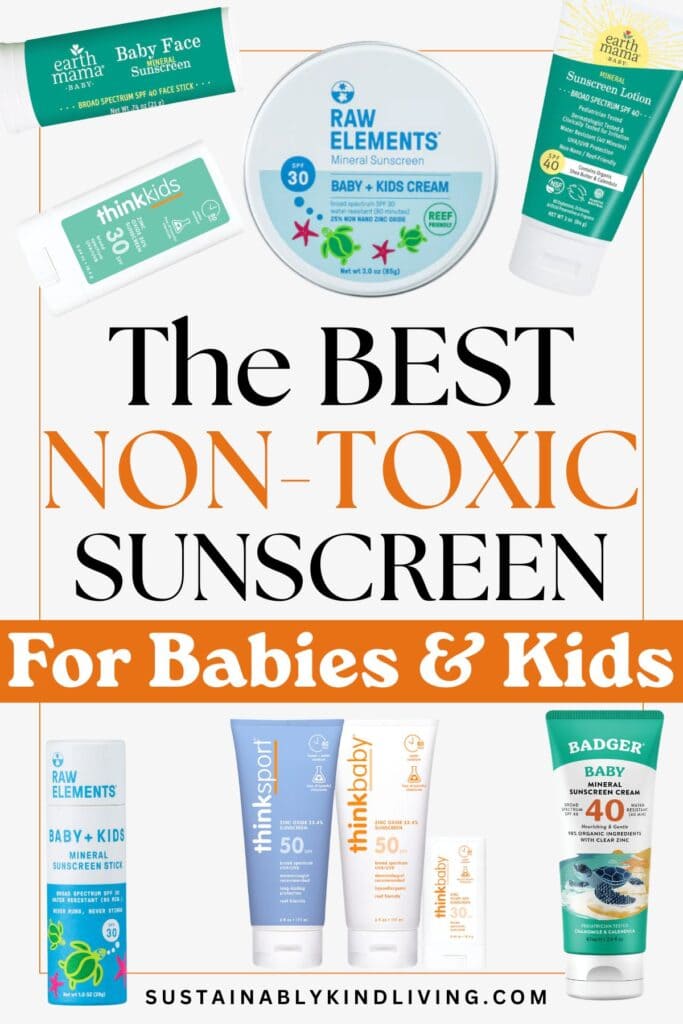
The Best Non-Toxic Sunscreens For Kids & Babies (2026)
1. Earth Mama Organics | Best Non-Toxic Sunscreen For Babies & Kids
Best For: A simple, ultra-gentle, non-toxic sunscreen for babies, toddlers, and sensitive skin.
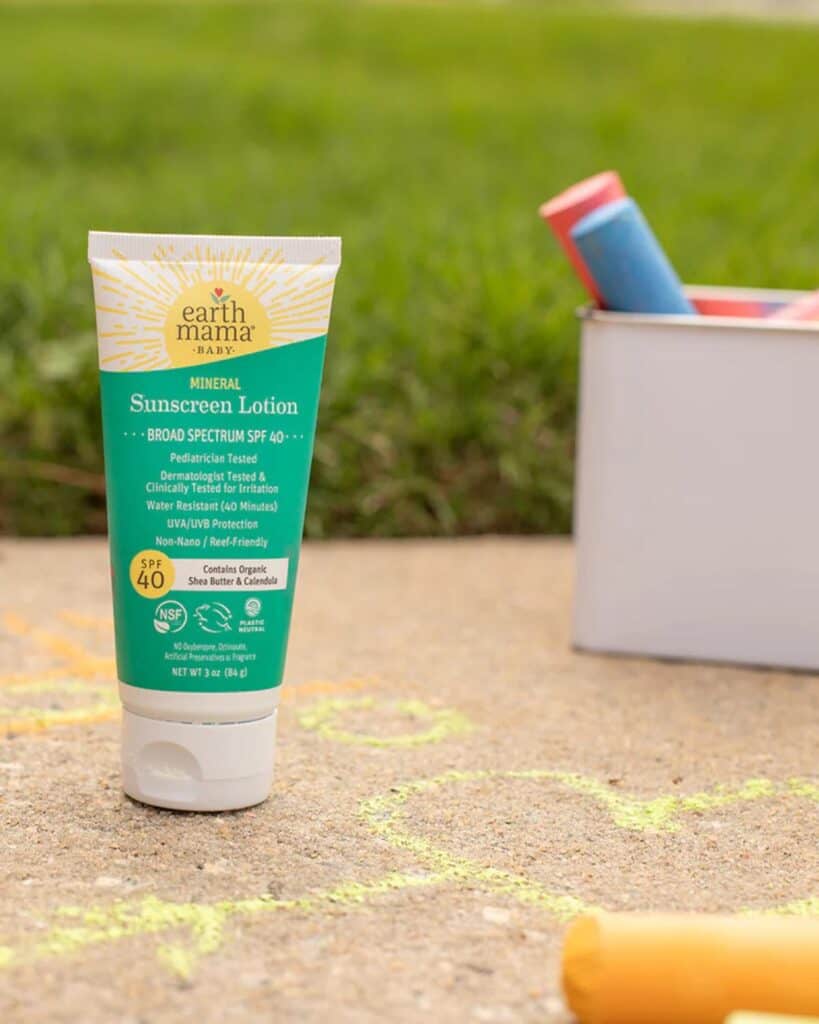
Earth Mama Organics is one of the most reliable options if you’re looking for a truly non-toxic sunscreen for babies that doesn’t overcomplicate things.
The formula is built around non-nano zinc oxide and a handful of organic oils, butters, botanicals, and beeswax.
With no fragrance, no chemical UV filters, and no controversial SPF boosters, it’s one of the simplest sunscreen formulas I’ve found for babies and young children.
I also love that it is completely family friendly as well, including a tinted SPF option for mom.
It’s affordable, accessible, and one of the few mineral sunscreens for kids that parents can feel confident reaching for every single day without second-guessing ingredients.
price
$10.99 (Stick) | $16.99 (Lotion) | $27.98 (Stick & Lotion Bundle)
Key Ingredients
Non-Nano Zinc Oxide (22–25%) | Organic Plant Oils | Natural Waxes | Plant Butters | Soothing Botanicals | Vitamin E
location/shipping
United States | Select International Shipping Available Upon Request
2. Raw Elements | Best Non-Toxic Sunscreen For Outdoor & Active Kids
Best For: Sports, beach days, and long periods of sun exposure.
Use discount code SKL10 to save 10%!
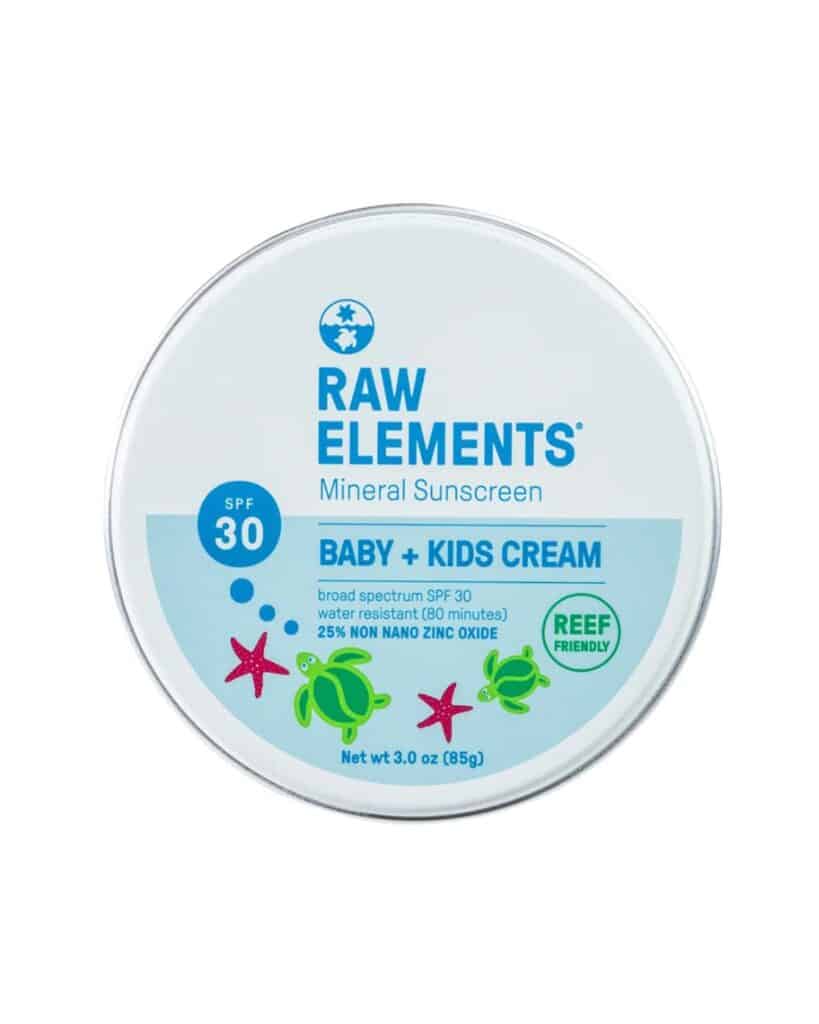
Raw Elements is built for performance, making it one of the best non-toxic sunscreens for active kids.
With a higher percentage of non-nano zinc oxide, this formula is designed to stay put through water, sweat, and constant movement.
It’s a strong option for parents looking for a simple mineral sunscreen that can handle long days outside.
The formula combines non-nano zinc oxide with organic oils, beeswax, botanical extracts, and vitamin E, without relying on fragrance, chemical UV filters, or SPF boosters.
It’s definitely thicker than everyday formulas, but that added durability is exactly what makes it so effective in high-exposure situations.
3. Badger | Best Water-Resistant Non-Toxic Sunscreen
Best For: Long outdoor days, swimming, and water-resistant sun protection for kids.

When you need a non-toxic sunscreen for kids that actually holds up, Badger is one of the most trusted options out there.
Depending on the product, you’re looking at just a handful of ingredients alongside non-nano zinc oxide, including organic oils, beeswax, cocoa butter, shea butter, and vitamin E.
It’s one of the most straightforward mineral sunscreen formulations available.
It’s not the lightest formula, but for performance and reliability, this is one of the best safe sunscreens for kids when you know they’ll be in the sun for hours.
price
$16.99
Key ingredients
Non-Nano Zinc Oxide (18.75–22.5%) | Organic Plant Oils | Beeswax | Plant Butters | Seabuckthorn Extract | Vitamin E
location/shipping
United States | Ships Internationally Via Amazon
4. Think Sun | Best Widely Available Non-Toxic Sunscreen
Best For: A safe, easy-to-find mineral sunscreen for kids and families.
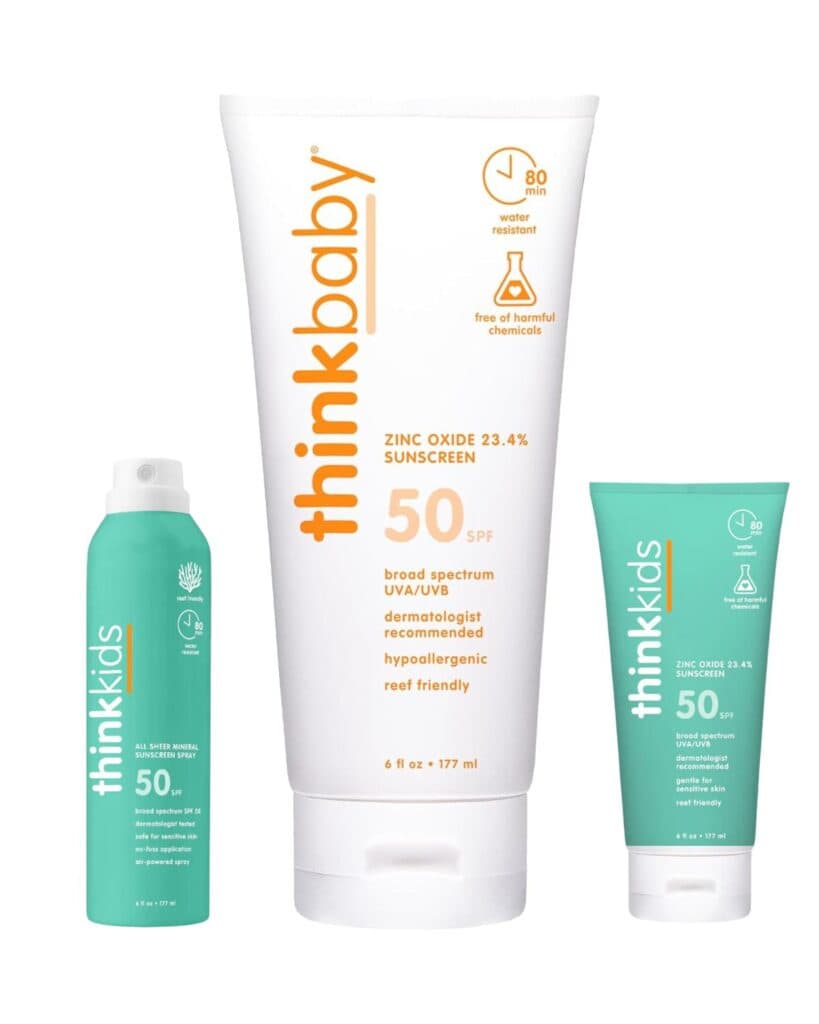
THINK SUN has been a longtime favorite in the non-toxic sunscreen space because it offers mineral sun protection in a formula that’s widely available, reasonably priced, and easy for families to find when they need it.
The formula uses non-nano zinc oxide as the active ingredient and avoids conventional chemical UV filters like oxybenzone, octinoxate, homosalate, and octocrylene.
It also spreads more easily than many traditional mineral sunscreens, making daily application less of a struggle with kids.
While I generally prefer the simpler ingredient profiles found in brands like Earth Mama, Raw Elements, and Badger, THINK SUN remains one of the most accessible mineral sunscreen options available for families who want a safer alternative to conventional sunscreen without hunting down specialty brands online.
SKL Standards
How I Chose The Best Non-Toxic Sunscreens For Kids & Babies
When it comes to sunscreen for kids, I don’t rely on marketing claims. I look at what’s actually in the formula and how it performs in real life.
Because sunscreen isn’t something you use occasionally. It’s something you apply often, in larger amounts, and on some of the most sensitive skin.
Here’s what I prioritized:
Non-Nano Mineral Protection
Every sunscreen in this guide uses non-nano zinc oxide or titanium dioxide for broad-spectrum protection without relying on chemical UV filters.
Simple, Transparent Ingredients
I look for formulas with minimal, clearly disclosed ingredients and avoid hidden additives, vague labeling, and unnecessary fillers.
No Fragrance or Harsh Additives
Fragrance, essential oils, and certain preservatives can increase the risk of irritation, especially for babies and children with sensitive skin.
Real-World Performance
A sunscreen only works if you actually use it. I prioritize formulas that apply easily, stay in place, and hold up to everyday use, whether that’s a quick trip to the playground or a full day at the beach.
Brands I Trust
I focus on brands that are transparent about their ingredients, prioritize safety over trends, and consistently formulate with long-term health in mind.
If a sunscreen didn’t meet these standards, I didn’t include it, no matter how popular or widely recommended it was.
How To Choose The Best Non-Toxic Sunscreen For Your Needs
Not all non-toxic sunscreens work the same way and the “best” option really depends on how you’re using it day to day.
Here’s how to choose the right one for your family:
For Babies & Sensitive Skin
Look for simple formulas with non-nano zinc oxide and minimal ingredients.
Fragrance-free options are key here, along with gentle, well-tolerated formulas that won’t overwhelm delicate skin.
This is where baby-specific mineral sunscreens tend to work best.
For Everyday Use
If you’re applying sunscreen regularly (school, park, quick outings), texture and ease of use matter just as much as ingredients.
Stick formats or lightweight lotions make reapplication easier, which is often the biggest challenge with kids.
For Beach Days & Swimming
Water resistance becomes much more important. Thicker mineral sunscreens with higher zinc content tend to hold up better during swimming, sweating, and long periods of sun exposure.
And for long days outside, I also think about the basics we rely on constantly, like non-toxic water bottles that won’t leach when they’re sitting in the sun or heat, since those exposures add up over time too.
For Active Kids & Sports
Look for formulas that are designed to stay in place.
A durable, non-toxic sunscreen that won’t drip into eyes or wear off quickly makes a big difference when kids are constantly moving.
For Quick, Accessible Options
If you need something you can grab quickly, look for widely available mineral sunscreens that still use non-nano zinc oxide and avoid chemical filters.
Consistency matters more than perfection – especially with sunscreen.
At the end of the day, the best non-toxic sunscreen for kids is the one you’ll actually use consistently with ingredients you feel confident about.
Why Most “Non-Toxic” Sunscreens Aren’t Actually Non-Toxic
One of the biggest challenges when shopping for sunscreen, especially for kids, is how misleading the marketing can be.
Terms like “reef-safe,” “clean,” “natural,” and even “non-toxic” are used everywhere… but they’re not regulated in any meaningful way.
Which means they don’t actually tell you what’s in the formula.
“Reef-Safe” Doesn’t Mean Safe For Your Skin
Many sunscreens labeled “reef-safe” simply remove a couple of well-known ingredients like oxybenzone, but still include other chemical filters or questionable additives.
It’s a marketing term, not a safety standard.
“Clean” & “Natural” Are Vague
Brands often use these words to signal safety, but they don’t require full transparency.
A product can still contain fragrance, preservatives, or other ingredients that don’t align with truly non-toxic standards, even if it’s labeled “clean.”
Even Some Mineral Sunscreens Miss The Mark
Not all mineral sunscreens are created equal. Some use nano-sized particles, include unnecessary additives, or combine zinc with ingredients that compromise the overall formula.
What Actually Matters
Instead of relying on front-label claims, it’s more important to look at:
- The active ingredient (non-nano zinc oxide is the gold standard)
- The full ingredient list
- Whether the brand is transparent about formulation
Because of this, I don’t include brands that rely on vague claims, unclear ingredient sourcing, or formulas that don’t meet these standards, even if they’re popular.
Frequently Asked Questions About Non-Toxic Sunscreen for Kids & Babies
The safest sunscreen for kids and babies is a mineral sunscreen made with non-nano zinc oxide. It sits on top of the skin and avoids chemical UV filters.
Yes. Mineral sunscreen is generally better for kids because it uses zinc oxide to block UV rays without being absorbed into the skin.
Avoid oxybenzone, octinoxate, homosalate, octocrylene, fragrance, and parabens. These ingredients can irritate sensitive skin.
Babies under 6 months should rely on shade and clothing. For older babies, use a non-toxic mineral sunscreen on exposed skin.
Non-nano zinc oxide stays on the surface of the skin and reflects UV rays instead of being absorbed.
Not always. “Reef-safe” is a marketing term and doesn’t guarantee a non-toxic formula. Always check the ingredients.
Reapply every 2 hours, or after swimming or sweating.
SPF 30 or higher is recommended. Proper application matters more than choosing a very high SPF.
Yes, for babies over 6 months, daily use of a mineral sunscreen is generally considered safe when applied as directed.
Baby sunscreen is typically made with simpler, gentler ingredients and avoids fragrance and harsh additives, making it better suited for sensitive skin.
SPF 50 offers slightly more protection, but proper application and reapplication matter more than the SPF number itself.
Still Not Sure Which Non-Toxic Sunscreen To Choose?
If you’re feeling stuck, here’s the simplest way to decide:
- For Babies or Very Sensitive Skin: Go with Earth Mama Organics
- For Beach Days & Water Play: Choose Badger or Raw Elements
- If You Want Something Accessible & Reliable: THINK SUN is the easiest option to find
You really don’t need to overcomplicate it. All of the sunscreens in this guide meet the same core standards: non-nano mineral protection, simple ingredients, and no unnecessary additives.
👉 The best choice is the one that fits your routine and that you’ll actually use consistently.
Final Thoughts on Non-Toxic Sunscreen For Babies & Kids!
Finding a non-toxic sunscreen for kids and babies can feel overwhelming at first – especially once you realize how many products don’t live up to their claims. But it doesn’t have to be complicated.
Once you know what to look for: simple ingredients, non-nano mineral protection, and brands that are actually transparent, it becomes much easier to choose something you feel good about using every day.
Because at the end of the day, sunscreen isn’t just about SPF. It’s about consistency, trust, and knowing that what you’re putting on your child’s skin actually aligns with your standards.
Continue Building Your Non-Toxic Summer Routine
If you’re working toward a lower-tox lifestyle beyond sunscreen, these are the guides I recommend next:
- Non-Toxic Sunscreen (Adults): The best mineral sunscreens for everyday use.
- Non-Toxic Skincare Brands: Trusted brands with transparent, safer ingredients.
- Non-Toxic Swimwear For Kids: Reduce exposure with safer materials and fabrics.
- Non-Toxic Bug Spray: Safer alternatives for outdoor protection.
- Non-Toxic After Sun Lotions: Safe alternatives for conventional after sun balms and lotions.
📌 Save This Guide For Later
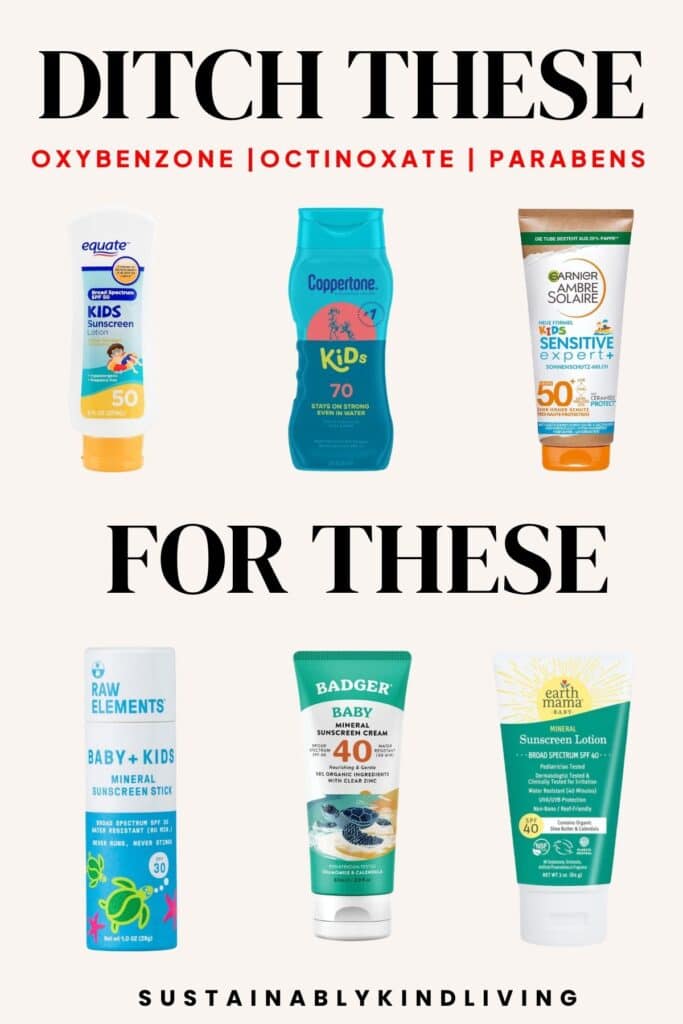
If you’re trying to find a truly non-toxic sunscreen for kids & babies, this breaks it all down. What ingredients to avoid (like oxybenzone & fragrance), why non-nano zinc oxide matters, and the safest mineral sunscreens parents actually trust. Perfect for beach days, everyday wear, and sensitive skin.
Sources & Further Reading
When it comes to choosing non-toxic sunscreen for kids and babies, I’ve learned that it’s important to look beyond marketing claims and understand how ingredients are actually evaluated.
The resources below are some of the organizations and research bodies I regularly reference when reviewing sunscreen safety, ingredient exposure, and skin health, especially for children.
They provide deeper insight into how sunscreen ingredients interact with the body, what current research says about safety, and how to make more informed decisions when choosing products for your family.
- Environmental Working Group (EWG): EWG researches chemical exposure in everyday products and maintains one of the most widely used consumer databases for ingredient safety. Their sunscreen guides and reports highlight concerns around common UV filters and help identify safer alternatives.
- Yale Medicine: Yale Medicine provides research-backed guidance on sunscreen safety, including how different types of UV filters work and what to consider when choosing between mineral and chemical formulas.
- Scientific Committee on Consumer Safety (SCCS – European Commission): The SCCS evaluates the safety of cosmetic ingredients used in personal care products. Their opinions on ingredients like homosalate and octocrylene help shape regulatory decisions and safety standards.
- Therapeutic Goods Administration (TGA – Australia): The TGA has conducted in-depth reviews on the safety of zinc oxide and titanium dioxide nanoparticles in sunscreen, offering important context around mineral vs. nano formulations.
- Environmental Health & Toxicology Research (Various Studies): Multiple peer-reviewed studies have explored how common sunscreen ingredients interact with the body, including potential hormone disruption, skin absorption, and long-term exposure concerns.
- Breast Cancer Prevention Partners (BCPP): BCPP provides research and education on chemicals linked to hormone disruption, including parabens and other preservatives sometimes found in personal care products.
- American Cancer Society: The ACS offers evidence-based information on carcinogenic substances, including formaldehyde and formaldehyde-releasing preservatives used in some cosmetic formulations.
- Campaign for Safe Cosmetics: This organization focuses on ingredient transparency and highlights potential concerns with commonly used cosmetic chemicals, including UV filters like octinoxate.
- Infant Skin Research (Pediatric Dermatology Studies): Research shows that infant skin is thinner, more permeable, and structurally different from adult skin, which is why ingredient exposure matters more for babies and young children.
The goal isn’t to make sunscreen feel complicated, it’s to understand enough to make confident, informed choices.
Because once you know what to look for, it becomes much easier to filter through the noise and choose products that actually align with your standards.

Steal My Non-Toxic Cleaning Checklist!
Believe us, it’s the BEST…. and it’s free. Does it really get any better than that?! Sign up for our newsletter and get this free checklist to clean your home without any harmful chemicals!