 Shop My Favorite Non-Toxic Gifts Of 2026!
SKL is reader supported. When you buy through links on our site, we may earn affiliate commission. Learn more here.
After testing more than 15 non-toxic hair dyes, I can tell you this category is much more complicated than the marketing makes it sound.
I wanted formulas that could actually cover gray hair well without relying on some of the harsher ingredients commonly found in conventional hair dye. That meant looking far beyond labels like “natural,” “clean,” and even “ammonia-free,” because those claims did not always tell me much about the full formula.
Some dyes performed beautifully but missed the mark on ingredients. Others looked great on paper but did not deliver the color, coverage, or staying power I expected.
These are the five that stood out after all that testing.
My Top Picks, In A Nutshell…
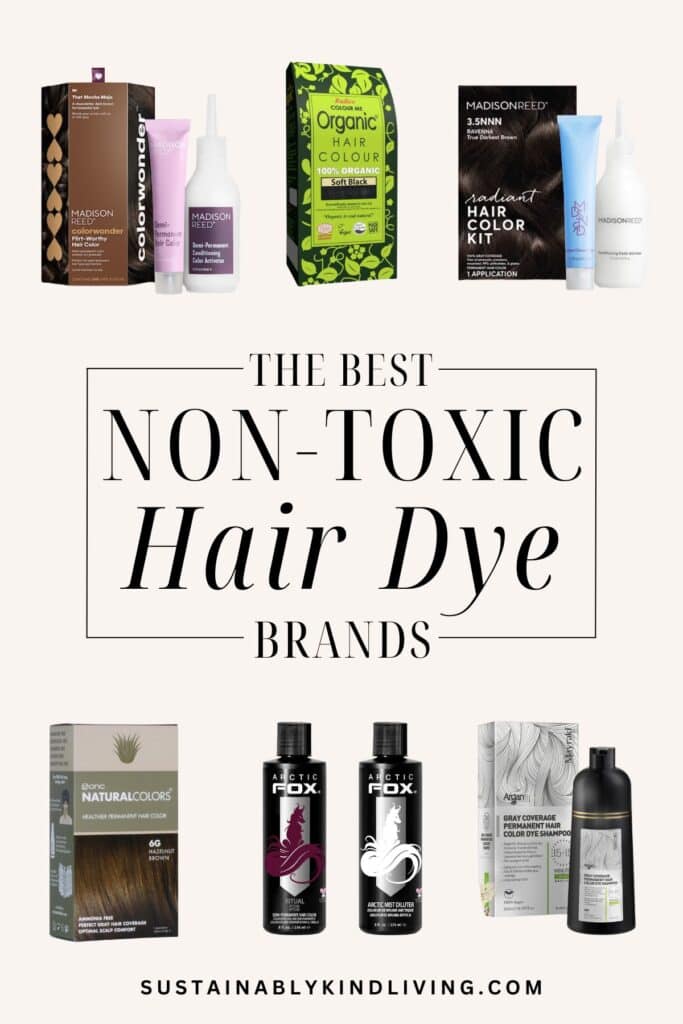
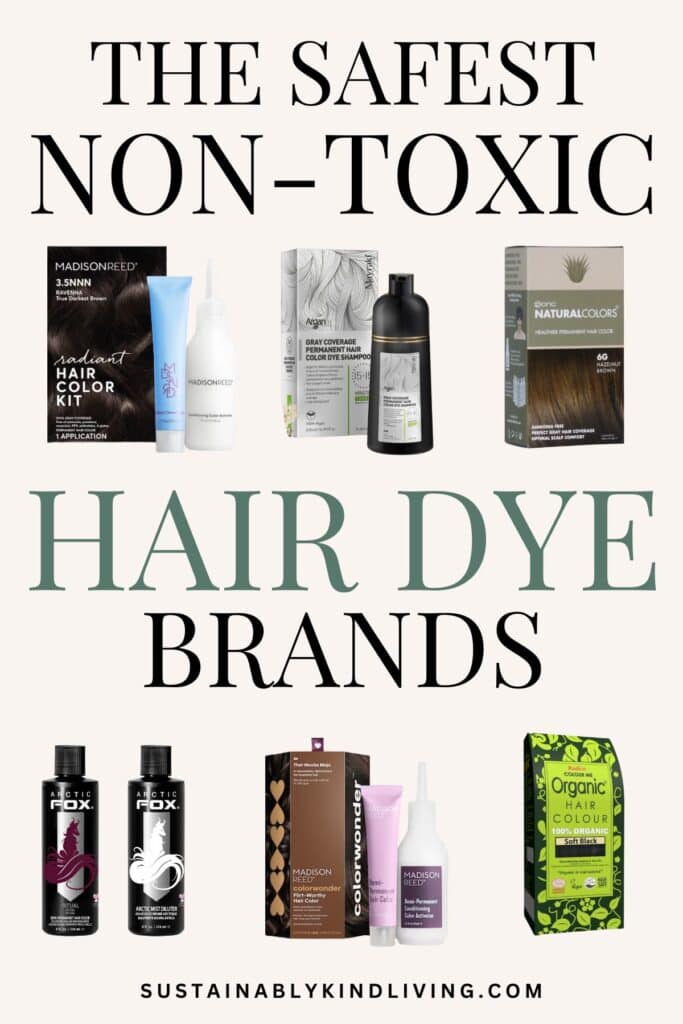
- Best Permanent Hair Dye for Gray Coverage: Madison Reed
- Safest Certified Organic Hair Dye: Radico Colour Me Organic
- Best Non-Toxic Hair Color Shampoo For Gray Hair: Mayraki
- Best Semi-Permanent Non-Toxic Hair Dye: Arctic Fox
- Best Heat-Activated Low-Toxic Hair Dye: ONC Natural Colors
Over more than a year of testing, I worked alongside six SKL editors and research assistants to try some of the most popular hair dye brands on the market.
Together, we evaluated each formula for ingredient transparency, gray coverage, ease of application, scalp comfort, color longevity, and overall performance.
Then we went back through the ingredient lists, looked beyond vague marketing claims, and cut the brands that did not meet our standards for transparency, performance, or formulation.
That process is how we narrowed 15+ dyes down to the five in this guide.
Best Non-Toxic Hair Dye Brands: At a Glance Comparison
(Mobile Users) Scroll to see full comparison →
| Brand | Why We Chose It | Who It’s Best For | Price |
|---|---|---|---|
| Madison Reed | Most even, natural-looking gray coverage | Full gray coverage | $35 |
| Radico Colour Me Organic | Cleanest formula we tested | Ingredient-conscious shoppers | $22 |
| Mayraki | Shampoo-style application simplified gray coverage | Easy gray maintenance | $39 |
| Arctic Fox | Vibrant semi-permanent color | Fashion colors | $12 |
| ONC Natural Colors | Heat-activated formula left hair shinier | Healthy-looking permanent color | $38.50 |
How We Tested These Hair Dyes
Every recommendation in this guide passed both our ingredient review and hands-on testing.
Over the course of more than a year, our team evaluated each formula for ingredient transparency, gray coverage, ease of application, scalp comfort, color longevity, and overall hair health.
Want to see our complete testing methodology? Jump to How We Tested & Vetted These Hair Dyes ↓
Why Non-Toxic Hair Dye Matters
Hair dye isn’t a five-minute product. It sits on your scalp for 30 to 45 minutes at a time, and most people repeat that every four to eight weeks for decades. That’s chronic exposure, not a spot treatment.
The problem isn’t usually one ingredient. It’s how many a single formula stacks together.
Most conventional permanent dyes combine ammonia to open the hair cuticle, an aromatic amine like p-phenylenediamine (PPD) to develop pigment, resorcinol to build depth and tone, and synthetic fragrance to mask the smell of all three.
Each one adds its own risk. Together, they compound.
PPD alone is one of the most common causes of contact allergy in cosmetics, with reactions ranging from mild irritation to severe allergic response, sometimes appearing after years of trouble-free use.
The 36-year Nurses’ Health Study cohort of 117,200 women, published in The BMJ, found a dose-dependent association between cumulative hair dye use and hormone-receptor-negative breast cancer and ovarian cancer.
Resorcinol adds its own layer. French regulators (ANSES) have moved to classify it as a proven endocrine disruptor that disrupts thyroid hormone synthesis. It shows up in 40% of professional hair dyes on the market, and home formulas aren’t meaningfully different.
Whether you’re looking for complete gray coverage, a gentler option for a sensitive scalp, or a truly plant-based formula, I hope this guide helps you find a hair dye you can feel good about using.
The 5 Best Non-Toxic Hair Dyes We Tested
1. Madison Reed | Best For Gray Coverage
Best For: Anyone who colors gray hair regularly and wants dependable coverage with a more transparent formula.
Gray coverage was one of the biggest priorities in our testing because it’s often where most hair dyes fall short.
To evaluate it fairly, we had an internal SKL reviewer with a full head of naturally gray hair test each formula in this category.
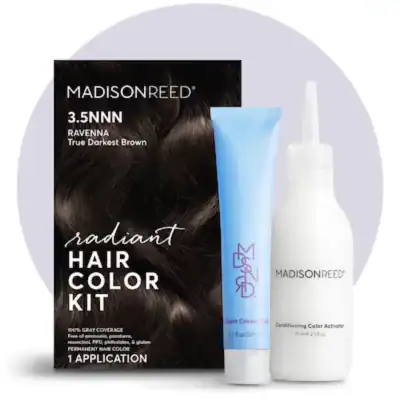
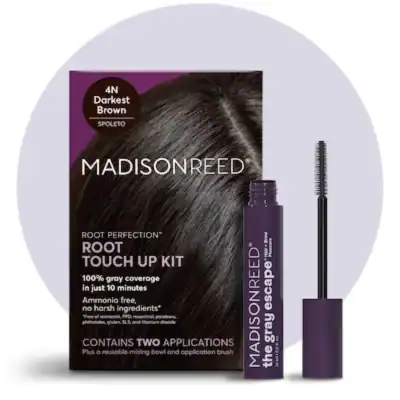
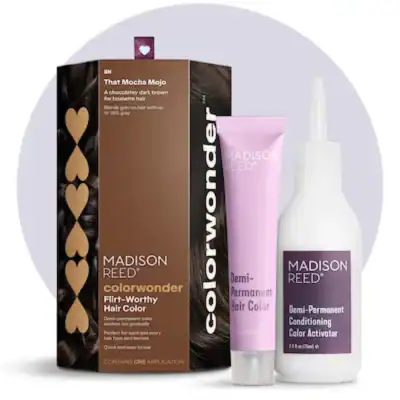
Madison Reed delivered the most even, natural-looking gray coverage of the brands we tested.
It also felt more comfortable to apply than many conventional box dyes, without the overpowering chemical smell that’s common with permanent hair color.
Our tester’s exact words after rinsing: “This is the closest I’ve gotten to my old salon color at home.”
Price Range
Starting around $35
Free From
Ammonia (uses Ethanolamine) | PPD (uses PTDS) | Resorcinol (uses 2-Methylresorcinol) | Parabens | Phthalates | SLS or Sodium Lauryl Sulfate | Titanium Dioxide | Gluten
location/shipping
United States
SKL Testing Profile
Tested by an internal SKL reviewer with a full head of naturally gray hair to evaluate gray coverage, application comfort, color longevity, and overall performance.
SKL verdict
Madison Reed earned our recommendation because it delivered the strongest gray coverage of any brand we tested.
If you have a diagnosed PPD allergy, PTDS still carries cross-reactivity risk, so this formula isn’t a guaranteed workaround.
Overall, we think it’s a meaningful step up from conventional drugstore dye, and one of the more honestly formulated permanent options we tested.
Our Top Madison Reed Picks:
2. Radico Colour Me Organic | Best Certified Organic Hair Dye
Best For: Anyone who wants the cleanest ingredient list possible without synthetic hair dyes.
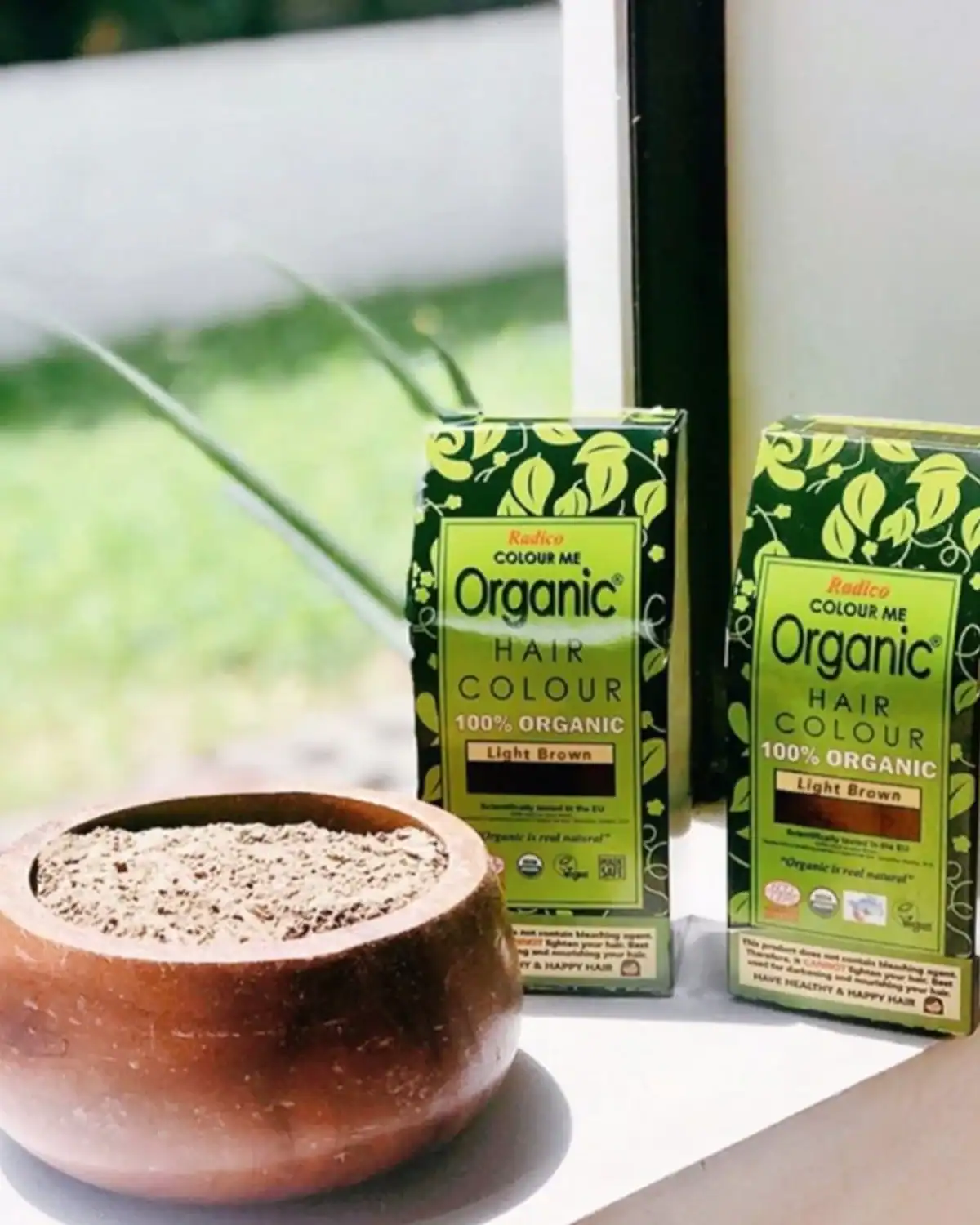
Radico Colour Me Organic was unlike anything else I tested. It immediately stood out during our ingredient review because it’s the only brand on this list that’s certified by USDA Organic, ECOCERT COSMOS Organic, and MADE SAFE®.
Instead of relying on synthetic dyes or developers, it’s made entirely from certified organic herbs that you mix with warm water yourself. That also makes the coloring experience completely different.
Rather than opening a bottle of dye, I mixed the herbal powder into a thick paste before applying it. I’ll admit, I wasn’t sure what to expect.
I tested the Soft Black shade, and despite the extra preparation, I loved the results. The color looked rich and natural instead of flat or artificial, and my hair felt incredibly soft and healthy afterward.
This isn’t the right choice if you’re looking for a quick root touch-up. But if your priority is using the cleanest formula possible, I don’t think there’s a better option on this list.
Price Range
Starting from $22
free from
Ammonia | Peroxide | PPD | Resorcinol | Parabens | Artificial Fragrance | Silicones | SLS/SLES
location/shipping
United States | Ships Internationally
skl testing profile
Personally tested by me (Danielle) in Soft Black to evaluate color payoff, ease of application, and overall performance using a 100% certified organic herbal formula.
skl verdict
The cleanest hair dye we tested and the one we’d recommend to anyone looking for a truly certified organic formula.
3. Mayraki | Best Non-Toxic Hair Color Shampoo For Gray Hair
Best For: Anyone who wants a faster, less messy way to cover gray hair at home.
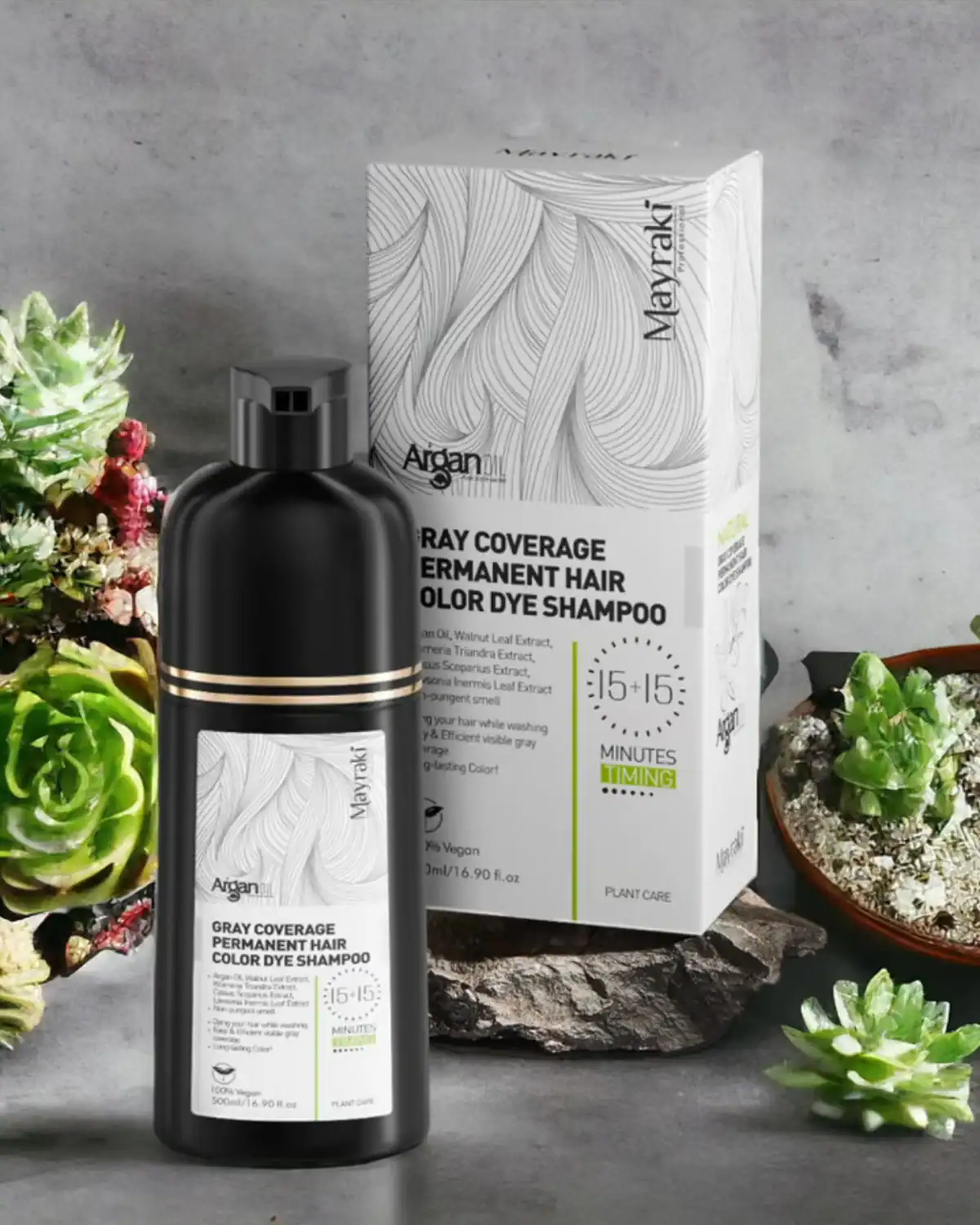
My husband was the perfect person to test Mayraki. He has about 50% gray hair but always refused to color it because the process felt like too much work.
Mixing dye, waiting around, and cleaning everything up just wasn’t worth it to him, even though his gray hair bothered him.
That’s why I asked him to try Mayraki. It completely changed his mind. Because it applies like a shampoo, it fits naturally into his routine, covers his gray hair well, and leaves his hair looking healthy and natural. He’s been using it ever since.
The only downside we noticed was a small amount of color transfer onto pillowcases and towels after application, so we’d recommend using darker linens until after your first wash.
After passing both our ingredient review and hands-on testing, Mayraki easily earned a place on this list.
Price Range
$39 (lasts 3-4 weeks)
free from
Ammonia | PPD | Resorcinol | Parabens | Sulfates (SLS/SLES)
location/shipping
Singapore | Ships To The United States & Worldwide
skl testing profile
Tested by my husband, who has approximately 50% gray hair, to evaluate gray coverage, ease of application, longevity, and overall performance.
skl verdict
The easiest product we tested for covering gray hair, though we did notice some temporary color transfer onto fabrics after application.
4. Arctic Fox | Best Semi-Permanent Non-Toxic Hair Dye
Best For: Anyone who wants vibrant color without the long-term commitment of permanent hair dye.
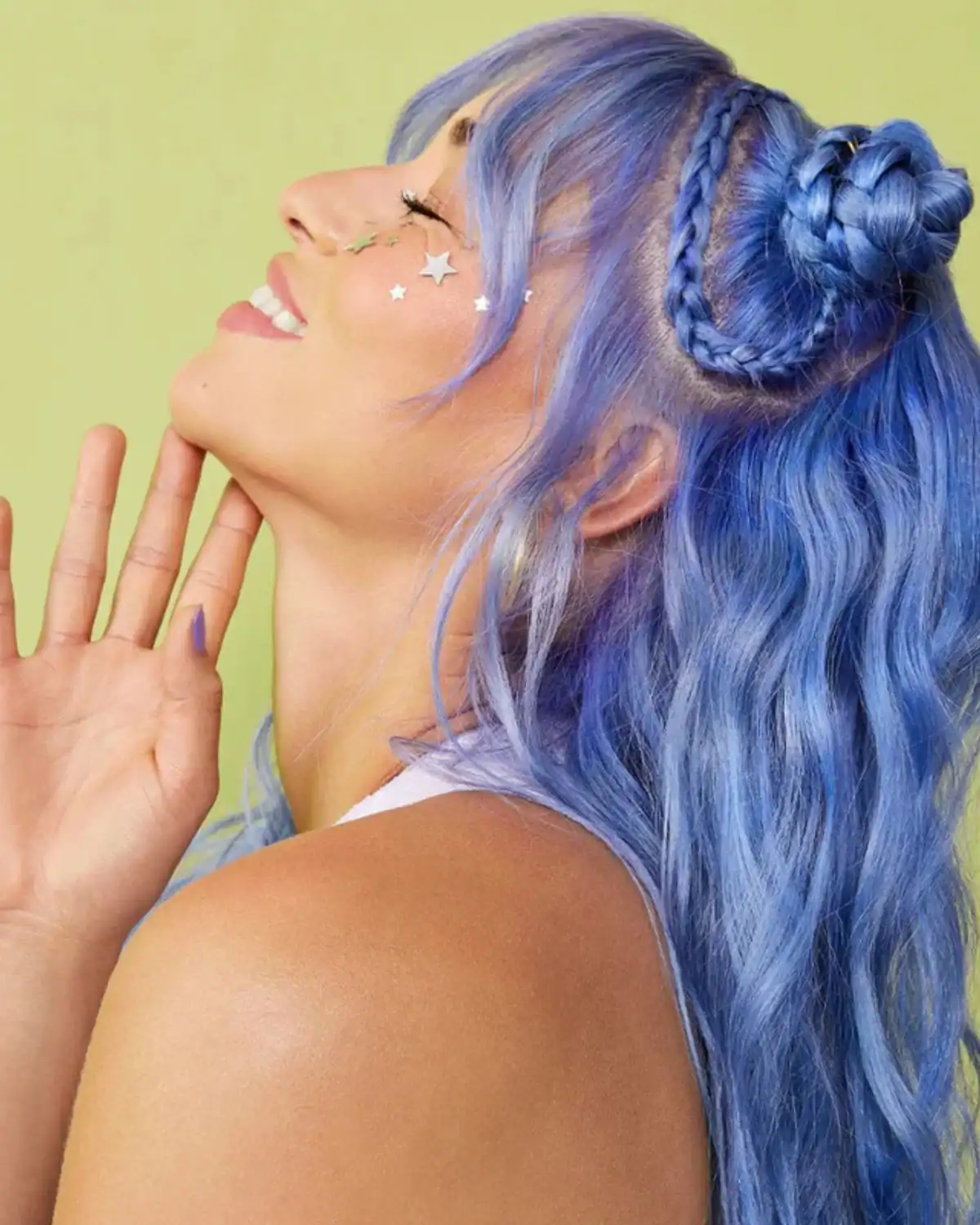
Because Arctic Fox is designed for creative color rather than gray coverage, we wanted to see how it performed on different starting points.
Two SKL editors tested it, one with highlighted hair and another with lighter hair, to compare how the color applied, developed, and faded over time.
The biggest thing we noticed was how easy it was to work with. The creamy formula spread evenly, there wasn’t an overpowering chemical smell, and the color deposited beautifully without feeling harsh on the hair.
As a semi-permanent dye, it also faded gradually instead of leaving a noticeable line of regrowth, making it easy to switch shades or simply let the color wash out over time.
Arctic Fox earned its place on this list because it makes experimenting with color feel approachable.
If you’re looking for vibrant shades without committing to permanent dye, it’s one of the easiest and most enjoyable formulas we tested.
Price Range
Starting around $12
free from
Ammonia | Peroxide | PPD
location/shipping
United States | Ships Internationally
skl testing profile
Tested by two SKL editors on different hair types and starting colors to evaluate color payoff, fade, application, and overall performance.
skl verdict
A fun, beginner-friendly semi-permanent hair dye that delivered vibrant color while being gentle and easy to use.
5. ONC Natural Colors | Best Low-Tox Permanent Hair Dye (Contains Low Level PPD)
Best For: Anyone looking for a lower-toxic permanent hair dye that prioritizes hair health over harsh chemistry.
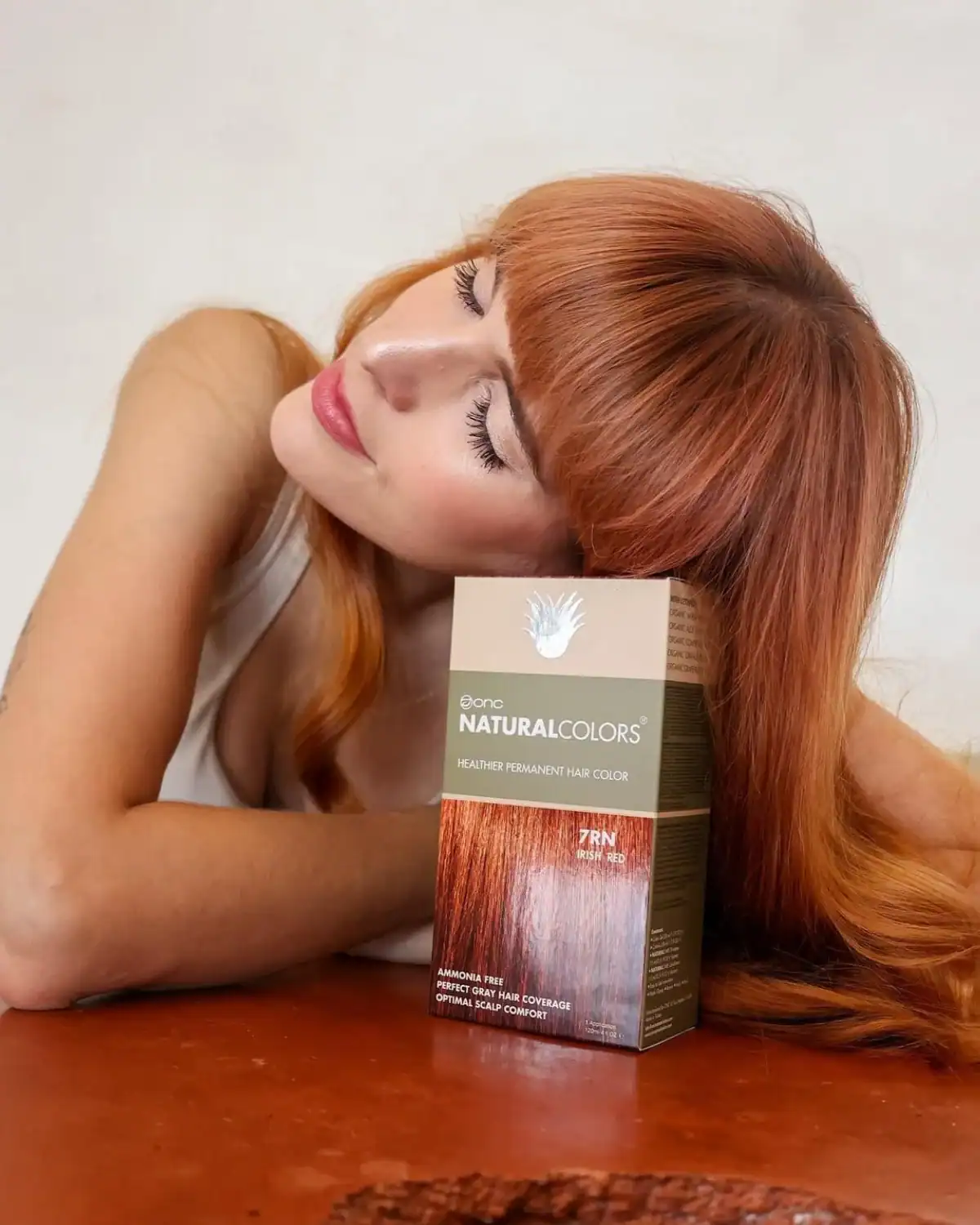
One of the biggest reasons I wanted to test ONC Natural Colors was its heat-activated coloring system.
Instead of relying on ammonia to open the hair cuticle, ONC uses gentle heat during the coloring process. It adds an extra step, but I was curious whether it would make a noticeable difference.
It did. My hair looked shinier, more vibrant, and felt soft instead of overprocessed. Once I got the hang of the heat activation, the process was simple, and the results were well worth the extra time.
ONC also stood out during our ingredient review because it’s free from ammonia, resorcinol, formaldehyde, and propylene glycol.
However, it is not PPD-free. The brand discloses a small amount of PPD in its formula, so we wouldn’t recommend it for anyone with a diagnosed PPD allergy.
Price Range
$38.50
free from
Ammonia | Formaldehyde | Propylene Glycol | Resorcinol
Contains: PPD (approximately 0.06% per brand disclosure)
location/shipping
United States/United Kingdom | Ships Internationally
skl testing profile
Personally tested by me (Danielle) to evaluate ONC’s unique heat-activated coloring system, color payoff, shine, and overall hair condition after coloring.
skl verdict
ONC delivered some of the shiniest, healthiest-looking results of any permanent dye I tested.
While it isn’t PPD-free, its heat-activated formula offers a thoughtful lower-toxic alternative for those who aren’t specifically avoiding PPD.
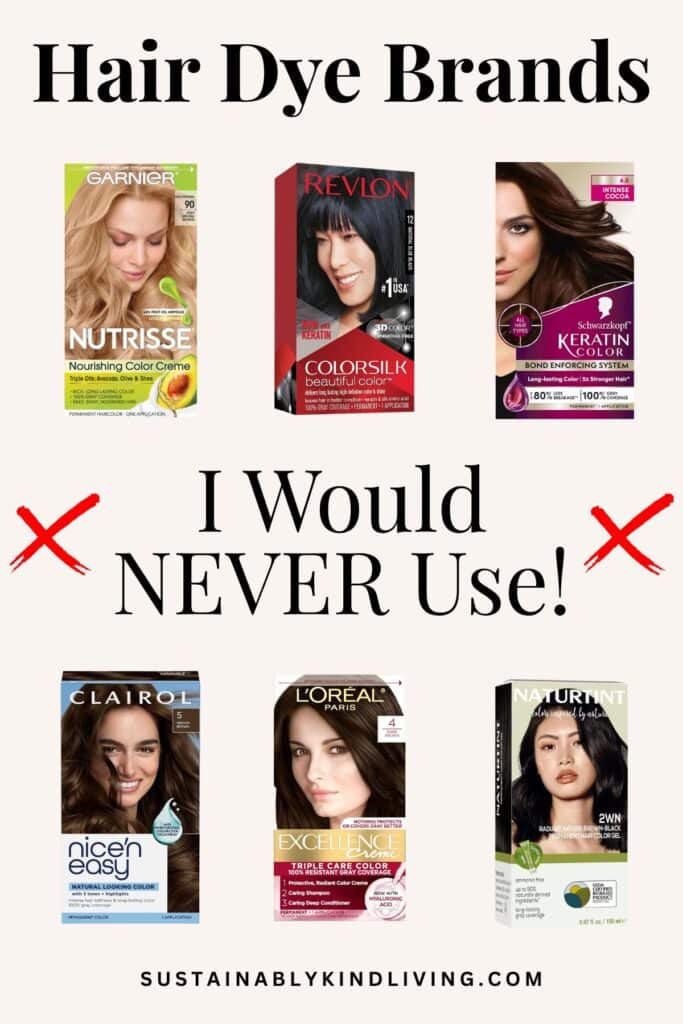
❌ Hair Dye Brands We Don’t Recommend
Some of the most popular hair dyes market themselves as ammonia-free, keratin-enriched, herbal, or nourishing. That doesn’t mean they meet our standards.
Here’s what we skip, and what’s actually in the box.
Is L’Oréal Paris Excellence Crème Non-Toxic?
No. The ingredient list includes Ammonium Hydroxide, p-Phenylenediamine (PPD), Resorcinol, and Titanium Dioxide.
PPD and resorcinol are two of the most common hair dye allergens, and this formula relies on both, alongside ammonia to open the hair cuticle.
→ Best L’Oréal Alternative: Madison Reed. Same reliable gray coverage category, but its Smart 8-Free formula skips ammonia, PPD, resorcinol, and titanium dioxide entirely.
Is Garnier Nutrisse Non-Toxic?
No, despite the fruit-oil branding. Garnier markets Nutrisse around avocado and grape seed oil, but the colorant itself still contains Ammonium Hydroxide, PPD, Resorcinol, m-Aminophenol, and Titanium Dioxide.
A fruit-oil ampoule doesn’t offset an oxidative dye base built on the same sensitizers as any other box color.
→ Best Garnier Alternative: ONC Natural Colors. If you want the “nourishing” claim to actually hold up, ONC’s heat-activated system skips ammonia, formaldehyde, and resorcinol while leaving hair visibly shinier.
Is Clairol Nice’n Easy Non-Toxic?
No. Clairol’s own ingredient list shows Ammonia, Resorcinol, 2-Methoxymethyl-p-Phenylenediamine, and Titanium Dioxide.
It’s one of the most recognizable box dyes in the country, and its ingredient profile is also one of the most conventional.
→ Best Clairol Alternative: Mayraki. If ease of use is what draws you to a drugstore staple like this, Mayraki’s shampoo-style application covers gray without ammonia, PPD, or resorcinol.
Is Revlon Colorsilk Non-Toxic?
Not really. Revlon markets Colorsilk as ammonia-free, and it is. But its own ingredient list still contains p-Phenylenediamine, Resorcinol, and 2,4-Diaminophenoxyethanol HCl.
Ammonia-free is a real reformulation, but it isn’t the same thing as PPD-free or resorcinol-free, and the box doesn’t lead with that distinction.
→ Best Revlon Alternative: Madison Reed. Both promise gray coverage with added conditioning ingredients like keratin, but only one is actually free of PPD and resorcinol.
Is Schwarzkopf Keratin Color Non-Toxic?
No. Along with added keratin and collagen, the formula stacks Ammonium Hydroxide, Toluene-2,5-Diamine Sulfate, Resorcinol, and m-Aminophenol, four sensitizers doing the coloring work, not one.
The keratin doesn’t offset that.
→ Best Schwarzkopf Alternative: ONC Natural Colors. Same promise of healthier-looking hair post-color, minus the ammonia and resorcinol.
Is Herbatint Non-Toxic?
Not really, despite the “Permanent Herbal Haircolour Gel” name. Herbatint skips ammonia, but it uses Ethanolamine as the alkalizing agent instead, and contains a resorcinol derivative (4-chlororesorcinol).
Ethanolamine is a respiratory and immune irritant in its own right, so this isn’t the clean swap the herbal branding implies.
→ Best Herbatint Alternative: Radico Colour Me Organic. Both lean on a botanical positioning, but only one is certified USDA Organic, ECOCERT COSMOS Organic, and MADE SAFE®, with zero synthetic dye chemistry at all.
Is Naturtint Non-Toxic?
Not by our standard. Naturtint skips ammonia and resorcinol, and markets itself as up to 95% natural-origin. But two things keep it off this list.
First, transparency. Naturtint states its PPD levels are “below the maximum set by EU law” without publishing the actual number. We don’t make exceptions for a compliance statement standing in for a real disclosure.
Second, it still contains propylene glycol, a petrochemical solvent and skin irritant we specifically screen out.
→ Best Naturtint Alternative: Radico Colour Me Organic. If a plant-forward formula is the priority, Radico skips synthetic dye intermediates entirely rather than pairing them with a natural-sounding base.
Common Toxic Ingredients Found In Hair Dye
Once you start reading ingredient labels, you’ll notice that many conventional hair dyes rely on the same core set of chemicals to create long-lasting color.
They’re effective, but they’re also the reason so many people experience things like scalp irritation, dryness, or reactions after coloring their hair.
And for some people, those reactions don’t show up right away. They build over time.
Here’s what to look out for and why it actually matters.
Ammonia
Ammonia is used to open the hair cuticle so color can penetrate more deeply.
The downside is that it can be extremely harsh. It’s what causes that strong, almost overwhelming smell during application, and it can lead to burning or stinging sensations on the scalp.
Over time, it can leave hair feeling dry, brittle, and more prone to breakage, especially if you’re coloring regularly.
PPD (p-Phenylenediamine)
PPD is one of the biggest concerns in conventional hair dye.
It’s a known allergen and one of the most common causes of hair dye reactions, for some people, which might look like itching or redness. For others, it can lead to swelling, rashes, or more severe allergic responses.
What’s tricky is that sensitivity can develop over time. You might use the same dye for years and suddenly react to it.
Resorcinol
Resorcinol helps bind color to the hair, but it’s also linked to skin irritation and sensitivity.
When used repeatedly, it can make the scalp more reactive, especially when combined with other strong chemicals like PPD.
Some research has also raised concerns about its potential effects on hormone balance, which is why many people prefer to limit exposure where possible.
Synthetic Fragrance
Fragrance might seem harmless, but in hair dye, it’s often a mix of undisclosed chemicals.
For people who are sensitive, this can trigger headaches, dizziness, or scalp irritation, especially when you’re sitting with the product on your head for an extended period of time.
Parabens
Parabens are used as preservatives, but they’ve been studied for their potential role in hormone disruption.
While the research is still evolving, many people choose to avoid them in products that are used regularly and applied close to the skin.
Peroxide & Bleach
Peroxide and bleach are commonly used to lighten hair or prepare it for color.
They aren’t always avoidable, but they can weaken the hair structure over time, leading to dryness, breakage, and that rough, damaged feeling many people notice after repeated coloring.
Why “Natural” Hair Dye Marketing Can Be Misleading
After going through so many hair dye formulas over the years, one thing became really clear.
There’s no consistent standard behind words like “natural” or “gentle.” I’ve picked up boxes that look incredibly clean at first glance. Soft colors, botanical imagery, reassuring language.
But once you turn them over, the ingredient list tells a different story. Sometimes it’s a formula that removes one ingredient but keeps several others that raise the same concerns.
Other times, it’s a blend that includes a few plant extracts alongside a base that isn’t all that different from conventional dye.
There’s also a lot of selective highlighting. A brand might focus on what’s missing, but not give the same attention to what’s still included.
That’s why I don’t rely on front-of-the-box claims anymore. The full ingredient list and the structure of the formula usually tell you much more.
👉🏼 If you want to go deeper on this, I break this down in more detail in my Greenwashing Guide, including what these labels actually mean and what to look for when you’re reading an ingredient list.
SKL Full Testing & Vetting Methodology
Every hair dye featured in this guide went through two rounds of evaluation before earning a recommendation: ingredient vetting followed by real-world testing.
Step 1: Ingredient Vetting
We started by reviewing the complete ingredient list for every formula, not just the claims printed on the front of the box.
We evaluated ingredient transparency, reviewed third-party certifications when available, and looked closely at the ingredients each brand used to achieve permanent color.
We also considered the presence of ingredients our readers frequently ask us about, including ammonia, PPD, resorcinol, parabens, formaldehyde-releasing preservatives, synthetic fragrance, sulfates, and other common sensitizers.
Rather than looking for a “perfect” formula, we evaluated the overall ingredient profile, the role each ingredient played, the brand’s transparency, and whether we believed the formula represented a meaningful improvement over conventional hair dyes.
We also looked beyond marketing terms like natural, clean, plant-based, and ammonia-free. Those claims don’t always tell the full story, so we compared them against the actual ingredient lists before deciding which products moved on to testing.
Step 2: Real-World Testing
Only after completing our ingredient review did we begin hands-on testing.
Over the course of more than a year, I tested these hair dyes alongside SKL editors, family members, and research assistants on different hair colors, hair types, and levels of gray coverage.
Each product was evaluated for:
- Gray coverage
- Color payoff
- Ease of application
- Scalp comfort
- Hair condition after coloring
- Color longevity
- Overall value
Whenever possible, we matched products with the tester best suited for the job.
For example, our top gray coverage pick was tested by a reviewer with a full head of naturally gray hair, while our shampoo-style formula was tested by my husband, who has approximately 50% gray hair and wanted a faster alternative to traditional hair dye.
Finally, we documented both the strengths and the tradeoffs. If a product required extra preparation, transferred color onto fabrics, or contained ingredients readers should be aware of, we disclosed that information in our review so you can make an informed decision.
How To Choose The Best Non-Toxic Hair Dye For Your Hair Type
There isn’t one type of non-toxic hair dye. Some are fully plant-based, some are semi-permanent, and others are lower-tox versions of traditional permanent formulas.
Each works differently, and the right choice depends on what you actually need.
Gray Coverage vs. Blending
For full gray coverage, you’ll usually need a permanent or pigment-rich formula. Plant-based dyes build more gradually and may not fully cover in one application, but they’re a great option if you’re okay with softer blending.
Sensitive Scalp or Skin
If you’ve had reactions before, this is where ingredients matter most. Look for formulas that avoid common irritants like PPD and synthetic fragrance, and pay attention to how your scalp reacts during and after coloring.
Commitment Level
Semi-permanent options are easier to experiment with and don’t leave a harsh regrowth line. Permanent dyes are better for consistent, long-term color.
Application Style
Some dyes require mixing, others come pre-mixed, and newer formats like foams are quicker and easier to use. This can make a big difference depending on how comfortable you are coloring at home.
Hair Dye Certifications Worth Paying Attention To
Certifications can help, but with hair dye, they don’t tell the full story.
This category doesn’t have consistent third-party standards across every brand, so it’s worth knowing what actually matters versus what’s just a label.
Organic Certifications
This is where certifications carry the most weight, and it applies mainly to plant-based dyes.
Some brands use certified organic herbs like henna and indigo, which gives you more confidence in how those ingredients were grown and processed.
Worth checking whether the entire formula is certified, or just a portion of it.
Cruelty-Free & Vegan Claims
More straightforward: cruelty-free means no animal testing; vegan means no animal-derived ingredients. Most brands in this space check both boxes, but I verify rather than assume.
“Ammonia-Free” & Similar Claims
As covered earlier, removing one ingredient doesn’t make a formula gentle. Always check the full list, not the front of the box.
What Matters More Than Certifications
Transparency beats labels here. A brand that clearly lists its ingredients and explains its formula is more trustworthy than one leaning on certifications or vague marketing language.
Frequently Asked Questions About Non-Toxic Hair Dye
After testing dozens of formulas, Madison Reed earned our top spot because it offered the best balance of ingredient transparency, gray coverage, ease of use, and overall performance.
That said, the best hair dye for you depends on your priorities. If you want a certified organic formula, we recommend Radico Colour Me Organic, while Arctic Fox is our favorite for semi-permanent color.
Yes, but it depends on the formula. Permanent hair dyes generally provide the best gray coverage, while plant-based options often blend or gradually build color over multiple applications.
During our testing, Madison Reed delivered the most consistent gray coverage, while Radico Colour Me Organic performed best for readers looking for a certified organic alternative.
Instead of relying on marketing claims like natural or ammonia-free, we recommend reading the full ingredient list.
Ingredients many shoppers choose to evaluate include ammonia, PPD, resorcinol, formaldehyde-releasing preservatives, synthetic fragrance, and parabens.
No formula is perfect, which is why we evaluated each product based on its overall ingredient profile, transparency, and real-world performance.
Not necessarily. Ammonia-free simply means one ingredient has been replaced.
Some formulas use alternative ingredients that perform a similar function, so it’s important to evaluate the complete formula rather than relying on a single claim on the front of the box.
If you have a diagnosed PPD allergy or sensitivity, choosing a PPD-free formula is important.
However, not every lower-toxic permanent hair dye is PPD-free. That’s why we clearly disclose when a product contains PPD so you can make the choice that’s right for you.
Permanent hair dye provides the longest-lasting color and the best gray coverage. Semi-permanent formulas coat the hair and gradually fade over time, making them ideal if you enjoy changing your color more often.
Plant-based dyes use ingredients like henna and indigo to gradually build color while conditioning the hair, although they typically require more patience than permanent formulas.
Everyone’s skin is different, but many people prefer formulas with simpler ingredient lists and fewer common sensitizers.
We also recommend performing a patch test before using any hair dye, even if you’ve used similar products in the past, since sensitivities can develop over time.
Research suggests that occasional hair dye use is generally considered low risk, but evidence is still limited. If you’re pregnant or breastfeeding, it’s best to speak with your healthcare provider before coloring your hair. Many people also choose to wait until after the first trimester and color their hair in a well-ventilated area.
That depends on the type of formula. Permanent hair dyes typically last until new hair grows in, semi-permanent colors gradually fade over several weeks, and plant-based formulas tend to soften gradually while building color with repeated applications.
Not completely. Everything, including water and plant extracts, is made of chemicals. However, some formulas rely entirely on botanical ingredients rather than synthetic dye intermediates.
If you’re looking for the simplest ingredient list, Radico Colour Me Organic came closest during our review thanks to its certified organic herbal formula.
Still Not Sure Which Hair Dye Is Right For You?
- My Overall Top Pick: Madison Reed
- Best Certified Organic Formula: Radico Colour Me Organic
- Best Hair Color Shampoo For Gray Hair: Mayraki
- Best Semi-Permanent Hair Dye: Arctic Fox
- Best Lower-Toxic Permanent Hair Dye: ONC Natural Colors
If you’re still unsure, start by deciding whether your top priority is gray coverage, ingredient transparency, ease of application, or vibrant color. That will usually point you toward the right formula.
Final Thoughts On Choosing The Best Non-Toxic Hair Dye
Choosing a non-toxic hair dye doesn’t have to be overwhelming.
The biggest thing I learned while researching and testing these brands is that looking beyond the front of the box makes all the difference.
Marketing can only tell you so much. Taking a closer look at the ingredients, how a formula performs, and how transparent a brand is will help you find a hair dye that truly fits your needs.
Whether you’re trying to cover gray hair, refresh your natural color, or simply make a healthier swap, there are better options available than ever before.
I hope this guide saves you hours of research and helps you feel confident choosing a hair dye that works for both your hair and your priorities. As always, I’ll continue testing new formulas and updating this guide whenever I find a better option.
Continue Your Non-Toxic Hair Care Journey
Choosing a better hair dye is just the first step.
The products you use afterward can help extend your color, support healthier hair, and reduce unnecessary ingredient exposure throughout your routine.
Here are the guides I’d recommend next:
- Non-Toxic Shampoo: The easiest way to help preserve your color while avoiding harsher cleansers that can contribute to faster fading.
- Shower Filters: Reduce chlorine and mineral buildup that can leave hair feeling dry, dull, and cause color to fade more quickly.
- Natural Hair Oils: Nourish color-treated hair, boost shine, and help minimize dryness after coloring.
- Homemade Dry Shampoo: Refresh your hair between washes without the synthetic fragrances and aerosols found in many conventional formulas.
- Non-Toxic Hair Spray: Get flexible hold without the harsh propellants, synthetic fragrance, or unnecessary ingredients found in many traditional sprays.
📌 Save This Guide For Later
Save this guide to the best non-toxic hair dyes, what to avoid, what “clean” actually means, and which brands deliver it without the greenwashing, for whenever you’re ready to switch.
Sources & Further Reading
If you’ve ever tried to figure out what’s actually in hair dye, you’ve probably noticed how inconsistent the information can be.
Some brands share full ingredient lists. Others highlight a few “clean” claims while leaving out the bigger picture. And once you start looking into the ingredients themselves, it can get overwhelming pretty quickly.
These are some of the resources I kept coming back to while researching hair dye ingredients, scalp sensitivity, and what lower-tox options actually mean in practice:
- National Health Service — Guidance on hair dye reactions, including common symptoms and how sensitivity can develop over time.
- European Commission Scientific Committee on Consumer Safety — Detailed safety assessments on ingredients like PPD and how they’re used in hair dye formulations.
- European Chemicals Agency — Data on resorcinol and other cosmetic ingredients, including how they interact with the body and environment.
- Environmental Working Group — Breakdowns of ingredient categories like fragrance and why they’re often difficult to fully evaluate.
- U.S. Food and Drug Administration — Overview of cosmetic ingredients like parabens and how they’re currently regulated.
- American Academy of Dermatology — Practical guidance on hair coloring, scalp health, and minimizing irritation.
- American College of Obstetricians and Gynecologists — Information on hair dye use during pregnancy and how experts currently approach risk.
This post was graciously sponsored by Madison Reed. As always, we only work with brands that we stand behind. Would you like to sponsor one of our sustainable round-ups? Contact us here.

Steal My Non-Toxic Cleaning Checklist!
Believe us, it’s the BEST…. and it’s free. Does it really get any better than that?! Sign up for our newsletter and get this free checklist to clean your home without any harmful chemicals!



Hi. Interesting and informative information. Do you have any research on Naturcolor hair dye?
Thank you.
Hi there!
Thanks so much for your kind words—and great question!
Naturcolor is one of those brands that often flies under the radar, but yes—we’ve done some research on it. It’s definitely a lower-tox option compared to conventional box dyes, and it’s free from ammonia, resorcinol, and parabens, which is great for those with sensitivities.
However, Naturcolor does still use PPD (para-phenylenediamine) in many of its darker shades, as well as propylene glycol and ethanolamine, which can be potential irritants for some folks.
That said, the brand is transparent about its ingredients and tends to use lower concentrations than many mainstream products. For people who aren’t ultra-sensitive but want something safer than salon or drugstore dyes, Naturcolor can be a decent compromise.
If you’re looking for something with zero synthetic dyes, plant-based options like Khadi, Radico, or Ancient Sunrise henna might be worth exploring—though they do have limitations when it comes to color range and grey coverage.
Let me know what you’re looking for specifically (e.g., grey coverage, permanent vs semi, fragrance-free, etc.) and I’d be happy to help further 💚
Warmly,
Danielle
Herbatint: contains….Ethanolamine; P-Phenylenediamine; P-methylaminophenolsulfate; P-aminophenol. If you want to look something up, might want to check out EWG.org site.
Hi there!
Thank you so much for your comment—and yes, you’re absolutely right to point out those ingredients. Herbatint, while marketed as “natural” and “ammonia-free,” does still contain several chemical compounds like ethanolamine and PPD (p-phenylenediamine), which can be irritating or problematic for some users—especially those with sensitive skin or autoimmune concerns.
We included Herbatint in the list as a more accessible and less-toxic option for those who are looking to avoid ammonia and parabens, but you’re right—it’s not completely free from synthetic ingredients.
We always recommend checking EWG.org and the INCI lists (ingredient labels) closely, since personal sensitivities vary widely.
If you’re looking for a truly botanical option with zero synthetic dyes, some of the 100% plant-based brands in the list (like Khadi or Ancient Sunrise) might be more in line with what you’re after.
Really appreciate you engaging thoughtfully—it’s exactly the kind of conversation that helps keep this community strong and informed 💚
Warmly,
Danielle
I have been told by hair stylists to grow out the chemical hair color before applying a natural/chemically free hair color. Thoughts?
Hi there,
That’s a really great question.
Many stylists recommend growing out conventional chemical dye before switching to a more natural hair color simply because of how the hair shaft reacts — not necessarily because it’s “unsafe,” but because previously dyed hair can grab onto natural pigments unevenly. This can affect tone, depth, and overall results.
Plant-based or lower-tox hair dyes (like henna or herbal blends) interact differently with the hair than conventional oxidative dyes. If there’s old chemical color underneath, the final result can sometimes be unpredictable.
From a health perspective, you don’t have to fully grow it out before switching — but from a results perspective, it can help create a more even, beautiful transition.
If someone doesn’t want to grow it out completely, a good middle-ground option is:
• Doing a strand test first
• Working with a stylist experienced in natural color
• Gradually trimming off the previously dyed portions
Switching to less toxic hair care is always a step in the right direction — it just may require a little patience during the transition.
Hope that helps 🤍
Thanks Danielle for a great review, so much information packed into this article. Just an FYI you may want to reconsider promoting Halley Hair Color Cloud, their ingredient list includes EDTA (binding agent) which may be toxic to organs.
Thank you for bringing this to my attention. ❤️
I’m actually in the middle of reevaluating Haley Hair Color Cloud and there’s a good chance it will be replaced in the next update.
I appreciate readers like you who take the time to dig into ingredient lists and ask questions. It helps keep these guides as accurate and up-to-date as possible. 😊