 Shop My Favorite Non-Toxic Gifts Of 2026!
SKL is reader supported. When you buy through links on our site, we may earn affiliate commission. Learn more here.
Finding the best non-toxic coffee brands turned into a much bigger project than I expected. Over the last six years, we researched 22 coffee brands alongside the brewers in our non-toxic coffee maker guide. The tasting was the fun part. Getting clear answers from the brands took considerably longer.
Our family splits life between Italy and Chicago, and my husband was born and raised in Italy. We LIVE for coffee, so comparing flavor, body, and bitterness was something we happily worked into our mornings.
What surprised me was how much digging the claims required. A brand would advertise contaminant testing without clearly explaining which substances it covered. Another would lead with organic certification, but offer little information about heavy-metal testing. “Clean,” “mold-free,” and “tested” kept appearing, often without the details I needed to evaluate them.
The longest part of this guide was waiting for brands to answer our questions. We wanted specifics about certifications, sourcing, testing scope, and the documentation behind their promises. Some answers helped us feel confident about a recommendation. Others left important questions unresolved.
This shortlist brings together the coffees that stood out in our kitchen and the evidence I could verify behind each brand. Below, I share how they tasted, what their certifications and testing disclosures establish, and why each earned its place.
My Top Non-Toxic Coffee Brand Picks At a Glance
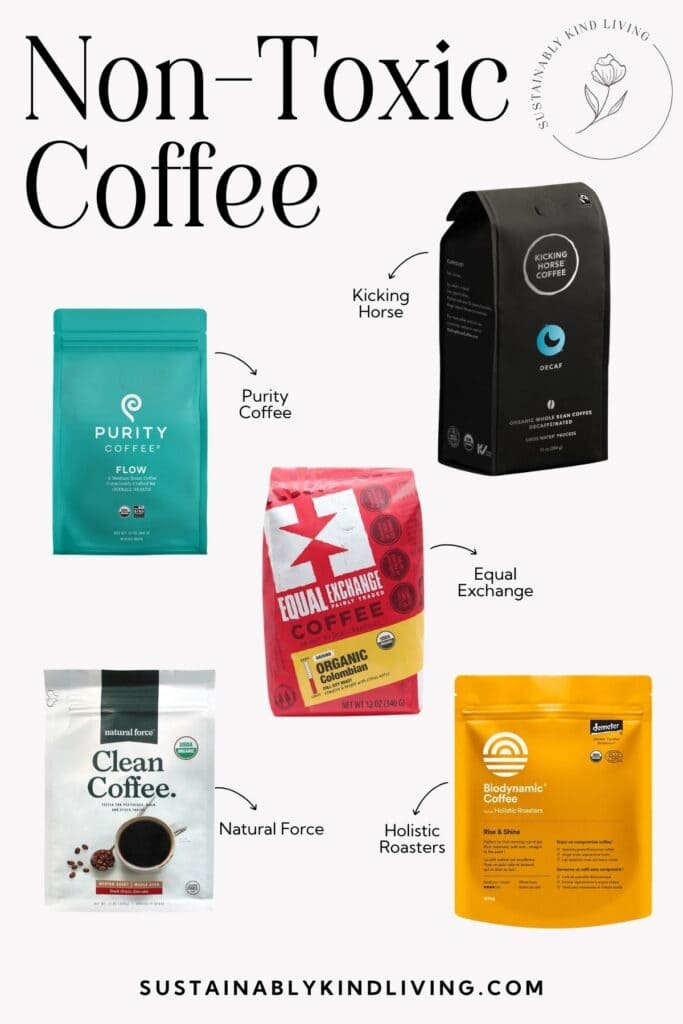
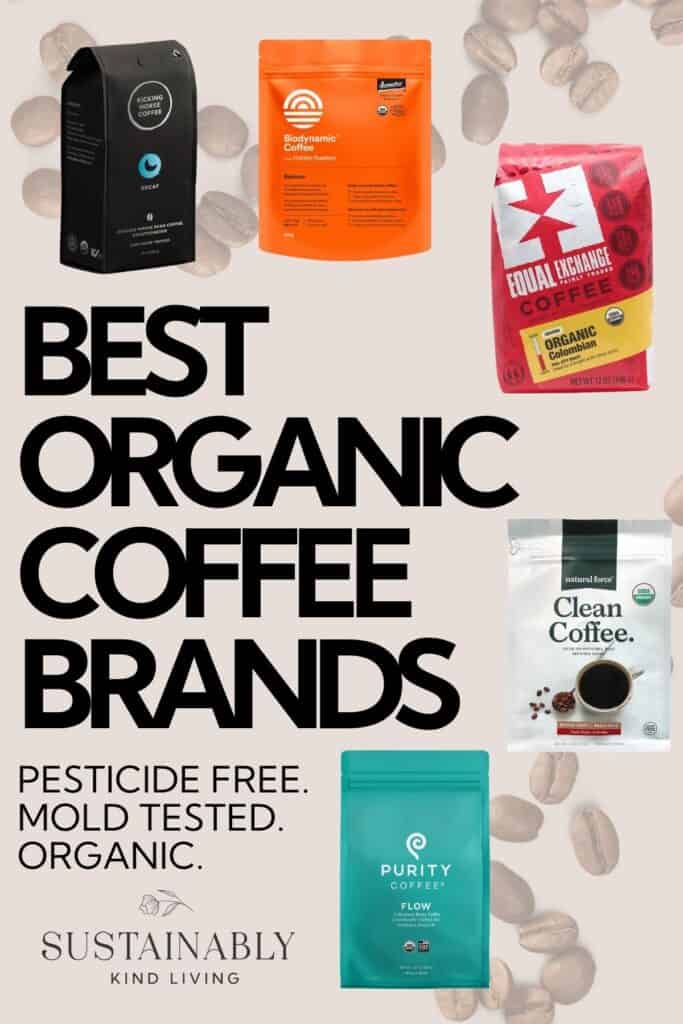
- My Favorite Everyday Non-Toxic Coffee: Purity Coffee
- Most Transparent Lab Reports: Holistic Roasters
- Widest Testing Panel: Natural Force Clean Coffee
- Best Affordable Organic Coffee: Equal Exchange
- Best Organic Decaf: Kicking Horse
One distinction worth knowing before you shop: Organic certification, fair trade sourcing, and contaminant testing answer different questions. I’ve separated those details throughout this guide so you can choose according to what matters most to you.
What I Mean By “Non-Toxic Coffee”
In this guide, non-toxic coffee describes the coffees I recommend after hands-on tasting and reviewing their ingredients, organic status, sourcing, and available contaminant-testing evidence. It isn’t a certification or a promise of zero contaminants.
The evidence differs by brand. I explain which coffees have documented testing, what that testing covers, and where organic certification or sourcing supports the recommendation, so you can understand exactly why each made my list.
Best Non-Toxic Coffee Brands: At-a-Glance Comparison
(Mobile Users) Scroll to see full comparison →
| Coffee Brand | Organic Status | Contaminant Testing & Transparency | Results | Price/oz |
|---|---|---|---|---|
| Purity Coffee | Certified organic | Mycotoxins on every green lot; pesticides and heavy metals | Public + By Request | $2.42 |
| Holistic Roasters | Demeter Biodynamic + USDA Organic | 16 mycotoxins, heavy metals, pathogens every harvest | Public, Lot-Matched | $1.88 |
| Natural Force | Certified Organic | Mold, mycotoxins, pesticides, glyphosate, heavy metals, acrylamide | Public | $2.08 |
| Equal Exchange | Certified Organic | Mind, Body & Soul independently tested for mycotoxins, mold, pesticides, PFAS | Public (Independent Test) | $0.81 |
| Kicking Horse | Certified organic | Mold, bacteria, and yeast | Summary Only | $1.70 |
Safe vs. Not
Choosing Non-Toxic Coffee: What I Avoid & What I Look For
Before the reviews, here’s the quick version of what I look for beyond a delicious cup.
Contaminants & Claims I’m Cautious About
- Pesticide Residues: I prioritize certified organic beans and look for residue testing.
- Mycotoxins: I look for testing that names specific mold-produced toxins, including ochratoxin A.
- Heavy Metals: I check for disclosed testing for lead, cadmium, arsenic, and mercury.
- Unclear Added Ingredients: For flavored or functional coffees, I want a complete ingredient list.
- Unsupported “Toxin-Free” Claims: I want evidence showing what was tested and what the results cover.
What I Prioritize
- Certified Organic Coffee: Verified growing standards rather than vague “natural” claims.
- Relevant Third-Party Testing: Clear panels covering the contaminants a brand claims to address.
- Accessible Results: Reports published online or available by request.
- Transparent Sourcing: Clear information about where the beans come from.
- Great Flavor: Coffee we genuinely enjoy drinking and reach for again.
After the brand reviews, I break down pesticides, mycotoxins, heavy metals, added ingredients, and what organic certification and testing results actually tell us.
The Best Non-Toxic Coffee Brands
1. Purity Coffee | My Favorite Everyday Non-Toxic Coffee
Best For: An everyday organic coffee with a clearly explained testing program.
Use the discount code SKL to save 20% on your first purchase!
Purity has been part of my coffee routine for years. Its smooth, rich flavor is what first won me over, and its testing disclosures help explain why it remains my best overall pick.
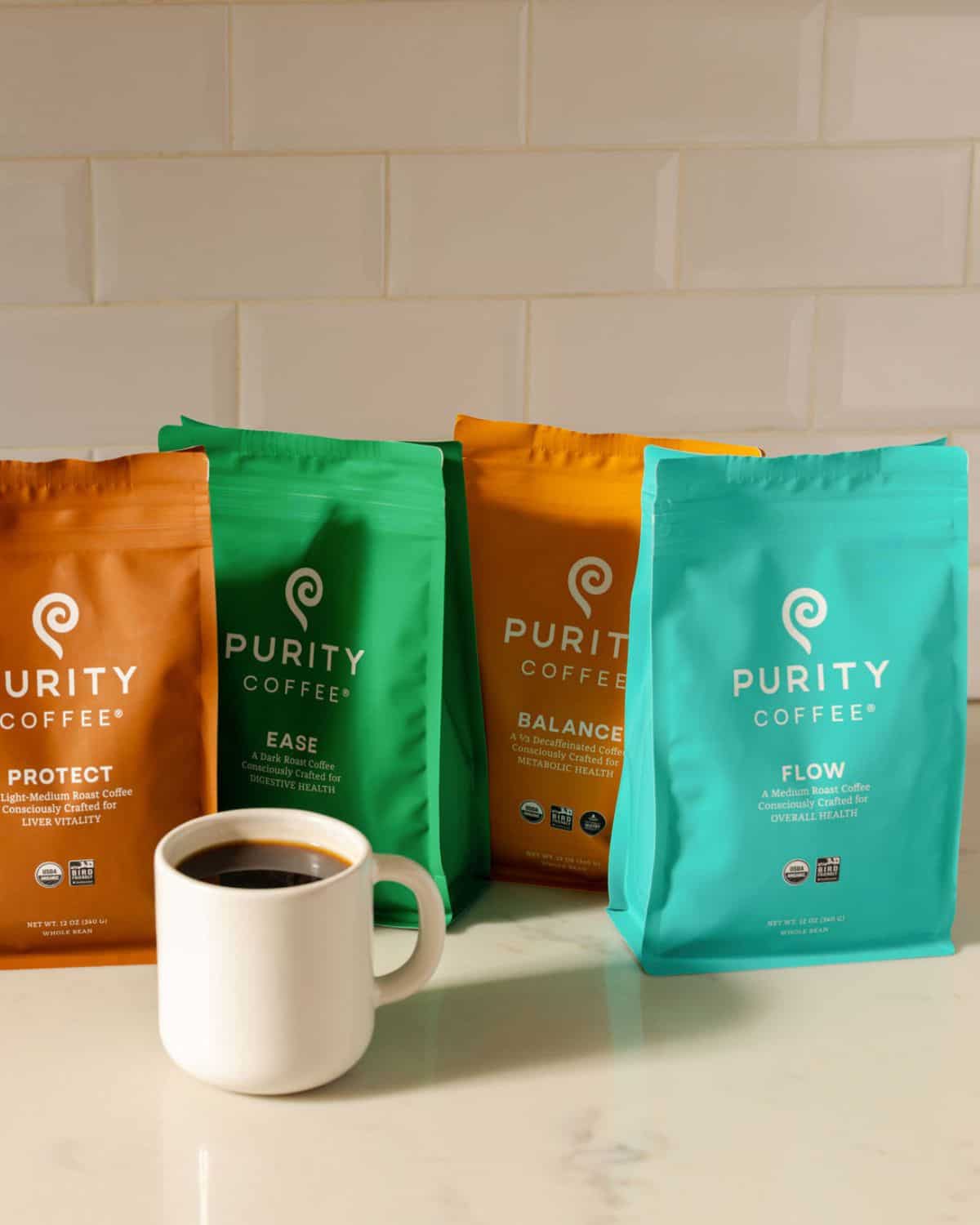
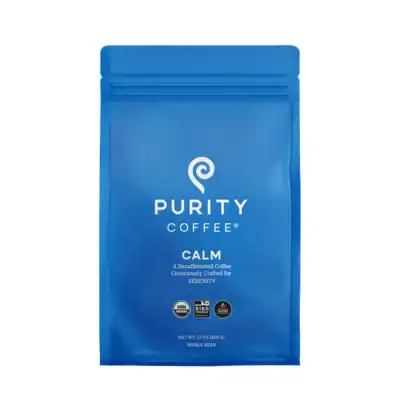
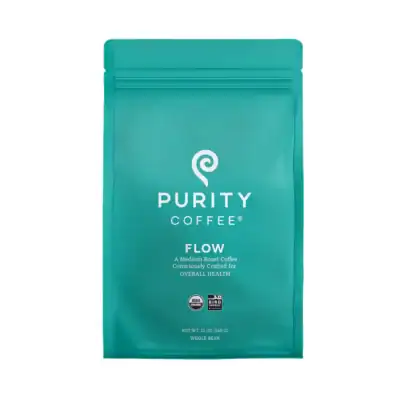
The FLOW Original Medium Roast is certified organic and contains only Arabica coffee beans.
Purity reports testing every green coffee lot for mycotoxins before purchase, with additional spot-testing of roasted coffee throughout the year. It also discloses testing for pesticide residues and heavy metals through its broader safety program.
There is documentation to review, too. Its published August 2025 laboratory report includes a FLOW sample with the individually listed mycotoxins below reporting limits. Those results apply to that sample; Purity invites customers to request its most recent reports directly.
Price
$29 per 12-ounce bag; $23.20 with a subscription.
coffee options
Whole bean, ground, and single-serve sachets; multiple roasts; espresso, decaf, and reduced-caffeine.
Location/shipping
U.S. and Canada; free U.S. shipping on orders over $65.
why it made my list
- Certified organic coffee with no added ingredients.
- Clearly disclosed mycotoxin testing for every green coffee lot.
- Published sample results and newer reports available by request.
- A smooth, rich cup I’ve enjoyed for years.
my testing experience
- The silky texture and rich flavor make this my favorite morning cup. It’s the smoothest, most flavorful coffee I’ve tried.
- I could enjoy it comfortably, without the acid reflux, heartburn, or upset stomach.
- No headaches or jitters during my testing.
More Purity Favorites:
2. Holistic Roasters | Most Transparent Lab Reports
Best For: Readers who want to match their bag to a lab report before they brew.
Use the discount code SUSTAINABLYKINDLIVING to save 15% on your first purchase!
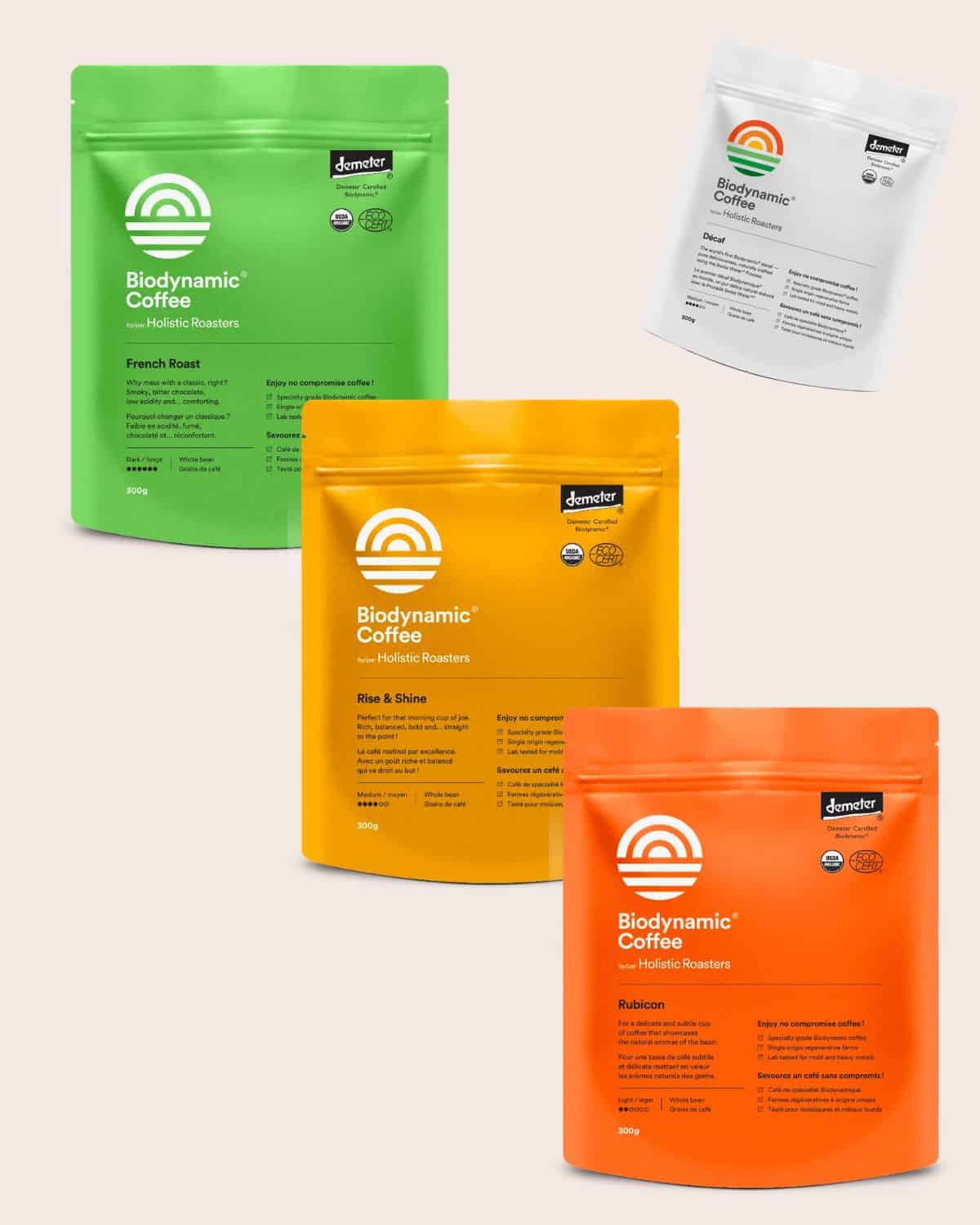
Holistic Roasters sells Biodynamic Coffee, grown on family-run farms in Peru and Honduras under Demeter Biodynamic certification.
It’s also USDA Organic and Ecocert certified. Biodynamic standards go beyond organic and prohibit synthetic pesticides, herbicides, and fungicides anywhere on the farm.
The testing is what sets it apart. Every harvest is tested by two ISO 17025 accredited labs. Actlabs runs a 16-compound mycotoxin panel, including ochratoxin A and aflatoxins. Eurofins tests for lead, cadmium, mercury, arsenic, and foodborne pathogens.
Every certificate is published unedited, organized by harvest and lot number, and your bag identifies its harvest.
One note: the reports cover green coffee lots, not roasted coffee. That’s still more lot-matched data than any other brand on this list.
Price
$19.95 per 300-gram (10.6-ounce) bag; $57.95 for 2 pounds; up to 20% off with a subscription.
coffee options
Whole bean and ground in seven grind sizes; light, medium, and dark roasts; Swiss Water decaf.
Location/shipping
Ships from Montreal to the U.S., including Hawaii. Free shipping on orders over $30.
why it made my list
- Demeter Biodynamic, USDA Organic, and Ecocert certified.
- Every harvest tested by two ISO 17025 accredited labs.
- Every certificate published unedited, matched to the lot on your bag.
- Trace results reported openly, not hidden.
my testing experience
- French Roast in my French press was my favorite: full-bodied, fresh, with an amazing smell while brewing.
- My mom is hooked on Rise & Shine, which she brews in our Caraway coffee maker.
- Super easy on my stomach, with no headaches or jitters.
3. Natural Force Clean Coffee | Best for Widest Testing Panel
Best For: Readers who want the widest range of contaminants tested, from glyphosate to acrylamide.
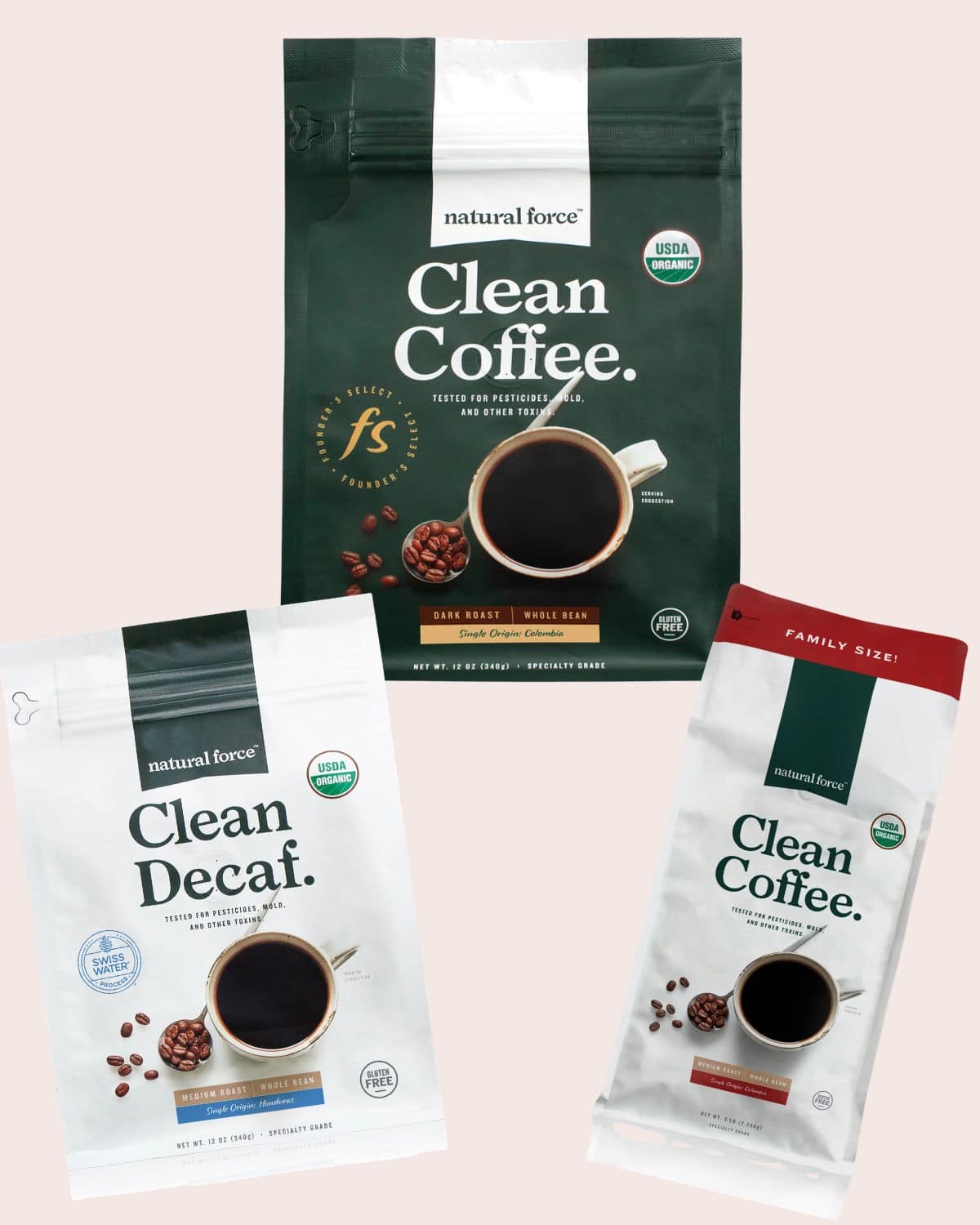
Natural force earned its place with the broadest testing panel on this list. Most brands stop at mycotoxins and heavy metals. NF also publishes results for pesticides, glyphosate, and acrylamide.
Its certified organic Clean Coffee comes in regular, dark roast, and decaf options.
The brand describes testing representative coffee samples through Eurofins when selecting crops, with panels covering mold and yeast, mycotoxins, pesticides and glyphosate, heavy metals, and acrylamide.
You can access the green and roasted coffee reports through its Clean Coffee laboratory testing page. That range is its standout feature. If acrylamide or glyphosate is your main concern, this is the only pick with results for both.
Price
$24.99 per 12-ounce whole bean or 10-ounce ground bag.
coffee options
Whole bean and ground; regular and dark roast; decaf; 5-pound bags.
location/shipping
U.S. only; free U.S. shipping on orders over $100.
why it made my list
- Certified organic coffee.
- Publicly accessible third-party laboratory reports.
- Disclosed testing across several contaminant categories.
- Whole-bean, ground, and decaf options for different routines.
my testing experience
- My French press brought out a delicious cup from both the regular and decaf, with none of that bitter finish.
- The decaf was a hit, too. I loved having an option with less caffeine that I still enjoyed drinking.
- Both agreed with my stomach, and I felt good afterward: no headaches or jittery feeling.
4. Equal Exchange | Best Affordable Organic Coffee
Best For: Organic coffee with a direct connection to small farmer cooperatives.
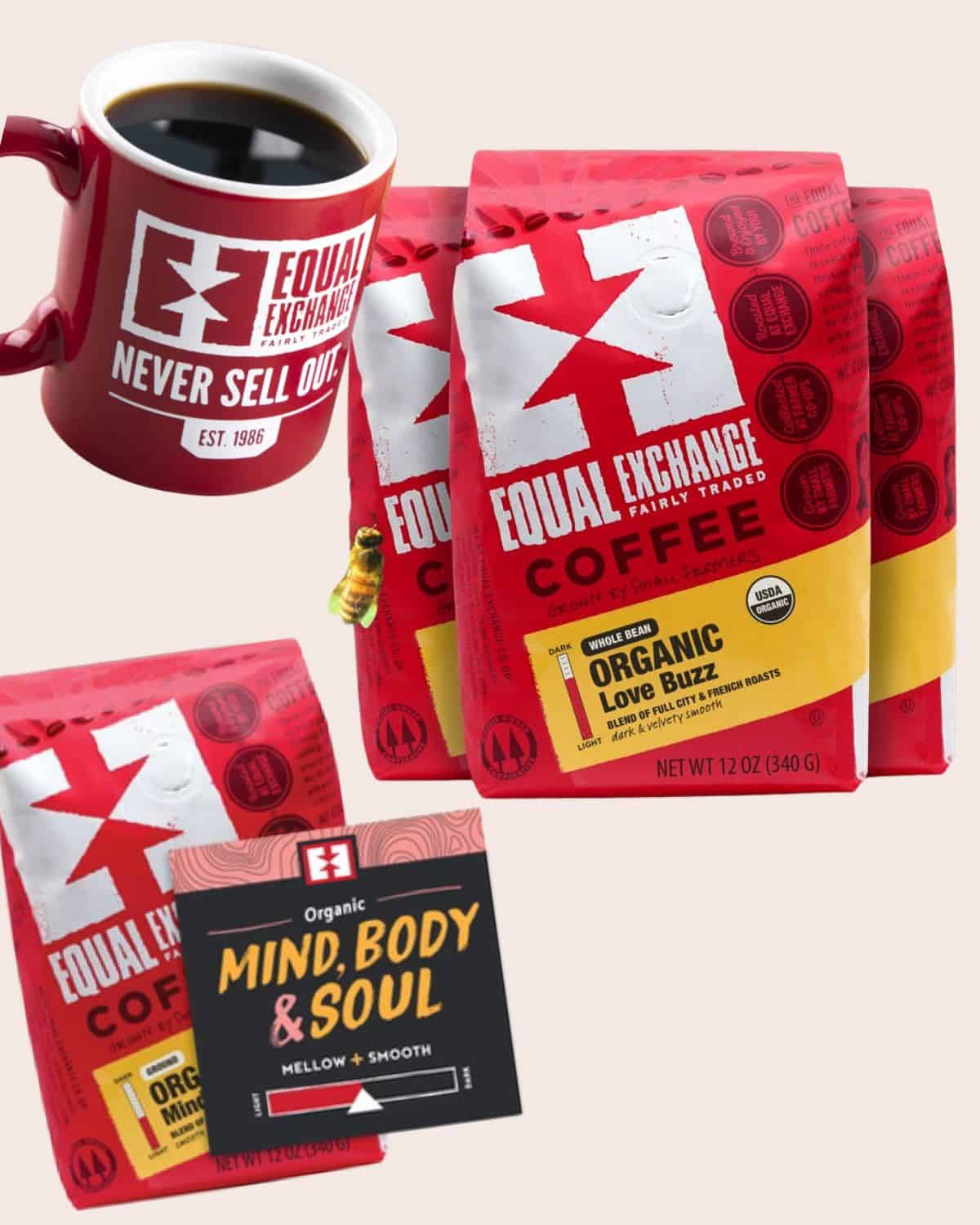
Equal Exchange works directly with democratically organized farmer cooperatives, whose members decide how to invest fair trade and organic premiums. The business itself is worker-owned, too.
Its Organic Mind, Body & Soul blends medium and Vienna roasts using organic Arabica beans certified by Oregon Tilth, with no added flavoring. The brand describes a mellow, smooth cup with milk chocolate, vanilla, and nutty notes.
In a 2024 independent consumer investigation, a sample of Mind, Body & Soul returned non-detect results for the tested mycotoxins, mold, yeast, pesticides, and PFAS. That’s the same blend I’m recommending here.
Price
$58.20 for six 12-ounce bags, about $9.70 per bag.
coffee options
Whole bean and ground; multiple roasts and blends; decaf and bulk bags.
location/shipping
U.S. only; free U.S. shipping on orders over $135.
why it made my list
- Certified organic beans.
- Direct partnerships with farmer cooperatives.
- A worker-owned business with transparent sourcing.
- Independent sample-testing evidence for Mind, Body & Soul.
my testing experience
- Mind, Body & Soul smelled wonderful while brewing and tasted smooth and balanced.
- Consistently delicious and affordable enough for every day.
- No jitters, even after a few morning cups.
5. Kicking Horse | Best Organic Decaf
Best For: Organic, Fairtrade decaf made with the Swiss Water process.
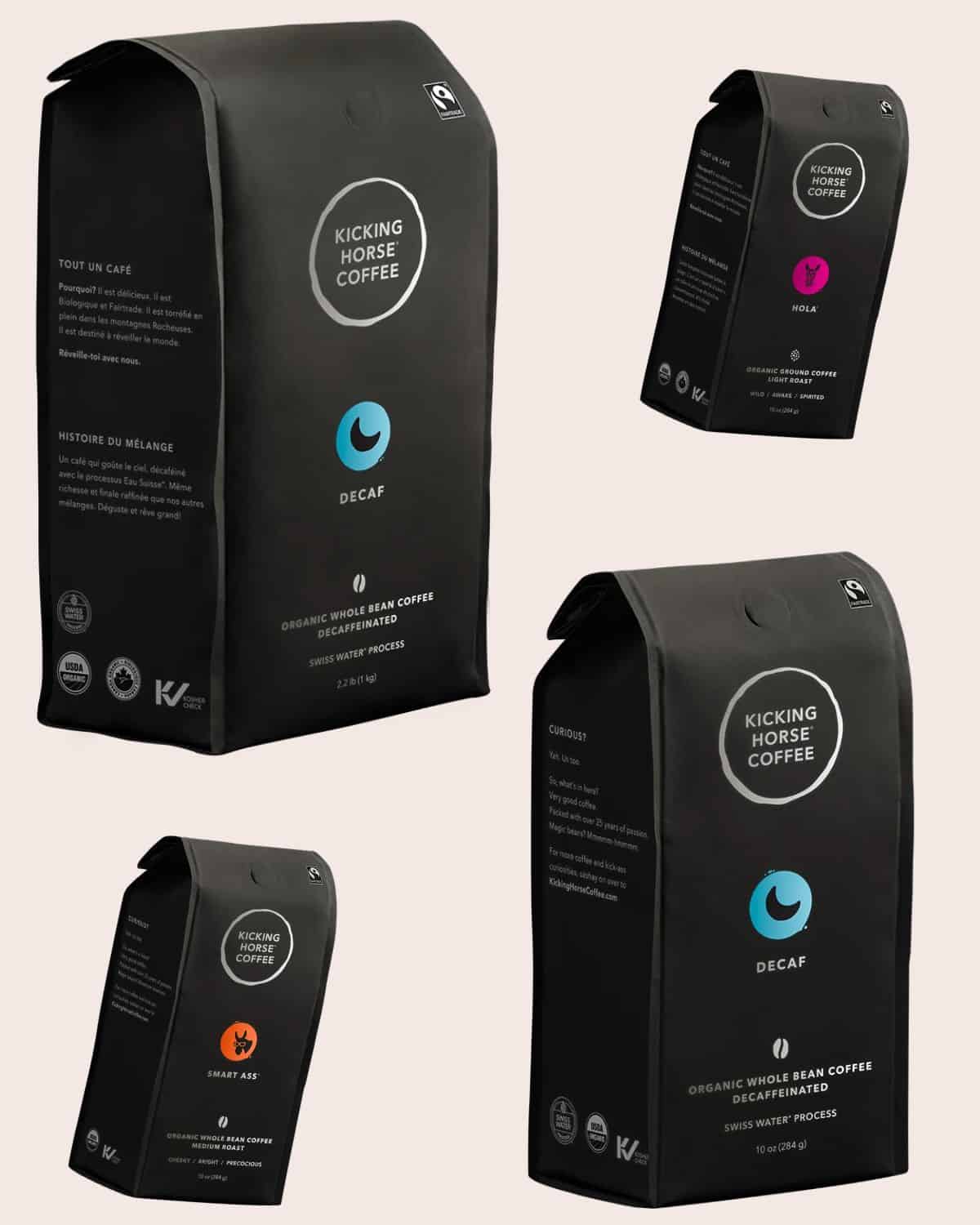
Kicking Horse earns its place with certified organic and Fairtrade beans across its entire coffee range, including decaf. That makes shopping straightforward, without having to hunt for one qualifying blend.
Its Decaf Dark Roast uses the Swiss Water process and contains only organic Arabica coffee. The brand describes roasted hazelnut and chocolate notes, a balanced body, and a lingering finish, an appealing profile if you enjoy a darker cup.
Kicking Horse also reports regular independent laboratory analysis with negative results for mold, bacteria, and yeast. Those disclosures support its quality controls, but do not establish results for heavy metals or a named mycotoxin panel.
Price
$16.99 per 10-ounce bag; about $15.29 with a subscription.
coffee options
Decaf is whole bean only, in 10-ounce and 2.2-pound bags. The wider range includes ground coffee, light to dark roasts, and half-caff.
location/shipping
U.S. and Canada; free U.S. shipping on orders over $75.
why it made my list
- Certified organic and Fairtrade throughout the range.
- Swiss Water decaf.
- Disclosed independent testing for mold, bacteria, and yeast.
- 10% off with a subscription, and 2.2-pound bags for daily decaf drinkers.
my testing experience
- My dad and I tested this together and both loved it. Neither of us could tell it was decaf.
- It made a delicious cup every time in our Chemex, Caraway coffee maker, and stovetop moka pot.
- It’s now my dad’s go-to subscription order!
Contaminants in Coffee: What I Check Before Buying
Finding coffee that tastes good was the easy part. Figuring out what each brand’s testing actually covered was the real work.
Pesticide residues, mycotoxins, heavy metals, and roasting byproducts are four separate questions. A coffee tested for one has not been tested for the others. Here’s what I ask about each, and what a useful answer looks like.
1. Pesticide Residues
Residue testing only finds what’s on the lab’s panel. A pesticide that isn’t on the list won’t show up, no matter how clean the report looks.
I prioritize certified organic coffee. Under USDA rules, synthetic substances are prohibited unless specifically allowed, and natural ones are allowed unless specifically prohibited. That restricts most synthetic pesticides. It does not mean no pesticides were used.
Organic certification does not guarantee zero residues. USDA rules restrict prohibited substances and require residue testing within the certification program, but this is not testing every coffee lot. Intentional use of a prohibited substance can disqualify a product regardless of the residue level.
Detection also isn’t the same as danger. The EPA sets a tolerance, the maximum residue allowed on a food, only after finding a “reasonable certainty of no harm”. Those tolerances apply to imported food too.
What I look for: Organic certification plus residue results that name the pesticides screened, the lot tested, the lab, and the reporting limit. “Tested for pesticides” with no panel attached tells me nothing.
2. Mold & Mycotoxins
The FDA lists coffee among the foods susceptible to molds that produce mycotoxins. Mold and mycotoxins are not the same thing. Only certain molds produce toxins of concern.
The one that matters most in coffee is ochratoxin A (OTA). It forms mainly during sun drying and storage, and good drying and storage practices prevent it.
EFSA’s 2020 assessment identified concerns about kidney toxicity, kidney tumors in animal studies, and possible direct DNA damage. Its assessment considered exposure across the diet, not coffee alone.
The EU caps OTA at 3 µg/kg in roasted beans and ground coffee, and 5 µg/kg in instant coffee. The FDA monitors OTA, but its mycotoxin guidance lists action levels for other mycotoxins and none for OTA.
Roasting does lower OTA. Not reliably. Studies report reductions anywhere from 12% to 90%, depending on roasting temperature and how contaminated the beans were. So “roasting kills mold” answers the wrong question. Dead mold isn’t the issue. The toxin it already made is.
What I look for: A named OTA result in µg/kg, with the lab’s reporting limit, tied to a specific lot. Roasted coffee results are ideal. Green-bean results tied to the lot in your bag are the next best thing. ‘Mold-free’ with no OTA number doesn’t count.
3. Heavy Metals
Contaminants get into food from the soil, water, and air where it’s grown, raised, or processed. The FDA prioritizes lead, arsenic, cadmium, and mercury and tracks them through its Total Diet Study.
Organic certification covers farming practices. It doesn’t certify the soil. That’s why I treat metals testing as its own question.
A detection is a starting point, not a verdict. The number, the unit, and what was tested all matter. A result per kilogram of dry grounds is not a result per cup.
What I look for: Lead, arsenic, cadmium, and mercury reported individually, with units, reporting limits, sample type (beans, grounds, or brewed), and the benchmark the brand used to judge the result. “Passed heavy metals testing” means nothing until I know what it passed.
4. Acrylamide From Roasting
Acrylamide isn’t an ingredient. It forms from natural sugars and the amino acid asparagine during high-heat cooking. In coffee, that happens when the beans are roasted, not when you brew at home. The FDA also notes scientists haven’t found good ways to reduce it in coffee.
So organic coffee contains acrylamide too. A pesticide or mycotoxin panel doesn’t measure it.
The EU sets benchmark levels of 400 µg/kg for roasted coffee and 850 µg/kg for instant. These are not legal limits. They’re performance targets. Producers who exceed them have to review their processes.
Context matters here. The FDA lists coffee among the larger dietary sources of acrylamide and says cutting back is one way to lower intake. Its main advice is an overall healthy eating plan. California regulators concluded in 2019 that cancer-listed chemicals created by roasting or brewing coffee do not pose a significant cancer risk.
What I look for: If a brand markets low acrylamide, a µg/kg number from the roasted product. “Organic” or “toxin-tested” is not evidence of low acrylamide.
5. Added Ingredients in Flavored & Functional Coffee
Plain coffee and a blend with flavorings, mushrooms, sweeteners, or supplements need different reviews.
I start with the full ingredient list. Added ingredients aren’t automatically a problem. I want to know what they are, and whether testing covers the finished blend or just the beans.
What I look for: Fully disclosed ingredients and testing on the product actually being sold. A report on plain beans says nothing about the powder blended in afterward.
Why My Tasting Experience Is Only Part of the Review
Flavor and how I felt after drinking a coffee matter to my recommendation. They tell me nothing about contaminant levels. A smooth cup, a happy stomach, or no jitters is not a lab result.
That’s why this guide covers both: coffee we actually enjoyed, and an honest read of the evidence behind each brand.
How To Choose Safer, Non-Toxic Coffee
We researched 22 coffee brands for this guide. The labels told me almost nothing. “Clean,” “natural,” and “toxin-free” aren’t regulated terms with a testing standard behind them. The answers to a few specific questions told me far more.
Start With Certified Organic Beans
I check certification on the exact coffee I’m buying. An organic-friendly brand can still sell non-organic products.
USDA organic isn’t a marketing claim. The standards must be verified by a USDA-accredited certifying agent before a product can carry the seal. For crops, that includes no prohibited substances applied to the land for at least three years before harvest.
That’s a farming standard, not a contaminant test. It tells me how the coffee was grown. It doesn’t tell me what’s in the bag.
Flavored and functional coffees need a second look. A product labeled “organic” needs at least 95% certified organic content, and “made with organic” only 70%. I read the full ingredient list and check whether certification and testing cover the beans or the finished blend.
Check What “Third-Party Tested” Actually Covers
My first question is always the same: tested for what?
I look for separate results for:
- Mycotoxins: Named substances, ochratoxin A at minimum.
- Pesticides: An identified residue panel, not just “pesticide-free.”
- Heavy Metals: Lead, arsenic, cadmium, and mercury, each listed.
- Marketing Claims: Acrylamide or PFAS results, if the brand advertises low levels of either.
A long list of tested substances looks impressive. It doesn’t prove a better program. What matters is the sample, the method, the results, and how often it’s done.
Read The Report, Not The “Pass” Badge
A certificate of analysis, or COA, is the actual lab report. A useful one names the lab, the sample, the test date, what was measured, and the results with units.
Here’s what I check:
| Report Detail | Why It Matters |
|---|---|
| Sample Name & Lot | Confirms which blend, roast, or batch was tested. |
| Testing Date | Shows whether the report applies to coffee on sale now. |
| Sample Type | Green beans, roasted coffee, grounds, and brewed coffee give different results. |
| Results & Units | Shows the actual numbers behind a “pass.” |
| Reporting Limit | Shows how low the lab could measure. |
| Comparison Standard | Names the benchmark behind the safety claim. |
“Not detected” doesn’t mean zero. It means nothing showed up above that lab’s reporting limit. Two labs can both write “ND” with very different sensitivity. Same word, different test.
Ask How Often The Coffee Is Tested
One sample tested once. A crop chosen based on representative testing. Every incoming lot tested. These are three very different programs, and brands rarely say which one they run.
I ask. I also ask whether they test the finished roasted coffee or only green beans. Roasting changes the chemistry, so a green-bean result isn’t the full picture.
A public report helps. I still check its scope before applying it to anything else. The independent investigation discussed in my Equal Exchange review tested Mind, Body & Soul. That’s why I’m recommending Mind, Body & Soul specifically. The results don’t automatically apply to the rest of the range.
Evaluate Sourcing Separately From Safety Testing
Organic, cooperative sourcing, and Fairtrade each tell you something real. None of them is a contaminant panel.
Fairtrade certification is built on social, economic, and environmental criteria, checked through independent audits. That’s about how farmers and workers are treated. It doesn’t test what’s in the cup.
I value brands that explain where their beans come from and how they work with growers. I also want testing evidence. One doesn’t replace the other.
Match The Coffee To Your Routine & Budget
Once the evidence holds up, pick something you’ll actually drink.
Compare price per ounce. A 10-ounce bag and a 12-ounce bag at similar prices aren’t the same value. Factor in shipping, minimum orders, and whether a discount only applies to your first subscription order.
Trying a new brand? Start with one bag before committing to a subscription. Choose a roast you already like and the right grind for your brewer.
Your brewer matters too. My non-toxic coffee maker guide covers what your water and coffee touch, with the machines and manual brewers we’ve used in our kitchen.
Popular Coffee Brands That Didn’t Make My Shortlist
I tested researched 22 coffee brands to find the best of the best. These are the familiar names readers ask about most, especially when their marketing sounds a lot like the brands above.
Not making my list doesn’t mean a coffee is unsafe. Sometimes the gap is organic certification. Sometimes it’s testing I couldn’t verify. Sometimes another brand was simply a better fit.
Lifeboost: Testing Claims, No Published Results
Lifeboost’s core roasts are certified organic, and it says it sends coffee to third-party labs for mycotoxins, pesticides, and heavy metals. That puts it ahead of most brands on this list.
The problem is that the results aren’t published. I can’t see which substances were tested, which lots, or what the lab found. Lifeboost also markets its coffee as low-acid without publishing pH data, which is the kind of claim I break down in the greenwashing section.
And not everything it sells is organic. Lifeboost says its flavored coffees aren’t certified organic.
If you love Lifeboost, stick to the core roasts and ask for the lab report before you buy.
Bulletproof: Strong Testing, Limited Organic Options
Bulletproof has one of the more serious testing programs I found. It tests every green coffee shipment for mold toxins and heavy metals at accredited labs and rejects lots that fail.
The catch is organic certification. Only two coffees are USDA organic: the Colombia Huila and Ethiopian Natural single-origins, sold in 5-pound whole bean bags. Signature blends like The Original aren’t organic. And like Lifeboost, Bulletproof doesn’t publish its results.
If you love Bulletproof, the two organic single-origins are the ones to buy.
Peet’s: Organic Options, Limited Testing Disclosures
Peet’s sells select USDA Organic, Fair Trade, and Smithsonian Bird Friendly coffees. Certifications are listed on each product page, so you can find them if you look.
Most of the lineup isn’t organic. And Peet’s is unusually direct about testing. It reviews supply chains annually for pesticide use, but it does not test green coffee for pesticide residue, because U.S. regulations don’t require it.
That’s accurate. Brands aren’t required to test. It’s also exactly why I look for brands that test anyway.
If you love Peet’s, stick to the bags labeled organic. Just know organic is a farming standard, not a residue test.
Peace Coffee: Organic and Fair Trade, Testing Unclear
Peace Coffee checks the sourcing boxes. It buys 100% certified organic coffee from Fair Trade certified cooperatives and is a certified B Corporation.
The gap is contaminant testing. Its FAQ says its espresso capsules are made without PFAS, BPA, or heavy metals. That statement covers capsule materials, not the coffee inside. It isn’t a mycotoxin, pesticide, or heavy metals result.
I couldn’t find a public, coffee-specific contaminant report. That’s a research gap, not evidence of a problem. If you already buy Peace Coffee, you’re buying certified organic, Fair Trade coffee. You just aren’t seeing lab data.
Death Wish: Organic and Strong, No Testing Disclosed
Death Wish’s core roasts are USDA organic and Fair Trade certified. It blends Arabica with higher-caffeine Robusta beans, which is where its “world’s strongest” reputation comes from.
What I couldn’t find is any contaminant testing disclosure. No testing policy, no named substances, no results. If you love the kick, you’re getting certified organic coffee. You just have no lab data to check. And if caffeine sensitivity is why you’re reading this guide, a high-caffeine blend is worth a second thought.
Starbucks: Ethical Sourcing Isn’t a Lab Report
Starbucks sources through C.A.F.E. Practices, a verification program it developed with Conservation International in 2004. It measures farms against economic, social, and environmental criteria, including reducing agrochemical use.
That answers real questions about how farms and workers are treated. “Reduce agrochemical use” is a farming goal. It isn’t an organic standard, and it isn’t a residue test.
The Starbucks at-home FAQ doesn’t mention organic certification or contaminant testing.
For this guide, I evaluate sourcing, organic certification, and contaminant-testing evidence separately, alongside my experience brewing the coffee.
Dunkin’: A Sourcing Pledge, Not a Safety Standard
In 2022, Dunkin’ committed to 100% responsibly sourced coffee by 2025, verified by the nonprofit Enveritas. Enveritas assesses farms against social, environmental, and economic sustainability standards.
That’s a real program with independent verification. It covers how coffee is grown and who grows it. It doesn’t make the coffee organic, and I couldn’t find any contaminant testing disclosure from Dunkin’.
Folgers Classic Roast: Familiar, But No Data
Folgers Classic Roast is the coffee a lot of us grew up with. Its product page covers flavor, roast level, and canister sizes. No organic certification. No testing information.
That doesn’t make Folgers unsafe. It means there’s nothing to evaluate. I’d rather recommend brands that let you check their claims than ones that only ask you to trust the name on the can.
What Would Get a Brand Onto My List
Every brand above could close the gap. Here’s what I look for:
- USDA organic certification on the specific coffee, not just somewhere in the lineup.
- Named substances. Ochratoxin A, specific pesticides, and individual heavy metals. Not “toxins.”
- Actual results with units and reporting limits, tied to a lot and test date.
- Testing that matches what you buy. The lot in your bag, and the finished blend for flavored or functional products.
If you buy one of these brands, email them and ask for the COA. A brand that takes testing seriously will send it.
Coffee Greenwashing: Claims I Look Past Before Buying
Six years of buying, testing, and emailing coffee brands taught me to read a bag like a contract. Every claim covers something specific. My job is finding the edges.
“Toxin-Free,” “Mold-Free,” “Pesticide-Free”
“Free” is the most overworked word in clean coffee marketing.
Even regulators accept that free-of claims don’t always mean zero. The FTC’s environmental marketing guides say a free-of claim can be appropriate when a substance is present only at trace or background levels, wasn’t added on purpose, and doesn’t cause the harm people associate with it. That’s a reasonable standard. It also means “pesticide-free” can sit on a bag that contains measurable residues.
The same guides treat “non-toxic” as a broad promise: safe for people and the environment, backed by competent and reliable scientific evidence. Those guides were written for environmental claims, not food. The logic still applies. A sweeping safety word needs sweeping proof.
What I ask: Free of what, measured how, and below what level? A brand that can answer all three has earned the word. One that can’t is using it as decoration.
“Low-Acid”
“Low-acid” has no coffee-specific definition. The FDA’s low-acid category comes from canning rules, where it means a pH above 4.6. By that measure, most brewed coffee already qualifies.
One study measured hot-brewed coffee at pH 4.85 to 5.10 and cold brew at 4.96 to 5.13. Brewing method barely moved the number.
What I ask: What’s the pH of the brewed coffee? If a brand won’t publish it, “low-acid” describes taste, not chemistry.
Certifications Doing Jobs They Weren’t Built For
Every seal on a coffee bag certifies something specific. The trouble starts when one gets treated as a stand-in for everything else.
The FTC warns marketers against seals that don’t convey what they actually certify, because shoppers read them as a general stamp of approval. In coffee, that’s how a sourcing seal starts implying purity.
Shade-grown is a good example. Anyone can print “shade-grown” on a bag. Smithsonian Bird Friendly is a certification with field criteria for canopy and shade, and organic certification is a prerequisite. Same idea, very different evidence behind it.
What I ask: Who issued the seal, and what does it actually verify? Then I check that the brand isn’t stretching it past that.
“Jitter-Free” and “Gentle Energy”
These are caffeine claims dressed up as comfort claims.
The FDA lists 113 to 247 mg of caffeine in a 12-ounce cup of regular brewed coffee. It also says sensitivity varies widely between people, and jitters are a common sign of too much. No bean can promise you won’t feel them.
What I ask: How much caffeine is in a serving? If a brand markets how its coffee feels but won’t publish caffeine content, the claim is about mood, not chemistry.
“Compostable” and “Recyclable” Packaging
Pods and bags carry their own fine print.
Under the FTC’s guides, a compostable claim should say so clearly if the item won’t break down in a home compost pile, or if composting facilities aren’t available to most buyers. Recyclable claims work the same way: unqualified only when recycling is available to at least 60% of consumers where the product is sold.
A pod labeled “compostable” that only breaks down in an industrial facility your town doesn’t have is landfill with better branding.
What I ask: Compostable where? Recyclable where? The honest brands put the answer right on the box.
What Earns Trust
The brands I trust make their claims specific and their limits easy to find. They tell you what was measured, not what you should feel. That’s the bar for space in this guide.
How I Researched, Tested & Updated This Guide
Every shortlisted coffee went through hands-on brewing and tasting in our kitchen, alongside a separate review of certifications, sourcing, and available contaminant-testing evidence. I used consistent brewing conditions where the method allowed, with adjustments for French press, Chemex, automatic drip, and stovetop moka brewing.
How I Brewed
- One baseline for every bag: I started from the Specialty Coffee Association’s Golden Cup guidance, roughly 55 grams of coffee per liter, with water near 200°F (93°C) at contact. For comparable brews, I kept the coffee-to-water ratio and brewing temperature consistent. I adjusted preparation to suit each brewer and noted the method used, so my tasting experience has useful context.
- Four brewers, matched to the coffee: French press, Chemex, automatic drip, and stovetop moka pot. Most reviews name the brewer used, because a dark roast that shines in a moka pot can taste flat in a Chemex.
- Brewed on our counter, in our routine: Busy weekday mornings and slow weekends both. A coffee that only tastes good when everything goes right isn’t much use in a house with three kids.
What I Tasted For
My notes follow the same attributes the SCA uses on its cupping form: aroma, flavor, aftertaste, acidity, body, and balance. Writing every coffee up the same way made side-by-side comparisons honest, months apart.
I’m not a licensed Q Grader. These are structured home tasting notes, not formal cupping scores.
How I Handled Decaf
Decaf got an extra check: how was the caffeine removed? Methylene chloride is one solvent used in decaffeination, and FDA rules allow residues of up to 10 parts per million in decaffeinated roasted coffee. I favored water-processed options.
My dad became my decaf co-tester. We drank Kicking Horse’s Swiss Water Process decaf side by side. He liked it enough to make it his standing subscription order.
How I Verified the Brands
- Certification lookups: I checked brands in USDA’s Organic Integrity Database, the public registry of certified operations. Since USDA’s Strengthening Organic Enforcement rule, certificates are generated from that database, so a brand’s status can be confirmed in minutes.
- Enforcement history: I searched FDA’s recalls, market withdrawals, and safety alerts and its import alert covering mycotoxins for every shortlisted brand.
- Direct outreach: Every brand got the same set of questions. Identical questions made the answers comparable, including the brands that never replied.
How I Chose
Five factors: taste, organic status, testing transparency, sourcing, and value. No coffee needed a perfect score in all five. Each review spells out where a pick is strongest, so you can choose by what matters most in your kitchen.
Frequently Asked Questions About Non-Toxic Coffee
Purity is my everyday favorite after testing more than 21 coffee brands over six years. I love its silky texture and full flavor, and its disclosed testing program gives me more to evaluate than a “clean coffee” label alone.
Purity describes testing every incoming green coffee lot and spot-testing finished roasted coffee. Natural Force is another strong choice if you want accessible lab reports to review yourself. Neither program means every bag has been individually tested for every possible contaminant.
Organic coffee is not necessarily pesticide-free. USDA organic standards prohibit many conventional pesticides but permit certain substances under specific conditions. Organic certification also does not guarantee zero pesticide residues.
I look for certified organic beans first, then check any available pesticide reports for the substances tested and the results.
The organic seal does not establish that each coffee lot has passed a heavy metal panel. Organic certification verifies compliance with USDA production and handling standards. The program includes residue testing, but that is different from a coffee-specific report showing lead, cadmium, arsenic, and mercury results.
If a brand claims heavy metal testing, I want to see which metals were measured, what sample was tested, and the actual findings.
Roasting is not a guarantee that coffee is free of mycotoxins. Mold and the toxins it can produce are different things. Heat can destroy fungi while some mycotoxins, including ochratoxin A, resist heat.
That’s why I look beyond roasting claims and check whether a brand tests for named mycotoxins. A mold test alone does not answer that question.
“Not detected” means the laboratory did not detect that substance above the method’s detection limit in the sample tested. It does not mean the laboratory proved absolute zero.
Check the report’s definitions, too: “below the reporting limit” and “not detected” can describe different analytical thresholds. A useful report identifies the coffee sample, test date, substances measured, units, and relevant limits.
Not necessarily. A brand might test each incoming lot, selected roasted batches, or representative samples periodically. Those are different testing schedules.
Look for an explanation of the sampling program alongside the report. One reassuring result tells you about the sample analyzed; it cannot establish identical results for every roast, harvest, or bag.
I prioritize certified organic beans and a clearly identified decaffeination process. Kicking Horse Organic Swiss Water Decaf was the standout in our kitchen: my father and I loved it, and neither of us felt we were sacrificing flavor.
The Swiss Water Process removes caffeine without methylene chloride or ethyl acetate. That answers how the caffeine is removed; testing for pesticides, mycotoxins, and heavy metals remains a separate question.
Decaf contains much less caffeine, but usually not zero. The FDA says an eight-ounce cup typically contains approximately 2–15 milligrams of caffeine. The amount varies by coffee and preparation.
If you need to avoid caffeine completely, “decaf” alone does not establish that a drink meets that requirement.
A contaminant report cannot predict how coffee will feel in your body. Caffeine sensitivity and the amount you drink still matter, and individual responses vary.
My reviews explain which coffees tasted wonderful and felt comfortable for me. Those experiences help describe the cup you’re buying, but they are not proof of contaminant levels or a promise that everyone will feel the same.
It’s worth checking what your water and coffee touch during brewing. Beans, brewing materials, and cleaning all deserve attention when you’re putting together your coffee routine.
Our tested non-toxic coffee maker guide walks through the materials and everyday performance of automatic machines, French presses, pour-overs, moka pots, and cold brew makers.
Not in a way any lab can prove. Mold and mycotoxins are different problems. Roasting kills mold, but some of the toxins it already produced survive. Ochratoxin A, the main one in coffee, only partly breaks down during roasting.
So the real question isn’t whether coffee is mold-free. It’s whether a recent batch tested below a lab’s reporting limit for named mycotoxins. That’s the most any test can show, and it applies to the sample tested, not every bag forever.
When a brand says “mold-free,” look for three things: ochratoxin A named specifically, a result from roasted coffee, and a report you can actually read. Natural Force and Purity both publish results, which is why they’re near the top of this guide.
Still Deciding Which Coffee To Try?
Choose the cup you actually want to drink tomorrow morning:
- Silky and smooth: Start with Purity FLOW, my everyday favorite.
- Lab reports you can match to your bag: Holistic Roasters French Roast. Bold, fresh, and my favorite in the French press.
- Regular or decaf for your French press: I loved both from Natural Force, with no bitter taste. It’s also where I’d start if you want the widest testing panel.
- An affordable everyday brew: Equal Exchange Organic Mind, Body & Soul was smooth, mellow, and consistently enjoyable.
- Decaf that doesn’t feel like a compromise: Choose Kicking Horse Organic Swiss Water Decaf. My father and I loved it across several brewing methods.
Try one bag before committing to a subscription or bulk order. Choose the grind that suits your brewer, then make it your usual way. You’ll learn much more from a few mornings with that coffee than from buying three different brands at once.
My Final Thoughts On Choosing Non-Toxic Coffee
What stayed with me through this project was how differently brands handled a straightforward question. A thoughtful answer, a clear explanation, or a report with useful context made a difference. So did an answer that left me chasing the same detail again.
When testing is part of the sales pitch, explaining it should be part of the service. You’re allowed to ask what supports a claim before paying a premium for it.
My hope is that this guide makes those conversations easier. If you ask a brand a question and get an answer worth sharing, leave it in the comments. I’d love to keep building on the information here.
More Guides For Your Morning Cup
If you’re giving your coffee or tea routine a little attention, these guides are a good place to continue:
- Non-Toxic Coffee Makers We Tested: Find a brewer that suits your mornings, with our firsthand notes on flavor, pouring, cleanup, and brewing materials.
- Non-Toxic Tea Kettles: Explore glass and stainless steel options for heating water for your French press, pour-over, or afternoon tea.
- Organic Tea Brands: For the days you fancy a different cup, discover our picks and what we look for in the tea and its packaging.
📌 Save This Guide For Later
Found a coffee you’d like to try? Save this guide to your Non-Toxic Kitchen or Coffee Favorites Pinterest board so you can find our tested picks and testing comparisons when it’s time to order your next bag.
Want to Learn More?
If you want to dig in yourself, these are the sources I found most useful. No marketing, no sponsored “research.” Just the people who actually set the rules and run the tests.
- If you want to understand mold toxins: Start with the FDA’s overview of mycotoxins in food. It’s short and clear. If you want the deep version, EFSA’s full ochratoxin A risk assessment is the 150-page report behind Europe’s coffee limits. Not light reading, but it’s the real thing.
- If you’re wondering what “organic” actually guarantees: The USDA’s organic standards page lays out the farming and labeling rules in plain language. Then look up any brand yourself in the Organic Integrity Database. It takes two minutes and beats trusting a logo.
- If heavy metals are your main worry: The FDA’s Closer to Zero plan explains how lead, arsenic, cadmium, and mercury are being reduced in foods for babies and young kids. Its Total Diet Study results show what decades of testing on everyday groceries have found.
- If acrylamide headlines worried you: The FDA’s acrylamide Q&A covers what’s known and what isn’t. California’s coffee and Prop 65 fact sheet explains why coffee doesn’t carry a cancer warning there.
- If you have pesticide questions: The National Pesticide Information Center, run by Oregon State University with the EPA, answers questions from regular people. You can call them.
- If you watch your caffeine: The FDA’s guide to caffeine limits covers daily amounts, decaf content, and why sensitivity varies so much.
- If you want to brew like the pros: The Specialty Coffee Association’s brewing and cupping protocols are what I used as my baseline. Fair warning: they will change how you make coffee.
- If a label claim sounds too good: The FTC’s Green Guides spell out what “compostable,” “recyclable,” and “non-toxic” are supposed to mean. Once you’ve read them, you’ll spot a stretched claim from across the store.
And if you find something worth sharing, or a brand finally answers your email, tell me in the comments. I love hearing from our c

Steal My Non-Toxic Cleaning Checklist!
Believe us, it’s the BEST…. and it’s free. Does it really get any better than that?! Sign up for our newsletter and get this free checklist to clean your home without any harmful chemicals!




nice job ! thanks
I’m not a coffee drinker, but my husband loves espresso.
Any recommendations there?
Absolutely! I’d recommend Purity Coffee’s espresso option. My husband was born and raised in Italy and loves it, so it gets a very enthusiastic vote in our house! You’ll find Purity linked above, and code SKL saves 20% on your first purchase. Hope your husband enjoys it too!