 Shop My Favorite Non-Toxic Gifts Of 2026!
SKL is reader supported. When you buy through links on our site, we may earn affiliate commission. Learn more here.
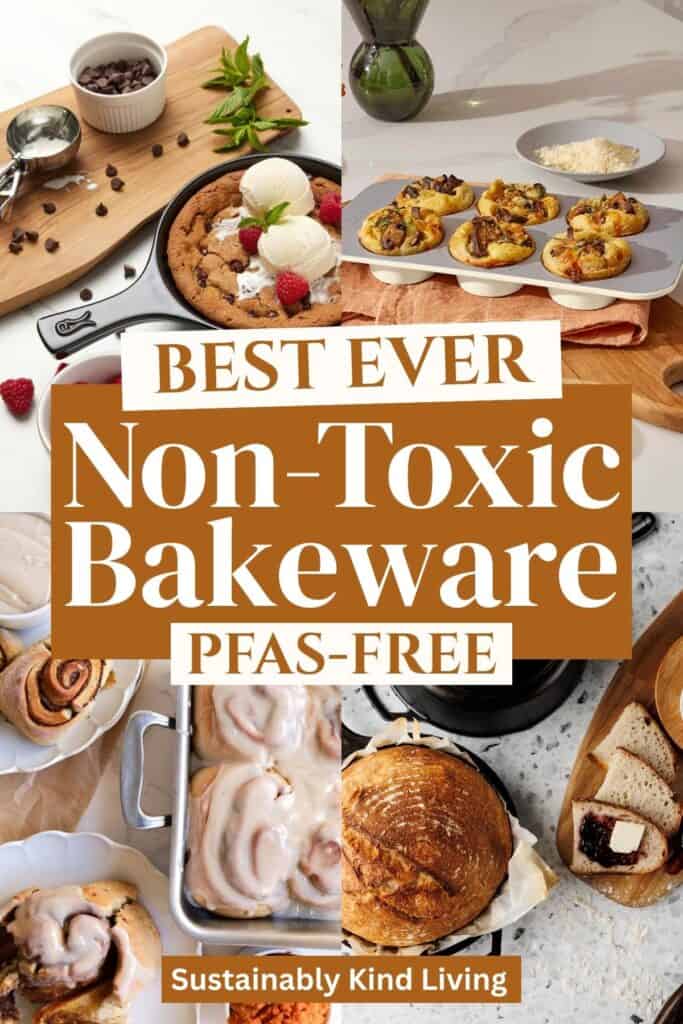
Finding the best non-toxic bakeware usually starts the same way — you realize the pans sitting in your kitchen might not be as harmless as they seem.
Many traditional baking sheets, muffin tins, and cake pans are made with synthetic non-stick coatings, aluminum, or glazes that can contain heavy metals.
These materials are incredibly common in big-box bakeware, but they’re not always ideal when exposed to high oven temperatures.
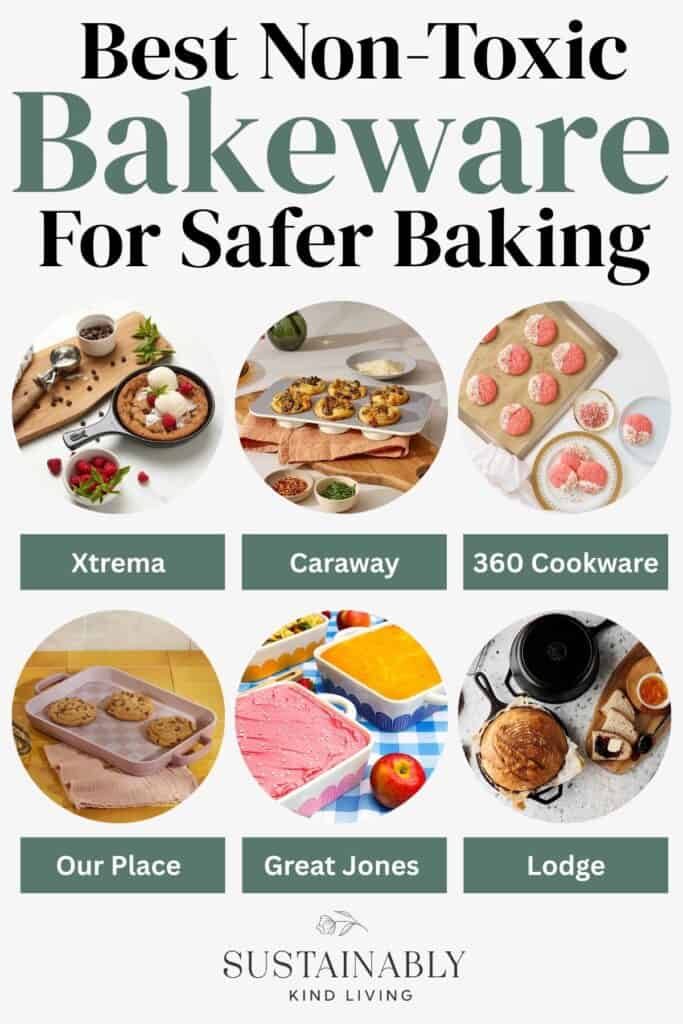
My Top Non-Toxic Bakeware Picks
- Best 100% Pure Ceramic Bakeware: Xtrema Cookware
- Best Ceramic Coated Non-Stick Bakeware: Caraway
- Best Stainless Steel Bakeware: 360 Cookware
- Best Lead-Free Ceramic Stoneware Bakeware: Our Place
- Best Budget-Friendly PFAS-Free Bakeware: Great Jones
When I first started researching safer products for our home, I focused mostly on cookware. Pots and pans get a lot of attention in the non-toxic living world, so that felt like the obvious place to start.
Bakeware, surprisingly, didn’t cross my mind right away.
But the more I looked into it, the more I realized that many of the same concerns show up in baking pans too — including PFAS-based non-stick coatings designed to create that slick surface many of us grew up using.
That discovery sent me down a bit of a rabbit hole.
As someone who genuinely loves to bake (cookies, quick breads, the occasional over-ambitious cake), I wanted to know which materials were actually safer — and which brands were simply using better marketing.
After digging through material disclosures, safety testing, and dozens of bakeware options, I narrowed things down to a handful of brands that prioritize clean materials, transparency, and long-term durability.
Why Non-Toxic Bakeware Matters
Bakeware is exposed to some of the highest temperatures in the kitchen, which means the materials used to make it matter more than many people realize.
Many conventional baking pans rely on synthetic coatings, reactive metals, or glazes that weren’t originally designed with long-term exposure in mind.
Over time, some of these materials can degrade, react with certain foods, or raise concerns among researchers and consumer safety groups.
That’s why many people are starting to switch to non-toxic bakeware made from simpler, more stable materials.
Below are some of the most common materials found in conventional bakeware and why they’ve raised health concerns.
PFAS-Based Non-Stick Coatings
Many non-stick baking sheets and muffin tins use fluoropolymer coatings that belong to the PFAS (per- and polyfluoroalkyl substances) chemical family.
PFAS are often called “forever chemicals” because they break down extremely slowly in the environment and the human body.
Research has linked certain PFAS compounds to health concerns, including thyroid disruption, immune system effects, liver damage, and increased risk of certain cancers.
When non-stick coatings are exposed to high oven temperatures, they can also degrade over time and release fumes and microscopic particles into the air.
Why “PFOA-Free” Doesn’t Always Mean PFAS-Free
Many bakeware products now advertise themselves as “PFOA-free.”
While PFOA was one of the most widely known PFAS chemicals, it’s only one compound in a much larger family of thousands of fluorinated chemicals.
In many cases, manufacturers simply replaced PFOA with other PFAS compounds that perform similar functions in non-stick coatings.
Because of this, many people looking to reduce chemical exposure choose bakeware that avoids all fluoropolymer coatings, not just PFOA.
Aluminum
Aluminum bakeware is popular because it heats quickly and evenly.
However, aluminum is a reactive metal, which means it can interact with certain foods — especially acidic ingredients like tomatoes, citrus, or vinegar.
Small amounts of aluminum can transfer into food during cooking, and long-term aluminum exposure has been studied for its potential links to neurological conditions such as Alzheimer’s disease and other neurodegenerative disorders.
Heavy Metals in Glazes and Coatings
Some ceramic bakeware and colorful coatings may contain heavy metals such as lead or cadmium, depending on how the glaze is formulated.
These metals are toxic even at low levels and can accumulate in the body over time. Exposure has been associated with developmental issues, kidney damage, and other serious health concerns.
Reputable brands test their products to ensure heavy metals do not leach into food, which is why material transparency and safety testing are important when choosing bakeware.
Plastic Components
Some bakeware includes plastic handles, synthetic grips, or polymer coatings that may degrade when exposed to repeated high heat.
Certain plastics can release chemicals like BPA, an endocrine disruptor that has been linked to hormone imbalance, reproductive issues, and metabolic disorders.
SKL Standards
How I Researched & Selected The Best Non-Toxic Bakeware
Over the past several years, I’ve spent a lot of time researching safer materials for our kitchen while building a lower-tox home for my family.
As the founder of Sustainably Kind Living, I regularly review cookware and kitchen products by digging into material disclosures, safety certifications, manufacturing details, and independent testing whenever brands provide it.
Bakeware turned out to be one of the most confusing categories, largely because marketing terms like “ceramic,” “eco-friendly,” or “PFOA-free” don’t always reflect the full material story.
For this guide, I looked closely at the things that actually matter when it comes to safer bakeware:
• Core materials used in the pan (ceramic, stainless steel, cast iron, or coated steel)
• Whether PFAS or PTFE coatings are used
• Disclosure of heavy metals like lead or cadmium in glazes or coatings
• Brand transparency around manufacturing and safety standards
• Durability and real-world baking performance
I also prioritized brands that provide clear safety information, including compliance with standards like California Prop 65 or European LFGB regulations when available.
After comparing dozens of options, the brands included in this guide consistently stood out for their material integrity, transparency, and long-term durability — the same qualities I look for when choosing bakeware for my own kitchen.
After reviewing dozens of options, these are the non-toxic bakeware brands that consistently stood out for safety, transparency, and performance.
The Best Non-Toxic Bakeware Brands Worth Your Money In 2026
1. Xtrema Cookware
Best For: 100% toxin-free ceramic bakeware with no coatings or metals.
Use discount code SKL15 to save 15%!
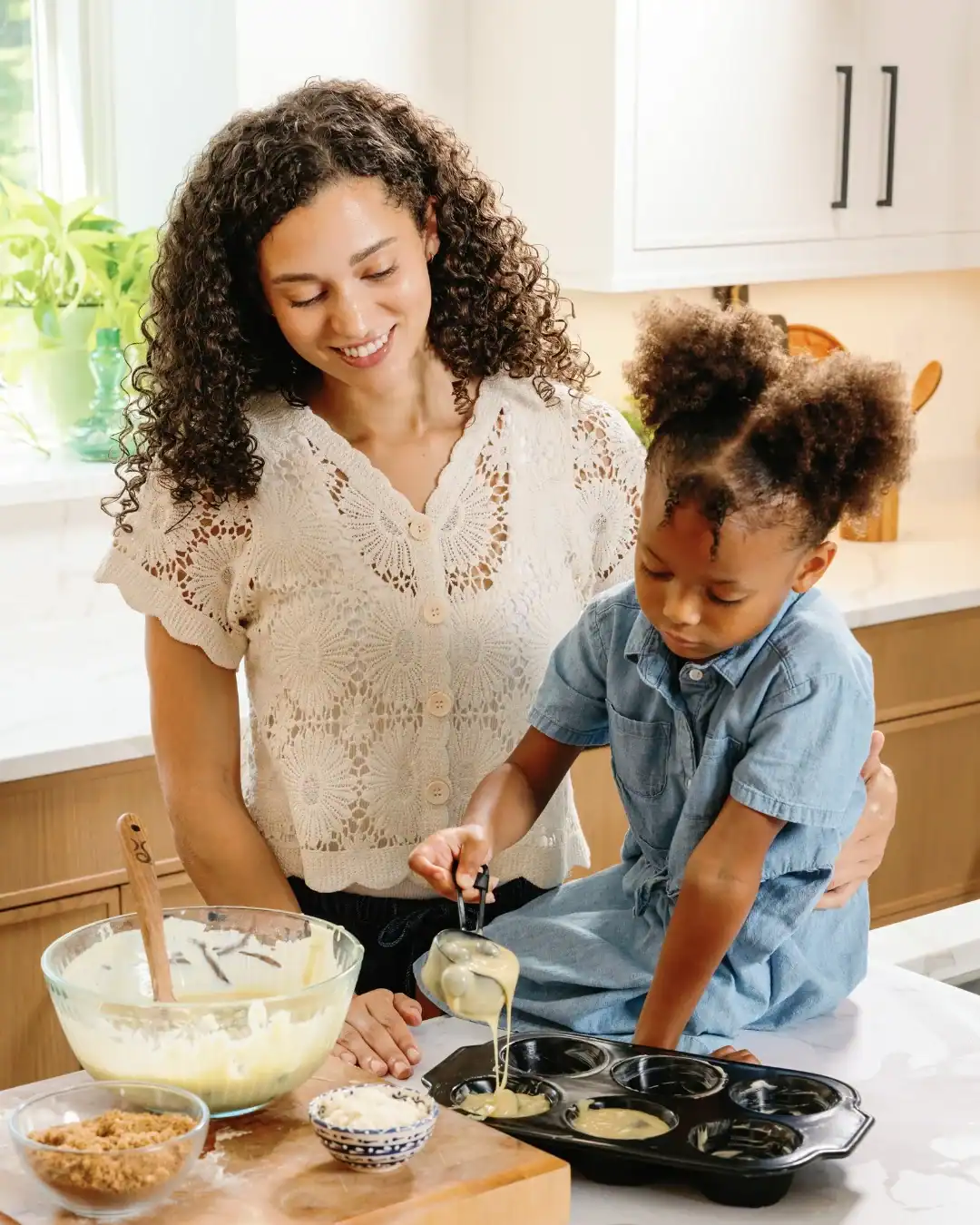
If your priority is finding the best non-toxic bakeware for high-heat cooking, Xtrema Cookware is the cleanest option available.
Unlike ceramic-coated pans or traditional non-stick bakeware, Xtrema Cookware is made from 100% pure ceramic — natural clay and minerals fired at ultra-high temperatures to create a non-porous, non-reactive surface.
There is no aluminum core, no PTFE, no PFAS, and no synthetic coating layer to degrade over time.
That makes it one of the safest choices for anyone specifically searching for plastic-free bakeware, lead-free baking pans, or fully toxin-free ceramic bakeware.
It heats gradually and retains warmth beautifully, making it ideal for casseroles, loaves, pies, and slow bakes.
While it requires slightly different handling than metal pans, the long-term durability and material purity make it a standout investment.
Price
$136+ (2-Piece Baker’s Bundle) | $60+ (Individual Bakeware)
Non-Toxic Bakeware Options
100% Pure Ceramic
Location/Shipping
United States | Ships Worldwide
ab1200 Chemical disclosure
- Chemical Disclosure Information.
- Xtrema partners with third-party labs to test and confirm that all of its products are non-toxic.
- Xtrema’s cookware is safe to use and free of toxicants, as required by California Prop 65.
- Xtream also complies with LFGB regulations, which apply to food products and their packaging in Germany and the European Union.
What We Love About Xtrema Cookware
- 100% pure ceramic, free from metals, toxins, and harmful chemicals.
- Handcrafted by skilled artisans using natural, inorganic materials.
- Scratch-resistant glaze without lead, cadmium, or heavy metals.
Our Favorites from Xtrema Cookware:
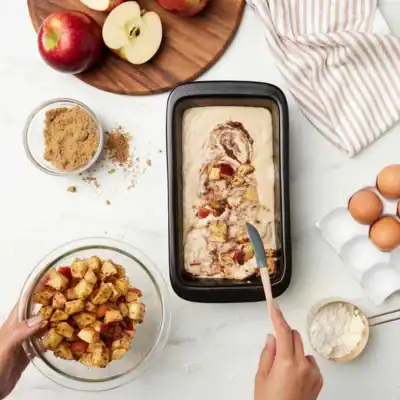
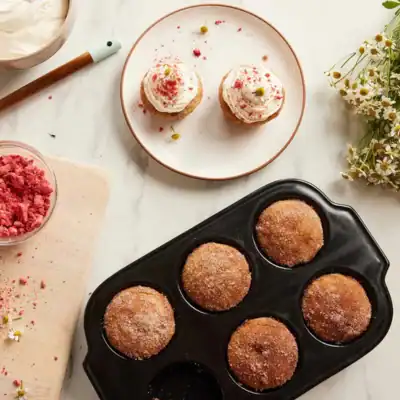
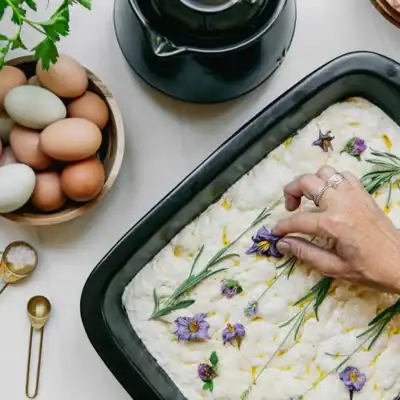
My Personal Review
If you are new to 100% ceramic bakeware, you will instantly love it. Promise. It is shockingly lightweight and super easy to handle.
It will never scratch like ceramic coating, and it has a much longer lifespan. To top it all off, my abuela LOVES their entire line.
2. Caraway
Best For: PFAS-free non-stick bakeware with easy cleanup.
Use the discount code SKL to save 10%!
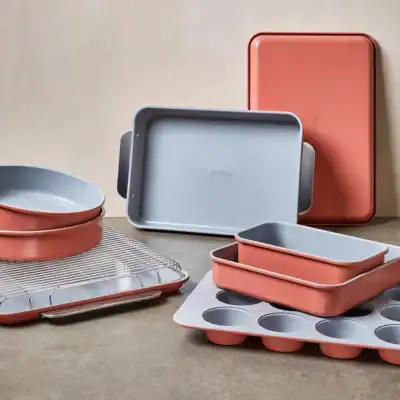
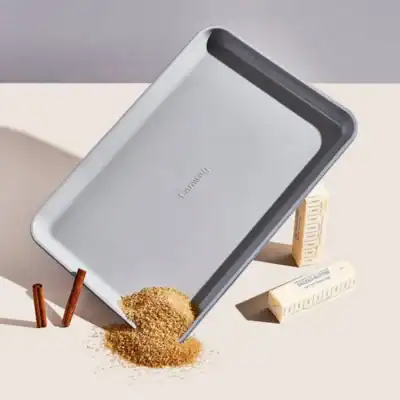
If you want high-performance PFAS-free bakeware that feels like traditional non-stick — without the toxins — Caraway is the best ceramic-coated option.
Their aluminized steel core ensures even heating, while the mineral-based ceramic coating is completely free from PTFE, PFOA, lead, and cadmium.
Unlike conventional Teflon baking sheets, Caraway’s coating provides excellent release without fluoropolymers.
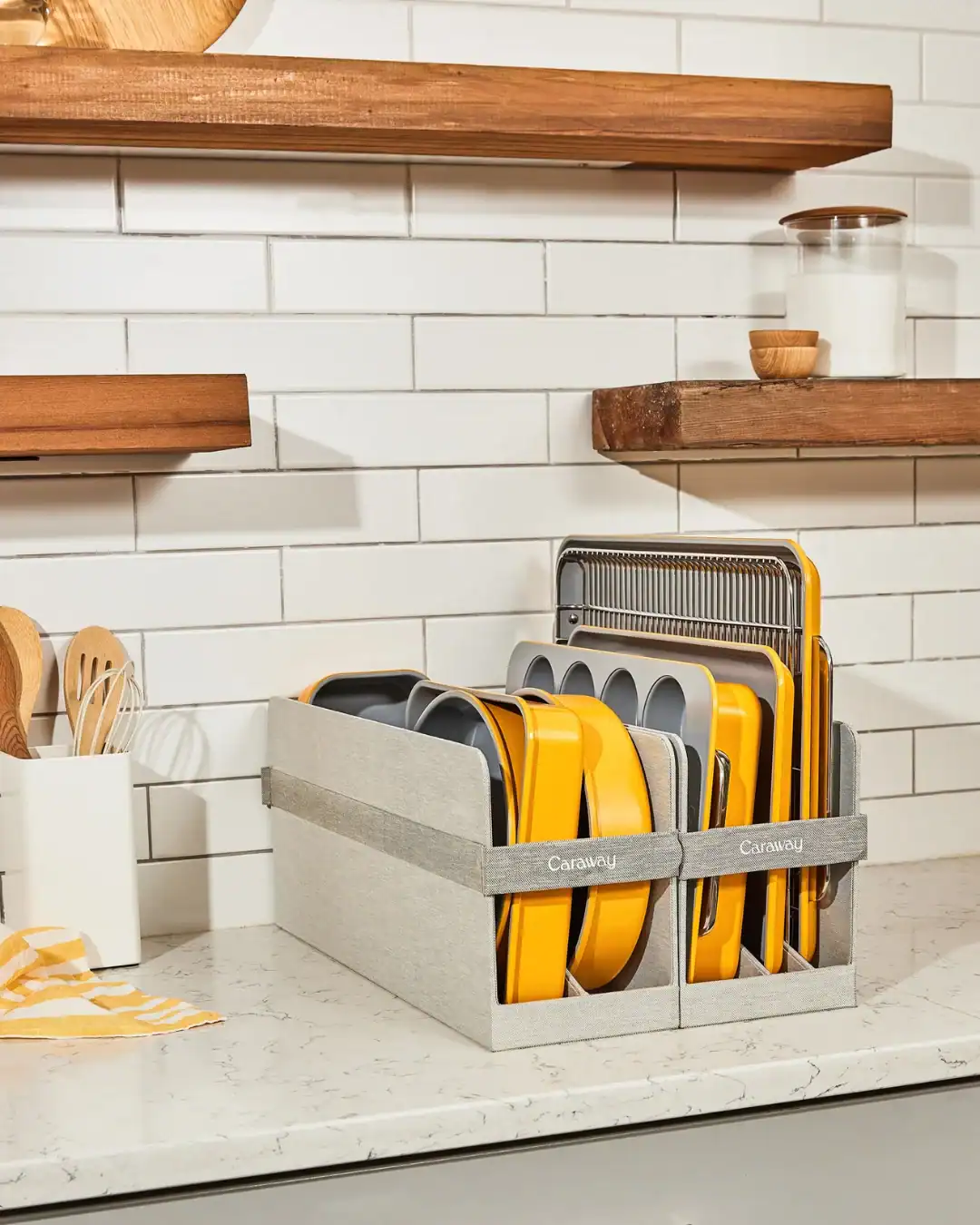
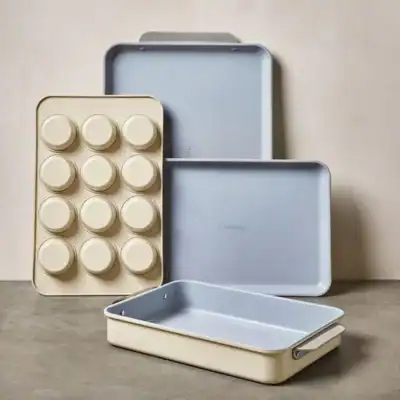
Cleanup is easy, and the full bakeware set replaces everything from muffin tins to baking sheets in one cohesive system.
If you’re transitioning away from toxic non-stick bakeware but still want that easy-release performance, Caraway offers the most balanced solution.
Price
$425 (11-Piece Bakeware Set) | $35+ (Individual Bakeware)
Non-Toxic Bakeware Options
Ceramic-Coated Aluminized Steel
Location/Shipping
United States | Select International Shipping
ab1200 Chemical disclosure
- Chemical Disclosure Information.
- Some pans may contain iron, chromium, manganese, nickel, phosphorus, and molybdenum (a trace mineral).
What We Love About Caraway
- Dedicated to safe, non-toxic bakeware.
- Mineral-based ceramic coating for superior non-stick performance.
- Complete 11-piece set for all your baking needs.
Our Favorites from Caraway:
My Personal Review
I’ve tested Caraway’s bakeware extensively, and it is fantastic (and gorgeous). All of my desserts and entrees come out to perfection without any stuck-on issues.
Just be sure only to use wooden or silicone utensils, as metal will harm the coating.
3. 360 Cookware
Best For: Heirloom-quality stainless steel bakeware with zero coatings.

Use discount code SKL15 to save 15%!
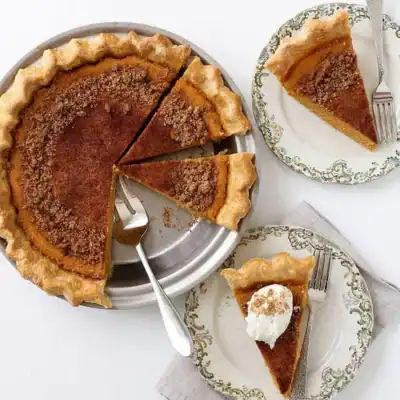
For those who prefer stainless steel over ceramic, 360 Cookware offers premium stainless steel non-toxic bakeware made in the USA.
Crafted from T-304 surgical-grade stainless steel, these pans contain no coatings and no synthetic non-stick layers.
The multi-ply construction includes an aluminum core for even heat distribution while maintaining a non-reactive cooking surface.
Unlike aluminum sheet pans that can react with acidic foods, high-quality stainless steel resists corrosion and is built to last decades.
If your goal is long-lasting, coating-free bakeware without PFAS or ceramic finishes, 360 is a durable heirloom-level option.
Price
$674.50 (5-Piece Bakeware Set) | $95+ (Individual Bakeware)
Non-Toxic Bakeware Options
T-304 Surgical-Grade Stainless Steel
Location/Shipping
United States | Select International Shipping
ab1200 Chemical disclosure
- 360 Cookware currently does not publish an AB1200 chemical disclosure statement on its website.
What We Love About 360 Cookware
- American-made, family-owned business.
- Surgical-grade T-304 stainless steel for durability and safety.
- Multi-ply construction with aluminum core for even heat distribution.
Our Favorites from 360 Cookware:
Use discount code SKL10 to save 10%!
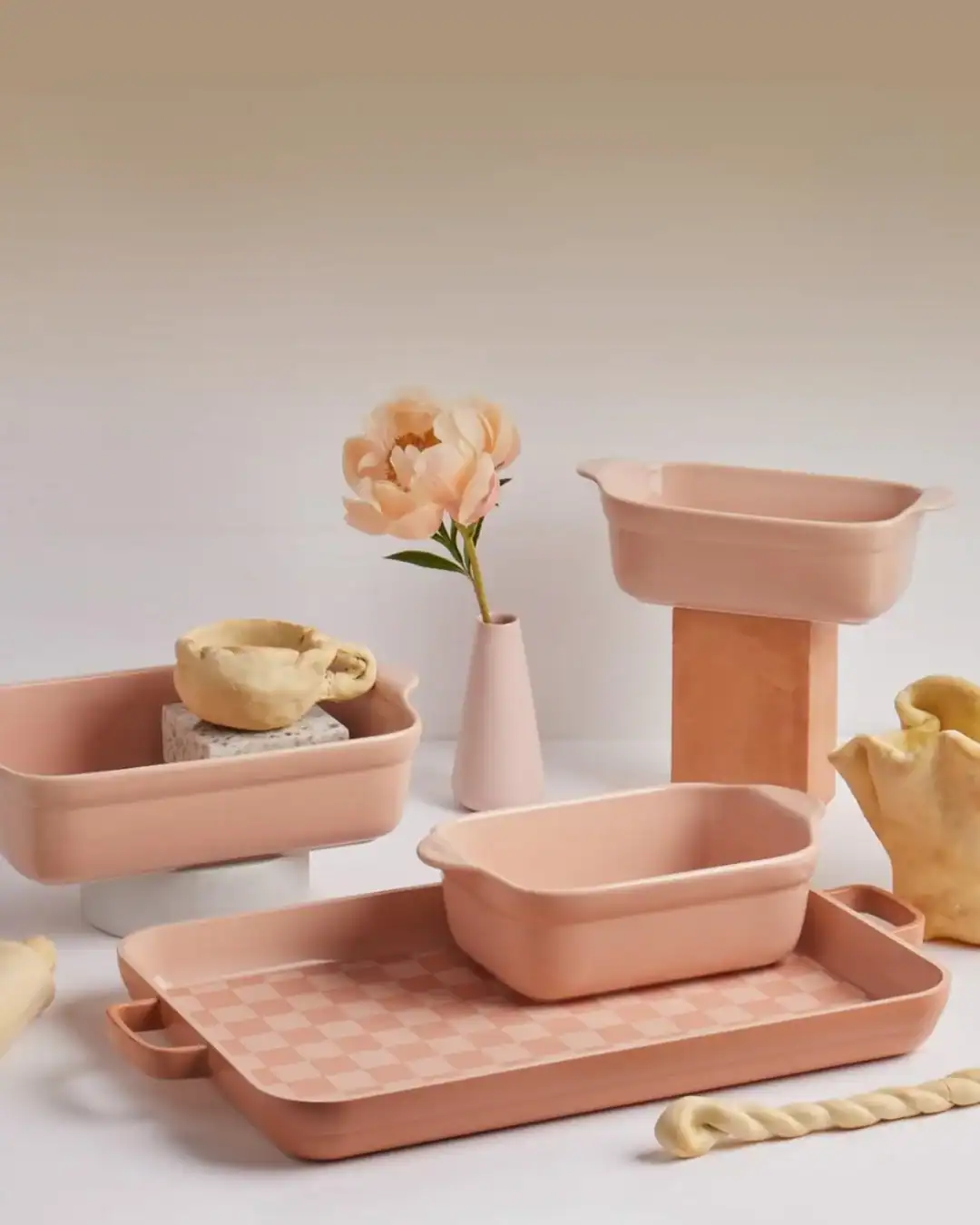
If you’re looking for lead-free ceramic bakeware with elevated design, Our Place offers beautifully crafted stoneware that blends performance with modern aesthetics.
Unlike traditional non-stick bakeware, their ceramic stoneware is free from PFAS, PTFE, PFOA, and toxic coatings.
The natural ceramic surface distributes heat evenly and resists chipping better than many budget ceramic dishes.
While it’s not 100% pure ceramic like Xtrema Cookware and doesn’t focus on stainless durability like 360 Cookware, Our Place shines in versatility and storage-friendly design.
Their stackable pieces are ideal for smaller kitchens or anyone who values cohesive, minimalist cookware.
If you want non-toxic ceramic baking dishes that look as good on the table as they do in the oven, this is a strong option.
Price
$269.95 (9-Piece Bakeware Set) | $35+ (Individual Bakeware)
Non-Toxic Bakeware Options
Lead-Free Ceramic Stoneware
location/shipping
United States | Ships To Canada, The United Kingdom & Australia
ab1200 Chemical disclosure
- Chemical Disclosure Information.
- Our Place’s ceramic stoneware does not include any toxic chemicals that require disclosure.
What We Love About Our Place
- Mission-driven brand focusing on versatility and non-toxic materials.
- Lead-free ceramic stoneware for even heating and natural non-stick properties.
- Sustainable packaging and ethical manufacturing practices.
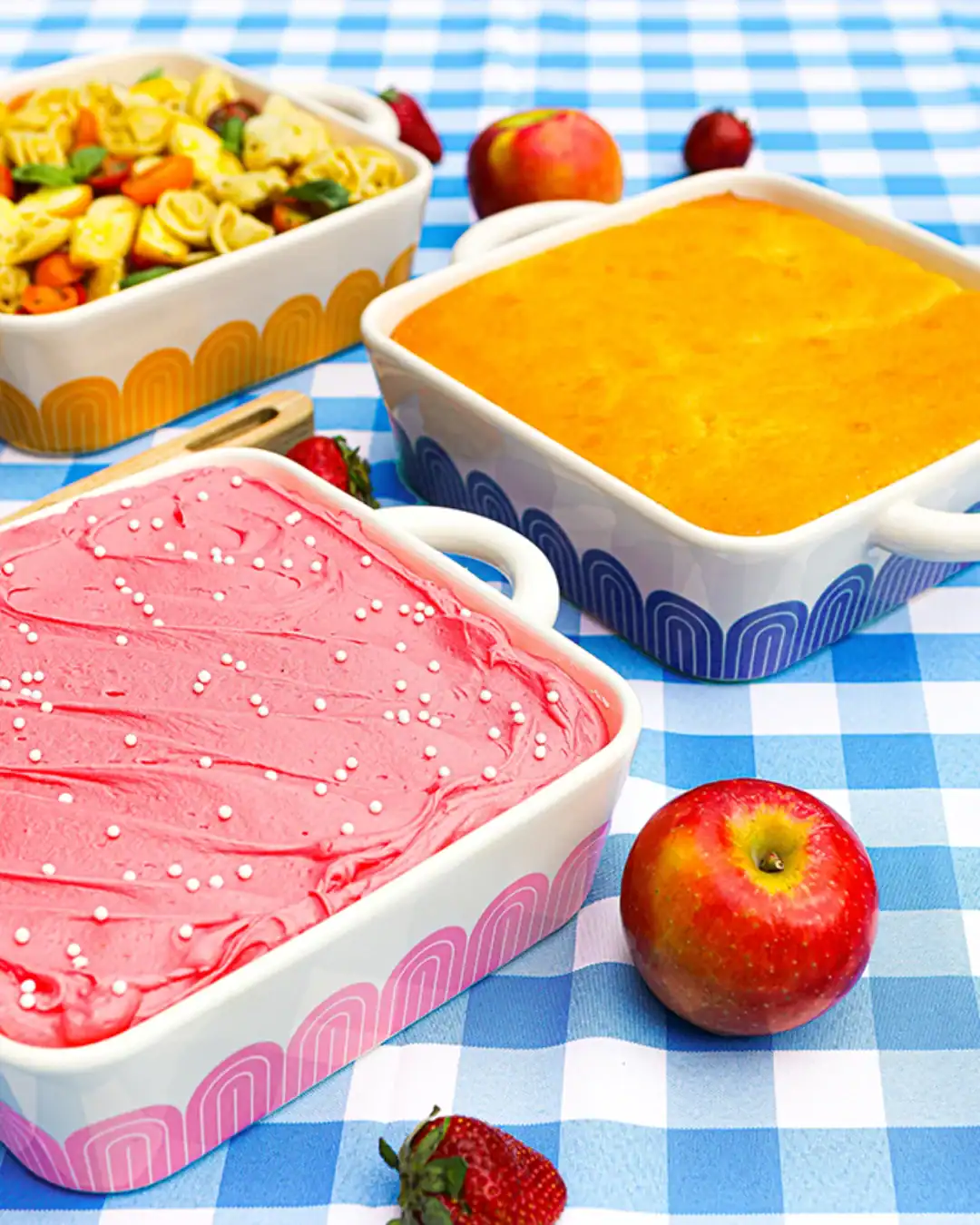
Great Jones offers a colorful, PFAS-free upgrade for home bakers, replacing traditional non-stick pans.
Known for bold colors and approachable pricing, the brand focuses on ceramic-coated sheet pans and stoneware designed to eliminate PTFE and PFOA from your kitchen.
Their non-toxic bakeware isn’t 100% pure ceramic like Xtrema Cookware, nor heirloom stainless steel like 360 Cookware — but it delivers a safer alternative to big-box Teflon bakeware at a more accessible price point.
Where Great Jones stands out is in its flexibility. You can build your own collection with individual pans, duos, or curated bundles instead of committing to a large set.
For everyday baking — cookies, sheet pan dinners, muffins, and casseroles — it’s a practical, lower-investment step toward a non-toxic kitchen.
Price
$30+ (Individual Bakeware)
Non-Toxic Bakeware Options
Ceramic
location/shipping
United States
ab1200 Chemical disclosure
- There are no intentionally added chemicals to disclose for any Great Jones product.
What We Love About Great Jones
- New York-based brand combining style and performance.
- Diamond-infused ceramic coating, PFOA and PTFE-free.
- Partnership with Hot Bread Kitchen for responsible bakeware recycling.
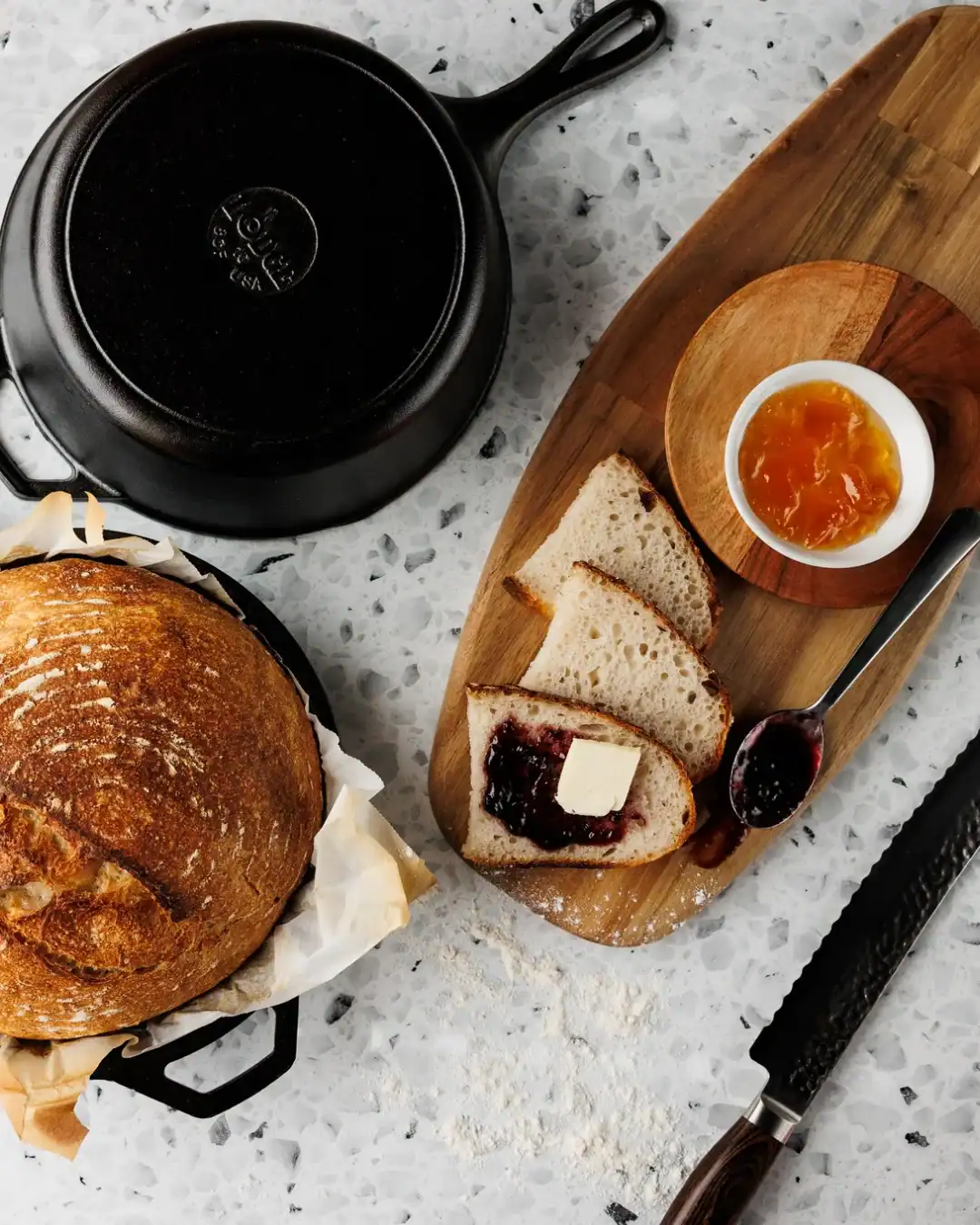
Lodge Cast Iron is one of the most time-tested options in non-toxic bakeware.
Made in the USA and pre-seasoned with 100% natural vegetable oil, Lodge Cast Iron bakeware contains no PTFE, PFOA, synthetic coatings, or chemical non-stick layers.
Unlike ceramic-coated pans that can wear over time, cast iron becomes naturally non-stick through seasoning and proper care.
That means no flaking coatings and no hidden “forever chemicals” — just solid, heirloom-quality bakeware built to last for generations.
Lodge Cast Iron offers classic pieces like muffin pans, cornstick molds, and baking pans that deliver excellent heat retention and even browning.
It’s heavier than stainless or ceramic, but that weight is exactly what gives it durability and consistent baking performance.
For those looking for truly chemical-free bakeware that improves with age, Lodge remains one of the safest long-term investments.
Price
$99.90 (Baker’s Favorite Set) | $20+ (Individual Bakeware)
Non-Toxic Bakeware Options
Pre-Seasoned Cast Iron
location/shipping
United States
ab1200 Chemical disclosure
- Chemical Disclosure Information.
- Lodge Cast Iron cookware is made in the USA and is PFOA and PTFE-free.
- Lodge Cast Iron cookware is safe for use and complies with FDA regulations.
What We Love About Lodge Cast Iron
- Trusted American brand crafting high-quality cast iron since 1896.
- Pre-seasoned with 100% natural vegetable oil for a non-stick surface.
- Versatile bakeware pieces designed for even heating and long-lasting durability.
How to Choose the Best Non-Toxic Bakeware for Your Kitchen
The “best” non-toxic bakeware really depends on how you like to cook and bake. Different materials perform differently in the oven, so the right choice often comes down to your cooking style, maintenance preferences, and budget.
Here are a few things to consider before choosing your bakeware.
If You Want the Cleanest Material Possible
For people focused on maximum material purity, 100% ceramic bakeware is often the top choice. Pure ceramic pans don’t contain metal cores or synthetic coatings and remain stable at high temperatures.
They’re a great option for casseroles, breads, and slow bakes where even heat retention matters.
If You Prefer Easy Non-Stick Baking
If you regularly bake cookies, sheet pan meals, or delicate pastries, a PFAS-free ceramic-coated bakeware can offer easier food release and cleanup.
These pans mimic traditional non-stick performance without relying on fluoropolymer coatings, though the coating may eventually wear down with heavy use.
If You Want the Most Durable Option
For long-term durability, stainless steel and cast iron bakeware tend to last the longest. These materials are extremely stable at high temperatures and can often last decades with proper care.
They’re especially good for roasting, baking breads, and high-heat cooking.
If You Want Something Lightweight and Versatile
Ceramic stoneware and glass baking dishes are popular for everyday meals like baked pasta, casseroles, and desserts. They’re easy to use, widely available, and don’t rely on synthetic coatings.
Many people like these materials because they can go from oven to table easily.
If Budget Is a Factor
Safer bakeware doesn’t have to mean replacing your entire kitchen overnight. Many people start by upgrading the pans they use most often, like baking sheets or muffin tins, and slowly replace other pieces over time.
Even swapping out one or two heavily used pans can make a meaningful difference.
How to Care for Non-Toxic Bakeware
Material-Specific Maintenance
- Stainless Steel: Wash with warm, soapy water and dry thoroughly to prevent rust. Use Bar Keepers Friend to remove stubborn stains.
- Ceramic & Stoneware: Hand wash with mild soap and avoid sudden temperature changes, which can cause cracking.
- Cast Iron: Rinse with hot water and dry immediately on the stovetop or in the oven. Season regularly with oil to maintain the natural non-stick surface.
- Glass: Allow the pan to cool before washing to prevent thermal shock. Avoid metal utensils that could scratch the surface.
- Silicone: Wash with warm, soapy water or place in the dishwasher. Avoid sharp tools that could tear the material.
How to Clean Bakeware Without Damaging It
- For stuck-on food, soak the pan in hot, soapy water before scrubbing with a non-abrasive sponge.
- Baking soda or a mixture of vinegar and water can help lift stubborn stains without damaging the surface.
- Avoid steel wool or harsh scrubbers, which can scratch coatings or roughen metal surfaces and cause food to stick.
How to Store Bakeware Properly
- Store bakeware in a cool, dry place away from direct sunlight.
- Place pan protectors or soft cloths between stacked items to prevent scratches.
- If possible, store baking sheets and muffin tins vertically to save space and protect their surfaces.
Heat Tips to Protect Your Bakeware
- Avoid placing hot bakeware directly on cold surfaces, which can cause cracking or warping.
- Preheat the oven before placing stoneware or cast iron inside to prevent thermal shock.
- Use oven mitts when handling bakeware, as materials like stainless steel can become extremely hot.
The Bakeware Greenwashing Problem
One thing I’ve learned while researching safer kitchen products is that bakeware marketing can be surprisingly misleading.
Terms like:
• eco-friendly
• ceramic coating
• PFOA-free
• toxin-free
can sound reassuring, but they don’t always tell the full story.
For example, many products labeled “ceramic” are actually metal pans coated with a thin ceramic-based layer. Others advertise being “PFOA-free” while still using other PFAS chemicals in their non-stick coatings.
This is why looking at the actual materials used in a pan is much more important than relying on marketing claims alone.
Frequently Asked Questions About Non-Toxic Bakeware
The safest bakeware materials are 100% ceramic, stainless steel (18/8 or 304 grade), cast iron, and tempered glass.
These materials are stable at high oven temperatures and do not rely on PFAS-based non-stick coatings. Because they’re chemically inert, they’re less likely to release unwanted substances into food during baking.
Ceramic-coated bakeware is generally considered safer than traditional Teflon pans because most modern coatings are PFAS-free and PTFE-free. However, the coating can wear down over time with heavy use.
For the most durable non-toxic option, many people choose pure ceramic, stainless steel, or cast iron bakeware instead.
Aluminum can transfer small amounts of metal into food, especially when cooking acidic ingredients like tomatoes, citrus, or vinegar.
While occasional exposure is common, some people prefer alternatives like stainless steel or ceramic to reduce potential long-term exposure.
Using parchment paper or silicone liners can also create a barrier between aluminum pans and food.
Baking pans should be replaced when you notice flaking coatings, deep scratches, rust, warping, or peeling non-stick surfaces.
Damaged coatings can release particles or expose the underlying metal. Switching to durable non-toxic bakeware can help avoid these issues long term.
Cast iron and stainless steel bakeware tend to last the longest, often for decades with proper care. These materials don’t rely on synthetic coatings that wear down over time. Pure ceramic and glass bakeware can also last many years but require more careful handling.
Some parchment paper is treated with PFAS chemicals to improve grease resistance. If you want a safer option, look for parchment labeled PFAS-free, chlorine-free, and unbleached. Reusable silicone baking mats made from high-quality food-grade silicone are another popular alternative.
Yes, high-quality stainless steel bakeware is considered one of the safest options available. Stainless steel is non-reactive, durable, and free from synthetic non-stick coatings. It also holds up well to high oven temperatures without degrading or releasing chemicals.
Traditional non-stick bakeware often uses fluoropolymer coatings that belong to the PFAS chemical family.
Some studies have linked PFAS exposure to potential health concerns, which is why many people prefer bakeware made without these coatings.
PFAS-free bakeware made from ceramic, stainless steel, or cast iron is typically considered a safer alternative.
PFAS-free bakeware means the product does not contain per- and polyfluoroalkyl substances, a group of chemicals often used in non-stick coatings.
These chemicals are sometimes called “forever chemicals” because they break down very slowly in the environment.
Many consumers look for PFAS-free cookware and bakeware to reduce everyday chemical exposure.
Yes, tempered glass bakeware is generally considered non-toxic and chemically stable. It does not contain PFAS coatings and doesn’t react with acidic foods. The main downside is that glass can crack if exposed to sudden temperature changes.
High-quality food-grade silicone bakeware is generally considered safe for baking because it is heat-resistant and flexible.
However, lower-quality silicone may contain fillers that reduce durability and safety. Look for platinum-grade or LFGB-certified silicone for better quality.
Many colorful ceramic dishes are safe, but it’s important that the glazes are tested for heavy metals like lead and cadmium.
Reputable brands provide safety testing or compliance with standards such as Prop 65 or LFGB. When in doubt, choose brands that clearly disclose their materials and testing practices.
Traditional non-stick bakeware often uses fluoropolymer coatings that belong to the PFAS chemical family.
Some PFAS compounds have been linked to potential health concerns, which is why many people prefer PFAS-free bakeware alternatives. Materials like ceramic, stainless steel, and cast iron avoid these synthetic coatings.
Professional bakers often rely on aluminized steel, stainless steel, or heavy-duty aluminum sheet pans because they conduct heat evenly and are extremely durable.
However, many home bakers looking to reduce chemical exposure choose ceramic, stainless steel, or cast iron bakeware instead. These materials offer good performance without synthetic non-stick coatings.
Ceramic bakeware heats more slowly but retains heat well, which makes it great for casseroles, breads, and baked pasta dishes.
Metal pans heat faster and tend to produce crispier edges for foods like cookies or roasted vegetables. Both can be safe options, but pure ceramic and stainless steel bakeware avoid the coatings sometimes found on metal pans.
Many people choose to avoid bakeware that uses PFAS-based non-stick coatings, heavily colored glazes that may contain heavy metals, or thin aluminum pans that can warp easily.
These materials can raise concerns about durability and potential chemical exposure. Instead, many consumers look for bakeware made from ceramic, stainless steel, cast iron, or tempered glass.
Building a Truly Non-Toxic Baking Setup
Non-Stick Alternatives To Chemical Cooking Sprays
Non-stick cooking sprays often contain propellants like propane and butane. If you need extra release, consider natural alternatives instead.
- Use parchment paper or silicone mats to prevent sticking without the need for oil or butter.
- If greasing your pan, choose a heat-stable oil like coconut or avocado, or use ghee for a richer flavor.
Concerns Around Hidden PFAS In Parchment Paper
While parchment paper is a helpful tool for non-stick baking, some brands may be treated with PFAS for grease resistance.
Look for unbleached, chlorine-free options that are explicitly labeled as PFAS-free.
Safer Parchment Paper Alternatives:
- GIFBERA Parchment Paper: This European brand uses silicone coating instead of PFAS for its non-stick properties.
- Katbite Parchment Paper: Made from unbleached paper and coated with silicone, this is another safe choice.
- If You Care Parchment Baking Paper: Chlorine-free and Quilon-free, this brand is a favorite among eco-conscious bakers.
Silicone Mats
Silicone baking mats are another great alternative to parchment paper, and they’re reusable! But make sure to choose a high-quality, food-grade option.
The pinch test can help you identify silicone that contains fillers. If you twist a section of the mat and see white, it’s not pure silicone.
Regulations and Certifications That Matter
California’s Safer Food Packaging & Cookware Act
California’s Safer Food Packaging and Cookware Act of 2021 (AB 1200) introduced significant changes to regulate PFAS in food packaging and cookware.
Key Provisions
- PFAS Ban In Food Packaging: Starting January 1, 2023, the law prohibits the sale or distribution of food packaging containing intentionally added PFAS or PFAS levels exceeding 100 parts per million.
- Cookware Disclosure Requirements: As of January 1, 2023, cookware manufacturers must disclose on their websites the presence of intentionally added chemicals from the California Department of Toxic Substances Control’s (DTSC) Candidate Chemical list.
- Marketing Restrictions: Effective January 1, 2023, manufacturers are prohibited from advertising their products as “free” of a specific chemical if other chemicals from the same class are present.
Certifications Worth Looking For
- NSF/ANSI Food Equipment Materials: This certification ensures that cookware materials meet safety standards for food contact.
- LFGB: A German certification that sets strict limits on heavy metals and other harmful substances.
- Prop 65 Compliant: Products with this label meet California’s standards for toxic chemicals.
Red Flags: There Might Be Toxins In Your Bakeware
- “PFOA-free” labels that don’t mention other PFAS chemicals.
- Bright colors or glazes that may contain heavy metals.
- Imported ceramics without detailed safety information.
- Non-stick coatings that are not explicitly PTFE- and PFAS-free.
Continue Your Non-Toxic Kitchen Journey
Building a non-toxic kitchen rarely stops with bakeware. Once you remove PFAS-coated baking pans, many home cooks start looking at the other tools they use every day.
These guides are a great next step:
• Non-Toxic Cookware – Safer pots and pans without Teflon or PFAS.
• Non-Toxic Air Fryers – Appliances that won’t release toxic coatings at high heat.
• Non-Toxic Coffee Makers – Clean brewing without plastic or aluminum exposure.
• Non-Toxic Cooking Utensils – Tools that touch your food every day.
Creating a safer kitchen doesn’t happen overnight. Start with the tools you use most — bakeware included.
Safer Baking Starts With Better Bakeware
Upgrading to non-toxic bakeware is one of the simplest ways to create a healthier kitchen.
Because baking pans are exposed to high heat, choosing materials like pure ceramic, stainless steel, and cast iron can significantly reduce the risk of PFAS, heavy metals, and synthetic coatings leaching into your food.
The good news is that creating a non-toxic kitchen doesn’t require replacing everything overnight. Most families start by swapping out their most-used baking pans first — sheet pans, muffin tins, and loaf pans — then slowly upgrading the rest over time.
With safer bakeware in your kitchen, you can focus on what really matters: homemade meals, fresh desserts, and time spent baking for the people you love.
Small changes add up — and upgrading your bakeware is a simple place to start.
Save This Guide For Later
If you’re planning to upgrade your kitchen or slowly transition to safer cookware, save this guide so you can revisit it when you’re ready.
Sources & Further Reading
- Agency for Toxic Substances and Disease Registry — Toxicological profiles and research summaries related to PFAS and other environmental contaminants.
- U.S. Environmental Protection Agency — PFAS Explained: Health effects and environmental persistence of “forever chemicals.”
- National Institute of Environmental Health Sciences — Research on PFAS exposure and potential impacts on human health.
- Environmental Working Group — Studies and consumer resources on PFAS exposure in cookware and food packaging.

Steal My Non-Toxic Cleaning Checklist!
Believe us, it’s the BEST…. and it’s free. Does it really get any better than that?! Sign up for our newsletter and get this free checklist to clean your home without any harmful chemicals!




Just FYI Pyrex for the American market is NOT borosilicate glass anymore its soda lime, same as used in window glass. Only the Pyrex made in France is. If you want the real deal now you have to find someone willing to ship from Europe or used pieces on ebay.
Thank you so much for this! And apologies for us not catching it – I ordered Pyrex from Italy when I wrote this (our family is based in Europe and USA). I’ll update this immediately
Thank you for this comprehensive guide! I love that you prioritized non-toxic materials for baking. It’s great to see so many eco-friendly options available in 2025. I’m particularly interested in the ceramic bakeware you mentioned – I’ve been looking for a healthier alternative to traditional baking sheets. Can’t wait to try some of these out!
Thank you so much for your kind words! I’m so glad the guide was helpful — prioritizing non-toxic materials in the kitchen is such a simple yet powerful way to support both our health and the planet.
Ceramic bakeware is a total game-changer, especially if you’re moving away from traditional nonstick options. It’s durable, beautiful, and much safer for high-heat baking. I think you’ll love how evenly it cooks (and how easy it is to clean!).
Let me know which pieces you end up trying — I’d love to hear what you think!
What a fantastic roundup of non-toxic baking options! I love how you’ve highlighted the importance of safe materials in cookware. It’s great to see brands prioritizing sustainability without compromising on quality. I’m definitely adding a few of these to my kitchen arsenal. Thanks for the thorough reviews!
Thank you so much! I’m so glad the roundup resonated with you. It really is encouraging to see more brands stepping up with safer, sustainable options for the kitchen. If you end up trying any of the products, I’d love to hear how they work out for you. Happy (and healthy) baking!
The discount code SKL20 for the 360 pan did not work. 🙁
I am so sorry about this, Diane. We are talking to 360 right now to sort this out!
We have caraway pans and hate them. They chip very easily and they look terrible fast. We want to replace them all
Hi there,
Thank you so much for sharing your experience — I really appreciate hearing both the good and the not-so-good.
We’ve definitely heard mixed reviews when it comes to ceramic-coated cookware. Some people have theirs for years with no issues (like my cousin, Liz), and others find they chip or wear down much faster (my parents set didn’t last them long at all). It really seems to depend on how they’re used and cared for.
From personal experience, if you’re hard at all on your bakeware or cookware — higher heat, frequent use, stacking, heavier utensils — stainless steel tends to be the most durable long-term option.
That’s what we use in our home. 360 Cookware is my top recommendation — it’s incredibly solid, made in the USA, and comes with a true lifetime warranty. That’s a big deal. If something fails due to workmanship or materials, they stand behind it. You’re not replacing pans every few years — you’re buying them once.
It’s not trendy, but it performs and it lasts.
If longevity is your priority, stainless (especially with a lifetime warranty backing it) is hard to beat.