 Shop My Favorite Non-Toxic Gifts Of 2026!
SKL is reader supported. When you buy through links on our site, we may earn affiliate commission. Learn more here.
Almost everything in the sunscreen aisle now carries some version of a clean label, but after years of researching ingredients professionally, I can tell you that “reef-safe,” “non-toxic,” and “natural” are unregulated marketing terms that say nothing about what’s actually in the formula.
Most of those products still contain chemical UV filters like oxybenzone and homosalate, ingredients the FDA has flagged for needing additional safety data due to their absorption into the bloodstream.
Sunscreen is applied generously and repeatedly to large surface areas of skin, which is exactly why I take what goes into these formulas more seriously than almost any other product I review.
Quick Top 5 Non-Toxic Sunscreen Picks…
- Best Non-Toxic Sunscreen For Face: Blissoma Botanical Beauty
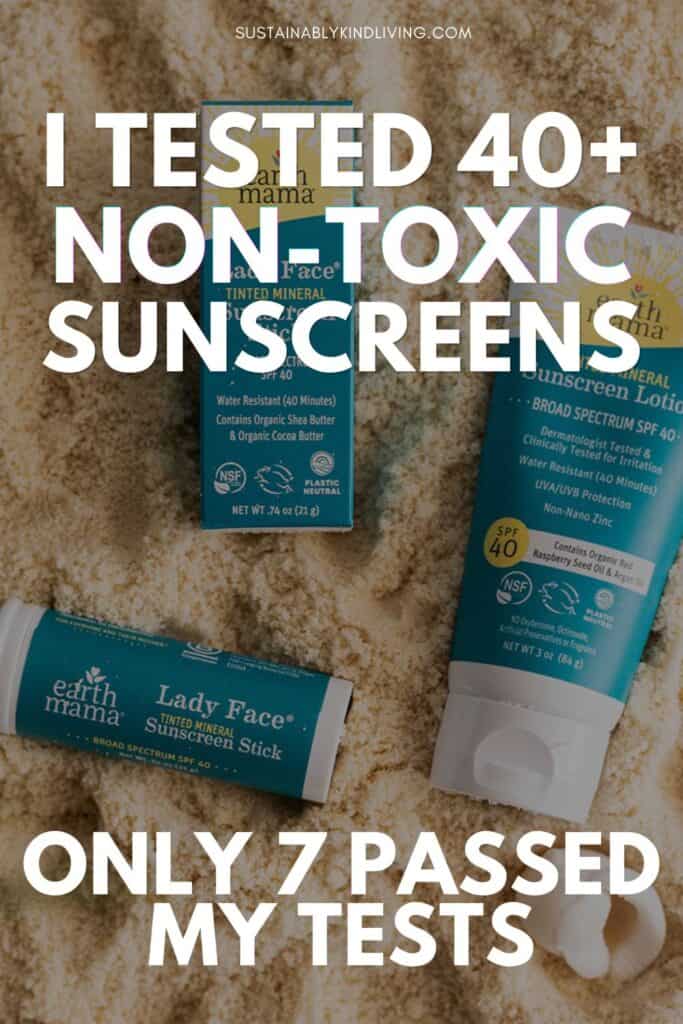
- Best Non-Toxic Sunscreen For Families & Kids: Earth Mama Organics
- Best SPF 50 Mineral Sunscreen: OSEA Malibu
- Best Budget Non-Toxic Sunscreen: THINK SUN
- Best Non-Toxic Sunscreen For Outdoor & Sport: Raw Elements
If you’ve already started paying closer attention to what goes on your skin, whether that’s switching to safer products through my non-toxic skincare guide or simplifying your routine with cleaner options from my non-toxic makeup guide, sunscreen is one of the most important pieces to get right.
Because, unlike most products, sunscreen isn’t something you use occasionally. It’s something you rely on consistently, often in larger amounts, and on some of your most exposed skin.
The good news? There are better options. And I’ve tested them all.
Best Non-Toxic Sunscreen: At a Glance Comparison
(Mobile Users) Scroll to see full comparison →
| Brand | SPF Range | Active Ingredient | Best For | Face Friendly | Water Resistant | Price |
|---|---|---|---|---|---|---|
| Blissoma | SPF 30 | Non-Nano Zinc Oxide (13.2%) | Daily facial sunscreen that feels like skincare (One bottle lasts a Long Time) | Excellent | No | $68 |
| Earth Mama Organics | SPF 40 | Non-Nano Zinc Oxide (22–25%) | Families, babies, sensitive skin & multiple use cases | Good | Yes | $10.99+ |
| Osea Malibu | SPF 50 | Non-Nano Zinc Oxide (19.65%) | Hydrating mineral sunscreen with high SPF protection | Excellent | No | $37+ |
| THINK SUN | SPF 30 – SPF 50 | Non-Nano Zinc Oxide (20–25%) | Super affordable, safe sunscreen for face and body | Good | Yes | $11.99 |
| Raw Elements | SPF 30 – SPF 50 | Non-Nano Zinc Oxide (20-25%) | Best for outdoors, water resistance, and Adventures | Good | Excellent | $6.99+ |
| Activist Skincare | SPF 30 | Non-Nano Zinc Oxide (24.5%) | Tinted daily sunscreen that can replace foundation | Excellent | No | $22 |
In this guide, I’m breaking down the best non-toxic sunscreens of 2026, based on ingredient transparency, real-world performance, and what I actually trust using on my own skin and family.
And if you’re building out a safer summer routine, you may also want to check out my guides to the best sun protection clothes, non-toxic tanning products, and even non-toxic swimwear.
Why Choosing a Non-Toxic Sunscreen Matters
Most people think of sunscreen as a beach bag item, but if you’re using it the way you should be, it’s one of the most consistently applied products in your entire routine. That frequency is exactly why the formula matters so much.
The FDA has confirmed that common chemical UV filters like oxybenzone and homosalate absorb into the bloodstream after a single day of use, and with repeated daily application, that exposure adds up in a way it simply doesn’t with other products.
Non-nano zinc oxide became my standard for a reason. It sits on top of the skin and physically reflects UV rays rather than absorbing into it, which means it does its job without the systemic absorption questions that come with chemical filters. It’s the only active ingredient I recommend across every formula in this guide.
This becomes even more important when you’re shopping for kids, whose skin absorbs topical ingredients at higher rates than adults.
I break all of that down in my guide to the best non-toxic sunscreen for kids and babies, including exactly what to look for and what to avoid.
Why Most Sunscreens Aren’t Actually Non-Toxic
The problem with sunscreen right now isn’t a shortage of options. It’s that the options are almost impossible to evaluate honestly because the labeling system is broken.
“Reef-safe,” “clean,” and “non-toxic” are unregulated terms that any brand can put on any product regardless of what’s inside.
And what’s inside is often oxybenzone, octocrylene, or homosalate, synthetic preservatives like phenoxyethanol, fragrance, stabilizers, and, in some cases, nano-sized zinc particles that behave very differently in the body than their non-nano counterparts.
Even products marketed as mineral sunscreens frequently combine zinc oxide with chemical filters or inactive ingredients that have no place in a genuinely clean formula.
I don’t evaluate sunscreens based on what they call themselves. I look at the full ingredient list, how transparent a brand is about what’s in the formula and why, and whether that formula holds up with real, consistent use. Because what a sunscreen is called has never once told me whether it’s actually safe.
What To Look For in a Non-Toxic Sunscreen
Not all sunscreens perform the same way, and not all “clean” labels reflect what’s actually in the formula.
Here’s what matters most when choosing a safer sunscreen:
✔ Non-Nano Zinc Oxide As The Active Ingredient
This is the gold standard for non-toxic sun protection. It sits on top of the skin and provides broad-spectrum coverage without relying on chemical filters.
✔ Minimal, Transparent Ingredient Lists
The fewer unnecessary additives, the better. Look for brands that clearly disclose what’s in their formulas, especially beyond just the active ingredients.
✔ No Fragrance or Unnecessary Preservatives
Fragrance and certain preservatives can increase the risk of irritation, especially with daily use or sensitive skin.
✔ Formulated For How You’ll Actually Use It
A daily facial sunscreen should feel lightweight and wearable, while body or sport formulas should hold up to sweat, water, and reapplication.
The goal isn’t just finding something labeled “non-toxic” – it’s choosing a formula that remains consistent, predictable, and safe with regular use.
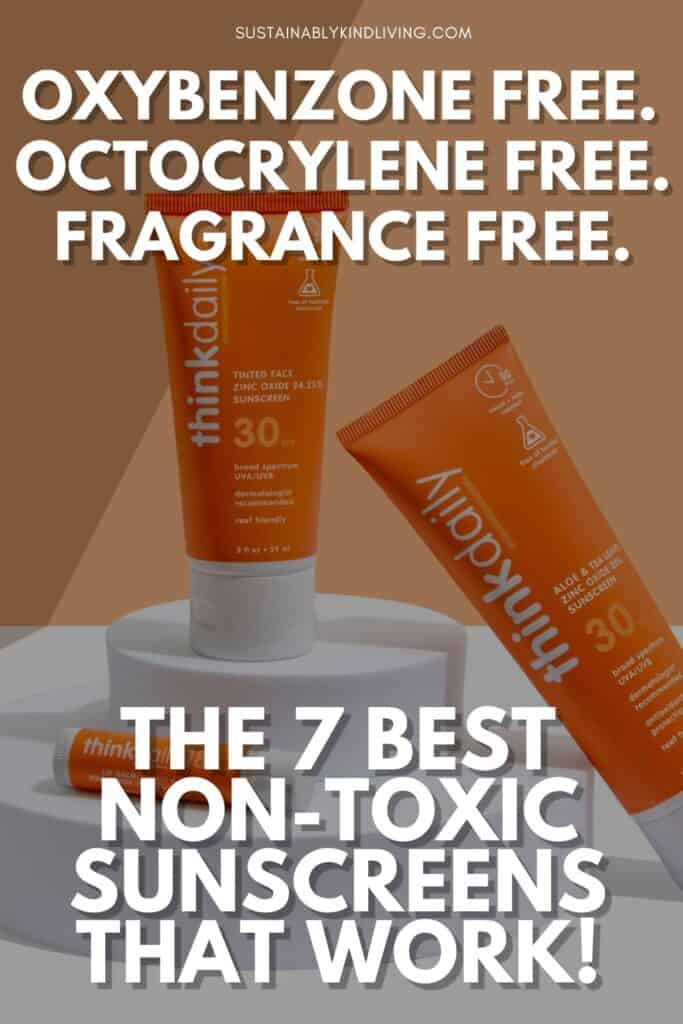
The Safest Non-Toxic Sunscreen Brands
1. Blissoma Botanical Beauty – Best Non-Toxic Sunscreen For Face
Best For: Daily facial sunscreen that feels like skincare, perfect if you want hydration, glow, and no white cast.
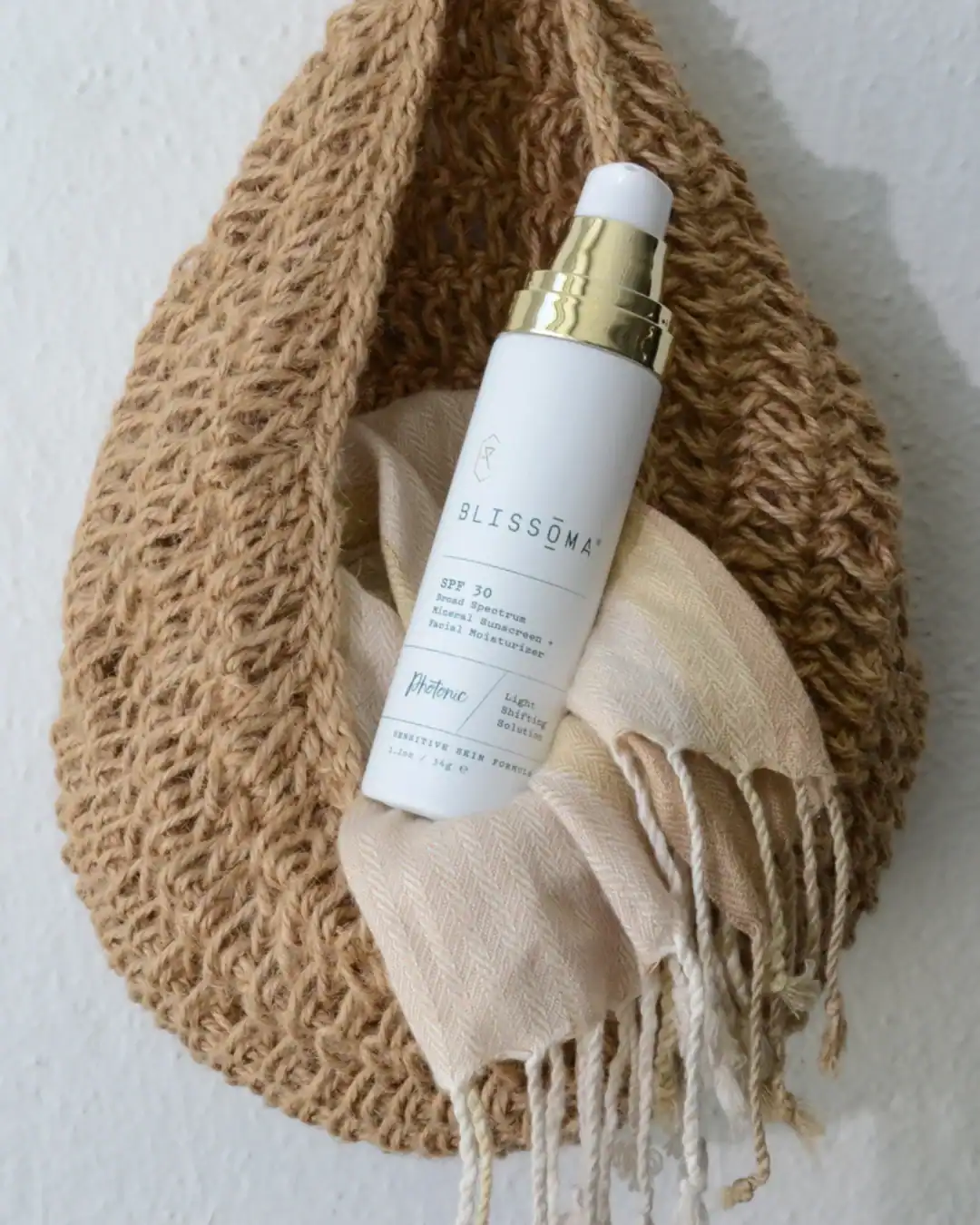
Blissoma Botanical Beauty’s Photonic™ SPF 30 is one of the few mineral sunscreens I’ve tested that genuinely feels like skincare.
It blends easily, wears well throughout the day, and skips the heavy, chalky finish that makes so many zinc-based formulas hard to use on your face consistently.
What makes this one different is how it’s actually formulated. It’s not just zinc oxide in a moisturizing base.
It’s built more like a treatment product, with ectoin, niacinamide, and antioxidant-rich botanicals that are actively doing something for your skin while it protects it.
If you’ve tried mineral sunscreen after mineral sunscreen and given up because nothing worked on your face, this is the one I’d try next.
Price
$10 (Sample) | $68
Main Ingredients
Zinc Oxide (13.2%) | Water | Plant Oils | Niacinamide | Squalane | Botanical Extracts | Antioxidants | Ectoin | Lecithin
location/shipping
United States | Ships Internationally
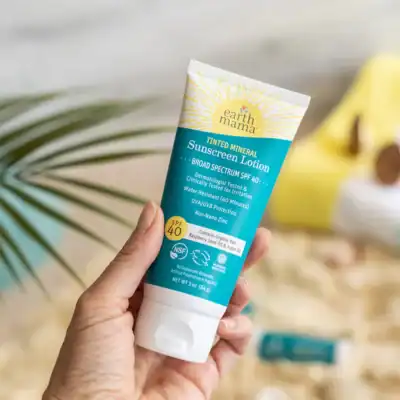
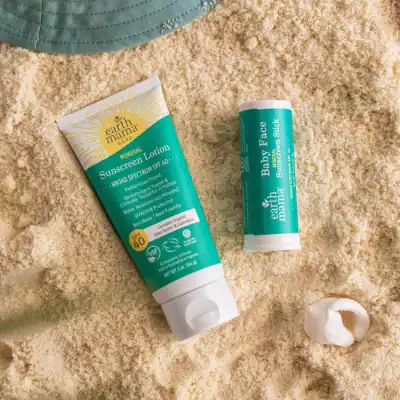
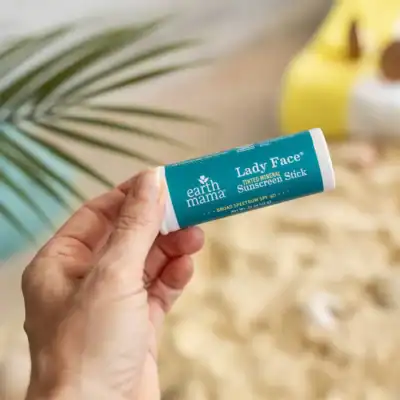
2. Earth Mama Organics – Best Non-Toxic Sunscreen For Families & Kids
Best For: A safe, simple sunscreen the whole family can use (great for babies, toddlers, and sensitive skin).
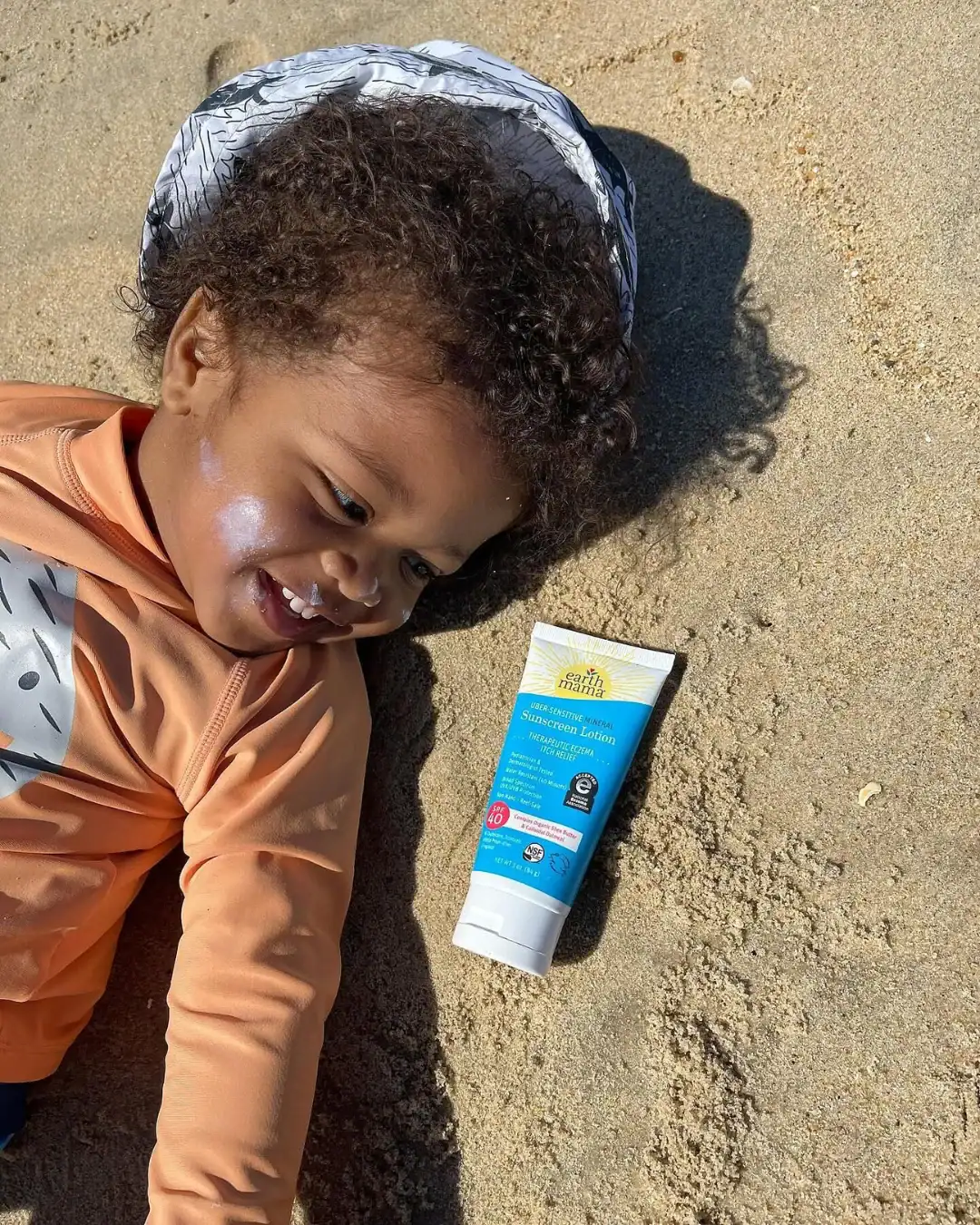
Earth Mama Organics is one of the first brands I recommend to families, and it’s been on my list for years for good reason.
Non-nano zinc oxide, a short ingredient list, no fragrance, no unnecessary fillers. Just simple, nourishing ingredients that are gentle enough for babies, toddlers, and anyone with sensitive skin.
It’s also affordable and easy to find, which matters more than people give it credit for.
The best sunscreen is the one you actually use consistently, and Earth Mama makes that easy.
If you’re just starting to clean up your routine and don’t want to spend an hour analyzing every ingredient, this is a genuinely reliable place to start.
Price
$10.99+
Main Ingredients
Zinc Oxide (22–25%) | Plant Oils | Shea Butter | Beeswax & Plant Waxes | Cocoa Butter
location/shipping
United States | Select International Shipping Available Upon Request
Our Favorites from Earth Mama Organics:
3. OSEA Malibu – Best SPF 50 Non-Toxic Sunscreen
Best For: Anyone looking for high-SPF mineral sun protection that feels elegant enough to wear every day.
Use the discount code SKL10 to save 10%!
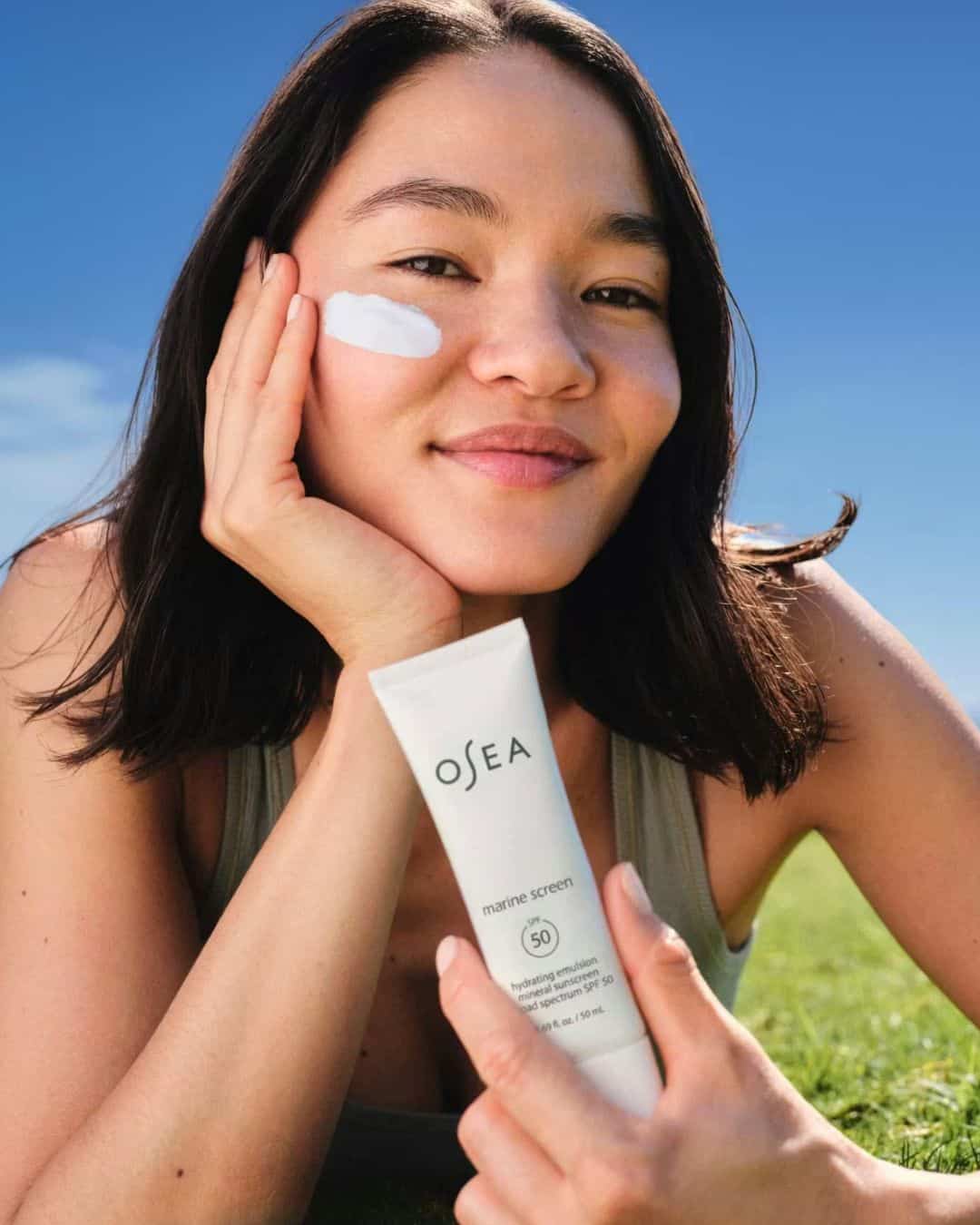
OSEA Malbi’s Marine Screen SPF 50 stands out because it doesn’t feel like a typical mineral sunscreen.
While many zinc-based formulas can be thick, chalky, or difficult to blend, this one applies smoothly, absorbs well, and doesn’t leave my skin feeling greasy or heavy.
I also appreciate that it delivers SPF 50 protection using non-nano zinc oxide while still layering nicely under makeup.
If you’ve avoided mineral sunscreens in the past because of white cast or texture issues, this formula may surprise you.
It’s also packed with skin-supportive ingredients like seaweed, hyaluronic acid, squalane, and bisabolol, making it a great choice for anyone who wants their sunscreen to feel more like skincare.
Price
$42
Main Ingredients
Non-Nano Zinc Oxide (19.65%) | Seaweed | Hyaluronic Acid | Squalane | Bisabolol | Vitamin E
Location/Shipping
United States | Ships internationally
4. THINK SUN – Best Non-Toxic Sunscreen For Sensitive Skin
Best For: A reliable, no-fuss sunscreen for sensitive skin, especially if you want something affordable and easy to find.
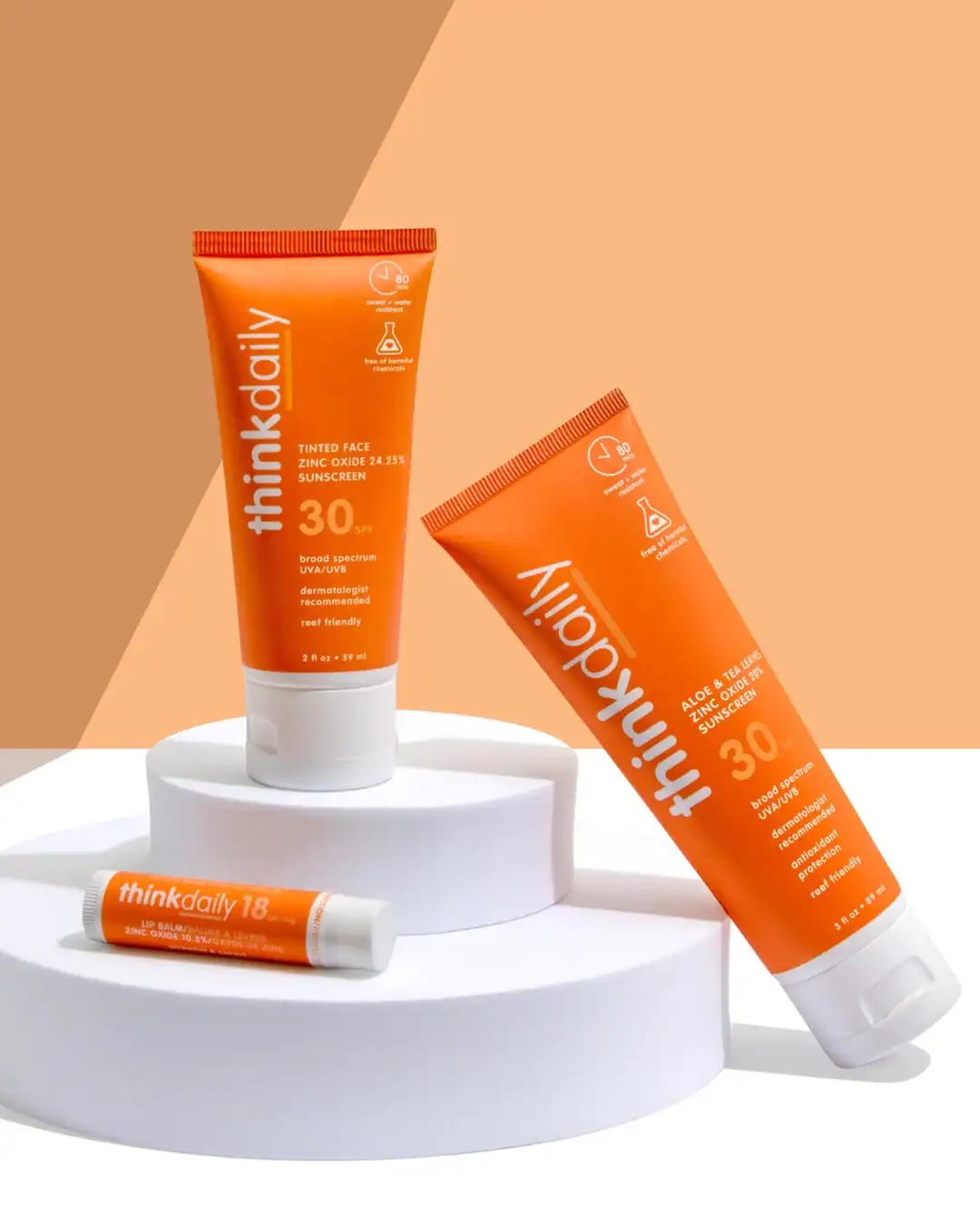
THINK SUN is one I’ve tested thoroughly and keep coming back to.
Non-nano zinc oxide, no fragrance, no chemical filters, and a formula that plays well with sensitive skin without a lot of fuss.
This is the one I point people to when they want a cleaner option but don’t want to spend an hour researching or a premium price getting there.
It does exactly what a good sunscreen should do, with a simple ingredient list you can actually feel good about.
Price
$11.99+
Main Ingredients
Zinc Oxide (20–25%) | Plant Oils | Shea & Cocoa Butter | Beeswax & Plant Waxes | Aloe Vera | Botanical Extracts
Materials
United States
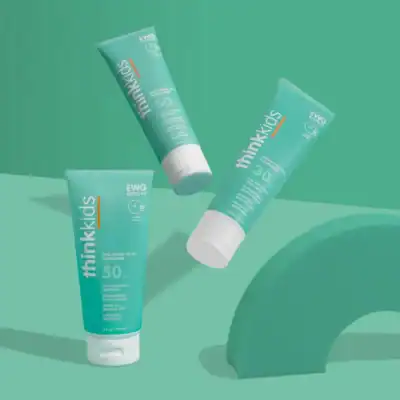
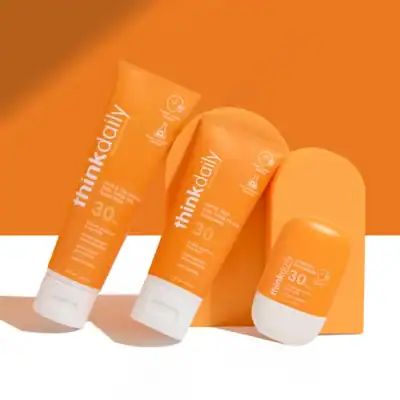
Our Favorites from Think Sun:
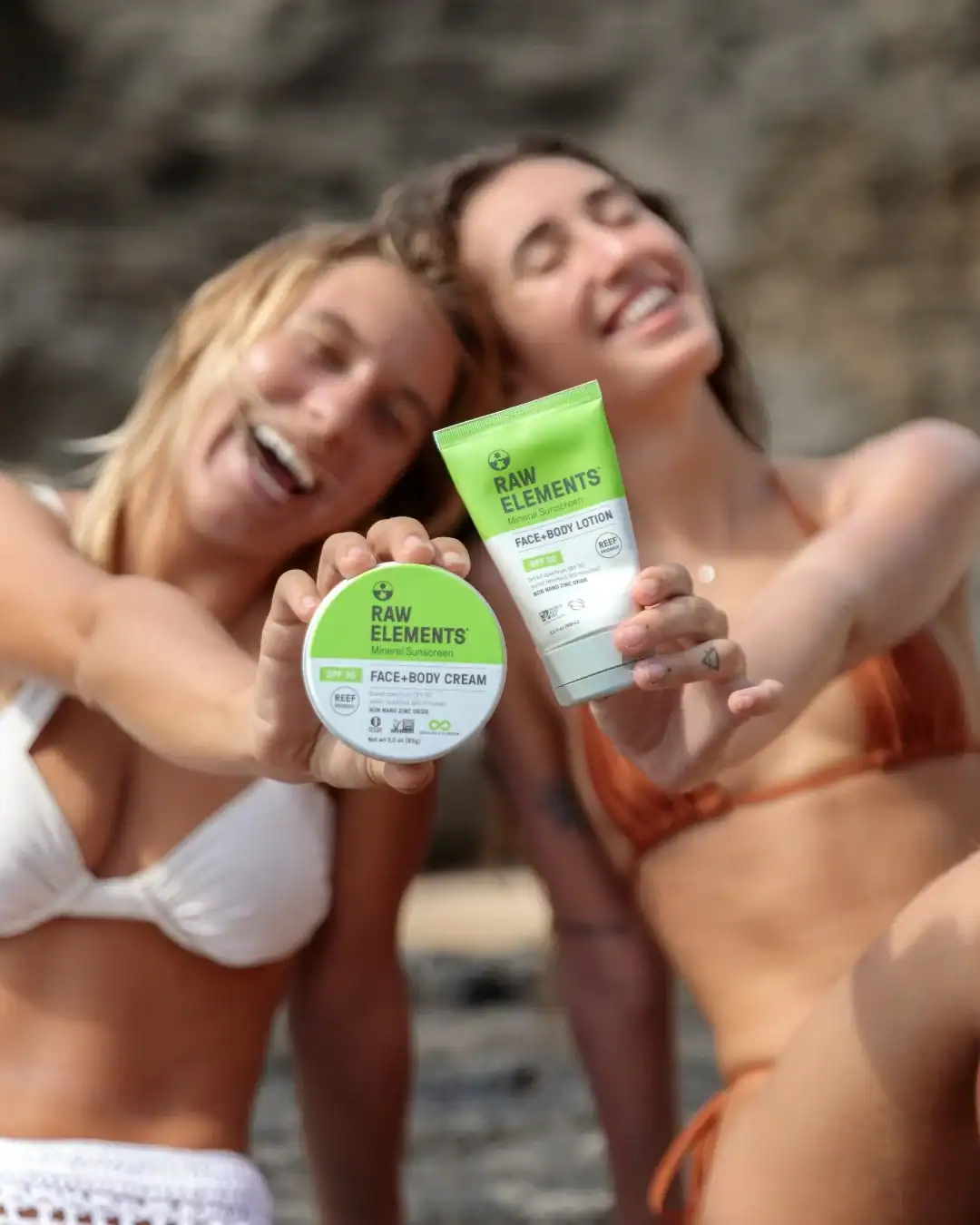
5. Raw Elements – Best Non-Toxic Sunscreen For Outdoor & Sport
Best For: Long days outside, water exposure, and high-performance use.
Use the discount code SKL10 to save 10%!
Raw Elements is what I reach for when I know we’re going to actually be outside for a while.
Swimming, hiking, a full day at the beach, anything where you need a sunscreen that’s genuinely going to stay put through water, sweat, and hours of sun exposure.
The formulas are thicker by design, and that’s the point. This isn’t trying to be a lightweight daily face sunscreen.
It’s built to protect, and it does that better than almost anything else I’ve tested in this category.
The fact that people come back to it season after season says everything.
Price
$6.99+
Main Ingredients
Zinc Oxide (20-25%) | Plant Oils | Plant Butters | Beeswax & Plant Waxes | Botanical Extracts | Vitamin E
Location/Shipping
United States
6. Activist Skincare – Best Tinted Non-Toxic Sunscreen
Best For: A lightweight, skin-evening tint that can replace foundation while delivering daily SPF.
Use the discount code SKL15 to save 15%!
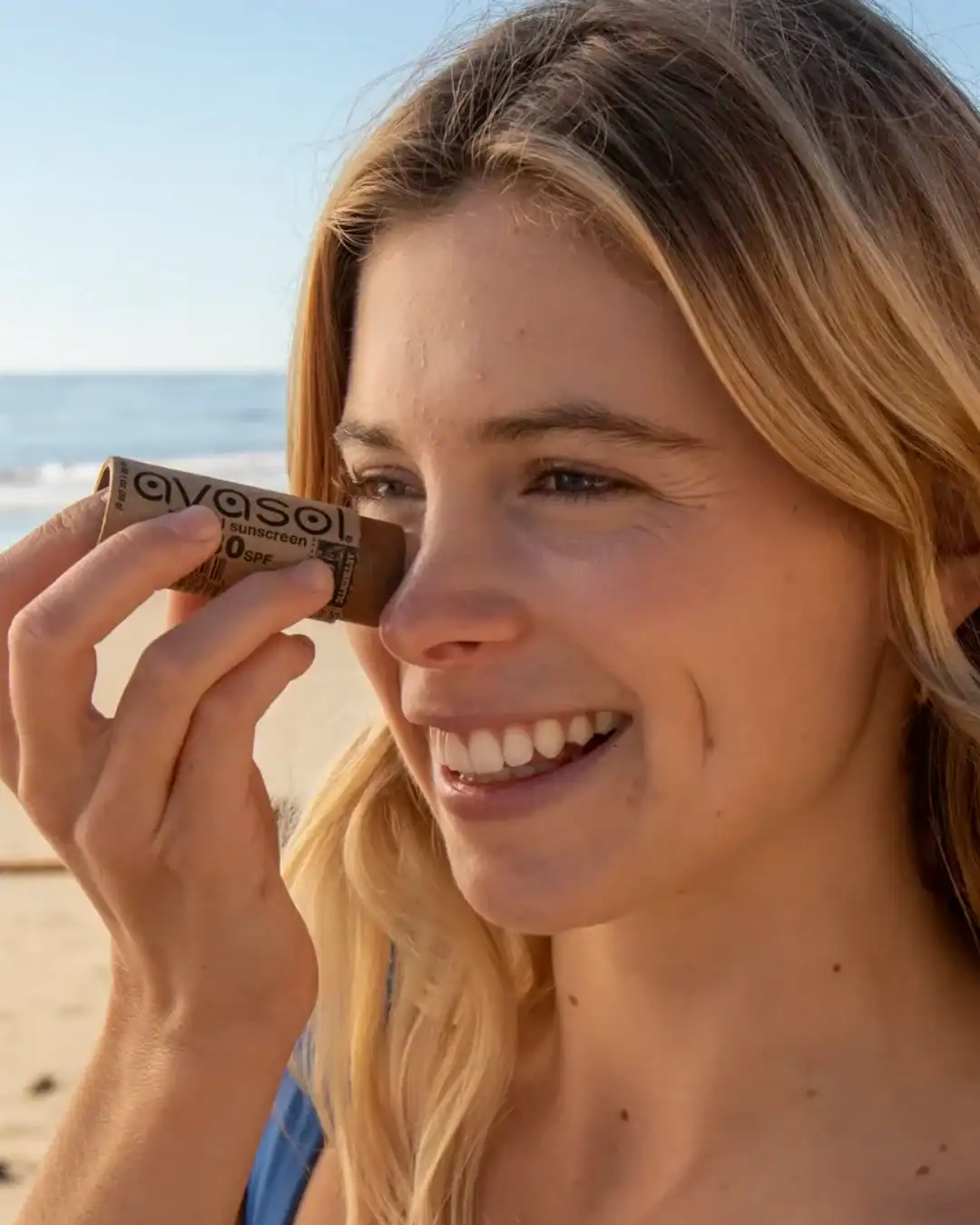
Activist Skincare is the tinted sunscreen I recommend to anyone trying to get off foundation.
Most tinted SPFs either sit on top of your skin like a mask or barely show up at all. This one actually blends, evens out your tone, and leaves a natural finish that feels like skin.
It combines sun protection, light coverage, and skincare into one step, which makes it genuinely useful for simplifying your morning routine rather than just adding another product to it.
If you’ve been slowly moving away from heavy makeup but still want something that makes your skin look pulled together, this is the easiest swap I know.
Price
$3 (Sample) | $22
Main Ingredients
Zinc Oxide (24.5%) | Plant Oils | Plant Butters | Beeswax & Plant Waxes | Silica | Vitamin E | Botanical Extracts | Propolis
Location/Shipping
United States | Limited International Shipping
How I Evaluate Non-Toxic Sunscreen
At the core, I prioritize formulas that rely on simple, well-understood materials and avoid unnecessary chemical complexity.
Here’s what that looks like in practice:
What I Look For:
- Non-nano zinc oxide as the primary (and ideally only) active ingredient.
- Minimal, transparent ingredient lists with no hidden additives.
- No chemical UV filters like oxybenzone, octocrylene, or homosalate.
- No added fragrance or unnecessary synthetic preservatives.
- Brands that clearly disclose ingredients and prioritize long-term safety.
What I Avoid:
- Chemical sunscreen filters, even when labeled “reef-safe.”
- Nano-sized particles or unclear zinc sourcing.
- Formulas that rely on marketing claims without full transparency.
- Products that prioritize texture or aesthetics over ingredient integrity.
When brands aren’t clear about their ingredients, I don’t include them.
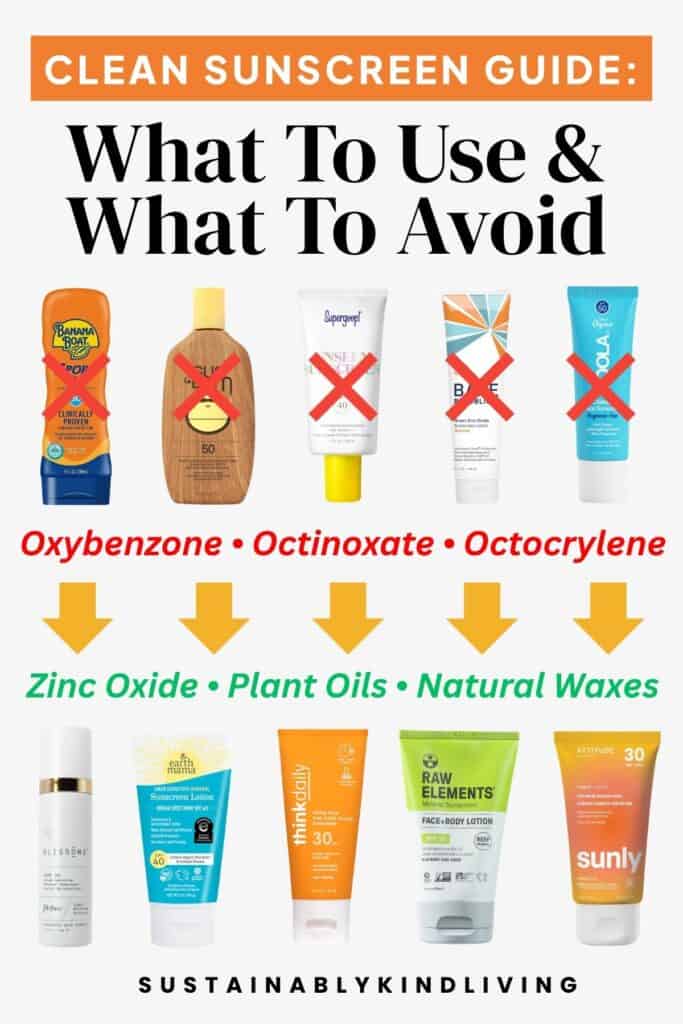
Sunscreen Brands We Don’t Recommend (And Why)
There are a lot of sunscreens on the market that look clean at first glance, but don’t hold up when you take a closer look at the ingredients.
Here are a few popular options that don’t meet our standards:
❌ Banana Boat Sport “Reef-Friendly”
Despite the “reef-friendly” label, this formula still relies on chemical UV filters like avobenzone and octocrylene, along with fragrance and synthetic preservatives.
Why We Don’t Recommend It: Relies on chemical filters + misleading marketing claims.
❌ Sun Bum Original Sunscreen
Sun Bum is often marketed as a clean, beach-friendly brand, but their original formulas contain a mix of chemical filters and added fragrance.
Why We Don’t Recommend It: Uses hormone-disrupting filters and undisclosed fragrance blends.
❌ Supergoop! Unseen Sunscreen
This popular sunscreen is often positioned as a “clean beauty” option, but it relies entirely on chemical UV filters and includes synthetic stabilizers.
Why We Don’t Recommend It: Fully chemical formula with questionable long-term exposure profile.
❌ COOLA Classic Face Sunscreen
COOLA uses terms like “organic” and “farm-to-face,” but their sunscreens rely heavily on chemical filters and synthetic ingredients.
Why We Don’t Recommend It: Marketing doesn’t match formulation transparency.
❌ Bare Republic ClearScreen SPF 50
This sunscreen is often marketed with mineral cues but contains only chemical filters.
Why We Don’t Recommend It: Misleading labeling + no true mineral protection.
Mineral vs. Chemical Sunscreen: What’s the Difference?
Not all sunscreens protect your skin the same way.
Most products fall into one of two categories: mineral sunscreen or chemical sunscreen. While both are designed to help prevent sun damage, the ingredients they use and how they work are very different.
Chemical Sunscreens
Chemical sunscreens use active ingredients such as oxybenzone, octocrylene, octinoxate, avobenzone, and homosalate to absorb UV radiation and convert it into heat. The problem is that many of these ingredients don’t simply stay on the skin’s surface.
Research has shown that several common chemical sunscreen filters are absorbed into the bloodstream after normal use, raising questions about long-term exposure and safety.
This is one of the biggest reasons I don’t recommend chemical sunscreens. Many of these ingredients have also been linked to concerns around hormone disruption, skin irritation, and environmental impact.
While research continues to evolve, I prefer to avoid ingredients with unresolved safety questions when safer alternatives are readily available.
Mineral Sunscreens
Mineral sunscreens use physical UV filters to protect the skin from the sun.
The two mineral sunscreen actives you’ll usually see are zinc oxide and titanium dioxide. Both can help protect skin from UV damage, but they are not equal.
Zinc oxide offers broader UVA and UVB protection, while titanium dioxide is weaker on long UVA rays, which are the rays most associated with deeper skin damage and premature aging.
That’s why I look for formulas that use zinc oxide as the main active ingredient.
Why I Only Recommend Non-Nano Zinc Oxide
Many mineral sunscreens use zinc oxide or titanium dioxide particles that have been engineered to a nano size.
These ultra-small particles are often used because they blend into the skin more easily and leave less of the white cast traditionally associated with mineral sunscreen.
The concern is that nanoparticles behave differently from larger particles.
Because of their extremely small size, scientists have spent years studying how these particles interact with the body and the environment.
While regulatory agencies generally consider nano-sized sunscreen ingredients safe when used as directed, questions remain about long-term exposure and how nanoparticles behave once released into the environment.
For me, the bigger question is simple: if a safer alternative already exists, why take the extra risk?
Non-nano zinc oxide provides excellent broad-spectrum protection against both UVA and UVB rays without relying on nano-sized particles.
It has a long history of use, is highly effective, and aligns with the precautionary approach I take when choosing products for myself and my family.
That’s why every sunscreen included in this guide uses non-nano zinc oxide as its active ingredient.
Toxic Ingredients To Avoid In Sunscreen
If you’re trying to choose a safer sunscreen, these are the ingredients I recommend avoiding whenever possible.
Many are commonly found in conventional sunscreen formulas and have raised concerns related to hormone disruption, skin irritation, environmental impact, or long-term exposure.
Oxybenzone
Oxybenzone is one of the most controversial chemical sunscreen filters on the market. Studies have shown that it can be absorbed into the bloodstream after application, and it has raised concerns related to hormone disruption and environmental impact.
Octocrylene
Octocrylene is commonly used to stabilize other chemical sunscreen ingredients, but it has come under scrutiny because it can degrade into benzophenone, a compound classified as a possible human carcinogen. It may also trigger irritation in people with sensitive skin.
Homosalate
Homosalate is another chemical UV filter that has been flagged for absorption into the body. Some researchers have raised concerns about its potential effects on hormone function, which is one reason many health-conscious consumers choose to avoid it.
Octinoxate
Octinoxate is frequently found in conventional sunscreens and has been studied for its potential endocrine-disrupting effects. It has also been restricted in certain locations because of concerns about environmental impact.
Synthetic Fragrance
Fragrance may sound harmless, but it can contain dozens of undisclosed chemicals under a single ingredient listing. It’s also one of the most common causes of skin irritation and allergic reactions in personal care products.
Nano-Sized Zinc Oxide & Titanium Dioxide
While zinc oxide and titanium dioxide are considered safer alternatives to chemical UV filters, particle size matters. I prefer non-nano mineral sunscreens because they are designed to remain on the skin’s surface rather than using ultra-small particles to improve transparency.
Phenoxyethanol
Phenoxyethanol is a synthetic preservative commonly used in personal care products. While it’s permitted for use in cosmetics, some consumers choose to avoid it due to concerns about irritation and cumulative exposure from multiple products used throughout the day.
The good news is that you don’t need to memorize every sunscreen ingredient. Choosing a transparent brand that relies on non-nano zinc oxide and avoids chemical UV filters will eliminate most of the ingredients that concern me most.
How To Protect Your Skin When You’re Not Wearing Sunscreen
The most effective sun protection is a combination of habits, not just a bottle you grab on your way out the door.
And honestly, once you understand how UV exposure actually works, a lot of these choices become second nature.
You stop thinking about sun protection as something you either do or don’t do, and start making smarter decisions all day long without overthinking it.
Learn To Read The UV Index (This Is The Most Important Skill)
Most people check the temperature before going outside. Very few check the UV index, and it’s actually the number that matters most for your skin.
The UV index measures the intensity of UV radiation at ground level on a scale from 0 to 11+.
It tells you how quickly your unprotected skin can be damaged, and it changes throughout the day, by season, and depending on cloud cover, altitude, and how close you are to the equator.
Here’s a simple way to read it:
- 0 to 2 (Low): Minimal risk. Most people with a typical skin tone can spend time outside without sunscreen, especially outside peak hours.
- 3 to 5 (Moderate): Protection recommended if you’re spending extended time outside. Cover up and consider sunscreen.
- 6 to 7 (High): Sunscreen, hat, and shade are all worth using together. Limit midday exposure.
- 8 to 10 (Very High): Serious protection needed. Sunscreen plus clothing plus shade. Reduce time in direct sun.
- 11+ (Extreme): Avoid direct sun exposure as much as possible during peak hours.
Every major weather app shows the UV index. It’s usually in the same section as humidity or wind. Check it in the morning and let it guide how you plan your day, not just whether you grabbed the sunscreen bottle.
Respect Peak Sun Hours
UV radiation is not constant throughout the day. It peaks when the sun is highest in the sky, roughly between 10 am and 4 pm, and drops significantly in the early morning and late afternoon.
This does not mean UV radiation disappears outside those hours. But a morning walk at 7 am and a beach afternoon at 1 pm are fundamentally different situations for your skin, even if both feel sunny.
If you can structure outdoor time, especially longer, more exposed activities, around the early morning or late afternoon, you reduce your UV burden significantly without changing anything else about your routine.
This matters especially for kids. If you have flexibility over when outdoor play happens, shifting it earlier or later in the day is one of the simplest protective moves you can make.
Use The Shadow Rule
No weather app needed for this one.
Look at your shadow. If your shadow is shorter than you are, the sun is high in the sky and UV intensity is significant. If your shadow is longer than you are, the sun is lower and UV intensity is reduced.
It’s not a perfect science, but it’s a reliable, instinctive check that takes about two seconds and works anywhere.
Not All Shade Is Equal
Seeking shade is genuinely protective, but the quality of shade matters more than most people realize.
A solid structure like a beach umbrella or building provides substantially more protection than open tree shade, which can still allow significant UV exposure through gaps in the canopy.
Reflective surfaces like sand, water, and concrete can also bounce UV back onto your skin even when you’re in the shade.
If you are spending time at the beach or pool, a well-made beach umbrella makes a real difference. I cover what to look for in my guide to sustainable beach umbrellas.
As a general rule, closed shade from a solid overhead structure offers the most reliable protection. Open or dappled shade is better than nothing, but not a complete substitute for other measures during high UV hours.
Invest In Sun Protective Clothing
Clothing is one of the most underused forms of sun protection and one of the most effective.
A tightly woven, long-sleeved shirt can block more UV than most sunscreens. UPF-rated clothing (Ultraviolet Protection Factor) takes this further, with fabrics specifically designed and tested for UV blocking.
UPF 50+ blocks over 98% of UV rays, comparable to a high-SPF sunscreen, but without reapplication, without ingredients, and without the white cast.
For kids, especially, a rash guard at the beach or pool means far less sunscreen needed on far less skin. And if you are already thinking about non-toxic swimwear options, I cover the safest fabrics and brands in my non-toxic swimwear guide.
A wide-brimmed hat (at least 3 inches all around) protects your face, ears, and the back of your neck, areas that are frequently missed or under-applied with sunscreen. A standard baseball cap leaves your ears and neck exposed.
For a full breakdown of UPF clothing, what the ratings actually mean, and the brands worth buying, I cover all of it in my guide to the best sun protective clothing.
Build Sun Exposure Gradually
If you’re starting a season with little recent sun exposure, your skin is more vulnerable than it will be after a few weeks of gradual, moderate exposure.
Building tolerance slowly, starting with shorter periods outside, outside of peak hours, and increasing over time, allows your skin to adapt.
This is different from deliberately pushing toward a tan. It’s simply not going from zero UV exposure to a full afternoon in direct sun on the first warm weekend of the year.
This is especially worth thinking about in spring, when UV intensity begins to rise but most people have not had meaningful sun exposure since the previous summer.
When You Do Apply Sunscreen, Make It Count
All of this is a strategy for reducing unnecessary UV burden, not for avoiding sunscreen when you actually need it.
When you’re spending extended time outside, especially during high UV hours, sunscreen applied correctly and reapplied every two hours remains one of the most effective tools you have. Non-nano zinc oxide formulas do that job without the ingredient concerns of chemical filters.
The goal is not perfect avoidance of the sun. It’s making thoughtful decisions about when protection is necessary, what form it should take, and how to reduce your overall exposure without fear or obsession.
Better protection does not always mean more sunscreen. Sometimes it means smarter choices about when, where, and how you spend time in the sun.
What SPF Really Means (And What To Choose)
SPF stands for Sun Protection Factor, and it measures how well a sunscreen protects against UVB rays, the type responsible for sunburn.
Here’s a quick breakdown:
- SPF 15 blocks about 93% of UVB rays
- SPF 30 blocks about 97%
- SPF 50 blocks about 98%
Higher SPF doesn’t mean full protection, and no sunscreen blocks 100% of UV rays. For most people, SPF 30 or higher is the sweet spot for daily use.
What matters more than the number is:
- Applying enough
- Reapplying every 2 hours
- Choosing a formula you’ll actually wear consistently
Frequently Asked Questions About Non-Toxic Sunscreen
The best non-toxic sunscreen uses non-nano zinc oxide as the active ingredient and avoids chemical UV filters like oxybenzone, octocrylene, and homosalate.
It should also have a fully disclosed ingredient list without added fragrance or unnecessary preservatives.
Mineral sunscreen uses zinc oxide to sit on top of the skin and reflect UV rays. Chemical sunscreens use filters that absorb into the skin and convert UV rays into heat. Zinc oxide is considered the more stable and lower-risk option for repeated, long-term use.
Avoid chemical UV filters such as oxybenzone, octocrylene, homosalate, and avobenzone. Also avoid synthetic fragrance and preservatives like phenoxyethanol when possible.
Yes. Zinc oxide provides broad-spectrum protection against UVA and UVB rays. Effectiveness depends on proper application and reapplication.
Mineral sunscreen uses zinc oxide to reflect UV radiation. Chemical sunscreen absorbs UV radiation and releases it as heat. The difference is in how the filters interact with the skin.
Non-nano zinc oxide is considered safe for topical use. It remains on the surface of the skin and provides stable UV protection.
There is no regulated definition. It generally refers to sunscreens that avoid chemical UV filters, synthetic fragrance, and unnecessary additives.
“Reef-safe” is not a regulated term. Products labeled this way may still contain chemical UV filters or other synthetic ingredients.
Formulas with zinc oxide, no fragrance, and minimal ingredients are typically the most suitable for sensitive skin.
SPF 30 or higher is recommended for daily use. Higher SPF increases UVB protection slightly, but no sunscreen blocks 100% of UV rays.
Yes. Studies by the U.S. Food and Drug Administration have shown that several chemical UV filters, including oxybenzone and avobenzone, can be detected in the bloodstream after application. The long-term health impact of this absorption is still being studied.
No. Mineral sunscreens made with non-nano zinc oxide are designed to remain on the surface of the skin. They form a physical barrier that reflects UV rays rather than being absorbed.
No. Some mineral sunscreens use a combination of zinc oxide and titanium dioxide, while others may include additional ingredients that affect how the product performs.
The most consistent broad-spectrum protection comes from zinc oxide as the primary active ingredient.
Titanium dioxide is considered safe when used in non-nano form on the skin.
However, it provides less reliable UVA protection than zinc oxide and is often used alongside it rather than alone.
In nano form, there are concerns about free radical formation under UV exposure, which is why non-nano zinc oxide is generally preferred.
Non-nano zinc oxide is preferred because it sits on top of the skin and is not designed to penetrate it.
Nano-sized particles are smaller and may behave differently, which has raised concerns about absorption and reactivity under UV exposure.
For this reason, non-nano zinc oxide is the more widely recommended option for non-toxic sunscreen.
How To Choose The Best Non-Toxic Sunscreen For Your Routine
Not every sunscreen works the same way, and the best option depends on how you actually use it.
Here’s how to narrow it down:
- For Daily Facial Use: Look for lightweight formulas that layer well and don’t leave a white cast. (Blissoma Botanical Beauty and OSEA Malibu)
- For Kids or Sensitive Skin: Prioritize simple, fragrance-free formulas with minimal ingredients. (Earth Mama Organics, THINK SUN)
- For Outdoor or Sport Use: Choose thicker, water-resistant formulas that hold up to sweat and reapplication. (Raw Elements)
- For Simplified Routines: Tinted sunscreens can replace foundation while still providing protection. (Activist Skincare)
The goal isn’t finding one “perfect” sunscreen — it’s choosing one you’ll actually use consistently.
Final Thoughts on Non-Toxic Sunscreen
After years of testing and researching this category, my criteria have stayed pretty simple.
Non-nano zinc oxide as the active ingredient, no chemical UV filters, and a brand that’s actually transparent about everything in the formula, not just the actives.
What changes is how you use it. A lightweight daily face sunscreen, a simple family formula, something built to survive a full day outdoors.
The right pick depends on your routine and your life, which is why I included options across all of those categories above.
The most effective sunscreen is always going to be the one you actually reach for every day without thinking twice about it. Get that part right, and everything else follows.
Continue Your Non-Toxic Summer Journey
If you’re building a safer summer routine, sunscreen is just one piece of the bigger picture.
Here are a few guides to help you go further:
- Non-Toxic Sunscreen For Kids & Babies: Safer options for sensitive skin, plus what to avoid for little ones.
- Non-Toxic Swimwear Brands: Safer fabrics without questionable dyes or synthetic blends.
- Sun Protective Clothing (UPF Clothing): An easy way to reduce sun exposure without over-relying on sunscreen.
- Non-Toxic Self Tanner: Cleaner options if you’re looking for a sun-kissed look without UV damage
- Non-Toxic After Sun Care Products: Gentle, nourishing options to support your skin after sun exposure.
📌 Save This Guide For Later
This is one of those guides you’ll want to come back to. Especially when you’re restocking, traveling, or checking ingredients before you buy.
Sources & Further Reading
If you’re like me and want to understand what’s actually going on with sunscreen ingredients — not just what brands claim — these are some of the resources I found most helpful while researching non-toxic sunscreen:
- U.S. Food and Drug Administration — Research on sunscreen absorption and safety of chemical UV filters.
- Environmental Working Group — Annual sunscreen guide and ingredient safety database (helpful, but worth cross-checking).
- National Institutes of Health — Studies on UV filters, skin absorption, and long-term exposure concerns.
- Centers for Disease Control and Prevention — Data on UV exposure, skin protection, and public health guidance.
- National Oceanic and Atmospheric Administration — Research on coral reef impact and sunscreen-related environmental concerns.
- European Commission Scientific Committee on Consumer Safety — Safety assessments of UV filters used in cosmetic products.
- PubChem — Ingredient-level breakdowns for compounds like oxybenzone, octocrylene, and zinc oxide.
I also spent time reviewing individual brand ingredient lists, formulation details, and transparency pages to understand how each sunscreen is actually made — beyond marketing claims.
As always, this is a space that’s still evolving. Ingredient research, regulations, and formulations continue to change, which is why it’s worth staying curious, reading labels closely, and looking past terms like “clean” or “reef-safe” when you’re making decisions.
This post was graciously sponsored by Blissoma Botanical Beauty. As always, we only work with brands that we stand behind. Would you like to sponsor one of our sustainable round-ups? Contact us here.

Steal My Non-Toxic Cleaning Checklist!
Believe us, it’s the BEST…. and it’s free. Does it really get any better than that?! Sign up for our newsletter and get this free checklist to clean your home without any harmful chemicals!






I love to find a non toxic sunscreen that is easily found in local stores like Ulta. Any recommendations?
Thanks so much for your comment! We totally hear you—finding a non-toxic sunscreen that’s actually safe and easy to grab at a local store can be a challenge.
Out of the ones more widely available, Cocokind Daily SPF and Babo Botanicals Sheer Zinc are two we really trust. Both use non-nano zinc oxide, skip the hormone-disrupting filters (like oxybenzone and avobenzone), and avoid irritating fragrances and preservatives.
Most of the other so-called “mineral” sunscreens at Ulta or Target still include questionable ingredients—so we always recommend double-checking those labels, even if it looks clean on the front.
Can you please do an article on safe non-toxic tinted spf sunscreens? Struggling to find multiple options since it’s all so overwhelming. In my 20’s diagnosed with auto immune condition as well trying to change my life style.
Hi there!
Thank you so much for sharing this—and I’m really glad you’re here. I completely understand how overwhelming this journey can be, especially when navigating chronic health conditions and trying to make safer lifestyle choices. You’re absolutely not alone in this. 💛
And YES—I’m already planning a full article on non-toxic tinted SPF options soon (thank you for the nudge!). In the meantime, here’s one of my top recommendations to check out right away:
✨ Activist Skincare Tinted SPF – This one is a true gem. It’s lightweight, reef-safe, tinted, and loaded with skin-loving ingredients. Plus, they’re incredibly transparent about every single component—perfect for sensitive and autoimmune-prone skin.
A few more brands I’ll be featuring:
Suntegrity Impeccable Skin – Vegan, tinted, and packed with antioxidants.
Honua Hawaiian Skincare – Natural tint + gorgeous finish, great for drier skin.
Juice Beauty CC Cream SPF 30 – Offers light coverage, hydration, and protection.
I’ll be sure to include fragrance-free, zinc-only, and sensitive-skin-friendly formulas too when I publish the full guide!
Sending love on your healing journey, and again—so happy you’re part of this space 🌿
Warmly,
Danielle
I like this article/review. I am searching for a non-toxic face sunscreen for oily & acne prone skin. (Tinted would also be a nice plus.) Which of these from this review would work the best? I currently use Cocokind but it sometimes causes clogged pores using daily even with a light application. Also, I live in a high humidity area and get seriously oily during the day.
Hi there,
I’m so glad you found the review helpful 🤍
For oily, acne-prone skin in a high-humidity climate, I would personally lean toward Activist from the list.
Here’s why:
• It has a lighter, more breathable consistency than many thicker zinc creams
• It tends to sit better on oily skin throughout the day
• It’s less likely to feel heavy or occlusive in humid weather
Since you’re noticing clogged pores with Cocokind (even with light application), that tells me your skin probably doesn’t love richer bases or heavier emollients. In humidity especially, thicker mineral sunscreens can trap oil and feel congesting.
If tinted is a priority, just be mindful that some tinted mineral formulas add extra oils for blendability — which can sometimes worsen clogging on acne-prone skin.
Overall, from the options in the review, Activist would likely be your best match for:
• Oily skin
• Acne-prone skin
• Daily wear in humidity
Of course, everyone’s skin is different — but based on what you described, that’s where I’d start.
Hope that helps 🤍
I appreciate this list finding genuinely non-toxic sunscreens is harder than it should be.
Thank you so much for calling out the greenwashing in some of those ‘big name’ mineral brands! It’s so frustrating when a label says ‘reef-friendly’ but still hides phenoxyethanol or chemical filters.Such a helpful guide!
Thank you so much for this — it truly means a lot 🤍
And yes… the greenwashing in this space can be incredibly frustrating. Terms like “reef-friendly” get used so loosely, and most people don’t realize what’s still hiding behind those labels.
That’s exactly why I try to go deeper into ingredients and formulation — not just what’s marketed on the front of the bottle. Really grateful you’re here and paying attention to this too 🤍
Have you ever come across any testing for your recommended sunscreens for levels of lead, cadmium, mercury, and arsenic? I have come across several brands using zinc and they were very high in lead (at least higher than I would like). Our family are slow detoxifiers (our youngest is autistic) so we have to be careful so I usually make my own but would love the convenience of buying one already made.
Yes! This is actually something we ask brands for whenever possible because zinc oxide is a naturally occurring mineral and can contain trace amounts of heavy metals depending on the source.
One of the new sunscreens we’re adding to our guide in the next couple of weeks (I’m just finishing up my full review), Daily Shade, shared its third-party testing with us, and it had some of the lowest heavy metal results we’ve seen in a zinc oxide sunscreen:
• Lead: 0.559 ppm
• Arsenic: 0.002 ppm
• Cadmium: 0.116 ppm
• Mercury: <0.001 ppm
I have really enjoyed testing their product and it blends in great.