 Shop My Favorite Non-Toxic Gifts Of 2026!
SKL is reader supported. When you buy through links on our site, we may earn affiliate commission. Learn more here.
Finding non-toxic kids’ swimwear isn’t just about cute prints and beach days. It’s about choosing materials that are safer for your child’s skin and more thoughtful for the environment.
I’ll be honest — swimwear is one of those categories that looks harmless at first glance. Bright colors, fun prints, UPF labels… it all feels pretty safe.
But once you start digging into materials and finishes, you realize how many conventional swimsuits rely on synthetic fabrics, chemical coatings, and very little transparency.
And the tricky part is, most brands don’t make this obvious. You’ll see terms like “quick-dry” or “UV protection,” but not much explanation about how those features are actually achieved.
My Top Picks: Non-Toxic Kids Swimwear
- Best Classic Easy-To-Wear Everyday Swimwear: Hanna Andersson
- Best Play-Friendly Non-Toxic Swimwear: Little Green Radicals
- Best Practical No-Fuss Swimwear For Active Kids: Jan & Jul
- Best Bright High-Visibility Swimwear For Water Safety: HiViz Swimwear
- Best Stylish Boutique-Style Swimwear: Petit Playa
👉 If you’re specifically looking for safer, reusable swim diapers for babies, you can jump straight to that section here!
The good news is that there are better options out there.
From recycled fabrics to OEKO-TEX® certified materials, it’s absolutely possible to find swimwear that’s both functional and made with safer materials.
In this guide, I’ve narrowed it down to a small group of brands that stand out for their transparency, materials, and real-world wear.
Whether you’re shopping for a baby, toddler, or older kids, these are the options I would feel comfortable choosing for my own family.
Best Non-Toxic Swimwear For Kids: At a Glance Comparison
Mobile Users: Scroll to see full comparison →
| Brand | Best For | OEKO-TEX® Certified Materials | Price |
|---|---|---|---|
| Hanna Andersson | Best Classic Easy-To-Wear Everyday Swimwear | Recycled Nylon | CREORA® Highclo Spandex | $40+ |
| Little Green Radicals | Best Play-Friendly Non-Toxic Swimwear | Recycled Nylon | Spandex | $27+ |
| Jan & Jul | Best Practical No-Fuss Swimwear For Active Kids | Nylon | Spandex | $20+ |
| HiViz Swimwear | Best Bright High-Visibility Swimwear For Water Safety | Recycled Polyester (REPREVE®) | Polyester | Spandex | $35+ |
| Petit Playa | Best Stylish Boutique-Style Swimwear | Polyester or Nylon | Elastane | $44+ |
| Quince | Best For Affordable, Safer Swimwear | Recycled Nylon | Spandex | $20+ |
| Esembly | Best For Non-Toxic Reusable Swim Diapers | Upcycled Polyester TPU | $18+ |
| Green Sprouts | Best For Affordable, Everyday Reusable Swim Diapers | Recycled Polyester | $13+ |
Better Materials To Look For In Kids’ Swimwear
When it comes to non-toxic kids’ swimwear, the fabric matters just as much as the fit. This is where hidden chemicals, coatings, and unnecessary treatments can come into play.
After looking closely at how swimwear is made, a few materials consistently stand out as better options.
These tend to offer the right balance of durability, stretch, and lower chemical concerns—without relying on misleading “safe” marketing claims.
ECONYL® (Regenerated Nylon)
ECONYL® is one of the most common materials used in sustainable swimwear, and for good reason.
It’s made from waste like discarded fishing nets and fabric scraps, giving new life to materials that would otherwise end up in oceans or landfills.
When it’s not treated with additional chemical finishes, it can be a safer alternative to conventional synthetic fabrics.
You’ll see this used in many eco-focused swimwear brands because it balances durability, stretch, and lower environmental impact.
Recycled Polyester
Recycled polyester is another common option, especially for more affordable swimwear.
While it’s still a synthetic material, it’s often considered a step up from virgin polyester when used responsibly.
It’s not as breathable as some alternatives, but it’s widely used because it performs well in water and holds up over time.
If you’re choosing recycled materials, it’s still worth looking for additional certifications or clear claims around being free from BPA, phthalates, and other additives.
Organic Cotton (Limited Use)
Organic cotton is rare in swimwear, but it does show up in certain pieces like rash guards, swim diapers, or lighter styles.
It can be a good option for sensitive skin, but it doesn’t perform the same way as traditional swim fabrics when fully submerged.
TENCEL™ / Lyocell Blends
TENCEL™ and Lyocell are made from sustainably sourced wood pulp and processed in a closed-loop system.
They’re not typically used for full swimwear since they aren’t naturally water-resistant, but you may see them in cover-ups or blended into certain lightweight styles.
They’re a lower-impact option worth noting, especially for layering pieces.
👉 Even with better materials, certifications can help verify how fabrics are processed and what they’re actually free from.
❌ What To Avoid In Kids’ Swimwear
Not all swimwear is created with safer materials, and some common features are worth taking a closer look at.
PVC / Vinyl
PVC is sometimes used in lower-cost swim gear and accessories.
It often requires chemical additives to make it flexible, which can increase overall chemical exposure.
It’s also one of the least environmentally stable plastics, making it a material many families choose to avoid.
PFAS-Coated Fabrics
PFAS are sometimes used to create water- and stain-resistant finishes.
These chemicals are known for their persistence and are often referred to as “forever chemicals” because they don’t break down easily.
In swimwear, they’re generally unnecessary and something many people prefer to avoid altogether.
I share all about this in my guide to PFAS & how to avoid them the best you can.
Antimicrobial or Odor-Control Finishes
These finishes are often marketed as a benefit, but they usually involve added chemical treatments.
For kids’ swimwear, they’re rarely needed and can introduce additional exposure that doesn’t add meaningful value.
Limited Material Transparency
One of the biggest red flags is a lack of clear information.
If a brand only uses terms like “synthetic materials” or “performance fabric” without explaining what that actually means, it becomes much harder to evaluate safety.
Bonus Tips For Choosing Safer Kids’ Swimwear
- UPF 50+ protection is helpful, but it’s worth checking whether it comes from the fabric itself or from added chemical treatments.
- Look for water-based or low-impact dyes, especially for brightly colored prints.
- Choose high-visibility colors like bright orange, yellow, or neon green, which are easier to spot in the water compared to darker shades.
- Skip “anti-microbial” or “odor-control” claims, which are often tied to unnecessary additives.
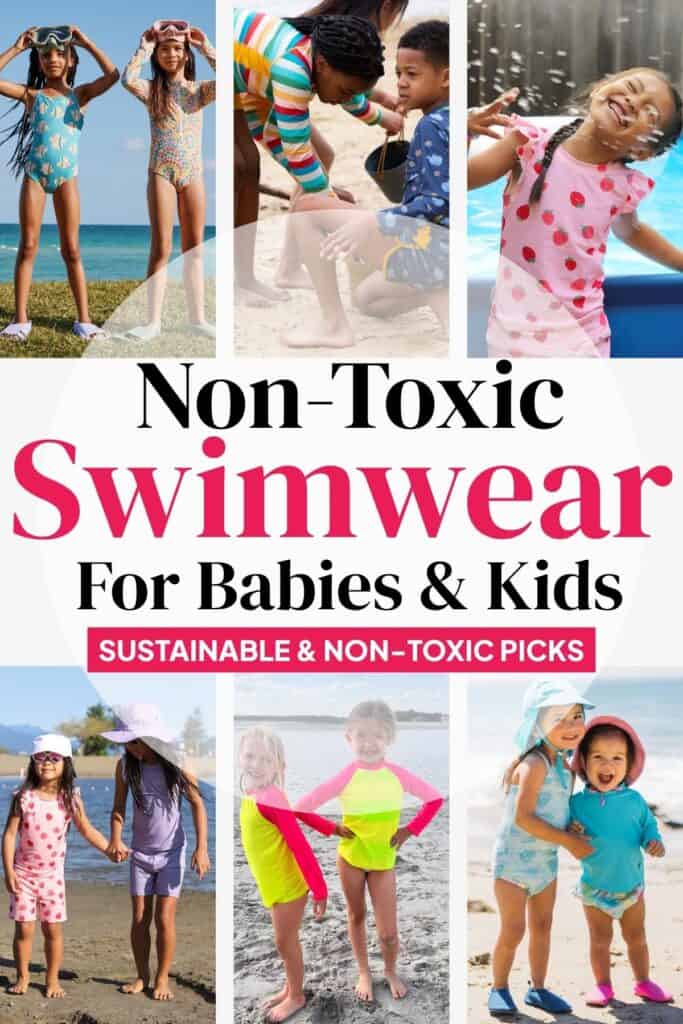
Now that you know what to look for and what to avoid, the next step is finding brands that actually follow through on those standards because this is where things can still get confusing.
Plenty of swimwear brands use terms like “eco-friendly” or “safe,” but don’t always back that up with clear materials or certifications.
So instead of sorting through all of that on your own, I’ve narrowed it down to a small group of brands that prioritize safer fabrics, better transparency, and real-world wear.
These are the non-toxic kids’ swimwear options I would feel confident reaching for again and again.
Best Non-Toxic Kids Swimwear Brands (OEKO-TEX® Certified Picks)
1. Hanna Andersson — Best Classic Easy-To-Wear Everyday Swimwear
Best For: Reliable, everyday swimwear made with safer materials
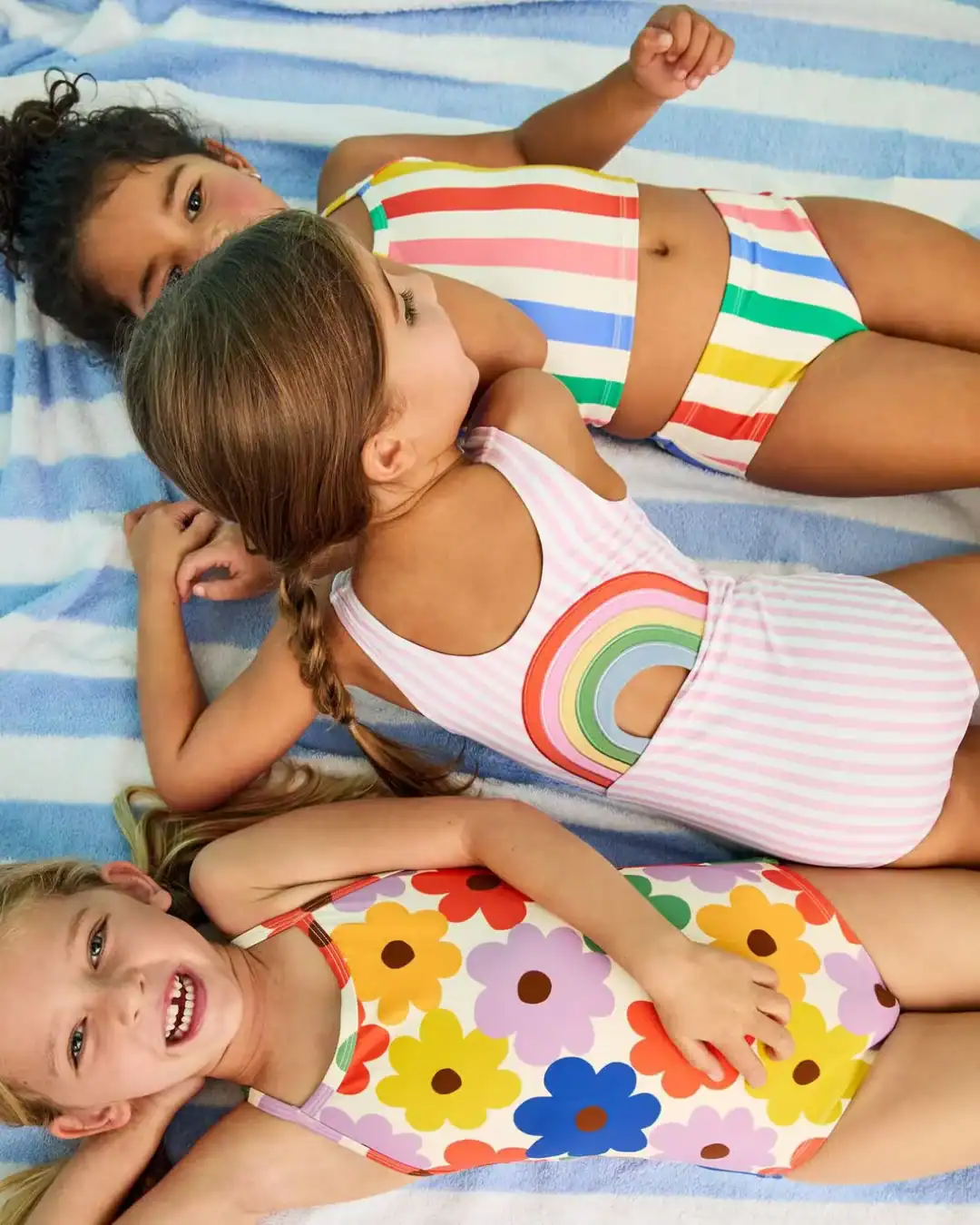
Hanna Andersson creates swimwear for babies, kids, and even adults, with a strong focus on comfort and consistency.
Their pieces are made from recycled materials and certified by OEKO-TEX® Standard 100, meaning the fabrics have been tested for a wide range of harmful substances.
The fabric offers UPF 50+ protection, with coverage coming from the material itself rather than added coatings.
They’re also designed to hold up well to chlorine, salt water, and sunscreen without losing shape or softness.
From baby suits to rash guards, this is one of the easiest brands to reach for when you want something dependable and easy to wear.
Price & Sizing
$40-$80 | 0M-14Y
Materials
OEKO-TEX® Certified | Recycled Nylon | CREORA® Highclo Spandex
location/shipping
United States | Ships Internationally
🌿 Complete your child’s sun-safe wardrobe with one of our favorite non-toxic sunscreens made just for sensitive skin.
2. Little Green Radicals — Best Play-Friendly Non-Toxic Swimwear
Best For: Coverage-focused swimwear that’s easy for everyday play
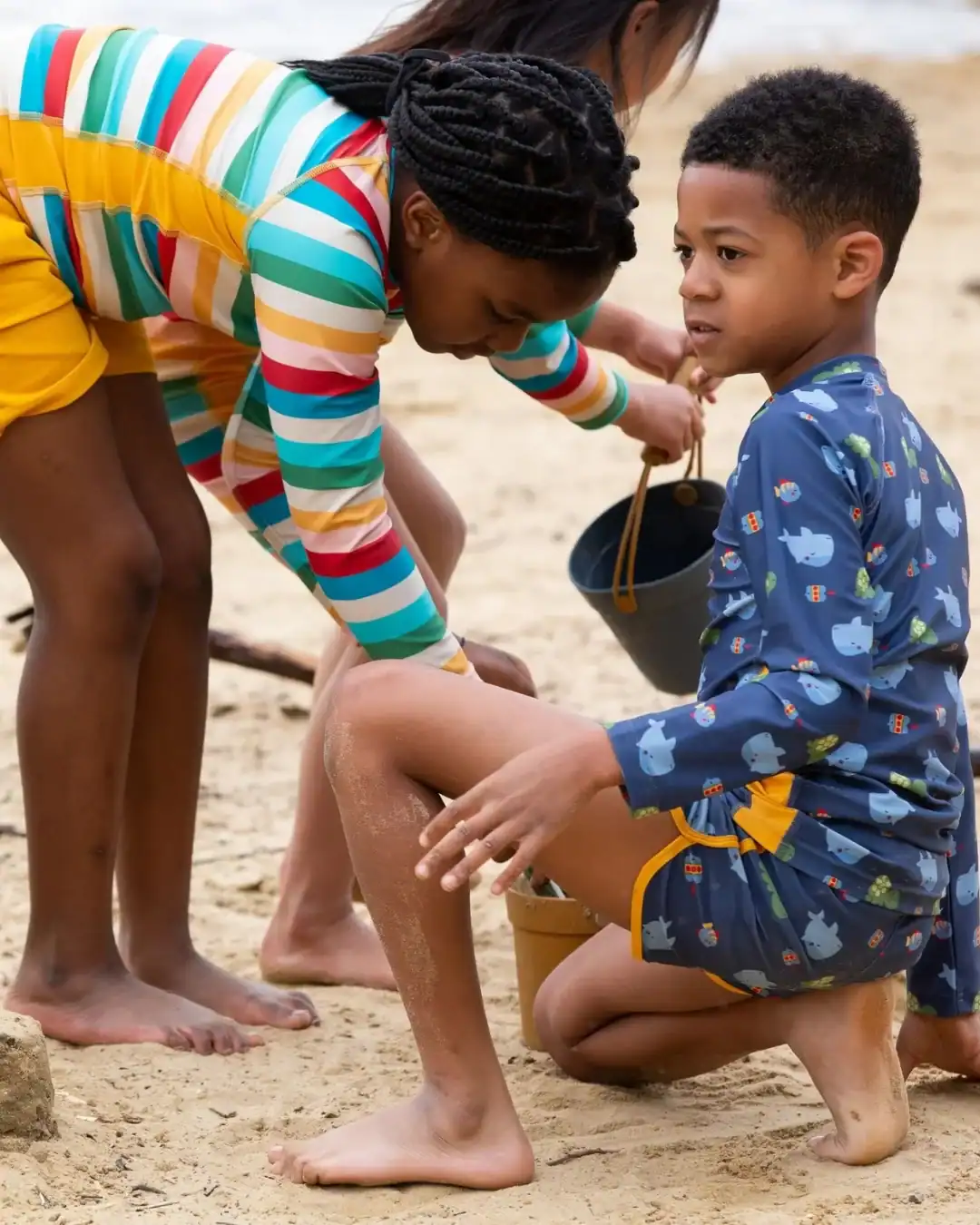
Little Green Radicals has everything you need for sustainable swimwear for babies and kids!
From swimsuits and long-sleeved rash vests to all-in-one suits, swim diapers, and toweling accessories like ponchos, dresses, and rompers – their swimwear keeps your little ones covered all summer long.
The collection features unisex, easy-to-spot prints you’ll adore, and every piece is crafted from recycled materials, OEKO-TEX® certified, and offers UPF 50+ sun protection.
No harmful chemicals, just safe fun in the sun for your little one!
Plus, with eco-friendly fabrics and a commitment to sustainability, you can feel good knowing you’re choosing swimwear that’s as gentle on the planet as it is on your child’s skin.
Price & Sizing
$27-$57 | 0M-8Y
Materials
OEKO-TEX Certified | Recycled Nylon | Spandex
location/shipping
United Kingdom | Ships To The United States & Internationally
3. Jan & Jul — Best Practical No-Fuss Swimwear For Active Kids
Best For: Durable, easy-to-wear swimwear for active outdoor use
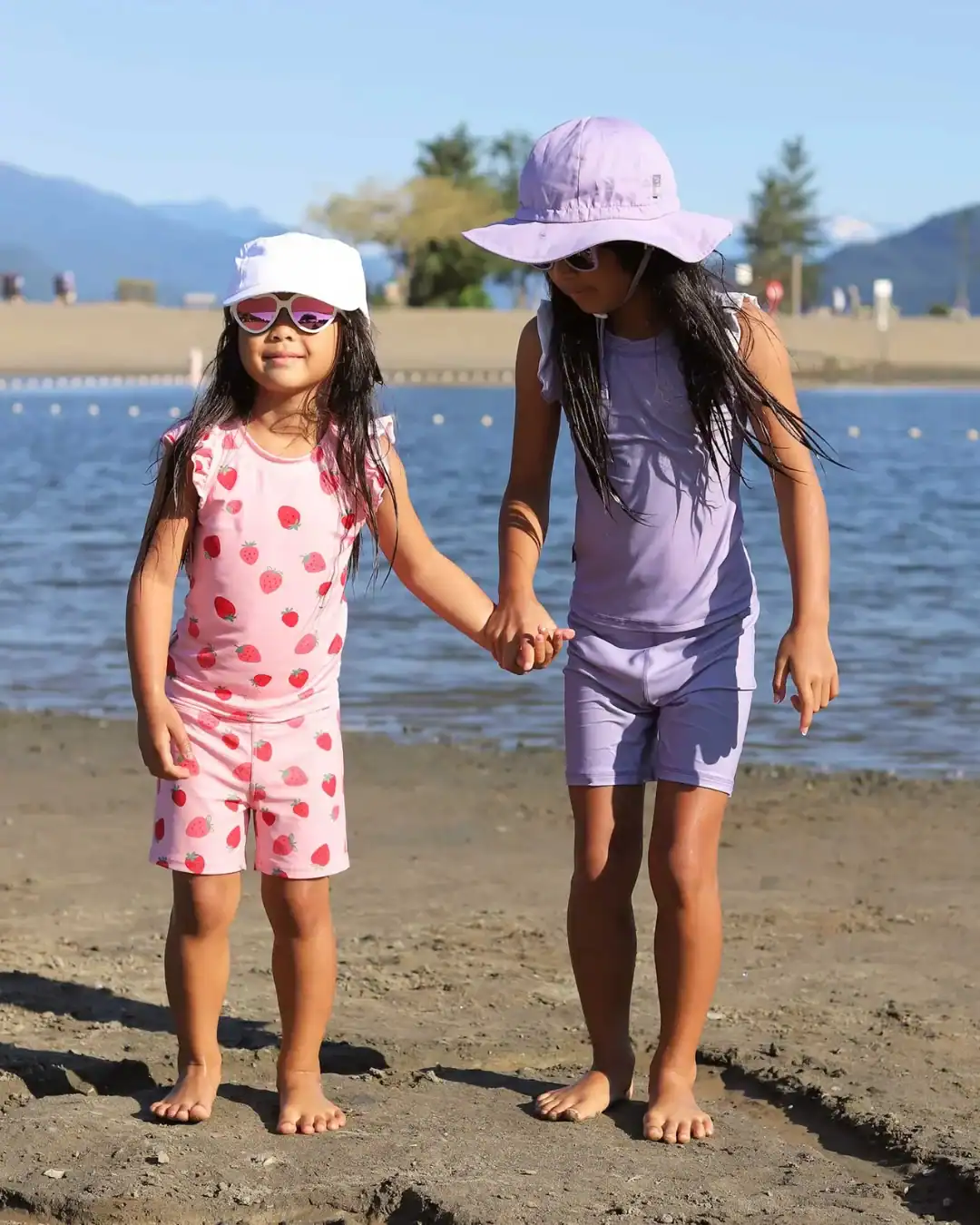
Jan & Jul focuses on practical, everyday gear designed for active kids.
Their swimwear is made with OEKO-TEX® certified fabrics and is free from PFAS and fluorocarbon coatings, which are often used in water-resistant clothing.
UPF 50+ protection comes from the fabric itself, not from added chemical treatments.
These pieces are lightweight, flexible, and easy to move in, making them a reliable choice for beach days, swimming lessons, and outdoor play.
Price & Sizing
$20-$36 | 6M-12Y
Materials
OEKO-TEX® Certified | Nylon | Spandex
location/shipping
Canada | Ships To The United States
4. HiViz Swimwear — Best Bright High-Visibility Swimwear For Water Safety
Best For: Bright, easy-to-spot swimwear designed with water safety in mind
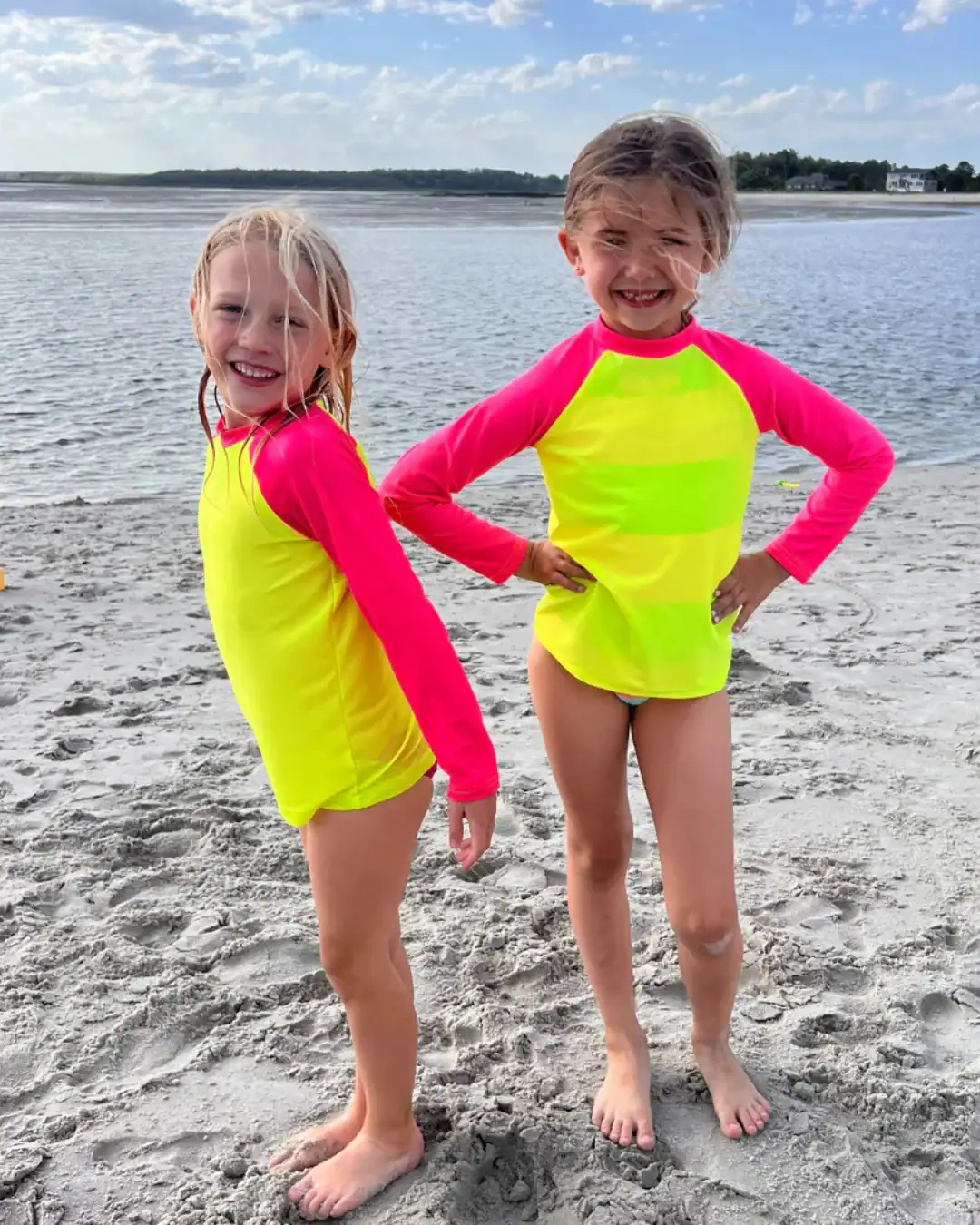
HiViz Swimwear takes a different approach by focusing on visibility as a key part of safety.
Their bright neon colors are intentionally designed to make children easier to spot in pools, lakes, and open water, where darker colors can quickly blend in.
Alongside that, their fabrics are OEKO-TEX® Standard 100 certified and made with recycled materials.
If visibility is something you’ve never thought about before, this is one of those small changes that can make a meaningful difference.
Price & Sizing
$35-$70 | 2T-14Y
Materials
OEKO-TEX® Certified | Recycled Polyester (REPREVE®) | Polyester | Spandex
location/shipping
United States | Ships To Canada
5. Petit Playa — Best Stylish Boutique-Style Swimwear
Best For: Elevated, design-forward swimwear made with safer materials

Petit Playa offers a more design-focused take on kids’ swimwear, with soft colors, delicate prints, and boutique-style details.
Their pieces are made with OEKO-TEX® Standard 100 certified fabrics and are free from PFAS and fluorocarbon finishes, which helps reduce unnecessary chemical exposure.
They’re also transparent about their materials, which isn’t always common in this category.
One thing to keep in mind is that many styles lean toward lighter or more muted tones, so choosing higher-contrast colors can make them easier to spot in the water.
Price & Sizing
$44-$77 | 6M-10Y
Materials
OEKO-TEX® Certified | Polyester or Nylon | Elastane
location/shipping
Australia | Ships To The United States & Internationally
6. Quince — Best For Affordable, Safer Swimwear
Best For: Budget-friendly swimwear made with better materials
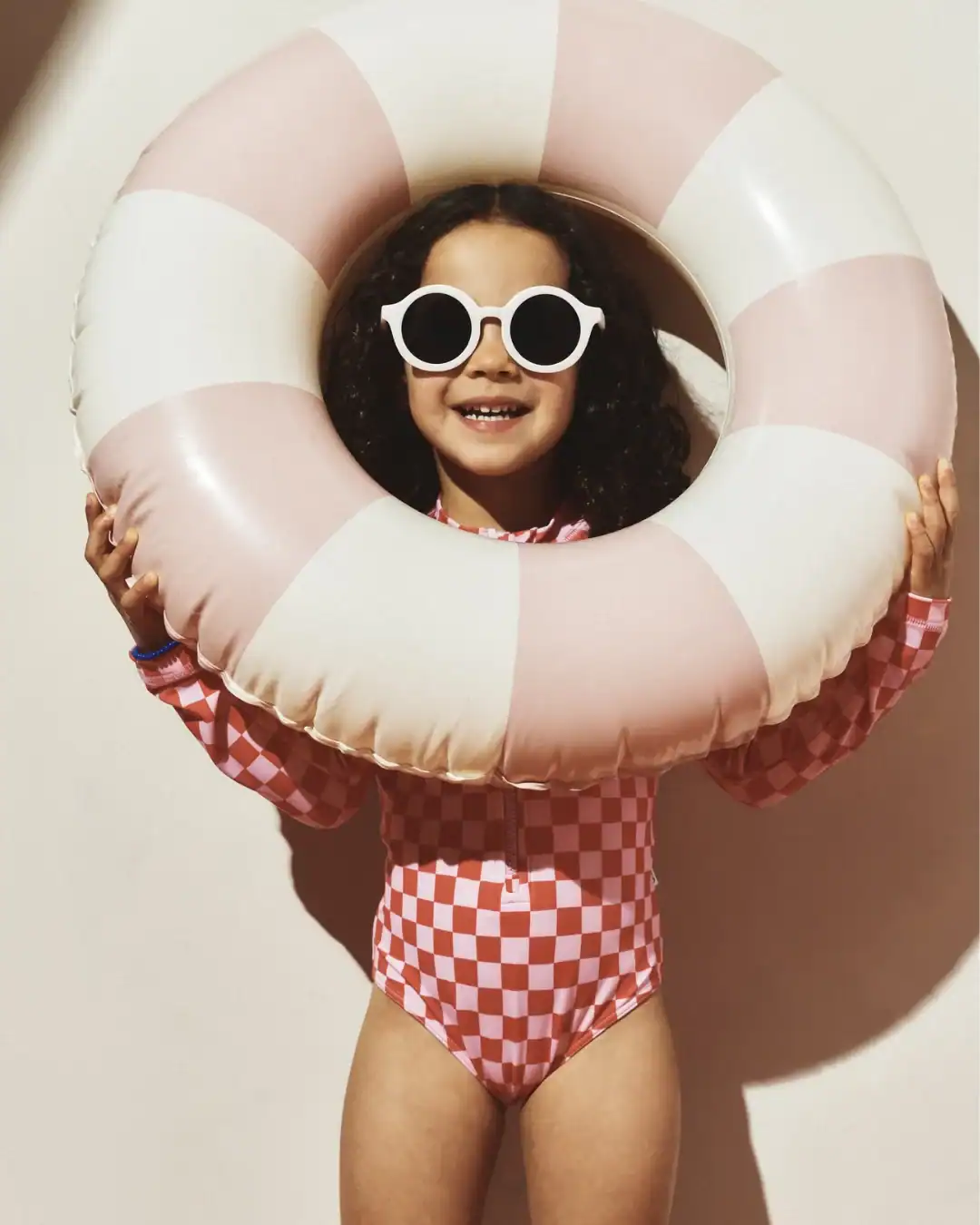
Quince’s sustainable swimwear collection for babies, toddlers, boys, and girls is made with love and care in Hanwella, Sri Lanka, and is proudly Fair Trade Certified.
Whether you’re looking for one-piece swimsuits, rash guards, two-piece sets, or swim trunks, Quince has the perfect options for your little one this summer—and they even offer stylish adult swimwear, too!
Crafted from recycled materials, their swimwear is not only chlorine and saltwater-resistant but also provides UPF 50+ protection, blocking 98% of harmful UV rays.
With OEKO-TEX® and multiple sustainability certifications, you can trust that Quince is as gentle on the planet as it is on your child’s skin.
Price & Sizing
$20-$30 | 0M-12Y
Materials
OEKO-TEX® Certified | Recycled Nylon | Spandex
location/shipping
Sri Lanka/United States | Ships To Canada
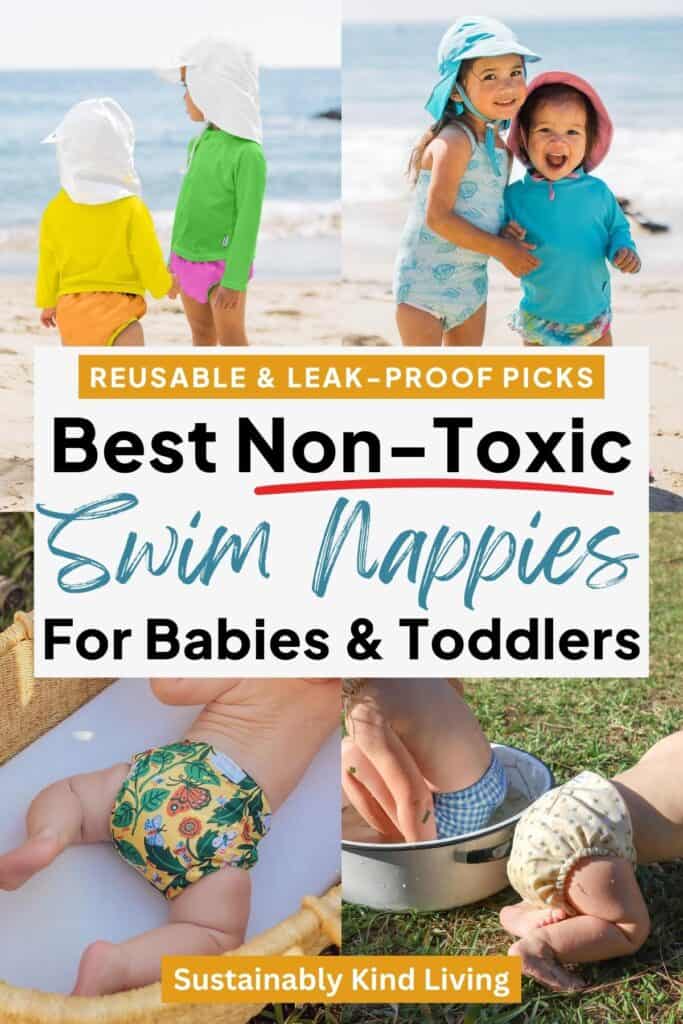
Non-Toxic & Reusable Swimming Nappies For Babies
7. Esembly — Best For Non-Toxic Reusable Swim Diapers
Best For: Non-Toxic Reusable Swim Diapers
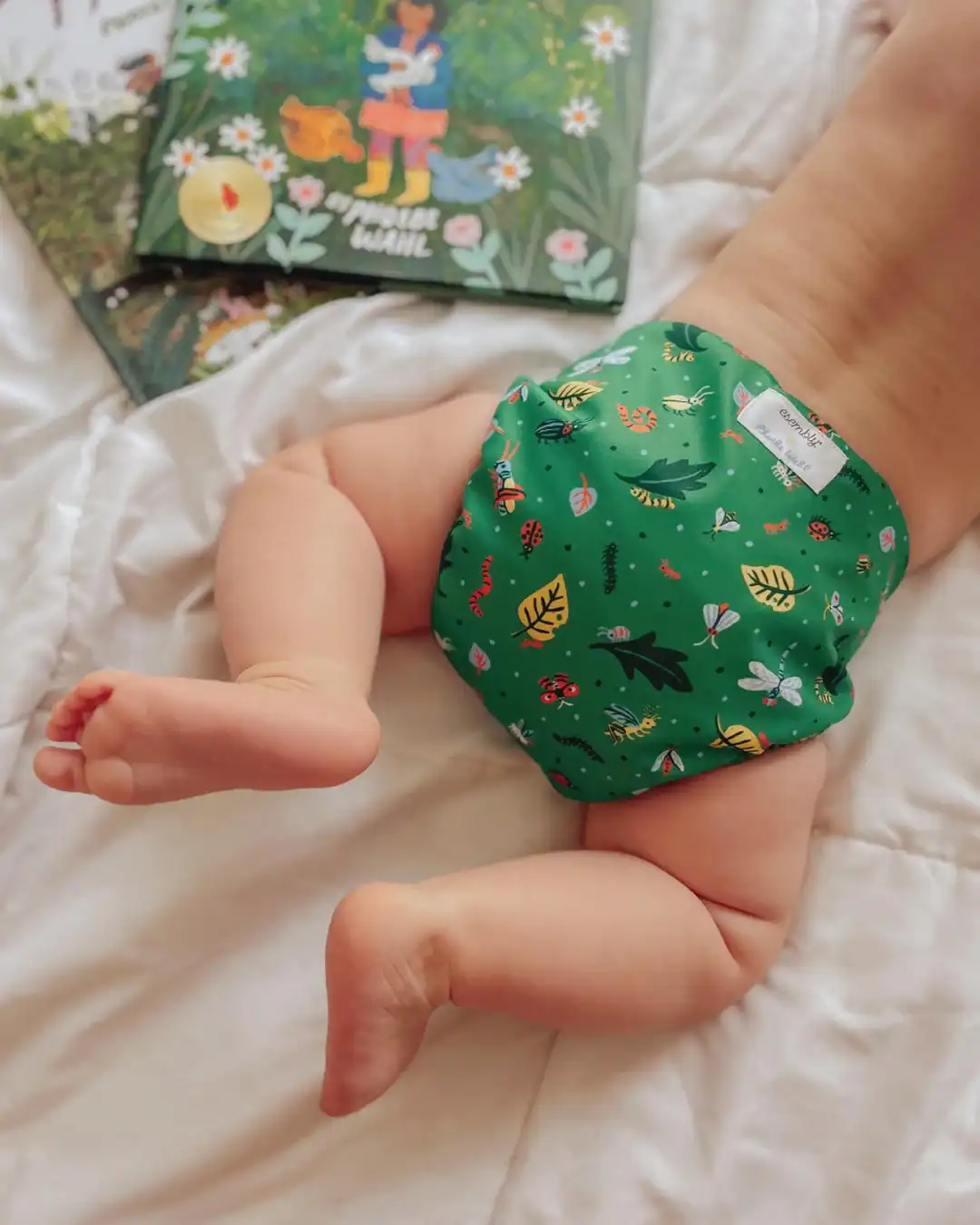
Esembly’s waterproof outer is the ultimate sidekick to their absorbent inner, creating a leak-proof, mess-proof, and worry-free cloth diapering experience.
The best part? It doubles as a reusable swim diaper—just pop it on without an inner, and you’re pool-ready!
Made from 100% upcycled polyester TPU (crafted from recycled plastic bottles).
Their innovative fabric is GRS and OEKO-TEX STANDARD 100 certified, ensuring it’s free of lead, BPA, PVC, and phthalates.
Price & Sizing
$18.50 | Size 1 (7-17 LBS) | Size 2 (18-35 LBS)
Materials
OEKO-TEX® Certified | 100% Upcycled Polyester TPU
location/shipping
China/United States | Ships Internationally
8. Green Sprouts — Best For Affordable, Everyday Reusable Swim Diapers
Best For: Affordable, Everyday Reusable Swim Diapers
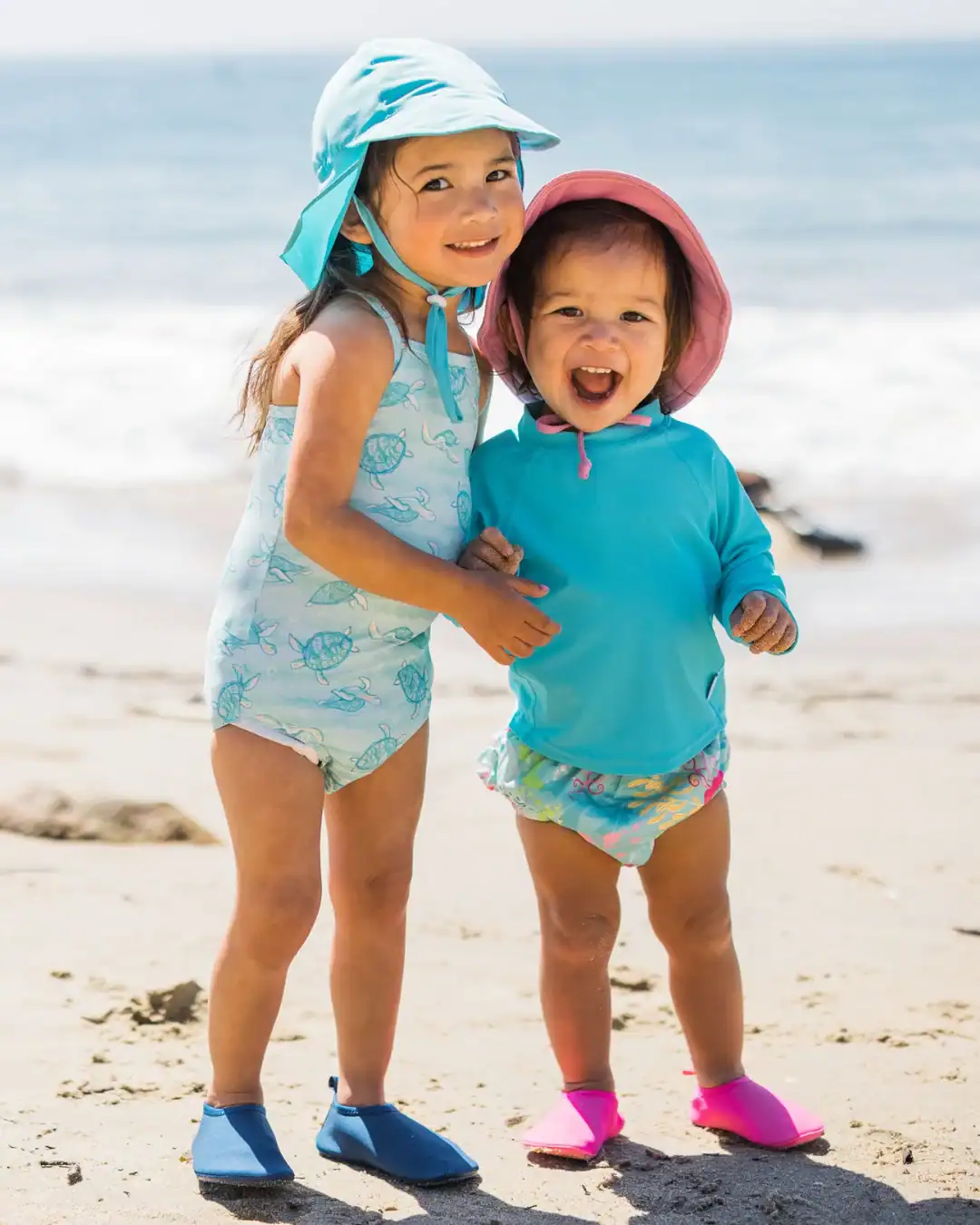
Green Sprouts reusable swim diapers are designed for worry-free water fun, giving your little one the freedom to move while keeping messes contained.
With an easy-on, easy-off elastic waist, diaper changes are quick and hassle-free—no bulky fasteners or swollen disposables.
With UPF 50+ sun protection and STANDARD 100 by OEKO-TEX®️ certification, you can trust that your baby is covered in more ways than one.
No disposables, no waste—just a snug, secure fit trusted by swim schools and instructors everywhere.
Price & Sizing
$13-$19 | 6M-5T
Materials
OEKO-TEX® Certified | Recycled Polyester
location/shipping
United States | Ships Internationally
Certifications That Actually Matter For Kids’ Swimwear
Even when a material looks good on paper, it doesn’t always tell the full story. This is where third-party certifications can make a real difference.
These labels help verify how fabrics are processed, what they’re tested for, and whether they meet stricter safety standards—something most brands don’t clearly explain on their own.
OEKO-TEX® Standard 100
One of the most widely recognized textile safety certifications.
It means the finished fabric has been tested against over 1,000 harmful substances, including azo dyes, formaldehyde, and heavy metals.
This is especially helpful for synthetic blends like polyester, nylon, and elastane, which are commonly used in swimwear.
GOTS (Global Organic Textile Standard)
Used for organic fibers like cotton.
GOTS ensures the material is grown without toxic pesticides and processed under strict limits for chemical use throughout production.
While less common in full swimwear, it’s often seen in pieces like swim diapers, rash guards, or lighter layers.
GRS (Global Recycle Standard)
Used for recycled materials like polyester or nylon.
GRS verifies both the percentage of recycled content and the responsible handling of chemicals during manufacturing.
This is particularly relevant for recycled fabrics like ECONYL® or recycled polyester.
REACH-Compliant (EU Chemical Standard)
A European regulation that restricts thousands of hazardous chemicals in consumer products. If a brand mentions REACH compliance, it adds another layer of safety oversight.
It’s not a label you’ll always see front and center, but it can signal stronger chemical restrictions behind the scenes.
What To Look For Beyond The Label: Safety, Visibility & Design
When choosing sustainable swimwear for kids, it’s not just about eco-friendly fabrics and ethical production—though those are essential.
Ethical brands prioritize non-toxic materials, transparent supply chains, and fair labor practices. They often go the extra mile to avoid greenwashing and share exactly how their pieces are made—from fiber to final stitch.
But there’s another key element to consider: visibility and color safety. Bright, high-visibility colors like neon orange, yellow, and green make it much easier for parents and lifeguards to keep an eye on children in the water or at crowded beaches.
In contrast, swimsuits in shades like blue, black, or sea green can blend into the water, making it harder to spot a child quickly—especially in emergencies.
Bottom line? Choose suits that are not only sustainable and ethically made but also thoughtfully designed with your child’s safety and visibility in mind.
How To Care For Kids’ Swimwear To Make It Last
Sustainable swimwear isn’t just about what it’s made from—it’s also about how well it’s cared for.
With just a little extra attention, you can extend the life of your child’s swimsuit while maintaining its shape, color, and safety.
Rinse After Each Use
Always rinse swimwear with cool, clear water after every swim. This helps remove saltwater, chlorine, sand, and sunscreen—all of which can break down fabric over time.
Hand Wash with Gentle Detergent
Use a mild, non-toxic detergent and hand-wash gently. Harsh soaps and chemicals can damage both the fibers and any skin-safe treatments on the suit.
Skip The Hot Water
Lukewarm or cool water is best. Hot water can weaken the fabric’s elasticity, leading to stretching and fading.
Pat Dry—Don’t Wring
Instead of twisting or wringing out excess water, gently pat the swimsuit dry with a soft towel. This protects the fabric’s structure and stretch.
Don’t Store Wrapped in a Towel
Avoid leaving wet swimwear bundled in a towel for too long—it can trap moisture and lead to mildew or stretching.
Keep It Out of The Washing Machine
Machine washing can cause unnecessary friction, pulling, and fiber damage. Stick to gentle hand washing to preserve the suit’s integrity.
Dry Flat
Lay the swimsuit flat on a clean towel to dry. Hanging it can distort the shape due to the weight of retained water.
Avoid Direct Sunlight
Sunlight may speed up drying, but it also fades colors and weakens fibers. Dry in the shade for the best long-term results.
Apply Sunscreen First
Try to apply sunscreen (check out my safe sunscreen guide for kids & babies) and let it absorb into the skin before dressing your child in their swimsuit.
Some sunscreen ingredients can discolor or degrade fabric if applied directly over it.
Non-Toxic Kids Swimwear FAQs
Non-toxic kids’ swimwear is made without harmful chemicals like PFAS, phthalates, BPA, or toxic dyes.
It typically uses safer materials such as OEKO-TEX® certified fabrics, recycled fibers, or organic textiles to reduce chemical exposure and support healthier wear for kids.
The safest materials for kids’ swimwear include OEKO-TEX® certified fabrics, ECONYL® regenerated nylon, and GRS-certified recycled polyester.
For sensitive skin, GOTS-certified organic cotton can also be a good option, though it’s less common in traditional swimwear.
Yes, some swimwear may use PFAS for water- or stain-resistant finishes.
However, many non-toxic brands avoid PFAS due to health and environmental concerns. Look for brands that clearly state their swimwear is PFAS-free.
Not always. UPF 50+ swimwear is safest when the sun protection comes from the fabric’s weave rather than chemical coatings.
Brands that disclose how UPF is achieved are typically more transparent and safer choices.
Recycled materials like ECONYL® and recycled polyester can be safe when they are certified and free from harmful chemical treatments.
Look for certifications like OEKO-TEX® or GRS to ensure better safety and transparency.
Natural fiber swimsuits, like organic cotton, can be a good option for sensitive skin because they avoid synthetic materials.
However, they are less durable in water and better suited for light swimming, beach play, or layering.
Check for clear material transparency and certifications like OEKO-TEX®, GOTS, or GRS. Avoid vague terms like “synthetic fabric” without details.
Brands that openly share materials and finishes are usually more trustworthy.
Bright, high-visibility colors like neon orange, yellow, and green are easier to spot in the water.
Darker colors like blue or black can blend in, making it harder to see a child quickly.
Visibility is an important safety factor alongside materials.
Still Deciding?
If you’re still narrowing it down, here’s a quick way to choose based on what matters most to you:
- Hanna Andersson → Best for reliable, everyday swimwear.
- Little Green Radicals → Best for coverage-focused, play-friendly swimwear.
- Jan & Jul → Best for practical, no-fuss swimwear for active kids.
- HiViz Swimwear → Best for high-visibility swimwear.
- Petit Playa → Best for elevated, boutique-style swimwear.
- Quince → Best for affordable swimwear made with safer, recycled materials.
- Esembly → Best for non-toxic, reusable swim diapers for babies.
- Green Sprouts → Best for budget-friendly, everyday reusable swim diapers.
Final Thoughts On Choosing Non-Toxic Kids Swimwear
Finding safer swimwear for your kids doesn’t have to feel overwhelming, but it does require looking a little closer at what’s actually being used.
The biggest shift is understanding that not all swimwear is created equally.
Once you know what to look for, like better materials, clearer certifications, and fewer unnecessary chemical treatments, it becomes much easier to filter out what doesn’t align.
The good news is that you don’t have to sacrifice comfort or style to make a better choice.
There are brands creating swimwear that hold up to real life while also being more thoughtful about what touches your child’s skin.
At the end of the day, it’s less about finding a perfect option and more about choosing something that reduces unnecessary exposure while still working for your family’s everyday life.
Because when it comes to kids and the products they wear regularly, even small, more intentional choices can add up over time.
Continue Your Non-Toxic Summer Routine
If you’re building a safer, lower-toxic summer setup for your family, these guides can help you take the next step:
- Non-Toxic Sunscreen For Babies & Kids — Safer mineral-based options designed for sensitive skin and everyday sun protection.
- Sun Protection Clothing — UPF clothing made with safer materials to help reduce sun exposure without relying on heavy sunscreen use.
- Non-Toxic Bug Sprays — Effective, family-friendly repellents without harsh chemicals or synthetic fragrances.
- Non-Toxic After-Sun Lotions — Gentle, soothing formulas to support skin after long days in the sun.
📌 Save This Guide For Later
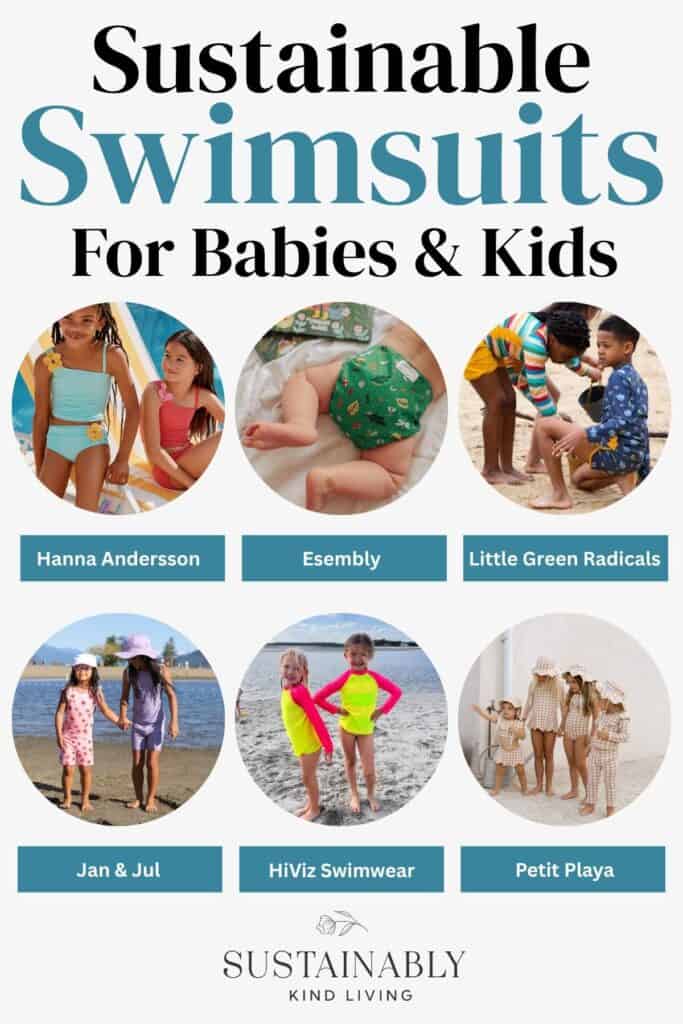
If you’re trying to find safer swimwear for your kids, this is one of those guides worth coming back to.
This breakdown of the best non-toxic kids’ swimsuits covers what materials to look for, which certifications actually matter (like OEKO-TEX®), and the brands that are doing it better — without the greenwashing.
Save it for later so you have it on hand when you’re ready to choose safer swimwear for your family.
Sources & Further Reading
If you’ve ever tried to figure out what kids’ swimwear is actually made of, you’ve probably noticed how little most brands share.
A lot of the time, you’ll see general terms like “quick-dry” or “UV protection” without much explanation of how those features are achieved — or what chemicals might be involved.
That’s what led me to look more closely at textile certifications, synthetic fabrics, and the finishes commonly used in swimwear.
These are the resources I kept coming back to while researching non-toxic kids’ swimwear, fabric safety, and chemical exposure:
- OEKO-TEX® Standard 100 — Certification for textiles tested for harmful substances, especially relevant for synthetic swim fabrics.
- Global Organic Textile Standard (GOTS) — Standards for organic fibers and restricted chemical processing.
- Global Recycled Standard (GRS) — Verifies recycled materials and tracks chemical use in production.
- REACH (Registration, Evaluation, Authorisation and Restriction of Chemicals) — EU regulation restricting hazardous chemicals in textiles and consumer products.
- European Chemicals Agency (ECHA) — Scientific data on substances regulated under REACH, including phthalates and plasticizers.
- Environmental Protection Agency (EPA) — Research on PFAS and their use in water-resistant and performance fabrics.
- National Institute of Environmental Health Sciences (NIEHS) — Studies on endocrine disruptors and long-term chemical exposure.
- Centers for Disease Control and Prevention (CDC) — Information on phthalates and repeated exposure.

Steal My Non-Toxic Cleaning Checklist!
Believe us, it’s the BEST…. and it’s free. Does it really get any better than that?! Sign up for our newsletter and get this free checklist to clean your home without any harmful chemicals!



Hello,
I know Boden are eco friendly with their materials, but would they also be considered non toxic?
Hi Mary, this is a tough question. When it comes to swimwear, there are no brands that we found that did not use some type of polyester or recycled polyester (repreve or regenerative). The only thing we can do to ensure the fabric is considered “non toxic” is to look out for the OEKO-TEX certification. This cert isn’t perfect, but it does ensure that the fabric is at a much higher safety standard than others: This label certifies that every component of the product, from the fabric to the thread and accessories, has been rigorously tested against a list of up to 350 toxic chemicals. The brands that have this standard are Good Weekend, Frugi, Hannah Anderson, and Ina Swim.