 Shop My Favorite Non-Toxic Gifts Of 2026!
SKL is reader supported. When you buy through links on our site, we may earn affiliate commission. Learn more here.
Sustainable living in 2026 doesn’t have to mean perfectly organized mason-jar pantries, off-grid living, or giving up every comfort.
This guide skips the guilt and greenwashing, and instead shares 11 simple shifts that actually work in real life.
Think less pressure, more progress. Simple changes that save money, feel good, and fit into your messy, beautiful, everyday routine.

Too often, sustainability gets framed as all-or-nothing – like you’re either perfectly zero-waste or not trying at all. If you can’t nail every eco-friendly habit, you might as well give up.
But nothing could be further from the truth!
Especially as scientists warn that unless we start making some major changes to reduce emissions soon, our planet is nearing an irreversible climate tipping point.
So there’s no better time to start your sustainable living journey than now! Even small changes add up to a big impact when we do them collectively.
Take something as simple as turning down your thermostat 2 degrees in winter. That saves 4-9% on heating energy per household. Scale that across millions of homes, and you’re cutting billions of pounds of emissions.
That’s like removing over a million cars from the road each year. And this is just one small example of how progress beats perfection when it comes to sustainability.
This guide isn’t about becoming an off-grid homesteader or giving up every piece of plastic. It’s about finding sustainable shifts that spark joy, save money, and work whether you’re in a studio apartment or chasing toddlers around.
Studies show that joy-based approaches stick far better than shame-based ones, and simple swaps that fit into real life create lasting change.
11 Easy Steps To Live A More Sustainable Life In 2026
1. Unplug To Reconnect
Living more sustainably isn’t just about what you buy or don’t buy; it’s also about breaking the cycle of stress and overconsumption.
When we slow down and spend more time outdoors, we naturally use fewer resources, make more intentional choices, and feel more connected to the world we’re trying to protect.
– Spend Time In Nature
Want to cut your stress by 16%? Just two hours in nature each week can do exactly that. Spending time in nature (without your phone) improves mental health, strengthens community ties, and even nudges us to make more eco-friendly choices.
– Start Simple
You don’t need to spend a week camping in the middle of nowhere to unplug. Start by eating lunch outside instead of at your desk.
Take a phone-free walk to grab coffee. Schedule “some time to unplug” like you would any other meeting. Even just sitting on your stoop to do a little nature journaling counts.
– Get The Family Involved.
Time outside isn’t just for playing for kids. Kids who grow up playing in nature are far more likely to protect it later in life.
Every muddy park day or bug hunt in the backyard helps raise the next generation of environmentalists.
2. Choose Reusables That Excite You
– Pick Sustainable Swaps You’re Going To Use
The best plastic-free swaps are the ones you’ll actually use. That non-toxic reusable water bottle that keeps drinks cold all day? Worth it.
The reusable tote bags that scrunch down into your purse? A brilliant solution. But if beeswax wraps drive you nuts to clean, skip them. How sustainable is it if you never use them?
– Find Reusables That Save You Money
The best sustainable swaps are not only good for the planet, but will also help you save money.
For example, LED bulbs use 75% less electricity and last 25× longer than old ones — saving the average household about $100 a year.
– Keep Your Changes Manageable
If you overwhelm yourself with too many changes at one time, chances are you won’t stick with your sustainable practices.
Try one reusable swap per month, and make sure it either saves you money or makes life easier. That’s how small actions turn into big changes.
3. Clean Like It’s 1935 (In a Good Way)
– Simpler Cleaning Products = More Sustainable
The average household cleaning products contain about 62 different chemicals, many of which are toxic.
You probably aren’t even aware of the number of unnecessary and dangerous ingredients in your cleaning products because manufacturers aren’t always required to disclose full ingredient lists on the label.
When it comes to cleaning more sustainably, look for non-toxic cleaning products with short ingredient lists made up of ingredients that you can actually pronounce. It’s better for your health and better for the environment.
– Clean With Pantry Staples Instead
The secret is you can get your home sparkling clean with only three ingredients: vinegar, baking soda, and castile soap. Our grandmothers knew it, and science still backs it up.
White vinegar cuts grease, baking soda scrubs without scratching, and castile soap handles just about everything else.
There are so many DIY non-toxic cleaning recipes that you can easily make up at home, for a fraction of the price you would pay at the store.
One or two bottles instead of fifteen under the sink feels a whole lot cleaner and uncluttered.
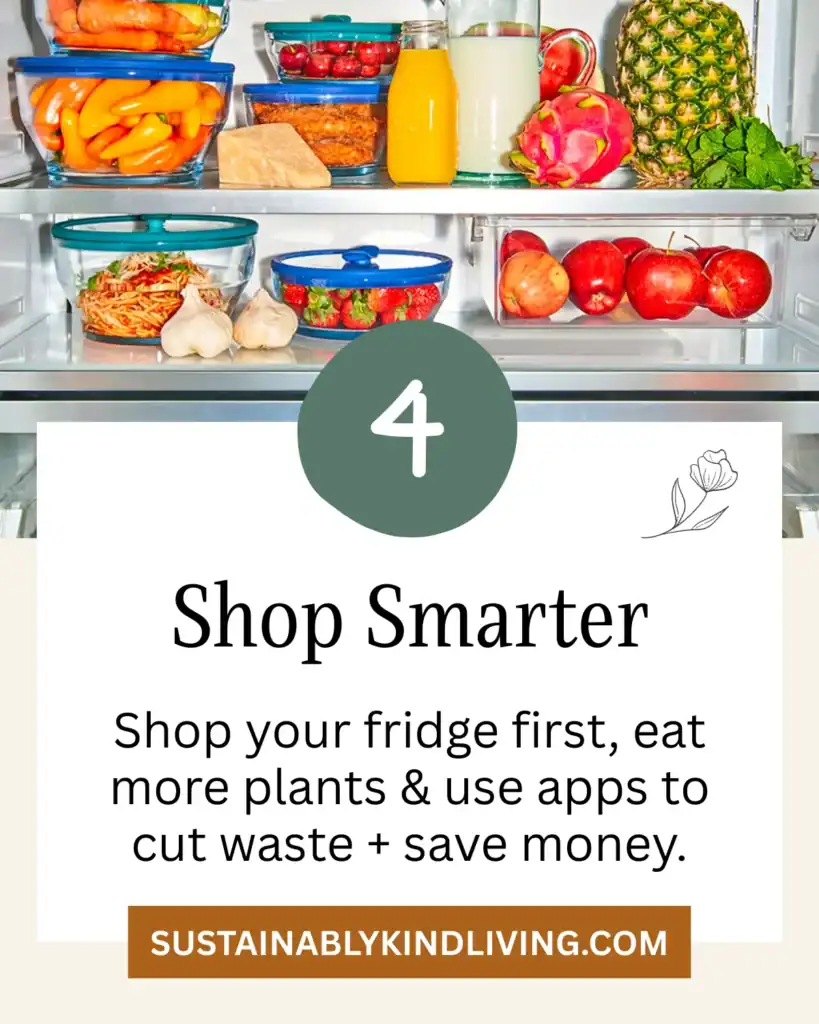
4. Rethink The Weekly Grocery Trip
Americans toss 325 pounds of food annually. That’s like throwing 975 apples straight into the trash.
Meanwhile, grocery prices are only going up, and we’re all feeling the squeeze. So here are some great tips for reducing food waste and saving money.
– Start Eating More Veggies
One easy way to go a little easier on the planet and your wallet is to try to incorporate more plant-based foods into your diet.
Doing so can save you up to $650 per year while cutting food waste. Eating plant-forward doesn’t mean you have to go vegetarian, or even vegan.
Try one meatless dinner per week – think taco Tuesday with black beans instead of beef, or swap half the ground meat in your chili for mushrooms or lentils.
– Shop Your Fridge First
Before making that grocery list, take inventory of what’s already in your fridge and pantry.
Instead of planning meals from scratch, build your weekly menu around what you already have and then fill in the gaps with a few fresh ingredients.
This simple switch can dramatically cut food waste and those frustrating moments when you realize you bought tomatoes when you already had three sitting in the crisper drawer.
– Get Creative With Apps Like Too Good To Go
The Too Good To Go app lets you buy “Surprise Bags” of surplus food from local restaurants, bakeries, and grocery stores at steep discounts – typically 50-70% off.
You never know exactly what you’ll get (hence the “surprise”), but it’s always perfectly good food that would otherwise end up in the dumpster.
The app is now rescuing over 1 million meals monthly across the U.S., making it a win-win: you save money on groceries while preventing food waste.
– Shop The Farmers Market Strategically
While 80% of Americans visit a farmers’ market at least once a year, only 41% go regularly.
It’s not always the case, but local produce can be cheaper than grocery-store organics, especially if you are shopping for produce that is in season.
Next time you’re at the farmers market, jot down the pricing (or take a screenshot) of produce you buy regularly and see how it compares to your grocery store’s pricing.
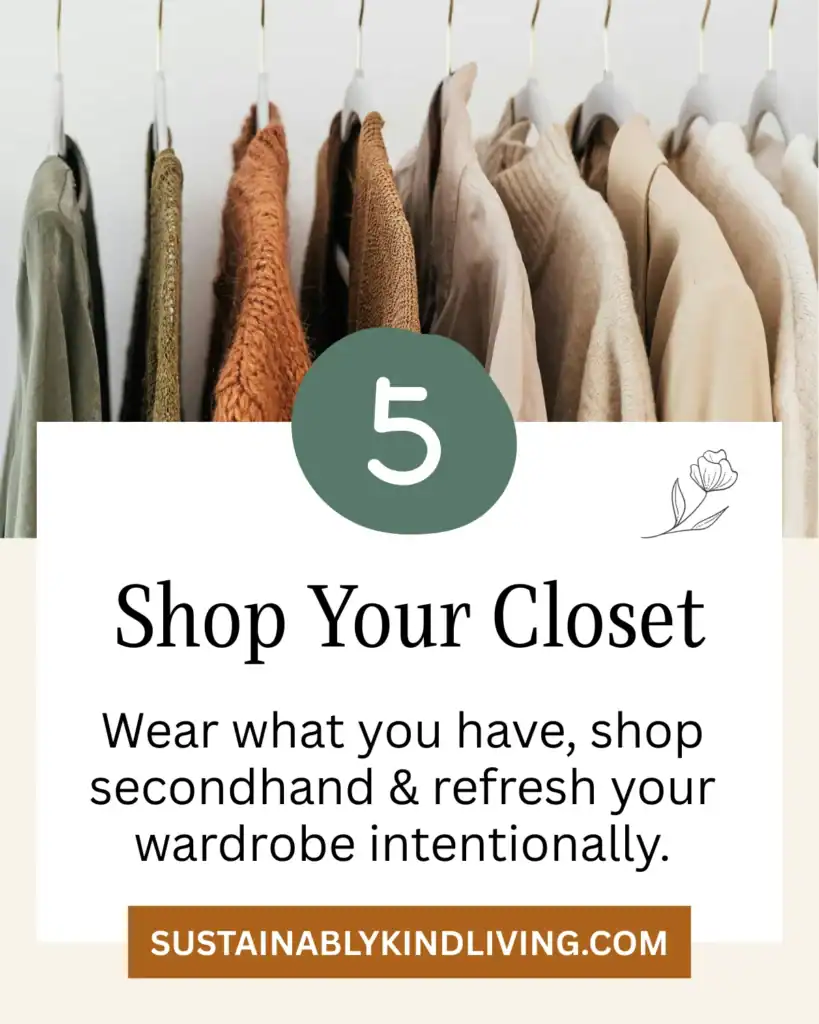
5. Get Cozy With Your Closet
– Wear What You Already Own
The most sustainable outfit is hanging in your closet right now.
Studies show 54% of people say sustainability is a priority, but only 37% practice it consistently — often because they feel pressured to keep buying “more” sustainable clothing options.
The best way to make your closet more sustainable is to start by loving and wearing what you already have instead of adding more.
– Declutter Your Closet With The Backwards Hanger Trick
So how do you figure out what you love, and what you’re ready to donate?
Try this simple trick: turn all your hangers backwards at the beginning of the season. Each time you wear something, flip that hanger forward.
You might be surprised by how few items you actually wear, which can help you be more intentional when you shop and prevent those impulse buys.
– Shop Secondhand First
Vintage and thrift store finds often outlast fast fashion, and you’ll skip the 75–85% price premiums that new “sustainable” brands charge. Secondhand is affordable, stylish, and keeps clothing out of landfills.
– Shop Your Friends’ Closets
Host a clothing swap with friends. It’s basically free shopping with your besties! You’ll refresh your wardrobe, rehome those regret buys, and have a whole lot of fun while doing it.
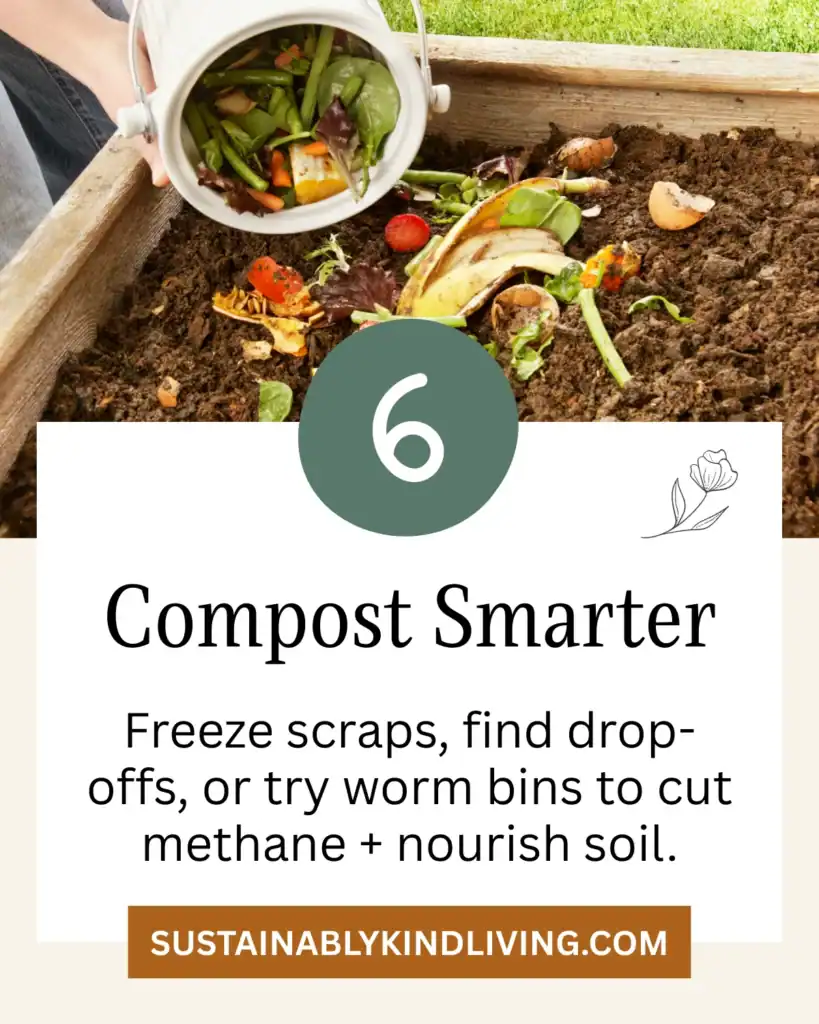
6. Compost Like A Rebel
When food waste ends up in landfills, it breaks down without oxygen and produces methane — a powerful greenhouse gas that fuels climate change.
But if you can prevent your food waste from going to the landfill by composting, you can turn your food waste into “garden gold.”
– Yes, You Can Compost In An Apartment
Clark County’s food scrap drop-off program is living proof that you can compost without a big yard. In 2024, their food scrap drop-off sites diverted 50,000 pounds of waste from landfills.
And they’re not alone. Cities across the U.S. are making composting free and convenient, even for apartment dwellers.
Want to find a program near you?
- Check Your City’s Website → Search “food scrap drop-off” or “composting program.” Many counties list collection sites through their public works or environmental services pages.
- Visit Your Farmers’ Market → Cities from Washington, DC to Fairfax County partner with weekend markets for easy drop-offs — ask vendors if they know about local programs.
- Contact Waste Management → Some cities, like Madison and Kansas City, run compost collection directly through their streets or sanitation departments.
- Look For Grassroots Groups → Community gardens and “compost cooperatives” often accept scraps from neighbors.
- Leverage National Resources → The EPA offers a Composting Food Scraps in Your Community toolkit — a great reference if your city hasn’t launched a program yet.
– Freeze Your Scraps To Contain The Smell
If you’re an urban dweller trying to live more sustainably in a small space and don’t want your home to smell like a trash compactor.
Keep a small container in your freezer for veggie peels and coffee grounds. No smell, no fruit flies. Drop it off with your groceries or errands once a week.
– Nowhere To Take Your compost? Try Worms
If your community doesn’t have anywhere to drop off your compost, you can try Vermicomposting (a fancy word for composting with worms). It’s surprisingly clean, fits in small indoor spaces, and creates rich soil for plants.
Better yet, if your apartment building has some shared outdoor space, you can share a vericompost tumbler with your neighbors.
And the bonus? 87% of community gardeners report stronger social connections. Sharing compost bins builds friendships as well as healthier soil.
7. Fall In Love With Secondhand Again
The secondhand economy isn’t just trending, it’s exploding. And that’s a great thing!
Buying used keeps perfectly good items out of landfills, cuts packaging waste, and saves serious money. Plus, it beats paying high prices for synthetic materials that wear out after a few washes.
– Skip Fast Fashion When Refreshing Your Wardrobe.
Today, it feels like most fast fashion clothing brands are charging more and more for lower-quality items made with cheap synthetics. While the brands that are using quality materials can seem out of reach.
This is where shopping secondhand can be a real lifesaver – and money saver! Oftentimes, you can find well-made pieces from your favorite designers at a fraction of the cost.
Shopping for secondhand children’s clothes also makes a lot more sustainable sense, since they outgrow everything so quickly.
– Reuse & Repair Instead Of Replacing
With same-day delivery, it’s tempting to just hit the buy button when something gets a hole or a few loose threads. But repairing instead of buying new (when you can) is a great way to break the cycle of endless consumerism.
Or if a clothing item is beyond repair, look for ways to reuse old clothing, like making DIY produce bags or reusable cotton rounds from t-shirts.
– Furnish & Decorate More Affordably
Shopping second-hand isn’t just for clothing, though. Like clothing, furniture seems to get more expensive despite being more cheaply made.
Meanwhile, there are a lot of great secondhand furniture finds out there made with solid hardwoods, dovetail joints, and craftsmanship intended to last for years.
Estate sales are goldmines for sturdy pieces that have already survived decades and show no signs of slowing down. That mid-century dining table for $150? It’s likely better built than anything you’d find at a furniture store for ten times as much.
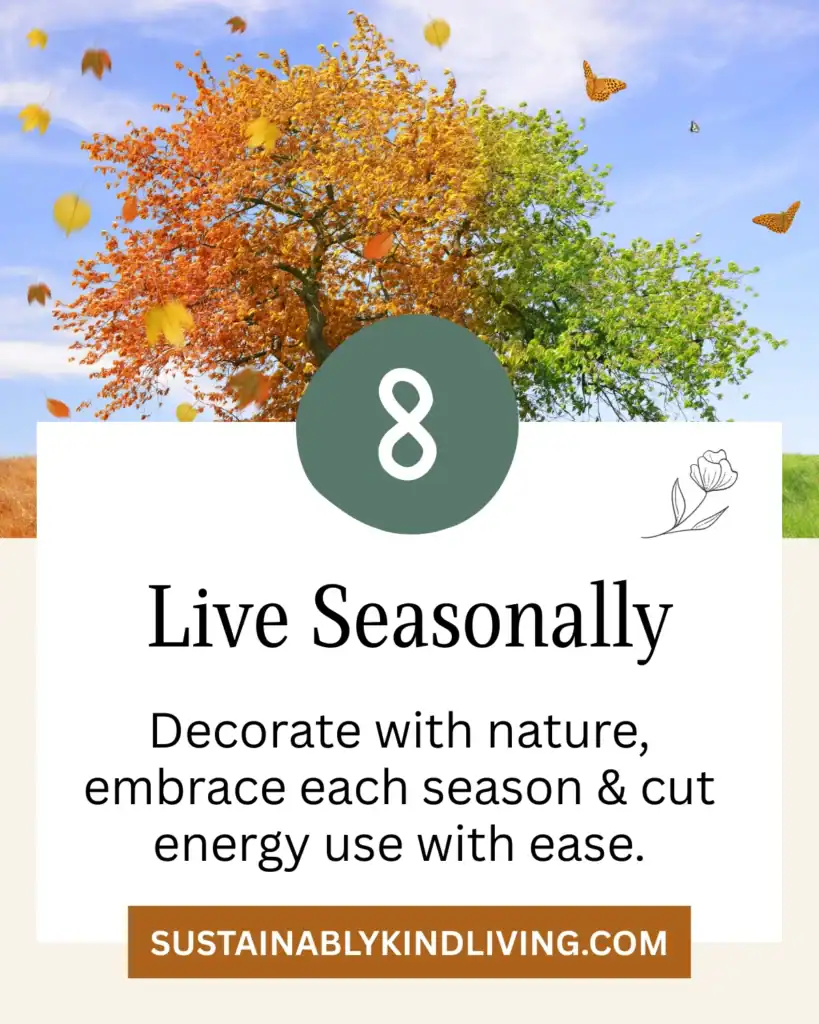
8. Let Nature Set The Mood
Living seasonally is one of the simplest ways to live more sustainably. It helps us savor what each season naturally offers instead of chasing decorations and trends that only add more waste.
– Embrace The Seasons
Heating and cooling eat up energy and disconnect us from the rhythm of the year. Leaning into the weather each season saves both money and carbon emissions.
In summer, open the windows for a cross-breeze, add a fan or two, and slow down with a book in the shade or iced tea on the porch.
In winter, pull out cozy sweaters and blankets, simmer a pot of soup, and turn the thermostat down a few degrees. That small shift can save 10–15% on heating costs.
– Decorate With Nature
Big box stores have decor for every holiday and every season in between. But the best seasonal decor is free and grows outside your door.
In spring, budding branches bring freshness indoors. Summer herbs or wildflowers beautifully brighten a table.
Fall leaves make for naturally beautiful, sustainable fall decor, while evergreens and dried oranges make for festive DIY sustainable Christmas decorations.
It’s all free, beautiful, and compostable when the season shifts. No plastic bins to buy, store, or eventually toss.
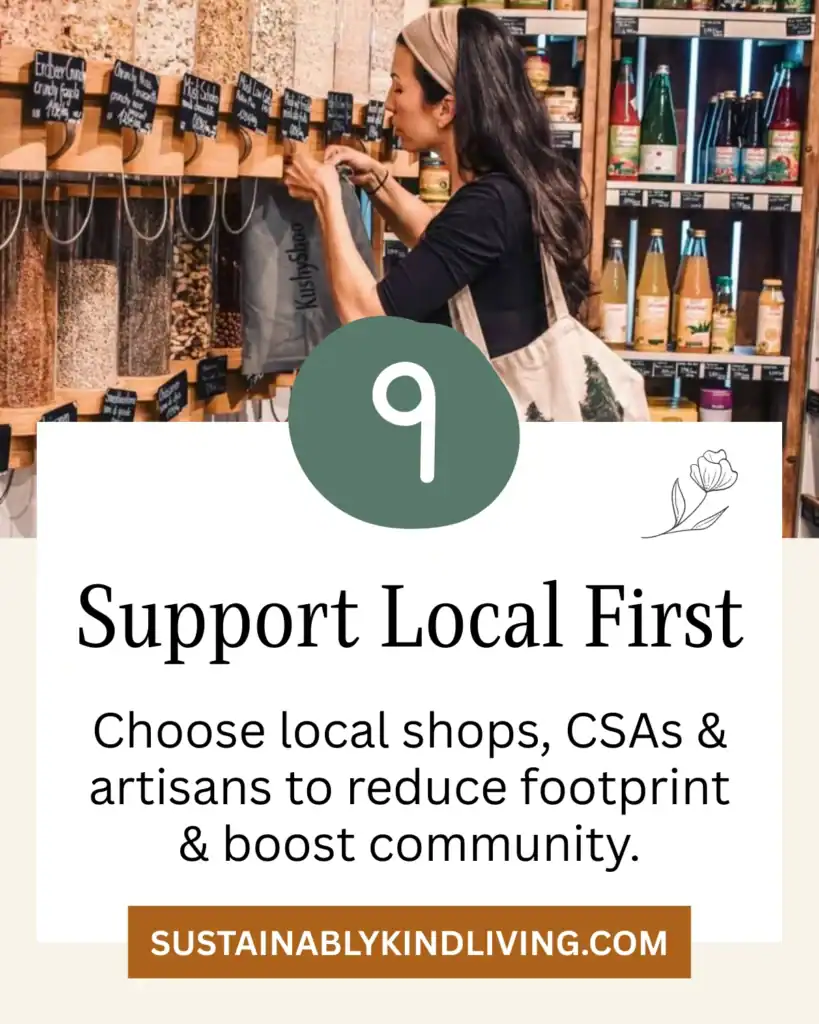
9. Buy From People, Not Platforms
Online shopping has become so convenient and almost unavoidable, but it turns out that shopping on Amazon is not sustainable, despite all of their sustainability reports and climate pledges.
Shopping from smaller, local retailers and even small online retailers often means fewer shipping miles, less packaging waste, and more dollars going to those who deserve it most.
– Find & Frequent Your “Regular” Spot
Pick one local business to support consistently.
For me, it’s the coffee shop where they know my name, and I can get my coffee to go in my favorite reusable mug. Less waste, more community, and my dollars stay local.
– Support Makers, Not Middlemen
Local artisans, craftspeople, and neighborhood repair shops all build what researchers call collective efficiency, the idea that when you know the person making your bread or fixing your bike, you both care more about doing right by each other.
Every dollar spent this way supports real skills and relationships instead of getting lost in the profits of a faceless platform.
– Get Closer To Your Food
Look into joining your local community-supported agriculture (CSA) program. It’s like a subscription box but for local produce grown in your area.
You pay a farm upfront or weekly, and in return, you get a share of whatever’s fresh that season. It often costs less than grocery-store organics, and you’re cutting out the middleman entirely.
Direct farm sales hit $3.26 billion in 2022 (up 16% since 2017) because families want food that’s fresher, more affordable, and rooted in real connections with the people who grow it.
10. Make Something With Your Hands
DIY is fun and often leads to hobbies you’ll love. It’s also a great way to live more sustainably. Every time you make or repair something yourself, that’s one less item bought, packaged, and shipped.
Whether it’s making your own cleaning spray, mending your clothes, or refinishing a thrifted dresser with non-toxic paint, you’re cutting waste, saving money, and building skills you’ll have forever.
Here’s What Sustainable DIY Can Look Like At Home:
- Clothing Care: Sew on buttons, patch holes, hem pants, dye faded clothes.
- Home Basics: Make your own non-toxic bathroom scrub, pour your own candles, or make your own DIY laundry detergent.
- Food: Bake bread, ferment veggies, or grow herbs on a windowsill.
- Furniture & Décor: Refinish a dresser, repaint chairs, or create wall art.
- Everyday Fixes: Sharpen knives, oil squeaky hinges, and repair a bike chain.
And the bonus? Hands-on projects don’t just save resources — research shows they lower anxiety and build confidence, too.
11. Ditch Perfection. Keep The Joy.
One of the most surprising ways you can help the planet? Give yourself permission to be imperfect. Studies show that treating sustainability as a series of small experiments works better than rigid rules.
Some weeks, I meal prep like a pro with my reusable containers and bike everywhere. Other weeks, it’s takeout containers and forgotten tote bags. And that’s okay.
Research shows that people who focus on progress, not perfection, are more likely to stick with sustainable habits long term.
Forget zero waste. Aim for less waste. And remember that even small swaps, like using your AC less during cooler hours, still count.
Suddenly, living more sustainably feels possible instead of overwhelming. And that’s the point. Imperfect steps add up, especially when you keep the joy in the process.
Let Your Imperfect Journey Start Now!
Here’s what 2025 taught us about sustainable living:
- Shame doesn’t work.
- Perfection is the enemy.
- Joy is the way forward.
You can start with just one thing that either saves money or makes you feel good about giving back to the planet (ideally both).
Maybe it’s those LED bulbs saving you $100 yearly, or joining that Buy Nothing group, or just eating a plant-based lunch outside.
The planet doesn’t need a handful of perfect environmentalists. It needs millions of imperfect humans making progress, building community, and choosing joy over guilt.
Welcome to the beautiful, messy, imperfect sustainability revolution. You’re already doing better than you think.
More To Love…
- 🌿 Beginner’s Guide To Non-Toxic Living – A simple, approachable introduction to safer living with easy swaps, practical tips, and toxin-free habits anyone can start today.
- 🏡 Steps To Reduce Toxins In Your Home – Clear, actionable steps to detox your home room by room, from safer cleaning and cookware to healthier personal care choices.
- ⚠️ Most Toxic Household Items Hiding In Your Home – Eye-opening insights into everyday items that may be exposing your family to chemicals—plus safer alternatives for a healthier home.
- 🛒 Non-Toxic Grocery Shopping Guide – A practical guide to cleaner grocery shopping, teaching you how to decode labels, avoid harmful additives, and choose safer, nutrient-dense foods.
📌 Save This Guide For Later
Save this practical sustainability guide to revisit anytime. From low-waste tips and non-toxic swaps to mindful habits you can actually stick to, this pin makes it easy to come back whenever you’re ready for your next simple, doable step toward sustainable living.

References:
- Children & Nature Network. (n.d.). Research digest: Pathways to environmental stewardship. https://www.childrenandnature.org/resources/research-digest-pathways-to-environmental-stewardship/
- Clark County. (2025, January 29). Clark County celebrated over 50,000 pounds of waste diverted from landfills in 2024. KPTV. https://www.kptv.com/2025/01/29/clark-co-celebrates-over-50000-pounds-waste-diverted-landfills-2024/
- Climate: Change BH. (2025). Global tipping points conference 2025. https://www.climatechangebh.org.uk/perspectives/global-tipping-points-conference-2025
- Consumer Reports. (2025). Farmers’ market produce: Local vs organic. https://www.consumerreports.org/fruits-vegetables/farmers-market-produce-local-vs-organic/
- Environmental Protection Agency. (2025). How to create and maintain an indoor worm composting bin. https://www.epa.gov/recycle/how-create-and-maintain-indoor-worm-composting-bin
- Environmental Protection Agency. (2025). Quantifying methane emissions from landfilled food waste. https://www.epa.gov/land-research/quantifying-methane-emissions-landfilled-food-waste
- Fairfax County. (2023). Take the “Two-Degree Challenge” to save energy and money this season. https://www.fairfaxcounty.gov/environment-energy-coordination/take-two-degree-challenge-save-energy-and-money-season
- National Agricultural Statistics Service. (2024). Direct farm sales reached $3.26 billion in 2022. https://sustainableagriculture.net/blog/census-of-agriculture-reveals-the-promise-of-regional-food-systems/
- Responsible Technology Solutions. (2025). Food waste in America: Facts and solutions. https://www.rts.com/resources/guides/food-waste-america/
- Too Good To Go. (n.d.). Fight food waste. https://www.toogoodtogo.com/
- U.S. Department of Energy. (2022). 2° for change: Adjust your thermostat to save energy and reduce emissions. https://facilities.utah.edu/se/2-degrees-for-change/index.php

Steal My Non-Toxic Cleaning Checklist!
Believe us, it’s the BEST…. and it’s free. Does it really get any better than that?! Sign up for our newsletter and get this free checklist to clean your home without any harmful chemicals!