 Shop My Favorite Non-Toxic Gifts Of 2026!

SKL is reader supported. When you buy through links on our site, we may earn affiliate commission. Learn more here.
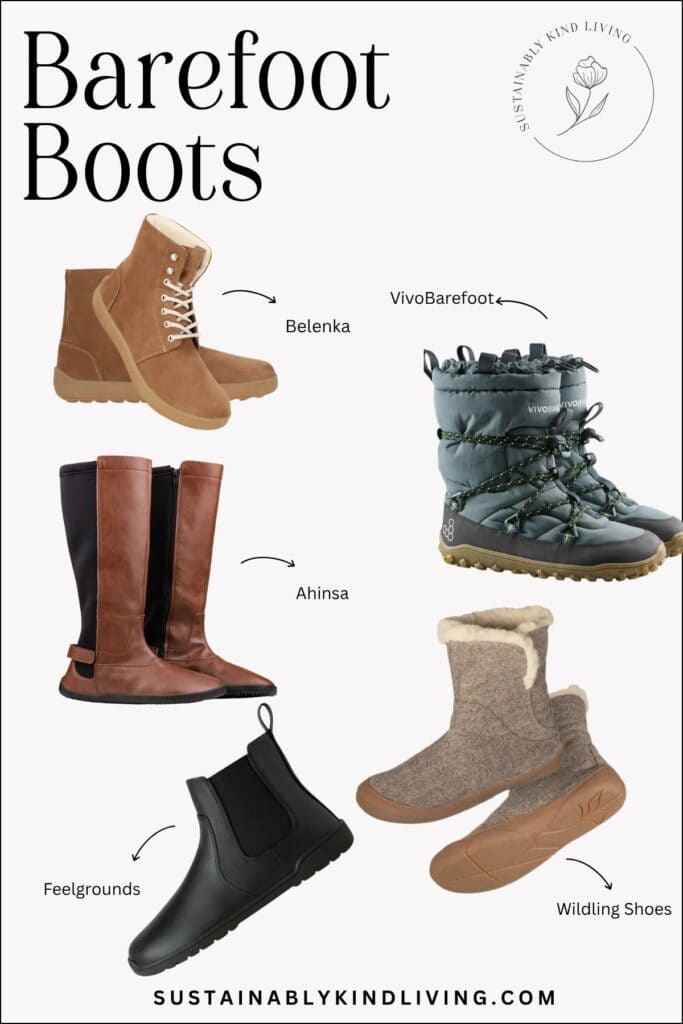
I’ve tested more than 45 barefoot boot styles, from the Chelseas I pull on for everyday errands to winter boots I’ve worn through the Alps.
This guide brings together my picks for the best barefoot boots for fall and winter, grouped by brand so you can compare everyday styles, warmer winter pairs and outdoor options before choosing yours.
I first switched to barefoot shoes ten years ago while pregnant with twins, and my husband and all three kids have joined me along the way. Finding boots we loved was a particularly exciting part of that journey.
My Top 5 Barefoot Boot Brands (quick glance)
- Feelgrounds: Best Barefoot Boots for Everyday Wear
- Wildling: My Favorite Wool Barefoot Boots
- Ahinsa Shoes: Most Stylish Barefoot Boots
- Vivobarefoot: Best Barefoot Boots for Hiking & Outdoor Adventures
- Be Lenka: Best Barefoot Boots for Wide Feet
Below, I’m sharing multiple options from each brand, my firsthand experience, and the fit, materials and weather limitations worth knowing before you choose a pair.
What Makes a Barefoot Boot Worth Recommending?
What I Look For
- Toe room with winter socks on. I check whether I can spread my toes without pressure across the forefoot. A boot that fits with thin socks may feel completely different with a warm lining and thicker socks.
- A flat, flexible sole. Zero drop means no height difference between the heel and forefoot. I also check how easily the boot bends at the ball of the foot. A flat sole can still be stiff.
- Warmth from the whole boot. I consider the lining, insole and insulation underfoot. A fluffy collar tells me very little about how warm the rest of the boot will feel.
- A secure heel and midfoot. My toes need space, but my foot shouldn’t slide forward with every step. Laces offer more adjustment than a pull-on Chelsea.
What I Watch Out For
- “Wide” boots with pointed toes. Width across the ball of the foot doesn’t tell you whether the toe box follows your foot’s shape.
- Waterproof claims based on the upper alone. Water can still enter through seams, zippers and tongue openings. I distinguish manufacturer specifications from what stayed dry during my own wear.
- Deep tread presented as guaranteed ice grip. Lug depth is only part of traction. I won’t call a boot ice-safe based on its appearance.
- Sizing up to solve every fit problem. Extra length won’t necessarily fix insufficient width or a tight instep, and it can introduce heel slip.
These are the boots I’d point a friend toward, whether she needs an easy everyday pair, something dressier or warmer boots for getting outdoors. Here’s what I love about each brand and which styles I’d choose for different days.
My Favorite Barefoot Boot Brands for Fall & Winter
1. Feelgrounds | My Favorite Barefoot Boots for Everyday Wear
Best for: Everyday barefoot boots that are easy to style, with options for mild fall days and colder winter weather.
Use discount code SKL15 to save 15%!
I own three pairs of Feelgrounds boots, and they get a lot of wear.
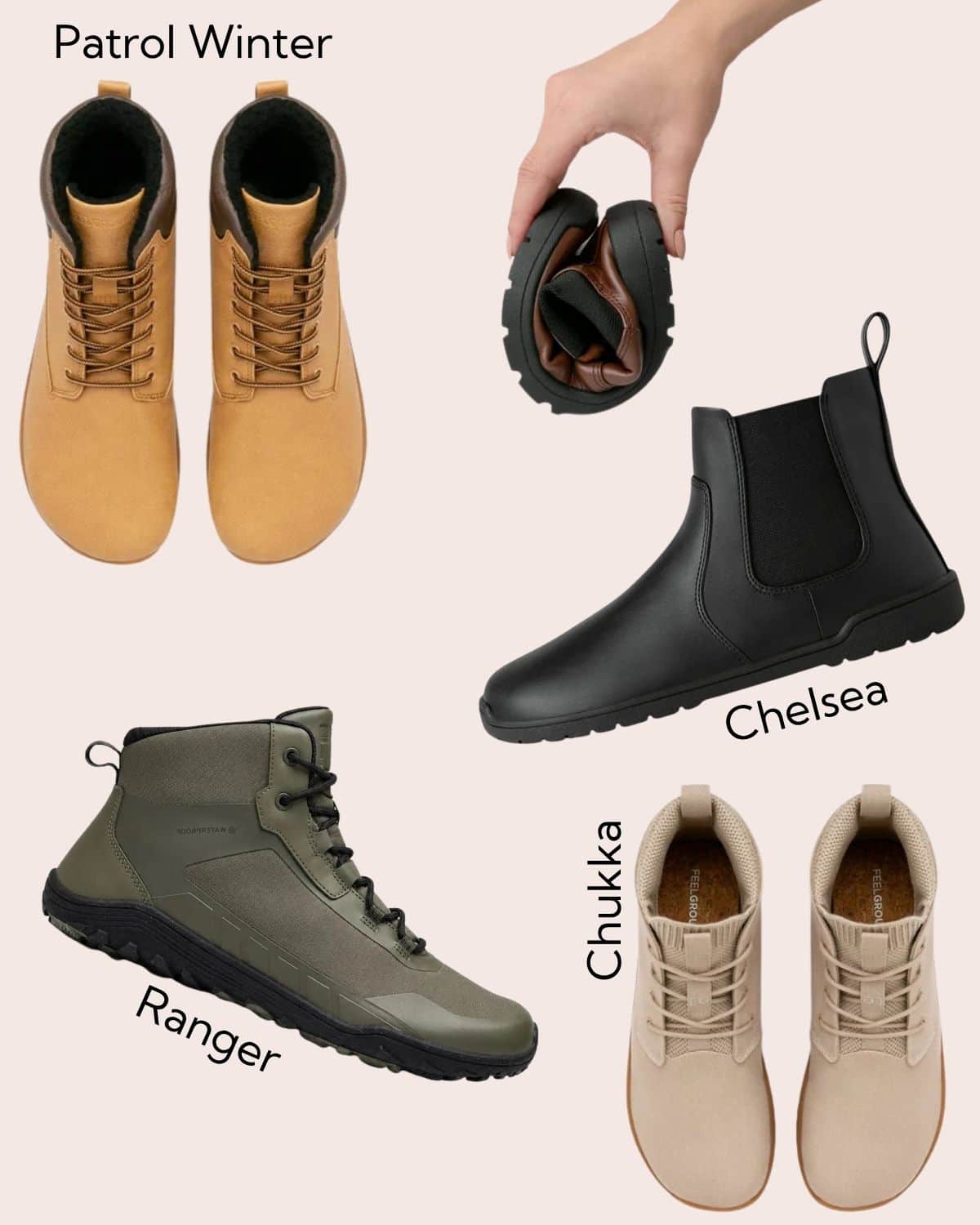
The black Chelsea boots are my most-used pair: easy to slip on when I’m getting three kids out the door, and simple to wear with the clothes I already own. They give my toes room without making my feet look oversized, which I appreciate just as much as the comfort.
My Patrol Lite boots in Gum Brown come out for fall, while Patrol Winter takes over when the temperature drops. The Winter pair has kept my feet warm and dry, and all three have handled my everyday wear well.
One distinction worth knowing: Chelsea is water-resistant; Patrol Winter has a waterproof membrane. My Chelseas have kept my feet dry during my use, but I wouldn’t choose them over Patrol Winter for prolonged wet weather.
Price & Size Range
From $89+ | US Women’s 5–11.5 / Men’s 7–15 | EU 35–49.
Materials
Vegan leather, plant-based textiles, synthetic linings, cork, felt and rubber. Varies by model.
Shipping Locations
United States, Canada, United Kingdom, Europe and Australia.
why it made my shortlist
- My Chelsea boots are among my most-worn everyday pairs.
- Toe room without the oversized look I dislike in some barefoot boots.
- Vegan options with distinctly different linings and levels of weather protection.
- Feelgrounds explicitly states that its products do not contain PFAS or PFC.
which model to choose?
- Chelsea: My pick for quick errands and everyday outfits. Slip-on convenience with a microfiber lining and water-repellent upper.
- Patrol Winter: My cold-weather choice. Recycled fleece lining, a felt insole, sealed seams and a waterproof membrane.
- Chukka: A lighter, cotton-lined option for milder fall days. Slightly water-repellent, rather than waterproof.
- Ranger High: For wet-weather walks and muddy trails, with a waterproof membrane and a more rugged outsole than the everyday styles.
👉Pro tip: Want to coordinate fall and winter boots with your kids? Several brands here also offer children’s shoes, so check their kids’ collections for similar styles. For more options, explore my favorite barefoot shoe brands for kids.
2. Wildling Shoes | My Favorite Wool Barefoot Boots
Best for: Wool-rich fall and winter boots, especially if you love an easy slip-on.
Use discount code SKL10 for $10 off!
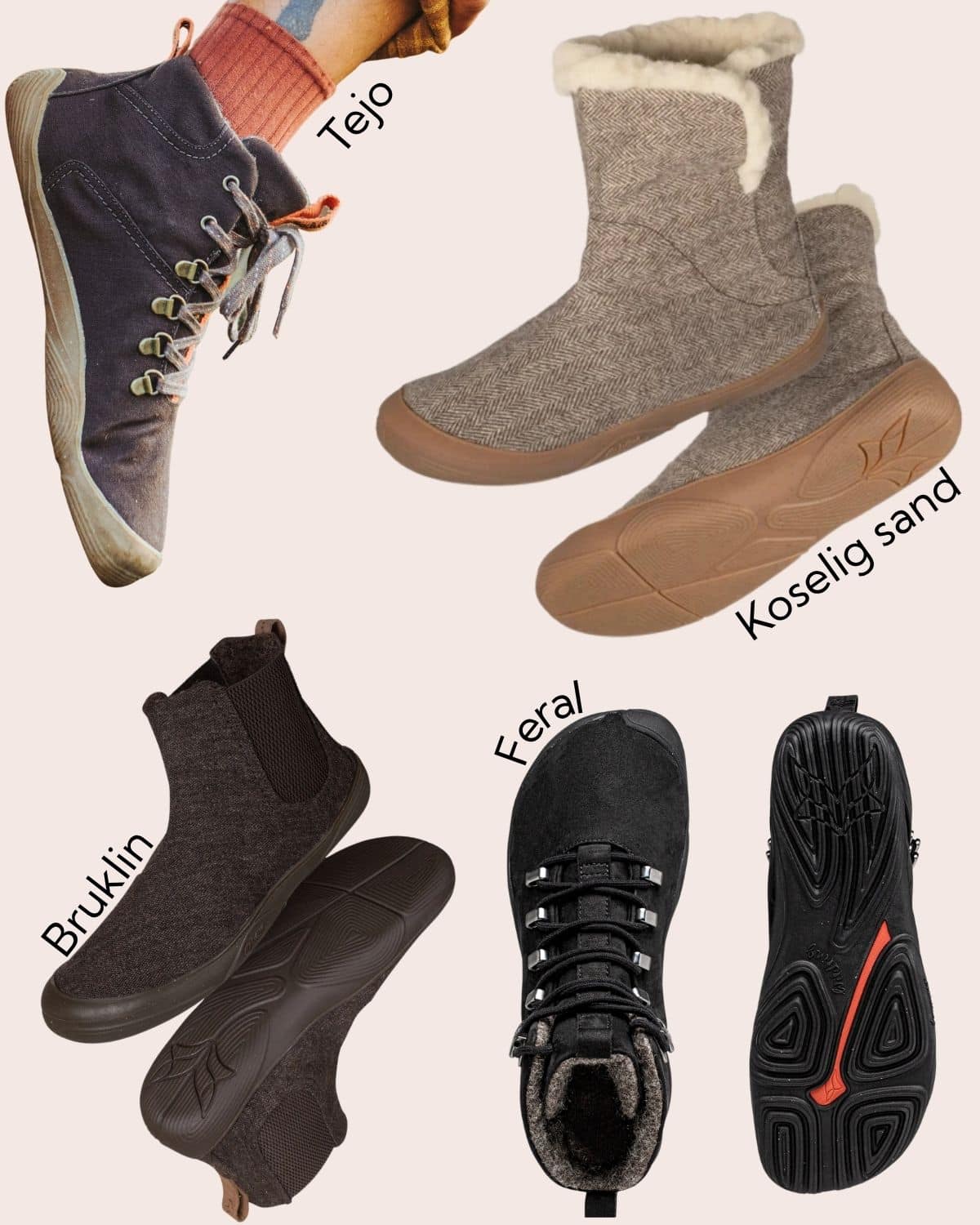
I own all four Wildling styles pictured here, and I love them. But Bruklin and Koselig are the two I reach for most, for a very practical reason: they slip straight on.
As much as I enjoy my lace-up boots, those two win when I’m heading out the door.
Bruklin has the simple Chelsea shape I love for everyday outfits, with a wool-and-hemp upper and wool lining.
Koselig takes the cozy factor further with a wool upper and plush wool lining. Both include a water-repellent membrane, though I wouldn’t describe them as waterproof snow boots.
Tejo and Feral give you lace-up alternatives, with Feral offering a deeper tread and waterproof construction for wetter outdoor use.
There’s a meaningful difference between these models, so I’d choose according to how you’ll wear them rather than appearance alone.
Price & Size Range
From $159+ | US Women’s 5–14 / Men’s 4–13.5 | EU 36–48; varies by model.
Materials
Wool, hemp, leather, synthetic membranes and rubber blends. Varies by model.
Shipping Locations
United States, Canada, Europe and most international destinations.
why it made my shortlist
- I own and love all four featured styles.
- Bruklin and Koselig offer the slip-on convenience I reach for most.
- Wool uppers and linings feature prominently in the collection.
- Options range from everyday Chelseas to waterproof outdoor boots.
which model to choose?
- Bruklin: For an everyday Chelsea with wool lining and no laces to fuss with. One of my two most-worn Wildling styles.
- Koselig: For a cozy pull-on with plush wool lining and a shaft you can wear upright or folded down. My other frequent choice.
- Tejo: For a lace-up alternative when you want more control over the fit around your foot and ankle.
- Feral: For wet-weather outings and muddy trails, with waterproof construction, wool lining and a deeper outdoor tread.
3. Ahinsa Shoes | Most Stylish Barefoot Boots
Best for: Versatile barefoot boots that work with jeans, trousers, skirts and dresses, with vegan options for fall and winter.
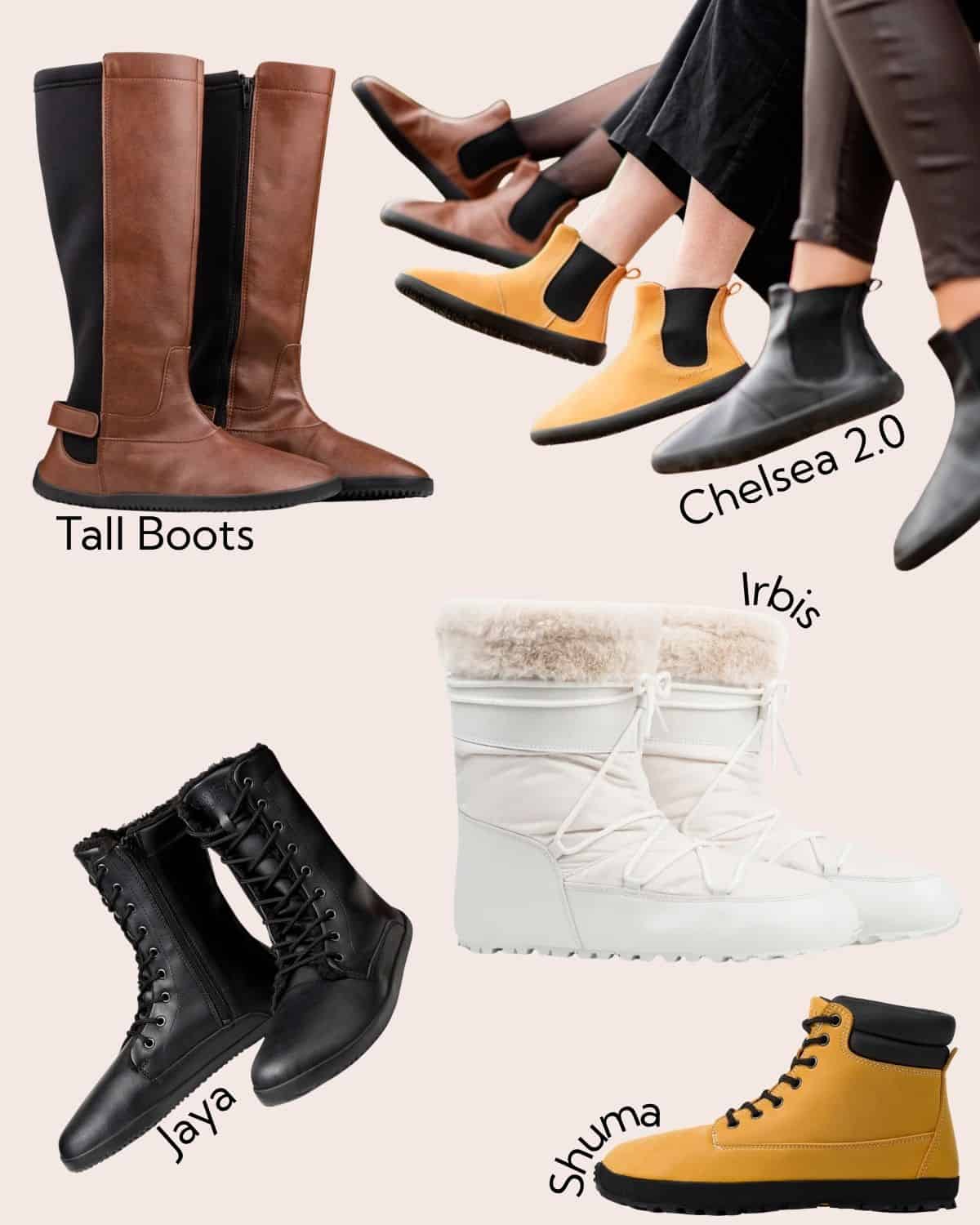
Ahinsa makes some of the best-looking barefoot boots I’ve worn. I can pair them with jeans, a skirt or a dress and feel like the boots belong with the outfit.
That might sound like a small thing, but finding styles I love has made sticking with barefoot shoes so much easier.
They’re also really well made. After trying so many barefoot brands, Ahinsa is one I recommend when someone wants something a little dressier, especially tall boots or a sleek ankle style.
The whole collection is vegan, including the winter linings. Just pay attention to which version you choose: the everyday Chelsea, winter-lined Jaya and Irbis snow boot serve different purposes.
I’d start with the style you’ll wear most, then choose the lining and weather protection you need.
Price & size
From €179+ | Approximately US Women’s 6–13 | EU 36–44
Materials
Vegan microfiber leather, synthetic textiles, faux fur and synthetic soles. Varies by model.
shipping locations
Worldwide, including the United States, Canada, United Kingdom and Europe.
why it made my shortlist
- Versatile designs that work across casual and dressier outfits.
- Well-made construction and finishes that have impressed me during wear.
- Vegan uppers and linings, including animal-free winter options.
- A choice of tall, Chelsea, lace-up and insulated styles.
which model to choose?
- Tall Boots: If you love a knee-high boot. Wear them over jeans or leggings, or with skirts and dresses. Check the calf measurements before ordering.
- Chelsea 2.0: For an easy everyday pair you can slip on and wear with almost anything.
- Jaya: If you like the look of lace-up boots but don’t want to tie them every time. Adjust the laces to fit, then use the side zipper. Choose the winter-lined version for colder days.
- Irbis: When warmth is your priority. The synthetic-fur lining and Vibram winter outsole make these the cold-weather option to consider.
- Shuma: For outdoor walks when you prefer a trekking-style boot. Both Nature and Winter have waterproof membranes; choose Winter for its warmer lining.
4. Vivobarefoot | Best Barefoot Boots for Hiking & Outdoor Adventures
Best for: Hiking, woodland walks and exploring outdoors in fall and winter.
Vivobarefoot is a brand I own, wear and recommend when someone asks me about barefoot boots for hiking and outdoor adventures.
Its outdoor range is the main reason it made this shortlist, although there are everyday styles worth looking at, too.
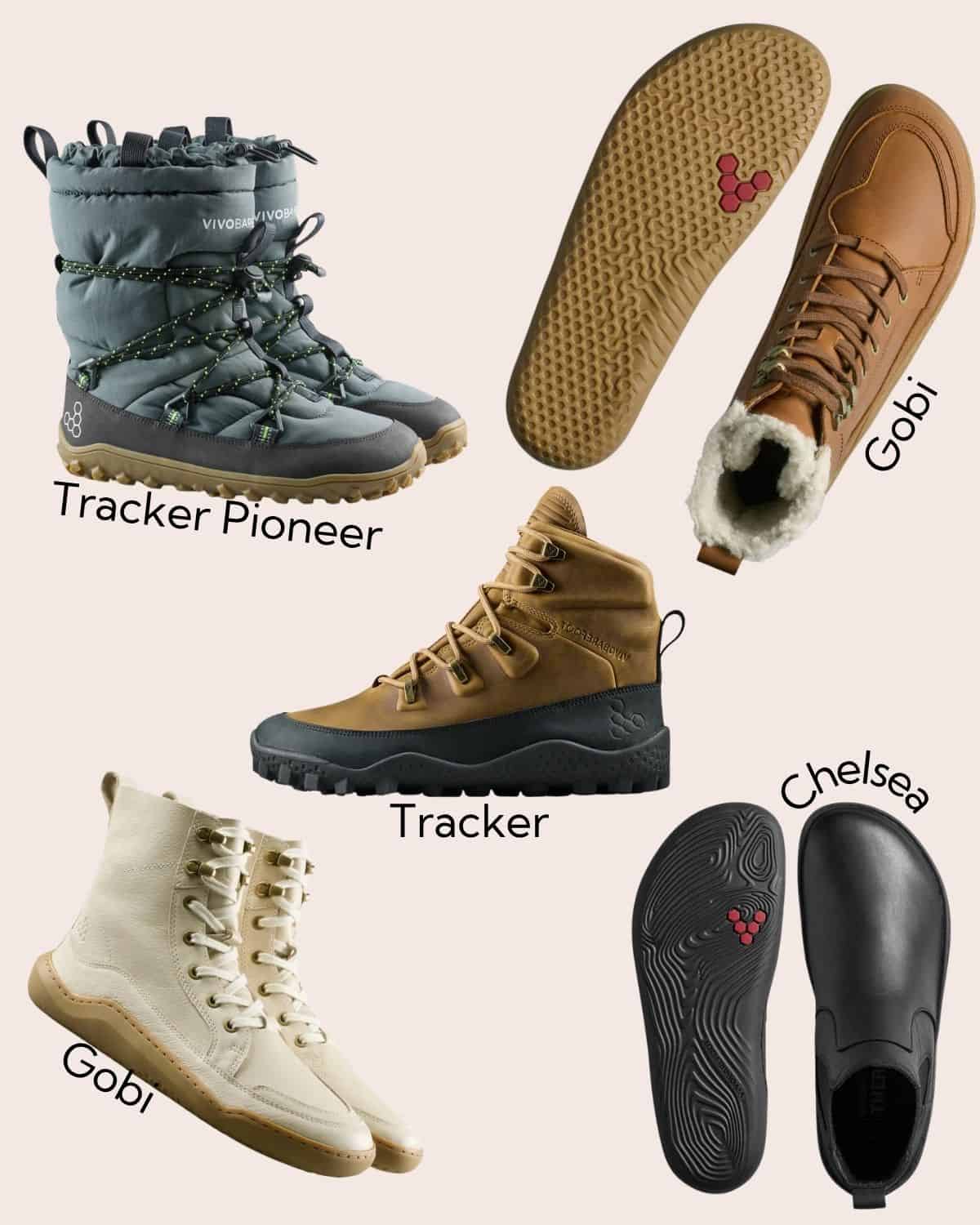
For cold, muddy walks, I’d start with the Tracker Winter. It combines insulation and waterproof construction with deep tread for soft ground.
The taller Tracker Pioneer offers more coverage, with bungee laces that make adjustment straightforward.
If you’re shopping mainly for everyday wear, look at the Gobi, Gobi Warmlined or Sensus Chelsea instead. You don’t need a hiking boot for every outing.
The useful thing about Vivo’s range is being able to choose around where you’ll actually walk, from town pavements to winter trails.
Price & size
From $200+ | US Women’s 4.5–11 / Men’s 7–15 | EU 35–49
Materials
Leather, recycled textiles, faux shearling, cork and rubber; varies by model.
shipping locations
Worldwide
why it made my shortlist
- Rugged hiking options that fill a gap my everyday barefoot boots don’t cover.
- Deeper tread for muddy trails and protective reinforcement on the Tracker Winter.
- Waterproof and insulated options for getting outdoors in cold, wet weather.
which model to choose?
- Tracker Winter: For cold, wet hikes and muddy trails when you need insulation, waterproofing and deeper tread.
- Tracker Pioneer: For cold-weather outings when you want extra coverage up the leg and quick bungee adjustment.
- Gobi: For everyday fall wear when you prefer an unlined leather boot.
- Gobi Warmlined: For chilly everyday outings when warmth matters more than trail tread.
- Sensus Chelsea: For an easy slip-on for work, errands and everyday outfits.
✔️ Want more vegan styles to choose from? Alongside the animal-free options here, my vegan boots guide includes more fall and winter picks across both barefoot and conventional designs.
5. Be Lenka | Best Barefoot Boots for Wide Feet
Best for: A generous toe box, with everyday fall styles and insulated winter options.
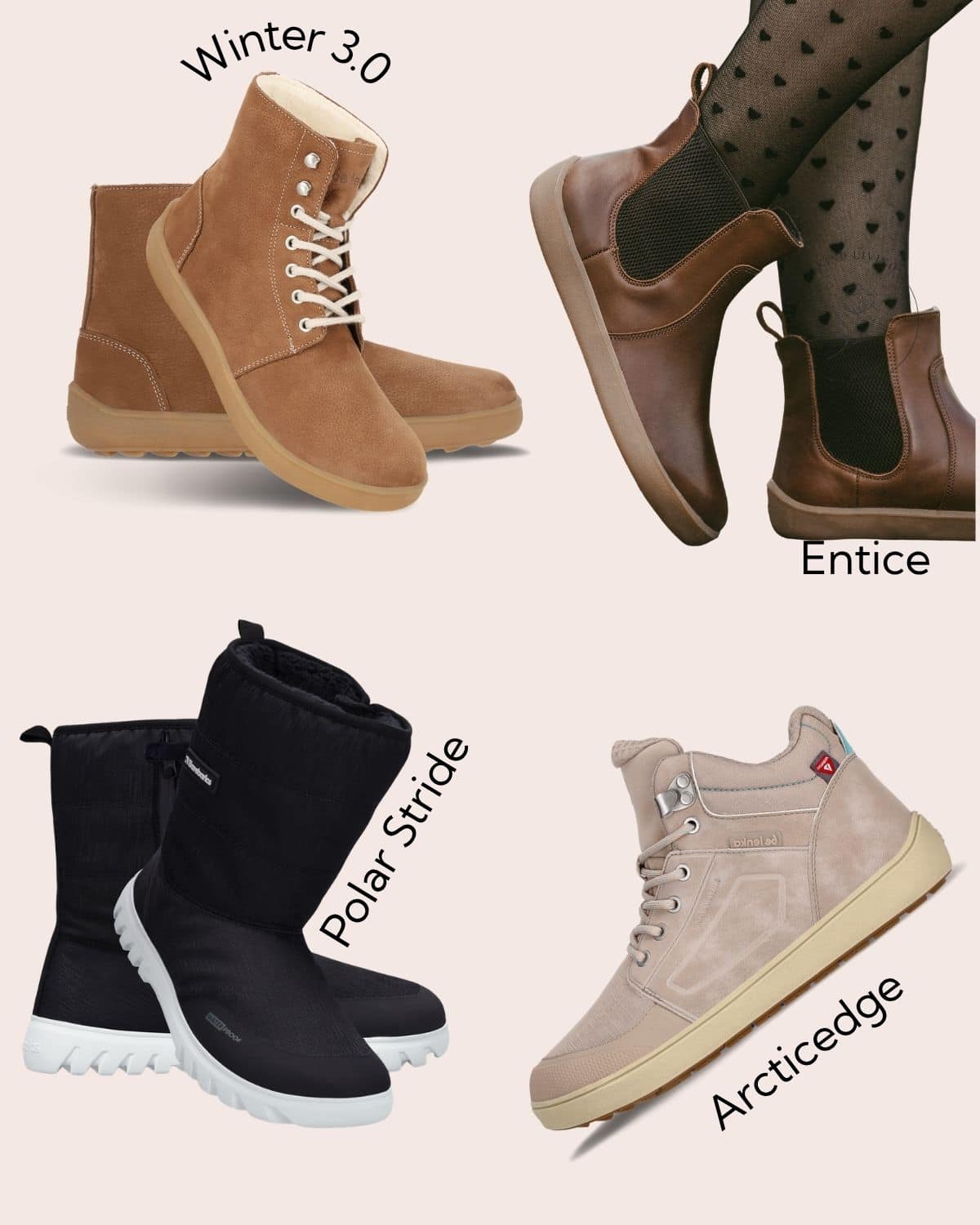
I love Be Lenka for the fit and its use of natural materials, especially the leather and merino wool in the Winter 3.0.
These are boots I’ve worn everywhere from everyday errands to trips through the Alps.
The Entice are my daily fall boots, while the Winter 3.0s have been my choice around the Italian Alps.
I’ve also worn the taller Barebarics PolarStride through the Swiss Alps, and the ArcticEdge have been great for my treks.
Each pair serves a different purpose, which is why I wanted to include several options here. If natural materials are your priority, start with the Winter 3.0.
The PolarStride and ArcticEdge use synthetic uppers and insulation, with waterproof construction for wetter outings.
Price & size
From $159.99+ | US Women’s 4.5–13 / Men’s 3.5–12 | EU 36–47
Materials
Leather, merino wool, synthetic textiles and insulation, PU/TPU, rubber and EVA; varies by model.
shipping locations
Worldwide
why it made my shortlist
- Generous toe boxes that make the brand worth considering for wider feet.
- A choice of merino-lined leather and insulated vegan winter boots.
- Everyday Chelsea boots and warmer winter styles within a brand I own and recommend.
which model to choose?
- Winter 3.0: For everyday winter wear if you prefer leather uppers and a merino wool lining. Treat the leather regularly to maintain water resistance.
- Entice: For an easy slip-on for fall errands, work and everyday outfits, with a fleece lining for cooler days.
- PolarStride by Barebarics: For snowy outings when you want a taller, waterproof boot with synthetic insulation and a side zipper.
- ArcticEdge: For wet winter walks when you want waterproof construction and PrimaLoft insulation in a shorter, lace-up boot.
How to Choose Barefoot Boots for Fall and Winter
Think about the days you’ll wear these boots most. Are you walking to work in the rain, heading out on muddy trails or spending an afternoon in the snow? Start there. The right pair should suit your weather and feel comfortable with the socks you actually wear.
After testing more than 45 barefoot boot styles, these are the details I’d pay attention to before buying.
Choose Warmth for Your Everyday Winter
You may not need a heavily insulated boot if your winter mostly involves short walks between heated buildings. If you spend hours outside, the lining and insulation underfoot deserve much closer attention.
Check the whole interior, including the toe area and insole. A fluffy collar can look wonderfully warm without telling you much about the rest of the boot.
Waterproofing and warmth are separate features. For cold rain and slush, you may need both. For dry, chilly fall days, a lightly lined boot could be a better fit for your routine.
Check More Than the Toe Box
A wide toe box is a good starting point, but it doesn’t tell you whether a boot will fit your whole foot. You also need enough height above your toes, comfortable space over your instep and a heel that stays secure as you walk.
Measure both feet and use the size chart for the exact model. Where available, compare the internal width as well as the length.
Try your boots indoors with your intended socks before taking them outside. Your toes should be able to move without hitting the front, and you shouldn’t feel pressure across the top of your foot.
Don’t keep a cramped pair on the assumption that the lining will flatten enough to fix it. Some materials soften with wear, but that’s different from buying the right size.
Read the Full Material List
If you prefer natural materials, look for leather uppers and wool linings, then check what’s underneath them. Insoles, membranes and soles may still contain synthetics.
I love the leather and merino wool combination in my Be Lenka Winter 3.0s. I also wear synthetic boots, including ArcticEdge and PolarStride, for outdoor outings. My shortlist includes both so you can choose according to your preferences.
For vegan barefoot boots, check the upper, lining and trim. A synthetic upper alone doesn’t establish that the entire boot is animal-free.
Match the Tread to Your Walking
For errands and pavement, you may prefer a simple, flexible outsole. For muddy paths, look for deeper lugs designed to grip soft ground.
When comparing barefoot hiking boots, check the outsole description rather than judging by how rugged the boot looks. The intended terrain matters, and grip in mud doesn’t automatically mean grip on ice.
You don’t need to choose the thinnest sole to stay within barefoot footwear. Winter models can include more substantial tread and insulating insoles while retaining a zero-drop design.
Make Sure They’re Easy to Live With
I reach for my Wildling Bruklin and Koselig so often because they slip straight on. That convenience matters when you’re heading out several times a day.
Chelsea boots are handy for everyday wear, while laces give you more control over the fit. A side zipper can make taller boots easier to put on without adjusting the laces every time.
Think about those small details before ordering. You want boots you’ll be happy to pull on again tomorrow.
How to Keep Barefoot Boots Warm and Dry
If your barefoot boots feel chilly or start soaking up water, check the fit and care instructions before replacing them. A suitable insole or refreshed water-repellent treatment may help, provided the boots suit the conditions you’re wearing them in.
Add Insulation Without Crowding Your Toes
A wool felt or thermal insole can add warmth underfoot if your boots have room for it. Where the original insole is removable, try replacing it rather than stacking another layer on top.
Check the fit again with your usual socks. Your toes should still move freely, and the extra thickness shouldn’t push your foot against the upper.
The same goes for socks. Choose a thickness that fits comfortably inside the boot. If thick socks make everything feel tight, try a thinner pair rather than squeezing in more layers.
Let the Inside Dry Completely
Rain isn’t the only source of moisture. Your boots can become damp inside during an active day, even when the waterproofing is doing its job.
After wearing them, open the boots fully and remove the insoles if the care instructions allow. Let both air-dry before putting them back together.
Keep them away from radiators, fires and other direct heat sources. As REI explains in its boot care guidance, high heat can damage leather and weaken footwear adhesives.
Use a Treatment Made for Your Boots
Check the manufacturer’s instructions before applying a waterproofing product. Smooth leather, suede, wool and synthetic textiles can need different care, and some treatments change the color or finish.
Clean your boots first. Dirt can interfere with water repellency, and cleaning may improve performance without another treatment.
For compatible materials, PFAS-free options include:
- Nikwax Fabric & Leather Proof for combination fabric-and-leather footwear.
- Nikwax Waterproofing Wax for Leather, available in its footwear care range, for smooth leather footwear.
Neither is a universal treatment for every boot in this guide. Check compatibility with your exact upper and follow the application directions.
Check PFAS Claims Separately
“Waterproof” describes performance. It doesn’t tell you which chemicals are used in a membrane or surface treatment.
Look for an explicit PFAS-free statement covering the boot or treatment you’re buying.
Feelgrounds, for example, states in its materials and environmental policy that it avoids PFAS and PFCs. Nikwax also states that its waterproofing products are made without PFAS.
An aftermarket treatment can help maintain water repellency, but it won’t repair a damaged membrane or make an open-seamed boot fully waterproof.
What to Know Before Switching to Barefoot Boots
If these will be your first barefoot boots, start with a short walk close to home. A full day of sightseeing or a winter hike can wait until you know how your feet feel in them.
I’ve worn barefoot shoes for roughly ten years, and my husband and all three children wear them, too. They’re a big part of our everyday lives. But my experience after years of wear shouldn’t be the starting point for someone trying their first pair.
Build Up Your Wear Time Gradually
Begin with short, easy outings and alternate with your usual footwear. Increase your time as you feel comfortable, rather than following a deadline.
That approach is consistent with podiatrist Thomas Atwood’s guidance for Banner Health, which recommends short distances initially and gradually adding time as your feet adapt.
There’s no need to change your footwear, walking distance and terrain all at once. Get comfortable on familiar routes before taking your new boots on longer adventures.
Don’t Push Through Pain
You don’t need sore feet to prove the switch is working. If you develop discomfort, reduce your wear time and check the fit. Persistent pain, swelling or difficulty walking deserves professional attention.
If you’re managing a foot condition, recovering from an injury or using prescribed orthotics, discuss the change with your podiatrist or physiotherapist. The right approach should account for your feet and any treatment you already follow.
Keep Specialist Boots for Specialist Activities
Barefoot hiking boots can be useful for walking trails, but that doesn’t make them suitable for every mountain route or winter activity.
Technical mountaineering requires footwear compatible with the equipment and conditions. Work involving impact, puncture or cutting hazards requires the appropriate certified protection. Motorcycle riding calls for protective riding boots.
And if you’ll be standing still in snow for hours, choose footwear with enough insulation for that job. You can enjoy barefoot boots for everyday life and still choose specialist footwear when you need it.
Barefoot Boots FAQs
The manufacturers identify Feelgrounds Patrol Winter and Ranger High; Wildling Feral; Ahinsa Shuma Nature, Shuma Winter and Irbis Snow; Vivobarefoot Tracker Winter and Tracker Pioneer Waterproof; Be Lenka ArcticEdge; and Barebarics PolarStride as waterproof.
Insulated models can be, but warmth depends on the boot, conditions and how long you’re outside. Compare Patrol Winter, Tracker Winter, Winter 3.0, ArcticEdge and PolarStride for colder weather.
Pay particular attention to insulation beneath your foot. A boot that feels warm during a brisk walk may not be sufficient for standing outside for hours.
For wet snow and slush, start with Patrol Winter, Tracker Winter, ArcticEdge or PolarStride. For deeper snow, the taller PolarStride or Tracker Pioneer Waterproof provides more coverage.
Choose around snow depth, moisture and activity. Waterproofing helps with slush, while shaft height helps keep snow from entering above the boot.
A barefoot design doesn’t establish ice traction. Deep lugs designed for mud or soft snow aren’t proof of grip on frozen pavement.
Check for ice-specific outsole testing. If you need additional traction, confirm that an appropriate traction device fits your boots securely and suits your route.
Be Lenka is my wide-foot pick, with generous toe boxes across several fall and winter styles. That doesn’t mean every model fits every wide foot.
Compare internal width and length, and account for lining thickness. If your feet are wide through the midfoot or high over the instep, toe-box width alone won’t tell you enough.
Only when the model’s measurements and fit guidance support it. Be Lenka recommends a larger size for ArcticEdge and PolarStride because insulation reduces interior space.
Try boots with your intended socks. Your toes need room without your heel slipping excessively or your foot sliding forward.
Vivobarefoot is my pick for hiking and outdoor adventures. For cold, muddy hikes, compare Tracker Winter’s insulation, waterproof construction and soft-ground tread with the conditions you expect.
ArcticEdge is another featured option I’ve worn on treks. For technical mountain routes, choose footwear compatible with the terrain and required equipment.
Ahinsa is where I’d start, particularly its tall boots, Chelsea 2.0 and Jaya lace-ups. These offer different silhouettes for trousers, jeans, skirts and dresses.
For a simple ankle boot, Be Lenka Entice and Vivobarefoot Sensus Chelsea are also worth considering. Check shaft height and shape against the outfits you wear most.
Yes. Feelgrounds Patrol Winter, Be Lenka ArcticEdge and Barebarics PolarStride offer animal-free, waterproof winter options. Ahinsa also has vegan winter styles, including Irbis Snow and Shuma Winter.
For a broader selection that includes conventional footwear, explore my vegan boots guide. Vegan materials alone don’t establish warmth, waterproofing or PFAS status.
No. Zero drop means the heel and forefoot sit at the same height. A zero-drop boot can still have a narrow toe box, stiff sole or substantial cushioning.
Barefoot footwear also emphasizes a foot-shaped fit and flexibility. Check those features separately rather than treating “zero drop” as a complete description.
How I Researched, Tested & Updated This Guide
Every recommendation comes back to three questions. Does it fit well? What is it actually built for? Would I recommend it for that use?
Fit
I wear the boots myself, but my feet are mine, not yours. So “they felt great on me” isn’t where I stop.
I consider toe room, flexibility, closures and comfort. Then I check each model’s sizing information so you can judge whether it will work for your feet.
Fit doesn’t follow brand-wide rules. A roomy toe box doesn’t guarantee space for a high instep, and insulation takes up room inside a boot. When those details matter, I flag them model by model.
Weather and Materials
What I experienced and what the brand claims are two different things. I keep them separate.
Wearing a boot in the rain doesn’t establish that it’s waterproof. Wearing it in the cold doesn’t set a temperature rating. Neither tells you whether it contains PFAS.
For this update, I checked current upper and lining materials, insulation, outsoles and waterproofing descriptions. I distinguish water resistance from waterproof construction and explain which styles use leather, wool or synthetic materials.
Current Models
I rechecked prices, size ranges and availability. I also added more options from each brand, with notes on who each one suits, whether you need an everyday Chelsea, a warmer winter boot or a pair for trails.
Brands change materials and construction between versions. My wear notes apply to the pairs I’ve tested. Current specifications come from updated product information.
Foot Health Guidance
My experience can help you compare boots. It can’t tell you which footwear is right for a medical condition.
For those questions, I’ve included guidance from podiatrist Thomas Atwood, DPM, at Banner Health. If you’re managing pain or an existing condition, discuss the switch with your own provider.
Still Choosing Your Pair?
- Everyday barefoot boots for your fall and winter wardrobe? Feelgrounds
- Lightweight boots with wool and easy slip-on options? Wildling
- Stylish Chelseas, lace-ups and tall barefoot boots? Ahinsa
- Barefoot boots for hiking and winter adventures? Vivobarefoot
- A roomy fit, natural materials and waterproof winter options? Be Lenka
Danielle’s Final Thoughts On Barefoot Boots
Finding barefoot boots you love makes getting dressed for colder weather so much easier. You can have room for your toes, a style you enjoy wearing and protection that suits your winter.
These are the five brands I recommend to my own family and friends. Start with the pair that fits your everyday life, check the measurements with your usual socks and give yourself time to try them indoors. You don’t need a collection like mine. One well-chosen pair is a great place to begin.
For more firsthand reviews, explore my Feelgrounds review and Wildling review. Shopping for the family? Here are my picks for kids’ barefoot shoes.
More Room for Your Toes, Whatever’s Next
Found your boots? Here’s what to explore next, whether you’re shopping for the kids, planning a sunny getaway or looking for an everyday pair to wear when winter is over.
- Find Your Everyday Barefoot Shoes
Looking beyond boots? Explore flexible styles for work, weekends and all the walking in between. - Let Little Feet Explore
Find kids’ barefoot shoes for playground adventures, school days and changing seasons. - Give Your Feet a Summer Wardrobe
Discover barefoot sandals for sunny errands, vacation strolls and days when boots stay by the door. - Find Your Next Running Pair
Compare barefoot running shoes and sandals, with options to consider for your preferred fit and running routine.
📌 Save This Guide For Later
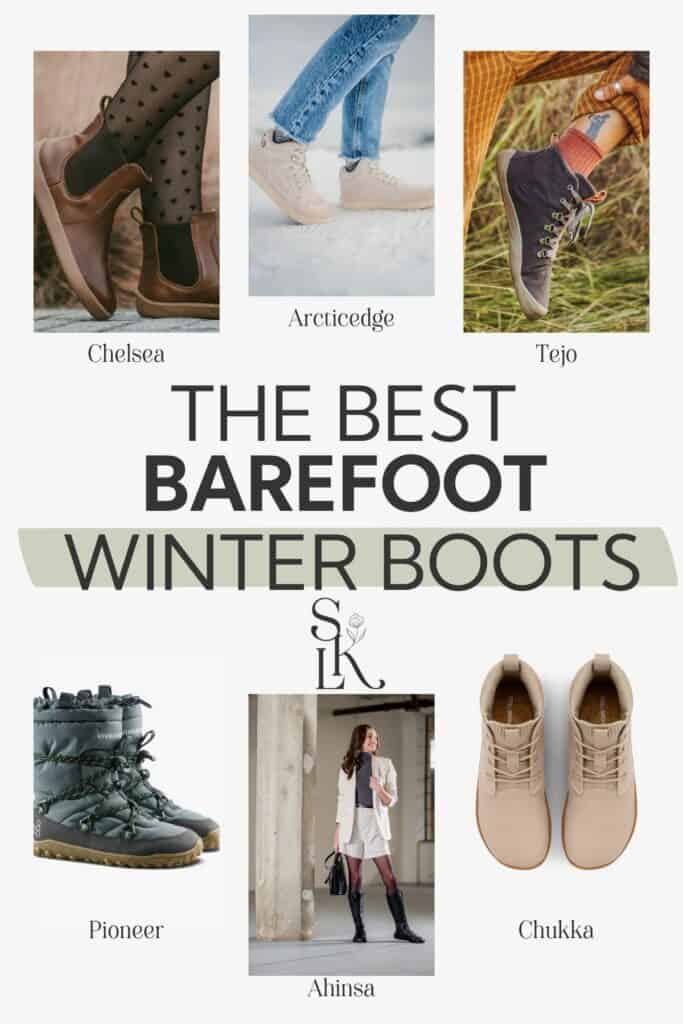
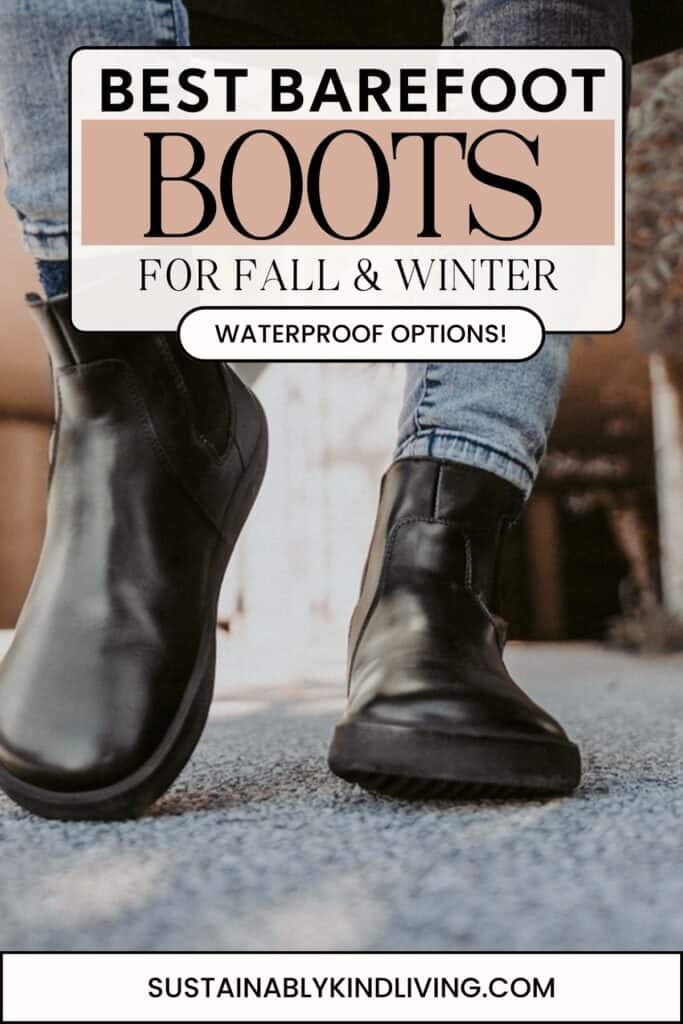
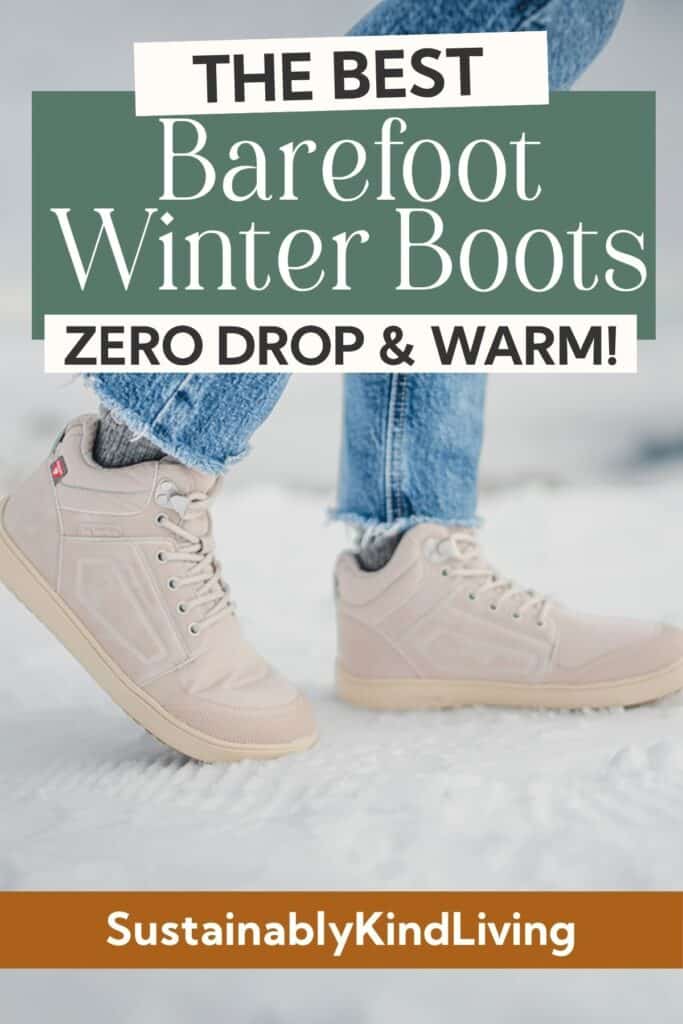
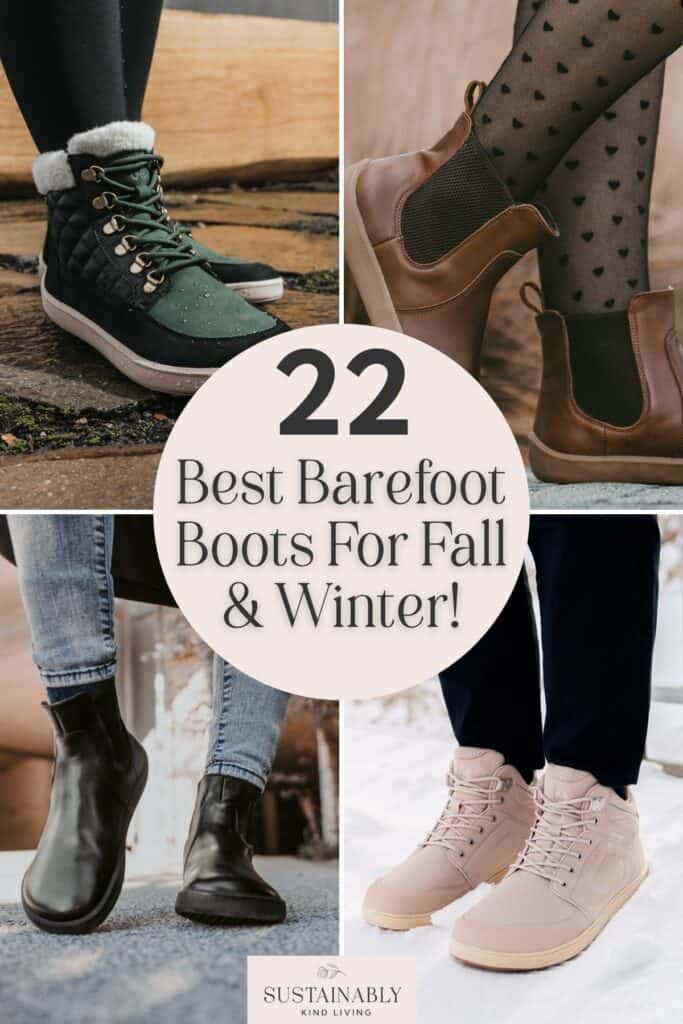
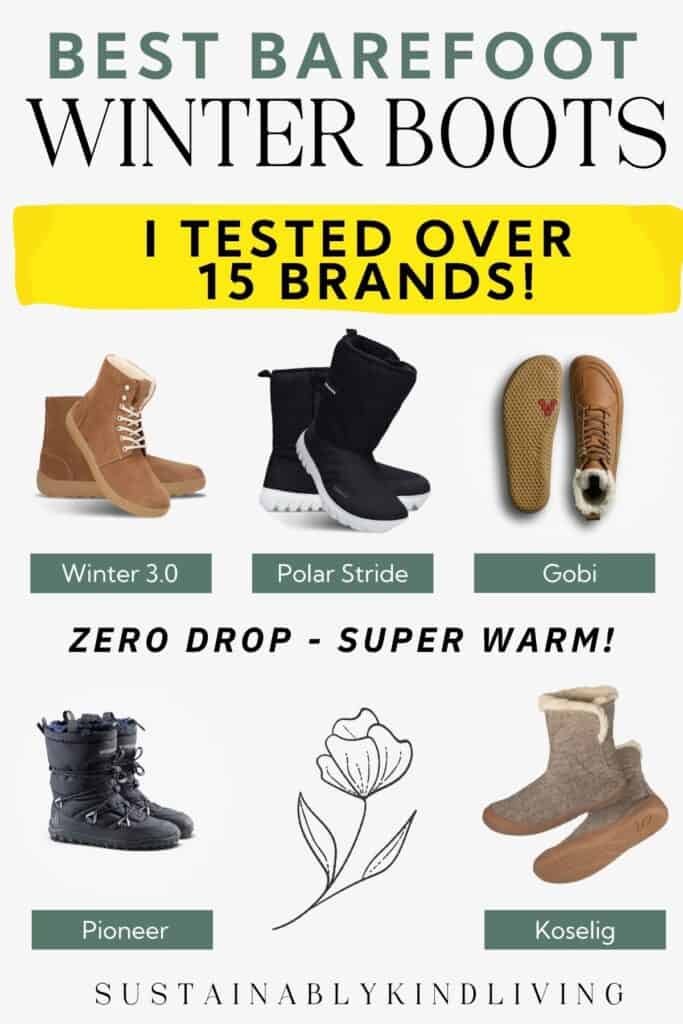
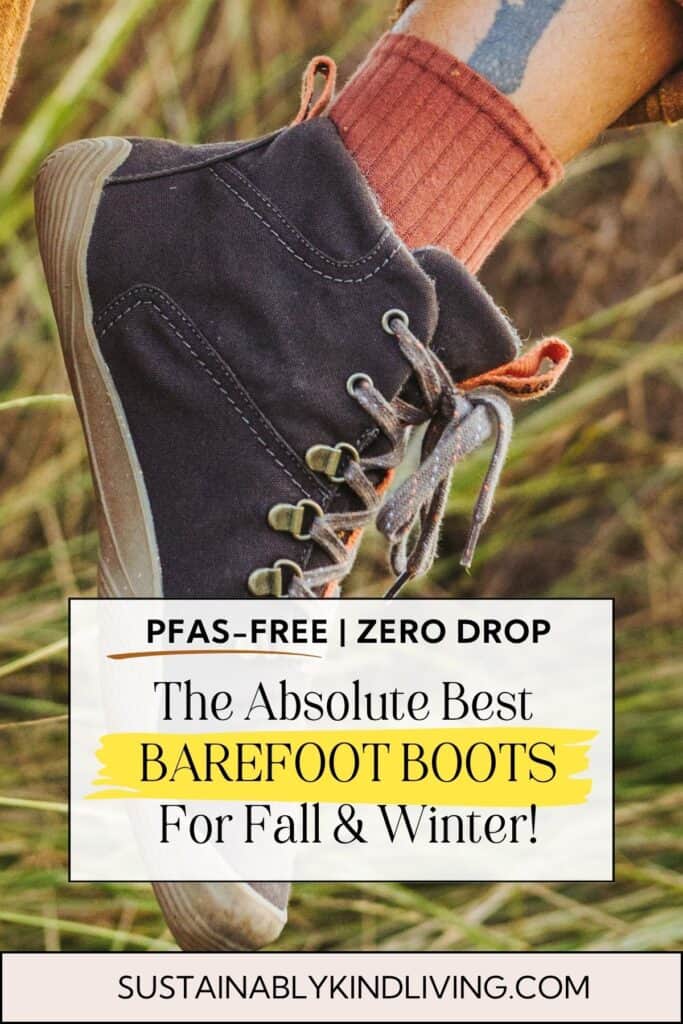
Pin it now so you can come back to my favorite barefoot boots for fall and winter, plus the fit tips and model comparisons to help you choose.
Sources & Further Reading
For a closer look at footwear fit, minimalist shoe research and cold-weather protection, these independent sources are worth reading.
- American Academy of Orthopaedic Surgeons: Finding the Right Shoe Fit
Practical guidance on toe room, width and choosing shoes that accommodate your feet. - Banner Health: What to Know About Minimalist Footwear
Podiatrist Thomas Atwood, DPM, discusses potential benefits, limitations and how to approach the transition gradually. - Scientific Reports: Daily Activity in Minimal Footwear Increases Foot Strength
A 2021 study examining foot strength after six months of everyday activity in minimal footwear. It addresses strength, not winter boot warmth or traction. - Canadian Centre for Occupational Health and Safety: Foot Comfort and Safety
Guidance on footwear fit, socks and cold-weather protection, including why insulation beneath the foot matters. - Canadian Centre for Occupational Health and Safety: Cold Environments
Explains how clothing, footwear, moisture and activity affect protection in cold conditions. - ATSDR: How PFAS Impacts Your Health
A public-health overview of associations between exposure to certain PFAS and health effects. This provides background on PFAS, not evidence about the chemical content of individual boots.

Steal My Non-Toxic Cleaning Checklist!
Believe us, it’s the BEST…. and it’s free. Does it really get any better than that?! Sign up for our newsletter and get this free checklist to clean your home without any harmful chemicals!