 Shop My Favorite Non-Toxic Gifts Of 2026!
SKL is reader supported. When you buy through links on our site, we may earn affiliate commission. Learn more here.
The best non-toxic face serums do more than carry a “clean beauty” label. They use thoughtfully selected ingredients, stable active compounds, and formulations that actually deliver results.
For years, I’ve been reviewing non-toxic skincare at Sustainably Kind Living, and face serums are one of the categories I return to most.
New brands launch, formulas change, and longtime favorites get retested, so I’m always comparing ingredient lists and my personal review notes to decide which non-toxic face serums still earn a recommendation.
When it’s time to update this guide, every product has to earn its place all over again. For this year’s update (2026), I tested more than 10 non-toxic face serums.
Some were completely new to me, while others were products I’ve used for years. By the end of my testing, only five earned a recommendation.
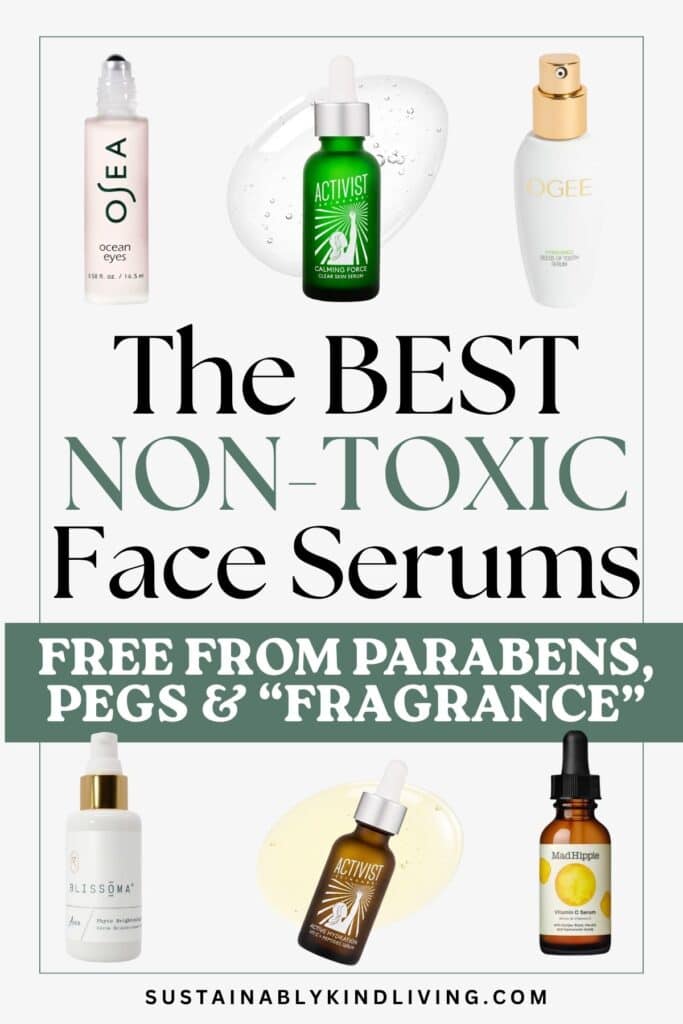
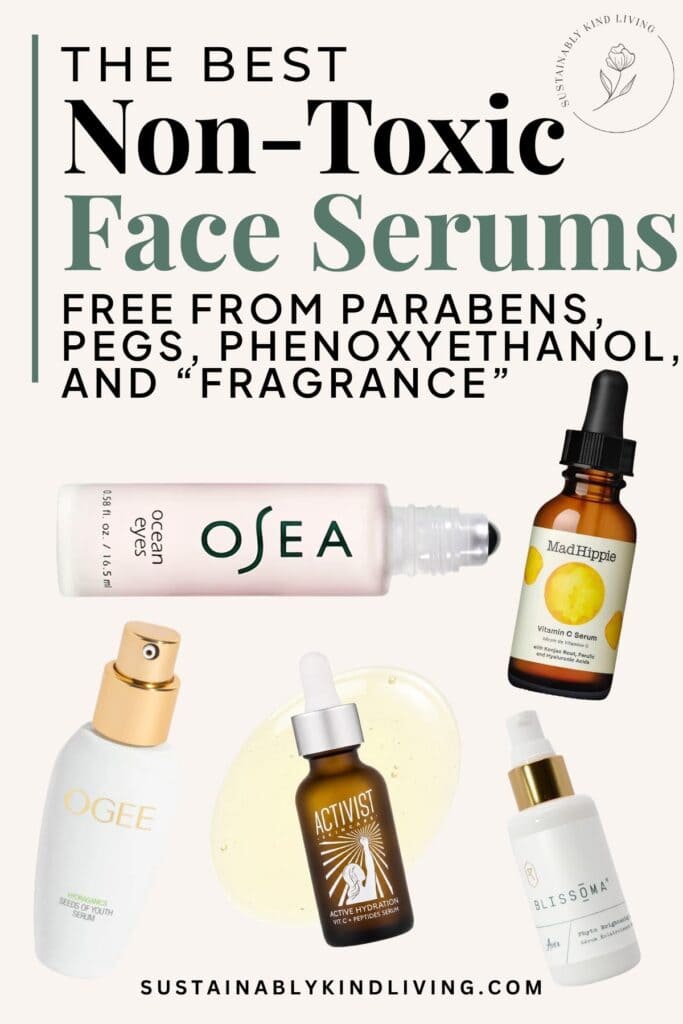
SKL Top 5 Non-Toxic Face Serums (Quick Picks)
- Best Firming Vitamin C Serum: Activist Skincare
- Best Non-Toxic Serum For Mature Skin & Sun Spots: Blissoma
- Best Luxury Non-Toxic Face Serum (Anti-Aging): OGEE
- Best Affordable Non-Toxic Face Serum: Mad Hippie
- Best Non-Toxic Eye Serum For Depuffing: OSEA Malibu
Every serum on this list excelled in a different way. Before we dive into the full reviews, here’s a side-by-side comparison of my top picks.
It’s a quick snapshot of each formula’s texture, hero ingredients, price point, and who I think it’s best suited for.
Best Non-Toxic Face Serums: At A Glance Comparison
(Mobile Users) Scroll to see full comparison →
| Brand | Best For | Texture | Hero Ingredient | Price |
|---|---|---|---|---|
| Activist Skincare | Dull & Aging Skin | Light, silky, fast-absorbing | Magnesium Ascorbyl Phosphate + Peptides (Brightens Skin And Supports Firmness) | $$ |
| Blissoma | Mature skin, sun spots & uneven skin tone | Lightweight botanical serum | Sodium Ascorbyl Phosphate (gentle vitamin C that helps fade discoloration) | $$$ |
| OGEE | Dry, mature & luxury skincare lovers | Silky hydrating serum | Ectoin + Hyaluronic Acid (deep hydration and barrier support) | $$$$ |
| Mad Hippie | Budget-conscious shoppers & dull skin | Thick, cushiony serum | Ferulic Acid + Vitamin C (antioxidant duo that brightens and protects skin) | $ |
| OSEA Malibu | Puffy, tired eyes | Cooling rollerball serum | Caffeine + Seaweed (helps depuff and refresh tired eyes) | $$$ |
Safe vs. Not
Toxic Ingredients to Avoid in Face Serums
- Parabens. Cheap, effective preservatives under scrutiny for years for their ability to mimic estrogen.
- Synthetic Fragrance/Parfum. Brands aren’t required to disclose what’s in a fragrance blend, so phthalates can hide undetected.
- Phthalates. Often hidden inside fragrance, tied to endocrine and reproductive concerns in research.
- Formaldehyde-Releasing Preservatives. Slowly shed small amounts of formaldehyde, a known irritant and allergen.
- PEGs (Polyethylene Glycols). Manufacturing can leave behind 1,4-dioxane, a compound flagged as a likely carcinogen.
- BHA/BHT. BHA is classified as reasonably anticipated to be a carcinogen and a suspected endocrine disruptor.
Safest Ingredients To Look For In Face Serums
A few to start with, more are covered in detail later in this guide:
- Vitamin C. Brightens skin, supports collagen production, and protects against environmental damage.
- Hyaluronic Acid. A humectant that draws moisture into skin for long-lasting hydration.
- Niacinamide. Strengthens the skin barrier, reduces redness, and minimizes the look of enlarged pores.
Scroll past the brand reviews for the full ingredient breakdown, including Vitamin E, Ferulic Acid, Peptides, and the different forms of Vitamin C, plus what to avoid and how to spot greenwashing in face serum labels.
There’s something I want to talk about real quick before we jump into the best non-toxic face serums I tested: not all “face serums” are actually face serums.
It’s surprising how many well-loved non-toxic brands are mislabeling face oils as face serums. Water-based serums deliver water-soluble actives into skin, while facial oils mostly seal moisture on top of it.
Both are useful, but they’re not interchangeable, if water (aqua) isn’t near the top of the ingredient list, you’re probably looking at an oil, not a serum. A few well-loved brands do exactly this, more on that after the reviews.
With that in mind, here are the five that got it right.
The Best Non-Toxic Face Serums, Reviewed
1. Activist Skincare | Best Firming Vitamin C Serum
Best For: Anyone looking for firmer, more radiant skin with collagen-supporting peptides.
Use the discount code SKL15 to save 15%!
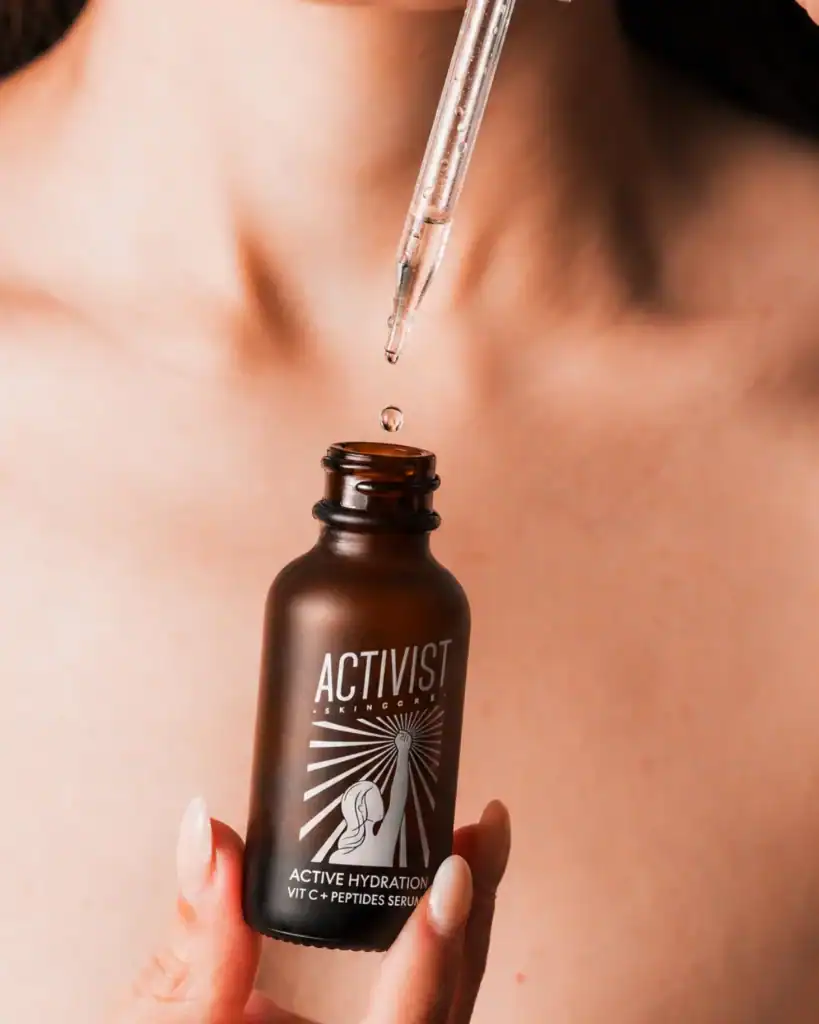
After years of testing non-toxic skincare, Activist Skincare’s Active Hydration Vitamin C + Peptides Serum earned a permanent place in my routine for its thoughtful balance of performance and sustainability.
Instead of relying on harsh acids or unnecessary fillers, Activist pairs magnesium ascorbyl phosphate, a stable, gentle form of vitamin C, with three clinically proven collagen-supporting peptides, panthenol, hyaluronic acid, and saccharide isomerate to help brighten skin, improve firmness, and deliver lasting hydration.
The lightweight serum absorbs quickly without feeling sticky and layers well under moisturizer, making it a great option for daily use, even on sensitive skin.
What truly sets Activist Skincare apart is its refillable glass bottle, the only one in this guide, with every batch hand-formulated by founder Allison Callaway in California.
Why It Made My (short) List
- Refillable glass bottle.
- Fragrance-free.
- Transparent ingredient philosophy.
- Lightweight hydration.
- Great for sensitive skin.
My testing experience
- Helped my late-30s skin feel less dry and look less red.
- Lightweight, unscented, and easy to layer with Activist Skincare’s Botanical Cleansing Oil.
- One of the few serums I have continued to repurchase.
- The reusable cap eventually broke after several refills and had to be replaced.
2. Blissoma | Best Non-Toxic Serum For Mature Skin & Sun Spots
Best For: Anyone dealing with dullness, uneven skin tone, post-acne marks, sun spots, or early signs of aging who wants a radiant complexion without harsh ingredients.
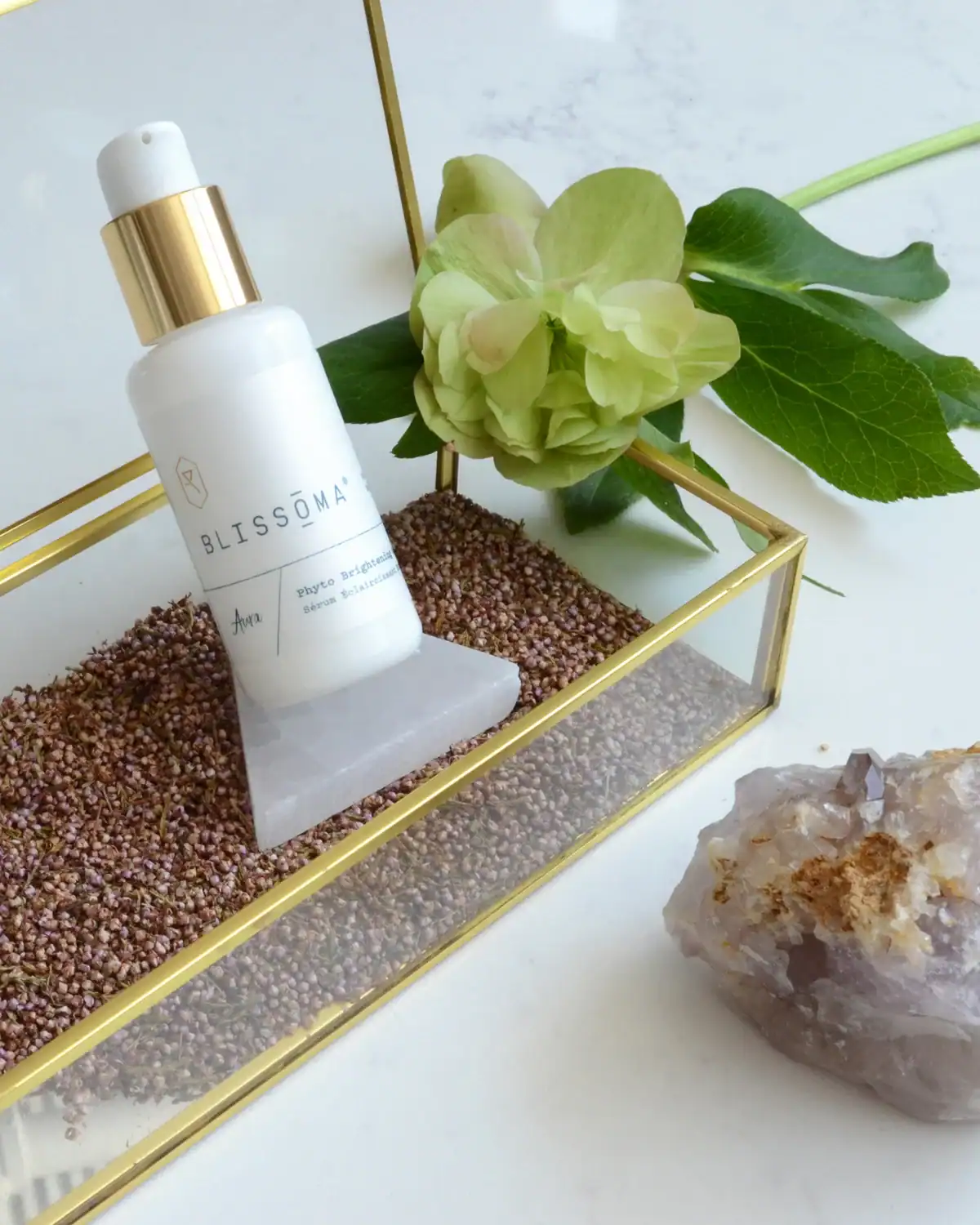
I rarely describe skincare as “magical,” but Blissoma’s Aura Phyto Brightening Serum comes close.
As I’ve gotten closer to 40, I’ve started noticing more uneven skin tone, early fine lines, and the lingering discoloration that seems to stick around long after a breakout or too much sun.
Whenever my skin looks dull or tired, this is the serum I reach for because it leaves my complexion brighter, more even, and naturally radiant to the point that I often skip foundation altogether.
The formula combines gentle sodium ascorbyl phosphate with antioxidant-rich botanicals like pomegranate extract, rooibos tea, coenzyme Q10, and licorice root to help improve discoloration without irritating sensitive skin.
Price
$79 (1.3 oz)
Key ingredients
Vitamin C | Pomegranate | Coenzyme Q10 | Rooibos | Licorice Root
location/shipping
United States | Ships Internationally
Why It Made My (short) List
- Delivers a noticeably brighter, more radiant complexion.
- Helps improve the appearance of uneven skin tone and discoloration.
- Gentle vitamin C formula that’s suitable for sensitive skin.
- Rich in antioxidant botanicals to support healthy aging.
- Naturally preserved and packaged in glass.
My testing experience
- My go-to serum whenever my skin looks dull or uneven.
- I often skip foundation after using it because my complexion looks brighter and more even.
- A favorite for my oily, late-30s skin as I started noticing early discoloration and fine lines.
- My mom also loves it and has seen a noticeable improvement in the appearance of her hyperpigmentation and melasma.
Building out the rest of your routine?
A serum only works as well as what’s around it. If your cleanser is stripping your skin before the serum even has a chance, check out my non-toxic face wash picks.
And don’t let a sunscreen full of the same ingredients you just avoided undo all of it; here’s my non-toxic sunscreen guide.
3. OGEE | Best Luxury Non-Toxic Face Serum (Anti-Aging)
Best For: Luxury skincare lovers seeking a high-performance anti-aging serum.
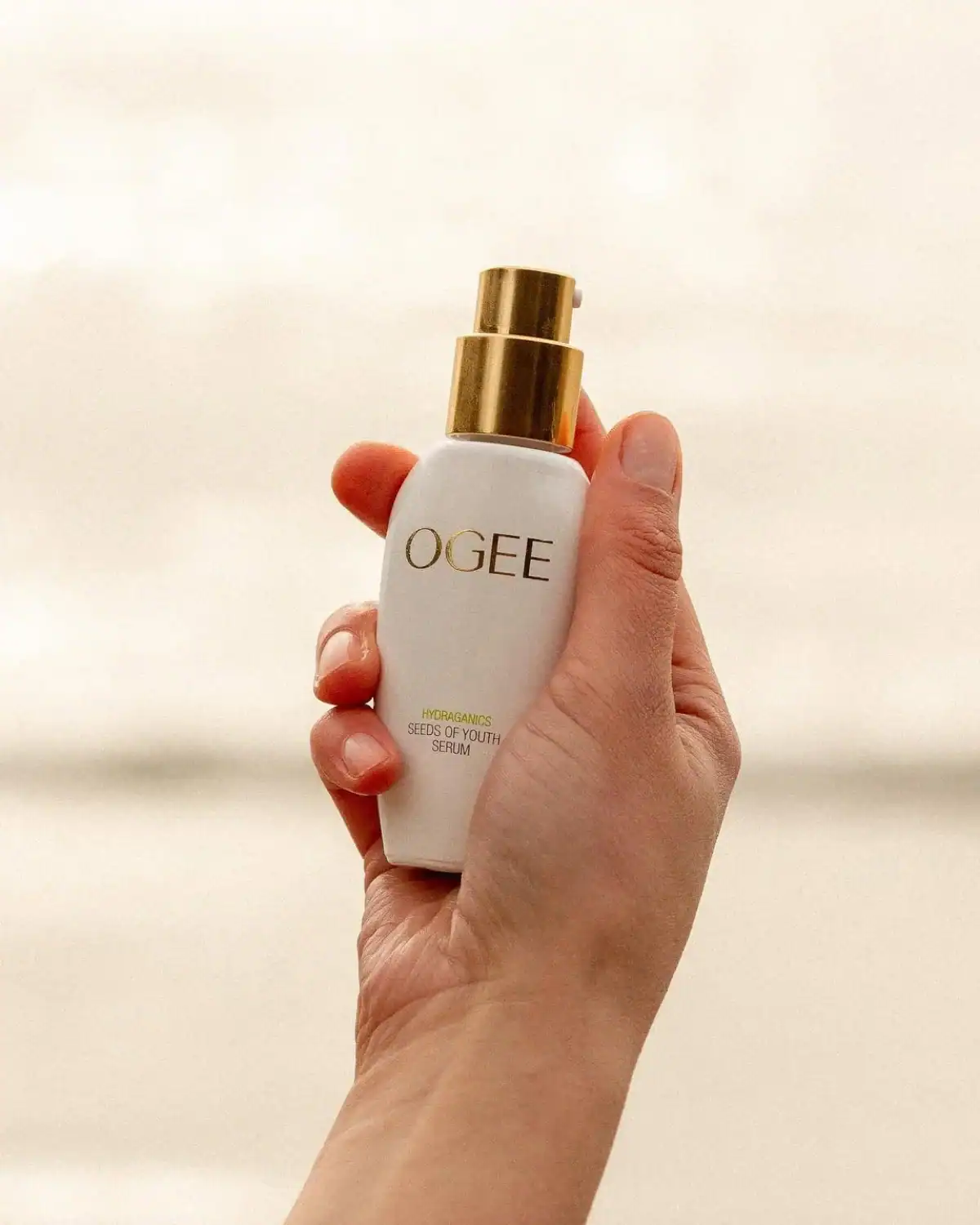
I won’t pretend this Seeds of Youth Serum is inexpensive. In fact, it’s one of the most expensive face serums I’ve ever tested. But after using it, I finally understood what all the hype was about.
From the first application, my skin practically drank it up, leaving it feeling deeply hydrated and incredibly soft without any heaviness.
The silky texture feels indulgent, and it’s one of those serums I genuinely looked forward to using both morning and night.
While the price puts it firmly in the luxury category, I appreciate that OGEE didn’t rely on luxury branding alone. The formula combines hyaluronic acid, ectoin, and plant stem cells in a way that leaves skin feeling deeply hydrated, resilient, and healthy.
Price
$129 (1 oz)
Key ingredients
Sodium Hyaluronate | Ectoin | Edelweiss Plant Stem Cells | Aloe Leaf Juice | Glycerin
location/shipping
United States | Ships To Select International Countries
Why It Made My (short) List
- One of the most luxurious-feeling serums I tested.
- Deeply hydrates while leaving skin soft and plump.
- Uses hyaluronic acid, ectoin, and plant stem cells to support healthy aging.
- Certified organic, cruelty-free, and made without synthetic fragrance or silicones.
My testing experience
- My skin soaked this serum in almost immediately.
- Left my skin feeling incredibly soft and nourished after every use.
- One of the few serums I looked forward to applying both morning and night.
- Feels elegant and high-end from the texture to the finish.
- Expensive, but one of the best-performing luxury serums I’ve tested.
4. Mad Hippie | Best Affordable Non-Toxic Face Serum
Best For: Anyone looking for an effective, non-toxic vitamin C serum that delivers impressive hydration and brighter-looking skin without the premium price tag.
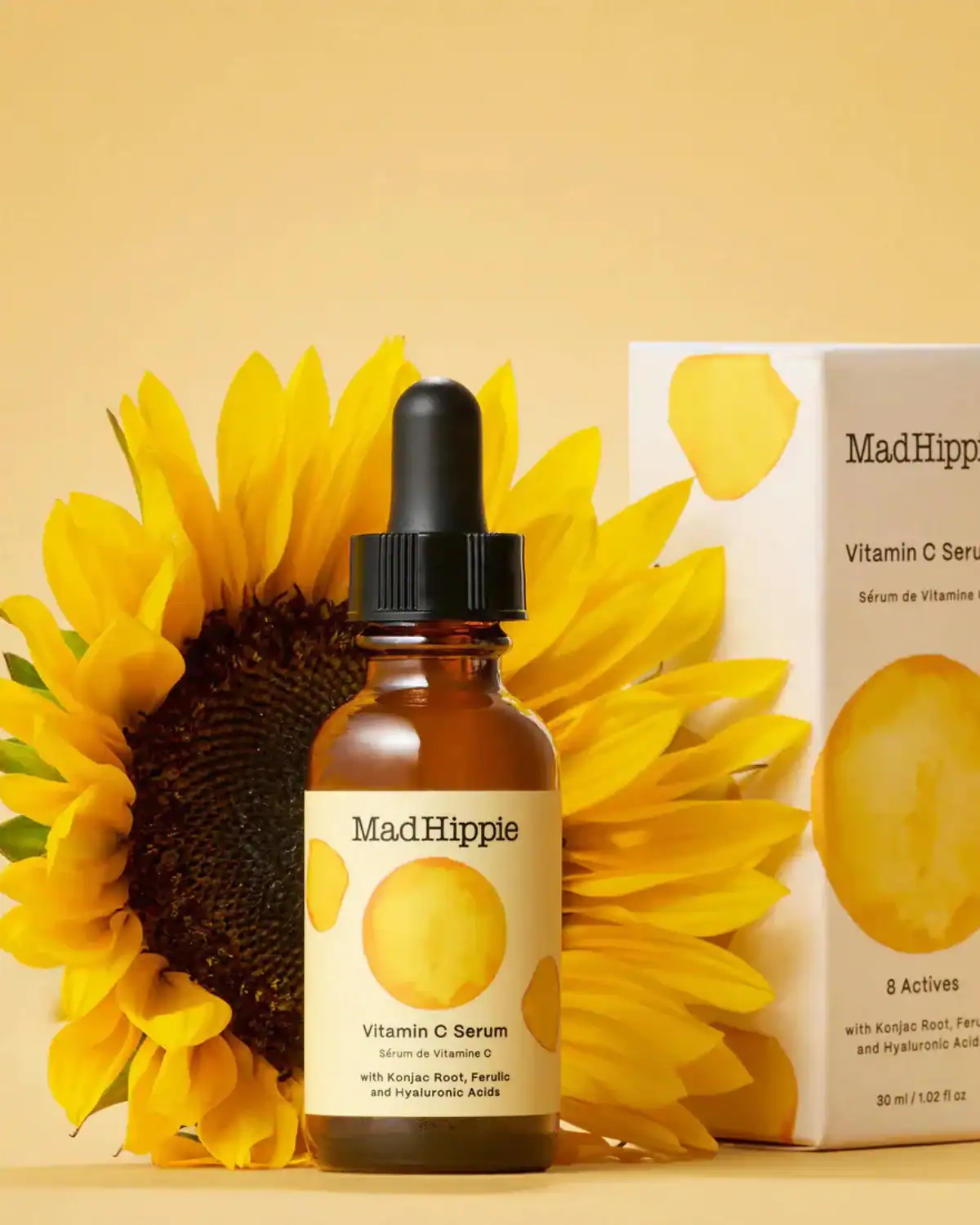
Mad Hippie’s Vitamin C Serum continues to impress me as one of the best budget-friendly options available.
While it’s significantly more affordable than many of the serums in this guide, it never feels like you’re sacrificing quality.
The formula pairs sodium ascorbyl phosphate with vitamin E, ferulic acid, hyaluronic acid, and konjac root to brighten, hydrate, and support healthier-looking skin.
It’s noticeably thicker than most serums I’ve tested, creating a plumping, cushiony feel that leaves my skin soft and hydrated.
If you’re looking for a high-performing non-toxic serum without the luxury price tag, this is one I confidently recommend.
Price
$29.99 (1.02 oz)
Key ingredients
Sodium Ascorbyl Phosphate | Vitamin E | Ferulic Acid | Hyaluronic Acid | Konjac Root
location/shipping
United States
Why It Made My (short) List
- Delivers excellent performance at an accessible price.
- Stable vitamin C formula that’s gentle on sensitive skin.
- Hydrating, cushiony texture that leaves skin feeling plump.
- Layers well under moisturizer and sunscreen.
- Widely available and easy to repurchase.
My testing experience
- One of the best-performing budget serums I’ve tested.
- The thicker texture immediately makes my skin feel hydrated and plump.
- A great alternative to higher-priced serums when you want effective results for less.
- Brightened my complexion while fitting easily into my everyday routine.
- A serum I’d confidently recommend to anyone building a non-toxic skincare routine on a budget.
5. OSEA Malibu | Best Depuffing Eye Serum
Best For: Morning puffiness, tired eyes, and anyone who wants a refreshing, lightweight eye serum.
Use the discount code SKL10 to save 10%!
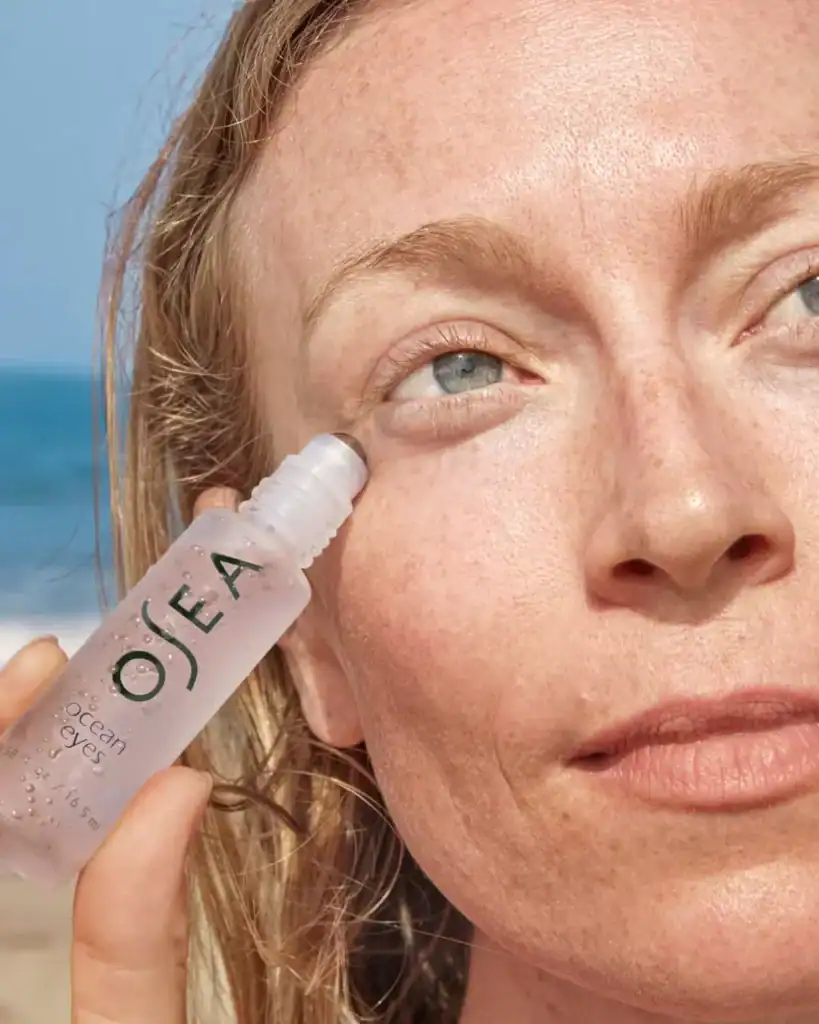
There are very few skincare products I genuinely looked forward to using, but OSEA Malibu’s Ocean Eyes Age-Defying Eye Serum became one of them.
Instead of rushing through my morning routine, I’d take an extra minute to roll the cooling applicator under my eyes, and it instantly helped me feel more awake and refreshed.
I even caught myself reaching for it throughout the day because the cooling massage felt so soothing.
The lightweight, fragrance-free formula combines seaweed, caffeine, biomimetic peptides, hyaluronic acid, and quinoa extract to hydrate the delicate eye area while helping reduce the appearance of puffiness, dark circles, and fine lines.
It’s one of those products that makes your skincare routine feel like a small act of self-care instead of another task.
Price
$58 (0.58 fl oz)
key ingredients
Seaweed Blend | Caffeine | Biomimetic Tetrapeptide | Hyaluronic Acid | Quinoa Extract
location/shipping
United States | Ships internationally
Why It Made My (short) List
- Cooling rollerball instantly refreshes tired eyes.
- Excellent for morning puffiness and under-eye hydration.
- Lightweight, fragrance-free formula absorbs quickly.
- Seaweed, caffeine, peptides, and hyaluronic acid support smoother-looking skin.
- Easy to reapply throughout the day without disturbing makeup.
My testing experience
- I found myself rolling it under my eyes multiple times a day because it felt incredibly refreshing.
- Became part of my morning routine before coffee because it helped me feel more awake.
- The cooling applicator gives a gentle massage that makes depuffing feel like self-care instead of another skincare step.
Great Non-Toxic Brands That Didn’t Make This List (& Why)
Not a safety issue, a category one. Serums exist to do something oils can’t: deliver concentrated, water-soluble actives (vitamin C, niacinamide, hyaluronic acid) into skin, not just on top of it.
Oils are occlusive; they seal moisture in, but they can’t carry those actives the same way.
When a face oil gets marketed as a “serum,” you end up skipping a step your routine actually needs, thinking you’re getting active delivery when you’re really just getting a seal.
These five are genuinely great face oils. They just don’t do a serum’s job, which is why they’re not on this list.
Axiology
Why It Didn’t Qualify: The Brightening Serum is 100% oil: jojoba, sweet almond, chia seed, cranberry seed, raspberry seed, sea buckthorn, sunflower seed oils, plus tetrahexyldecyl ascorbate (an oil-soluble vitamin C) as the only active. No water, no humectant.
Sun & Moo
Why It Didn’t Qualify: Their own label calls it “a bakuchiol oil” right above “The Beautiful One.” Ingredients are jojoba, tsubaki, castor, and moringa oils plus bakuchiol, frankincense resin, and vitamin E. No water phase.
Primally Pure
Why It Didn’t Qualify: Every “serum” in their face lineup (Clarifying, Soothing, Plumping, Fancy Face) is a blend of carrier oils and essential oils. No water, no humectant.
Vintner’s Daughter
Why It Didn’t Qualify: The Active Botanical Serum is 100% oils and botanical extracts, grape seed, hazelnut, avocado, rosehip, and 18 more, no water, no humectant. Even one retailer’s own description calls it “the most-winning face oil ever.”
Holy Naturals
Why It Didn’t Qualify: The Sunrise Serum is pumpkin seed, red raspberry seed, jojoba, blueberry seed, carrot seed, and hemp seed oils infused with caffeine. No water, no water-soluble delivery system.
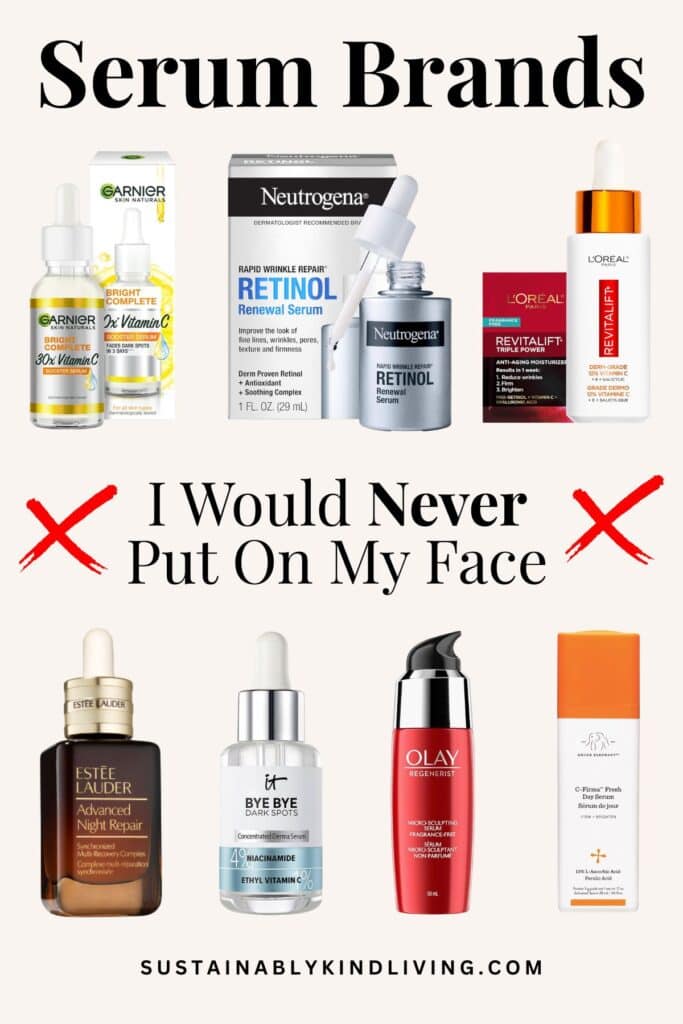
❌ Best-Selling Face Serums We Don’t Recommend
These are some of the most popular face serums on the market, and also some of the most common culprits for synthetic fragrance, PEG compounds, and preservatives I don’t recommend in a leave-on product.
Drunk Elephant C-Firma Fresh Day Serum
Why It Didn’t Qualify: Contains Laureth-23, an ethoxylated ingredient in the same manufacturing family as PEGs, plus Phenoxyethanol.
Better Alternative: Activist Skincare or Mad Hippie for stabilized vitamin C without ethoxylated surfactants.
IT Cosmetics Bye Bye Dark Spots Niacinamide Serum
Why It Didn’t Qualify: Contains a PEG/PPG compound, Phenoxyethanol, and Parfum.
Better Alternative: Mad Hippie for niacinamide without the PEG and fragrance stack.
L’Oréal Revitalift Clinical 12% Pure Vitamin C Serum
Why It Didn’t Qualify: Contains PEG-20 Methyl Glucose Sesquistearate and Parfum.
Better Alternative: Activist Skincare or Mad Hippie for vitamin C without PEGs or added fragrance.
Neutrogena Rapid Wrinkle Repair Serum
Why It Didn’t Qualify: Contains Parfum and BHT.
Better Alternative: Blissoma for gentle brightening actives without BHT or fragrance.
Olay Regenerist Micro-Sculpting Serum
Why It Didn’t Qualify: Contains Phenoxyethanol, Parfum, BHT, and a PEG compound.
Better Alternative: OGEE for hydration support without the preservative and PEG stack.
Garnier Bright Complete Vitamin C Ampoule Serum
Why It Didn’t Qualify: Contains a PEG/PPG compound, Parfum, and Phenoxyethanol.
Better Alternative: Mad Hippie for niacinamide and vitamin C without PEGs or fragrance.
Estée Lauder Advanced Night Repair Synchronized Multi-Recovery Complex Serum
Why It Didn’t Qualify: Contains multiple PEG compounds, BHT, Phenoxyethanol, and synthetic dyes.
Better Alternative: OGEE for a comparable luxury-tier hydrating serum without PEGs, BHT, or synthetic dyes.
Safest Ingredients To Look For In Face Serums, Explained
If you’ve ever compared two vitamin C serums and wondered why one costs $30 while another costs $130, the answer usually isn’t the marketing. It’s the formulation.
The ingredients a serum contains, the form they’re used in, and how they’re combined all affect how well the product performs.
Below are the ingredients I look for most often when evaluating non-toxic face serums, followed by the ingredients I personally choose to avoid in leave-on skincare.
- Vitamin C → Helps brighten skin, support collagen production, and protect against environmental damage. Stable forms like SAP, MAP, and THDA are often better tolerated by sensitive skin.
- Niacinamide (Vitamin B3) → Helps strengthen the skin barrier, reduce visible redness, improve uneven skin tone, and minimize the appearance of enlarged pores.
- Hyaluronic Acid (Sodium Hyaluronate) → A humectant that draws moisture into the skin for long-lasting hydration and a plumper appearance.
- Vitamin E (Tocopherol) → An antioxidant that supports the skin barrier and works synergistically with vitamin C to improve stability and antioxidant protection.
- Ferulic Acid → Helps stabilize vitamins C and E while enhancing their antioxidant performance, making it a valuable addition to brightening serums.
- Peptides (Matrixyl®, Copper Peptides) → Short chains of amino acids that help support firmer-looking skin and reduce the appearance of fine lines over time.
What Are the Different Types of Vitamin C in Face Serums?
Vitamin C shows up in a lot of different forms, and the form matters just as much as the percentage on the label:
- L-Ascorbic Acid → The most studied and most potent form. Ascorbic acid is a very unstable vitamin and is easily oxidized in aqueous solutions and cosmetic formulations, which is why serums using it often come in dark glass or airless packaging.
- Sodium Ascorbyl Phosphate (SAP) → Sodium ascorbyl phosphate and magnesium ascorbyl phosphate are more stable derivatives of vitamin C than ascorbyl palmitate, per a stability study in the International Journal of Cosmetic Science. A gentler, water-soluble form better suited to sensitive skin.
- Magnesium Ascorbyl Phosphate (MAP) → The introduction of the phosphoric group protects the molecule from breakdown, confirming it as a very stable derivative of vitamin C that may be easily used in various types of cosmetic products. Water-soluble and less likely to irritate than L-ascorbic acid.
- Tetrahexyldecyl Ascorbate (THDA) → A lipid-soluble, stable form that penetrates skin more easily since it’s oil-compatible.
- Ascorbyl Palmitate → Fat-soluble and stable, though research notes it may exhibit slightly less stability than other derivatives under certain conditions. Often paired with other Vitamin C forms in a formula.
- Ascorbyl Glucoside → One of the gentlest forms, well tolerated even in daily use.
Toxic Ingredients In Face Serums, Explained
- Parabens (Preservatives) → Still the most common shorthand for “clean” for a reason. They’re cheap, effective, and have been under scrutiny for years over their ability to mimic estrogen. Methylparaben, propylparaben, butylparaben, ethylparaben.
- Synthetic Fragrance/Parfum (Scent) → The industry’s best-kept secret, and legally so. Brands aren’t required to disclose what’s actually in a fragrance blend (my guide on the fragrance “loophole” is wild), which means phthalates can ride in undetected under a single vague word on the label.
- Phthalates (Often Hidden In Fragrance) → The reason “fragrance-free” matters more than people realize. Tied to endocrine and reproductive concerns in research, and nearly impossible to spot on a label unless the brand states outright that it doesn’t use them. Dibutyl phthalate, diethyl phthalate, dimethyl phthalate. Same FDA source.
- Formaldehyde-Releasing Preservatives → Exactly what it sounds like. These compounds slowly shed small amounts of formaldehyde to keep bacteria out of a formula, a known irritant and allergen that several states have already started banning outright. Quaternium-15, DMDM hydantoin, imidazolidinyl urea, diazolidinyl urea, bronopol.
- PEGs (Polyethylene Glycols) (Emulsifiers/Thickeners) → Not dangerous by design, but a manufacturing shortcut with a catch: the process can leave behind 1,4-dioxane, a compound flagged as a likely carcinogen. Look for PEG followed by a number, e.g., PEG-100.
- BHA/BHT (Antioxidant Preservatives) → BHA carries the stronger case against it, classified as reasonably anticipated to be a carcinogen and a suspected endocrine disruptor. BHT gets grouped in by association, though the evidence against it is thinner.
Greenwashing in Face Serums, Explained
“Non-toxic face serum,” “clean face serum,” and “dermatologist tested” aren’t regulated terms.
“Clean” is not a regulated claim in cosmetics, which means companies can use it freely without adhering to any specific standard or definition, per MADE SAFE®.
That’s exactly why I don’t use “non-toxic” as a marketing word on this site.
Every face serum in this guide is checked against the same named criteria: no synthetic fragrance, no parabens, no PEGs, no BHT, verified against the actual ingredient list, not the bottle’s front label.
Skip the marketing on any face serum you’re considering and go straight to the ingredients yourself.
If you want to learn how I evaluate marketing claims beyond face serums, I’ve put together a complete guide to spotting greenwashing in the beauty industry.
How I Researched, Tested, and Updated This Guide
When you read a “best” list online, it’s often impossible to tell whether the products were actually tested or simply pulled from Amazon best sellers and brand marketing.
That’s not how I build guides at Sustainably Kind Living. Every recommendation here went through the same process before earning its place.
1. Researching Brands
Before testing anything, I look at the brand itself, including its ingredient transparency, manufacturing practices, packaging, certifications, and overall formulation philosophy.
Brands that rely on vague marketing instead of clear ingredient information don’t make my testing list.
2. Reviewing Every Ingredient List
I review the full INCI list for every serum, not just the hero ingredient.
That means checking the form of each active, the supporting ingredients, preservatives, fragrance, and anything I choose to avoid in leave-on skincare.
This helps me evaluate the formula as a whole rather than judging it by a single marketing claim.
3. Testing Products in Real Life
Every serum I recommend gets used as part of my regular skincare routine, not just evaluated on paper.
I pay attention to texture, absorption, how it layers with other products, whether it pills under sunscreen or makeup, and how my skin responds over time.
I also ask myself a simple question: Would I buy this again with my own money? If the answer is no, it doesn’t earn a recommendation.
4. Ranking The Final Recommendations
I don’t recommend every serum that performs well. Each one has to outperform the others in its category, whether that’s hydration, brightening, luxury, or value. Only the products that consistently stand out earn a place in this guide.
5. Keeping This Guide Updated
This guide isn’t static. I revisit it throughout the year as I test new serums, review reformulations, and compare new releases against my current recommendations. If a product no longer earns its place, I update this guide accordingly.
Frequently Asked Questions About Non-Toxic Face Serums
A face serum is water- or gel-based and formulated to deliver concentrated, water-soluble actives into the skin.
A face oil is entirely oil-based and works as an occlusive, sealing moisture in rather than delivering ingredients deeper.
Some brands label face oils as “serums,” so check the ingredient list for water/aqua near the top to confirm which one you’re actually buying.
“Non-toxic” isn’t a regulated term in cosmetics, so brands can use it freely without meeting any specific standard.
The most reliable way to evaluate a serum is to check the actual ingredient list for named concerns like synthetic fragrance, parabens, PEGs, and BHT rather than trusting the label alone.
Common ingredients to watch for include synthetic fragrance/parfum (which can hide undisclosed phthalates), parabens, PEG compounds, formaldehyde-releasing preservatives, and BHT/BHA.
None of these are automatically dangerous at typical use levels, but they’re the ingredients most often flagged in clean beauty formulations.
No, form and stability matter more than concentration. A well-stabilized 10% vitamin C serum, especially one paired with vitamin E and ferulic acid, can outperform a poorly formulated 20% serum that oxidizes quickly or irritates skin.
Sodium Ascorbyl Phosphate (SAP), Magnesium Ascorbyl Phosphate (MAP), and Ascorbyl Glucoside are gentler, more stable forms of vitamin C than pure L-ascorbic acid. They’re less likely to cause irritation, making them better starting points for sensitive or reactive skin.
L-ascorbic acid, the most potent form of vitamin C, is unstable and oxidizes when exposed to air and light. An orange or discolored serum has likely lost potency; it’s usually a sign to replace the product rather than a safety concern.
A “free from” claim only tells you about the specific ingredient named; a paraben-free serum can still contain PEGs, synthetic fragrance, or BHT. Always cross-check the full ingredient list rather than relying on front-of-bottle callouts alone.
Serum goes on after cleansing and before moisturizer, since its thinner texture and concentrated actives are meant to absorb into clean skin first. Moisturizer then seals the serum in and helps prevent water loss.
Most face serums last 3–6 months once opened, though vitamin C serums degrade faster due to oxidation from air and light exposure. Cloudy color changes, separation, or a change in smell are signs a serum has passed its useful life.
Yes, when the formulation is solid. Ingredients like stabilized vitamin C, niacinamide, and hyaluronic acid perform the same whether a serum is labeled “non-toxic” or not; what matters is the form of the active and how it’s stabilized, not whether the brand markets itself as clean.
Still Deciding? Here’s a Quick Way to Choose
- Choose Activist Skincare if you want a gentle vitamin C serum with collagen-supporting peptides that helps brighten and firm skin, all in refillable packaging.
- Choose Blissoma if uneven skin tone, sun spots, or early discoloration are your main concern and you want a gentle vitamin C formula rich in antioxidant botanicals.
- Choose OGEE if you want the most luxurious hydration and texture on this list and price isn’t a deciding factor.
- Choose Mad Hippie if you want a genuinely effective vitamin C serum without the premium price tag; this is the one to start with if you’re new to non-toxic skincare.
- Choose OSEA Malibu if puffiness and tired under-eyes are your priority; this is the only eye-specific serum on the list.
My Final Thoughts on Non-Toxic Face Serum
What I’ve learned after years of doing this is that the “right” serum isn’t the one with the trendiest ingredient or the prettiest packaging.
It’s the one that actually solves the problem you’re dealing with, without making you compromise on what you’re putting on your skin every day.
Sometimes that’s a $30 serum. Sometimes it’s $130. Price was never what I was optimizing for; performance and formulation were.
This list isn’t static, and it’s not supposed to be. Things fall off when they stop earning their place, and new things go on when they actually deserve to be there. That’s the whole point of doing this the long way instead of chasing whatever’s trending this month.
So if you’re still unsure, don’t overthink it. Go back to what you’re actually trying to fix- dryness, dullness, sensitivity, tired eyes- and let that decide for you, not the marketing.
Continue Your Non-Toxic Skincare Journey
The deeper I researched facial serums, the more I realized that many products marketed as “clean” still contain ingredients that don’t always align with a healthy skincare routine.
If you’re building a safer skincare regimen, these guides may help next:
- Non-Toxic Skincare: My complete guide to safer skincare brands and ingredient standards.
- Non-Toxic Face Masks: Lower-toxic masks designed to cleanse, hydrate, and support healthy skin.
- Non-Toxic Anti-Aging Alternatives To Botox: Safer options for addressing fine lines and supporting skin health.
- Non-Toxic Face Wash: Gentle cleansers that remove dirt and makeup without unnecessary irritants.
- Non-Toxic Sunscreen: Mineral sunscreen options that help protect skin from daily UV exposure.
📌 Save This Guide For Later
Save this guide so you can easily compare brands before your next skincare purchase.
Sources & Further Reading
If you’re like me and want to understand what’s actually going on with serum ingredients, not just what brands claim, these are some of the resources I found most helpful while researching this guide:
- U.S. Food and Drug Administration, Phthalates in Cosmetics — FDA data on fragrance labeling and phthalates in cosmetic formulas.
- U.S. Food and Drug Administration, Cosmetics Safety Q&A: Parabens — FDA position on paraben use and current safety research.
- U.S. Food and Drug Administration, 1,4-Dioxane in Cosmetics — How 1,4-dioxane forms as a manufacturing byproduct in PEG compounds.
- Safe Cosmetics, Formaldehyde — Research on formaldehyde-releasing preservatives in leave-on skincare.
- Vermont Department of Health, BHA Fact Sheet — NTP and EU findings on BHA and BHT.
- MADE SAFE, Natural, Clean, and Green Cosmetic Claims Explained — Why “clean” isn’t a regulated cosmetics claim.
- Cosmetics & Toiletries, How the FTC’s Green Guides Shape Environment-Related Product Claims — Comments filed with the FTC on unregulated eco-labeling in beauty.
- Journal of the American Academy of Dermatology — Clinical research on vitamin C, vitamin E, and ferulic acid stability and UV protection.
- PubMed, Ferulic Acid Antioxidant Study — Research on ferulic acid’s role in stabilizing vitamin C and E formulas.
- National Institutes of Health, Hyaluronic Acid Research — Clinical study on hyaluronic acid and skin hydration.
- National Institutes of Health, Vitamin E and Skin Barrier Research — Antioxidant and barrier-support research on topical tocopherol.
- National Institutes of Health, Peptides and Skin Study — Clinical research on peptide formulations and visible skin firmness.
- ResearchGate, A Review of Clinical Efficacy of Topical Vitamin C and Its Derivatives — Comparison of L-ascorbic acid and its derivative forms.
- International Journal of Cosmetic Science, Vitamin C Derivative Stability — Stability comparison of SAP, MAP, and ascorbyl palmitate.
- ScienceDirect, Magnesium Ascorbyl Phosphate Research — How MAP’s phosphate group improves vitamin C stability.
I also spent time reviewing individual brand ingredient lists, formulation philosophies, and product pages directly to understand how each serum is actually made, beyond marketing claims.
This post was graciously sponsored by Activist Skincare. As always, we only work with brands that we 100% stand behind. Would you like to sponsor one of our sustainable round-ups? Contact us here.

Steal My Non-Toxic Cleaning Checklist!
Believe us, it’s the BEST…. and it’s free. Does it really get any better than that?! Sign up for our newsletter and get this free checklist to clean your home without any harmful chemicals!