 Shop My Favorite Non-Toxic Gifts Of 2026!
SKL is reader supported. When you buy through links on our site, we may earn affiliate commission. Learn more here.
I’ve tested more organic activewear brands than I can honestly keep track of, from organic cotton leggings and sports bras to hemp joggers, yoga tops, and everyday workout essentials.
Along the way, I found that most brands fell into one of three buckets: overpriced plastic sold at a premium price point, “sustainable” brands leaning hard on synthetic fabrics (recycled or not, it’s still plastic), and greenwashed brands using language designed to make you feel like you were buying something premium when it was, again, just plastic.
Others got the materials right (woo hoo!) but simply didn’t hold up after regular wear and washing.
And I don’t know about you, but I need my activewear to last through some serious stuff: chasing after kids, my 3-4x a week strength training workouts, grocery runs, and everything else that comes along with life.
The brands in this guide earned their place because they passed both tests with flying colors. They use thoughtfully chosen materials that align with a non-toxic lifestyle, while also creating comfortable, well-made activewear that actually lasts.
SKL Top 5 Quick Picks:
- Most Affordable Organic Activewear: Pact
- Best Organic Lululemon Dupe: MATE The Label
- Best Organic Cotton Sports Bra: Q for Quinn
- Best Non-Toxic Performance Activewear: Tripulse
- Best Activewear For Sensitive Skin: Cottonique
Each one stands out for a different reason, whether you’re looking for everyday basics, performance-focused workout gear, or versatile pieces you’ll wear long after your workout is over.
Best Organic Activewear Brands: At a Glance Comparison
(Mobile Users) Scroll to see full comparison →
| Brand | Fabric composition | My Testing Notes | Starting Price |
|---|---|---|---|
| Pact | 90% Organic Cotton, 10% Spandex | Lightweight, comfortable, and the best value for everyday wear | $38 |
| MATE The Label | 92% Organic Cotton, 8% Spandex | Thick, supportive, squat-proof, and the closest organic alternative to Lululemon. | $58 |
| Q for Quinn | 95–100% Organic Cotton, 5% Elastane | Comfortable, supportive, and home to one of the best organic sports bras I’ve found. | $52 |
| Tripulse | TENCEL™ Lyocell, ROICA® V550, PYRATEX® Power III | My go-to for lifting, running, and high-performance workouts. | $85 |
| Cottonique | 100% Organic Cotton | Best for sensitive skin, eczema, and reducing synthetic materials. | $30 |
| Lezat | Organic Cotton, Spandex, Bio-Based Elastane | Stylish, supportive, and one of the largest organic activewear collections available. | $22 |
| ODDOBODY | 100% Organic Pima Cotton (Elastic Encased in Cotton) | Thick, breathable bike shorts that stay comfortable without chafing. | $58 |
| Jungmaven | Hemp, Organic Cotton, Spandex | Durable, breathable hemp blend with a substantial feel. | $44 |
Now that you’ve seen my top picks at a glance, let’s take a closer look at what you need to know about materials and finishes in activewear (finishes are sneaky, y’all!).
Knowing which materials to avoid and which ones to look for will make shopping much easier, whether you’re buying from one of these brands or exploring others.
Here’s a quick cheat sheet before we dive into the reviews.
Safe vs. Not
❌ Toxic Materials To Avoid In Activewear
Fiber content is required on the label, so polyester, nylon, and acrylic will always show up there.
Chemical finishes are different. Brands are NOT required to disclose PFAS, BPA, formaldehyde, or antimicrobial treatments, so you won’t find them listed anywhere on the garment.
That’s where certifications like OEKO-TEX® Standard 100 and GOTS matter, since they’re the only real way to verify a product was actually tested for these chemicals.
- Virgin Polyester & Nylon → Petroleum-based synthetics that trap heat and sweat against the skin, shed microplastics, and rely on disperse dyes and formaldehyde finishes linked to contact dermatitis.
- Acrylic → Plastic made to mimic wool, and one of the worst offenders for microfiber shedding.
- PFAS (“Forever Chemicals”) → Linked to hormone disruption and immune effects, and don’t break down in the body or the environment.
- BPA (Bisphenol A) → An endocrine disruptor found in prints, elastic trims, and synthetic blends.
- Formaldehyde → A known skin irritant and sensitizer used in wrinkle-resistant and dye-fixing treatments.
- Antimicrobial or Odor-Resistant Coatings → Usually silver nanoparticles or synthetic biocides that can disrupt the skin’s microbiome.
✅ Safest Materials To Look For In Activewear
- Organic Cotton → Breathable, soft, and grown without synthetic pesticides.
- Hemp → Durable, breathable, and naturally odor-resistant.
- TENCEL™ Lyocell → Lightweight and moisture-managing, made from wood pulp in a closed-loop process.
- Merino Wool → Naturally moisture-wicking, temperature-regulating, and odor-resistant. (Currently testing two non-superwash merino brands for a future update.)
- Bio-Based Elastane → A plant-derived alternative to conventional spandex, though most versions on the market today are only partially renewable.
After the reviews, I’ll go into sustainable brands I do not recommend for activewear, popular “mainstream” brands that I’d never wear, dig more into the toxic chemicals in activewear (deep dive), and so much more.
The Best Organic Activewear Brands In 2026, Reviewed
1. Pact | Best Affordable Organic Activewear
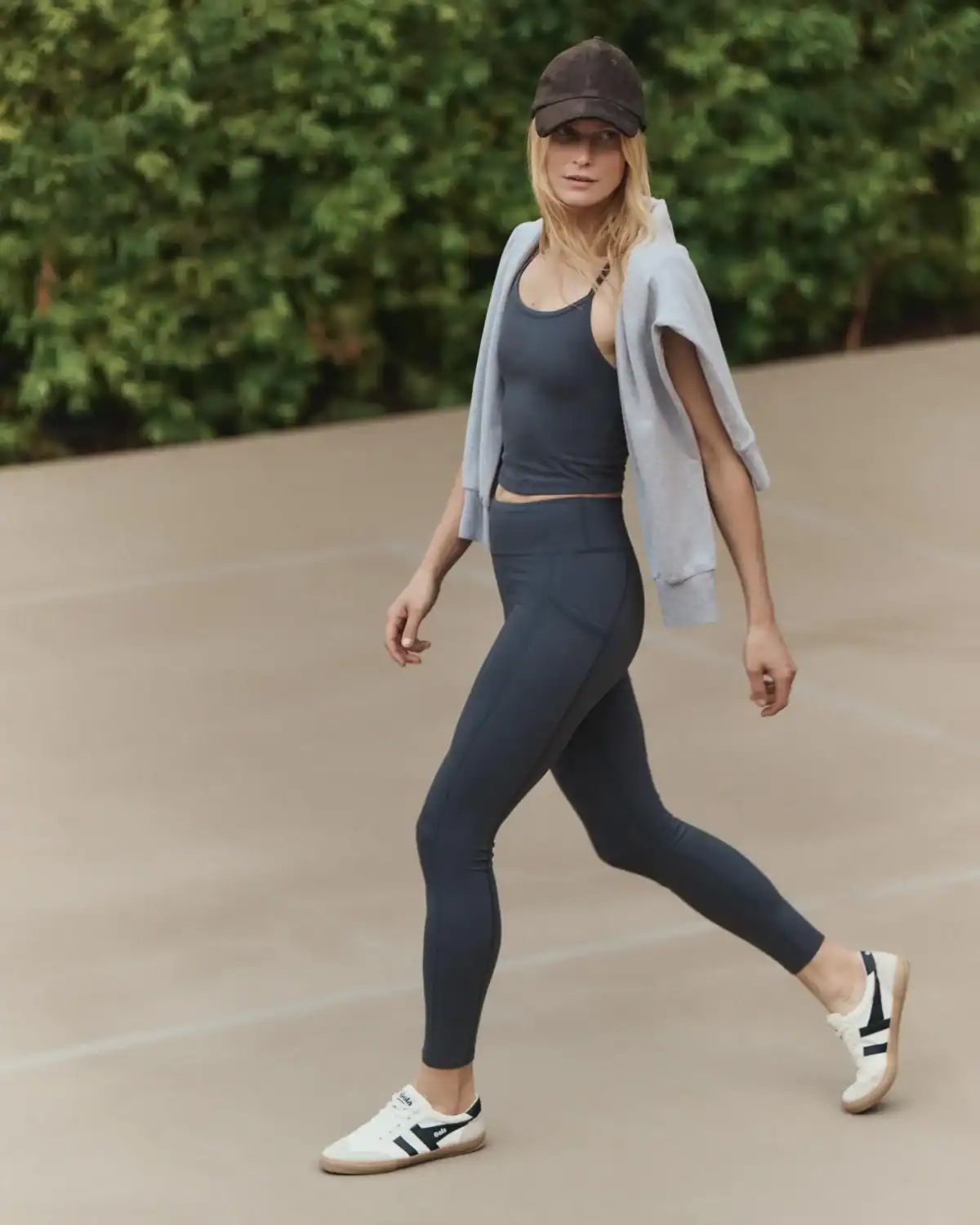
Best For: Anyone looking for comfortable organic cotton activewear for yoga, walking, strength training, and everyday wear.
Use the discount code SKL15 to save 15%!
I’ve been wearing Pact for more than a decade, long before I started testing organic activewear for this guide.
Even after trying dozens of other brands, I still reach for their leggings and organic cotton underwear week after week because they consistently deliver the comfort, quality, and value I’m looking for.
Most of Pact’s activewear uses a 90% GOTS-certified organic cotton and 10% spandex blend, creating fabric that’s soft, breathable, and stretchy enough for lifting, yoga, and everyday movement without relying heavily on synthetic fibers.
What continues to set Pact apart is its consistency. The quality has held up through years of wear and washing, making it one of the easiest organic activewear brands I recommend to almost anyone.
WHY IT MADE MY (SHORT) LIST
- I wear Pact almost every week.
- Excellent value for organic cotton activewear.
- GOTS-certified organic cotton.
- Soft, breathable, everyday comfort.
- Wide selection of leggings, sports bras, underwear, and basics.
MY TESTING EXPERIENCE
- Comfortable for squats, deadlifts, yoga, and everyday wear.
- Passed the squat test without becoming see-through.
- Held its shape and softness after repeated washing.
- Not my first choice for hot yoga or long cardio sessions since cotton naturally retains moisture.
Our Favorites from Pact:

2. MATE The Label | Best Organic Lululemon Dupe
Best For: Anyone looking for premium organic cotton activewear that feels most like traditional performance leggings.
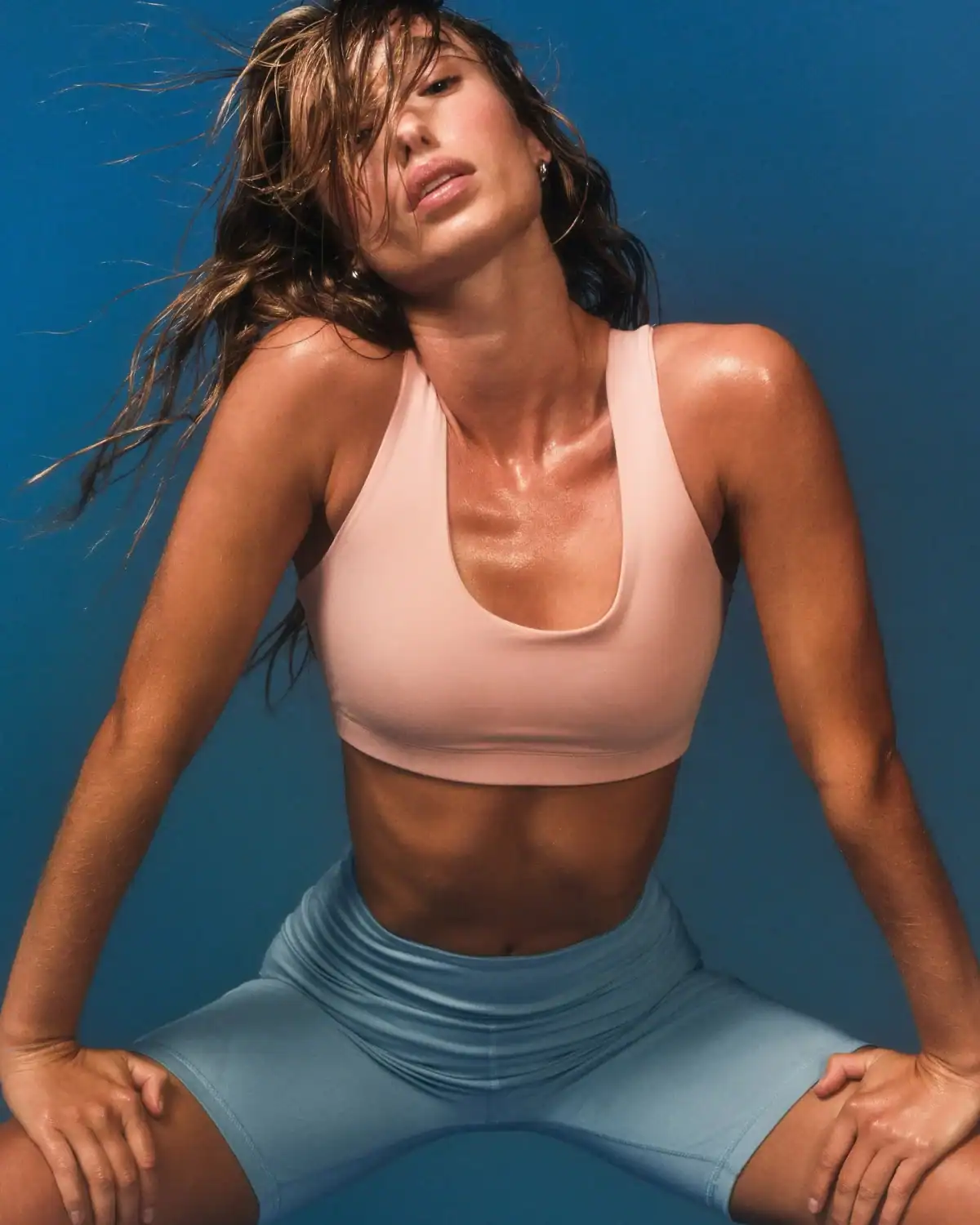
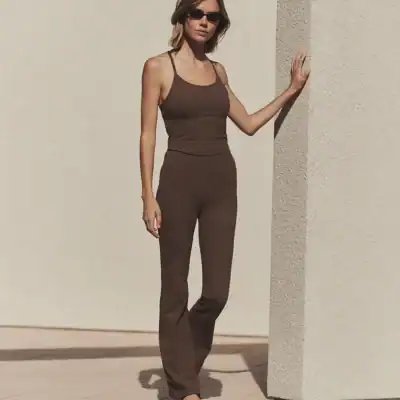
I’ve tried a lot of organic cotton leggings over the years, and MATE The Label continues to be the closest thing I’ve found to a Lululemon-style workout legging without relying on mostly synthetic fabrics.
Their signature leggings are made from 92% GOTS-certified organic cotton and 8% spandex; the fabric feels noticeably thicker than most organic activewear brands while still offering excellent stretch and compression.
They stay in place during workouts, feel supportive without being restrictive, and have held up incredibly well after repeated washes.
Thoughtfully made in Los Angeles using low-impact dyes, MATE combines premium construction with transparent manufacturing, making it one of my favorite brands for everyday workouts.
Price & Sizing
$88+ (Leggings) | $68 (Biker Shorts) | $58+ (Sports Bras) | $108 (Unitards) | XS-XL
materials
92% GOTS-Certified Organic Cotton | 8% Spandex
location/shipping
United States | Ships Internationally
WHY IT MADE MY (SHORT) LIST
- Closest organic alternative to traditional performance leggings.
- Thick, supportive fabric with minimal synthetic fibers.
- Made in Los Angeles using low-impact dyes (great color selection).
- Excellent quality and durability.
MY TESTING EXPERIENCE
- I love the color options (stunning).
- I’ve worn MATE leggings for everything from strength training to long walks, and they remain one of my favorite workout leggings.
- The fabric feels noticeably thicker than other organic cotton blends, they’re completely squat-proof, and they’ve maintained their shape exceptionally well.
Our Favorites from Mate The Label:
3. Q for Quinn | Best Organic Sports Bra
Best For: Anyone looking to build an organic cotton activewear wardrobe with one of the best organic sports bras available.
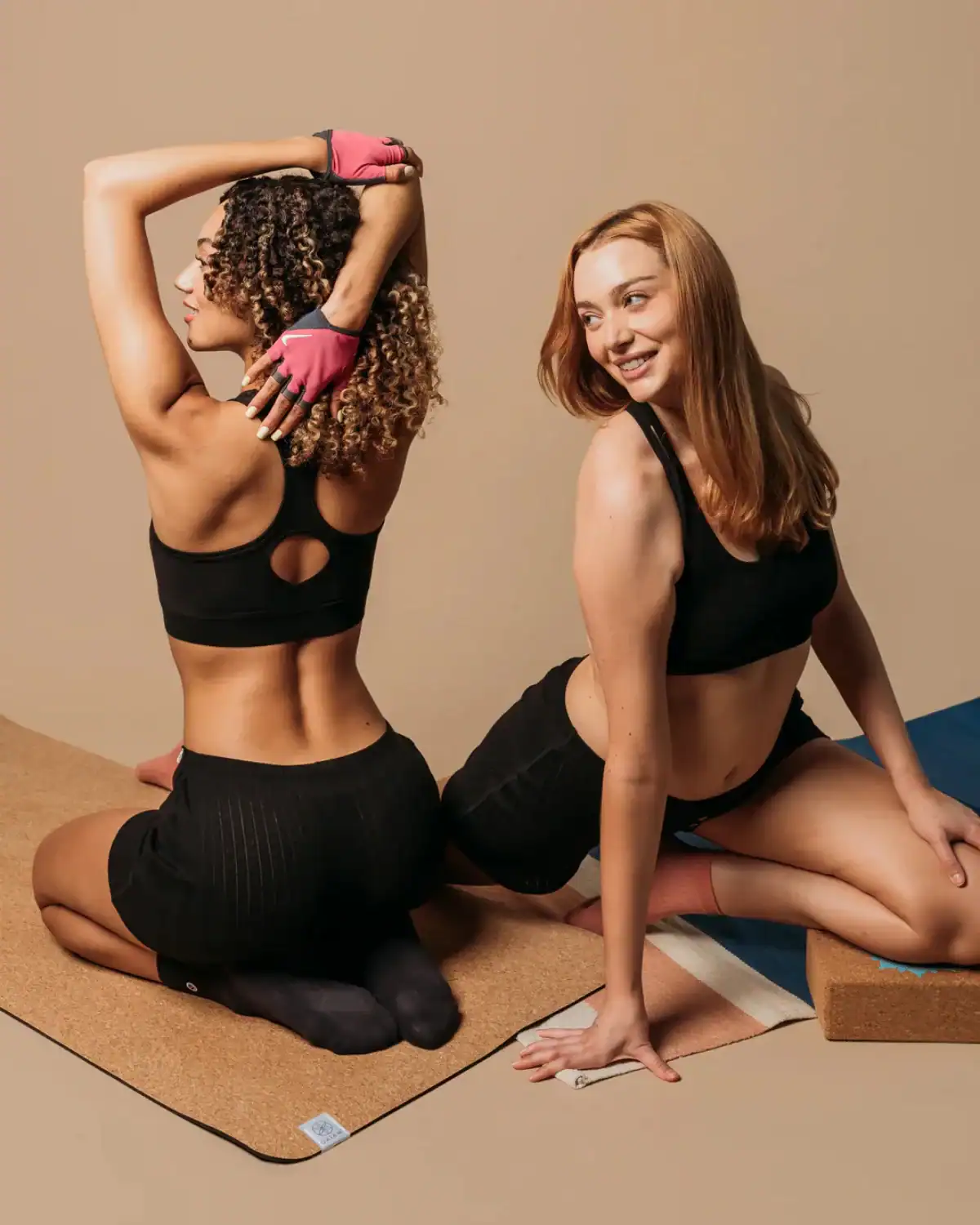
I’ve trusted Q for Quinn for years thanks to their organic cotton socks and underwear, so I was excited to see them expand into activewear.
Although Q for Quinn earned my award for the best organic sports bra, their collection extends far beyond bras.
They also make leggings, biker shorts, skorts, tanks, tees, and other thoughtfully designed workout essentials using the same transparent approach to materials.
The Full Bust Sports Bra is made from 100% organic cotton with natural rubber elastic that’s fully wrapped in organic cotton, making it one of the few sports bras I’ve found that minimizes synthetic materials without compromising everyday comfort and support.
Between their transparent material choices, thoughtful construction, and positive customer feedback, it’s one of the activewear collections I’m most excited to test next.
Price & Sizing
$85 (Leggings) | $54+ (Sports Tops) | $52+ (Sports Bras) | XS-3XL
materials
95-100% GOTS-Certified Organic Cotton | 5% Elastane (OEKO-TEX® Certified)
location/shipping
United States/Canada | Ships Internationally
WHY IT MADE MY (SHORT) LIST
- One of the largest organic cotton activewear collections.
- Excellent 100% organic cotton sports bra options (full bust).
- Transparent materials and GOTS-certified organic cotton.
- Plastic-free and biodegradable design philosophy.
What customers are saying
- The Full Bust Sports Bra earns consistent praise for comfort, coverage, and support, especially from fuller-busted reviewers.
- Customers say the leggings feel soft, breathable, and substantial enough for the gym, Pilates, and everyday wear.
- Many reviewers appreciate having an activewear collection centered around organic cotton instead of polyester and nylon.
Our Favorites from Q for Quinn:

💡 Want to go deeper on a specific piece? This guide covers non-toxic activewear as a whole, but I have dedicated deep dives if you want more detail: Best non-toxic leggings and best non-toxic sports bras.
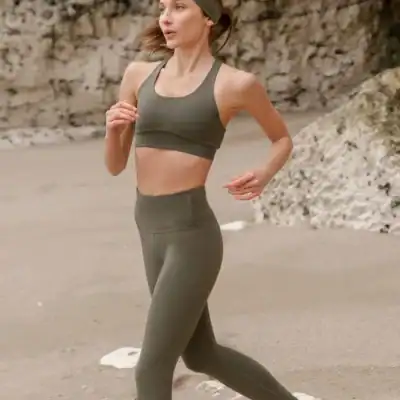
4. Tripulse | Best Non-Toxic Performance Activewear
Best For: Anyone looking for high-performance, non-toxic activewear for lifting, running, and high-impact workouts.
Use the discount code 15SKL to save 15%!
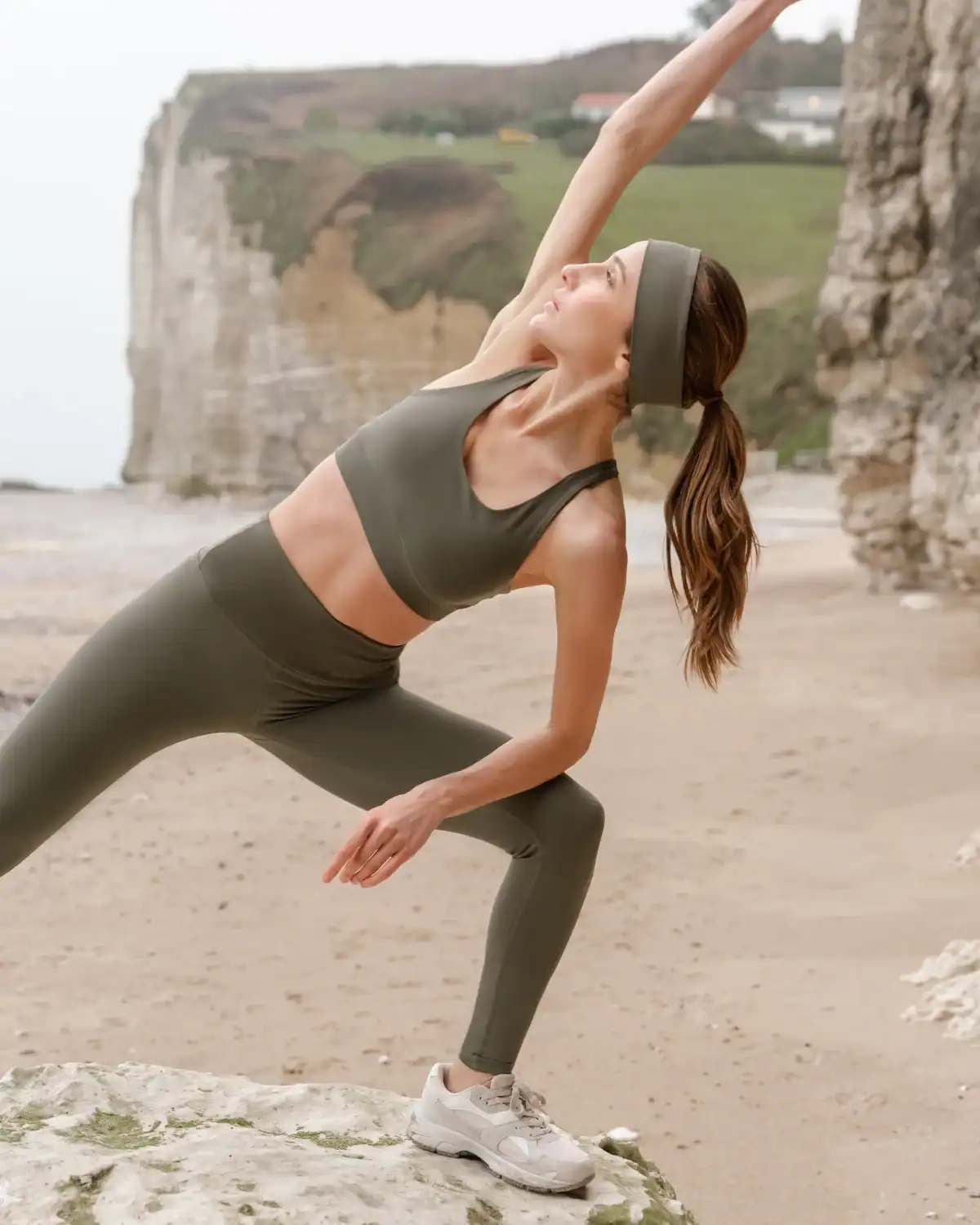
After testing several non-toxic activewear brands, Tripulse is the one I reach for when performance matters most.
Their leggings feel every bit as supportive as conventional athletic brands while relying primarily on plant-based materials instead of petroleum-based synthetics.
Made from 84% TENCEL™ Lyocell and 16% ROICA® V550, the fabric is breathable, moisture-wicking, and naturally odor-resistant.
One feature I especially appreciate is the hidden interior drawstring, which keeps the waistband securely in place during runs, strength training, and other more demanding workouts without changing the clean look of the leggings.
What really impressed me is how well the fabric performs after repeated workouts. It stays cool, doesn’t hold onto odors the way polyester often does, and maintains its shape remarkably well.
Price & Sizing
$189+ (Leggings) | $155+ (Biker Shorts) | $85+ (Sports Tops) | $149 (Sports Bras) | 2XS-3XL
materials
TENCEL™ Lyocell | ROICA® V550 | PYRATEX® Power III
location/shipping
Sweden | Ships Worldwide
WHY IT MADE MY (SHORT) LIST
- Excellent performance for strength training, running, and everyday movement.
- Hidden interior drawstring for a secure fit.
- Naturally breathable, moisture-wicking, and odor-resistant.
- Independently tested free from PFAS, BPA, and other harmful chemicals.
My testing experience
- My go-to leggings for lifting, strength training, and harder workouts.
- Completely squat-proof and stay in place throughout every movement.
- Hidden interior drawstring provides extra security when I want a more locked-in fit.
- Naturally breathable, moisture-wicking, and incredibly comfortable.
- Resist odors surprisingly well, even after sweaty workouts, so they stay fresher much longer than most synthetic leggings.
Our Favorites from Tripulse:
5. Cottonique | Best Activewear For Sensitive Skin
Best For: Anyone with sensitive skin, eczema, or chemical sensitivities looking for 100% organic cotton activewear.

Use the discount code SKL10 to save 10%!
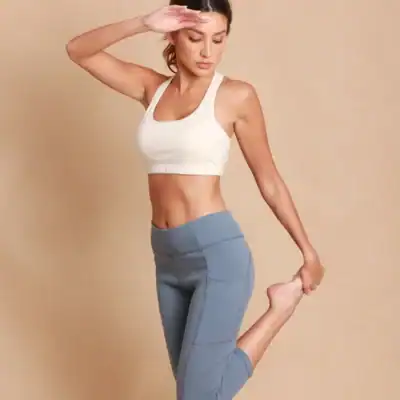
Finding activewear that’s gentle on sensitive skin is incredibly difficult, especially if you’re trying to avoid synthetic fabrics that may irritate eczema, contact dermatitis, or chemical sensitivities. That’s exactly why Cottonique stands out.
Their leggings are made from 100% GOTS-certified organic cotton with no spandex, making them one of the few truly low-synthetic activewear options available.
They’re also designed with sensitive skin in mind, using latex-free construction and minimizing materials that commonly trigger irritation.
The fabric feels soft and breathable but has very little stretch, making them better suited for walking, yoga, lounging, and everyday movement than high-impact workouts.
If your priority is finding organic cotton activewear that’s gentle on eczema-prone or sensitive skin rather than maximizing athletic performance, Cottonique is one of the best options I’ve tested.
Price & Sizing
$55 (Leggings) | 4-8 | $30 (Sports Bras) | 34B–46DD
materials
100% GOTS-Certified Organic Cotton
location/shipping
United States | Ships Internationally
WHY IT MADE MY (SHORT) LIST
- 100% organic cotton.
- Designed specifically for sensitive skin and chemical sensitivities.
- Latex-free construction with minimal synthetic materials.
- Breathable, comfortable fabric.
MY TESTING EXPERIENCE
- The leggings were true to size and very comfortable, but the lack of stretch definitely takes some getting used to.
- I appreciated the breathable cotton fabric and never experienced irritation, but they feel very different from traditional workout leggings.
- If reducing synthetic materials is your priority, they’re hard to beat.
Our Favorites from Cottonique:
6. Lezat | Most Stylish Organic Activewear
Best For: Anyone who wants organic activewear with more color, print, and style options.
Use the discount code SKL to save 10%!
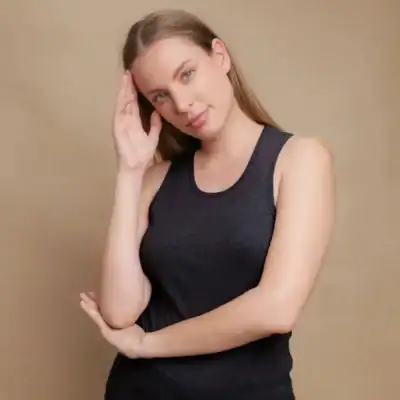
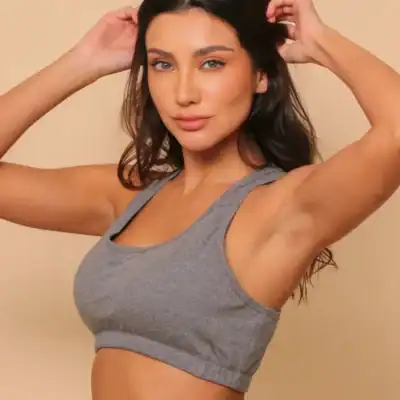
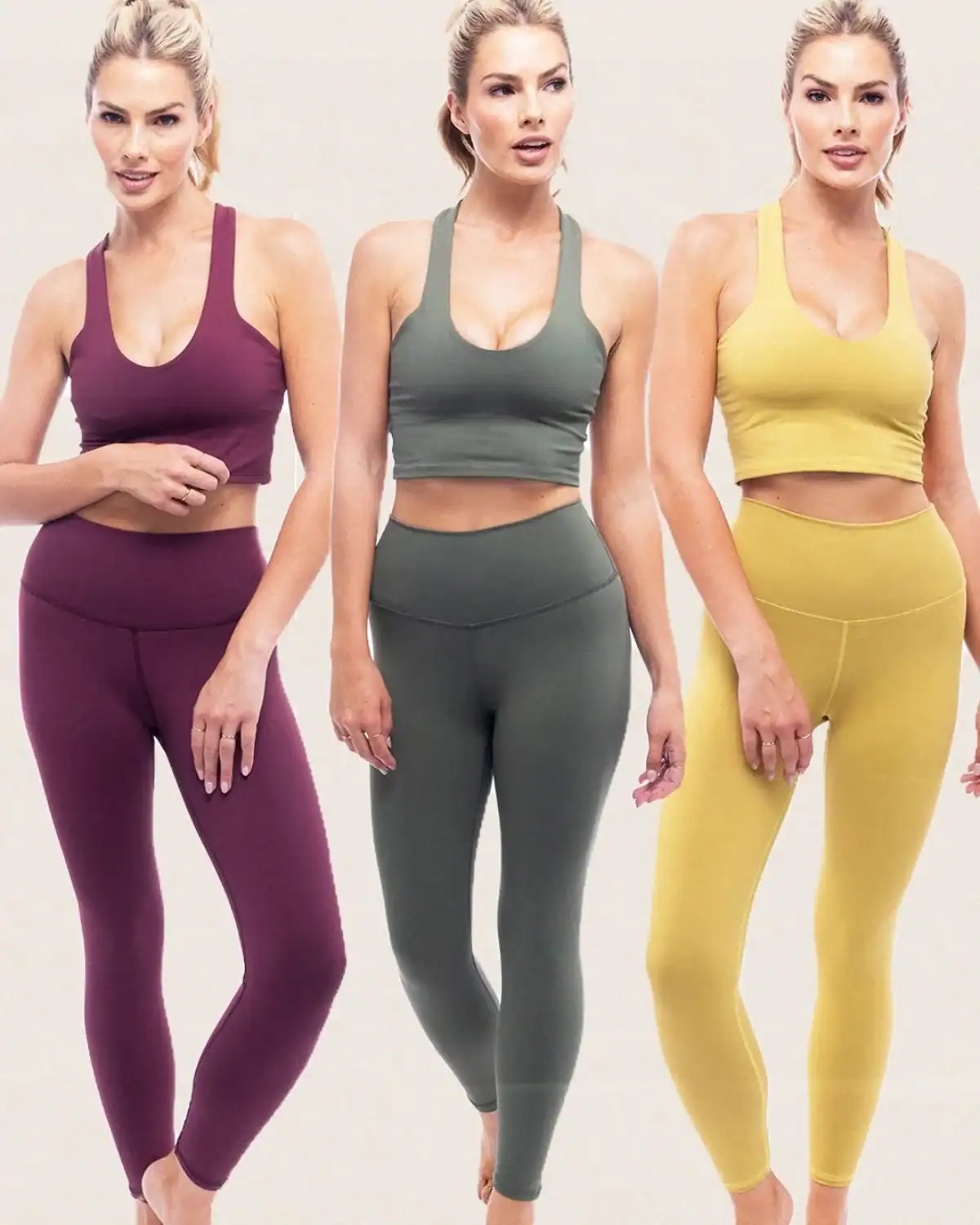
Lezat has one of the largest and most stylish organic activewear collections I’ve come across. I’ve yet to find another organic activewear brand with this much variety!
Beyond leggings, the brand offers multiple sports bras, biker shorts, dresses, one-pieces, matching sets, and seasonal colors that make building a coordinated wardrobe surprisingly easy.
Everything is made in Los Angeles using GOTS-certified organic cotton, and I appreciate that Lezat publishes its GOTS transaction certificates while dyeing fabrics in-house with low-impact dyes, a level of transparency that’s still uncommon in the fashion industry.
Price & Sizing
$88+ (Leggings) | $58 (Biker Shorts) | $68 (Skirts) | $48+ (Tops & Tanks) | $22+ (Sports Bras) | $117 (Jumpsuits) | $92 (Rompers) | XS-XL
materials
GOTS-Certified Organic Cotton | Spandex | Bio-Based Elastane
location/shipping
United States | Ships Worldwide
WHY IT MADE MY (SHORT) LIST
- One of the most stylish organic activewear collections available.
- Wide selection of silhouettes, colors, and prints.
- GOTS transaction certificates publicly available.
- Made in Los Angeles using low-impact dyes.
MY TESTING EXPERIENCE
- I’ve worn both their workout shorts and active dress, and they’ve quickly become favorites.
- The shorts are squat-proof, stay in place during workouts, and feel supportive without being restrictive.
- The dress has also been surprisingly comfortable for everyday wear, and I’d happily add more Lezat pieces to my closet.
👉 Low-tox wellness routine, head to toe. My best non-toxic yoga mats and cleanest protein powders guides cover two of the sneakiest sources of chemical exposure in a fitness routine.
7. ODDOBODY | Best Organic Cotton Bike Shorts
Best For: Anyone looking for 100% organic cotton bike shorts that won’t chafe during workouts or everyday wear.
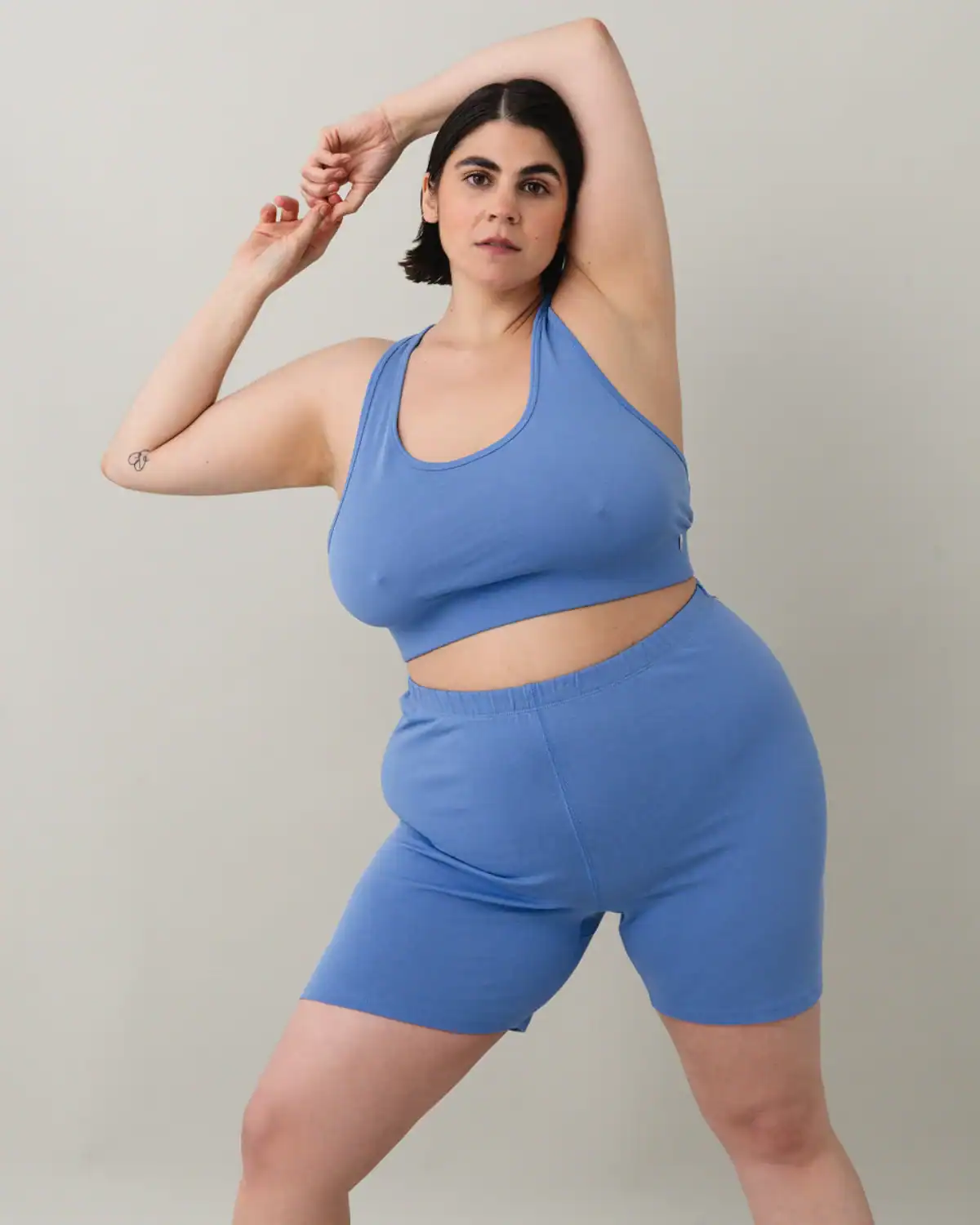
ODDOBODY is one of the very few brands making activewear from 100% organic Pima cotton instead of synthetic performance fabrics.
While the waistband contains elastic for stretch, it’s fully encased in organic cotton, so the fabric touching your skin remains 100% organic cotton.
The thicker ribbed cotton knit feels soft yet supportive without relying on spandex throughout the garment.
I also appreciate that ODDOBODY increased both the inseam and fabric weight after customer feedback about chafing, showing they’re actually listening and improving their products.
Although the collection is still small, their bike shorts and shelf bra offer a simple, breathable alternative for anyone looking to reduce synthetic fabrics in their workout wardrobe.
Price & Sizing
$70 (Biker Shorts) XS-3XL | $58 (Sports Bras) | 32A–44F
materials
100% GOTS-Certified Organic Pima Cotton | Elastic (Enclosed in Organic Cotton)
location/shipping
United States | Ships To Canada
WHY IT MADE MY (SHORT) LIST
- 100% organic cotton.
- Organic cotton-covered elastic waistband.
- Thoughtfully redesigned to reduce thigh chafing.
- GOTS-certified organic cotton and Fairtrade certified.
What customers are saying
- Prevent thigh chafing without feeling restrictive.
- Stay comfortable during lifting, walking, yoga, and everyday wear.
- Thicker cotton fabric feels supportive while remaining breathable, though there is slight sheerness during deeper movements, which is expected with 100% cotton.
8. Jungmaven | Best Hemp-Based Activewear
Best For: Anyone looking for hemp-based activewear that’s breathable, durable, and made with natural fibers.
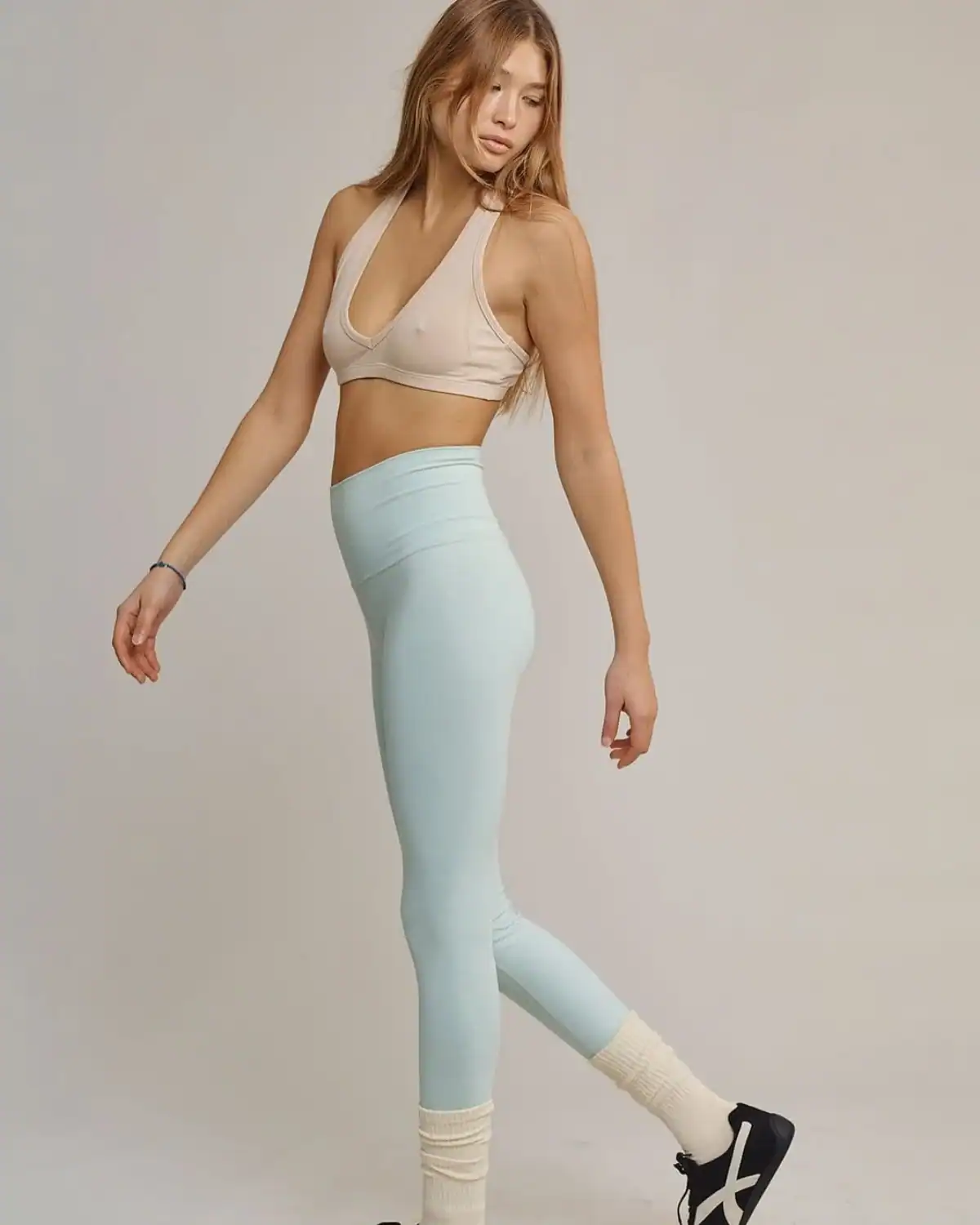
Jungmaven is one of the few brands making activewear with hemp, blending 27% hemp, 61% organic cotton, and 12% spandex to create a comfortable alternative to traditional synthetic workout clothes.
The fabric has a heavier, more substantial feel than many organic activewear brands while still naturally wicking moisture and helping regulate body temperature.
Unlike many hemp garments that can feel stiff, Jungmaven’s blend offers plenty of stretch and works well for everything from yoga and Pilates to strength training and everyday wear.
If you’re trying to reduce your reliance on petroleum-based performance fabrics without giving up comfort, it’s one of the strongest options I’ve found.
Price & Sizing
$98 (Leggings) | $58 (Biker Shorts) | $70 (Skort) | $44 (Tank Top) | $44 (Sports Bra) | $66 (Bodysuit) | $76 (Singlet) | XS-2XL
materials
Hemp | Organic Cotton | Spandex (Jersey)
location/shipping
United States | Ships Internationally
WHY IT MADE MY (SHORT) LIST
- One of the few hemp-based activewear brands.
- Breathable hemp, organic cotton, and spandex blend.
- Naturally moisture-wicking and temperature regulating.
- Made in California.
MY TESTING EXPERIENCE
- Durable, breathable, and noticeably more substantial than many all-cotton activewear brands.
- Stretchier than I expected for a hemp blend.
- The waistband runs a bit snug in the leggings, and the rise is quite high.
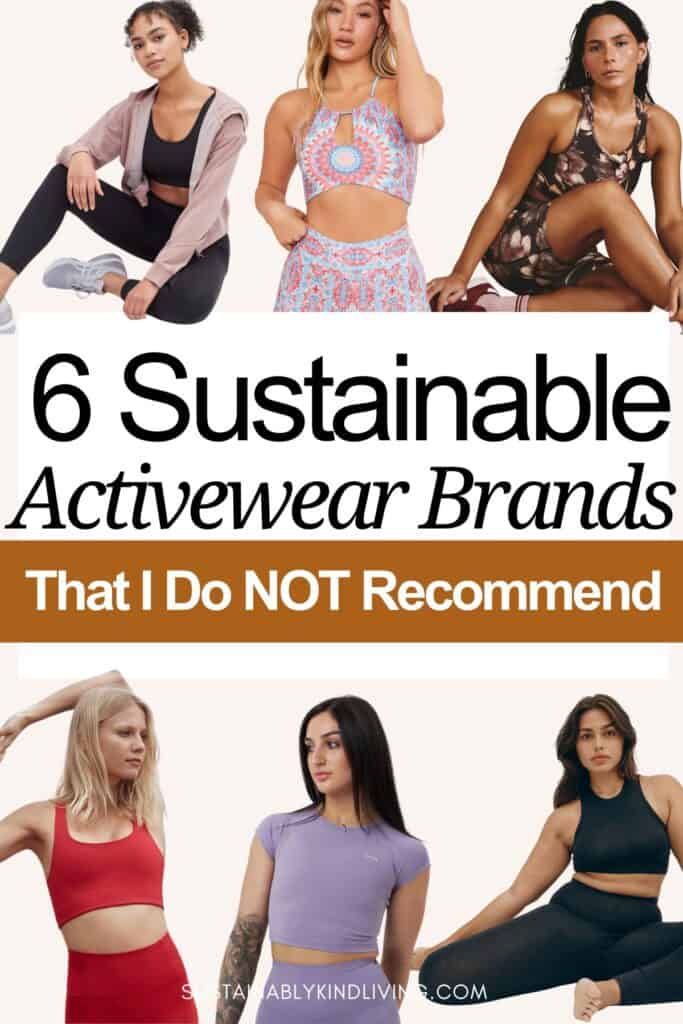
Great Sustainable Activewear Brands That Didn’t Make This List (& Why)
Not every sustainable activewear brand I researched earned a recommendation.
Some rely more heavily on synthetic materials than I’d like, while others simply didn’t outperform the brands above when it came to natural fiber content, transparency, or overall value.
These are all reputable brands with loyal followings, but they ultimately fell just short of making my final list.
Girlfriend Collective
Why It Didn’t Qualify: Girlfriend Collective is one of the best-known sustainable activewear brands, but its collections are made primarily from recycled polyester and elastane rather than organic cotton, hemp, or other plant-based fibers.
Best Organic Alternative: MATE The Label or Lezat
Organic Basics
Why It Didn’t Qualify: While Organic Basics offers some organic cotton essentials, its activewear collection relies largely on recycled nylon and recycled polyester blends. This guide prioritizes brands built around organic and plant-based materials.
Best Organic Alternative: MATE The Label or Lezat
Universal Standard
Why It Didn’t Qualify: Universal Standard is one of the industry’s best brands for size inclusivity, but its activewear is made primarily from synthetic performance fabrics rather than the organic and plant-based materials this guide focuses on.
Best Non-Toxic Alternative: Tripulse, Q for Quinn, or ODDOBODY
tentree
Why It Didn’t Qualify: I love tentree’s sustainability mission, but its activewear still leans heavily on recycled polyester blends and offers a much smaller activewear collection than the brands I recommend above.
Best Organic Alternative: Pact, Q For Quinn, or Jungmaven
Wolven
Why It Didn’t Qualify: Wolven creates beautiful, colorful activewear from recycled plastic bottles, but recycled polyester is still a synthetic fiber. For this guide, I prioritized brands made primarily from organic cotton, hemp, and other plant-based materials.
Best Organic Alternative: Lezat or MATE The Label
Orso Activewear
Why It Didn’t Qualify: Orso Activewear makes thoughtfully designed performance apparel using recycled synthetic fabrics. While I appreciate the brand’s sustainability efforts, this guide focuses on activewear made primarily from organic and plant-based materials.
Best Non-Toxic Alternative: Tripulse
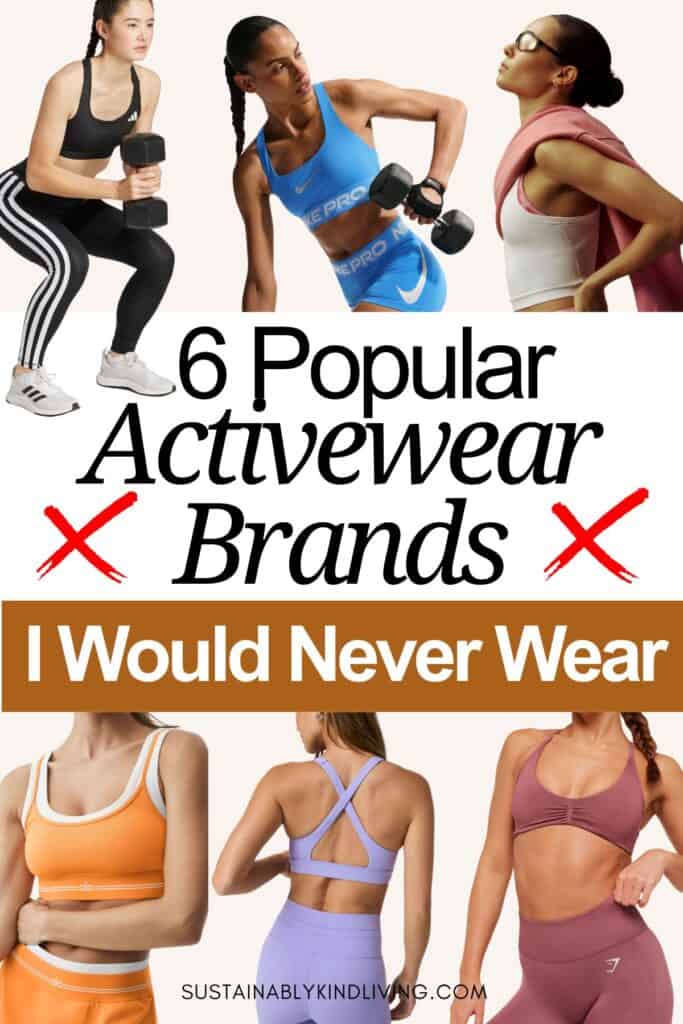
Activewear Brands We Do Not Recommend
These brands are incredibly popular, but I don’t recommend them.
When I shop for activewear, I’m looking for organic cotton, hemp, and other natural materials. I’m also looking for brands that back up their sustainability claims with real transparency.
These companies don’t meet that standard.
Nike
Why We Don’t Recommend It: Nike is built on polyester, nylon, and elastane. That’s the opposite of what I’m looking for in healthier clothing. Add in the company’s long history of labor controversies, and it’s simply not a brand I support or recommend.
Lululemon
Why We Don’t Recommend It: Lululemon charges premium prices for synthetic fabrics. Its bestselling leggings are made primarily from nylon and elastane, not natural fibers. If I’m spending that much money, I expect better materials.
Adidas
Why We Don’t Recommend It: I recently walked through an Adidas store looking for natural fiber clothing and found almost none. Hoodies, joggers, sweatshirts, leggings…polyester was everywhere. Recycled polyester is still polyester, and I have no interest in paying for plastic clothing.
Alo Yoga
Why We Don’t Recommend It: Alo Yoga sells a luxury wellness lifestyle, but most of its clothing is still made from synthetic fabrics. The company has also faced criticism over its workplace culture. For me, that’s enough to look elsewhere.
Gymshark
Why We Don’t Recommend It: Gymshark is almost entirely synthetic. Compression fabrics, nylon, polyester, elastane…that’s the brand. If you’re trying to reduce plastic in your wardrobe, Gymshark isn’t the answer.
Vuori
Why We Don’t Recommend It: Vuori gets recommended all the time, but when you actually read the fiber content, it’s more polyester and elastane. I don’t care how soft the fabric feels. It’s still plastic, and I don’t recommend it.
How I Chose The Best Non-Toxic Activewear Brands
I’ve spent over a decade researching fabric composition and ingredient sourcing across the apparel industry, and I personally test or vet every product I feature before it makes a recommendation list.
Here’s the exact process every brand in this guide went through before earning its place.
1. Researching The Brand
Before anything gets tested, I look at the brand itself: fabric sourcing, manufacturing practices, certifications, and how transparent they actually are about what their products are made of.
Brands that rely on vague sustainability language instead of clear material information don’t make my list, no matter how well they market themselves.
2. Checking Materials Against Marketing
I prioritize organic cotton, hemp, TENCEL™ Lyocell, merino wool, and other natural fibers, and I scrutinize brands built primarily around polyester, nylon, and other petroleum-based synthetics, recycled or not, it’s still plastic.
I check for third-party certifications like GOTS, OEKO-TEX®, and Fair Trade Certified when available, and I use the same red flags from my greenwashing guide to rule out brands whose sustainability claims didn’t match their actual fabric composition.
3. Testing In Real Life
For most of the brands in this guide, I personally wore and tested the activewear, through strength training, chasing kids, grocery runs, and everything in between, checking fit, comfort, breathability, and how it held up after repeated washing.
For the brands I didn’t personally wear-test, I did not skip vetting: I read through the available customer reviews on the brand’s own site and drew on my direct past experience with the brand’s other products, like underwear or socks, to assess consistency in quality and sizing before including them here.
I’m noting which brands fall into each category above so you know exactly how each recommendation was reached.
4. Ranking The Final Recommendations
No brand is perfect, and I don’t expect activewear to be completely free of stretch fibers. What I looked for was overall product quality, comfort, durability, size inclusivity, and pricing, and each brand had to earn its spot against the others in this guide, not just clear a baseline.
My goal throughout was to find companies that genuinely prioritize healthier materials and greater transparency, not better marketing copy.
The Most Toxic Materials & Chemicals In Activewear, Explained
We touched on the most toxic materials and chemical finishes in the introduction, and below I’ll break them down a bit more.
Polyester
Polyester is the most common material used in activewear, and it’s made from petroleum. Brands love it because it’s inexpensive, lightweight, and durable.
I avoid it for a few reasons. It’s hydrophobic, meaning it traps heat and sweat against the skin instead of letting it evaporate, which creates a warm, damp environment during a workout.
It also requires disperse dyes to bind to the synthetic fiber, and these are a well-documented cause of contact dermatitis, especially when heat and sweat cause the dye to leach out of the fabric.
On top of that, it’s a plastic-based fiber that sheds microplastics every time it’s washed, and synthetic textile laundering is estimated to be responsible for roughly 35% of the microplastics found in the ocean. (Full breakdown in what is polyester and why it is bad.)
Even recycled polyester isn’t the solution many brands claim it is. It’s still plastic, and a 2024 study found recycled polyester actually shed more microfibers than virgin polyester during washing.
Nylon
Nylon is another petroleum-based synthetic found in everything from leggings to sports bras.
It’s valued for its stretch and durability, but production is energy-intensive and releases nitrous oxide, a greenhouse gas roughly 300 times more potent than CO2.
Like polyester, it doesn’t breathe well against the skin, and the finished fabric sheds microplastics and isn’t biodegradable.
Acrylic
Acrylic is essentially plastic made to mimic wool. While it’s less common in activewear than polyester or nylon, lab testing has found it sheds more microfibers per wash than polyester or nylon, and it offers few benefits over natural fibers.
PFAS (“Forever Chemicals”)
PFAS are used to make activewear water-repellent, stain-resistant, and quick-drying, and they’re often marketed under terms like “moisture-wicking” or “sweat-proof.”
They don’t break down in the environment or the human body, which is where the “forever chemical” name comes from.
Research has linked PFAS exposure to thyroid dysfunction, immune suppression, and hormone disruption, and independent testing has found PFAS in roughly a quarter of tested yoga pants and leggings from popular brands.
California and New York have both banned intentionally added PFAS in textiles, and more states are following.
BPA
BPA is typically used as a dye-fixing agent in polyester and spandex blends.
It’s a well-studied hormone disruptor that mimics estrogen and can interfere with metabolism, reproduction, and growth.
In 2023, the Center for Environmental Health found BPA in leggings, sports bras, shorts, and athletic shirts from major brands, including Nike, Adidas, and Patagonia, at levels up to 40 times California’s legal skin-exposure limit, and sent legal notices to eight brands as a result.
Formaldehyde
Formaldehyde-based resins are commonly used on synthetic fabrics to reduce wrinkling and help dyes set.
It’s a recognized skin irritant and sensitizer, and it’s a common cause of the “chemical smell” you sometimes notice on new synthetic activewear.
Antimicrobial or Odor-Resistant Coatings
These finishes are usually silver nanoparticles or other synthetic biocides added to kill odor-causing bacteria. The trade-off is that they don’t just kill the bacteria causing odor.
Research on antimicrobial textiles has found they can also disrupt the skin’s natural microbiome, the beneficial bacteria that help regulate skin pH, moisture, and barrier function.
The Safest Materials For Non-Toxic Activewear, Explained
These are the materials I look for first, and for good reason.
They’re grown or produced without the petroleum base, chemical finishes, and microplastic shedding that come with synthetics.
Most of them outperform synthetics on the things that actually matter during a workout, like breathability and odor control, without any added chemistry to get there.
Organic Cotton
Organic cotton is my favorite material for yoga, walking, Pilates, strength training, and everyday movement (we even wrote a full guide on organic cotton fabric here).
It’s breathable and soft against the skin, and because it’s grown without synthetic pesticides and fertilizers, you’re not adding an agricultural chemical footprint on top of the fabric itself.
Conventional cotton is one of the most pesticide-intensive crops grown in the U.S., using nearly 1.3 billion pounds of synthetic fertilizer a year and ranking among the most fertilizer-intensive crops grown domestically, so the organic version isn’t just a marketing distinction; it changes what’s actually on the fiber before it ever reaches a garment.
Hemp
Hemp is one of the most sustainable fibers available, and it’s also one of the most durable.
It’s naturally resistant to pests, so it’s typically grown without pesticides in the first place, and the fiber itself is naturally antibacterial, which means it resists odor without any added chemical treatment.
It also requires meaningfully less water to grow than conventional cotton, with estimates ranging from roughly 20% to as much as 4x less depending on growing method.
The fabric softens with every wash rather than breaking down, so it holds up to repeated workouts and washing far longer than most natural fibers.
TENCEL™ Lyocell
Made from sustainably sourced wood pulp, TENCEL™ Lyocell is exceptionally soft, breathable, and moisture-wicking, all without synthetic fiber or added chemical finishes.
It’s produced in a closed-loop process that recovers over 99.8% of the solvent used, so very little of the processing chemistry ends up as waste.
It also biodegrades at end of life, unlike polyester or nylon, which is a real advantage for activewear that gets replaced often as it wears out.
Merino Wool (Non “Super Washed”)
Merino wool is naturally temperature regulating, moisture wicking, and odor resistant, which makes it a strong choice for hiking, outdoor workouts, and cooler weather.
Its crimped fiber structure traps air for insulation while wicking moisture vapor away from the skin, so it manages sweat and temperature the way synthetic “performance” fabrics are chemically engineered to, except merino does it as a byproduct of the fiber’s natural structure instead of a chemical coating.
It’s also naturally antimicrobial, so it resists odor over multiple wears without any added treatment.
One Thing To Check: A lot of merino activewear is superwash treated to make it machine washable, which strips the fiber’s outer scales with chlorine and coats it in a plastic resin.
That coating adds exactly the kind of chemistry merino is supposed to skip, and it dulls some of wool’s natural moisture-wicking and temperature regulation in the process.
If the wool isn’t labeled “non-superwash,” assume it’s been treated this way.
What About Bamboo?
Roughly 99% of “bamboo fabric” is actually bamboo viscose, made by dissolving the plant in carbon disulfide, a toxic chemical linked to neurological damage in factory workers.
By the time it reaches you, it’s chemically closer to rayon than anything you’d call natural, and the FTC has fined retailers for labeling it “bamboo” without disclosing that.
The only version worth trusting is bamboo lyocell, made in a closed-loop process like TENCEL, but it’s a small fraction of what’s sold under the bamboo name. If a label just says “bamboo,” assume it’s viscose.
This is exactly why I don’t take a brand’s material claims at face value. “Bamboo” sounds like the greenest option on the shelf, and for most products carrying that label, it’s the opposite.
Right now, I don’t have a brand I can confidently recommend for bamboo activewear.
Hemp and TENCEL™ Lyocell get you the same benefits through a verified process, without needing to untangle which version of “bamboo” you’re actually getting.
Greenwashing in Activewear: What Brands Don’t Tell You
The activewear industry is full of buzzwords like eco-friendly, conscious, green, earth-friendly, and sustainable. Unfortunately, those terms aren’t regulated.
The FTC’s own Green Guides caution against unqualified “eco-friendly” claims and explicitly decline to define “sustainable” at all, so brands can use it however they like.
A 2020 European Commission study found that 53% of environmental claims examined were vague, misleading, or unfounded, and 40% were entirely unsubstantiated. These terms often tell you very little about what’s actually in your clothes.
One of the biggest examples is recycled polyester.
Many brands advertise activewear made from recycled plastic bottles as a sustainable breakthrough. While using recycled materials can help reduce waste, it doesn’t change the fact that polyester is still a synthetic, petroleum-based fiber.
It can still shed microplastics, and a 2024 study actually found recycled polyester released more microfibers during washing than virgin polyester. It isn’t biodegradable, and it doesn’t suddenly become a natural fabric because it was recycled.
You’ll also see brands highlight that one item contains organic cotton while the rest of the collection is almost entirely polyester and nylon. Or they’ll feature one “eco collection” even though the majority of their products are still made from synthetic materials.
This kind of selective spotlighting is a recognized greenwashing tactic sometimes called a “green sheen” or “single attribute” claim, where one narrow, technically true claim is used to imply the whole product or brand is environmentally responsible.
That’s why I never judge a brand by its marketing. I look at the fiber content of the products themselves.
My advice is simple: Ignore the buzzwords and read the fabric label. The materials will tell you far more than the marketing ever will.
The Most Important Certifications For Organic Activewear
Certifications aren’t everything, but they can help separate brands that are transparent from those that rely on marketing buzzwords.
Here are the ones I look for most often when shopping for activewear.
GOTS (Global Organic Textile Standard)
GOTS is considered the gold standard for organic textiles. It verifies that fibers are organically grown while also setting strict environmental and social criteria throughout the manufacturing process.
If a brand claims to sell organic cotton, this is one of the certifications I trust most.
OEKO-TEX® Standard 100
OEKO-TEX® Standard 100 tests finished textiles for hundreds of potentially harmful substances, including certain pesticides, heavy metals, formaldehyde, and other chemical residues.
It doesn’t mean a fabric is organic, but it does provide reassurance that the finished product has been tested for harmful chemicals.
Fair Trade Certified™
Fair Trade Certified focuses on the people making your clothing. It helps ensure workers receive fair wages, work in safer conditions, and have stronger labor protections.
While it doesn’t guarantee a garment is organic, it’s a certification I always appreciate seeing.
bluesign®
bluesign® focuses on reducing harmful chemicals throughout the manufacturing process. It sets standards for safer chemical management, worker safety, and environmental impact by auditing the chemistry used at the dyeing and finishing stage, before it ever reaches the fabric.
It’s currently transitioning its labels to a new “bluepass” mark through late 2026, so you may see either name on garments right now.
Many technical outdoor and performance brands use bluesign® approved materials, especially when natural fibers aren’t practical.
Responsible Wool Standard (RWS)
If you’re buying merino wool activewear, look for the Responsible Wool Standard. It promotes better animal welfare, including a ban on mulesing, and more responsible land management practices throughout the wool supply chain.
Frequently Asked Questions About Organic Activewear
The healthiest activewear materials depend on how you exercise.
Organic cotton is my favorite for yoga, walking, Pilates, strength training, and everyday wear because it’s breathable and comfortable.
TENCEL™ Lyocell is excellent for moisture management, while merino wool naturally regulates temperature and resists odors, making it a great choice for hiking, running, and outdoor activities.
If you’re trying to reduce your exposure to synthetic materials, look for activewear made primarily from organic cotton, hemp, TENCEL™ Lyocell, or merino wool.
These natural fibers are excellent alternatives to polyester and nylon while still providing comfort and performance for many types of exercise.
Polyester is a petroleum-based synthetic fiber and the most common material used in activewear today.
It can shed microplastics during washing and is often treated with chemical finishes for moisture-wicking, stain resistance, or odor control. While research on skin exposure is still evolving, I choose natural fibers whenever possible.
Recycled polyester helps reduce plastic waste, but it’s still polyester. It still sheds microplastics, isn’t biodegradable, and doesn’t become a natural fiber simply because it’s made from recycled materials. I consider it an improvement over virgin polyester, but it isn’t my first choice.
Yes. Organic cotton is an excellent choice for yoga, walking, Pilates, strength training, and everyday movement.
For higher-intensity workouts or activities where moisture management is more important, I often prefer blends that include TENCEL™ Lyocell or natural merino wool.
There’s no single best brand for everyone, but Tripulse is my top overall recommendation for performance, transparency, and natural materials.
If you’re shopping on a budget, I also love Pact, while MATE The Label, Lezat, and Jungmaven are excellent choices depending on your style and needs.
In my opinion, yes. Better materials often mean better comfort, improved breathability, and less reliance on petroleum-based fabrics. I’d rather invest in a few well-made pieces than continually replace lower-quality synthetic activewear.
The certifications I trust most are GOTS (Global Organic Textile Standard) for organic fibers, OEKO-TEX® Standard 100 for harmful substance testing, Fair Trade Certified™ for worker protections, bluesign® for safer chemical management, and the Responsible Wool Standard (RWS) for merino wool products.
Sometimes, but not always. Most activewear contains a small amount of elastane or spandex to improve stretch and durability.
I don’t expect brands to eliminate synthetic fibers completely. Instead, I look for companies that make organic cotton, hemp, TENCEL™, or merino wool the primary material rather than polyester or nylon.
Absolutely. Merino wool is naturally breathable, moisture-wicking, temperature-regulating, and odor-resistant, making it one of the best natural performance fabrics available. It’s especially well suited for hiking, running, travel, and cooler-weather workouts.
Synthetic fabrics like polyester, nylon, and acrylic can shed tiny plastic fibers during washing. Those microplastics can enter waterways and the environment over time.
Natural fibers like organic cotton, hemp, TENCEL™, and merino wool don’t release plastic microfibers in the same way.
Wash organic activewear in cold water using a gentle detergent and skip fabric softeners whenever possible. Air drying helps extend the life of the fabric, and washing only when needed reduces wear while helping synthetic blends release fewer microplastics over time.
Still Deciding?
- Choose MATE The Label or Lezat if you’re looking for the closest alternative to brands like Lululemon, Vuori, or Alo. They have the most elevated colors, silhouettes, and everyday styles while prioritizing better materials.
- Choose Pact or Q for Quinn if you’re building a healthier wardrobe on a budget. Both make comfortable organic cotton basics that are perfect for yoga, walking, lounging, and everyday wear.
- Choose Tripulse if performance comes first. It’s my favorite for higher-intensity workouts and one of the best examples of how activewear can perform without relying primarily on polyester.
- Choose Jungmaven if you want to wear more hemp. Their hemp and organic cotton blends are breathable, durable, and great if you’re trying to move beyond conventional activewear fabrics.
- Choose Cottonique if you have eczema, multiple chemical sensitivities (MCS), allergies, or extremely sensitive skin. Their undyed, chemical-minimal clothing is one of the best options I’ve found for people who need the simplest fabrics possible.
Final Thoughts On Non-Toxic & Organic Activewear
Finding truly organic activewear isn’t always easy. Most brands still rely heavily on polyester, nylon, and elastane, even when they’re marketed as “sustainable” or “eco-friendly.”
The good news is that there are companies proving you don’t have to settle for plastic-heavy workout clothes. Whether you prefer organic cotton, hemp, TENCEL™, or merino wool, there are better options that prioritize transparency, thoughtfully sourced materials, and long-lasting quality.
You don’t have to replace your entire wardrobe overnight, either. Start with one or two pieces that fit your lifestyle, wear them often, and build from there. Small changes really do add up over time.
My hope is that this guide helps you feel more confident shopping for activewear, not because you memorized every certification or fabric, but because you know what questions to ask and what marketing claims to look past.
Once you start reading fiber labels instead of the front of the tag, it becomes much easier to find brands that genuinely align with your values.
At the end of the day, the best organic activewear is the kind you’ll actually reach for, pieces that make you feel comfortable, support your movement, and help you reduce your reliance on synthetic fabrics one workout at a time.
Continue Your Non-Toxic Workout Routine
- Non-Toxic Protein Powders: A guide to cleaner protein powders made with organic ingredients and minimal additives.
- Non-Toxic Leggings: A quick guide to leggings made with safer fabrics and lower-tox manufacturing practices.
- Non-Toxic Sports Bras: A guide to sports bras made with safer fabrics like organic cotton, TENCEL™, and lower-tox performance materials.
- Barefoot Running Shoes: A beginner-friendly look at minimalist running shoes designed for natural movement and healthier foot alignment.
- Non-Toxic Yoga Mats: A guide to yoga mats made without PVC, highlighting natural rubber, cork, and organic cotton options.
📌 Save This Guide For Later
Save this guide to revisit anytime. From safer workout fabrics to everyday wellness essentials, this pin makes it easy to come back when you’re ready to upgrade your activewear with cleaner, more thoughtful options.
Sources & Further Reading
If you’re like me and want to understand what’s actually behind activewear marketing, not just what brands claim, these are some of the resources I found most helpful while researching this guide.
They cover textile certifications, greenwashing, synthetic fabrics, PFAS, BPA, microfiber pollution, and the health and environmental impacts of the materials commonly used in workout clothing.
- Global Organic Textile Standard (GOTS) — The leading international certification for organic textiles, covering organic fiber content alongside strict environmental and social criteria throughout manufacturing.
- OEKO-TEX® STANDARD 100 — Independent certification that tests finished textiles for hundreds of potentially harmful substances, including formaldehyde, heavy metals, and pesticide residues.
- Fair Trade Certified™ — Certification that promotes fair wages, safer working conditions, and stronger labor protections throughout apparel supply chains.
- bluesign® — A manufacturing standard focused on reducing hazardous chemicals and improving environmental performance during textile production and finishing.
- Responsible Wool Standard (RWS) — A certification for wool that promotes animal welfare, responsible land management, and traceable supply chains.
- U.S. Environmental Protection Agency (EPA): Per- and Polyfluoroalkyl Substances (PFAS) — An overview of PFAS, their health and environmental concerns, and ongoing regulatory efforts surrounding these persistent chemicals.
- National Institute of Environmental Health Sciences (NIEHS): Bisphenol A (BPA) — A science-based resource explaining BPA exposure, endocrine disruption, and current health research.
- Center for Environmental Health (CEH) — Consumer advocacy organization that has published investigations into BPA found in athletic apparel from major clothing brands.
- Federal Trade Commission (FTC): Green Guides — Official guidance explaining how companies should make environmental marketing claims and helping consumers recognize greenwashing.
- European Commission: Screening of Environmental Claims — Research showing that many environmental marketing claims are vague, misleading, or lack sufficient evidence, highlighting the prevalence of greenwashing.
- Textile Exchange — A nonprofit organization providing research, standards, and data on preferred fibers, sustainable textile production, and responsible sourcing.
- Lenzing AG (TENCEL™ Lyocell) — Technical information on TENCEL™ Lyocell production, including the closed-loop manufacturing process and fiber performance characteristics.
- International Agency for Research on Cancer (IARC): Formaldehyde — Scientific evaluations on formaldehyde and its health effects, including its classification as a human carcinogen under certain exposure scenarios.
- National Eczema Association — Educational resources on contact dermatitis, skin sensitivities, and common textile-related irritants that can affect sensitive skin.
This post was graciously sponsored by Q for Quinn. As always, we only work with brands that we 100% stand behind. Would you like to sponsor one of our sustainable round-ups? Contact us here.

Steal My Non-Toxic Cleaning Checklist!
Believe us, it’s the BEST…. and it’s free. Does it really get any better than that?! Sign up for our newsletter and get this free checklist to clean your home without any harmful chemicals!