 Shop My Favorite Non-Toxic Gifts Of 2026!
SKL is reader supported. When you buy through links on our site, we may earn affiliate commission. Learn more here.
Non-toxic food storage containers are one of the easiest ways to reduce everyday chemical exposure in your kitchen. I didn’t always think twice about the containers I was using.
Like most people, I had a cabinet full of plastic leftover containers that had been around for years. Some were stained, some were warped, and all of them felt like part of normal life.
But once I started digging into what actually goes into plastic food storage, things shifted quickly. What surprised me most wasn’t just BPA, but everything else that isn’t listed on labels.
Additives, stabilizers, and chemical compounds that can migrate into food, especially when heat, fat, or acidity are involved.
This is something I started noticing more once I began looking into my non-toxic cookware, where materials and heat play a huge role in everyday exposure.
It made me look at something as simple as storing leftovers in a completely different way.
SKL top picks, in a nutshell…
- Best Non-Toxic Glass Food Storage Set: Caraway
- Best Glass Containers For Meal Prep & Reheating: Anyday
- Best Silicone Non-Toxic Food Storage Bags: Stasher
- Best Stainless Steel Food Storage For On-the-Go: Klean Kanteen
- Best Non-Toxic Food Storage For Kids’ Lunches: PlanetBox
That’s when I started slowly replacing what I had with safer materials like glass, stainless steel, and food-grade silicone. Not all at once, and not perfectly, but intentionally.
Over the past few years, I’ve tested dozens of options in my own kitchen, paying close attention to materials, durability, and how they actually function in real life.
Some looked great but didn’t hold up. Others surprised me and became everyday staples.
Here are the non-toxic food storage containers that stood out the most after testing and research (see how I vet these brands here).
Best Non-Toxic Food Storage Containers: At a Glance Comparison
Mobile Users: Scroll to see full comparison →
| Brand | Best For | Materials | Price |
|---|---|---|---|
| Caraway | Non-toxic glass food storage set | Ceramic-Coated Glass | Silicone | $$$ |
| Anyday | Meal prep & reheating | Borosilicate Glass | Silicone | Stainless Steel | $$$ |
| Stasher | Flexible food storage & freezer use | Platinum-Grade Silicone | $$ |
| Klean Kanteen | On-the-go stainless steel storage | 18/8 Stainless Steel | Silicone | $$ |
| ECOlunchbox | Plastic-free lunch & travel | Stainless Steel | Silicone | $$ |
| PlanetBox | Kids lunches & school meals | 18/8 Stainless Steel | $$ |
| Pyrex | Budget-friendly glass containers | Soda-Lime Glass | Plastic | $ |
| Hydro Flask | Durable meal prep containers | 18/8 Stainless Steel | $$ |
| WeeSprout | Compact & budget stainless set | 18/8 Stainless Steel | Silicone Lids | $ |
Why Choosing Non-Toxic Food Storage Containers Matters
If you’re using plastic food storage containers every day, you’re not just storing leftovers. You’re also creating a small but consistent source of chemical exposure that adds up over time.
When plastic is exposed to heat, oily foods, or acidic ingredients like tomato sauce or citrus, it becomes more likely to release chemicals into your food.
And if you’re regularly reheating food, the material matters even more under heat, which is where choosing non-toxic microwave containers can make a meaningful difference.
Labels like “BPA-free” sound reassuring, but they don’t tell the full story. Many plastics are made with replacement chemicals like BPS or BPF, along with other additives that aren’t required to be disclosed, which makes it difficult to know what you’re actually being exposed to.
Toxic Chemicals & Materials To Avoid In Food Storage
One of the hardest parts about choosing safe food storage is that many of the most concerning chemicals are never listed on the label.
Plastic containers can contain a mix of additives that are used during manufacturing, and these can migrate into your food over time, especially with heat or repeated use.
Bisphenols (BPA, BPS, BPF)
These are commonly used to make plastics more rigid. BPA has been widely studied as an endocrine disruptor, meaning it can interfere with the body’s natural hormone systems over time.
In response, many brands replaced it with alternatives like BPS or BPF, but early research suggests these chemicals may behave in similar ways in the body, which makes “BPA-free” a lot less reassuring than it sounds.
Phthalates
Phthalates are often added to plastics to increase flexibility. They don’t bind tightly to the material, which means they can more easily leach into food.
They’ve been linked to hormone disruption and developmental concerns, particularly with long-term exposure.
Indirect Additives
This is the category most people never hear about. Indirect additives include stabilizers, lubricants, dyes, and leftover chemical residues from the manufacturing process.
Companies are not required to disclose these, so even products marketed as “safe” can still contain a mix of unknown substances.
Heavy Metals & Contaminants
Some plastics, especially recycled plastics, may contain trace amounts of heavy metals like lead or cadmium.
These can accumulate in the body over time and are not something you want anywhere near your food.
The Safest Materials For Non-Toxic Food Storage
Once you start moving away from plastic, the next question is which materials actually make the most sense for your kitchen.
Not every non-toxic option functions the same way, and understanding the differences can help you choose what you’ll actually use every day.
Glass
Glass is one of the most reliable options for food storage because it is non-reactive and doesn’t absorb odors or stains.
Borosilicate glass is the most durable choice and can handle temperature changes much better than standard soda-lime glass, which is more prone to cracking with sudden heat shifts.
Glass works especially well for leftovers, meal prep, and anything you plan to reheat, and the same principles apply when choosing non-toxic dinnerware for everyday use.
Stainless Steel
Stainless steel is a great option when you need something lightweight and durable. It won’t break, it doesn’t leach chemicals, and it’s ideal for packing lunches or taking food on the go.
Most high-quality containers use 18/8 stainless steel, which offers a good balance of strength and corrosion resistance.
Food-Grade Silicone
Silicone is flexible and lightweight, making it great for freezer storage or saving space, while platinum-grade silicone is the preferred standard because it is more stable and less likely to contain fillers.
It’s a practical option for snacks, liquids, leftovers, and on-the-go storage, especially for anything that benefits from a flexible, space-saving, and more adaptable shape.
If You’re Starting to Question What’s in Your Kitchen…
If you’re looking to make a few thoughtful changes, these guides can help make the transition feel a lot less overwhelming.
I’d start with non-toxic cookware, since heat is one of the most direct exposure points, then look at reusable ziplock alternatives if you’re trying to cut down on plastic.
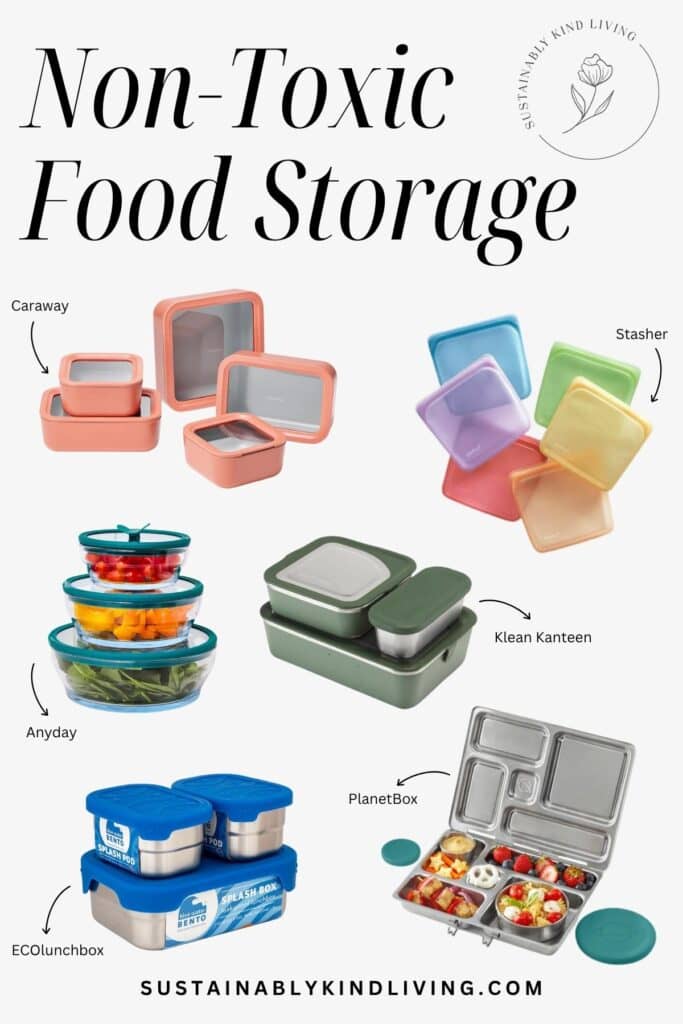
Not all non-toxic food storage containers are created equal, and after testing a wide range of options, a few brands consistently stood out.
Some are better for meal prep, others are ideal for packing lunches, and a few are just incredibly well-made and worth the investment.
What you’ll notice about every option below is that material transparency comes first.
These are brands that clearly disclose what they use, avoid unnecessary coatings or hidden additives, and hold up to everyday use without breaking down over time.
The Best Non-Toxic Food Storage Containers In 2026
1. Caraway — Best Non-Toxic Glass Food Storage Set
Best For: A beautifully designed, all-in-one glass storage system for everyday use
Use the discount code SKL to save 10%!
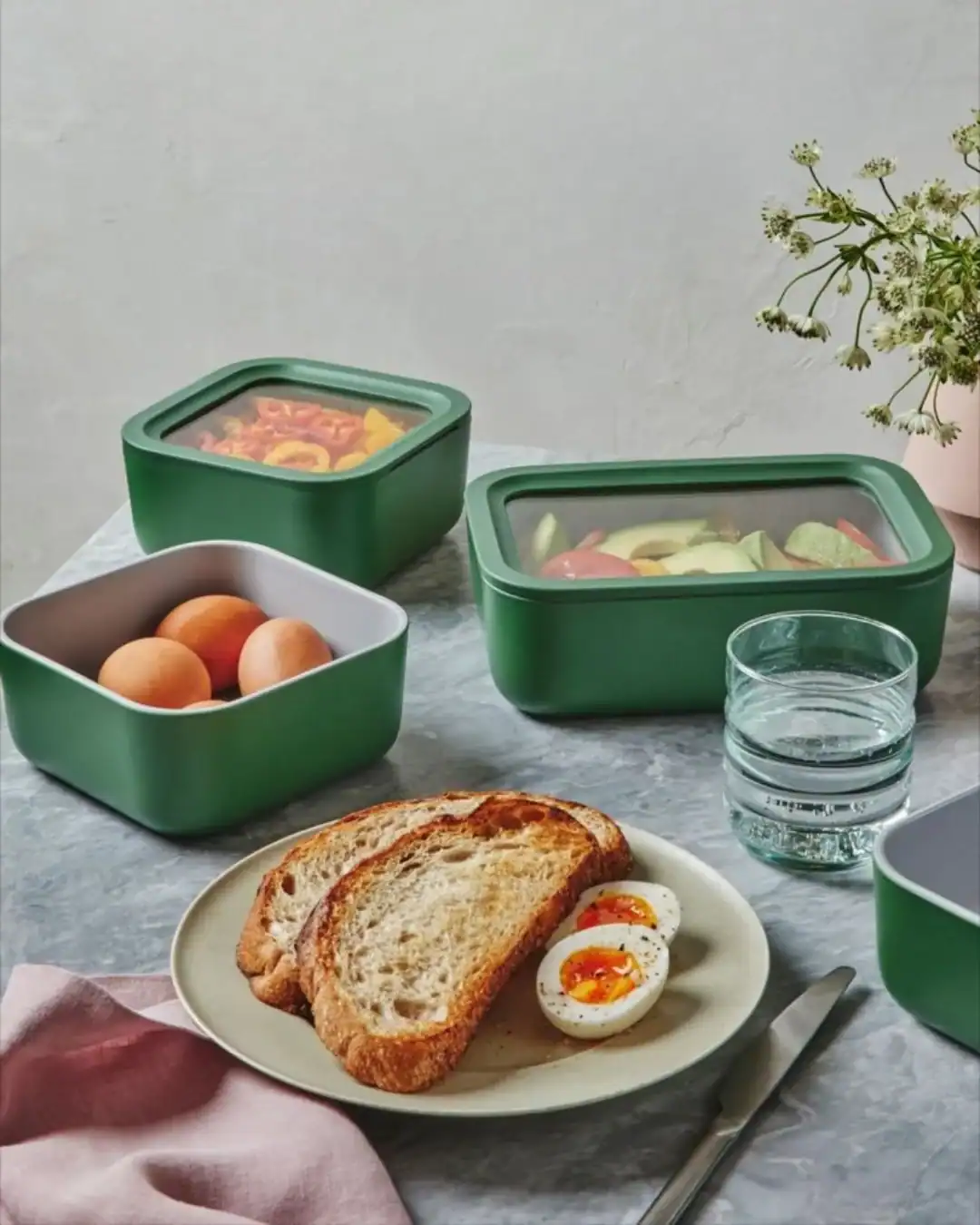
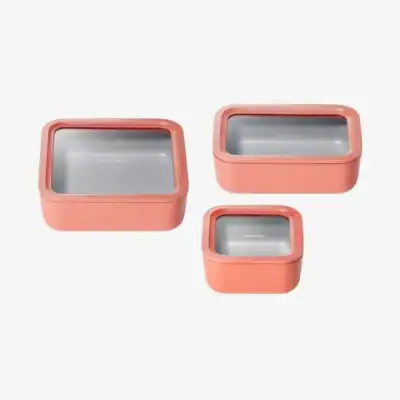
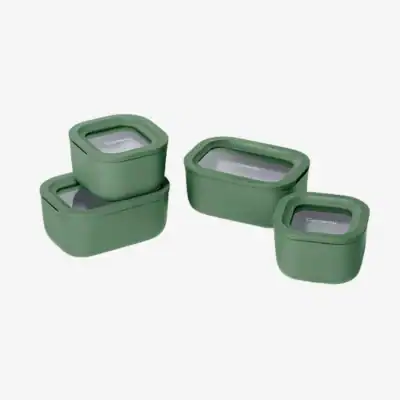
Caraway combines clean design with safer materials, creating food storage that feels like a true upgrade rather than a basic swap.
These ceramic-coated glass containers are made without PFAS, PTFE, BPA, BPS, or heavy metals, making them one of the safest options for everyday use.
They’re designed for real life, whether you’re storing leftovers, prepping meals, or reheating food without worrying about stains or odors.
What really sets them apart is the thoughtful organization system and color options that make your kitchen feel more put-together.
Price
$25-$350 (Individual or Set)
Materials
Ceramic-Coated Borosilicate Glass (Food-Grade Silicone Lids)
Location/Shipping
United States | Select International Shipping
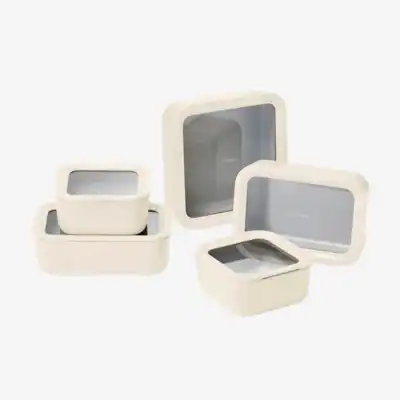
Our Favorites from Caraway:
My Personal Review
I’ve been using my Caraway food storage set for over two years now, and it’s one of the few kitchen swaps that actually stuck.
The containers have held up really well with daily use, and I love having the smaller pieces for things like dressings and snacks. The organizer also makes a bigger difference than I expected and keeps everything from turning into a cluttered mess.
If you want a deeper breakdown of how these perform over time, you can read my full Caraway Food Storage Review.
2. Anyday — Best For Cooking, Reheating & Meal Prep
Best For: Simplifying your routine with containers that go from fridge to microwave to table
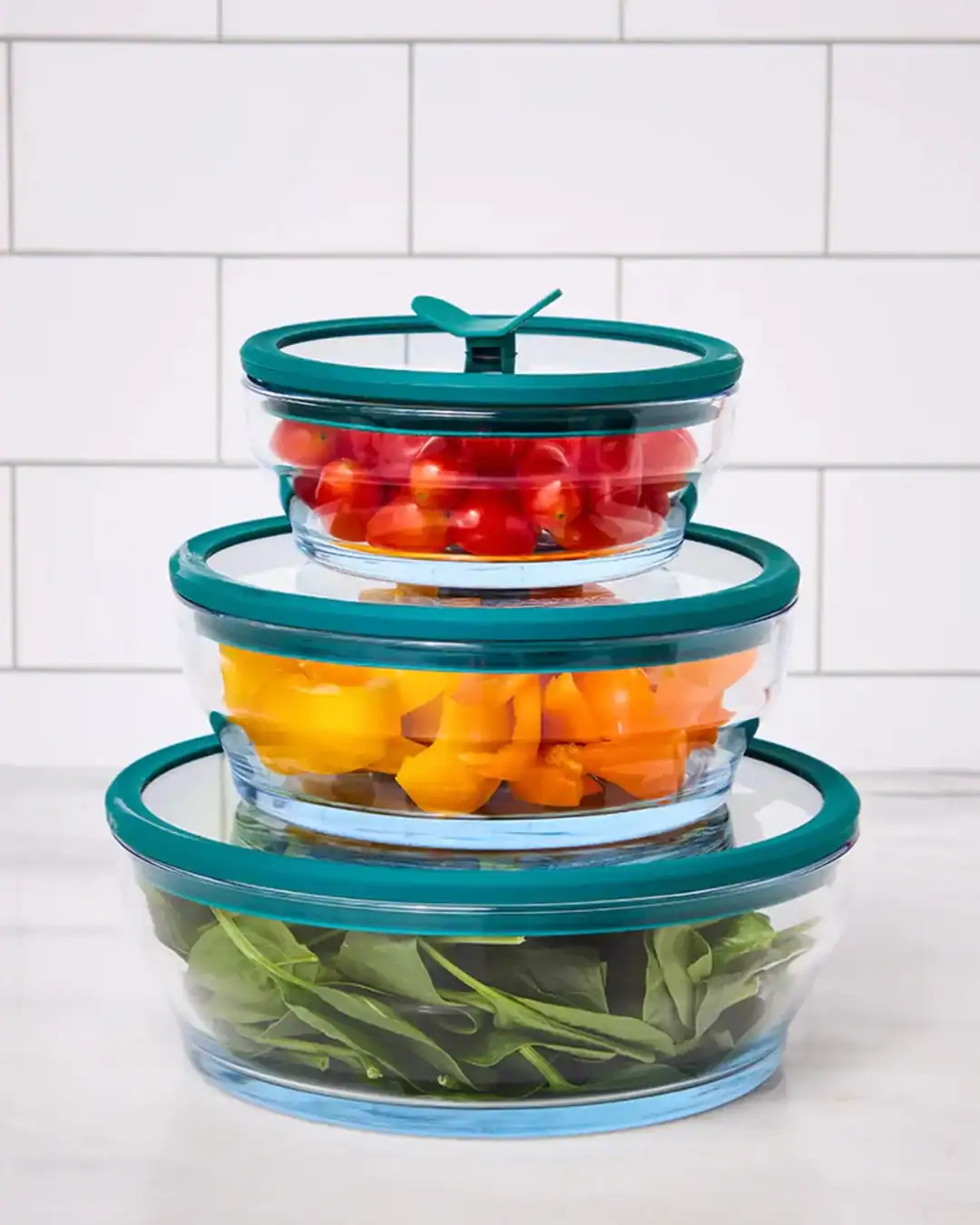
Anyday is designed to streamline everyday cooking by combining storage, reheating, and serving into one system.
Their containers are made from durable borosilicate glass with vented lids that help regulate steam for more even heating and better results.
They’ve also introduced food-grade silicone options, which add a lighter, more flexible choice for snacks, leftovers, and everyday storage.
What really makes Anyday stand out is how much it reduces extra steps in the kitchen, making meal prep feel easier and less overwhelming.
Price
$38-$220 (Individual or Set)
Best Picks By Need
Best Value: Glass Round Dish Set (8-12 Piece)
Best Starter: Single Dishes or Silicone Delis
Materials (Glass)
Borosilicate Glass (Glass Lids With Platinum Silicone Gasket & Stainless Steel Rim)
Materials (Silicone)
Platinum-Cured LFGB-Grade Silicone (Stainless Steel Rim)
Location/Shipping
United States | Ships To Canada & Australia
My Personal Review
We tested Anyday in a real kitchen setting, and what stood out most was how much simpler it made everyday cooking.
Being able to store, heat, and serve in the same container cuts down on both time and dishes, which makes a real difference during busy weeks. Everything felt durable and held up well with repeated use, especially the glass dishes.
3. Stasher — Best Silicone Food Storage Bags
Best For: Flexible, reusable food storage for snacks, freezer meals, and everyday use
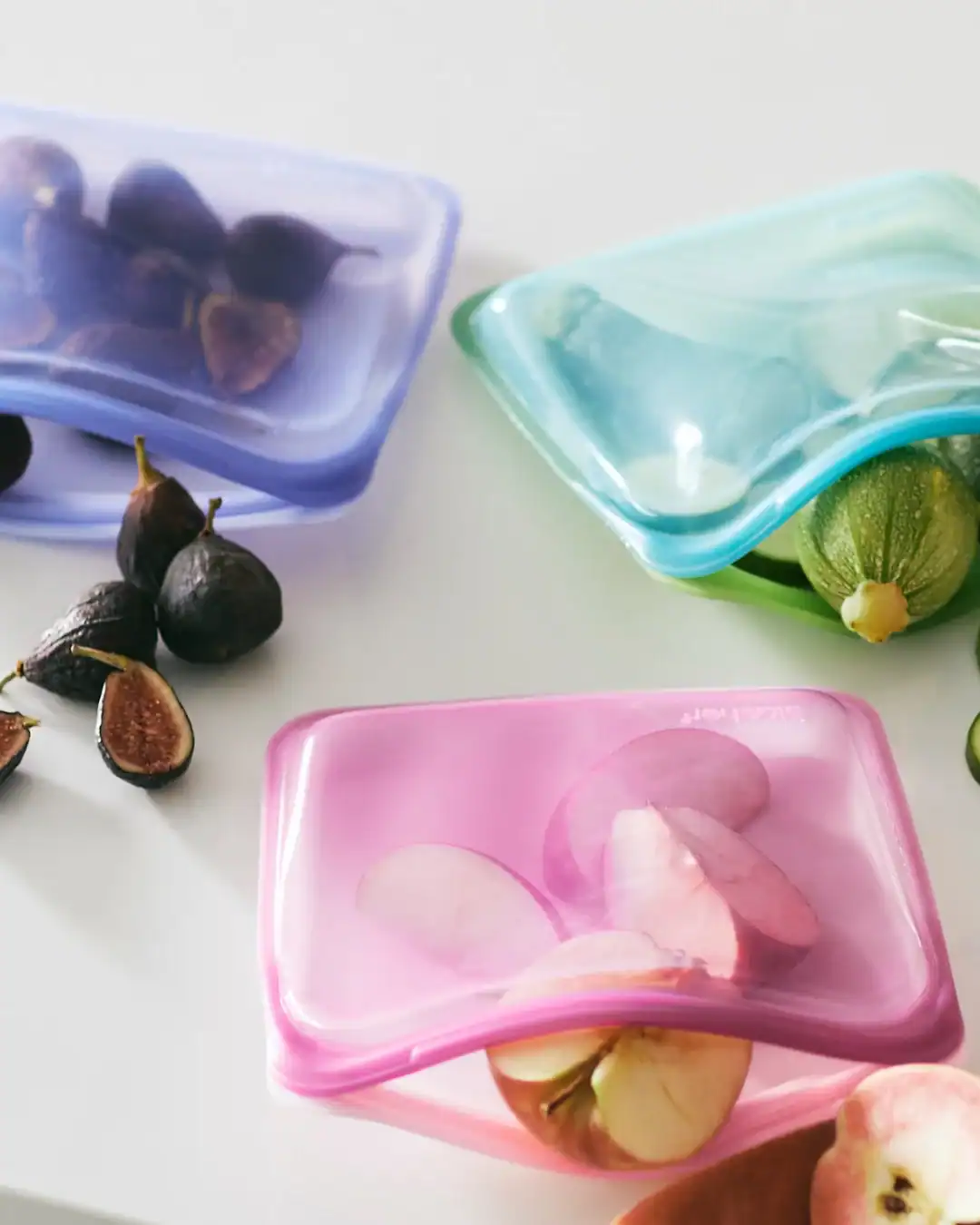
Stasher makes switching away from plastic feel simple and realistic.
Their platinum-grade silicone bags are designed to replace single-use plastic bags while still being easy to use day to day.
They come in a range of sizes and can be used for everything from snacks to freezer storage without worrying about leaks.
If you’re just starting your non-toxic kitchen swaps, this is one of the easiest upgrades to make, especially if you’re looking for reusable ziplock alternatives.
Price
$10-$100
Materials
Food-Grade Platinum Silicone
Location/Shipping
United States | Ships To Canada
4. Klean Kanteen — Best Stainless Steel Food Storage
Best For: Durable, non-toxic food storage for lunches, travel, and everyday use
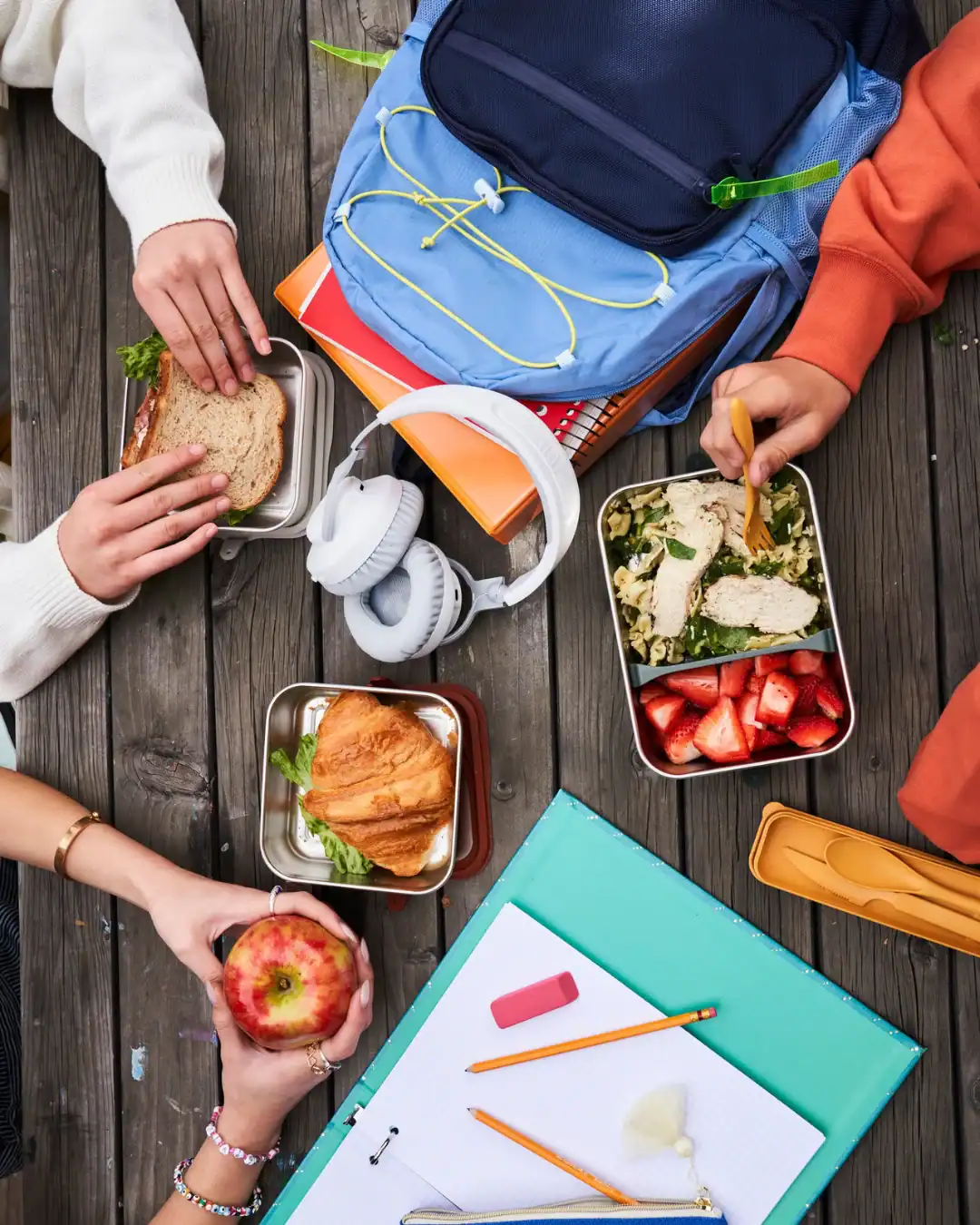
Klean Kanteen is one of the most trusted names when it comes to stainless steel, and their food storage containers are built with that same durability in mind.
These containers are made from high-quality stainless steel with silicone lids, making them a great option for anyone who wants to avoid plastic completely.
They’re especially useful for lunches, meal prep, and on-the-go storage since they’re lightweight and designed to hold up to daily use.
If you need something that won’t break, stain, or absorb odors, this is a really solid choice.
Price
$11-$100 (Individual or Set)
Materials
18/8 Stainless Steel (Food-Grade Silicone Lids)
Location/Shipping
United States | Ships Via Region-Specific Websites Only
5. ECOlunchbox — Best Stainless Steel For Plastic-Free Living
Best For: Completely plastic-free food storage and lunch packing
Use discount code SKL10 to save 10%!
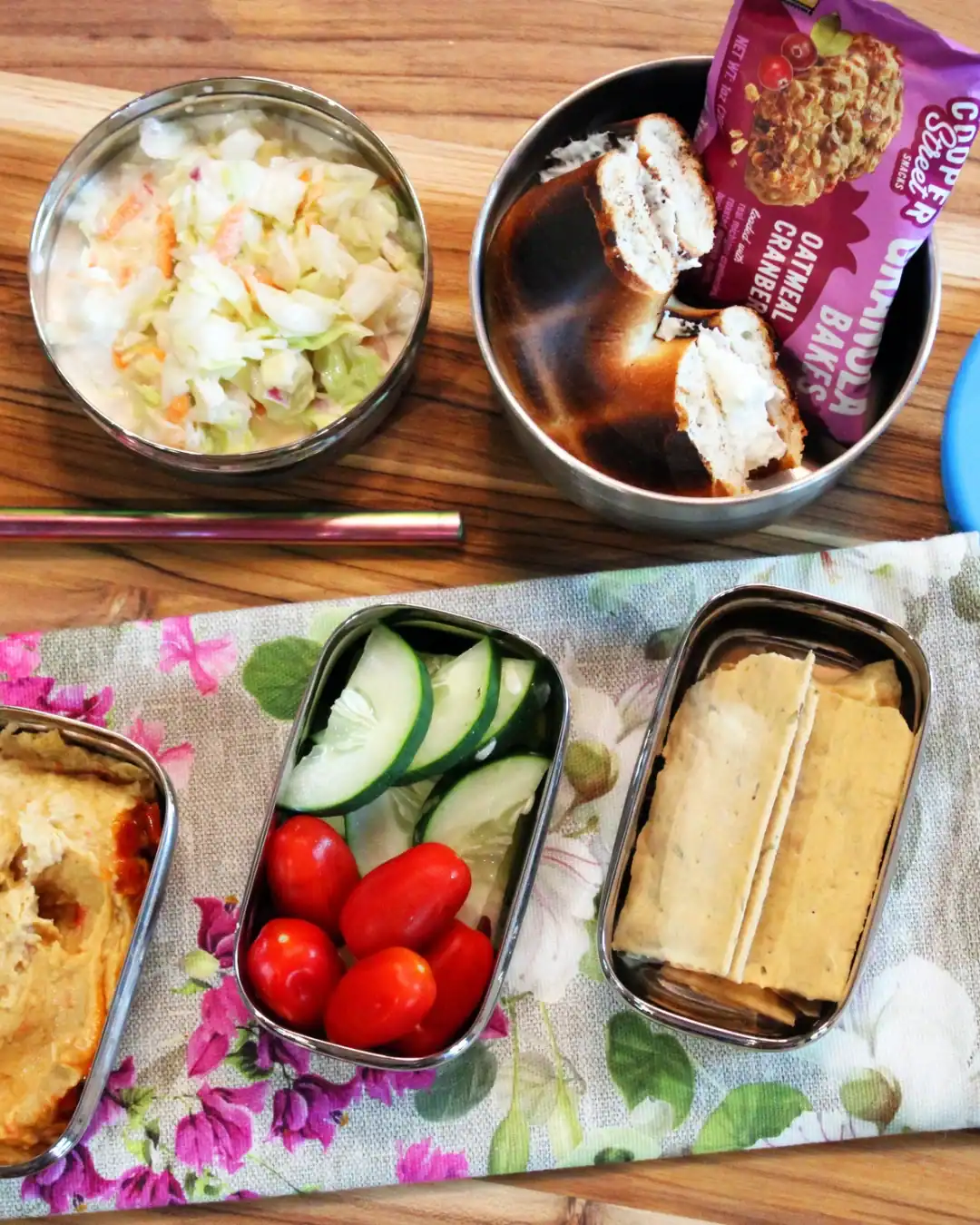
ECOlunchbox is a great option if you want to go fully plastic-free, including the lids.
Their containers are made from stainless steel with optional silicone lids, but many designs skip plastic entirely, which is hard to find.
They’re especially popular for lunches, bento-style meals, and families trying to reduce waste.
If your goal is to eliminate plastic as much as possible, this is one of the strongest options out there.
Price
$13-$54 (Individual or Set)
Materials
Stainless Steel (Optional Food-Grade Silicone Lids & Pods)
Location/Shipping
United States | Ships Internationally
6. PlanetBox — Best Non-Toxic Food Storage For Kids’ Lunches
Best For: Durable, all-in-one stainless steel lunch containers for kids
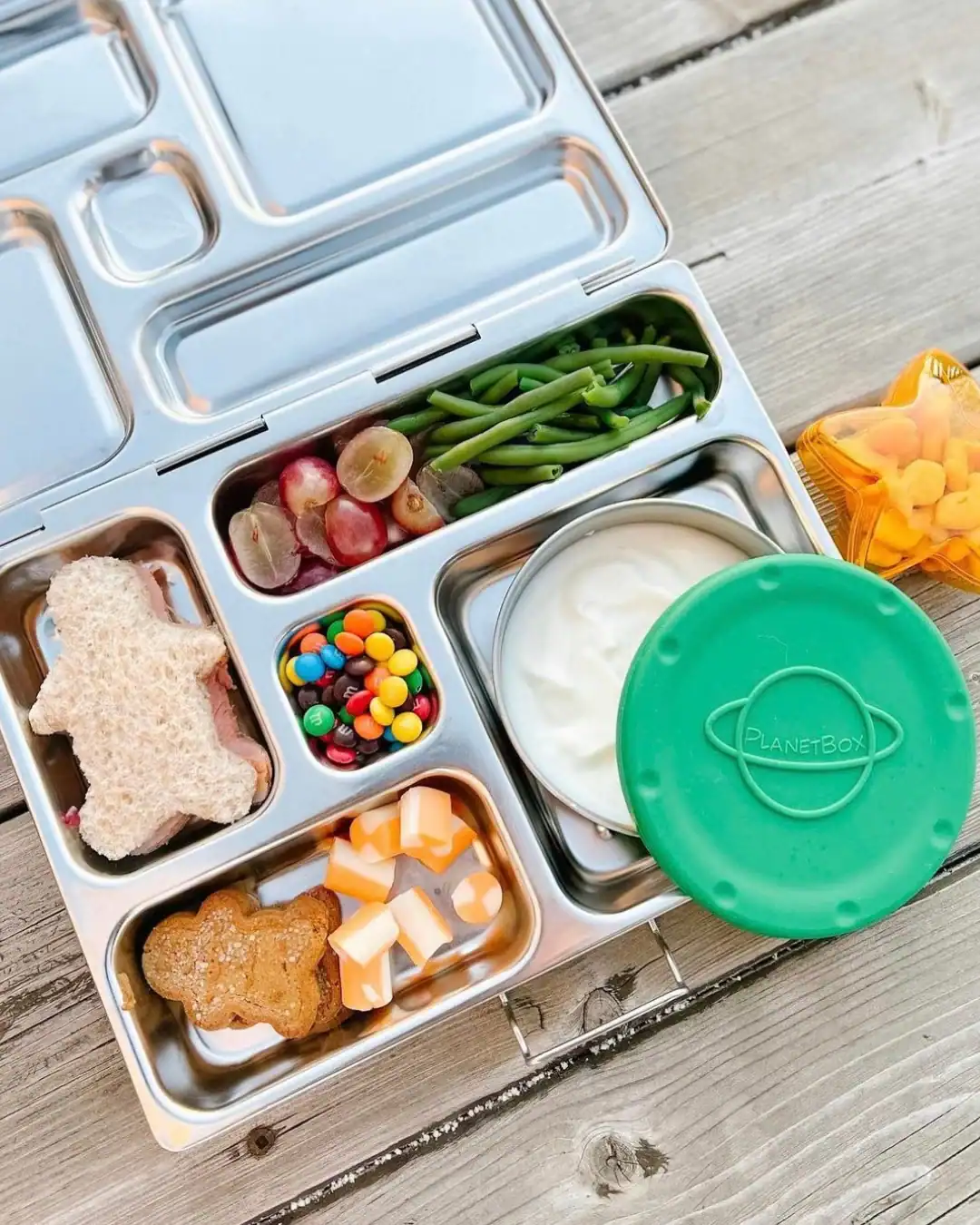
PlanetBox is specifically designed for packing kids’ lunches in a way that’s both safe and practical.
Their bento-style containers are made from stainless steel with separate compartments, which makes it easy to pack a variety of foods without needing multiple containers.
They’re extremely durable and built to last for years, even with daily use.
If you’re packing school lunches regularly, this is one of the most reliable and low-tox options available.
Price
$34-$51 (Sets ONLY)
Materials
18/8 Stainless Steel (Tray & Lid) | Food-Grade Silicone (Dipper Lids)
Location/Shipping
United States | Ships Internationally
7. Pyrex — Best Budget Glass Food Storage Containers
Best For: Affordable, widely available glass containers for everyday leftovers
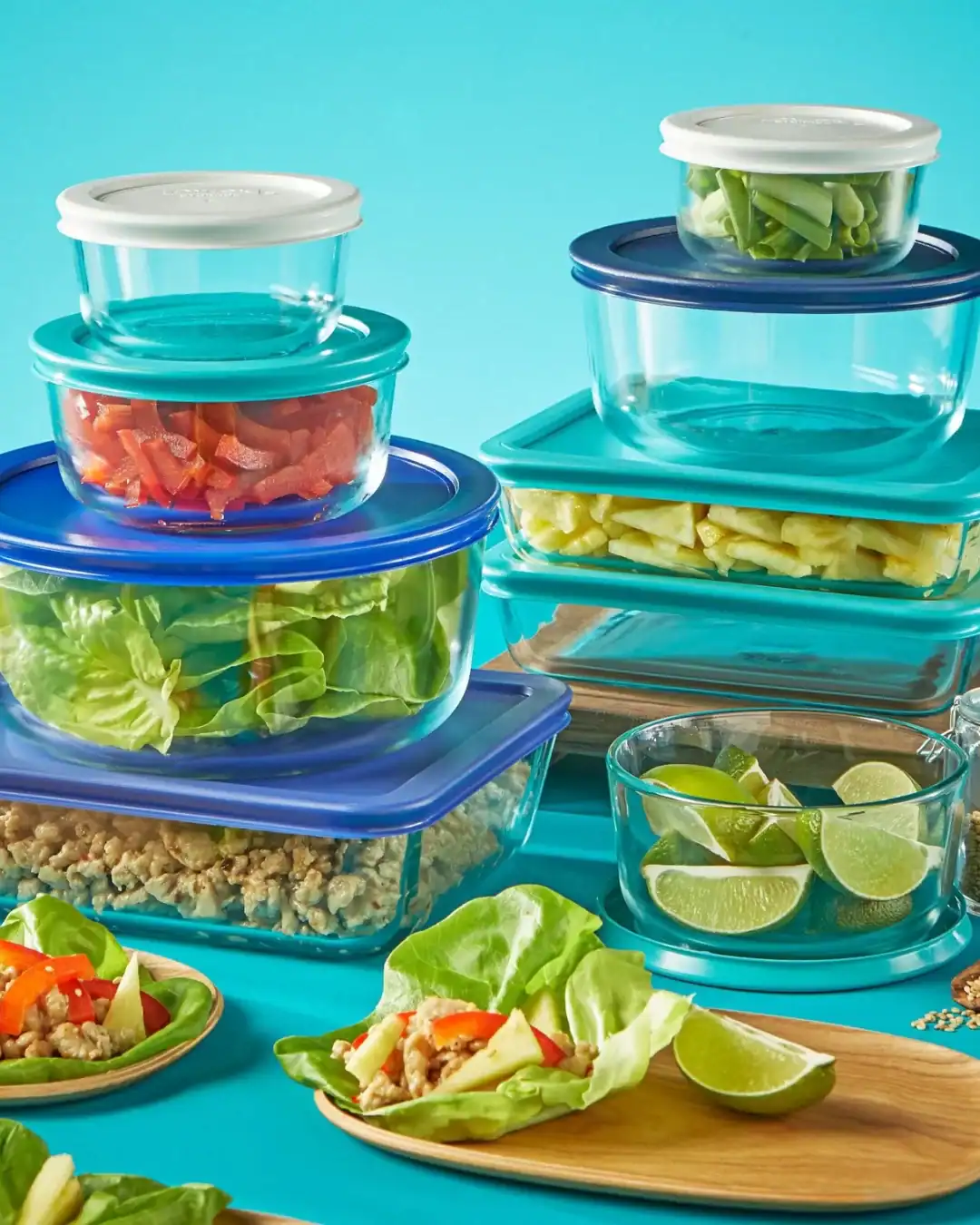
Pyrex is one of the most accessible ways to switch to glass food storage without a big upfront investment.
Their containers are made from tempered soda-lime glass, which works well for storing leftovers and general kitchen use.
They’re easy to find, simple to use, and come in a wide range of sizes for everyday needs.
If you’re just starting to move away from plastic, this is a practical and budget-friendly place to begin.
Price
$4-$70 (Individual or Set)
Materials
Tempered Soda-Lime Glass (Plastic Lids)
Location/Shipping
United States | Ships Internationally
8. Hydro Flask — Best Stainless Steel Food Storage For Meal Prep
Best For: Durable, versatile containers for storing and reheating meals
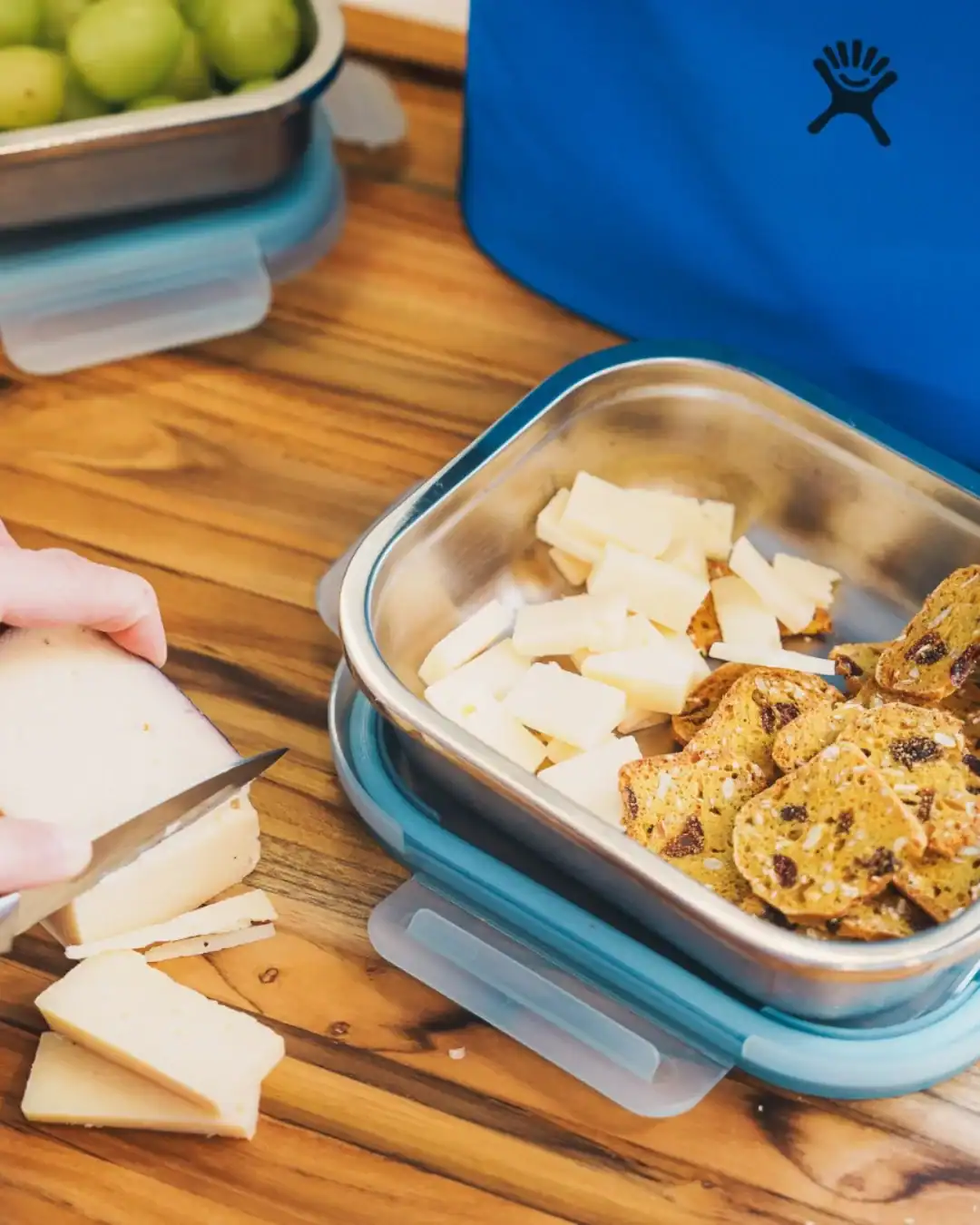
Hydro Flask brings the same durability they’re known for in their reusable water bottles to their food storage containers.
These are made from high-quality stainless steel and designed to handle everything from leftovers to larger meal prep portions.
They’re especially useful if you want something that can move easily between fridge, freezer, and oven.
If you’re looking for a long-lasting, no-fuss option for everyday meals, this is a solid choice.
Price
$30-$80 (Individual or Set)
Materials
18/8 Stainless Steel (Lid Material Not Specified)
Location/Shipping
United States | Ships Via Region-Specific Websites Only
9. WeeSprout — Best Budget Stainless Steel Food Storage
Best For: Small, space-saving stainless containers for snacks, kids’ meals, and everyday use
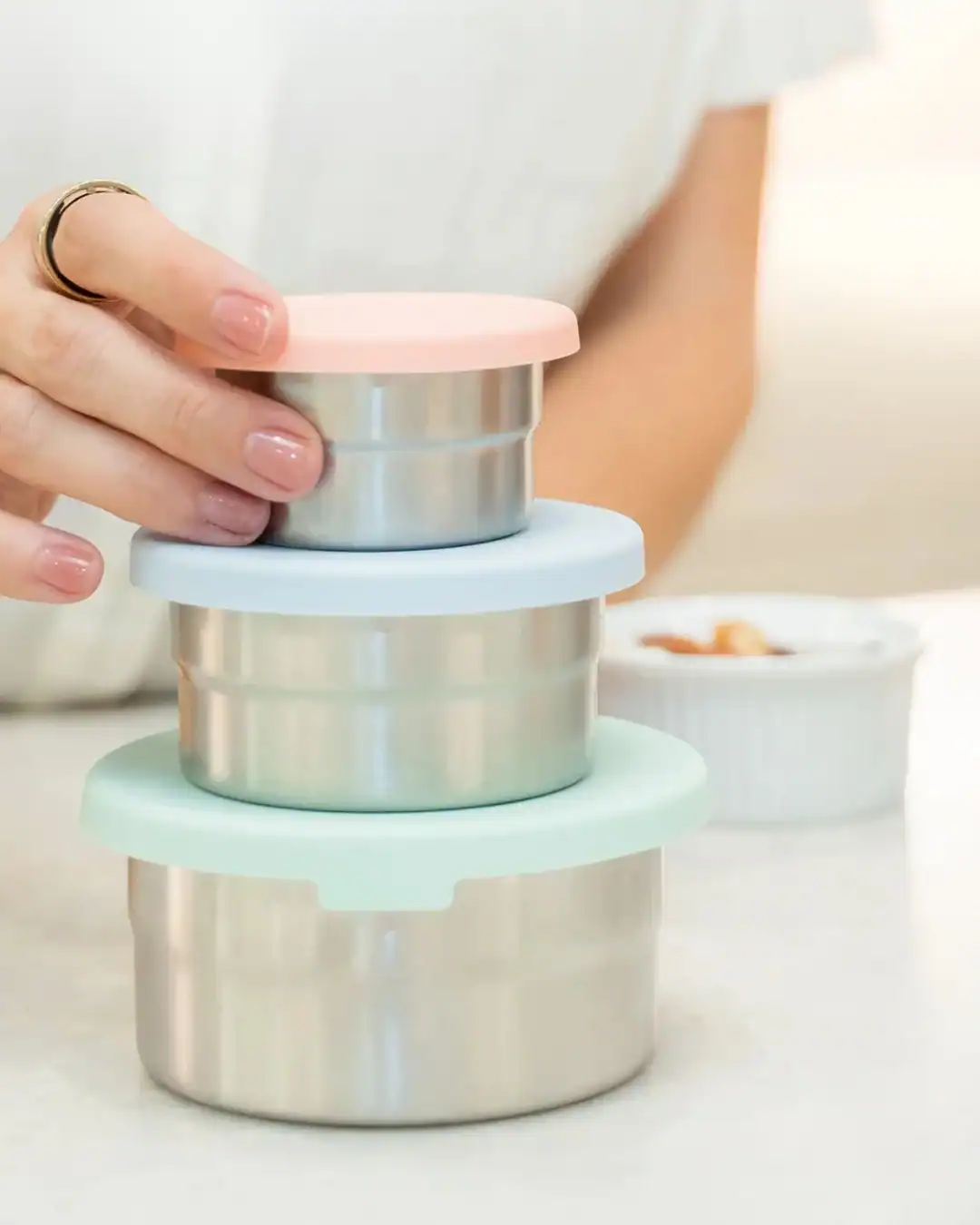
WeeSprout offers a simple and affordable way to switch to stainless steel without committing to larger, more expensive sets.
Their containers are compact, lightweight, and designed to nest easily, which makes them especially useful for smaller kitchens or packed lunches.
They’re made from durable stainless steel with flexible silicone lids that are easy to open and close.
If you want something practical, affordable, and easy to store, this is a great everyday option.
Price
$18.98 (Sets ONLY)
Materials
18/8 Stainless Steel (Food-Grade Silicone Lids)
Location/Shipping
United States | Ships Internationally
10. Old Glass Jars — Best Zero-Waste Food Storage Option
Best For: Reusing what you already have for simple, completely plastic-free storage
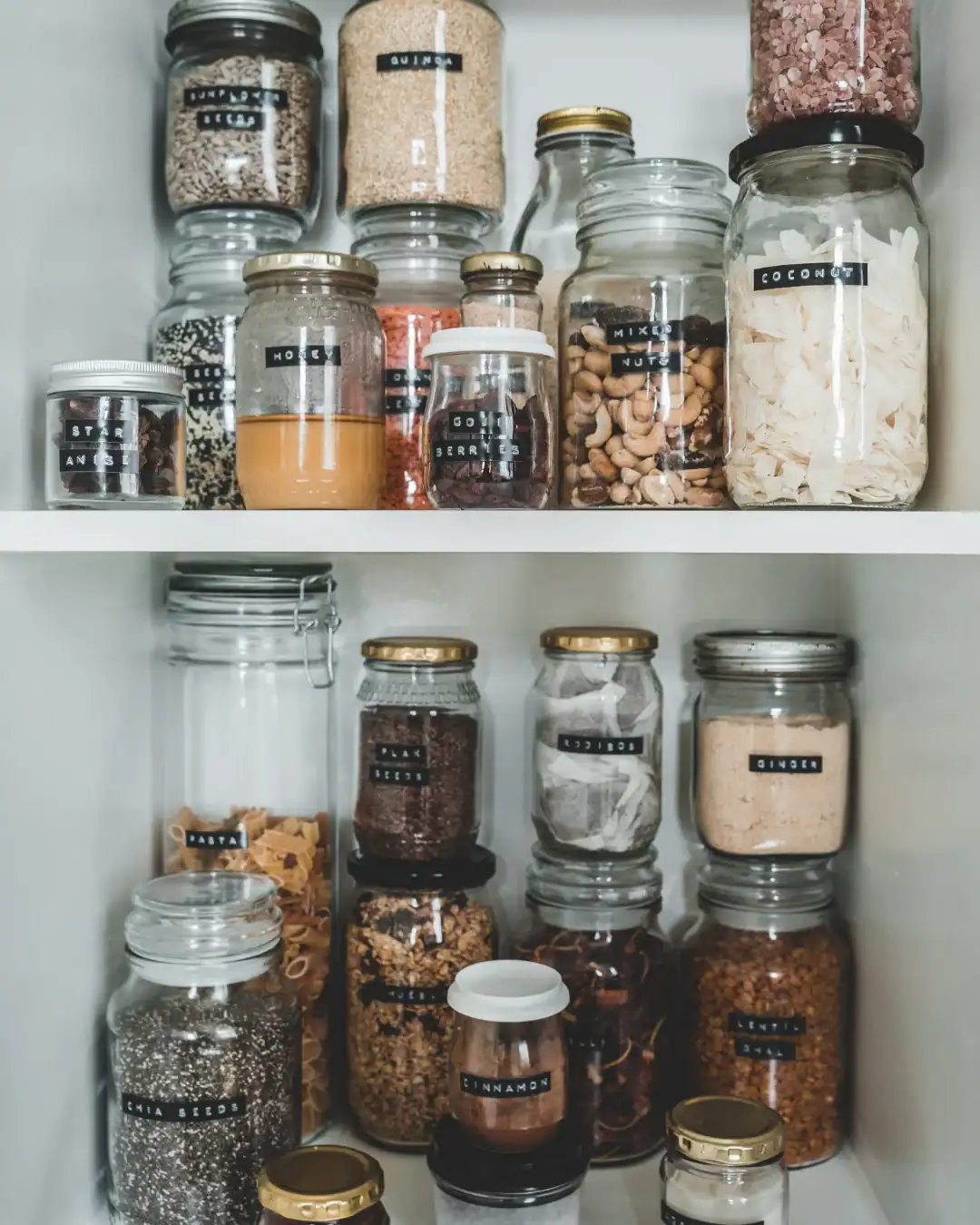
Sometimes, the best non-toxic food storage containers are the ones already in your kitchen.
Old glass jars are a simple, free way to store everything from leftovers to pantry staples without introducing new materials.
They’re non-reactive, easy to clean, and come in a variety of sizes depending on what you already have on hand.
If you’re looking to reduce waste and avoid buying more, this is the easiest place to start.
How I Vet Non-Toxic Food Storage Containers
Over the years, I’ve learned that “non-toxic” isn’t a regulated term, especially when it comes to kitchen products.
A lot of containers are marketed as safe simply because they’re BPA-free, which leaves out a much bigger picture.
When I’m evaluating food storage, I start with materials first.
I look for brands that clearly disclose what their containers are made from, whether that’s borosilicate glass, 18/8 stainless steel, or platinum-grade silicone.
If a company isn’t transparent about materials, that’s usually a sign to move on.
From there, I pay attention to how the product performs in real life. Food storage isn’t something you use once in a while. It’s part of your daily routine.
I look for containers that can handle reheating, freezing, and repeated washing without breaking down, warping, or holding onto odors.
I also consider how practical each option is for different situations.
Some containers are great for meal prep but too heavy for on-the-go use. Others work well for kids’ lunches but aren’t ideal for storing leftovers.
A product might be made from safe materials, but if it doesn’t fit into your daily habits, it usually ends up sitting in the cabinet.
And finally, I look at the brand itself. Are they upfront about their materials and manufacturing? Do they avoid vague claims and greenwashing language?
The companies I recommend here are the ones that consistently show transparency and make products that hold up over time.
Frequently Asked Questions About Non-Toxic Food Storage Containers
The safest non-toxic food storage containers are made from glass, stainless steel, and food-grade silicone. These materials are stable, non-reactive, and do not leach harmful chemicals into your food.
Borosilicate glass is especially durable for temperature changes, while stainless steel and silicone are great for on-the-go and flexible storage.
Plastic food storage containers can release chemicals into your food, especially when exposed to heat, fat, or acidic ingredients.
Many plastics contain additives like BPA, BPS, phthalates, and other undisclosed compounds that may disrupt hormones over time.
Even “BPA-free” plastics can still contain similar replacement chemicals.
“BPA-free” does not always mean safe.
Many manufacturers replace BPA with similar chemicals like BPS or BPF, which may have comparable health concerns.
Because companies are not required to disclose all additives, it’s difficult to know exactly what is in plastic containers, making non-toxic alternatives a safer choice.
The best material depends on how you plan to use it.
Glass is ideal for leftovers and reheating because it is non-reactive and easy to clean.
Stainless steel works well for durability and packed lunches, especially when you need something lightweight and long-lasting.
Silicone is a good option for flexible storage, freezer use, and situations where space-saving matters.
Food-grade silicone, especially platinum-grade silicone, is generally considered safe for food storage. It is heat-resistant, flexible, and does not contain BPA, BPS, or phthalates.
It’s a great alternative to plastic bags and works well for freezer storage and snacks.
Yes, high-quality stainless steel, like 18/8 stainless steel, is one of the safest materials for food storage. It is non-reactive, durable, and does not absorb odors or flavors.
It’s especially useful for lunches, meal prep, and long-term use.
Yes, but the material matters. Glass and stainless steel are the best options for hot foods because they remain stable under heat.
Silicone can also handle higher temperatures, but it’s important to make sure it is labeled as food-grade and heat-safe.
It’s best to avoid plastic containers with unknown additives, as well as materials that contain BPA, BPS, BPF, or phthalates.
Some plastics may also contain heavy metals or other contaminants, especially if they are recycled. Choosing simple, transparent materials like glass or stainless steel helps reduce that risk.
Start by replacing the containers you use most often, especially for reheating or storing hot food. You can also reuse glass jars you already have at home as a completely free option.
Over time, you can slowly build a collection of safer containers without replacing everything at once.
Yes, glass containers are generally safer than plastic because they are non-reactive and do not leach chemicals into food.
They also don’t absorb stains or odors and tend to last longer when properly cared for.
Still Deciding? Start Here
If you’re not sure which direction to go, here’s a simple way to narrow it down based on what actually matters most:
- For A Beautiful, All-In-One Glass Set: Caraway
- For Cooking, Reheating & Meal Prep: Anyday
- For Flexible, Everyday Storage: Stasher
- For Durable Stainless Steel Containers: Klean Kanteen
- For A Budget-Friendly Glass Option: Pyrex
Final Thoughts on Choosing Non-Toxic Food Storage Containers
Food storage is one of those things most of us use every single day without thinking much about it.
But once you start looking at what your food is actually sitting in, especially with heat, time, and repeated use, it can shift how you see those everyday containers pretty quickly.
It usually comes down to one simple question: What is my food touching before I eat it?
Once you start there, the choices become a lot clearer. You don’t need to replace everything overnight or aim for a perfect setup.
For some people, that looks like switching to glass for leftovers. For others, it’s just replacing the containers they use most often with something safer. Both are meaningful steps.
What matters most is that you’re paying attention and making small changes that reduce your exposure over time.
Continue Your Non-Toxic Kitchen Routine
If you’re building a safer, lower-toxic kitchen setup, these guides can help you take the next step:
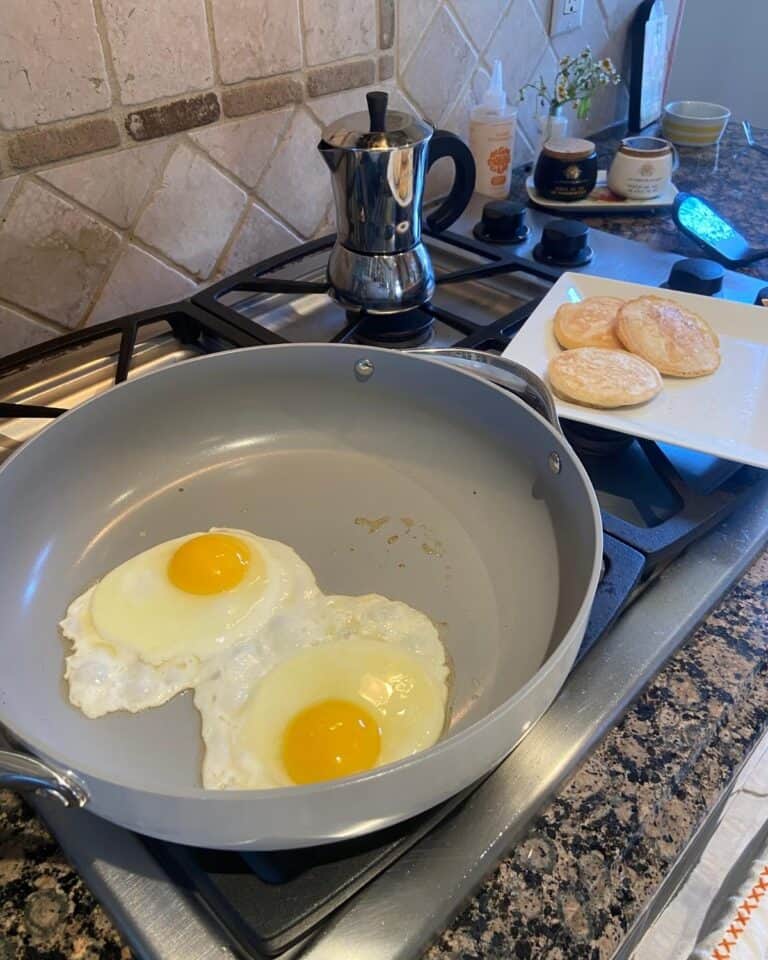
- Non-Toxic Cookware: The one swap that can drastically reduce everyday chemical exposure from heat.
- Non-Toxic Dinnerware: What your food sits on matters more than you think.
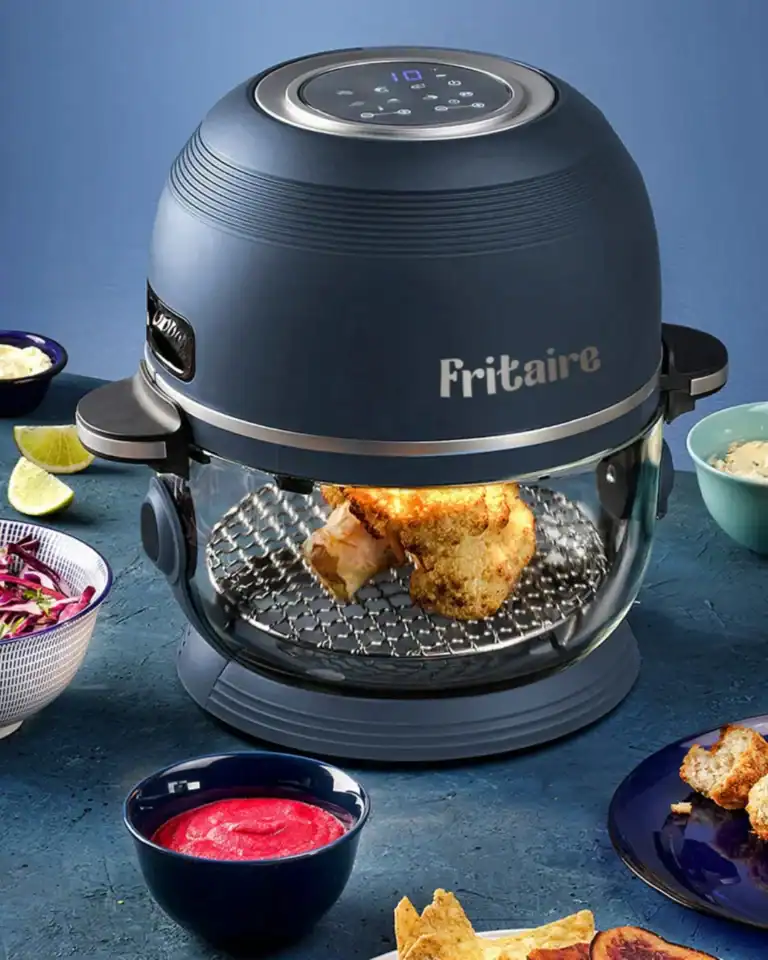
- Non-Toxic Air Fryers: Hidden coatings to watch for before you upgrade this popular appliance.
- Non-Toxic Water Bottles: An easy daily habit that can quietly add up to less exposure.
- Non-Toxic Kitchen Swaps: The simplest changes that make the biggest difference over time.
📌 Save This Guide For Later
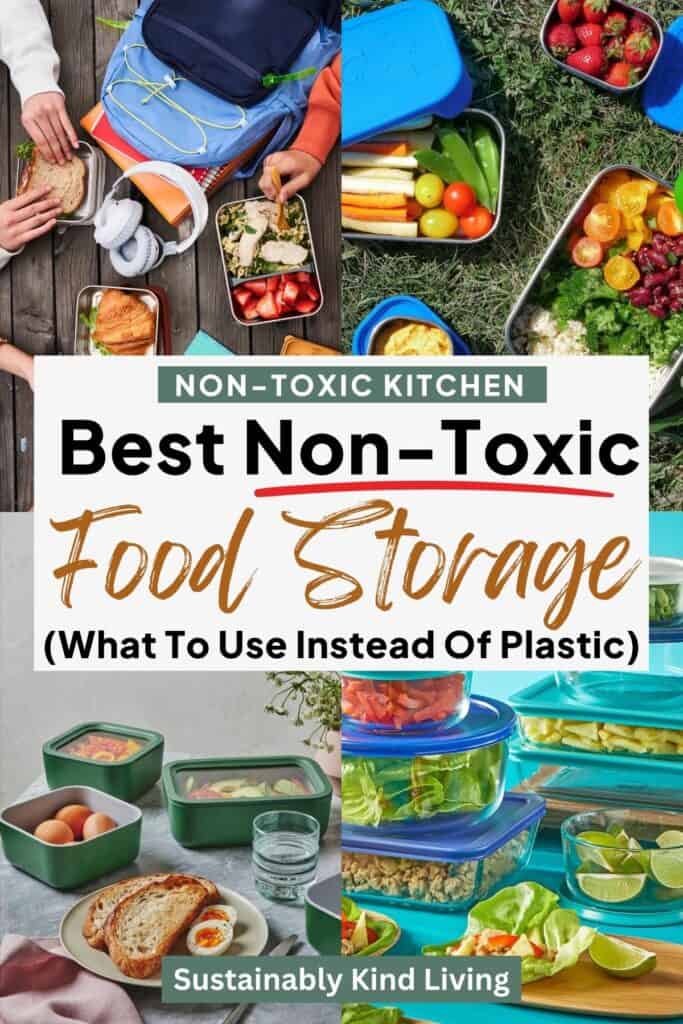
Save this guide for later to easily reference what to avoid in plastic, which safer materials to choose, and the best non-toxic food storage options when you’re ready to upgrade.
Sources & Further Reading
The information in this guide is informed by regulatory guidance, peer-reviewed research, and publicly available data on food-contact materials, plastics, and chemical exposure.
If you want to take a deeper look at the research behind what’s discussed here, these are some of the most reliable sources to start with.
Regulatory & Government Sources
- U.S. Food & Drug Administration (FDA) — Food Contact Substances https://www.fda.gov/food/food-ingredients-packaging/packaging-food-contact-substances-fcs
- National Institute of Environmental Health Sciences (NIEHS) — Endocrine Disruptors https://www.niehs.nih.gov/health/topics/agents/endocrine
- U.S. Food & Drug Administration (FDA) — Metals and Your Food https://www.fda.gov/food/chemical-contaminants-pesticides/environmental-contaminants-food
- European Food Safety Authority (EFSA) — Food Contact Materials https://www.efsa.europa.eu/en/topics/topic/food-contact-materials
Independent Research & Scientific Sources
- National Institutes of Health (NIH) / PubMed — Bisphenols & Plastic Exposure Research https://www.niehs.nih.gov/health/topics/agents/sya-bpa
- National Institutes of Health (NIH) / PubMed — Phthalates & Food Contact Materials https://pubmed.ncbi.nlm.nih.gov/32764471/
- Agency for Toxic Substances and Disease Registry (ATSDR) — Toxicological Profiles https://www.atsdr.cdc.gov/toxicological-profiles/about/index.html
Environmental & Consumer Safety Organization
- Environmental Working Group (EWG) — Food Packaging & Chemical Exposure https://www.ewg.org/areas-focus/toxic-chemicals/food-chemicals
- Toxic-Free Choice — The Truth About BPA https://toxicfreechoice.com/bpa-bps-plastic-alternatives/

Steal My Non-Toxic Cleaning Checklist!
Believe us, it’s the BEST…. and it’s free. Does it really get any better than that?! Sign up for our newsletter and get this free checklist to clean your home without any harmful chemicals!





I realized that “BPA Free” is a product claim that is NOT regulated by any federal entity. It’s voluntary, meaning any company can label its product “BPA Free” whether that’s true or not.
From what I can find one has to investigate the manufacturer’s paperwork to determine whether a product truly is BPA Free.
Have you vetted the “BPA Free” products you’re suggesting here? We just found out about this non-regulation and we are alarmed. Thank you.
This is VERY true. This is why we only add 100% transparent brands that we communicate with 1:1 to these lists (every brand here is vetted). We could easily go on amazon and find BPA-free storage brands that claim this and that, but with zero backup. We vet every brand that comes on this site – it’s very important to us that the brands stand behind their claims.