 Shop My Favorite Non-Toxic Gifts Of 2026!
SKL is reader supported. When you buy through links on our site, we may earn affiliate commission. Learn more here.
Stainless steel cookware has been a staple in my kitchen for years — not because it’s trendy, but because it’s one of the few materials that consistently holds up under daily cooking without relying on coatings or chemical shortcuts.
After years of testing cookware across different materials — and reviewing countless brands that market themselves as “non-toxic” — stainless steel remains the option I come back to most often for everyday cooking.
Stainless steel is widely regulated as a food-contact material, and when it is uncoated and properly manufactured, it is considered stable for everyday cooking under U.S. food safety standards.
That said, not all stainless steel cookware sets are created equal.
My Top Picks For Most Homes…
- Best Overall Value: Caraway
- Best Buy-It-For-Life Set: 360 Cookware
- Best Professional Upgrade: Demeyere
Some prioritize aesthetics or lightweight design at the expense of heat stability and longevity. Others are built for professional kitchens, with thicker construction and more precise heat control — but at a higher cost.
This guide focuses specifically on stainless steel cookware sets that meet long-term performance and safety standards I’m comfortable recommending.
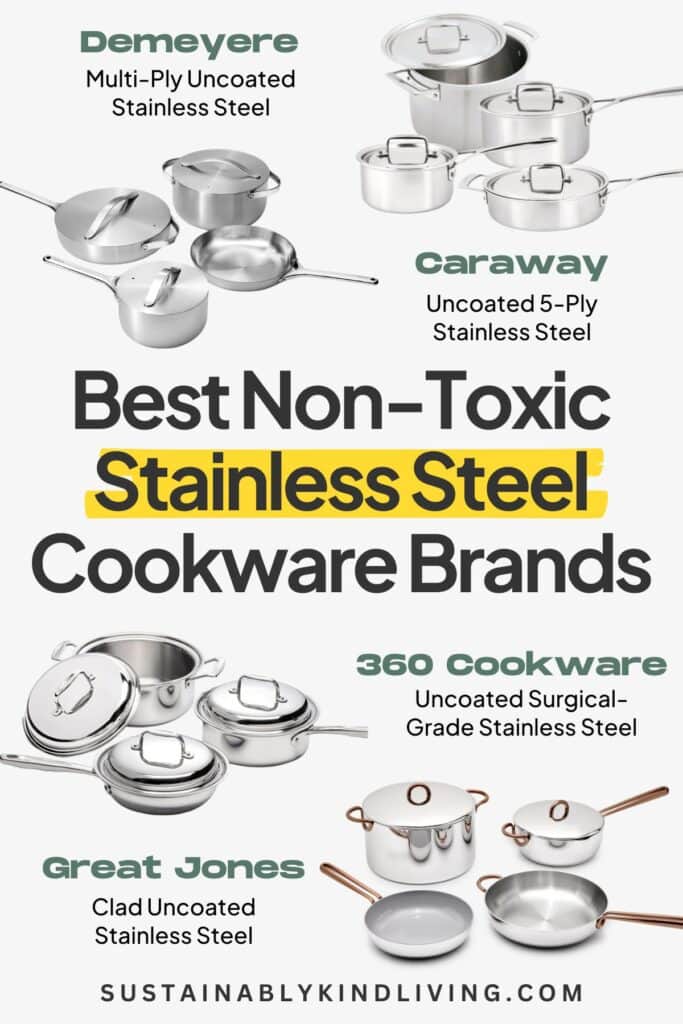
Each pick below is evaluated based on uncoated construction, real-world durability, and how the cookware behaves over time — not just how it looks or performs when new.
If you’re deciding between stainless steel and other cookware materials, or looking for a broader safety comparison, our complete Non-Toxic Cookware Guide covers cast iron, ceramic, carbon steel, and coating-free alternatives in detail.
Why Stainless Steel Is Still One of the Safest Cookware Materials
Stainless steel has remained a kitchen staple for decades because it performs without relying on surface coatings, surface chemistry, or engineered non-stick layers.
High-quality stainless steel cookware is non-reactive, meaning it does not readily interact with acidic or alkaline foods, and it remains structurally resistant to degradation.
When cookware safety issues arise, they are most often linked to surface treatments or coatings that degrade over time — not to bare stainless steel itself.
That said, stainless steel safety depends heavily on how the cookware is constructed. Thin-gauge pans, poorly bonded cores, or decorative finishes can impact performance and longevity, even if the base material is technically safe.
This guide focuses on stainless steel cookware sets that prioritize material integrity, heat stability, and long-term durability, not just first-use convenience or aesthetics.

What Actually Matters When Choosing a Stainless Steel Cookware Set
When comparing stainless steel cookware sets, the biggest differences are not the brand name — they’re in the construction.
Ply count, core material, and manufacturing quality all affect how evenly a pan heats, how it handles temperature changes, and how it holds up after years of daily cooking.
A well-built 5-ply or 7-ply pan behaves very differently from a thinner, lighter set, even though both may be labeled “stainless steel.”
In this guide, we prioritize cookware sets that use fully clad, uncoated stainless steel, with cores designed for consistent heat distribution and long-term stability.
We also consider transparency around materials, where the cookware is made, and whether the brand’s stainless steel line stands on its own — separate from coated or non-stick collections.
With those criteria in mind, the following stainless steel cookware sets represent the most reliable options available in 2026, across a range of budgets and cooking styles.
Best Non-Toxic Stainless Steel Cookware Sets
1. Caraway
Best All-In-One Stainless Steel Set for Most Homes
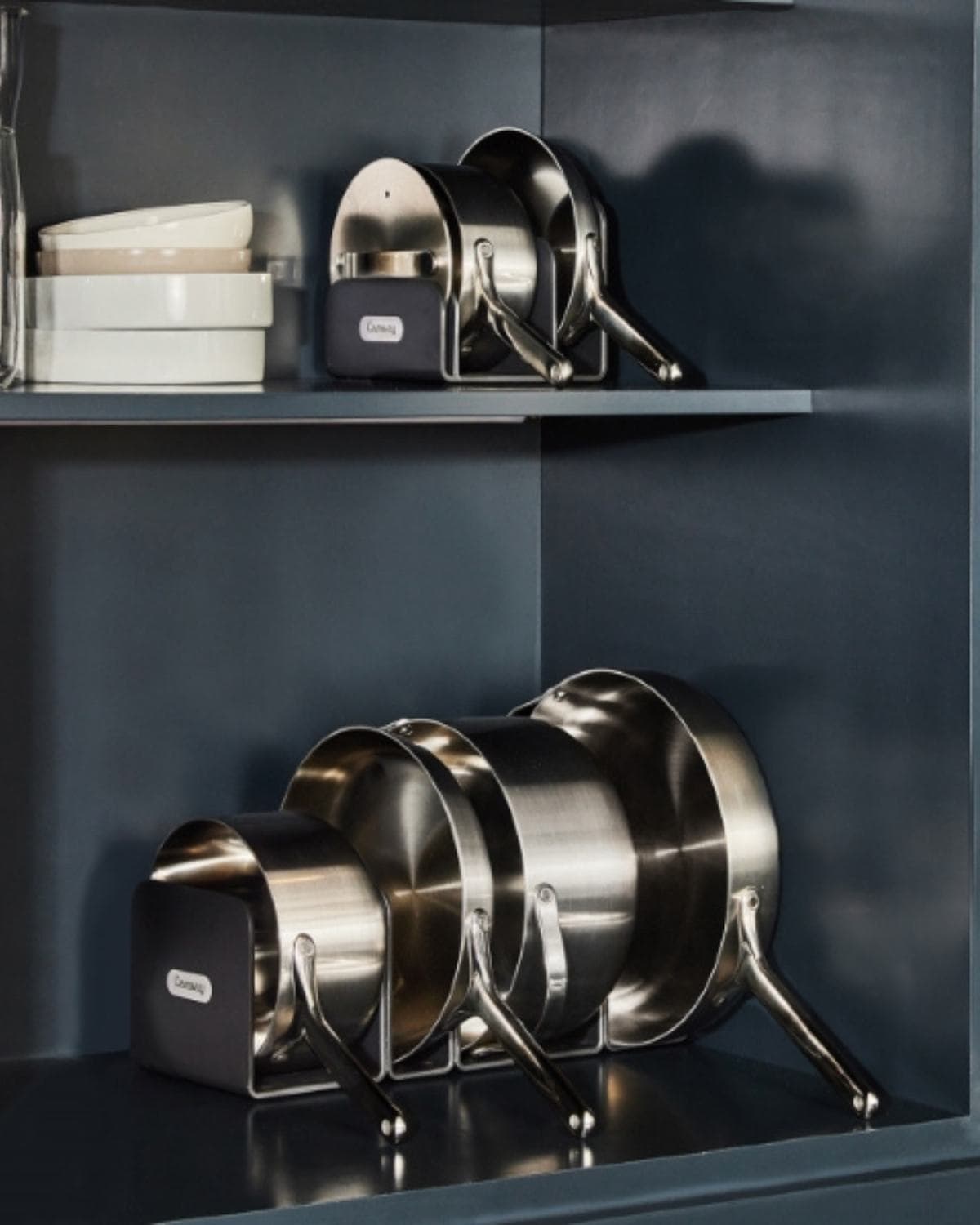
Use the discount code SKL to save 10%!
Caraway’s stainless steel line earns the top spot because it balances clean materials, everyday performance, and thoughtful design better than most sets on the market.
Made from uncoated 5-ply stainless steel, it avoids PFAS, PTFE, ceramic coatings, and non-stick surface treatments entirely.
The cooking surface is straightforward, stable stainless steel — exactly what we look for in a non-toxic foundation.
Where Caraway truly stands out is usability. The construction is lighter and more approachable than traditional professional-grade sets, and the included modular storage system keeps lids, pans, and racks neatly organized — a rare upgrade that actually improves daily kitchen function.
For most households, it delivers the right mix of safety, performance, and convenience without feeling overwhelming or industrial.
Best For: Homes that want uncoated stainless steel with smart storage, modern design, and everyday practicality.
Price
$595 for 12-piece set (includes modular storage)
Material
Uncoated 5-Ply Stainless Steel
Location/Shipping
United States, ships to select international countries
2. 360 Cookware
Best Buy-It-For-Life Stainless Steel Set
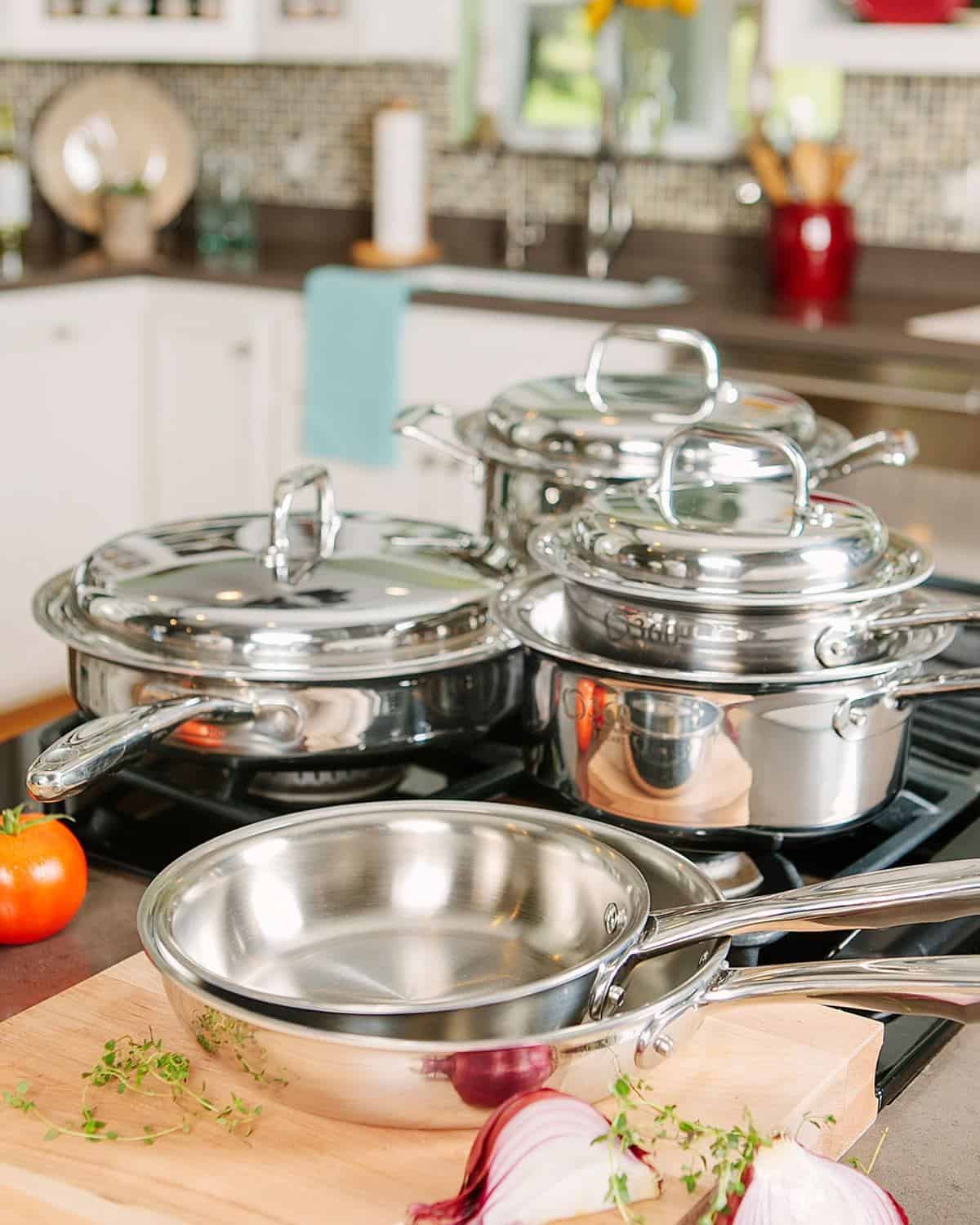
360 Cookware is built around one clear priority: fully uncoated stainless steel construction without surface treatments, coatings, or engineered textures.
The cooking surface is surgical-grade T-316 stainless steel, paired with a stainless exterior and an aluminum core that never contacts food.
The design focuses on straightforward material integrity rather than aesthetics or modern styling.
Compared to more design-forward stainless brands, 360 leans traditional. The pieces are heavier, solidly constructed, and designed for steady, long-term use.
Its vapor-cooking system encourages lower-temperature cooking and reduced oil use, supporting everyday performance without relying on non-stick chemistry.
Best For: Cooks who prefer classic, fully uncoated stainless steel construction and value traditional build quality over modern design features.
Price
$1,235 for 9-piece Home Chef Set
Material
Uncoated Surgical-Grade Stainless Steel (Food Contact Surface)
Location/Shipping
United States, ships to select international countries
3. Demeyere
Best Professional-Grade Stainless Steel (Build Your Own Set)
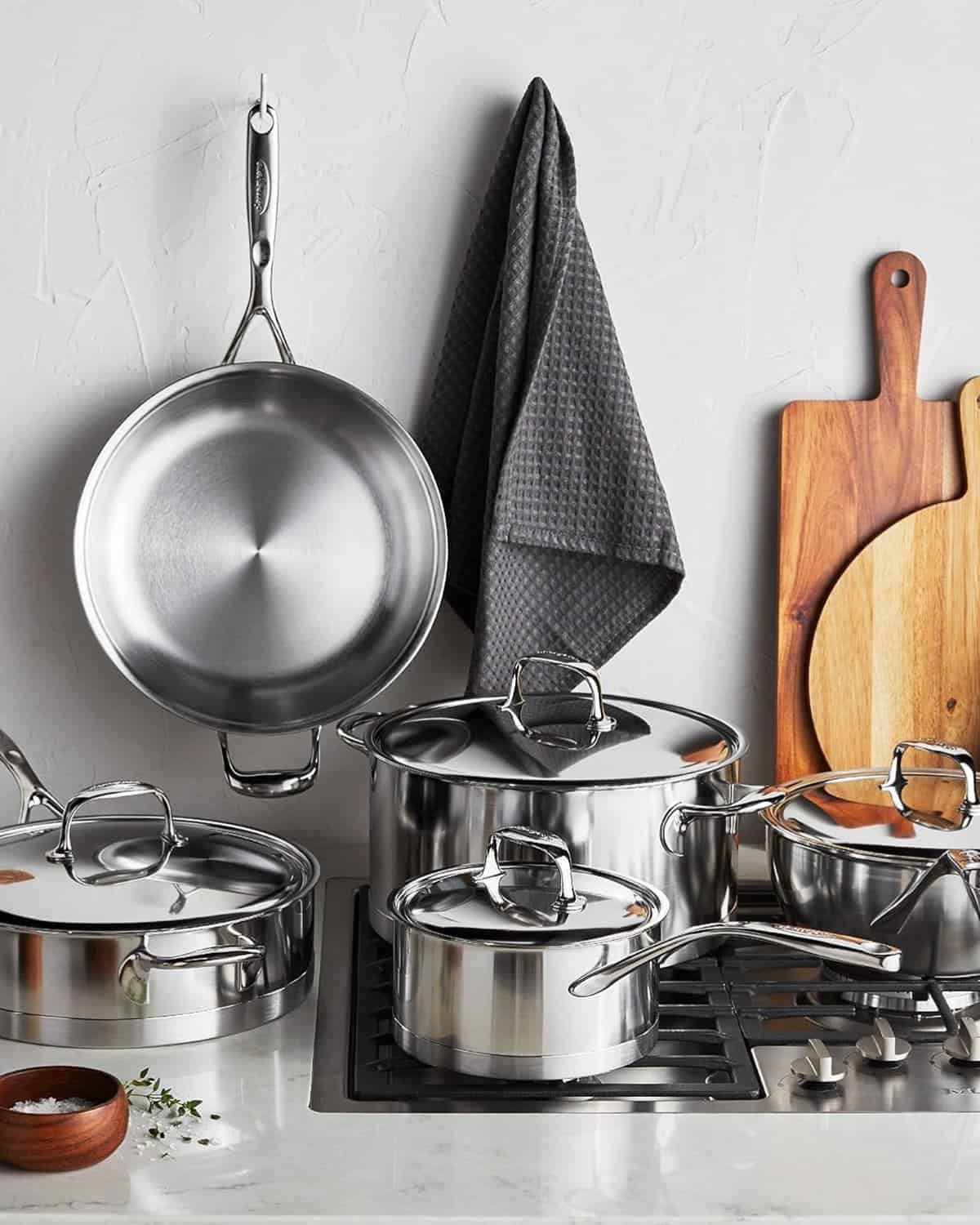
Demeyere is widely regarded as one of the most technically advanced stainless steel cookware brands in the world — and it shows the moment you cook with it.
Its fully uncoated stainless steel collections rely on precision multi-ply construction rather than coatings or surface treatments to deliver exceptional heat control, responsiveness, and durability.
The layered build distributes heat evenly across the pan and up the sides, reducing hot spots and improving consistency.
This is stainless steel engineered for performance. The pieces are heavier, more refined, and designed to handle high heat, frequent use, and serious cooking without warping or degrading over time.
Best For: Home cooks ready to upgrade to professional-level stainless steel performance without relying on non-stick chemistry.
Price
$179+ per piece (Industry 5 collection)
Material
Multi-Ply Uncoated Stainless Steel
Location/Shipping
Belgium, ships internationally via Zwilling
4. Great Jones
Best Lightweight Modern Stainless Set

Great Jones‘ stainless steel line delivers classic, fully clad construction in a format that feels lighter, more modern, and easier to live with than traditional heritage brands.
The cookware is fully uncoated and avoids non-stick chemistry entirely, relying on stainless steel and aluminum cladding for heat distribution.
From a materials standpoint, it remains straightforward and appropriate for a stainless-steel-focused, non-toxic kitchen.
Where Great Jones stands out is in approachability. The pieces feel less industrial than professional-grade sets, making them appealing for everyday home cooks who want stainless steel performance without the weight or utilitarian aesthetic.
Designed specifically for home kitchens rather than commercial restaurant use, it offers clean materials, reliable clad construction, and a polished look that fits seamlessly into modern kitchens.
Best For: Home cooks who want uncoated stainless steel with contemporary design and manageable weight — without stepping into professional-tier pricing.
Price
$370 for 4-piece Precious Metals set
Material
Clad Uncoated Stainless Steel
Location/Shipping
United States
5. Heritage Steel
Best Mid-Tier Stainless Steel (Materials-First Build)
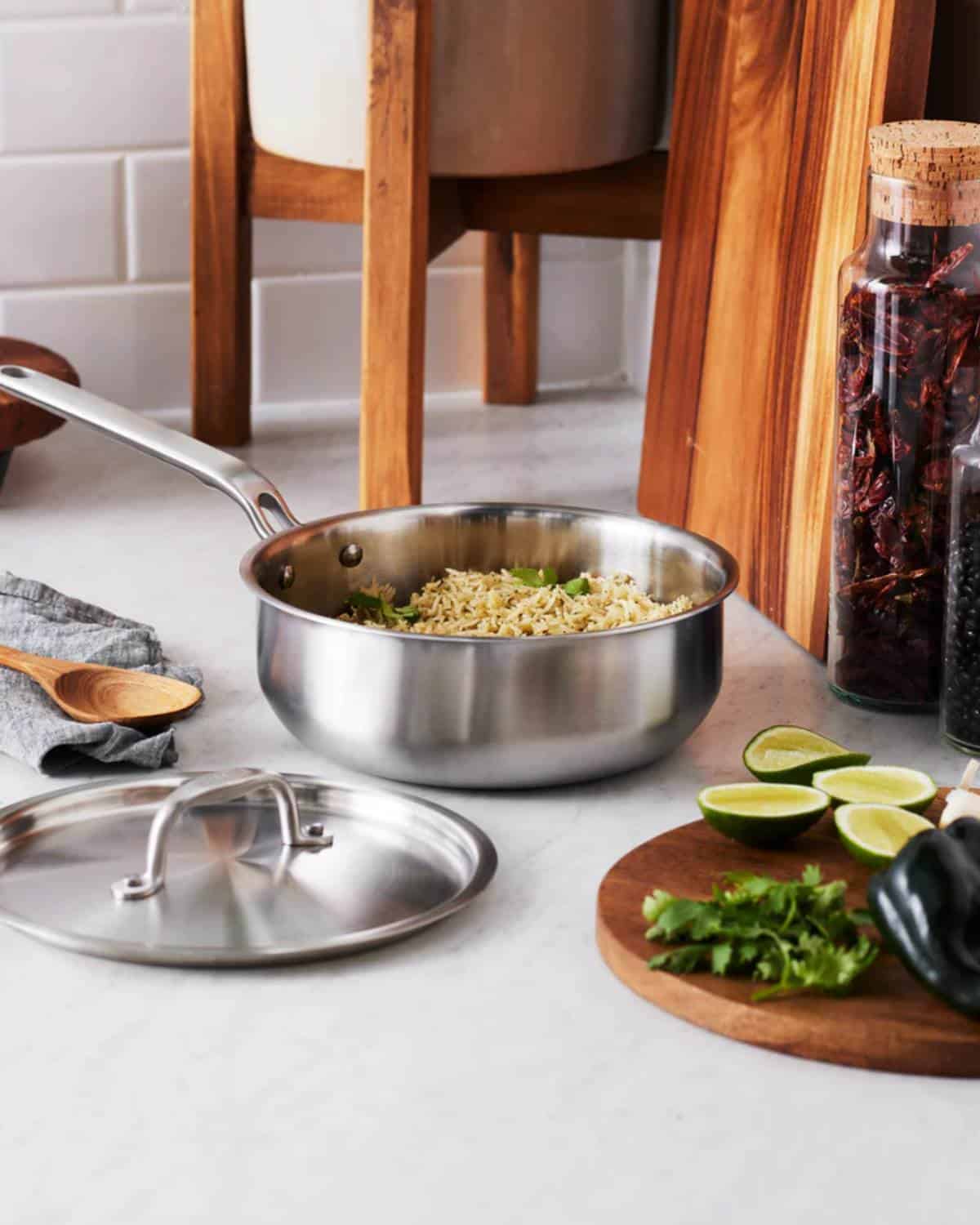
Heritage Steel is a family-owned American manufacturer producing uncoated 5-ply stainless steel cookware with a strong emphasis on durability and material transparency.
Their cookware avoids chemical coatings entirely and is built for long-term everyday use.
Compared to ultra-premium stainless brands, Heritage Steel offers a slightly more accessible price point while still maintaining thick construction and consistent heat performance.
Best For: Cooks who want American-made, uncoated stainless steel cookware without paying top-tier professional pricing.
Price
$460 for 5-piece American-made starter set
Material
Uncoated 5-Ply Stainless Steel
Location/Shipping
United States, ships to select international countries
Stainless steel cookware performs best when paired with safe tools — we break down what to look for (and what to avoid) in our guide to non-toxic cooking utensils.
When Stainless Steel Cookware Can Become a Problem
Stainless steel is widely considered one of the safest cookware materials — and for good reason. When it is uncoated, well-manufactured, and properly cared for, it remains chemically stable under heat and does not rely on surface treatments to perform.
Where issues can arise is not with stainless steel as a material, but with construction quality, surface damage, and misuse over time.
Low-quality stainless steel cookware may be thinner, poorly bonded, or inconsistently finished, which can lead to hot spots, warping, or surface wear.
Under certain conditions — such as prolonged cooking of highly acidic foods in damaged cookware — trace amounts of alloy metals may migrate into food.
Regulatory bodies, including the NIH and WHO, have evaluated dietary exposure to metals and generally consider normal exposure from food-contact materials to be low when products are properly manufactured and used as intended.
This does not mean stainless steel cookware is inherently unsafe — it means that build quality and long-term durability matter.
That’s why this guide prioritizes fully clad, uncoated stainless steel cookware sets from brands that are transparent about their materials and manufacturing standards.
Understanding Ply Count and Steel Grades (What Actually Matters)
Much of the confusion around stainless steel cookware comes from marketing terms like “3-ply,” “5-ply,” or steel grade numbers such as 304 or 430. These details do matter — but only in specific ways.
Ply count refers to how many layers of metal are bonded together in the cookware. Higher ply counts generally improve heat distribution, heat retention, and structural stability.
A well-made 5-ply pan, for example, will behave very differently from a thin single-layer pan, even though both may technically be stainless steel.
Steel grade refers to the alloy composition. Austenitic stainless steels like 304 (often labeled 18/10 or 18/8) offer excellent corrosion resistance and stability for cooking.
Ferritic stainless steels like 430 contain little to no nickel and are sometimes preferred by people with nickel sensitivities, though they behave differently under heat.
Rather than chasing the highest numbers or most aggressive claims, the goal is balanced construction: uncoated stainless steel, durable multi-ply bonding, and manufacturing consistency that holds up over years of real cooking.
If you’re evaluating metal quality for cookware, the same principles apply to oven-safe pieces — our guide to non-toxic baking sheets and bakeware covers safer materials for high-heat baking.
Frequently Asked Questions About Stainless Steel Cookware
Yes. High-quality, uncoated stainless steel cookware is considered non-toxic for everyday cooking. It does not rely on chemical coatings and remains stable at high heat.
Safety concerns typically come from poor construction, surface damage, or added coatings, not from stainless steel itself.
Stainless steel contains trace metals such as iron, chromium, and sometimes nickel. In damaged or heavily worn cookware, very small amounts may migrate into food. In well-made cookware, this is minimal and generally not considered harmful.
For most people, nickel in stainless steel cookware is not a health concern. Individuals with nickel sensitivities may prefer nickel-free options such as 430 or 18/0 stainless steel, which are designed to reduce nickel exposure.
Not automatically, but higher ply counts usually improve heat distribution, heat retention, and structural stability. A well-constructed 5-ply pan often offers the best balance of performance and durability for home cooks.
When aluminum is fully encapsulated between layers of stainless steel and does not contact food, it is considered safe. Concerns arise when aluminum is exposed directly to food or paired with degrading surface coatings.
For most cooking tasks, yes. Stainless steel works well for sautéing, searing, boiling, and simmering. It requires a slightly different technique than non-stick cookware, but many cooks find it more versatile over time.
A high-quality stainless steel cookware set can last for decades. Unlike coated cookware, it does not wear out in the same way and does not need routine replacement when properly cared for.
Yes. One of stainless steel’s biggest advantages is its ability to tolerate high temperatures without breaking down, emitting fumes, or degrading, as long as it is uncoated.
Final Takeaway: Which Stainless Steel Cookware Set Is Right for You?
If you’re looking for cookware that prioritizes durability, versatility, and long-term safety, stainless steel remains one of the most reliable choices you can make.
The best stainless steel cookware sets are not defined by flashy claims or trends, but by uncoated construction, thoughtful engineering, and consistent performance over time.
For slow cooking and braising, material choice matters just as much — especially with heavier cookware like Dutch ovens. We compare the safest options in our Non-Toxic Dutch Oven guide.
Whether you choose a lifetime-grade set or a more accessible multi-ply option, investing in well-made stainless steel reduces the need for frequent replacements and avoids the concerns associated with coated cookware.
If you’re deciding between stainless steel and other cookware materials, or want to explore non-toxic options beyond stainless steel, our broader Non-Toxic Cookware Guide breaks down cast iron, ceramic, carbon steel, and coating-free alternatives in detail.
Explore More Non-Toxic Kitchen Guides
If you’re continuing to build a safer, more durable kitchen, these guides pair well with stainless steel cookware:
- Non-Toxic Cooking Utensils — what materials to use with stainless steel (and which ones to avoid)
- Non-Toxic Baking Sheets & Bakeware — safer options for high-heat oven cooking
- Non-Toxic Dutch Ovens — comparing cast iron, stainless, and ceramic constructions
- Non-Toxic Food Processors & Choppers — materials that matter for everyday prep tools
Sources & Further Reading
This guide draws on publicly available regulatory guidance, materials science research, and manufacturer disclosures related to cookware safety and food-contact materials.
For readers who want to explore the science and standards behind stainless steel cookware in more detail, these resources provide helpful context:
- U.S. Food & Drug Administration (FDA) – Food Contact Substances & Metals
https://www.fda.gov/food/food-ingredients-packaging/food-contact-substances-fcs - FDA – Metals in Food and Foodware
https://www.fda.gov/food/metals-and-your-food - California Assembly Bill 1200 (AB1200) – Safer Food Packaging and Cookware Act
https://leginfo.legislature.ca.gov/faces/billTextClient.xhtml?bill_id=202120220AB1200 - European Food Safety Authority (EFSA) – Metals and Alloys in Food Contact Materials
https://www.efsa.europa.eu/en/topics/topic/metals-and-alloys - National Institutes of Health (NIH) – Dietary exposure to metals
https://www.ncbi.nlm.nih.gov/pmc/articles/PMC5452225/ - World Health Organization (WHO) – Evaluation of dietary exposure to metals
https://www.who.int/publications/i/item/WHO-HEP-ECH-WSH-2021.5 - Stainless Steel in Food Contact Applications (Euro Inox)
https://www.euro-inox.org/stainless-steel-food-contact-materials
Where available, we also review manufacturer material disclosures, third-party testing, and regulatory filings for the brands included in this guide to assess construction quality, coatings, and long-term material stability.
This guide is reviewed and updated regularly to reflect changes in materials, manufacturing disclosures, and regulatory standards.

Steal My Non-Toxic Cleaning Checklist!
Believe us, it’s the BEST…. and it’s free. Does it really get any better than that?! Sign up for our newsletter and get this free checklist to clean your home without any harmful chemicals!








I am hoping you produce an actual magazine that gets mailed via subscription as opposed to only online downloads and online access. Many of us prefer a real magazine. Would you please consider it? I am sure some very good adds on the products you recommend will pay or the cost of printing and mailing, and a subscription would fund efforts above cost. Praying you will consider. Thank you!
Thank you for such a thoughtful suggestion! I understand the appeal of a real magazine you can hold and enjoy away from a screen. We don’t currently have plans for a print edition, but I appreciate you letting us know this is something you’d love.
In the meantime, our free email newsletter is the closest thing we offer, with our latest guides, product reviews, and practical tips delivered straight to your inbox. You can sign up through the newsletter box here on the site. Thank you for reading and supporting our work!