 Click To Shop Danielle's Favorites!
SKL is reader supported. When you buy through links on our site, we may earn affiliate commission. Learn more here.
When most people start researching non-toxic cookware, they’re usually trying to replace an old non-stick pan and quickly discover that the cookware world is a lot more complicated than it should be.
Suddenly you’re comparing ceramic coatings, stainless steel, cast iron, carbon steel, and a growing list of products claiming to be PFAS-free, non-toxic, or healthy.
SKL Top Picks, At A Glance…
- Most Durable Non-Stick Non-Toxic Cookware: Our Place Non-stick performance without worrying about damaging the cooking surface.
- Best Non-Toxic Ceramic Cookware For Beginners: Caraway The easiest transition away from traditional non-stick cookware.
- Best 100% Pure Ceramic Cookware: Xtrema Cookware A cooking surface with no metal contact and no coatings.
- Best Stainless Steel Cookware: 360 Cookware Buy-it-for-life cookware.
- Best Cast Iron Cookware: Field Company Traditional cast iron without the weight and rough surface of older pans.
I’ve spent nearly a decade researching cookware materials and testing brands in my own kitchen, and what I’ve found is that most cookware shoppers eventually end up choosing between two very different approaches.
Some want a safer alternative to traditional non-stick cookware that still offers easy food release and simple cleanup. Others want to move away from coatings altogether and cook on materials like stainless steel, cast iron, carbon steel, or pure ceramic.
Neither approach is wrong. They simply solve different problems.
This guide covers the brands I trust most in both categories, along with what they’re actually made from, how they’ve held up in real-world testing, and which kitchens they’re best suited for.
Best Non-Toxic Cookware: At a Glance Comparison
Mobile Users: Scroll to see full comparison →
| Brand | Surface Type | Best For | Price | What’s Included |
|---|---|---|---|---|
| Our Place Titanium Pro | Titanium, no coating | Most durable non-stick alternative | $489.95 for the 10-piece set | 2 pans, 2 pots, 4 lids, spatula, spoon |
| Caraway | Ceramic-coated aluminum | Beginner-friendly non-stick with storage | $595 for the 16-piece set | 6 pans, 4 lids, storage organizer, lid holder |
| GreenPan Reserve Pro | Ceramic-coated hard anodized aluminum | Most affordable PFAS-free set | $399.99 for the 10-piece set | 2 frypans, 1 saucepan, 1 sauté pan, 1 stockpot, 3 lids, 2 utensils, 3 pan protectors |
| Xtrema Cookware | 100% pure ceramic, no metal core | Zero metal contact | $520 for the 3-piece Home Cook Set | 1 skillet, 1 sauté pan, 1 saucepan |
| Caraway Stainless Steel | 5-ply stainless steel | Beginner-friendly stainless with storage | $595 for the 12-piece set | 4 pans, 3 lids, storage organizer, lid holder |
| 360 Cookware | T-316 surgical grade stainless steel, made in the USA | Premium lifetime investment | $665 for the 6-piece Starter Set | 1 fry pan, 1 saucepan, 1 stockpot, 3 lids |
| Field Company | Uncoated cast iron, made in the USA | Traditional cast iron | from $100 for the No.4 skillet | Single skillet, multiple sizes available |
| Made In Cookware | Carbon steel, no PFAS/PTFE | Professional carbon steel | from $84.99 for the 8″ frying pan | Single frying pan, multiple sizes available |
The Two Types of Non-Toxic Cookware
When most people start researching non-toxic cookware, they quickly realize the options fall into two very different categories.
Understanding which one fits your kitchen is the most important decision you’ll make before buying anything.
Non-Stick Non-Toxic Cookware
This category is for the cook who wants a straightforward swap from traditional non-stick.
Not the purest materials possible, not a complete overhaul of how they cook, just a safer alternative to Teflon that works the same way. That’s a completely valid place to be, and these brands do it well.
This includes ceramic-coated and titanium cookware designed to give you easy food release without traditional PFAS-based coatings.
That said, knowing how these pans work will help you get the most out of them:
Ceramic coatings perform best on low to medium heat, and with proper care, good quality ceramic cookware can last for years.
High heat, metal utensils, and the dishwasher are the main things that shorten the lifespan of any coated pan, regardless of brand. Treat the surface well, and it will perform well.
Titanium cookware is a newer and genuinely exciting category.
The material transparency from brands doing it well is better than most of the coated cookware market, and early performance has been strong.
I’ve personally been using the Our Place Titanium Pro for over a year and haven’t had any issues with performance or durability.
It hasn’t had decades of track record the way stainless or cast iron has, but my experience with it so far has been consistently positive.
Most ceramic-coated and titanium pans come with limited warranties that cover manufacturing defects. They are not lifetime cookware, but for the right kitchen and the right cook, they are a genuinely good option.
Zero-Coating Cookware
This category includes stainless steel, cast iron, carbon steel, and fully ceramic cookware with no applied coating on the cooking surface. What you cook on is the material itself, nothing added, nothing to wear down.
These materials do require more from you than a non-stick pan:
- Stainless steel needs proper preheating and fat to prevent sticking.
- Cast iron and carbon steel need to be seasoned and dried carefully after washing.
- Fully ceramic cookware heats more slowly and behaves differently than metal.
But honestly, the learning curve is shorter than most people expect. I’ve tested every brand in this category extensively, and the more you cook with these materials, the more second nature it becomes.
A lot of us were made a little lazy by Teflon. It removed the need to understand heat, fat, and how different materials behave.
Zero-coating cookware gives that knowledge back, and once you have it, you typically won’t want to go back.
The durability story is also completely different from coated cookware. These materials improve with use rather than degrading over time, and many brands in this category back their products with lifetime warranties.
You’re never in a position where a worn surface raises questions about what’s getting into your food.
For me, the answer ended up being zero-coating cookware for about 80% of my cooking, with a PFAS-free non-stick option for the rest. But that’s just what works in my kitchen.
Where you land will depend on how you cook, what you’re comfortable maintaining, and how deep you want to go with it.
Every brand in this guide has earned its place after extensive hands-on testing in my own kitchen.
My evaluation process covers daily cooking across a range of meals, cleaning and maintenance tests, utensil compatibility, heat performance, and a thorough review of material disclosures and AB1200 compliance.
I keep detailed notes throughout every testing period, which means my recommendations reflect real cumulative experience rather than a quick first impression.
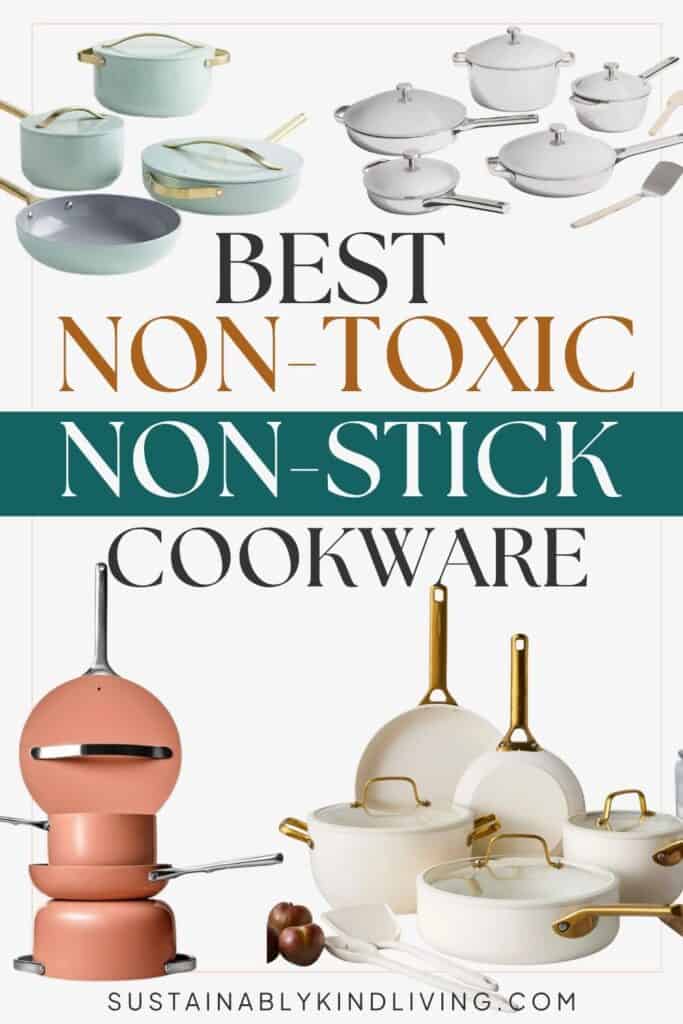
The Best Non-Stick Non-Toxic Cookware Brands
These are the brands I recommend for anyone who wants to move away from conventional non-stick without overhauling how they cook.
They perform like traditional non-stick, without the PFAS or PTFE.
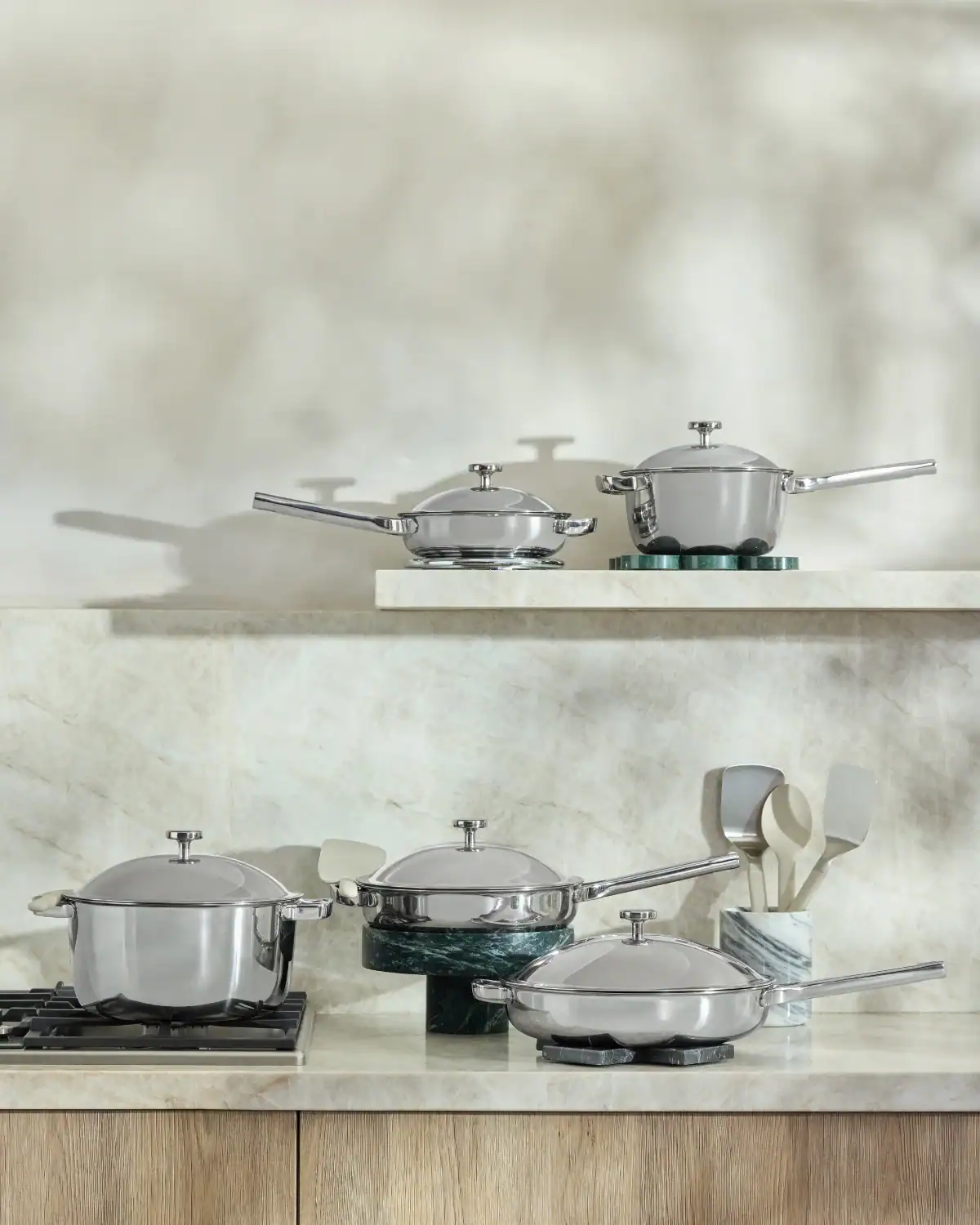
1. Our Place — Most Durable Non-Stick Non-Toxic Cookware
Best For: Anyone looking for a genuine Teflon alternative that performs like a traditional non-stick pan without PFAS or PTFE
Use the discount code SKL10 to save 10%!
I’ve been cooking on the Our Place Titanium Pro for over a year, and it’s become the pan I reach for most on busy weeknights.
Eggs, fish, meat, vegetables — it handles all of it easily, and cleanup is straightforward every time.
We cook on and test cookware constantly in our house, and out of everything we’ve tried, this is the one my husband reaches for first. That says a lot.
The thing that surprised me most is that you can use metal utensils on it without any issues.
After years of treating ceramic-coated pans like they might shatter if you looked at them wrong, that freedom is genuinely nice. I still default to silicone out of habit, but knowing I don’t have to is a relief.
My only honest caveat is the one I mentioned above: this is a newer technology, and I can’t tell you how it performs after five or ten years of daily use the way I can with stainless or cast iron.
What I can tell you is that after more than a year of regular cooking, it looks and performs exactly as it did on day one.
Price
$489.95 for the 10-piece set
Material
Press-formed titanium, fully-clad tri-ply construction — titanium interior, aluminum core, stainless steel exterior. No PFAS, PTFE, PFOA, lead, or cadmium.
Location/Shipping
United States, ships internationally
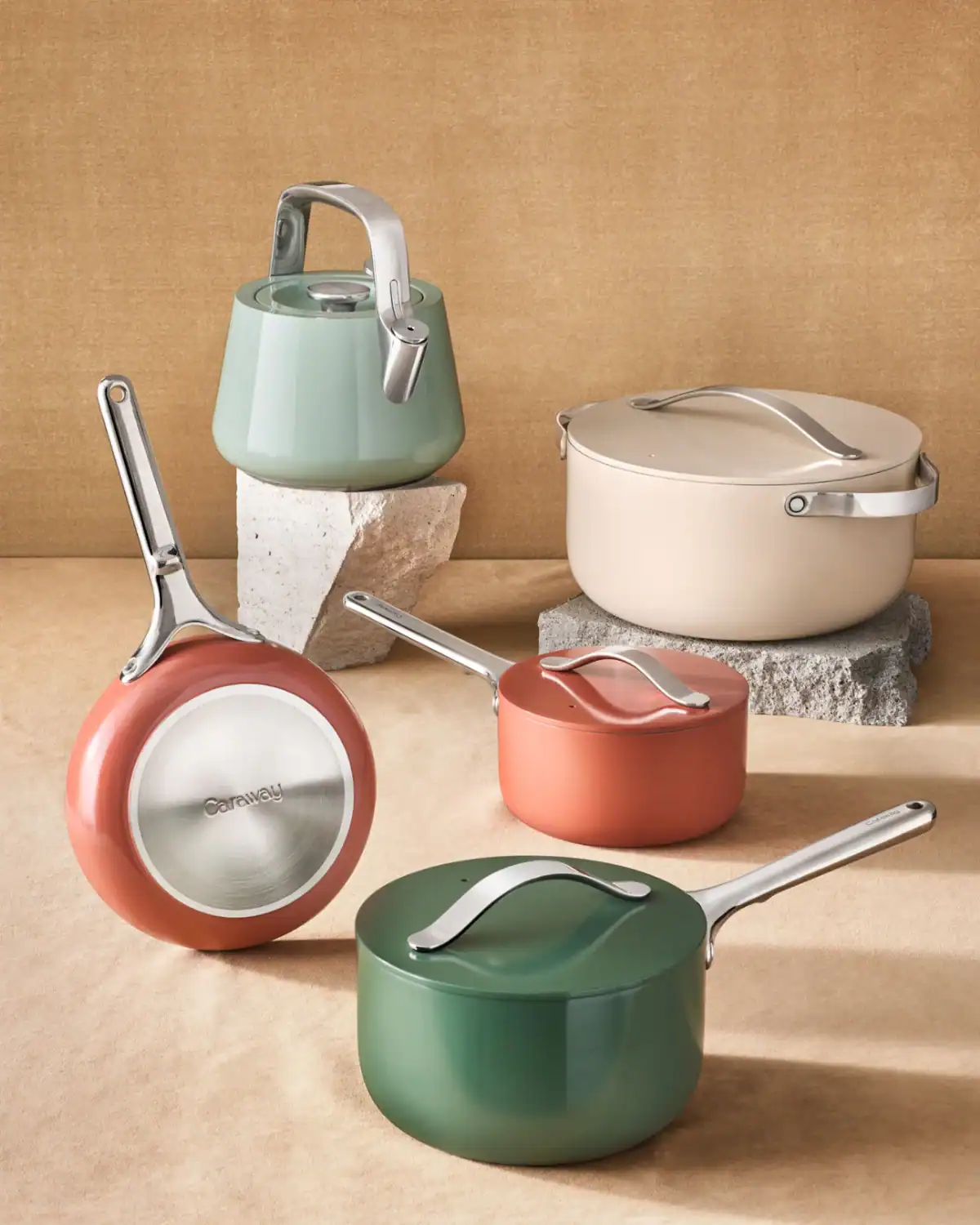
2. Caraway — Best Non-Toxic Ceramic Cookware For Beginners (With Storage!)
Best For: Anyone who wants to get away from Teflon without changing how they cook
Use the discount code SKL to save 10%!
When Caraway first launched, I bought a set immediately, not for myself, but for my mother.
She loved her Teflon and wanted nothing to do with the stainless steel and cast iron I kept pushing on her.
Caraway felt like the answer: familiar cooking experience, beautiful design, and none of the chemicals found in conventional non-stick.
That was about seven years ago. She still uses it daily, still loves it, and her pans look almost new.
The secret is simple: she handwashes only, uses silicone utensils exclusively, and treats the surface with basic care. I may have quietly hidden her metal utensils when the set arrived. No regrets.
What makes Caraway work for this buyer is that it doesn’t ask anything different of you. If you know how to use a non-stick pan, you already know how to use Caraway.
The storage system is genuinely one of the best in the category, and the fact that she’s expanded into the bakeware and other collections over the years tells you everything about how she feels about the brand.
If your goal is a straightforward, low-fuss swap away from Teflon, Caraway ceramic is where I’d send you first.
Price
$595 for the 16-piece set
Material
Ceramic-coated aluminum. No PTFE, PFOA, PFAS, lead, or cadmium.
Location/Shipping
United States, ships internationally
3. GreenPan — Best Budget-Friendly PFAS-Free Cookware
Best For: Anyone who wants a proven, affordable PFAS-free non-stick set with more pieces for the money
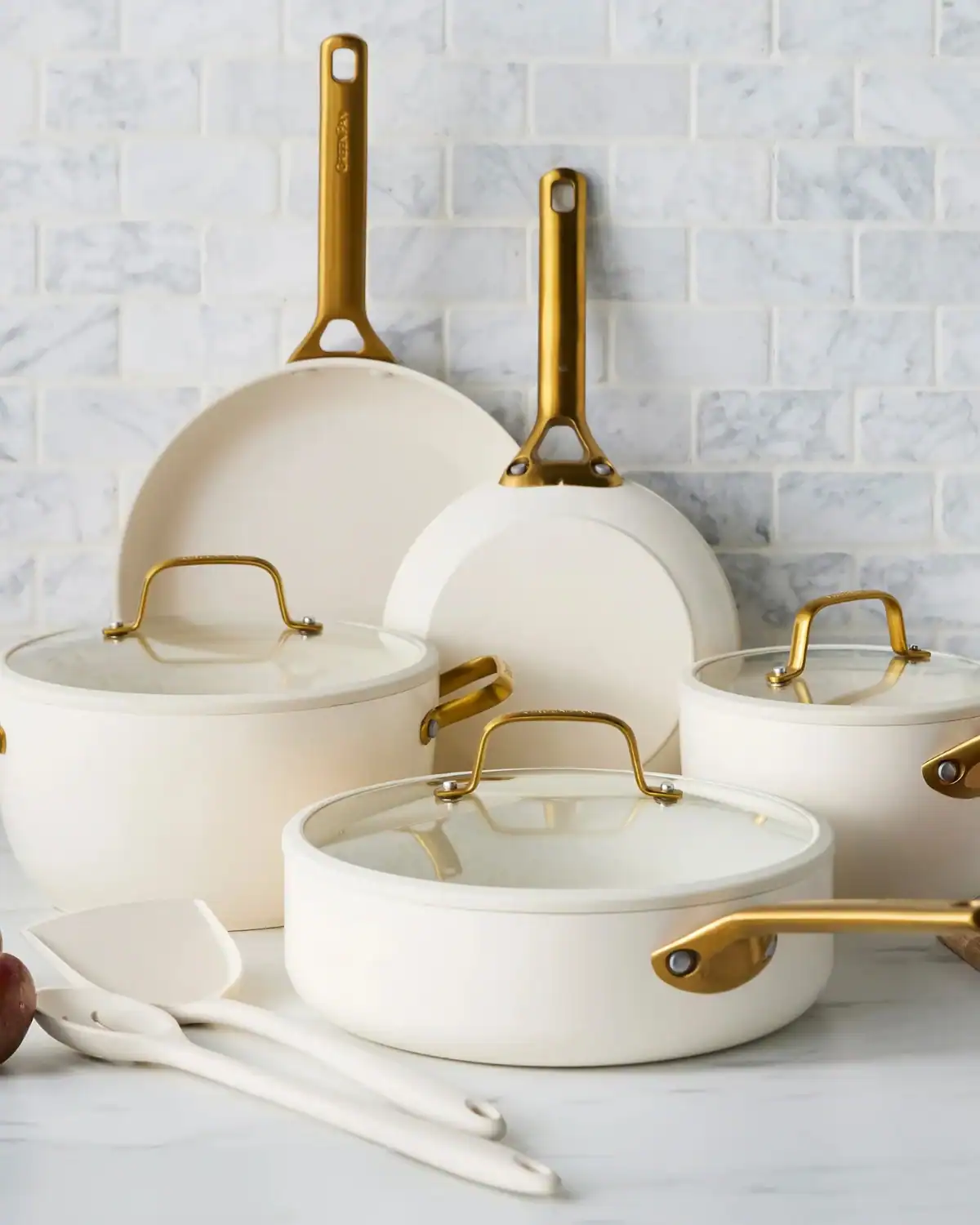
GreenPan deserves credit that doesn’t always get mentioned: they pioneered PFAS-free ceramic nonstick cookware.
Before the wave of clean cookware brands that followed, GreenPan was the pan people were switching to when they first started questioning Teflon. That history matters.
I was gifted a set years ago, and it was genuinely one of the most non-stick pans I had ever used at the time. No issues, easy cleanup, performed exactly as promised.
The brand has only improved since then, and the Reserve Pro represents solid value at a price point none of the other sets on this list can match.
At $399.99 for 10 pieces, including pans, lids, utensils, and pan protectors, it’s the most accessible entry point in this category. If you’re looking for a complete PFAS-free non-stick set without spending $500 or more, this is where I’d send you.
Price
$399.99 for the 10-piece set
Material
Hard anodized aluminum body, Thermolon diamond-reinforced ceramic nonstick coating. No PFAS, PFOA, lead, or cadmium.
Location/Shipping
United States, ships internationally
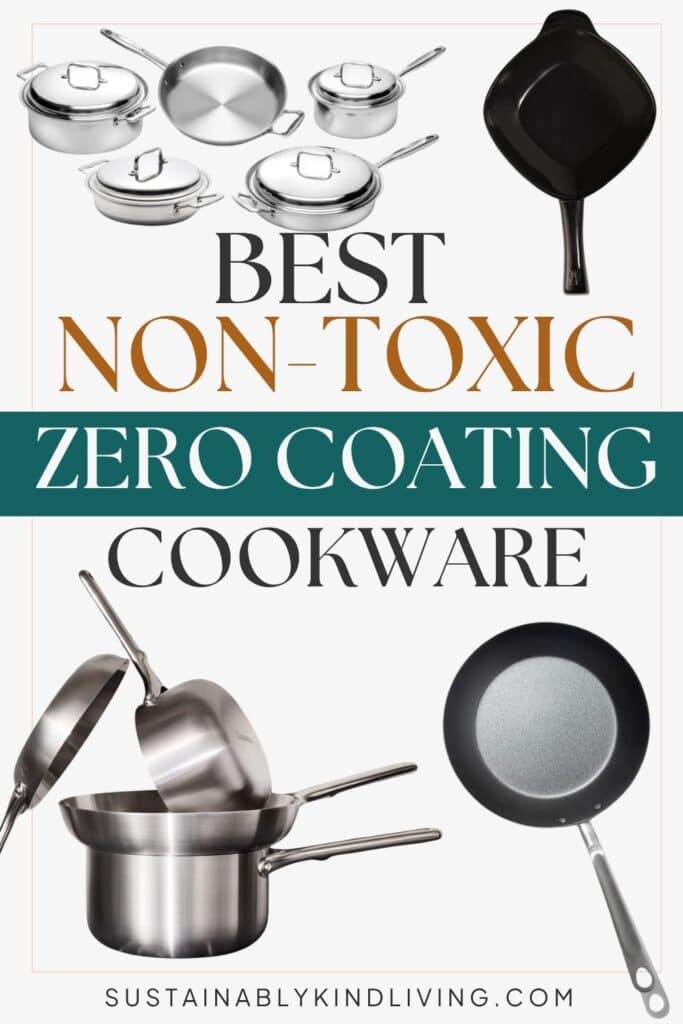
The Safest Non-Toxic Cookware Brands (Zero-Coating Cookware)
These are the brands I trust most for long-term material purity. No coatings, no synthetic surfaces, just the material itself.
They require more from you as a cook, but they will last longer, perform better over time, and never raise questions about what is getting into your food.
4. Xtrema Cookware — Best 100% Pure Ceramic Cookware
Best For: Anyone who wants a cooking surface with absolutely no metal and no coatings of any kind
Use the discount code SKL15 to save 15%!
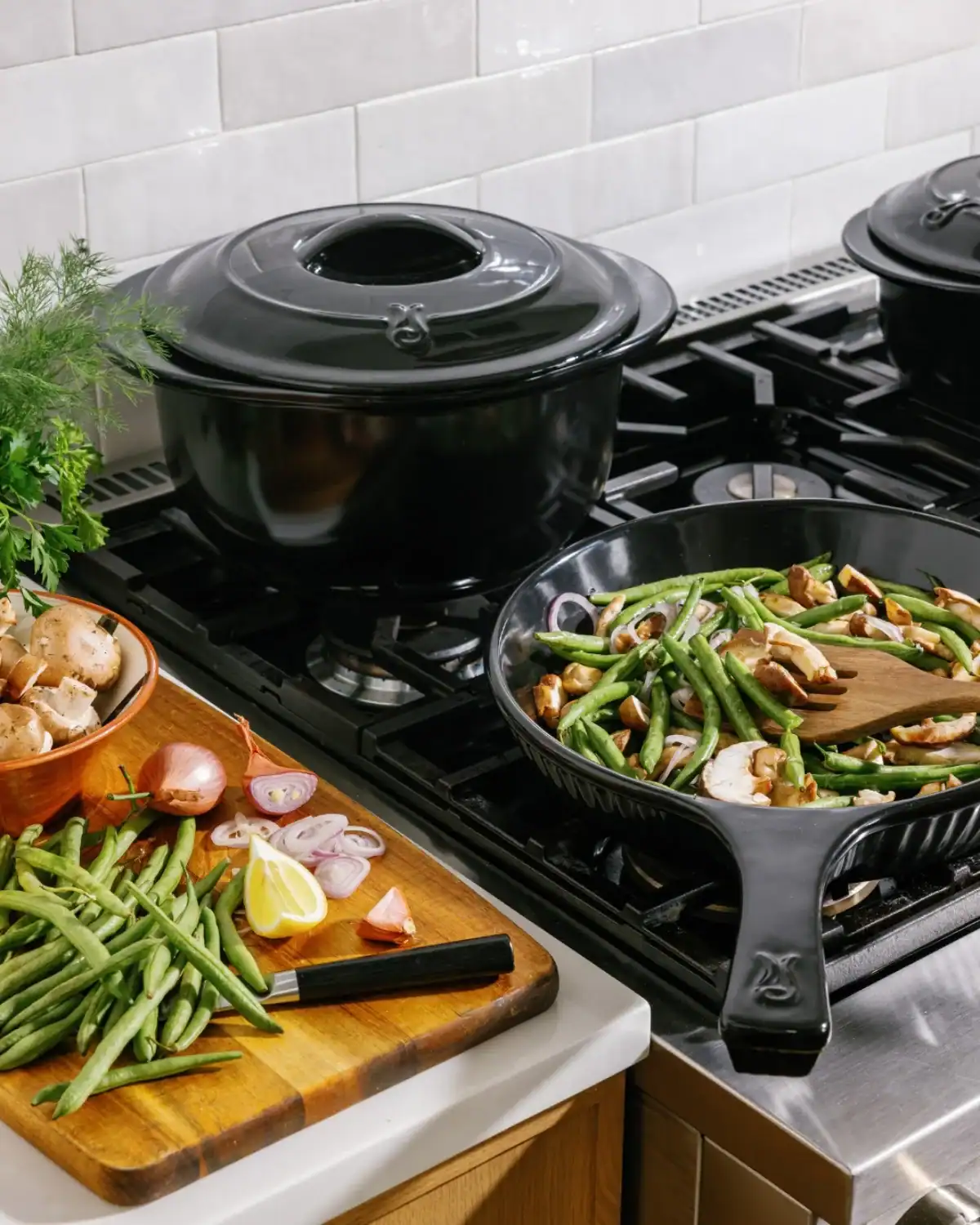
Xtrema Cookware is in a category of its own on this list. Every other brand here, including the stainless steel and cast iron options, has some form of metal in the cooking surface. Xtrema doesn’t.
It is 100% pure ceramic all the way through, no metal core, no synthetic surface layer, no coatings, making it the only option here with zero metal contact.
That matters most for anyone with nickel sensitivity or metal allergies who wants to eliminate that variable entirely.
That material simplicity is exactly why the brand has earned one of the most loyal followings in the non-toxic cookware space. People who cook on Xtrema tend to stay with it.
What does take some getting used to is the way fully ceramic cookware behaves. It heats more slowly than stainless or cast iron and performs best at lower temperatures.
Once you adjust your technique, though, the results speak for themselves: truly non-stick cooking, effortless cleanup, and a cooking surface that will never change, no matter how long you use it.
Price
$520 for the 3-piece Home Cook Set
Material
100% pure ceramic, no metal core, no coatings, no PFAS, PTFE, PFOA, lead, or cadmium.
Location/Shipping
United States, ships internationally
5. Caraway — Best Beginner-Friendly Stainless Steel Cookware (With Storage)
Best For: Caraway fans ready to try uncoated stainless steel for the first time
Use the discount code SKL to save 10%!
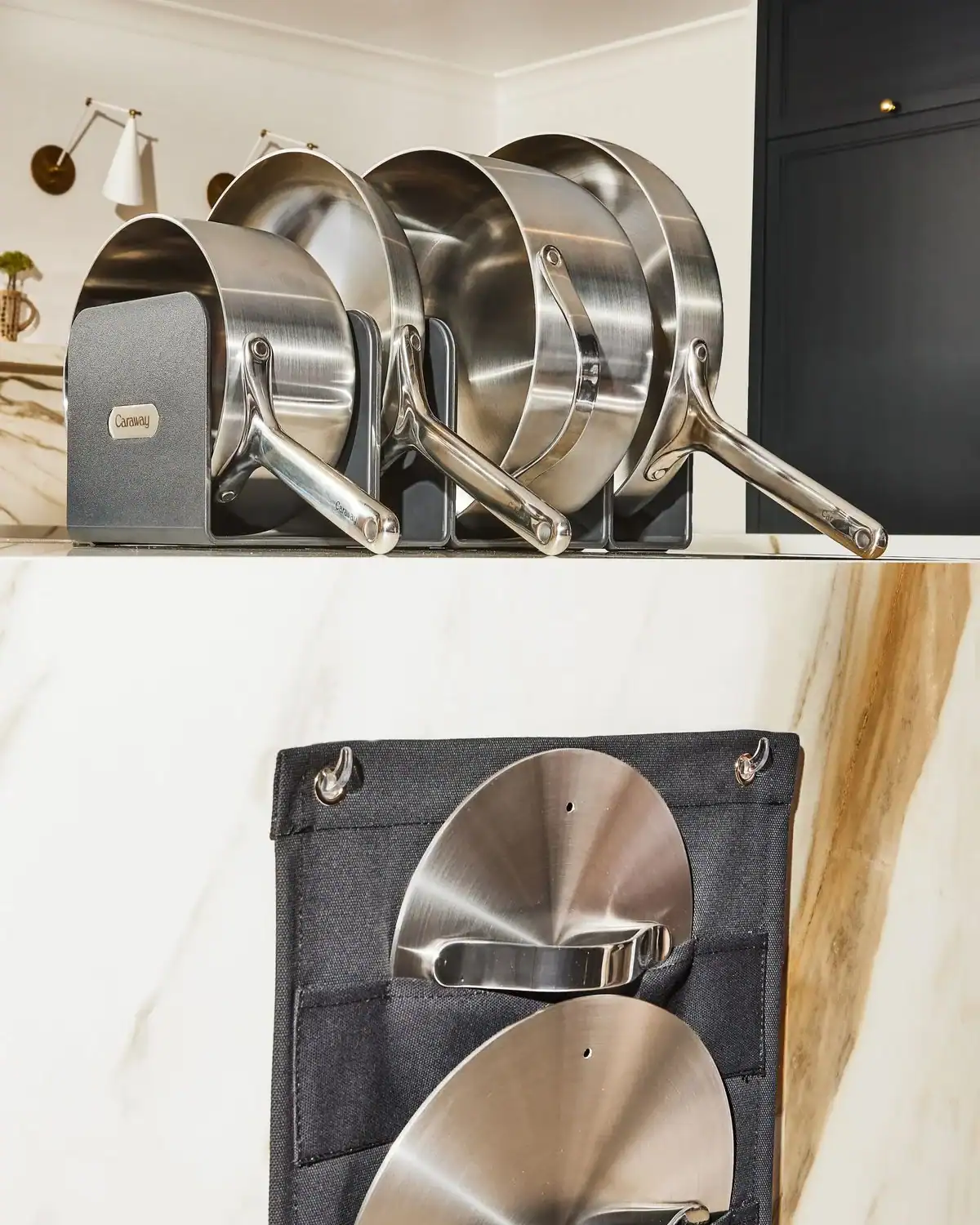
I still cook with Caraway stainless regularly, and the storage system is genuinely one of the things I appreciate most about it.
Having lids and pans organized and easy to access makes a real difference in how often you actually reach for them, especially when you’re building the habit of cooking with uncoated cookware.
The performance is solid and reliable for everyday cooking.
If you’re already a Caraway customer and you’re curious about making the move to stainless steel, this is a comfortable and familiar way to do it.
The learning curve is manageable, the quality is there, and the aesthetic is consistent with the rest of the Caraway line.
Price
$595 for the 12-piece set
Material
5-ply stainless steel. No coatings, no PFAS, PTFE, PFOA, lead, or cadmium.
Location/Shipping
United States, ships internationally
6. Field Company — Best Traditional Cast Iron Cookware
Best For: Anyone who wants traditional cast iron that performs better and weighs less than what they’ve tried before
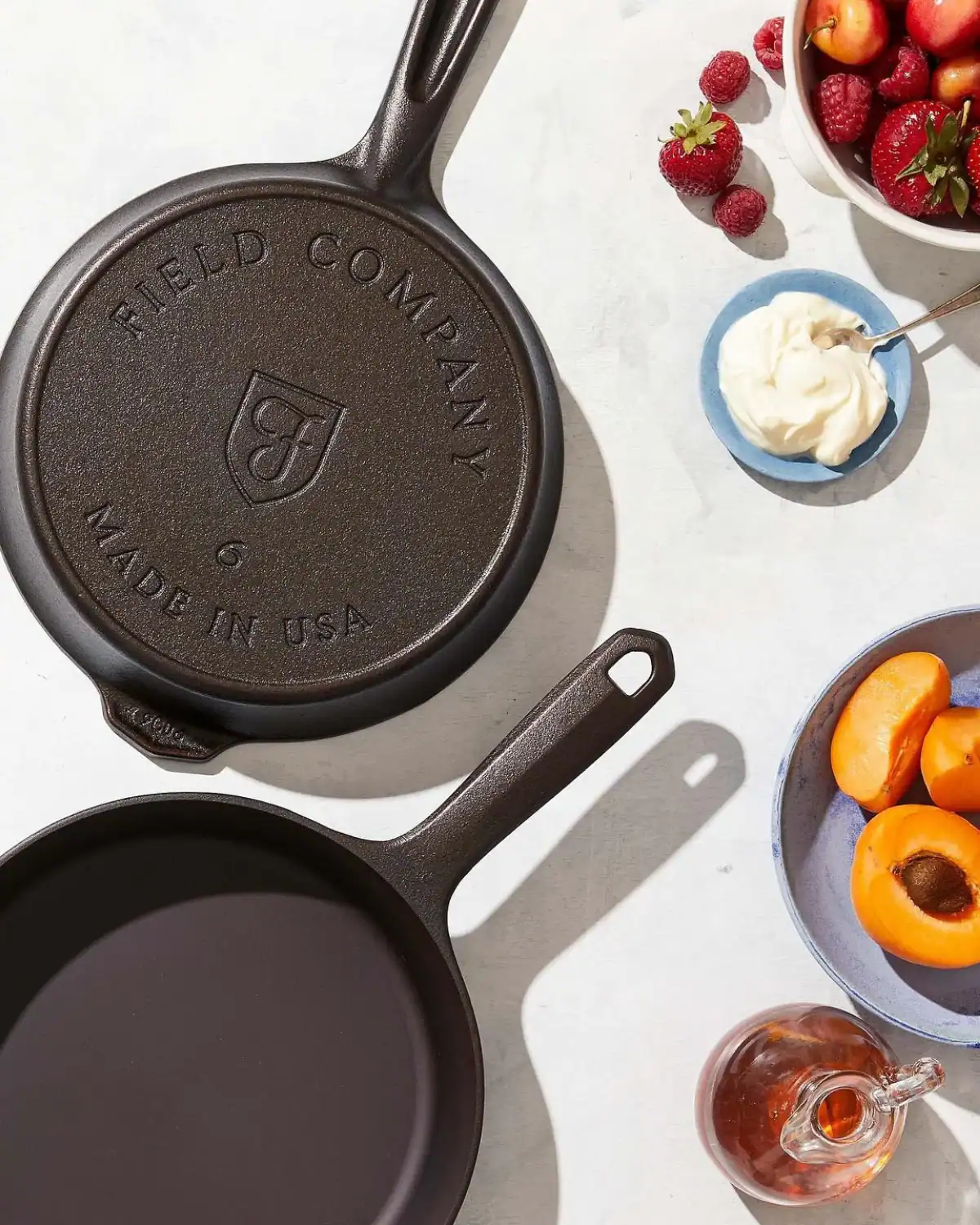
Cast iron is one of the oldest and most trusted cooking materials there is, and Field Company makes some of the best available today.
I cook on mine regularly, and it’s one of those pieces of cookware that just gets better the more you use it. No coatings, no synthetic surfaces, just iron and oil. That’s it.
What sets Field Company apart from most cast iron is the finish.
The cooking surface is noticeably smoother and lighter than traditional cast iron, which makes it more approachable for everyday cooking and significantly easier to handle.
It arrives pre-seasoned with organic grapeseed oil and ready to use from day one, which removes the biggest barrier most people have with cast iron.
The other thing worth knowing is that this is genuinely lifetime cookware.
Field Company backs it with a lifetime warranty, and the pan only improves with use. Every meal you cook in it builds the seasoning further. If you put in the time to learn it, you’ll never want to cook on anything else.
Price
From $165 (No.8 skillet), multiple sizes available
Materials
Uncoated cast iron, pre-seasoned with organic grapeseed oil. No PFOAs, PTFEs, or synthetic coatings. Just iron and oil.
Location/Shipping
United States, ships internationally
7. Made In Cookware — Best Carbon Steel Cookware
Best For: Anyone who wants the responsiveness of carbon steel with strong material transparency and no synthetic coatings of any kind
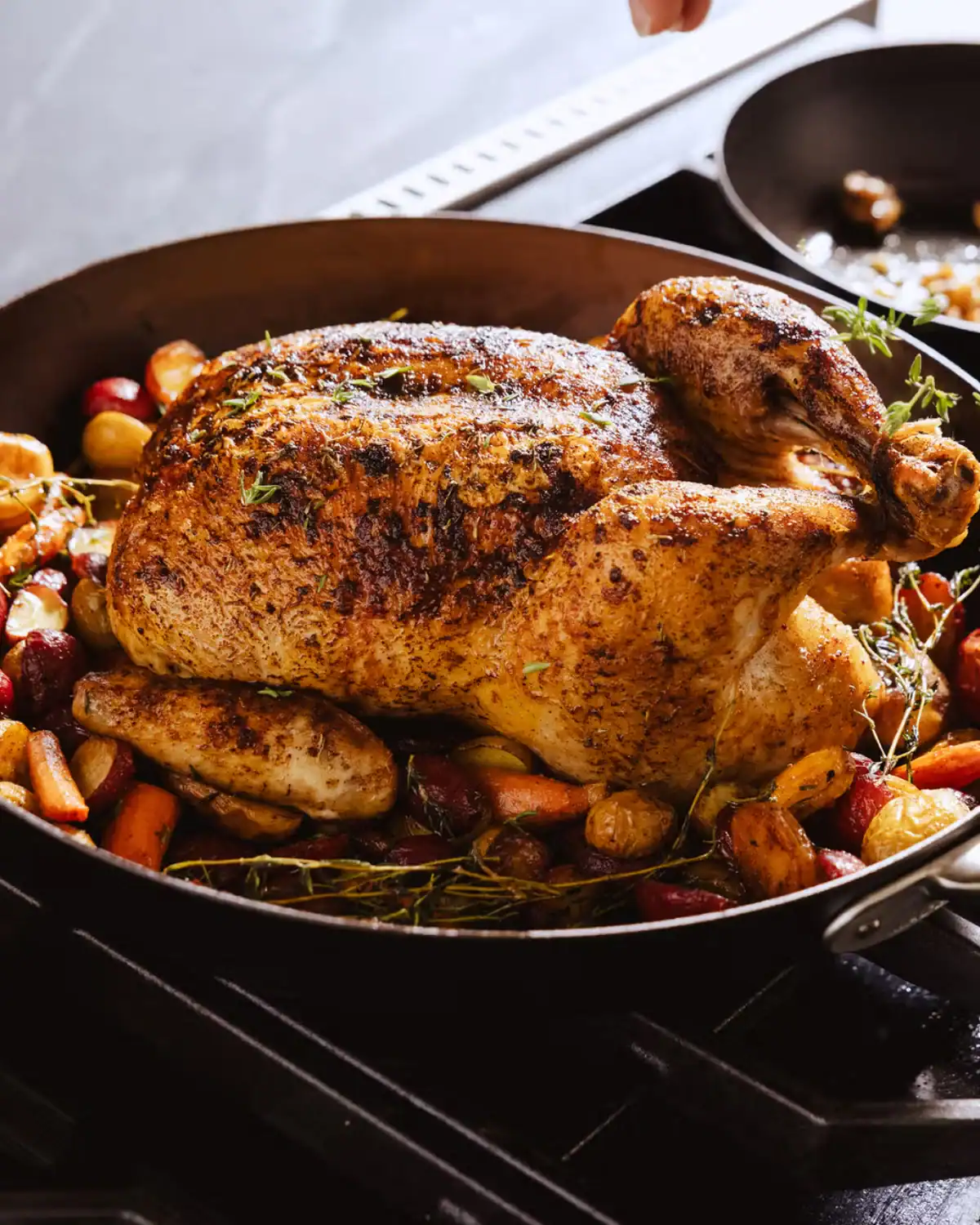
A quick note before we get into it: this review covers Made In’s carbon steel line specifically, not their full cookware range.
Carbon steel sits in an interesting spot between cast iron and stainless steel.
It heats faster and more evenly than cast iron, responds quickly to temperature changes, and builds a natural non-stick seasoning over time, the same way cast iron does.
For high-heat cooking, searing, and stovetop-to-oven meals, it’s one of the most versatile uncoated options available.
Made In’s carbon steel is pre-seasoned and made without PFAS, PTFE, PFOA, lead, cadmium, or aluminum, which is exactly what you want to see from a brand in this space.
The material transparency is solid, and the performance reviews from long-term users are consistently strong. Like all carbon steel, it improves with every cook and, with proper care, will last for decades.
The one honest tradeoff is that carbon steel requires the same commitment as cast iron. Hand washing, drying thoroughly, and light oiling after each use. If you’re not ready for that maintenance, stainless steel is a better fit.
Price
$109 for the 10″ frying pan
Material
Carbon steel, pre-seasoned. No PFAS, PTFE, PFOA, lead, cadmium, or aluminum.
Location/Shipping
United States, ships internationally
8. 360 Cookware — Premium Lifetime Warranty Stainless Steel Cookware
Best For: Anyone who wants the most durable, long-term investment stainless steel cookware available
Use the discount code SKL15 to save 15%!
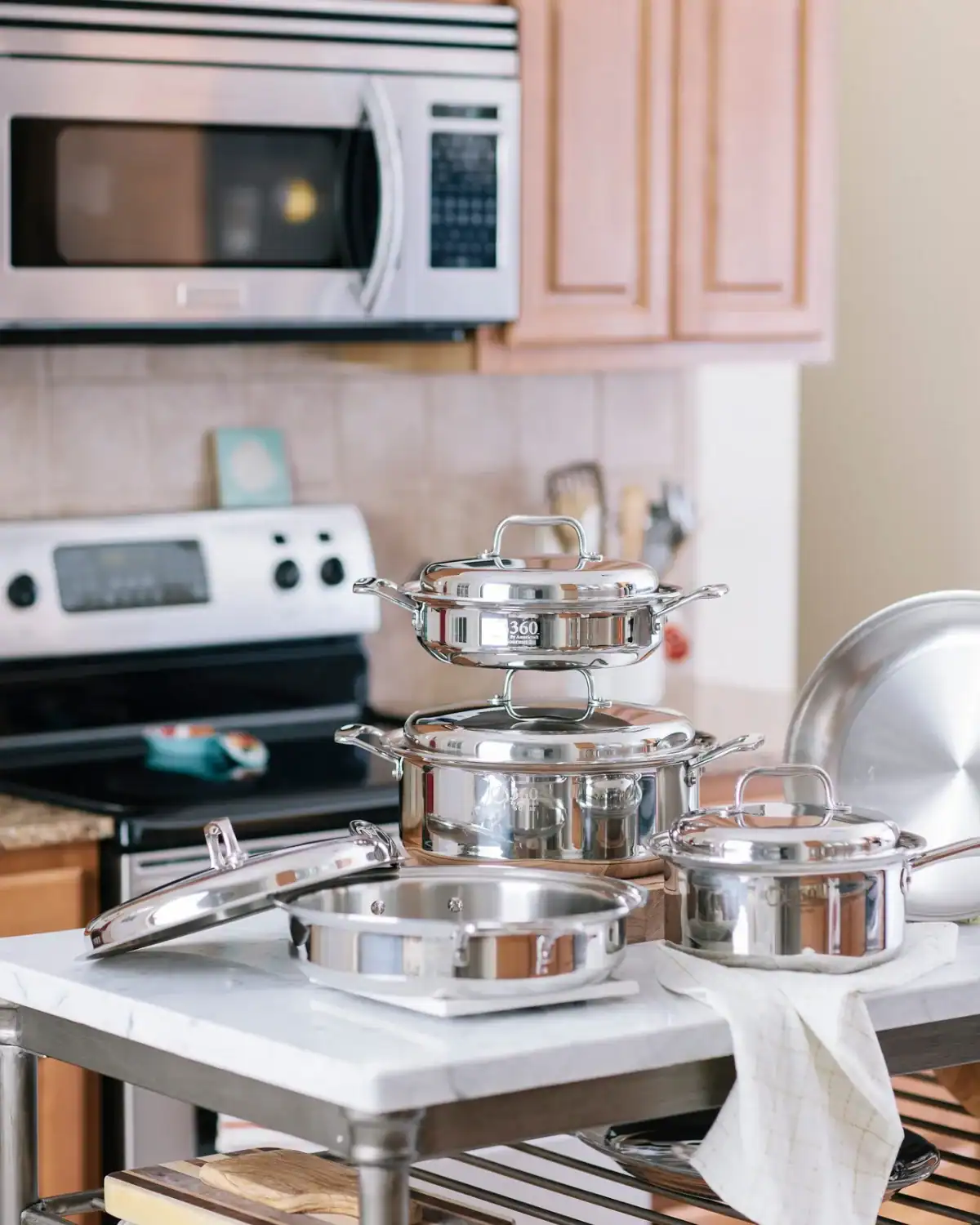
I’ll be straightforward: 360 Cookware is my personal favorite stainless steel on this list (read my full review here).
I cook on it daily, I have their baking sheets, their slow cooker, and multiple pieces from their cookware line. It is the cookware I trust most in my own kitchen and the one I’d recommend to anyone who is ready to make a serious, long-term investment.
The material is T-316 surgical-grade stainless steel, which is a higher grade than most cookware on the market.
But what truly sets 360 apart is the Vapor technology. By trapping steam inside the pan at lower temperatures, it keeps moisture and nutrients in your food in a way that conventional cooking simply doesn’t.
Once you understand how it works and adjust your cooking accordingly, the results are remarkable. Food tastes better, cleanup is easier, and you use less energy doing it.
This is also genuinely lifetime cookware. 360 is handcrafted in West Bend, Wisconsin, backed by a lifetime warranty, and built to be passed down.
If you’re done replacing cookware every few years and want to buy once and never think about it again, this is where I’d send you.
Price
$665 for the 6-piece Starter Set
Material
T-316 surgical grade stainless steel, uncoated. Handcrafted in the USA.
Location/Shipping
United States, ships internationally
Why Choosing Non-Toxic Cookware Matters
Unlike most household products that you use occasionally, cookware comes into direct contact with your food multiple times a day, often for years or even decades. That frequency matters.
The materials your cookware is made from, and how stable those materials are under repeated heat, cleaning, and daily use, have a direct bearing on what ends up in your food.
According to the U.S. Environmental Protection Agency, peer-reviewed research has linked exposure to certain PFAS chemicals to reproductive effects, including decreased fertility and high blood pressure in pregnant women, developmental effects in children, increased risk of kidney and testicular cancers, and reduced immune response, including lower vaccine efficacy.
The International Agency for Research on Cancer has classified PFOA, a PFAS chemical historically used in the production of traditional non-stick coatings, as a Group 1 carcinogen.
These findings contributed directly to PFOA being phased out of U.S. manufacturing and to growing legislative action around PFAS in cookware.
As of January 1, 2025, Minnesota became the first state to ban the sale of cookware coated with PFAS, with Vermont, Connecticut, Rhode Island, and Colorado moving toward similar restrictions with enforcement dates ranging from 2026 to 2028.
This is the context in which the non-toxic cookware category exists, and why the brands in this guide take material transparency seriously.
Toxic Chemicals Commonly Found In Conventional Cookware
PFAS (Forever Chemicals)
PFAS, or per- and polyfluoroalkyl substances, are a large family of synthetic chemicals that have been used in industrial and consumer products since the 1940s.
They are called ‘forever chemicals’ because they do not break down naturally in the environment or in the human body, and they accumulate over time.
According to CDC biomonitoring data, most people in the United States have measurable levels of PFAS in their blood.
In April 2024, the EPA set legally enforceable maximum contaminant levels for PFOA and PFOS in drinking water, marking one of the most significant regulatory actions on PFAS to date.
PFAS have been widely used in the production of non-stick cookware coatings, which is one of the reasons the cookware industry has come under increasing scrutiny and legislative pressure in recent years.
PTFE (Traditional Non-Stick Coatings)
PTFE, or polytetrafluoroethylene, is the polymer best known by the brand name Teflon.
It is the coating that made traditional non-stick cookware possible, and it remains one of the most widely used cookware coatings in the world.
What many consumers don’t realize is that PTFE is itself classified as a PFAS compound, which means cookware marketed as PFAS-free may still contain PTFE if brands are not being fully transparent about their formulations.
Under normal cooking conditions, PTFE is considered chemically stable. However, research published in peer-reviewed literature has shown that PTFE begins to break down at temperatures above 500 degrees Fahrenheit, releasing perfluorinated compounds that can be inhaled.
At very high temperatures, the degradation accelerates significantly. A 2022 study found that a damaged PTFE coating can release millions of micro and nanoplastic particles into food during normal cooking and food preparation, though researchers note that the full health implications of ingesting microplastics are still being studied.
PFOA And Legacy Manufacturing Concerns
PFOA, or perfluorooctanoic acid, is a specific PFAS chemical that was historically used as a processing aid in the manufacturing of PTFE.
It was not technically an ingredient in the finished cookware coating, but it was present in the manufacturing process and was found to contaminate communities near production facilities.
The International Agency for Research on Cancer has classified PFOA as a Group 1 carcinogen, meaning there is sufficient evidence of its carcinogenicity in humans, with links to testicular and kidney cancer specifically.
PFOA has been phased out of U.S. manufacturing and was banned by the EU in 2020.
However, its legacy contamination continues to affect communities, and the broader concern it raised about the PFAS class as a whole has driven much of the regulatory and consumer attention around cookware safety.
The fact that one PFAS chemical was replaced with others, some of which have shown similar hazardous properties, is exactly why advocates and researchers argue that the entire PFAS class needs to be regulated together rather than chemical by chemical.
Why Material Disclosure Matters More Than Marketing Claims
The history of PFAS in cookware is partly a story about what happens when manufacturers are not required to be transparent about what their products contain.
PFOA contamination went largely unnoticed by consumers for decades because there was no requirement to disclose it. The same dynamic played out with other PFAS substitutes that were introduced after PFOA was phased out.
This is why material disclosure is the single most important thing to look for when evaluating any cookware brand.
Common Cookware Marketing Claims Explained
One of the hardest parts of shopping for non-toxic cookware isn’t comparing materials. It’s figuring out what brands actually mean when they use words like non-toxic, PFAS-free, or ceramic.
Here’s what those terms typically mean and what I look for beyond the label.
PFAS-Free
PFAS-free means a product is made without intentionally added per- and polyfluoroalkyl substances. This is an important claim, but it shouldn’t be the only thing you evaluate.
I still want to know what the cooking surface is actually made from, whether the cookware has been independently tested, and whether the brand publishes AB1200 disclosures. PFAS-free is a good starting point. It is not the whole story.
PTFE-Free
PTFE, or polytetrafluoroethylene, is the polymer behind traditional non-stick cookware and Teflon.
Because PTFE is itself considered a PFAS compound, cookware that is genuinely PTFE-free avoids one of the most common non-stick coating materials on the market.
If avoiding traditional non-stick coatings entirely is a priority, this is one of the most meaningful claims to look for.
PFOA-Free
This claim sounds significant, but it is often less meaningful than it appears. PFOA was largely phased out of cookware manufacturing years ago and is no longer used by most brands.
A pan can be PFOA-free while still using other PFAS compounds or synthetic non-stick coatings. When a brand leads heavily with PFOA-free as its primary safety claim, I immediately look for more complete disclosures about PFAS and PTFE.
Ceramic Cookware
This is one of the most misunderstood terms in the category.
Ceramic-coated cookware is aluminum cookware with a ceramic-based coating applied to the cooking surface, designed to provide non-stick performance. Brands like Caraway and GreenPan fall into this category.
Fully ceramic cookware like Xtrema Cookware is made entirely from ceramic material with no metal core and no applied coating.
These products are often grouped together under the word ceramic, but they are fundamentally different materials and behave very differently in the kitchen.
Titanium Cookware
Titanium is another term worth reading carefully. Some cookware uses a true titanium cooking surface without traditional non-stick coatings.
Other cookware simply adds titanium particles to a conventional coating for durability. Those are not the same thing.
Whenever I see titanium on a label, I want to know whether titanium is the actual cooking surface, whether there is a coating, and if so, what that coating is made from. The answers matter far more than the label.
“Non-Toxic”
There is no universal legal definition for non-toxic cookware. Any brand can use the term regardless of what their product is actually made from or how much testing they have done.
That is why I do not evaluate cookware based on whether a brand calls itself non-toxic.
“Eco-Friendly”, “Healthy”, and “Clean”
These are marketing terms, not material descriptions. They may reflect a company’s values, but they tell you nothing about what a cooking surface is actually made from. Treat them as invitations to ask more questions rather than answers in themselves.
Cookware Materials I Personally Avoid
After nearly a decade of researching and testing cookware, there are certain materials and situations I personally choose to avoid in my own kitchen.
This is not about fear. It is about having enough information to make a considered decision and choosing not to ignore it.
Damaged or Heavily Worn Non-Stick Cookware
This is the most straightforward one. A scratched, chipped, or visibly worn non-stick coating is a pan that needs to be replaced, regardless of what the coating is made from.
Research has shown that a damaged PTFE coating can release millions of micro- and nanoplastic particles into food during normal cooking.
Even with PFAS-free ceramic coatings, a compromised surface means the pan is no longer performing as designed, and the integrity of the food contact surface cannot be guaranteed.
If your non-stick pan is showing significant wear, it has done its job, and it is time to move on.
Undisclosed Proprietary Coatings
If a brand describes its cooking surface as a proprietary blend, a special formula, or any other language that avoids telling you what the coating is actually made from, that is a red flag.
Transparency about materials is not complicated. Brands that are genuinely confident in what their cookware is made from will tell you.
Brands that deflect, use vague language, or hide behind proprietary claims are asking you to trust them without giving you any reason to. I do not cook on cookware that I cannot verify.
Cookware With No Material Disclosure
In the current regulatory environment, there is no excuse for a cookware brand selling products in the United States to have no AB1200 disclosure and no published independent testing. It does not have to be complicated. It just has to exist.
When I evaluate a brand and cannot find any substantive material information on their website, that tells me everything I need to know about how seriously they take transparency.
How I Vet Non-Toxic Cookware Brands
Every brand on this list went through the same evaluation process before being considered for a feature. No brand can pay to appear here. That has never been how this works, and it never will be.
Material Transparency
Every brand featured on this site goes through a detailed one-on-one conversation where I ask a comprehensive list of questions covering materials, metals, coatings, manufacturing processes, and ingredient sourcing.
I want to understand exactly what is in the cooking surface, what is in the substrate beneath it, and how the brand knows what it claims to know. Vague answers, deflection, or an inability to answer basic material questions are immediate disqualifiers.
If a brand cannot clearly explain what their cookware is made from, that tells me everything I need to know about how seriously they take transparency.
AB1200 Chemical Disclosures
California’s Assembly Bill 1200 requires cookware brands to disclose any intentionally added hazardous chemicals present in their products.
I use these disclosures as one of several tools to evaluate what a brand has added to their cookware and why.
It is worth understanding that brands whose cookware contains no intentionally added hazardous chemicals are not required to publish an AB1200 disclosure at all.
Durability And Long-Term Performance
Short-term testing tells you very little about cookware.
A pan that performs beautifully in its first month can look and behave completely differently after six months of daily use, high heat cycles, repeated washing, and real family cooking.
My testing process covers as many cooking scenarios as I can put a pan through: high-acid foods, delicate proteins, sticky sauces, high-heat searing, low and slow cooking, and everything in between.
I keep detailed notes throughout, tracking how the surface behaves over time, whether performance changes, and whether anything about the construction raises questions the longer I use it.
Cookware that makes this list has earned its place through sustained performance, not a good first impression.
Brand Accountability
A brand’s willingness to answer my questions directly is one of the most telling signals in the entire evaluation process.
If a brand is evasive with me, a cookware researcher who is asking detailed and informed questions, I have no confidence they will be straight with their customers either.
Beyond the initial evaluation, I also look at how brands handle warranty claims, how they respond to customer concerns, and whether their stated commitments to transparency hold up over time.
The brands on this list are ones I would feel comfortable sending my own readers to, knowing they will be treated honestly and their questions will be answered.
How To Choose The Right Non-Toxic Cookware For Your Cooking Style
If you’re feeling overwhelmed by all the cookware options, you’re not alone.
After nearly a decade of testing cookware, I’ve found that the “best” choice usually comes down to how you cook, what you’re willing to maintain, and whether convenience or material simplicity matters more to you.
Here’s where I’d start:
| If you want… | my recommendation | why |
|---|---|---|
| The closest alternative to traditional TEFLON | Our Place Titanium Pro | Excellent food release without PFAS or PTFE & durable enough for metal utensils |
| Are you ready to ditch non-stick entirely? | Caraway Stainless Steel, 360 Cookware, Field Company, Made In Cookware, or Xtrema Cookware | All are uncoated, improve with use, and will outlast any coated pan you’ve ever owned |
| Love cooking on high heat | Caraway Stainless Steel, Field Company, Made In Carbon Steel, or 360 Cookware | All handle sustained high heat without any risk of coating degradation or off-gassing. |
| Don’t want to give up metal utensils | Our Place Titanium Pro, Caraway Stainless Steel, or any Zero-coating option | The Titanium Pro is the only non-stick option that genuinely tolerates metal utensils. Uncoated pans have no restrictions. |
| Want a lifetime warranty | 360 Cookware, Field Company, or Made In Cookware | All three are backed by lifetime warranties and are built to be passed down. |
| Only cook on induction | Any brand on this list except Xtrema Cookware | All recommended brands are induction compatible. Xtrema is fully ceramic and not induction compatible. Always verify individual pieces before purchasing. |
| Are just starting out and hate things that stick | Caraway Ceramic or GreenPan Reserve Pro | Both offer genuine non-stick performance with minimal maintenance and no intimidating learning curve. |
| Only cook on gas | Any brand on this list | All recommended brands work on gas. Cast iron and carbon steel perform particularly well on open flame. |
| Want just a few pans that do everything | Caraway Stainless Steel and Field Company or 360 Cookware | A stainless steel set and a cast iron skillet cover nearly every cooking scenario between them. |
| Need cookware that goes from stovetop to oven | Caraway Stainless Steel, 360 Cookware, Field Company, or Made In Cookware | All are oven safe at any temperature with no coating concerns. Ceramic-coated pans are oven safe but have lower temperature limits |
The good news is that you don’t have to choose just one material. Most well-equipped kitchens benefit from a combination of cookware types.
In my own kitchen, I use stainless steel and cast iron for most meals, with a PFAS-free non-stick option for foods that benefit from easier release.
Understanding Cookware Materials
Stainless Steel Cookware
Stainless steel is the material of choice in professional kitchens worldwide and one of the most trusted uncoated cookware options available.
It contains no coatings, no synthetic non-stick layers, and no PFAS.
New stainless steel can release trace amounts of nickel and chromium when cooking acidic foods, but research shows this leaching stabilizes after approximately six cooking cycles and poses no health concern for most people.
The grade matters: most quality cookware uses 18/10 stainless steel, while higher-end options like 360 Cookware use T-316 surgical grade, the same used in medical applications.
There is a learning curve with heat management, but it is shorter than most people expect.
Cast Iron Cookware
Cast iron has been used for cooking for centuries and develops a natural non-stick surface through seasoning that improves with every use.
It contains no synthetic coatings and no PFAS. Research has shown that cooking in cast iron can increase the iron content of food, which is mildly beneficial for most people. The exception is individuals with hemochromatosis, who should consult a physician first.
Cast iron excels at high-heat cooking and heat retention but requires proper maintenance: hand washing, thorough drying, and light oiling after each use.
100% Ceramic Cookware
Fully ceramic cookware is made entirely from ceramic material with no metal core and no applied cooking surface coating.
It is the only option with zero metal contact in the cooking surface, making it the natural choice for anyone with nickel sensitivity or metal allergies. It heats more slowly than metal and performs best at lower temperatures, which takes adjustment.
But once you understand how it behaves, it delivers consistent results and will not degrade the way coated cookware does over time.
Ceramic-Coated Cookware
Ceramic-coated cookware is metal cookware, most often aluminum, with a ceramic-style coating applied to the cooking surface. It is not ceramic throughout.
The best ceramic-coated brands use coatings free of PFAS, PTFE, PFOA, lead, and cadmium and back those claims with independent testing and AB1200 disclosures. The primary limitation is durability.
All coatings degrade over time, and ceramic coatings are no exception. With proper care, it can last for years, but it is not lifetime cookware.
Titanium Cookware
Titanium cookware is worth understanding carefully because the term can refer to very different products.
True titanium cookware, like the Our Place Titanium Pro, uses a titanium cooking surface engineered without PFAS-based coatings.
Titanium-reinforced non-stick pans are different: they add titanium particles to a PTFE-based coating for durability without eliminating the coating itself.
Titanium itself is one of the safest and most stable metals for food contact. The category is newer than stainless or cast iron, which means long-term independent research is still developing.
Carbon Steel Cookware
Carbon steel is approximately 99% iron and 1% carbon with no synthetic coatings and no PFAS. It heats faster than cast iron, responds more quickly to temperature changes, and builds a natural non-stick patina through seasoning that improves over time.
The FDA confirms that iron leached from carbon steel cookware is safe for most people, with a typical 12-inch pan transferring only two to three milligrams of iron per acidic meal against the adult daily recommended intake of 18 milligrams.
Like cast iron, it requires hand washing, thorough drying, and light oiling after use.
What California AB1200 Tells Us About Cookware Safety
California’s Assembly Bill 1200, signed into law in 2021, requires cookware brands to disclose any intentionally added chemicals from the California DTSC Candidate Chemicals List that are present in their products.
This applies to chemicals in coatings, surface treatments, handles, and substrate layers. It is a transparency tool, not a safety certification.
What To Look For In A Disclosure
When reading an AB1200 disclosure, the most important thing to identify is where the disclosed chemicals are found.
A chemical present in a handle or exterior base layer is meaningfully different from one present in the food contact surface, the part of the pan that actually touches your food.
Brands that are genuinely transparent will be clear about this distinction. A thorough, specific disclosure is a positive signal. A vague or difficult-to-find one raises questions worth asking.
When A Brand Doesn’t Have One
Not every brand needs an AB1200 disclosure. Brands whose cookware contains no intentionally added chemicals from the Candidate Chemicals List have nothing to disclose.
This is the case for 360 Cookware and Xtrema Cookware. However, if a brand is selling ceramic-coated or engineered-surface cookware with no AB1200 disclosure anywhere on their website, that is worth investigating before you buy.
The Limitations
AB1200 only covers intentionally added chemicals, not contaminants from manufacturing or raw material sourcing. It also does not require independent verification, meaning brands are largely self-reporting.
For these reasons, AB1200 disclosures are one tool among several, not the only one. Combined with independent third-party testing, direct brand communication, and long-term performance evaluation, they form part of a complete picture of whether a brand is genuinely transparent.
Frequently Asked Questions About Non-Toxic Cookware
There is no single safest cookware material because safety depends on what you are trying to avoid and how you cook.
Uncoated materials like stainless steel, cast iron, carbon steel, and fully ceramic cookware have the longest track record of safe use and require no coatings that can degrade over time.
For anyone who wants zero metal contact, fully ceramic cookware like Xtrema Cookware is the only option, with no metal core and no coatings of any kind.
If you’re looking for cookware that performs like traditional non-stick without PFAS-based coatings, my top recommendation is Our Place Titanium Pro, as it is the most durable and even allows for metal utensils.
Stainless steel is widely considered one of the safest cookware materials available. It contains no PFAS, PTFE, PFOA, or synthetic non-stick coatings and is used extensively in professional kitchens around the world.
While stainless steel can release trace amounts of nickel and chromium into food, particularly when cooking acidic ingredients, research suggests these amounts are generally considered safe for most people.
It depends on the type of ceramic cookware you’re talking about. Fully ceramic cookware, like Xtrema Cookware, is made entirely from ceramic material and contains no metal core or applied coating.
Ceramic-coated cookware, on the other hand, is typically aluminum cookware with a ceramic-based coating applied to the cooking surface.
High-quality ceramic-coated cookware can be a safer alternative to traditional non-stick cookware when it’s made without PFAS, PTFE, PFOA, lead, and cadmium and backed by transparent material disclosures.
Neither material is universally safer. Stainless steel is one of the most durable cookware materials available and contains no applied coatings.
Ceramic-coated cookware offers easier food release but relies on a coating that will eventually wear down over time.
Fully ceramic cookware is an entirely different category with no metal core and no applied coating. The better choice depends on your cooking habits, maintenance preferences, and material priorities.
Titanium is one of the most stable and biocompatible metals used in consumer products. It is non-reactive, corrosion-resistant, and does not readily leach into food during normal cooking.
The important distinction is understanding whether titanium is the actual cooking surface or simply part of a marketing claim.
Some cookware uses a true titanium cooking surface, while other products use titanium-reinforced coatings. Always look beyond the label and verify what the cooking surface is actually made from.
Caraway’s ceramic-coated cookware is made without PFAS, PTFE, PFOA, lead, and cadmium.
The company also publishes AB1200 disclosures and provides material transparency that is stronger than many competitors in the ceramic cookware space.
While no coated cookware lasts forever, Caraway remains one of the best beginner-friendly options for people transitioning away from traditional non-stick cookware.
GreenPan’s Thermolon ceramic non-stick coating is made without PFAS, PTFE, PFOA, lead, and cadmium.
The company was one of the first brands to bring PFAS-free ceramic non-stick cookware to the market and continues to provide detailed material disclosures.
Like all ceramic-coated cookware, performance and longevity depend heavily on proper care, including avoiding high heat and abrasive cleaning methods.
Modern Teflon cookware is manufactured differently from older products that relied on PFOA during production. However, Teflon coatings are made from PTFE, which belongs to the broader PFAS family of chemicals.
While PTFE is generally considered stable under normal cooking conditions, many consumers choose PFAS-free alternatives because of ongoing concerns surrounding the broader PFAS chemical class and the potential for coatings to degrade over time.
If you’re gradually upgrading your cookware, traditional PTFE-based non-stick cookware is typically the first category I’d prioritize replacing.
I also avoid cookware with heavily worn coatings, cookware made with undisclosed proprietary materials, and brands that refuse to provide meaningful information about their ingredients, testing, or manufacturing processes. Material transparency matters just as much as material selection.
Not necessarily. PFAS-free is an important claim, but it only tells you what isn’t in the cookware. It doesn’t tell you what it is. A product can be PFAS-free and still provide very little information about its materials, coatings, or testing.
That’s why I also look for AB1200 disclosures, independent testing, and clear material transparency before recommending any cookware brand.
All cookware materials interact with food to some extent, but the type and amount of transfer varies significantly by material. Traditional PTFE-based non-stick coatings can release particles when scratched or damaged.
Stainless steel and cast iron may transfer trace amounts of metals into food, particularly when cooking acidic ingredients.
In most cases, these amounts are considered safe for healthy individuals, but understanding the materials you’re cooking on remains important.
Most professional kitchens rely primarily on stainless steel, carbon steel, and cast iron cookware. These materials are durable, tolerate high heat, and improve with use rather than degrade.
Carbon steel is especially popular among chefs because it combines excellent heat responsiveness with natural non-stick performance that develops through seasoning.
Stainless steel, cast iron, and carbon steel are generally the longest-lasting cookware materials available. With proper care, they can remain functional for decades and are often backed by lifetime warranties.
Unlike coated cookware, there is no cooking-surface layer that eventually wears away. Many families pass quality stainless steel and cast-iron cookware down through multiple generations.
The lifespan depends entirely on the material. Stainless steel, cast iron, and carbon steel can last for decades with proper care. Fully ceramic cookware is designed for long-term use and often comes with extended warranties.
Ceramic-coated cookware and other non-stick alternatives typically have shorter lifespans because the cooking surface gradually loses performance over time, even with excellent care.
A scratched, chipped, or heavily worn non-stick pan should be replaced. Research has shown that damaged PTFE coatings can release microplastic and nanoplastic particles during normal use.
Even with PFAS-free ceramic cookware, significant scratching or chipping means the cooking surface is no longer performing as intended. Once a non-stick surface shows substantial wear, replacement is the safest course of action.
The healthiest cookware is the cookware you’ll actually use consistently and maintain properly.
For most households, I recommend a combination of stainless steel for everyday cooking, cast iron or carbon steel for high-heat cooking, and a PFAS-free non-stick option for foods like eggs and delicate fish.
The goal isn’t perfection—it’s creating a cookware collection that supports both your health goals and your real-life cooking habits.
Still Deciding?
If you are not sure which option is right for your kitchen, here is a simple way to narrow it down.
- If you want the easiest transition away from traditional non-stick, start with Our Place Titanium Pro.
- If you want beginner-friendly, non-toxic cookware with a beautiful design and storage system, go with Caraway Ceramic Cookware.
- If you want the purest cooking surface with zero metal contact, Xtrema Cookware is the standout.
- If you want cast iron that is lighter and more approachable than anything else in the category, start with Field Company.
- If you are ready to make a serious long-term investment in American-made stainless steel, 360 Cookware is where I’d end up.
You do not need to replace everything at once. Start with the pieces you reach for most often and build from there.
Final Thoughts On The Best Non-Toxic Cookware
After nearly a decade of researching, testing, and living with these materials in my own kitchen, the thing I want to leave you with is this: the non-toxic cookware space has genuinely improved.
The brands on this list are more transparent, more accountable, and more serious about material disclosure than the industry was even five years ago. That progress is real and worth acknowledging.
But the marketing has gotten louder, too. Every brand claims to be non-toxic. Every pan claims to be clean, safe, and better than what came before.
The only reliable way through that noise is to ask specific questions, read the disclosures, look for independent testing, and pay attention to what brands actually say when you ask them directly.
That is what this guide is built on. Every brand here earned its spot through my own testing, my own research, and my own conversations with the people behind these products.
The best non-toxic cookware is the cookware you understand, trust, and actually cook on every day. I hope this guide helps you find yours. Let me know which cookware you chose in the comments!
Continue Your Non-Toxic Kitchen Journey
If you are building a lower-tox kitchen beyond cookware, these guides are a natural next step:
- Non-Toxic Cooking Utensils: Safer cooking utensils made from materials like wood, stainless steel, and food-grade silicone.
- Non-Toxic Food Storage: Safer food storage containers made from glass, stainless steel, and other lower-toxic materials.
- Non-Toxic Baking Sheets & Bakeware: Safer baking sheets, cake pans, and bakeware made without traditional non-stick coatings.
- Non-Toxic Air Fryers: Safer air fryers made with stainless steel, glass, and other lower-toxic cooking surfaces.
- Non-Toxic Living For Beginners: A practical beginner’s guide to reducing toxic exposures and creating a healthier home.
📌 Save This Guide For Later
Not ready to buy cookware yet? Save this guide for later. It includes our top non-toxic cookware picks, materials to avoid, common greenwashing claims explained, and practical tips for choosing safer cookware for your kitchen.
Sources & Further Reading
The information in this guide is informed by regulatory guidance, peer-reviewed research, and primary manufacturer disclosures related to cookware materials, chemical exposure, and food-contact safety. Readers who want to explore the underlying science or verify specific claims can reference the sources below.
Regulatory & Government Sources
- U.S. Food & Drug Administration — Food Contact Substances
- U.S. Food & Drug Administration — Questions and Answers on PFAS in Food
- U.S. Environmental Protection Agency — PFAS Explained
- U.S. Environmental Protection Agency — Our Current Understanding of the Human Health and Environmental Risks of PFAS
- European Food Safety Authority — Food Contact Materials and Metals
- National Institute of Environmental Health Sciences — PFAS Overview
Independent Research & Scientific Sources
- National Institutes of Health / PubMed — PFAS and Cookware Exposure Research
- National Institutes of Health / PubMed — PTFE Toxicity Research
- Sajid, M. et al. — PTFE-Coated Non-Stick Cookware and Toxicity Concerns: A Perspective. Environmental Science and Pollution Research, 2017.
- Yunlong Luo et al. — Microplastics and Nanoplastics Released from Damaged PTFE Cookware. Science of the Total Environment, 2022.
- International Agency for Research on Cancer — Chemical and Metal Classifications
- Agency for Toxic Substances and Disease Registry — PFAS Profiles
- Agency for Toxic Substances and Disease Registry — Toxicological Profiles
- Breast Cancer Prevention Partners — PFAS in Cookware: Cooking the Science
- UNC Gillings School of Global Public Health — Cookware and Food Processing Contributes to PFAS Exposure, 2025
Standards & Testing Organizations
- NSF International — Food Equipment and Materials Standards
- International Organization for Standardization — Food Contact Materials
Manufacturer AB1200 Disclosures
- California AB1200 Cookware Chemical Disclosure Database
- Our Place AB1200 Disclosure
- Caraway AB1200 Disclosure
- GreenPan AB1200 Disclosure
- Xtrema AB1200 Disclosure
- Made In AB1200 Disclosure

Steal My Non-Toxic Cleaning Checklist!
Believe us, it’s the BEST…. and it’s free. Does it really get any better than that?! Sign up for our newsletter and get this free checklist to clean your home without any harmful chemicals!





Is Carote a toxic brand to purchase?
Hi Leah, we have not had a chance to review or test the Carote pots and pans but it is on our list of brands to check out. We will let you know when we do!
I am surprised that Saladmaster has not been mentioned here. And yet the bra d uses top grade surgical steel and meets all the requirements of nontoxic cooking.
Yes it’s very dear, in terms of price, but it knew with a lifetime warranty and is super easy to clean.
Any reason why it did t make the list ?
Hi Leah, yes we have heard and really do like what salad master is making: awesome non-toxic cookware. The only issue we have with adding it to the article is that it goes through independent dealers and this is extremely hard to link for our audience. There are no direct links from their website – it’s quite confusing for folks. Not to mention the sales pitch that comes with the cookware.
thank you for your reply 🙂
I will share the feedback with them. They could really do more in the digital space for their excellent brand
I love this!
Can you do a review of cooking utensils? To purchase online or in stores in the USA?
Any favorite brands or styles? General guidelines to follow?
I thought it might have been covered in this post, but looks like it’s not.
I would love to know what pancake flippers can stand up to the heat and be used safely on our cast iron enamel pans. I can never seem to find bamboo utensils that are thin enough for pancakes flipping.
Hi Christina, absolutely! We just added it to our research list – keep an eye out for it!
Made in cookware is not safe! It clearly states it on their website under the California AB1200 disclosure!
Hi Daniela – thanks for your comment! Made In’s stainless steel line is non-toxic, but we agree – their non-stick line is absolutely not. We went back and forth with if we should keep Made In on our list and we ended up deciding to remove them. We just updated the article with links to each brands AB1200 (if needed). Hope you enjoy!
what is wrong with Made-In? which materials specficially should we be concerned with in their release of materials? I just put all their stainless steal and baking dishes and silverware on my wedding registry, but now am freaking out to try and change it before guests buy it!!!
Hey love!
Okay, don’t panic — I totally get how stressful that can feel, especially with a wedding registry and the timing of guests shopping from it. Deep breath!
Here’s the scoop on Made In:
The issue isn’t necessarily that everything from Made In is bad, but rather that we’ve seen some concerning lack of transparency around coatings used in their non-stick cookware (especially their carbon steel line and some of their bakeware). They don’t fully disclose which coatings are used — which is a red flag if you’re trying to avoid PFAS (aka forever chemicals), PTFE (like Teflon), or BPA-related compounds.
This isn’t unique to Made In, unfortunately — many brands play coy when it comes to this info, especially when they’re trying to ride the “safe & sustainable” marketing wave.
✨ The good news: Their stainless steel products and silverware are generally safe from what we’ve seen. Solid stainless steel without coatings is typically one of the safest options. Just double-check that the bakeware isn’t non-stick coated (which is tricky, because some of their “sheet pans” or “non-stick bakeware sets” do sneak in coatings even when marketed subtly).
Here’s what I’d suggest:
Keep the stainless steel cookware and silverware on the list.
For bakeware, if you’re unsure which exact pieces you added — it’s safest to replace them with:
100% stainless steel pans (like from TeamFar, All-Clad’s bakeware line, or even USA Pan’s uncoated steel options).
Glass bakeware (like Anchor Hocking or Pyrex – as long as you’re not broiling).
Ungrouted ceramic options (like Xtrema or uncoated Emile Henry) for higher temps.
If you can, update your registry description to say something like “Updated for non-toxic swap! Please only choose stainless steel or uncoated bakeware – thank you!”
You’re doing everything right by asking questions now — you’re not late, and you’re definitely not alone. This is such a common trap because brands often don’t make this info easy to find.
Let me know which exact items you added (happy to check them for you too!). And congrats on your wedding — this is such an exciting time 💛
What are your thoughts of MadeIn’s Cermiclad non stick? cermaic non stick over stainless steel
Hi Hani, we removed Made In from our list of approved non-toxic cookware brands after reviewing their AB1200 disclosure- you can review it here and see all that is added into their non-stick cookware: https://madeincookware.com/pages/ab-1200
Can please recommend international companies – outside of the USA?
Great question — and you’re absolutely right to call this out 🤍
Here are some of the safest European cookware brands that align with what we look for (no coatings, no PFAS/PTFE, and stable materials like stainless steel or carbon steel):
• De Buyer (France) – carbon steel, completely uncoated
• Mauviel (France) – high-quality stainless steel (avoid non-stick lines)
• Ruffoni (Italy) – stainless steel and copper, no coating reliance
• WMF (Germany) – stainless steel, widely available across Europe
When choosing, focus less on branding and more on the material itself — uncoated stainless steel, carbon steel, cast iron, or fully ceramic will always be your safest options long-term.
Hope this helps 🤍