 Shop My Favorite Non-Toxic Gifts Of 2026!
SKL is reader supported. When you buy through links on our site, we may earn affiliate commission. Learn more here.
After years of researching skincare ingredients and personally testing more than 10 non-toxic face wash brands, I’ve learned that finding the right cleanser is harder than it should be, but once you find it, the difference in how your skin feels is immediate.
That’s because there’s no single “best” face wash, the right one depends on your skin type and what it needs. A well-formulated cleanser, whether it’s a gel, cream, or oil, should remove dirt, makeup, and sunscreen without leaving your skin feeling tight, stripped, or irritated.
Unfortunately, many conventional cleansers rely on harsh surfactants, synthetic fragrance, and other unnecessary ingredients that prioritize a squeaky-clean feeling over a healthy skin barrier.

And don’t let “clean beauty” marketing fool you either. Many brands simply replace one ingredient consumers are trying to avoid with another while relying on clever marketing instead of creating a genuinely better formula.
For this guide, I tested a wide variety of cleanser types, including gel cleansers, cream cleansers, rice cleansers, and cleansing oils, to find the ones that impressed me most.
SKL Top Picks, At A Glance…
- Best Non-Toxic Gel Cleanser: Activist Skincare
- Best Non-Toxic Face Wash For Sensitive Skin: Blissoma
- Best Non-Toxic Cream Cleanser: OGEE
- Best Organic Face Wash: Chagrin Valley
- Best Non-Toxic Cleansing Oil: Primally Pure
Every recommendation listed in this guide earned its place through hands-on testing, careful ingredient review, and real-world performance.
I’ll also explain exactly who each cleanser is best for so you can confidently choose the right one for your skin.
Best Non-Toxic Face Wash: At a Glance Comparison
(Mobile Users) Scroll to see full comparison →
| Brand | Cleanser Type | Best For Skin Type | Why You’ll Love It | Price |
|---|---|---|---|---|
| Activist Skincare | Gel | All Skin Types | Removes makeup without stripping | $42 |
| Blissoma | Rice Cream | Sensitive, Reactive, Dry | Supports a healthy skin barrier | $58 |
| OGEE | Cream | Normal, Dry, Mature | Spa-like cleansing experience | $79 |
| Chagrin Valley | Cream | Dry, Sensitive, Mature | Organic ingredients at a great price | $15.75 |
| Primally Pure | Cleansing Oil | Dry, Balanced & Oily | Three formulas for different skin types | $24+ |
Why Choosing a Non-Toxic Face Wash Matters
Most people assume that if a face wash is sitting on a store shelf, it’s been deemed “safe for skin.” Unfortunately, that’s simply not how the beauty industry works.
Under U.S. law, cosmetic products and ingredients don’t need FDA premarket approval, with the exception of color additives, and manufacturers are responsible for determining their own products are safe, there’s no independent government review before a face wash reaches your bathroom shelf.
Many conventional face washes are designed to be inexpensive to manufacture, shelf-stable, and easy to market.
In my opinion, too many brands spend more time creating beautiful packaging and “clean beauty” campaigns than investing in truly thoughtful formulations (hello, greenwashing).
The result? Harsh surfactants, synthetic fragrance, PEG compounds, and other ingredients I’d rather not use on my skin twice a day, every day.
What’s even more frustrating is that terms like “clean,” “natural,” and “green” have become marketing tools instead of meaningful standards. Neither “clean” nor “natural” is a regulated cosmetics claim, which means a brand can use either freely without meeting any actual formulation standard.
A brand can remove one ingredient consumers have learned to avoid, replace it with something that sounds cleaner, and continue marketing the product as a healthier choice, even if the overall formula hasn’t improved much.
After years of researching everything from face serums to face masks, I don’t shop based on front-label claims anymore. I look at the entire ingredient list, the quality of the formulation, and how a cleanser actually performs.
Instead of recommending five nearly identical products, I chose five non-toxic face washes that each excel in a different area, making it easier to find the one that’s right for your skin.
The Best Non-Toxic Face Wash Brands In 2026
1. Activist Skincare | Best Non-Toxic Gel Cleanser
Best For: Anyone looking for a gentle daily gel cleanser that removes makeup and sunscreen without stripping the skin.
Use the discount code SKL15 to save 15%!
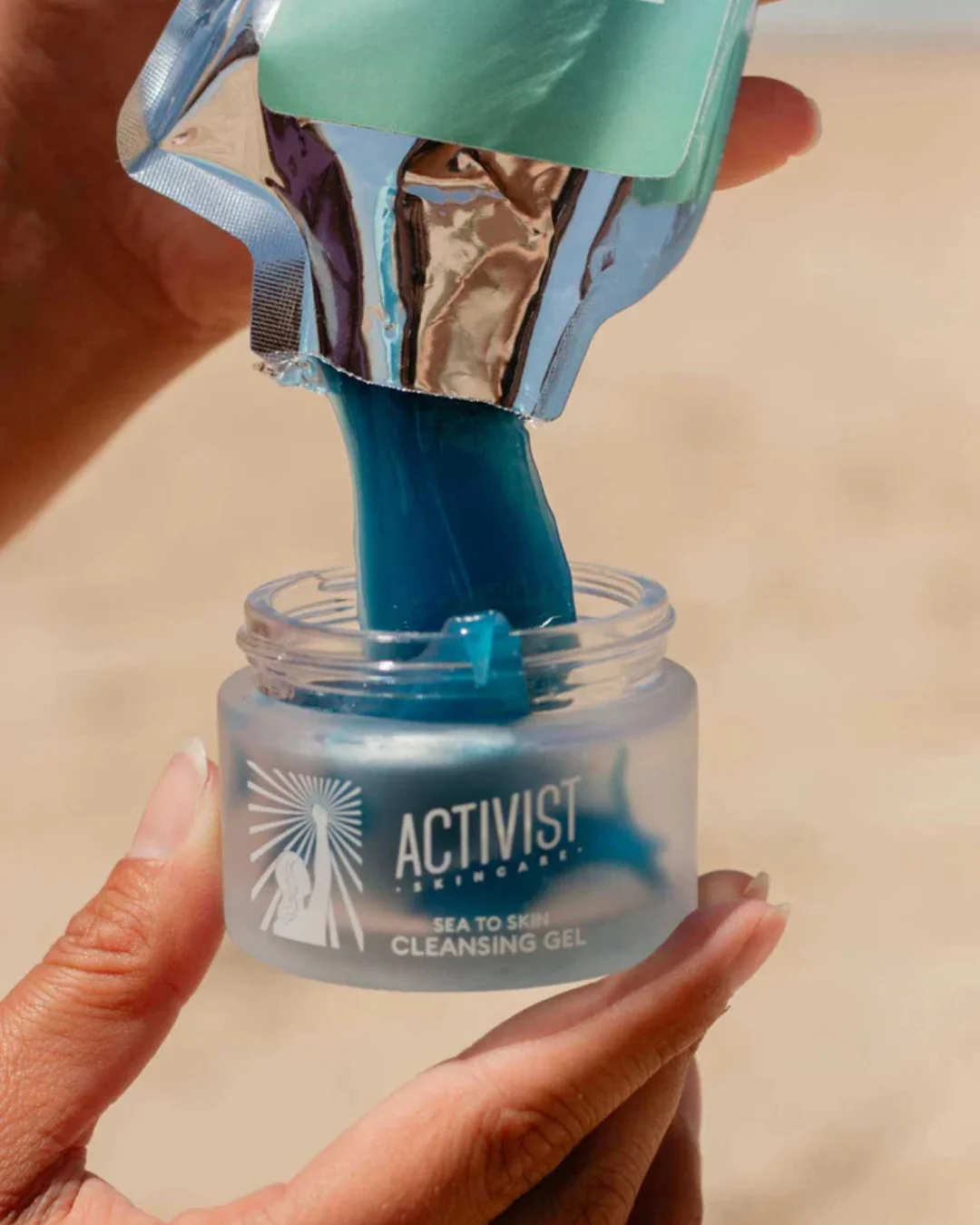
I’ve tested every product in Activist Skincare’s collection, but I continue to come back to the Sea to Skin Cleansing Gel again and again.
Most gel cleansers leave my skin feeling tight or squeaky clean, but this one does the exact opposite.
The jelly texture melts into an oil before emulsifying into a milky cleanser with water, effortlessly removing sunscreen, makeup, and daily buildup while leaving my skin soft, balanced, and hydrated. What really sets it apart is how enjoyable it is to use.
The refillable packaging is thoughtfully designed, the formula feels luxurious without being complicated, and it cleanses thoroughly without disrupting my skin barrier.
If you’re looking for a non-toxic gel cleanser that actually makes washing your face feel like part of your self-care routine, this is one of the best I’ve used.
Price
$42 | $37 (Refill)
ingredient Highlights
Grapeseed Oil | Quillaja Extract | Saponaria Extract | Glycerin | Spirulina Extract
location/shipping
United States, International shipping available
What I Love
- Removes makeup, sunscreen, and daily buildup in one step.
- Jelly texture transforms into an oil, then a milky cleanser.
- Leaves my skin clean without feeling tight or stripped.
- Beautiful refillable packaging that actually works.
- Gentle enough for everyday use on all skin types.
What I Don’t Love
- Contains essential oils, so it isn’t ideal if you’re sensitive to fragrance.
- Doesn’t create a rich foamy lather, which some people prefer (doesn’t bother me one bit).
Our Favorites from Activist Skincare:


👉 Switching to a non-toxic face wash is a great first step. If you’re ready to go all in, I’ve also rounded up my favorite non-toxic skincare brands and face serums to help you build a complete routine.
2. Blissoma | Best Non-Toxic Cleanser For Sensitive Skin
Best For: Dry, sensitive, reactive, or compromised skin that needs a soap-free cleanser designed to support the skin barrier.

The Fresh Mild Rice Facial Cleanser from Blissoma is my favorite for whenever my skin feels stressed, dehydrated, or simply needs a break.
The oils gently dissolved my makeup, sunscreen, and excess sebum while the rice flour provided incredibly gentle exfoliation, leaving my skin feeling soft and balanced (instead of stripped).
What really makes this cleanser stand out is its philosophy. It’s pH-balanced, supports your skin barrier and microbiome, and actually nourishes your skin while you cleanse.
If you’ve ever washed your face only to have it feel tight a few minutes later, this cleanser is a completely different experience.
Price
$58
ingredient highlights
Organic: Brown Rice Flour | Apricot Kernel, Hemp & Sunflower Oils | Willow Bark | Marshmallow Root & Chamomile | Chickweed & Rose
location/shipping
United States | Ships Internationally
What I love
- Soap-free and pH-balanced, making it incredibly gentle on my skin barrier.
- Cleanses while nourishing my skin instead of leaving it tight or dry.
- The rice flour provides gentle daily exfoliation without irritating sensitive skin.
What I don’t love
- If you wear heavy makeup every day, you may prefer to pair it with an oil cleanser first.
3. OGEE | Best Non-Toxic Cream Cleanser
Best For: Normal, dry, or mature skin looking for a luxurious cream cleanser that hydrates while cleansing.

I’ve tested several OGEE products over the years, but the Silky Dream Cleansing Cream immediately stood out as one of the most luxurious non-toxic cleansers I’ve used.
From the elegant packaging to the silky texture, everything about it feels elevated. Unlike many cream cleansers that simply remove makeup, this one feels like an extension of your skincare routine.
It gently dissolves impurities while helping support your skin barrier with Activated Silk™ Bioactive Peptides, organic aloe vera, and jojoba oil. My skin always feels hydrated, soft, and comfortable afterward, never tight or stripped.
If you enjoy turning your skincare routine into a self-care ritual, this cleanser is absolutely worth considering.
Price
$79
ingredient highlights
Activated Silk™ Bioactive Peptides | Organic Aloe Vera | Organic Jojoba Oil | Vegetable-Derived Glycerin | Iceland Moss Extract
location/shipping
United States | Ships To Select International Countries
What I love
- Creamy texture feels incredibly luxurious.
- Leaves my skin hydrated instead of tight after cleansing.
- Beautiful packaging that looks as good as it performs.
What I don’t love
- It’s definitely a splurge compared to other cleansers in this guide.
- If you prefer a foamy cleanser, this rich cream texture may not be your favorite.
4. Chagrin Valley | Best Organic Face Wash
Best For: Anyone looking for an affordable organic face wash made with simple botanical ingredients that cleanse without drying out the skin.

I’ve been using Chagrin Valley products for years, and one of the things I appreciate most is how they stay true to simple, effective formulations. Their Buttercream Cleansing Face Wash is a perfect example.
Unlike many conventional face washes packed with synthetic detergents, this whipped cream cleanser combines nourishing botanical butters and plant oils with their signature organic aloe soap to create a cleanser that feels rich, moisturizing, and incredibly comforting on the skin.
It removes dirt and daily buildup without leaving my face feeling tight, which is something I always look for in a cleanser.
It’s made with high-quality organic ingredients, lasts a long time because you only need a small amount, and costs a fraction of what many luxury cleansers do.
Price
$15.75
ingredient highlights
Organic Cocoa | Shea & Mango Butters| Organic Avocado & Jojoba Oils | Organic Virgin Red Palm Oil | Organic Aloe Soap
location/shipping
United States | Ships Internationally
What I love
- Rich cream texture leaves my skin clean without feeling dry.
- Made with simple, recognizable organic ingredients.
- One of the best values I’ve found in non-toxic skincare.
What I don’t love
- Since it’s packaged in a jar, I recommend using a small spoon or spatula to keep water out.
- It creates a light cream lather rather than the foamy cleanse some people expect.

I’ve been oil cleansing with pure jojoba oil for over 10 years, so I wasn’t new to this style of cleansing when I tested Primally Pure.
What impressed me most was that they offer three different cleansing oils for dry, balanced, and oily/acne-prone skin. I’ve honestly never seen another brand do that.
As someone with oily skin, I reached for their oily/acne-prone formula and loved how easily it removed makeup, mineral sunscreen, and daily buildup without leaving my skin greasy or stripped.
After testing all three, I appreciated that each one was thoughtfully formulated for different skin types instead of taking a one-size-fits-all approach.
If you’re ready to move beyond plain jojoba oil or want a cleansing oil designed for your specific skin type, Primally Pure is one of my favorite collections I’ve tested.
Price
$24-$42
ingredient highlights
Organic Jojoba Oil | Organic Castor Oil | Organic Avocado Oil | Organic, Cold-Pressed Botanical Oils | Pure Essential Oils
location/shipping
United States | Ships Internationally
What I love
- Three formulas tailored to dry, balanced, and oily/acne-prone skin.
- Removes makeup, mineral sunscreen, and daily buildup with ease.
- Leaves my skin clean, balanced, and nourished without feeling stripped.
What I don’t love
- It works best when removed with a warm, damp washcloth, which adds an extra step.
- If you’re new to oil cleansing, your skin may need a couple of weeks to adjust.
Our Favorites from Primally Pure:


Face Wash Brands I Do NOT Recommend
Some of the most popular face washes are marketed as gentle, dermatologist-recommended, or acne-safe. That doesn’t mean they meet my standards.
Here’s what I skip, and what’s actually in them.

Is CeraVe Non-Toxic?
No. Their Foaming Facial Cleanser lists PEG-150 Pentaerythrityl Tetrastearate, PEG-6 Caprylic/Capric Glycerides, methylparaben, and propylparaben. Check your bottle for “PEG” or anything ending in “-paraben.”
CeraVe also faces six pending class action lawsuits alleging its Acne Foaming Cream Cleanser and Acne Foaming Cream Wash can degrade into benzene, a known carcinogen.
No rulings, no settlement, no recall as of mid-2026. Allegations only, but it’s why I don’t blindly trust “dermatologist recommended.”
→ Best CeraVe Alternative: Activist Skincare Sea to Skin Cleansing Gel. It’s the same everyday gentle-gel category CeraVe occupies, minus the PEGs and parabens.
Is Neutrogena Face Wash Safe?
Not the one I’d reach for. Their Oil-Free Acne Wash contains Fragrance, PEG-80 Sorbitan Laurate, Benzalkonium Chloride, and synthetic dyes Yellow 5 and Red 40.
Neutrogena also has its own separate lawsuit over the same benzene-degradation allegation as CeraVe, naming products like the Rapid Clear Stubborn Acne Spot Gel and On-the-Spot Acne Treatment. Still pending.
→ Best Neutrogena Alternative: Primally Pure Cleansing Oil for Oily & Acne-Prone Skin. Formulated specifically for breakout-prone skin, with no synthetic dyes or fragrance.
Is Cetaphil Non-Toxic?
No. The Gentle Skin Cleanser lists: Water, Cetyl Alcohol, Propylene Glycol, Sodium Lauryl Sulfate, Stearyl Alcohol, Methylparaben, Propylparaben, Butylparaben.
SLS is a known irritant, and three parabens do the preserving. People assume it’s safe because it’s been around forever. I still skip it.
→ Best Cetaphil Alternative: Blissoma Fresh Mild Rice Facial Cleanser. Same soap-free, sensitive-skin-friendly gentleness Cetaphil markets itself on, but actually pH-balanced and barrier-supporting.
Is Clean & Clear Face Wash Safe?
An easy skip. The original Foaming Facial Cleanser has Fragrance, BHT, O-Cymen-5-Ol, Benzophenone-4, and three parabens.
Newer sensitive-skin versions swap in PEG-80 Sorbitan Laurate and Sodium Laureth Sulfate instead. If your cleanser leaves skin tight or irritated, that’s your barrier being disrupted, not “clean.”
→ Best Clean & Clear Alternative: Chagrin Valley Buttercream Cleansing Face Wash. Similar drugstore price point, actual organic ingredient list.
Is Aveeno Face Wash Non-Toxic?
No, despite the oat-and-chamomile branding. Ultra-Calming Foaming Cleanser contains PEG-16 Soy Sterol, propylene glycol, and three parabens.
→ Best Aveeno Alternative: OGEE Silky Dream Cleansing Cream. Same calming, hydrating positioning Aveeno goes for, minus the PEGs and parabens.
Is Burt’s Bees Face Wash Non-Toxic?
More nuanced than the rest. The current Gentle Facial Cleanser is actually built on plant-derived glucoside surfactants and preserved with phenoxyethanol, potassium sorbate, and sodium benzoate. No parabens, no sulfates, no PEGs.
My hesitation is that this formula doesn’t represent the whole line. Other Burt’s Bees products (like their Deep Cleansing Acne Scrub) contain fragrance and less transparent surfactants. “Nature-inspired” on the label doesn’t tell you which formula you’re getting.
→ Best Burt’s Bees Alternative: Chagrin Valley Buttercream Cleansing Face Wash. If you liked Burt’s Bees for its affordability, this is the actually-clean version of that same value proposition.
SKL Note
The FDA tested 95 benzoyl peroxide acne products in March 2025 and found over 90% had undetectable or extremely low benzene, with a small number of other brands’ products voluntarily recalled at retail.
My takeaway isn’t panic. It’s that ingredient quality and brand transparency matter more than front-label claims. Spend your money on brands that are on your side, not ones banking on you not reading the label.
What Are The Best Ingredients To Look For In A Non-Toxic Face Wash?
Here’s what I look for on the label and why each one earns its spot…
Botanical Oils
Oils like jojoba, sunflower, and hemp seed dissolve makeup, sunscreen, and daily buildup the same way harsh sulfates do, minus the stripping.
They cleanse by attracting oil to oil instead of by disrupting your skin barrier, which is why an oil-based or oil-cleansing formula can remove a full face of makeup without leaving skin tight afterward.
Aloe
Aloe vera is a humectant, meaning it draws moisture into the skin instead of pulling it out.
It’s also anti-inflammatory, which is why it shows up so often in formulas aimed at redness, sensitivity, or reactive skin.
Look for it listed as Aloe Barbadensis Leaf Juice; that’s the actual plant extract, not a diluted aloe-scented filler.
Organic Rice
Organic rice flour and rice extract work as a gentle physical exfoliant, buffing away dead skin cells without the micro-tearing you get from harsher scrubs like walnut shell or apricot pit.
Rice also contains natural starches and antioxidants that help calm skin while it cleanses, instead of just scrubbing and moving on.
Look for organic in front of it specifically, since non-organic rice-derived ingredients can carry pesticide residue from conventional rice farming.
Jojoba
Technically a wax, not an oil, jojoba’s molecular structure is remarkably close to human sebum.
That’s why it can cleanse and moisturize oily and acne-prone skin without clogging pores or overcompensating with extra oil production, which is the exact opposite of what happens when a harsh sulfate strips your skin dry.
Glycerin
Glycerin is one of the most well-studied humectants in skincare. It pulls water from the air and from deeper skin layers into the surface, keeping skin hydrated during and after cleansing.
It’s a completely different mechanism from a foaming sulfate, which cleans by removing oil and water together.
Marshmallow (Root Extract)
Marshmallow root contains mucilage, a gel-like substance that forms a protective, moisture-locking film on skin while calming redness and inflammation.
It’s traditionally used for exactly the kind of irritation that harsh sulfates and drying alcohols cause, which makes it a genuinely functional swap rather than just a nice-sounding botanical.
Plant Extracts (Chamomile, Green Tea, Calendula)
These bring antioxidant and anti-inflammatory compounds to a cleanser without the synthetic fragrance or ethoxylated surfactants doing the same soothing job on the label.
The key is checking that the extract is actually meaningfully present in the formula, not just added in trace amounts near the bottom of the ingredient list for marketing purposes
👉 Now that you’ve found a safer face wash, you may also want to explore my guides to the best non-toxic mineral sunscreens and non-toxic makeup brands.
Ingredients I Avoid in Face Wash
Here’s exactly what I check for on the back of the bottle, and why each one is a problem.
Synthetic Fragrance
“Fragrance” or “parfum” on a label can legally hide 30 to 50 undisclosed chemicals under one word, since fragrance formulas are protected as trade secrets. You have no way of knowing what’s actually in it.
Fragrance is also the number one cause of contact allergy in cosmetics, and that applies to natural fragrance and essential oils too, not just synthetic versions.
SLS & Harsh Sulfates
Sodium lauryl sulfate (SLS) is a strong foaming agent that’s also a well-documented primary skin irritant.
It’s so reliably irritating that dermatology researchers use it to intentionally trigger skin reactions in patch testing.
It strips your skin’s natural oils along with the dirt, which is why a “squeaky clean” feeling after washing is a red flag, not a good sign.
PEGs (Polyethylene Glycols)
PEG compounds are ethoxylated, meaning they’re made by reacting a substance with ethylene oxide, a known human carcinogen, to make it milder.
That process can leave behind 1,4-dioxane, a contaminant classified as a possible human carcinogen.
It’s never intentionally added and never shows up on the ingredient label, so you can’t test for it yourself.
You can only avoid the ethoxylated ingredients that create the risk in the first place. Look for “PEG” followed by a number.
Ethoxylated Ingredients
This is the broader category PEGs belong to, and it includes more than just PEGs.
Watch for anything with “-eth-” in the name (laureth, ceteareth, oleth, deceth) and polysorbates (polysorbate 20, polysorbate 80). All of these carry the same 1,4-dioxane contamination risk.
Sodium laureth sulfate (SLES) is the most common one you’ll find in face wash; it’s the “gentler” version of SLS, but the ethoxylation used to soften it is exactly what creates the contamination risk.
Formaldehyde Releasers
These are preservatives that slowly break down and release small amounts of formaldehyde over the shelf life of the product, which is what keeps bacteria and mold from growing in your cleanser.
The most common ones in face wash are DMDM hydantoin, quaternium-15, imidazolidinyl urea, and diazolidinyl urea.
Formaldehyde is classified as a known human carcinogen by the International Agency for Research on Cancer, and these preservatives are also among the most common allergens in patch testing worldwide.
Drying Alcohols
Not all alcohols in skincare are bad. Fatty alcohols like cetyl alcohol and stearyl alcohol are actually emollients that soften skin. What I avoid are the drying kind: alcohol denat., SD alcohol, and isopropyl alcohol.
These evaporate fast and strip your skin’s moisture barrier, which is exactly what leads to the tight, dry, over-cleansed feeling that pushes people into an oil-overproduction cycle they then blame on their skin type instead of their cleanser.
How To Choose The Best Non-Toxic Face Wash For Your Skin Type:
Not every face wash is designed to do the same job. That’s one of the biggest mistakes I see when people are shopping for skincare.
They assume every cleanser works the same, when in reality the texture, ingredients, and cleansing method can make a huge difference in how your skin looks and feels.
Here’s how I recommend choosing the right non-toxic face wash for your routine:
Gel Cleansers
Gel cleansers are my go-to recommendation for most people because they’re lightweight, easy to use, and effective at removing dirt, oil, makeup, and sunscreen without feeling heavy on the skin.
They’re a great choice if you have oily or combination skin, prefer a simple one-step cleansing routine, or want a cleanser you can use morning and night year-round.
Best For:
- Oily skin
- Combination skin
- Everyday cleansing
- One-step makeup and sunscreen removal
Cream Cleansers
Cream cleansers are richer and more nourishing than gel cleansers, making them a wonderful option for dry, mature, or dehydrated skin.
Instead of creating that squeaky-clean feeling, they help cleanse while leaving your skin feeling soft and comfortable. I especially love cream cleansers during the colder months when my skin needs a little extra support.
Best For:
- Dry skin
- Mature skin
- Dehydrated skin
- Winter skincare routines
Oil Cleansers
I’ve been oil cleansing for more than 10 years, and it’s still one of my favorite ways to remove makeup and mineral sunscreen.
Oil cleansers work on the principle of “like dissolves like,” helping dissolve excess oil, makeup, sunscreen, and daily buildup without stripping your skin. They’re especially helpful if you wear long-wear makeup or use mineral sunscreen every day.
Many people also use an oil cleanser as the first step in a double cleansing routine before following with a gel or cream cleanser.
Best For:
- Removing makeup
- Removing mineral sunscreen
- Double cleansing
- Dry or balanced skin
If You Have Sensitive Skin
When you have sensitive skin, the ingredient list matters just as much as the cleanser type. I recommend looking for formulas that avoid synthetic fragrance, harsh sulfates, and other potentially irritating ingredients.
Instead, choose cleansers with gentle surfactants, skin-supportive botanical ingredients, and formulas that respect your skin’s natural moisture barrier.
Just as importantly, pay attention to how your skin feels after cleansing. A good face wash should leave your skin feeling clean, comfortable, and balanced, not tight, itchy, or irritated.
How I Personally Tested These Non-Toxic Face Washes
The first thing I evaluate is always the ingredient list.
If a face wash contains ingredients I don’t feel comfortable recommending, it never makes it into my testing routine in the first place.
That includes reviewing the surfactants, preservatives, fragrance, emulsifiers, and the overall quality and transparency of the formula.
I also look at the company’s ingredient philosophy because I believe a trustworthy brand should be just as transparent about what it includes as what it leaves out.
Once a cleanser passes my ingredient review, I put it through real-world testing. I use each face wash as part of my own skincare routine to see how it performs at removing everyday makeup (non-toxic makeup, of course), mineral sunscreen, excess oil, and daily buildup.
I also pay attention to how it performs throughout the year because my skin has different needs in the middle of winter than it does during a hot, humid summer.
As I test each cleanser, I’m asking myself the same questions:
- Does it remove makeup and sunscreen effectively?
- Does my skin feel clean without feeling tight or stripped?
- Does it support my skin barrier over time?
- Is the texture and cleansing experience enjoyable enough that I’ll actually keep reaching for it?
- Does the product perform as well as its ingredient list suggests?
Only the face washes that excel in both ingredient quality and real-world performance earn a spot in my recommendations. Every cleanser in this guide passed both tests.
Frequently Asked Questions About Non-Toxic Face Wash
The healthiest face wash is one that cleanses effectively without disrupting your skin’s natural barrier.
I look for formulas made with gentle cleansing ingredients, nourishing botanical oils and extracts, and transparent ingredient lists instead of harsh detergents, synthetic fragrance, and unnecessary fillers.
Face wash is considered a rinse-off product, so it isn’t absorbed in the same way as a moisturizer or serum. However, it’s still one of the few skincare products most people use twice every day, year after year.
That’s why I believe it’s worth choosing a cleanser made with high-quality ingredients that support your skin rather than relying on harsh or unnecessary additives.
A tight, squeaky-clean feeling usually means your cleanser removed too much of your skin’s natural oil along with dirt and impurities.
While it may feel “extra clean,” it’s often a sign that your skin barrier has been disrupted. A good face wash should leave your skin feeling clean, soft, and comfortable, not dry or stretched.
Yes, it can. A cleanser that’s too harsh can irritate your skin and weaken your skin barrier, while one that’s too rich may not remove excess oil, makeup, or sunscreen effectively.
Both situations can contribute to clogged pores or irritation. Choosing the right cleanser for your skin type is just as important as choosing the right moisturizer.
An oil cleanser is a face wash made with nourishing plant oils that dissolve makeup, sunscreen, excess oil, and daily buildup before rinsing away.
It works on the principle of “like dissolves like,” meaning oils help break down other oils without stripping your skin. Despite the name, a good cleansing oil won’t leave your face feeling greasy.
Absolutely. I have naturally oily skin and have been oil cleansing for more than 10 years. The key is choosing a well-formulated cleansing oil that’s appropriate for your skin type.
In my experience, the right cleansing oil leaves my skin feeling balanced and clean, not greasy. That’s one of the reasons I recommend Primally Pure’s different cleansing oil formulas for different skin types.
Not always, but it depends on the sunscreen and how much you apply.
Mineral sunscreens are designed to stay on your skin, so they can be more difficult to remove than lightweight skincare products.
A quality gel cleanser, cleansing oil, or double cleanse can help ensure you’re removing sunscreen completely without over-scrubbing your skin.
In most cases, yes. I use the same cleanser morning and evening unless my skin needs something different seasonally.
In the morning, you’re removing overnight oil and sweat. At night, you’re removing sunscreen, makeup, pollution, and daily buildup.
A gentle, well-formulated cleanser should be able to handle both without stripping your skin.
You’ll usually know within the first week whether a cleanser agrees with your skin. Your face should feel clean, comfortable, and balanced after washing, not tight or irritated.
Longer-term improvements, like a healthier skin barrier or fewer dry patches, may take several weeks of consistent use.
Not necessarily. I’ve tested luxury cleansers that didn’t impress me and affordable cleansers that became long-term favorites.
Price doesn’t determine quality. I always evaluate a face wash based on its ingredients, formulation, company transparency, and how it performs in real life.
Still Not Sure? Here’s Which Face Wash I’d Choose
If you’ve made it this far and you’re still deciding, here’s the easiest way to narrow it down:
- Choose Activist Skincare if: You want one cleanser that does it all. It’s my favorite everyday gel cleanser for removing makeup, mineral sunscreen, excess oil, and daily buildup without stripping your skin.
- Choose Blissoma if: You have sensitive, reactive, or easily irritated skin and want the gentlest cleanser in this guide. It’s also an excellent choice if you’re focused on supporting your skin barrier.
- Choose OGEE if: Your skin is dry, mature, or dehydrated and you prefer a rich, luxurious cream cleanser that leaves your skin feeling soft, nourished, and hydrated.
- Choose Chagrin Valley if: You want an affordable organic face wash made with simple, whole-food ingredients and botanical butters without sacrificing quality.
- Choose Primally Pure if: You love oil cleansing or want a cleansing oil tailored to your specific skin type. Their three targeted formulas make it easy to find the right fit whether your skin is dry, balanced, or oily.
The good news? Every cleanser in this guide passed my ingredient review first, then earned its place through hands-on testing. At this point, there’s no wrong choice, only the one that’s the best match for your skin and routine.
Final Thoughts On Non-Toxic Face Wash
Finding a truly non-toxic face wash isn’t about chasing the latest skincare trend or believing every product labeled “clean.”
It’s about understanding what goes into your skincare, choosing brands that value ingredient transparency, and finding a cleanser that supports your skin instead of stripping it.
After years of researching ingredients and personally testing dozens of face washes, one thing has become clear: a great cleanser doesn’t have to leave your skin feeling squeaky clean to be effective.
In fact, the best formulas remove dirt, makeup, sunscreen, and daily buildup while helping maintain the healthy skin barrier your complexion depends on.
I hope this guide saves you time, helps you avoid greenwashing, and gives you the confidence to choose a face wash based on thoughtful ingredients and real performance instead of clever marketing.
Your skin deserves better than buzzwords, and thankfully, there are brands creating formulas that truly deliver.
Continue Your Non-Toxic Skincare Journey
Face wash is often one of the first skincare products we use every day, which is why ingredient transparency matters.
If you’re looking to upgrade the rest of your skincare routine, these guides are a great place to continue:
- Non-Toxic Skincare: Trusted skincare brands that prioritize safer ingredients and transparency.
- Non-Toxic Face Masks: Safer face masks for hydration, exfoliation, and skin support.
- Non-Toxic Anti-Aging Alternatives To Botox: Lower-toxic approaches to healthy aging and skin maintenance.
- Non-Toxic Serum: Ingredient-conscious serums designed to support a variety of skincare goals.
- Non-Toxic Sunscreen: Mineral sunscreen recommendations for everyday protection.
The more I learned about skincare ingredients, the more I realized that small daily swaps can add up over time.
📌 Save This Guide For Later
This guide compares the best non-toxic face washes, breaks down common ingredients to watch for, and shares safer options for sensitive, dry, oily, and combination skin types.
Save this guide for the next time you’re ready to refresh your skincare routine.

Sources & Further Reading
This guide is based on my personal testing, ingredient research, manufacturer disclosures, and the following trusted resources.
Government & Regulatory Resources
- U.S. Food & Drug Administration (FDA): Guidance on cosmetic and over-the-counter drug safety, ingredient oversight, product recalls, and the agency’s 2025 testing of benzoyl peroxide acne products for benzene contamination.
Medical & Dermatology Resources
- American Academy of Dermatology Association (AAD): Evidence-based guidance on skin health, cleanser recommendations, common skin conditions, and dermatologist-reviewed skincare practices.
- National Eczema Association: Educational resources on the skin barrier, sensitive skin, irritation, and ingredient considerations for compromised skin.
Ingredient Research
- International Nomenclature of Cosmetic Ingredients (INCI): Official cosmetic ingredient naming system used to accurately identify and verify ingredients listed on product labels.
- Cosmetic Ingredient Review (CIR) Expert Panel: Independent scientific safety assessments of cosmetic ingredients used throughout the personal care industry.
- Environmental Working Group (EWG) Skin Deep® Database: Ingredient hazard database used as one reference point alongside scientific literature, regulatory guidance, and manufacturer information. It was not used as the sole basis for any recommendation.
Brand Ingredient Lists & Product Information
- Activist Skincare
- Blissoma
- OGEE
- Chagrin Valley Soap & Salve
- Primally Pure
- CeraVe
- Cetaphil
- Neutrogena
- Clean & Clear
- Aveeno
- Burt’s Bees
Every product recommendation in this guide was personally tested by me and independently reviewed for ingredient quality, company transparency, and real-world performance before being included.
This post was graciously sponsored by Activist Skincare. As always, we only work with brands that we stand behind. Would you like to sponsor one of our sustainable round-ups? Contact us here.

Steal My Non-Toxic Cleaning Checklist!
Believe us, it’s the BEST…. and it’s free. Does it really get any better than that?! Sign up for our newsletter and get this free checklist to clean your home without any harmful chemicals!