 Shop My Favorite Non-Toxic Gifts Of 2026!
SKL is reader supported. When you buy through links on our site, we may earn affiliate commission. Learn more here.
Finding the best PFAS water filters wasn’t something I planned to spend months researching… but here we are.
A few years ago, I started looking more closely at our water after going down the rabbit hole on non-toxic living and I remember thinking:
“Wait… if PFAS are this persistent, why isn’t everyone talking about how to actually remove them?”
Because once you start digging, you realize something pretty quickly:
Most water filters aren’t actually designed to deal with PFAS in drinking water. They’ll improve taste and remove some chlorine… But PFAS? That’s a completely different category.
And what frustrated me the most was how hard it was to separate real filtration from marketing.
I kept seeing phrases like “tested for contaminants”, “advanced filtration,” and “reduces harmful chemicals,” but very little information about certification, actual PFAS reduction, or what the filter was really doing.
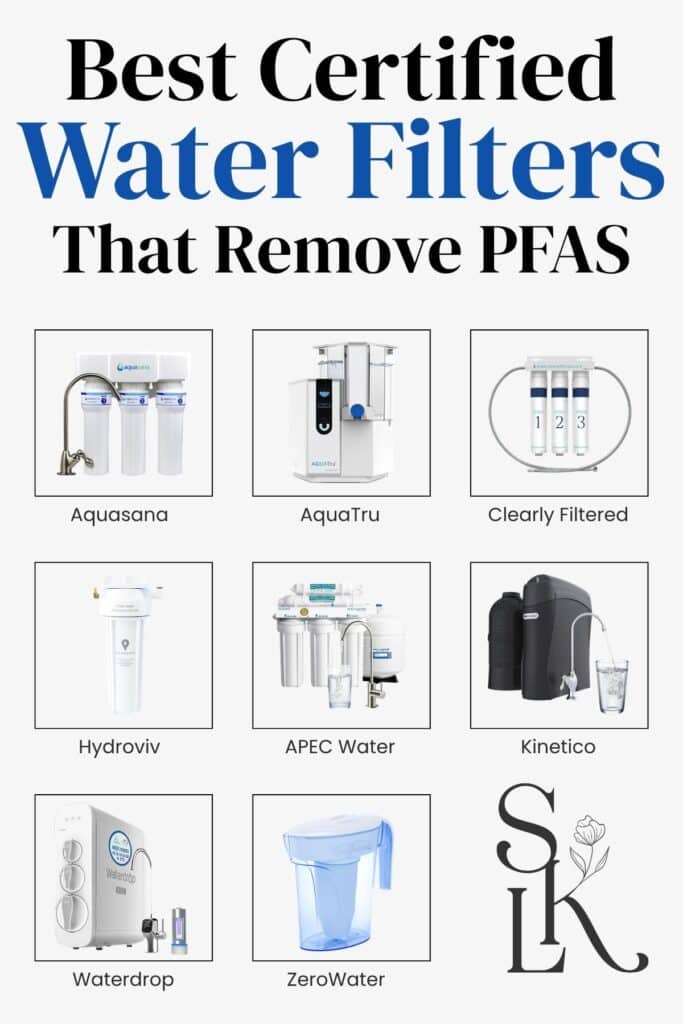
SKL top picks, in a nutshell…
- Best PFAS Water Filter For Everyday Use: Aquasana
- Best Reverse Osmosis System For PFAS: AquaTru
- Best Non-RO PFAS Filter: Clearly Filtered
- Best Custom PFAS Solution: Hydroviv
- Best Budget Reverse Osmosis Option: APEC Water
If you’re new to PFAS entirely, I highly recommend starting with my full breakdown of What PFAS Are and How To Reduce Exposure. It helps everything make a lot more sense before you choose a filter.
But if you’re here because you just want to find something that actually works, that’s exactly where I focused my time, narrowing it down to a small group of filters that meet verified PFAS reduction standards.
Best PFAS Water Filters: At a Glance Comparison
Mobile Users: Scroll to see full comparison →
| Brand | Price | Filters | Best For |
|---|---|---|---|
| Aquasana | $224.99–$314.99 | PFAS (PFOA/PFOS) | Microplastics | Lead | VOCs | Asbestos | Chlorine | Cysts | Everyday Use (Non-RO, Balanced Filtration) |
| AquaTru | $400-$425 | PFAS (PFOA/PFOS) | VOCs | Lead | Chromium-6 | Arsenic | Nitrates | Heavy Metals | Chlorine | Chloramines | Maximum PFAS Removal (Countertop RO) |
| Clearly Filtered | $495 | PFAS (PFOA/PFOS) | Chlorine | Lead | Fluoride | TTHMs | Chromium 6 | Strongest Non-RO PFAS Reduction |
| Hydroviv | $199-$266.65 | PFAS | Lead | Arsenic | VOCs | Chromium-6 | Chloramines | Custom Filtration Based On Your Water |
| APEC Water | $220-$230 | PFAS (PFOA/PFOS) | Lead | Chromium-6 | Arsenic | VOCs | Chloramines | Chlorine | Budget-Friendly Reverse Osmosis |
| Kinetico | Custom Pricing | PFAS (PFOA/PFOS) | VOCs | Heavy Metals | Fluoride | Nitrates | TDS | Premium, Professionally Installed RO Systems |
| Waterdrop | $849 | PFAS (PFOA/PFOS) | Fluoride | TDS | Chlormine | Chlorine | Lead | Heavy Metals | VOcs | Modern Countertop RO Systems |
| ZeroWater | $24.99 | PFAS (PFOA/PFOS) | Lead | Chromium | Mercury | Arsenic | Fluoride | Nitrates & Nitrites | Chlorine | Entry-Level Pitcher For Basic PFAS Reduction |
Before we get into the filters themselves, it helps to understand what PFAS actually are — and why they’ve become such a focus in drinking water.
What Are PFAS (& Why Are They Such a Big Deal)?
PFAS (per- and polyfluoroalkyl substances) are a group of synthetic chemicals that have been used for decades in things like non-stick cookware, waterproof fabrics, stain-resistant materials, and food packaging.
They are often called “forever chemicals” because of their extremely strong carbon-fluorine bonds, which make them incredibly resistant to breaking down in the environment or the body.
Instead of breaking down, they build up – which is where the concern comes in.
Why PFAS Water Filters Matter
While PFAS can show up in a lot of places, drinking water is considered one of the most consistent sources of ongoing exposure — which is why filtration tends to have a meaningful impact.
PFAS exposure has been linked to things like hormone disruption, immune system effects, elevated cholesterol levels, and other long-term health effects.
Only a small number of PFAS compounds are currently regulated — even though thousands exist — which is part of what makes filtration decisions more important.
I’m not sharing that to be alarmist — just to explain why this is getting more attention.
Because this isn’t about one-time exposure, it’s about small amounts, over time, from something you use constantly.
Reverse Osmosis vs Carbon Filters For PFAS: What’s the Difference?
Not all filters are designed the same — and this is where things really started to make sense for me. Some filters are great for improving taste. Some are great for chlorine.
But PFAS requires a different level of filtration.
Reverse osmosis physically removes contaminants at the membrane level, while carbon filters can reduce PFAS — but only if they’re designed well.
That doesn’t make one “good” and one “bad” — they just work differently. And once I understood that, it became much easier to choose the right setup for our home.
If you’re deciding between setups, you might also want to compare:
- Countertop systems (great for renters)
- Under-sink systems (more permanent, higher output)
- Whole-house filtration (full-home coverage)
I break those down in more detail in my guides to each.
PFAS Are Just One Piece of What’s in Water
PFAS tend to get a lot of attention — but they’re not the only thing that can show up in drinking water.
Depending on where you live, water can also contain things like chlorine, heavy metals, microplastics, or trace contaminants from agriculture and industry.
That doesn’t mean your water is “unsafe.” But it does mean that not all filters are designed to handle the same things.
And that’s why understanding what you’re trying to reduce — whether it’s PFAS specifically or a broader range of contaminants — makes a big difference when choosing the right system.
SKL Standards
Why You Can Trust My PFAS Water Filter Recommendations
If you’re new here, I’m Danielle — a mom of three and the founder of Sustainably Kind Living.
Over the past few years, I’ve spent hundreds of hours researching non-toxic home products — and water filtration quickly became one of the most complex (and honestly frustrating) categories.
With water filters, everything comes down to certifications, filtration technology, and whether the brand is actually being transparent.
For this guide, I didn’t rely on brand claims or “top-rated” lists. I personally:
- Cross-checked NSF/ANSI certification databases
- Verified which models are certified for PFOA and PFOS
- Compared reverse osmosis vs carbon filtration performance
- Reviewed contaminant reduction data
- Excluded brands using vague claims
And just as important, I’ve tested different systems in our own home over time.
So this isn’t just research. It’s real-life use + deep product vetting — which is exactly how I approach everything on SKL.
Now that you know what actually matters (and what doesn’t), here are the filters that stood out after comparing certification, performance, and real-world usability.
The Best PFAS Water Filters In 2026
1. Aquasana Claryum® 3-Stage Max Flow (Under Sink)
Best For: Everyday PFAS reduction (non-RO, balanced filtration)
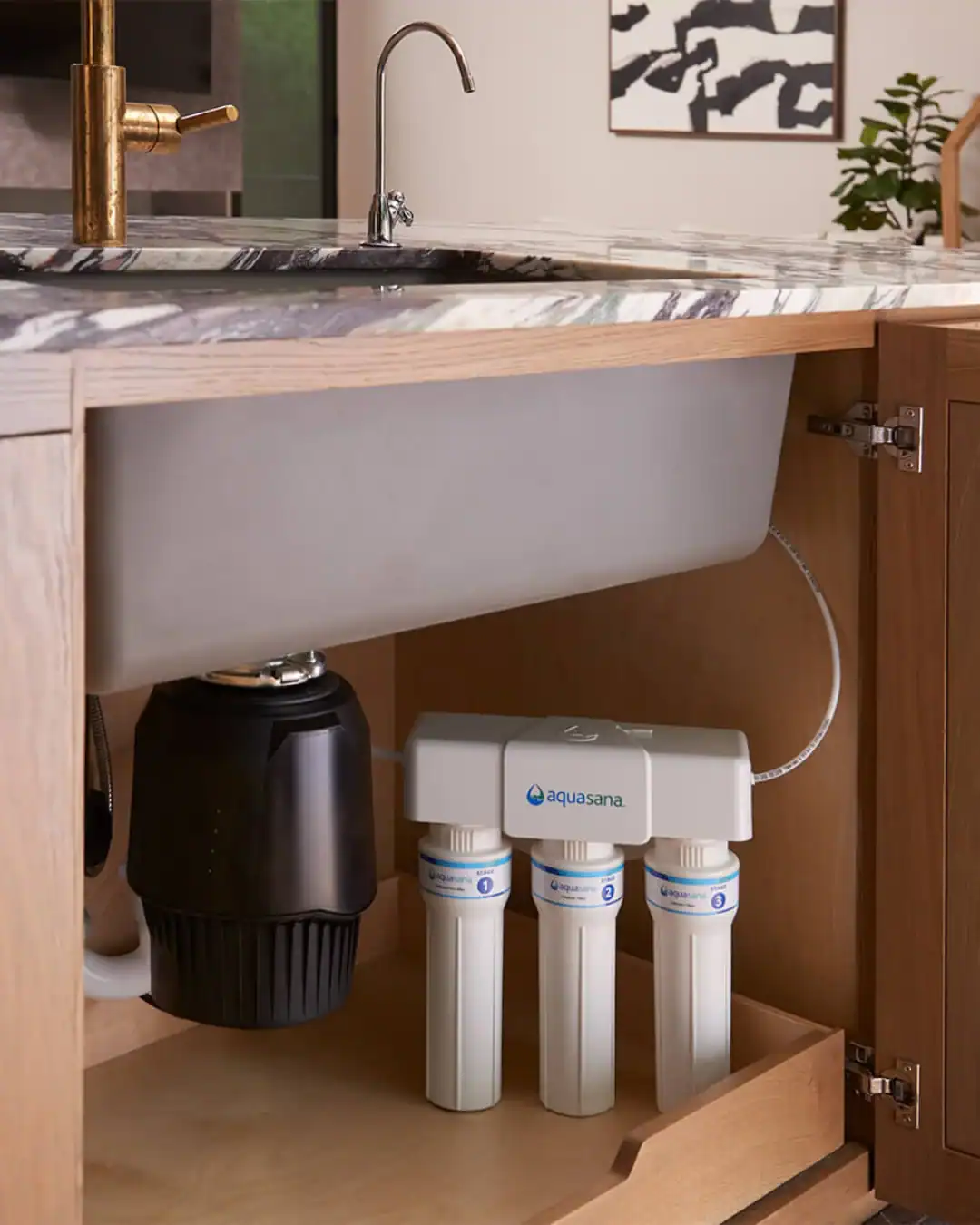
This is one of the more practical options I’ve found for reducing PFAS without switching to reverse osmosis.
It uses Aquasana’s Claryum® filtration technology — a combination of activated carbon, ion exchange, and sub-micron filtration — to target contaminants like PFOA and PFOS alongside chlorine, lead, and microplastics.
The system is WQA certified to NSF/ANSI Standards 42, 53 (including P473 for PFAS), and 401, which is exactly what I look for when evaluating real, verified performance.
Unlike reverse osmosis, it retains beneficial minerals, which tends to make a noticeable difference in taste and everyday use.
Overall, this is a great fit if you want a low-maintenance, everyday system for drinking and cooking water.
Price
Starting at $199.99
Contaminants removed
PFAS (PFOA/PFOS) | Microplastics | Lead | VOCs | Asbestos | Chlorine | Cysts
location/shipping
United States | Ships To Canada
What I like
- Certified to NSF/ANSI 42, 53 (P473), and 401
- Strong PFAS reduction without reverse osmosis
- Retains beneficial minerals
- Faster flow rate than many carbon systems
What to keep in mind
- Not as comprehensive as reverse osmosis
- Filter replacement ~6 months
- Under-sink installation required
2. AquaTru Countertop Reverse Osmosis System
Best For: Maximum PFAS removal (no installation required)
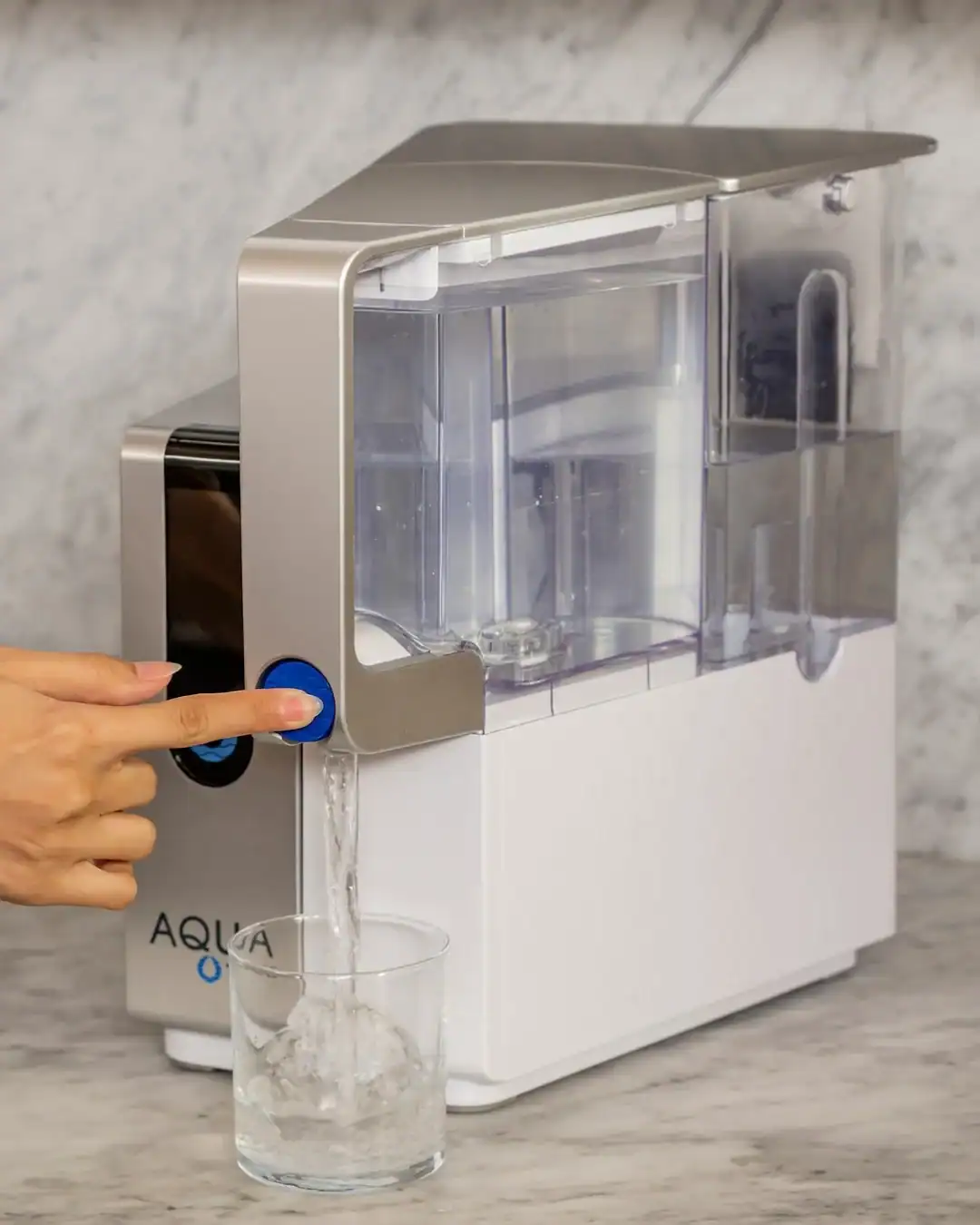
If your priority is removing as much as possible — including PFAS — this is where reverse osmosis really stands out.
This is a true 4-stage RO system with a sediment filter, carbon filter, RO membrane, and final polishing filter.
The membrane is what matters most here — it physically removes contaminants like PFOA and PFOS at a molecular level.
It’s also NSF/ANSI Standard 58 certified, which is one of the clearest indicators of real performance with reverse osmosis systems.
What I like most is that it’s completely plug-and-play, which makes it ideal for renters or anyone who doesn’t want to install anything under the sink.
Overall, this is a strong fit if you want maximum PFAS reduction — especially in a renter-friendly or low-install setup.
Price
$400-$425
Contaminants removed
PFAS (PFOA/PFOS) | VOCs | Lead | Chromium-6 | Arsenic | Nitrates | Heavy Metals | Chlorine | Chloramines
location/shipping
United States | Ships To Canada & Select Countries Within Europe
What I like
- NSF/ANSI Standard 58 certified (full system)
- One of the most reliable methods for PFAS reduction
- No installation required
- Broad contaminant removal beyond PFAS
What to keep in mind
- Produces wastewater (standard for RO systems)
- Removes beneficial minerals
- Requires periodic filter replacements
3. Clearly Filtered 3-Stage Under Sink System
Best For: PFAS reduction without reverse osmosis
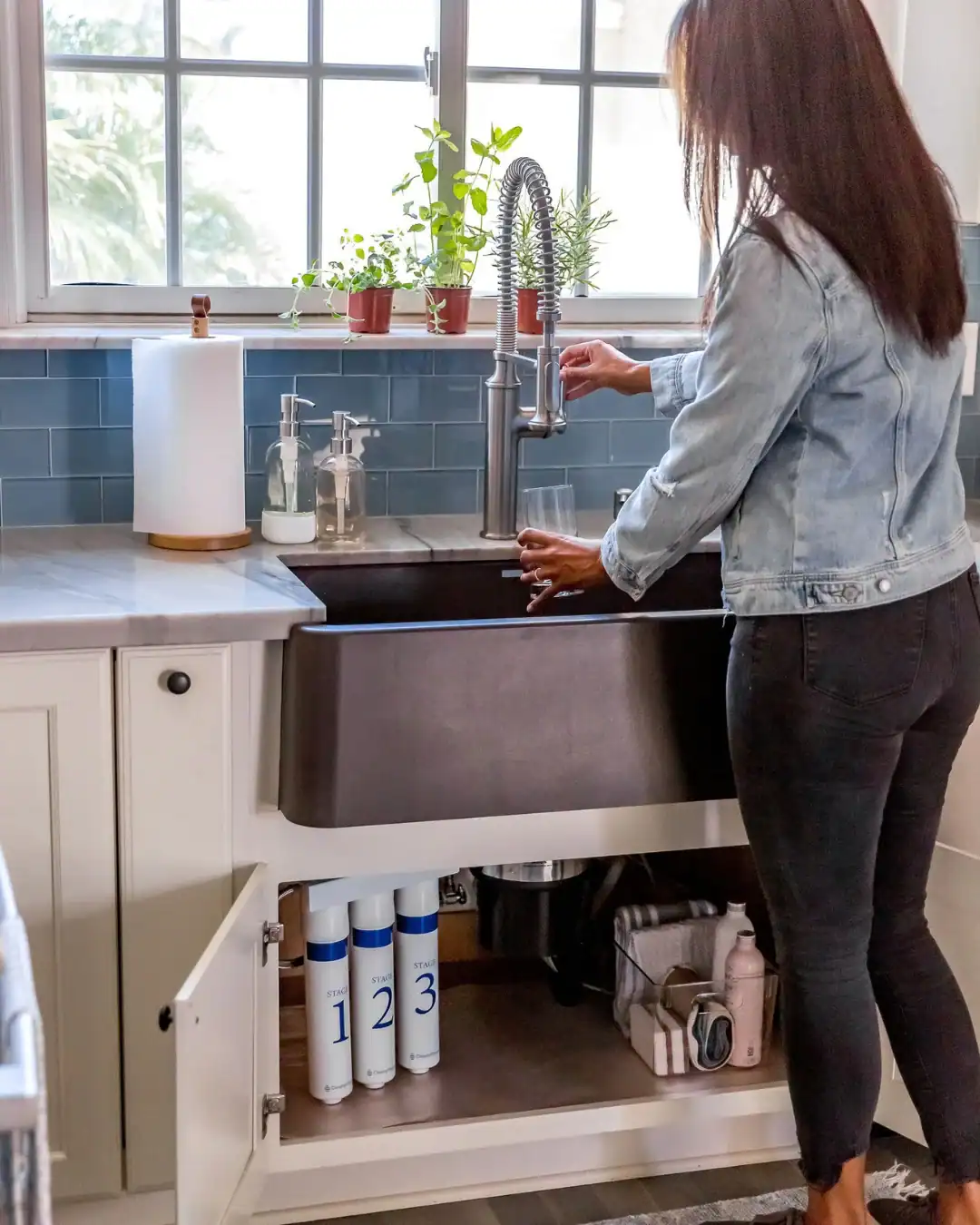
If you want to avoid reverse osmosis but still prioritize PFAS reduction, this is one of the strongest carbon-based systems available.
It uses Affinity® Filtration Technology and is certified to NSF/ANSI Standard 53 for PFOA and PFOS, which is something most carbon filters don’t offer.
It also maintains beneficial minerals and has one of the more transparent contaminant reduction lists I’ve seen, which matters a lot in this category.
Overall, this is a strong option if you want certified PFAS reduction without switching to reverse osmosis.
Price
$495
Contaminants removed
PFAS (PFOA/PFOS) | Chlorine | Lead | Fluoride | TTHMs | Chromium 6
location/shipping
United States | Ships Internationally
What I like
- NSF/ANSI 53 certified for PFAS
- Very transparent contaminant data
- Maintains beneficial minerals
- No wastewater (unlike RO)
What to keep in mind
- Higher upfront cost for a carbon system
- Slower flow rate (by design)
- Not as comprehensive as reverse osmosis
4. Hydroviv Custom Under-Sink Water Filter
Best For: Location-based, custom filtration
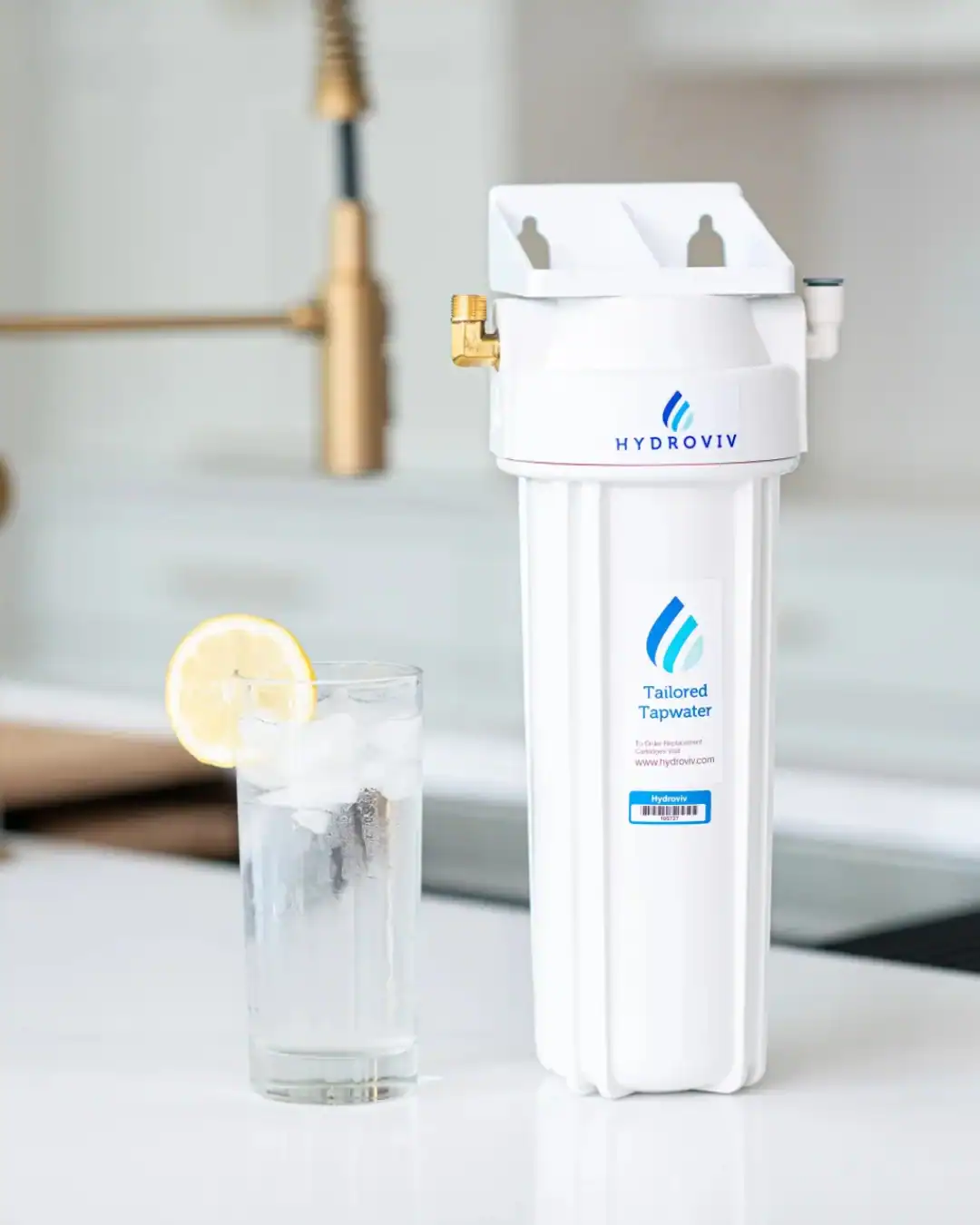
Hydroviv takes a different approach by customizing your filter based on your zip code and local water data.
Instead of a one-size-fits-all system, it targets contaminants specific to your area — which can include PFAS, along with things like arsenic, chromium 6, or chloramine, depending on your water supply.
While the system is NSF 53 certified, PFAS reduction is not certified across all configurations.
The brand also provides detailed third-party testing and a high level of transparency, which is why it still stands out.
This is a good fit if you want a more personalized filtration approach based on your actual water quality.
Price
$199-$266.65
Contaminants removed
PFAS | Lead | Arsenic | VOCs | Chromium-6 | Chloramines
location/shipping
United States
What I like
- Customized based on your local water
- Targets multiple contaminants beyond PFAS
- Simple installation
- Strong focus on real-world data
What to keep in mind
- NSF 53 certified, but not all configurations are certified for PFAS reduction
- Performance varies by location
- Relies on brand-provided testing
5. APEC Water ROES-50 Reverse Osmosis System
Best For: Budget reverse osmosis system for PFAS

If you want reverse osmosis-level filtration without the higher price tag, this is one of the more reliable entry points.
This is a traditional 5-stage under-sink RO system with sediment filtration, carbon pre-filters, an RO membrane, and a post-filter.
It’s NSF/ANSI Standard 58 certified, which confirms performance for dissolved contaminants like PFAS.
It’s not the most modern system, but it does the job — and does it well.
This is a solid option if you want budget-friendly reverse osmosis with dependable performance.
Price
$220-$230
Contaminants removed
PFAS (PFOA/PFOS) | Lead | Chromium-6 | Arsenic | VOCs | Chloramines | Chlorine
location/shipping
United States | Ships Internationally
What I like
- NSF/ANSI Standard 58 certified
- Affordable entry into reverse osmosis
- Proven multi-stage filtration
- Strong overall contaminant removal
What to keep in mind
- Requires installation
- Produces wastewater
- Bulkier than newer systems
6. Kinetico K5 Drinking Water Station
Best For: High-end, set-it-and-forget-it filtration
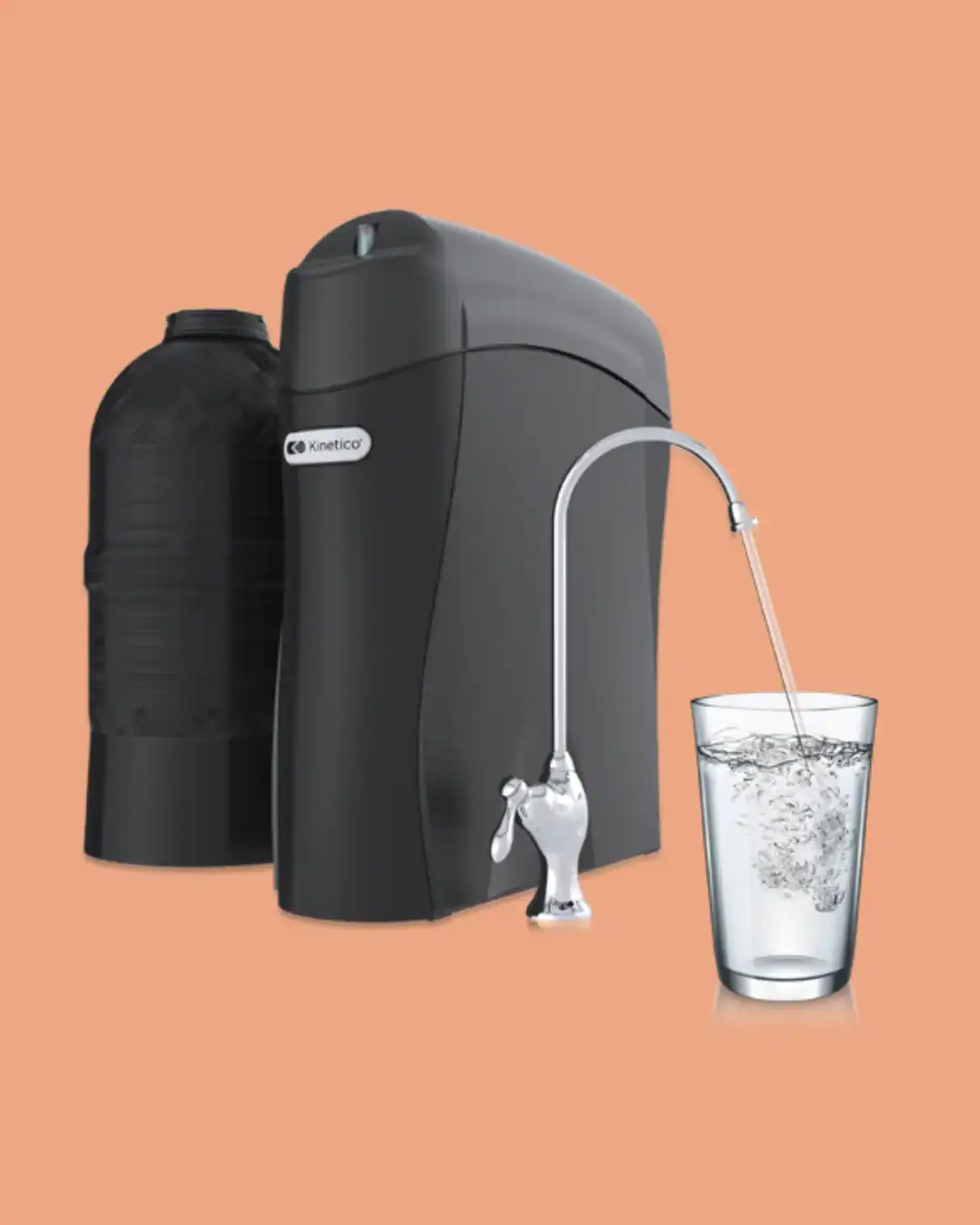
This is the kind of system you usually end up looking at after realizing you don’t want to think about your water filter ever again.
The Kinetico K5 is a professionally installed reverse osmosis system, which means everything — from setup to maintenance — is handled through a dealer.
It’s designed to be long-term, high-performance, and pretty hands-off once it’s in.
It uses a multi-stage RO process with customizable cartridges, so it can target PFAS along with other contaminants depending on your water.
The tradeoff is flexibility. You’re not really tweaking or swapping things yourself here — you’re trusting the system and the company to manage it.
Price
Custom Quote (Dealer-Based Pricing)
Contaminants removed
PFAS (PFOA/PFOS) | VOCs | Heavy Metals | Fluoride | Nitrates | TDS
location/shipping
United States (Installed Via Authorized Dealers)
What I like
- High-performance reverse osmosis system
- Customizable filtration cartridges
- Professional installation and support
What to keep in mind
- Requires dealer consultation
- Higher upfront cost
- Less transparent than direct-to-consumer brands
7. Waterdrop G3P800 Reverse Osmosis System
Best For: A more modern, space-saving RO setup
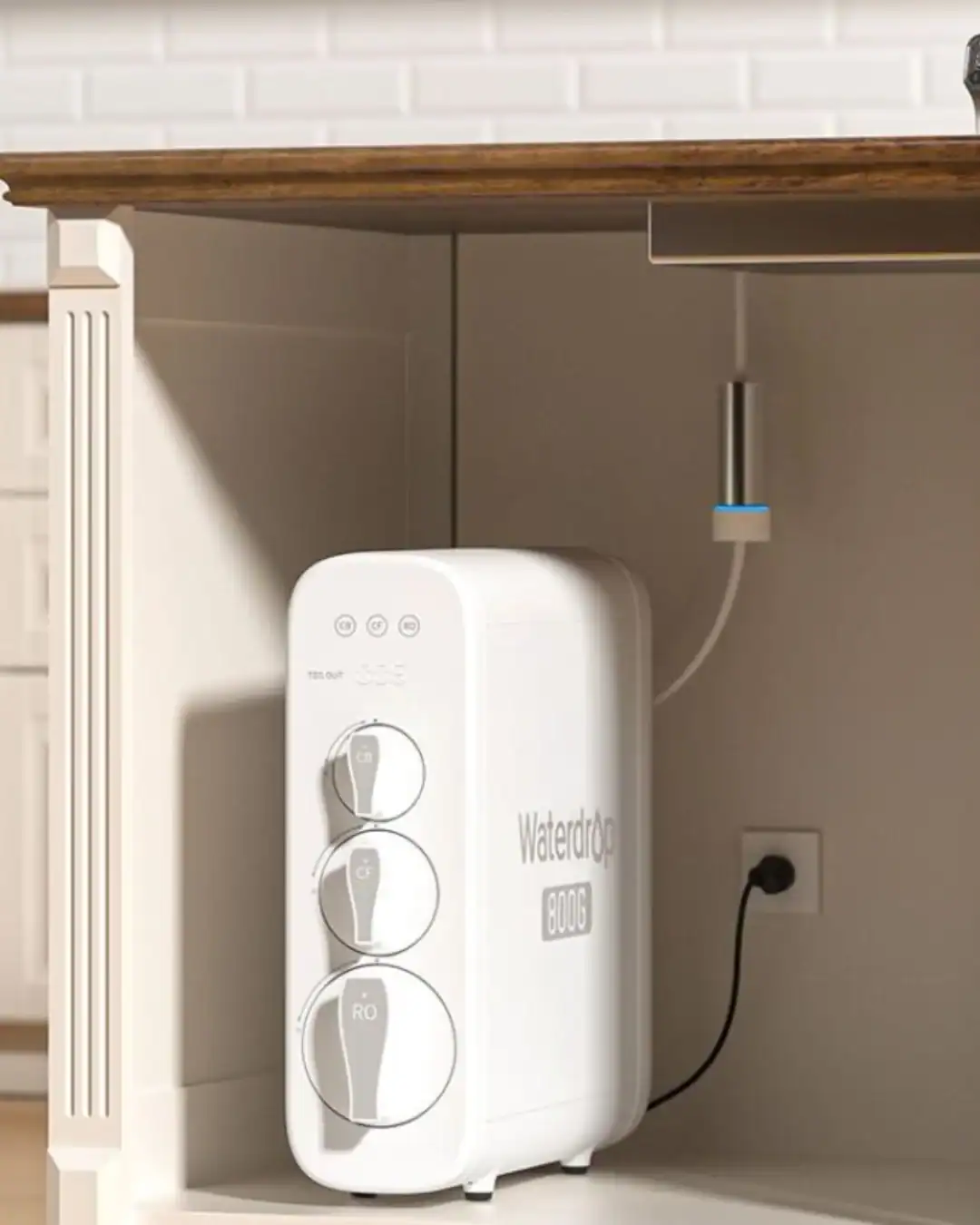
This is what I’d call the “updated version” of reverse osmosis.
Instead of the bulky tank systems you usually see, the G3P800 is tankless, more compact, and noticeably faster — which actually makes a difference in everyday use.
It’s still doing the same core thing (RO membrane filtration for contaminants like PFAS), but the experience feels a lot more streamlined.
That said, Waterdrop as a brand is a little inconsistent — some systems are well-certified, others less so — so this is one where I’d pay attention to the exact model you’re buying.
Price
$849
Contaminants removed
PFAS (PFOA/PFOS) | Fluoride | TDS | Chlormine | Chlorine | Lead | Heavy Metals | VOcs
location/shipping
United States
What I like
- Tankless design (less bulky)
- Faster flow than traditional RO
- Feels more practical for smaller kitchens
What to keep in mind
- Model-specific certification matters
- Replacement filters aren’t cheap
- Not as “plug-and-play” as countertop options
8. ZeroWater 7-Cup Ready-Pour Pitcher
Best For: A simple starting point (not a long-term solution)
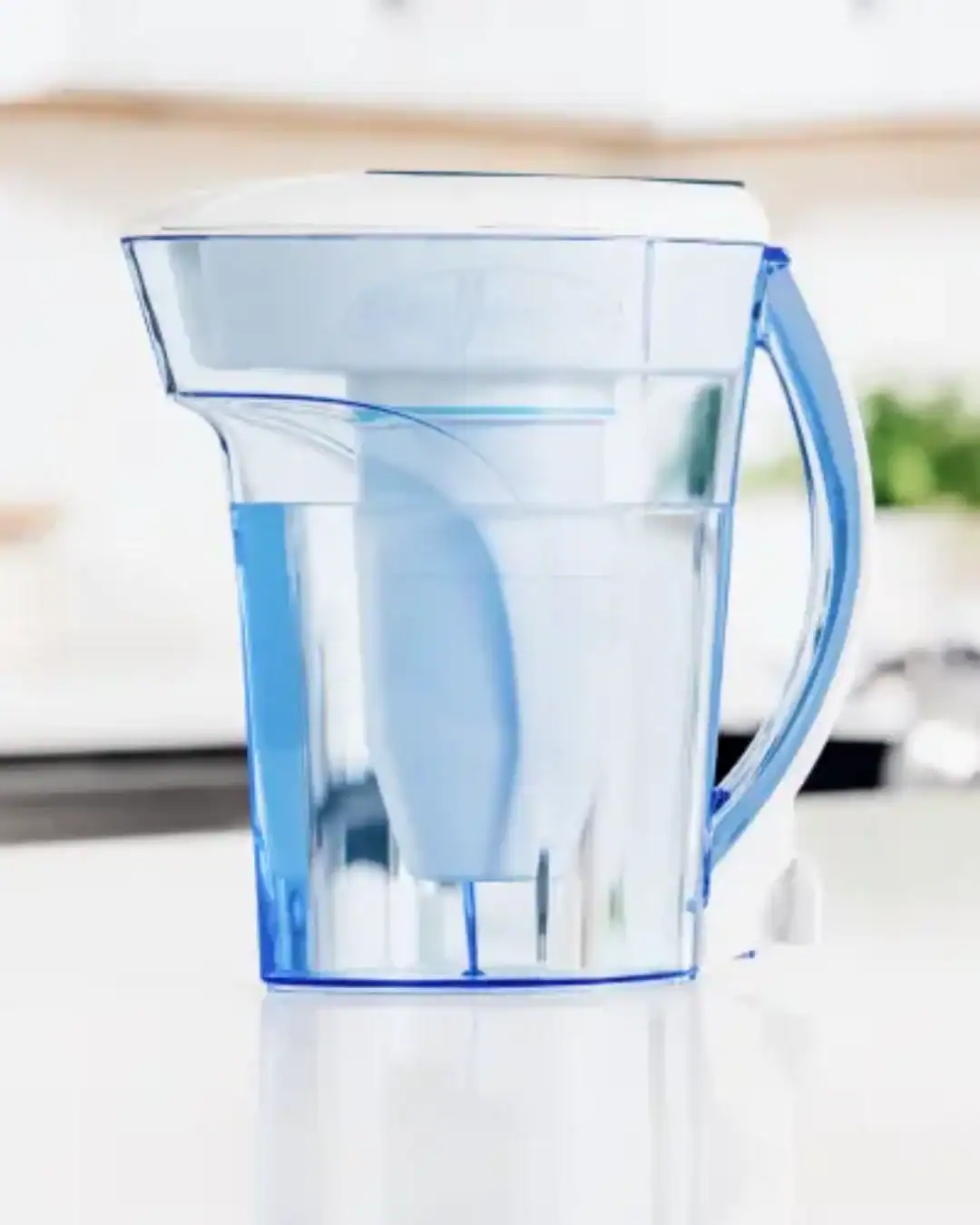
This is usually where people start — and honestly, that’s fine.
The ZeroWater pitcher is easy, affordable, and doesn’t require any setup, which makes it a realistic first step if you’re just trying to improve your drinking water quickly.
But it’s important to keep expectations in check.
Pitcher filters just don’t perform at the same level as under-sink systems or reverse osmosis — especially for something like PFAS, where consistency matters.
So I don’t really think of this as a “solution,” more like a stepping stone if you’re not ready to invest in a full system yet.
Price
$24.99
Contaminants removed
PFAS (PFOA/PFOS) | Lead | Chromium | Mercury | Arsenic | Fluoride | Nitrates & Nitrites | Chlorine
location/shipping
United States | Ships To Canada
What I like
- Very accessible starting point
- No installation required
- Easy to use immediately
What to keep in mind
- Not reliable for long-term PFAS reduction
- Filters need frequent replacement
- Small capacity
What To Look For in a PFAS Water Filter
If you’ve made it this far, you’ve probably realized that not all water filters are designed to remove PFAS — even if they sound like they are.
Here’s what actually matters when you’re choosing one.
✔️ NSF Certification (This Is Non-Negotiable)
NSF Certification is the first thing I check — every time.
Certification means the filter has been independently tested under standardized conditions. If a brand only says “tested” or “lab verified” without certification, I don’t rely on it.
- NSF/ANSI Standard 53 → For carbon systems (PFAS like PFOA/PFOS)
- NSF/ANSI Standard 58 → For reverse osmosis systems
✔️ Filtration Type (RO vs Carbon)
This is where performance really differs.
- Reverse osmosis (RO) → Physically removes PFAS at the membrane level
- Carbon filtration → Can reduce PFAS, but depends heavily on design
If your goal is maximum reduction, RO is the most consistent. If you want something simpler, a certified carbon system can still be a strong option.
✔️ Clear Contaminant Reduction Data
A trustworthy brand will tell you:
- Exactly which contaminants are reduced
- How much is reduced
- And under what conditions
If you only see phrases like “removes harmful chemicals,” that’s not enough.
✔️ Filter Lifespan + Replacement Transparency
PFAS reduction isn’t permanent. If filters aren’t replaced on time, performance drops.
Look for brands that clearly explain:
- Replacement schedule
- Filter lifespan
- Long-term cost
Transparency here is a good sign that the brand stands behind their product.
✔️ Realistic Tradeoffs
No system is perfect.
- Reverse osmosis removes more contaminants, but produces wastewater and removes minerals.
- Carbon systems retain minerals but depend more on system design.
Brands that acknowledge these tradeoffs are usually the ones you can trust.
PFAS Water Filter Certifications Explained
This is where things can feel overly technical — but it doesn’t have to be. Here’s the simplified version I use when evaluating filters:
NSF/ANSI Standard 53
This is what you want for non-RO systems.
- Applies mostly to carbon filters
- Covers health-related contaminants
- Includes PFAS like PFOA and PFOS
NSF/ANSI Standard 58
This is the gold standard for RO.
- Applies to reverse osmosis systems
- Verifies membrane performance
- Confirms reduction of dissolved contaminants (including PFAS)
NSF/ANSI Standard 401
Not PFAS-specific, but a good added layer.
- Covers emerging contaminants
- Includes things like pharmaceuticals and herbicides
What I Personally Look For
At minimum:
✔ NSF 53 (carbon) or NSF 58 (RO)
✔ Clear mention of PFOA / PFOS
✔ Model-specific certification (not just brand-level claims)
Frequently Asked Questions On Water Filters
The most reliable way to remove PFAS from drinking water is typically a reverse osmosis system. It uses a membrane that physically filters contaminants at a very small level.
That said, a carbon filter certified to NSF/ANSI Standard 53 for PFOA and PFOS can still be a strong option if you want a simpler water filter for PFAS that’s easier to maintain day-to-day.
Most standard water filters aren’t designed to remove PFAS — even though a lot of them sound like they might.
Only specific systems, like reverse osmosis or NSF 53-certified carbon filters, are designed to reduce PFAS in drinking water.
That’s why certification matters more than marketing language.
Yes — reverse osmosis is one of the most effective ways to remove PFAS from drinking water.
It works by pushing water through a semi-permeable membrane that physically blocks contaminants, including PFAS, at the molecular level.
Some carbon filters can remove PFAS, but not all of them.
For a carbon-based drinking water filter to work well for PFAS, it needs to be specifically designed for it and certified to NSF/ANSI Standard 53.
Without that, performance can vary quite a bit.
Most standard pitcher filters — including many Brita models — are not designed to effectively remove PFAS.
This is one of those areas where packaging can be a little misleading, so it’s always worth checking for NSF certification tied specifically to PFAS in drinking water.
NSF/ANSI Standard 53 is a certification that verifies a water filter can reduce certain health-related contaminants. PFAS applies to compounds like PFOA and PFOS.
If a drinking water filter is NSF 53 certified for those, it means it has been independently tested to reduce them under standardized conditions.
It depends on what you’re looking for. Reverse osmosis is generally more consistent and removes a wider range of contaminants.
Carbon filters can still reduce PFAS, but performance depends heavily on how the system is designed and whether it’s certified for PFAS in drinking water.
The best non-RO option is usually a carbon filter certified to NSF/ANSI Standard 53 for PFOA and PFOS.
These systems can reduce PFAS in drinking water without removing beneficial minerals or producing wastewater, which makes them a good fit for everyday use.
Some whole-house systems can reduce PFAS, but not all are designed for it.
For most homes, starting with a drinking water filter at the point of use (like your kitchen sink) is the most practical and effective first step.
Yes — PFAS can be filtered out of drinking water, but only with the right type of system.
Reverse osmosis and certain certified carbon filters are currently the most effective options for reducing PFAS levels.
PFAS in tap water are a concern because they don’t break down easily and can build up over time.
The goal here isn’t panic — it’s reducing exposure where you can, especially with something like drinking water that you use every single day.
It depends on the system. Carbon filters usually need replacing every 3–6 months, while reverse osmosis systems require periodic filter changes and a membrane replacement every few years.
Staying consistent with replacements is what keeps a water filter for PFAS working properly over time.
No — boiling water does not remove PFAS. In some cases, it can actually increase the concentration in drinking water as the water evaporates and leaves contaminants behind.
💡 Still Deciding?
Here’s a quick way to narrow it down:
- Want something simple, low-maintenance, and no wastewater? → Go with a certified carbon filter like Aquasana or Clearly Filtered
- Want the most complete PFAS removal possible? → Reverse osmosis (AquaTru or APEC Water)
- Renting or don’t want installation? → AquaTru countertop system
- Want something tailored to your specific water? → Hydroviv
You don’t need the “perfect” system — you just need one that fits your home and actually reduces what you’re concerned about.
Final Thoughts: A Simple Way to Think About It
Water was one of those things I didn’t question for a long time. It felt like something that was already taken care of — regulated, tested, “good enough.”
But once I started looking more closely, I realized there’s a difference between water that simply meets basic standards and water that’s filtered with long-term exposure in mind.
That shift didn’t make things overwhelming — it just made me more intentional.
Because water is something we use every single day — in what we drink, how we cook, and what we reach for without thinking.
And when something is that consistent, even small improvements start to matter more.
That’s why I don’t see filtration as all-or-nothing. For some homes, reverse osmosis makes the most sense. For others, a certified carbon filter is a better fit.
Both are meaningful upgrades — it just depends on what works for your space and routine.
If you’re unsure where to start, keep it simple. Focus on the water you drink and cook with, choose something backed by certification, and build from there if needed.
You don’t have to do everything at once — but making one intentional change here is one of the more practical ways to reduce daily exposure.
Continue Your Water Filter Education
If you’re still figuring out the best setup for your home, these guides will help you go a little deeper — without overcomplicating things:
- What Is PFAS? A Clear Guide To “Forever Chemicals” + How To Reduce Exposure: Start here if you want to understand what PFAS actually are, where they come from, and why filtration matters in the first place.
- Best Countertop Reverse Osmosis Water Filters (No Installation Required): A great option for renters or anyone who wants strong filtration without modifying their sink.
- Best Under-Sink Water Filters For PFAS (Stronger Daily Filtration): If you’re ready for a more permanent setup, this is where you’ll get higher output and long-term performance.
- Best Whole House Water Filters For PFAS, Chlorine & More: For full-home filtration — including showers, laundry, and every tap — this guide breaks down what actually works (and what doesn’t).
- Best Shower Filters For Hair & Skin (Reduce Chlorine & Hard Water): A great starting point if you’re dealing with dry skin, brittle hair, or irritation caused by chlorine and hard water in your shower.
Whether you’re starting with a simple countertop filter or planning a full-home upgrade, understanding how each system works makes it much easier to choose something you’ll actually feel good using long-term.
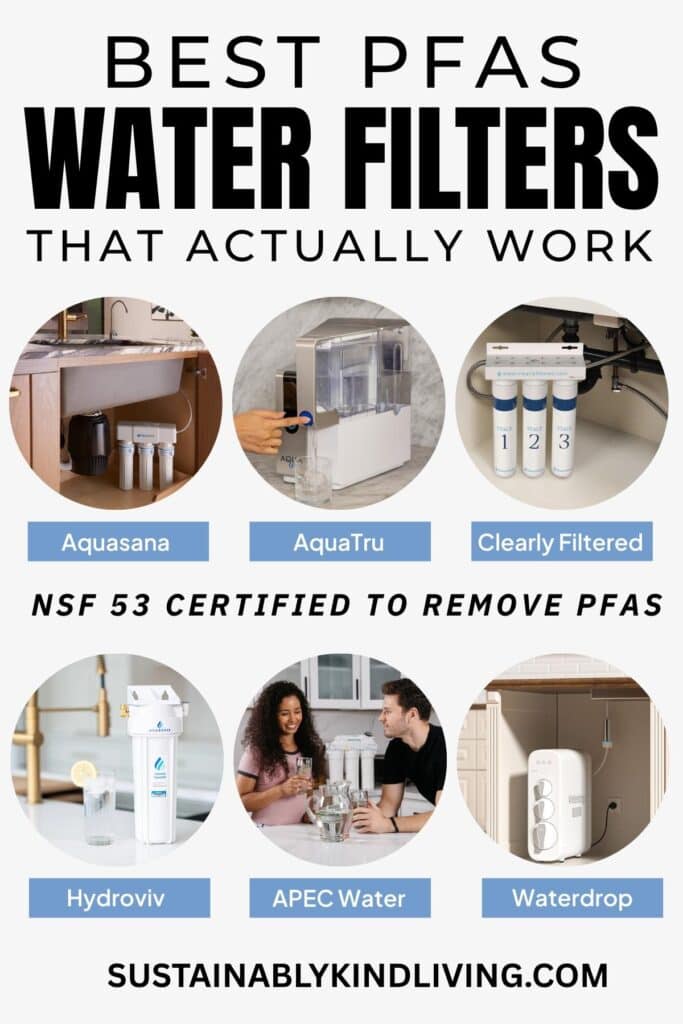
📌 Save This Guide For Later
If you’re thinking about upgrading your water, this is one of those guides worth coming back to.
This breakdown of the best PFAS water filters covers what PFAS actually are, which certifications matter (like NSF/ANSI), and the systems that are proven to reduce them — without the greenwashing.
Save it for later so you have it on hand when you’re ready to choose a safer water filter for your home.
Sources & Further Reading
If you’re like me and want to understand what’s actually going on with PFAS in drinking water — not just what filter brands claim — these are some of the resources I found most helpful while researching water filtration:
- U.S. Environmental Protection Agency — Guidance on PFAS in drinking water, health advisories, and current regulatory limits
- Environmental Working Group — PFAS contamination maps and consumer-focused water safety data (helpful, but I always cross-check)
- NSF International — Certification database for NSF/ANSI Standards 42, 53, 58, and 401 (this is what I use to verify filter claims)
- Centers for Disease Control and Prevention — Overview of PFAS exposure and how these chemicals behave in the body
- Agency for Toxic Substances and Disease Registry — More in-depth toxicology and long-term exposure data
- PubChem — Ingredient-level and compound breakdowns (useful when looking into specific contaminants)
I also spent a lot of time reviewing certification listings, contaminant reduction sheets, and technical documentation for individual systems to understand what each filter is actually doing — beyond marketing language.
As with most things in the non-toxic space, this is still evolving. Regulations are changing, testing is improving, and not all brands are keeping up at the same pace — which is why I keep coming back to certification, transparency, and real data when making recommendations.
This post was graciously sponsored by Aquasana. As always, we only work with brands that we stand behind. Would you like to sponsor one of our sustainable round-ups? Contact us here.

Steal My Non-Toxic Cleaning Checklist!
Believe us, it’s the BEST…. and it’s free. Does it really get any better than that?! Sign up for our newsletter and get this free checklist to clean your home without any harmful chemicals!