 Shop My Favorite Non-Toxic Gifts Of 2026!
SKL is reader supported. When you buy through links on our site, we may earn affiliate commission. Learn more here.
When I first started researching the best shower filters, I was surprised by how much everyday shower water can affect our skin and hair.
Most of us spend a lot of time (and money) trying to improve our skincare and haircare routines. We invest in better shampoos, cleaner beauty products, and the latest wellness tools — but there’s one thing many people overlook:
The water we shower in every single day.
Tap water often contains chlorine, heavy metals, and other contaminants that can dry out your skin, irritate your scalp, and weaken your hair over time.
Even when municipal water is technically considered “safe,” it may still contain substances that affect how your skin and hair feel after every shower.
That’s where a high-quality shower filter can make a meaningful difference.
The best shower filters help reduce chlorine, filter heavy metals, and improve overall water quality — supporting softer skin, healthier hair, and a more comfortable shower experience.
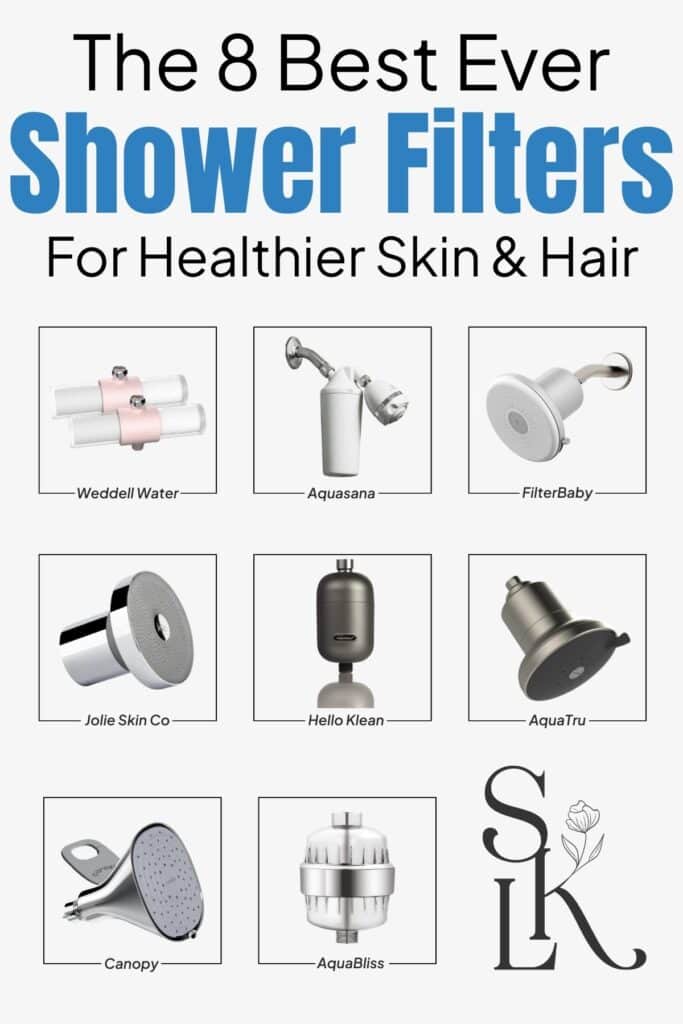
SKL top picks, in a nutshell…
- Best Overall Shower Filter: Weddell Water
- Best Chlorine Shower Filter: Aquasana
- Best Shower Filter for Skin & Acne: FilterBaby
- Best Shower Filter for Hair Health: Jolie Skin Co
- Best Shower Filter for Hard Water: Hello Klean
As someone who researches non-toxic living and product safety for Sustainably Kind Living, I’ve tested and reviewed dozens of water filtration systems over the years — and shower filters are one of the simplest upgrades you can make for your daily routine.
In this guide, I’m sharing the best shower filters for hair and skin in 2026, including options designed to reduce chlorine, improve hard water conditions, and support sensitive skin.
We’ll also walk through how shower filters work, what contaminants they can remove, and how to choose the right one for your home.
What Is a Shower Filter & How Does It Work?
A shower filter is a device that attaches to your showerhead and helps remove contaminants from the water before it touches your skin and hair.
Many people assume that if their tap water is safe to drink, it must also be safe for bathing. But municipal water often contains substances like chlorine, heavy metals, and chemical byproducts that can affect skin and hair over time.
The best shower filters use specialized filtration media to reduce these contaminants while maintaining good water pressure.
Common filtration materials include:
- Activated carbon helps reduce chlorine and organic chemicals.
- KDF (Kinetic Degradation Fluxion) media, which targets heavy metals and inhibits bacterial growth.
- Vitamin C filtration, which neutralizes chlorine and chloramines.
As water passes through the filter, these materials help trap or neutralize unwanted substances before the water reaches your skin.
While shower filters are not designed to purify water to drinking standards, they can significantly reduce chlorine exposure and improve shower water quality — which is why many people notice softer skin, less scalp irritation, and healthier hair after installing one.
Pro Tip: To ensure you’re using the most effective shower filter, we recommend testing your home’s tap water.
Common Contaminants Found in Shower Water
Here are some of the most common contaminants that shower filters are designed to reduce:
Chlorine & Chloramines
Chlorine is widely used to disinfect municipal water supplies, but it can strip the skin of its natural oils and leave hair feeling dry, brittle, or dull.
Chloramines, a combination of chlorine and ammonia, can have similar effects and are harder to remove without specialized filtration.
Heavy Metals
Older plumbing systems and aging infrastructure can introduce metals like lead, copper, and mercury into the water supply.
These metals may irritate sensitive skin and contribute to dryness or buildup on the scalp and hair.
Hard Water Minerals
Hard water contains elevated levels of calcium and magnesium, which can leave mineral residue on hair and skin.
This buildup may lead to dull hair, dryness, and difficulty rinsing out shampoo and conditioner.
Disinfection Byproducts
When chlorine reacts with organic matter in water, it can create compounds known as disinfection byproducts (DBPs).
Some of these compounds are linked to skin irritation and unpleasant odors in shower water.
Because we’re exposed to shower water every single day, reducing these contaminants with a high-quality shower filter can help support healthier skin, smoother hair, and a more comfortable shower experience.
Signs You Might Need a Shower Filter
Many people don’t realize their shower water could be affecting their skin and hair until they start noticing certain changes.
If you’re experiencing any of the signs below, installing a shower filter may help improve your water quality and overall shower experience.
Your Skin Feels Dry or Tight After Showering
If your skin often feels dry, itchy, or tight immediately after a shower, chlorine in tap water could be contributing to the problem.
Chlorine is commonly used to disinfect municipal water supplies, but it can also strip the skin of its natural oils.
Reducing chlorine exposure during daily showers may help support a healthier skin barrier and improve overall skin comfort.
Your Hair Feels Dull, Brittle, or Hard to Manage
Chlorine and mineral buildup can leave hair looking dull, feeling dry, or becoming more difficult to style. Some people also notice their hair feels rough or tangled more easily after washing.
Filtering shower water may help reduce these residues, allowing hair to feel softer and easier to manage.
You Live in an Area With Hard Water
Hard water contains minerals like calcium and magnesium that can leave deposits on hair, skin, and shower surfaces.
You might notice soap that doesn’t rinse easily, hair that feels heavy or coated, or white mineral spots on faucets and glass.
While shower filters don’t completely soften water like whole-house systems, many can help reduce the effects of hard water minerals.
You Notice a Strong Chlorine Smell in the Shower
If your shower water smells similar to a swimming pool, that’s usually a sign of chlorine in the water supply. This is common in many municipal water systems.
A shower filter designed to reduce chlorine can help minimize that smell and improve the overall feel of your shower water.

With those factors in mind, here are the best shower filters for improving water quality, supporting healthier skin, and protecting your hair from chlorine and other common contaminants.
The Best Shower Filters for Hair & Skin in 2026
Use discount code SKL10 to save 10%!
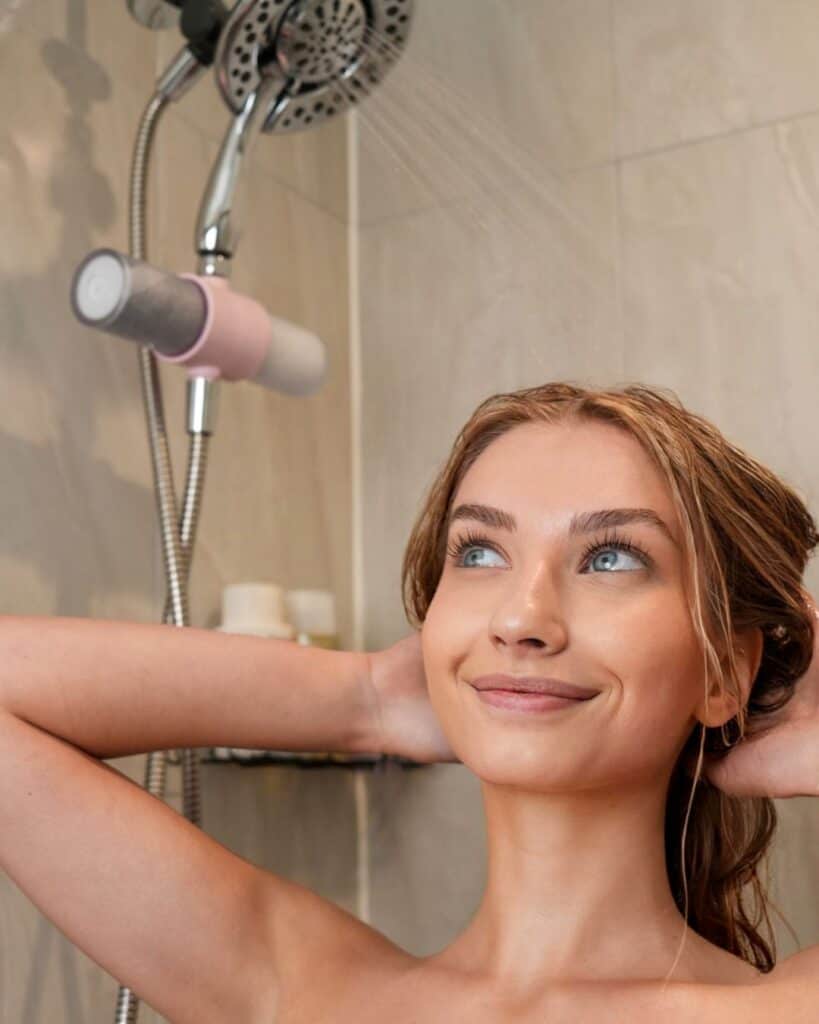
Weddell Water stands out as one of the most advanced shower filters for reducing chlorine, PFAS, and microplastics.
Unlike many standard shower filters that focus primarily on chlorine, Weddell Water uses a multi-stage filtration system designed to target a broader range of emerging contaminants.
This makes it a strong option for households looking to improve overall water quality — not just chlorine levels.
If you want a high-performance shower filter that addresses multiple contaminants, Weddell Water is one of the most comprehensive options available.
Price
$89.99
Contaminants Removed
Chlorine (99%) | PFAS | Particulates | Microplastics
location/shipping
United States | Available on Amazon For International Customers
This post was graciously sponsored by Weddell Water. As always, we only work with brands that we stand behind. Would you like to sponsor one of our sustainable round-ups? Contact us here.
My Personal Review
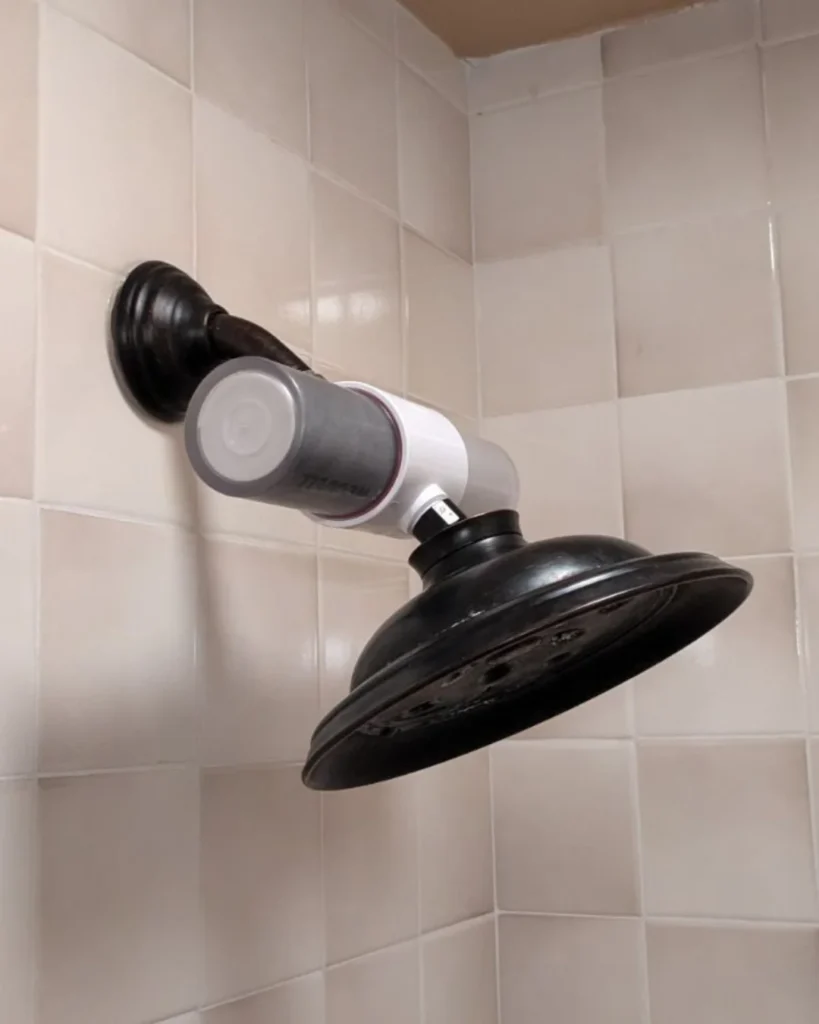
Before testing the Weddell Duo, I assumed most shower filters were fairly similar. But after installing it and using it consistently, I noticed a difference within the first week. My skin felt softer after showering, and my hair was noticeably easier to brush and style.
I also found that I could go longer between washes without my hair feeling heavy or dull.
If you’re curious about the details, I shared a deeper breakdown in my Weddell Duo shower filter review, where I explain how the filtration works and what I noticed after using it for several weeks.
One unexpected bonus? My glass shower door stayed noticeably cleaner as well.
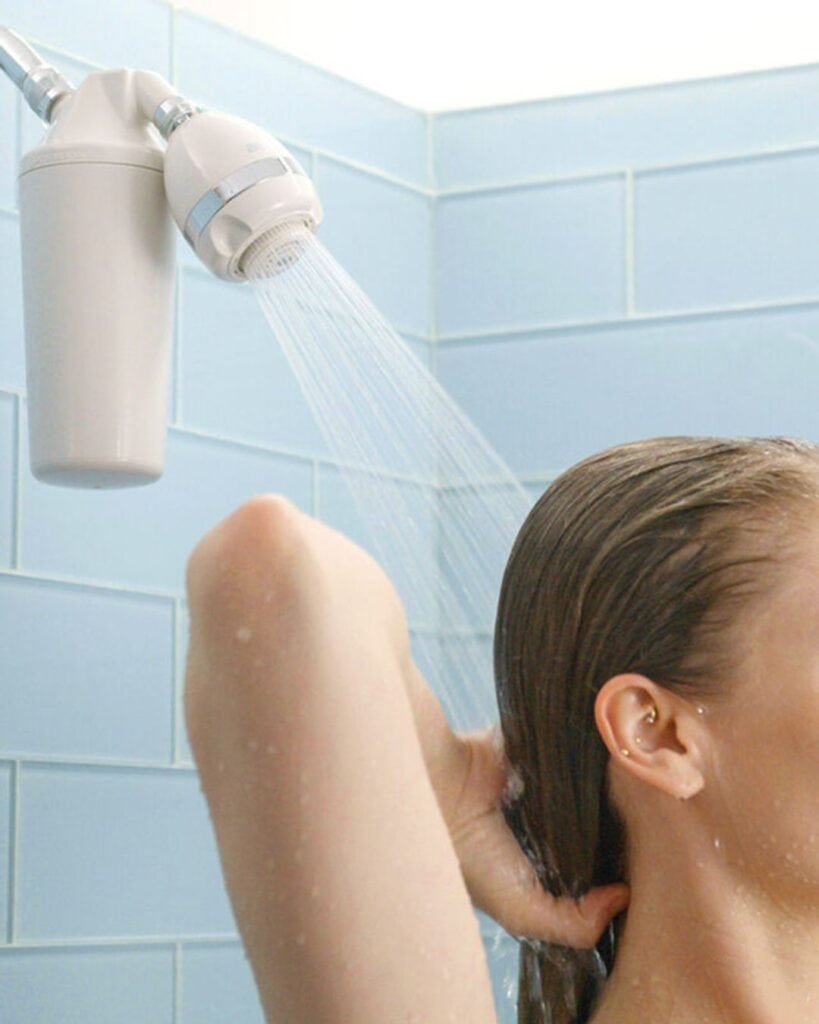
Aquasana is widely recognized for its chlorine filtration technology, making it one of the best shower filters for homes with heavily treated municipal water.
The system uses a combination of copper-zinc (KDF) media and coconut shell carbon to remove over 90% of chlorine.
This helps minimize the drying effects chlorine can have on both skin and hair.
If your primary concern is chlorine exposure, Aquasana is one of the most trusted chlorine shower filters available.
Price
From $69.99+
contaminants removed
Removes over 90% of chlorine
location/shipping
United States | Ships To Canada
Use discount code SKL10 to save $10!
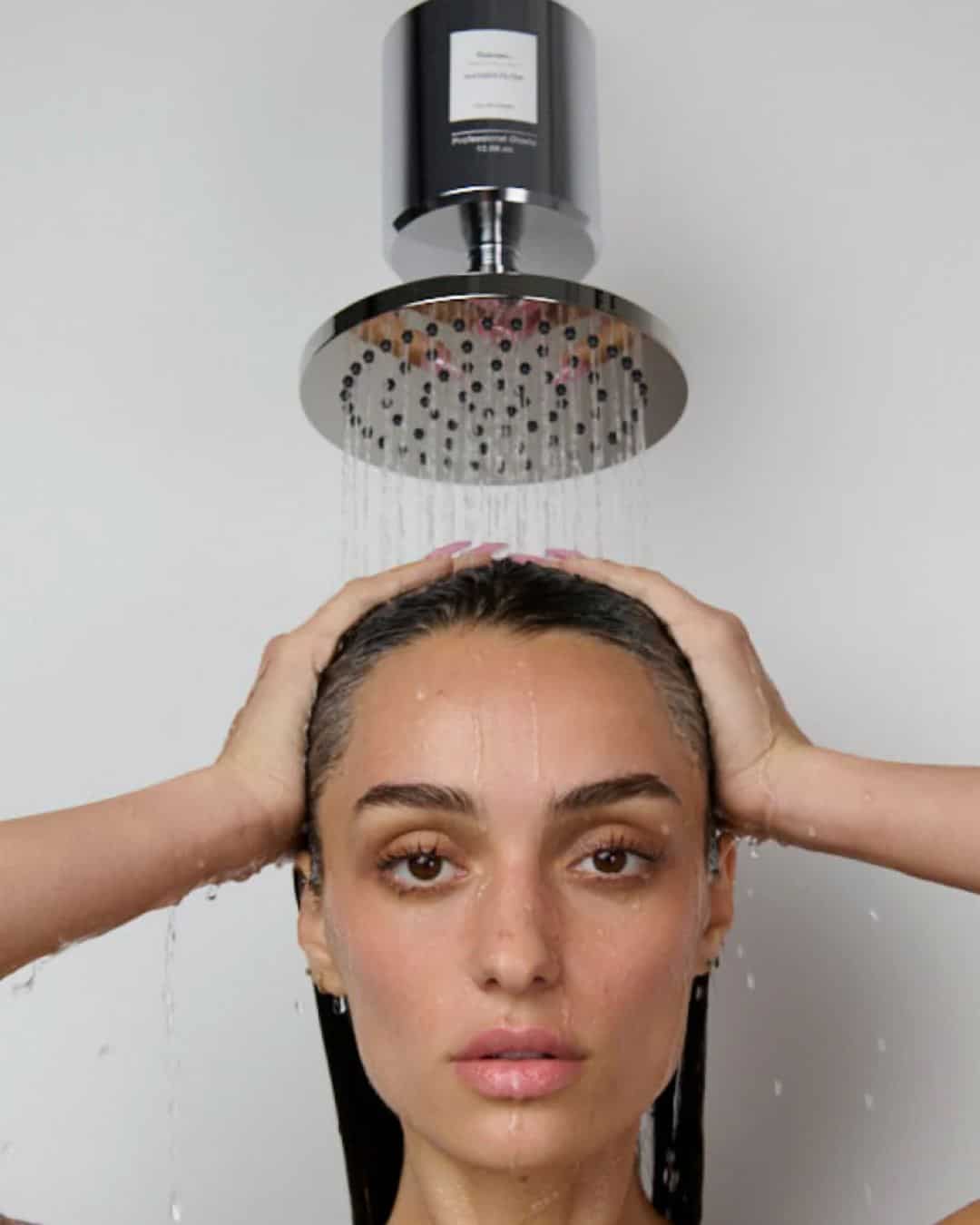
FilterBaby was designed with skin health as the primary focus, which makes it unique among shower filters.
Its filtration system targets chlorine, heavy metals, and microorganisms that may contribute to irritation, acne, or barrier disruption.
Many users choose FilterBaby specifically because it was created with dermatology in mind rather than general water filtration.
For anyone searching for a shower filter designed to support clearer skin, this option stands out.
Price
From $113+
contaminant removed
Chlorine | Chloramine | Lead | Microplastics | Mercury | Algae | Arsenic | Copper | Antimony | Hydrogren Sulfide | Micro-Organisms | Hard Minerals
Location/Shipping
United States

Jolie Skin Co has built a strong reputation as a shower filter focused on hair health and scalp comfort.
The filter reduces chlorine and heavy metals that can weaken hair strands or cause buildup on the scalp.
Many people install Jolie specifically to address dull hair, dryness, or color fading caused by treated water.
If your goal is improving hair texture, shine, and manageability, Jolie is a popular choice.
Price
$169
contaminants removed
Chlorine | Heavy Metals
location/shipping
United States
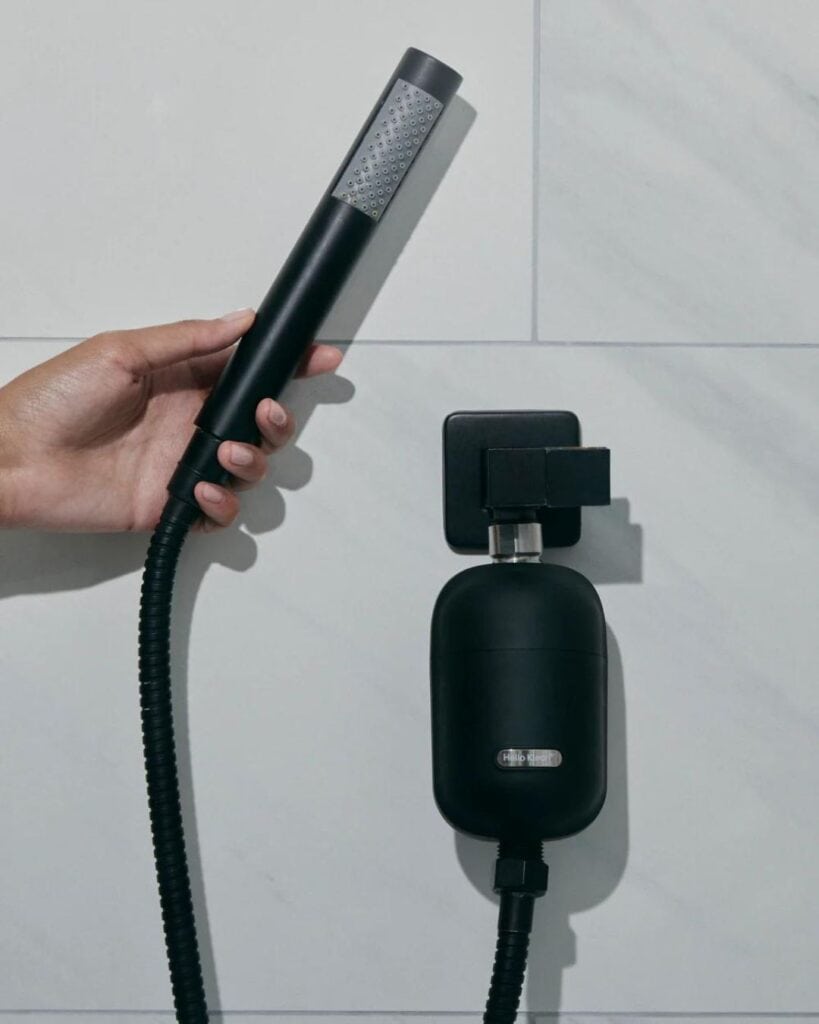
Hello Klean was created specifically to address hard water damage to hair and skin.
Hard water contains minerals like calcium and magnesium that can leave residue on hair, making it feel dry, heavy, or difficult to style.
The Hello Klean system targets both chlorine and mineral buildup to help restore softness and shine.
It’s a great choice if you live in an area known for hard water problems.
Price
$75
contaminants removed
Chlorine (90%) | Copper | Iron | Lead | Arsenic | Aluminum | Mercury | Metals
location/shipping
United Kingdom | Ships To The United States & Internationally
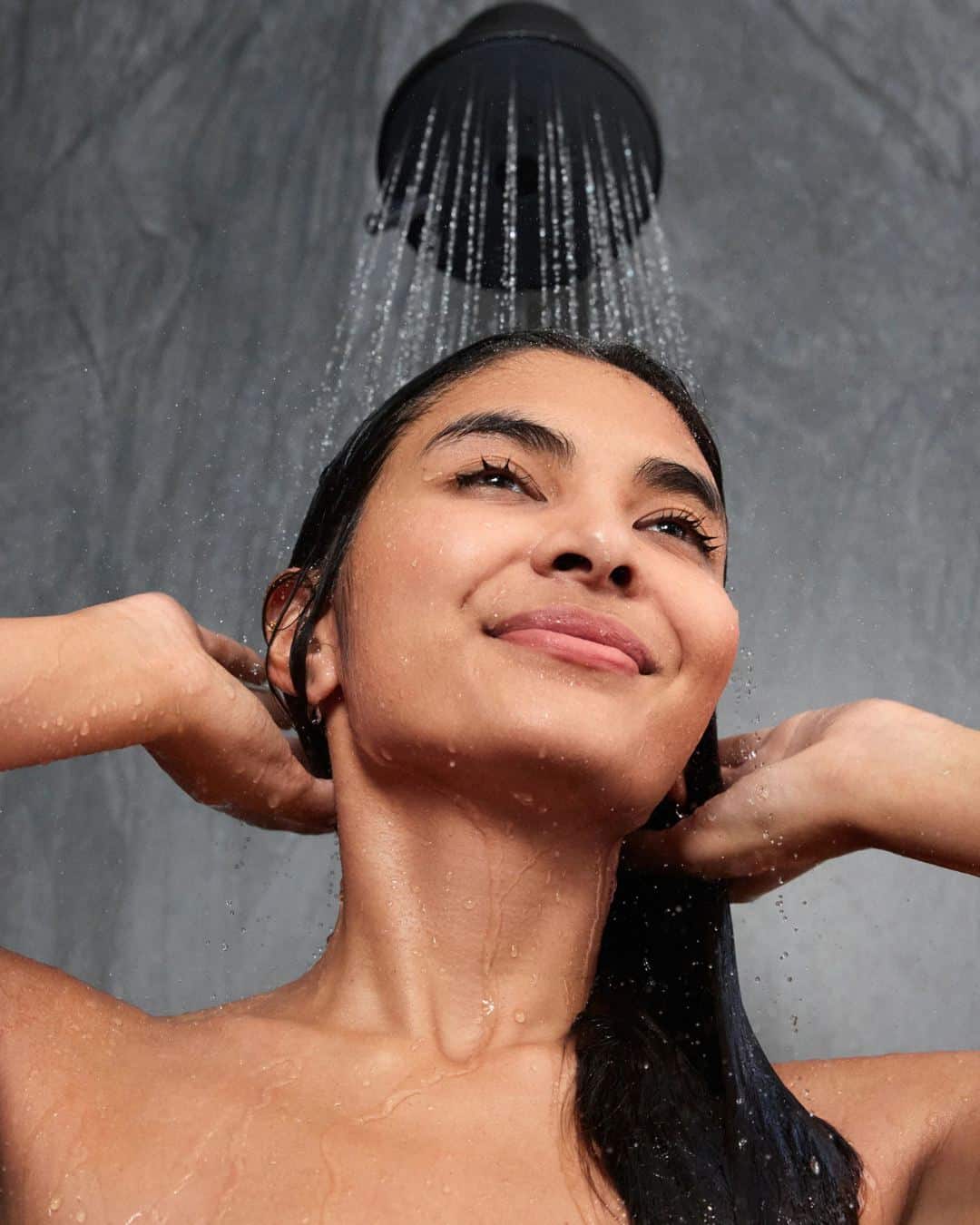
AquaTru brings its expertise in water purification to the shower with a four-stage filtration system.
Each stage targets different contaminants, including chlorine, heavy metals, PFAS, and volatile compounds.
This layered filtration approach allows it to address a wider range of water impurities compared to simpler filters.
For people who want maximum filtration technology in a showerhead, AquaTru is one of the most advanced options.
Price
$149
contaminants removed
Chlorine | Chloramine | Lead | Copper | Iron | Fluoride | PFAS | VOCs | Pharmaceuticals
Location/Shipping
United States | Ships To Canada
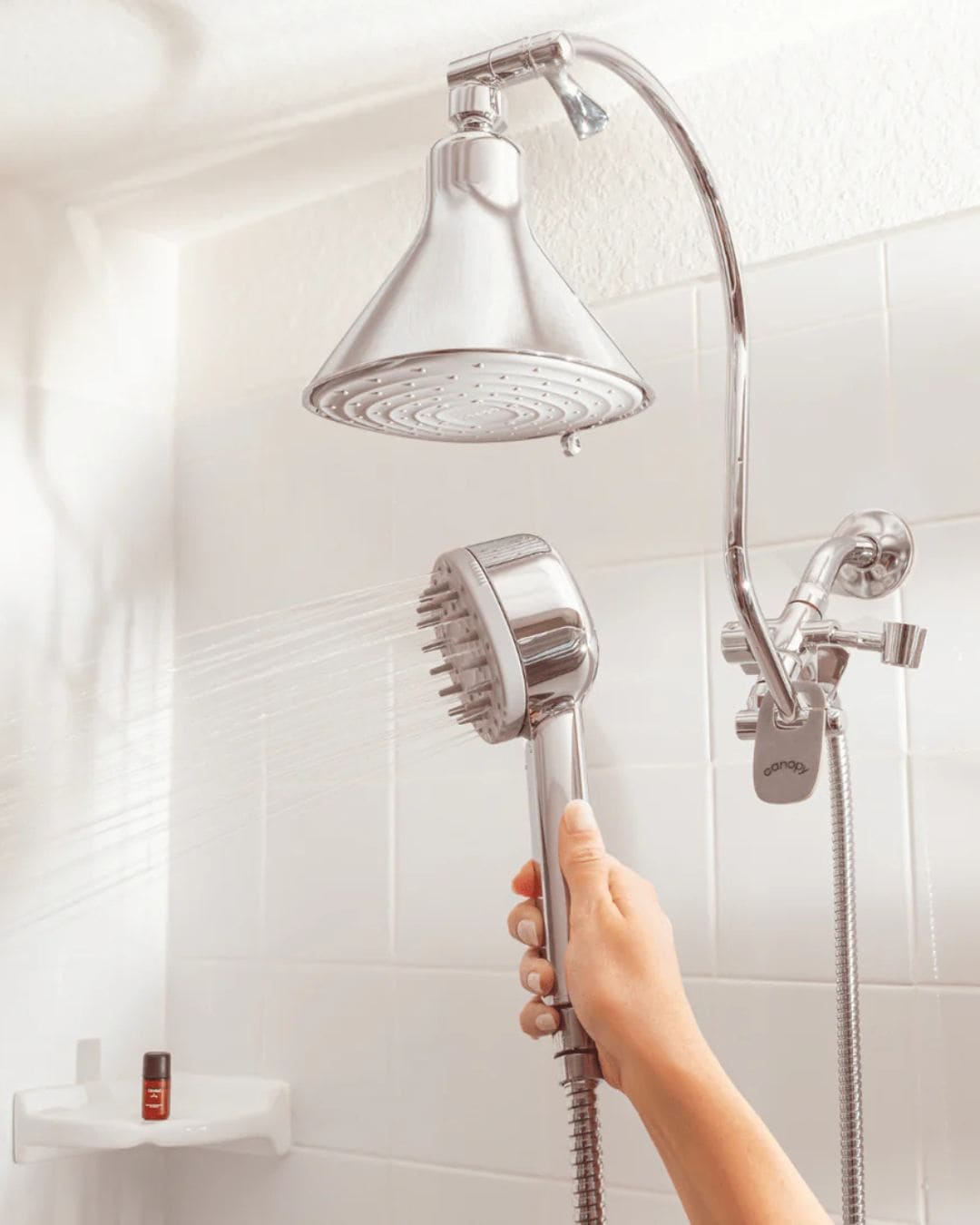
Canopy approaches shower filtration from a skin barrier perspective.
Its filtered showerhead uses activated carbon, KDF media, and calcium sulfite to reduce chlorine and other irritants that may aggravate sensitive skin.
The brand has become popular among dermatologists and skincare enthusiasts looking to support healthier skin.
If your goal is a filtered shower designed with skin health in mind, Canopy is worth considering.
Price
$150
contaminants removed
Chlorine | Magnesium | Calcium Carbonate | Iron | Hydrogen Sulfide | Mercury | Chromium | Chloramine
Location/Shipping
United States

Use discount code ERNESTALVARADO to save 5%!
AquaBliss is one of the most affordable shower filters available, making it a popular entry point for people new to filtered showerheads.
The cartridge uses a blend of activated carbon, KDF media, and mineral beads to reduce chlorine and sediment.
While it doesn’t target as many contaminants as higher-end systems, it still improves water feel and reduces chlorine exposure.
If you want a budget-friendly shower filter that’s easy to install, AquaBliss is a solid starting option.
Price
$35.99
contaminants removed
Chlorine | THMs
Location/Shipping
United States
How to Choose the Best Shower Filter
Not all shower filters are designed for the same concerns.
The best option for your home usually depends on your water quality and what you’re hoping to improve — whether that’s dry skin, hair damage, or hard water buildup.
Here are a few quick things to consider before choosing a shower filter.
Consider Your Water Concerns
Different filters are designed to target different issues.
If your main concern is chlorine exposure, look for a filter specifically designed to reduce chlorine and chloramines.
If you live in an area with hard water, choose a filter that helps reduce mineral buildup that can leave hair feeling dull or heavy.
For people with sensitive skin, eczema, or acne, filters that reduce chlorine and potential irritants are often the best choice.
Choose the Right Filter Style
Some shower filters attach between your shower pipe and your existing showerhead, while others are built directly into a filtered shower head that replaces your current showerhead.
Standalone filters are great if you want to keep your existing showerhead, while filtered shower heads combine filtration and the showerhead into one simple system.
Check Filter Lifespan
Most shower filters need replacement cartridges every 3–6 months, depending on water usage and filter capacity.
Checking the expected lifespan ahead of time can help you avoid frequent replacements and understand the long-term cost.
Look for Strong Water Pressure
A good shower filter should improve water quality without sacrificing pressure.
Most modern filters are designed to maintain normal water flow, but it’s still worth checking the product specifications to make sure it will work well with your home’s plumbing.
Shower Filter FAQs
Yes, shower filters can reduce chlorine and certain contaminants commonly found in municipal water. Filters using media like activated carbon, KDF, or vitamin C help neutralize chlorine before the water reaches your skin and hair. Many people notice softer skin, less scalp irritation, and healthier hair after installing a shower filter.
Most shower filters are designed to reduce chlorine, heavy metals, and mineral buildup that can affect skin and hair. Some advanced models may also target PFAS, microplastics, or volatile organic compounds. The exact contaminants removed depend on the filtration media used.
For many households, shower filters are one of the simplest upgrades for improving daily water quality. Reducing chlorine and mineral buildup can help prevent dry skin, scalp irritation, and dull hair. Because you shower every day, even small improvements in water quality can make a noticeable difference.
Yes, shower filters can help reduce chlorine and other irritants that contribute to dry or sensitive skin. Chlorine strips the skin of its natural oils, which can leave it feeling tight or itchy after showering. Filtering shower water may help support a healthier skin barrier.
A shower filter may improve hair health by reducing chlorine, heavy metals, and mineral buildup. These contaminants can weaken hair strands and leave hair feeling dry or brittle. Many people notice softer hair, better shine, and improved manageability after installing a shower filter.
Some shower filters are designed to reduce the effects of hard water minerals like calcium and magnesium. These minerals can leave residue on hair and skin and make products harder to rinse out. While they don’t fully soften water like a whole-house system, they can help reduce buildup.
The best chlorine shower filters typically use activated carbon or KDF media to reduce chlorine levels. These filtration materials help neutralize chlorine before it reaches your skin and hair. Filters specifically designed for chlorine removal work well in cities with heavily treated municipal water.
Most shower filters need replacement every 3–6 months, depending on water quality and usage. Many filters are rated to treat 8,000–10,000 gallons of water before replacement is recommended. Regular replacement helps maintain effective filtration.
Filtered shower heads include built-in filtration media that reduce contaminants before water reaches your skin and hair. Regular shower heads only control water flow and pressure without improving water quality. For households concerned about chlorine or hard water, filtered shower heads can be a beneficial upgrade.
Some people find that reducing chlorine and other contaminants in shower water helps improve skin irritation or breakouts. Chlorine can disrupt the skin barrier and contribute to dryness or inflammation. A shower filter may support healthier skin by reducing those irritants.
Most standard shower filters are designed primarily to reduce chlorine and sediment, not PFAS. However, some advanced multi-stage filters may help reduce certain PFAS compounds. If PFAS exposure is a concern, look for filters specifically tested for PFAS reduction.
A shower filter reduces contaminants like chlorine, heavy metals, and chemical byproducts. A water softener removes minerals such as calcium and magnesium that cause hard water. Some shower filters reduce the effects of hard water, but they cannot fully replace a whole-home water softening system.
Yes. Most shower filters are designed for simple installation and can usually be installed in just a few minutes. In most cases, you simply unscrew your existing showerhead and attach the filter between the pipe and the showerhead.
Continue Your Non-Toxic Water Journey
If you’re working toward cleaner, safer water throughout your home, these guides can help you go deeper:
- Under-Sink Water Filters – A practical guide to under-sink filtration systems that remove common tap water contaminants right at your kitchen faucet.
- Whole House Water Filters – Learn how whole-house filtration systems work and when they make sense for filtering water before it reaches every tap in your home.
- PFAS Water Filters – Discover which water filters are designed to reduce PFAS, often called “forever chemicals,” from drinking water.
- Countertop Reverse Osmosis Water Filters – A simple overview of countertop RO systems that remove a wide range of contaminants from tap water.
- Guide to PFAS: What It Is + How to Avoid It – A beginner-friendly breakdown of PFAS, where these chemicals show up, and practical ways to reduce exposure at home.
Final Thoughts on the Best Shower Filters
Improving your shower water might not be the first thing that comes to mind when thinking about skin and hair health — but it can make a meaningful difference in your daily routine.
The best shower filters help reduce chlorine, heavy metals, and other contaminants that may contribute to dry skin, irritated scalps, and dull hair.
Because showering is something we do every single day, even small improvements in water quality can add up over time.
Whether you’re dealing with hard water, sensitive skin, or simply want a cleaner shower experience, the filters in this guide offer some of the best options available in 2026.
And sometimes, the healthiest upgrades are the ones that quietly improve your daily routine.
Still Deciding Which Shower Filter to Choose?
If you’re still narrowing down your options, here’s a quick way many readers decide:
- Weddell Water → Best overall filtration for reducing chlorine, PFAS, and microplastics.
- Aquasana → Best choice if chlorine removal is your main concern.
- Hello Klean → Great option for homes dealing with hard water buildup.
All three are strong options depending on what you’re trying to improve — whether that’s water quality, skin health, or hair damage from chlorine.
If you’ve tried any of the shower filters in this guide (or found another great one), feel free to share your experience below. .
Sources & Further Reading
If you’re interested in learning more about water quality, chlorine exposure, and how filtration systems work, these organizations provide helpful research and guidance:
- U.S. Environmental Protection Agency (EPA) — Information on drinking water contaminants and treatment standards
- Environmental Working Group (EWG) — Tap water database and contaminant research
- Centers for Disease Control and Prevention (CDC) — Drinking water and public health resources
- National Institutes of Health (NIH) — Research on environmental exposures and skin health
These organizations provide additional context on water treatment practices, contaminant exposure, and the filtration technologies commonly used in household water systems.
This post was graciously sponsored by Weddell Water & Aquasana. As always, we only work with brands that we stand behind. Would you like to sponsor one of our sustainable round-ups? Contact us here.

Steal My Non-Toxic Cleaning Checklist!
Believe us, it’s the BEST…. and it’s free. Does it really get any better than that?! Sign up for our newsletter and get this free checklist to clean your home without any harmful chemicals!