 Shop My Favorite Non-Toxic Gifts Of 2026!
SKL is reader supported. When you buy through links on our site, we may earn affiliate commission. Learn more here.
If you’re searching for the best under-sink water filter for PFAS, you’re already ahead of most households.
When I first started researching PFAS in drinking water — reviewing municipal water quality reports, cross-checking EPA updates, and digging into NSF certification databases — I was shocked at how many standard under-sink filters don’t remove them at all.
These “forever chemicals” are now detected in thousands of U.S. water systems, yet most filters focus on chlorine and taste, not persistent contaminants like PFOA and PFOS.
As a mom of three and someone who has spent years reviewing non-toxic home products — from organic mattresses to certified water filtration systems — I don’t take water lightly.
It’s not just what we drink. It’s what we cook with. It’s what fills our kids’ water bottles. It’s what we use every single day.
Under-sink water filters are one of the most effective and realistic ways to reduce PFAS exposure through drinking and cooking water. They offer significantly stronger filtration than most pitchers, without the cost and complexity of installing a whole-house system.
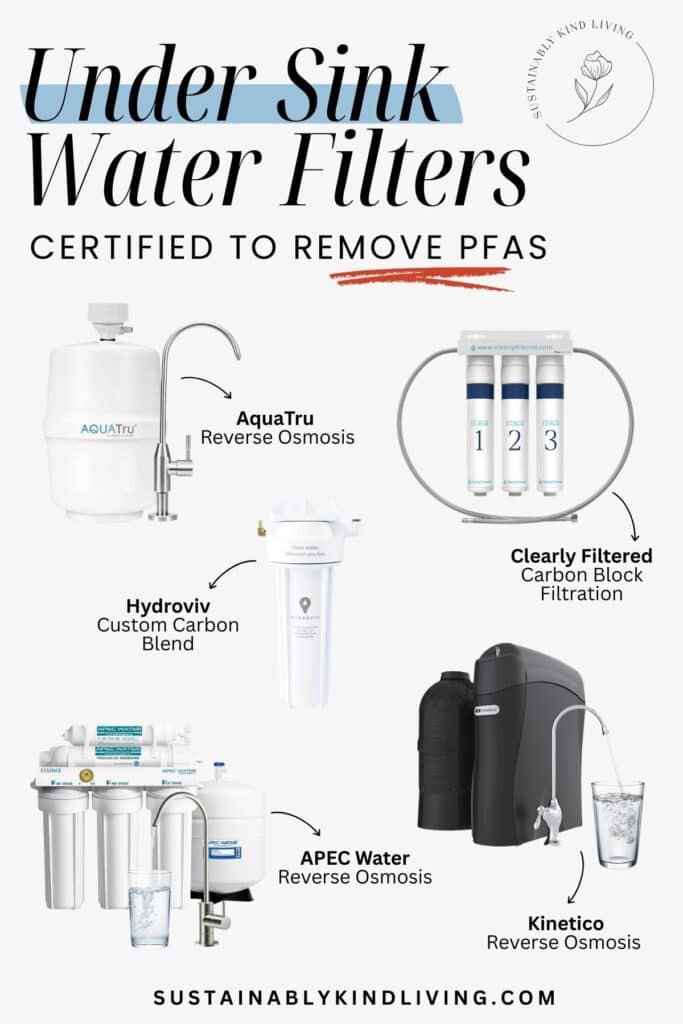
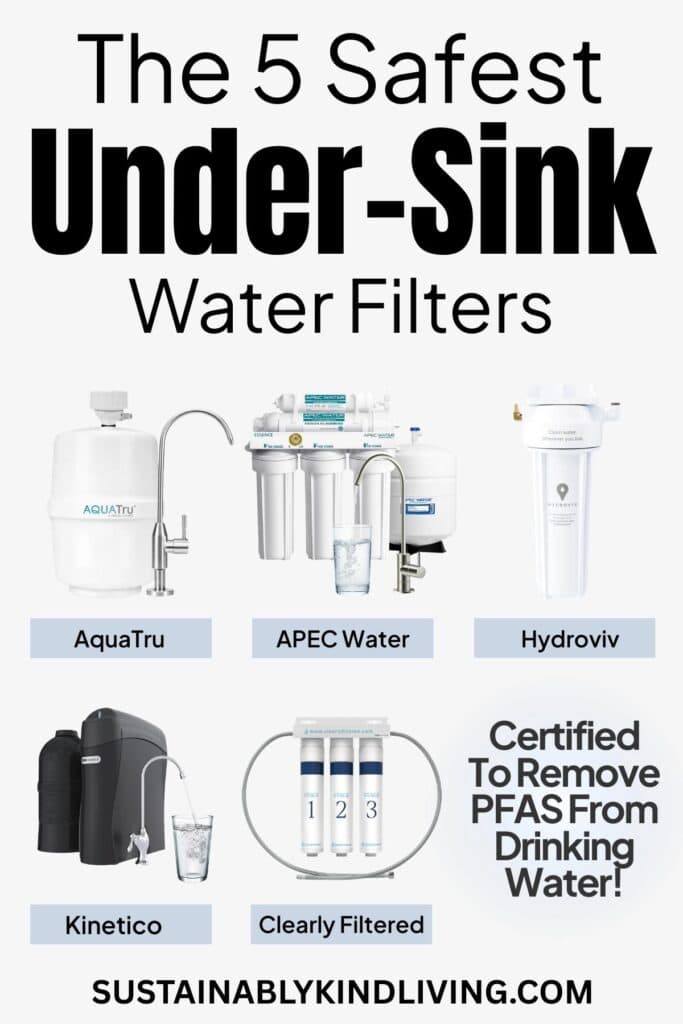
My Top 5 Under Sink Water Filters For PFAS (At a Glance)
- Best Overall (NSF-Certified RO): AquaTru Under Sink Reverse Osmosis
- Best Non-RO Carbon System: Clearly Filtered 3-Stage Under Sink
- Best Custom-Built System: Hydroviv Under Sink Filter
- Best Budget Reverse Osmosis: APEC ROES-50 (NSF Certified)
- Best Premium Dealer System: Kinetico K5 Drinking Water Station
But here’s the problem: the water filtration industry is full of vague marketing claims.
“Reduces contaminants.”
“Advanced carbon.”
“Tested for PFAS.”
Those phrases mean very little without third-party certification.
That’s why this guide is strict.
Every system included below is either:
- NSF-certified for PFAS reduction under Standard 53 or 58, or
- A verified reverse osmosis system designed to remove PFOA and PFOS at the membrane level.
If it didn’t meet those standards, it didn’t make this list.
If you’re new to PFAS entirely, I recommend starting with our full breakdown of what PFAS are and why reducing exposure matters — then come back here when you’re ready to choose a system.
Let’s get into it.
If you’re just here for the best under-sink water filter for PFAS, the list above gives you the short answer.
But before we break down certifications, membrane types, and replacement schedules, it’s important to understand why PFAS removal matters in the first place.
Because not every contaminant behaves the same way in water — and not every filter is engineered to remove the ones that matter most.
PFAS are chemically persistent. They behave differently from chlorine, sediment, or taste-and-odor compounds. And that difference changes what kind of filtration actually works.
Let’s unpack what’s really in tap water — and why choosing the right filtration system makes such a meaningful difference.
Why Removing PFAS From Tap Water Matters
PFAS contamination isn’t theoretical anymore.
According to recent EPA data, millions of Americans are now served by water systems with detectable levels of PFAS — including PFOA and PFOS, two of the most studied compounds in this class.
These chemicals are often called “forever chemicals” because they don’t break down easily in the environment or the human body.
Once they enter your system, they can accumulate over time. Long-term exposure has been associated in federal toxicological reviews with:
- Thyroid hormone disruption
- Immune system suppression
- Elevated cholesterol levels
- Developmental impacts in children
- Increased risk of certain cancers
PFAS are not the only concern in drinking water, but they are one of the most persistent.
Even when municipal systems meet federal guidelines, those guidelines do not necessarily mean “zero PFAS.”
They mean levels fall below regulatory thresholds, which continue to evolve as new research emerges.
And PFAS aren’t the only contaminants worth considering. Depending on your region, tap water may also contain:
- Lead from aging pipes
- Chlorine and chloramine disinfectant byproducts
- Volatile organic compounds (VOCs)
- Nitrates and agricultural runoff
- Microplastics
If you’ve already taken steps toward reducing chemical exposure in your home — whether by upgrading your cookware or improving indoor air quality— water filtration is often the next logical step.
Unlike furniture or occasional exposures, water is daily and cumulative.
And under-sink filtration offers one of the strongest point-of-use solutions without filtering your entire house.
Why You Can Trust This PFAS Water Filter Guide
Water filtration is one of the most misunderstood — and most greenwashed — categories in the non-toxic space.
I don’t rely on marketing pages. I rely on certification databases.
For this guide, I personally:
- Cross-referenced NSF/ANSI certification listings for Standards 53 and 58
- Verified which specific model numbers are certified for PFOA and PFOS reduction
- Reviewed independent lab testing where available
- Examined flow rate, contact time, and membrane specifications
- Excluded brands that claim “PFAS tested” without third-party documentation
After years of reviewing non-toxic home products — from organic mattresses to whole-house filtration systems — I approach water filtration differently than most review sites.
This isn’t about aesthetics or trends. It’s about measurable contaminant reduction.
And because PFAS contamination varies by region, I always recommend reviewing your local water quality report alongside choosing a certified filtration system.
If you’re still learning about PFAS, I break down exactly what they are, where they’re found, and how they impact long-term health in our complete PFAS guide.
Transparency matters here. If a system didn’t have verifiable PFAS capability, it didn’t make this list — no matter how popular it is on Amazon.
The 5 Best Under Sink Water Filters For PFAS (Fully Reviewed for 2026)
Choosing the best under-sink water filter for PFAS isn’t just about picking the most popular brand.
It’s about understanding how the system removes contaminants, what certifications back those claims, and whether it’s designed for long-term performance — not just short-term taste improvement.
Below, I break down exactly why each of these five systems earned its place on this list, who it’s best for, and what you should know before installing it.
1. AquaTru Under Sink Reverse Osmosis
Best Overall Under-Sink Water Filter for PFAS
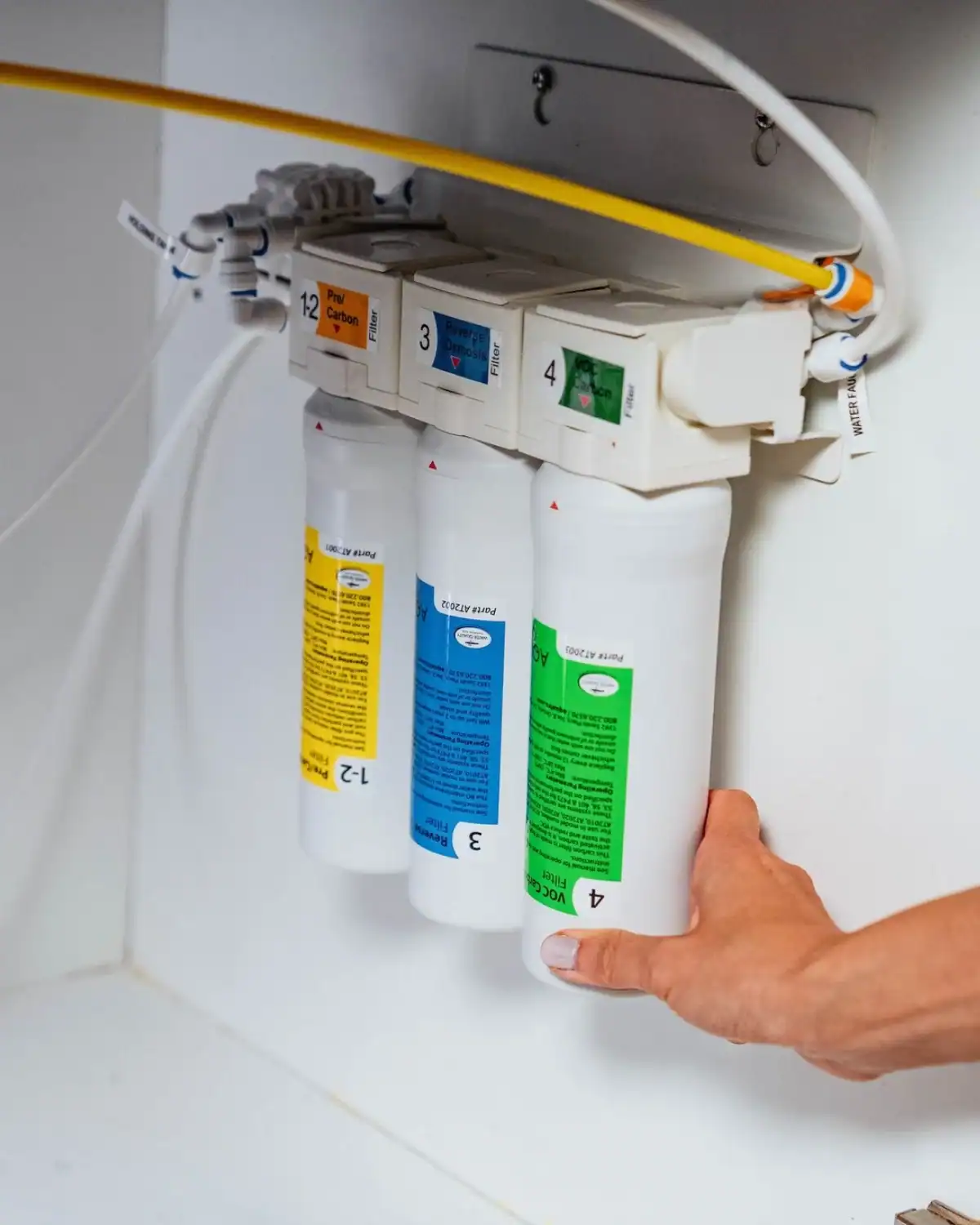
If your top priority is verified PFAS removal with clear third-party documentation, AquaTru is one of the most defensible options available.
This system uses reverse osmosis — the gold standard for removing PFOA and PFOS — and carries NSF/ANSI Standard 58 certification, meaning its contaminant reduction claims are independently tested and verified.
Unlike basic carbon filters that rely solely on adsorption, reverse osmosis forces water through a semi-permeable membrane designed to physically block microscopic contaminants. That includes PFAS, lead, arsenic, nitrates, and microplastics.
For households with known contamination — or families who simply want maximum reduction at the point of drinking water — RO provides measurable performance.
What makes AquaTru stand out is that it delivers that level of filtration without requiring dealer installation.
It’s compact, practical for most cabinets, and transparent about filter replacement schedules.
It’s not the cheapest option — but for strict PFAS removal, it’s one of the strongest under-sink systems available.
Price
$349–$499
CERTIFICATION / FILTRATION TYPE
Reverse Osmosis – NSF/ANSI Standard 58 Certified
location/shipping
United States (select international availability varies by retailer)
What We Love
- NSF-certified reverse osmosis membrane for verified PFAS reduction
- Broad contaminant removal beyond PFAS
- Straightforward DIY under-sink installation
Best For
- Families prioritizing maximum PFAS removal
- Homes with documented contamination in water reports
- Buyers who want third-party verification, not marketing claims
2. Clearly Filtered 3-Stage Under Sink System
Best Carbon-Based Under Sink Filter for PFAS
Reverse osmosis remains the most comprehensive method for removing PFAS.
However, not everyone wants wastewater, mineral stripping, or a multi-filter membrane system under their sink.
That’s where a properly engineered carbon system — with real certification — can be a strong alternative.
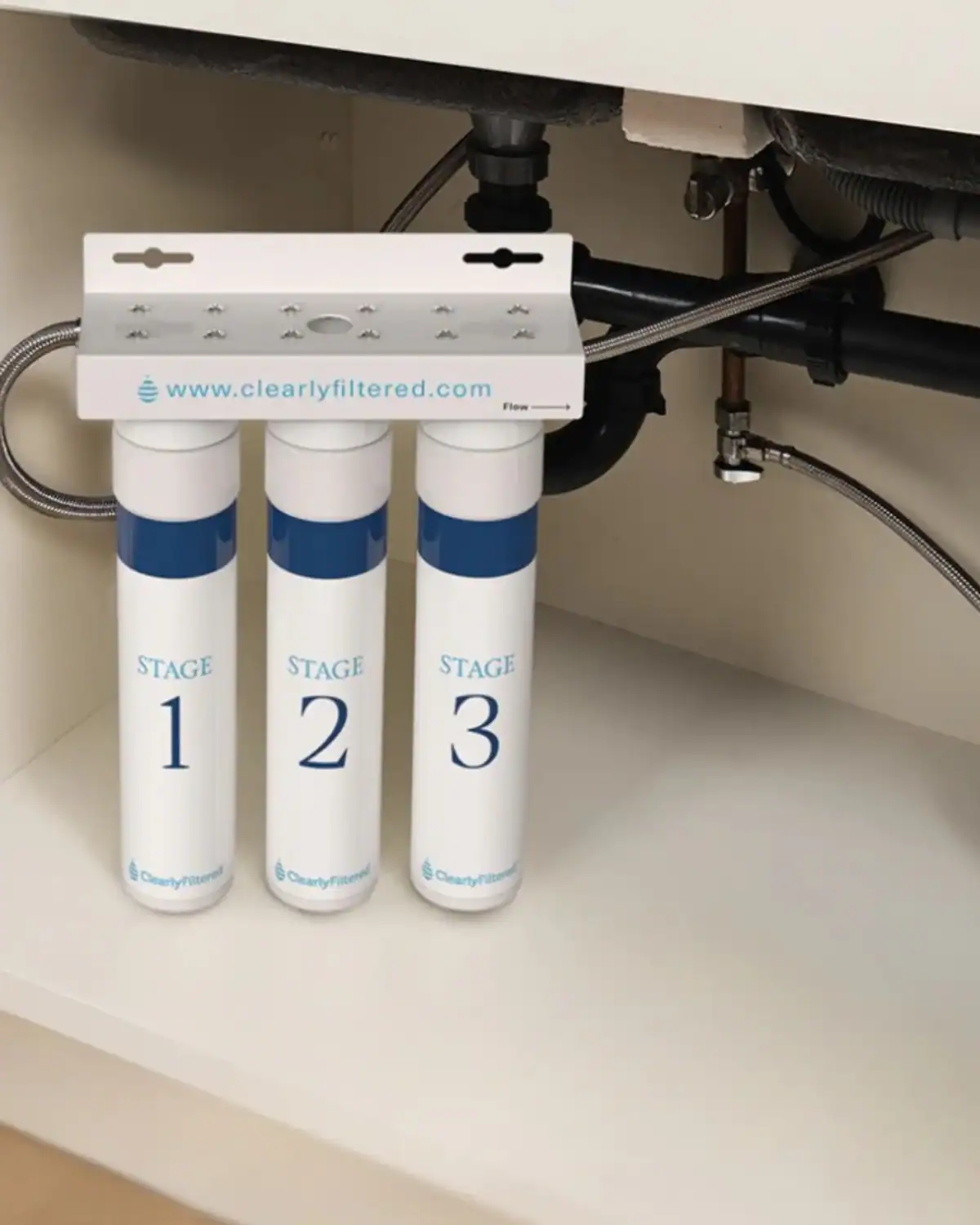
Clearly Filtered stands out because it is one of the few carbon-based under-sink systems that carries NSF/ANSI Standard 53 certification for PFOA and PFOS reduction. That distinction matters.
Many carbon filters claim PFAS “testing,” but certification confirms performance under standardized conditions.
This system uses Affinity® Filtration Technology, designed to trap a broad range of contaminants — including PFAS, lead, fluoride, chlorine, and microplastics — without relying on reverse osmosis.
While carbon systems generally require adequate contact time to effectively reduce PFAS, Clearly Filtered’s design and independent testing make it one of the strongest non-RO options currently available.
For households that want certified PFAS reduction without switching to reverse osmosis, this is the most defensible carbon-based choice.
Price
~$550
CERTIFICATION / FILTRATION TYPE
Carbon Block Filtration – NSF/ANSI Standard 53 Certified for PFOA/PFOS
location/shipping
United States, ships internationally
What We Love
- NSF-certified PFAS reduction without reverse osmosis
- Broad contaminant removal (230+ tested contaminants)
- Maintains natural minerals in water
Best For
- Households wanting PFAS reduction without RO wastewater
- Renters or homeowners avoiding complex installations
- Buyers who prefer mineral retention in filtered water
3. Hydroviv Under Sink Water Filter
Best Custom-Tailored PFAS Under Sink System
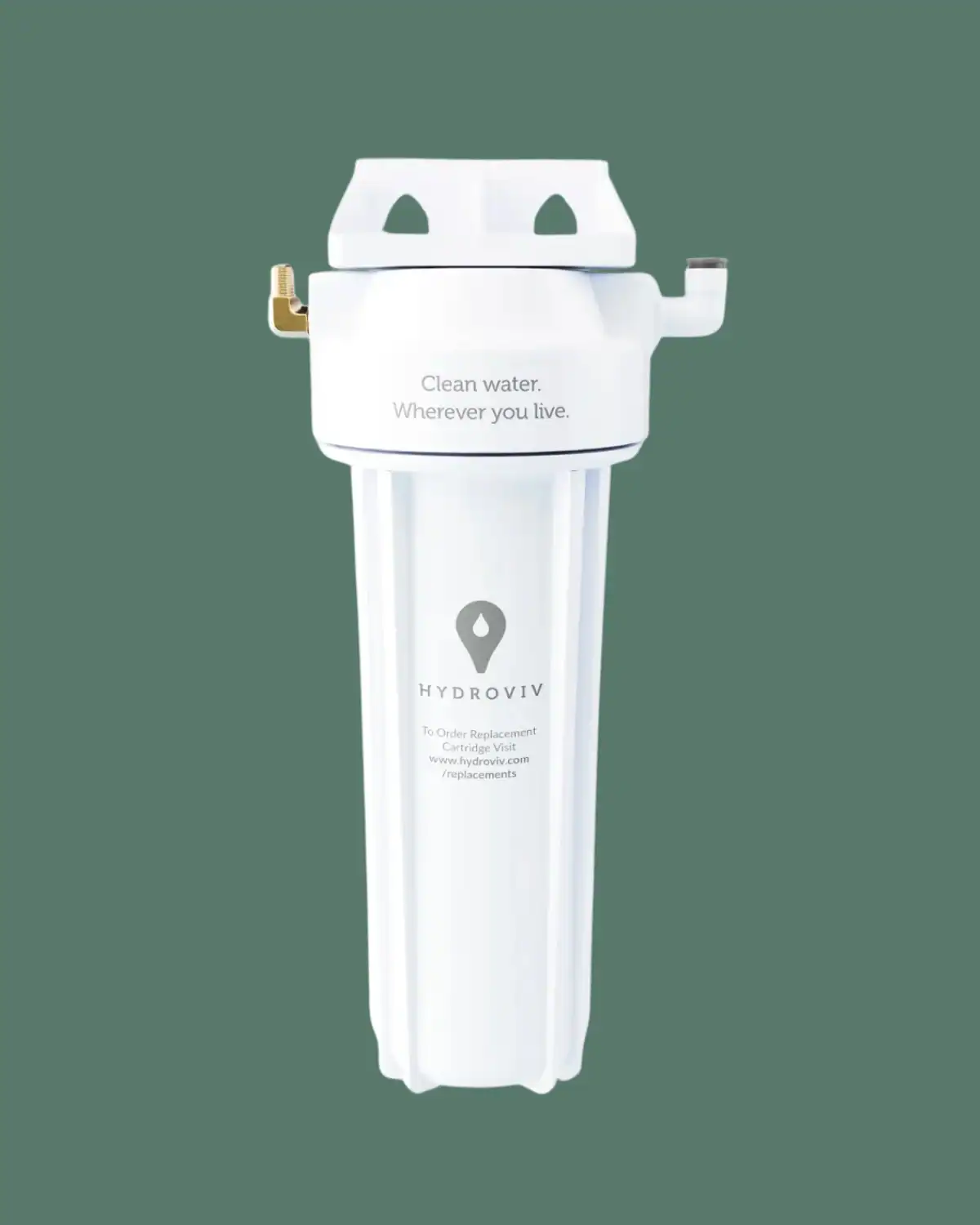
Hydroviv takes a different approach than most under-sink filters.
Instead of offering a one-size-fits-all system, they design filters based on your specific zip code and local water quality data.
That matters because PFAS contamination levels — and accompanying contaminants — vary significantly by region.
While Hydroviv does not carry NSF 53 certification in the same way as Clearly Filtered, the company provides extensive third-party lab testing and publishes contaminant reduction data for PFAS compounds.
Their filters are engineered to target PFAS, lead, arsenic, chromium 6, and chloramine using a specialized carbon blend optimized for local water chemistry.
Carbon filtration requires adequate contact time to reduce PFAS effectively, and performance depends heavily on system design.
Hydroviv’s strength lies in its customization model — tailoring media composition based on known contaminants in your area rather than relying on a universal formula.
For households that want a PFAS-targeted system but prefer not to install reverse osmosis, Hydroviv offers a data-driven alternative.
Price
~$399
CERTIFICATION / FILTRATION TYPE
Custom Carbon Blend – PFAS-Targeted (Third-Party Tested)
location/shipping
United States
What We Love
- Custom-built based on your local water quality data
- Strong contaminant targeting beyond PFAS
- Simple 15-minute under-sink installation
Best For
- Households wanting a customized filtration approach
- Areas with known chromium 6 or chloramine issues
- Buyers who prefer non-RO filtration with regional targeting
4. APEC ROES-50 Reverse Osmosis System
Best Budget Under Sink Reverse Osmosis for PFAS
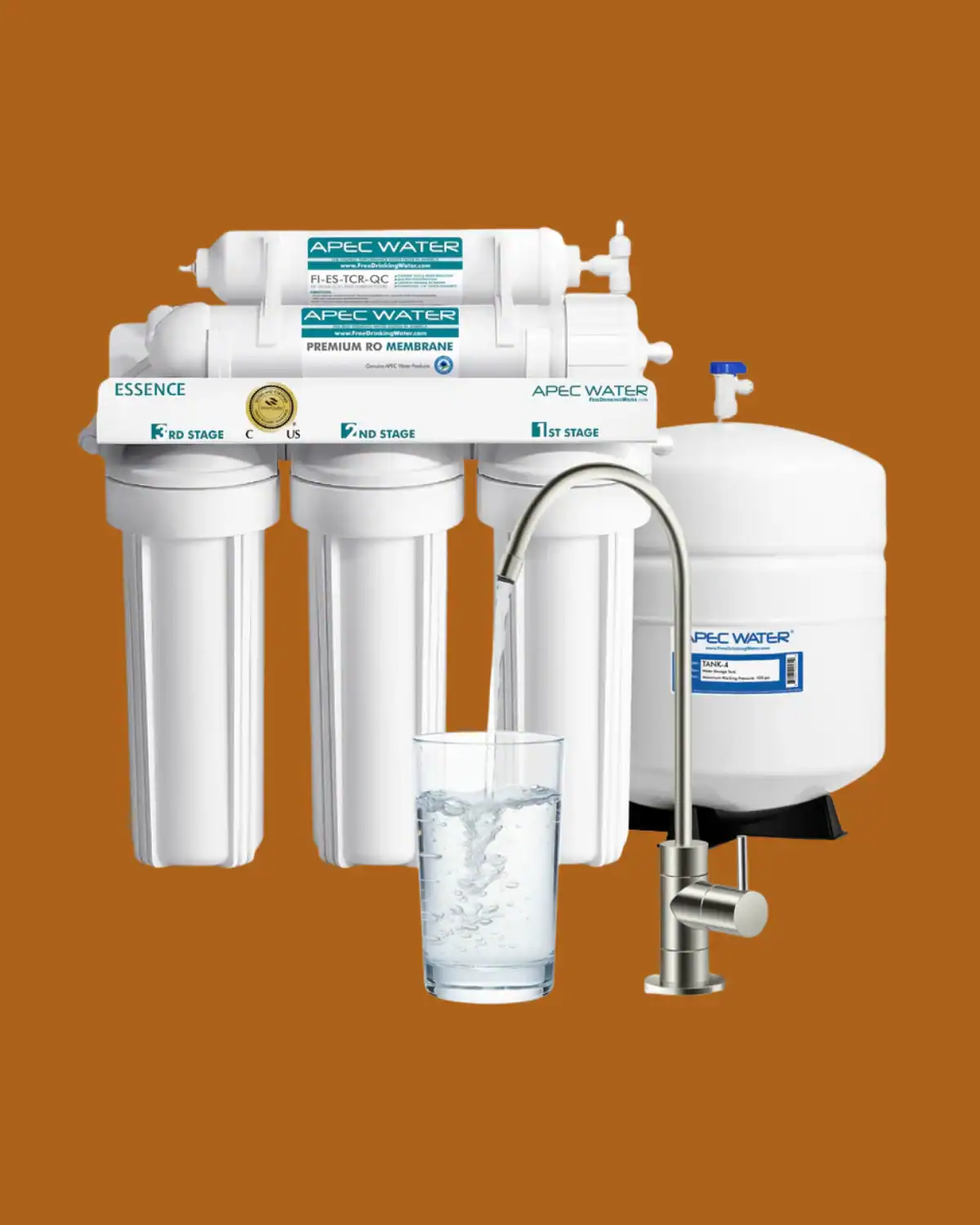
If you want certified reverse osmosis performance without spending premium-brand prices, the APEC ROES-50 is one of the most established entry-level systems available.
This system carries NSF/ANSI Standard 58 certification, which verifies reverse osmosis contaminant reduction performance — including PFOA and PFOS.
While it doesn’t have the brand polish of higher-end systems, its membrane-based filtration provides the same fundamental PFAS-blocking mechanism as more expensive RO units.
APEC uses a traditional 5-stage reverse osmosis design with sediment and carbon pre-filters followed by the RO membrane and a carbon post-filter.
It requires a dedicated faucet and produces wastewater like all RO systems, but for households seeking strict PFAS reduction on a tighter budget, it offers a practical and defensible solution.
It’s not the most compact option, and installation may take a bit more effort than plug-and-play systems. But for a certified RO at a lower price point, it consistently performs.
Price
$229–$299
CERTIFICATION / FILTRATION TYPE
Reverse Osmosis – NSF/ANSI Standard 58 Certified
location/shipping
United States, ships internationally
What We Love
- NSF-certified reverse osmosis at an accessible price
- Proven 5-stage filtration design
- Strong contaminant reduction beyond PFAS
Best For
- Budget-conscious households wanting certified RO
- Homeowners comfortable with under-sink installation
- Families prioritizing strict PFAS reduction without premium pricing
5. Kinetico K5 Drinking Water Station
Best Premium Dealer-Installed Under Sink RO for PFAS
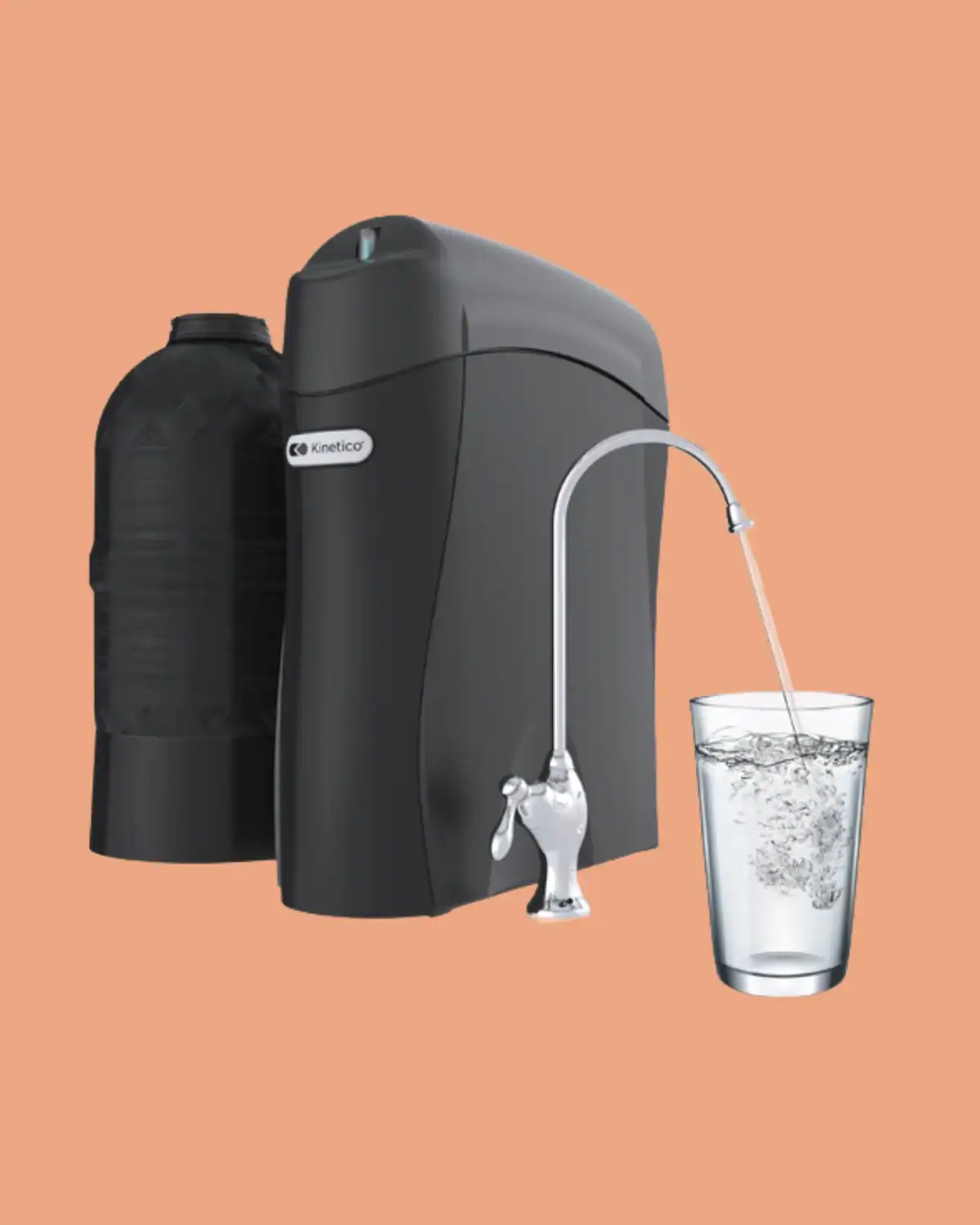
If you prefer professional installation and a high-end reverse osmosis system with strong certification backing, the Kinetico K5 is the premium option on this list.
The K5 is certified under NSF/ANSI Standard 58, meaning its reverse osmosis membrane is independently verified for contaminant reduction, including PFOA and PFOS.
Like other RO systems, it physically removes PFAS at the membrane level rather than relying solely on adsorption.
What sets Kinetico apart is its modular design and dealer-based support model.
The system can be customized with additional cartridges depending on your water profile, and servicing is typically handled through authorized dealers.
This makes it appealing for homeowners who want hands-off maintenance rather than DIY filter replacements.
However, that convenience comes at a cost. Pricing is quote-based, and long-term servicing may be higher than direct-to-consumer systems.
Still, for buyers who value installation support and premium build quality, the K5 remains one of the most established RO systems available.
Price
Custom Quote (Dealer-Based Pricing)
CERTIFICATION / FILTRATION TYPE
Reverse Osmosis – NSF/ANSI Standard 58 Certified
location/shipping
United States (installed via authorized dealers)
What We Love
- NSF-certified reverse osmosis membrane
- Customizable filtration cartridges
- Professional installation and service network
Best For
- Homeowners wanting dealer-installed RO
- Buyers who prefer ongoing service support
- Households prioritizing certified PFAS reduction with premium build quality
Greenwashed Under Sink Water Filters: What To Watch For
The water filtration industry is crowded — and unfortunately, PFAS has become a marketing buzzword.
You’ll see phrases like:
“PFAS tested.”
“Advanced carbon filtration.”
“Reduces harmful contaminants.”
“Meets EPA standards.”
But those statements often lack one critical detail: third-party certification.
Here’s what to look out for.
1. “PFAS Tested” Without NSF Certification
Some brands state that their filters were “tested for PFAS reduction.” That sounds reassuring — but testing alone is not the same as certification.
NSF/ANSI Standard 53 (for carbon systems) and Standard 58 (for reverse osmosis systems) require independent verification under controlled conditions.
If a system does not clearly list NSF certification for PFOA and PFOS, its claims may rely on internal testing or limited lab data. Testing is helpful. Certification is stronger.
2. Carbon Filters Without Adequate Contact Time
Activated carbon can reduce certain PFAS — but performance depends heavily on system design.
Under-sink filters with small cartridges and high flow rates may not provide enough contact time for meaningful PFAS adsorption.
That’s why simply seeing “carbon filter” does not automatically mean PFAS removal.
Look for:
- NSF 53 certification specifically listing PFOA/PFOS
- Published contaminant reduction data
- Clear model-specific documentation
3. Vague Contaminant Lists
Be cautious of brands that list:
- “Removes over 99% of contaminants”
- “Targets 200+ chemicals”
Without specifying which ones — and under what standard.
PFAS removal should explicitly reference PFOA and PFOS at a minimum. If those compounds are not clearly named in certification documentation, assume performance may not be verified.
4. Marketplace Brands With No Certification Transparency
Large online marketplaces are filled with under-sink filters that appear impressive at first glance.
Many advertise multi-stage filtration and sleek stainless steel housings — but offer no accessible certification records.
If you cannot find:
- NSF certification listings
- Third-party lab reports
- Clear filter replacement guidelines
It’s difficult to evaluate real-world performance.
Why This List Is Intentionally Short
There are dozens of under-sink filters available.
Only five made this list. That’s intentional.
When it comes to PFAS, fewer defensible options are better than a long list built on vague marketing claims.
Certification, transparency, and verified reduction matter more than popularity.
What to Look For in an Under-Sink Water Filter For PFAS
Not all under-sink systems are built the same, and when you’re specifically looking for the best under-sink water filter for PFAS, small differences in design and certification matter.
Here’s what actually makes a system effective.
1. NSF Certification for PFOA and PFOS
This is the single most important factor.
Look for:
- NSF/ANSI Standard 53 (typically for carbon systems)
- NSF/ANSI Standard 58 (for reverse osmosis systems)
Certification means contaminant reduction claims have been independently verified under standardized testing conditions.
If a system only says “tested for PFAS” without listing NSF certification, that’s not the same level of validation.
Always check for model-specific certification — not just brand-level claims.
2. Reverse Osmosis vs. Carbon: Know the Difference
Reverse osmosis is generally the most comprehensive filtration method for PFAS removal.
It physically pushes water through a semipermeable membrane that blocks microscopic contaminants.
Carbon filters can reduce certain PFAS compounds, but effectiveness depends heavily on:
- Media design
- Contact time
- Flow rate
- Certification standards
If your priority is maximum PFAS reduction, reverse osmosis provides the highest level of measurable removal.
If you prefer to avoid RO, choose a carbon system with clear NSF 53 certification for PFOA and PFOS.
3. Filter Lifespan and Replacement Cost
PFAS removal performance declines if filters aren’t replaced on schedule.
Look for systems that clearly outline:
- Pre-filter replacement intervals
- RO membrane lifespan
- Estimated annual maintenance costs
Transparent replacement guidance is a good sign of a brand that stands behind performance.
4. Flow Rate and Household Needs
Under-sink filters treat drinking and cooking water — not showers or laundry. That’s usually sufficient for PFAS exposure reduction, since ingestion is the primary pathway of concern.
Still, make sure the system provides:
- Consistent water pressure
- A dedicated faucet (for most RO systems)
- Adequate daily production for your household size
5. Transparency Beyond Marketing Language
The best brands make it easy to find:
- Certification documentation
- Contaminant reduction charts
- Clear model numbers
- Installation and maintenance guides
If you have to dig excessively to verify performance, that’s a signal. When it comes to PFAS, clarity matters.
Choosing the right under-sink water filter for PFAS doesn’t have to feel overwhelming.
Once you focus on certification, filtration type, and transparent documentation, the options narrow quickly — which is exactly why this list is intentionally short.
💭 Frequently Asked Questions About Under-Sink Water Filters For PFAS
The best under-sink water filter for PFAS is a system certified under NSF/ANSI Standard 53 or 58 for reducing PFOA and PFOS.
Reverse osmosis systems generally provide the most comprehensive removal, while certain certified carbon filters can also reduce PFAS when properly designed and independently tested.
Reverse osmosis removes the vast majority of PFAS, including PFOA and PFOS, when properly maintained.
While no system guarantees 100 percent removal under all conditions, NSF-certified reverse osmosis systems are among the most effective filtration methods available for PFAS reduction.
Some carbon filters can remove certain PFAS compounds, but performance depends on certification, design, and contact time.
Look specifically for NSF/ANSI Standard 53 certification listing PFOA and PFOS to ensure verified reduction rather than general contaminant claims.
NSF/ANSI Standard 53 and Standard 58 are the most important certifications for PFAS removal.
Standard 53 typically applies to carbon-based systems, while Standard 58 applies to reverse osmosis systems with verified contaminant reduction.
Under-sink water filters generally provide stronger and more consistent PFAS reduction than most pitcher filters.
They offer higher flow capacity, larger filtration media, and, in many cases, reverse osmosis membranes, which improve contaminant removal.
Many under-sink filters remove both PFAS and lead, particularly reverse osmosis systems and NSF-certified carbon filters.
Always confirm that the system lists both PFOA/PFOS and lead reduction in its certification documentation.
Reverse osmosis systems effectively remove microplastics due to their fine membrane filtration.
Some certified carbon filters may also reduce microplastics, but removal claims should be supported by independent testing or certification.
Most carbon pre-filters require replacement every 6 to 12 months, while reverse osmosis membranes typically last around 2 years.
Following manufacturer replacement schedules is essential to maintain PFAS reduction performance.
Reverse osmosis water is safe for long-term consumption and is widely used in both residential and commercial settings.
Some systems remove beneficial minerals along with contaminants, which can be addressed through remineralization filters if desired.
Reverse osmosis systems remove fluoride along with PFAS and other contaminants. Carbon filters typically do not remove fluoride unless specifically designed and certified to do so.
PFAS can sometimes be reduced without reverse osmosis using certified carbon filtration systems.
However, reverse osmosis remains the most comprehensive and consistently effective method for reducing a broad range of PFAS compounds.
EPA compliance does not necessarily mean zero PFAS, as regulatory thresholds continue to evolve.
An under-sink water filter provides an added layer of protection for drinking and cooking water, especially in areas with detectable PFAS levels.
You can check your local water quality report or consult state-level environmental agencies for testing data.
Private well owners may need to conduct independent water testing to determine PFAS presence.
PFAS contamination can be found in both municipal water systems and private wells. Sources include industrial discharge, firefighting foam, landfills, and manufacturing runoff.
Boiling water does not remove PFAS and may actually concentrate them as water evaporates. Filtration is required to reduce PFAS levels effectively.
Whole-house systems treat all water entering the home, but they are more expensive and not always certified for PFAS reduction.
Under-sink filters provide targeted protection for drinking and cooking water, which is the primary exposure pathway.
Reverse osmosis systems produce wastewater as part of the filtration process, while carbon-based systems do not.
Modern RO systems are more efficient than older models, but some wastewater production is normal.
Annual maintenance costs vary by system but typically range from moderate filter replacements for carbon systems to membrane and pre-filter replacements for reverse osmosis units.
Reviewing long-term replacement pricing before purchase helps avoid unexpected costs.
Continue Your Water Filter Education
If you’re building a cleaner home water system, these guides will help you go deeper:
- What Is PFAS? A Clear Guide to “Forever Chemicals” and How to Reduce Exposure
- The Best Whole House Water Filters for PFAS, Chlorine & Heavy Metals
- 8 Trusted Brands That Make the Best PFAS Water Filters
- Shower Filters for Chlorine & Skin Health
Whether you’re upgrading one faucet or your entire home, understanding how filtration types differ makes it easier to choose the right solution.
Your Cleanest Water Starts Here
Choosing the best under-sink water filter for PFAS isn’t about chasing perfection. It’s about reducing exposure in one of the most practical, high-impact ways possible.
Water is daily. It’s cumulative. It’s something your family consumes without thinking twice. And while municipal systems are designed to meet regulatory standards, they aren’t always designed for maximum contaminant reduction — especially when it comes to emerging concerns like PFAS.
The good news is that you don’t need a full home renovation to make a meaningful change. An under-sink system gives you targeted protection where it matters most: the water you drink and cook with every day.
Whether you choose certified reverse osmosis for maximum reduction or a rigorously tested carbon system, the key is transparency and verified performance.
That’s why this list is intentionally short. Fewer systems. Stronger standards. Clear documentation.
If you’re still exploring your options, you may also want to compare whole-house PFAS filters or review our complete PFAS guide to better understand contamination levels in your area.
Small upgrades add up. And clean drinking water is one of the most foundational investments you can make in your home. You don’t need to panic. You just need good information — and the right filter.
I’d Love to Hear From You
Are you installing an under-sink water filter specifically for PFAS — or are you just starting to research what’s in your local water supply?
Have you tested your water before choosing a system? I’m always curious what readers are finding in their municipal reports and well testing results.
If you’ve installed one of the filters on this list, I’d love to hear your experience — especially around installation, water taste, and long-term maintenance.
Leave a comment below and share what you’re seeing in your area. Your experience may help another family make a more confident decision.
Sources & Scientific References
The information in this guide is based on current federal regulatory data, independent certification standards, and peer-reviewed research on PFAS exposure and water treatment technologies.
Because PFAS filtration claims are frequently misrepresented in marketing materials, all certification references were cross-checked against publicly available databases and regulatory documentation.
Government & Regulatory Agencies
- U.S. Environmental Protection Agency (EPA) – PFAS Overview
https://www.epa.gov/pfas - U.S. Environmental Protection Agency – National Primary Drinking Water Regulation for PFAS (2024 Rule Update)
https://www.epa.gov/sdwa/and-polyfluoroalkyl-substances-pfas - U.S. Environmental Protection Agency – PFAS Strategic Roadmap (2021–2024)
https://www.epa.gov/pfas/pfas-strategic-roadmap-epas-commitments-action-2021-2024 - Agency for Toxic Substances and Disease Registry (ATSDR) – Toxicological Profile for PFAS
https://www.atsdr.cdc.gov/pfas/index.html
Certification & Filtration Standards
- NSF International – NSF/ANSI Standard 58 (Reverse Osmosis Systems)
https://www.nsf.org/knowledge-library/nsf-ansi-58-reverse-osmosis-drinking-water-treatment-systems - NSF Certified Drinking Water Treatment Units Database
https://info.nsf.org/Certified/DWTU/ - Water Quality Association (WQA) – PFAS Filtration Guidance
https://www.wqa.org/resources/pfas
Peer-Reviewed Research on PFAS Removal
- Appleman, T.D., et al. (2014). Treatment of poly- and perfluoroalkyl substances in U.S. full-scale water treatment systems. Water Research.
https://doi.org/10.1016/j.watres.2013.12.012 - Rahman, M.F., et al. (2014). Behavior and fate of perfluoroalkyl and polyfluoroalkyl substances in drinking water treatment: A review. Water Research.
https://doi.org/10.1016/j.watres.2014.06.008 - Dickenson, E.R.V., et al. (2010). Treatment of perfluorinated compounds by water treatment processes. Water Research.
https://doi.org/10.1016/j.watres.2010.06.020

Steal My Non-Toxic Cleaning Checklist!
Believe us, it’s the BEST…. and it’s free. Does it really get any better than that?! Sign up for our newsletter and get this free checklist to clean your home without any harmful chemicals!