 Shop My Favorite Non-Toxic Gifts Of 2026!
SKL is reader supported. When you buy through links on our site, we may earn affiliate commission. Learn more here.
Finding the best PFAS-free and non-toxic rain gear for kids ended up being way more complicated than I expected. This actually started about 7 years ago when my son was 3 and in a forest preschool.
He was outside every single day. Rain, snow, mud, all of it, so he was constantly in rain gear, snow gear, and waterproof layers.
And one day, I noticed him chewing on his raincoat. At the time, I didn’t think much of it. Toddlers put everything in their mouths.
But something about it stuck with me, and it was the first time I really stopped and asked… what is this actually made of?
It ended up sending me down the same rabbit hole I’ve gone down with things like non-toxic kids’ clothing and safer everyday essentials. Once you start looking at materials, it’s hard to unsee what’s actually being used.
Turns out, my intuition to check on this was right.
Rain gear is often made with plastic-based materials and waterproof coatings that can contain things like PFAS, phthalates, and other chemicals I try really hard to limit in our home.
My kids were wearing this gear for hours at a time, multiple days a week and there was really no way around it. And to be clear, I’m not about to keep my kids inside just because it’s raining. Some of our best days have been muddy, soaked, and full of puddle jumping.
Luckily, non-toxic rain gear actually does exist and that’s where this guide comes in.
My Top Non-Toxic Rain Gear Picks For Kids
- Best All-In-One Non-Toxic Rain Gear Brand: Stonz
- Best PFAS-Free Rain Jackets: Reima
- Best Budget-Friendly Non-Toxic Rain Gear: Oaki
- Best Organic-Lined Rain Jackets: Little Green Radicals
- Best For Toddlers & Rain Sets: Didriksons
These are the brands that skip PVC, avoid PFAS, and are transparent about what they use (and what they don’t). Let’s dive in.
What’s Actually Hiding in Most Kids’ Rain Gear
Most conventional rain gear is designed to be fully waterproof.
But that performance often comes from materials and chemical treatments that aren’t as harmless as they seem.
Here are the main concerns I look at when evaluating kids’ rain gear:
PFAS (Forever Chemicals)
PFAS are commonly used in waterproof coatings, especially in durable water repellent (DWR) finishes that make water bead up and roll off fabric.
The problem is that PFAS don’t break down easily. They accumulate in the body over time, and that’s where concerns start to build, especially for children who are still developing.
Research has linked PFAS exposure in children to:
- Reduced immune response
- Increased risk of allergies and asthma
- Impacts on growth, learning, and behavior
- Metabolic issues, including obesity and diabetes
Many brands now claim to use “safer” short-chain PFAS, but current research suggests these may not actually be safer, just less studied.
It’s a pattern you see often: one harmful chemical gets replaced with a slightly different version that ends up raising similar concerns.
I’ve seen this happen across a lot of categories, not just rain gear, which is why I always recommend looking at PFAS-free swaps more broadly, not just in one product.
PVC & Phthalates
That shiny, plastic-like material you see in a lot of raincoats and boots is often PVC (polyvinyl chloride). On its own, PVC is rigid.
To make it flexible and wearable, manufacturers add phthalates and that’s where the concern comes in.
Phthalates are known endocrine disruptors, which means they can interfere with hormone function.
In children, this is especially important because their bodies are still developing. These chemicals don’t stay locked into the material either. They can transfer onto skin or into the air and be inhaled.
Studies have linked phthalate exposure to:
- Hormonal imbalances
- Reproductive issues
- Increased risk of asthma and allergies
- Developmental concerns
Heavy Metals
This is something a lot of parents don’t expect. Some conventional rain gear, especially brightly colored boots and jackets, can contain heavy metals like lead.
These are sometimes used as stabilizers in PVC or as pigments to create bold colors. Even low levels of exposure can be problematic for children.
Lead and other heavy metals have been associated with:
- Developmental delays
- Learning and behavioral challenges
- Nervous system damage
Best Non-Toxic Kids Rain Gear, at a glance
Mobile Users: Scroll to see full comparison →
| Brand | Best For | Materials | Price |
|---|---|---|---|
| Stonz | All-in-one rain gear (boots, jackets, suits) | Nylon / Polyester + PU Waterproof Coating + Ripstop Fabric (PFAS-Free) | $45–$150 |
| Reima | Lightweight PFAS-free everyday jackets | PU-Coated Waterproof Fabric + Sealed Seams (PFAS & PVC-Free) | $70–$100 |
| Oaki | Budget-friendly non-toxic rain gear | Polyester + PU Waterproof Coating (OEKO-TEX® Certified) | $32–$180 |
| Little Green Radicals | Organic-lined comfort for sensitive skin | Recycled Polyester + Organic Cotton Lining (PFAS-Free) | $88–$134 |
| Jan & Jul | Toddler-friendly everyday rain gear | Polyester Shell + Waterproof Membrane + Bionic-Finish® Eco (PFAS & PVC-Free) | $28–$95 |
| Didricksons | Durable EU outdoor rain gear | Polyester + Polyurethane (PU) Coating + Fully Sealed Seams (PVC-Free) | €35–€95 |
| Wildling Shoes | Barefoot-style flexible rain boots | SEBS Rubber + Recycled Polyester Lining (PVC, BPA & Latex-Free) | $69 |
| Merry People | Stylish everyday rain boots | Natural Rubber + Neoprene Lining (PVC-Free) | $70 |
| Hunter | Classic, widely available rain boots | Natural Rubber + Polyester Lining (PVC-Free) | $60–$110 |
| Bisgaard | Cold-weather rain boots | Natural Rubber + Wool & Cotton Lining (PFAS & PVC-Free) | €45–€70 |
What I Look For Instead (Safer Rain Gear Materials)
When it comes to non-toxic rain gear, there isn’t really a perfect option — waterproofing almost always requires some level of synthetic materials.
But there are significantly safer choices.
I look for rain gear that:
- Avoids PVC and phthalates completely
- Uses polyurethane (PU) instead of traditional plastic coatings
- Is labeled PFAS-free or PFC-free
- Uses natural rubber for boots instead of synthetic plastic blends
- Is transparent about materials and finishes
You’ll also notice many of the better options come from European brands, where chemical regulations tend to be stricter.
It’s not about finding something “perfect” — it’s about choosing materials that reduce unnecessary exposure, especially for products kids wear often.
And this is where things like a non-toxic laundry detergent matter too — because even the safest materials are still being washed and worn over and over again.
After going through all of this, these are the brands I keep coming back to.
Each one avoids the worst offenders like PVC and PFAS (and is very transparent about what they use instead), and they actually hold up to real-life kid wear, which, as we know, is not exactly gentle.
The Best Non-Toxic Rain Gear For Kids in 2026
1. Stonz — Best All-In-One Non-Toxic Rain Gear Brand
Best For Parents Looking For: A one-stop brand for rain boots, jackets, and suits made with safer materials
Use discount code SKL10 to save 10% on USA orders!
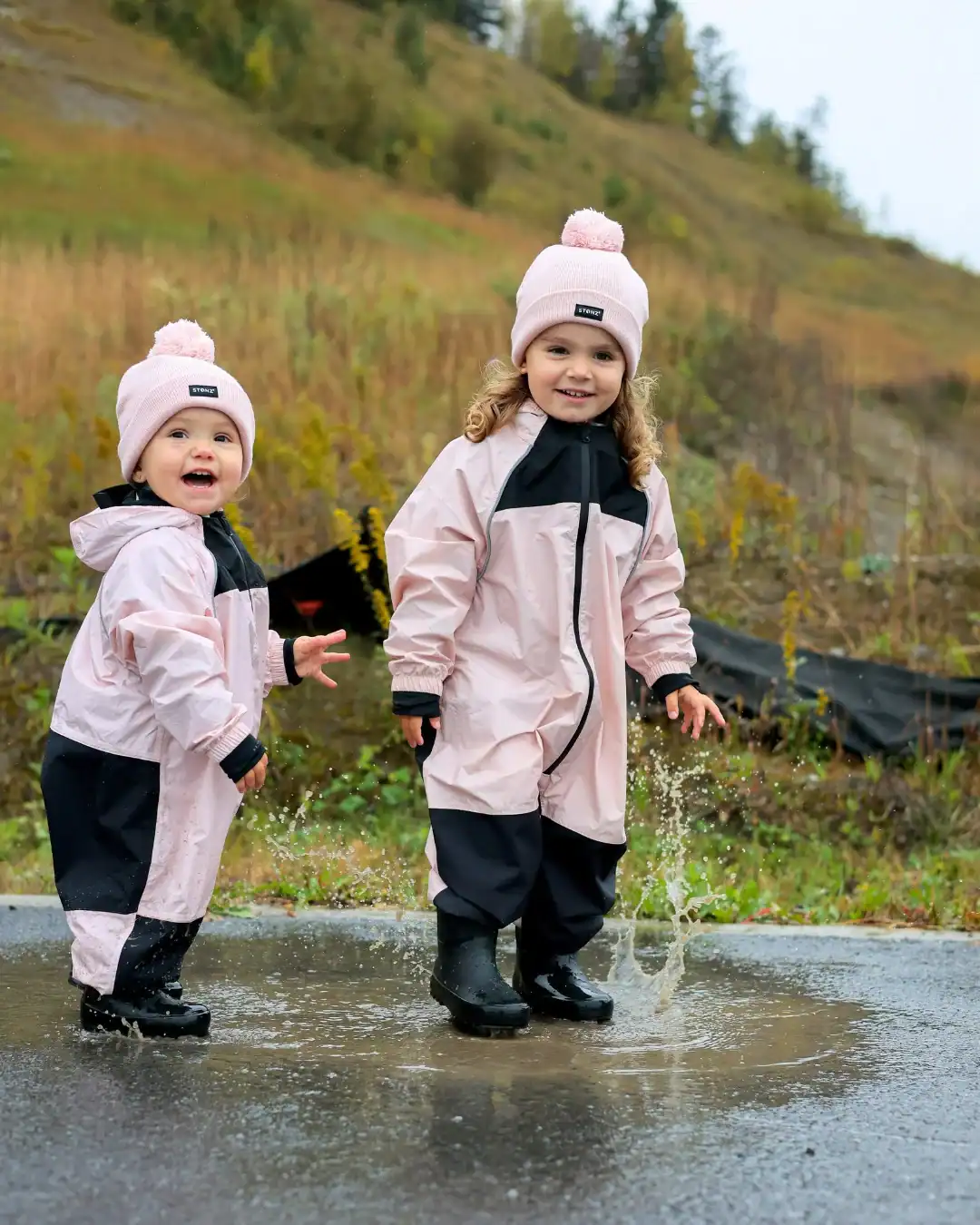
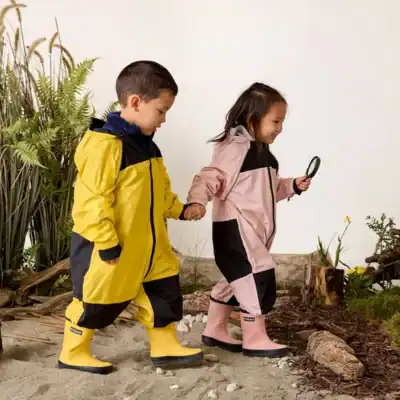
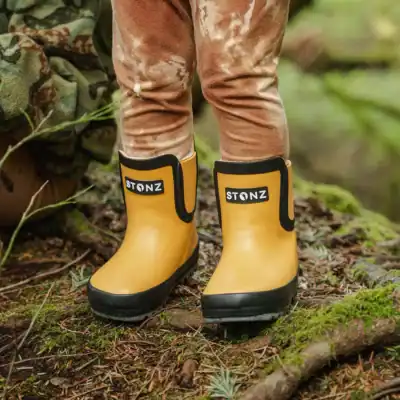
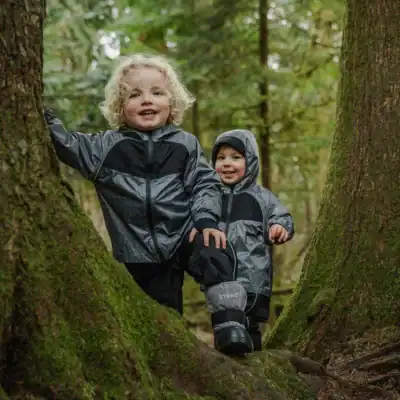
Stonz is one of the few brands that really covers everything: boots, jackets, and full rain suits without cutting corners on materials.
Their rain boots are made with about 45% natural rubber, blended with synthetic rubber for durability, which gives them a really nice balance of softness and structure.
They’re flexible, have a wide toe box for natural foot development, and are free from harmful chemicals (my daughter loves them).
Their rain suits and jackets follow the same thoughtful approach.
Instead of PFAS-based coatings, Stonz uses polyurethane (PU) with fully seam-sealed construction, waterproof zippers, and durable materials like ripstop nylon.
You’ll also find practical details like reinforced knees and seat areas, adjustable cuffs that grow with your child, and reflective elements for better visibility.
Price & sizing
$45-$150 | 0M-6Y+
materials
Nylon/Polyester | PU Waterproof Coating | Ripstop Fabric | Polyester Lining | PFAS-Free
Location/Shipping
Canada | Ships To The United States
PFAS-Free Rain Gear From Stonz:
2. Reima — Best PFAS-Free Rain Jackets For Kids
Best For Parents Looking For: A lightweight, everyday rain jacket that balances performance and safer materials
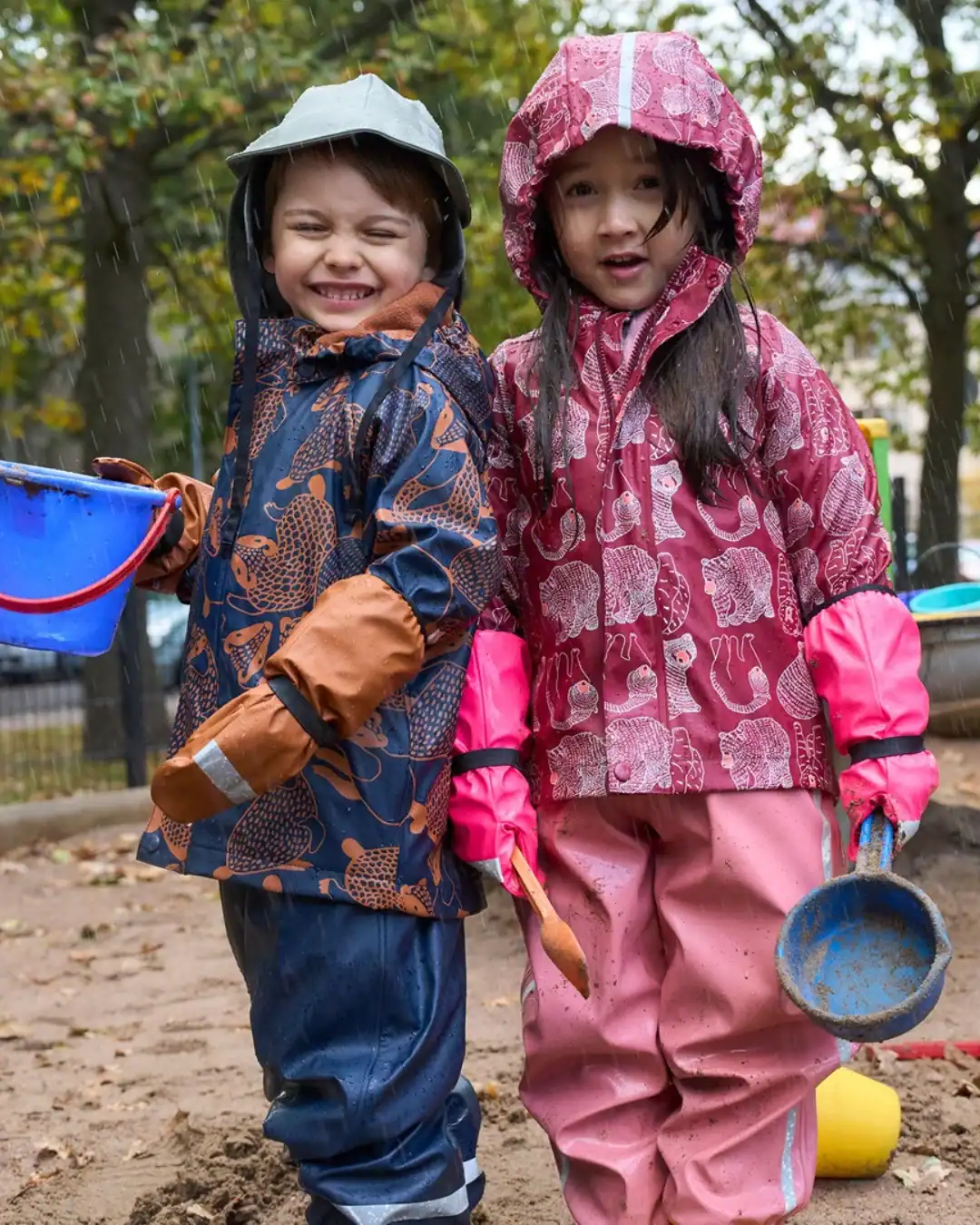
Reima’s rain jackets are simple, functional, and designed for real everyday use. The kind of piece your kid ends up wearing on repeat all season long.
They use polyurethane (PU) coatings instead of PVC and have completely moved away from harmful PFAS-based treatments (as of 2026).
That means you’re still getting reliable waterproof protection, but without relying on chemical-heavy finishes.
The jackets are lightweight, flexible, and easy for kids to move in, not stiff or bulky.
They’re the kind of option that works just as well for school days as well as weekend outings.
Price & sizing
$70–$100 | 18M-13Y
Materials
PU-Coated Waterproof Fabric | Breathable (ReimaTec Option) | Sealed Seams | PFAS & PVC Free
Location/Shipping
United States | Ships Internationally (Via Regional Sites)
3. Oaki — Best Budget Non-Toxic Rain Gear For Kids
Best For Parents Looking For: A more affordable rain gear option that still avoids the worst materials
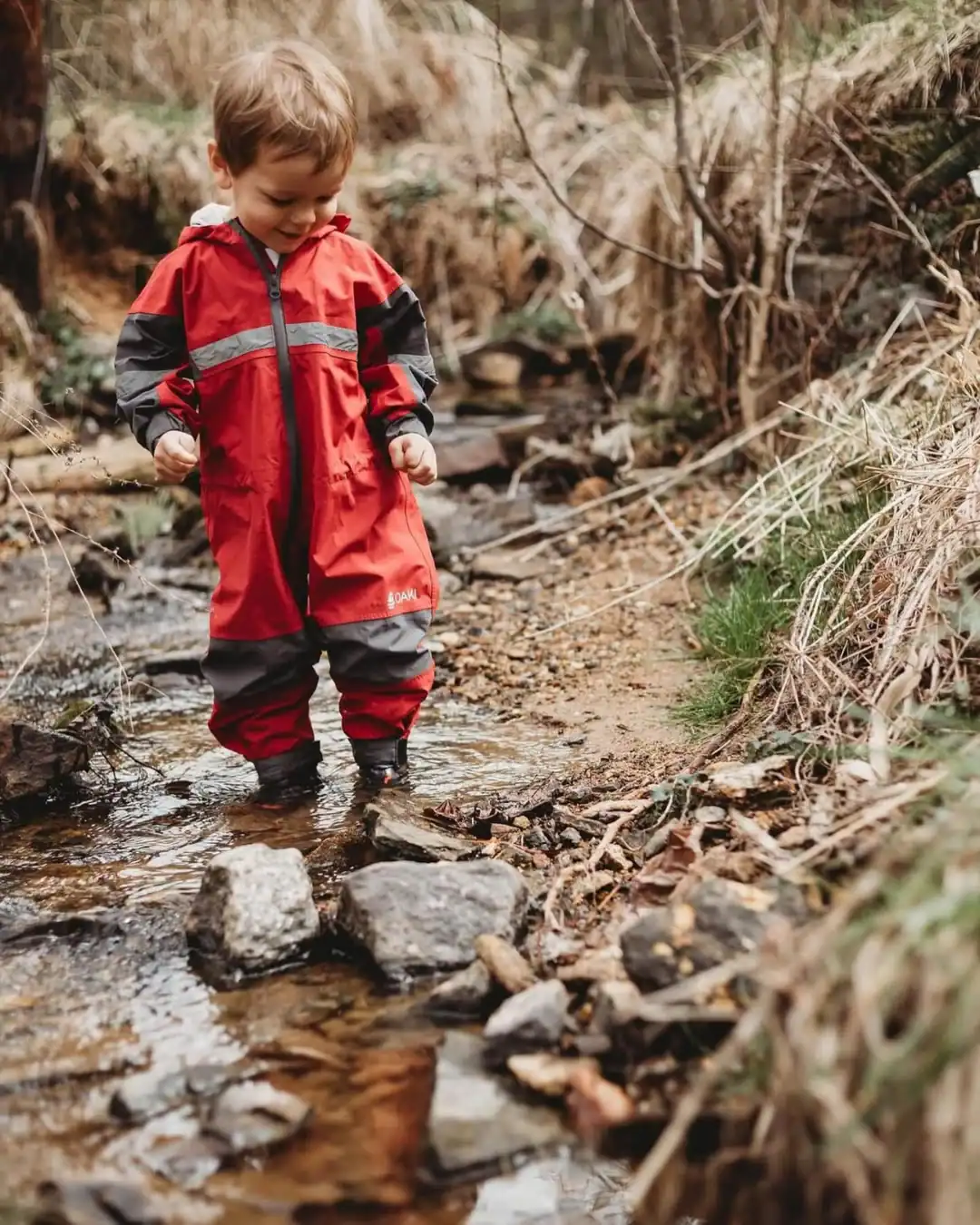
If you’re trying to stay mindful of materials but don’t want to spend a lot on something your kids may outgrow quickly, Oaki is a really solid option.
They use polyurethane (PU) waterproofing instead of PVC, which is a big step in the right direction.
Their products are OEKO-TEX® certified, meaning they’ve been tested for harmful substances, something I always look for, especially at a lower price point.
Their gear is lightweight, easy to layer, and designed for everyday use, making it practical for regular wear.
While it may not feel quite as premium as some of the higher-end brands, it does what you need it to do.
For a lot of families, that balance of safety and affordability is exactly what makes it work.
Price & sizing
$32-$180 | 12M-15Y
Materials
Polyester | PU Waterproof Coating | OEKO-TEX® Certified
Location/Shipping
United States | Ships Internationally
4. Little Green Radicals — Best Organic-Lined Rain Jackets For Kids
Best For Parents Looking For: A softer, more natural-feeling rain jacket for sensitive skin
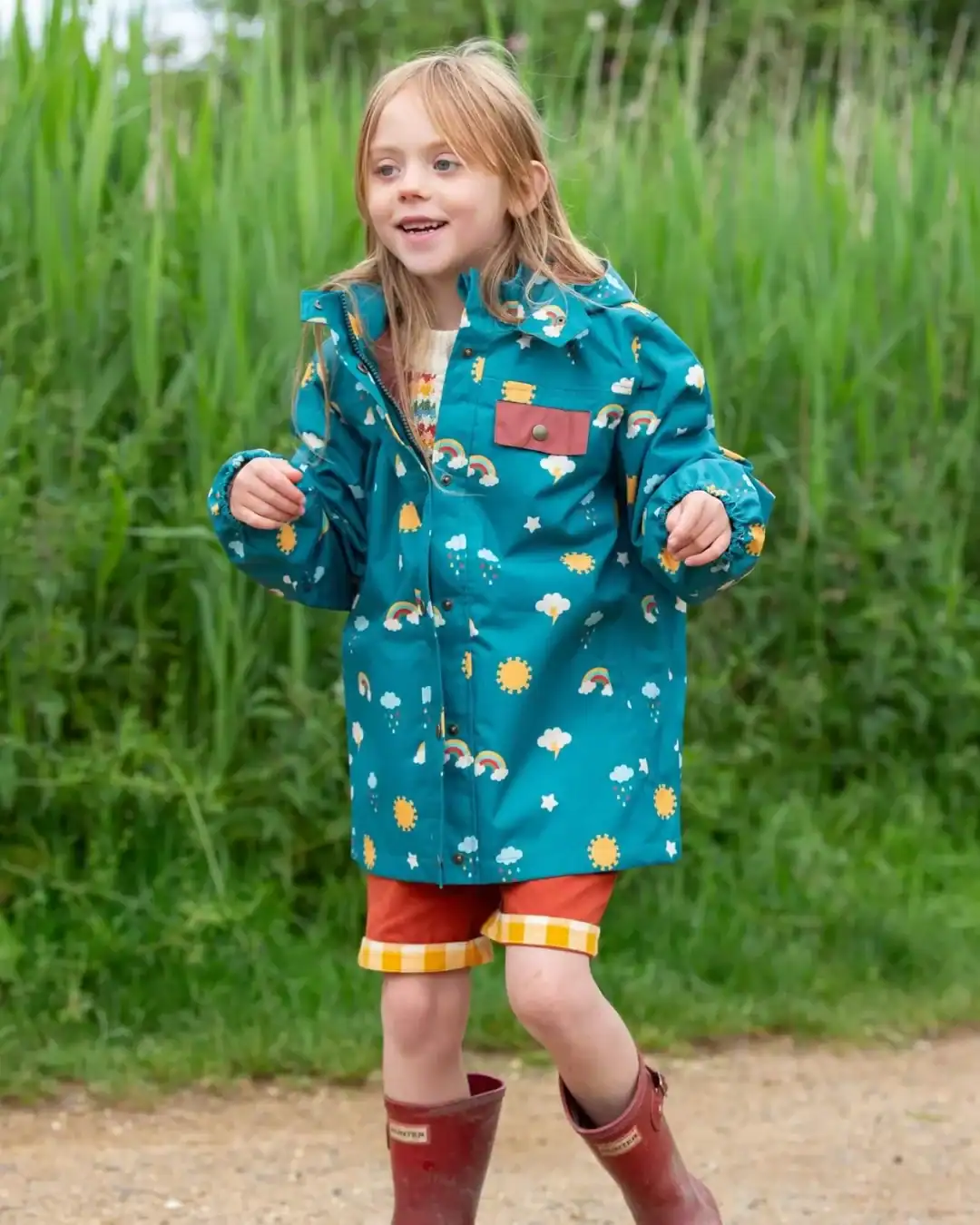
Little Green Radicals takes a slightly different approach compared to most rain gear brands.
They really focus on how the gear feels to wear, especially for younger kids or those with sensitive skin.
The biggest difference is the inner layer. Instead of being fully synthetic like most rain jackets, these are lined with organic cotton, which makes them noticeably softer and more comfortable.
The outer layer is still waterproof and made from recycled materials, so you’re not sacrificing performance but the overall feel is much less stiff and plasticky than typical rain gear.
If you’re trying to reduce overall exposure while choosing something your child will actually enjoy wearing, this is a really nice option.
Price & sizing
$88-$134 | 0M-8Y
Materials
Recycled Polyester (From Plastic Bottles) | Organic Cotton Lining | PFAS-Free
Location/Shipping
United Kingdom | Ships To The United States & Internationally
5. Jan & Jul — Best Non-Toxic Rain Gear For Toddlers
Best For Parents Looking For: Affordable, easy-to-find rain gear designed for everyday messy play
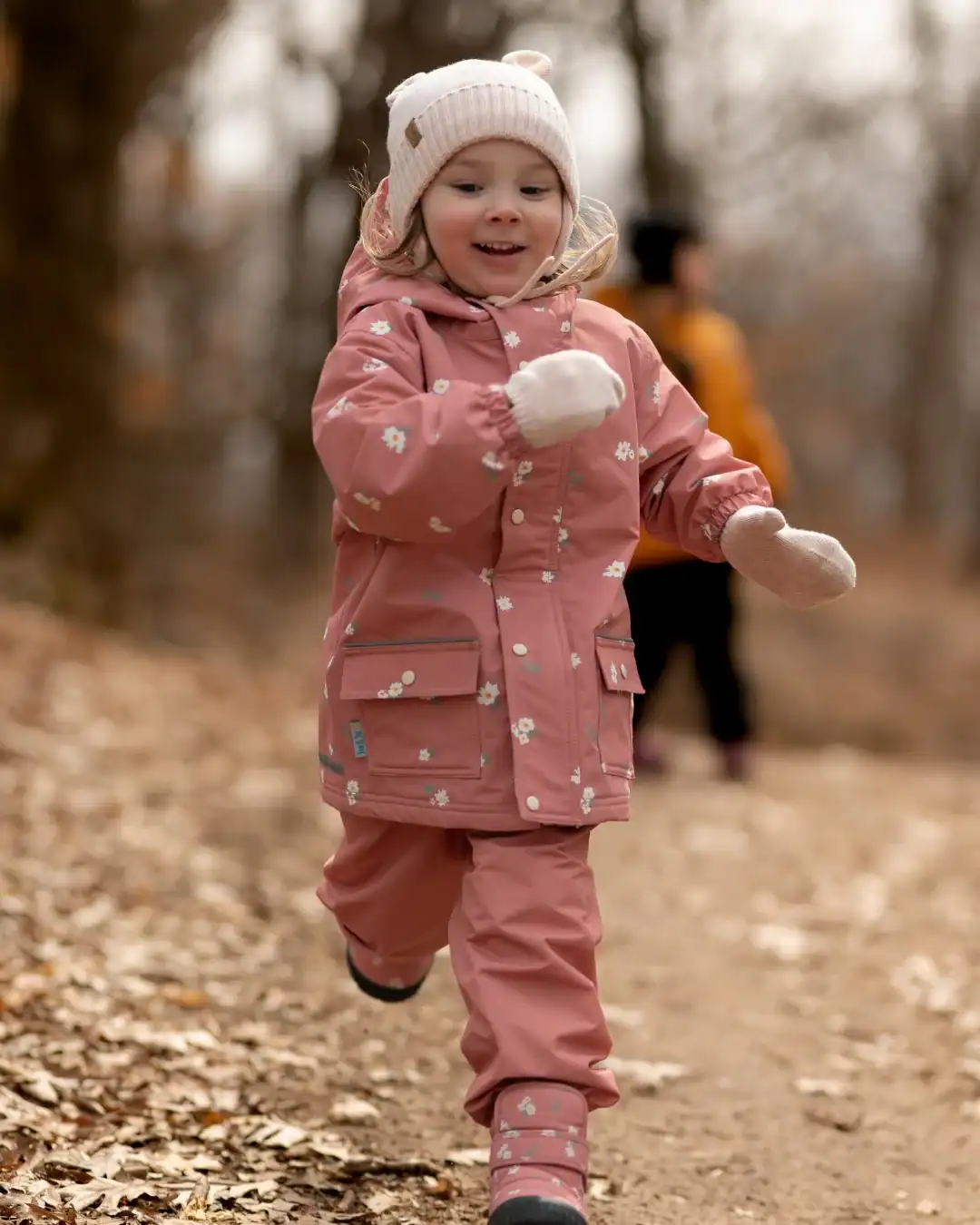
Jan & Jul is a really practical option for toddlers, especially if you want something easy to find, easy to use, and made with safer materials.
Their rain gear is made with polyurethane (PU) instead of PVC, which is a big step in the right direction when it comes to reducing exposure to harmful additives.
It’s also lightweight, flexible, and designed for real everyday use, whether that’s daycare, park play, or full-on puddle jumping.
It may not have all the premium features of higher-end brands, but it’s affordable, accessible, and gets the job done, which is exactly what a lot of parents need at this stage.
Price & sizing
$28-$95 | 0M-16Y+
Materials
Polyester Shell | Waterproof Membrane | Bionic-Finish® Eco Coating | Taped Seams | PFAS & PVC-Free
Location/Shipping
Canada | Ships To The United States
6. Didriksons — Best EU-Based Non-Toxic Rain Gear For Kids
Best For Parents Looking For: Long-lasting rain gear that can handle heavy outdoor use
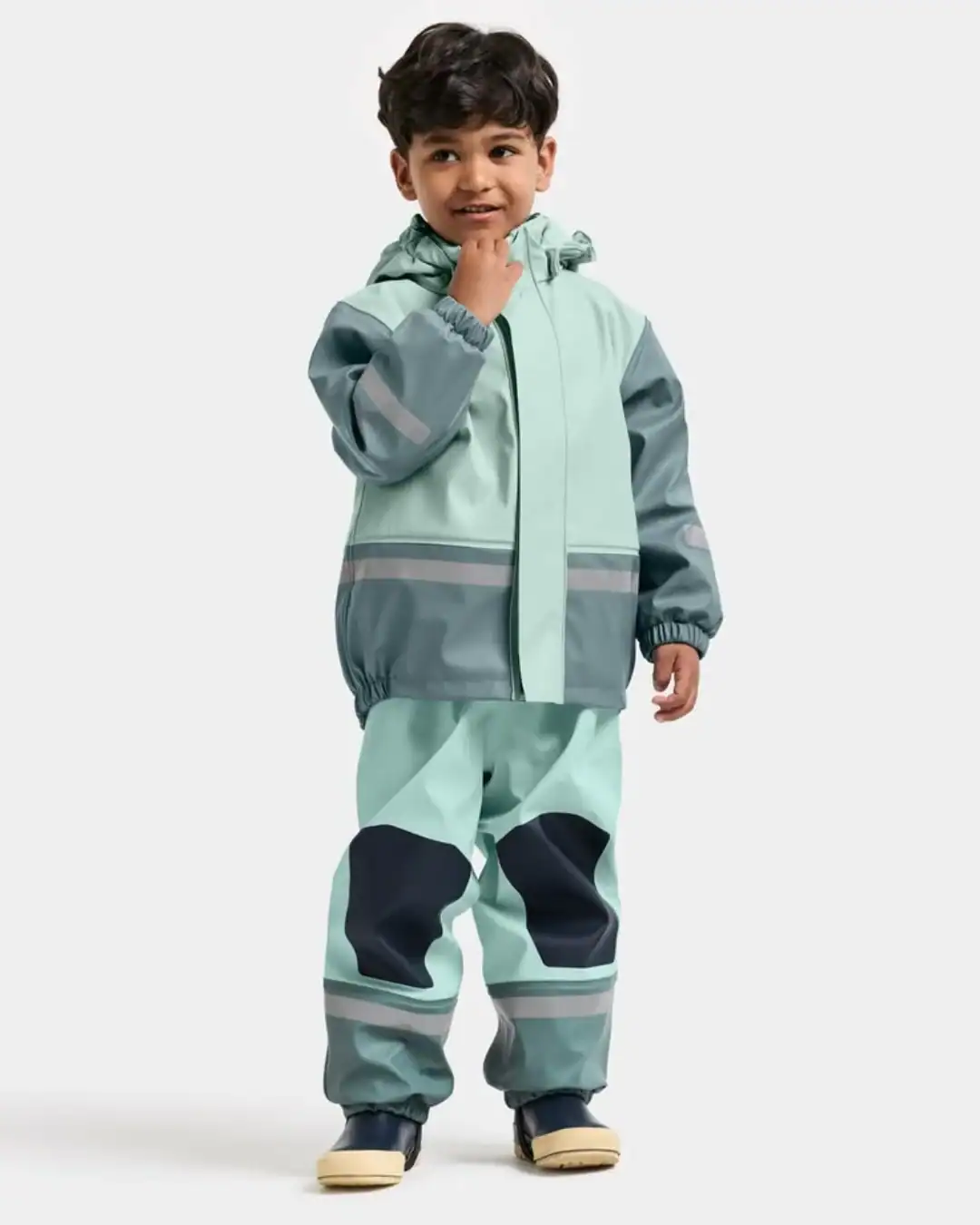
Didriksons is a heritage outdoor brand that’s been making waterproof gear for over a century, and you can really feel that experience in their designs.
Their rain sets are made using polyurethane-based materials (often referred to as Galon), which are fully waterproof and windproof without relying on PVC.
Everything is seam-sealed, and the construction feels noticeably more durable compared to lighter-weight options.
Functionally, these are designed for real outdoor conditions, not just light rain.
Features like reinforced construction, adjustable fits, and full-coverage designs make them a great choice for kids who spend a lot of time outside in all weather.
Price & sizing
€35-€95 | 12M-14+Y
Materials
Polyester Shell | Polyurethane (PU) Waterproof Coating | Polyester Lining | Fully Sealed Seams | PVC-Free
Location/Shipping
Sweden | Ships To The United Kingdom & Europe
The Best Non-Toxic Rain Boots For Kids
7. Stonz — Best Non-Toxic Rain Boots For Kids
Best For Parents Looking For: A flexible, everyday rain boot that supports healthy foot development
Use discount code SKL10 to save 10% on USA orders!
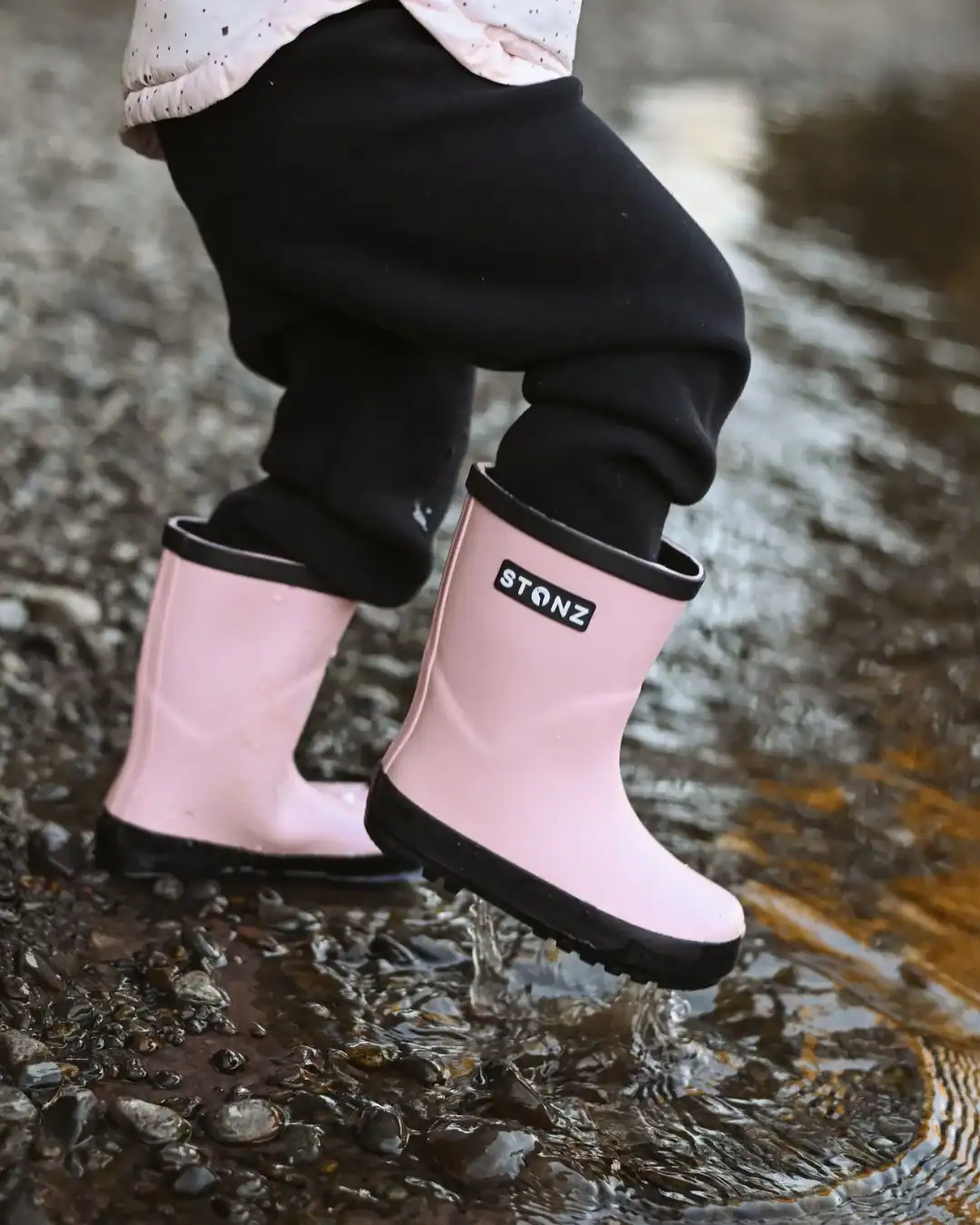
Stonz rain boots are one of my favorite options if you’re looking for something that feels noticeably different from the typical stiff, plastic rain boot.
They’re soft, flexible, and designed with movement in mind, which is something I always prioritize for growing feet.
The boots are made with a blend of natural rubber (about 45%) and synthetic rubber for durability, giving them that balance of flexibility and structure.
They’re lightweight, easy to get on and off, and comfortable enough for everyday wear, not just rainy days. If you’re trying to avoid the typical rigid, PVC-heavy rain boots, this is a really solid alternative.
Price & sizing
$50-$70 | 4C-4Y
materials
Natural Rubber | Synthetic Rubber | Mixed Lining (Cotton, Synthetic & Neoprene | EVA Cushioning | PVC & Lead-Free
location/shipping
Canada | Ships To The United States
→ If you’re already thinking about foot development, this overlaps a lot with what I look for in barefoot shoes for kids — flexibility, wide toe boxes, and natural movement.
8. Wildling Shoes — Best Barefoot-Style Rain Boots For Kids
Best For Parents Looking For: A minimalist, ultra-flexible rain boot that allows natural foot movement
US Customers: Use discount code SKL10 to save $10!
EU Customers: Use discount code SKL5 to save €5!
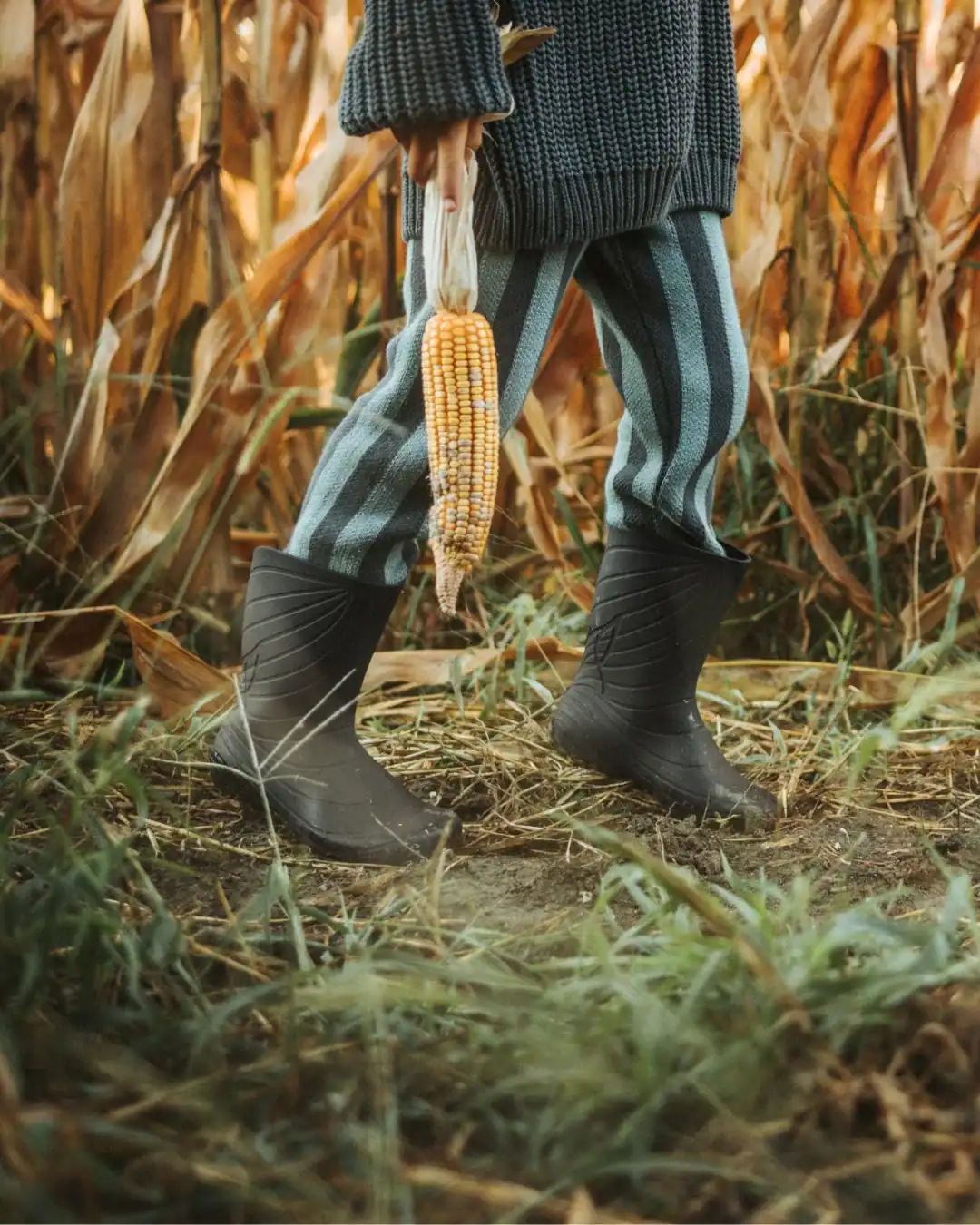
Wildling Shoes is a great option if you’re already leaning toward barefoot-style footwear or just want something that feels as close to “natural movement” as possible — they’re incredibly lightweight and flexible.
Their rain boots are made with SEBS rubber, which is a softer, more flexible alternative to many conventional materials, and they’re completely free from PVC, BPA, and latex.
The design includes a wide toe box and a thin, flexible sole, allowing kids to move more naturally compared to rigid, structured boots.
They’re especially great for kids who don’t like bulky footwear or for parents who prioritize foot development and flexibility above all else.
Price & sizing
$69 | 7C–13C
Materials
SEBS Rubber | Recycled Polyester Lining | PVC, BPA & Latex-Free
Location/Shipping
Germany/United States | Ships Internationally
9. Merry People — Best Stylish Non-Toxic Rain Boots For Kids
Best For Parents Looking For: A durable, everyday rain boot that’s both functional and easy to wear
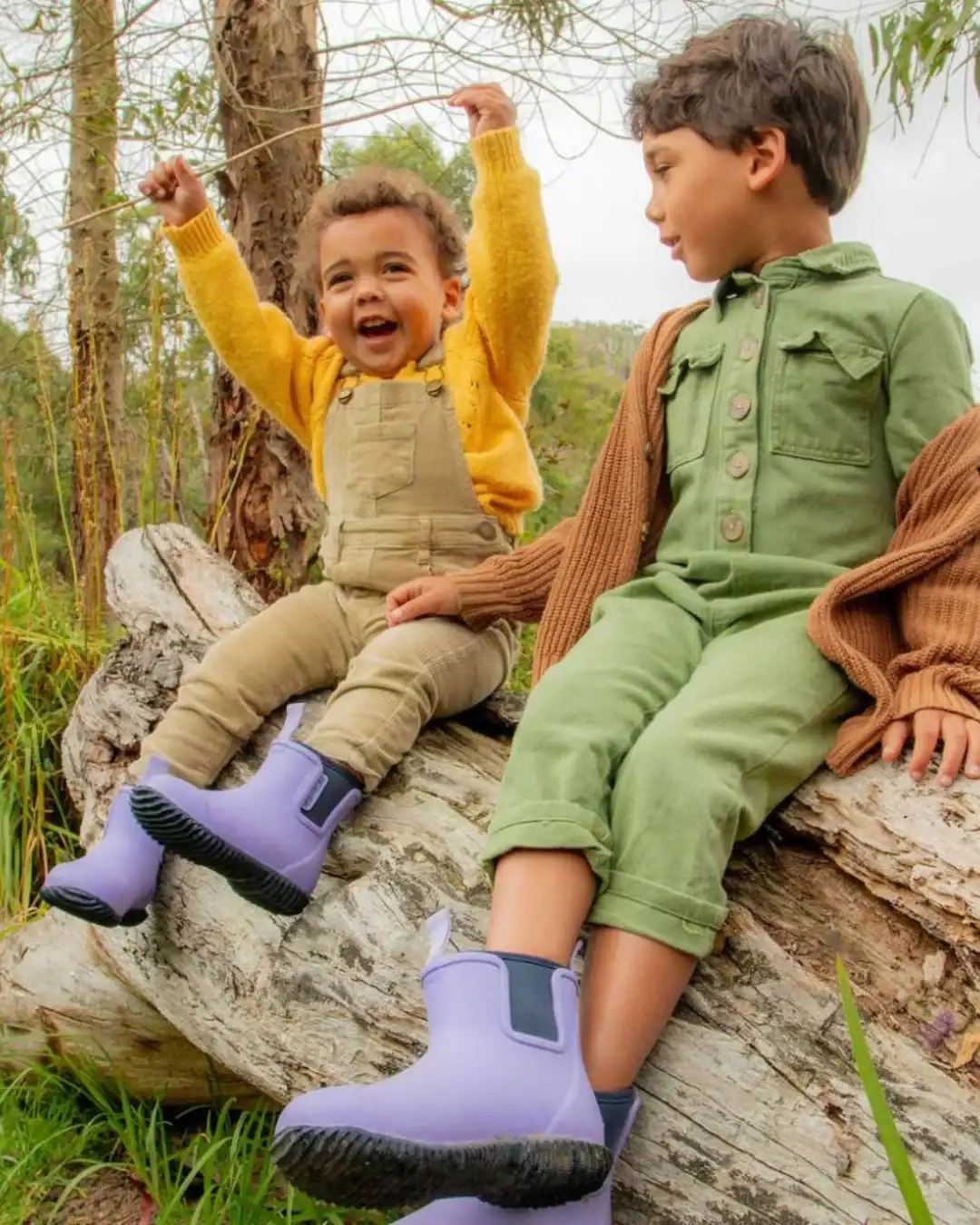
Merry People boots are designed to be worn beyond just rainy days, which makes them a really versatile choice for everyday use.
These boots are made from natural rubber and lined with neoprene, which gives them a softer, more flexible feel while still being fully waterproof.
They’re also designed for comfort, with added features like arch support and insulation, making them a good option for cooler weather as well.
What I like most is that they don’t feel overly bulky or stiff, so kids are more likely to actually keep them on.
Price & sizing
$70 | 5C–4Y
Materials
FSC-Certified Natural Rubber | Neoprene Lining | Rubber Outsole | PVC-Free
Location/Shipping
Australia | Ships To The United States & Internationally
10. Hunter — Best Classic Natural Rubber Rain Boots For Kids
Best For Parents Looking For: A well-known, reliable rain boot made with natural rubber
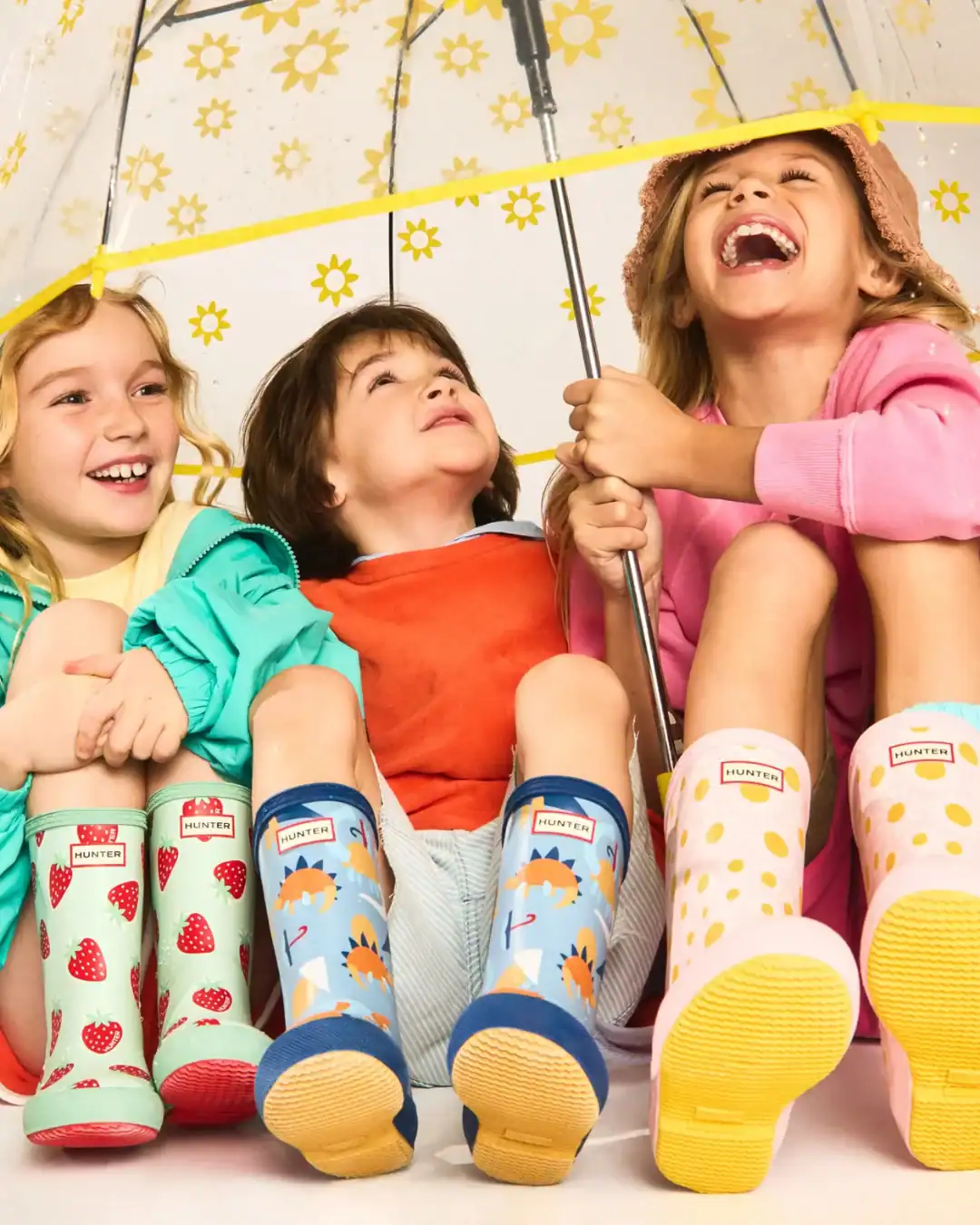
Hunter is one of the most recognizable rain boot brands out there, and for good reason.
Their boots have been around for decades and are known for being durable, waterproof, and easy to wear.
Unlike many conventional rain boots, Hunter uses natural rubber instead of PVC, which is a big step in the right direction when it comes to safer materials.
They’re also fully waterproof and designed with solid traction, making them a dependable option for everyday use.
That said, this is a more mainstream brand, so I still like to be mindful of specific materials and linings depending on the style.
But overall, if you’re looking for a widely available, classic rain boot that avoids the worst offenders like PVC, Hunter is a solid and accessible choice.
Price & sizing
$60-$110 | 5C–6Y
Materials
Natural Rubber | Polyester Lining | Rubber Sole | PVC-Free
Location/Shipping
United Kingdom | Ships To The United States & Internationally
11. Bisgaard — Best Non-Toxic Rain Boots For Cold Weather
Best For Parents Looking For: A warm, natural rubber rain boot for colder climates
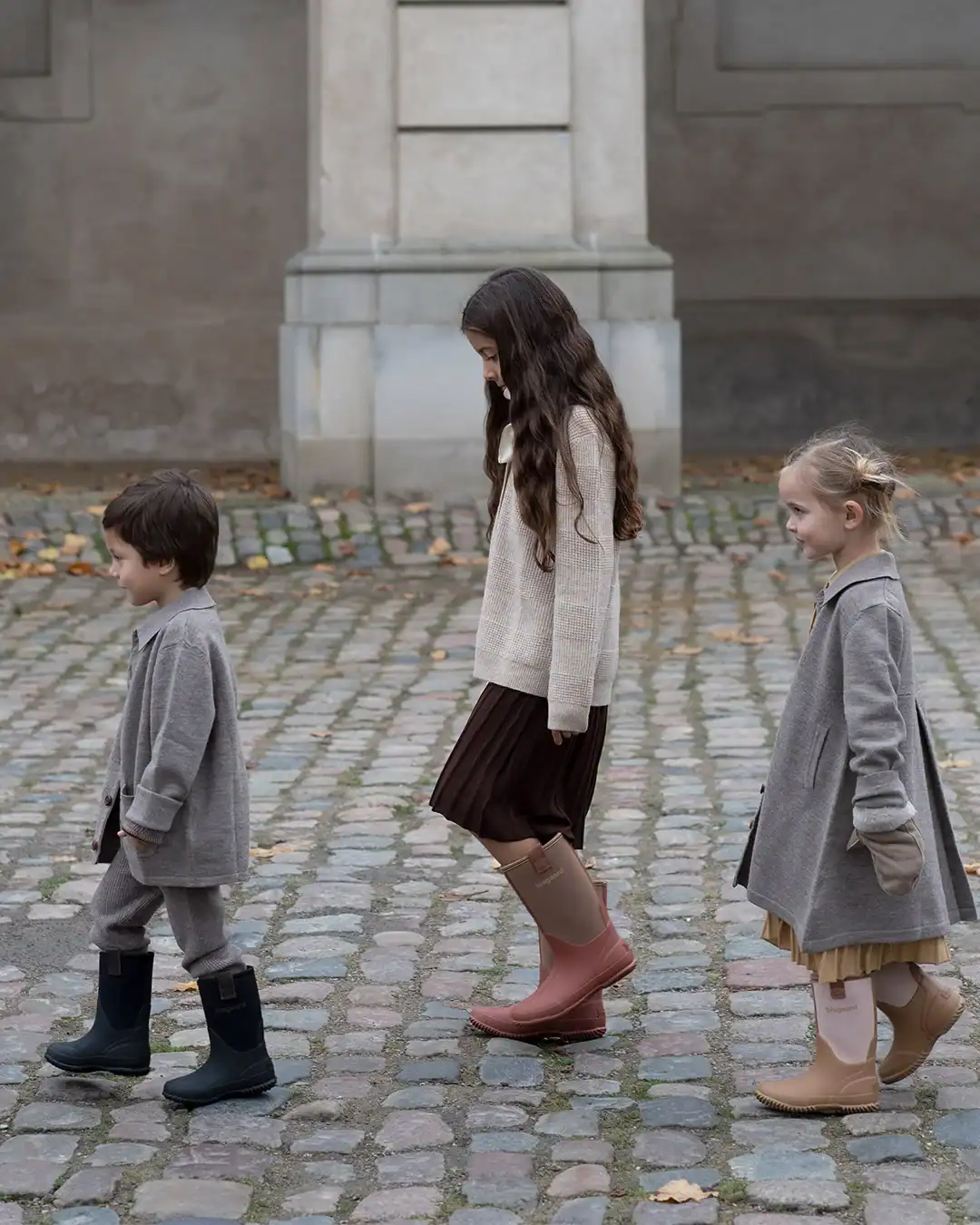
Bisgaard boots are designed with colder climates in mind, which makes them especially useful if you’re dealing with rain, slush, or early winter weather.
They’re made from natural rubber and lined with materials like wool, which adds a noticeable level of warmth without sacrificing waterproof performance.
This combination makes them feel more like a hybrid between a rain boot and a winter boot — ideal for kids who are outside in all kinds of weather.
Like many European brands, Bisgaard also puts a strong emphasis on material safety and transparency.
Their boots are free from harmful chemicals and heavy metals, which is something I always look for in products that get this much wear.
Price & sizing
€45-€70 | EU 20-40
Materials
Natural Rubber | Vegetable Tanned Leather | Wool & Cotton | PFAS & PVC-Free
Location/Shipping
Denmark | Ships Within Europe
How To Choose Non-Toxic Rain Gear For Kids
Choosing non-toxic rain gear isn’t about finding something perfect — it’s about knowing what matters most and making better swaps where you can.
Here’s what I focus on:
1. Start With Materials
This is always the most important piece. Look for rain gear that avoids PVC and instead uses materials like polyurethane (PU) or natural rubber.
These tend to require fewer harmful additives and are a safer alternative to traditional plastic-based options.
2. Check For PFAS-Free Waterproofing
Waterproof doesn’t have to mean PFAS. Many brands now offer PFAS-free coatings, even if performance isn’t exactly the same as traditional treatments.
For everyday use, these options are usually more than enough.
3. Look For Transparency Over Marketing
Terms like “eco-friendly” or “green” don’t mean much on their own. I always look for brands that clearly state what materials they use and what they avoid.
If a brand isn’t transparent, that’s usually a red flag.
4. Think About How Your Child Will Actually Use It
A lightweight jacket might be perfect for school days, while full rain sets make more sense for toddlers or kids who spend hours outside.
Durability, flexibility, and ease of movement matter just as much as materials — especially for everyday wear.
5. Don’t Aim For Perfect
There’s no such thing as completely non-toxic rain gear.
Waterproofing almost always requires some level of synthetic material, so the goal is to reduce exposure where you can — not stress about getting it “100% right.”
✅ Certifications To Look For In Non-Toxic Rain Gear
When you’re trying to make safer choices, certifications can be helpful — but they’re not the full picture.
Here are the ones I actually pay attention to:
✅ OEKO-TEX® Standard 100
This is one of the most common certifications you’ll see in kids’ clothing and rain gear.
It means the finished product has been tested for harmful substances, including things like heavy metals, formaldehyde, and certain chemicals that can come into contact with skin.
It’s a good baseline — especially for products kids wear often — but it doesn’t guarantee that a product is completely non-toxic or free from all concerning materials.
✅ bluesign®
bluesign® focuses more on the manufacturing process. It looks at how textiles are produced, including chemical use, environmental impact, and worker safety.
Brands that meet bluesign® standards are generally more thoughtful about the entire production chain, not just the final product.
That said, it’s still possible for bluesign®-approved products to use synthetic materials or coatings, so it’s not a perfect indicator on its own.
The Important Limitation (& Where Greenwashing Comes In)
This is where things can get confusing. A product can carry a certification and still be made with materials that aren’t ideal — especially when it comes to waterproof gear.
For example:
- A product might be OEKO-TEX® certified but still use synthetic coatings.
- A brand might highlight “eco-friendly” materials while being vague about waterproof treatments.
- “PFAS-free” doesn’t always mean completely non-toxic — just that one category of chemicals has been removed.
This is why I don’t rely on certifications alone. I always look at:
- The actual materials used
- Whether the brand is transparent
- What they clearly say they avoid
Certifications are helpful, but they’re just one piece of the puzzle — not a guarantee.
❌ Red Flags To Watch For In Kids’ Rain Gear
Even with all the “eco” and “non-toxic” messaging out there, this is a category where greenwashing is really common. Look out for these:
Vague Terms Like “Eco-Friendly” or “Non-Toxic”
If a brand uses these terms but doesn’t clearly explain what materials they’re using (or avoiding), that’s usually a sign to dig deeper.
Real transparency looks like:
- Listing materials
- Explaining coatings
- Clearly stating what’s not included (like PVC or PFAS)
No Mention of Waterproof Coatings
Waterproofing doesn’t just happen — it always comes from some kind of treatment or material.
If a brand talks about being waterproof but doesn’t mention how, there’s a good chance they’re using conventional coatings that they’re not being upfront about.
PVC Without Clear Disclosure
Some brands won’t explicitly say “PVC,” but you’ll see terms like:
- “Synthetic rubber”
- “Waterproof plastic”
If materials aren’t clearly listed, it’s worth questioning.
“PFAS-Free” With No Additional Detail
This one can be tricky. PFAS-free is a great step, but it doesn’t automatically mean the product is fully non-toxic.
It just means one category of chemicals has been removed. I always look at what’s being used instead, not just what’s being taken out.
Overemphasis On Recycled Materials
Recycled polyester or plastic bottles can sound great — and it is better from a sustainability standpoint — but it doesn’t necessarily mean the product is safer from a chemical perspective.
This is one of the most common areas where sustainability and non-toxicity get mixed up.
Non-Toxic Rain Gear For Kids: FAQs
Some can be. Many conventional rain boots are made from PVC, which often contains phthalates and other additives that can transfer to skin or be inhaled. Safer options use natural rubber or alternative materials like SEBS or polyurethane.
Natural rubber is generally one of the safest and most widely used materials for non-toxic rain boots. It avoids PVC and typically requires fewer harmful additives. Flexible materials with a wide toe box are also a plus for foot development.
Many conventional rain jackets do, especially those with traditional waterproof coatings (often labeled as DWR). However, more brands are now offering PFAS-free alternatives using polyurethane (PU) or other coatings.
PFAS-free means the product avoids “forever chemicals” used in many waterproof coatings. These chemicals don’t break down easily and can accumulate in the body over time, which is why many families choose to avoid them when possible.
PVC rain boots are best avoided when possible. They often contain phthalates and other additives that have been linked to hormone disruption and other health concerns. Safer alternatives like natural rubber are a better option.
Look for brands that clearly list their materials and avoid vague terms like “eco-friendly.” Keywords to look for include PVC-free, PFAS-free, polyurethane (PU), and natural rubber. Certifications like OEKO-TEX® can also be helpful.
Yes, in most cases. Natural rubber is generally considered a safer and more flexible alternative to PVC, and it doesn’t require the same chemical additives to function.
They can. Traditional waterproof coatings often rely on PFAS, but many brands are now switching to safer alternatives like PU or wax-based treatments. It’s always worth checking what type of coating is being used.
Not always. “Eco-friendly” can refer to recycled materials or sustainability practices, but that doesn’t automatically mean the product is free from harmful chemicals. It’s important to look at the actual materials and coatings used.
Focus on materials first. Look for PVC-free, PFAS-free options made with polyurethane or natural rubber. From there, consider fit, durability, and how the gear will actually be used day-to-day.
Still Deciding? Start Here
If you’re not sure where to start, this is what I’d do:
Start with one easy swap — like rain boots made from natural rubber or a PFAS-free rain jacket — and build from there.
You don’t need to replace everything at once. Just choosing better materials where you can (especially for things your kids wear often) is more than enough.
And if you’re between options, I’d start with:
- Stonz for an all-in-one solution
- Reima for a simple, everyday jacket
- Wildling Shoes or Stonz for flexible, safer rain boots
Final Thoughts on Non-Toxic Rain Gear For Kids
At the end of the day, this is one of those areas where small changes can make a meaningful difference over time.
Rain gear is something kids wear often — sometimes for hours at a time — and it’s not always something we think twice about.
But once you start looking at the materials, it becomes clear that there are better options out there. That doesn’t mean you need to replace everything overnight or aim for perfection.
Even switching to one or two safer pieces — like boots made from natural rubber or a jacket without PFAS — is a step in the right direction.
And most importantly, it doesn’t take away from what really matters. Let your kids jump in puddles, get muddy, and stay outside as long as they want.
The goal isn’t to avoid the rain — it’s just to feel a little better about what they’re wearing in it.
Continue Building a Safer Home For Your Kids
If you’re already thinking about rain gear, you’re already paying attention to what your kids are exposed to — and that’s really what this is all about.
These are the other swaps I focus on most in our home:
- Non-Toxic Kids Clothing — Because they’re wearing it all day.
- Non-Toxic Laundry Detergent — It touches everything they wear.
- PFAS-Free Guide – Learn the basics + best swaps.
- Non-Toxic Kids Water Bottles — Something they use every day.
- Barefoot Shoes For Kids — For more natural movement and safer materials.
These are the everyday pieces that tend to matter the most — just small shifts that feel better once you know what to look for.
📌 Save This Guide For Later
If you’re starting to rethink what your kids are wearing in the rain, this is one of those guides worth coming back to.
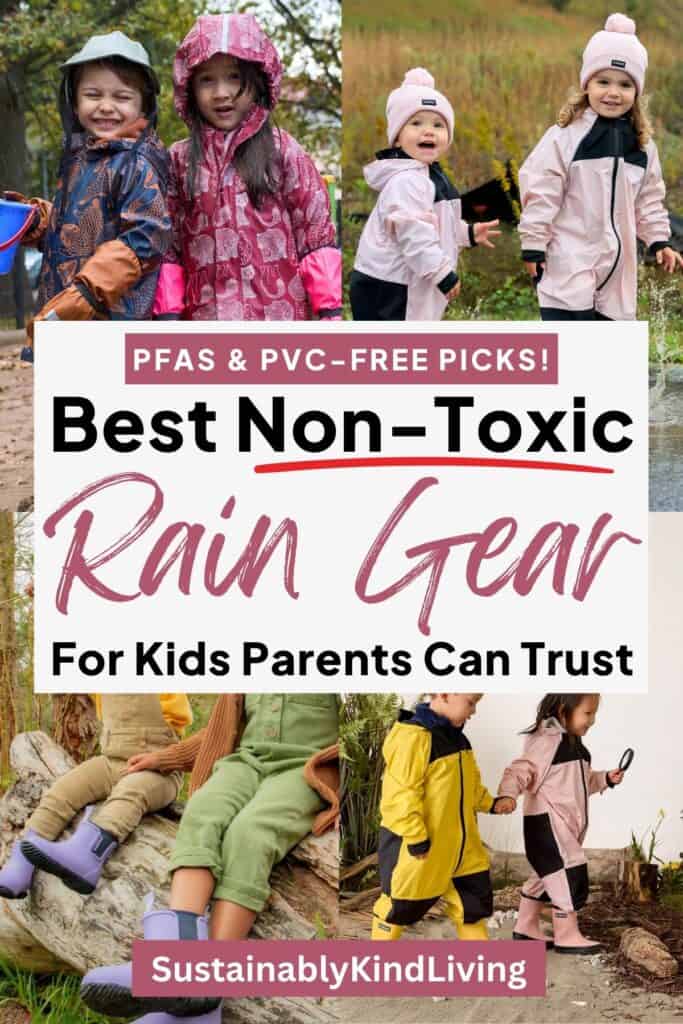
This breakdown of the best non-toxic rain gear for kids covers what’s actually used in waterproof clothing (like PFAS and PVC), what to look for instead, and the brands making safer options without the greenwashing.
Save it for later so you have it on hand when you’re ready to choose rain jackets and boots that feel better for everyday wear.
Sources & Further Reading
If you’re like me and started questioning what’s actually in kids’ rain gear — not just what brands claim — these are some of the resources I kept coming back to while researching PFAS, waterproof coatings, and material safety:
- Environmental Protection Agency (EPA) — Guidance on PFAS, how these chemicals behave in the environment, and current health concerns.
- Centers for Disease Control and Prevention (CDC) — Overview of PFAS exposure and how it can impact the body over time (especially in children).
- National Institute of Environmental Health Sciences (NIEHS) — Research on PFAS, endocrine disruption, and long-term health effects.
- Agency for Toxic Substances and Disease Registry (ATSDR) — More in-depth toxicology data on PFAS and related compounds.
- European Chemicals Agency (ECHA) — Information on phthalates, endocrine disruptors, and chemical safety regulations.
- OEKO-TEX® — Certification standards for testing textiles for harmful substances.
- bluesign® — A closer look at how textiles are produced, including chemical use and environmental impact.
- Greenpeace Detox Campaign — Reports on PFAS use in outdoor and waterproof clothing.
I also spent a lot of time digging through brand material disclosures, certification databases, and product-level details — especially around waterproof coatings — because this is one of those categories where marketing language can be really vague.
And honestly, this is still evolving. More brands are moving away from PFAS, but “PFAS-free” doesn’t automatically mean non-toxic — it just means one category of chemicals has been removed. Materials, coatings, and overall transparency still matter.
That’s why I keep coming back to the same filters when I evaluate products: clear material disclosures, safer alternatives (like PU or natural rubber), and brands that are actually upfront about what they use — and what they don’t.
This post was graciously sponsored by Stonz. As always, we only work with brands that we stand behind. Would you like to sponsor one of our sustainable round-ups? Contact us here.

Steal My Non-Toxic Cleaning Checklist!
Believe us, it’s the BEST…. and it’s free. Does it really get any better than that?! Sign up for our newsletter and get this free checklist to clean your home without any harmful chemicals!