 Shop My Favorite Non-Toxic Gifts Of 2026!
SKL is reader supported. When you buy through links on our site, we may earn affiliate commission. Learn more here.
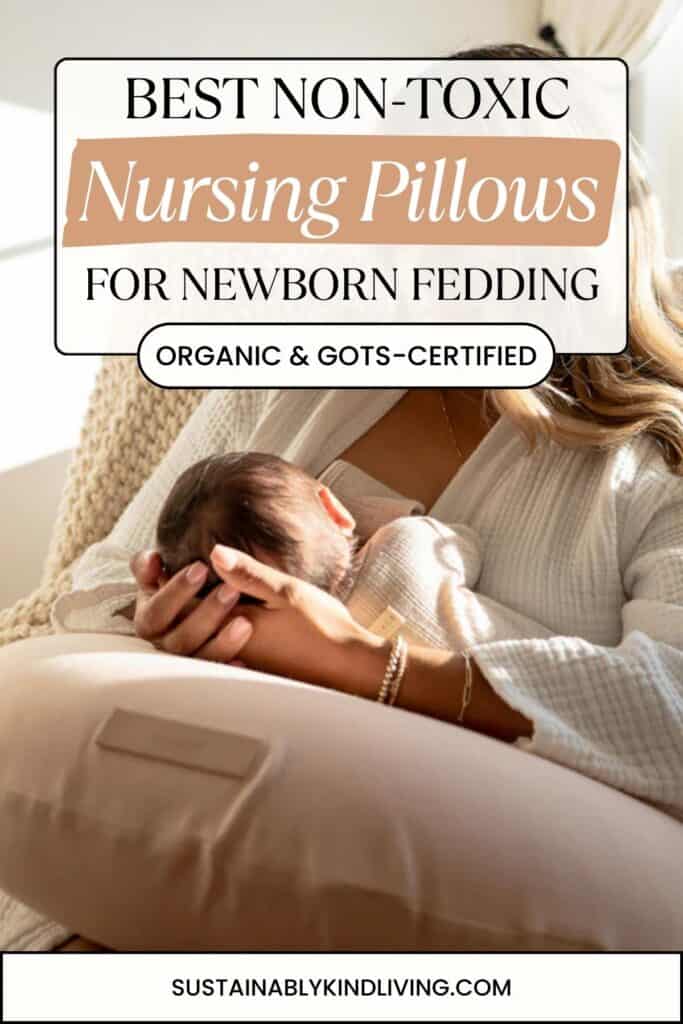
Non-toxic nursing pillow options are one of the most important — and most overlooked — essentials in a healthy nursery.
Breastfeeding is intimate. It’s vulnerable. It’s exhausting and beautiful all at once. The pillow you use becomes part of that experience — day after day, night after night. What it’s made of matters more than most parents realize.
SKL top picks, in a nutshell…
- Blessed — Adjustable buckwheat support
- Butterr — Best budget organic pick with gentle latex support
- Obasan — Most certified organic and versatile full-body nursing support
- Savvy Rest — Fully plastic-free option with customizable natural fills
- Nook — Temperature-regulating, breathable organic fabrics
As a mom of three who has spent years researching organic mattresses, crib safety, and non-toxic baby gear, I’ve learned that the products closest to our babies deserve the most scrutiny.
During long feeding sessions, your baby’s face rests directly against that pillow for hours at a time — breathing it in, pressing against it, absorbing whatever it contains.
For families already investing in an organic crib mattress and safer sleep essentials, choosing a cleaner breastfeeding pillow is simply the next logical step in building a truly non-toxic sleep and feeding space.
When I had my first baby, I didn’t question our nursing pillow. It was soft. It was convenient. It seemed harmless.
However, once I began looking into conventional options, I discovered synthetic foam cores, plastic-derived fiberfill, chemical flame retardants, and stain-resistant treatments that may contain PFAS. Some even rely on formaldehyde-based fabric finishes.
Newborns breathe faster, have developing immune systems, and absorb more through their skin. While no product eliminates exposure entirely, reducing unnecessary synthetic materials where we reasonably can is a meaningful step.
That’s why this guide focuses on truly non-toxic nursing pillow options — not just products labeled “organic.”
We’re looking at GOTS-certified organic cotton nursing pillows, wool-filled nursing pillow designs that avoid added flame retardants, plastic-free breastfeeding pillows, adjustable organic nursing pillow styles, and options without petroleum-based fill or chemical-treated interiors.
Because here’s the reality: the term organic breastfeeding pillow isn’t regulated. A brand can advertise organic cotton on the outside while filling the inside with synthetic materials.
That’s greenwashing — and it’s common in the baby industry.
Every pillow featured here was evaluated for material transparency, third-party certifications, support performance, and long-term durability.
If a company wasn’t clear about what was inside, it didn’t make this list. If you’re searching for the best non-toxic nursing pillow 2026 has to offer — or simply a cleaner alternative to foam-based brands — this guide will help you make a confident choice.
Why Choosing a Non-Toxic Nursing Pillow Matters
A non-toxic nursing pillow may seem small, but it’s one of the most frequently used baby items in the first year.
During feedings, your baby’s airway rests inches from the pillow’s surface. Unlike furniture across the room, this is direct and repeated exposure.
Many conventional pillows use petroleum-based foam, synthetic fiberfill, waterproof coatings, or chemical adhesives.
Even when emissions are considered “low,” repeated daily proximity during the most vulnerable stage of life deserves attention.
Choosing an organic nursing pillow made with natural materials like GOTS-certified organic cotton, wool, or buckwheat reduces reliance on plastic-derived fill.
A plastic-free breastfeeding pillow eliminates synthetic foam. A wool nursing pillow provides natural flame resistance. An adjustable organic nursing pillow offers structure without chemical-treated interiors.
For families building a non-toxic nursery, this is a practical upgrade that supports both comfort and cleaner materials.
Toxic Chemicals Found in Conventional Nursing Pillows
Most conventional nursing pillows are marketed as soft, supportive, and baby-safe. But what’s inside them isn’t always obvious — and rarely discussed.
Because these pillows sit directly under your baby’s airway during feeding, the materials used inside matter more than many parents realize.
Here are some of the most common chemical concerns found in standard foam and polyester-filled nursing pillows:
Polyurethane Foam
Polyurethane foam is one of the most widely used interior supports in nursing pillows. It’s inexpensive and lightweight — but it’s also petroleum-based.
When new, polyurethane foam can release volatile organic compounds (VOCs). That “new pillow smell” is often off-gassing.
While emissions decrease over time, newborns have faster breathing rates and more developed detox systems, which makes proximity worth considering.
Flame Retardants
Some foam-based nursing pillows may contain chemical flame retardants to meet flammability standards.
Certain classes of flame retardants — including PBDEs — have been studied for potential hormone-disrupting and developmental effects.
Not every pillow contains them, but without full disclosure, it’s difficult to know.
PFAS (Stain-Resistant & Waterproof Treatments)
PFAS are sometimes used to create stain-resistant or moisture-repellent finishes.
These are the same “forever chemicals” increasingly discussed in cookware, furniture, and mattresses. If you’re already avoiding PFAS in your kitchen and bedroom, the same logic applies here.
As we discuss in our guide to non-toxic mattress protectors, barrier fabrics and waterproof coatings deserve closer scrutiny — especially in products used daily and held inches from your baby’s face.
Formaldehyde-Based Finishes & Adhesives
Some textile finishes and bonding adhesives may contain formaldehyde or formaldehyde-releasing compounds.
At higher exposure levels, formaldehyde is a known respiratory irritant. While not every pillow uses these treatments, transparency is inconsistent across the baby market.
Phthalates & Vinyl Components
In lower-cost designs, vinyl or PVC elements may contain phthalates — plasticizers that help materials stay flexible. Certain phthalates have been studied for their potential endocrine-disrupting properties.
Now, to be clear: this does not mean every conventional nursing pillow is inherently dangerous. However, the material variation is wide.
Without third-party certifications or full ingredient transparency, it’s difficult for parents to assess exposure risk confidently.
That’s why the best non-toxic nursing pillow options rely on natural fibers like organic cotton, wool, buckwheat, or certified natural latex — materials that don’t require heavy chemical treatments in the first place.
When feeding sessions add up to hours each day, small material decisions matter.
How I Vet Products
Every pillow in this guide was evaluated for material transparency, third-party certifications, support performance, and long-term durability.
I looked specifically for nursing pillows without polyurethane foam, polyester fiberfill, flame retardants, or stain-resistant treatments.
Brands that were unclear about materials or relied on vague marketing claims were excluded.
The same transparency standards we apply when reviewing non-toxic baby clothes and organic crib mattresses were applied here — because what touches your baby’s skin daily matters. If it’s not transparent, it’s not truly non-toxic.
The 5 Best Non-Toxic Nursing Pillows of 2026
1. Blessed Nest Nesting Pillow
Best For: Adjustable support and C-section recovery
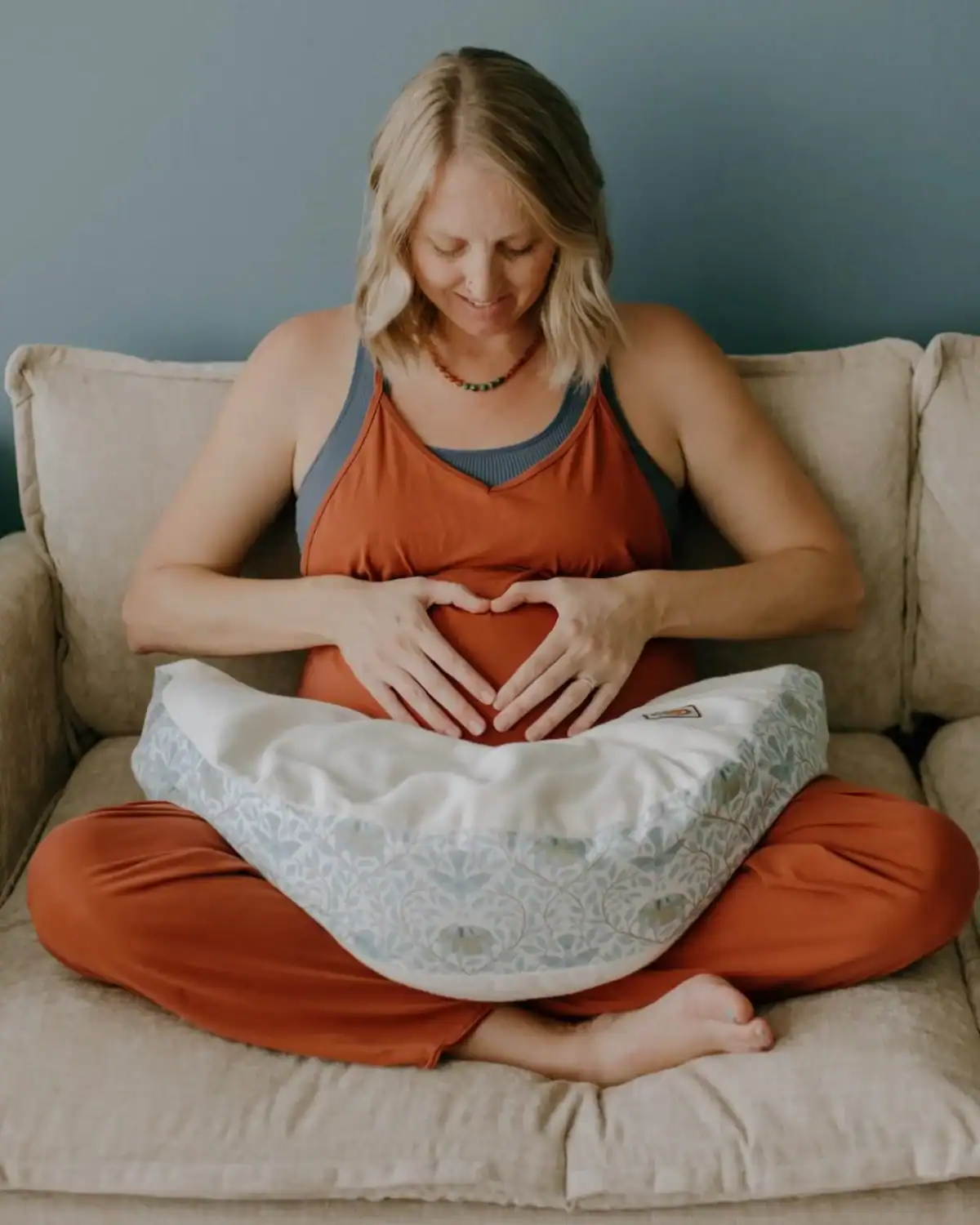
Blessed Nest is ideal for parents who want a fully adjustable organic nursing pillow without synthetic fill.
Instead of foam or polyester, it uses buckwheat hulls enclosed in a GOTS-certified organic cotton cover.
Because buckwheat molds to your body, this pillow offers customizable height and firmness for different feeding positions.
When I tested this style of support, I appreciated how structured it felt without pressing uncomfortably into the abdomen.
While it is firmer than wool options, the adjustability makes it especially helpful for C-section recovery or longer feeds.
In addition, the removable cover makes cleaning simple and practical.
Overall, this buckwheat nursing pillow with an organic cotton design provides excellent stability without chemical additives.
It’s a strong, non-toxic alternative to foam-based breastfeeding pillows.
Price
$118
Materials
100% Organic Cotton Canvas | Organic Buckwheat Hull Fill
Location/Shipping
United States, ships worldwide
2. Butterr Nursing Pillow
Best For: Parents who want a toxin-free nursing pillow with clean materials and gentle, medium support

The Butterr nursing pillow is a strong option for families avoiding synthetic foam and looking for a safer, simplified nursing setup.
Instead of polyurethane foam, it uses a natural latex core, which provides stable, moisture-resistant support without flattening quickly over time.
The cover is made from GOTS-certified organic cotton and is also Standard 100 by OEKOTEX, meaning it has been tested for harmful substances and is designed to be gentle on sensitive skin.
When I evaluated the materials, the pillow felt structured but not overly firm, offering reliable elevation for feeding without feeling stiff.
The pillow and organic cover are sold together and include a reusable mesh carrying bag, which is a practical bonus for travel or storage.
Overall, this is a solid non-toxic nursing pillow choice for families who want certified fabrics, latex support, and a cleaner alternative to foam-based designs.
Price
$116
Materials
Natural Latex Core | GOTS-Certified Organic Cotton Cover
Location/Shipping
United States, ships worldwide
3. Obasan Pregnancy & Nursing Pillow
Best For: Parents who want long-term, therapeutic support from pregnancy through nursing using non-toxic materials
Use discount code SKL26 to save 20% on selected collections & pillows!
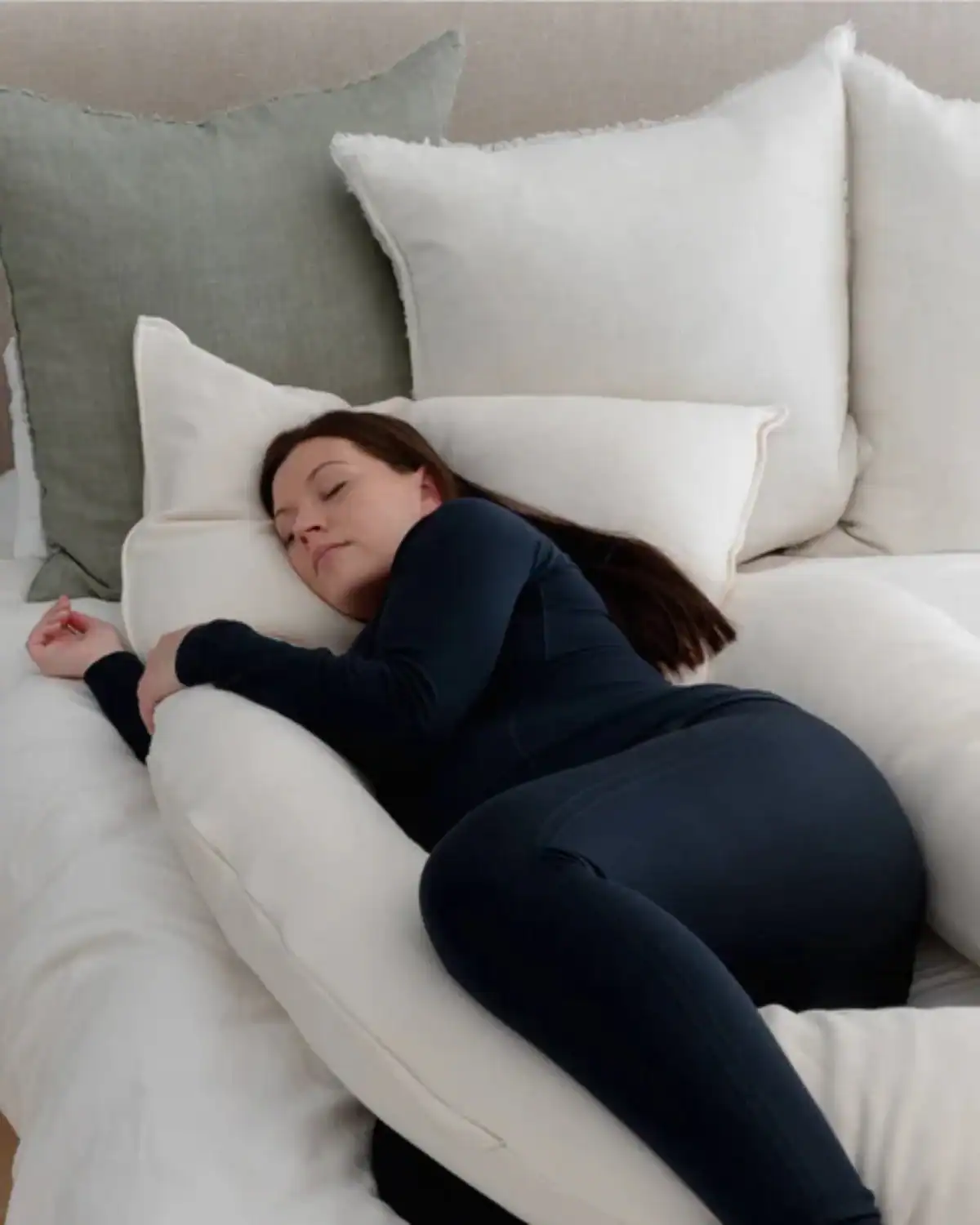
The Obasan pregnancy & nursing pillow is one of the most thoughtfully designed non-toxic support pillows I have reviewed, and it has been re-engineered for 2026.
This updated version features a solid moulded organic latex core instead of wool, providing more consistent soft to medium support that holds its shape, stays breathable, and is easier to reposition thanks to the natural elasticity of latex.
Designed with a perinatal orthopaedic therapist, the dual-detachable crescent shape supports the belly, hips, pelvis, legs, and lower back while encouraging the side-lying position recommended during pregnancy.
What makes it stand out is its versatility after birth. Once separated, it works beautifully as a non-toxic nursing pillow, back support pillow, or full body pillow, making it a long-term comfort investment.
Like all Obasan products, it is free from flame retardants, toxic chemicals, and dyes, with removable, washable organic cotton covers and certified organic materials handmade in Canada.
Price
$249
Materials
Organic Latex Filling | Organic Cotton Cover
Location/Shipping
Canada, ships to the United States & worldwide
4. Savvy Rest Body Pillow
Best For: Nursing parents who want a fully customizable, non-toxic nursing pillow alternative with natural fill options
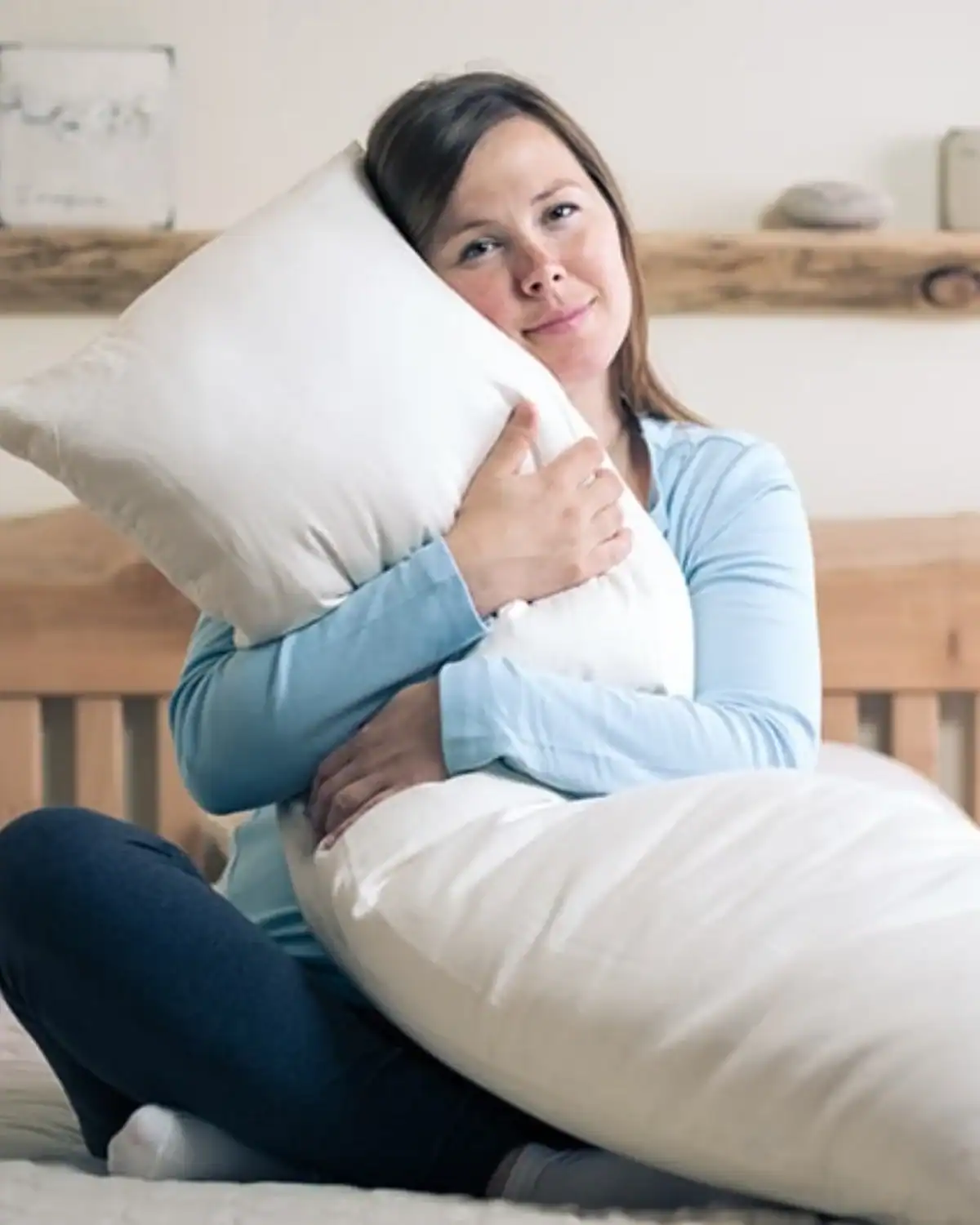
Savvy Rest body pillows work well as a non-toxic nursing pillow option for parents who prefer adjustable, full-body support rather than a fixed crescent shape.
They are especially helpful for side-lying nursing, postpartum recovery, and longer feeding sessions where back, hip, and leg alignment matter.
What sets Savvy Rest apart is full customization. Fill options include certified organic kapok, certified organic wool that is both GOTS and GREENGUARD Gold certified, a wool and shredded natural latex blend, or natural shredded latex alone.
Each pillow comes intentionally overstuffed so you can remove fill to adjust height and firmness as your needs change.
The casing is made from unbleached, naturally colored organic cotton, designed to be gentle on sensitive skin and free from unnecessary chemical treatments.
This is a strong choice for nursing parents who want full control over materials, support level, and long-term use.
Price
From $229+
Materials
Organic Kapok | GOTS & Greenguard Gold Certified Wool | Natural Shredded Latex | Organic Cotton Casting
Location/Shipping
United States
5. Nook Sleep Niche Nursing Pillow
Best For: A modern organic nursing pillow with breathable fabric
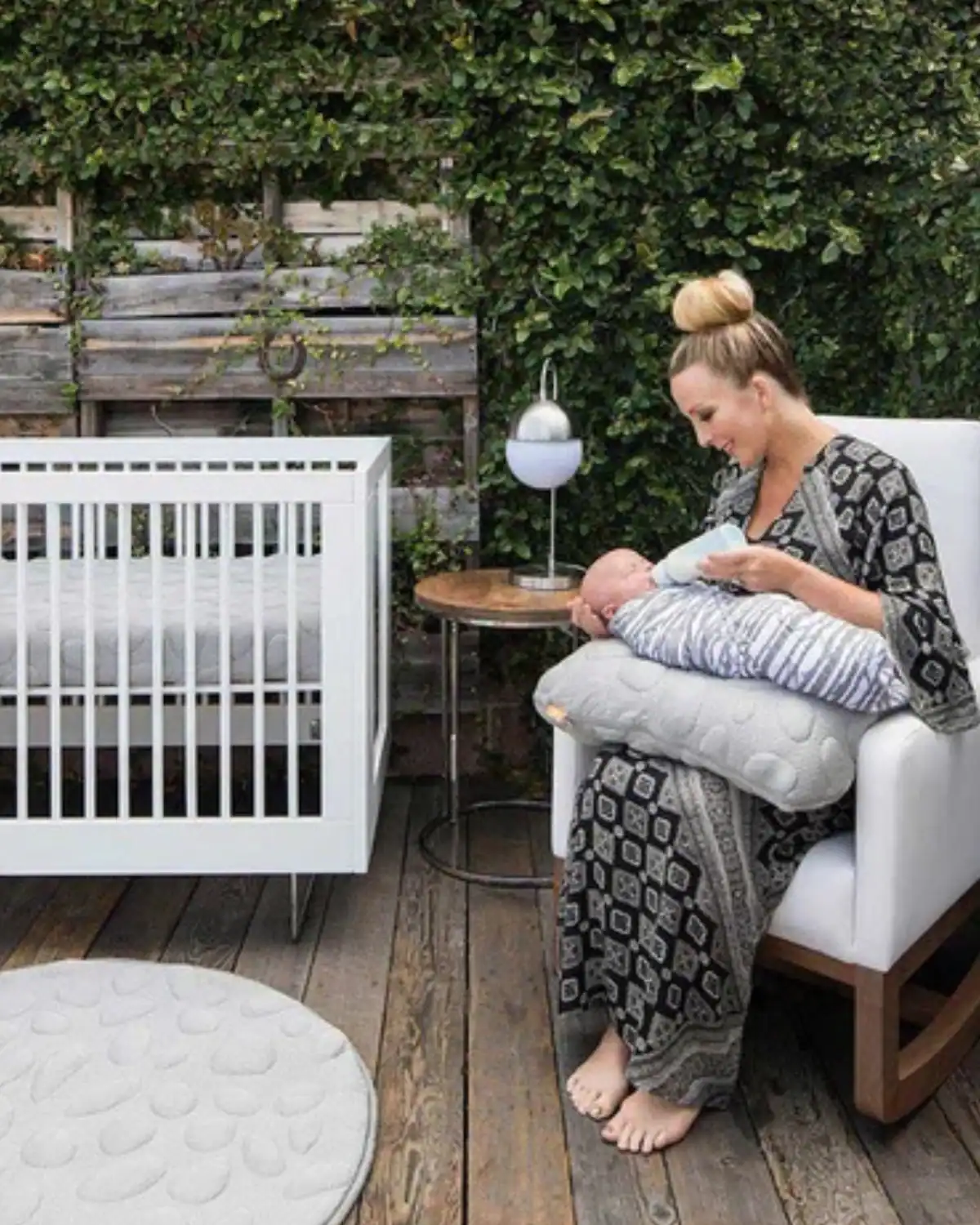
Nook Sleep is a strong option for parents who want a thoughtfully designed organic nursing pillow with a softer, modern feel.
Unlike many traditional crescent shapes, the Niche offers a more versatile structure while still using certified materials.
Because it combines GOTS-certified organic cotton with OEKO-TEX-certified TENCEL fabric, it prioritizes both breathability and safety.
This pillow feels noticeably soft while still maintaining supportive density.
While it is not completely plastic-free due to the TENCEL component, it avoids polyurethane foam and heavy chemical treatments.
In addition, the fabric promotes airflow, which can help regulate temperature during longer feeding sessions.
Overall, this is a beautiful balance between comfort and cleaner materials.
It’s ideal for parents who want an organic breastfeeding pillow that feels plush yet still aligns with non-toxic nursery standards.
Price
$129 (Currently out of Stock)
Materials
GOTS-Certified Organic Cotton | OEKO-TEX certified TENCEL
Location/Shipping
United States, ships worldwide
The Safest Materials For a Non-Toxic Nursing Pillow
Once you understand what to avoid, the next step is knowing what makes a nursing pillow truly safe.
The best non-toxic nursing pillow options rely on natural, minimally processed materials that do not require heavy chemical treatments.
These materials are breathable, supportive, and transparent in sourcing.
Organic Cotton
GOTS-certified organic cotton is one of the safest and most widely trusted materials for a breastfeeding pillow.
Unlike conventional cotton, it is grown without synthetic pesticides and processed without toxic dyes or formaldehyde finishes.
Organic cotton nursing pillow covers are breathable, washable, and gentle against sensitive newborn skin.
Organic Wool
A wool-filled nursing pillow offers natural temperature regulation and built-in flame resistance.
Because wool self-extinguishes, it eliminates the need for chemical flame retardants. In addition, wool resists dust mites and mold, making it ideal for humid environments.
Buckwheat Hulls
Buckwheat nursing pillow organic cotton designs are fully adjustable and completely free from synthetic fill.
The hulls allow airflow and provide structured support that can be customized to your body. While heavier than fiberfill options, they offer excellent stability.
Natural Latex
Some organic nursing pillow models use GOLS-certified natural latex for support. Unlike polyurethane foam, natural latex is derived from rubber trees rather than petroleum.
It is durable, resilient, and does not require added flame retardants when used with proper encasement.
When comparing options, look for nursing pillows without polyester, polyurethane foam, or synthetic blends. Natural materials reduce unnecessary exposure and typically hold their shape longer.
Certifications That Actually Matter (& What They Mean)
Because the term organic nursing pillow is not regulated for finished baby products, certifications are essential.
A brand can highlight “organic cotton” on a label while still using synthetic fill or chemical treatments internally. Third-party verification helps separate marketing from measurable standards.
Here are the certifications that truly matter — and what they actually verify.
GOTS (Global Organic Textile Standard)
GOTS verifies that textiles such as cotton and wool are certified organic and processed without harmful dyes, bleaches, or formaldehyde-based finishes.
A GOTS-certified nursing pillow ensures that both the fiber and the manufacturing process meet strict environmental and health standards.
However, GOTS applies specifically to textiles. It does not automatically certify every internal component unless explicitly stated.
GOLS (Global Organic Latex Standard)
GOLS confirms that latex used in a pillow is organically sourced and processed responsibly.
If a brand claims natural latex, GOLS certification provides third-party verification that it is not blended with synthetic foams.
MADE SAFE
MADE SAFE screens finished products for thousands of known toxic substances, including carcinogens, endocrine disruptors, heavy metals, and flame retardants.
It evaluates the entire product, not just one material, offering an additional layer of ingredient transparency.
GREENGUARD Gold — What It Does (And Doesn’t) Mean
GREENGUARD Gold tests products for low chemical emissions (VOCs) and indoor air quality safety. It confirms reduced emissions — but it does not certify organic content or eliminate all synthetic materials.
A nursing pillow can be GREENGUARD Gold certified and still contain polyurethane foam or polyester.
It simply emits below a certain threshold. Understanding the difference between organic certification and emissions testing helps prevent falling for incomplete marketing claims.
Be cautious of vague phrases like “eco-friendly nursing pillow” or “natural breastfeeding support” without documentation.
Certifications — when clearly listed and verifiable — are what create real trust.
Greenwashed Nursing Pillows: What To Watch For
The baby industry is full of soft language and pastel packaging — but not every product labeled “organic” or “natural” meets high safety standards.
One common example is Boppy, which markets convenience and comfort but typically uses polyester fiberfill and synthetic materials in many of its standard nursing pillow models.
While widely loved, these are not plastic-free or fully organic options.
Another red flag is generic Amazon nursing pillows filled with polyester or polyurethane foam. Many advertise an “organic cotton cover,” yet the internal fill — which makes up the majority of the product — is entirely synthetic.
You’ll also see brands highlighting CertiPUR-US certification. While CertiPUR-US restricts certain chemicals in foam, it still applies to polyurethane foam — a petroleum-based material.
It does not make a product organic or plastic-free. That doesn’t make them inherently unsafe — but it does mean they don’t meet strict non-toxic standards.
Finally, be cautious of vague claims like “eco-friendly nursing pillow” or “natural breastfeeding support” without full material disclosure. If a brand doesn’t clearly list what’s inside — including the fill — that lack of transparency is your signal.
The safest non-toxic nursing pillow brands openly disclose every material used, including certifications and sourcing. When documentation is clear, trust becomes much easier.
💭 Frequently Asked Questions About Non-Toxic Nursing Pillows
The safest nursing pillow is made from GOTS-certified organic cotton, organic wool, buckwheat hulls, or natural latex and contains no polyurethane foam, polyester fill, flame retardants, or PFAS coatings.
Because babies rest face-close to these pillows for extended periods, avoiding synthetic foam and chemical treatments reduces unnecessary exposure to volatile organic compounds and irritants.
Some conventional nursing pillows can contain harmful chemicals, especially those made with polyurethane foam or polyester fiberfill.
These materials may include flame retardants, formaldehyde-based finishes, phthalates, or stain-resistant treatments that can release low levels of chemical emissions over time.
Choosing certified organic materials significantly lowers this risk.
The best materials for a non-toxic nursing pillow are GOTS-certified organic cotton, organic wool, buckwheat hulls, and GOLS-certified natural latex.
These materials are breathable, supportive, and processed without harsh chemical finishes. Synthetic polyester and memory foam are best avoided in strict non-toxic homes.
Some nursing pillows that use polyurethane foam may contain chemical flame retardants. Flame retardants such as PBDEs have been linked to hormone disruption and developmental concerns.
Many organic brands avoid chemical flame retardants by using naturally flame-resistant wool or by eliminating foam entirely.
Polyester is petroleum-based and may contain chemical residues from manufacturing, although it is not classified as highly toxic on its own.
The main concerns are reduced breathability, potential microplastic shedding, and the use of chemical finishes. Natural fiber fills like wool or buckwheat are cleaner alternatives.
Organic nursing pillows are worth it for families prioritizing reduced chemical exposure during infancy.
Babies have developing immune and detoxification systems, and nursing pillows sit directly under their airway during feeding.
Organic materials are typically more breathable, durable, and free from unnecessary synthetic additives.
The most important certifications to look for are GOTS for organic textiles, GOLS for organic latex, MADE SAFE for ingredient screening, and GREENGUARD Gold for low chemical emissions.
Certifications provide third-party verification and reduce the risk of greenwashing claims.
Some nursing pillow covers marketed as stain-resistant or waterproof may contain PFAS treatments. PFAS are persistent chemicals associated with hormone and immune disruption.
Choosing untreated organic cotton covers without performance coatings is the safest approach.
Buckwheat nursing pillows are considered safe when enclosed in a tightly woven organic cotton cover.
Buckwheat hulls are breathable, adjustable, and free from synthetic materials. They provide firm support but may feel heavier than fiberfill options.
The best nursing pillow for C-section recovery provides firm elevation and reduces pressure on the abdomen.
Adjustable options filled with buckwheat or structured crescent designs tend to offer stable support while protecting incision areas. Proper positioning can reduce strain on the lower back and core.
A nursing pillow can typically be used throughout the breastfeeding journey, often from the newborn stage through the first year.
Many families also use them for bottle feeding, supervised tummy time, or as a toddler support cushion.
Most organic nursing pillows have removable, machine-washable covers made from organic cotton.
Inserts made from wool or buckwheat should be spot cleaned and air-dried rather than machine-washed. Using a gentle, non-toxic detergent helps maintain fabric integrity.
Your Healthiest Feeding Moments Start Here
Choosing a non-toxic nursing pillow isn’t about chasing perfection. It’s about making thoughtful, informed decisions in the areas that matter most.
During those quiet, middle-of-the-night feeds, your baby’s face rests inches from the materials inside that pillow.
While no product can eliminate every exposure, selecting an organic nursing pillow made from natural fibers like GOTS-certified organic cotton, wool, or buckwheat significantly reduces unnecessary synthetic materials.
As a mom of three, I know how overwhelming the baby market can feel. Everything claims to be “natural.” Everything looks safe. However, once you understand what’s inside conventional foam and polyester options, the difference becomes clear.
The best non-toxic nursing pillow is one that supports your body, aligns with your values, and gives you peace of mind.
Whether that’s a fully plastic-free breastfeeding pillow, an adjustable organic nursing pillow, or a wool-filled nursing pillow with natural flame resistance, the goal is simple: safe support for both you and your baby.
For parents creating a complete non-toxic baby registry, this is one of the safest swaps you can make early on.
Small swaps add up. And this is one that’s used every single day. You deserve comfort. Your baby deserves clean materials. And you shouldn’t have to second-guess either.
I’d Love to Hear From You
Are you building a fully non-toxic nursery, or are you upgrading one product at a time?
Have you tried any of these organic nursing pillow brands — or found one you love that prioritizes clean materials and transparency?
Leave a comment below and share your experience. Your insight could help another mom feel more confident in her decision.
More To Love…
- 🛁 Organic & Natural Baby Bath Products – A clear guide to choosing gentle, non-toxic baby soaps and bath essentials, including which ingredients to avoid, what certifications matter, and safer options for sensitive skin.
- 🧺 Natural Baby Laundry Detergents – A practical breakdown of baby-safe laundry detergents, how to spot greenwashing, and which formulas clean effectively without synthetic fragrance, dyes, or harsh surfactants.
- 🌿 Non-Toxic Waterproof Baby Bibs – An in-depth look at waterproof and water-resistant bib materials, including what to avoid in plastic coatings and which safer options work without unnecessary chemical exposure.
- 🍼 Non-Toxic Baby Bottles – A parent-friendly guide to the safest baby bottle materials, what to avoid when heating or sterilizing bottles, and how to choose options that support both safety and everyday use.
- 👶 Organic Diapers – A straightforward guide to organic and cleaner diaper options, covering materials, processing methods, and what really matters when it comes to skin safety and performance.
📌 Save This Guide For Later
Save this guide for later if you’re researching non-toxic nursing pillows. I break down safer materials, what to avoid, and which pillows actually support feeding, recovery, and sleep without synthetic foam, polyester, or hidden chemicals.
Sources & Further Reading
When I write these in-depth guides, I always want you to know exactly where the information comes from. Transparency matters — especially when we’re talking about products used inches from your baby’s airway.
Below are the medical research studies, health agencies, and certification bodies I referenced while researching non-toxic nursing pillows, foam exposure, flame retardants, PFAS, and textile safety.
If you love digging into the science behind safer baby gear (like I do), these are excellent places to start.
- U.S. Environmental Protection Agency (EPA) – Volatile Organic Compounds (VOCs) and Indoor Air Quality
https://www.epa.gov/indoor-air-quality-iaq/volatile-organic-compounds-impact-indoor-air-quality - National Institute of Environmental Health Sciences (NIEHS) – Flame Retardants
https://www.niehs.nih.gov/health/topics/agents/flame_retardants - Centers for Disease Control and Prevention (CDC) – PFAS (Per- and Polyfluoroalkyl Substances)
https://www.atsdr.cdc.gov/pfas/index.html - National Cancer Institute – Formaldehyde Fact Sheet
https://www.cancer.gov/about-cancer/causes-prevention/risk/substances/formaldehyde/formaldehyde-fact-sheet - Kim, K.H. et al. (2022) – Emissions of Volatile Organic Compounds from Polyurethane Foam
https://pubmed.ncbi.nlm.nih.gov/35588879/ - Global Organic Textile Standard (GOTS)
https://global-standard.org/ - Global Organic Latex Standard (GOLS)
https://www.controlunion.com/certification-program/gols-global-organic-latex-standard/ - MADE SAFE® Certification Program
https://madesafe.org/ - Environmental Working Group (EWG) – Healthy Living Guides
https://www.ewg.org/ - American Academy of Pediatrics (AAP) – Environmental Health Resources
https://www.aap.org/en/patient-care/environmental-health/

Steal My Non-Toxic Cleaning Checklist!
Believe us, it’s the BEST…. and it’s free. Does it really get any better than that?! Sign up for our newsletter and get this free checklist to clean your home without any harmful chemicals!