 Shop My Favorite Non-Toxic Gifts Of 2026!
SKL is reader supported. When you buy through links on our site, we may earn affiliate commission. Learn more here.
A few years ago, I realized something uncomfortable. I had spent months researching non-toxic mattresses, but I hadn’t seriously questioned the sheets we were sleeping on every night.
When I started digging into how conventional textiles are processed, I didn’t love what I found.
Many mainstream sheets are treated with wrinkle-resistant formaldehyde resins or coated with PFAS to make them stain-resistant. Others are made from petroleum-based microfiber that traps heat and sheds microplastics over time.
That perfectly smooth, crisp finish people associate with “quality” often doesn’t happen naturally — it’s created through chemical processing designed for shelf appeal, not long-term skin contact.
SKL top picks, in a nutshell…
- Pact — Best overall non-toxic sheets for GOTS-certified quality at a fair price.
- Coyuchi — Best premium organic percale with regenerative sourcing.
- Naturepedic — Most thoroughly certified luxury organic sheets.
- Delilah Home — Best for eczema-prone or reactive skin.
- Quince — Best affordable organic sheets without synthetic blends.
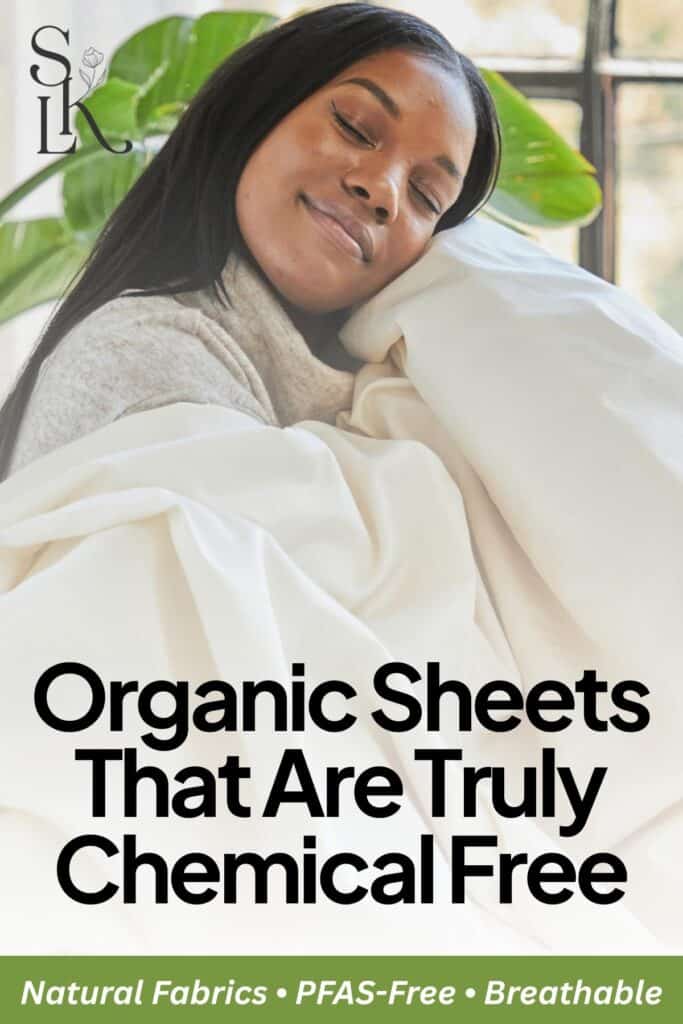
As a mom of three, that realization hit differently. Sheets aren’t decorative. They sit directly against your skin for six to nine hours at a time, in your breathing zone, absorbing sweat and heat while your body is supposed to rest and recover.
If there are chemical finishes or synthetic fibers involved, that exposure isn’t occasional — it’s nightly.
So I started replacing ours.
What surprised me most was how confusing the term “organic sheets” can be.
Some brands use organic cotton but still apply wrinkle-resistant finishes. Others carry OEKO-TEX certification but aren’t fully organic. And some rely on vague language like “natural” or “eco-friendly” without meaningful third-party verification.
The best non-toxic sheets are the ones that combine clean fiber sourcing, transparent processing, and verified third-party certification like GOTS or MADE SAFE®. That’s exactly what this guide focuses on.
Before we get into the list, let’s talk about what actually makes sheets safe — and what separates them from the conventional bedding most people are still using.
Why Conventional Sheets Deserve a Second Look
Most sheets on the market are engineered for durability and convenience, not chemical simplicity.
Wrinkle-free fabrics are often treated with formaldehyde-based resins to hold their shape. Stain-resistant finishes may rely on PFAS coatings, sometimes referred to as “forever chemicals” because they persist in the environment and the body.
Microfiber sheets, which dominate the lower price range, are made from polyester derived from petroleum. They’re inexpensive and soft at first touch, but significantly less breathable than natural fibers and prone to trapping heat.
None of this is meant to create fear. But when you consider that you spend nearly a third of your life in direct contact with your sheets, choosing safer materials becomes less about luxury and more about long-term exposure reduction.
What Makes Sheets Truly Non-Toxic?
The safest sheets are made from certified organic natural fibers and processed without formaldehyde finishes, PFAS treatments, or synthetic polyester blends.
GOTS-certified organic cotton remains the gold standard because it regulates both farming practices and textile processing standards.
Additional certifications like MADE SAFE® or GREENGUARD Gold add another layer of screening for harmful substances and emissions. Breathability, fiber quality, and manufacturing transparency matter far more than thread count marketing.
Below are the best non-toxic sheets I would personally feel comfortable putting on every bed in my home.
1. Pact
Best Overall Organic Percale Sheets
Use discount code SKL15 to save 15%!
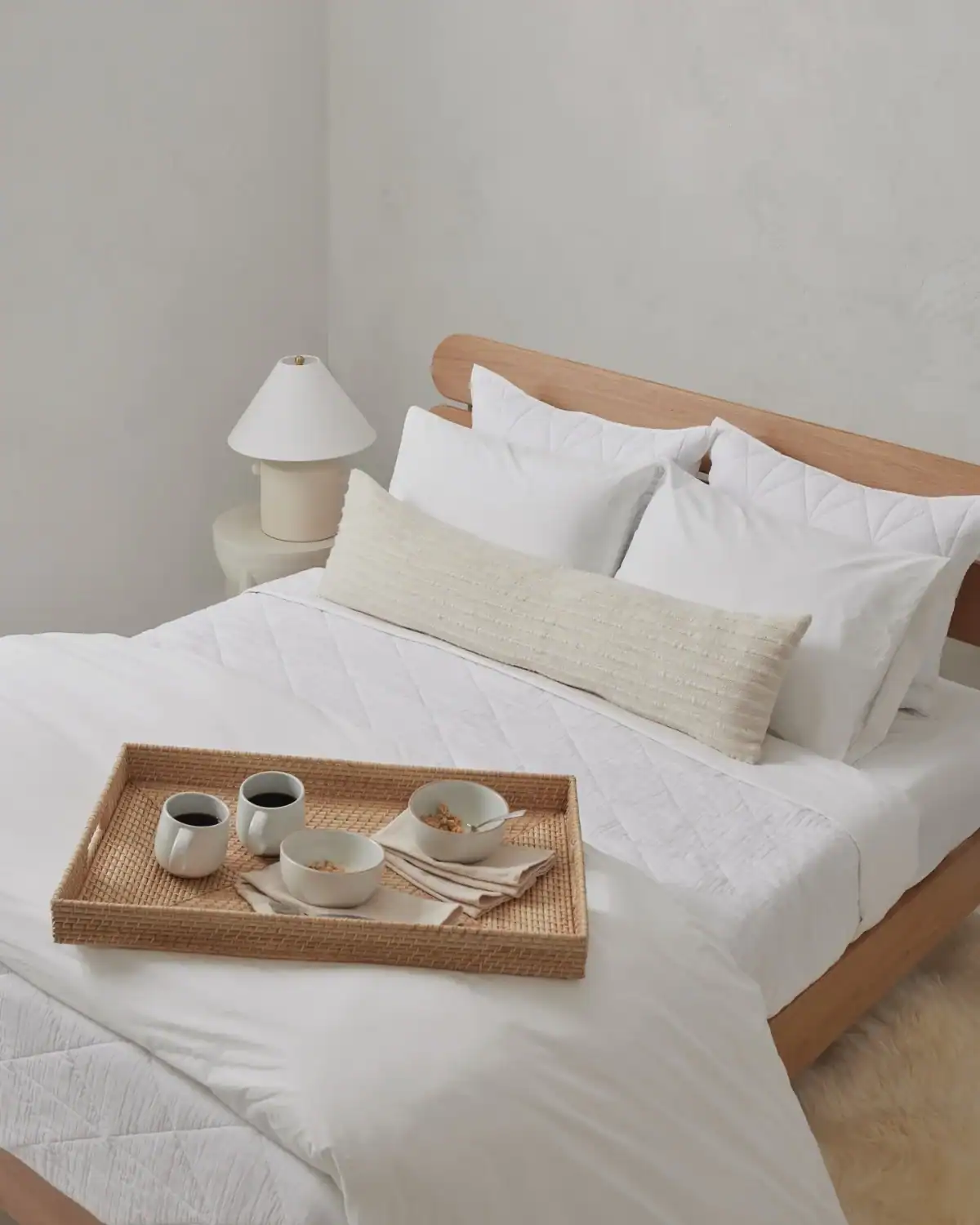
If you’re looking for the best non-toxic sheets that feel crisp, breathable, and affordable, Pact is one of the most reliable places to start.
Their Cool-Air Percale set is made from 100% GOTS certified organic cotton, which verifies both clean fiber sourcing and safer processing standards.
These organic sheets are free from wrinkle-resistant formaldehyde finishes and synthetic blends, making them a strong option if you’re trying to avoid hidden textile treatments.
The lightweight percale weave makes them especially ideal for hot sleepers or anyone transitioning away from microfiber.
For most households, this is a practical, well-certified upgrade to truly non-toxic bed sheets without luxury pricing.
Price/sizing
~$160 for Queen (4-piece set); Twin–California King
materials
100% GOTS-certified organic cotton percale
location/shipping
United States; international shipping available
2. Coyuchi
Best Premium Organic Percale
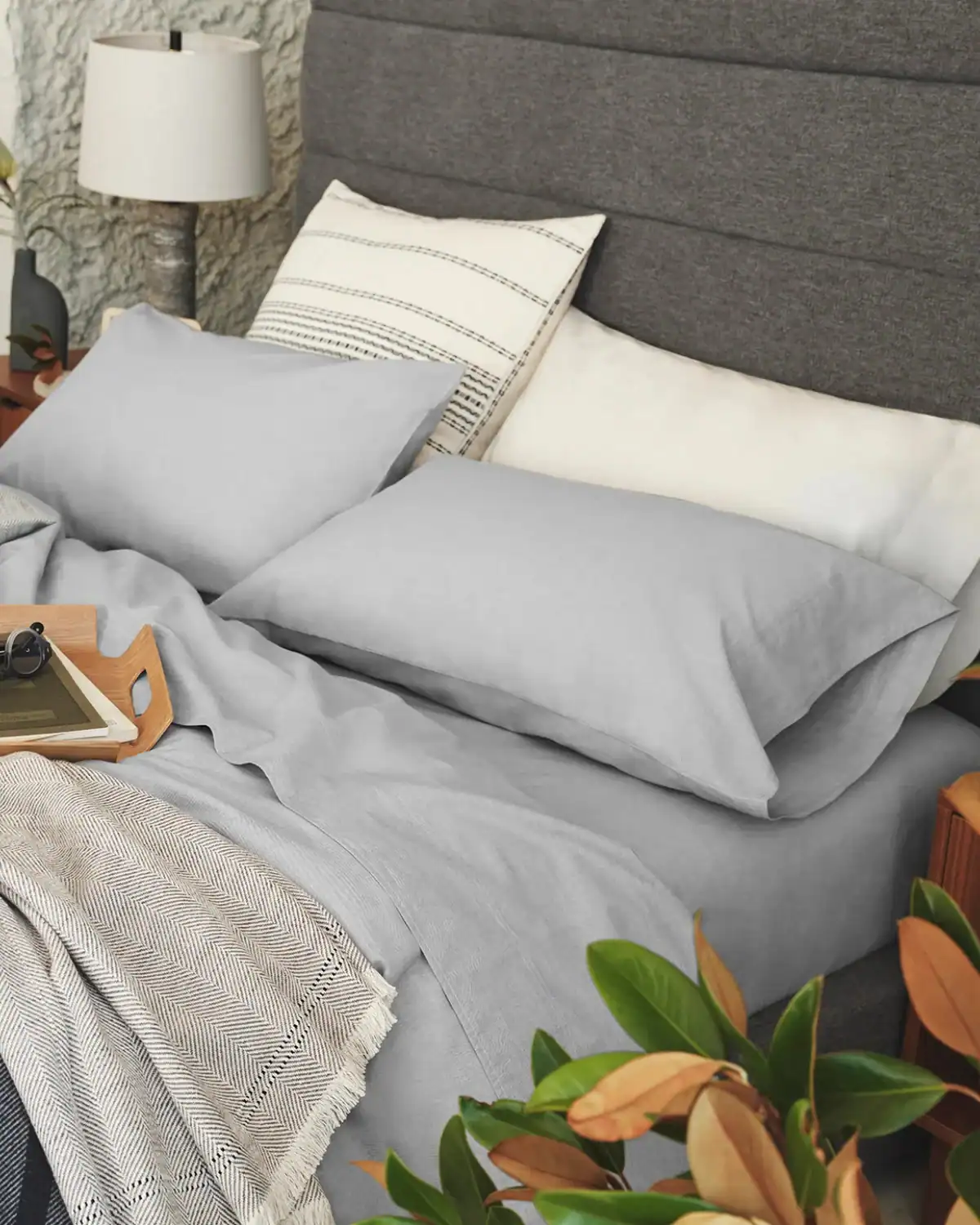
Coyuchi is one of the brands I consistently trust when readers ask for organic sheets without formaldehyde or chemical softeners.
Their percale sheets are woven from long-staple GOTS-certified organic cotton and processed without PFAS coatings or harsh finishes.
The relaxed, slightly textured weave enhances airflow naturally, making these some of the best non-toxic sheets for warm sleepers.
Coyuchi’s long-standing commitment to regenerative farming and material transparency adds another layer of credibility.
If you want elevated organic cotton sheets that meet strict standards while still feeling breathable and refined, this is a strong premium choice.
Price & SIZing
~$198–$298 for Queen (4-piece set); Twin–California King
Materials
100% GOTS-certified organic cotton percale
Location/Shipping
United States; limited international shipping
3. Naturepedic
Best Organic Sateen Sheets
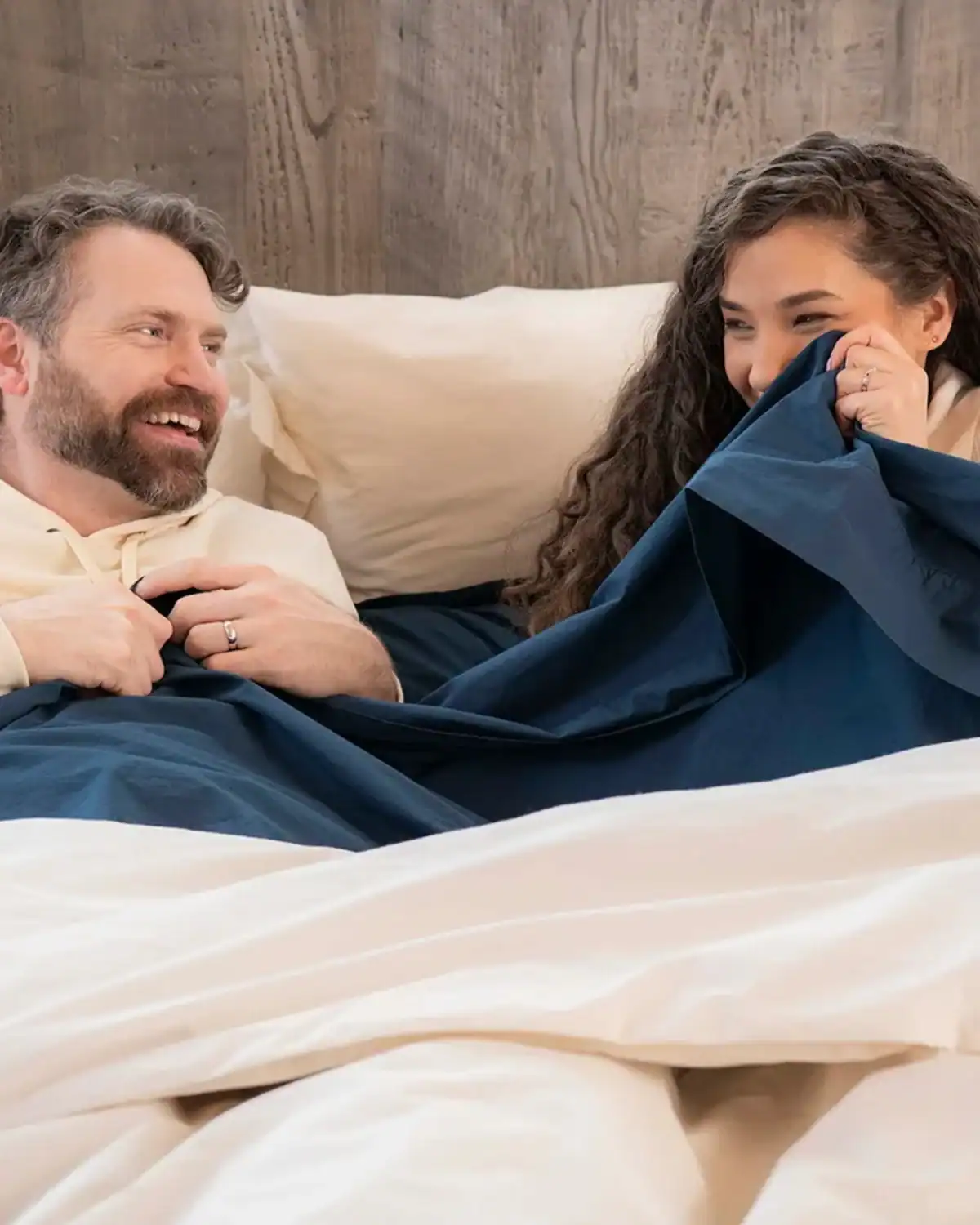
Naturepedic’s sateen sheets are ideal for anyone who wants silky softness without compromising on chemical safety.
These are GOTS-certified sheets that also carry MADE SAFE® and GREENGUARD Gold certifications, meaning they’ve been screened for harmful substances and low emissions.
Unlike many conventional sateen sets, they are not treated with wrinkle-resistant resins or synthetic coatings.
The 400-thread count weave offers a smooth drape while still remaining breathable and comfortable for everyday use.
If you’re searching for the safest sheets to sleep on in a luxury category, this is one of the most thoroughly vetted options available.
Price & SIZing
~$279 for Queen (4-piece set); Twin–California King
Materials
100% GOTS-certified organic cotton sateen
Location/Shipping
United States; ships to Canada
4. Avocado
Best Luxury Organic Sheets
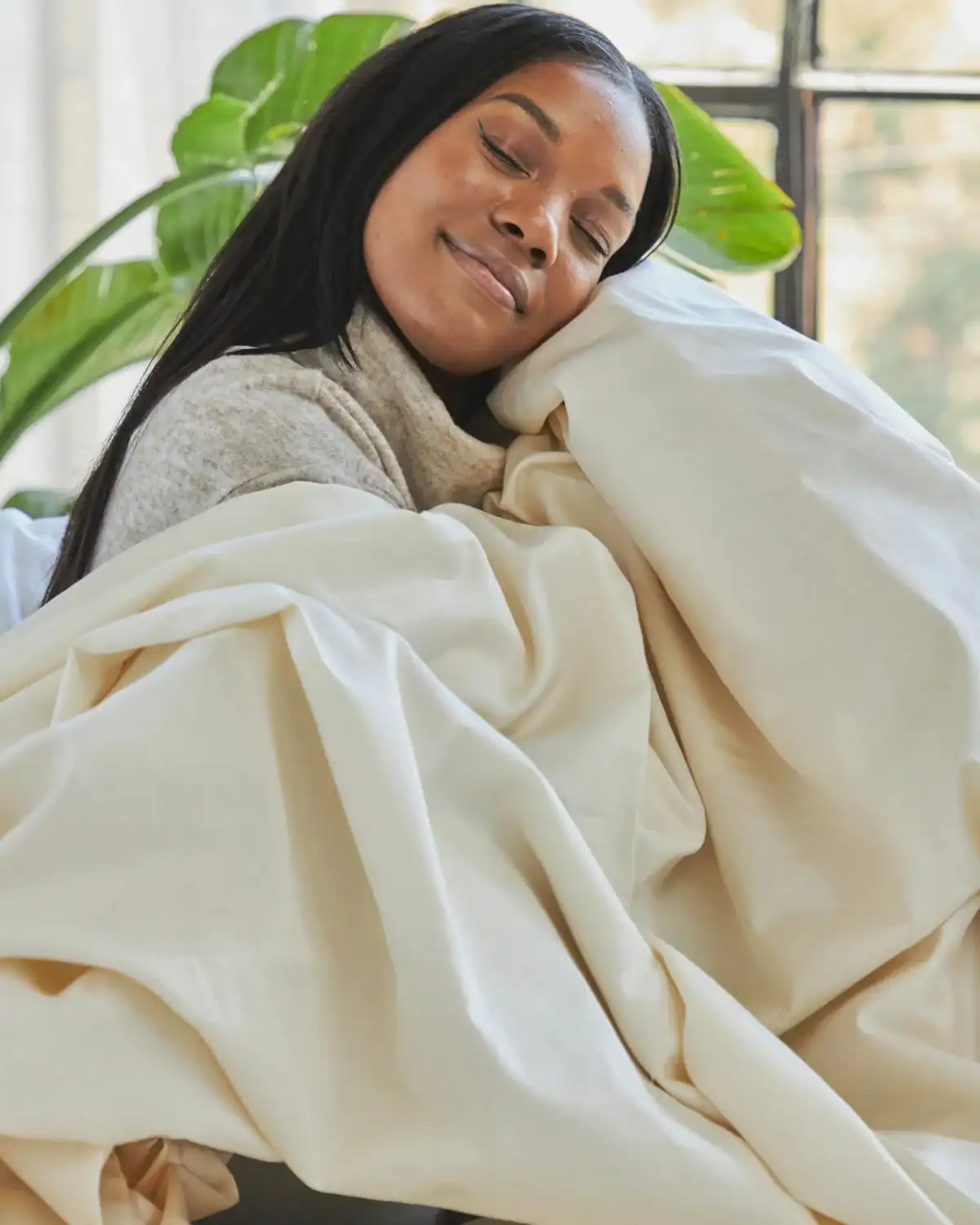
Avocado’s organic cotton sheets are designed for buyers who want luxury backed by meaningful certification.
These GOTS-certified sheets are also MADE SAFE® certified, which helps verify they are free from PFAS treatments and unnecessary chemical finishes.
Available in multiple thread counts, the sateen weave offers softness without relying on synthetic blends.
The brand’s emphasis on supply chain transparency reinforces their credibility in the non-toxic sheets space.
If you want organic sheets that feel indulgent but still meet strict safety benchmarks, Avocado is a smart investment.
Price & SIZing
~$199–$259 for Queen; Twin–California King
Materials
100% GOTS-certified organic cotton sateen
Location/Shipping
United States
5. Delilah Home
Best for Sensitive Skin & Eczema
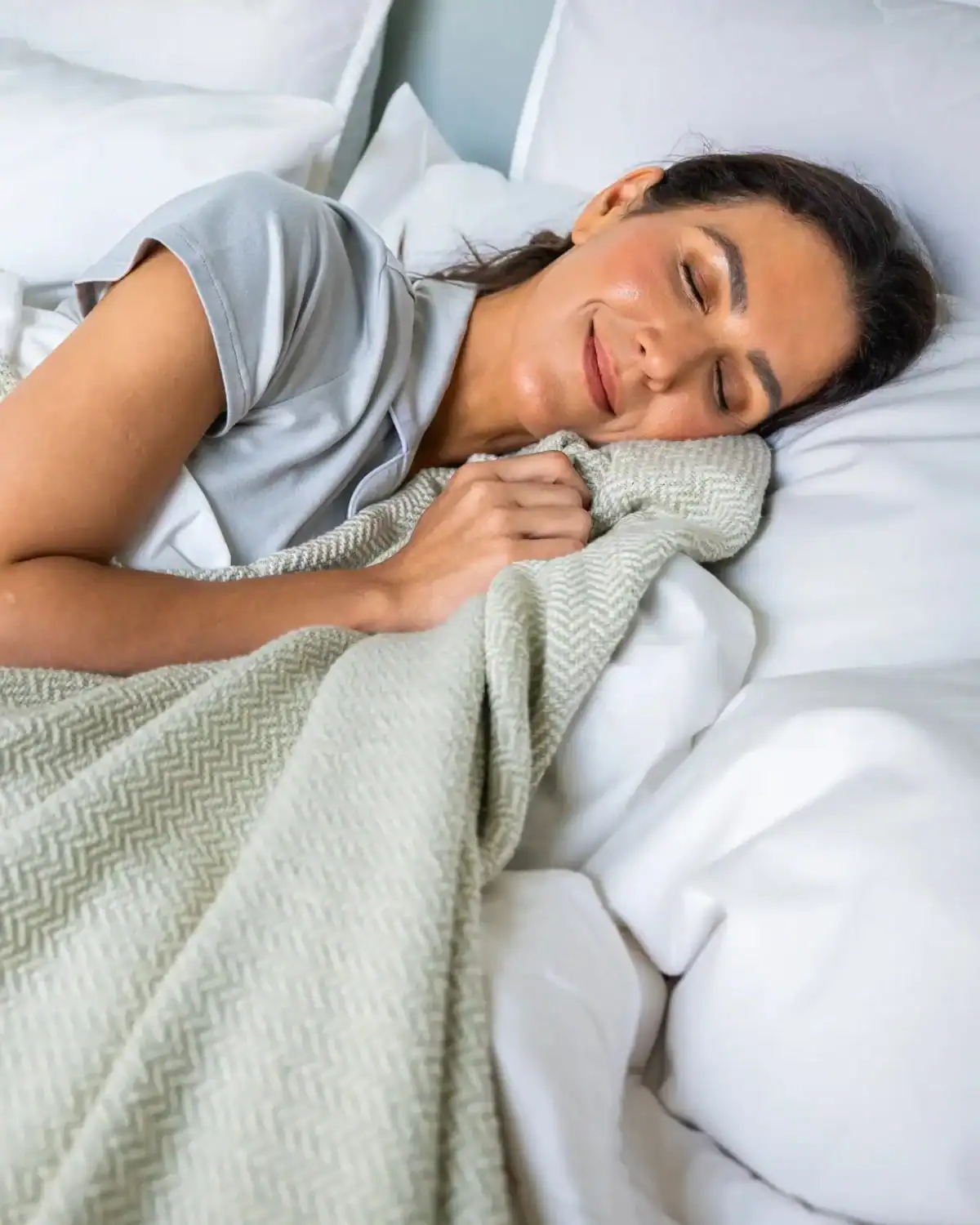
Delilah Home is a thoughtful option for anyone looking for the safest sheets for eczema or highly reactive skin.
Their organic cotton sheets are GOTS-certified and produced without synthetic softeners or chemical wrinkle treatments.
At 300 thread count, the weave stays breathable and crisp rather than heavy or coated.
Avoiding unnecessary finishes can make a noticeable difference for sensitive sleepers.
If your priority is reducing irritants in your non-toxic bed sheets, this is a clean and straightforward choice.
Price & SIZing
~$300 for Queen (4-piece set); Twin–California King
Materials
100% GOTS-certified organic cotton
Location/Shipping
United States
6. Magic Linen
Best Linen Sheets
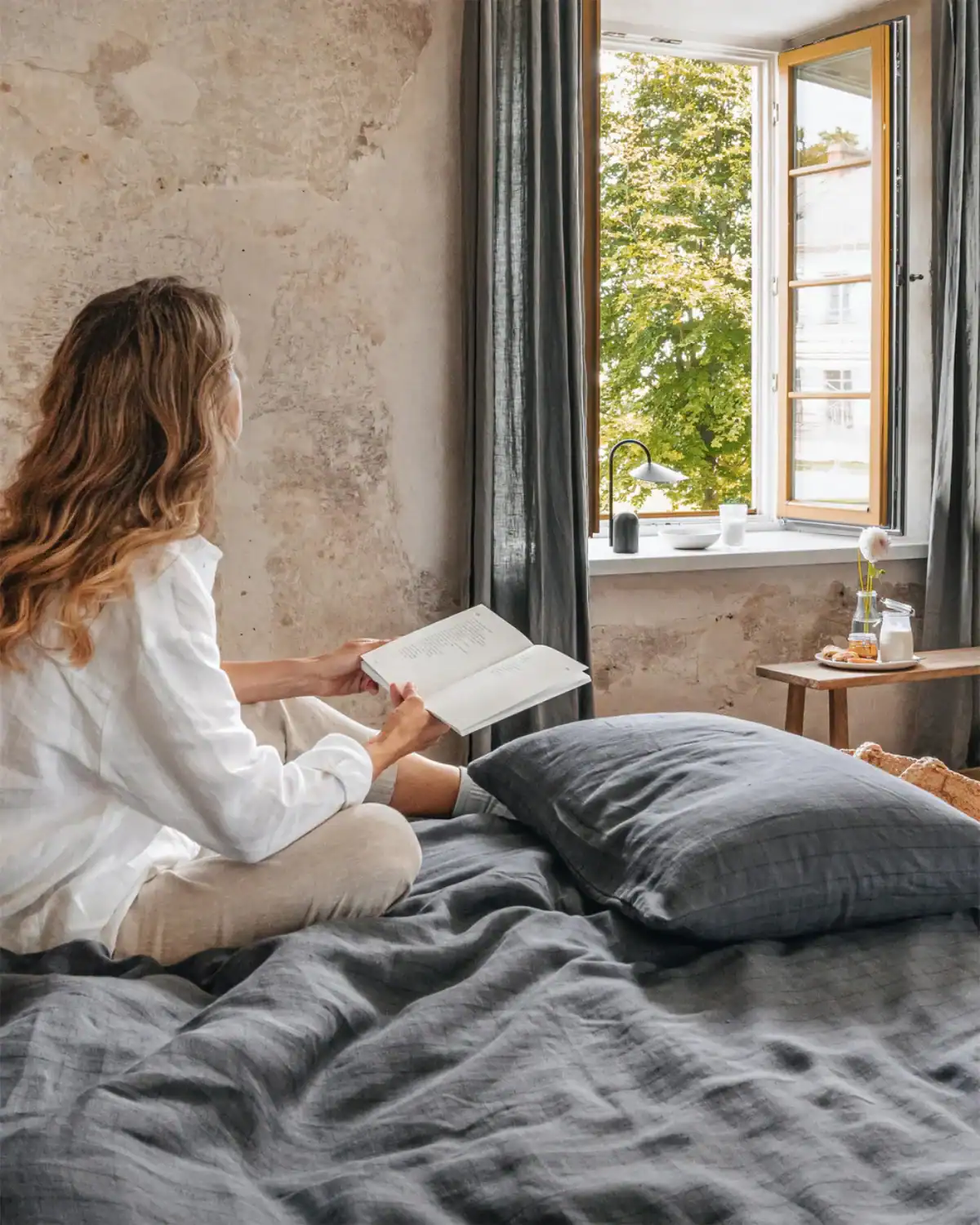
Magic Linen offers 100% European flax sheets for those who prefer a relaxed, airy texture over traditional cotton.
While not GOTS-certified like organic cotton sheets, they carry OEKO-TEX certification, verifying the finished fabric has been tested for harmful substances.
Linen is naturally breathable and moisture-wicking, making it one of the healthiest sheet materials for temperature regulation.
These sheets are stonewashed for softness rather than chemically softened.
If you’re comparing microfiber vs organic cotton sheets and want something even more breathable, linen is worth considering.
Price & SIZing
~$345 for Queen (4-piece set); multiple sizes available
Materials
100% European flax linen (OEKO-TEX certified)
Location/Shipping
Lithuania; ships to U.S. & Australia
7. Ettitude
Best Bamboo Lyocell Sheets for Hot Sleepers
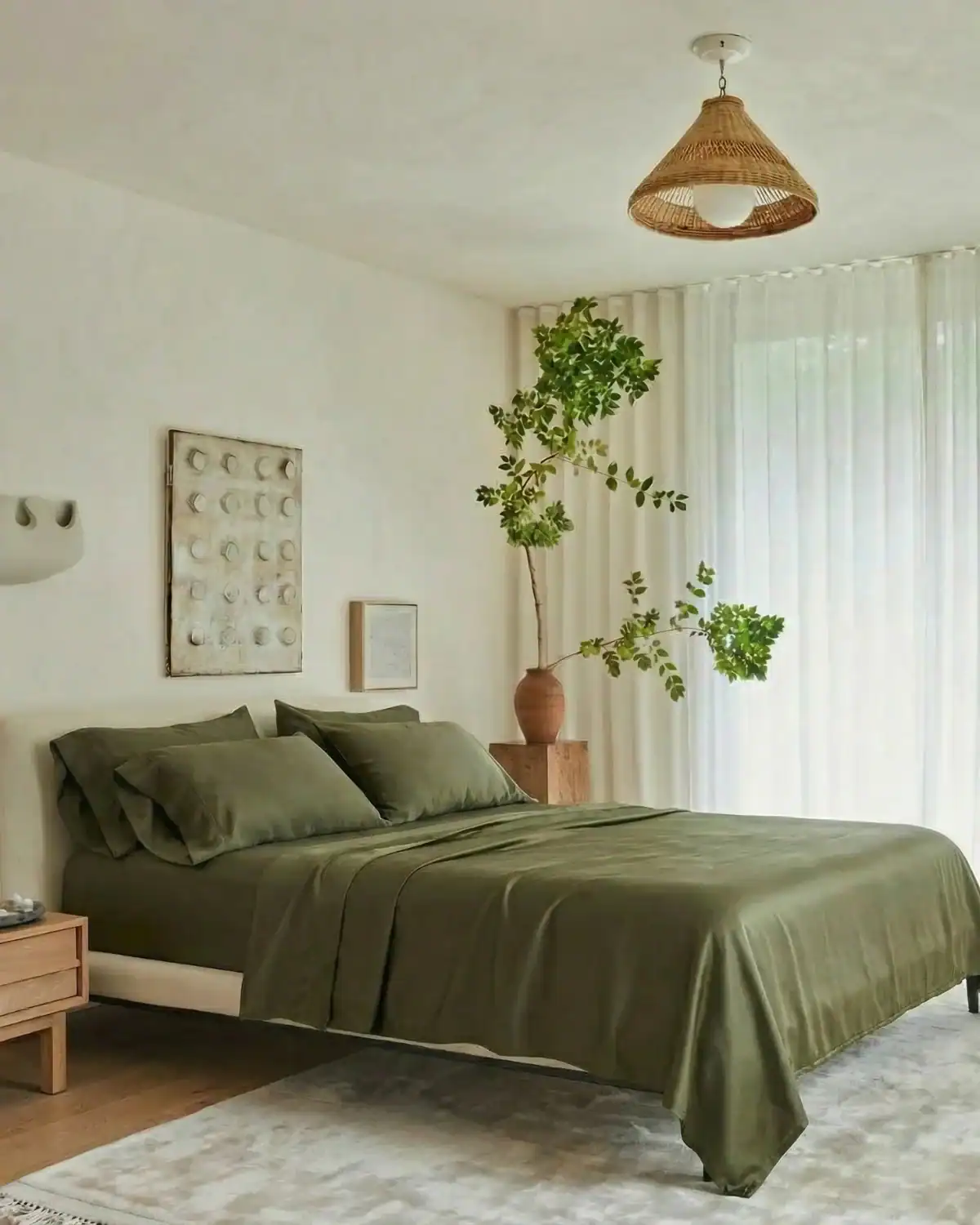
Ettitude’s sheets are made from bamboo lyocell, which is produced in a closed-loop system designed to recycle solvents and reduce chemical waste.
They are OEKO-TEX certified and free from synthetic polyester blends often found in conventional bedding.
The fabric has a silky feel and strong temperature regulation, making it one of the best non-toxic sheets for hot sleepers.
Bamboo lyocell is still a processed fiber, so transparency and certification are key.
If you’re wondering whether bamboo sheets are non-toxic, this is one of the more responsibly produced options available.
Price & SIZing
~$248 for Queen (4-piece set); Twin–California King
Materials
Bamboo lyocell (OEKO-TEX certified)
Location/Shipping
United States; international shipping available
8. Quince
Best Budget Organic Sheets
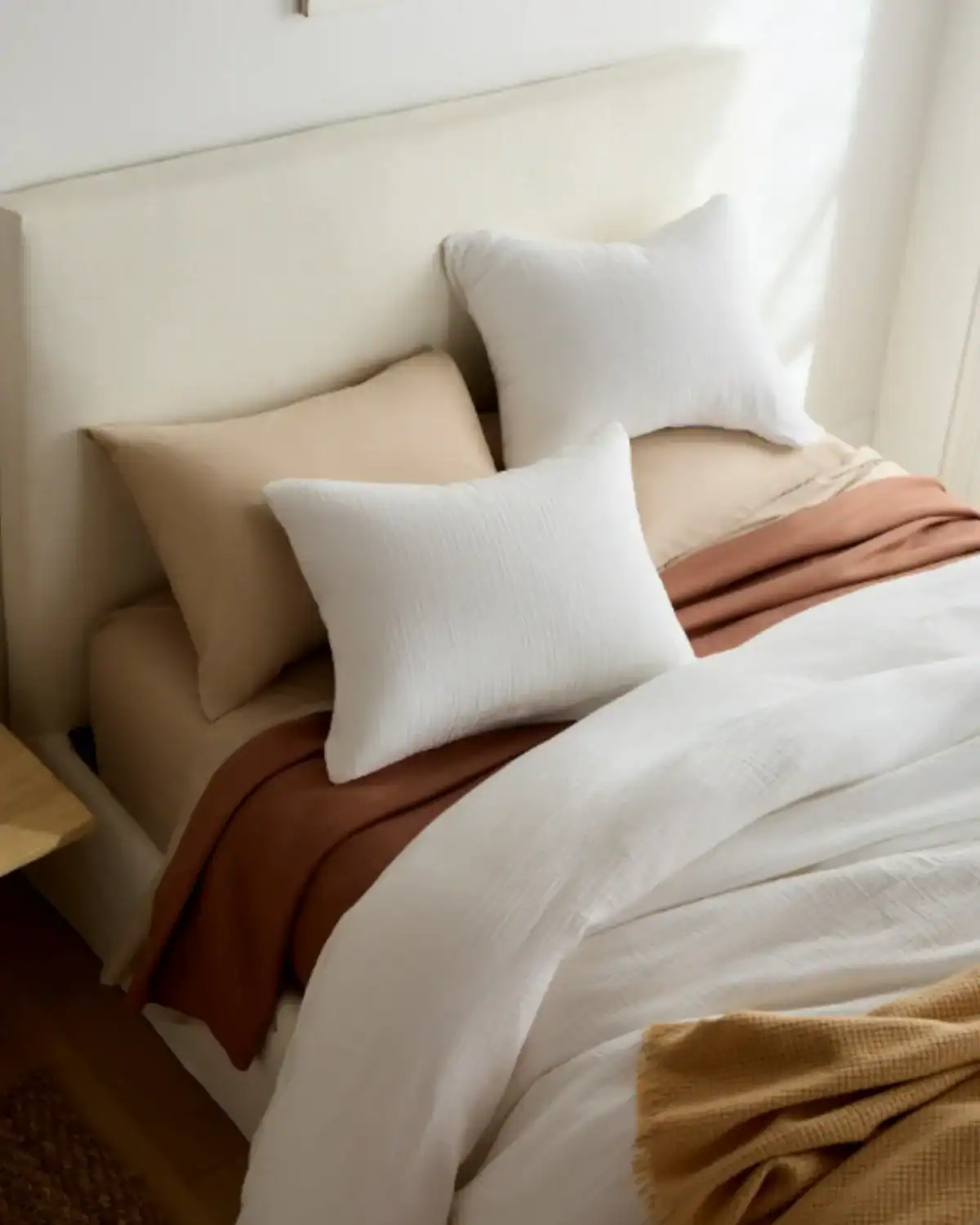
Quince offers organic cotton sheets at one of the most accessible price points in this guide.
Their sheets are OEKO-TEX certified and made from long-staple cotton without polyester blends.
While they do not carry as many layered certifications as brands like Naturepedic or Avocado, they avoid heavy chemical finishes.
This makes them a reasonable option if you are searching for affordable organic sheets in 2026.
If budget is your primary concern, but you still want non-toxic bed sheets, Quince is a practical entry point.
Price & SIZing
~$100–$150 for Queen; Twin–California King
Materials
Organic cotton (OEKO-TEX certified)
Location/Shipping
United States | Ships To Canada
9. Rawganique
Best Hemp Sheets for a Sustainable Bedroom
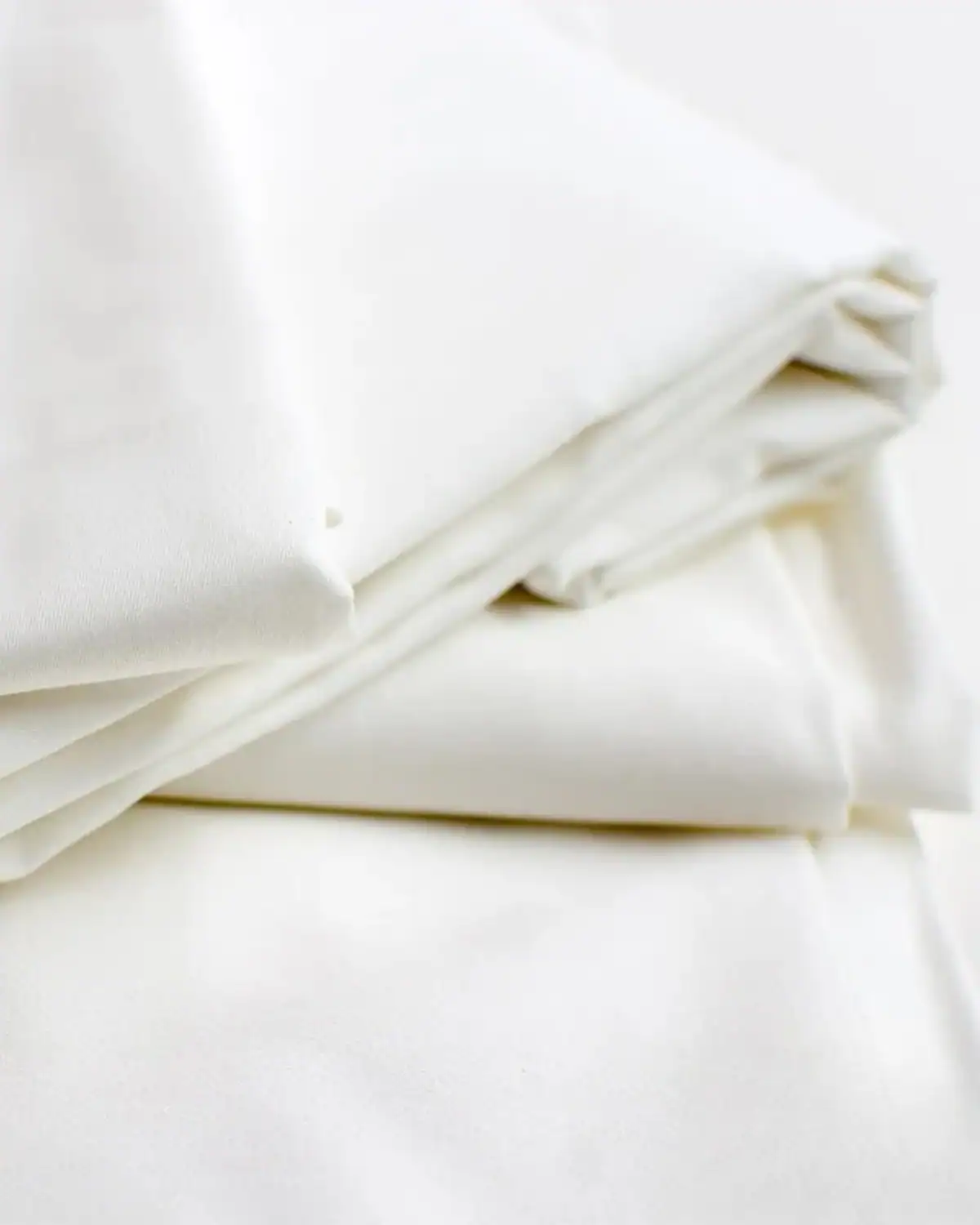
Rawganique offers 100% European hemp sheets for those seeking a plant-based alternative to cotton.
Hemp requires fewer pesticides than conventional cotton and is naturally breathable and durable.
Organic hemp certification is less standardized than GOTS cotton, so brand transparency matters here.
Rawganique focuses on minimally processed fibers and avoids synthetic blends in their bedding.
If sustainability is your top priority and you want non-toxic sheets beyond organic cotton, hemp is worth exploring.
Price & SIZing
~$200–$350 for Queen; multiple sizes available
Materials
100% European hemp
Location/Shipping
Lithuania; ships to U.S. & Australia
10. PlushBeds
Best for a Fully Organic Sleep System
PlushBeds offers GOTS-certified organic cotton sheets that align with their broader organic mattress collection.
These sheets are produced without harmful chemical finishes or synthetic blends.
If you are building a completely non-toxic bedroom, keeping your sheets within the same certified ecosystem can simplify decision-making.
The weave is breathable and designed for everyday durability.
For shoppers who want cohesive, certified organic sheets across their entire sleep setup, PlushBeds is a consistent option.
Price & SIZing
~$150–$250 for Queen; Twin–California King
Materials
100% GOTS-certified organic cotton
Location/Shipping
United States; limited international shipping
How I Vet Brands
Why You Can Trust My Recommendations
I don’t include sheet brands lightly.
Every brand in this guide was evaluated for third-party certification, fiber sourcing, transparency in processing, and avoidance of common textile treatments like formaldehyde-based wrinkle finishes and PFAS coatings.
I also consider long-term performance. Sheets should hold up after repeated washing without pilling, thinning, or losing structure.
If a brand could not clearly explain what was in their sheets — or how those sheets were processed — it did not make this list.
My goal is simple: reduce unnecessary chemical exposure in the place you spend a third of your life.
How to Choose the Best Non-Toxic Sheets for Your Home
Now that you’ve seen the list, here’s what actually matters when narrowing it down.
Start with certification. GOTS-certified sheets remain the most comprehensive standard because they regulate both organic farming practices and textile processing. If you want sheets without formaldehyde or PFAS, this is the safest baseline.
Next, consider weave and temperature. Percale is crisp and breathable, making it ideal for hot sleepers. Sateen is smoother and slightly warmer.
Linen, hemp, and bamboo lyocell each offer different levels of airflow and texture, but transparency around processing is key.
Finally, ignore thread count marketing. Long-staple organic cotton in the 300–400 range often performs better than higher thread counts treated for softness. Fiber quality and certification matter far more than inflated numbers.
Organic Cotton vs Linen vs Bamboo vs Hemp
If you’re comparing materials, here’s the simple breakdown.
Organic cotton is the most widely certified and regulated option — especially when it’s GOTS certified. It strikes a really nice balance between softness, breathability, and durability, which is why it’s often the safest place to start.
Linen is incredibly breathable and moisture-wicking, making it ideal for hot sleepers or warmer climates. It’s not as commonly GOTS certified, but OEKO-TEX testing can still offer reassurance around harmful residues.
Bamboo lyocell can be a lower-impact choice when it’s made in a closed-loop system. The catch? Traditional bamboo viscose requires heavier chemical processing, so this is one area where transparency and certifications really matter.
Hemp is naturally durable and typically requires fewer pesticides than conventional cotton. That said, organic hemp standards aren’t as standardized as GOTS cotton, so it’s important to pay attention to how it’s processed.
There isn’t one perfect fiber. What matters most is that the material is natural and processed without unnecessary chemical treatments.
Frequently Asked Questions About Non-Toxic Sheets
The best non-toxic sheets are made from GOTS-certified organic cotton and processed without formaldehyde finishes, PFAS coatings, or synthetic blends.
These sheets meet strict third-party standards for both fiber purity and chemical safety. Organic cotton percale and sateen are the most reliable options for everyday use.
The healthiest sheets to sleep on are made from certified organic natural fibers such as organic cotton, linen, or bamboo lyocell.
These materials are breathable and avoid chemical treatments commonly found in wrinkle-resistant or stain-resistant bedding. GOTS-certified sheets provide the strongest assurance of safety.
Wrinkle-free sheets are often treated with formaldehyde-based resins to prevent creasing. These chemical finishes can contribute to skin irritation or low-level off-gassing, especially in sensitive individuals. Choosing organic sheets without wrinkle-resistant treatments is a safer alternative.
Certified organic sheets should not contain PFAS, which are sometimes used in stain-resistant or water-repellent fabrics.
PFAS are persistent chemicals that can accumulate in the environment and the body. To avoid sheets with PFAS, choose brands that clearly disclose PFAS-free processing.
Bamboo sheets can be non-toxic if they are made using a closed-loop lyocell process and tested for harmful substances. Traditional bamboo viscose involves heavier chemical processing. Look for OEKO-TEX certification and transparent manufacturing practices.
Thread count is less important than fiber quality and certification. Long-staple organic cotton in the 300–400 thread count range typically offers better breathability and durability than higher counts treated for softness. Focus on GOTS certification before chasing thread count numbers.
Percale and sateen can both be safe if made from GOTS-certified organic cotton. Percale is crisp and breathable, while sateen has a smoother and silkier finish. The health factor depends on chemical processing, not the weave itself.
The safest sheets for eczema are made from GOTS-certified organic cotton or natural linen without synthetic finishes. Avoid wrinkle-resistant coatings, heavy dyes, and polyester blends. Breathable, chemical-free sheets help reduce skin irritation during sleep.
Microfiber sheets are made from petroleum-based polyester fibers and are less breathable than natural materials. While not always chemically treated, they can trap heat and shed microplastics. Organic cotton sheets are generally considered a healthier option.
OEKO-TEX certification verifies that the finished fabric has been tested for harmful substances. However, it does not guarantee organic farming practices or full supply chain standards. GOTS-certified sheets provide more comprehensive oversight.
The best non-toxic sheets for sensitive skin are made from GOTS-certified organic cotton and processed without formaldehyde finishes, synthetic softeners, or PFAS coatings.
Breathable percale or lightweight sateen weaves help reduce heat buildup that can aggravate irritation. Avoid polyester blends and wrinkle-resistant treatments for the safest option.
Continue Building a Non-Toxic Bedroom
If you’re upgrading your sheets, you may also want to review:
- Our complete guide to non-toxic bedding
- The best non-toxic pillows (foam & formaldehyde free)
- The best non-toxic mattresses for a truly restorative sleep
- Organic mattress toppers for an added safety layer
- How HEPA air filters improve indoor air quality in your bedroom
Your Sheets Matter More Than You Think
Upgrading to the best non-toxic sheets isn’t about perfection.
It’s about reducing avoidable exposures in one of the most intimate environments in your home.
You don’t need to overhaul everything overnight. Even replacing one set of conventional sheets with certified organic sheets can meaningfully reduce chemical treatments in your sleep space.
When you prioritize breathable natural fibers and transparent certification, you’re choosing comfort and caution at the same time.
Your bed should be restorative — not a source of question marks.
I’d Love to Hear From You!
Have you already upgraded to organic or non-toxic sheets? I’m so curious — did they sleep cooler, feel softer, or help with sensitive skin?
If you’re stuck between a few brands, drop them below. Your feedback and questions directly influence what I test next. This community truly helps guide future reviews.
Sources & Further Reading
When researching non-toxic sheets and textile safety, I rely on established regulatory bodies and independent certification standards.
Sources & Certifications Referenced
- Global Organic Textile Standard (GOTS)
https://global-standard.org
Verifies textiles are certified organic and processed without toxic bleaches, dyes, or formaldehyde-based finishes. - MADE SAFE Certification
https://madesafe.org
Screens products for 6,500+ known harmful substances, including carcinogens and endocrine disruptors. - GREENGUARD Certification (UL Solutions)
https://www.ul.com/services/greenguard-certification
Certifies products for low chemical emissions to support healthier indoor air quality. - U.S. Environmental Protection Agency (EPA) – Indoor Air Quality
https://www.epa.gov/indoor-air-quality-iaq
Provides guidance on indoor air pollutants, including VOCs released from household products and treated materials. - U.S. Environmental Protection Agency (EPA) – PFAS Explained
https://www.epa.gov/pfas
Explains what PFAS are, why they’re called “forever chemicals,” and how they persist in the environment and human body. - National Cancer Institute – Formaldehyde Fact Sheet
https://www.cancer.gov/about-cancer/causes-prevention/risk/substances/formaldehyde
Confirms formaldehyde is used in wrinkle-resistant and permanent-press fabrics and classified as a known human carcinogen. - Agency for Toxic Substances and Disease Registry (ATSDR) – Toxicological Profile for Formaldehyde
https://www.atsdr.cdc.gov/toxprofiles/tp111.pdf
Comprehensive federal review of formaldehyde exposure sources and associated health effects. - Environmental Working Group (EWG) – PFAS Overview
https://www.ewg.org
Consumer-friendly breakdown of PFAS risks in textiles, furniture, and household products. - Schaider, L.A. et al. (2017). Fluorinated Compounds in U.S. Household Textiles. Environmental Science & Technology Letters.
https://pubs.acs.org/doi/10.1021/acs.estlett.7b00250
Found measurable PFAS in stain-resistant household fabrics, highlighting indoor exposure pathways. - Guo, Z. et al. (2009). Fluorotelomer Alcohols in Indoor Air. Environmental Science & Technology.
Documents PFAS precursor compounds released from treated textiles into indoor air. - Li, Y. (2001). The Science of Clothing Comfort. Textile Progress.
Explains moisture vapor transfer differences between natural fibers and synthetic materials like polyester. - Xie, L. et al. (2021). Sleep & Thermoregulation. Frontiers in Neurology.
Explores how temperature regulation affects sleep quality — relevant when comparing breathable natural fibers vs. heat-trapping synthetics. - Centers for Disease Control and Prevention (CDC) – Sleep and Sleep Disorders
https://www.cdc.gov/sleep
Documents that adults average 7–9 hours of sleep per night — roughly one-third of their lives in direct contact with bedding. - Encyclopaedia Britannica – Polyester
https://www.britannica.com/science/polyester
Confirms polyester is a synthetic fiber derived from petroleum-based polymers.

Steal My Non-Toxic Cleaning Checklist!
Believe us, it’s the BEST…. and it’s free. Does it really get any better than that?! Sign up for our newsletter and get this free checklist to clean your home without any harmful chemicals!


Thank you for adding information about shipping as I am from Europe and its very helpful!
That makes me so happy to hear — thank you for saying that 🤍
Since we have so many readers outside of the U.S. (and now that I’m based in Europe myself!), I know firsthand how frustrating it can be to fall in love with a product only to realize it doesn’t ship internationally.
I’m so glad the shipping details were helpful for you, and I’ll continue to include that information whenever possible to make things easier for our global community.
Thank you so much for being here and for taking the time to comment — it truly means a lot.