 Shop My Favorite Non-Toxic Gifts Of 2026!
SKL is reader supported. When you buy through links on our site, we may earn affiliate commission. Learn more here.
When I first started upgrading our bedroom, I didn’t begin with the pillows. I focused on the mattress and sheets, assuming that was where the biggest impact would be.
But when I started researching the best organic and non-toxic pillows, I realized something surprising — your pillow is the one product in your bed you’re actually breathing into for seven to eight hours every night.
SKL top non-toxic pillows, at a glance…
- Obasan — Best for premium certified organic latex (GOLS + GOTS).
- Holy Lamb Organics — Best for a completely foam-free, non-toxic wool pillow.
- Naturepedic — Best for layered certifications and low-emission testing.
- Avocado — Best for breathable organic latex and kapok comfort.
- PlushBeds — Best for neck support and adjustable organic latex comfort
Most conventional pillows are made from polyurethane foam, synthetic blends, or “cooling” gels that are heavily processed and rarely explained clearly.
That chemical smell when you open a new pillow isn’t luxury — it’s off-gassing from foam and adhesives.
After years of researching indoor air quality and chemical exposure, I couldn’t ignore that. I wanted to know exactly what my family was resting their faces on every night.
So I began testing organic latex pillows, organic wool pillows, and other natural options that don’t rely on polyurethane foam or chemical flame retardants. I compared certifications, materials, and construction — not just marketing language.
What I found is simple: not all “natural pillows” are truly organic and non-toxic.
The best options combine verified certifications, transparent sourcing, and natural fills that avoid synthetic foam altogether.
Before we get into the brands I trust most, let’s look at what conventional pillows are actually made from — and why that matters.
What’s Actually Inside Most Conventional Pillows
When I started reviewing ingredient disclosures, one pattern showed up again and again:
Most conventional pillows are made from polyurethane foam — including memory foam, shredded foam, and many “cooling” pillows marketed for hot sleepers.
Polyurethane foam is petroleum-based and engineered through chemical reactions that create a soft, moldable material. Because it’s inexpensive to produce and easy to mass manufacture, it dominates the pillow market.
Now, that doesn’t automatically make every foam pillow dangerous. However, it does mean the material is highly processed and often contains additional additives to adjust firmness, durability, or heat retention.
And since your pillow sits directly under your nose, any odors or emissions can feel more concentrated than they would from a mattress across the room. That “new pillow smell” many people notice is typically off-gassing from foam and adhesives.
For some people — especially those with asthma, eczema, or chemical sensitivities — this becomes even more relevant. Even low-level exposure, night after night, can add up over time.
Why Material Transparency Matters
One of the biggest issues in the pillow industry isn’t always the material itself — it’s the lack of clear disclosure.
Brands use terms like “cooling,” “ergonomic,” or “hypoallergenic,” but rarely explain what’s actually inside. Is the core polyurethane foam? Has the fabric been chemically treated? Those details are often left out.
While pillows aren’t regulated like mattresses, some imported options may still use treated fabrics or chemical barriers without clearly stating it.
In contrast, truly organic and non-toxic pillows rely on certified natural materials like organic latex, organic wool, and GOTS-certified cotton — materials that perform well without synthetic flame retardants or petroleum-based foams.
That’s why certifications like GOTS and GOLS matter. They verify how materials are grown and processed — not just how they feel.
And once you understand what most conventional pillows are made from, you start shopping differently. That’s exactly how I vetted the brands below.
Each one uses certified natural materials, avoids polyurethane foam, and offers real transparency about sourcing and construction.
If you’re ready to upgrade your pillow without second-guessing what’s inside it, these are the brands worth considering.
The Best Organic & Non-Toxic Pillows (2026)
1. Obasan
Best For: Premium certified organic latex pillow
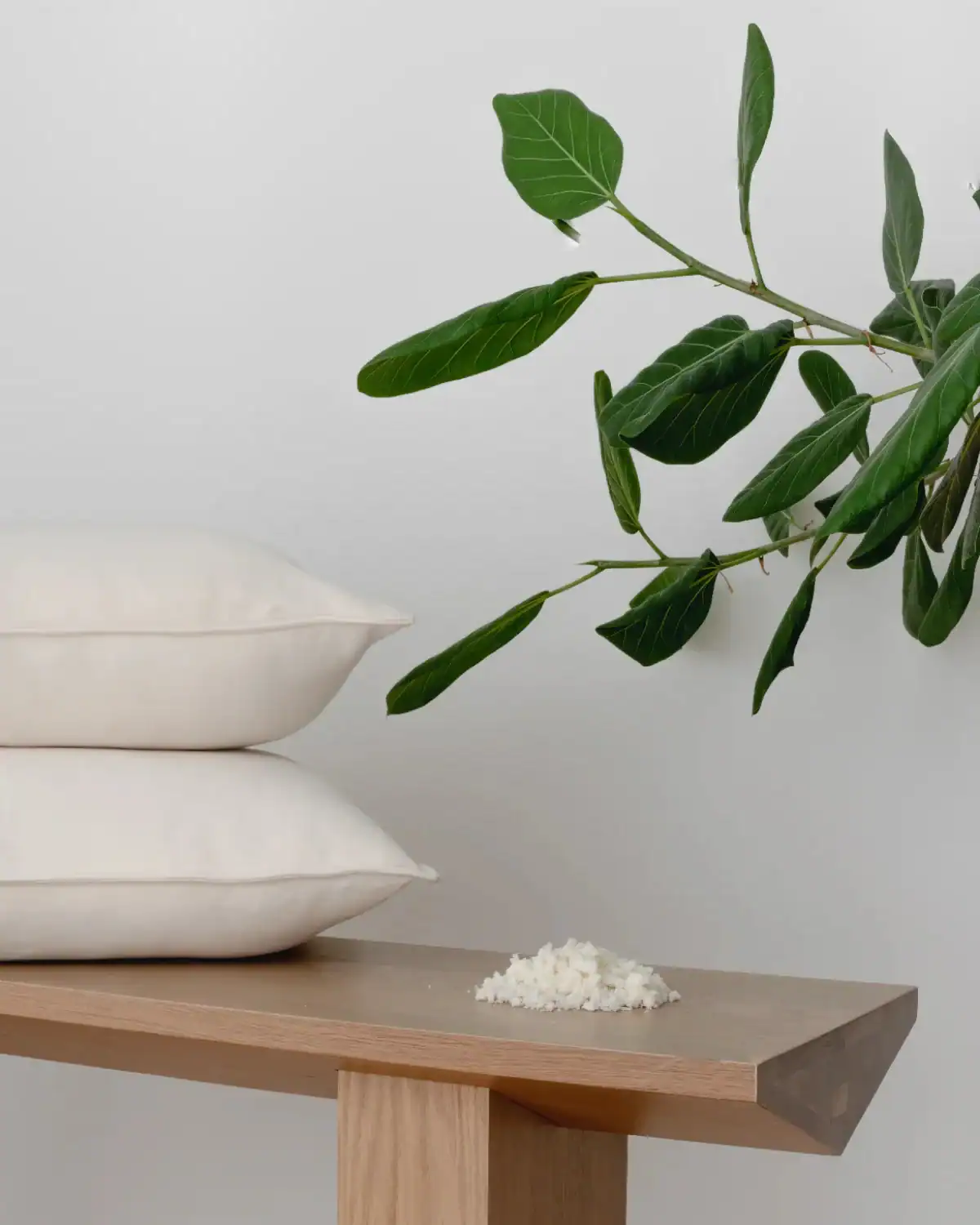
Use discount code SKL26 to save 20% on selected collections & pillows!
Obasan is one of the most thoroughly certified organic pillow brands on the market.
Their pillows use GOLS-certified organic latex cores wrapped in GOTS-certified organic cotton and wool, creating a fully traceable and certified system.
Unlike conventional memory foam pillows, there is no polyurethane foam, no gel infusions, and no mystery adhesives.
Latex provides responsive support without the deep sink or chemical odor many people associate with foam.
When readers ask me for the highest-certification organic latex pillow available, Obasan is consistently at the top of my list.
Price Range & Sizing
~$199–$320; Standard, Queen, King
materials
GOLS-certified organic latex; GOTS-certified organic cotton and wool
Location/Shipping
Made in Canada; ships to U.S. and Canada
Our Favorites from Obasan:

2. Holy Lamb Organics
Best For: Organic wool pillows without synthetic foam or chemical flame retardants
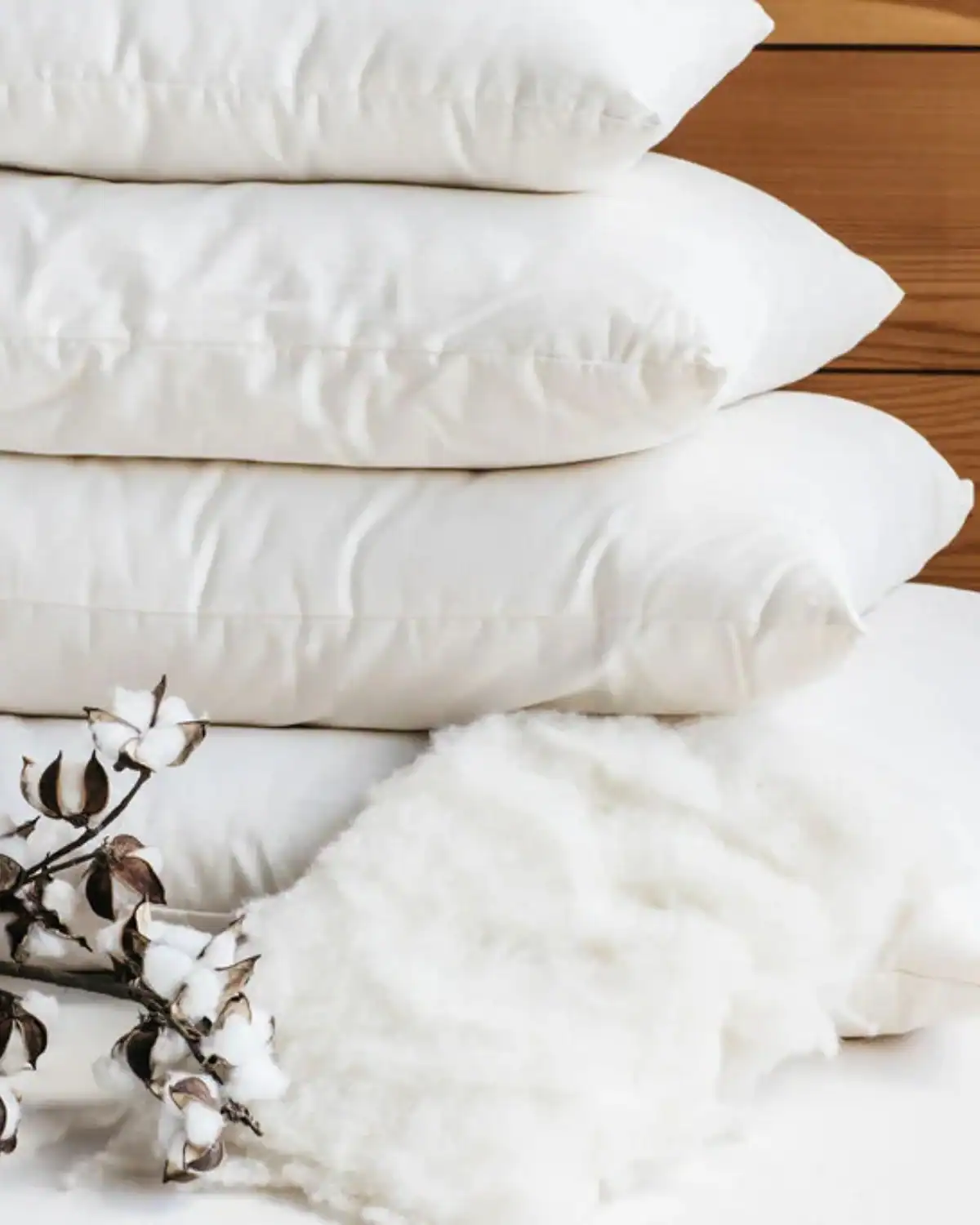
Holy Lamb Organics is one of the few pillow brands I recommend when someone wants to eliminate polyurethane foam completely.
Their pillows are filled with premium eco-wool and encased in GOTS-certified organic cotton, with no synthetic blends, adhesives, or chemical treatments.
Wool is naturally flame-resistant and moisture-wicking, which means it meets flammability standards without added flame retardants.
I’ve found wool pillows especially helpful for people with chemical sensitivities or those who react to foam off-gassing.
If you’re building a fully organic and non-toxic bedroom and want something traditional, breathable, and simple, this is one of the safest starting points.
Price & SIZE Range
~$129–$209; Standard, Queen, King
Materials
GOTS-certified organic cotton cover; premium eco-wool fill
Location/Shipping
Made in Washington, USA; ships within the U.S.
3. Naturepedic
Best For: Layered certification and low-emission organic latex
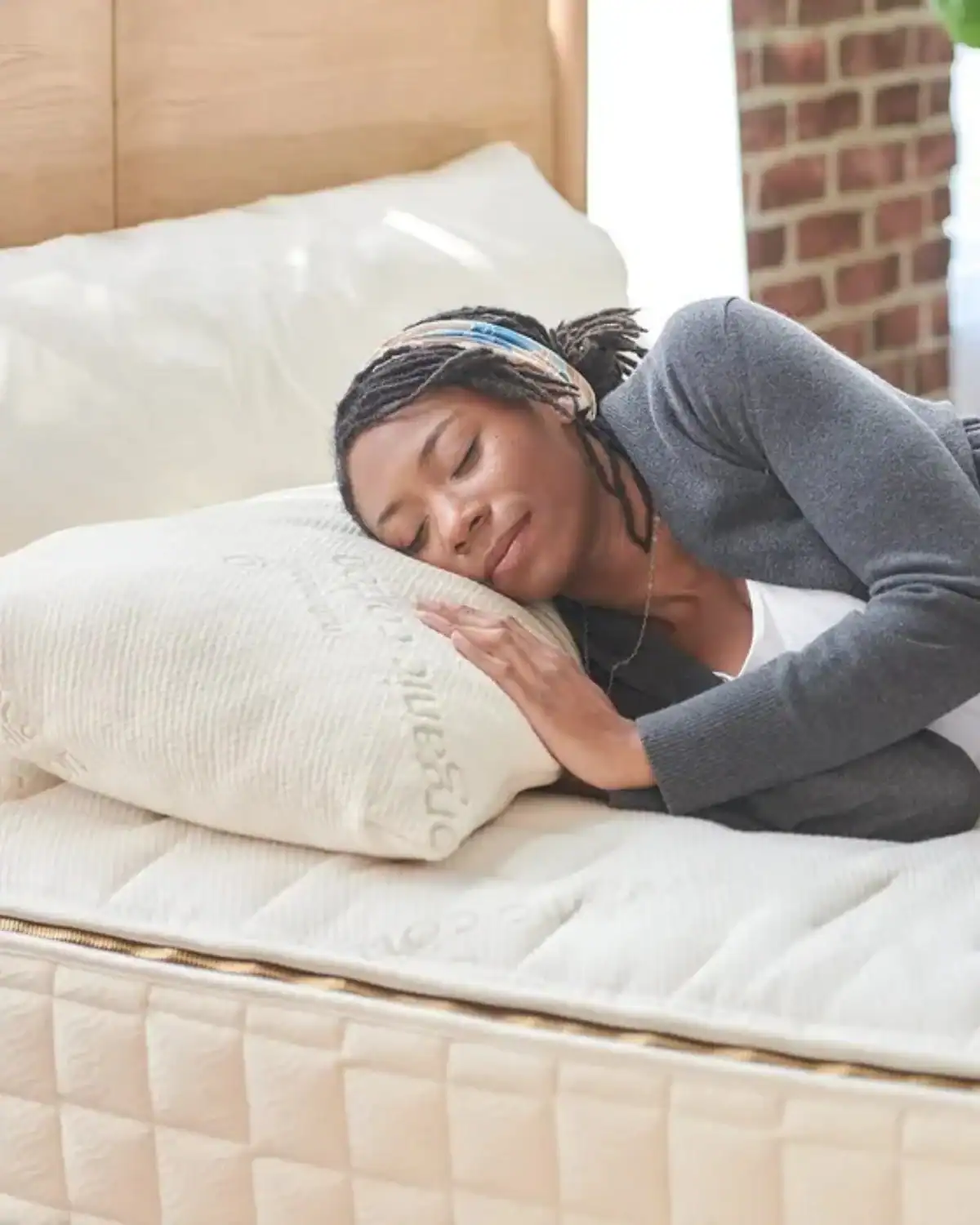
Naturepedic offers one of the safest organic latex pillows available.
Their pillows use certified organic latex and GOTS-certified organic cotton, and many models also carry GREENGUARD Gold certification for low emissions.
That additional emissions testing is important when we’re talking about something that sits directly under your nose all night.
The shredded latex design allows for loft adjustment, which makes it a strong option for side sleepers or those with neck pain.
If you want layered certifications and transparent material disclosure, Naturepedic checks those boxes confidently.
Price & SIZE Range
~$149–$249; Standard, Queen, King
Materials
GOLS-certified organic latex; GOTS-certified organic cotton cover
Location/Shipping
United States; ships nationwide
4. Avocado
Best For: Organic latex and kapok blend with adjustable loft

Avocado’s pillow combines GOLS-certified organic latex with organic kapok fiber for a softer, more moldable feel than solid latex alone, making it a great option for sleepers who want organic materials without an overly firm feel.
The outer cover is GOTS-certified organic cotton, and the pillow carries multiple third-party safety certifications, including MADE SAFE®, OEKO-TEX® STANDARD 100, and GREENGUARD Gold.
These certifications help verify that the materials meet strict chemical emissions and safety standards beyond basic textile testing.
There is no polyurethane foam, no synthetic cooling gels, and no flame-retardant treatments used in this pillow.
Avocado also provides publicly available PFAS testing and UL Formaldehyde-Free verification, which is especially relevant for products used close to the face and airway.
I often recommend this option to readers who want organic, low-tox materials but prefer something more adaptable than a solid latex pillow.
It strikes a strong balance between comfort, adjustability, and verified non-toxic construction.
Price & SIZE Range
~$109–$199; Standard, Queen, King
Materials
GOLS-certified organic latex; organic kapok fiber; GOTS-certified organic cotton cover; free from polyurethane foam, synthetic gels, and flame retardants
Location/Shipping
United States; ships nationwide
5. PlushBeds
Best For: Adjustable organic latex pillow for side sleepers

PlushBeds offers a shredded organic latex pillow designed for customizable support.
It uses GOLS-certified organic latex and a GOTS-certified organic cotton cover, without polyurethane foam or synthetic fillers.
Adjustability is especially important for side sleepers who need more neck alignment than a fixed loft pillow can provide.
Unlike memory foam pillows, latex is breathable and does not rely on chemical additives for structure.
For shoppers building a fully organic mattress and pillow system, PlushBeds provides consistency across materials and certifications.
Price & SIZE Range
~$99–$199; Standard, Queen, King
Materials
GOLS-certified organic latex; GOTS-certified organic cotton cover
Location/Shipping
United States; ships nationwide
6. Savvy Rest
Best For: Customizable organic latex pillow with firm support
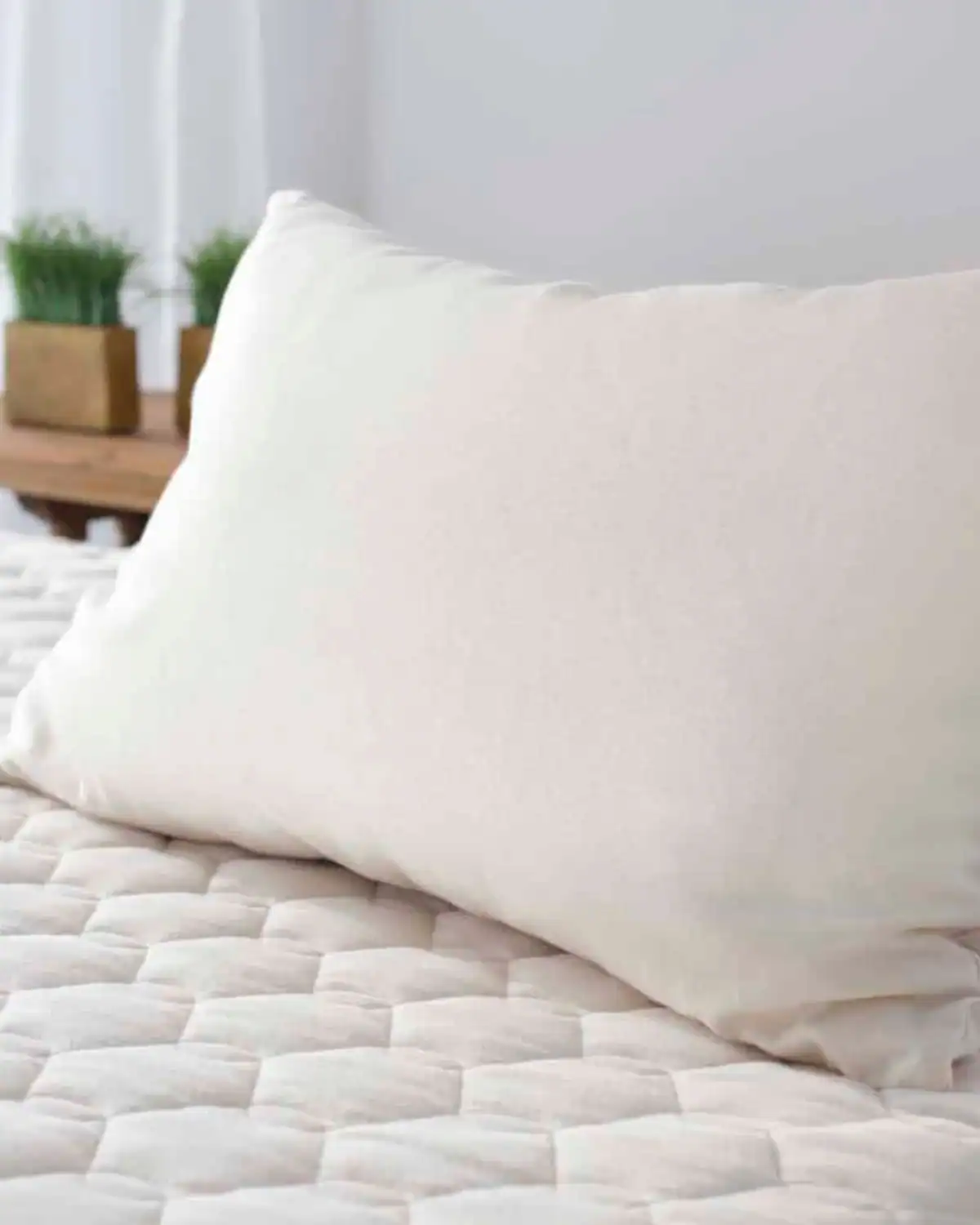
Savvy Rest is known for its modular organic mattresses, and their pillows follow the same certified material standards.
Their shredded organic latex pillows use GOLS-certified latex and GOTS-certified organic cotton without polyurethane foam or synthetic blends.
I appreciate that Savvy Rest focuses heavily on transparency and material sourcing, which is not common in the pillow industry.
The adjustable fill makes it easier to fine-tune neck support for different sleep positions.
If you prefer firmer, more supportive organic pillows without foam additives, this is a dependable choice.
Price & SIZE Range
~$119–$189; Standard, Queen, King
Materials
GOLS-certified organic latex; GOTS-certified organic cotton cover
Location/Shipping
United States; ships nationwide
7. White Lotus Home
Best For: Traditional organic cotton and wool pillow without latex
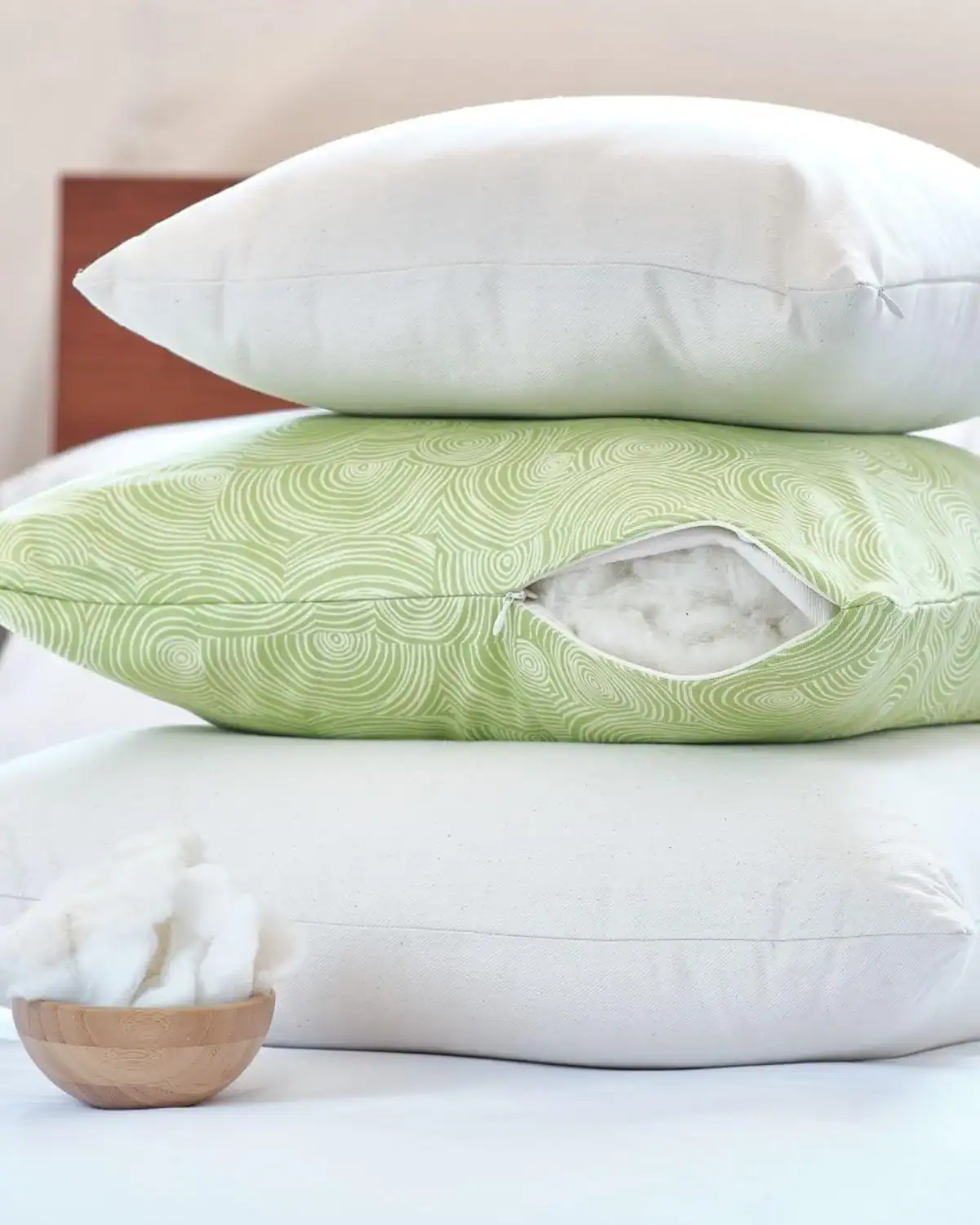
White Lotus Home is one of the older organic bedding companies, and that long-standing focus on natural materials shows.
Their pillows use GOTS-certified organic cotton fabric and natural wool or cotton fills, with no polyurethane foam, no synthetic fibers, and no chemical flame retardants.
I appreciate that they offer multiple firmness options without relying on shredded foam or synthetic blends.
This is a strong choice for someone who prefers a classic, traditional pillow feel without latex.
If your goal is to keep your pillow as simple and plant-based as possible, White Lotus Home is a trustworthy option.
Price & SIZE Range
~$89–$179; Standard, Queen, King
Materials
GOTS-certified organic cotton cover; organic cotton or wool fill
Location/Shipping
Made in New Jersey, USA; ships nationwide
8. Coyuchi
Best For: Organic down pillow with responsible sourcing
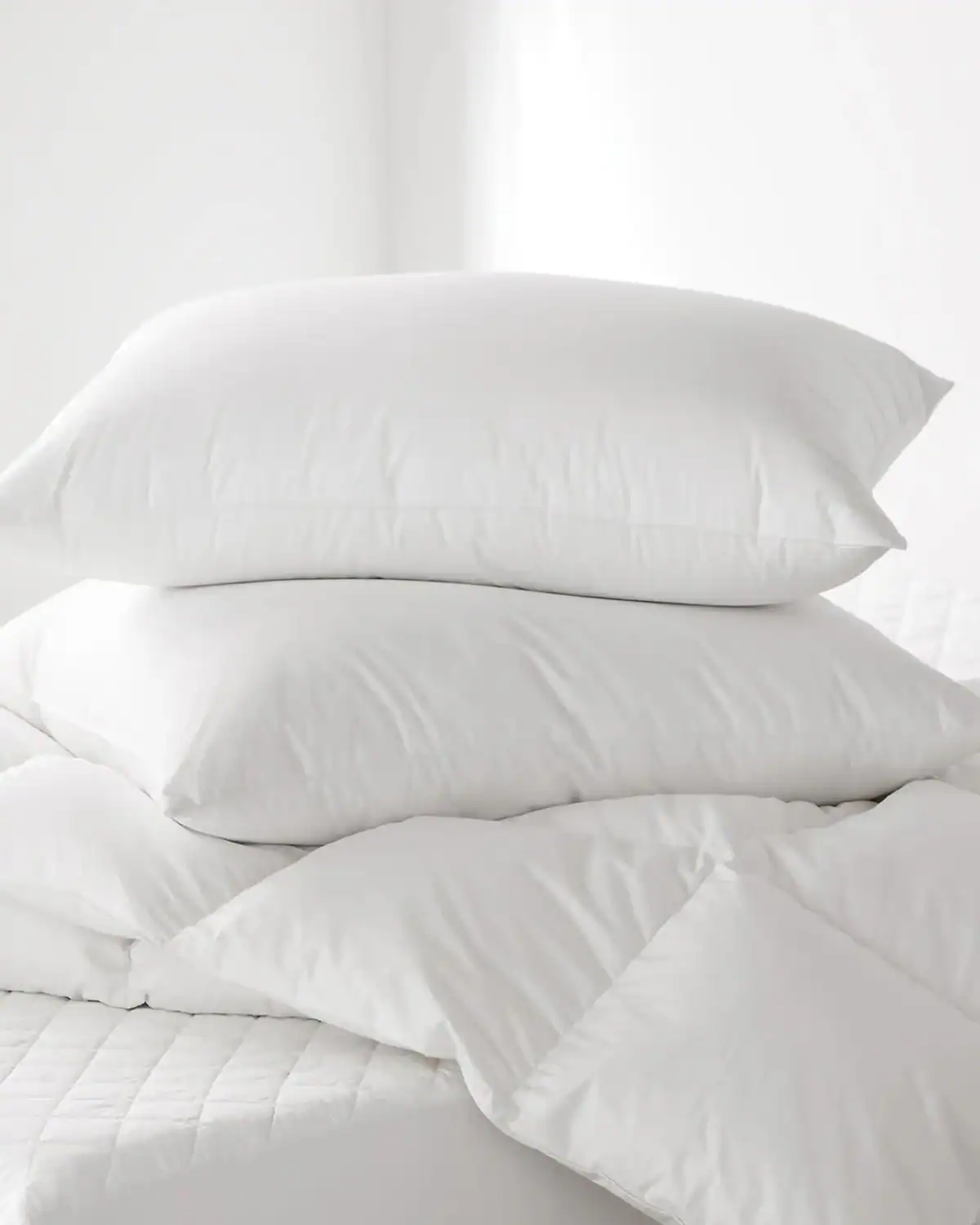
Coyuchi is one of the few brands I feel comfortable recommending for an organic down option.
Their pillows feature responsibly sourced down and feathers encased in GOTS-certified organic cotton, without synthetic liners or chemical flame retardants.
Down isn’t for everyone, especially allergy-prone sleepers, but it offers unmatched softness and moldability when sourced responsibly.
Coyuchi’s transparency around sourcing and textile processing makes this option stand out in a category that often lacks clarity.
If you prefer a plush, traditional feel but still want organic materials and cleaner processing, this is a thoughtful choice.
Price & SIZE Range
~$198–$298; Standard, Queen, King
Materials
Responsibly sourced down and feathers; GOTS-certified organic cotton cover
Location/Shipping
United States; limited international shipping
9. Brentwood Home
Best For: More affordable organic latex pillow
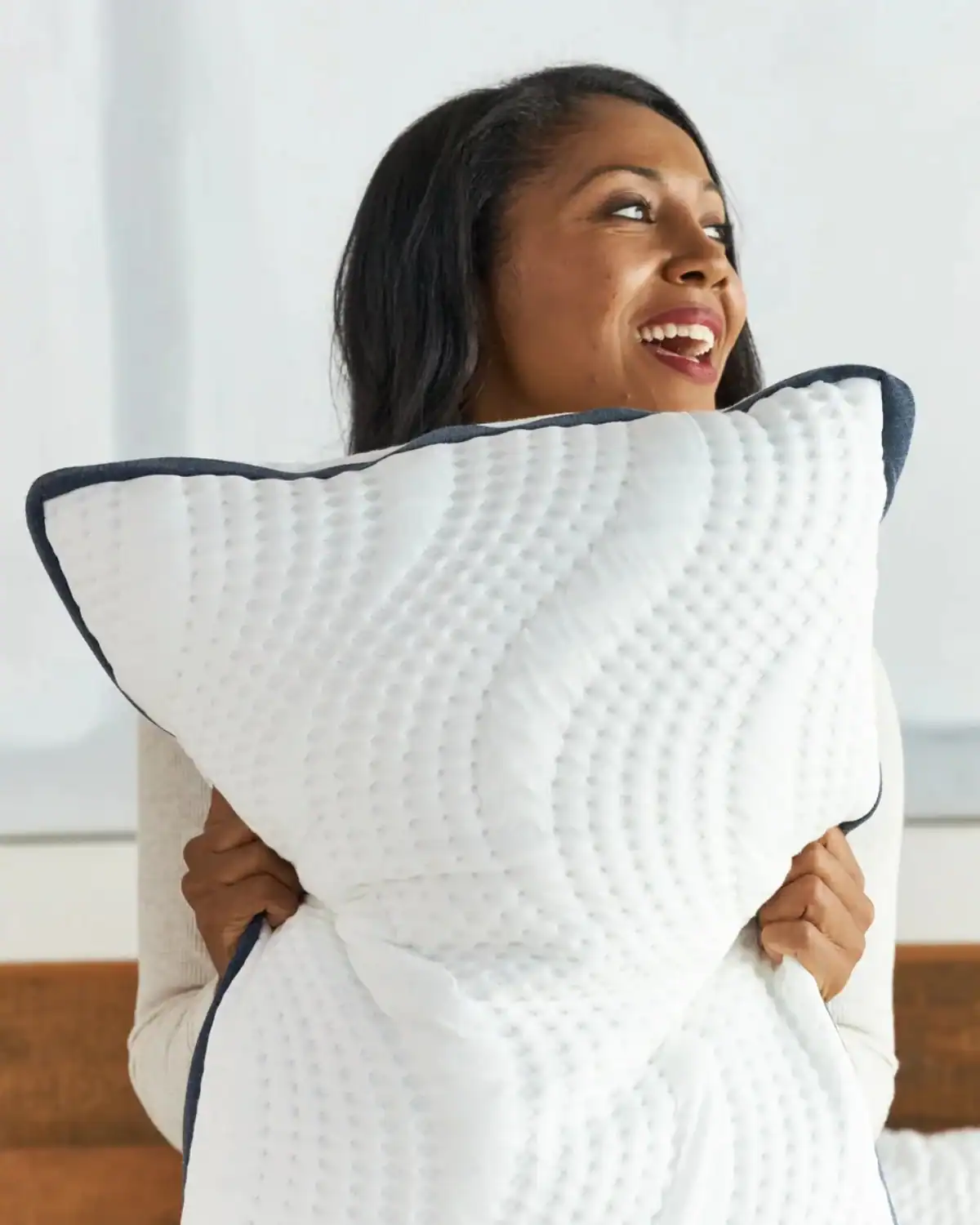
Brentwood Home offers an accessible entry point into certified organic latex pillows.
Their latex models use GOLS-certified organic latex and GOTS-certified organic cotton, without polyurethane foam or synthetic cooling gels.
While the price point is lower than some premium brands, the core certifications are still strong.
I always encourage readers to verify specific model certifications, but overall, Brentwood maintains solid material transparency.
If budget is a major factor and you still want an organic and non-toxic pillow without memory foam, this is a practical choice.
Price & SIZE Range
~$79–$149; Standard, Queen, King
Materials
GOLS-certified organic latex; GOTS-certified organic cotton cover
Location/Shipping
United States; ships nationwide
Continue Building a Non-Toxic Bedroom
If you’re upgrading your pillow, it might be the perfect time to look at your entire sleep setup. I always remind readers that true non-toxic sleep isn’t just one product — it’s layers working together.
- Best non-toxic sheets for full skin contact
- Our guide to non-toxic bedding for a fully clean sleep setup
- The best non-toxic mattresses for truly restorative sleep
- Organic mattress toppers for an added safety layer
Because when each layer is thoughtfully chosen, your bed becomes a truly restorative space.
🌿 Organic Latex vs Organic Wool Pillows: Let’s Compare.
This is one of the most common questions I receive — and the honest answer is that it depends on what you value most: structure or softness.
If you’re looking for resilient, long-lasting support, organic latex is often the front-runner. Made from rubber tree sap and certified under strict standards like GOLS, latex is responsive, durable, and excellent at holding its shape. It provides consistent neck support throughout the night, which makes it especially helpful for side sleepers or anyone dealing with neck pain.
Organic wool pillows feel entirely different. They’re softer, more moldable, and have that cozy, traditional comfort many people love. Wool also regulates temperature beautifully and is naturally flame-resistant — meaning there’s no need for added chemical flame retardants. For individuals with chemical sensitivities who want to avoid foam altogether, wool often feels like the simplest, cleanest choice.
That said, wool does compress over time, so it won’t offer the same long-term structural support that latex provides.
There isn’t a universally “better” material — only the better fit for you. If you want adjustable firmness and strong, lasting support, organic latex is typically the way to go. If you prefer a foam-free, breathable pillow with a softer, more traditional feel, organic wool is a beautiful alternative.
How to Choose the Best Organic & Non-Toxic Pillow for Your Sleep Position
Not every organic pillow works for every sleeper.
The best organic and non-toxic pillow for you depends heavily on your sleep position, neck alignment, and whether you prefer moldable softness or structured support.
After testing organic latex pillows, organic wool pillows, and adjustable natural-fill options, I’ve found that support matters just as much as material purity.
Here’s how to narrow it down.
Best Organic Pillow for Side Sleepers
Side sleepers typically need a higher loft pillow to keep the neck aligned with the spine.
An adjustable organic latex pillow is often the best non-toxic pillow for side sleepers because it provides structure without the sink of memory foam.
Look for shredded GOLS-certified organic latex so you can customize the fill height.
If you’re also dealing with neck pain, firmness and lift become even more important.
Wool can work for side sleepers, but it tends to compress over time, which may reduce long-term support.
Best Non-Toxic Pillow for Back Sleepers
Back sleepers usually need medium loft and balanced support.
Too much height can push the head forward, while too little causes the neck to collapse backward.
An organic latex pillow offers responsive support that maintains its shape without relying on polyurethane foam.
Organic wool pillows can also work well for back sleepers who prefer a softer, more moldable feel.
If breathability is a concern, both wool and latex regulate temperature better than synthetic memory foam.
Best Organic Pillow for Stomach Sleepers
Stomach sleepers need the lowest loft possible to avoid straining the neck.
In this case, a thinner organic wool pillow or a lightly filled adjustable latex pillow may be the safest option.
Avoid thick memory foam or overly dense latex cores, which can hyperextend the neck overnight.
For stomach sleepers, less is usually more when it comes to pillow height.
Natural materials also help reduce heat buildup in this position.
Best Organic Pillow for Neck Pain
If you’re specifically searching for the best organic pillow for neck pain, alignment should be your first priority.
A customizable organic latex pillow allows you to fine-tune firmness and loft, which is often critical for relieving pressure.
Unlike polyurethane memory foam, latex offers support without deep sinkage or chemical odor.
Consistency matters here — your pillow should maintain its structure over time.
In my experience, adjustable certified organic latex performs better long-term than softer natural fills alone.
The Certifications That Matter For Your Non-Toxic Pillow:
When shopping for organic pillows, certification matters more than marketing language.
- GOTS certification applies to organic textiles, including cotton covers, and verifies both fiber sourcing and processing standards.
- GOLS certification applies specifically to organic latex and ensures the latex meets regulated environmental and material standards.
- GREENGUARD Gold certification tests products for low chemical emissions, which can be especially important when a pillow sits directly under your face.
- MADE SAFE® certification screens for harmful substances beyond basic textile regulations.
If a brand cannot clearly explain its certifications, that’s a red flag.
The best organic and non-toxic pillows combine transparent material sourcing with verifiable third-party standards.
Frequently Asked Questions About Non-Toxic Pillows
Memory foam pillows are typically made from polyurethane foam, which is petroleum-based and can release volatile organic compounds (VOCs) when new.
While not all memory foam is unsafe, many products lack third-party emissions testing. If you want to avoid synthetic foam entirely, organic latex or wool pillows are cleaner alternatives.
Some pillows, especially foam or imported products, may use flame-retardant-treated fabrics or chemical barriers. Natural materials like organic wool are inherently flame-resistant and do not require added chemical treatments. Choosing certified organic pillows reduces the likelihood of unnecessary flame retardants.
The safest pillow materials are certified organic latex, organic wool, and GOTS-certified organic cotton. These natural fibers avoid polyurethane foam and synthetic chemical additives. Certification ensures that both the material sourcing and textile processing meet stricter safety standards.
Certified organic latex pillows are considered a safer alternative to polyurethane foam. GOLS-certified latex is derived from rubber tree sap and processed under regulated environmental standards. However, not all latex is organic, so certification matters.
Organic pillows made from wool, cotton, or certified latex typically have little to no off-gassing compared to memory foam pillows.
You may notice a mild natural scent at first, but it is not the same as synthetic foam VOC emissions. Proper ventilation during the first few days is still recommended.
For individuals with chemical sensitivities, organic wool pillows or certified organic latex pillows without synthetic foam are often the best choice.
Avoid polyurethane foam, gel-infused cooling layers, and heavily fragranced materials. Third-party certifications like GOTS and GOLS provide added reassurance.
Down pillows can be safe if they are responsibly sourced and encased in certified organic cotton. However, they may not be ideal for individuals with allergies. Always look for transparency in sourcing and processing.
Many “cooling” pillows rely on gel-infused polyurethane foam or synthetic phase-change materials. While they may regulate temperature, they often introduce additional chemical processing. Breathable natural materials like latex or wool regulate temperature without added cooling additives.
Look for GOTS certification for organic textiles, GOLS certification for organic latex, and GREENGUARD Gold for low emissions testing.
These certifications verify both material integrity and chemical safety standards. Avoid vague claims like “natural” or “eco-friendly” without third-party verification.
Organic and non-toxic pillows can be a safer option for children because they avoid polyurethane foam and synthetic flame retardants commonly found in conventional pillows.
Materials like organic cotton and wool reduce unnecessary chemical exposure in a child’s sleep environment. Loft and firmness should always match a child’s age and size, with thinner, softer pillows generally recommended for younger children.
Certified organic pillows made from wool, cotton, or natural latex typically have minimal off-gassing compared to memory foam pillows.
You may notice a mild natural scent at first, especially with wool or latex, but this is different from synthetic VOC emissions. Choosing certified materials significantly reduces the likelihood of strong chemical odors.
Your Pillow Is Closer Than You Think
The best organic and non-toxic pillows aren’t about trends or aesthetics. They’re about reducing unnecessary exposure in one of the most intimate spaces in your home.
When something sits directly under your face for seven to eight hours every night, material transparency matters. Most conventional pillows are made from polyurethane foam, synthetic fibers, and chemical treatments that were designed for durability and cost efficiency — not for long-term health.
This isn’t about fear, and it’s not about perfection. It’s about making informed decisions.
Your bedroom should feel restorative, calm, and safe — not like a question mark.
I’d Love to Hear From You!
Have you already made the switch to an organic or non-toxic pillow? I’d love to hear what you chose — and whether you noticed a difference in comfort, temperature regulation, or neck support.
And if you’re still deciding, tell me what you’re weighing! I read every single comment, and so many of your questions end up shaping the next guide I write.
Sources & Further Reading
When researching organic and non-toxic pillows, I rely on independent regulatory bodies and established certification standards — not brand marketing claims.
- U.S. Environmental Protection Agency – Volatile Organic Compounds (VOCs)
https://www.epa.gov/indoor-air-quality-iaq/what-are-volatile-organic-compounds-vocs - National Institute of Environmental Health Sciences (NIEHS) – Flame Retardants
https://www.niehs.nih.gov/health/topics/agents/flame_retardants - U.S. Environmental Protection Agency – Flexible Polyurethane Foam
https://www.epa.gov/saferchoice/flexible-polyurethane-foam - PubMed – VOC Emissions from Memory Foam Mattresses (2023)
https://pubmed.ncbi.nlm.nih.gov/35588879/ - California Department of Public Health – Standard Method for VOC Emissions (v1.2)
https://www.cdph.ca.gov/Programs/CCDPHP/DEODC/EHLB/IAQ/Pages/StandardMethodV1-2.aspx - American Chemistry Council – Polyurethanes in Bedding and Furniture
https://polyurethane.americanchemistry.com/Applications/Bedding-and-Furniture/ - Global Organic Textile Standard (GOTS)
https://global-standard.org - Global Organic Latex Standard (GOLS)
https://www.controlunion.com/en/certification-programs/certification-programs/gols-global-organic-latex-standard - GREENGUARD Certification (UL Solutions)
https://www.ul.com/services/greenguard-certification - MADE SAFE Certification
https://madesafe.org - U.S. Environmental Protection Agency – Indoor Air Quality
https://www.epa.gov/indoor-air-quality-iaq - National Cancer Institute – Formaldehyde Fact Sheet
https://www.cancer.gov/about-cancer/causes-prevention/risk/substances/formaldehyde - Environmental Working Group – PFAS Overview
https://www.ewg.org

Steal My Non-Toxic Cleaning Checklist!
Believe us, it’s the BEST…. and it’s free. Does it really get any better than that?! Sign up for our newsletter and get this free checklist to clean your home without any harmful chemicals!