 Shop My Favorite Non-Toxic Gifts Of 2026!
SKL is reader supported. When you buy through links on our site, we may earn affiliate commission. Learn more here.
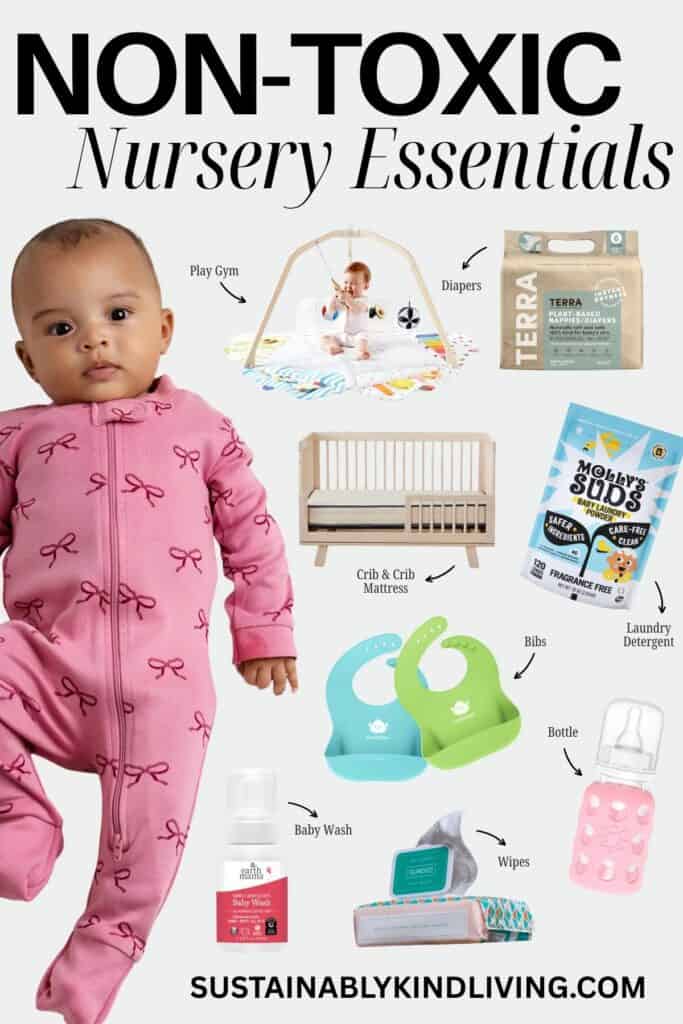
Creating a non-toxic nursery is one of the best ways to protect your baby’s health from day one.
This guide covers the safest products to choose, and what to skip, so you can build a cleaner, calmer space for your little bundle of joy.
Preparing for your baby’s arrival can feel like a whirlwind of emotions and a never-ending to-do list.
As you try to choose the best non-toxic nursery essentials, it’s easy to get overwhelmed, especially when there is so much conflicting advice out there and endless options.
But here’s the most important thing to keep in mind: the products in your nursery matter more for your baby’s health than most people realize.
That’s because babies are especially sensitive to hidden chemicals commonly found in everyday items.
Their skin is thinner, and their little detoxification systems are still maturing, so exposure to toxins, even in small doses, can add up quickly.
Browse Non-Toxic Nursery Essentials By Category
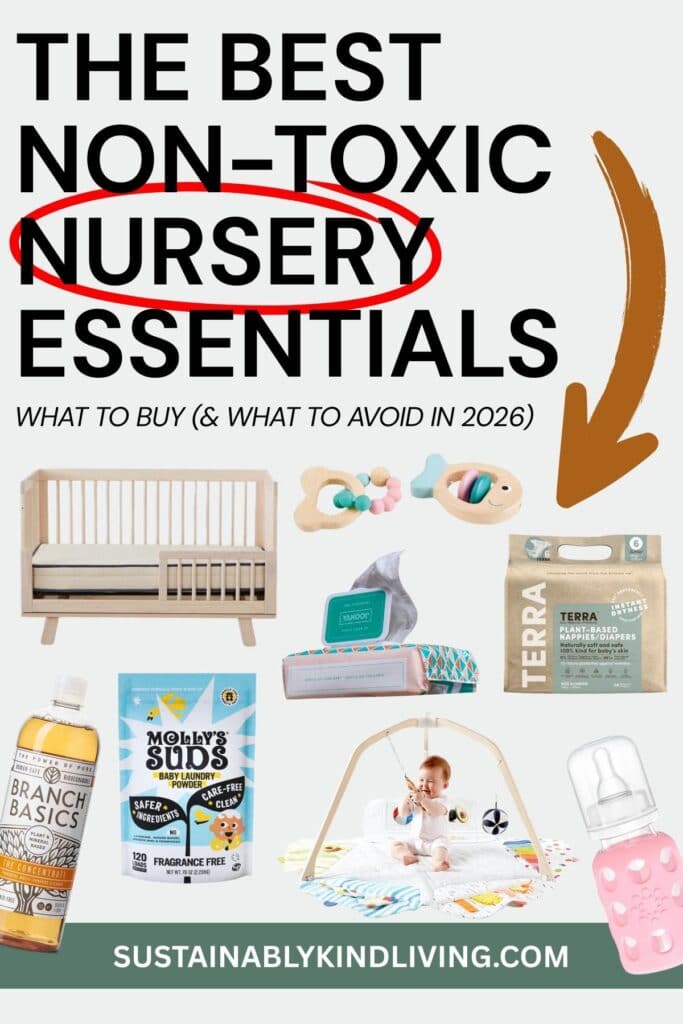
- 💤 Non-Toxic Sleep For Babies → Cribs, mattresses, and sleepwear made without flame retardants, vinyl, or VOCs.
- 🫧 Non-Toxic Baby Personal Care → Gentle wash, wipes, diapers, and powders made for sensitive baby skin.
- 🧺 Non-Toxic Cleaning & Laundry For Babies → Baby-safe cleaners and detergents without harsh chemicals or fragrance.
- 🍼 Non-Toxic Baby Feeding Essentials → Bottles, dishes, and bibs made from safer, plastic-free materials.
- 🧸 Non-Toxic Baby Toys & Play → Natural toys and play mats made for chewing, crawling, and play.
- 🌿 Non-Toxic Nursery Environment → Air, paint, and room swaps to reduce toxins in baby’s space.
Many standard nursery items, from crib mattresses to baby wipes, can contain things like flame retardants, phthalates, VOCs, and PFAS. These toxic chemicals are linked to hormone disruption, developmental delays, and respiratory irritation.
Major health concerns that no parent wants to expose their baby to. But this isn’t a call to toss everything you’ve bought or panic over what’s already in the nursery.
I wanted to write this guide to help you make small, impactful swaps that can reduce your baby’s daily exposure to chemicals, starting with the products they sleep on, play with, and come into contact with the most.
A few thoughtful changes can make a really big difference in the space where your little one will sleep, play, and grow.
The Most Common Toxic Chemicals Hiding In Nurseries
Before we get into specific product swaps, let’s take a moment to look at some of the most common chemicals hiding in everyday baby items.
This information might feel like a lot, because it is! But you don’t need to memorize every detail.
The goal is simply to understand what to watch out for, so you can make more confident choices moving forward.
❌ Flame Retardants
Often added to crib mattresses, changing pads, car seats, and nursing pillows to meet flammability standards.
These chemicals can off-gas into the air and settle into household dust, where they’re easily ingested by babies. Linked to hormonal disruption and developmental concerns.
❌ PFAS (Per- and Polyfluoroalkyl Substances)
Used to make items waterproof or stain-resistant, including mattress protectors, highchair covers, changing pads, and bibs.
PFAS have been associated with immune system changes, thyroid issues, and certain cancers. Sometimes called “forever chemicals” because they build up in the body and don’t break down easily.
❌ Phthalates
Plasticizers are used to soften vinyl and stabilize fragrance. Found in items like vinyl changing pads, foam mats, and scented wipes or lotions. Phthalates are endocrine disruptors that can interfere with hormonal development.
❌ Formaldehyde
A known carcinogen that may be present in pressed wood furniture (like particleboard cribs or dressers) or released by some paints, adhesives, and finishes.
Even at low levels, formaldehyde can cause respiratory irritation and has been linked to an increased risk of asthma in children.
❌ VOCs (Volatile Organic Compounds)
Chemicals that easily become airborne gases. Commonly found in furniture finishes, paints, flooring, and crib mattresses.
VOCs can trigger headaches, eye and throat irritation, and may contribute to long-term health issues with frequent exposure.
Keep These Certifications In Mind For Safety
There is so much to shop for when you’re putting together your nursery, and there’s not a lot of time to read ingredient labels and materials lists.
But don’t worry, though, you don’t have to decode every label on your own.
These third-party certifications can help you identify products that have been independently reviewed for chemical safety:
- ✅ GOTS (Global Organic Textile Standard) → For textiles made with 95%+ organic fibers, and processed without toxic dyes or finishes.
- ✅ GREENGUARD Gold → Indicates low chemical emissions and stricter safety standards for products used around babies and children.
- ✅ MADE SAFE → Screens for known and suspected toxins, including emerging chemicals of concern.
- ✅ OEKO-TEX Standard 100 → Certifies that textiles are free from over 100 substances known to harm human health.
💤 Non-Toxic Sleep Essentials For Babies
1. Crib Mattress
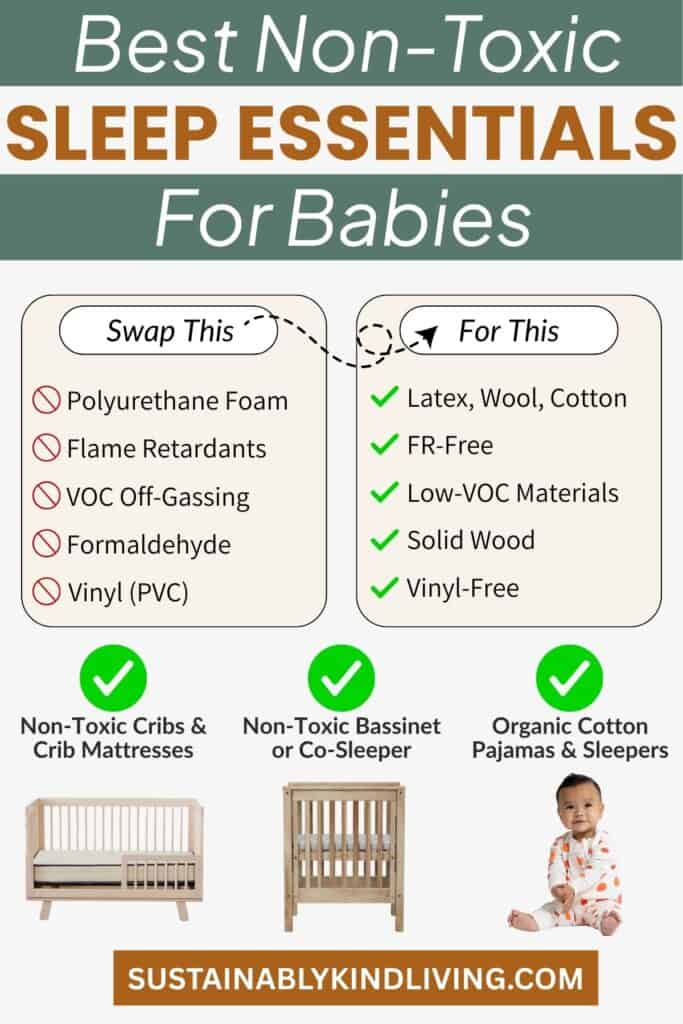
Conventional crib mattresses often contain polyurethane foam, vinyl covers, and chemical flame retardants, which can off-gas VOCs and expose your baby to harmful substances night after night.
Instead, look for mattresses made with GOTS-certified organic cotton, natural latex, and wool.
These materials create a firm, breathable sleep surface without relying on synthetic fillers or chemical treatments.
⭐️ My Favorite Organic Crib Mattresses Include:
- My Green Mattress Emily Crib Mattress → A more budget-friendly option made with organic cotton and natural wool.
- Avocado Crib Mattress → Made with certified organic materials and handcrafted in California.
- Naturepedic Classic Crib Mattress → A long-time favorite that’s GOTS- and MADE SAFE-certified, with waterproof options that skip vinyl.
Why This Swap Matters: Babies spend hours with their developing lungs and skin pressed against their mattresses, so choosing a safer option helps limit their exposure to VOCs and flame retardants while they sleep.
2. Cribs
Like mattresses, conventional cribs can be a hidden source of toxins.
Many are made from pressed wood (MDF or particleboard) that contains formaldehyde, a known carcinogen. Others may be coated in high-VOC paints or stains, which continue to off-gas into your baby’s sleep space.
A safer choice is a solid wood, non-toxic crib finished with low-emission materials. These cribs not only skip the harmful glues and coatings but are also more durable without compromising on safety or style.
⭐️ My Favorite Non-Toxic Cribs Include:
- Green Cradle Gratitude Slat Crib → A premium non-toxic crib handcrafted from 100% solid maple, cherry, or walnut, finished with plant-based oils. Zero MDF, veneers, or plywood.
- Nestig Wave Crib → Crafted from solid beechwood, free from toxic glues, with non-toxic water-based finishes. Converts from a mini crib to a full-size crib.
- DaVinci Kalani Convertible Crib → Made with sustainably sourced New Zealand pine and GREENGUARD Gold certified for low emissions. Affordable and widely available.
Extra Tip: Assemble your crib at least a few weeks in advance in a well-ventilated space. Even safer options may release minor odors from wood treatments or packaging.
3. Bassinet or Co-Sleeper
Bassinets and co-sleepers often include polyurethane foam, polyester padding, or even chemical flame retardants, particularly in the mattress base, liner, or canopy.
These materials can off-gas near your baby’s face, especially during those long newborn naps.
Look for non-toxic models made with breathable materials and minimal synthetic padding, or combine a safe frame with an organic mattress or insert.
⭐️ My Favorite Non-Toxic Bassinet or Co-Sleeper Includes:
- Green Cradle Solid Wood Bassinet → Heirloom-quality and handcrafted in the USA using solid maple and a certified organic wool/cotton mattress.
- Snuggle Me Infant Lounger → While not a standalone sleep space, this GOTS-certified organic cotton lounger offers a safer co-sleeping insert when used under caregiver supervision.
- BabyBay Original → Made from sustainably sourced beechwood, this co-sleeper attaches securely to the bed with no synthetic foams. Choose the organic cotton mattress upgrade.
Why It Matters: Newborns breathe more air per pound than adults and often sleep inches from their sleep surface, making clean air and non-toxic materials a top priority during early development.
4. Pajamas & Sleepers
Many baby pajamas, especially those made with polyester or non-organic cotton, are treated with chemical flame retardants to meet flammability laws. These additives can’t be washed out and often end up in household dust.
The safer alternative is snug-fitting pajamas made from GOTS-certified organic cotton, which naturally meets flammability standards without added chemicals. These fabrics are softer on delicate skin and free from synthetic dyes or finishes.
⭐️ My Favorite Organic Pajama Brands Include:
- Hanna Andersson → A longtime favorite for their GOTS-certified organic cotton, ultra-soft feel, and adorable seasonal prints.
- Burt’s Bees Baby → An affordable and accessible option, with certified organic cotton and simple, breathable styles.
- Monica + Andy → Offers buttery-soft, GOTS-certified sleepers made in family-owned factories with no flame retardants or harsh dyes.
Why It Matters: Pajamas are in close contact with your baby’s skin for long stretches every night. Safer sleepwear helps reduce exposure to endocrine-disrupting chemicals while keeping your baby cozy and calm.
🫧 Non-Toxic Personal Care Essentials For Babies
1. Baby Wash
Bath time should be soothing, not a source of exposure to hidden chemicals.
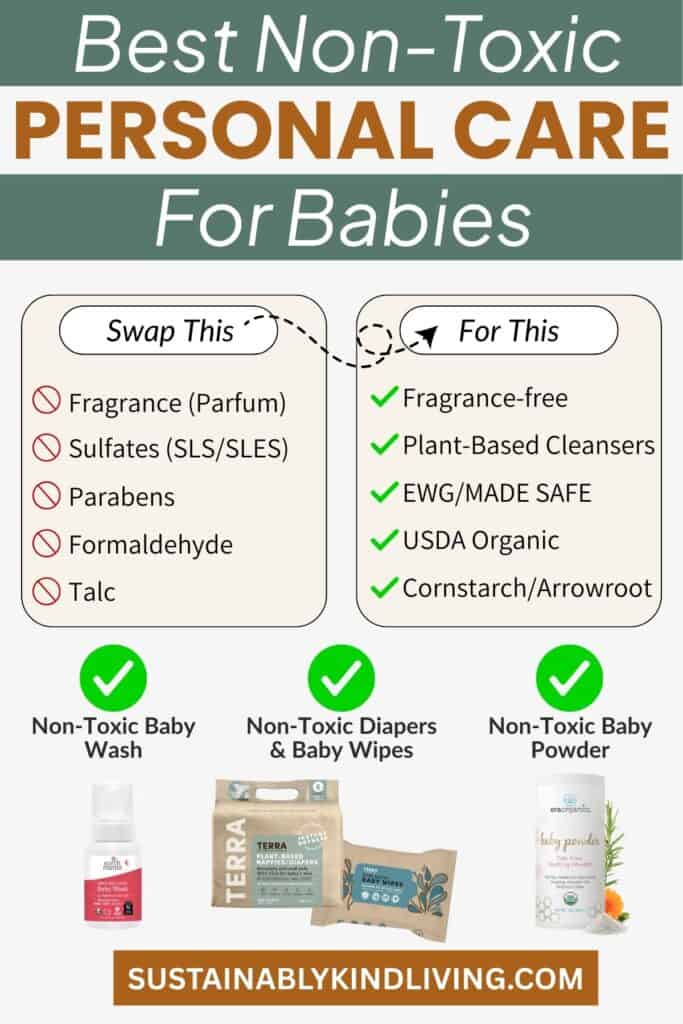
Unfortunately, many drugstore baby washes contain parabens, sulfates (like SLS), formaldehyde-releasing preservatives, and artificial fragrance. All of these harsh chemicals can irritate your baby’s sensitive skin and eyes.
Instead, look for organic baby bath products that are plant-based, fragrance-free washes that are EWG Verified or MADE SAFE certified. These products are free from known toxins and screened for long-term safety.
⭐️ My Favorite Non-Toxic Baby Wash Includes:
- Earth Mama Organics Castile Baby Wash → Fragrance-free, tear-free, and made with organic calendula. It’s MADE SAFE certified and gentle enough for daily use.
- Shoosha Baby Wash & Shampoo (SKL15 for 15% off) → USDA certified organic, made with aloe vera and coconut-derived cleansers. Free from synthetic chemicals and ideal for sensitive or eczema-prone skin.
- Poofy Organics Baby Everything Soap → A multipurpose castile-style soap made with organic oils and natural glycerin. Free from sulfates, synthetic fragrance, parabens, and phthalates. Safe for body, hair, and even cloth diapers.
Why It Matters: A baby’s skin is thinner and more absorbent than an adult’s. A clean, non-toxic wash supports the skin barrier and keeps harmful chemicals out of bath time.
2. Diapers
Most conventional disposable diapers contain chlorine bleach, synthetic fragrance, VOCs, phthalates, and even PFAS.
Because diapers are worn constantly and come into direct contact with heat and moisture, they’re one of the highest-impact swaps you can make.
The best non-toxic diaper brands are free from harsh chemicals, made with certified organic or sustainably sourced materials, and transparent about their manufacturing processes.
⭐️ My Favorite Non-Toxic Diapers Include:
- Kudos Diapers (SKL15 for 15% off) → The only disposable diaper with OEKO-TEX-certified 100% cotton touching baby’s skin. Manufactured in the U.S. with clean energy and plastic-free top sheets.
- HealthyBaby Diapers → EWG Verified and made without over 2,500 harmful ingredients. These ultra-clean diapers are dermatologist-tested and designed to support the baby’s microbiome.
- Terra Plant-Based Diapers → Made from 85% plant-based materials, including FSC-certified wood pulp, and free from chlorine, latex, fragrance, and lotions. Packaged in recyclable paper instead of plastic.
Budget Tip: We know that not all parents can afford premium subscriptions, and that’s okay! Look for chlorine-free and fragrance-free diapers from brands like Nest Diapers, Dyper, or Hello Bello as meaningful, lower-cost improvements.
Why It Matters: Diapers sit against your baby’s most sensitive skin all day and night. The combination of moisture, body heat, and friction can increase absorption of chemicals, making clean ingredients especially important in this category.
3. Baby Wipes
Like diapers, conventional baby wipes often include preservatives like MI/MCI, synthetic fragrance, and hidden irritants.
These chemicals can trigger rashes, allergic reactions, or disrupt the skin barrier, especially since they are used so frequently.
The safest choice is a non-toxic baby wipe made from biodegradable materials and a minimal, plant-based ingredient list. Aim for options that are fragrance-free, alcohol-free, and EWG Verified when possible.
⭐️ My Favorite Non-Toxic Baby Wipes Include:
- Ecoriginals Baby Wipes → Made from 100% biodegradable bamboo, these wipes are over 99% water, free from fragrance and alcohol, and home compostable. Gentle on skin and the planet.
- Joonya Baby Wipes → Made from sustainably harvested wood pulp and infused with soothing aloe and chamomile. No phenoxyethanol or synthetic fragrances.
- Terra Bamboo Baby Wipes → Crafted from 100% biodegradable bamboo, these wipes are compostable and free from alcohol, parabens, and harsh preservatives.
Watch-Outs: “Fragrance-free” doesn’t always mean toxin-free. Always check for undisclosed preservatives or “natural” fragrance blends that can still cause irritation.
4. Baby Powder
Talc-based baby powders have fallen out of favor for good reason. Talc can be contaminated with asbestos, and even “clean” versions may irritate your baby’s lungs when airborne.
While many pediatricians now recommend skipping baby powder altogether, some parents still prefer a gentle, dry option, especially if you live in a humid climate.
If you choose to use baby powder, opt for a talc-free formula made with organic cornstarch, arrowroot, or kaolin clay. And apply sparingly, always away from your baby’s face.
⭐️ My Favorite Non-Toxic Baby Powder Includes:
- Era Organics Baby Powder (SKL15 for 15% off) → Talc-free, USDA certified organic, and made with cornstarch, kaolin clay, and calendula.
- Primally Pure Baby Powder → Made with arrowroot powder, bentonite clay, and calming herbs like chamomile and calendula. No synthetic fragrance, preservatives, or fillers.
- California Baby Baby Powder → USDA organic certified and made with cornstarch and kaolin clay, lightly scented with pure essential oils like lavender and clary sage.
Use With Care: Even non-toxic powders can become airborne. Shake into your hands first, then pat gently onto skin. And always keep powders out of reach of tiny hands and lungs.
🧺 Non-Toxic Cleaning & Laundry Essentials For Babies
1. Cleaning Products
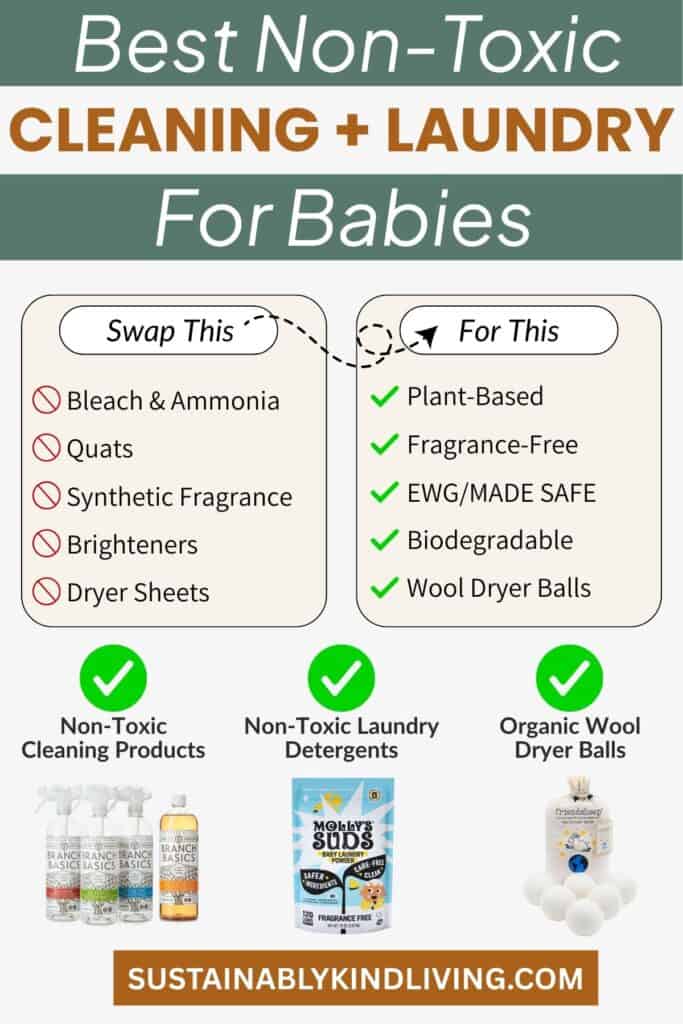
Many traditional cleaning products contain bleach, ammonia, and quaternary ammonium compounds (quats), all of which can linger on surfaces and irritate a baby’s skin, eyes, and lungs.
Look for plant-based, fragrance-free, non-toxic cleaning products that are EWG Verified or MADE SAFE certified when possible.
⭐️ My Favorite Non-Toxic Cleaning Products Include:
- MamaSuds All-Purpose Cleaner (SKL15 for 15% off) → Made with just three ingredients, this minimalist cleaner is tough on grime but gentle enough for high-touch baby surfaces. No fragrance, dyes, or synthetics.
- Branch Basics Concentrate (SKL for 15% off) → A flexible, multi-surface cleaning system you dilute yourself. Non-toxic, fragrance-free, and safe for everything from cribs to high chairs to bottles.
- Poofy Organics All-Purpose Cleaner → USDA Organic and scented with pure essential oils (no synthetic fragrance). Great for spot cleaning and safe enough for nursery use.
Best Practice: Use reusable microfiber cloths to reduce waste and residue. Let surfaces dry before the baby touches them, and store all cleaners well out of reach.
2. Laundry Detergents
What touches your baby’s skin all day (and night) deserves just as much care as what goes in their mouth.
Most conventional detergents include synthetic fragrance blends, sulfates, and optical brighteners that can remain on fabrics after washing — and transfer to your baby’s delicate skin.
The best non-toxic laundry detergents are fragrance-free, biodegradable, and EWG Verified when possible. Look for simple ingredient lists and skip the “baby” branding unless the formula is truly clean.
⭐️ My Favorite Non-Toxic Baby Laundry Detergent Includes:
- Zuma Nutrition Kid-Safe Laundry Detergent (SKL for 15% off) → Made with plant-based ingredients and essential oils, this detergent is non-toxic, biodegradable, and safe for baby clothes, diapers, and bedding.
- Meliora Laundry Powder (SKL10 for 10% off) → A plastic-free, MADE SAFE-certified powder made with just a few safe ingredients. Fragrance-free or lightly scented with essential oils — and people- and planet-friendly.
- Molly’s Suds Unscented Laundry Powder → Made with just four ingredients. Free from synthetic fragrance, dyes, enzymes, and optical brighteners.
Best Practice: Use a gentle cycle with cool or warm water, measure detergent carefully, and consider adding an extra rinse cycle to reduce residue buildup.
3. Fabric Softeners & Dryer Sheets
Conventional softeners and dryer sheets are among the most heavily fragranced products in the home, often containing quats (like benzyl acetate), VOCs, and synthetic musks.
These chemicals are designed to cling to fabric and can’t be rinsed out, which is particularly concerning for babies with sensitive skin or developing respiratory systems.
The safest choice? Skip them altogether and use reusable wool dryer balls to soften fabric and reduce static naturally.
⭐️ My Favorite Non-Toxic Fabric Softeners & Dryer Sheets Include:
- Branch Basics Wool Dryer Balls (SKL for 15% off) → Made from 100% premium New Zealand wool, fragrance-free, and designed to naturally soften laundry while reducing drying time.
- Friendsheep Eco Dryer Balls (SKL10 for 10% off) → Handmade, plastic-free, and GOTS-certified wool. Can be scented with essential oils if desired (but skip this for baby laundry).
- Molly’s Suds Wool Dryer Balls → Made from 100% New Zealand wool, fragrance-free, and reusable for over 1,000 loads.
Why This Swap Matters: Your baby wears, sleeps on, and snuggles with laundered items all day. Reducing chemical residues helps prevent irritation and supports healthy skin development.
🍼 Non-Toxic Feeding Essentials For Babies
1. Bowls, Utensils & Plates
As your baby transitions to solids, it’s important to watch what they’re eating from, not just what they’re eating.
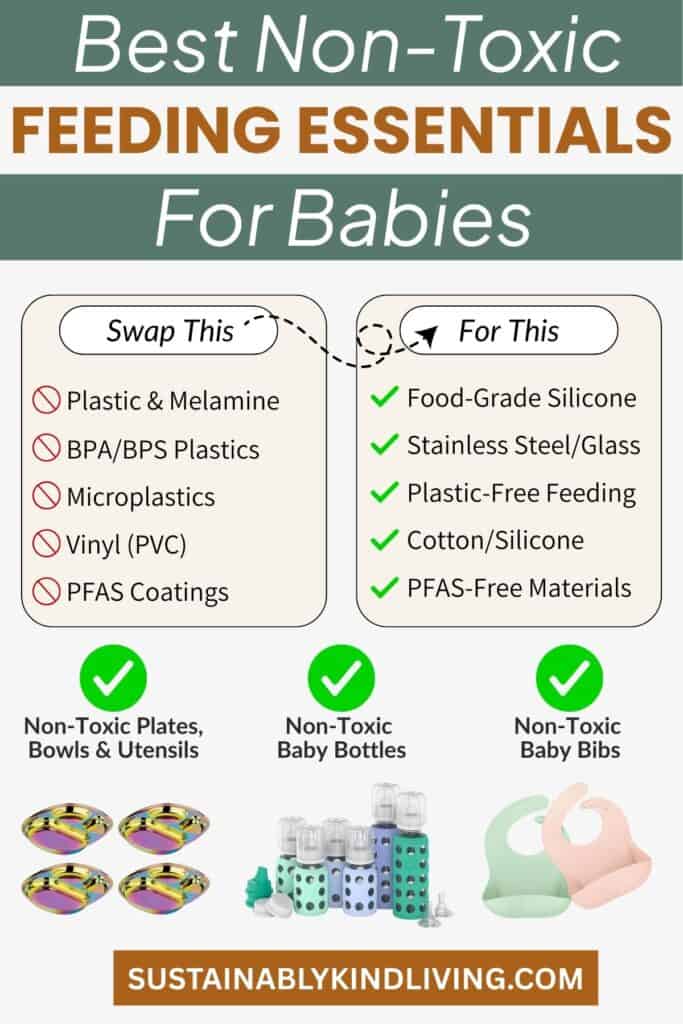
Many toddler dishes are made from melamine, a formaldehyde-based plastic that can leach into food, especially when heated.
Safer picks are made from food-grade silicone, stainless steel, or bamboo (unvarnished and untreated). These materials don’t leach and are more durable for messy eaters.
⭐️ My Favorite Non-Toxic Baby Feeding Essentials Include:
- ezpz Mini Mat → A 100% food-grade silicone suction plate that doubles as a placemat. Dishwasher and microwave safe.
- Ahimsa Stainless Steel Dinnerware → Designed by a pediatrician, these colorful, non-toxic stainless steel dishes are free from plastic, coatings, and dyes. Dishwasher safe and built to last through toddlerhood and beyond.
- Bumkins Silicone Grip Dish → Divided, non-slip, and made from BPA-free silicone. Designed for easy scooping and self-feeding.
Why It Matters: Dishes made with safe materials help protect your baby’s digestive and endocrine systems from harmful chemical exposure, while also standing up to everyday wear.
2. Baby Bottles
The biggest concern with baby bottles is chemical leaching, especially when heating milk or formula.
Even BPA-free plastics like polypropylene can shed microplastics, while BPA and BPS have been linked to hormone disruption.
To reduce exposure, look for bottles made from borosilicate glass, food-grade stainless steel, or medical-grade silicone. These materials are durable, non-reactive, and free from harmful plastics.
⭐️ My Favorite Non-Toxic Baby Bottles Include:
- Pura Stainless Kiki Baby Bottle → 100% plastic-free, made with food-grade stainless steel and a medical-grade silicone nipple. Converts into a sippy or straw bottle as the baby grows.
- Lifefactory Glass Baby Bottle → Made from thermal shock-resistant glass with a silicone sleeve for grip. BPA/BPS-free and dishwasher safe.
- Comotomo Silicone Baby Bottle → Made from medical-grade, platinum-cured silicone that mimics breastfeeding and is easy to clean. Free from BPA, PVC, and phthalates.
Why It Matters: Heat and fat can increase chemical leaching. Choosing non-toxic materials protects your baby’s hormones and gut health during one of the most sensitive developmental stages.
3. Bibs
Mealtime gets messy, but many bibs are made from PVC (vinyl) or coated with stain-resistant chemicals like PFAS.
These materials may contain phthalates, lead, or other endocrine disruptors, not something you want near your baby’s mouth or skin.
Look for non-toxic bibs made from food-grade silicone or organic cotton with a PUL (polyurethane laminate) backing, which is water-resistant but free from the worst offenders.
⭐️ My Favorite Non-Toxic Bibs Include:
- Oso & Me Bibs → Made from super-soft organic cotton with thoughtful details like adjustable neck snaps and reversible designs. Stylish, practical, and free from harmful coatings.
- KeaBabies Silicone Baby Bib → Durable and dishwasher-safe, this lightweight silicone bib is ideal for busy mealtimes. Adjustable neckband grows with your baby and is free from all harsh chemicals.
- Olababy GentleBib → Made from 100% food-grade silicone, this bib is soft, flexible, and features a deep pocket to catch messes. BPA-, PVC-, and phthalate-free.
Avoid bibs made from vinyl or marketed as “stain-resistant,” which often means PFAS. Stick to minimal designs that wash well and dry quickly.
Why It Matters: Bibs come into frequent contact with your baby’s skin and mouth, especially during the teething stage. Choosing safer materials helps minimize both mess and chemical exposure.
🧸 Non-Toxic Toys & Play Essentials For Babies
1. Toys
Toys are among the most frequently mouthed and handled items during a baby’s first year.
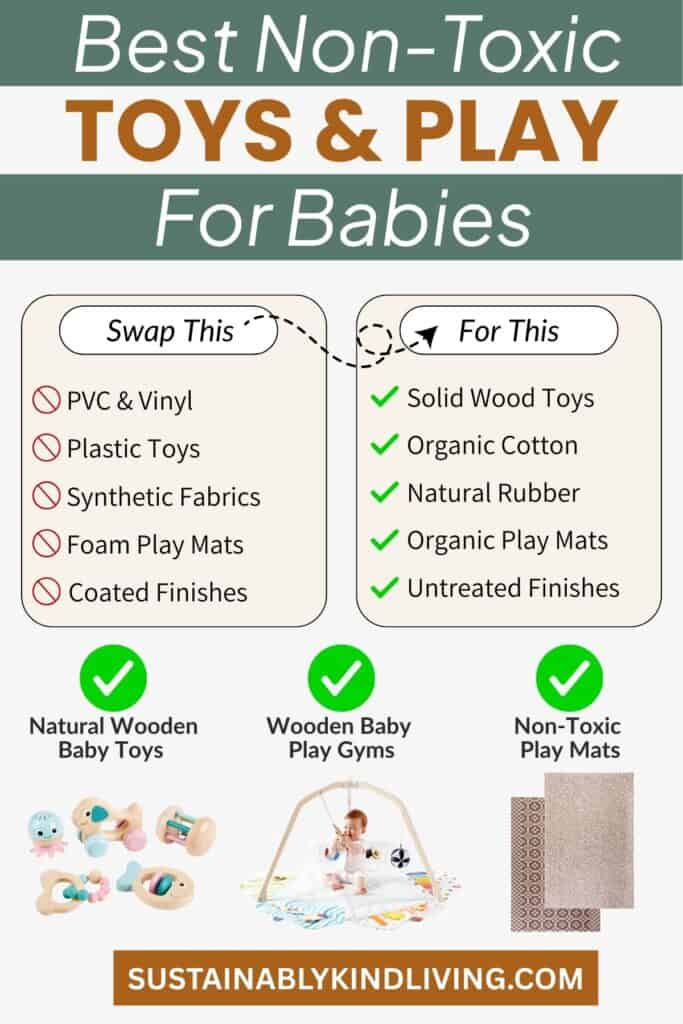
But the bad news is that many conventional toys are made with PVC, questionable paints, and synthetic fabrics that may contain phthalates, lead, or VOCs.
The best choices are natural wooden toys or made with organic cotton or plant-based rubber, with finishes that are water-based, food-grade, or untreated.
⭐️ My Favorite Natural Wooden Toys Include:
- Hape Wooden Multi‑Stage Sensory Set → A sweet five-piece wooden sensory set for 0 months+ with child-safe paint finishes and big developmental wins.
- Under the Nile Bunny Toy → This ultra-soft, huggable bunny is made from GOTS-certified organic Egyptian cotton sherpa. Perfect for snuggling and safe for teething.
- Oli & Carol Natural Rubber Toys → Made from 100% natural rubber with food-grade paint — ideal for bath time or teething, with no holes to trap mold.
What To Avoid: Vinyl dolls, glittery finishes, or “fragrance-infused” toys. These are often red flags for hidden toxins.
Why It Matters: Your baby learns through touch and taste, so safe, natural materials are essential so they’re not ingesting toxins.
2. Baby Gyms
Many baby gyms on the market use PVC toys, plastic arches, and foam bases treated with flame retardants. All of these can introduce unnecessary chemical exposure during early development.
Instead, look for wooden baby gyms made with solid wood frames, untreated fabrics, and removable organic cotton toys. These are not only safer but also more durable and beautiful in your space.
⭐️ My Favorite Wooden Baby Gyms Include:
- Lovevery Play Gym → Sustainably made with solid wood and organic cotton, this gym includes developmentally appropriate toys, removable accessories, and a washable play mat.
- Finn + Emma Wooden Play Gym → A minimalist, solid wood frame paired with GOTS-certified organic cotton toys, dyed with eco-friendly inks.
- PlanToys Play Gym → Made from chemical-free rubberwood and water-based paints. Compact, stylish, and designed with mouthing-safe components.
What To Avoid: Plastic hanging toys, foam padding, or vinyl-covered mats. These may off-gas or contain phthalates, BPA, or synthetic coatings.
Why It Matters: Babies interact with gyms using their mouths and hands. Safer materials mean safer developmental play.
3. Play Mats
Conventional play mats are often made from EVA foam, polyurethane foam, or PVC, which may contain formamide, flame retardants, phthalates, or VOCs.
These materials can off-gas into your baby’s nursery and pose long-term health risks, especially during tummy time.
The safest options are made from GOTS-certified organic cotton, natural rubber, or cork, which provide cushioning without exposing little ones to toxic chemicals.
⭐️ My Favorite Non-Toxic Play Mats Include:
- Lorena Canals Washable Rug → A soft, cozy surface made with natural cotton and non-toxic dyes. Machine washable, lightweight, and a great alternative to foam mats for play-heavy areas.
- Totter & Tumble Play Mats → Made from non-toxic TPU foam, these stylish, reversible mats are formamide-free, PVC-free, and fully wipeable. Ideal for tummy time, crawling, and cozy floor play.
- Pillobebe Organic Cotton Play Mat → Made with GOTS-certified organic cotton, finished with a non-toxic, water-resistant coating, and free from flame retardants.
What To Skip: Even “formamide-free” EVA foam can contain other toxins. Choose naturally breathable materials when the baby is face down and crawling.
Why It Matters: Your baby will spend hours on their play mat — drooling, rolling, and exploring. A clean, safe surface supports both their development and their health.
🌿 Non-Toxic Nursery Environment Essentials For Babies
1. Air Purifiers
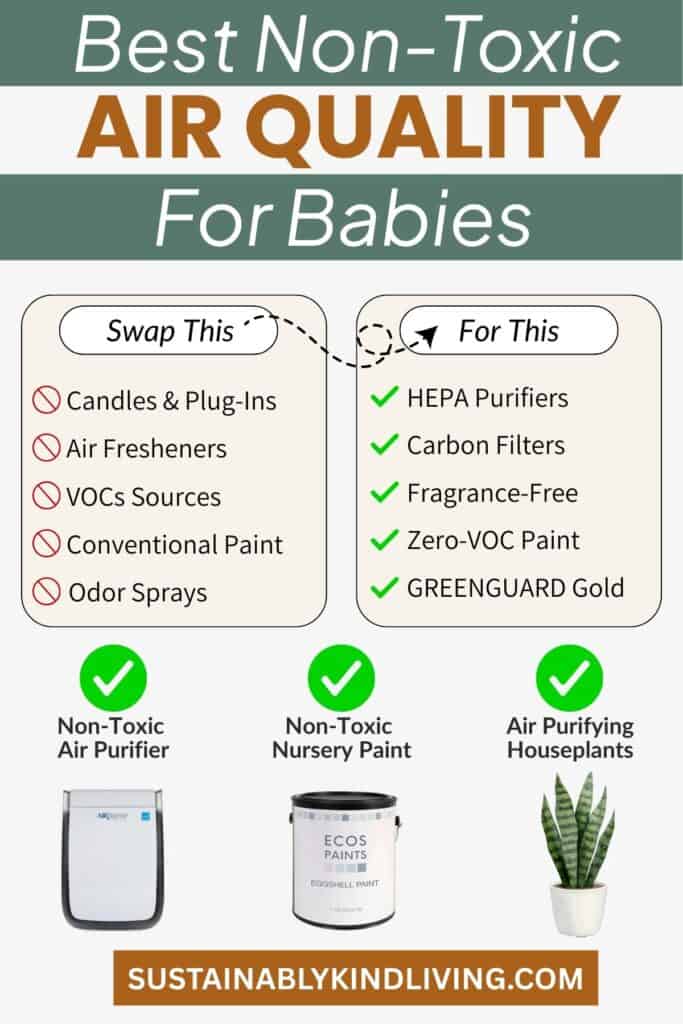
While candles, plug-ins, and room sprays might seem like a cozy touch, most release phthalates and synthetic fragrances that can affect your baby’s developing respiratory and endocrine systems.
A better option? Air purifiers that remove dust, allergens, and airborne toxins without adding anything back into the air.
⭐️ My Favorite Non-Toxic Air Purifiers Include:
- AirDoctor 3500 → A highly rated, mid-range purifier with an UltraHEPA filter and dual gas trap VOC filter. Ideal for removing off-gassing from furniture, flooring, and paint.
- Austin Air HealthMate+ → Features a medical-grade HEPA filter combined with 15 lbs of activated carbon to trap VOCs, allergens, and odors. Built to purify large spaces and highly trusted in chemically sensitive households.
- IQAir HealthPro Plus → Trusted in hospitals and clean rooms, this purifier features HyperHEPA filtration to remove ultrafine particles like viruses, smoke, and VOCs. One of the most advanced (and thorough) options on the market.
2. Nursery Wall Paint
Conventional wall paints often contain VOCs (volatile organic compounds), formaldehyde, and other petrochemical ingredients that off-gas into the air, contributing to respiratory irritation, allergies, and developmental concerns.
The safer route is to use low-odor, zero-VOC paints that are specifically tested for nursery use, ideally paired with a VOC-blocking primer to seal in any existing toxins.
⭐️ My Favorite Non-Toxic Paint Includes:
- ECOS Paints Lullaby Collection (SKL10 for 10% off) → Made specifically for nurseries and children’s rooms. Zero-VOC, non-toxic, and certified safe for sensitive individuals.
- Clare Paint → Zero-VOC, GREENGUARD Gold certified, and self-priming. Offers modern, designer-curated colors for stylish nurseries.
- AFM Safecoat Zero-VOC Paint → Popular among chemically sensitive households, this line is free from common irritants and available in multiple finishes.
Safety Tip: Paint early, ideally 2–3 weeks before baby arrives, and ventilate thoroughly with windows open and fans running. Even zero-VOC paints benefit from a little breathing room.
Budget-Friendly Approaches To A Non-Toxic Nursery
Creating a safer nursery doesn’t have to mean spending a fortune.
While some organic or natural products do come with higher price tags, there are plenty of ways to reduce toxins without maxing out your budget.
Creating a non-toxic nursery doesn’t have to mean starting from scratch or spending a fortune. Some of the most impactful changes you can make are simple, low-cost, and surprisingly accessible.
Start With What Matters Most
Focus your budget on high-exposure items, the things your baby touches, chews, or sleeps on daily:
- Crib mattress
- Diapers and wipes
- Baby wash and lotion
- Pajamas and bedding
- Bottles and feeding gear
These are the categories where non-toxic swaps have the biggest health impact.
Shop Secondhand (Smartly)
Gently used, high-quality items can be a great way to save:
- Look for solid wood furniture (avoid MDF or particleboard).
- Sand and refinish pieces using zero-VOC paint or sealant.
- Check local listings, buy/sell groups, and family hand-me-downs.
Avoid upholstered items, foam inserts, and anything with a “new car” smell — signs of potential VOC off-gassing.
Repurpose What You Already Own
Get creative with what’s already in your home:
- Cut down organic twin-size sheets to fit the crib or bassinet.
- Use pillowcases as changing pad covers or mini blankets.
- Store cloth wipes, pacifiers, or creams in clean glass jars or mason jars.
- Turn an old dresser into a changing station with a non-toxic topper.
DIY Where You Can
Making your own essentials can save money and reduce toxins:
- All-Purpose Cleaner = Water + white vinegar
- Diaper Balm = Coconut oil + shea butter (optionally infused with calendula)
- Cloth Wipes = Organic cotton cloths + warm water (or DIY wipe solution)
- Baby Powder = Cornstarch + kaolin clay (skip talc entirely)
Invest In Longevity
When buying new, choose items that will last:
- Solid wood cribs (convertible or heirloom quality)
- Stainless steel or silicone feeding gear
- GOTS-certified bedding that holds up to frequent washing
- Natural fiber rugs that can be passed down or resold
Beyond The Swaps: Creating A Healthier Nursery
Building a non-toxic nursery is about more than just what you buy; it’s also about how you use the space each day.
These small, consistent habits can go a long way in reducing chemical exposure and creating a truly safe, breathable haven for your baby.
Simple Daily Habits That Reduce Toxins
- Open the Windows: A few minutes of fresh air each day can significantly improve indoor air quality by reducing VOC buildup and airborne irritants.
- Vacuum with a HEPA Filter: Use a vacuum with a sealed system and true HEPA filter to trap fine dust, flame-retardant particles, and allergens.
- Leave Shoes at the Door: Shoes track in pesticides, lead, and pollutants — especially important to avoid in crawling zones like the nursery.
- Dust often with a Damp Cloth: Wipe hard surfaces with a damp cotton cloth to capture dust-bound chemicals, especially on windowsills, furniture, and toys.
Every Choice Counts When Shopping For Non-Toxic Nursery Essentials!
Putting together a non-toxic nursery isn’t about creating an Instagram-perfect space (though it can be tempting!). It’s about creating a room where your baby can rest, grow, and explore safely.
Swapping out even a handful of conventional products for cleaner alternatives can reduce your baby’s exposure to chemicals that interfere with immune development, hormone balance, and respiratory health.
And while the impact may be invisible, it’s undeniably powerful. So take the pressure off. You’re not doing this alone.
Each time you choose organic over synthetic, or fragrance-free over floral-scented, you’re giving your little one a healthier start. That matters!
More To Love…
- 👶🏼 Non-Toxic Swaps For Babies – A practical guide to safer baby essentials, highlighting common products to avoid and better non-toxic alternatives.
- ✨ Organic Cotton Baby Clothes – An overview of baby clothing made with organic cotton, including what to look for and why fabric choice matters for sensitive skin.
- 🛏️ Organic Cotton Baby Blankets – A guide to choosing organic cotton blankets that are gentle, breathable, and made without harsh chemical treatments.
- 🍽️ Non-Toxic High Chairs – What to know about safer high chairs, including materials to avoid and non-toxic options for everyday meals.
- 🤍 Organic Baby Carriers – A breakdown of baby carriers made with organic fabrics, focusing on comfort, safety, and cleaner materials.
📌 Save This Guide For Later
Setting up a safer nursery? This guide walks through what to buy, what to avoid, and which materials matter most — from sleep and feeding essentials to furniture and air quality.
Save this for when you’re building or updating your baby’s nursery with non-toxic choices in mind.

Steal My Non-Toxic Cleaning Checklist!
Believe us, it’s the BEST…. and it’s free. Does it really get any better than that?! Sign up for our newsletter and get this free checklist to clean your home without any harmful chemicals!