 Shop My Favorite Non-Toxic Gifts Of 2026!
SKL is reader supported. When you buy through links on our site, we may earn affiliate commission. Learn more here.
When I first started looking into non-toxic baby products, diapers were one of the things that surprised me the most.
Babies are in them almost all day, especially in that first year — and it really hit me how constant that exposure is. It’s not something you use once or twice… It’s every single day, for hours at a time.
And yet, when I started digging into what most disposable diapers are actually made from, it didn’t line up with that reality.
A lot of them still rely on petroleum-based plastics, chlorine-bleached materials, fragrance, and other additives — all sitting directly against some of the most sensitive skin on the body.
SKL top picks, in a nutshell…
- Best Overall Non-Toxic Diaper → Kudos
- Best EWG Verified Diaper → HealthyBaby
- Best Compostable Program → Dyper
- Best Premium Diaper → Coterie
- Best Budget Non-Toxic Diaper → Hello Bello
Non-toxic diapers are really about cutting out the extras that don’t need to be there in the first place.
Over time, more brands have started using materials like organic cotton, bamboo, and totally chlorine-free wood pulp instead of the standard plastics and heavily processed components.
It’s not about reinventing diapers — it’s just about making them in a way that feels a little more aligned with how often they’re actually used, especially on sensitive skin.
For parents trying to create a lower-tox nursery, this realization often leads to a closer look at other everyday essentials that touch a baby’s skin as well.
Products like non-toxic baby wipes, natural baby laundry detergents, and organic baby clothing can all play a role in reducing unnecessary chemical exposure during the early months of life.
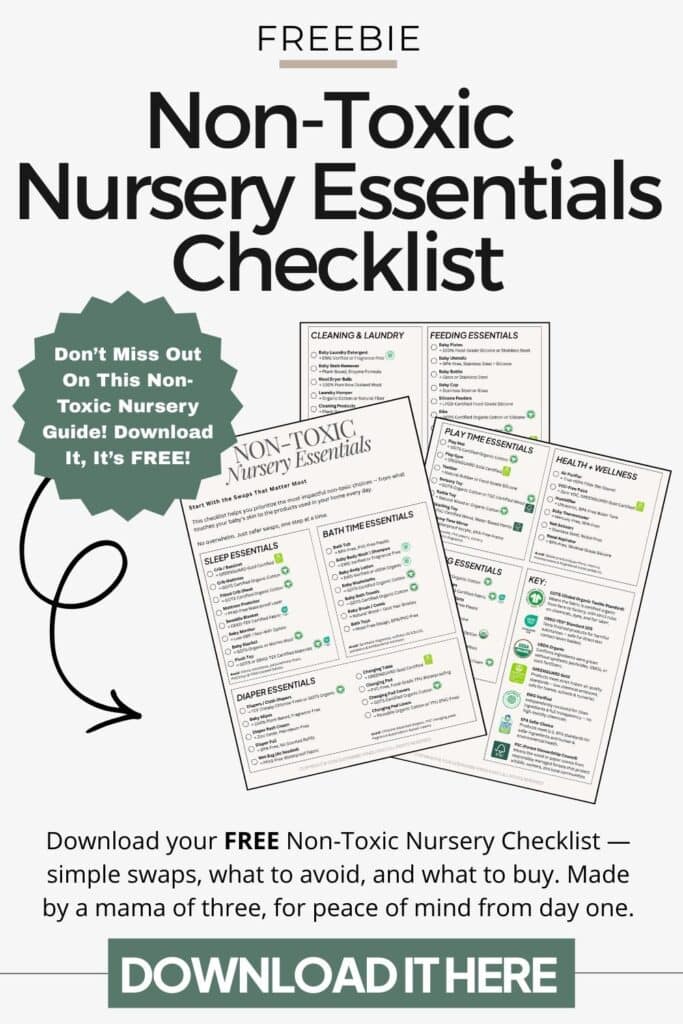
If you’re starting to evaluate all of those products, I created a free Non-Toxic Nursery Essentials Checklist to make the process easier.
It walks through the most common baby items — from diapers and wipes to clothing and nursery basics — and highlights what to look for when choosing safer materials.
You can download the checklist below and keep it handy while setting up your baby’s space.
What Makes a Diaper Non-Toxic?
Disposable diapers are made from several layers designed to keep babies dry and prevent leaks. Because of this, even diapers labeled “natural” or “eco-friendly” usually contain a mix of plant-based fibers and synthetic materials.
What separates safer diapers from conventional ones is often the ingredients they avoid.
The best non-toxic diapers typically skip common irritants like chlorine bleaching, artificial fragrances, lotions, latex, and phthalates.
These additives are sometimes used in conventional diapers to improve scent or appearance, but can increase the risk of irritation for babies with sensitive skin.
Instead, safer diapers prioritize materials such as organic cotton, bamboo fibers, and totally chlorine-free wood pulp, while offering greater transparency about what actually touches your baby’s skin.
Understanding which ingredients matter most can make it much easier to evaluate diaper brands — especially since many conventional diapers still contain chemicals that parents prefer to avoid.
SKL Standards
How We Chose the Best Non-Toxic Diapers
Not all diapers marketed as “natural” or “eco-friendly” are actually safer. Many brands rely on vague marketing language while offering very little transparency about the materials used.
For this guide, we focused on diapers that prioritize safer ingredients, clear disclosures, and reliable performance for everyday use.
The brands below stood out based on several key factors.
Safer Materials
We prioritized diapers made with materials that are gentler on sensitive skin, including options that use organic cotton, bamboo fibers, and totally chlorine-free wood pulp.
While most disposable diapers still rely on some synthetic components for absorbency, safer brands focus on minimizing unnecessary chemical additives.
Ingredient Transparency
Transparency matters, especially for products used around the clock.
We looked for brands that clearly disclose their materials and manufacturing processes rather than relying on vague terms like “natural” or “green.”
Avoiding Common Irritants
The diapers in this guide avoid many ingredients commonly found in conventional disposable diapers, including artificial fragrances, lotions, dyes, latex, and phthalates.
These additives can increase the risk of irritation for babies with sensitive skin.
Certifications and Testing
Whenever possible, we prioritized brands backed by third-party certifications such as EWG VERIFIED™, OEKO-TEX®, FSC®, and GOTS.
These certifications help confirm that materials have been tested for harmful substances or sourced responsibly.
Performance and Fit
Safety is essential, but diapers also need to perform well in everyday use.
The brands included here offer strong absorbency, comfortable fits, and leak protection, helping keep babies dry while reducing exposure to unnecessary chemicals.
Choosing a diaper that balances safer materials, transparency, and reliable performance can make a big difference for babies with sensitive skin.
The brands below stood out for their ingredient disclosures, certifications, and thoughtful material choices.
While no disposable diaper is completely natural, these options prioritize reducing unnecessary chemicals while still delivering strong absorbency and comfort.
The Best Non-Toxic Diapers For Babies
Use discount code SKL15 to save 15%!
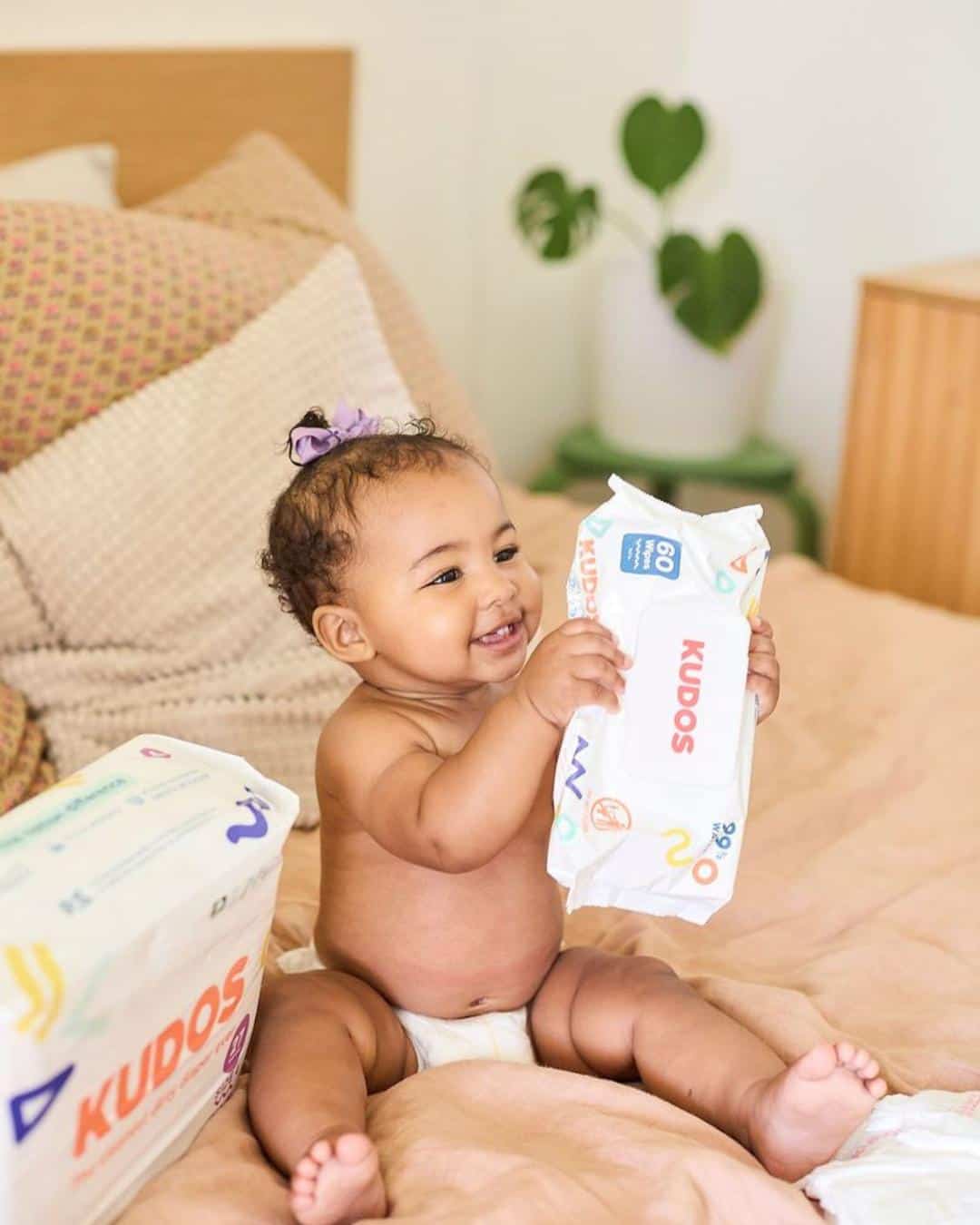
Kudos earns the best overall spot because it uses a cotton top sheet that sits directly against your baby’s skin, something very few disposable diapers currently offer.
Most disposable diapers rely on plastic-based liners, but the cotton surface creates a softer and more breathable barrier for babies with sensitive skin.
Kudos is also the first disposable diaper to receive Cotton Enhanced™ certification, which indicates that cotton is the primary material touching the baby’s skin.
The diaper pairs this cotton top sheet with totally chlorine-free wood pulp in the absorbent core while avoiding additives like fragrances and lotions.
Many parents choose Kudos because it delivers strong overnight absorbency while still prioritizing gentler materials.
Price & Sizing
$0.45+/Diaper | Sizes 1-6
Materials
Cotton Top Sheet | Totally Chlorine-Free (TCF) Wood Pulp + SAP Core
Location/Shipping
United States
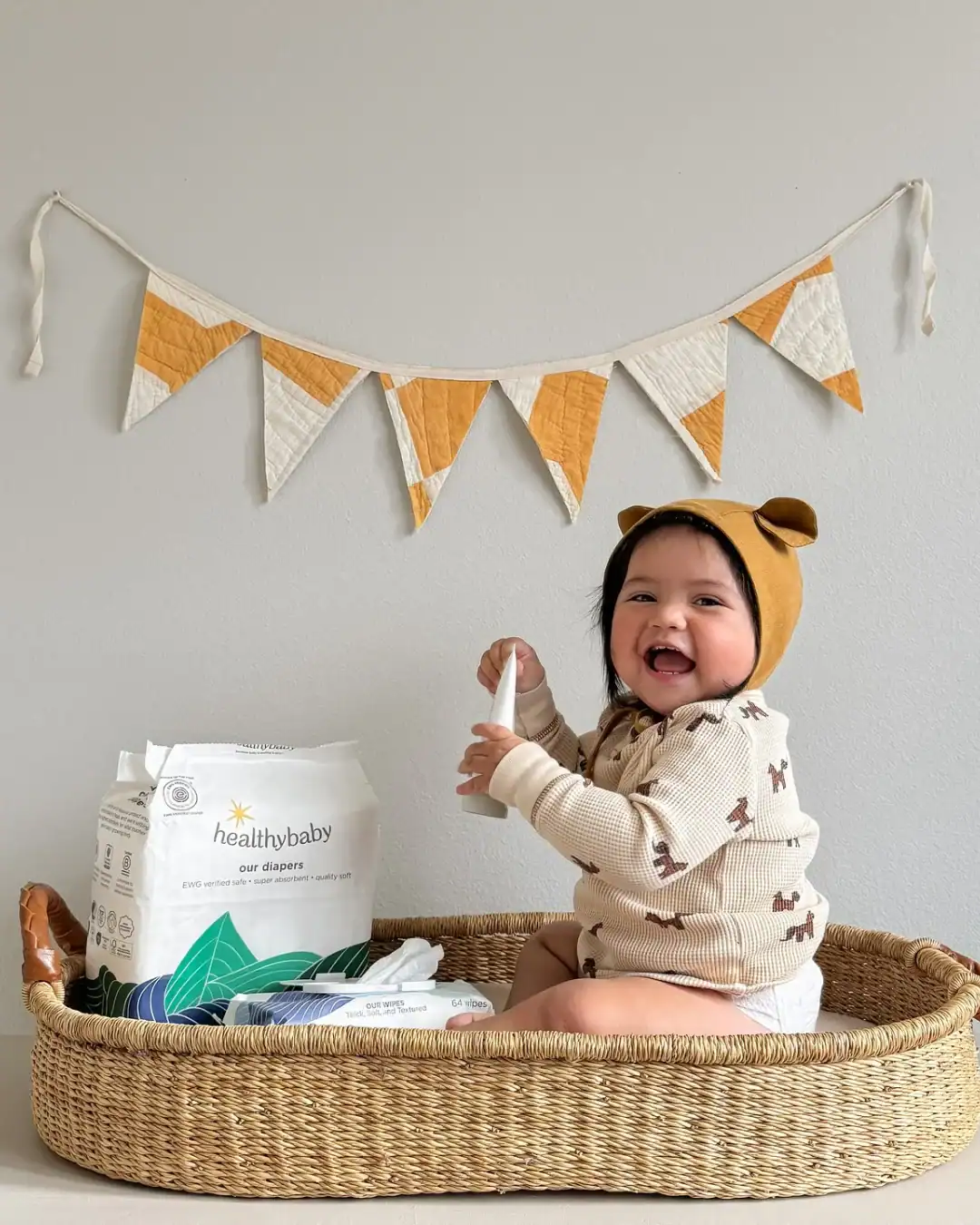
HealthyBaby stands out as the first disposable diaper to earn EWG VERIFIED™ certification, a third-party standard that evaluates products for ingredient safety and transparency.
This certification helps reassure parents that the diaper avoids many of the additives commonly found in conventional disposable diapers.
The diaper features a GOTS-certified organic cotton top sheet, which helps reduce direct contact between synthetic materials and a baby’s sensitive skin.
Combined with chlorine-free pulp and a fragrance-free design, HealthyBaby focuses on minimizing potential irritants while maintaining reliable absorbency.
Many parents gravitate toward this brand because the certification provides extra reassurance about ingredient safety.
Price & Sizing
$0.53+/Diaper | Sizes NB-6
Materials
Organic Cotton Top Sheet | Chlorine-Free Wood Pulp + SAP Core
Location/Shipping
United States
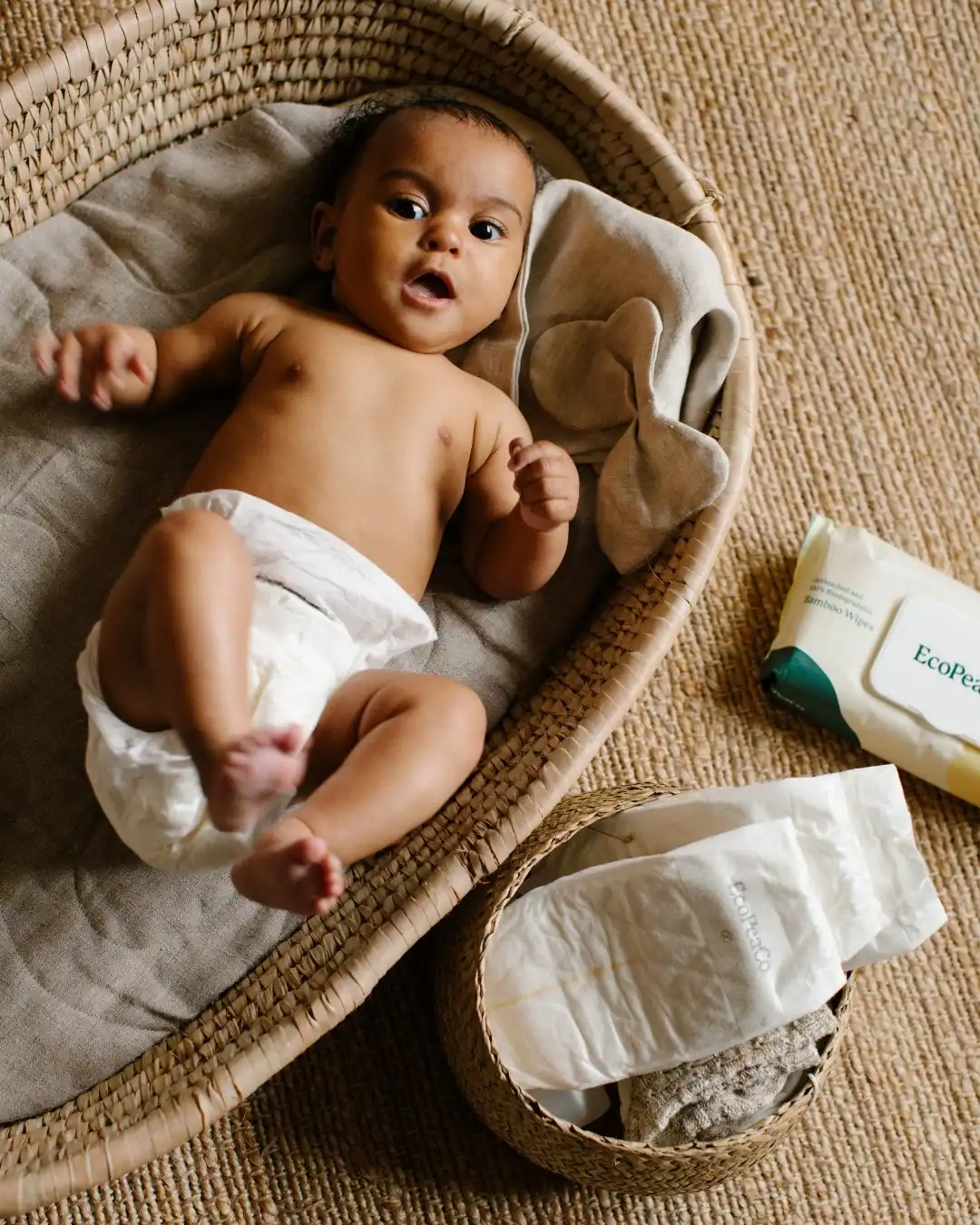
For families interested in bamboo-based diapers, Eco Pea Co. focuses heavily on plant-based materials.
Bamboo fibers are naturally soft and breathable, which can help wick moisture away from the skin and keep babies more comfortable between diaper changes.
Eco Pea Co. uses FSC-certified bamboo pulp processed without chlorine bleaching in the absorbent core while avoiding fragrances and common chemical additives.
The brand also emphasizes environmentally conscious packaging and sourcing.
Parents often choose Eco Pea Co. for its balance of soft bamboo materials and dependable leak protection throughout the day.
Price & Sizing
$0.55+/Diaper | Sizes NB-6
Materials
Bamboo Viscose Top Sheet | Bamboo Pulp + SAP Core
Location/Shipping
Canada | Ships To The United States
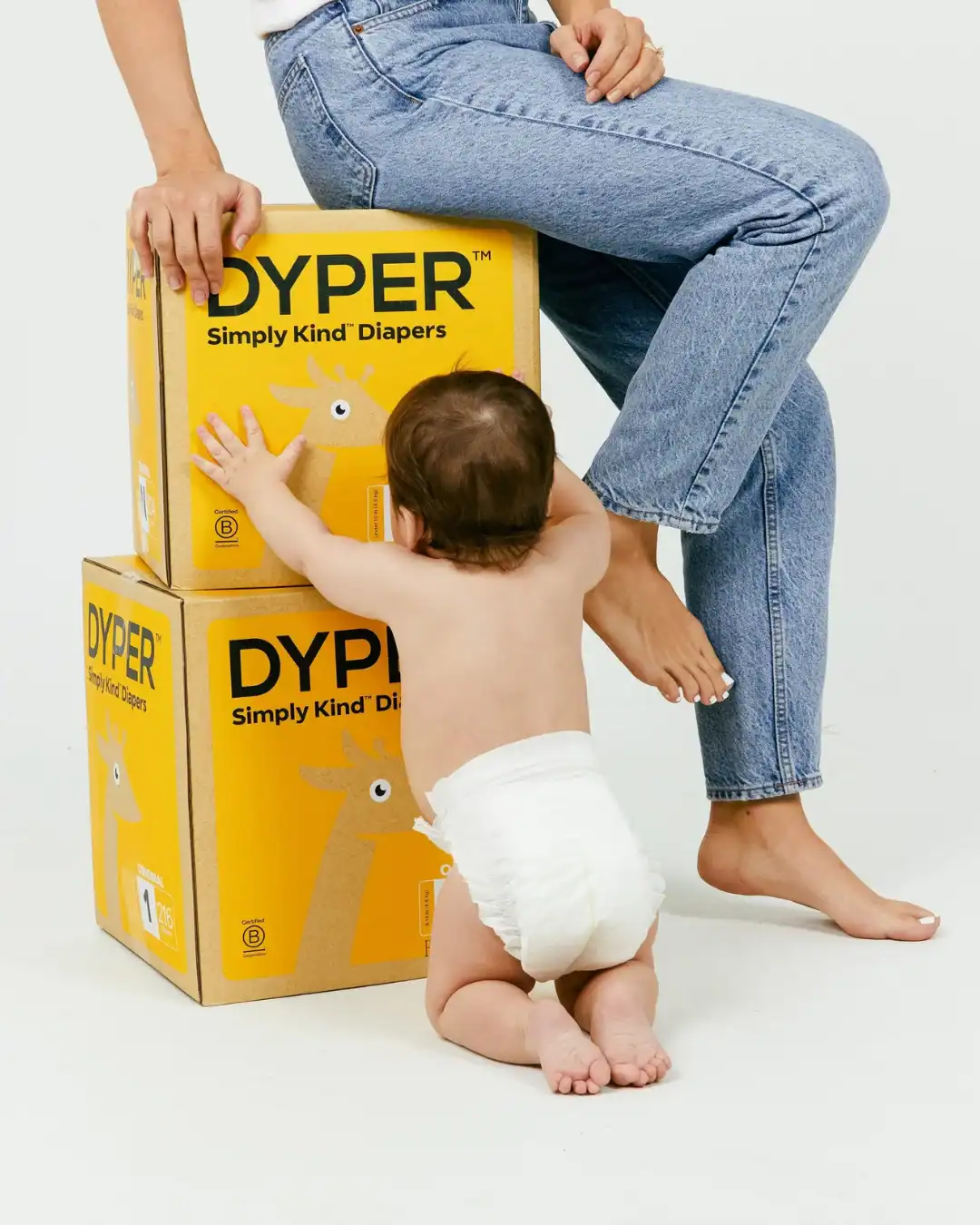
Dyper is a popular option for families trying to reduce the environmental impact of disposable diapers.
The brand offers an optional REDYPER™ program that allows participating households to send used diapers to industrial composting partners rather than sending them to landfills.
The diapers themselves are made from bamboo-derived fibers and avoid additives like fragrances, chlorine bleaching, and latex.
Dyper focuses on combining safer materials with waste-reduction initiatives.
Many parents appreciate the brand for its strong absorbency and the option to participate in a composting program that helps reduce diaper waste.
Price & Sizing
$0.54+/Diaper | Sizes NB-6
Materials
Bamboo Viscose Top Sheet | Chlorine-Free (ECF) Wood Pulp + SAP Core
Location/Shipping
United States
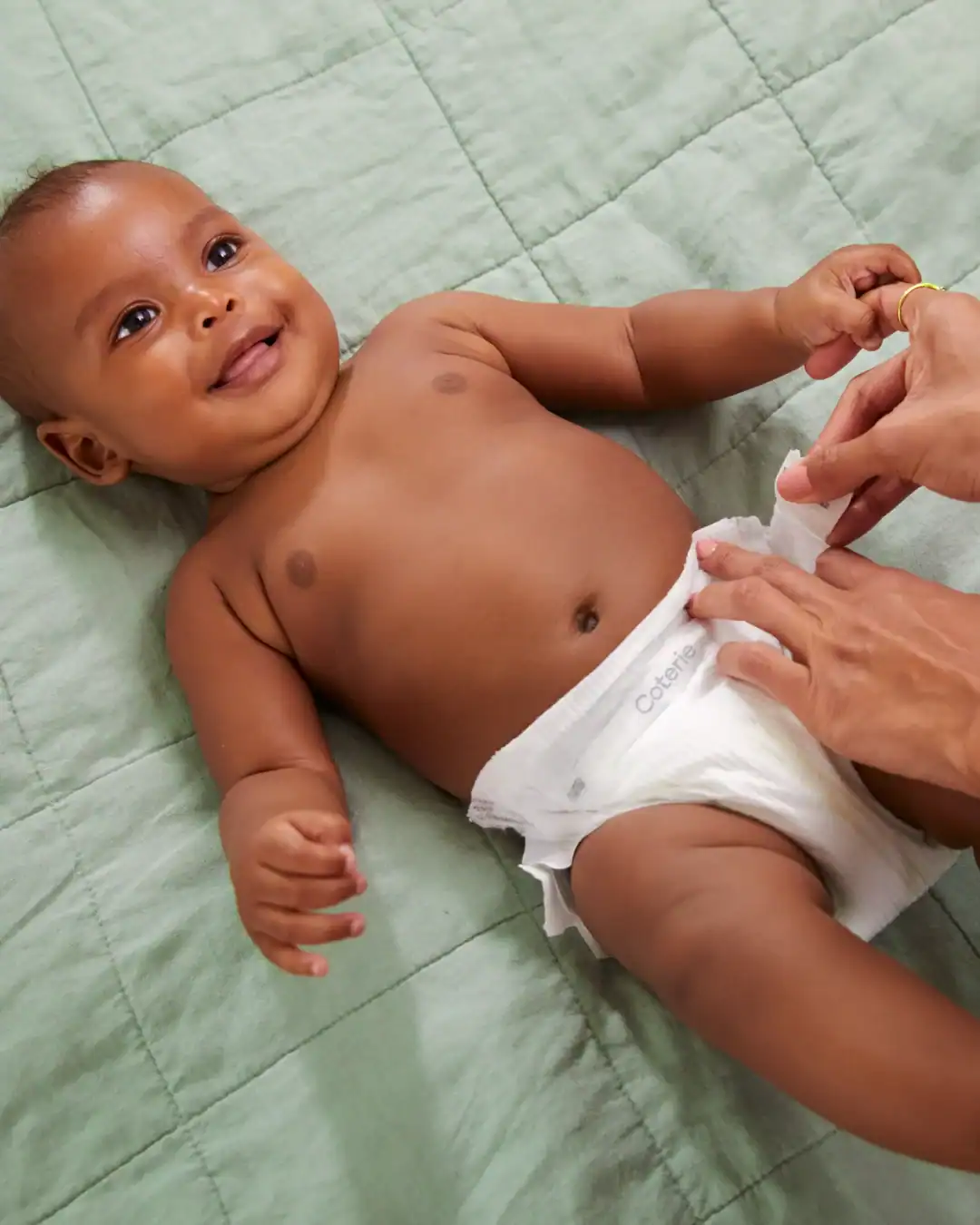
Coterie has developed a strong following among parents looking for a premium diaper with exceptional absorbency and softness.
The brand focuses on removing common irritants such as fragrances, lotions, and chlorine bleaching while maintaining high-performance leak protection.
The diaper’s multi-layer absorbent design helps keep moisture locked away while remaining thin and flexible.
Although synthetic materials are still necessary for absorbency, Coterie emphasizes careful ingredient selection and rigorous testing.
Many parents choose Coterie for its ability to keep babies dry overnight with fewer diaper changes.
Price & Sizing
$0.48+/Diaper | Sizes NB-7
Materials
Polypropylene Top Sheet | Totally Chlorine-Free (TCF) Wood Pulp + SAP Core
Location/Shipping
United States
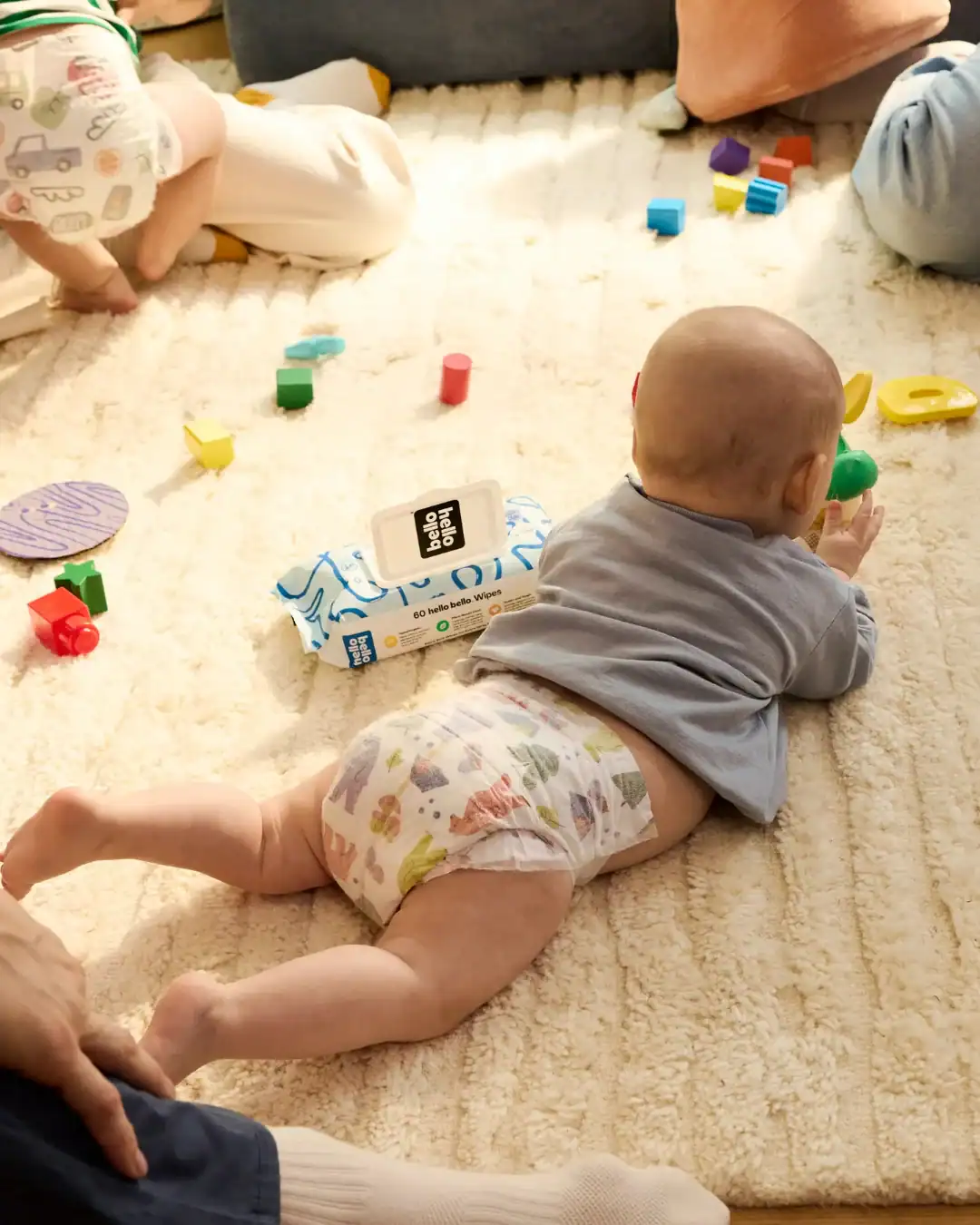
Hello Bello is often chosen by families looking for a more affordable fragrance-free diaper that still avoids many of the additives found in conventional options.
The brand focuses on eliminating chlorine processing, artificial fragrances, lotions, and latex.
While the diaper still uses a mix of plant-based and synthetic materials necessary for absorbency, it offers a lower-cost entry point for parents interested in reducing chemical additives.
Many families appreciate Hello Bello for its balance of affordability, cute designs, and reliable everyday performance.
Price & Sizing
$0.06+/Diaper | Sizes NB-6
Materials
Polypropylene/Polyethylene/Polyester + Plant-Based PLA Fiber Top Sheet | Totally Chlorine-Free (ECF) Wood Pulp + SAP Core
Location/Shipping
United States | Ships To Canada
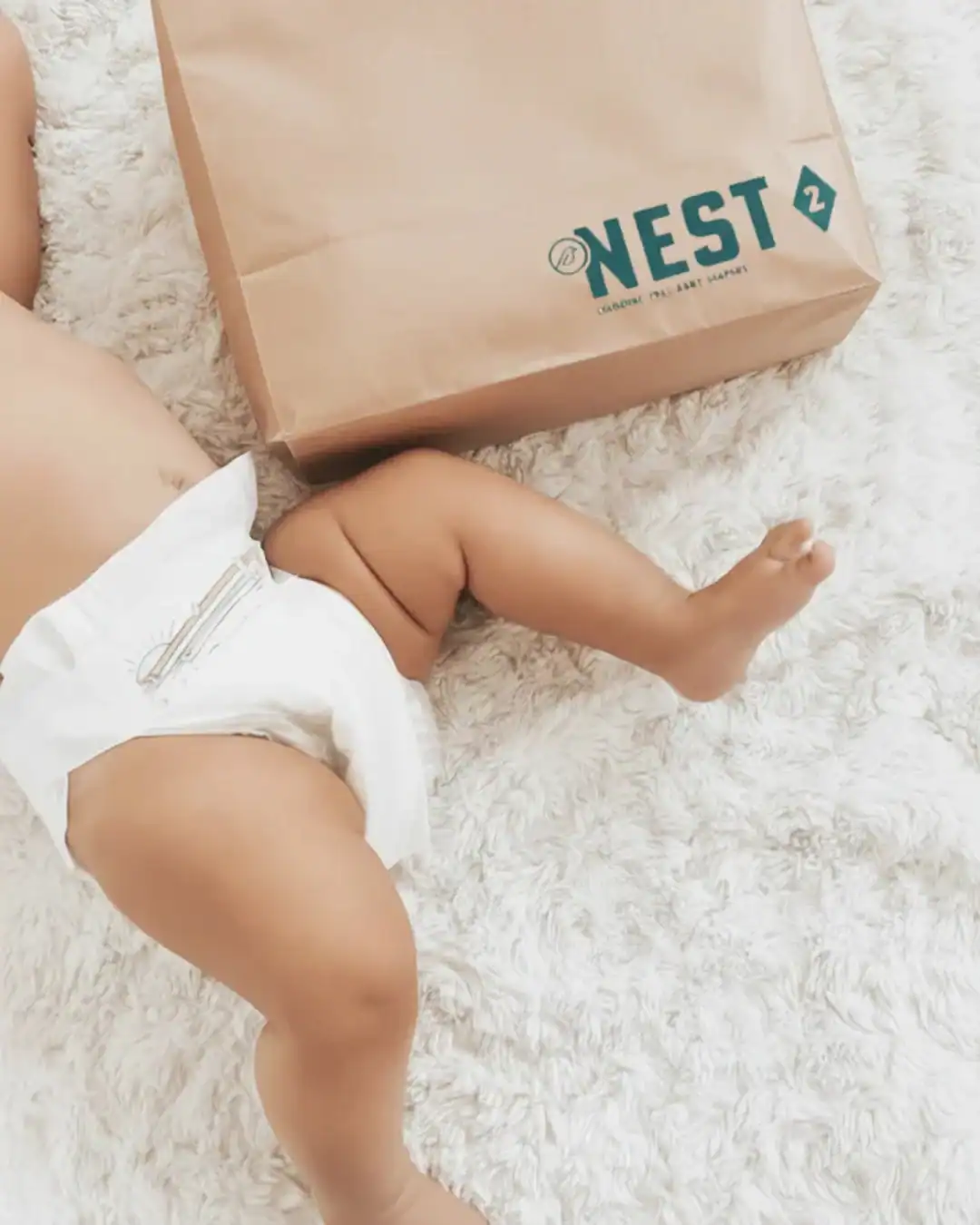
Nest Baby Diapers are designed with a focus on environmentally responsible materials and manufacturing practices.
The brand incorporates bamboo fibers and plant-based components alongside chlorine-free pulp to help reduce exposure to unnecessary additives.
Nest Baby Diapers also prioritizes certifications that verify materials have been tested for harmful substances.
The combination of bamboo fibers and absorbent core technology helps maintain reliable leak protection while keeping the diaper soft and breathable.
Many families choose Nest Baby Diapers for its balance between sustainability goals and everyday performance.
Price & Sizing
$0.46+/Diaper | Sizes 1-3
Materials
Polypropylene + Viscose Fiber Top Sheet | Totally Chlorine-Free (TCF) Wood Pulp + SAP Core
Location/Shipping
United States
Diaper Materials Explained
Disposable diapers are made from several layers that work together to keep babies dry and prevent leaks.
While no disposable diaper is completely natural, many safer brands focus on improving the materials that touch a baby’s skin and reducing unnecessary chemical additives.
Understanding the most common diaper materials can help parents make more informed choices when comparing brands.
Organic Cotton
Organic cotton is one of the gentlest materials used in diapers. When used as a top sheet, it creates a breathable layer that sits directly against the baby’s skin.
Because organic cotton is grown without synthetic pesticides and processed with stricter standards, many parents prefer it for babies with sensitive skin.
Diapers that use cotton top sheets often feel softer and more fabric-like than plastic-based liners.
Bamboo Fibers
Bamboo viscose is commonly used in eco-focused diapers because it is naturally soft and highly absorbent.
These fibers help wick moisture away from the skin, which can help keep babies drier between changes.
Although bamboo diapers are often marketed as “natural,” it’s important to know that bamboo viscose is still a processed material.
Even so, many parents choose bamboo-based diapers for their softness and breathability.
Chlorine-Free Wood Pulp
Most disposable diapers use wood pulp in the absorbent core to help trap moisture.
In conventional diapers, this pulp is sometimes bleached with chlorine to create a bright white appearance.
Safer diaper brands often use totally chlorine-free (TCF) or chlorine-free processed pulp, which helps avoid the formation of certain chemical byproducts created during chlorine bleaching.
Superabsorbent Polymers (SAP)
Superabsorbent polymers are what allow disposable diapers to lock away large amounts of liquid while staying relatively thin.
Even many eco-friendly diapers still rely on SAP because it plays a critical role in preventing leaks and keeping babies dry.
The key difference with safer diaper brands is that they focus on reducing unnecessary additives around the absorbent core, such as fragrances, lotions, and dyes.
Certifications to Look For in Non-Toxic Diapers
Because diaper materials can be complex, certifications can help parents identify products that have been independently tested or responsibly sourced.
While no certification guarantees a diaper is completely “non-toxic,” certain standards can provide helpful insight into how materials are produced and evaluated.
Looking for these certifications can make it easier to compare diaper brands and understand which companies prioritize transparency.
EWG VERIFIED™
EWG VERIFIED™ is one of the strictest health-focused product certifications currently available. Products with this certification must meet detailed ingredient safety criteria and fully disclose their materials.
In the diaper category, EWG VERIFIED™ helps confirm that the product avoids many additives commonly found in conventional diapers, including certain fragrances, lotions, and chemicals of concern.
OEKO-TEX® Standard 100
OEKO-TEX® Standard 100 certification indicates that textiles have been tested for a wide range of harmful substances. This testing focuses on materials that come into direct contact with the skin.
For diapers, OEKO-TEX certification can provide reassurance that fabrics and fibers have been screened for potentially irritating chemicals.
FSC® (Forest Stewardship Council)
FSC certification applies to wood-based materials such as the pulp used in diaper absorbent cores.
It verifies that the wood pulp was sourced from responsibly managed forests that prioritize environmental protection and ethical forestry practices.
Many eco-focused diaper brands use FSC-certified pulp to reduce the environmental impact of disposable diaper production.
GOTS (Global Organic Textile Standard)
GOTS certification is one of the most widely recognized standards for organic textiles.
It verifies that fibers labeled as organic meet strict environmental and chemical processing requirements throughout production.
When used in diapers, GOTS certification most commonly applies to organic cotton top sheets that sit directly against the baby’s skin.
Frequently Asked Questions About Non-Toxic Diapers
Non-toxic diapers are designed to avoid common irritants such as fragrances, chlorine bleaching, lotions, and dyes that are often found in conventional disposable diapers.
Many parents choose them because they reduce unnecessary chemical exposure and may help minimize skin irritation. For babies with sensitive skin, simpler materials can sometimes make a noticeable difference.
Conventional disposable diapers may contain additives such as chlorine-bleached pulp, artificial fragrances, dyes, lotions, and petroleum-based plastics.
Some diapers may also include trace volatile organic compounds (VOCs) from adhesives or materials. While these ingredients are widely used in the diaper industry, many parents prefer diapers that avoid them.
Bamboo diapers are often chosen because bamboo fibers are soft, breathable, and highly absorbent.
Many bamboo diaper brands also avoid fragrances, chlorine bleaching, and other additives commonly found in conventional diapers.
While bamboo diapers are still processed materials, they are often considered a gentler option for sensitive skin.
Most disposable diapers, including many marketed as organic or eco-friendly, do not fully biodegrade in typical landfill conditions. Some brands use plant-based materials or offer composting programs to reduce environmental impact.
However, disposable diapers generally take many years to break down due to the absorbent core and protective layers.
Chlorine-free diapers avoid the bleaching process traditionally used to whiten wood pulp. This helps reduce the formation of certain chemical byproducts created during chlorine bleaching.
Many parents choose chlorine-free diapers as a precaution when selecting products that sit against their baby’s skin for long periods of time.
Materials like organic cotton, bamboo fibers, and totally chlorine-free wood pulp are commonly used in safer disposable diapers.
These materials help reduce exposure to fragrances, dyes, and other additives that may irritate sensitive skin.
Because disposable diapers require absorbent polymers to function properly, most still contain a mix of natural and synthetic materials.
Non-toxic diapers may help reduce irritation for babies prone to diaper rash because they avoid fragrances, lotions, and certain chemical additives.
Breathable materials like cotton or bamboo can also help keep skin drier by improving airflow. However, diaper rash can still occur due to moisture, friction, or prolonged wear.
Many parents choose non-toxic diapers because they prioritize simpler materials and greater ingredient transparency.
While they may cost slightly more than conventional options, some families feel the reduced exposure to fragrances, chlorine bleaching, and other additives is worth the investment.
The right choice often depends on personal priorities, budget, and a baby’s skin sensitivity.
Most babies need diaper changes every two to three hours, or whenever the diaper becomes wet or soiled.
Frequent changes help keep the skin dry and can reduce the risk of diaper rash. Overnight diapers or highly absorbent options may last longer during sleep.
Fragrance-free diapers are often recommended for babies with sensitive skin because artificial scents can sometimes cause irritation.
Many non-toxic diaper brands avoid fragrances altogether and rely on absorbent materials instead of odor-masking chemicals.
Choosing fragrance-free products can help minimize potential skin reactions.
Non-toxic diapers are often slightly more expensive than conventional options because they may use higher-quality materials, certified fibers, or more transparent manufacturing processes.
Prices can vary widely depending on the brand, subscription options, and diaper size.
Many families find that choosing a diaper that works well for their baby’s skin can help reduce issues like rashes or leaks, which can make the cost worthwhile.
Continue Building a Non-Toxic Nursery
If you’re creating a healthier space for your baby, these guides may help you explore other safer essentials for the nursery.
- Organic Crib Mattresses – A guide to crib mattresses made with safer materials and certified organic fibers.
- Non-Toxic Baby Wipes – Learn which baby wipes avoid fragrances, harsh preservatives, and unnecessary additives.
- Organic Baby Clothing Brands – Discover baby clothing made with organic cotton and safer dyes.
- Non-Toxic Nursing Pillows – A guide to nursing pillows made with organic fabrics, safer filling materials, and supportive designs for comfortable feeding sessions.
- Non-Toxic Baby Bottles – Complete guide to finding the safest baby bottles made with safer materials like glass, stainless steel, and food-grade silicone.
Final Thoughts on Non-Toxic Diapers
Choosing a diaper might seem like a small decision, but it’s one of the products babies interact with the most during their first years of life.
Because diapers stay in constant contact with delicate skin, many families prefer options that minimize unnecessary chemical additives and prioritize simpler materials.
While no disposable diaper is completely natural, many brands are now taking meaningful steps toward greater transparency and safer ingredient choices.
Materials like cotton top sheets, bamboo fibers, and chlorine-free pulp can help reduce exposure to fragrances, dyes, and other irritants commonly found in conventional diapers.
The brands in this guide stood out for their thoughtful material choices, ingredient transparency, and reliable performance for everyday use.
Finding the right diaper ultimately comes down to balancing comfort, absorbency, and the level of material safety that feels right for your family.
Even small improvements in the products we use every day can help support healthier routines for our homes and families.
📌 Save This Guide For Later
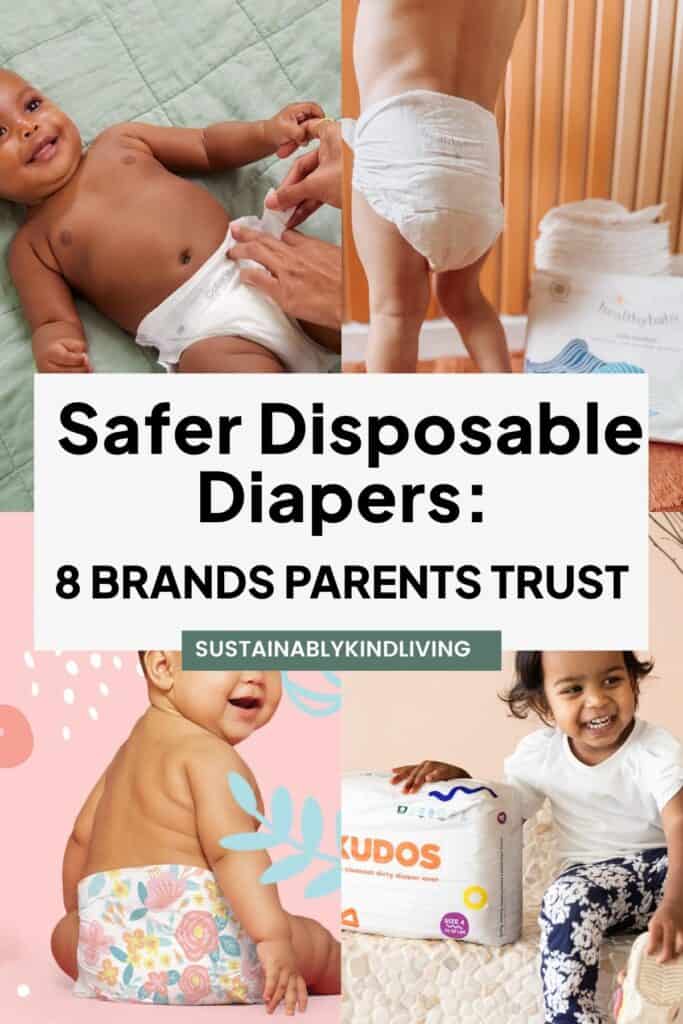
Choosing non-toxic diapers can feel overwhelming — especially when so many brands use terms like “natural” or “clean” without clear standards.
In this guide, I break down what actually matters (and what doesn’t), including materials to avoid, certifications that are worth paying attention to, and the diaper brands I personally trust.
Whether you’re building your baby registry or looking to make a safer swap, this is a resource you can come back to anytime.
Sources & Further Reading
Diaper materials can be surprisingly complex, which is why I always encourage parents to look beyond marketing claims and explore how products are actually made.
The resources below are organizations and research groups that help explain ingredient safety, textile certifications, and chemical exposure in consumer products.
If you’re curious to dig deeper into how diapers, fabrics, and baby products are evaluated, these are some of the most helpful places to start.
- Environmental Working Group (EWG): EWG researches ingredient safety in consumer products and maintains databases that help families understand potential chemical exposures. Their work also supports certifications like EWG VERIFIED™, which evaluates products for ingredient transparency and safety standards.
- OEKO-TEX® Standard 100: OEKO-TEX tests textiles for a wide range of potentially harmful substances. Their certification helps verify that fabrics used in products like clothing, bedding, and diapers have been screened for chemicals that may irritate sensitive skin.
- Forest Stewardship Council (FSC): FSC focuses on responsible forest management. Their certification ensures that wood-based materials — like the pulp used in diaper absorbent cores — come from forests that are managed with environmental protection and ethical harvesting practices.
- Global Organic Textile Standard (GOTS): GOTS is one of the most widely recognized standards for organic fibers such as cotton. It verifies that textiles meet strict environmental and chemical processing requirements throughout manufacturing.
- National Institute of Environmental Health Sciences (NIEHS): NIEHS conducts scientific research on environmental exposures and their effects on human health. Their research helps inform how chemicals in everyday products may affect sensitive populations, including infants and children.
- Consumer Product Safety Commission (CPSC): The U.S. Consumer Product Safety Commission monitors the safety of consumer products, including baby and nursery items. Their research and safety standards help identify potential hazards in products used by infants and young children.
This post was graciously sponsored by Kudos. As always, we only work with brands that we stand behind. Would you like to sponsor one of our sustainable round-ups? Contact us here.

Steal My Non-Toxic Cleaning Checklist!
Believe us, it’s the BEST…. and it’s free. Does it really get any better than that?! Sign up for our newsletter and get this free checklist to clean your home without any harmful chemicals!