 Shop My Favorite Non-Toxic Gifts Of 2026!
SKL is reader supported. When you buy through links on our site, we may earn affiliate commission. Learn more here.
Tired of celebrating Thanksgiving while secretly cringing at all the waste it leaves behind? You’re not alone. Between mountains of uneaten food, single-use décor, and endless packaging, the holiday can feel anything but thankful to the planet.
But here’s the good news: it doesn’t have to be that way. With just a few mindful swaps, you can enjoy the warmth, flavor, and tradition of the season without the guilt.
I put together this list to help you cut through the chaos and make Thanksgiving not just fun — but truly eco-friendly.
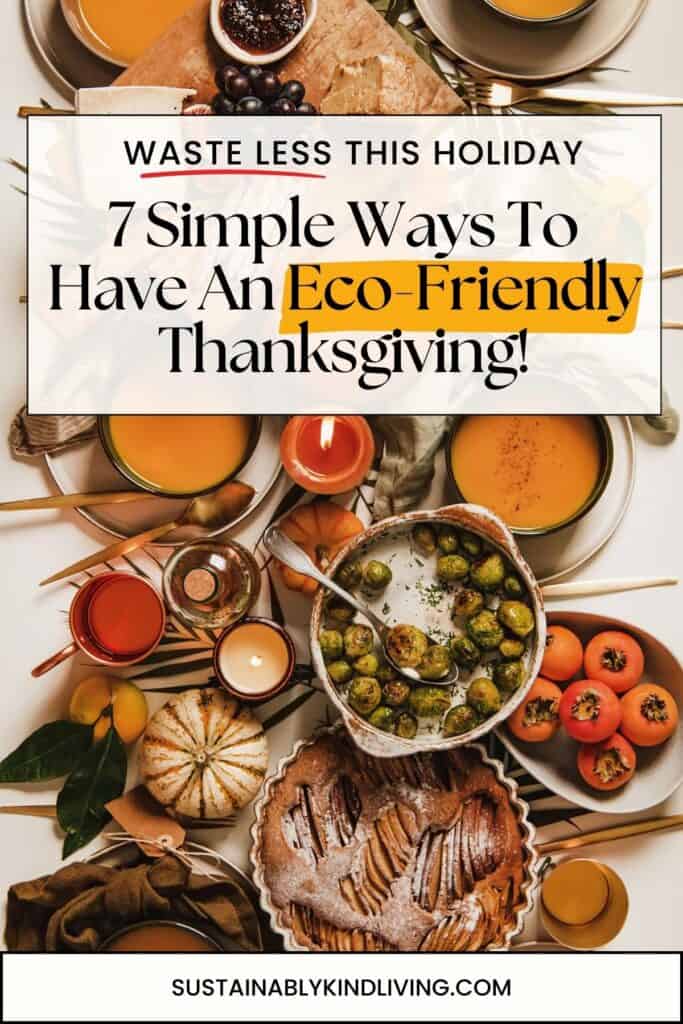
Thanksgiving is one of the most cherished holidays of the year — but it also happens to be one of the most wasteful.
Americans generate about 25% more trash between Thanksgiving and New Year’s (Center for Biological Diversity, 2018), and on Thanksgiving Day alone, ReFED estimates over 305 million pounds of food are wasted.
Most of that ends up in landfills, where it releases methane — a greenhouse gas even more potent than CO₂.
The traditional turkey dinner carries its own hefty footprint, too. Producing a single roast turkey generates around 64 pounds of CO₂, and the energy used to cook for a crowd only adds more.
When you factor in travel, plastic décor, and disposable tableware, the holiday starts to look a lot less “thankful” for the planet.
But here’s the good news: it doesn’t have to be this way. With a few intentional swaps, you can host a Thanksgiving that’s just as festive and delicious — but far more eco-friendly.
Whether it’s decorating with natural elements, shopping locally, or serving more veggie-forward dishes, small changes really do add up.
In this guide, I’ll walk you through 7 simple steps to an epic eco-friendly Thanksgiving — easy, budget-friendly tips that reduce waste, cut emissions, and make the holiday more meaningful by reconnecting us with nature, community, and history.
What Is the Environmental Impact of a Typical Thanksgiving?
Thanksgiving may feel like a single meal, but its environmental footprint is massive.
Studies show that an average Thanksgiving dinner for eight people creates over 100 pounds of CO₂ emissions, with the turkey accounting for more than half of that impact. To put it in perspective, that’s like driving a car more than 100 miles for just one meal.
The bigger issue is waste. Each year, Americans throw away 305 million pounds of food on Thanksgiving alone(ReFED).
That’s nearly triple the daily U.S. household food waste average — and most of it ends up in landfills, where it produces methane, a greenhouse gas at least 25 times more potent than carbon dioxide.
It’s not just the food, either. Disposable plates, plastic packaging, and cheap seasonal décor add even more trash to the pile.
Combine that with heavy travel — the single busiest week for U.S. flights and road trips — and Thanksgiving quickly becomes one of the least eco-friendly holidays of the year.
But here’s the silver lining: small changes add up!
By reducing meat, cutting food waste, and choosing reusable or compostable options, families can dramatically shrink the environmental impact of their holiday.
Even one swap — like adding a plant-based dish or shopping local produce — makes a difference.
7 Easy Steps To A Truly Eco-Friendly Thanksgiving (2026 Guide)
1. Eco-Friendly Thanksgiving Décor With Nature
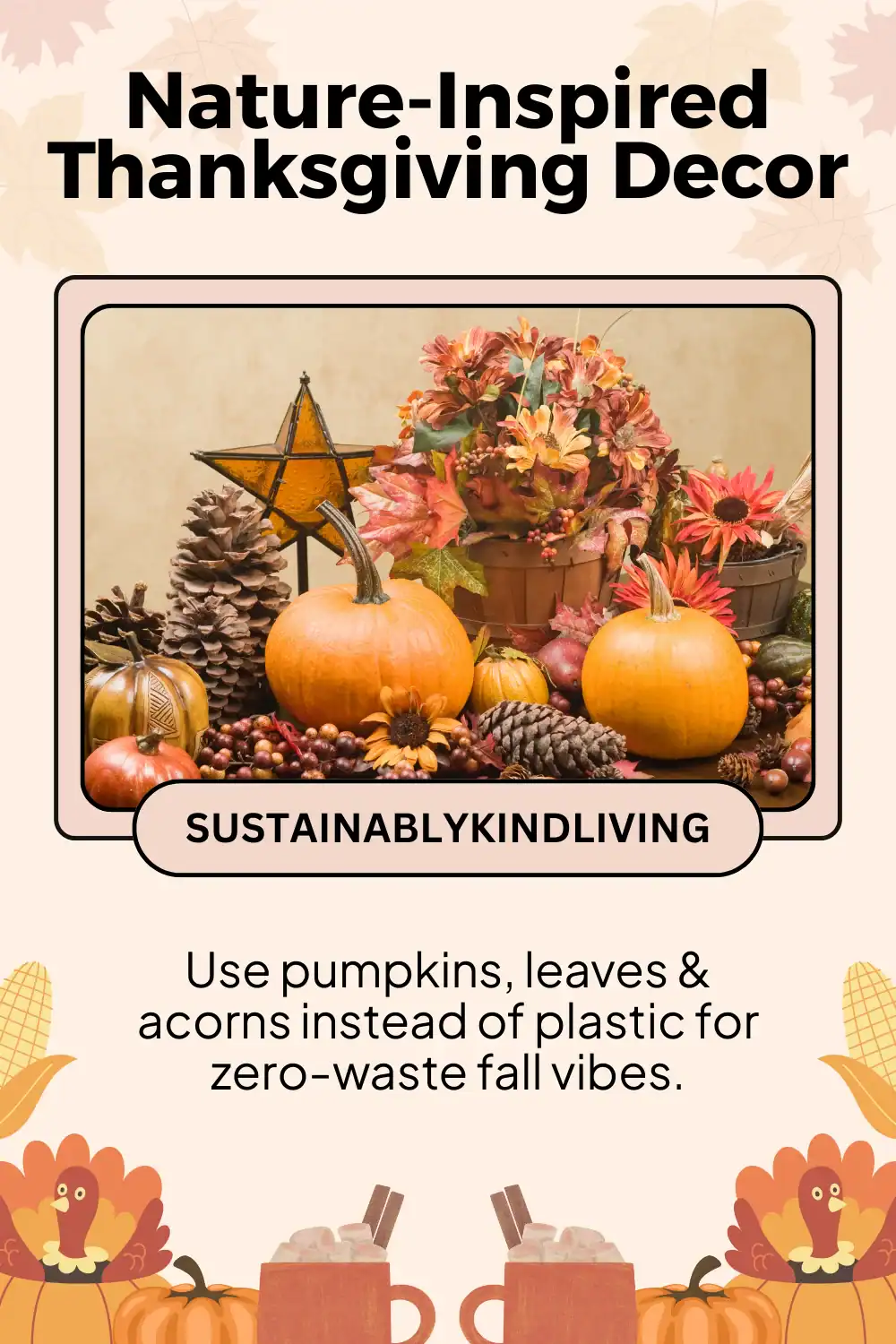
Plastic pumpkins and store-bought decorations may look festive, but they almost always end up in the trash.
Instead, bring the season indoors with natural, biodegradable décor that looks even better.
Gather real pumpkins, colorful autumn leaves, acorns, pinecones, and even dried corn husks to create a warm, authentic table display.
When the holiday is over, you can compost or repurpose these instead of adding to the 25 million tons of garbage Americans generate between Thanksgiving and New Year’s.
Bonus: kids love helping collect leaves and pinecones, turning decorating into a fun family activity.
For more inspiration, see our full sustainable fall décor guide.
2. Serve More Veggie Sides
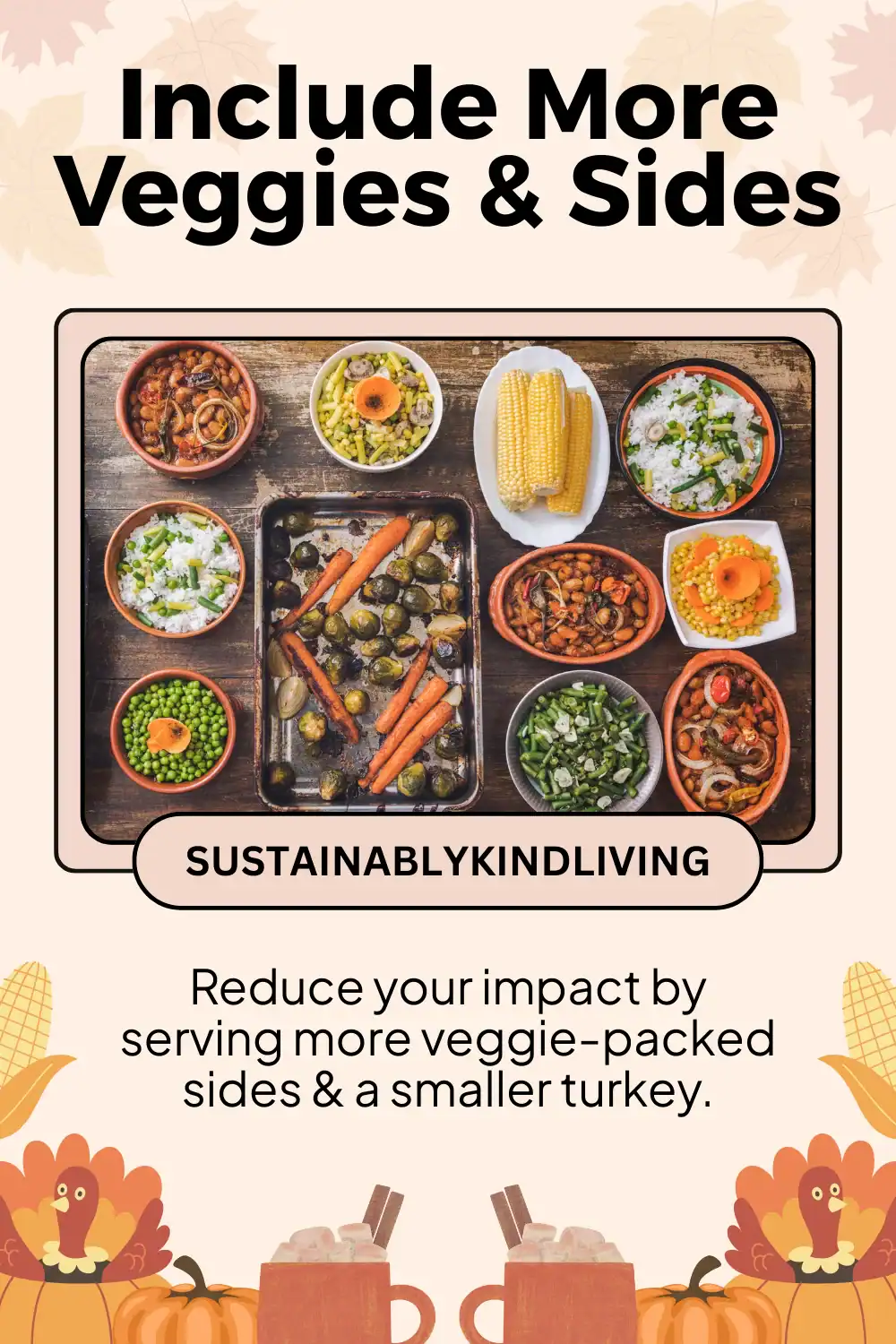
Thanksgiving doesn’t have to revolve around one giant turkey.
One of the easiest ways to cut your footprint is by simply cooking a smaller bird and filling the table with extra vegetable-based sides.
Veggies require far less water, land, and energy than meat — and sides are often the dishes guests rave about anyway.
Think roasted root vegetables, maple-glazed Brussels sprouts, or a hearty grain salad that balances the richness of traditional fare.
By making veggies the star, you naturally reduce waste, shrink your carbon footprint, and stretch leftovers further.
3. Shop Local & Sustainable
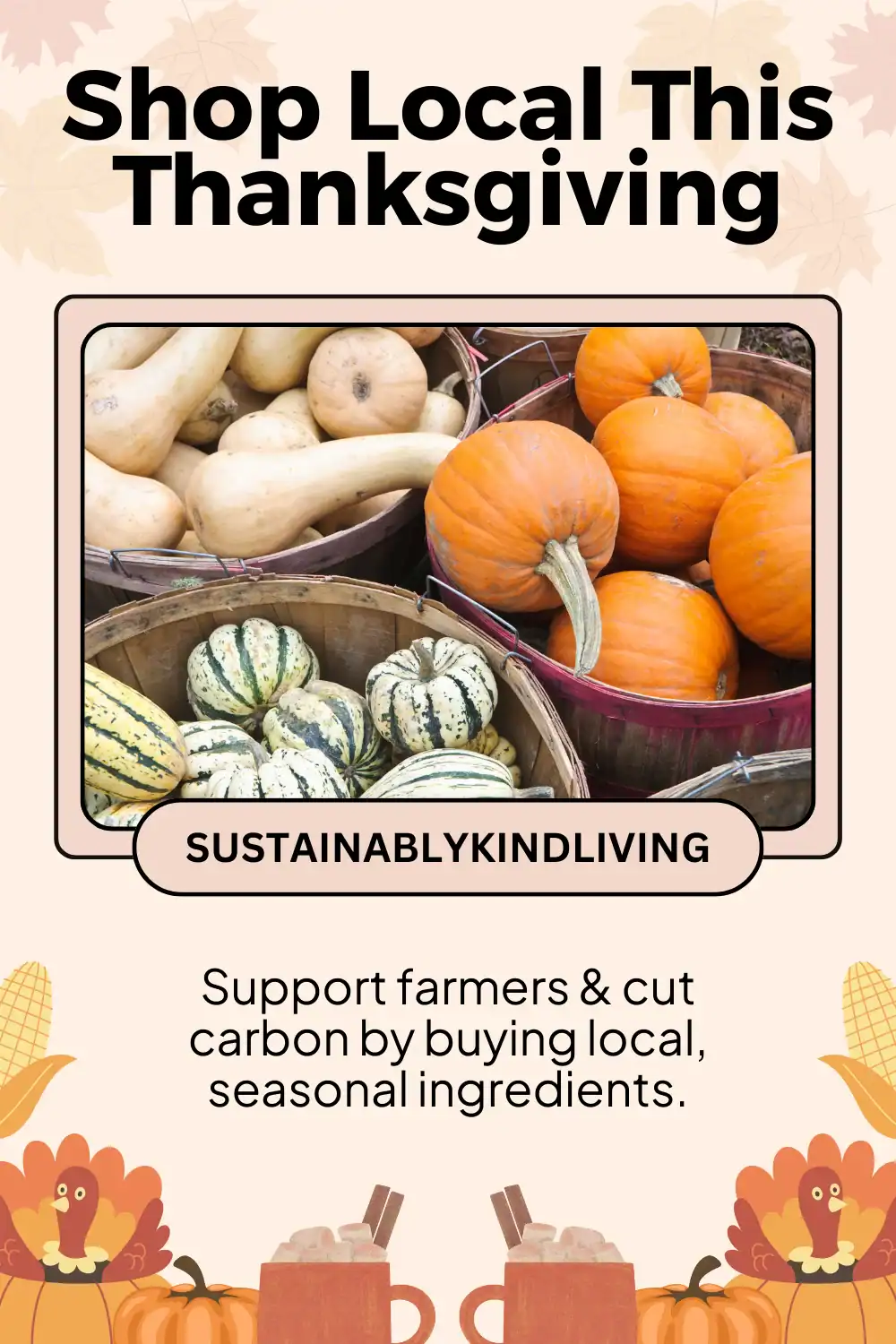
Instead of filling your cart at a big-box store, make a trip to the farmers’ market or local food co-op.
Locally grown food requires fewer transport miles, meaning a smaller carbon footprint and fresher flavors.
Buying directly from farmers also keeps money in your community and supports sustainable agriculture.
For protein, consider locally raised, pasture-fed turkey or fish caught by regional fishermen.
Plan your shopping list ahead to avoid overbuying and food waste.
A simple swap to local ingredients makes your Thanksgiving meal not only greener but tastier, too.
👉 If you’re looking for ethical wardrobe swaps to match the season, you’ll love our organic fall fashion guide.
4. Compost & Repurpose Thanksgiving Leftovers
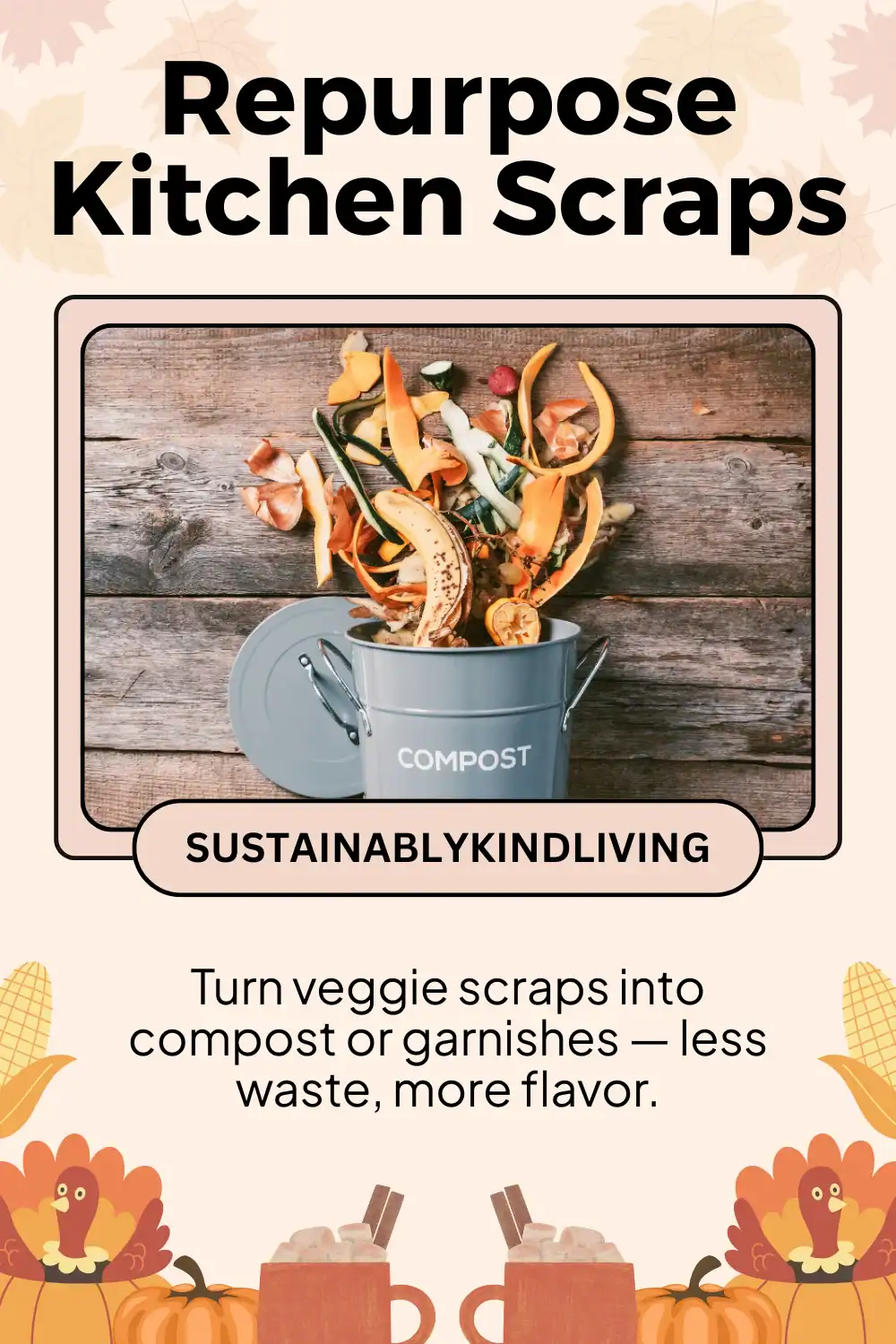
Food waste is one of the biggest environmental culprits at Thanksgiving, but with a little creativity, it’s also one of the easiest to fix.
Instead of tossing carrot tops, celery leaves, or potato peels, use them to flavor soups, make broths, or garnish dishes.
Leftover bread can become croutons or stuffing, while pumpkin rinds and seeds can be roasted for snacks.
If you can’t repurpose scraps, compost them to create nutrient-rich soil instead of sending them to landfills where they emit methane.
Even small changes like saving veggie scraps add up to big environmental wins.
For ideas after the holiday, see our guide on what to do with leftover pumpkins.
5. Swap in a Fully Plant-Based Thanksgiving Dish
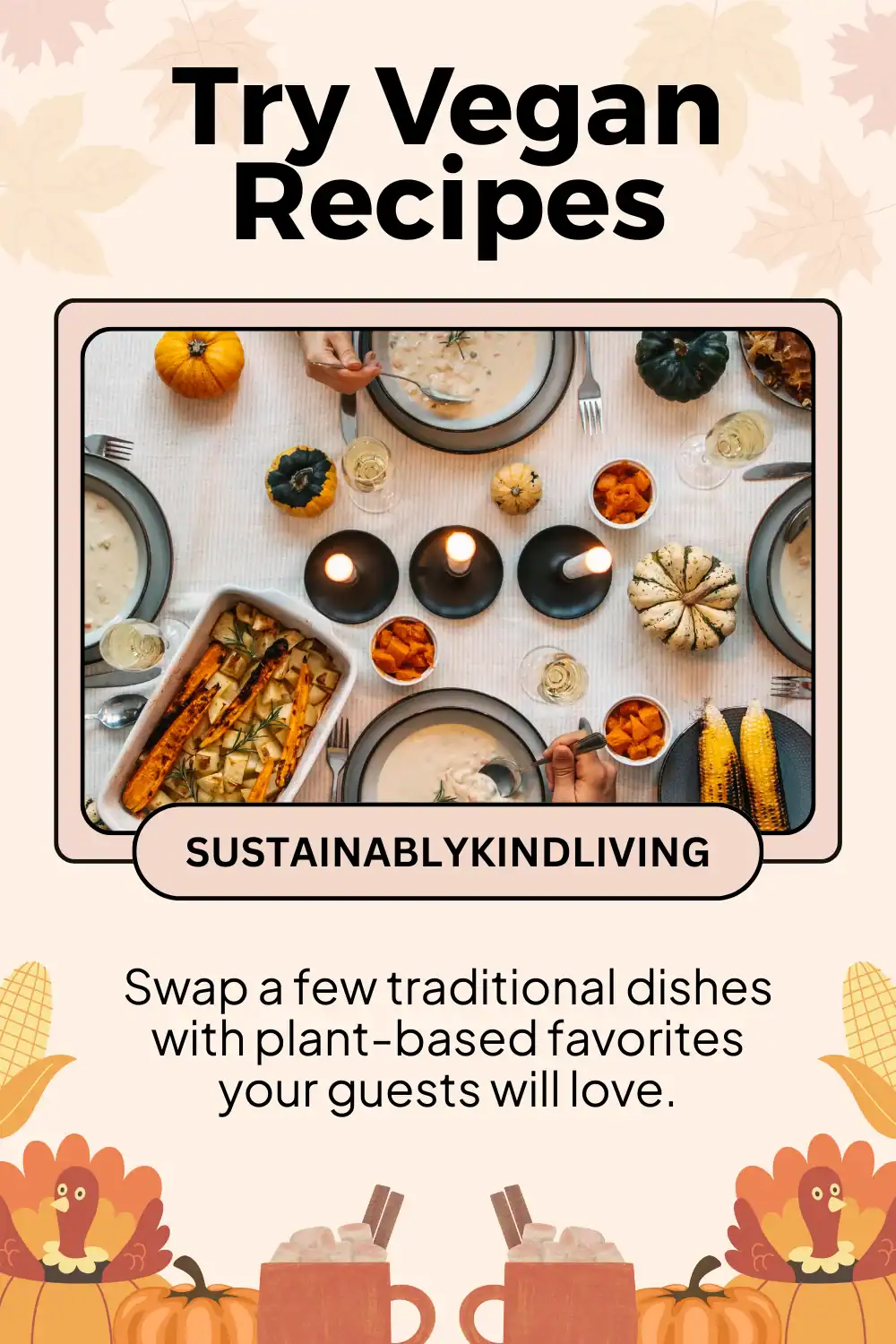
Want to go a step further than just bulking up sides? Try introducing one fully plant-based main dish to the menu.
Options like stuffed butternut squash, mushroom wellington, or a lentil loaf can rival any roast while keeping the focus on seasonal flavors.
Even desserts can get a plant-based twist — think dairy-free pumpkin pie or vegan apple crisp.
These swaps don’t just lower emissions, they also prove that Thanksgiving doesn’t have to depend on turkey to feel festive.
👉 For inspiration, check out our homemade Halloween treat ideas — many are plant-based and can be adapted for Thanksgiving desserts.
6. Make Thanksgiving About Giving Back
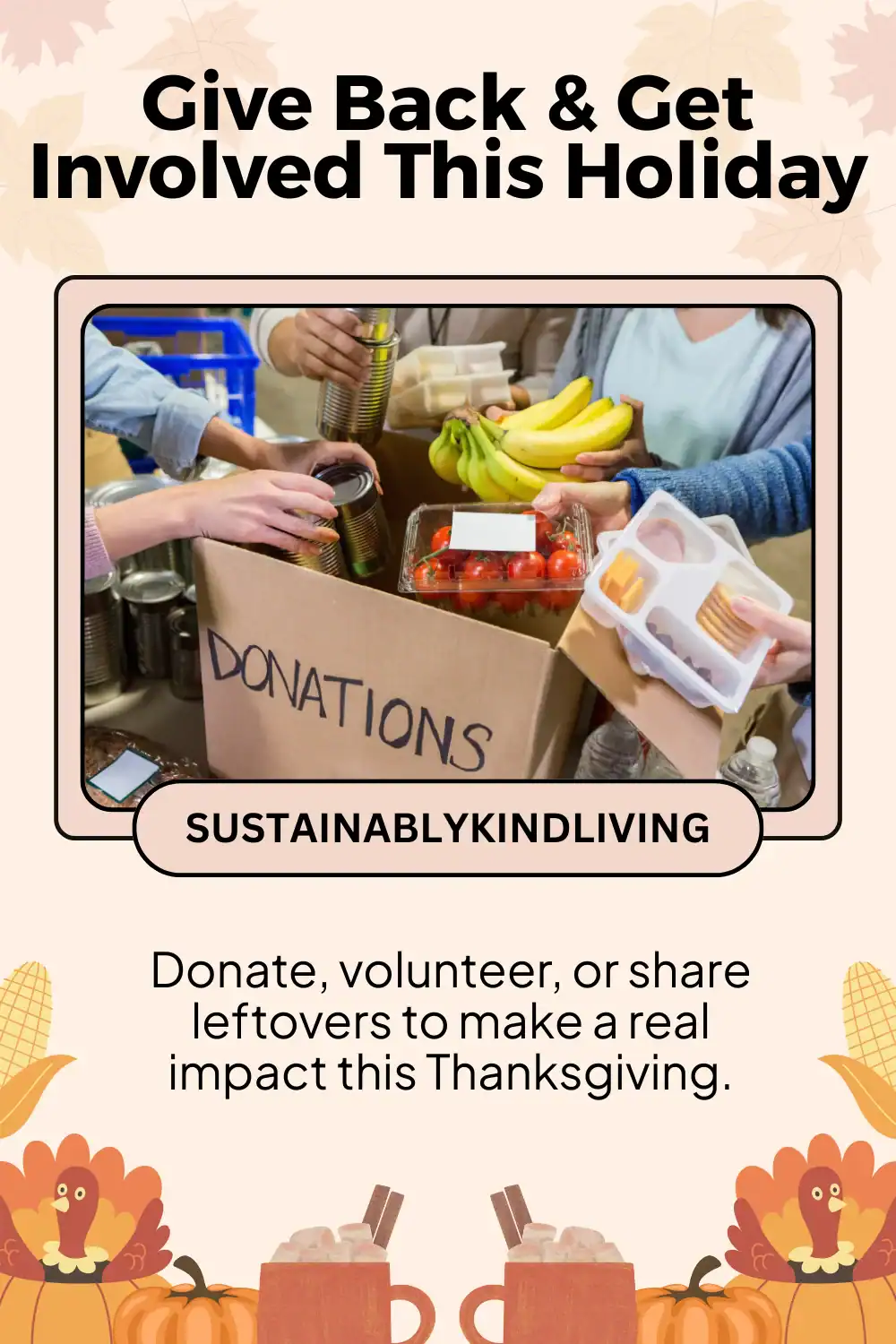
Thanksgiving is about gratitude, and one of the best ways to honor that is by giving back.
Millions of people struggle with food insecurity, so donating non-perishable items, volunteering at a soup kitchen, or sponsoring a family can make a real impact.
You can also share leftovers with local shelters instead of letting them go to waste.
Encourage family members to participate so it feels like a shared tradition, not just a side note.
Even small acts of kindness create ripples in your community and remind everyone that Thanksgiving is about more than just food.
7. Honor Native American History & Voices

Thanksgiving’s history is often told in a way that overlooks the experiences of Native peoples.
To celebrate more mindfully, take time to learn the real history of the holiday and honor Indigenous voices.
You can start by reading or sharing resources from Native-led organizations, supporting Indigenous-owned businesses, or donating to community funds.
Another meaningful step is to include a land acknowledgment at your gathering, helping kids and guests understand whose land you’re celebrating on.
Practicing cultural respect doesn’t take away from the joy of Thanksgiving — it deepens it.
By honoring Indigenous history, we make the holiday more inclusive and truthful.
How Can I Encourage My Family to Have a More Sustainable Thanksgiving?
Changing family traditions isn’t always easy, but Thanksgiving is the perfect time to start the conversation. Instead of focusing on restrictions, frame sustainability as a way to make the holiday more meaningful — less waste, more connection, and food that everyone can feel good about.
You might suggest cooking with locally sourced produce or trying a new plant-based dish alongside the turkey.
Encourage guests to bring reusable containers for leftovers so nothing goes to waste, or swap out single-use décor for natural decorations like leaves, pumpkins, and candles made from non-toxic wax.
Even small details like serving more veggie sides or choosing compostable napkins can spark curiosity and inspire change.
Making it fun helps too! Turn sustainable swaps into traditions — maybe a family compost jar contest, a neighborhood food donation drive, or a post-dinner nature walk instead of collapsing on the couch.
These little rituals shift the focus from consumption to connection.
The key is collaboration. When everyone feels included in creating an eco-friendly Thanksgiving, it becomes less about sacrifice and more about building new memories together.
Frequently Asked Questions About an Eco-Friendly Thanksgiving
An eco-friendly Thanksgiving meal focuses on seasonal, locally sourced foods and less meat. Turkey has the highest carbon footprint of the meal, so reducing portion sizes or adding more plant-based dishes can make a big difference.
Using organic produce and skipping overly packaged items also keeps the meal sustainable.
The simplest way to reduce waste is by planning portions carefully, composting scraps, and making a plan for leftovers. Sending guests home with reusable containers helps prevent food from being tossed.
You can also cut down waste by reusing decorations and avoiding single-use plastics.
Yes, many families are shifting toward plant-based mains like stuffed squash, lentil loaves, or mushroom wellingtons.
Even if you don’t skip the turkey entirely, adding one or two vegan or vegetarian dishes helps lower the environmental impact of the meal while still keeping the feast festive.
The best décor comes straight from nature — think pumpkins, autumn leaves, pinecones, or reusable items like linen napkins and beeswax candles.
Avoid cheap plastic décor that will be tossed after one use. You can also repurpose pumpkins or gourds afterward instead of discarding them.
For more ideas, see our sustainable fall décor guide or our roundup of non-toxic candles to set the mood naturally.
Kids can help gather natural decorations, compost scraps, or pack leftovers into containers. They can also join in activities like making DIY place cards from recycled paper or baking a plant-based dessert.
Involving kids in simple, fun ways helps teach sustainability as part of the celebration.
For more seasonal family fun, check out our guide to homemade Halloween treats — many ideas can be repurposed for Thanksgiving too.
Final Thoughts on an Eco-Friendly Thanksgiving
At its heart, Thanksgiving is about gratitude — and that extends to the planet that provides our food, our traditions, and the beauty of the season.
With just a few swaps, you can make your celebration both festive and sustainable, without sacrificing any of the magic.
From choosing natural décor to reducing food waste and honoring Indigenous voices, every step brings your holiday closer to a truly eco-friendly tradition.
The best part? These small choices ripple outward. They save money, reduce stress, and create meaningful new traditions that your family and friends will remember far longer than disposable décor or forgotten leftovers.
Here’s to a Thanksgiving that’s delicious, memorable, and kind — to both your loved ones and the planet.
You Might Also Love…
If you’re leaning into a more sustainable holiday season, these guides are the perfect next step:
- 🍂 Decorate naturally with our list of 25 sustainable fall décor ideas — cozy vibes without the plastic clutter.
- 🎃 Don’t toss those gourds — here’s what to do with pumpkins after Halloween to keep them out of the landfill.
- 🕯 Set the mood with non-toxic candles for a warm, safe, and cozy fall table.
- 🧥 Stay cozy this season with our roundups of sustainable fall jackets and organic fall sweaters.
- 👢 Step into fall sustainably with the best barefoot winter boots and vegan leather boots.
- 🎃 Planning ahead for Halloween? Check out our organic Halloween candy guide and homemade Halloween treats for inspiration.
📌 Save This Eco-Friendly Thanksgiving Guide
Pin this guide to your Sustainable Living or Holiday Inspiration board so you’ll have it handy when planning your Thanksgiving — and make 2026 your most mindful celebration yet.

Steal My Non-Toxic Cleaning Checklist!
Believe us, it’s the BEST…. and it’s free. Does it really get any better than that?! Sign up for our newsletter and get this free checklist to clean your home without any harmful chemicals!