 Shop My Favorite Non-Toxic Gifts Of 2026!
SKL is reader supported. When you buy through links on our site, we may earn affiliate commission. Learn more here.
Non-toxic sweaters and cardigans can look perfect on paper and still end up sitting untouched in the back of your closet.
As a mom of three, a longtime non-toxic product researcher, and someone who basically lives in sweaters and cardigans once fall hits, I need them to do more than check the right material boxes. Plenty of sustainable knitwear still contains synthetic fibers or skips the chemical-processing details that actually matter to me.
After trying more than 30, these ten are the ones that felt good, fit beautifully, held up to real life, and actually earned a spot in my regular rotation.
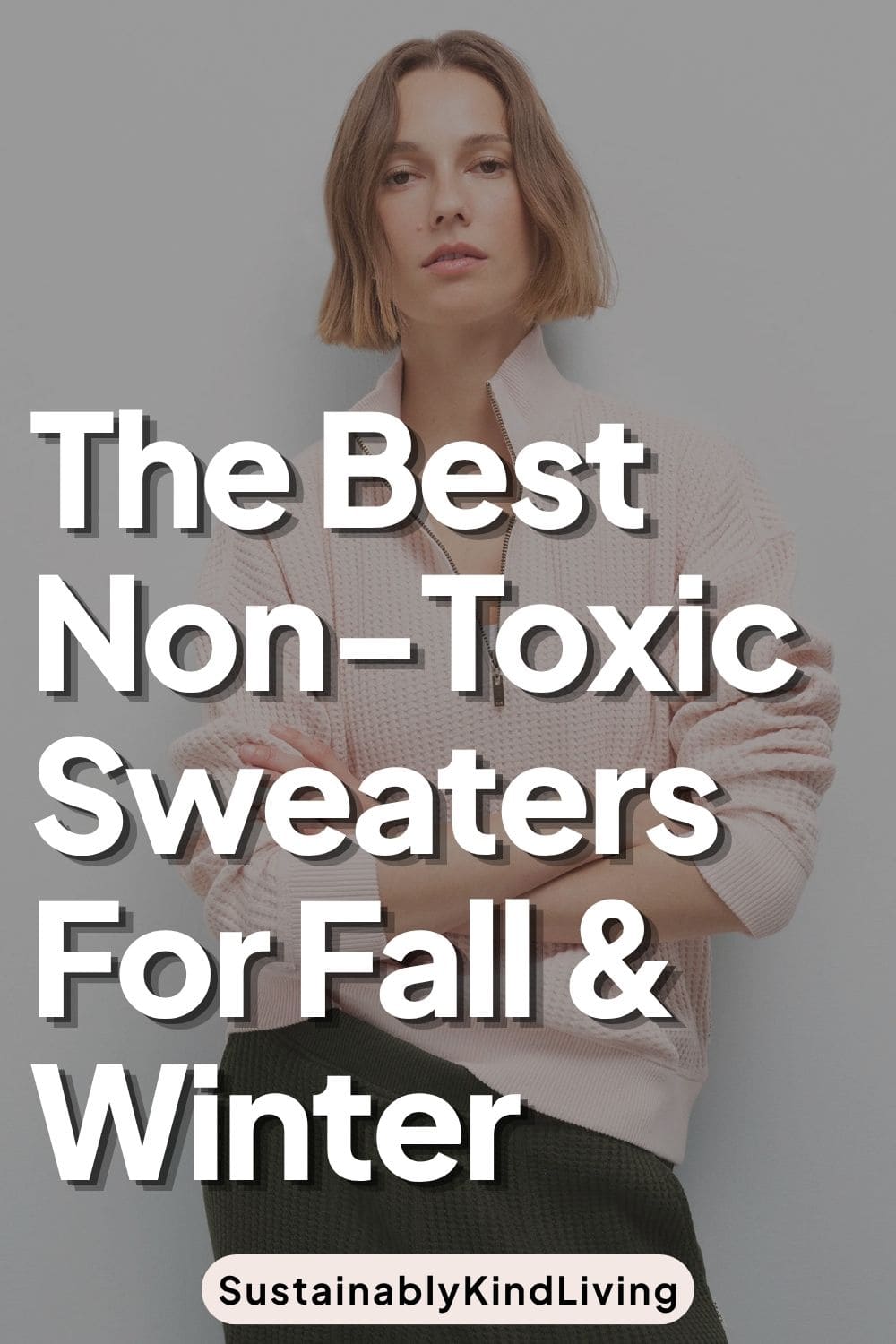
For me, a non-toxic sweater starts with better fibers and better transparency around how those fibers are processed, dyed, and finished.
Organic cotton, wool, recycled wool, and other natural fibers can all be great options, but the pieces below also had to pass the real-life test of actually being comfortable, wearable, and worth reaching for again and again.
My Top 5 Non-Toxic Sweaters & Cardigans…
- Best Hypoallergenic Sweater for Sensitive Skin: Cottonique
- Best Organic Cotton Sweatshirt for Serious Warmth: MATE the Label
- Best Everyday Organic Cotton Cardigan: Pact
- Best Affordable 100% Organic Cotton Sweater: Quince
- Best Recycled Merino Wool Cardigan: Colorful Standard
Before getting into the full reviews, it helps to know what I’m actually looking for when I call a sweater or piece of knitwear “non-toxic.”
The fiber content is a big part of it, but I also pay attention to synthetic-heavy blends, chemical finishes, dye transparency, certifications, and whether the brand is clear about what the garment is really made from. Not every one of the non-toxic sweater brands you’ll see marketed this way holds up once you check the label.
Save vs. Not
Materials & Finishes I Avoid in Sweaters and Cardigans
- Acrylic-heavy knits → Acrylic is a plastic-based fiber and one of the first things I check for in conventional sweaters.
- Polyester-heavy blends → Especially when a sweater is marketed as “natural” or “sustainable” but the fiber content tells a different story.
- Nylon-heavy wool blends → A little nylon can improve durability, but I prefer wool sweaters where natural fibers make up the vast majority of the garment.
- Mystery stretch blends → Elastane and spandex can be useful in small amounts, but I want the percentage clearly disclosed.
- Stain-, water-, or wrinkle-resistant finishes → These treatments deserve a closer look, especially when the brand doesn’t explain what creates the effect.
- Antimicrobial or odor-resistant treatments → If a sweater promises permanent odor control, I want to know what treatment was used.
- Poor dye transparency → Bright colors aren’t automatically a problem, but I give more weight to GOTS, OEKO-TEX, or brands that are clear about their dyeing process.
- Vague “eco” claims → “Sustainable,” “natural,” and “conscious” don’t tell me much unless the actual fibers and certifications back them up.
Safer Materials I Look For in Sweaters & Cardigans
- GOTS-certified organic cotton → One of my favorite options for soft, breathable sweaters and cardigans with stronger processing standards.
- Merino wool → Warm, breathable, and surprisingly soft when the quality is good.
- Recycled wool → A great option for wool wearers who prefer using existing fiber rather than newly sourced wool.
- Responsibly sourced wool → I look for clear sourcing information or standards such as RWS when brands use virgin wool.
- 100% natural-fiber knits → Cotton, wool, and natural-fiber blends keep synthetic content lower and usually feel better to wear.
- OEKO-TEX or GOTS certification → Helpful extra reassurance around dyes, processing, and harmful-substance restrictions.
Now that you know what I’m looking for, here are the ten non-toxic sweaters and cardigans that actually made the cut.
I wore every one of them myself, paid attention to fit, warmth, softness, drape, durability, and how often I genuinely wanted to reach for it, then narrowed the list down to the pieces I’d feel good recommending to a friend.
The 10 Best Non-Toxic Sweaters & Cardigans I’d Buy Again
1. Cottonique | Best Hypoallergenic Organic Sweaters for Sensitive Skin
Best for anyone with allergies, eczema, or chemical sensitivities who wants a genuinely itch-free turtleneck without giving up warmth or style.
Use discount code SKL10 to save 10%!
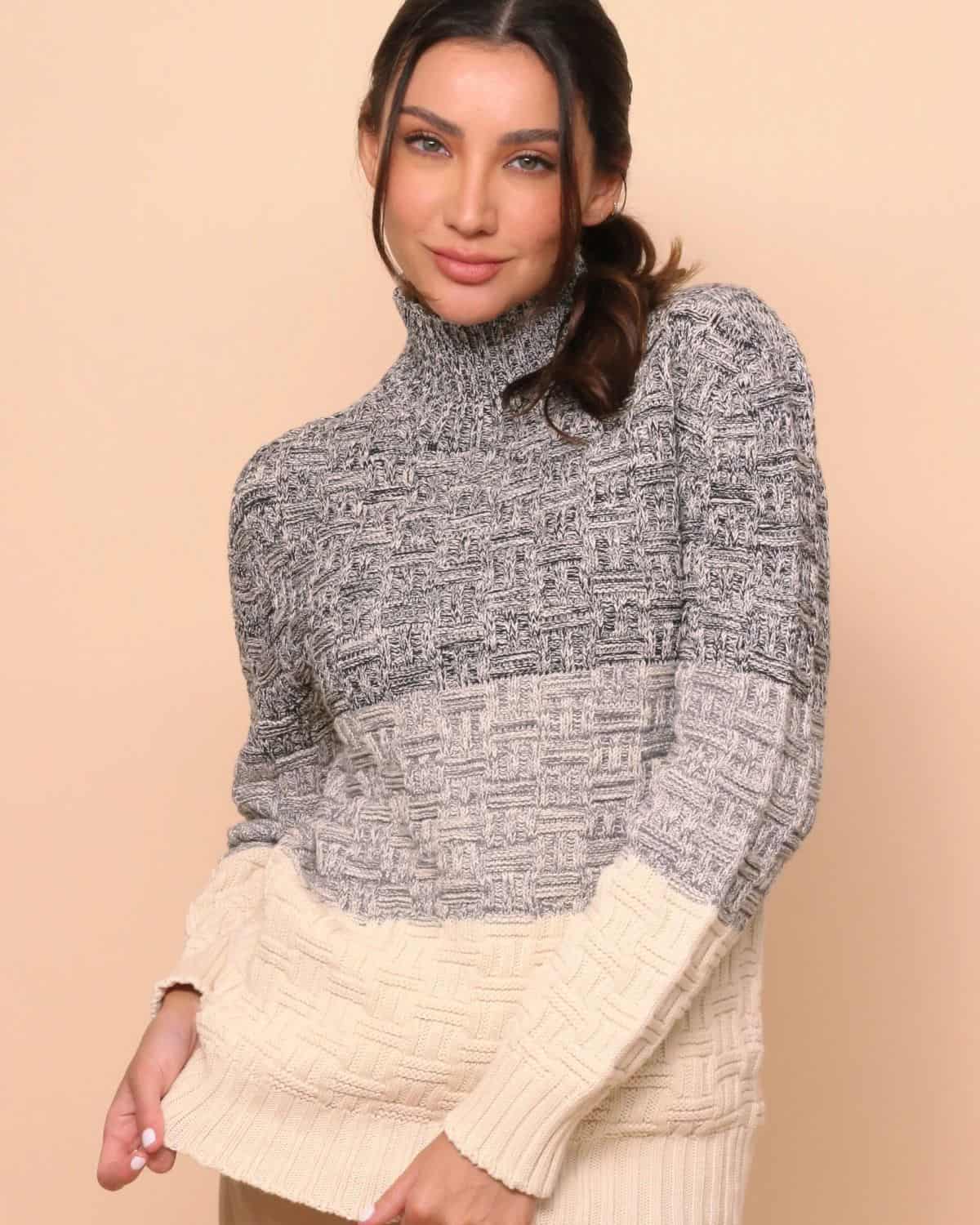
I was honestly blown away by this one. Cottonique’s GOTS-Certified Allergy-Free Tri-Color Turtleneck is the best quality, truly non-toxic organic sweater I’ve tested at this price point.
It’s made from 100% organic combed cotton yarn with elastic-free cuffs, so there’s nothing constricting your wrists, and the collar is breathable and non-irritating instead of the scratchy synthetic-blend turtlenecks most of us grew up wearing.
No funky sizing, no weird fit. It’s just soft, snuggly, and durable, and it fits exactly the way it should.
The tri-color knit also gives it a more elevated, textured look than a basic turtleneck, so it doesn’t read as a “sensitive skin” compromise. It looks like a sweater you’d pick for style first.
Price & size
$58 | S – XL
materials
100% Organic Combed Cotton Yarn, 100% Woven Cotton Label
location/shipping
San Francisco, California, USA; ships internationally
details
- Pull-on closure, elastic-free cuffs, breathable non-irritating collar, tri-color knit construction
- Made in Cottonique’s own GOTS and B-Corp certified factory in the Philippines
- GOTS certified; free from latex, spandex, synthetic fibers, harsh dyes, resins, bleach, and formaldehyde; 100% biodegradable and compostable
my testing experience
- I was genuinely surprised by how soft and durable this feels for the price.
- The fit is spot-on, true to size with no adjustment needed.
- It’s become one of my go-to picks for anyone dealing with itching, sensitive skin, or chemical sensitivities, but it’s cozy and well-made enough that I’d recommend it to anyone.
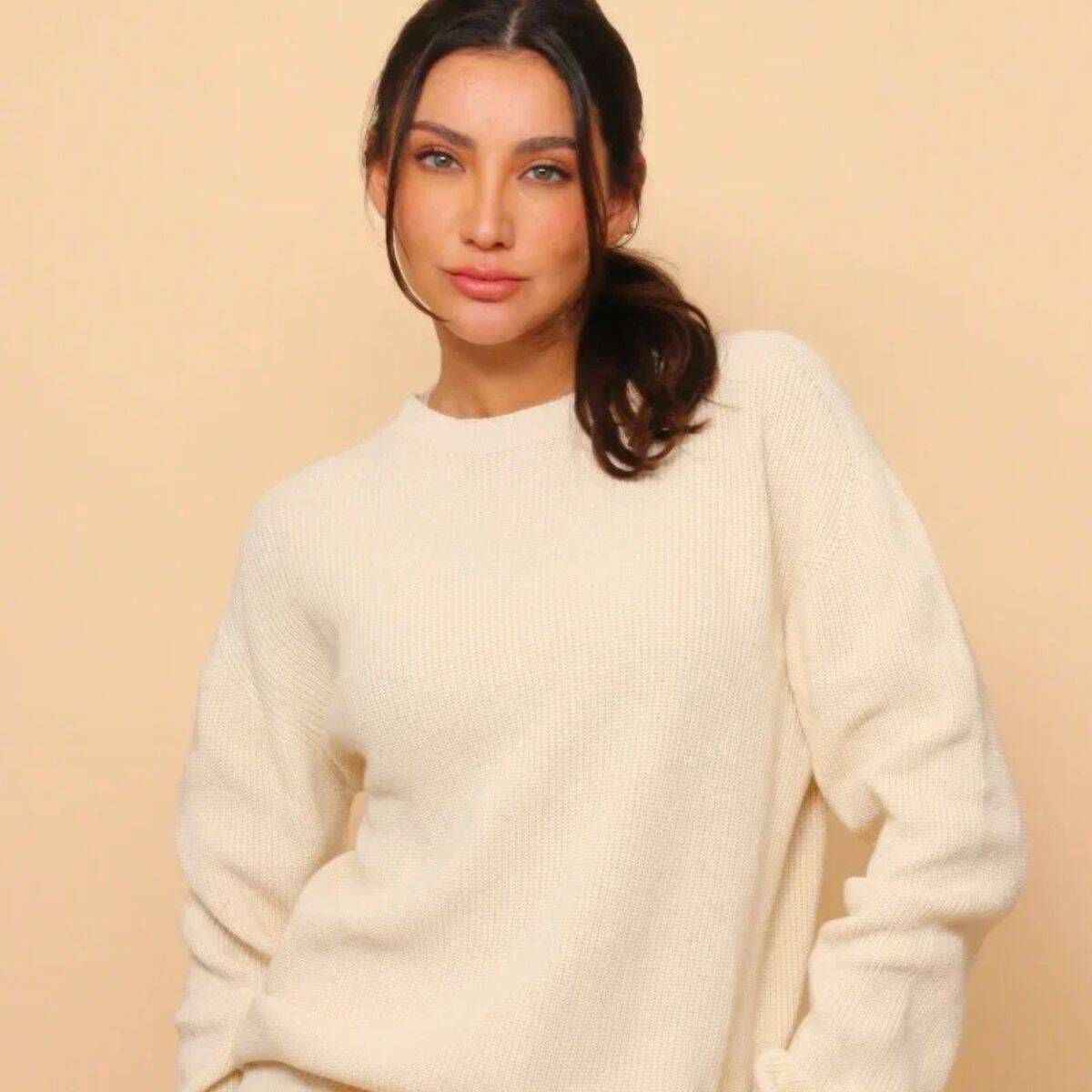
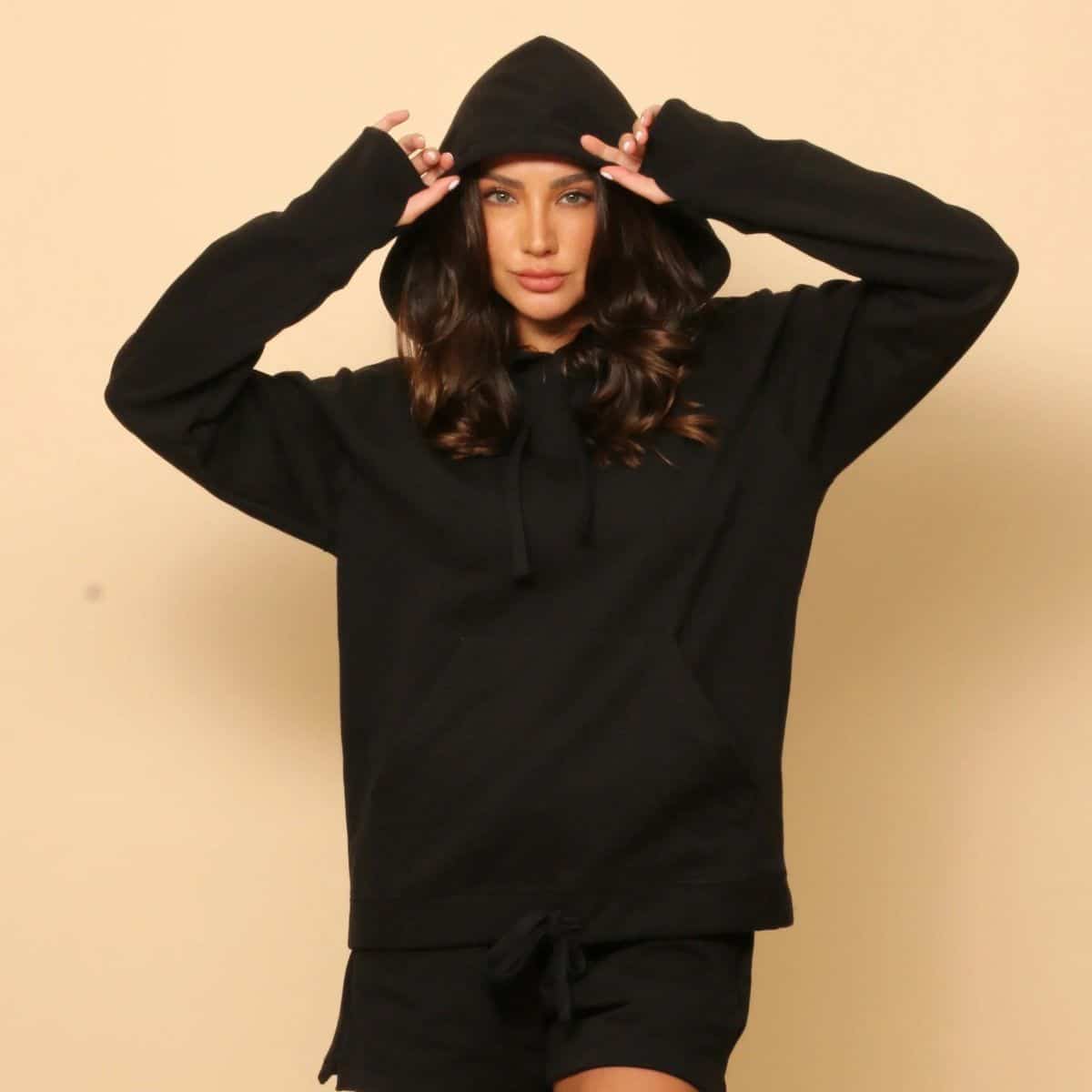
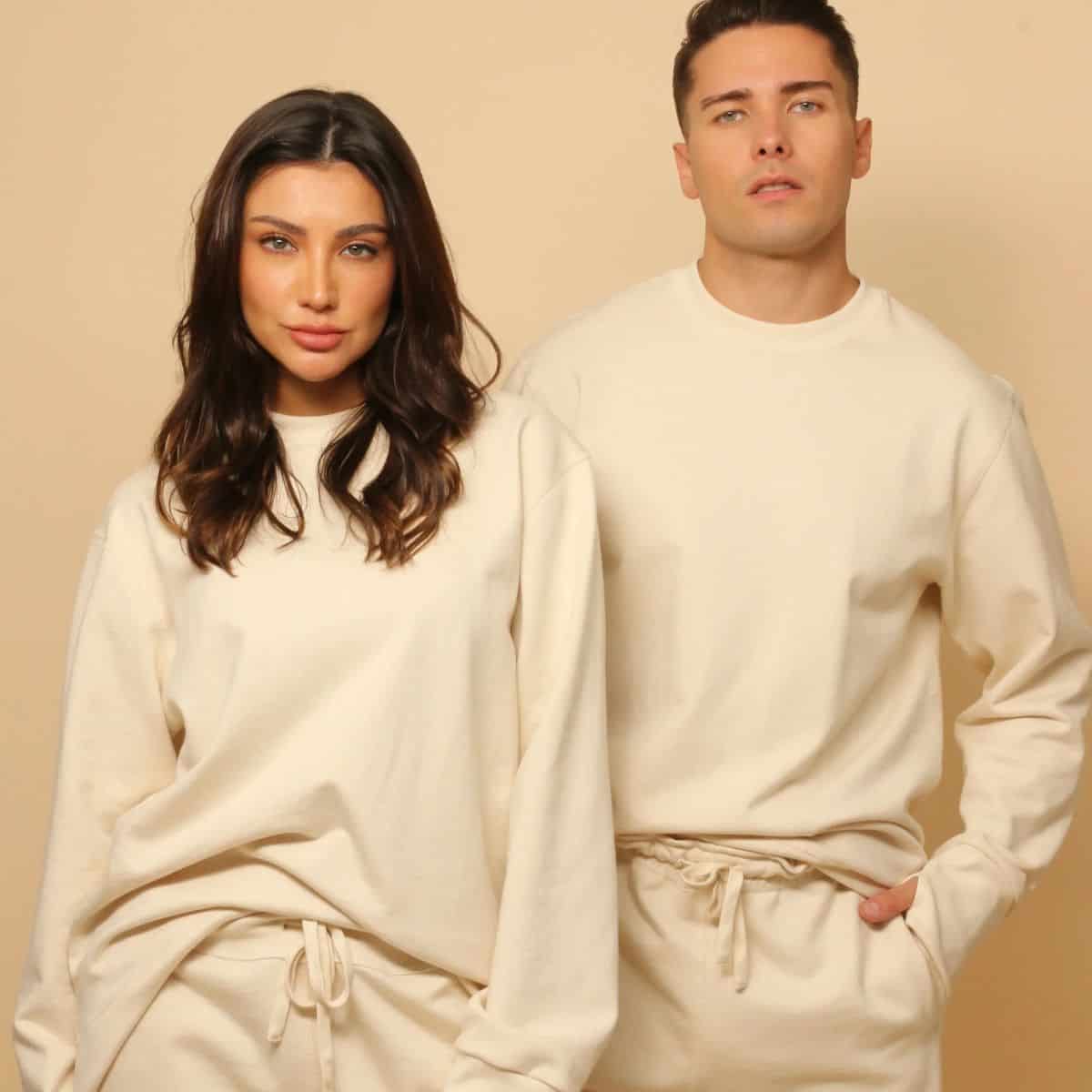
More Organic Cotton Sweaters From Cottonique:
2. Mate The Label | Best Organic Cotton Sweatshirt for Serious Warmth
Best for anyone looking for a warm organic cotton sweatshirt without relying on polyester fleece.
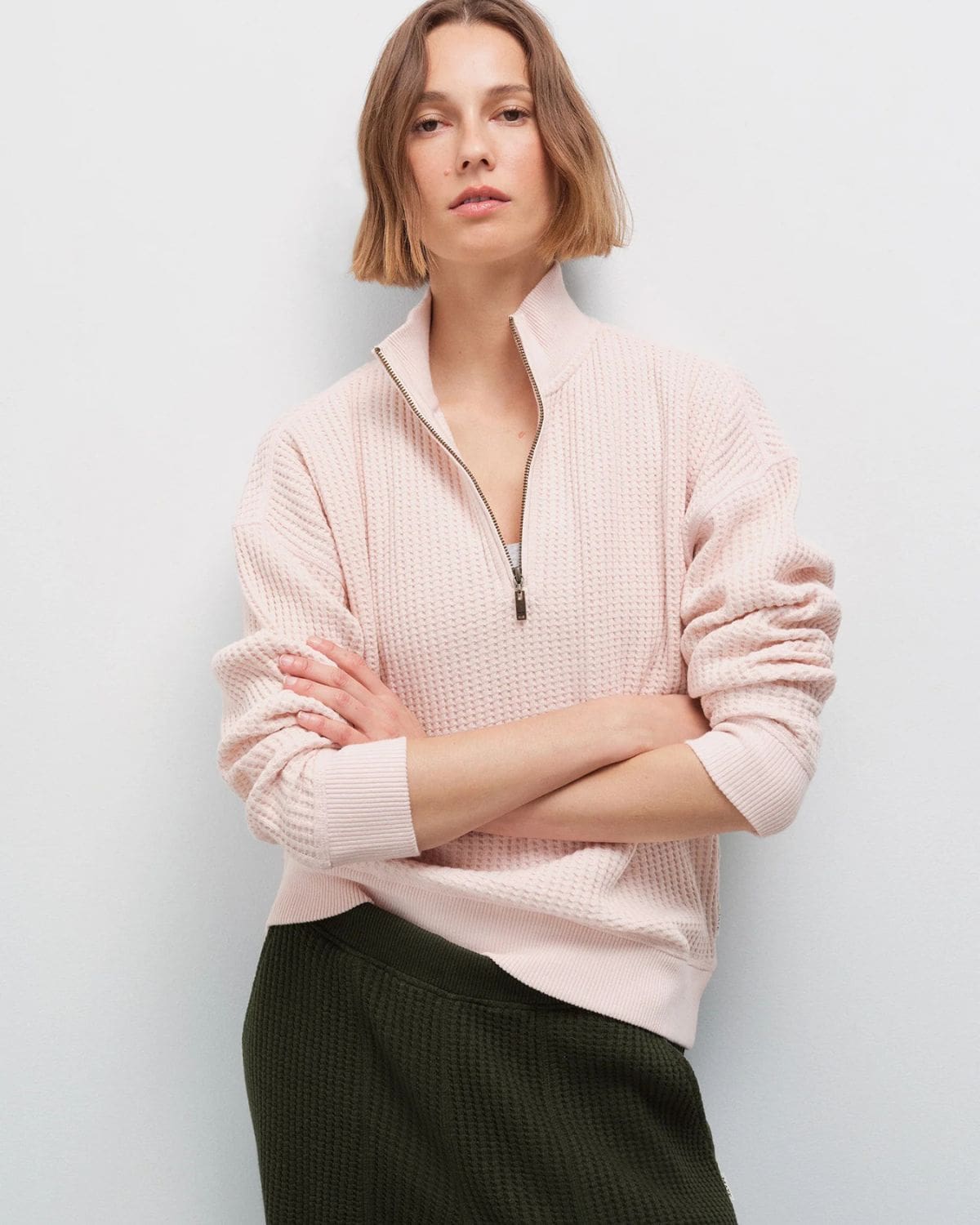
MATE’s Organic Waffle Collared Half-Zip Sweatshirt is one of the few cold-weather layers I’ve tried that feels seriously warm without looking bulky or frumpy.
I was honestly shocked by how thick and substantial the 515 GSM organic cotton waffle knit feels in person, but the collared half-zip, ribbed trim, and relaxed shape make it look polished and flattering on.
Made with 100% GOTS-certified organic cotton, it’s soft, cozy, breathable, and has become one of my go-to pieces once the temperature drops. I also love the matching waffle sweatpants for an easy set.
Price & size
$158 | XS–XL
Materials
100% organic cotton, heavyweight 515 GSM waffle knit
location/shipping
Los Angeles, California, USA; ships within the U.S. and internationally.
the details
- Oversized half-zip silhouette, collared neckline, ribbed finishes, breathable waffle construction
- GOTS-certified organic cotton, OEKO-TEX Standard 100
my testing experience
- I was genuinely surprised by how thick and warm the waffle knit feels.
- It’s soft, cozy, and has become one of my go-to layers when the temperature drops.
- I love the matching Organic Waffle Sweatpants too and would absolutely wear them as a set.
3. Pact | Best Everyday Organic Cotton Cardigan
Best for anyone who wants a lightweight organic cotton cardigan they can wear year-round and throw over almost anything.
Use discount code SKL15 to save 15%!
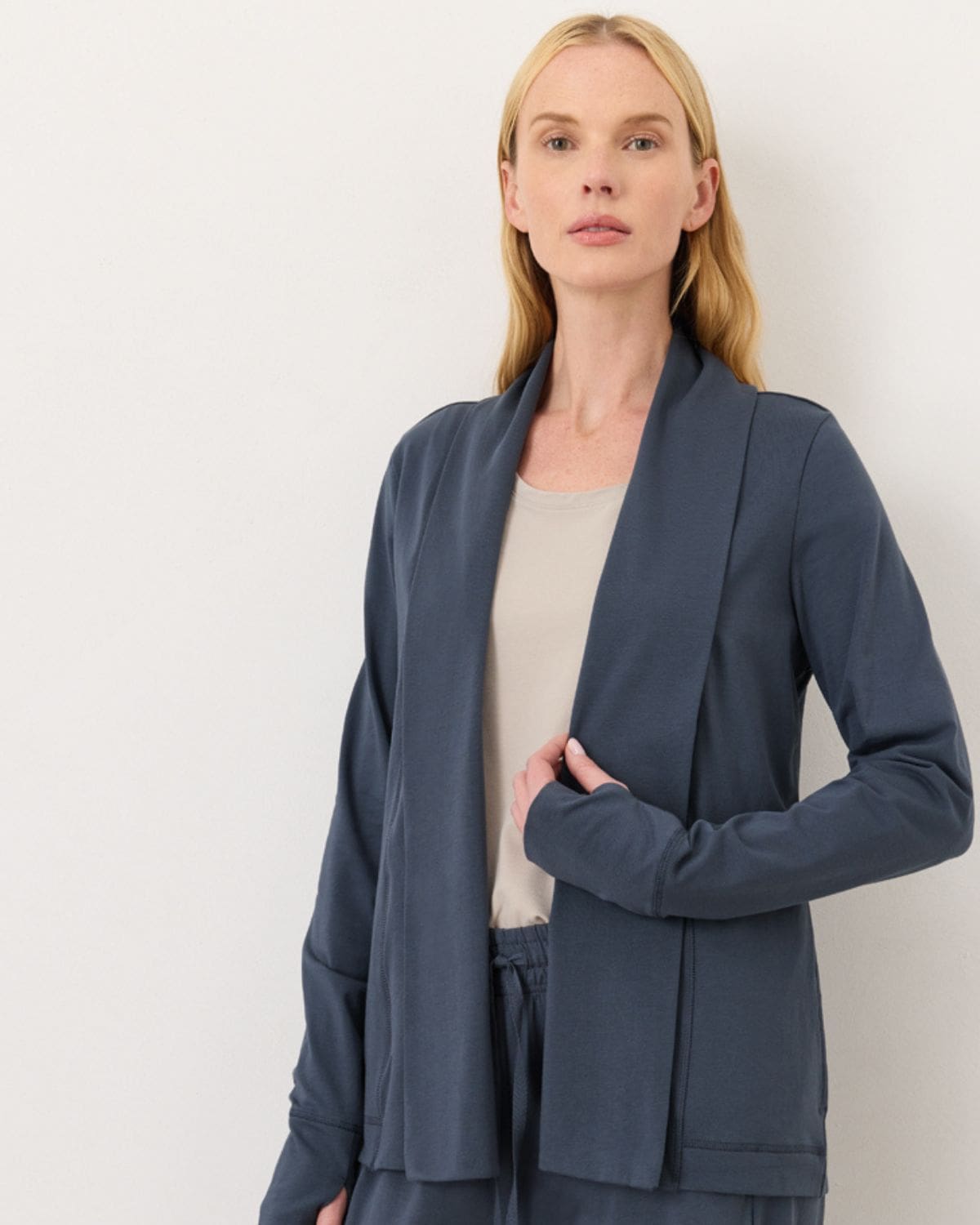
Pact’s Organic Cool Stretch Swing Cardigan is one of those easy layers I keep reaching for because it’s so soft, lightweight, and comfortable.
I ordered my usual size small and it fit true to size with a flattering drape, but I’d size up if you want more of a cozy wrap-cardigan feel.
Made with 95% organic cotton and 5% elastane, it has plenty of stretch and works especially well for travel, errands, and relaxed everyday wear.
Price & size
$52 | XS–2XL
Materials
95% organic cotton, 5% elastane
Location/shipping
Based in Boulder, Colorado; free U.S. standard shipping, with international shipping available.
The Details
- Open drape front, thumbholes, hidden side pockets, hip-length fit
- GOTS-certified organic cotton
my testing experience
- My usual size small fit perfectly and felt true to size.
- I’d size up one size if you want a cozier, more oversized wrap effect.
- The fabric is very soft and stretchy, and I wear it constantly for laid-back days.
If you love these sweaters, don’t miss my guide to the best organic cotton sweatpants for even more soft, non-tox layers I actually wear at home, on errands, and on travel days.
4. Quince | Best Affordable 100% Organic Cotton Sweater
Best for anyone searching for an affordable organic cotton sweater without settling for a synthetic blend.
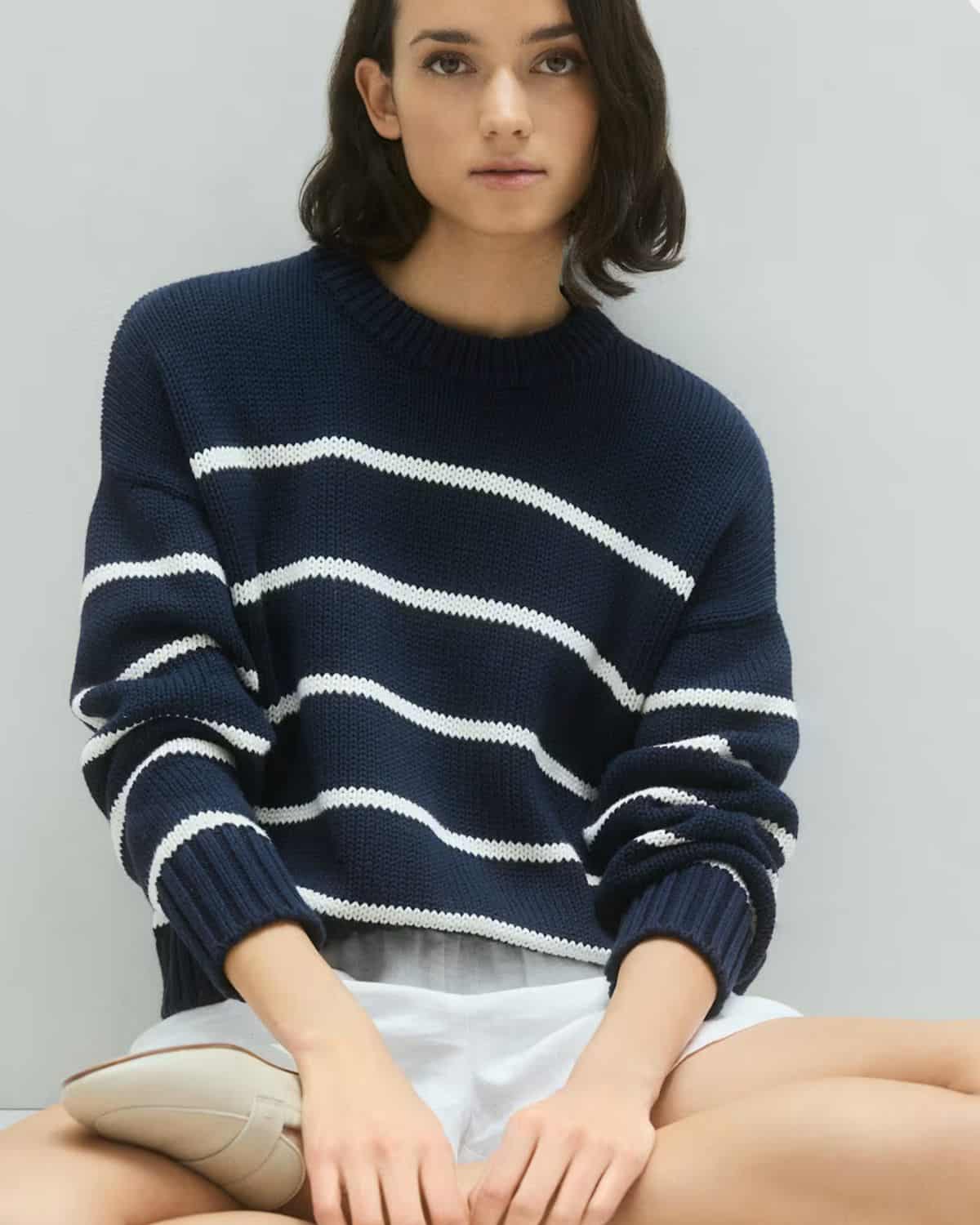
Quince’s 100% Organic Cotton Striped Crew Sweater stood out to me because it gives you a true organic cotton knit at a much lower price than most of the sweaters on this list.
The lower price does come with a trade-off: it may take some time before your find the sweater that fits the way you want it to.
I tried several Quince styles before finding the one I liked best, and this striped crew was the keeper.
It feels soft and substantial for the price, with a relaxed, easy shape that works well for everyday wear.
My usual small was a bit roomier than I prefer, so I swapped out for a smaller size.
Price & Size
$49.90 | XS–3XL
Materials
100% organic cotton
location/shipping
San Francisco, California, USA; ships to the U.S. and Canada.
details
- Relaxed fit, dropped shoulders, cropped length, ribbed neckline, cuffs, and hem.
- OEKO-TEX Standard 100; Organic Content Standard (OCS) certified cotton fiber
my testing experience
- I tried around five Quince sweaters and returned most because the fit or drape felt off.
- My usual small felt a little too relaxed on me, so I’d order an XS next time.
- At under $50, this was the Quince sweater I felt was most worth including for readers who want affordable organic cotton.
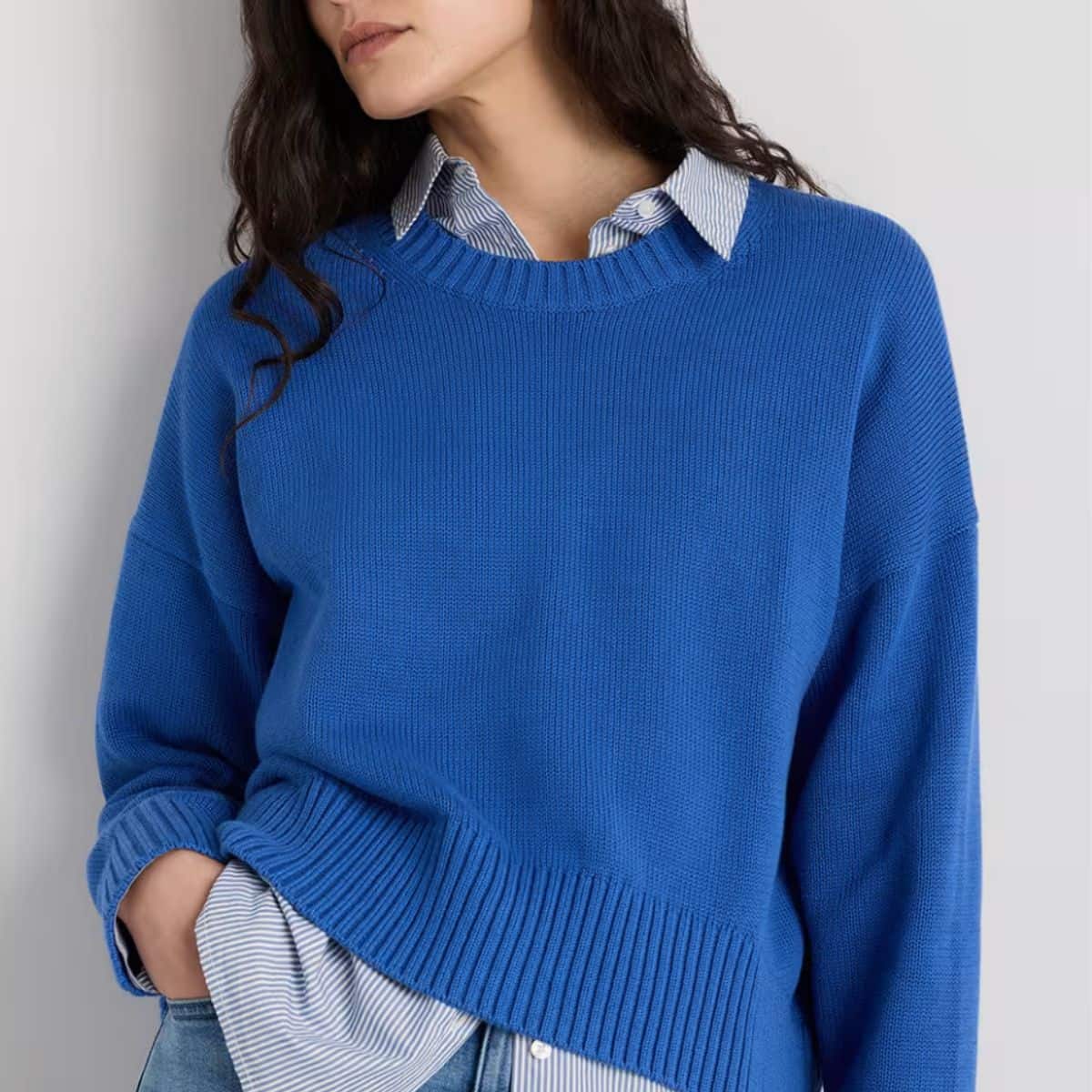
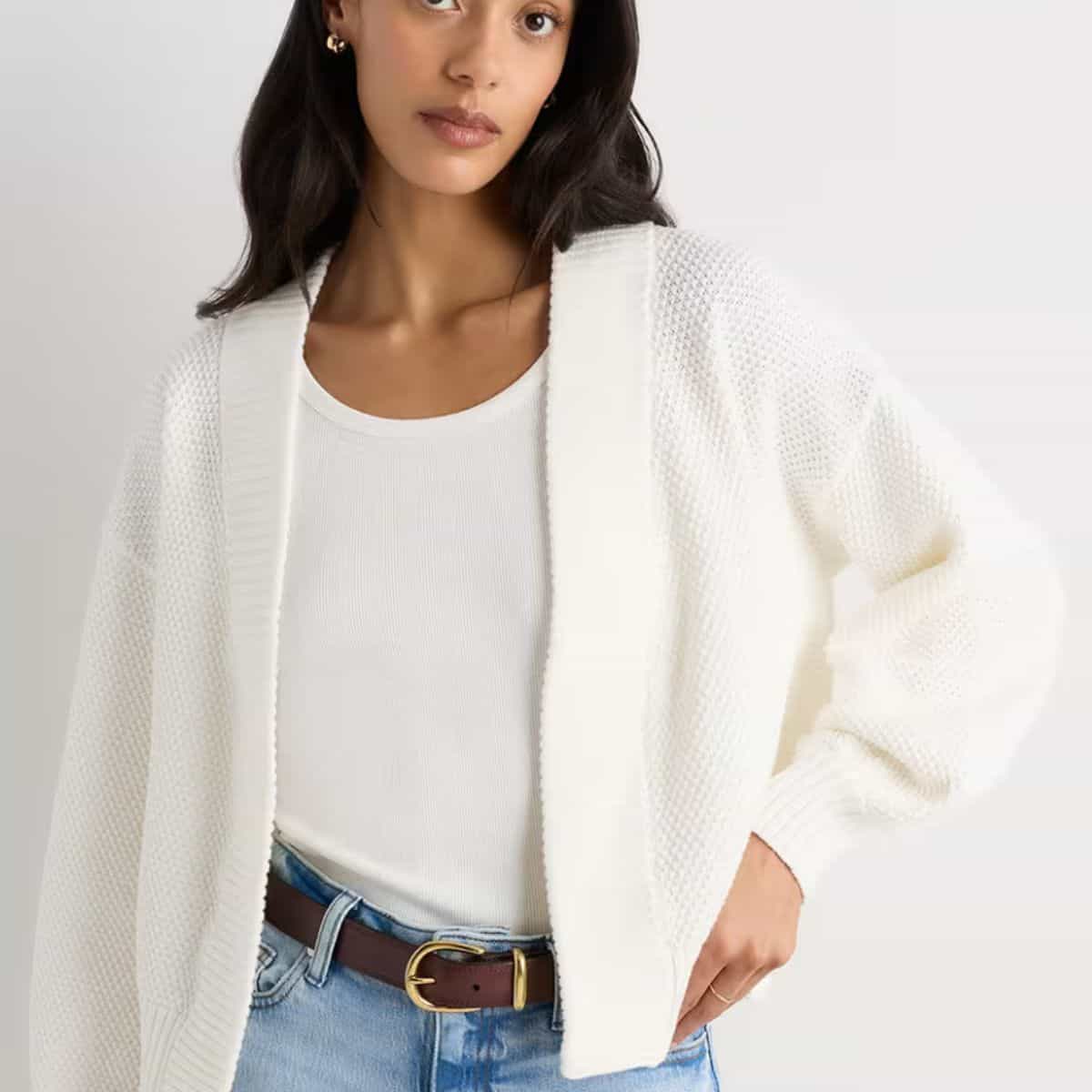
More Organic Cotton Picks From Quince:
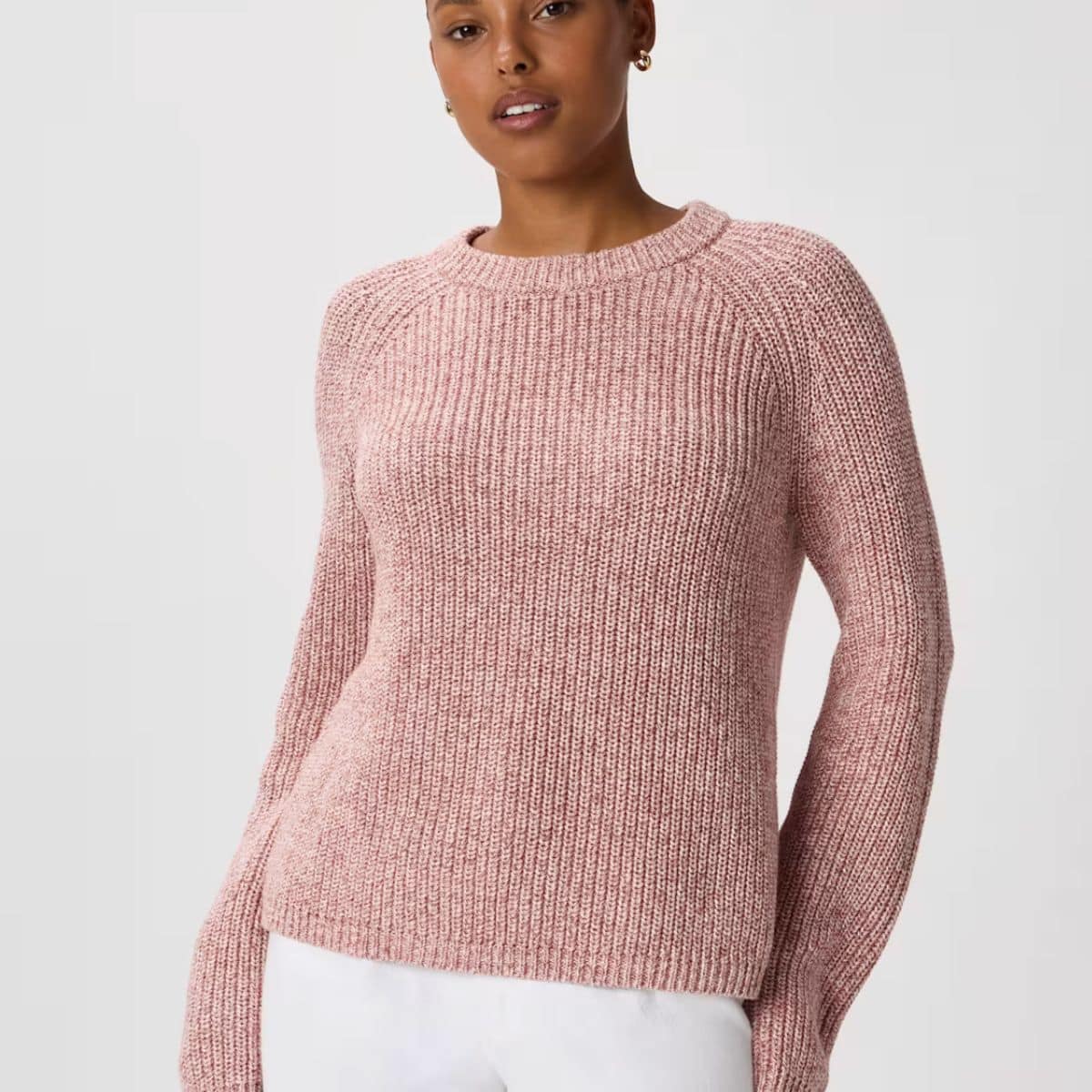
5. Colorful Standard | Best Recycled Merino Wool Cardigan for Everyday Warmth
Best for wool lovers who want a warm, polished merino cardigan that can go from jeans and sneakers to work or dinner.
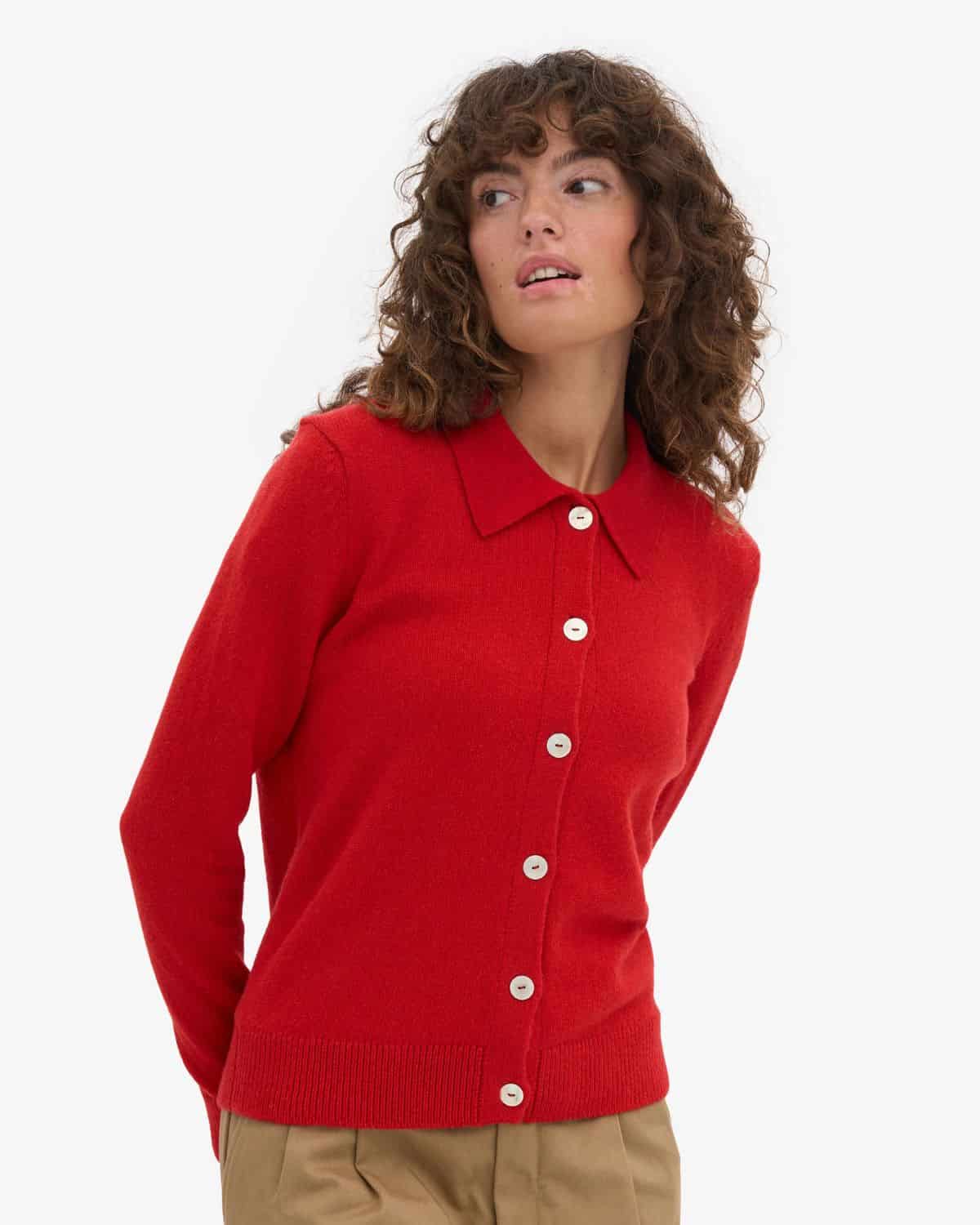
I was honestly giddy when Colorful Standard released this merino wool cardigan.
It’s warm, soft, polished, and somehow works for just about everything, which is exactly what I want from a wool layer.
The collared neckline makes it feel a little more dressed up than a basic cardigan, while the 100% recycled merino wool keeps it cozy without feeling heavy.
And if you love color, this brand is such a fun one to browse because their sweaters, hoodies, and sweatshirts come in genuinely bold shades.
Price & Size
$195 | XS-XL
Materials
100% recycled merino wool
location/shipping
Copenhagen, Denmark; ships to the U.S., Canada, UK, and much of Europe.
details
- Collared neckline, button-down front, lightweight but warm knit, made in Portugal
- Global Recycled Standard (GRS)
my testing experience
- I love how warm it feels without being bulky or overly heavy.
- The collared shape looks really cute on and makes it easy to dress up or down.
- I’m a wool lover, and this is one of those pieces I can see myself wearing constantly through fall and winter.
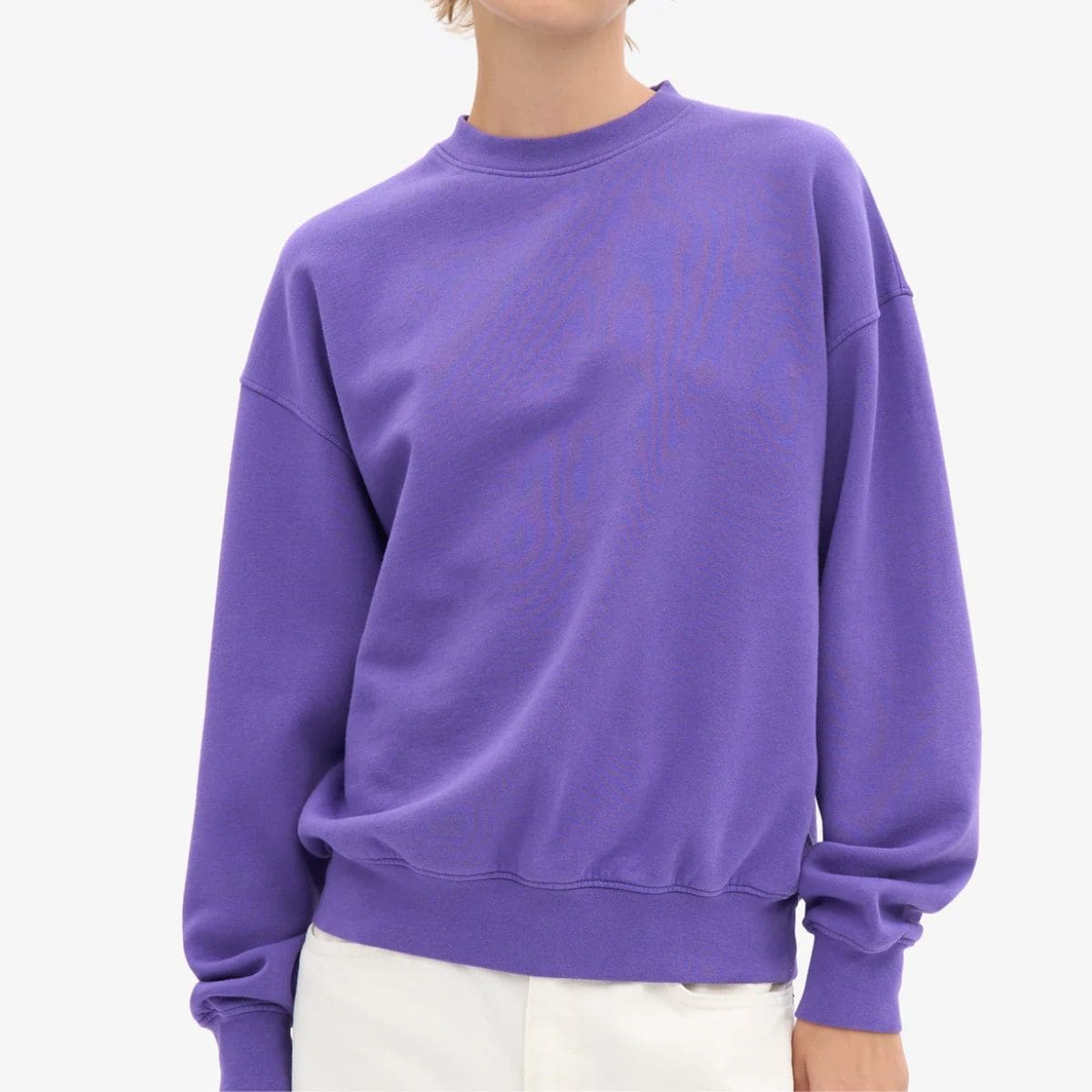
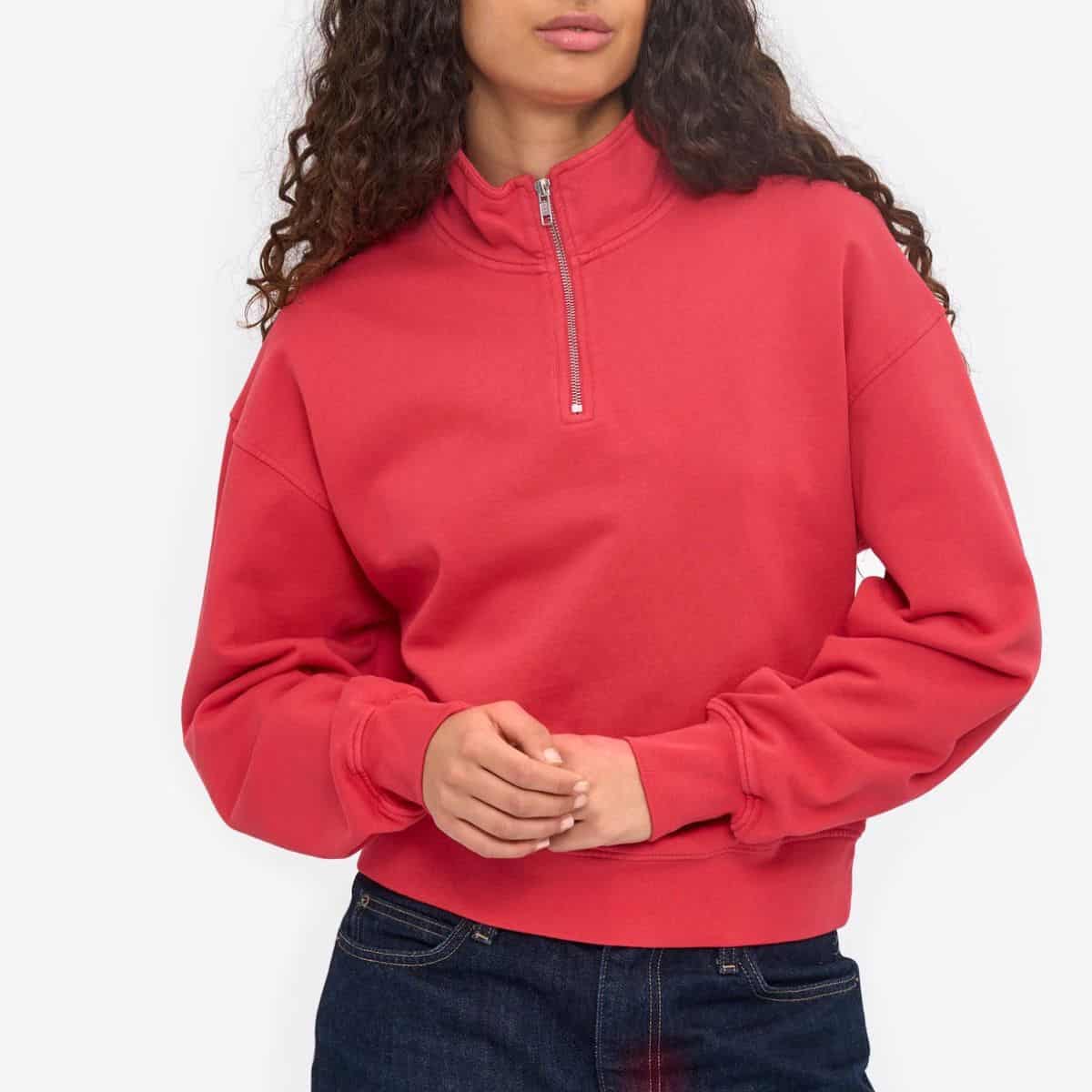
More Colorful Organic Sweaters I Loved:
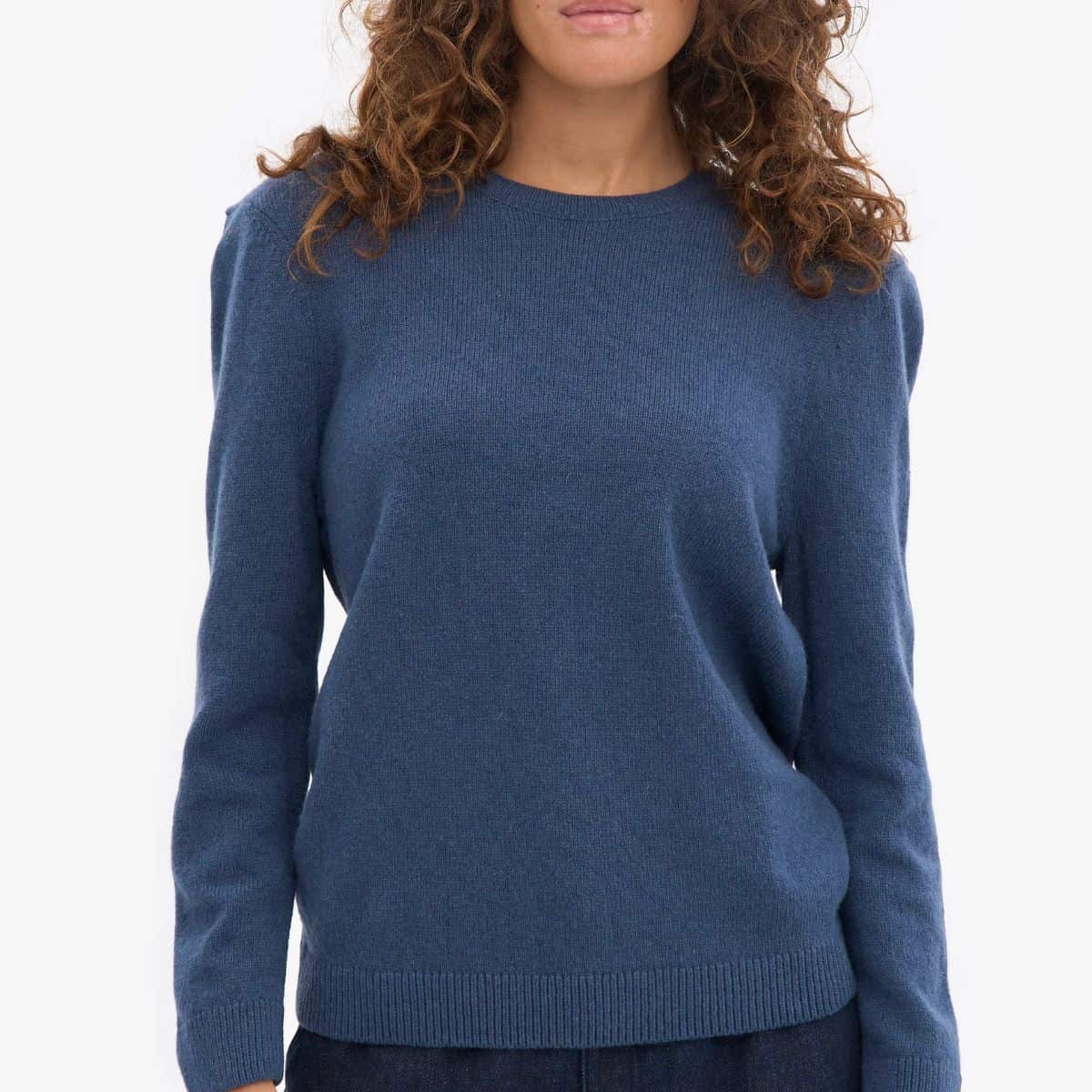
6. Fair Indigo | Best Organic Cotton Cardigan for Sensitive Skin
Best for anyone who wants a soft, cozy organic cotton cardigan for everyday layering, especially if you prefer cotton over wool.
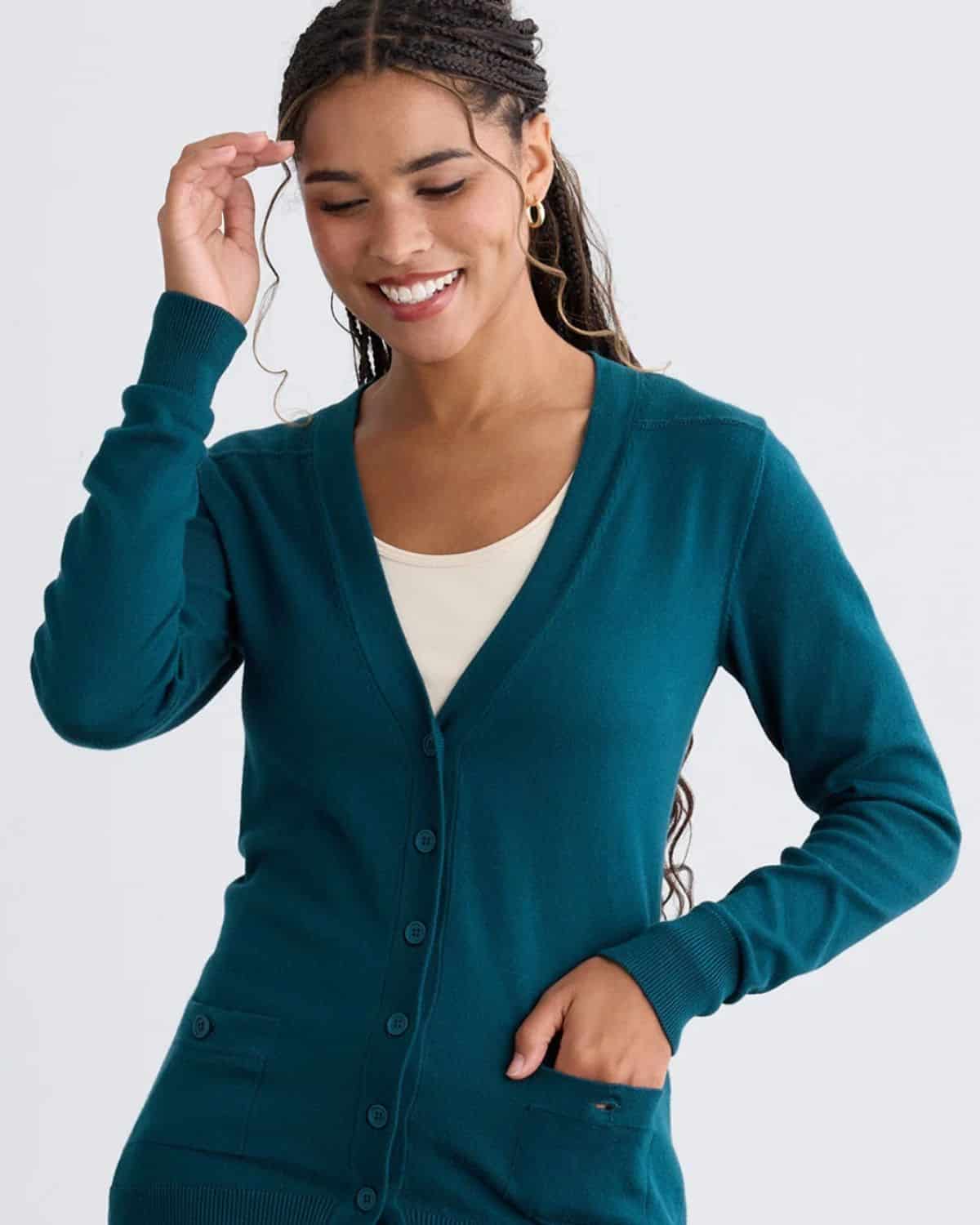
Use discount code SUSTAINABLYKINDLIVING to save 10%!
Some cardigans are technically “everyday” pieces, but this is one I genuinely wear that way.
Fair Indigo’s Organic Boyfriend Cardigan is soft, cozy, and beautifully made, with a relaxed fit that still looks pulled together.
The 100% organic Tanguis cotton feels substantial without being heavy, so it works across seasons.
I also love the jewel-tone color options, especially because I’m a Deep Winter color palette, if you’re into that sort of thing. It’s an easy, dependable layer I reach for all the time.
Price & size
$89.90 | XS-XL
Materials
100% organic Tanguis cotton
Location/shipping
Madison, Wisconsin, USA; ships to the U.S. and Canada.
details
- Gently shaped fit, V-neck, button front, two button-through pockets, 28-inch length in size M
- Fair Indigo states its cotton, yarns, fabrics, and dyes are GOTS certified
my testing experience
- The organic cotton feels really soft and comfortable, with enough coziness for everyday layering.
- I love the fit because it feels relaxed and easy without looking sloppy.
- The color selection is excellent, and the overall quality is exactly what I’ve come to expect from Fair Indigo.
7. Baukjen | Best Investment Merino Wool Sweater
Best for anyone who wants a soft, fitted merino wool sweater that feels polished enough for work, dinner, and dressed-up everyday wear.
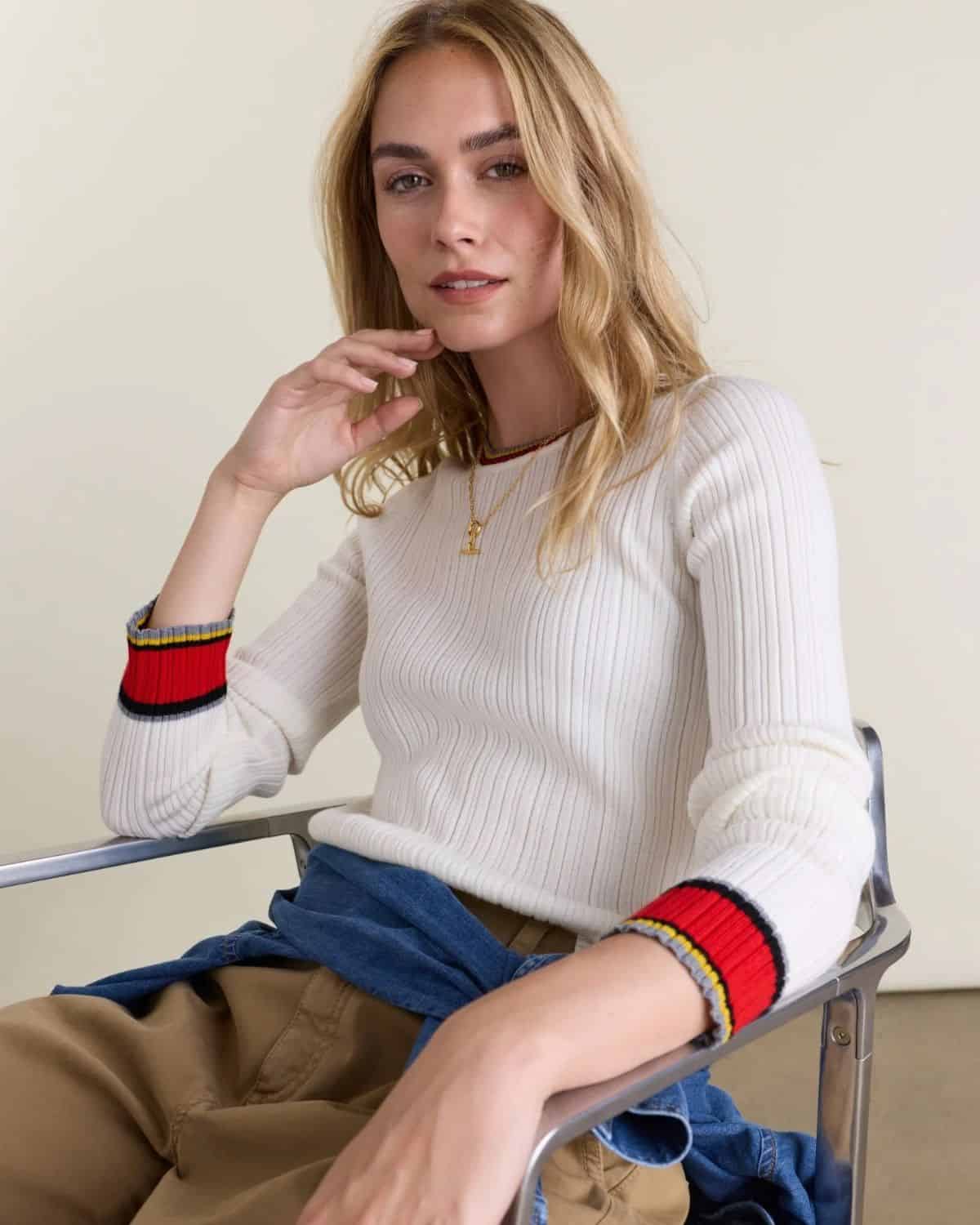
I’m honestly a little obsessed with this sweater. Baukjen’s Aven Merino Wool Ribbed Top fits beautifully, drapes exactly the way I want a fine-knit sweater to drape, and the 100% merino wool feels unbelievably soft against my skin.
The ribbed shape is flattering without feeling clingy, and the striped trim at the neckline and cuffs gives it just enough personality to feel special.
It’s definitely an investment, but this is one of those rare pieces I can see myself caring for, wearing often, and hopefully still loving decades from now.
Price & size
$220 | US 2–14
Materials
100% merino wool, spun in Italy
location/shipping
London, UK; ships to 150+ countries worldwide.
details
- Fine ribbed knit, fitted shape, crew neck, contrast neckline and cuffs, made in Europe
- Mulesing-free fibres; plastic-free fibres
my testing experience
- The fit and drape are exceptional. It sits exactly where I want it to without clinging awkwardly.
- The merino wool feels incredibly soft against my skin and much more luxurious than I expected.
- This is one of those rare sweaters I can picture keeping and wearing for decades.
8. Organic Basics | Best Boxy Organic Cotton Sweater for Everyday Wear
Best for anyone who wants a soft 100% organic cotton sweater with a cropped, boxy fit that works with jeans, trousers, or the matching knit pants.
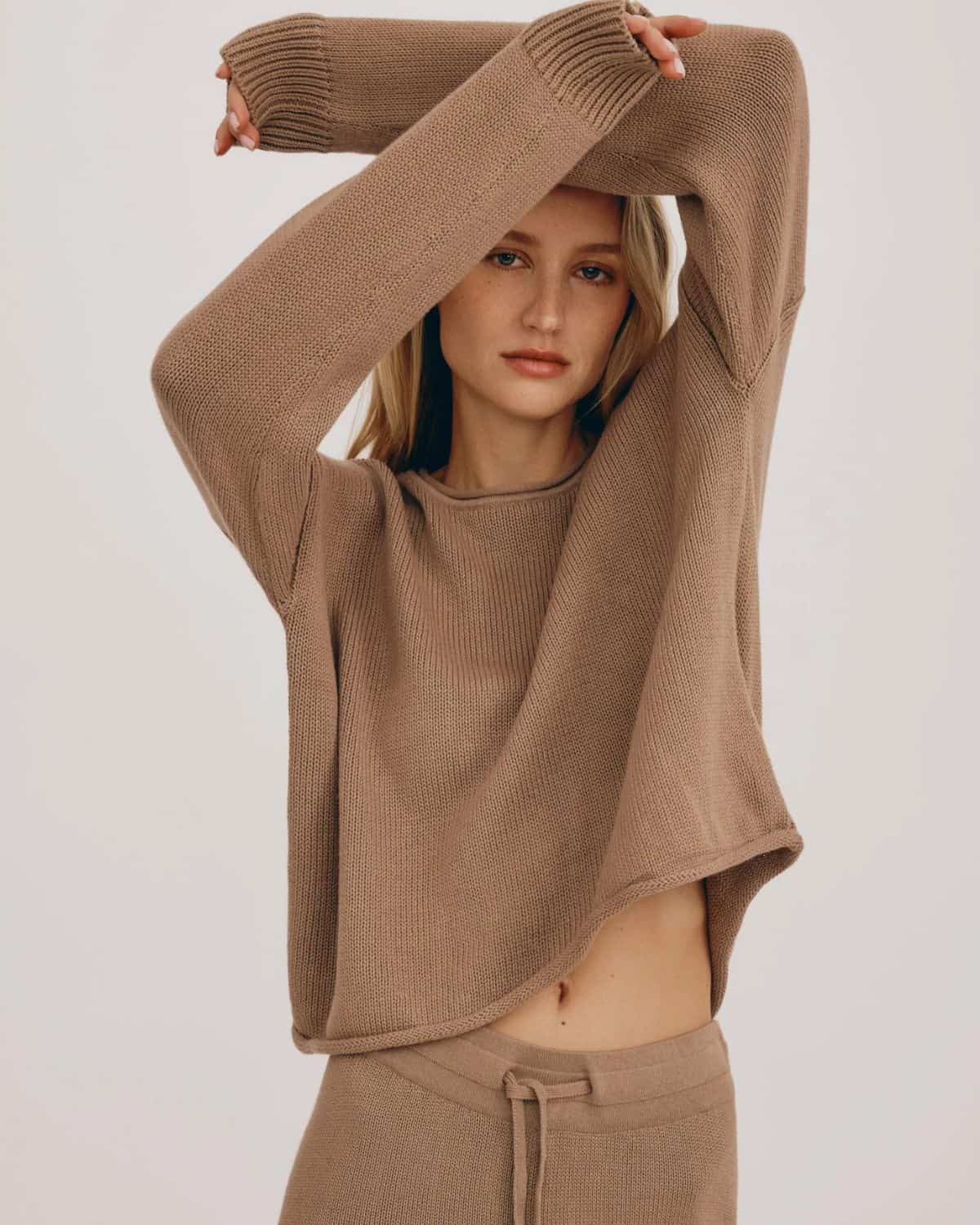
This ended up being such an easy favorite. Organic Basics’ True Knit Sweater is made from 100% organic cotton and feels incredibly soft, cozy, and comfortable the second you put it on.
I expected a much more oversized fit, but it actually runs true to size with a relaxed boxy shape that looks really flattering.
It is slightly cropped, so keep that in mind when ordering, but I love it with high-waisted jeans or the matching knit pants. If you want an easy organic cotton sweater you can wear on repeat, this is such a good one.
Price & Size
$83 | XXS–3XL
Materials
100% organic cotton
location/shipping
Copenhagen, Denmark; ships worldwide.
details
- Boxy fit, slightly cropped silhouette, ribbed cuffs, open-knit neckline and hem
- Made in India
- GOTS-certified organic cotton; PETA-Approved Vegan
my testing experience
- My usual size fit true to size, even though I expected it to be much more oversized.
- The knit is extremely soft and cozy, and the boxy cut looks really good on.
- It is definitely cropped, but I love the proportions, especially with the matching pants.
9. LA Relaxed | Best Slim-Fit Organic Cotton Cardigan
Best for anyone who wants a feminine, lightweight organic cotton cardigan that can move easily from spring and summer evenings into fall and winter layering.
Use discount code SKL10 to save 10%!
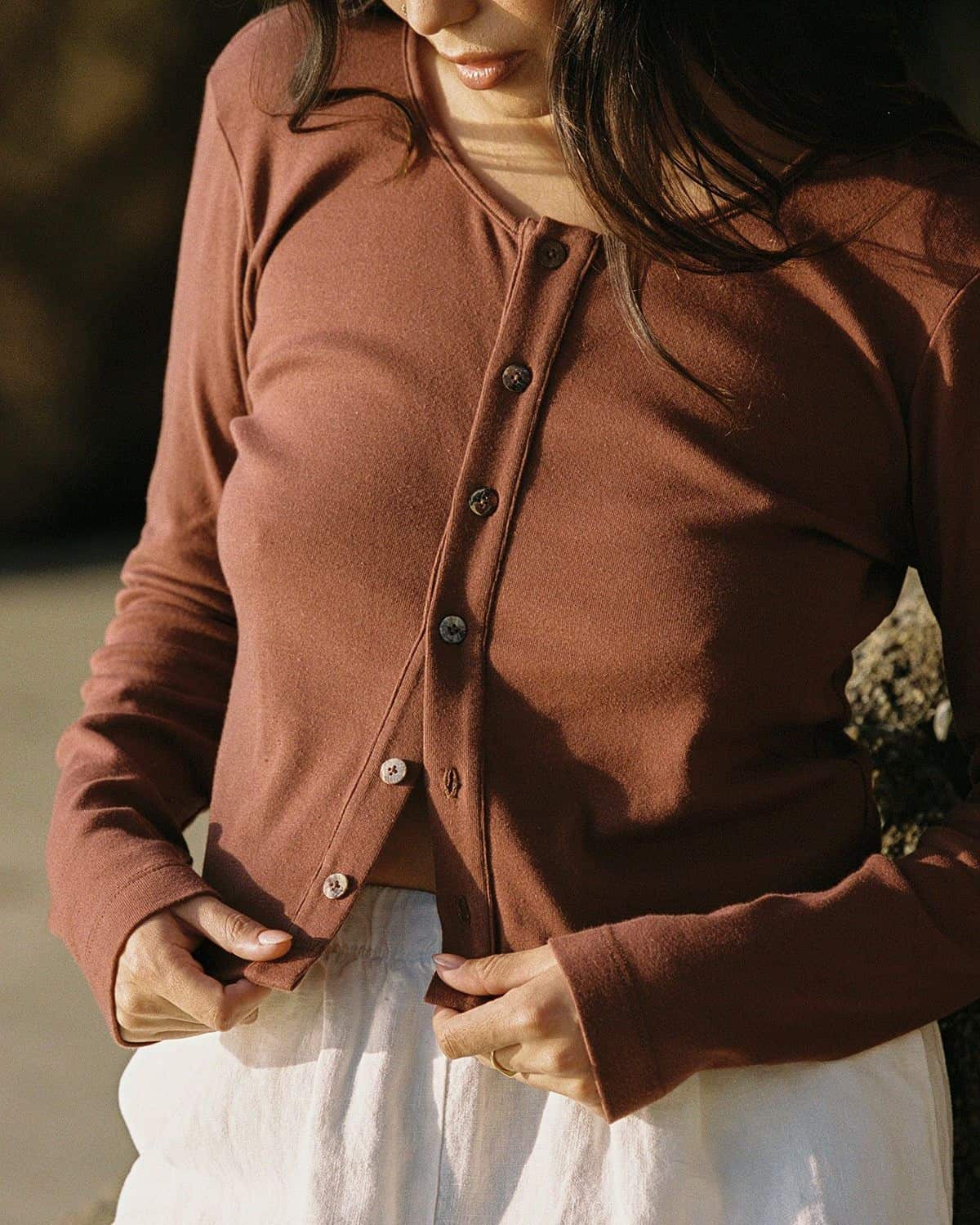
I’ve worn this little cardigan on endless repeat, and I still can’t get over how light it feels while somehow keeping me warm.
LA Relaxed’s Organic Rib Cardigan has such a pretty, feminine shape, with a slightly cropped fit that works just as well with skirts as it does with jeans.
The 100% organic cotton baby rib is soft, comfortable, and holds its shape beautifully.
I’ve worn it through multiple seasons, and it’s one of those easy layers that makes an outfit feel finished without adding any bulk.
Price & size
$72 | XS-XL
Materials
100% organic cotton
Location/shipping
Los Angeles, California, USA; ships within the U.S. and internationally.
details
- Slightly cropped fit, organic baby rib, pearlescent shell buttons, garment-washed for softness
- Available in Mocha, Heather Gray, Blue, Ivory, and Mustard.
- GOTS-certified organic cotton
my testing experience
- I’ve worn this cardigan constantly, and it works surprisingly well across all four seasons.
- It feels very lightweight on, but still gives me enough warmth when I need an extra layer.
- I love how feminine the slightly cropped fit looks with skirts, jeans, and higher-waisted bottoms.
10. Tentree | Best 100% Organic Cotton Cowl-Neck Sweater for Winter
Best for anyone looking for a warm organic cotton sweater for winter, especially if you want cozy coverage without wool.
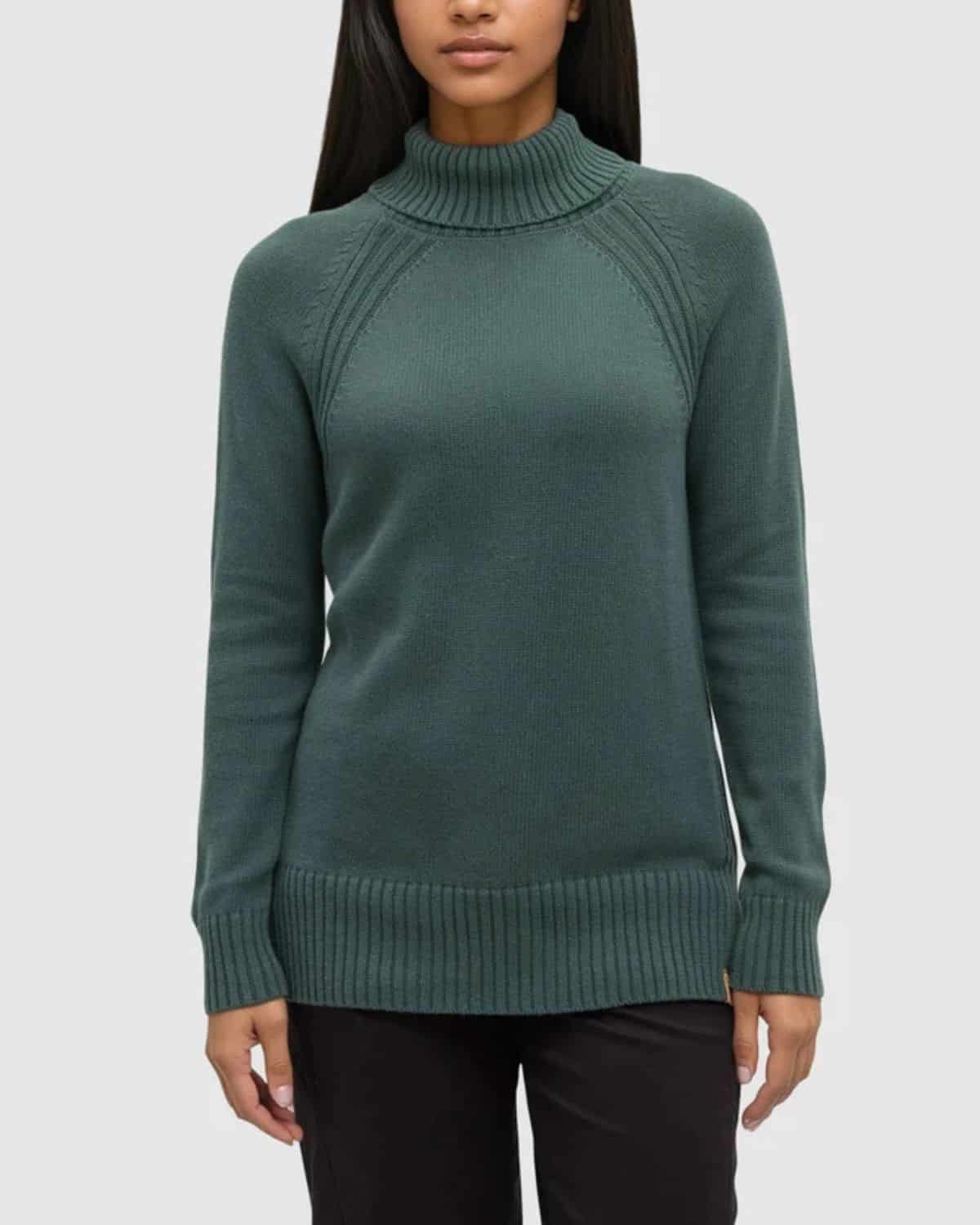
This is such a great winter sweater! tentree’s Spokane Sweater is made from 100% organic cotton, but it still has that warm, cozy feel I want once the temperatures drop.
The fit was spot-on for me, with a relaxed shape that feels comfortable without looking sloppy, and I really like the soft cowl neck for a little extra warmth.
I’m also loving the Pine Green jewel tone. It’s a beautiful change from all the neutral winter sweaters out there and looks great with jeans, leggings, or layered under a coat.
Price
$108 | XS-XL
Materials
100% organic cotton
location/shipping
Vancouver, Canada; ships to Canada, the U.S., and internationally.
details
- Relaxed fit, cowl neck, side slits, high-low hem, medium-stretch knit
my testing experience
- My usual size fit perfectly, with just the right amount of relaxed room.
- The organic cotton feels soft, cozy, and genuinely warm for winter.
- I love the Pine Green jewel tone and the easy cowl-neck shape.
✔️ Once sweater weather turns into jacket weather, I’ve got you covered there too. Start with my sustainable fall jackets for crisp days, then head to my sustainable and non-toxic winter coats guide when you need real cold-weather warmth.
Popular Brands That Did NOT Make My List
These are the sweater brands I get asked about most. Here’s the material breakdown and why none of them passed.
H&M
Why It Didn’t Qualify: H&M’s own product pages show most core sweaters running 50%+ synthetic. Their Fine-knit Sweater lists 52% polyester, 41% acrylic, 4% wool, 3% spandex, and their Regular Fit Fine-Knit Sweater comes in at 53% polyester, 24% polyamide (nylon), 13% acrylic, 7% wool, 3% spandex, essentially all plastic with a wool garnish. No dye or finishing disclosure beyond the fiber blend.
Best Alternative: Colorful Standard, for genuine 100% recycled merino wool instead of a wool-dusted synthetic blend.
J.Crew
Why It Didn’t Qualify: J.Crew Factory’s own Crewneck Sweater in Extra-Soft Yarn lists 55% acrylic, 35% polyamide, 7% wool, 3% elastane. That’s a sweater that’s 90% plastic marketed on softness and price, with wool included at a token percentage. No certification or dye disclosure on the line.
Best Alternative: Baukjen, for a genuinely wool-forward knit instead of one that borrows the name.
Old Navy
Why It Didn’t Qualify: Old Navy’s sweaters skew toward recycled polyester marketed as the sustainability story, without addressing that the garment is still majority synthetic. Their Cable-Knit Sweater is made with 24% recycled polyester in a cotton blend, and their Polo Sweater uses 36% recycled polyester. Recycled content is genuinely better than virgin polyester, but it’s still plastic against your skin, and the product pages don’t disclose the rest of the blend clearly.
Best Alternative: Quince, for real 100% organic cotton at a comparable price point.
Toxic Materials & Finishes, Explained
One thing I’ve learned after looking at a lot of sweater tags is that the front of the product page rarely tells the whole story. A sweater can be marketed as “cozy,” “conscious,” or even “made with natural fibers” and still be mostly acrylic or polyester once you scroll down to the actual composition.
I’m not trying to make anyone panic over a sweater they already own. I wear-test these pieces because I want to help you make a better choice the next time you need one, especially when you’re spending $100, $200, or more on something you hope to keep for years.
Acrylic
Acrylic is probably the fiber I’m most disappointed to find in a beautiful sweater. It’s a synthetic plastic-based fiber, and unlike wool or cotton, it doesn’t offer the natural-fiber story I’m looking for when I’m paying good money for knitwear.
Synthetic knits can also shed plastic microfibers during washing. Research measuring acrylic, nylon, and polyester textilesfound shedding from all three fiber types, although the amount varied considerably by fabric construction.
If you want the bigger picture on why I favor natural fibers where they make sense, our natural vs. synthetic fibers guide goes much deeper.
Polyester-Heavy Sweaters
Polyester is another petroleum-derived synthetic fiber I try not to make the foundation of a sweater. That includes recycled polyester. Recycling an existing fiber can be an environmental improvement over producing new polyester, but it doesn’t suddenly turn polyester into a natural fiber.
It also sheds synthetic microfibers as it wears and washes. Our full guide to polyester fabric covers how polyester is made, microplastic shedding, and what happens to it at end of life.
That doesn’t mean I automatically reject a sweater because there’s 2% or 5% of something synthetic in the blend. A cardigan like the Pact pick above uses a small amount of elastane for stretch. I look at the whole garment, not one number in isolation.
Nylon-Heavy Blends
Nylon is a petroleum-based plastic fiber, and I don’t recommend it in sweaters and cardigans. Brands often blend it into wool to add strength or help a knit hold its shape, but it also means you’re buying a sweater partially made from plastic when there are beautiful organic wool sweaters and organic cotton options that don’t need it.
If you’re specifically hunting for sweaters without polyester or nylon, wool blends are one of the first places to check the label closely.
Nylon can also shed microplastic fibers during wear and washing, and once it’s blended into wool, the garment becomes harder to deal with at the end of its life. If I’m spending good money on a wool sweater, I want the wool, not a knit diluted with synthetic fiber.
Spandex / Elastane
Spandex, elastane, and Lycra are all names for the same polyurethane-based synthetic fiber. I generally try to avoid it in sweaters because it adds plastic to a garment that usually doesn’t need much stretch in the first place.
That said, I do make a distinction between a sweater built around synthetic stretch and one that uses a very small percentage for fit or recovery. A cardigan that is 95% organic cotton and 5% elastane is still very different from a knit made primarily from polyester, nylon, or other synthetics. I look at the full fiber breakdown and keep the natural fiber content as high as possible.
If you want the deeper explanation of what spandex is made from, how it’s produced, and why I prefer to minimize it in clothing, I break all of that down in our guide to whether spandex is toxic and what to look for instead.
Stain-, Water- & Wrinkle-Resistant Finishes
I get much more cautious when ordinary knitwear comes with performance claims it doesn’t really need.
“Stain resistant,” “water repellent,” “easy care,” and “wrinkle resistant” can involve additional textile chemistry that isn’t obvious from the fiber label. PFAS, for example, have historically been used in water- and stain-resistant clothing; even EPA field guidance warns that treated clothing can be a source of PFAS contamination.
For a sweater or cardigan, I prefer good fibers and normal garment care over a mystery treatment designed to make spills bead off.
Antimicrobial & Odor-Control Treatments
I avoid sweaters and cardigans with added antimicrobial or odor-resistant finishes unless the brand clearly discloses what treatment is being used.
Wool already does a good job managing odor naturally, so I don’t see much reason to add a chemical treatment on top of it. These finishes can involve silver-based antimicrobials or other undisclosed substances, and the bigger problem is that brands often advertise the benefit without telling you what was actually applied to the fabric.
If a sweater claims to be antimicrobial, antibacterial, or permanently odor-resistant and the brand won’t name the treatment, I skip it.
Dyes With No Real Transparency
I love color. You’ve seen the jewel tones in this guide, so I am definitely not telling you to buy an entirely beige wardrobe.
What I want is better oversight of the dyeing process. Certain azo colorants capable of releasing restricted aromatic amines are regulated under EU REACH, and GOTS prohibits dyes and pigments with specified carcinogenic or allergenic concerns, along with banned aromatic amines.
That’s one reason certifications such as GOTS and OEKO-TEX catch my attention when I’m looking at brightly dyed clothing.
Vague “Sustainable” Sweater Blends
This one gets me every time.
A sweater can have leaves all over the product page, a beautiful sustainability story, and the word “responsible” in three different places, but I still scroll straight to Materials.
“Made with recycled fibers,” “eco-conscious,” and “responsibly made” don’t tell me what percentage of the sweater is cotton, wool, acrylic, nylon, or polyester.
The material tag wins over the marketing copy every time.
Safest Materials I Look For in Sweaters & Cardigans, explained
For sweaters, I keep the material side pretty simple: I want natural fibers, as little synthetic content as possible, and no unnecessary chemical finishes.
Organic cotton and wool make up most of my closet because they’re comfortable, warm, breathable, and, when they’re well made, can last for years. If you’re building toward a closet of genuinely plastic-free sweaters, this is the same checklist I use.
GOTS-Certified Organic Cotton
Organic cotton is one of my favorite choices for sweaters and cardigans, especially if you don’t wear wool or want something that works across more seasons.
I look for GOTS-certified organic cotton whenever possible because GOTS goes beyond how the cotton was grown. It also sets requirements for textile processing, including restrictions on dyes, finishes, and a long list of problematic chemical inputs.
A well-made organic cotton sweater can be soft, substantial, breathable, and surprisingly warm. It’s also why so many of the sweaters that made this list are cotton.
If you want the full breakdown of how it’s grown, processed, certified, and how it differs from conventional cotton, I explain it in our organic cotton fabric guide.
Wool & Merino Wool
For cold weather, wool is still one of my favorite natural fibers.
It’s warm, breathable, moisture-managing, and naturally resistant to odor, which is exactly what I want from something I’m going to wear repeatedly through fall and winter. Merino wool is especially nice when you want warmth without a thick, bulky knit.
Organic wool sweaters in particular give me both the natural-fiber story and better visibility into how the fiber was processed.
For newly sourced wool, I look for better animal-welfare transparency, mulesing-free sourcing, or standards such as the Responsible Wool Standard (RWS).
Recycled Wool
Recycled wool is another option I really like, particularly for people who already wear wool but would rather choose a fiber that’s already in circulation.
Instead of producing an entirely new wool fiber, existing wool textiles or manufacturing scraps are recovered and turned back into usable yarn. You still get the warmth and comfort of wool while extending the life of material that already exists.
The Colorful Standard cardigan in this guide is a great example. It uses 100% recycled merino wool, which is one of the reasons it stood out to me.
I also look for certifications such as the Global Recycled Standard (GRS) when recycled content is a major selling point.
Alpaca, Hemp, Linen & Cashmere
These are all natural fibers I’m happy to consider in sweaters and cardigans, and depending on the year, some of them do make my final list. Alpaca and cashmere can be wonderfully soft and warm, while hemp and linen are great for lighter, breathable knits.
This guide gets refreshed as I test new pieces, so the mix can change from year to year. If none of these fibers made the cut this time, check back next season. I’m always trying new sweaters, and one of them may absolutely earn a spot next time.
100% Natural Fiber Knits
When I see 100% organic cotton, 100% wool, or another completely natural-fiber composition, that immediately gets my attention.
There’s simply less to decipher. You’re not scrolling through a fiber label trying to figure out why a “wool sweater” is actually half nylon or why an “organic cotton knit” contains a large percentage of polyester.
That doesn’t mean every 100% natural-fiber sweater is automatically wonderful. I still care about construction, fit, durability, dyes, and how it actually wears. But it’s the material starting point I prefer.
Our guide to natural vs. synthetic fibers goes deeper into why I generally favor natural fibers for everyday clothing.
Natural-Fiber-Dominant Blends
Sometimes a sweater includes a small amount of elastane or another synthetic fiber for stretch or recovery.
I still prefer 100% natural fibers, but I look at percentages. A cardigan made from 95% organic cotton and 5% elastane is very different from one that is mostly polyester or nylon with a little cotton added for marketing.
My rule is simple: the natural fiber should clearly be doing the heavy lifting.
If you’re trying to reduce stretch fibers specifically, our guide to spandex and elastane explains what they’re made from and why I try to keep them to a minimum.
OEKO-TEX Standard 100
OEKO-TEX isn’t a fiber, but it’s one certification I’m happy to see on a sweater.
OEKO-TEX Standard 100 tests textiles for a long list of harmful substances. Depending on what has been certified, that testing can include the fabric, thread, buttons, and other components of the finished garment.
It does not mean a sweater is organic or natural fiber, so I never use OEKO-TEX as a substitute for reading the material label. I see it as an extra layer of reassurance.
GOTS Certification
GOTS is the certification I pay the most attention to with organic cotton knitwear because it addresses both the organic fiber and how that fiber is processed.
That matters with sweaters because the finished yarn still has to be washed, dyed, softened, and turned into a garment. “Organic cotton” alone tells me about the fiber. GOTS tells me considerably more about what happened to it afterward.
The Material Still Has to Survive Real Life
And this is the part I don’t want lost in all the certification talk.
The safest-looking material label in the world doesn’t help much if the sweater stretches out, pills immediately, loses its shape, or is so delicate that you’re afraid to wear it.
Greenwashing In Sweaters & Cardigans (yep, it’s a thing)
Sweaters might be the most greenwashed category I shop for. A knit gets called “responsible,” “conscious,” or “sustainable,” and then you check the fiber label and find acrylic, polyester, nylon, or a blend that barely resembles the marketing.
I ignore the mood photography and go straight to the fiber breakdown, certifications, and finishing information. Here’s what I look at closer.
“Sustainable” Can Hide a Terrible Fiber Blend
A sweater can be marketed as sustainable because it contains some organic cotton or recycled wool while the rest is polyester, acrylic, or nylon. That doesn’t make the whole thing a bad product, but it changes what you’re buying, and “sustainable” on its own tells you nothing about which part of the sweater that word is even referring to.
That’s exactly the kind of claim the FTC has warned companies about. A broad word like “sustainable” or “eco-friendly,” used without saying what it’s based on, is close to unprovable. It could mean the fiber, the dye process, the packaging, or nothing specific at all.
So I read the percentages instead of the word. “Made with wool” means a lot less than 100% wool.
A Wool Sweater Can Still Be Half Plastic
Shoppers search for wool specifically to get away from synthetic knits, then find a “wool sweater” that’s actually wool, nylon, acrylic, and polyester. If synthetics make up a big chunk of the garment, wool shouldn’t be doing all the marketing work.
For this guide, I prioritized sweaters where organic cotton, wool, or recycled wool genuinely makes up the garment, not just enough to earn the name.
“Recycled” Isn’t the Same as Natural
Recycled wool keeps an existing natural fiber in circulation. Recycled polyester is still plastic, even if using recycled feedstock cuts demand for virgin polyester.
When recycled content is the selling point, I want independent verification. The Global Recycled Standard verifies recycled content, chain of custody, and adds chemical and environmental requirements. That’s why I felt good including Colorful Standard’s 100% recycled merino wool cardigan instead of treating every “recycled sweater” claim the same.
“Superwash Wool” Means There’s More to the Story
Untreated wool felts and shrinks when moisture and agitation lock the fiber’s scales together. Superwash means the wool got a shrink-resistant treatment so it can go in the machine. It doesn’t tell you which one.
The Chlorine-Hercosett process is the traditional method: a chlorine pretreatment followed by a polyamide-epichlorohydrin resin coating. There are chlorine-free and ozone-based alternatives too, so I don’t assume every machine-washable wool sweater went through the same process.
“100% wool” on the label doesn’t answer this. If a brand sells superwash wool, I want to know how it was treated. If that’s missing, I’ll take untreated wool or a brand that’s transparent about it.
“Responsible Wool” Should Have Something Behind It
“Responsibly sourced wool” alone is a marketing claim. Is it RWS certified? Mulesing-free? Is the supply chain disclosed? The Responsible Wool Standard has actual requirements for sheep welfare, land management, and chain of custody. A brand doesn’t need RWS for me to consider its wool, but if all I get is the word “ethical,” I keep digging.
“Organic Cotton” May Only Describe Part of the Sweater
A sweater can contain organic cotton alongside polyester or elastane. Or the cotton itself is organic while the finished garment carries no certification for what happened after.
That’s why I care about GOTS-certified organic cotton and the actual percentages. Pact discloses “95% organic cotton, 5% elastane” on the cardigan in this guide, and I appreciate knowing exactly what I’m buying. What bothers me is when a small organic component becomes the whole sustainability pitch.
Our organic cotton fabric guide goes deeper into what those claims and certifications actually mean.
“Machine Washable” and “Stain Resistant” Are Finishing Clues
Wool doesn’t become machine-washable on its own. Stain resistance, water repellency, and odor control can involve treatments that have nothing to do with the fiber on the tag. That doesn’t make every treated sweater unsafe. It means I want the treatment disclosed. If a brand is proud enough of a finish to advertise it, it should say what creates the effect.
Pretty Packaging Isn’t Material Transparency
Recycled mailers, earth tones, and a tree-planting program can all be nice. None of it tells me what’s touching my skin.
I still want the fiber percentages, the finishes, and legitimate certifications. And I still want the sweater to survive real life. After trying 30+ of them, that last part matters more than ever. A better sweater isn’t just a good story. It’s made from something you feel good about, holds up to actual wear, and stays in your closet for years.
How I Researched, Tested & Updated This Guide
There’s a big difference between finding a sweater with a promising material list and finding one that deserves a recommendation. For this guide, I treated each piece like something I was considering for my own long-term wardrobe, because that’s exactly what it was.
1. I Ordered Widely, Not Just From Brands I Already Loved
I’ve tried more than 30 sweaters and cardigans across a wide range of prices, cuts, fibers, and brands. Some came from companies I’ve trusted for years; others were completely new to me.
I purposely ordered more than I expected to feature. That gave me room to compare similar pieces side by side instead of assuming the first organic cotton cardigan I liked was automatically the best one.
2. I Checked the Claims Before Getting Attached to the Sweater
Before a piece could become a finalist, I dug into its fiber percentages, certifications, wool sourcing, dye information, and any special finishes or treatments the brand disclosed.
This is where a lot of options lost me. A beautiful product page can make almost any sweater sound thoughtful, but the material breakdown usually tells a much clearer story.
When information was vague, I looked further. If I still couldn’t verify a claim that mattered, I didn’t give the sweater extra credit for marketing language alone.
3. I Paid Attention to What Happened After the First Try-On
A fitting-room moment can be misleading. Some sweaters look fantastic for five minutes and become annoying an hour later.
I wore these while working, running around with my kids, heading out for dinner, traveling, lounging at home, and doing the normal things I’d actually wear a sweater for. That helped me notice details I would have missed during a quick try-on: whether a neckline bothered me, sleeves stretched out, the knit felt scratchier with time, or a cardigan constantly needed adjusting.
I also noticed the opposite: the pieces I could put on in the morning and completely forget about because they simply worked.
4. I Watched What Naturally Became Part of My Wardrobe
This ended up being one of my most useful tests.
I didn’t force myself to wear anything for the sake of reviewing it. I watched what happened naturally over the following weeks and months.
Which sweater was sitting on top of the pile because I had worn it three times that week? Which cardigan kept coming with me on trips? Which one worked with half my closet without much thought?
And which perfectly decent sweater kept getting passed over?
That distinction helped narrow this guide far more than a material spreadsheet ever could.
5. I Looked at Value, Not Just Price
The sweaters in this guide range from affordable to genuine investment pieces, and I don’t expect a $50 sweater to feel identical to one that costs $200.
What I do expect is for the price to make sense.
I considered the fiber quality, construction, fit, versatility, how special the piece felt, and whether I believed I would still want to wear it several seasons from now. A higher price can be worth it when the sweater is exceptional. A lower price can be a fantastic find when the materials and wearability are there.
What I won’t recommend is something expensive simply because the brand has positioned it as luxury.
6. I’m Still Testing
Sweater collections change constantly. Brands introduce new fibers, discontinue favorites, improve old styles, and occasionally change a composition that used to be excellent.
So I revisit this guide every year and bring new contenders into the mix.
The ten you see here earned their spots this time around. Next year, one may be replaced by something better, or a hemp, alpaca, linen, or cashmere knit may finally knock one of these out of the lineup.
That’s exactly how I want this guide to work: not as a permanent list of brands I once liked, but as an ongoing record of the sweaters I’d actually recommend right now.
Most Common Questions On Non-Toxic Sweaters
For me, it starts with the fiber content. I look for organic cotton, wool, recycled wool, and other natural fibers, then check for things like unnecessary synthetic blends, mystery finishes, dye transparency, and credible certifications where they’re available. A good material tag matters, but so does knowing how the sweater was processed.
It’s usually what I prefer, but 100% natural fiber doesn’t automatically mean a sweater is well made or worth buying. Fit, construction, dyes, finishing, durability, and how the piece actually wears all still matter.
Not always. I’d rather buy a cardigan that’s 95% organic cotton and 5% elastane than one made primarily from polyester or nylon, especially if that small amount of stretch helps the garment fit and recover better.
I still prefer 100% natural fibers when I can find them, but I look at the whole garment rather than rejecting an otherwise great sweater over a very small percentage.
Brands often add synthetic fibers to increase durability, stretch, or shape retention, and sometimes simply to lower the cost of the garment. Personally, I don’t want to pay wool-sweater prices for a knit that contains a large percentage of plastic, so I always check the full fiber breakdown before buying.
t can be, especially in a heavier knit. The MATE half-zip in this guide is a perfect example of how substantial and warm organic cotton can feel, while lighter cotton cardigans like Pact and LA Relaxed work better for layering.
If you run cold or live somewhere with serious winters, wool will generally give you more warmth for its weight.
Try a very fine merino wool, or skip wool altogether and look for organic cotton. I’ve worn merino sweaters that feel incredibly soft against my skin, but everyone’s sensitivity is different, and there’s no reason to force yourself into a fiber you find uncomfortable.
Alpaca and cashmere can also feel softer than coarser wool, depending on the quality.
Superwash wool has been treated so it is less likely to felt or shrink in the washing machine. The treatment method can vary, which is why I prefer brands that actually disclose how their wool was processed rather than simply saying “machine washable.”
If a company won’t explain the treatment, I’d rather choose untreated wool and wash it carefully.
The safest approach is usually cool water, minimal agitation, and laying the sweater flat to dry, but always follow the care instructions for that specific garment. Heat and aggressive washing are especially hard on wool, while hanging a wet knit can stretch it out of shape.
I also wash sweaters much less often than T-shirts. Airing them out between wears can go a long way, especially with wool.
Not necessarily. Natural fibers can pill too, especially soft wool and cashmere, because loose fibers rub together during wear.
What matters more to me is how quickly and excessively it happens. A few pills that can be removed with a sweater comb are normal; a pricey knit that looks worn out after a couple of gentle wears is another story.
There isn’t one magic number. I found worthwhile sweaters in this guide for under $50 and others that cost more than $200.
I care more about whether the price makes sense for the fiber, construction, fit, and how often I’ll wear it. A $200 sweater I still love ten years from now can be a better buy than three $60 sweaters I stop reaching for after one season.
Look beyond the fiber name. Check the density of the knit, seams, cuffs, neckline, shape recovery, care requirements, and whether the piece already looks stretched or fuzzy when it arrives.
And be realistic about your own life. If a sweater is so delicate that you’re afraid to wear it around your kids, carry a bag over it, or sit down for dinner in it, it may not be the right “investment” sweater for you.
Start with 100% organic cotton, 100% wool, recycled wool, alpaca, hemp, linen, or cashmere, depending on the warmth and feel you want. Then check the details, because trims, stretch fibers, and finishes may not be obvious from the product name alone.
For me, the easiest question is: Would I still want this sweater if I read the entire material tag instead of just the marketing headline?
Not necessarily, and that’s exactly why I use a stricter standard for this guide. A sweater can be marketed as sustainable because of recycled content or a low-impact dye process while still containing acrylic, polyester, or nylon in the actual fiber blend. I look at sustainable knitwear the same way I look at anything else: fiber percentages first, marketing language second.
Still deciding?
If you’re down to two or three favorites, this is how I’d choose:
- Choose Cottonique if you deal with allergies, eczema, or chemical sensitivities and want something completely free of latex, spandex, and synthetic fibers, not just low on them.
- Choose MATE the Label if you run cold, live somewhere with real winters, or want one organic cotton layer that feels substantial enough to replace a fleece. This is the coziest option on the list.
- Choose Pact if you want the cardigan you’ll throw in a carry-on, keep at your desk, or wear over a tank when the temperature shifts. It’s light, stretchy, and very easy to live in.
- Choose Quince if budget matters most and you still want 100% organic cotton. I’d just pay closer attention to sizing here and consider sizing down if you prefer a cleaner fit.
- Choose Colorful Standard if you already love wool and want something warmer, more polished, and a little more fun. The recycled merino and bold color range are what make this one special.
- Choose Fair Indigo if you want a dependable everyday cardigan with a softer, more classic feel. It’s the one I’d pick for regular workdays, errands, school drop-off, or anything where you just want to look put together without thinking too hard.
- Choose Baukjen if you want one sweater to feel truly special. The fit, drape, softness, and fine-knit finish put this in a different category from the more casual options, and it’s the one I’d reach for when I want to look a little more polished.
- Choose Organic Basics if you love a modern, boxy silhouette and tend to wear higher-waisted jeans or trousers. It has a more relaxed, minimalist look than the fitted cardigans and works especially well as part of a matching set.
- Choose LA Relaxed if you want something feminine and light enough to wear nearly year-round. It’s especially good if you like cropped cardigans with skirts, jeans, and dresses and don’t want a heavy knit.
- Choose tentree if you want a cozy winter sweater but don’t wear wool. The 100% organic cotton, cowl neck, and warm knit make it the easiest cold-weather cotton pick here.
My Final Thoughts on Non-Toxic Sweaters & Cardigans
There’s something about sweater season that makes me want to simplify my closet, not add more to it. I want the pieces I reach for constantly: the cardigan by the door, the wool knit I wear to dinner, the warm cotton layer I throw on when the house is freezing in the morning.
That’s really the goal here. Not chasing a perfect wardrobe, but finding a few sweaters that feel good to wear, suit your life, and are made with materials you feel comfortable bringing into your home.
And once you find those pieces, take care of them. Wash them gently, air them out, mend them when needed, and wear them often. A sweater you truly love and keep for years is always going to mean more to me than one that checks every box but never leaves the closet.
Continue Your Non-Toxic Fashion Journey
If you’re exploring safer swaps, these guides break it down step-by-step:
- Best Organic Cotton Underwear: 7 GOTS-certified brands I’d actually put in my own drawer, picked after checking materials, not marketing.
- Non-Toxic Leggings: I wore these through workouts and everyday life. Organic cotton and TENCEL™, no PFAS.
- Non-Toxic Fashion Brands: 15 brands I actually wear, vetted for natural fibers and no PFAS.
- Best Non-Toxic Bras: I tested 19+ bras over five years. These 6 checked out down to the elastic and thread, not just the label.
- Best Linen Dresses: I tried more than 50. These are the ones I’d buy again.
📌 Save This Guide For Later
Save this guide for the next time you’re shopping for a sweater or cardigan and want to quickly check which materials, certifications, and brands are actually worth choosing.
Sources & Further Reading
If you’re like me and want to understand what’s actually going on with sweater materials, not just what brands claim, these are some of the resources I found most helpful while researching this guide:
- Quantifying Shedding of Synthetic Fibers From Textiles, PMC: Peer-reviewed research measuring microfiber shedding from acrylic, nylon, and polyester textiles.
- U.S. EPA, PFAS Field Sampling Guidance: Federal guidance warning that water- and stain-resistant treated materials can be a source of PFAS contamination.
- European Chemicals Agency, Annex XVII Entry 43 (Azocolourants and Azodyes): The EU regulation restricting azo dyes that release carcinogenic aromatic amines in skin-contact textiles.
- Global Organic Textile Standard (GOTS): Official documentation on GOTS’s organic fiber and chemical-processing requirements.
- Textile Exchange, Responsible Wool Standard Quick Guide: Primary-source overview of RWS animal-welfare and land-management requirements.
- Textile Exchange, Global Recycled Standard (GRS): Official documentation on recycled-content verification and chain-of-custody requirements.
- OEKO-TEX Standard 100: Official documentation on what OEKO-TEX Standard 100 tests for in finished textiles.
- “Durable Machine-Washable Wool via AOX-Free Plasma-Mediated Coating,” Journal of Natural Fibers: Peer-reviewed background on the Chlorine-Hercosett superwash process and its alternatives.
- FTC, Green Guides: Federal Trade Commission guidance on why unqualified terms like “sustainable” and “eco-friendly” are difficult to substantiate.
A note on that last “didn’t qualify” section: I pulled exact fiber percentages straight from each brand’s own product pages rather than estimating, so if you check a different style from these brands, the blend may vary. Worth spot-checking the specific item you’re looking at.

Steal My Non-Toxic Cleaning Checklist!
Believe us, it’s the BEST…. and it’s free. Does it really get any better than that?! Sign up for our newsletter and get this free checklist to clean your home without any harmful chemicals!