 Shop My Favorite Non-Toxic Gifts Of 2026!
SKL is reader supported. When you buy through links on our site, we may earn affiliate commission. Learn more here.
Searching for the safest non-toxic grill to kick off BBQ season in 2026? You’re in the right place.
The SKL team did the homework and rounded up our top picks for the healthiest outdoor grills—focusing on clean materials, uncoated surfaces, and safer cooking performance.
Whether you’re hosting weekend cookouts or planning cozy backyard dinners, these non-toxic grills are built to serve up flavor without the unwanted chemicals.
SKL top picks, in a nutshell…
- Best All-Around Non-Toxic Grill: Turbo E Outdoor Electric Grill
- Best Grill for Small Spaces: Ninja Woodfire
- Best Propane Grill for Families: Monument Mesa 415BZ
- Best Portable Grill: Weber Traveler®
- Best Budget-Friendly Electric Option: Char-Broil Patio Bistro®
We all love a good summer BBQ—the sizzle of the grill, the smoky flavor, the backyard get-togethers with family and friends.
But as you’re flipping those burgers and enjoying the moment, there’s something most people don’t think about: the hidden toxins that can come with grilling.
The smoke, the flare-ups, and even the materials used in your grill can release harmful compounds you definitely don’t want near your food (or your lungs).
In particular, compounds like polycyclic aromatic hydrocarbons (PAHs) and heterocyclic amines (HCAs) form when fat drips onto hot surfaces or flames, creating smoke that can cling to your food and linger in the air.
These substances have been linked to serious health concerns, including increased cancer risk.
And if your grill is coated in non-stick chemicals like PFAS or built with lower-quality materials, that risk climbs even higher.
That’s why we created this non-toxic grilling guide—to help you understand what’s really going on when you fire up the grill, and to share the safest outdoor grills and BBQs that prioritize clean materials, toxin-free performance, and long-term durability. Let’s break it all down.

Is Grilling Unhealthy? Here’s What You Should Know
Grilling is a summertime favorite for good reason—but there’s a hidden side to all that sizzle. When food hits high heat (especially over open flames), it can release harmful compounds that might affect your long-term health—even if your grill is sparkling clean.
Let’s break down what’s really happening when you flip those burgers:
🧪 PAHs (Polycyclic Aromatic Hydrocarbons)
These form when fat drips onto hot coals or grates and turns into smoke. That smoke can stick to your food and drift into the air you breathe. Over time, regular exposure to PAHs has been linked to certain cancers, including lung, skin, and digestive cancers.
⚠️ HCAs (Heterocyclic Amines)
These pop up when meat is cooked over super high heat—especially when it’s grilled to the point of charring. HCAs have been connected to increased risks of colon, pancreatic, and prostate cancers.
👉 That tasty charred crust? It’s also where most of the HCAs are hiding.
🥔 Acrylamide
You’ve probably heard about this one in fried foods, but it can show up on the grill too—especially on starchy items like potatoes or buns. Acrylamide forms at high temps and has been labeled a “probable human carcinogen” by health experts.
The short answer: not entirely. Even the safest, best-built grills can still produce harmful compounds when cooking at high temperatures.
But by choosing grills made with clean, coating-free materials, and following safe cooking practices, you can drastically reduce your exposure and enjoy your summer BBQ with more peace of mind.
Stainless steel, uncoated cast iron, and ceramic are the best options. These materials are durable, heat-resistant, and free from harmful coatings like PFAS or Teflon. Avoid grills with non-stick surfaces or questionable aluminum interiors unless clearly labeled and tested.
🔥 Grilling Methods from Most to Least Toxin-Friendly
Let’s talk about the hidden side of BBQing. While all grilling involves some smoke and heat, some grill types are cleaner and safer than others—for both your health and the planet. Here’s how the most popular options stack up:
❌ Charcoal Grills: Most Toxic & Least Eco-Friendly
Charcoal may be classic, but it’s also the messiest and most toxic option. When fat drips onto hot coals, it creates smoke filled with harmful compounds like PAHs and HCAs—both linked to serious long-term health risks.
These grills also release a lot of ash and particulate matter, which isn’t great for your lungs or the environment. If you’re using one, try to keep flare-ups minimal and skip the heavy charring.
⚠️ Natural Gas & Propane Grills: Better, But Still Hot
Gas grills are a popular step up. They light quickly, burn more cleanly than charcoal, and produce less smoke overall. But since they still cook over an open flame, PAHs and HCAs can still form—especially if you’re cooking at super high heat or letting food get charred. Still, they’re a convenient option with fewer emissions.
✅ Electric Grills: Cleanest Option for Home Use
Electric grills are the most non-toxic choice. There’s no flame, less smoke, and no flare-ups to worry about. They heat up quickly, cook evenly, and don’t produce the same harmful byproducts as gas or charcoal. Ideal for patios, balconies, or indoor-friendly grilling.
🌲 Wood Pellet Grills: Flavor Without the Flames
If you want that smoky flavor but not the toxins, pellet grills are a great middle ground. They use compressed hardwood pellets and low, steady heat to cook, which cuts down on harmful smoke. Bonus: they’re versatile—you can grill, bake, roast, or even smoke food with one setup.
🍢 Kebab Grills: Compact and Low-Flare
These small but mighty grills are designed for skewered meals, so there’s less fat, less smoke, and fewer toxins overall. They’re perfect for veggies, lean meats, or camping trips—but not ideal for large cuts or traditional BBQ feasts.
💨 Smokers: Best for Slow, Clean Cooking
Smokers cook “low and slow,” which helps avoid the high temps that cause harmful compounds. Since food isn’t cooked over direct flame, you get incredible flavor and tenderness—without the risks of flare-ups or burnt bits.
Whether you’re after a family-size propane setup, a sleek electric grill, or something portable for weekends away, we’ve rounded up the best non-toxic options to match every need and budget.
Let’s check out our top picks for 2026!
2026’s Top 7 Non-Toxic BBQ Grills (Ranked by Material & Performance)

Grill, smoke, air fry, and roast—all with one clean electric unit.
The Ninja Woodfire delivers big flavor without gas, charcoal, or synthetic coatings, using real wood pellets for smoke and a non-toxic stainless steel grill surface.
With 7 cooking functions and foolproof temperature control, it’s a smart choice for small patios, balconies, or toxin-conscious backyard chefs who want versatility without the mess.
Just plug it in, load your pellets, and enjoy smokeless grilling with real flavor.
Price
$399.99
materials
Stainless steel (grill grate), powder-coated steel body, plastic side accents | Handle: Heat-resistant plastic
location/shipping
United States, ships internationally
Dimensions
Dimensions: 23.62″ D x 18.58″ W x 13.31″ H
Cooking Area: 141 sq. in. total
Primary Grate: ~141 sq. in.
Warming Rack: Not included
Capacity: Fits up to 6 burgers or a 2 lb. brisket roast
Notable features
- 7-in-1 electric grill with smoker and air fryer functions
- Stainless steel grate
- Real wood pellet smoke infusion
- Built-in thermometer
- Compact countertop-friendly design

Looking for a truly non-toxic, gas-free grill? The Turbo E Electric Grill uses 1700W infrared technology to deliver fast, even heat without the toxins or flare-ups of traditional BBQs.
With a digital display and meat probe, you get perfectly cooked results every time—no guesswork, no babysitting.
The stainless steel design is sleek and durable, and it comes with a premium cart for mobility, spacious shelves, and a waterproof cover for year-round use.
If you’re ready to ditch propane and charcoal for a cleaner, smarter outdoor grilling setup, Turbo E is one of the safest picks out there.
Price
$499
materials
Stainless steel (grates, handle, frame accents), cast iron grill plate, alloy steel or aluminum body | Handle: Brushed stainless steel
location/shipping
United States, check with your local Amazon for international shipping
Dimensions
Dimensions: 18″ D x 24.1″ W x 17.2″ H
Cooking Area: 429.6 sq in. total
Primary Grate: ~286 sq in.
Warming Rack: ~143 sq in.
Capacity: Fits up to 12 burgers or 3 whole chickens
Notable features
- High-power 1700W infrared tech
- Digital temp control with probe
- Stainless steel grill cart with shelves
- Waterproof cover included
- No Prop 65 warning for lead or phthalates.

The Mesa 415BZ brings serious heat and clean design to your outdoor kitchen.
With 4 high-performance stainless burners, a dedicated sear zone, and a versatile side burner, it delivers 62,000 BTUs of total grilling power—enough to cook 23 burgers or a 22-pound turkey with ease.
The PFAS-FREE porcelain-enameled cast iron grates provide even heat without toxic non-stick coatings, and the Clearview® lidlets you keep an eye on your food without losing heat.
With 630 sq. in. of cooking space, electronic ignition, and a free cover included, it’s a smart, spacious, and safer propane grill for families who love to host.
Price
$499
materials
Porcelain-enameled cast iron (grates), stainless steel lid and control panel, powder-coated steel frame | Handle: Brushed stainless steel
location/shipping
United States, check with your local Amazon for international shipping
Dimensions
Dimensions: 22″ D x 55″ W x 45.5″ H
Cooking Area: 630 sq. in. total
Primary Grate: ~450 sq. in.
Warming Rack: ~180 sq. in.
Capacity: Fits up to 23 burgers or a 22-pound turkey
Notable features
- 4 stainless steel burners plus sear and side burner
- 62,000 BTUs total, porcelain-enameled cast iron grates
- Clearview® lid, electronic ignition
- Includes free grill cover
🔍 SKL Note:
The Mesa 415BZ isn’t 100% non-toxic by SKL standards, as it currently uses porcelain-enameled cast iron grates instead of stainless steel. However, it avoids PFAS coatings and offers strong heat control, even distribution, and high-performance grilling without synthetic non-stick materials. We recommend using caution to avoid chipping the enamel and suggest keeping an eye out for the future stainless grate upgrade.

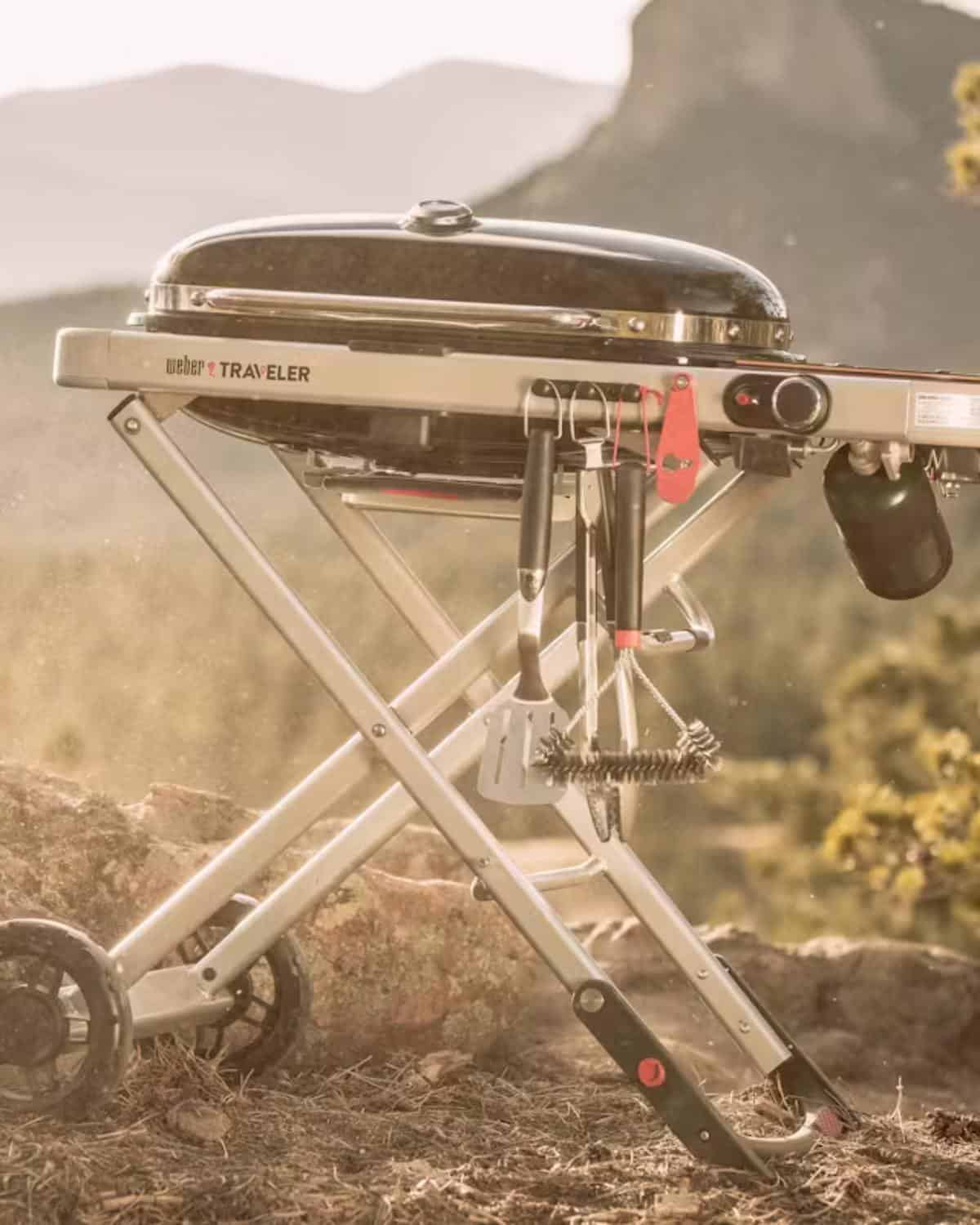
Perfect for camping, tailgating, or small patios, the Weber Traveler® delivers full-size grilling in a compact, foldable design.
It fits easily in the back of most SUVs, raises with one hand, and locks securely when folded.
With room for up to 15 burgers or 20 sausages, it’s built for easy, clean outdoor cooking—no frills, no flare-ups.
Durable wheels, a sturdy frame, and porcelain-enameled cast iron grates ensure even heat and long-term performance without toxic non-stick coatings.
Available in multiple colors and compatible with both small and full-size propane tanks.
Price
$449
materials
Porcelain-enameled cast iron (grates), powder-coated steel body, aluminum lid liner | Handle: Heat-resistant plastic with stainless steel accent
location/shipping
United States, ships internationally
Dimensions
Dimensions: 23″ D x 40″ W x 37″ H
Cooking Area: 320 sq. in. total
Primary Grate: ~320 sq. in.
Warming Rack: Not included
Capacity: Fits up to 15 burgers or 20 sausages
Notable features
- Foldable one-piece design with automatic lid lock
- Porcelain-enameled cast iron grates
- Durable wheels for all-terrain mobility, one-handed lift system
- Compatible with full-size or portable propane tanks

Looking for a non-toxic electric grill that’s compact, clean, and easy to love?
The Char-Broil Patio Bistro® skips the gas and charcoal in favor of TRU‑Infrared™ cooking technology, which delivers juicy, evenly grilled food—without flare-ups or smoke.
Its porcelain-coated grates are rust-resistant and free of non-stick coatings, giving you 320 square inches of cooking space (enough for 12 burgers!) plus a handy warming rack.
With simple dial controls and easy cleanup, it’s a great choice for smaller patios, apartment balconies, or anyone wanting safer, hassle-free grilling.
Price
$279.99
materials
Porcelain-coated steel (grates & lid), alloy steel or aluminum frame | Handle: Heat-resistant rubber
location/shipping
United States, ships internationally
Dimensions
Dimensions: 24.4″ D x 25.2″ W x 38.2″H
Cooking Area: 320 sq. in. total
Primary Grate: ~240 sq. in.
Warming Rack: ~80 sq. in.
Capacity: Fits up to 12 burgers, 6 chicken breasts, or 4 steaks
Notable features
- TRU‑Infrared™ tech for even flare-up-free cooking
- Control knob for easy temperature adjustment
- Porcelain-coated grate and warming rack
- Built-in lid thermometer
- Does come with a PROP 65 warning for Lead

For serious grillers who want size, power, and safer materials, the Char-Griller Grillin’ Pro delivers.
With 40,800 BTUs across three burners, a 438 sq. in. primary cooking area, and porcelain-coated cast iron grates, it offers even heat and fewer toxins—no synthetic non-stick coatings here.
The rugged steel build, side burner, and dual prep shelves make it ideal for backyard cooking with space to spare.
A great value for families who want a high-performance propane grill without compromising on materials.
Price
$330
materials
Porcelain-coated cast iron (grates), powder-coated steel body, stainless steel burners | Handle: Heat-resistant plastic with stainless accents
location/shipping
United States, ships internationally
Dimensions
Dimensions: 25″ D x 48″ W x 50″ H
Cooking Area: 630 sq. in. total
Primary Grate: ~438 sq. in.
Warming Rack: ~192 sq. in.
Capacity: Fits up to 20 burgers or a full rack of ribs plus sides
Notable features
- Three stainless steel burners plus side burner
- 40,800 BTUs total, porcelain-coated cast iron grates
- Dual side shelves
- Electronic ignition
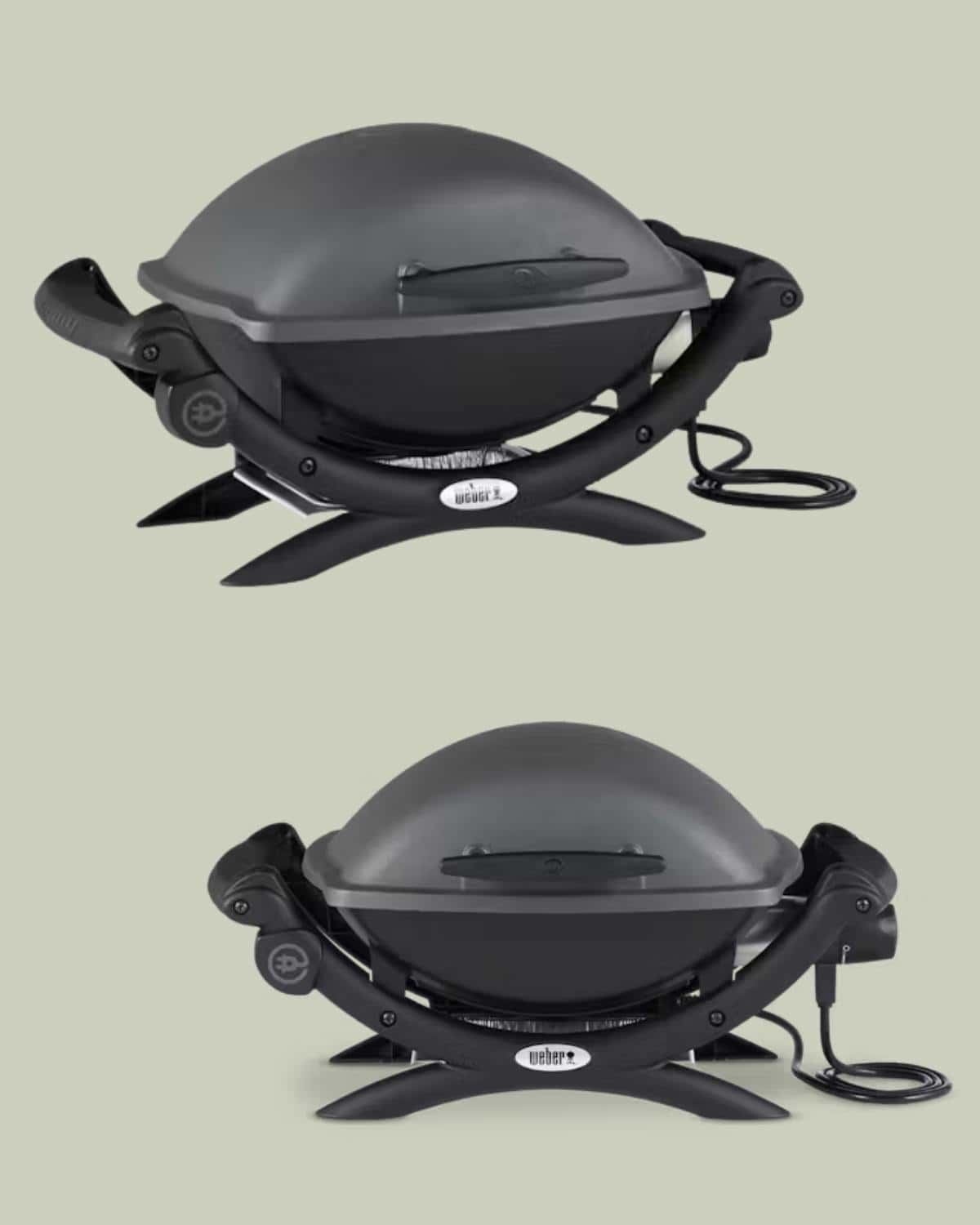
Perfect for patios, balconies, or small outdoor spaces, the Weber Q 1400 delivers hot, even grilling with 1,560 W of power and no messy charcoal or gas.
The porcelain-enameled cast−iron grates retain heat for flavorful sears, setup is as simple as plugging in, and the compact design makes cleanup a breeze.
With a removable drip tray and aluminum-lined body, it’s a clean, reliable electric grill built to last.
Price
$349
materials
Porcelain-enameled cast iron grates, cast-aluminum lid & body with aluminum liner, glass-reinforced nylon frame | Handle: Stainless steel accents
location/shipping
United States, ships internationally
Dimensions
Dimensions: 20.5″ D x 27″ W x 23.5″ H (lid open)
Cooking Area: 189 sq. in. total
Primary Grate: ~189 sq. in.
Warming Rack: Not included
Capacity: Fits up to 8 burgers or 6 chicken breasts
Notable features
- Porcelain-enameled cast iron grates
- Compact cast aluminum body with liner
- 1,560W electric heating element
- Infinite heat control settings
- Removable grease catch pan
The Safest Grate Materials for Non-Toxic Grilling
If you want to pick the healthiest outdoor grill or BBQ, make sure to stay away from ALL types of coatings. There’s no such thing as a safe grill & bbq “coating”. Any non-stick coatings are immediately unsafe.
- Stainless Steel (No Coatings): Stainless steel is tough as nails, and resistant to rust, corrosion, and scratches. This means your grill grates will last for ages without showing signs of wear and tear. What’s more, its stainless steel surfaces are a breeze to clean – just give ’em a scrub with a grill brush or some soapy water, and you’re good to go. For all these reasons, we also prefer this material for our non-toxic flatware and cookware sets.
- Cast Iron (No Coatings): Cast iron grates hold onto heat and offer even cooking and beautiful grill marks on your food. When properly seasoned, cast iron becomes naturally non-stick, making it easy to flip burgers and veggies without worrying about them sticking. Last but not least, it imparts a subtle smoky flavor to your food, enhancing its overall deliciousness.
- Carbon Steel (No Coatings): Carbon steel is a great option for the best non-toxic outdoor grills because it offers the best of both worlds – it’s lightweight and easy to handle, yet incredibly durable and long-lasting. Plus, carbon steel can handle high temperatures with ease, making it perfect for searing steaks and achieving that coveted char.
- Porcelain: While not the absolute best option for nontoxic grilling, porcelain surfaces are OK to use. The porcelain coating acts as a protective barrier against rust and corrosion, prolonging the lifespan of your grill grates. Also, porcelain-coated grill grates are smooth and non-porous, making them easy to clean with a quick wipe-down after each use.
How to Grill the Healthiest Way Possible
You don’t have to give up grilling to stay safe—you just need a few smart strategies. Here’s how to reduce harmful compounds while still enjoying those summer cookouts:
🧼 Clean Your Grill After Every Use
Leftover grease and charred bits aren’t just messy—they’re fuel for flare-ups and smoke. Give your grill a good scrub after each session to prevent the buildup of food particles that can lead to the formation of PAHs and other toxic compounds.
🔥 Preheat with Purpose
Let your grill preheat fully before cooking. Not only does this help food cook more evenly, but it also reduces sticking and lowers your risk of charring—one of the biggest contributors to HCA and PAH formation.
🌡️ Cook at Moderate Temperatures
Skip the ultra-high flames and go for a steady, medium heat. Cooking at lower temps reduces the formation of toxic byproducts while still giving you that perfect sear.
🔁 Flip Often
Flipping your food regularly keeps it from burning and helps it cook more evenly. It also limits the amount of time any one side is exposed to direct flame—aka less risk of toxic charring.
🍋 Marinate for Safety (and Flavor!)
Marinating meats isn’t just delicious—it’s protective. Acidic ingredients like citrus juice or vinegar, along with antioxidant-rich herbs, help create a barrier that can lower the formation of HCAs and PAHs during grilling.
🥩 Trim the Fat
Excess fat drips onto flames, causing flare-ups and smoke. Trimming it beforehand can help reduce both. Bonus: leaner cuts tend to cook faster and cleaner.
⏱️ Don’t Overcook
Overcooked and burnt food is more likely to be loaded with harmful compounds. Stick to safe internal temps, and use a meat thermometer to keep things precise—no guesswork needed.
For even more ways to reduce your family’s exposure to everyday toxins, check out our favorite low-effort, high-impact non-toxic home swaps that go beyond the grill.
Non-Toxic Grilling FAQS
Before you get scrubbing, fire up your grill and let it heat for about 10–15 minutes. This helps loosen any stuck-on food or grease, making the cleaning process way easier.
Once it’s hot, turn it off and grab a grill brush or scraper. Use a steady back-and-forth motion to clean the grates thoroughly. For tougher spots, a ball of aluminum foil or a grill stone can help break through the grime without any harsh chemicals.
After tackling the grates, remove them and clean the inside of the grill—including burner tubes, heat shields, and any corners where grease tends to collect.
Want to go the natural route? (We do too.) Try one of our DIY non-toxic cleaning recipes, like a simple paste using equal parts baking soda and vinegar. Spread it over the grates, let it sit for 10–15 minutes, then scrub and rinse with water.
Another great option: mix citrus juice (like lemon or orange) with water in a spray bottle. Spritz the grates, let it soak for a few minutes, then scrub away and rinse clean. It smells amazing and works like a charm.
Most grills carry a Prop 65 warning because the law flags even trace amounts of certain chemicals—sometimes at levels far below what federal regulators consider harmful.
Many brands include the warning proactively to comply with California law and avoid legal issues, even if the actual risk is minimal.
While it’s common to see these labels, it doesn’t always mean the product poses a health hazard. With proper testing and transparent materials, it’s possible to find grills that meet safety standards without requiring a Prop 65 warning.
Yes — electric grills like the Turbo E Outdoor Electric Grill from PlugNGrill have undergone independent tracing tests and found no detectable lead or cadmium, meaning no Prop 65 warning is required for those materials.
First, you’ll have to thoroughly clean your grill. Once the grates are clean, preheat your grill to a high temperature to help burn off any remaining residue and open up the pores of the metal for better absorption of the seasoning.
Using a brush or a folded paper towel, apply a thin layer of cooking oil (such as vegetable oil or canola oil) to the surface of the grill grates. Be sure to coat the entire surface, including the top and bottom of the grates.
Then, allow the grill to continue heating with the oil on the grates until it starts to smoke. This indicates that the oil is burning off impurities and forming a protective layer on the grates.
Depending on the condition of your grill and how often you use it, you may need to repeat the seasoning process several times to build up a good layer of seasoning.
Once the grates have cooled down, use a clean cloth or paper towel to wipe off any excess oil.
Make sure your grill is preheated to the appropriate temperature before adding food. A hot grill helps to create a non-stick surface and sear the food quickly, reducing the chances of sticking.
Before grilling, clean the grates thoroughly with a wire brush to remove any debris or leftover residue. After cleaning, lightly oil the grates with a high-heat cooking oil, such as vegetable or canola oil, using a paper towel or grill-safe brush to create a barrier between the food and the grates and prevent sticking.
Another way to prevent sticking is to lightly oil the food itself before placing it on the grill. Brush or spray a thin layer of oil onto both sides of the food, especially if it’s lean or has a tendency to stick, such as fish or vegetables.
Avoid moving or flipping food too soon after placing it on the grill. Let it cook undisturbed for a few minutes to allow it to sear and develop a non-stick surface before flipping.
If you’re grilling multiple batches of food, clean the grates between each batch to remove any residue that may cause sticking. Use a wire brush or grill scraper to clean the grates while they’re still hot.
Yes—when uncoated, cast iron is one of the safest and most durable grilling materials. It retains heat well and becomes naturally non-stick when seasoned properly. Just be sure to avoid enameled or coated cast iron that could contain hidden chemicals.
Yes. Some non-stick grill grates and accessories may contain PFAS (also known as “forever chemicals”). PFAS can break down at high temperatures and pose serious health risks. Always choose PFAS-free grills with bare stainless steel or cast iron components.
Solid ceramic grills (like kamado-style cookers) are generally safe and free from synthetic coatings. However, “ceramic-coated” metal grates may contain nanoparticles or binders that aren’t always disclosed. Look for full ceramic bodies or reputable certifications to be safe.
Grill Smarter, Not Harder 🌿
You don’t have to give up your favorite summer BBQs to protect your health—you just need to grill a little smarter.
Choosing safer materials like stainless steel, uncoated cast iron, and ceramic surfaces is a great first step. These hold up beautifully under heat without adding extra toxins to your plate.
And while smoke and sizzle might be part of the fun, they can also create compounds like PAHs and HCAs that aren’t so kind to our bodies. The good news? You can seriously cut down your exposure with a few simple swaps—like marinating your meats, flipping more often, and keeping that char to a minimum.
Here’s to delicious meals, safer grills, and summer memories made around the (cleaner!) flame.
Explore more of our incredible Non-Toxic Kitchen articles:
- Non-Toxic Air Fryers
- Non-Toxic Food Processors & Choppers
- Non-Toxic Coffee Makers & Machines
- Non-Toxic Baking Sheets & Bakeware
- Non-Toxic Toasters & Toaster Ovens
- Great Jones Cookware Review
- Stainless Steel Cookware Sets
- Non-Toxic Cooking Utensils
- Non-Toxic Waffle Makers
- Non-Toxic Rice Cookers
- Non-Toxic Dutch Ovens
- Non-Toxic Tea Kettles
- Non-Toxic Cookware
- Non-Toxic Loaf Pans
- Non-Toxic Fish Pans
- Non-Toxic Steamers
- Non-Toxic Blenders
Like It? Pin It!

Steal My Non-Toxic Cleaning Checklist!
Believe us, it’s the BEST…. and it’s free. Does it really get any better than that?! Sign up for our newsletter and get this free checklist to clean your home without any harmful chemicals!









I seen written by Daniel Alvarado if this is you Thanks for the safer cooking surfaces focus because all I see in grill boxes are those toxic chemicals I want to stay away from. I’m looking for the safest small- medium cooking surface grills, but in my area of the woods So Tx, Nada. If you know of a sure “no tricks” elect or gas grill send some info my way. Thanks Al
Hi Al! 😊
Honestly, this category drives me nuts because so many grill companies make it ridiculously difficult to figure out what you’re actually cooking on.
For smaller options, I’d look at the Ninja Woodfire, Turbo E, and Weber Traveler from this guide. Those were some of the better options I found while researching.
If you come across a specific gas or electric grill you’re considering, drop the model here. I’m always happy to take a quick look because the marketing in this category can be… creative 😂