 Shop My Favorite Non-Toxic Gifts Of 2026!
SKL is reader supported. When you buy through links on our site, we may earn affiliate commission. Learn more here.
Finding a truly non-toxic toothpaste has gotten both easier and harder at the same time.
There are more options on shelves than ever before, but greenwashing has kept pace, making it genuinely difficult to know what you’re actually buying.
Part of the problem is structural: terms like “non-toxic” and “clean” carry zero regulatory weight in oral care. Brands can print them freely, which means the marketing can look spotless while the ingredient list tells a very different story.
And that list matters. Artificial sweeteners, synthetic dyes, harsh foaming agents, unnecessary fillers… these are still standard-issue in many formulas that present themselves as wholesome alternatives.
The packaging screams natural. The ingredients whisper otherwise.
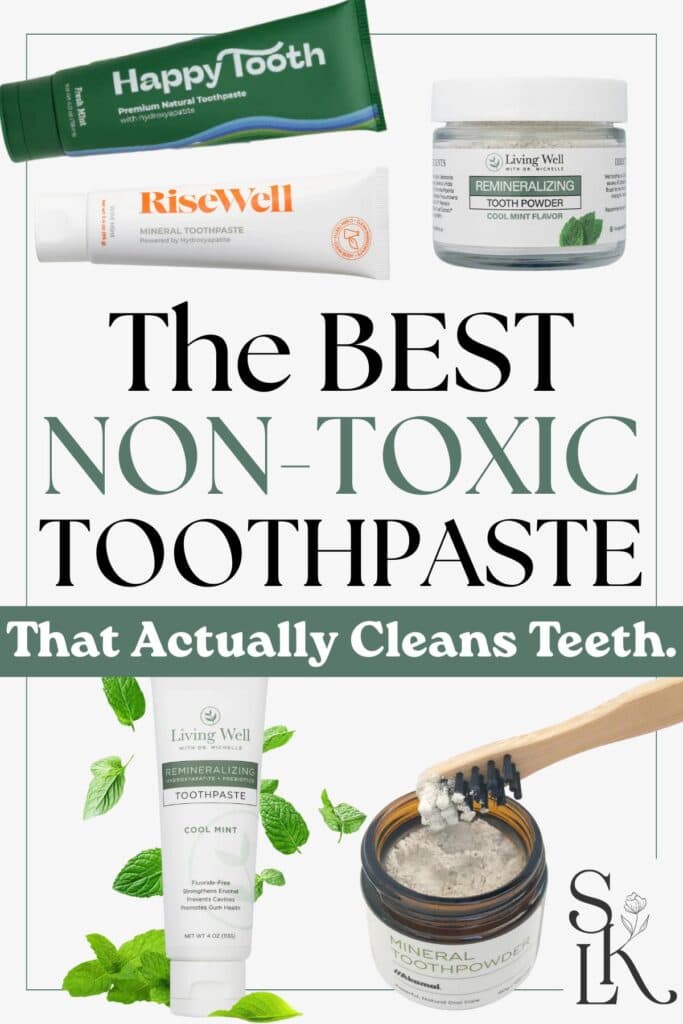
SKL Top Picks, At A Glance…
- My Favorite Non-Toxic Oral Care Brand: Akamai Basics
- Best Remineralizing Hydroxyapatite Toothpaste: Living Well With Dr. Michelle
- Best Non-Toxic Toothpaste For Kids: Happy Tooth
- Best Mainstream Hydroxyapatite Toothpaste: RiseWell
I’ve been researching this space for over 11 years now, which still catches me off guard when I say it out loud.
When I started, I was genuinely overwhelmed, not by the number of options, but by how hard brands worked to obscure what was in them.
Some checked every visual box for “clean” while quietly using the same questionable ingredients as conventional formulas. Others leaned so hard into fear-based wellness language that there was no room left for actual transparency.
What I’ve learned since then is that the only move is to ignore the front of the tube entirely and go straight to the ingredient label, every single time.
In this guide, I’ll walk you through everything I’ve picked up over more than a decade of researching ingredients, testing products, and comparing cleaner oral care alternatives.
That includes how to spot a greenwashed formula, which ingredients are actually worth your attention, which ones I personally avoid, and the brands I think are genuinely doing it right.
Best Non-Toxic Toothpaste: At a Glance Comparison
Mobile Users: Scroll to see full comparison →
| Brand | Best For | HA Type | Format | Highlights |
|---|---|---|---|---|
| Akamai Basics | Holistic Oral Care | None | Tooth Powder | Third-Party Tested, EO-Free Option, Plastic-Free |
| Living Well | Enamel Support | HA (15% Powder) | Toothpaste + Powder | Dentist-Made, HA % Disclosed, Fluoride-Free |
| Happy Tooth | Families + Kids | Calcium HA | Toothpaste | Kid-Friendly Flavors, Fluoride-Free |
| RiseWell | Mainstream HA Toothpaste | Micro | Toothpaste | Dentist-Developed, Clearer Nano Disclosure |
Why Choosing A Non-Toxic Toothpaste Matters
Most of us brush twice a day without giving much thought to what’s actually in the tube.
But those ingredients add up, and a surprising number of formulas, including ones marketed as clean or dentist-approved, still contain things like artificial dyes, synthetic flavorings, SLS, and overly abrasive whitening agents.
Ingredient transparency is the bigger issue. Many brands lean on vague wellness language without disclosing things like abrasivity levels, ingredient sourcing, or whether hydroxyapatite is nano or non-nano (we only recommend non-nano).
“Natural” on the label doesn’t automatically mean safer or better formulated.
That’s exactly why this guide exists: to help you actually understand what’s in your toothpaste so you can make a more informed choice for yourself and your family.
How We Chose The Best Non-Toxic Toothpaste Brands
Choosing what makes this list comes down to one thing: does the brand actually back up its claims with a transparent, well-formulated product?
I looked for formulas free of SLS, artificial dyes, aggressive whitening systems, and unnecessary fillers.
I dug into hydroxyapatite disclosures because particle size, particle shape, sourcing, and concentration all matter, and most brands still won’t tell you any of it.
For this guide, that meant micro-hydroxyapatite only (learn why here). Naturally derived where possible. Concentration and sourcing disclosed. No nano.
I looked at ingredient sourcing, testing standards, and how honestly each brand communicates what’s actually inside the tube.
I’ve also been testing and researching this category for over a decade, which means I’ve watched brands evolve, rebrand, and sometimes quietly change their formulas. The brands on this list earned their spot. And where there are limitations worth knowing about, I say so directly.
The Best Non-Toxic Toothpaste Brands In 2026
1. Akamai Basics — Best Overall Non-Toxic Oral Care Brand
Best For: Ingredient-conscious shoppers looking for a hydroxyapatite-free remineralizing tooth powder
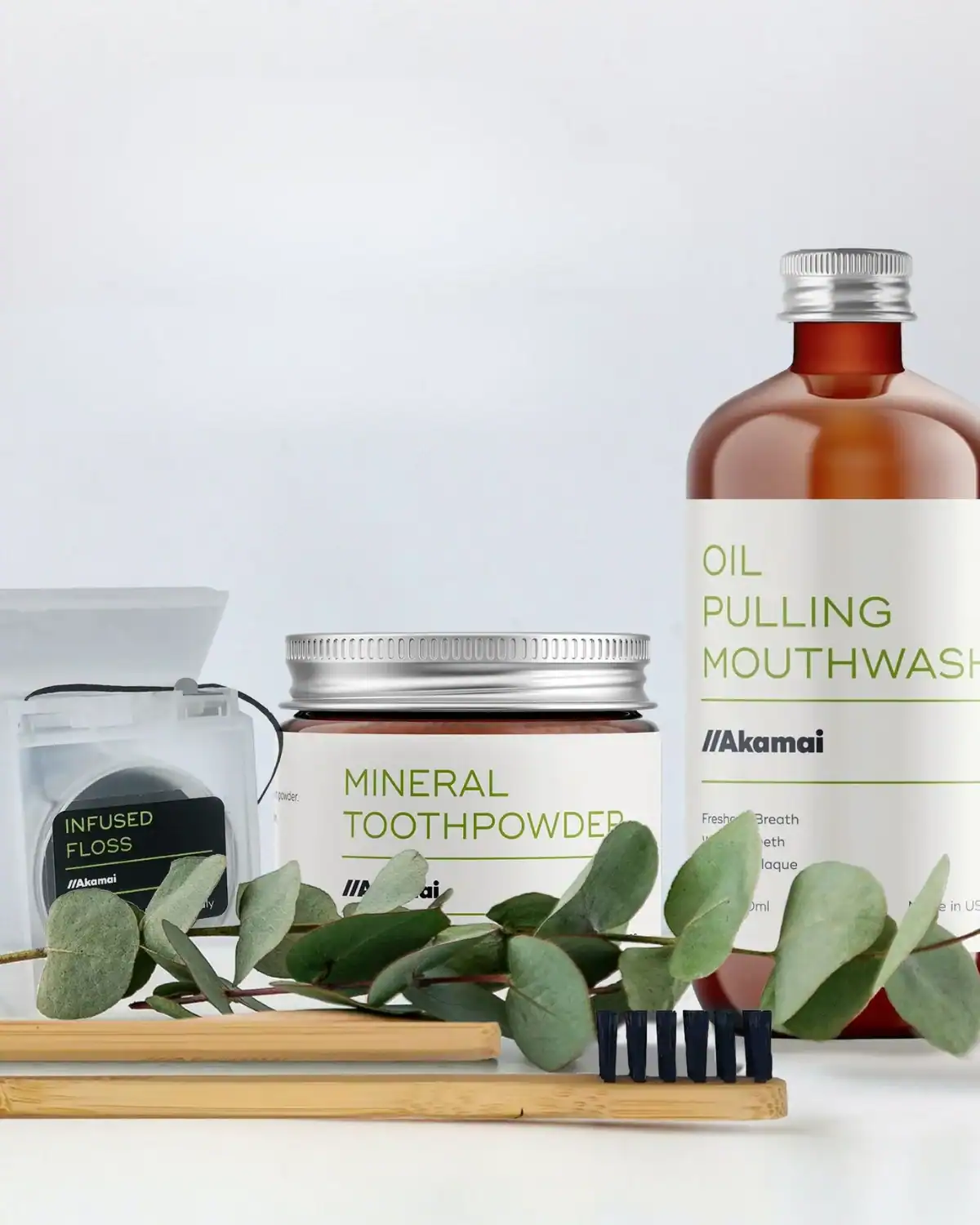
Akamai Basics is hands-down the oral care brand I trust most for my own family, kids included.
Unlike many “natural” toothpastes that still rely on fillers, synthetic sweeteners, or unnecessary additives, Akamai takes a truly mineral-focused approach to oral care.
Their formulas feature ingredients like living clay, fulvic acid, and trace minerals that support a healthy oral microbiome without overcomplicating things.
They’ve also introduced a kid-friendly mineral toothpowder with a natural orange vanilla flavor, making it easier for children to transition away from conventional toothpaste flavors and get comfortable with a more mineral-based approach to oral care.
Worth knowing upfront: this is a toothpowder, not a traditional toothpaste.
Price
$22
INGREDIENT HIGHLIGHTS
Calcium Montmorillonite Clay | Kaolin Clay | Baking Soda | Salt | Fulvic Acid | Essential Oils
Note: Available Without Essential Oils!
Location/Shipping
United States | Ships To Select International Countries
Our Favorites from Akamai Basics:
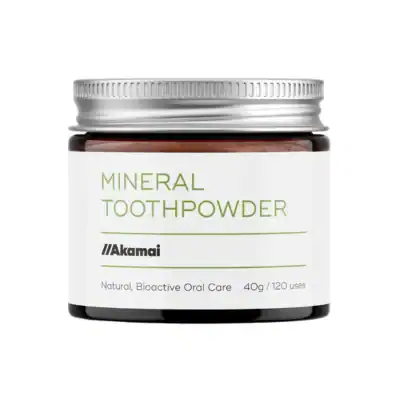
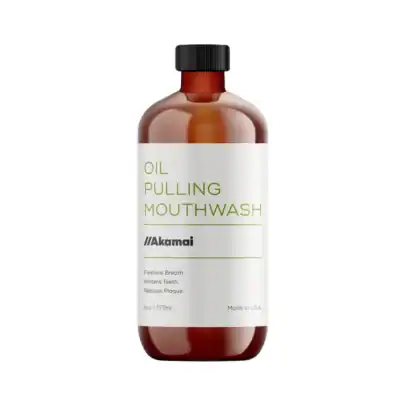
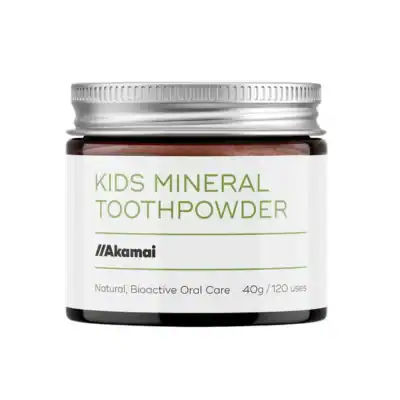
👉 One thing worth noting is that clay-based oral care products can naturally contain trace heavy metals depending on sourcing. Rest assured, Akamai products are third-party tested for contamination.
2. Living Well With Dr. Michelle — Best Remineralizing Non-Toxic Toothpaste
Best For: People looking for a dentist-developed hydroxyapatite toothpaste and tooth powder focused on enamel support
Use discount code SKL10 to save 10%!
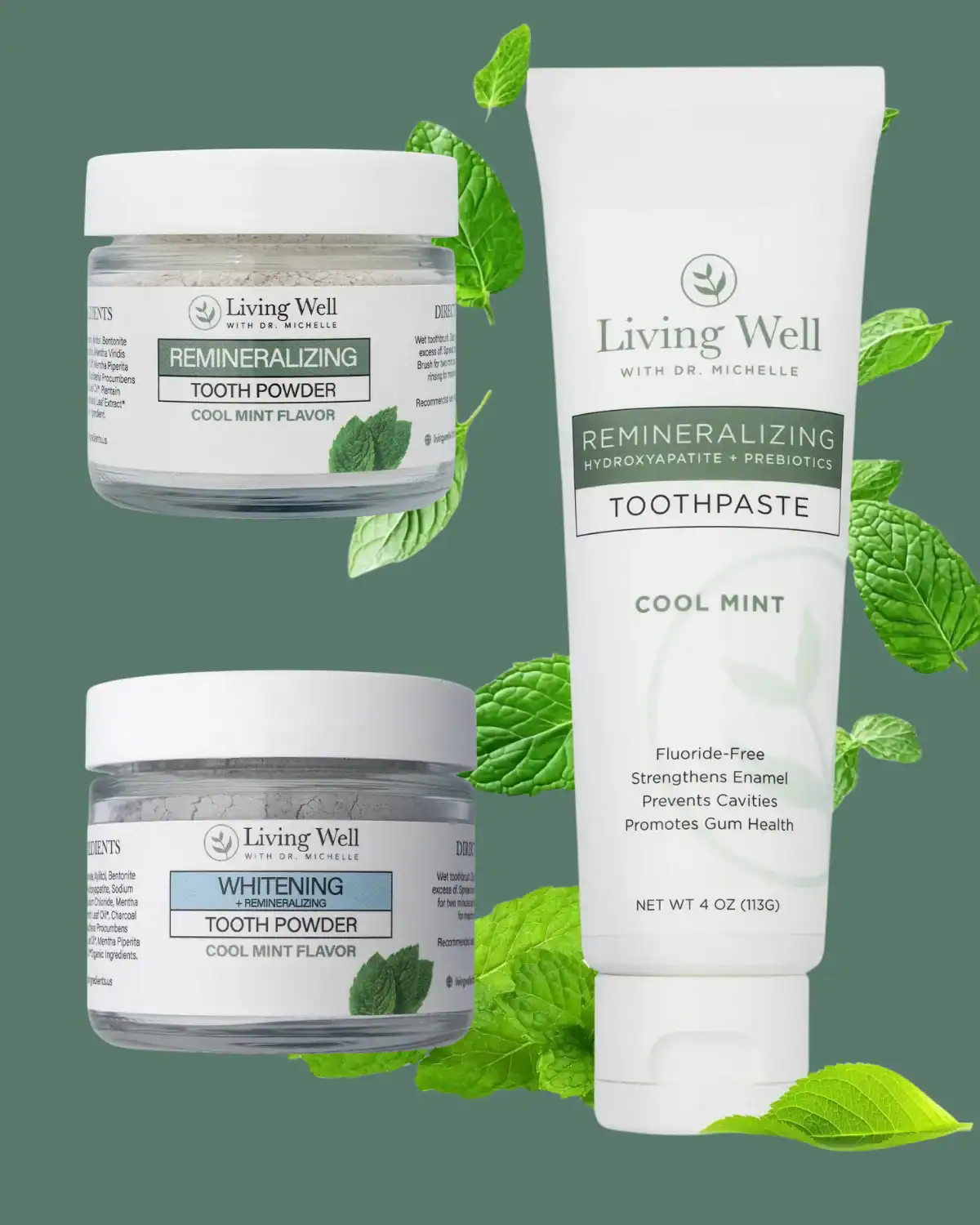
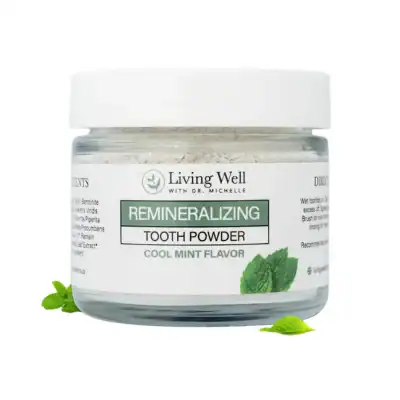
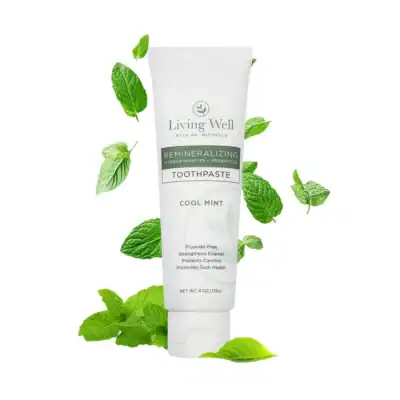
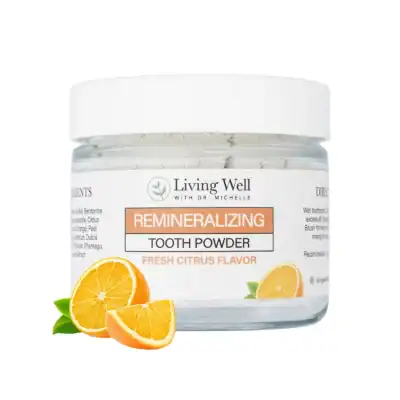
Living Well With Dr. Michelle is one of the most comprehensive oral care brands I’ve found for people who want to support remineralization without relying on conventional toothpaste ingredients.
Their hydroxyapatite toothpaste offers a familiar brushing experience, making it one of the easiest transitions for anyone moving away from traditional toothpaste.
Beyond toothpaste, they also offer specialized tooth powders for sensitive teeth, whitening, gum health, and kids, allowing you to choose a formula based on your specific needs.
I also appreciate that the brand was founded by a holistic dentist and takes a whole-mouth approach to oral health rather than focusing solely on cavity prevention.
Price
$19.97 (Toothpaste) | $20.47 (Toothpowder)
INGREDIENT HIGHLIGHTS (Toothpaste)
Micro Hydroxyapatite | PROtektin™ | Colloidal Silver | Calcium Carbonate | Peppermint & Wintergreen Oils
INGREDIENT HIGHLIGHTS (Toothpowder)
Micro Hydroxyapatite (15%) | Calcium Carbonate | Xylitol | Bentonite Clay | Spearmint & Wintergreen Oils
Location/Shipping
United States | Ships To Canada
Our Favorites from Living Well With Dr. Michelle:
3. Happy Tooth — Best Family-Friendly Non-Toxic Toothpaste
Best For: Families and kids transitioning away from conventional toothpaste
Use discount code SKL10 to save 10%!
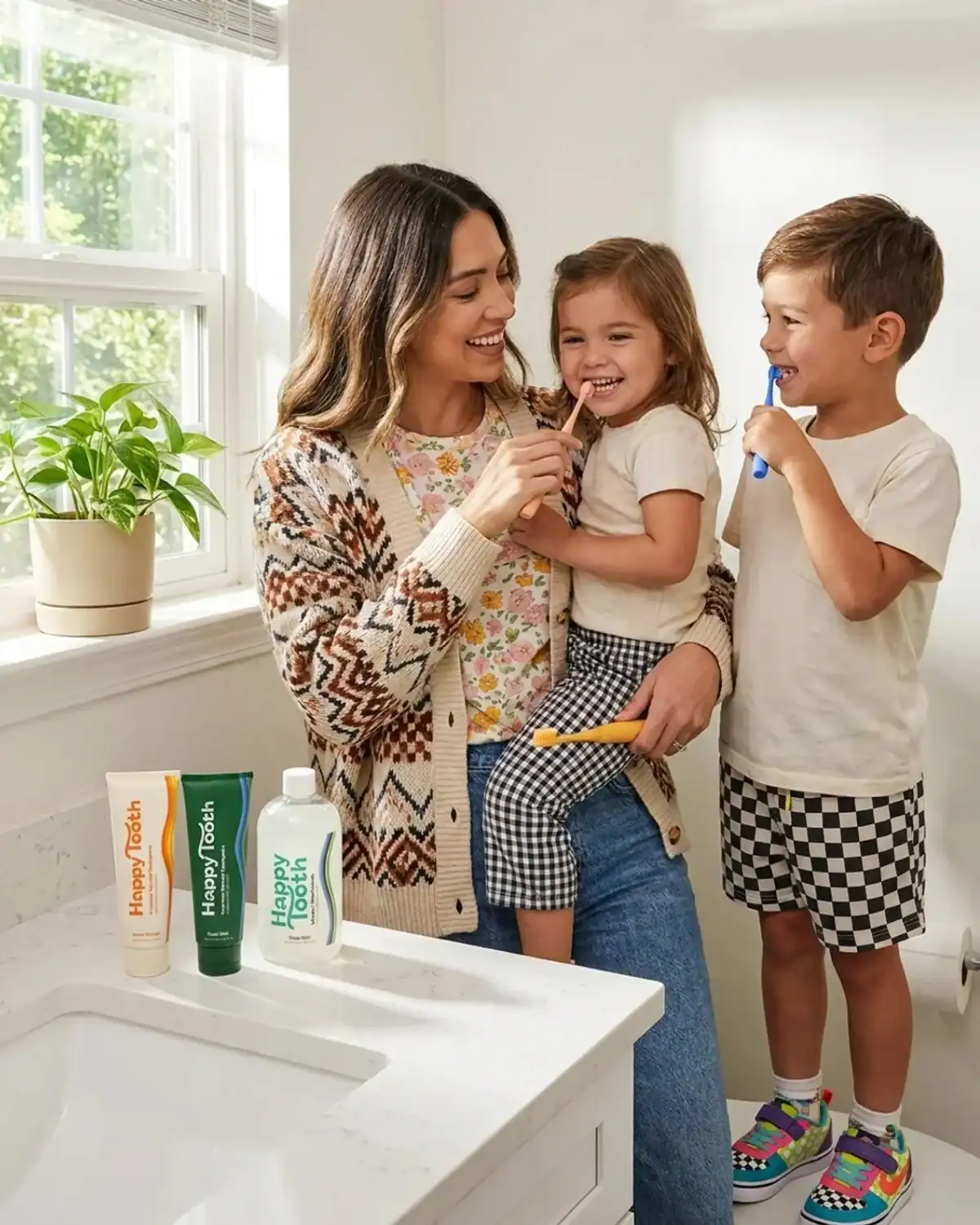
Happy Tooth is my favorite option for families who want a cleaner toothpaste without asking their kids to completely change their brushing routine.
Unlike tooth powders, Happy Tooth uses a familiar toothpaste format that feels approachable for children who are used to conventional brands.
The flavors are kid-friendly, the formulas are thoughtfully formulated, and the transition tends to be much easier for hesitant brushers.
If your child isn’t quite ready for a mineral tooth powder, Happy Tooth offers a practical middle ground between conventional toothpaste and a more holistic oral care routine.
Price
$16.66
INGREDIENT HIGHLIGHTS
Water | Sorbitol | Glycerin | Silica | Xylitol | Calcium Hydroxyapatite | Calcium Carbonate | Propanediol | Coconut-Derived Cleansers | Natural Flavors | Stevia
Location/Shipping
United States | Ships To Select International Countries
4. RiseWell — Best Mainstream Hydroxyapatite Toothpaste
Best For: People looking for a more mainstream fluoride-free hydroxyapatite toothpaste
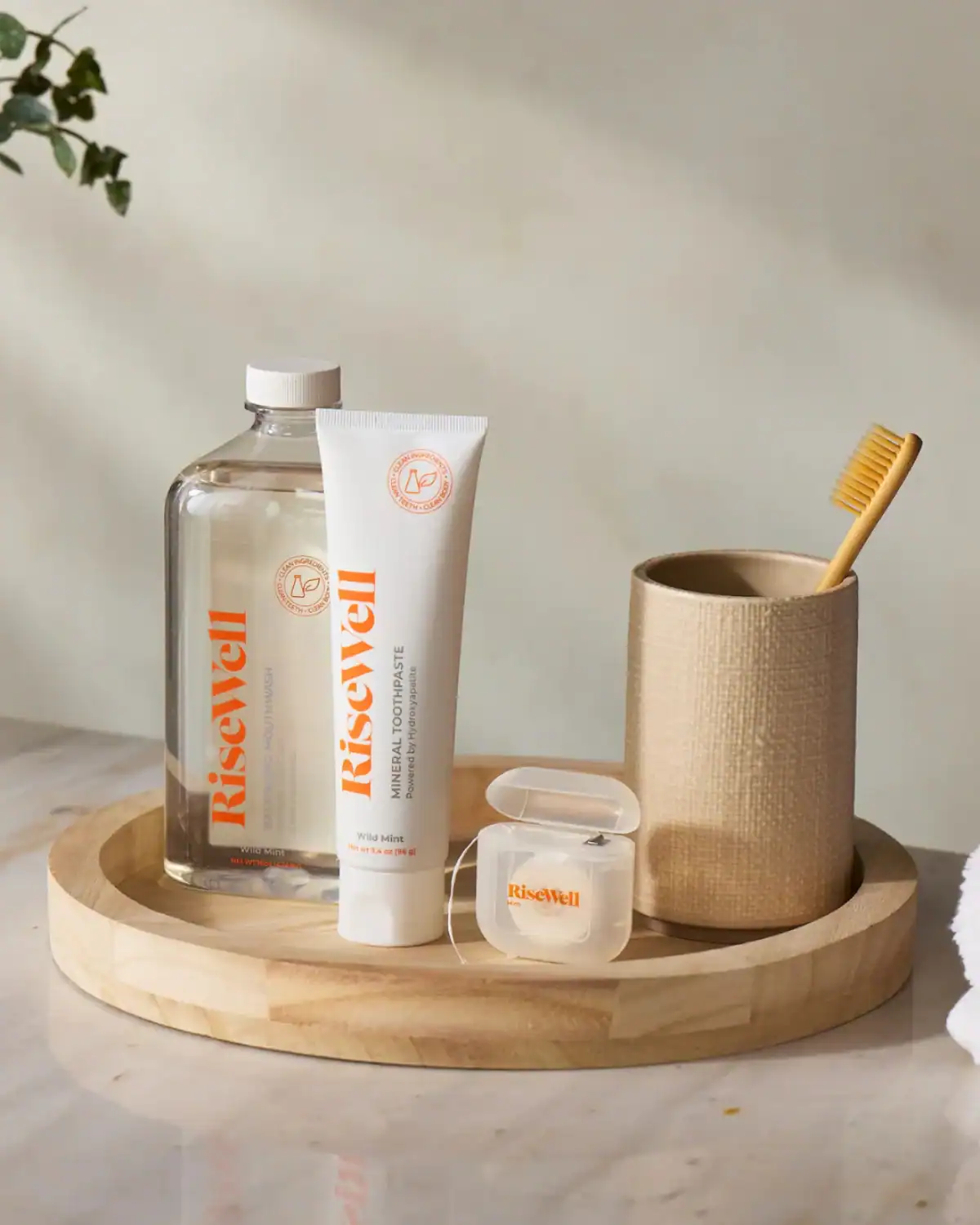
RiseWell was one of the earlier brands to bring hydroxyapatite toothpaste into the mainstream wellness space and remains one of the more recognizable fluoride-free options today.
The Original Mineral line uses 10% micro-hydroxyapatite sourced from France, no nano particles, no SLS, no fluoride, no artificial dyes or flavors.
They run third-party tests for heavy metals, PFAS, and BPA and post results publicly, which puts them ahead of most brands on transparency.
One thing we need to say clearly: we recommend the Original line only.
The PRO formula adds 5% nano-hydroxyapatite, and as outlined in the hydroxyapatite section above, that is not something we recommend.
Price
$12
INGREDIENT HIGHLIGHTS
Micro Hydroxyapatite | Xylitol | Silica | Calcium Carbonate | Essential Oils & Extracts
Location/Shipping
United States | Ships Worldwide
Hydroxyapatite in Toothpaste: What You Actually Need to Know
Hydroxyapatite is a calcium phosphate mineral that makes up roughly 97% of your tooth enamel.
That part is straightforward. What gets complicated fast is how it’s processed, what form it takes, and what brands choose not to tell you.
Start here: nano and micro hydroxyapatite are not the same thing, and the difference goes beyond particle size.
Micro-hydroxyapatite is naturally derived, typically mined from calcium carbonate mineral deposits. It adheres to enamel, fills microscopic gaps, supports remineralization, and behaves more like the mineral your body already recognizes. The research behind it is solid.
That is why we recommend it.
Nano-hydroxyapatite is synthetic. It was first developed by NASA in 1974 and engineered to produce particles small enough to penetrate enamel defects at a deeper level. Proponents argue this makes it more effective. That argument has merit.
It also means you are putting a lab-created synthetic nanoparticle in your mouth twice a day, and the long-term data on that simply does not exist yet.
Quick Comparison: Nano vs Non-Nano Hydroxyapatite
| Micro-Hydroxyapatite | Nano-Hydroxyapatite | |
|---|---|---|
| Origin: | Naturally derived from mineral deposits | Synthetically engineered in a lab |
| Particle Size: | Micrometer range (larger) | Nanometer range (under 100nm) |
| How It Works: | Adheres to enamel surface, fills gaps, supports remineralization | Penetrates deeper into enamel defects |
| Particle Shape Concerns: | Not applicable | Needle-shaped form linked to systemic effects in studies. Rod-shaped is only approved by the EU |
| Long-Term Safety Data: | Well-established safety profile | No long-term data exists for daily oral exposure |
| EU Regulatory Status: | No restrictions | Restricted, concentration-capped, shape specifications required, banned in inhalable products |
| Sourcing Transparency: | Brands typically disclose source | Most brands don’t disclose shape, source, or concentration |
The EU recognized this. Under Regulation EU 2024/858, nano-HA is restricted to rod-shaped particles only, banned in needle-shaped form, capped at 10% in toothpaste, and prohibited in any product that could reach the lungs through inhalation. Those are not the restrictions of a substance that has been fully cleared.
Particle shape matters enormously, and most brands don’t disclose it. Needle-shaped nano-HA has shown potential for systemic effects in repeat-dose studies and is the most concerning form of the ingredient. If a brand won’t tell you the shape, concentration, or source of their hydroxyapatite, that is a transparency failure.
To be fair, some research suggests rod-shaped nano-HA particles don’t cross oral tissue into the bloodstream, and that swallowed particles dissolve harmlessly in stomach acid. That research is real and worth knowing.
But short-term safety data is not long-term safety data. No long-term safety data exists for daily synthetic nanoparticle exposure over decades, which is the central concern. The absence of proven harm is not the same as proven safety.
That distinction matters most when you’re choosing products for children.
The brands in this guide use micro-hydroxyapatite or no hydroxyapatite at all.
That is a deliberate choice. Excellent remineralization data exists for micro-HA; the naturally derived sourcing aligns with what we stand for, and we don’t need to accept the nanoparticle question mark when better alternatives exist.
Ingredients To Avoid In Conventional Toothpaste
Not everyone reacts to ingredients the same way, but after more than a decade of researching oral care, these are the ingredients I avoid and why.
Sodium Lauryl Sulfate (SLS) — A harsh foaming agent with no real benefit beyond creating bubbles. It’s a known irritant, especially for anyone dealing with mouth ulcers, sensitive gums, or dry mouth, and it has no business being in a clean formula.
Artificial Dyes — Blue 1, Red 40, and other synthetic colorants do absolutely nothing for your oral health. They exist purely for aesthetics and are completely unnecessary in a product you’re putting in your mouth twice a day.
Artificial Sweeteners — There are better options. Xylitol, erythritol, monk fruit, and stevia all deliver sweetness without the concerns that come with synthetic sweeteners, and cleaner brands have been using them for years.
Vague Flavor Systems — “Flavor” or “natural flavor” on an ingredient label is a cop-out. It tells you almost nothing about what’s actually in the formula, and brands that care about transparency simply don’t hide behind it.
Harsh Whitening Ingredients — Peroxide systems, charcoal, and aggressively abrasive silica blends can wear down enamel over time, full stop. Whitening is not worth sacrificing the long-term health of your teeth.
Lack of Transparency — If a brand won’t disclose their abrasivity levels, hydroxyapatite type, or ingredient sourcing, that’s a dealbreaker. Opacity is not an accident. It’s a choice.
What To Look For In A Non-Toxic Toothpaste
One of the biggest mistakes I see is people shopping for what’s missing from a formula rather than looking at the full picture.
Two toothpastes can both be fluoride-free, SLS-free, and labeled “natural” and still be worlds apart in terms of ingredient quality, abrasivity, transparency, and formulation philosophy.
Start With The Ingredient Label
The green flags I look for are clear ingredient disclosures, realistic claims, thoughtful abrasives, and honest hydroxyapatite labeling.
A brand that leads with fear-based marketing and vague wellness language is a brand that doesn’t want you reading the ingredient label too closely.
Don’t Underestimate Usability
Some people thrive with toothpowders and ultra-minimal formulas. Others need something that still feels familiar enough to use twice a day consistently, and that consistency is worth something. The best toothpaste is the one you actually use.
Factor In Sustainability
Oral care creates more bathroom waste than most people realize, which is why I appreciate brands moving toward glass jars, refill systems, recyclable metal tubes, and lower-waste options like bamboo toothbrushes.
At the end of the day, the brands I trust are the ones prioritizing transparency and thoughtful formulation, not the ones trying to scare you into buying their product.
Why I Prefer Fluoride-Free Toothpaste
Every brand in this guide is fluoride-free, and that’s a deliberate choice.
After years of researching oral care, I’ve grown increasingly uncomfortable with how fluoride gets treated as the centerpiece of toothpaste formulation while everything else in the formula gets a pass.
Most conventional toothpastes are built around cosmetic experience first: foam, flavor, texture, whitening, and shelf stability. Fluoride becomes the credibility anchor that makes the rest of the ingredient list feel irrelevant.
It’s also worth being honest about cumulative exposure. Fluoride is already present in most municipal drinking water, dental treatments, and processed beverages. For many families, additional daily exposure to toothpaste is worth reconsidering.
Personally, I’m more comfortable supporting oral health through diet, mineral balance, oral hygiene, and thoughtfully formulated fluoride-free products rather than relying on fluoride as the foundation of oral care. That philosophy is reflected in every brand on this list.
Some use hydroxyapatite for remineralization. Others, like Akamai Basics, take a broader mineral-based approach altogether. What they share is a commitment to cleaner formulations and more thoughtful ingredient choices than what you’ll find in most conventional toothpaste aisles.
One thing I want to be clear about: fluoride-free is not a quality guarantee. It’s one data point. The full ingredient list still matters, and a fluoride-free toothpaste can still be poorly formulated, heavily processed, or frustratingly opaque about what’s actually inside.
Greenwashing In The Toothpaste Industry
Greenwashing is rampant in oral care right now, and both conventional and holistic brands are guilty of it in different ways.
Mainstream brands lean on clinical-looking packaging and claims like “dentist-clean” or “enamel repair” while quietly using artificial dyes, synthetic flavors, and harsh foaming agents.
On the other side, many natural brands weaponize fear, throwing around terms like “chemical-free,” “detoxifying,” and “microbiome-safe” without explaining what any of it actually means.
Some go further, making exaggerated claims around cavity reversal or enamel regrowth that have no business being on a toothpaste tube.
Most people are not looking for miracle cures.
They just want a formula with cleaner ingredients, honest labeling, and real transparency. Natural does not automatically mean safer, and conventional does not automatically mean harmful.
What actually matters is what’s in the formula and whether the brand is being straight with you about it.
Brands We Didn’t Feature & Why
This space is full of brands that look the part. Clean packaging, wellness language, fluoride-free claims, and “dentist-developed” badges on everything. Most of them don’t hold up once you start asking real questions.
Davids
Davids gets a lot of love in the non-toxic space, and the sustainable packaging is genuinely impressive. But their Hydroxi line uses nano-hydroxyapatite, and they won’t disclose the concentration, calling it “proprietary” and arguing that percentage is “a bad metric.”
That’s not transparency. That’s a brand counting on you not pushing back. For a product going in your mouth twice a day, we need more than good branding and a recyclable tube.
Fygg
Dentist-developed, microbiome-focused, genuinely thoughtful in some ways. But nano-hydroxyapatite is the entire foundation of the product at 3.1% concentration.
Given our position on nano-HA and the absence of long-term oral exposure data, we can’t recommend it regardless of how clean the rest of the formula is.
Boka
One of the most recognized names in the fluoride-free space, and the marketing is polished.
But independent testing detected trace lead, arsenic, and mercury in Boka toothpaste in January 2025. Boka uses nano-hydroxyapatite and does not disclose concentration or particle shape.
The National Advertising Division also challenged several of Boka’s remineralization claims in May 2025, finding that Boka hadn’t conducted product-specific studies to back them up. Nano-HA, heavy metals in independent testing, and marketing claims that don’t hold up under scrutiny. Three strikes.
Hello
Hello built its reputation on being the approachable, SLS-free, fun alternative to conventional toothpaste.
But a 2025 class-action lawsuit alleged that some batches of Hello kids’ toothpaste contained lead and mercury levels above safety guidelines for products likely to be ingested by children.
Hello was also acquired by Colgate-Palmolive in 2020, which doesn’t automatically disqualify it, but it does raise questions about how long ingredient standards hold when a multinational takes over. Not a brand we can recommend for families right now.
Tom’s of Maine
The original “natural” toothpaste brand and one of the most persistent examples of greenwashing in personal care. Most formulas still contain SLS.
In late 2024, the FDA issued a warning letter after finding Pseudomonas aeruginosa bacteria in water used to manufacture Tom’s toothpaste, along with a black mold-like substance at the facility.
A class-action lawsuit followed in early 2025, alleging unsafe levels of lead and arsenic in their kids’ line. The brand has also been reported to regulators for greenwashing over recyclability claims. Colgate-Palmolive owns this brand.
The “natural” positioning has never matched the ingredient reality, and the manufacturing issues make it worse.
RiseWell PRO
We recommend the RiseWell Original Mineral line and explain why in that entry above. The PRO formula adds 5% nano-hydroxyapatite, which takes it outside our standards. Same brand, different product, different answer.
Frequently Asked Questions About Non-Toxic Toothpaste
The best non-toxic toothpaste ultimately depends on your personal preferences, ingredient priorities, sensitivities, and overall oral health goals.
I personally look for transparent ingredient lists, gentler abrasives, lower-foam formulas, and brands that avoid unnecessary fillers, dyes, and overly aggressive whitening ingredients.
Fluoride is one of the most debated ingredients in oral care, especially among people trying to make more informed decisions about their daily routines.
While conventional dentistry has used fluoride for decades in cavity prevention, many consumers still prefer fluoride-free toothpaste because of personal preference or interest in alternatives like hydroxyapatite.
Hydroxyapatite and fluoride work differently, so there is no universal “better” option.
Many people prefer hydroxyapatite because it supports enamel remineralization while fitting more naturally into a non-toxic oral care routine.
Nano-hydroxyapatite uses much smaller particles designed to more closely mimic the structure of natural tooth enamel and support enamel remineralization.
Non-nano and micro-hydroxyapatite use larger particles and are often preferred by shoppers looking for a more cautious approach to oral care ingredients.
Hydroxyapatite toothpaste is widely used as a fluoride alternative in the non-toxic oral care space because of its potential role in supporting enamel remineralization and reducing tooth sensitivity.
However, research surrounding nano-hydroxyapatite is still evolving, which is why some consumers prefer choosing non-nano formulas instead.
Some charcoal toothpastes can be overly abrasive, especially when used frequently. This can become a concern for people dealing with enamel erosion, tooth sensitivity, or gum recession.
SLS, or sodium lauryl sulfate, is a foaming agent commonly used in conventional toothpaste to create the bubbly, foamy texture many people associate with a “deep clean.”
Some people tolerate it well, while others find it irritating, especially those prone to mouth ulcers, dry mouth, or oral sensitivity.
Not necessarily. Tooth powders are often more minimalist and lower waste, but many people still prefer the convenience and familiarity of traditional toothpaste.
For sensitive teeth, I usually recommend looking for hydroxyapatite-based formulas with gentler abrasives and fewer harsh whitening ingredients.
Lower-foam formulas can also feel less irritating and may be a better fit for people dealing with gum sensitivity, dry mouth, enamel erosion, or oral tissue irritation.
Yes, many non-toxic toothpaste brands offer thoughtfully formulated products designed to support enamel health, oral hygiene, and overall daily dental care.
That said, brushing habits, diet, hydration, routine dental visits, and overall oral care habits all play an important role in long-term oral health, too.
Still Deciding? Here’s My Honest Take
- If you want the non-toxic toothpaste brand I personally trust most and feel the most confident using consistently in my own home and daily routine, I would start with Akamai Basics.
- If you know you prefer a more traditional toothpaste texture and brushing experience, I think Living Well With Dr. Michelle is one of the strongest fluoride-free hydroxyapatite options currently available.
- If you’re trying to transition kids away from conventional toothpaste brands, Happy Tooth is probably one of the easiest and most approachable entry points.
Final Thoughts On Choosing A Non-Toxic Toothpaste
The oral care industry is a mess. Millions of people brush their teeth every day with formulas full of unnecessary additives, artificial dyes, harsh foaming agents, and ingredients they’ve never been given a reason to question.
And on the other side, plenty of “natural” brands are filling that gap with fear-based marketing and greenwashed buzzwords instead of actual transparency.
That’s exactly why I’ve spent years going deep on this topic. The oral microbiome is directly connected to whole-body health, and what we put in our mouths twice a day deserves the same scrutiny we give to food, skincare, and everything else we’ve cleaned up over the years.
The brands on this list earned their spot. They’re not perfect, but they’re genuinely trying to do better, whether that’s through cleaner formulations, honest labeling, improved packaging, or simply being straight with their customers about what’s inside the tube.
After years of research, label reading, and real-life testing in my own home, these are the brands I trust. And I hope this guide helps you find what works for yours.
Continue Your Non-Toxic Living Journey
If you’re working toward a healthier, lower-toxicity home and bathroom routine, these guides are a great next step:
- PFAS Water Filters: Water quality plays a much bigger role in oral and overall health than most people realize. This guide breaks down the best filters for reducing PFAS, chlorine, heavy metals, and other common contaminants.
- Non-Toxic Bathroom Swaps: One of the easiest places to lower your toxic load is your bathroom. This guide breaks down the swaps that actually make the biggest impact first.
- Non-Toxic Skincare Brands: Your skin absorbs far more than most people realize. This guide covers the skincare brands I personally trust most after years of ingredient research.
- Non-Toxic Living For Beginners: Start here if you’re feeling overwhelmed by greenwashing and want a realistic roadmap for reducing everyday toxic exposure.
📌 Save This Guide For Later
Save this guide for the next time you’re standing in the toothpaste aisle wondering which “natural” brands are actually worth trusting.
Expert Sources & Further Reading
If you want to dive deeper into oral health, hydroxyapatite research, enamel remineralization, and ingredient safety, these are some of the resources I found most helpful during my research process.
Hydroxyapatite & Remineralization Research
- National Institutes of Health (NIH) — Research on hydroxyapatite, enamel remineralization, and non-fluoride oral care ingredients
- Journal of Clinical Pediatric Dentistry — Clinical studies comparing the effectiveness of hydroxyapatite toothpaste and fluoride toothpaste
- International Journal of Nanomedicine — Research covering nano-hydroxyapatite technology in oral care products
Oral Health & Whole-Body Health
- Mayo Clinic — Educational resources on oral health and its connection to overall wellness
- Cleveland Clinic — Research and guidance on gum health, inflammation, and systemic health connections
- Harvard Health Publishing — Articles exploring the relationship between oral bacteria and chronic disease
Ingredient & Safety Research
- Environmental Working Group (EWG) — Ingredient safety database and personal care product research
- National Institute of Dental and Craniofacial Research (NIDCR) — Government-backed oral health research and dental science resources
- PubMed — Scientific database for toothpaste ingredients, oral microbiome studies, and enamel health research
Sustainability & Plastic Waste
- World Wildlife Fund (WWF) — Resources on plastic pollution and personal care packaging waste
- Environmental Protection Agency (EPA) — Information on consumer waste reduction and sustainable packaging practices

Steal My Non-Toxic Cleaning Checklist!
Believe us, it’s the BEST…. and it’s free. Does it really get any better than that?! Sign up for our newsletter and get this free checklist to clean your home without any harmful chemicals!