 Shop My Favorite Non-Toxic Gifts Of 2026!
SKL is reader supported. When you buy through links on our site, we may earn affiliate commission. Learn more here.
A healthy workspace isn’t just about looks—it’s about how it makes you feel.
With a few easy, eco-friendly changes, you can cut down on toxins, breathe cleaner air, and create a space that keeps you focused, energized, and inspired.
Let’s make your desk a place that’s good for both you and the planet!
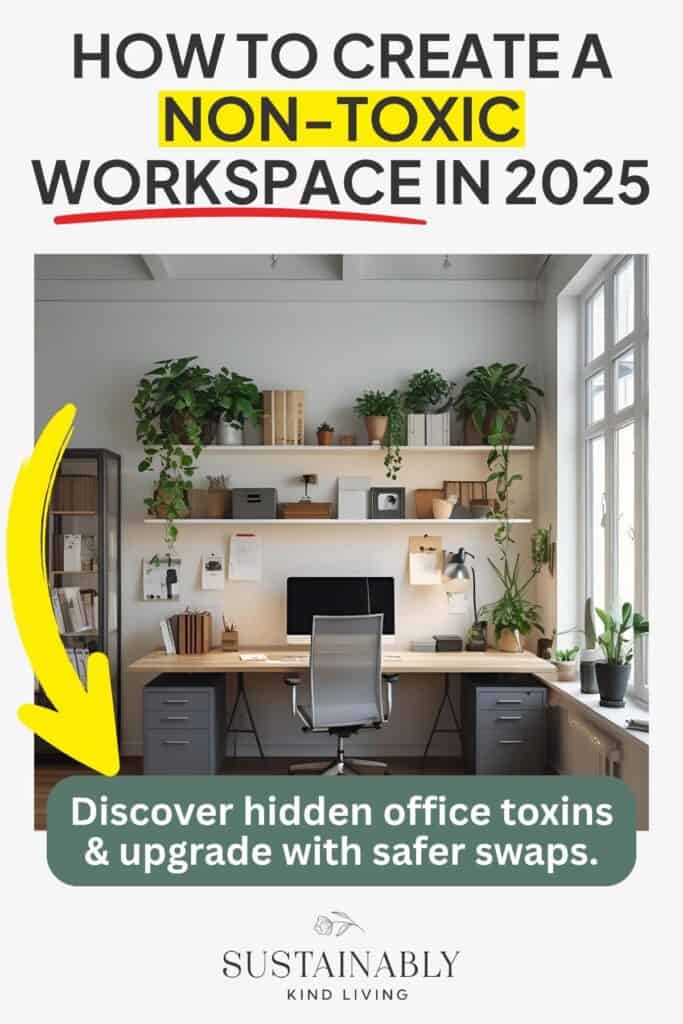
From chemical-laden desk chairs to synthetic air fresheners and off-gassing furniture, many of us unknowingly surround ourselves with materials that disrupt our hormones, irritate our lungs, and cloud our focus.
And because we associate workspaces with productivity—not wellness—it’s easy to overlook how deeply our physical environment shapes how we feel.
The good news? You don’t need a full office renovation to see real change.
Simple, strategic swaps—like investing in an air purifier, upgrading your desk, or ditching plastic organizers—can dramatically reduce your daily toxin load while supporting a calmer, more focused mind.
Whether you’re working from a kitchen table or a corporate office, this guide will help you detox your space without stress.
At SKL, we believe your workspace should feel as safe and intentional as the rest of your home.
This guide will help you detox your office—whether that’s a corner of your living room or a full 9-to-5 setup—with simple upgrades that make a big difference.
Why Detoxing Your Workspace Actually Matters
Most of us focus on how our workspaces look or function—but rarely consider how they might be impacting our health.
From the materials in your desk to the scent of your air freshener, your environment can quietly affect your mood, energy, and even your hormones.
If you’ve ever experienced brain fog, fatigue, or recurring headaches during your workday, your surroundings may be playing a bigger role than you realize.
Creating a workspace that prioritizes non-toxic materials and clean air isn’t just about aesthetics—it’s about protecting your well-being and making room for deeper focus and calm.
Here’s where those exposures often begin:
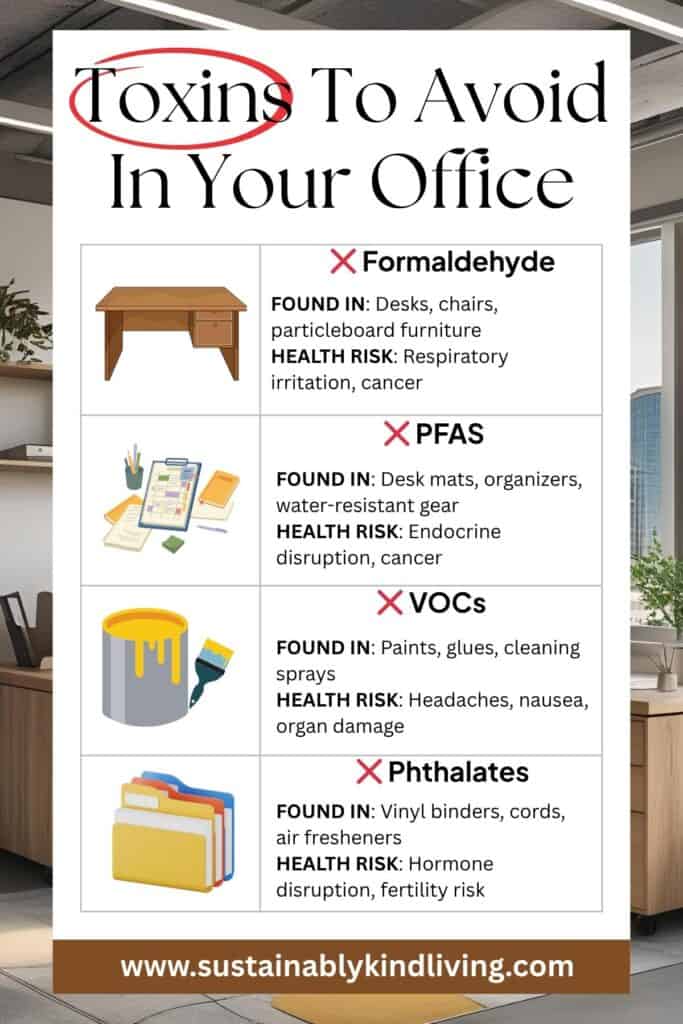
The Toxic Chemicals Hiding in Your Office
Many everyday office items are made with materials that release harmful toxins over time—called off-gassing.
- Formaldehyde: Found in particleboard desks and cabinets; a known carcinogen
- Phthalates: In vinyl cords, desk mats, and binders, linked to hormone disruption
- VOCs: Released from glues, markers, cleaners, and even air fresheners
- PFAS: In stain-resistant desk pads and organizers, known as “forever chemicals”
- BPA: Found in plastic containers, water bottles, and thermal receipt paper
These exposures affect everyone—not just people with chemical sensitivities. Over time, they contribute to headaches, poor indoor air quality, brain fog, and hormone imbalance.
But here’s the good news: every low-tox swap you make reduces your cumulative exposure.
My Own Workspace Detox Journey
I started small: replacing my synthetic room spray with a beeswax candle. Within a week, I noticed fewer afternoon headaches.
Then came the Peace Lily on the windowsill, a secondhand solid wood desk, and a cork mouse pad. Each swap made my space feel calmer, cleaner, and more like me.
I wasn’t just working—I was breathing better, focusing more clearly, and actually enjoying being at my desk.
Where To Start: Non-Toxic Office Upgrades That Matter
1. Non-Toxic Office Supplies
Swapping out conventional office supplies is one of the easiest and most cost-effective ways to clean up your workspace.
Many standard pens, markers, notebooks, and plastic trays contain BPA, phthalates, synthetic dyes, or solvent-based inks. These can be absorbed through the skin or inhaled while working long hours.
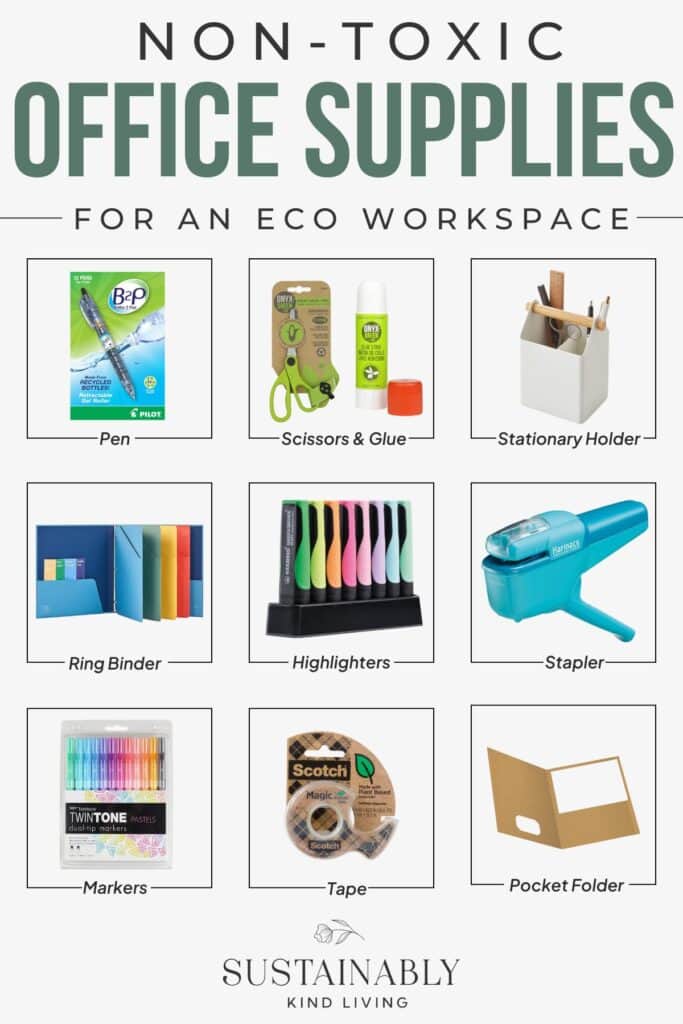
Instead, go for:
- Refillable Pens: Onyx + Green | Pilot
- Non-Toxic Highlighters & Markers: Edding | Stabilo | Tombow
- Cork/Metal Organizers: Tiradia Cork (Use code SKL10 for 10% off) | Yamazaki Home
- Biodegradable Tape & Adhesive Options: Onyx + Green Glue | Onyx + Green Scissors | Scotch Tape)
- Staple-Free Staplers: KOKUYO
- Post-Consumer Recycled Folders & Filing Systems: Blue Lake | Oxford | JAM Paper
🌿 Are you also looking for safe supplies for your kids? Check out our Guide to Non-Toxic School Supplies
💡 Tip: Store pens and markers upright to prolong their life and reduce waste. Label new eco supplies with your name if you’re in a shared office to prevent them from walking off!
2. Non-Toxic Office Furniture, Desk Accessories & Lighting
Furniture, desk accessories, and lighting all play a big role in indoor air quality. Cheap particleboard desks, foam-padded chairs, and even plastic organizers can release VOCs and flame retardants.
Opt for natural materials like solid wood, metal, glass, or bamboo—and don’t forget a good desk lamp (placed on the opposite side of your dominant hand to reduce shadows while writing).
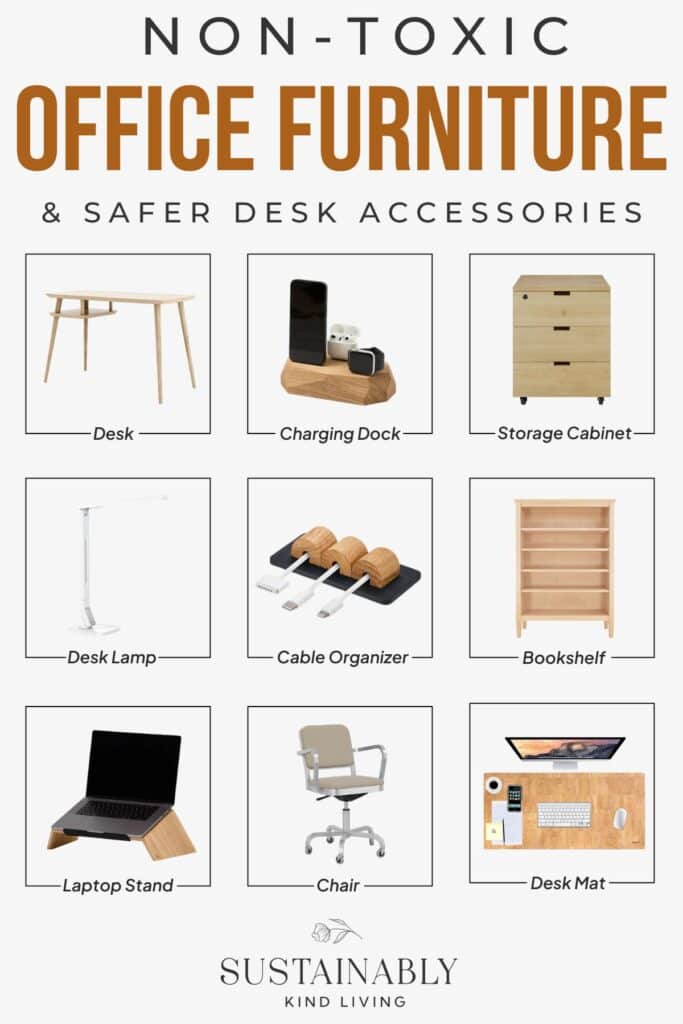
💡 Tip: When shopping secondhand, search listings for ‘solid wood’ or ‘no particleboard.’ If you’re unsure whether something is off-gassing, give it a sniff—if it smells chemically, skip it.
Here are some safer furniture brands to consider:
- MasayaCo – FSC-certified, handcrafted desks
- Medley Home – Custom wood desks, GREENGUARD Gold certified foam options
- Urban Natural – Curated non-toxic office furniture from vetted eco-conscious brands
- Emeco – Recycled aluminum and reclaimed wood chairs and desks, built to last 150 years
- Vermont Wood Studio – Solid wood desks made in the USA
- Tiradia Cork (Use code SKL10 for 10% off) – Sustainable cork desk mats, organizers & tech accessories handmade in Portugal
- Corkor (Use code SUSTAINABLYKINDLIVING for 10% off) – Vegan cork desk pads, organizers & tech accessories handmade in Portugal
- Oakywood – Solid wood desks, monitor stands, desk & tech accessories handcrafted in Poland
- BenQ MindDuo | TaoTronics | Dyson Lightcycle – Blue-light filtering LED lamps for healthier lighting for focus without eye strain
- DefenderShield | Shield Your Body | Aires Tech – EMF-reducing tech to minimize exposure to electromagnetic fields from everyday devices
🛋️ Looking to upgrade your desk or chair too? Explore our top picks for non-toxic furniture brands!
3. Office Air Purifiers & Quality
💡 Tip: Open windows daily—even in colder months—for just 10 minutes to exchange indoor air. Also, wipe down plants’ leaves weekly to keep them filtering efficiently.
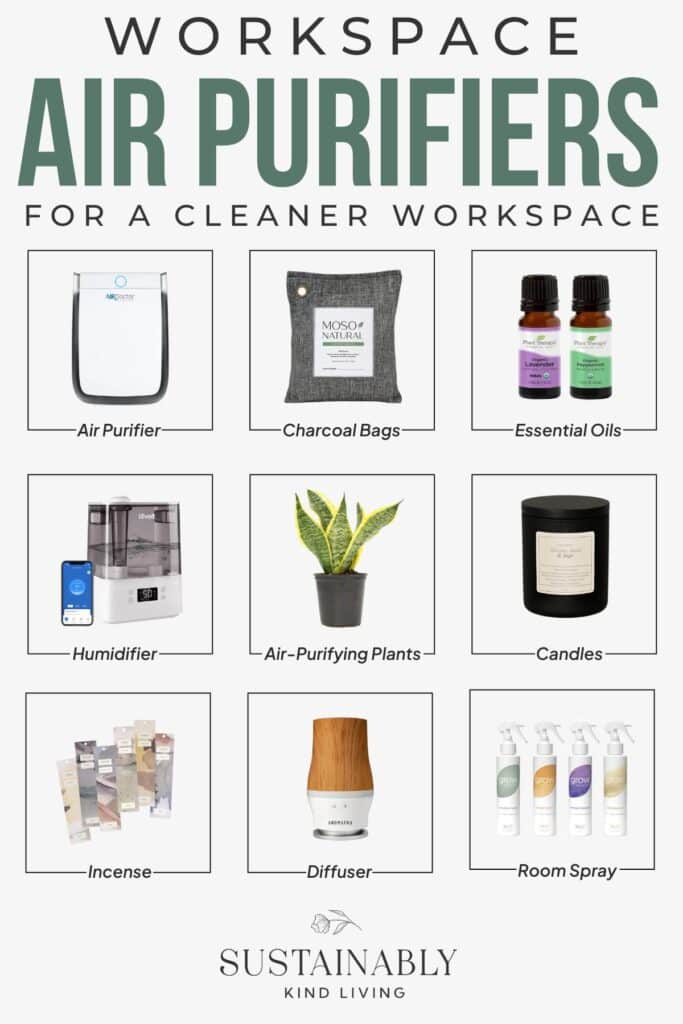
Air quality is crucial—and such a huge miss for most office spaces. Skip synthetic scents and plug-ins and go for these non-toxic swaps instead:
- HEPA Air Purifiers: AirDoctor (Use this link to get $$$ off!) | Austin Air | Alen | Levoit
- Humidifiers & Essential Oil Diffusers: Levoit | AromaTru | Plant Therapy | Aera | Pura
- Air-Purifying Plants: Peace Lily | Pothos | Snake Plant
- Charcoal Air Filters/Bags: Moso Natural
- Non-Toxic Candles: Branch Basics (Use code SKL for 15% off) | Zuma Nutrition (Use code SKL for 15% off) | Fontana Candle Co. | Meaningful Mantras
- Natural Incense: Juniper Ridge | P.F. Candle Co | Earthlove
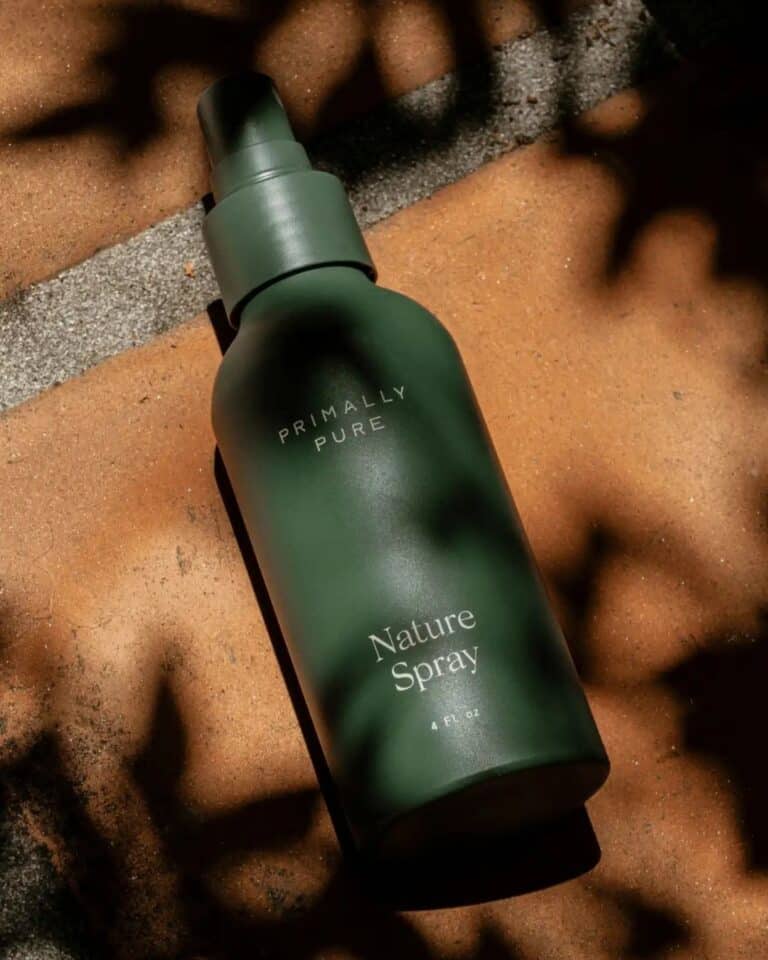
- Non-Toxic Room Spray: Grow Fragrance | Juniper Ridge | Primally Pure
4. Greener Printing & Paper Use
💡 Tip: Set your printer default to double-sided printing and grayscale to conserve ink and paper automatically. Consider unsubscribing from junk mail to reduce unnecessary printing in the first place.
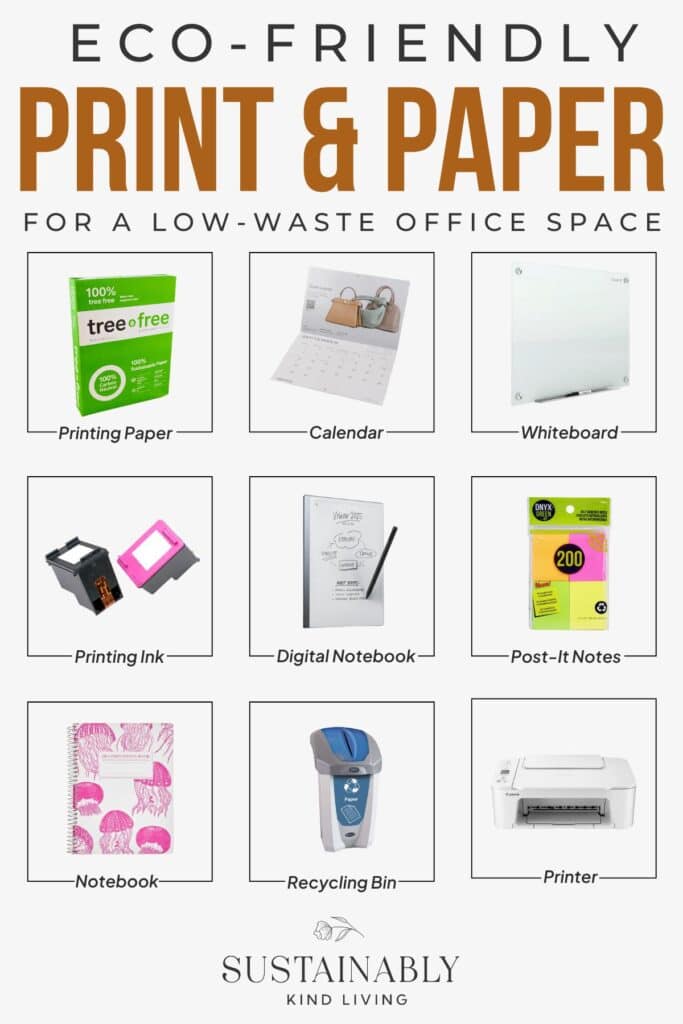
If you print, plan and post-it regularly, this is a great place to upgrade sustainably and opt for smarter tools:
- Eco-Friendly Printers With Duplex/Low-Waste Settings: Canon PIXMA | Epson EcoTank
- Soy/Vegetable-Based Links: Green Printer
- Chlorine-Free PCW Paper: BASZIC Products | Ability One
- Digital Notebooks: ReMarkable | Rocketbook | GoodNotes
- Dry-Erase Weekly Planners/Glass Boards: Quartet | U Brands
- Recycled Notbooks, Calendars & Post-Its’: Decomposition | Mintra Office | Greenprinter | Onyx + Green
5. Non-Toxic Office Lunch Gear & Safe Drinkware
💡 Tip: Swap plastic containers for stainless steel or glass, and use linen wraps or silicone pouches for snacks—perfect for a polished, low-waste office lunch setup.
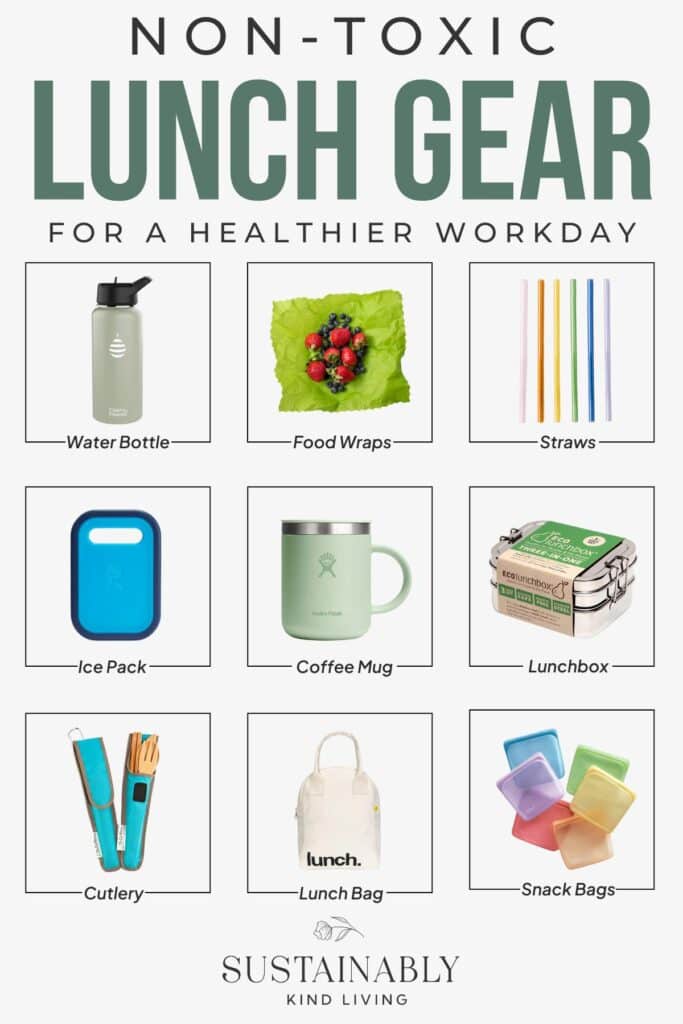
These simple office swaps boost your health and elevate your lunch game:
- Lead-Free Stainless Steel Water Bottles: Hydro Flask | Clearly Filtered | Pura Stainless
- Reusable Tea & Coffee Mugs: Hydro Flask | Klean Kanteen
- Non-Toxic Lunch Containers: ECOlunchbox (Use code SKL10 to get 10% off) | PlanetBox | Bentgo
- Sustainable Lunch Bags: Fluf | Out of the Woods | Life Without Plastic
- Reusable Snack Bags & Wraps: Stasher | Marley’s Monsters | Etee
- Reusable Cutlery, Straws & Ice Packs: To-Go Ware | Simply Straws | Hydro Flask
How to Spot Greenwashing in Office Products
Greenwashing is everywhere—and your readers want to avoid it. Expand on these red flags with actionable advice:
- Vague Labels: Words like “natural” or “eco-friendly” without details are meaningless. Look for brands that clearly list their materials and production processes.
- No Certifications: If it’s truly non-toxic or sustainable, it should be certified. Look for GREENGUARD Gold (emissions), GOTS (textiles), FSC (wood), OEKO-TEX (fabrics), or B Corp (business ethics).
- Token Green Products: One eco item in a toxic product line is not sustainability—it’s a strategy. Prioritize brands that apply standards across their entire collection.
- “Free From” Hype: Claims like “BPA-free” mean little if replaced with BPS or phthalates. Look for full transparency and a commitment to avoiding all known toxins.
- Missing Supply Chain Info: If a brand can’t tell you where or how their products are made, it’s a red flag. Transparency is the foundation of trust.
- Greenwashing by Aesthetic: Earth-tone packaging and plant graphics don’t equal clean. Verify with third-party verification, ingredient lists, and lab reports when available.
Commonly Asked Questions
The most common culprits include particleboard furniture (off-gasses formaldehyde), vinyl desk mats and binders (contain phthalates), synthetic air fresheners (loaded with VOCs), and plastic office supplies like pens and trays that may contain BPA or BPS. Swapping these for natural, certified-safe alternatives can significantly reduce your daily exposure.
Look for furniture made from solid wood, finished with zero-VOC or water-based sealants. Avoid particleboard and foam padding treated with flame retardants. GREENGUARD Gold, FSC, and OEKO-TEX certifications are great signs of safer materials.
Yes! Refillable metal pens, recycled paper notebooks, staple-free staplers, and cork or metal organizers are all better options. Brands like Onyx + Green and Karst offer sustainable and safer alternatives.
Start by removing synthetic fragrances and replacing them with beeswax candles or essential oil diffusers. Add air-purifying plants and invest in a HEPA + carbon filter air purifier like AirDoctor or Levoit.
Yes! Many people report fewer headaches, improved focus, better mood, and fewer allergy symptoms after reducing chemical exposures in their workspace. Even small swaps—like better lighting or a non-toxic water bottle—can add up to meaningful change.
Work Shouldn’t Cost Your Health
Your workspace is where you create, earn, build, dream, and solve problems. It’s not just another room in your home—it’s where you live out your purpose.
That space should feel like it has your back, not work against you silently in the background. Detoxing your desk doesn’t have to mean spending a fortune or getting it “perfect.”
Start with what’s accessible. Each small upgrade—whether it’s a lead-free water bottle, cleaner paper, or an air-purifying plant—builds toward a healthier environment.
When your space supports your values, your focus and well-being follow. So take a breath, look around, and start where it feels easiest. You deserve a workspace that helps you feel well, breathe freely, and do your best work.
If you enjoyed this article on non-toxic office supplies, you may also enjoy:
- Best Non-Toxic Candles for a Healthier Home Atmosphere
- Non-Toxic Furniture Brands for a Safe and Healthy Home
- How to Choose Non-Toxic Paint for Your Home or Office
- The Best Non-Toxic Rugs for a Healthier Living Space
- Non-Toxic Cleaning Products That Actually Work
- Reusable Water Bottles That Are Actually Safe
- Non-Toxic School Supplies for a Safer Start
- The Top Air Purifiers for Clean Indoor Air
Like It? Pin It!

Steal My Non-Toxic Cleaning Checklist!
Believe us, it’s the BEST…. and it’s free. Does it really get any better than that?! Sign up for our newsletter and get this free checklist to clean your home without any harmful chemicals!