 Shop My Favorite Non-Toxic Gifts Of 2026!
SKL is reader supported. When you buy through links on our site, we may earn affiliate commission. Learn more here.
This guide is perfect for anyone looking to make the best natural DIY dry shampoo recipes to effectively refresh their hair using only clean, non-toxic ingredients found in their pantry.

I’ve got a confession to make– I rely on my trusty dry shampoo more than I care to admit. I mean, after spending what feels like an eternity blow-drying or curling my hair, who doesn’t love a quick fix that can extend their style for a couple of days?
Back in the day, I was a big fan of aerosol dry shampoo sprays. They always seemed to be on sale or part of a 2-for-1 deal as I was making my way out of ULTA or Sephora. Plus, it felt like everyone and their mother were using these sprays.
I hopped on the bandwagon, thinking it was the greatest thing since sliced bread.
But then, plot twist! After using dry shampoo for a while with no issues, I woke up one day to find my scalp was seriously unhappy. I’m talking angry, red, itchy patches.
That’s when I decided to do some digging and, whoa, was I in for a shock! Did you know that these aerosol dry shampoos basically contain lighter fluid?! I was horrified to think I’d been dousing my head in the stuff every couple of days.
I’m so thankful I stopped using those sprays when I did, especially when news broke about the benzene recalls for many popular dry shampoo brands in 2022. Talk about dodging a bullet!
Determined to find a better option, I switched to ready-made, clean, and natural dry shampoos. But holy moly, were they pricey! And I was going through them faster than I could say “bad hair day.”
That’s when I had my lightbulb moment: why not make my own homemade dry shampoo? Turns out, it’s quick, easy, and most importantly, cheap!
Most recipes call for just 3-4 ingredients that you can snag at your local health food store, and they come together in 10 minutes or less.
Not only is DIY dry shampoo way more budget-friendly than those fancy store-bought varieties, but it also lets me use simple, natural ingredients that I can feel good about putting on my hair.
So, get ready to be convinced that DIY dry shampoo is the way to go!
The Perks of Going Au Naturel
I love making my own homemade dry shampoo – it’s an all-natural and completely customizable solution that’s good for your hair, your health, and the environment.
- Healthier Hair, Happier You: Say goodbye to the days of worrying about what your dry shampoo is doing to your precious locks. When you switch to natural, homemade alternatives, you’re giving your hair and scalp a much-needed break from harsh chemicals.
- Gentle Ingredients: Natural dry shampoos use ingredients like arrowroot powder, cornstarch, and cocoa powder, which are less likely to irritate your scalp or cause product buildup. Your hair will thank you!
- Customizable Formulas: DIY dry shampoo lets you tailor the recipe to your specific hair type and needs. Do you have dark hair? Add some cocoa powder for a seamless blend. Dealing with an oily scalp? Adjust the baking soda ratio for extra oil-absorbing power.
- Cost-Effective: Those fancy dry shampoos seem to go so fast and can put a dent in your wallet quickly. Making your own not only saves you money but also allows you to use high-quality, organic ingredients without breaking the bank.
DIY Dry Shampoo Ingredients– What You Need To Get Started
You won’t need all of these for every recipe, but these are a good place to start when making your own homemade dry shampoo.
- Arrowroot Powder: This fine, lightweight powder is the MVP of natural dry shampoos. It’s a magnet for excess oil, leaving your hair looking fresh and fabulous. Plus, it’s gentle on your scalp and won’t leave any telltale white residue.
- Baking Soda: Not only does baking soda absorb oil like a champ, but it also helps neutralize any funky smells that might be lurking in your locks. Just be cautious if you have a sensitive scalp, as too much baking soda can be drying.
- Cornstarch: Similar to arrowroot powder, cornstarch is a fine, absorbent powder that soaks up excess oil and leaves your hair looking fresh. It’s a great option if you can’t get your hands on arrowroot powder.
- Kaolin Clay Powder: This mineral-rich clay is a powerhouse when it comes to absorbing oil and impurities. It’s also incredibly gentle, making it a great choice for those with sensitive scalps. Plus, it can help soothe any irritation or inflammation.
- Dark Cocoa Powder: If you’re rocking darker locks, cocoa powder is your new best friend. Not only does it smell divine (who doesn’t want their hair to smell like chocolate?), but it also helps the dry shampoo blend seamlessly with your hair color.
- Tapioca Flour: This gluten-free alternative to cornstarch is another oil-absorbing superstar. It’s lightweight, and gentle, and leaves your hair feeling soft and refreshed.
- Camphor Oil or Rosemary Oil: These essential oils not only add a refreshing scent to your dry shampoo, but they also have a cooling effect on your scalp. They also act as an antifungal to help prevent itch.
- Essential Oils: From lavender to tea tree, essential oils can add a lovely scent to your dry shampoo while also providing additional benefits. Lavender is calming and soothing, while tea tree oil has antimicrobial properties that can help combat dandruff and scalp irritation.
7 Best DIY Dry Shampoo Recipes For Every Hair Type
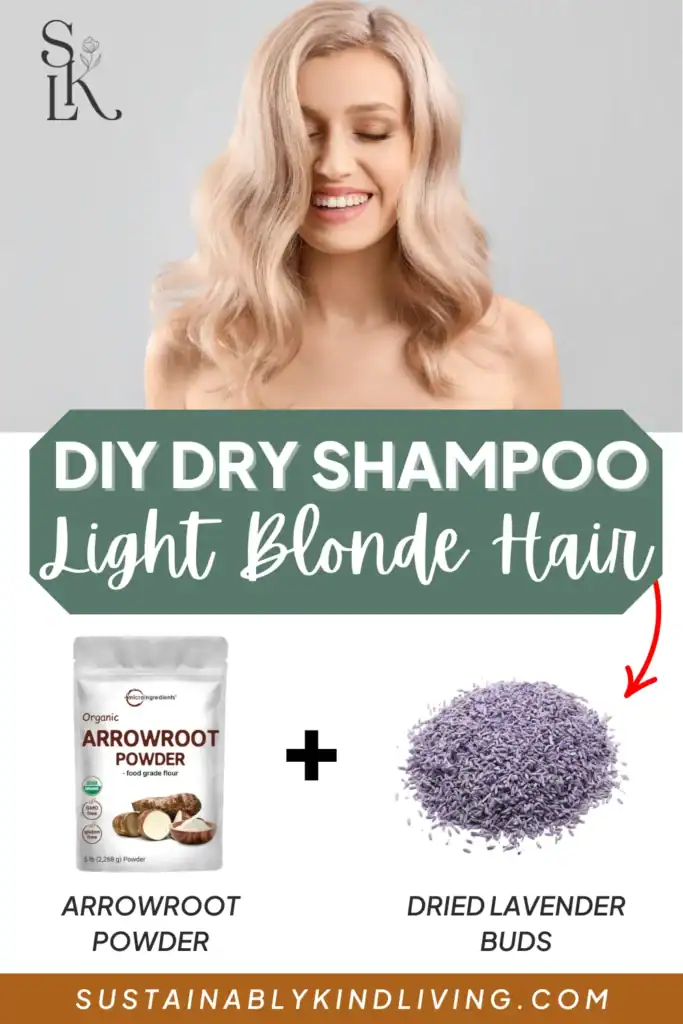
Recipe 1: DIY Dry Shampoo With Arrowroot Powder for Light Blonde Hair
Recipe from Matt Loves Hair @mattloveshair on Instagram
This simple DIY dry shampoo without cornstarch is specifically for light blonde hair. It couldn’t be easier to make.
The star ingredient, arrowroot powder, effectively absorbs excess oil while blending seamlessly with lighter hair shades. A sachet of dried lavender buds adds a delightful, all-natural scent that will leave your hair smelling fantastic.
Ingredients:
- 1/2 cup arrowroot powder
- 2-3 tablespoons dried lavender buds
Instructions:
- Add the arrowroot powder to a glass jar, shaker, or dry powder spray bottle.
- Place the dried lavender buds in a small sachet bag or empty tea bag.
- Add the sachet bag to the jar to infuse the arrowroot powder with the lavender scent.
- Optional: For a stronger scent, add a few drops of your favorite essential oil to the mixture and stir until well combined.
Tips:
- Use extra care when applying to avoid visible residue.
- Consider using an applicator brush for the most precise application.
- Focus on small sections to ensure even distribution.
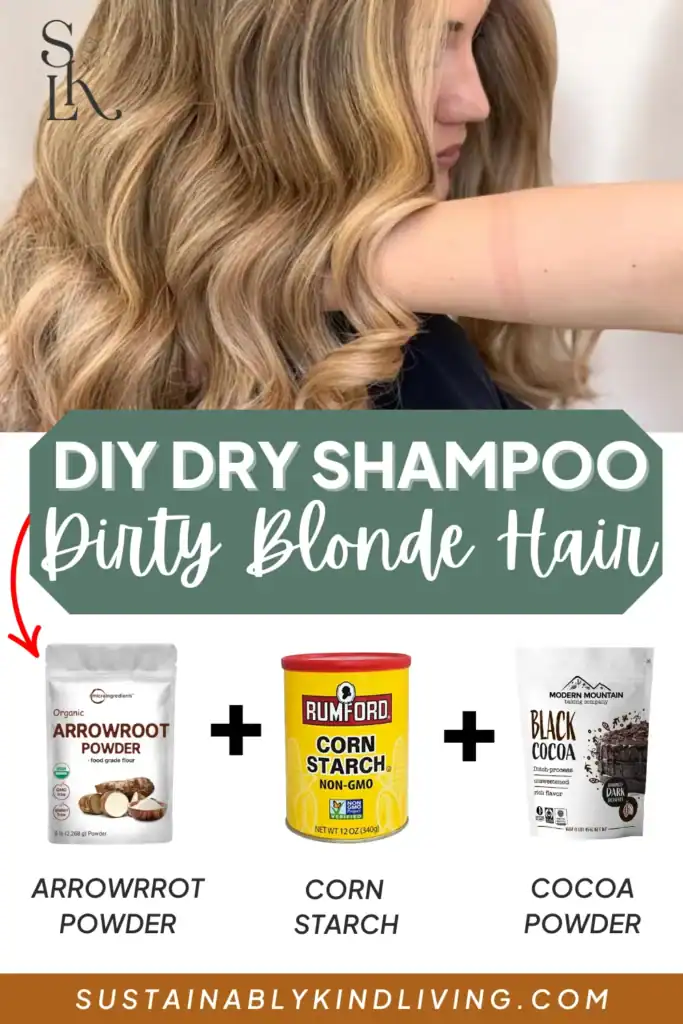
Recipe 2: Quick Dry Shampoo DIY for Dirty Blonde or Medium Blonde Hair
This simple recipe is perfect for those with dirty blonde or medium blonde hair, as the addition of cocoa powder helps the dry shampoo blend seamlessly with your natural hair color. Plus it smells delicious!
Ingredients:
- 1/4 cup arrowroot powder
- 1/4 cup cornstarch
- 1 tablespoon cocoa powder
- A few drops of essential oil (such as lavender or calendula for scent)
Instructions:
- In a bowl, combine the arrowroot powder, cornstarch, and cocoa powder. Stir well to ensure an even blend.
- If desired, add a few drops of your chosen essential oil to the mixture and mix thoroughly.
- Pour the mixture into a glass jar or shaker bottle for easy application.
Tips:
- Adjust the cocoa powder ratio in the recipe to perfectly match your shade.
- Test the color on a small section first to ensure proper matching.
- Use in small sections to ensure the color blends seamlessly.

Recipe 3: Homemade Dry Shampoo With Cocoa Powder for Brunettes
Inspired by @mac.larena on YouTube with my own tweaks
This DIY dry shampoo is tailored for dark hair, utilizing cocoa powder for color matching and effective oil absorption.
It’s simple to make and provides a natural solution for refreshing your hair between washes. If you have very dark hair, you can even add activated charcoal to darken the dry shampoo further.
Ingredients:
- 1/4 cup dark cocoa powder
- 1/4 cup tapioca flour or cornstarch
- 1/4 cup arrowroot powder
- 1 tablespoon baking soda (optional, use sparingly if concerned about dryness or if you have high porosity hair)
- Activated charcoal (optional, for very dark or black hair start with 1 teaspoon and increase as needed to reach the desired hue)
Instructions:
- In a mixing bowl, combine the dark cocoa powder, tapioca flour or cornstarch, and arrowroot powder (if using). Stir until well blended to ensure an even color.
- If using, add the baking soda to the mixture. This ingredient can help with odor absorption but should be used sparingly to avoid drying out the hair.
- Add a few drops of your chosen essential oil to the dry mixture. Stir thoroughly to distribute the oils evenly throughout the powder.
- Pour the finished mixture into a glass jar or powder spray bottle for easy application.
Tips:
- Make sure the cocoa powder or activated charcoal is well-blended to avoid dark spots.
- Pay extra attention to even distribution to prevent visible patches.
- Use additional cocoa powder or activated charcoal if needed to match very dark hair.

Recipe 4: DIY Dry Shampoo Organic Recipe for Red Hair
Inspired by The Crunchy Ginger with some tweaks of my own
Calling all redheads! This DIY dry shampoo recipe is custom-tailored to enhance your fiery locks. With a perfect blend of cornstarch, arrowroot powder, and kaolin clay, it effectively absorbs excess oil while maintaining your hair’s natural moisture balance.
The hero ingredient, cinnamon, not only provides a warm, invigorating scent but also helps to match your unique hair color. You can also play with dried, ground ginger, and cocoa powder to get just the right match.
Ingredients:
- 1/2 cup cornstarch
- 1/2 cup arrowroot powder
- 1 tablespoon kaolin clay
- 1 tablespoon cinnamon
- A few drops of lavender or calendula essential oil
Instructions:
- Mix all dry ingredients in a glass bowl.
- Add ginger, cinnamon, or cocoa powder in small amounts until you reach the right color.
- Add essential oils last and stir well to combine.
- Transfer the mixture to a glass jar or powder spray bottle for storage.
Tips:
- Carefully adjust the cinnamon amount to match your specific shade. If you have a sensitive scalp, cinnamon can be irritating, so use as little as possible.
- Test the color match on a small section first.
- Apply in thin layers to maintain color consistency.
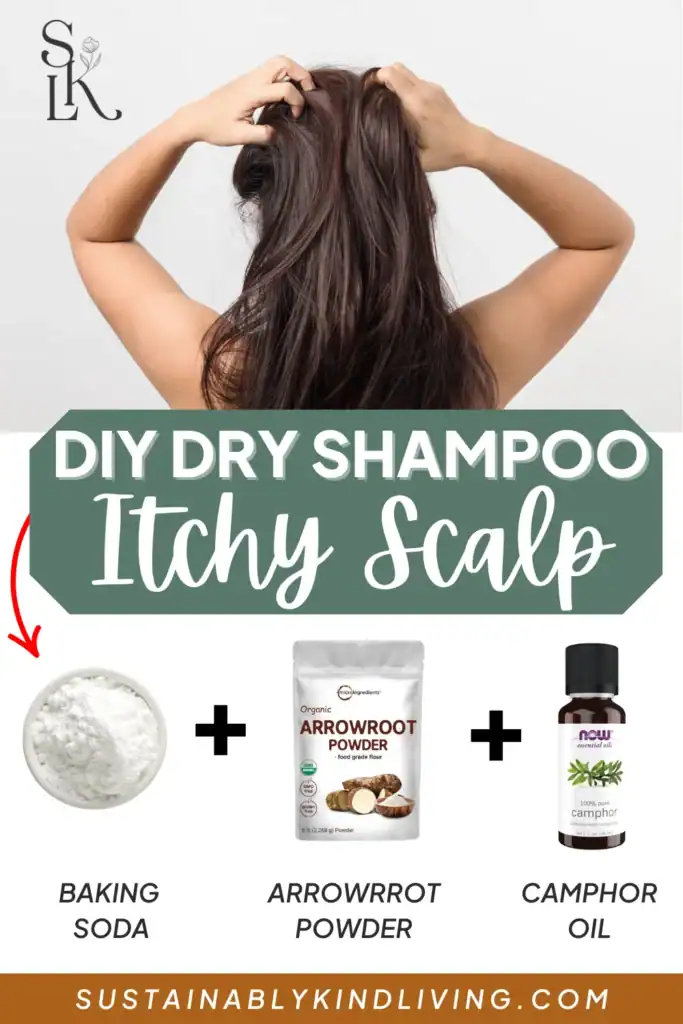
Recipe 5: Homemade Dry Shampoo for Itchy Scalp
Recipe from @Anabee_martinez on Instagram
I don’t know about you but sometimes dry shampoo can sit on my scalp and cause it to itch. This recipe is designed specifically to prevent an itchy scalp while effectively absorbing excess oil.
The key ingredient, baking soda, not only helps to absorb oil but also acts as a gentle exfoliant, which can aid in removing dead skin cells that may contribute to itchiness.
Additionally, camphor oil (or you can sub rosemary oil) has antibacterial and antifungal properties that help combat scalp irritation and reduce the growth of dandruff-causing fungi, to help prevent itchiness.
Ingredients:
- 1/4 cup baking soda
- 1/4 cup arrowroot powder (or tapioca powder)
- 5-7 drops of camphor oil or rosemary essential oil
Instructions:
- In a mixing bowl, combine the baking soda and arrowroot powder.
- Add 5-7 drops of camphor oil or rosemary oil to the mixture.
- Stir thoroughly to ensure even distribution of the essential oil.
- Transfer the mixture to an airtight container or shaker bottle.
Tips:
- Use gentle patting motions rather than vigorous massaging.
- Apply with a clean makeup brush to minimize scalp irritation.
- Avoid over-application, which can irritate the scalp.
- Pay attention to how your scalp reacts and adjust ingredients as needed.

Recipe 6: DIY Dry Shampoo With Tapioca for Curly/Coily Hair
Attention all curly and coily hair queens! This DIY dry shampoo recipe is designed to keep your bouncy curls looking fresh and fabulous between washes.
The secret ingredient, kaolin clay, gently absorbs excess oil without drying out your delicate curl pattern. Arrowroot and tapioca powders work together to provide a lightweight, non-irritating dry shampoo that won’t weigh down your curls. Lavender and rosemary essential oils promote a healthy scalp and add a refreshing scent.
Ingredients:
- 1 teaspoon kaolin clay (helps with oil absorption without drying)
- 2 tablespoons arrowroot powder
- 1 tablespoon tapioca flour
- 1/2 teaspoon baking soda (omit if you have extra dry hair)
- 2 drops lavender essential oil (for scent and scalp health)
- 2 drops rosemary essential oil (promotes hair growth)
- Dark cocoa powder or activated charcoal (optional, to match brunette or black hair)
Instructions:
- Mix all dry ingredients in a glass bowl.
- Add essential oils and stir well to combine.
- Transfer the mixture to a glass jar or powder spray bottle for storage.
Tips:
- Be extra gentle during application to avoid disrupting curl patterns.
- Use a lighter hand to prevent product buildup.
- Follow up with a curl refresher spray or leave-in conditioner if needed.
- Part hair carefully in sections to reach the roots without disturbing the curl definition.

Recipe 7: DIY Dry Shampoo Kaolin Clay for Dry/Damaged Hair
Inspired by Mountain Rose Herbs with my own adjustments for more accessible ingredients
If you’re struggling with dry, damaged hair and looking for a quick fix between washes, this DIY dry shampoo recipe is perfect for you. Formulated with nourishing ingredients like oatmeal powder and arrowroot powder, it effectively absorbs excess oil while providing soothing benefits to your scalp.
Ingredients:
- 1/4 cup oatmeal powder (for soothing and moisturizing properties)
- 1/4 cup arrowroot powder (for oil absorption)
- 1 tablespoon kaolin clay powder (gentle on the scalp and helps absorb oil)
- 5 drops of lavender essential oil (for soothing irritation and promoting scalp health)
- A few drops of essential oil (optional, such as lavender or chamomile for added fragrance and nourishment)
Instructions:
- In a mixing bowl, combine the oatmeal powder, arrowroot powder, and kaolin clay powder. Stir well to ensure an even blend.
- Add the lavender essential oil to the dry mixture.
- Pour the mixture into a glass jar or shaker bottle for easy application.
Tips:
- You may need to run your oatmeal powder through a sieve to make sure it is fine enough not to clump in your hair.
- Use minimal amounts to avoid drying out the hair further.
- Follow up with a leave-in conditioner or hair oil after application.
- Consider reducing the amount of baking soda in your recipe.
- Focus on roots only, avoiding mid-lengths and ends.
General Application Tips for All Hair Types
- Start with completely dry hair – applying to damp hair will cause clumping and reduce effectiveness.
- Use sparingly – begin with a small amount and add more if needed to prevent buildup.
- Focus application on the roots where oil tends to accumulate.
- Use a makeup brush or powder applicator bottle for precise application.
- Gently massage the product into your scalp with your fingertips to distribute it evenly.
- Allow the dry shampoo to sit for a few minutes before styling.
- Consider applying at night before bed for optimal results.
- Style as usual after application.
Why Homemade Dry Shampoo Is Better
The Scary Truth About Benzene in Dry Shampoo
In 2022, an independent study by Valisure found that a whopping 70% of the 148 batches of spray-on dry shampoo contained benzene, with some samples exceeding the FDA limit by up to 170 times. Yikes! This led to a massive recall of popular brands, including Unilever lines like Nexxus, Tresemme, and Bed Head.
But what’s the big deal with benzene? This known carcinogen has been linked to leukemia and other blood cancers. And while it’s not an intentional ingredient, it can sneak in during manufacturing, often due to petroleum-based propellants.
Plus, using dry shampoos indoors means you’re inhaling this stuff for longer periods, and it’s sitting on your head for days at a time. No, thank you!
Other Problematic Ingredients Hiding In Your Dry Shampoo
Benzene isn’t the only troublemaker lurking in your dry shampoo. Watch out for these other common culprits:
- Talc: This innocent-sounding ingredient can be contaminated with asbestos, another known carcinogen.
- Artificial Fragrances: Sure, they make your hair smell like a tropical paradise, but they can also trigger allergies and mess with your hormones.
- Phthalates: These sneaky chemicals can disrupt your endocrine system and have been linked to reproductive issues. It’s not exactly a party for your body!
- Propane & Butane: While they help deliver that satisfying spray, these volatile organic compounds can cause respiratory issues, as well as cardiac and neurological deficiencies, with severe central nervous system toxicities.
- Aluminum Compounds: Some dry shampoos contain aluminum compounds that have been associated with neurological disorders and bone health issues when accumulated in the body over time.
Environmental Impact
Let’s be real– our planet doesn’t need more plastic waste or air pollution. But guess what? Many aerosol dry shampoos contain volatile organic compounds (VOCs) and hydrofluorocarbons (HFCs), which contribute to both.
Plus, all those empty cans end up in landfills, adding to the ever-growing plastic problem. The bottom line? It’s time to ditch the toxic dry shampoos and opt for making your own DIY dry shampoo.
What are the most common DIY dry shampoo mistakes?
- Using Too Much: Over-application can leave a white cast, especially on darker hair. Start with a small amount and gradually add more as needed.
- Not Distributing Evenly: Uneven application can lead to patchy coverage and a clumpy appearance.
- Not Massaging Properly: Gently massaging the dry shampoo into the roots helps absorb oil and distribute the powder evenly.
- Not Removing Excess Powder: Leaving excess powder can create a dull, lifeless look. Use a clean brush or cloth to remove any residue.
- Using The Wrong Ingredients: Some ingredients, like baking soda, can be too dry for certain hair types.
- Not Considering Hair Color: Using light-colored powders on dark hair can leave a visible white cast.
- Storing Improperly: Improper storage can lead to clumping and spoilage. Store your homemade dry shampoo in an airtight container in a cool, dry place.
- Not Testing For Allergies: If you have sensitive skin, patch test a small amount of dry shampoo on your inner arm before applying it to your scalp.
Where can you get high-quality DIY dry shampoo ingredients?
Trusted Suppliers
- Local Health Food Stores & Co-Ops: Often carry a good selection of bulk herbs, spices, and natural powders like arrowroot and cornstarch. They usually prioritize quality and may offer knowledgeable staff.
- Specialty Herb Shops: If you have one locally, they may carry unique or hard-to-find ingredients.
Online Retailers
- Mountain Rose Herbs: A well-respected supplier of organic herbs, spices, and essential oils.
- Starwest Botanicals: Another excellent option for high-quality botanicals and bulk ingredients.
- Amazon: While not always the best for bulk, Amazon offers convenience and a wide variety of options.
Quality Indicators
- Organic Certification: Look for USDA Organic certification to ensure ingredients are free from pesticides and synthetic fertilizers.
- Third-Party Testing: Some suppliers may offer lab reports on their ingredients, verifying purity and potency.
- Fine Grind (for powders): A fine grind ensures even distribution and prevents clumping in your dry shampoo.
Bulk Buying Benefits
- Cost Savings: As mentioned, buying in bulk significantly reduces the per-unit cost of ingredients.
- Reduced Waste: Buying larger quantities reduces the frequency of purchases, minimizing packaging waste.
- Convenience: Having a larger supply on hand means you’re always prepared to make a fresh batch of dry shampoo.
How often can I apply dry shampoo between washes?
The frequency of dry shampoo use depends on several factors:
- Your Hair Type: If you have oily hair you may need to use dry shampoo more often, potentially every other day or even daily. If you have dry hair, less frequent use is recommended, perhaps 1-2 times per week to avoid over-drying.
- Your Lifestyle: If you’re very active or live in a humid climate, you may need to use dry shampoo more often.
- The Type of Dry Shampoo: Some dry shampoos are lighter and less likely to cause buildup.
General Guidelines
- Start With Moderation: Begin by using dry shampoo 1-2 times per week and adjust based on your individual needs.
- Listen To Your Hair: If you notice any buildup, itching, or dryness, reduce the frequency of use.
- Don’t Rely Solely On Dry Shampoo: Regular washing with shampoo and conditioner is still essential for removing dirt, oil, and product buildup.
***Important Note: Overusing dry shampoo can lead to product buildup on the scalp, which can clog pores, irritate the skin, and even cause hair loss in some cases
This has been your guide to the best homemade dry shampoo for all hair types.
I know you’ve been there too – standing in front of the mirror, wondering if you can squeeze one more day out of your current hairstyle.
But now you can ditch those pricey, chemical-laden sprays and whip up your own natural dry shampoo whenever you want! Not only will your wallet thank you, but your scalp will too!
With these DIY recipes, you’re just a few pantry ingredients away from fresh, fabulous hair.
Explore more of our incredible Haire Care articles:
- Non-Toxic & Natural Shampoos For Dandruff
- Zero Waste Shampoo & Conditioner
- Natural & Lightweight Hair Oils
- Non-Toxic & Natural Hairspray
- Non-Toxic & Natural Hair Dye
- Organic Drugstore Shampoo
- Vegan Hair Care Brands
- Non-Toxic Shampoo
Like It? Pin It!
References
- Valisure. (2022). Valisure Detects Benzene in Dry Shampoo. Retrieved from https://www.valisure.com/valisure-newsroom/valisure-detects-benzene-in-dry-shampoo
- Healthline. (2022). Group Finds 70% of Dry Shampoos Tested Had Cancer-Causing Chemical. Retrieved from https://www.healthline.com/health-news/group-finds-70-of-dry-shampoos-tested-had-cancer-causing-chemical
- Feinstein Institutes for Medical Research. (n.d.). Talc Powder Exposure Linked to Mesothelioma. Retrieved from https://feinstein.northwell.edu/news/the-latest/talc-powder-exposure-linked-to-mesothelioma
- European Commission. (2013). Opinion on Zinc oxide (nano form). Scientific Committee on Consumer Safety. Retrieved from https://ec.europa.eu/health/scientific_committees/consumer_safety/docs/sccs_o_102.pdf
- Draelos, Z. D. (2013). Shampoos, conditioners, and camouflage techniques. Dermatologic Clinics, 31(1), 173-178. Retrieved from https://pmc.ncbi.nlm.nih.gov/articles/PMC3604737/
- Seo, J. Y., Kim, M., & Lee, J. Y. (2022). Safety assessment of dry shampoo products with particular reference to trace benzene contamination. Basic & Clinical Pharmacology & Toxicology, 130(1), 104-113. Retrieved from https://onlinelibrary.wiley.com/doi/10.1111/bcpt.13760
- Gavazzoni Dias, M. F. R. (2015). Hair cosmetics: An overview. International Journal of Trichology, 7(1), 2-15. Retrieved from https://pmc.ncbi.nlm.nih.gov/articles/PMC5651828/

Steal My Non-Toxic Cleaning Checklist!
Believe us, it’s the BEST…. and it’s free. Does it really get any better than that?! Sign up for our newsletter and get this free checklist to clean your home without any harmful chemicals!