 Shop My Favorite Non-Toxic Gifts Of 2026!
SKL is reader supported. When you buy through links on our site, we may earn affiliate commission. Learn more here.
This guide to DIY homemade bug spray is perfect for anyone looking to enjoy the outdoors without exposing themselves—or their loved ones—to harsh chemicals like DEET.
These simple, natural recipes will help you repel mosquitoes, ticks, and other biting bugs without compromising your health.

Are you a certified bug magnet? If so, I feel your pain!
If you’ve ever been enjoying a warm summer evening outdoors—only to find yourself constantly swatting away mosquitoes while everyone else is blissfully unbothered—you’re not alone.
I’ve spent countless family gatherings as the main course at the insect buffet, wondering what makes me so irresistible to these tiny flying terrors.
As it turns out, there’s actual science behind why some of us attract more insects than others.
From your body temperature to the carbon dioxide you exhale, certain factors can make you a prime target for biting bugs.
And if you’re one of the unlucky ones who always ends up with the most bites, it’s not just in your head!
While drugstore insect repellents are often effective, they usually come with a laundry list of questionable ingredients.
One of the most common? DEET is a chemical that’s raised red flags among health-conscious consumers and environmental advocates alike.
If the idea of spraying a synthetic nerve agent onto your skin just to enjoy your backyard makes you cringe—you’re not alone.
The good news? I’ve got 7 easy DIY homemade bug spray recipes you can whip up in your kitchen using natural ingredients that are safe, effective, and even smell good.
Whether you’re battling mosquitoes, ticks, or no-see-ums, these chemical-free insect repellents will have your back all summer long.
But first—let’s dive into why bugs are drawn to you in the first place, and why it’s time to ditch the toxic stuff.
Why Bugs Love You (Not In A Good Way)
Ever feel like you’re the only one getting eaten alive at the cookout? You’re not imagining things. There’s science behind why some people attract more bugs than others.
The “Bug Magnet” Phenomenon
A study by Dr. Jonathan Day, a professor of medical entomology at the University of Florida, found that mosquitoes are drawn to people with higher body temperatures.
These little heat-seeking missiles can detect warmth from several feet away—so if you run hot, you’re likely to be a prime target.
The Science Behind Insect Attraction
It’s not just body heat. Carbon dioxide plays a big role too.
Mosquitoes can detect CO₂ from up to 50 meters away, which means the more you exhale (or the heavier you breathe), the more they zero in.
Other factors that can attract bugs include:
- Body odor (some scents are more attractive to bugs)
- Dark clothing
- Perfumes and scented lotions
- Pregnancy (due to increased heat and carbon dioxide)
If you’re a bug magnet, you’re not alone—and the solution doesn’t have to come in a can of chemicals.
What toxic ingredients are hiding in bug sprays?
❌ DEET: Effective, But Potentially Dangerous
DEET (N, N-diethyl-meta-toluamide) is one of the most common ingredients in commercial insect repellents—but that doesn’t mean it’s safe.
In fact, it was originally developed for military use and is classified by the U.S. military as a chemical nerve agent. Yikes.
Pharmacologist Dr. Mohammed Abou-Donia from Duke University has studied DEET extensively and linked prolonged exposure to side effects like:
- Memory loss
- Headaches
- Muscle weakness
- Fatigue
- In extreme cases: seizures and coma
Children Are Especially Vulnerable
Because of their smaller body-to-skin ratio, children absorb more chemicals, making them especially sensitive to DEET’s effects.
The American Academy of Pediatrics advises against using DEET on babies under two months—and based on recent research, many experts recommend avoiding it for everyone.
Other Harmful Ingredients to Avoid
Commercial bug sprays may also contain:
❌ Pyrethroids (can cross the blood-brain barrier and trigger asthma-like symptoms)
❌ Organophosphates (linked to nervous system toxicity)
❌ Carbamates (affect the central nervous system and are toxic to aquatic life)
❌ Picaridin (considered safer than DEET, but long-term effects remain unclear)
If you’re looking for a non-toxic insect repellent, it’s time to DIY (or buy non-toxic bug spray/balm, we got you covered there too).
Why DIY Homemade Bug Spray Is Amazing
1. It’s Customizable to Your Needs
One of the biggest perks of making your own bug spray is control.
You can tailor your recipe to the insects you’re dealing with and adjust strength based on your skin sensitivity or bug-magnet level.
✅Got mosquitoes? Use citronella or lemon eucalyptus.
✅Worried about ticks? Add rose geranium and cedarwood.
✅Prefer a milder scent for kids? Lavender and peppermint are great choices.
2. It Smells Amazing
Unlike store-bought repellents that smell like a chemistry lab, DIY natural bug sprays can smell downright heavenly. Think lavender, lemongrass, peppermint—fresh, clean, and summer-ready.
3. It Works—When Used Right
Natural bug sprays are effective, but they do require reapplication every 1–2 hours, especially if you’re sweating or swimming. That’s a small price to pay for chemical-free protection that doesn’t compromise your health.
4. It Saves You Money
Store-bought natural repellents can cost $10–$15 per small bottle. A homemade batch costs around $6 and yields way more—plus, you likely already have some ingredients like essential oils and witch hazel on hand.
What essential oils repel what insects?
Choose your essential oils based on the bugs you’re dealing with. Here’s a simplified guide to help you build the perfect DIY homemade bug spray:
Spiders & Ants:
Peppermint
Mosquitoes, Gnats & No-See-Ums:
Citronella, lemon eucalyptus, peppermint, lemongrass, lavender, catnip, geranium, basil, thyme, vanilla
Ticks & Fleas:
Rose geranium (especially Pelargonium capitatum x radens), cedarwood, juniper, eucalyptus, tea tree, lavender, grapefruit, oregano
Biting Flies & Moths:
Citronella, lavender, eucalyptus, lemongrass
7 DIY Bug Spray Recipes With Zero Toxic Chemicals
1. Homemade Bug Spray With Citronella Oil
From: Cassie Johson @ Wholefully

Ingredients & Materials:
- 80 drops citronella oil (mosquitos, biting flies, no-see-ums, gnats)
- 80 drops of lavender oil (moths, mosquitos, fleas, biting flies)
- 40 drops eucalyptus oil (all biting and stinging bugs)
- 20 drops of basil oil (mosquitoes, biting flies)
- 40 drops peppermint oil (ants, mosquitoes)
- 4 ounces apple cider vinegar or witch hazel
- 80 drops rose geranium oil (ticks)
- 20 drops of clove oil (mosquitoes)
- 40 drops of cedarwood oil (ticks)
- 80 drops thyme oil (mosquitoes)
- 8-ounce glass spray bottle
- Distilled or filtered water
Instructions:
- Combine all essential oils and apple cider vinegar or witch hazel in the glass spray bottle.
- Top off the bottle with distilled or filtered water. Screw on the sprayer and shake well.
- To use: Shake bottle well, then apply liberally on exposed skin every 1-2 hours while outdoors.
Notes:
- This makes a very strong bug spray. For less buggy environments, you can use half the amount of essential oils.
- If you don’t have citronella oil, you can use lemongrass oil as a replacement.
- If cost is a concern, starting with just citronella and rose geranium essential oils will provide good protection.
2. Simple Skin-Safe Bug Spray
From: @Healthline

Ingredients & Materials:
- Lemon, eucalyptus, or lavender essential oil
- Glass spray bottle
- Witch hazel
Instructions:
- Mix 1 part oil of the essential oil with 10 parts witch hazel in the bottle. (For each drop of oil, use 10 drops of witch hazel.)
- Shake gently to mix.
- Spray to apply.
3. DIY Mosquito Repellent
From: Mountain Rose Herbs

Ingredients & Materials:
- 4oz. organic catnip leaf extract (or homemade tincture)
- 20 drops of organic lemon eucalyptus essential oil
- 20 drops of organic Atlas cedarwood essential oil
- 20 drops of organic rosemary essential oil
- 20 drops of organic lavender essential oil
- 10 drops organic lemongrass essential oil
- 10 drops of organic lemon essential oil
- 4oz. organic witch hazel extract
- 8 oz. bottle with Mister cap
Instructions:
- Pour both catnip extract and witch hazel extract (or vodka) into the bottle.
- Slowly drip the essential oils into the bottle.
- Cap the bottle and shake vigorously to combine.
- Store in the refrigerator with a tight-fitting lid. The mixture will be shelf-stable for up to a year when stored properly.
4. Simple DIY Bug Spray Tea Tree Oil
From: Beth @TastyYummies

Ingredients & Materials:
- 2 ounces of distilled or boiled water
- 25 drops peppermint essential oil
- 1 teaspoon of jojoba oil (optional)
- 15 drops of tea tree essential oil
- 1.5 ounces witch hazel or vodka
- 30 drops citronella essential oil
- 4 oz clean spray bottle
Instructions:
- Using a 4 oz clean spray bottle, fill it with water, add the witch hazel or vodka then about the essential oils.
- Shake well.
- Spray onto exposed skin and/or clothing, avoiding eyes and mucous membranes.
- Reapply every 2 hours, or as needed.
- Store in a dark bottle, away from heat or sunlight.
5. Homemade Bug Repellent With Vanilla (No Essential Oils)
From: Don’t Waste Crumbs | Adapted slightly to remove petroleum-based baby oil

Ingredients & Materials:
- 2 tsp vanilla extract (be cautious of artificial vanilla which may irritate the skin)
- 5 tbsp distilled water, or water that has been boiled and cooled
- Glass jar or a squeezable tube for storage
- 5 oz almond oil or jojoba oil
Instructions:
- Combine the oil, vanilla extract, and distilled water in a glass jar. Mix well.
- Tip: This mixture will be thick and rub on like a lotion. If you prefer a thinner consistency, add an additional 1 tbsp water and 1 tsp vanilla extract. Mix well.
- If needed, repeat step 1 until you reach your desired consistency.
- Store the mixture in the glass jar. If desired, pour some into a squeezable tube for easy application on the go.
- Apply liberally to exposed skin, avoiding the eyes and mouth. Reapply every 2 hours or as needed.
Note: Store the bug spray in a cool, dark place away from direct sunlight to maintain its potency. Shake well before each use to ensure the ingredients are evenly distributed.
6. DIY Bug Spray Cinnamon
From: The Kitchn
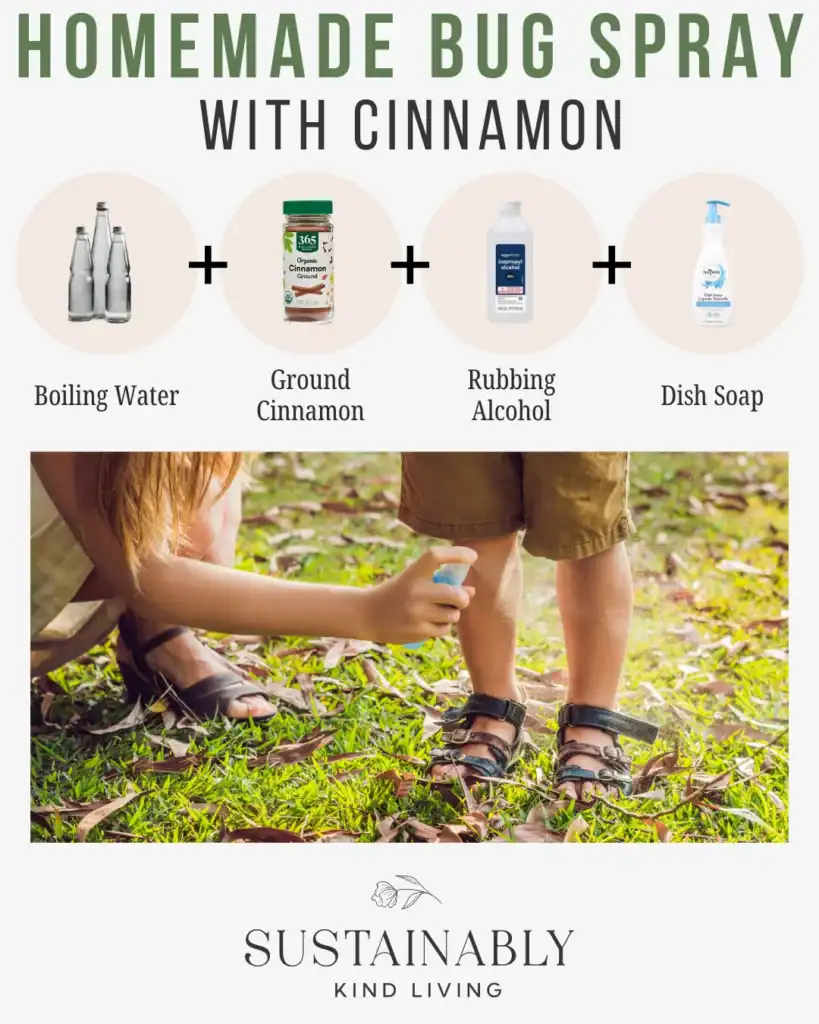
Ingredients & Materials:
- Spray bottle (reuse an empty one or purchase a new one)
- 2 tablespoons ground cinnamon
- 1 teaspoon rubbing alcohol
- 1 teaspoon dish soap
- 2 cups boiling water
- Bowl for mixing
- Strainer
- Funnel
- Whisk
Instructions:
- Boil 2 cups of water.
- In a separate bowl, add the boiling water and 2 heaping tablespoons of ground cinnamon. Whisk the mixture thoroughly.
- Allow the cinnamon mixture to steep for 15 minutes.
- Using a strainer, filter the cinnamon liquid to remove any particles and transfer it back to the bowl.
- Add 1 teaspoon of rubbing alcohol to the strained cinnamon liquid and stir well.
- Add 1 teaspoon of dish soap to the mixture and stir until fully incorporated.
- Using a funnel, carefully pour the mosquito-repellent mixture into your spray bottle.
- Shake the spray bottle before each use to ensure the ingredients are well combined.
- Apply the DIY mosquito repellent liberally to exposed skin, avoiding the eyes and mouth. Reapply as needed, especially after swimming or sweating.
Note: Store the mosquito repellent spray in a cool, dry place away from direct sunlight.
The recipe makes approximately 2 cups of repellent, which should last for multiple applications.
As with any new product, test a small patch of skin first to ensure you don’t have any sensitivities or allergic reactions to the ingredients.
7. Home & Yard Bug Spray
From: @Healthline
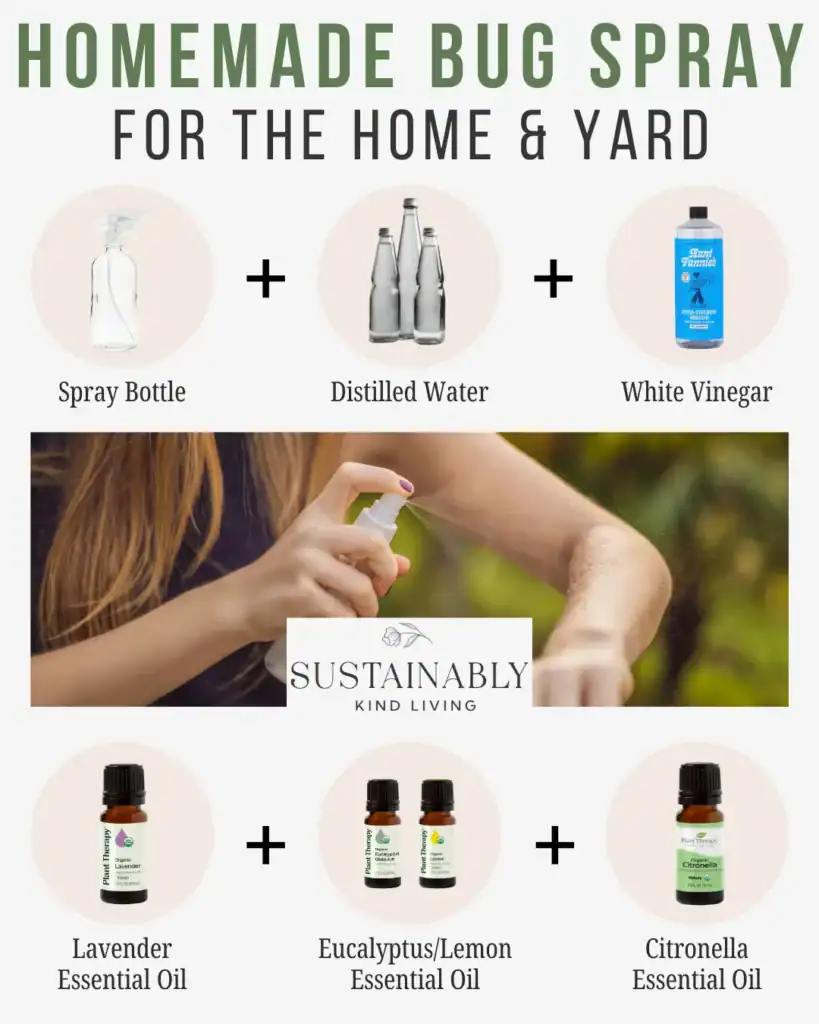
Ingredients & Materials:
- Eucalyptus or lemon essential oil
- Citronella essential oil
- Lavender essential oil
- Glass spray bottle
- Distilled water
- White vinegar
Instructions:
- Mix 10 to 20 drops of each essential oil with 2 ounces of distilled water and 2 ounces of white vinegar.
- Shake gently to mix.
- Spray to use.
Tips For Making Your Homemade Bug Repellent More Effective
- Use amber or dark bottles to prevent UV degradation of the essential oils
- Apply liberally and reapply frequently (every 1-2 hours)
- Unlike DEET products, natural sprays need more frequent application
- For the first application of the day, use a heavy-duty sprayer; for reapplication, a fine mist sprayer works well
- Protect clothing and exposed skin
⚠️ Important Safety Considerations When Using Essential Oils
- Essential oils should be diluted before applying to the skin (except lavender, which can be used neat)
- Use therapeutic-grade oils for best results
- Some essential oils are phototoxic (especially citrus oils) – avoid sun exposure after application or be sure to apply sunscreen
- Not all essential oils are safe for children, pregnant women, or pets
- For pets: Most sprays are safe for dogs but avoid using them on cats
- Always do a patch test before the full application
Natural Remedies for Bug Bites
- Apply lavender or tea tree essential oil directly to the insect bite
- Apply apple cider vinegar to the bite
- Rub the affected area with a lemon slice
- Dip a chilled, already brewed chamomile tea bag into the bite to soothe and reduce inflammation
- Hold an ice cube on the bite
- Create a paste of water and baking soda and apply directly to the area
- A slice of onion has been known to immediately remove pain when applied to insect bites
- Liquid bandages can stop itching immediately
- Plantain is effective for quick itch/pain relief
How long does a DIY natural insect repellent spray last?
Homemade bug sprays typically last between 6 months to a year when stored properly in a cool, dark place.
To extend the shelf life of your natural mosquito repellent, keep it in a glass spray bottle away from direct sunlight and heat. Shake well before each use to ensure the essential oils are evenly distributed.
Is homemade bug spray safe for children?
The safety of a DIY bug spray for kids depends on the essential oils used and their concentration.
When making a natural insect repellent for children, it’s best to use lower concentrations of essential oils and select kid-friendly options like lavender or lemon eucalyptus.
Always do a patch test before applying any homemade bug-repellent spray to a child’s skin, and avoid using essential oils on infants under 3 months old.
Can homemade insect repellents protect against ticks and Lyme disease?
Yes, certain essential oils can be effective at repelling ticks and reducing the risk of tick-borne illnesses like Lyme disease.
Rose geranium and cedarwood essential oils are particularly effective at keeping ticks at bay.
When hiking or spending time in tick-prone areas, apply your DIY tick repellent liberally and consider wearing long sleeves and pants for added protection.
Why do some natural bug spray recipes use vodka?
You may have noticed that some homemade bug-repellent recipes call for vodka as one of the ingredients.
There are a couple of reasons why vodka is sometimes used:
- Vodka helps the essential oils mix better with water. Essential oils don’t naturally blend well with water, but vodka acts as an emulsifier to help disperse the oils more evenly in the mixture. This allows the repellent spray to have a more consistent scent and effect.
- Vodka helps preserve the mixture. The alcohol content makes the bug spray more shelf-stable by preventing bacterial growth, allowing you to store and use it longer. Witch hazel is also used for this purpose in some recipes.
However, there are some downsides to using vodka. It can sting badly if sprayed on cuts or freshly shaven skin. Vodka also has a strong scent that some people may not enjoy in their bug spray.
Apple cider vinegar or witch hazel work well as alternatives to vodka for improving the essential oil dispersion and extending the shelf life. They are included in many recipes in place of the vodka.
Ultimately, vodka is an optional ingredient that you can choose to include or leave out based on your personal preferences.
What carrier oils can I use in my homemade bug spray recipe?
While witch hazel is a popular choice for DIY bug spray recipes, you can also use other carrier oils like jojoba oil, almond oil, or fractionated coconut oil.
These carrier oils help to moisturize the skin and ensure the essential oils are evenly distributed in your homemade mosquito repellent.
Just be sure to choose a lightweight, easily absorbable carrier oil to avoid a greasy feel on your skin.
Can I use a homemade bug spray on my pets?
While some essential oils can be safe for use on dogs when properly diluted, it’s crucial to consult with your veterinarian before applying any DIY bug repellent to your furry friends.
Certain essential oils, such as tea tree oil and citrus oils, can be toxic to pets, especially cats.
For pet-friendly pest control, consider using a specially formulated natural bug spray designed for animals.
That’s A Wrap! Make. Spray. Slay. (And Reapply!)
Well, there you have it, my fellow bug magnets! With these DIY repellents, you can finally enjoy a summer evening without becoming an all-you-can-eat insect buffet.
Not only will your homemade spray save you from those itchy welts and the chemical cocktail of commercial options, but you’ll also smell amazing while doing it!
Who knew your DIY bug spray could double as your own signature scent? Don’t be afraid to play mad scientist with your essential oil blends.
Are mosquitoes ruining your hikes? Amp up the citronella! Are ticks taking over your garden? Rose geranium to the rescue!
Just remember, unlike those chemical nerve agents, natural sprays need a little more commitment. Reapply every couple of hours and you’ll be golden.
Explore more of our incredible Non-Toxic Personal Care articles:
- Natural, Organic & Non-Toxic Body Wash
- Non-Toxic Sunscreen For Babies & Kids
- Non-Toxic & Antibacterial Hand Soap
- Organic & Natural Skincare For Men
- Zero-Waste Shampoo & Conditioner
- Homemade Dry Shampoo Recipes
- Sustainable & Refillable Skincare
- Zero-Waste Toothpaste Brands
- Clean & Eco-Friendly Skincare
- Non-Toxic & Natural Hairspray
- Non-Toxic & Natural Hair Dye
- Organic Drugstore Shampoo
- Affordable Organic Skincare
- Non-Toxic After-Sun Lotions
- Organic & Natural Soaps
- Vegan Hair Care Brands
- Non-Toxic Body Lotion
- Non-Toxic Sunscreen
- Non-Toxic Self Tanner
- Non-Toxic Bug Spray
- Refillable Body Wash
- Non-Toxic Shampoo
- Non-Toxic Skincare
Like It? Pin It!

References
- UF Health. (2011). Mosquito threat emerges as season peaks, UF researchers report. https://ufhealth.org/news/2011/mosquito-threat-emerges-season-peaks-uf-researchers-report
- U.S. Department of Defense. (n.d.). GulfLink Report MR1018.5 Ch5 [Unreadable PDF]. https://www.gulflink.osd.mil/library/randrep/mr1018.5.ch5.pdf
- Duke Today. (2002, May). Duke Pharmacologist Says Animal Studies On DEET’s Brain Effects Warrant Further Testing. https://today.duke.edu/2002/05/deet0502.html
- Zadikoff, C. M., et al. (2000). Severe neurotoxic reaction associated with oral ingestion of low-dose diethyltoluamide-containing insect repellent in a child. Pediatric Emergency Care, 16(5), 341-342. https://pubmed.ncbi.nlm.nih.gov/11063364/
- U.S. Environmental Protection Agency (EPA). (2024). Our Current Understanding of the Human Health and Environmental Risks of PFAS. https://www.epa.gov/pfas/our-current-understanding-human-health-and-environmental-risks-pfas
- TRICARE. (2010, January). Using Insect Repellents on Children. https://mcdonald.tricare.mil/Portals/60/UsingInsectRepellentsonChildrenJan2010.pdf
- National Library of Medicine. (2023). DEET Poisoning. MedlinePlus. https://medlineplus.gov/ency/article/002763.htm
- Agency for Toxic Substances and Disease Registry (ATSDR). (2021). ToxFAQs for Pyrethrins and Pyrethroids. Centers for Disease Control and Prevention. https://wwwn.cdc.gov/TSP/ToxFAQs/ToxFAQsDetails.aspx?faqid=786&toxid=153
- Illinois Department of Public Health (IDPH). (n.d.). Organophosphate Insecticides Fact Sheet. http://www.idph.state.il.us/bioterrorism/factsheets/organophosphate.htm
- Delaware Health and Social Services. (2007). Carbamate Insecticides Frequently Asked Questions. https://dhss.delaware.gov/dhss/dph/files/carbamfaq.pdf
- U.S. Environmental Protection Agency (EPA). (2005). Reregistration Eligibility Decision for DEET. https://www3.epa.gov/pesticides/chem_search/reg_actions/registration/fs_PC-070705_01-May-05.pdf

Steal My Non-Toxic Cleaning Checklist!
Believe us, it’s the BEST…. and it’s free. Does it really get any better than that?! Sign up for our newsletter and get this free checklist to clean your home without any harmful chemicals!