 Shop My Favorite Non-Toxic Gifts Of 2026!
SKL is reader supported. When you buy through links on our site, we may earn affiliate commission. Learn more here.
Caraway’s ceramic cookware has taken Instagram by storm, but does it actually live up to the $445 price tag?
I spent four months cooking with the full 12-piece set, from eggs and pancakes to soups and stir-fries, to see how it really performs.
While Caraway is genuinely PFAS-free and stunning to look at, my testing revealed trade-offs in safety, longevity, and everyday use.
Before you invest, here’s what I discovered about when these pans shine, when they fall short, and whether they’re worth the hype.
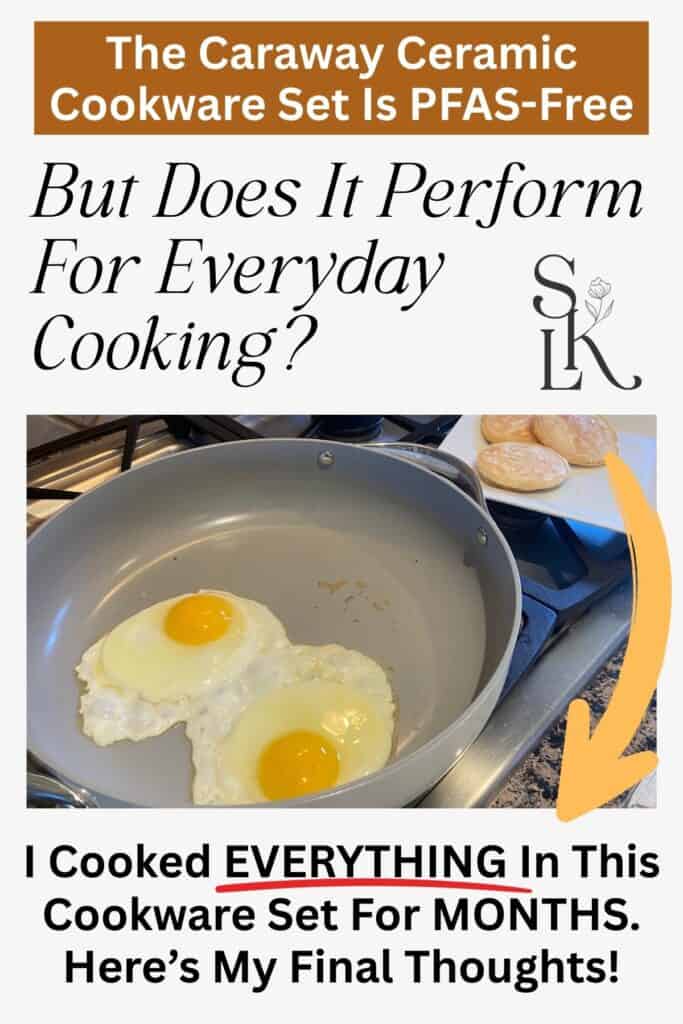
Everyone on Instagram seems to have them — those magazine-worthy pots and pans from Caraway that are touted as the answer to toxic cookware concerns.
But the real question is what happens when you actually cook with Caraway’s gorgeous cookware every single day.
For four months, I made Caraway my go-to cookware, reaching for this ceramic set for just about everything I cooked, from delicate crepes and eggs to ambitious stir-fries and Sunday soups.
My trusty cast iron and stainless steel were still in the cupboard, but I challenged myself to lean on Caraway first and see where it could hold its own, and where it couldn’t.
On the surface, Caraway looks like it cracked the code to creating truly non-toxic, non-stick cookware. Beautiful design? Check. PFAS-free? Check. And a storage system that finally makes your cabinets feel organized? Also check.
But at Sustainably Kind Living, we know cookware has to earn its place on performance — not just looks. The glossy social media posts don’t show you what happens when your sauté pan starts smoking or when it comes time to clean up.
Testing Caraway came with plenty of upsides, but also challenged what I thought I knew about ceramic cookware.
What I learned might surprise you — and could help you decide whether this $445 set is a smart investment or just another Instagram trend.

Quick Pros & Cons, at a glance…
Pros
✅ Truly PFAS-Free, PTFE-Free, PFOA-Free, Lead-Free & Cadmium-Free → Third-party tested and verified
✅ Gorgeous Design with Premium Packaging → Lid organization and magnetic racks aren’t just for show
✅ Fry Pans Excel at Delicate Foods → Eggs slide right out, fish doesn’t stick, pancakes flip perfectly
✅ Heats Quickly & Evenly → The Dutch oven and saucepan are workhorses for soups and everyday meals
✅ Thoughtful Storage System → Actually prevents scratching and saves cabinet space
Cons
❌ Coating Wears Quickly → Expect 2-3 years max, even with perfect care
❌ Limited to Medium Heat → Forget about searing steaks or getting that restaurant-style char if you want to avoid staining your set
❌ Handles Get Hot → Especially in the oven, but even stovetop cooking requires caution
❌ Light Colors are Stain Magnets → And those handle crevices trap grease permanently
❌ Premium Price with Minimal Warranty → Only 1 year of coating coverage
Quick Specs
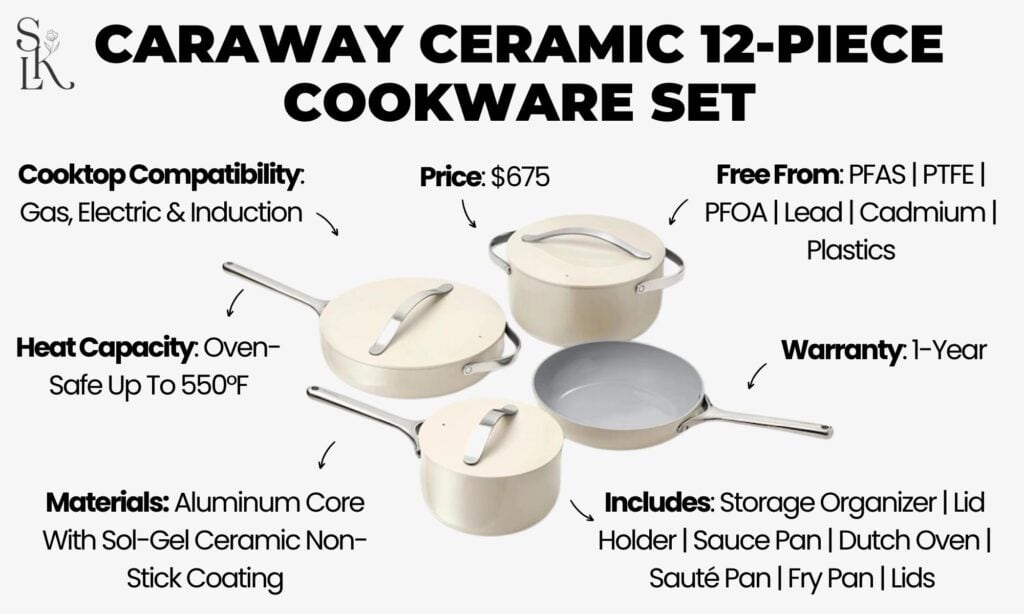
- Set Includes: 10.5″ frying pan | 3-quart saucepan with lid | 4.5-quart sauté pan with lid | 6.5-quart Dutch oven with lid | 4 magnetic pan racks | 1 canvas lid holder
- Materials: Aluminum core with sol-gel ceramic non-stick coating (PFAS-free, PTFE-free, PFOA-free, lead-free, cadmium-free)
- Cooktop Compatibility: Works with gas, electric, and induction stovetops (though may heat slowly or unevenly depending on the pan size with induction)
- Heat Capacity: Oven-safe up to 550°F (but limited to medium heat on stovetop)
- Warranty: 1-year coverage on ceramic coating (compared to lifetime warranties from stainless or cast iron competitors)
- Price: $445 (Use code SKL to get 10% off)
What’s In The Box (My First Impressions)
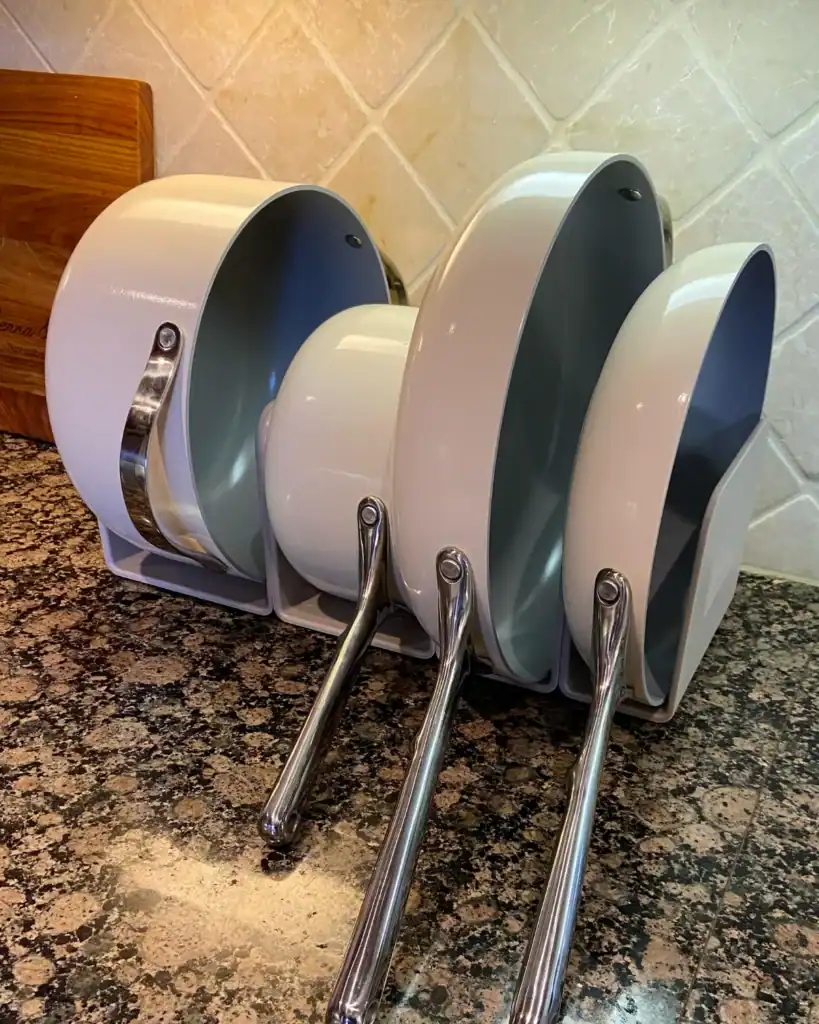
Four pans (10.5″ frying pan, 3-quart saucepan, 4.5-quart sauté pan, and 6.5-quart Dutch oven), three matching lids, four magnetic pan racks, and a canvas lid holder are included in this 12-piece set.
Everything arrives perfectly organized and labeled in a very nice recycled cardboard box.
The included metal racks deserve a special mention because they help to extend the lifespan of your Caraway cookware.
The magnetic racks keep each pan separated, preventing coating-on-coating contact that can accelerate wear. Plus, it makes your pans easy to reach for.
The included lid holder is a thoughtful addition, and it actually stays put on your cabinet door. But I was a little surprised by the weight.
These pans are quite heavy, especially the 3-quart saucepan. Not cast-iron heavy, but definitely not the lightweight pans I expected from ceramic.
Materials & Safety Claims
The Good News: Caraway Is Completely PFAS-Free
Caraway uses what’s called a sol-gel ceramic coating. Basically, they take silica (sand) and other minerals, apply them in liquid form, then cure everything onto the pan’s aluminum core.
The good news is that this process results in a non-stick cooking surface that is genuinely free from PTFE (Teflon), PFOA, PFAS, lead, and cadmium.
And this isn’t just Caraway’s word; independent labs SGS and NSL Analytical have tested Caraway’s pans to confirm they are free from over 200+ harmful substances.
So far, so good, right? But here’s where things start to get into a gray area.
Notable Concerns Around Ceramic Coated Cookware
While Caraway is transparent about what’s NOT in their pans, they’re notably quiet about the full formulation for their ceramic non-stick coating.
And that matters because independent testing by Lead Safe Mama found high levels of titanium in their ceramic cookware.
Why should you care about titanium in cookware? Well, it’s likely Caraway uses titanium dioxide nanoparticles to make their ceramic coating opaque.
The International Agency for Research on Cancer classifies titanium dioxide as “possibly carcinogenic” to humans, and it’s been banned in the EU as a food additive since 2022.
But before you panic and throw out your ceramic pans, most experts agree that when the ceramic coating is fully intact, titanium dioxide nanoparticle release is minimal.
The safety issues arise once the surface gets scratched, chipped, or worn down. But the fact that many Caraway users report chipping or surface wear within just a couple of years of use gives me pause about using their cookware on a regular basis.
While ceramic pans are definitely safer than traditional PTFE nonstick, their long-term safety record just isn’t established—so “probably safe” feels like a gamble when it comes to everyday cooking.
Where Ceramic Stands In The Cookware Safety Hierarchy
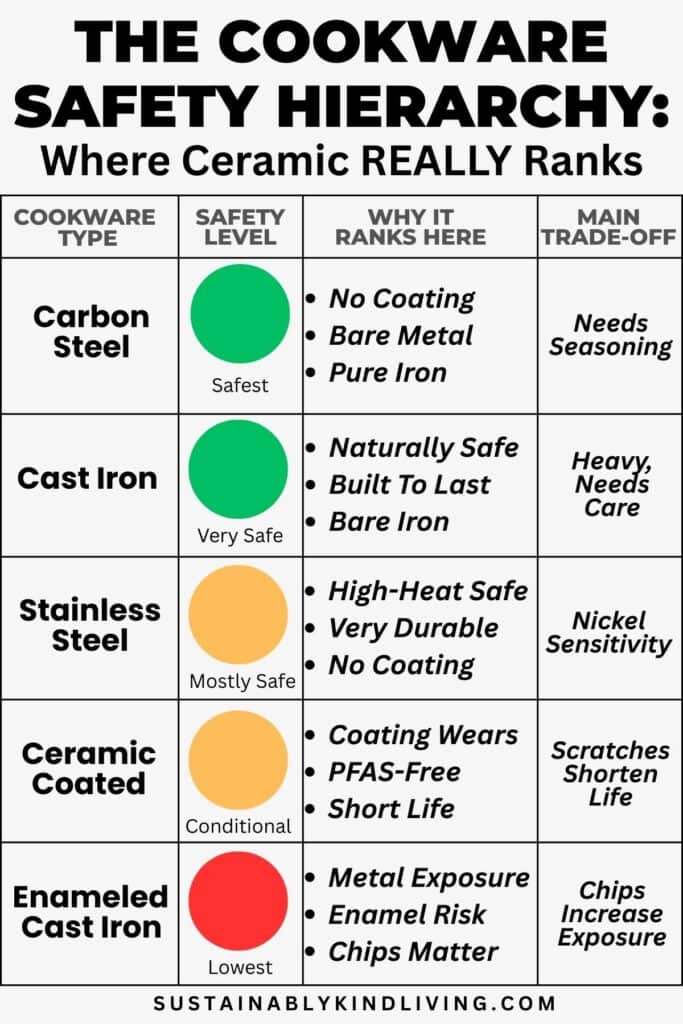
🟢 Carbon Steel: Safest Overall
Carbon steel is about as simple as it gets: 99% iron and 1% carbon. No coatings, no hidden chemicals. It can handle the highest heat, from a steak sear to the broiler, and only gets better with seasoning.
The only real trade-off is maintenance. It behaves like cast iron, needing oiling and care, but the payoff is a pan that can last for generations.
🟢 Cast Iron: Heavy, But Almost Indestructible
Bare cast iron is always reliable. It can sear, bake, and fry with ease, and, like carbon steel, it improves the more you use it.
A cast-iron pan does leach iron, between 1.7 and 26 mg per 100 g of food, but that’s a nutritional boost for most people.
The trade-off is its heft and the need for regular seasoning, though the reward is cookware your great-grandkids could still be using.
🟡 Stainless Steel: Solid, With a Caveat
Stainless is often called the “forever cookware” because, with care, it truly can last a lifetime. It has no coatings to wear out and handles any heat you throw at it.
The only caveat is nickel and chromium leaching in acidic foods, which is a concern for the 12–15% of women with nickel sensitivity. For everyone else, it’s considered one of the most reliable choices.
🟡 High-Quality Ceramic: Safe, Until It Isn’t
Ceramic earns points for being PFAS-free and non-stick without Teflon, which is why sets like Caraway are so appealing.
The catch? Its safety depends on the coating staying intact. Once scratched or chipped, studies show titanium dioxide nanoparticles can leach into food, and the lifespan of most ceramic pans is just two to three years.
That means more frequent replacements — and lingering questions about long-term safety.
🔴 Enameled Cast Iron: A Surprising Last Place
Enameled cast iron looks gorgeous, but independent testing has found lead and cadmium contamination in popular brands like Le Creuset, especially in red, orange, and yellow finishes.
While safe when intact, the enamel can chip, and once it does, you’re left with exposure risks and a compromised pan. Many safety experts now recommend avoiding enameled pieces entirely.
My Experience Cooking With The Caraway Ceramic Cookware Set
🍲 Chicken Soup
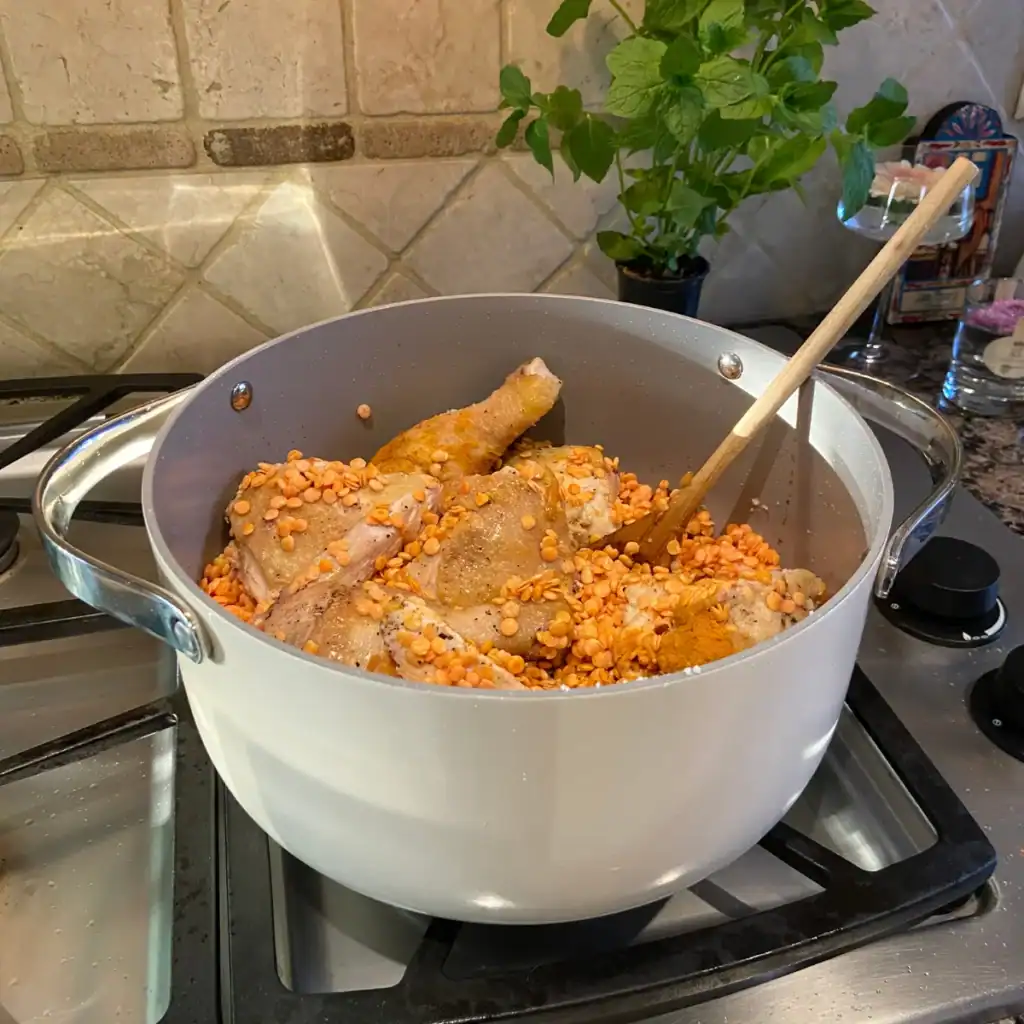
My very first test was a big pot of chicken soup in the 6.5-quart Dutch oven. The size was perfect — roomy enough for a whole bird, vegetables, and plenty of broth without feeling too heavy to lift.
The heat distribution was great, no hot spots, no scorched onions stuck to the bottom, just an even simmer that made for a cozy, hands-off cook.
The only downside? After about 20 minutes, the handles were hot enough that I had to grab a towel every time I lifted the lid. It’s a small annoyance, but one you notice when you’re stirring often.
🍳 Fried & Scrambled Eggs
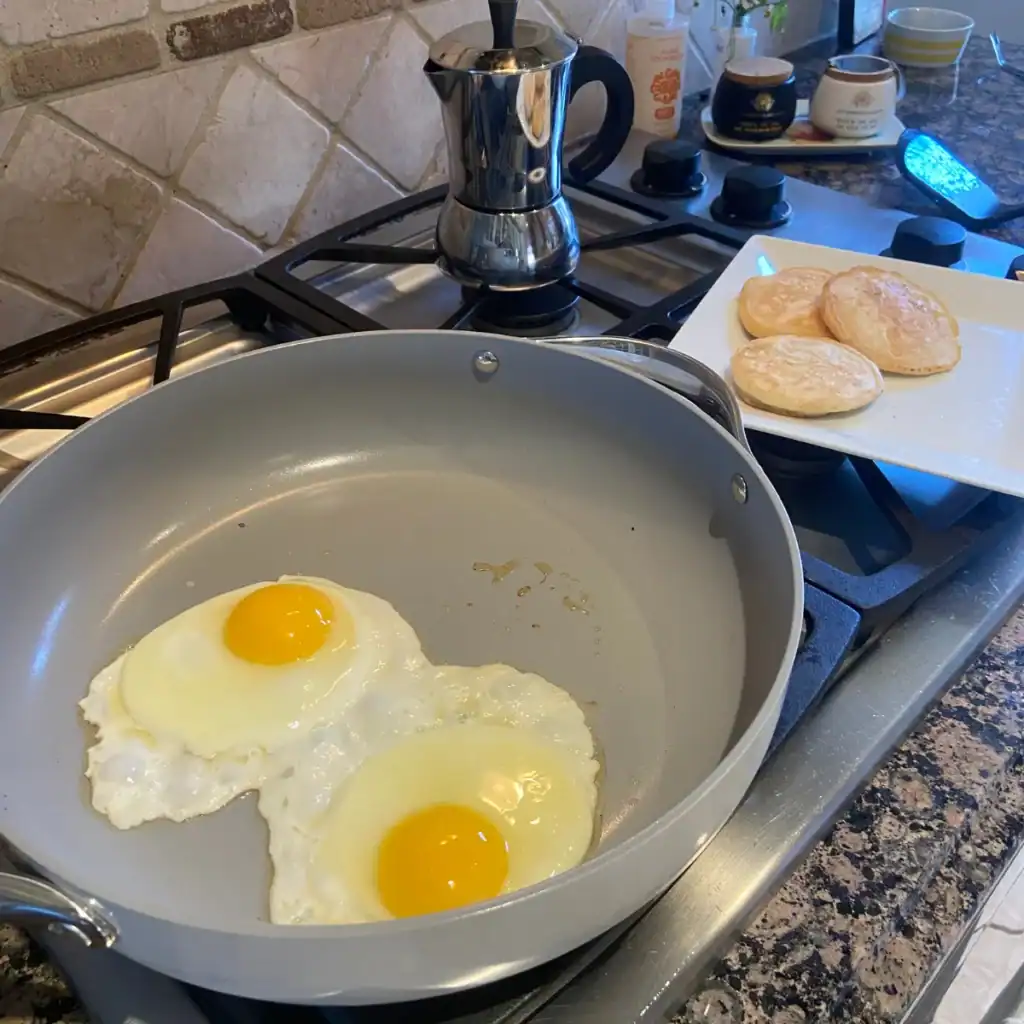
Like most people, my test for a good non-stick pan is always eggs. Scrambled and fried eggs practically hovered above the pan, sliding out so easily I barely needed a spatula.
What I did notice is that these pans heat up incredibly fast, which was surprising since they are so heavy. The butter browned almost immediately when I added it to the pan.
This wasn’t a problem, but just keep in mind that you need to use very low heat when cooking eggs. Any oil or butter you use will quickly burn and smoke.
If you’re going to use butter, I would recommend combining it with an equal amount of a high-smoke-point oil (like avocado oil) to prevent burning.
But once I was able to figure out the right heat level, the eggs slipped out beautifully – which I would expect from a ceramic-coated pan.
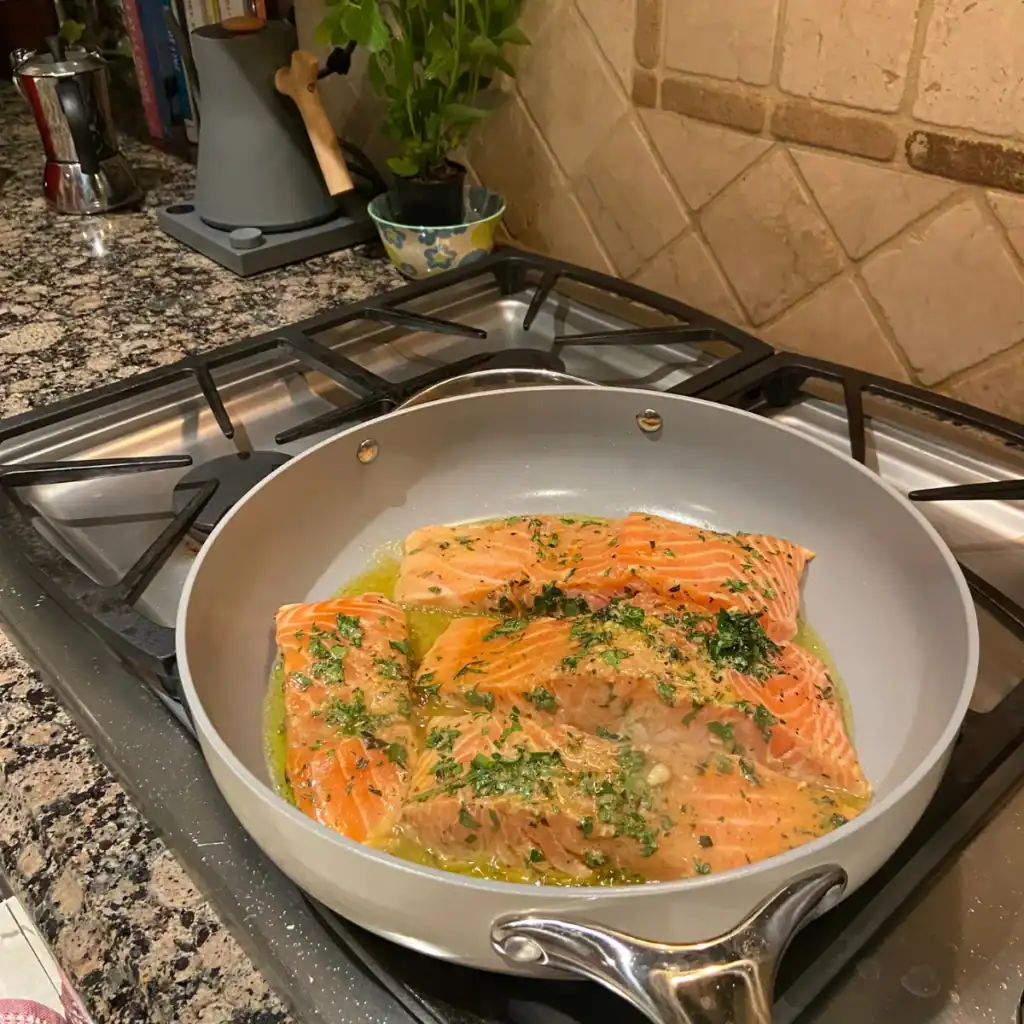
🍣 Sautéing Salmon
Sautéing fish in a frying pan can be tricky. But I found the Caraway sauté pan was great for frying fish.
Even under the high heat of the broiler, the salmon skin didn’t stick, and my salmon was perfectly cooked with a crispy skin that slid right out of the pan.
High-Heat Searing – Not Recommended
Since I read that Caraway’s pans stain easily, I tried searing both steak and chicken. It was difficult to get the sauté pans up to a high enough temperature without the oil smoking and staining.
And even when the pan was hot enough, I found that the ceramic finish just didn’t give that nice golden crust I’m looking for when searing meat. Both steak and chicken turned out more steamed and rubbery rather than tender and juicy.
After a few trials, I came to the conclusion that these pans are best for making delicate foods like pancakes, eggs, or fish rather than for high-heat searing. I’ll stick to cast iron or stainless steel when it comes to searing meat.
What I Reach For Most Often
After a couple of months, I found I reached for the 10.5″ frying pan most often. It’s the right size for two eggs in the morning, a quick veggie sauté at lunch, or a pair of chicken breasts for dinner.
The 3-quart saucepan is good for oatmeal, reheating soup, and boiling eggs — practical, reliable, and just the right depth. But I’m not sure I need a non-stick pot for any of these applications.
The Dutch oven still makes a weekly appearance for soups or braises, where its heft and even heating really shine.
The 4.5-quart sauté pan, on the other hand, is overkill in my kitchen. It rarely leaves the rack because it’s simply too large for most of my everyday meals. It would be great, though, if you are a fan of one-pot pasta meals.
Cleaning & Maintenance
The cleaning experience depends entirely on what you cook. After making eggs or pancakes? A quick wipe with a damp sponge and you’re done. It’s genuinely that easy. This is ceramic at its best — when the non-stick works, cleanup is a dream.
But push these pans at higher heat, and cleaning up becomes a whole thing. I spent twenty minutes soaking, using baking soda paste, and scrubbing with the soft side of the sponge to try to get those brown spots off. And even then, there’s a ghost of baked-on grease still visible.
The handle crevices are also slightly annoying. That gap where the stainless steel handle meets the ceramic body can be a grease trap. They are hard to get completely clean. If you’re not careful, it could result in a permanent ring of cooked-on oil.
Hand Washing Only
With concerns around the ceramic surface chipping, hand washing is non-negotiable in my opinion. The manual warns that dishwasher detergent will degrade the coating, and based on what I’ve read from other reviewers, I believe them. It’s not a huge burden.
The non-stick surface means washing is usually quick. But on busy weeknights when everything else goes in the dishwasher, hand-washing pans feels like one more task.
Always use silicone or wooden utensils with these ceramic pans. Metal spatulas can quickly damage the ceramic coating, causing immediate chips or creating tiny scratches that wear down the surface over time.
Have Realistic Expectations For Durability & Longevity
After several months of daily use, my set still looks pretty good.
The ceramic coating remains slick, nothing’s chipped, and aside from some light staining on the ceramic coating, they’re holding up.
I also only reach for these pans when I know that I’ll be cooking something delicate that I know tends to stick easily in a stainless steel or cast iron pan.
But I’m only four months in, and I make a point to really baby these pans, especially after the reviews I’ve read online.
User comments generally fall into two camps: people whose pans still look pristine after two years, and others showing heavily stained, worn-out cookware after six months.
The difference? Probably a combination of care, cooking style, and realistic expectations.
Based on what I’ve researched, it seems like Caraway’s frying pans typically maintain peak non-stick performance for 1-2 years, then gradually decline until replacement around year 3.
The Dutch oven and saucepans tend to last longer — many users report 3+ years of solid performance. The saute pan falls somewhere in the middle.
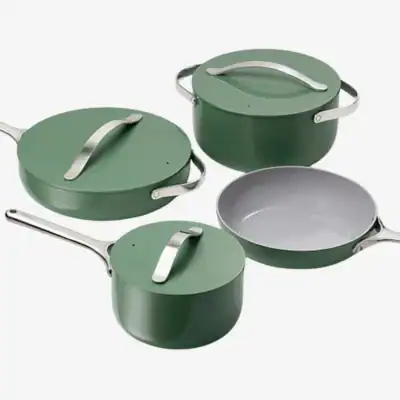
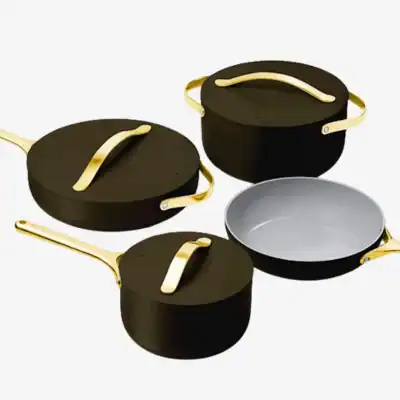
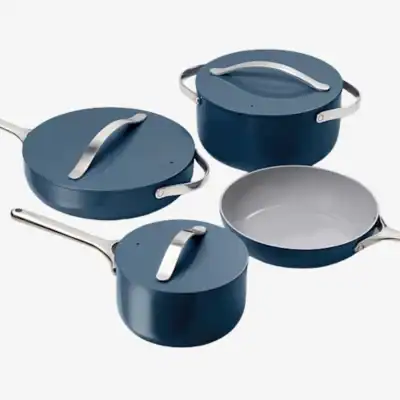
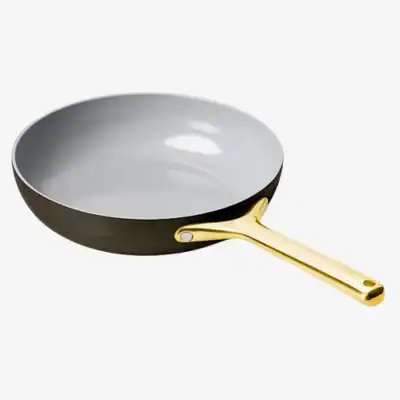
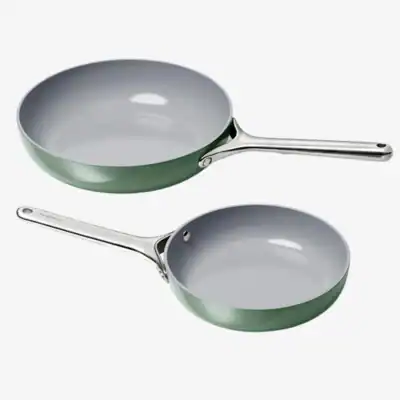
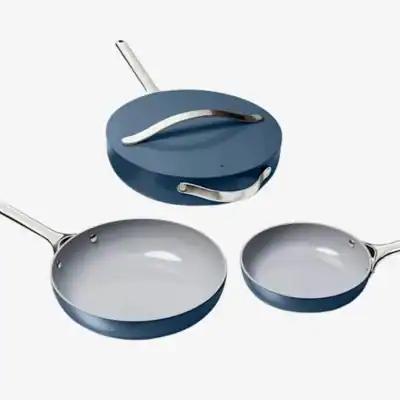
If you’re considering Caraway, I would say go darker — sage, navy, or black will age more gracefully than the cream, which can tend to show browning around the lip.
While there are a lot of upsides to this ceramic cookware set, a major downside is that this isn’t “forever cookware.”
Unlike a cast-iron skillet that can last for generations, these ceramic coatings have a definite expiration date, and for $445, this isn’t a set that you’re going to want to replace on a regular basis.
My Recommended Ceramic Cookware Colors from Caraway:
💸 Use code SKL to get 10% off!
Caraway’s Marketing vs. Reality
Caraway’s origin story and marketing are impressive. The founder’s mission to create safe cookware after suffering PTFE poisoning really resonates.
Celebrity endorsements and flawless Instagram photos have made these pans feel like a must-have, helping the company grow from 16 customers to over a million since 2018.
Their environmental claims also shine on paper, with eco-friendly manufacturing certifications, lower CO2 emissions, recycled packaging, and low-impact inks.
But there’s a big catch. Caraway’s ceramic pans typically need replacing every 2 to 3 years because the coating wears out.
That limited lifespan undermines their eco-friendly messaging, especially compared to cast-iron skillets that can last centuries or stainless steel sets that endure for decades.
When the coating fails, these pans become landfill waste, and because ceramic is permanently bonded to aluminum, they can’t be recycled.
So while Caraway deserves credit for eliminating PFAS from their cookware and raising the bar on non-toxic design, the brand’s frequent replacements and unresolved safety questions make it hard to fully endorse, especially for everyday use in family kitchens.
Price, Warranty & Value
Let’s talk numbers. The 12-piece set runs $445, depending on sales. That includes the four pans, three lids, storage racks, and a lid holder.
The warranty? One year.
Caraway offers lifetime warranties on their stainless steel and enameled cast iron lines, which I think is telling about their confidence in the ceramic coating longevity.
Here’s where the math doesn’t add up for me. If you replace your Caraway frying pans every 2-3 years at $95-135 each, you’re spending $30-65 annually just on frying pans.
Over a decade, that’s $300-650 for one pan size. A quality carbon steel pan costs $100 and lasts decades with proper care.
But let’s be fair about what you’re paying for. The design is genuinely beautiful. The storage system is thoughtful and functional.
The packaging experience feels premium. If aesthetics and organization matter to you, there’s value there beyond pure cooking performance.
Who Should Buy What
Full Set Makes Sense If:
- You already own quality stainless or cast iron for high-heat cooking
- Design and aesthetics are priorities in your kitchen
- You have the budget for periodic replacements
- You primarily cook delicate foods that benefit from non-stick
- Cabinet organization is currently driving you crazy
Just Buy The Frying Pan If:
- You want to test ceramic cookware without a major investment
- You only need non-stick for eggs and pancakes
- Budget is a concern, but you want a safer non-stick
- You’re ceramic-curious but ceramic-skeptical
Skip Caraway Entirely If:
- You’re looking for one “forever” cookware set
- High-heat searing is essential to your cooking
- You hate hand-washing dishes
- You expect cast-iron durability from ceramic coating
- The thought of replacing pans every few years annoys you
Final Verdict: Beautiful, Functional, But Not Forever
Caraway delivers on its non-toxic promise and excels at specific tasks. The design is stunning, the storage system is genuinely useful, and for eggs, fish, and pancakes, these pans perform beautifully.
But they’re not the revolutionary all-purpose cookware Caraway’s marketing suggests. They’re great only in certain applications — medium heat, delicate foods, gentle care. Step outside those boundaries and you’ll be disappointed.
The safety profile is better than PTFE but comes with its own questions. Potential exposure to titanium dioxide nanoparticles concerns me enough that I wouldn’t use damaged ceramic cookware.
And given the documented durability issues, “damaged” might come sooner than you’d expect. For $445, I expected more. Not just prettier pans, but better pans.
What I got was a gorgeous set of task-specific pans that make cooking certain things easier while requiring me to keep my cast iron and stainless steel for everything else.
Would I buy them again? The frying pan, absolutely. I will continue to use the frying pan on certain occasions. The full set? Probably not.
I’d take that $445 and invest in high-quality non-toxic cookware or a good-quality stainless steel set — less Instagram-worthy, but built to outlive me.
Explore The Ceramic Pan Collection from Caraway:
💸 Use code SKL to get 10% off!
The truth is, Caraway succeeds at exactly what it intended: making non-toxic, beautiful cookware that people actually want to use. Whether that’s worth the premium price and periodic replacement costs? That depends entirely on what you’re looking for.
More To Love…
- 🫙 Caraway Food Storage Review – An honest review of Caraway’s ceramic-coated food storage, focusing on material safety, everyday usability, and non-toxic meal prep.
- 🌿 Non-Toxic Cookware – A practical guide to the safest cookware materials, what to avoid, and how to choose pans without PFAS, coatings, or greenwashed claims.
- 🍳 Our Place Titanium Pan Review – A closer look at Our Place’s titanium pan, examining materials, coating safety, and whether it’s a reliable non-toxic nonstick alternative.
- 🍟 Non-Toxic Air-Fryers – Safer air fryer options made without PFAS or toxic nonstick coatings, plus tips for choosing healthier countertop appliances.
- 🥘 360 Cookware Review – A deep dive into stainless steel cookware designed for oil-free cooking, long-term durability, and a truly non-toxic kitchen.
📌 Save This Guide For Later
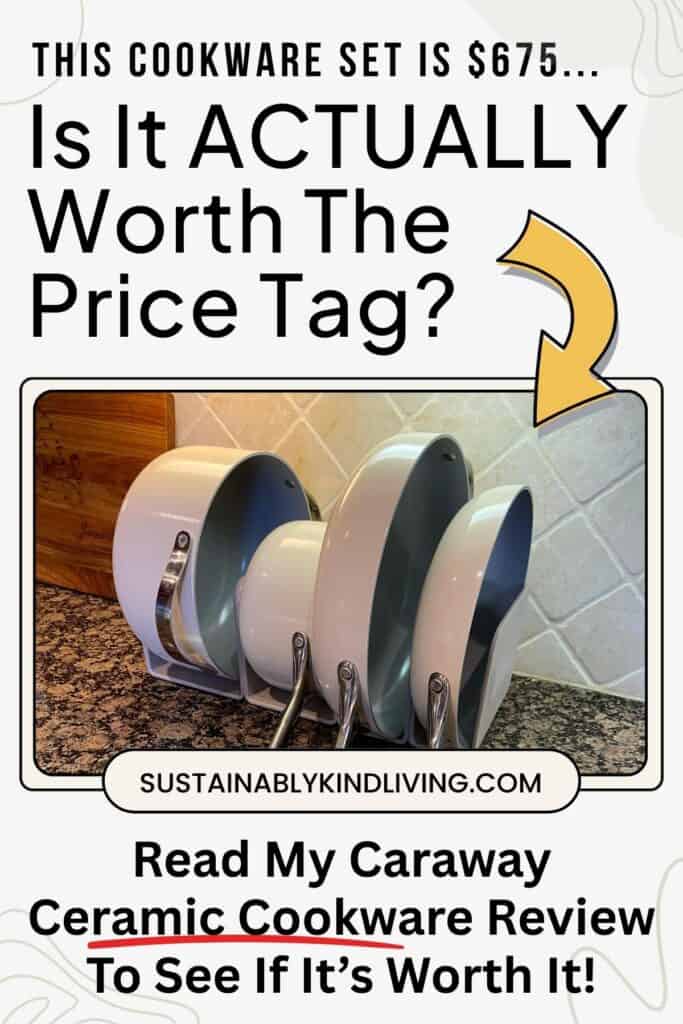
Save this pin to reference my no-fluff review of Caraway cookware after 4 months of daily use — including safety, wear, and whether I’d buy it again.
References:
- Berghoff Worldwide. (n.d.). What about recycled materials: Aluminum cookware recycling challenges? Retrieved from https://berghoffworldwide.com/en/blog/what-about-recycled-materials-aluminium
- Caraway. (n.d.). LFGB test report for PFOA, PFOS, and extractable metals. Retrieved from https://cdn.shopify.com/s/files/1/0258/6273/3906/files/LFGB_test_report_for_PFOA_PFOS_and_extractable_metals2024.pdf?v=1749835145
- Caraway. (n.d.). NSL analytical PTFE detection report. Retrieved from https://cdn.shopify.com/s/files/1/0258/6273/3906/files/R-20200127-095_NSL_Analytical_PTFE_Detection_February_2020.pdf
- Consumer Reports. (n.d.). Best nonstick frying pans from Consumer Reports tests. Retrieved from https://www.consumerreports.org/home-garden/cookware/best-nonstick-frying-pans-from-consumer-reports-tests-a1041724599/
- International Agency for Research on Cancer. (2010). IARC monographs on the evaluation of carcinogenic risks to humans: Titanium dioxide (Vol. 93). Retrieved from https://ftp.cdc.gov/pub/Documents/OEL/02.%20Kuempel/References/IARC_2010-Vol%2093.pdf
- Lead Safe Mama. (2021, August). Caraway cookware with chemicals tested positive for 20 metals, including lead, mercury, cobalt, and antimony, when tested with XRF technology. Retrieved from https://tamararubin.com/2021/08/caraway-cookware-without-the-chemicals-tested-positive-for-20-metals-including-lead-mercury-cobalt-antimony-when-tested-with-xrf-technology/
- National Center for Biotechnology Information. (n.d.). Release of particles from scratched or chipped ceramic surfaces. Retrieved from https://pmc.ncbi.nlm.nih.gov/articles/PMC11295244/
- National Center for Biotechnology Information. (n.d.). Nickel and chromium leaching in stainless steel cookware. Retrieved from https://pmc.ncbi.nlm.nih.gov/articles/PMC4284091/
- National Institute of Standards and Technology. (n.d.). Nanoparticle release from ceramic coatings (Special Publication 800-203). Retrieved from https://nvlpubs.nist.gov/nistpubs/SpecialPublications/NIST.SP.800-203.pdf
- PubMed. (n.d.). Iron leaching from cast iron cookware. Retrieved from https://pubmed.ncbi.nlm.nih.gov/3722654/
- ScienceDirect. (2020). Titanium dioxide nanoparticles in ceramic coatings and their opacity. Retrieved from https://www.sciencedirect.com/science/article/abs/pii/S2452074820300185
- Rubin, T. (2017, January). Lead and cadmium contamination in enamel cookware: Le Creuset case study. Retrieved fromhttps://tamararubin.com/2017/01/casserole/

Steal My Non-Toxic Cleaning Checklist!
Believe us, it’s the BEST…. and it’s free. Does it really get any better than that?! Sign up for our newsletter and get this free checklist to clean your home without any harmful chemicals!