 Shop My Favorite Non-Toxic Gifts Of 2026!
SKL is reader supported. When you buy through links on our site, we may earn affiliate commission. Learn more here.
For years, I mostly used my microwave for one thing: reheating leftovers.
I avoided actually cooking in it — partly because of the lingering questions around microwave safety, and partly because most microwave containers are plastic. And that’s a no-go in my kitchen.
So when the Anyday Microwave Glass Dish Set arrived for review, I was genuinely curious.
Could a set of borosilicate glass bowls really function as real cookware? Was microwave cooking actually safe? And was this $120 “non-toxic microwave system” worth the investment — or just beautifully designed storage?
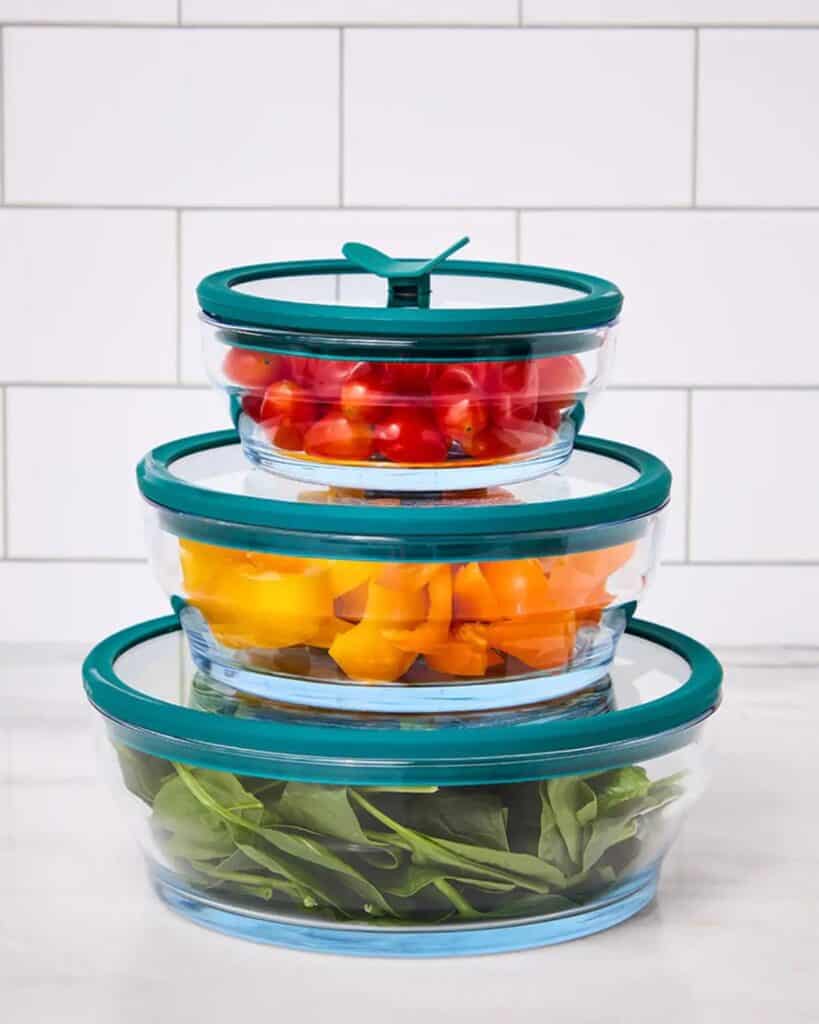
In this in-depth Anyday microwave cookware review, I tested everything: material safety, heat performance, nutrient retention claims, and real-world weeknight practicality.
I also compared it to plastic containers, Pyrex, and traditional stovetop cooking to see where it actually fits.
Final Verdict & Overall Rating
Overall Rating: 9.3 / 10
- Safety: 9.5
- Performance: 9.5
- Ease of Use: 9
- Value: 9.5
Best For: Meal preppers and anyone eliminating plastic from microwave cooking (Danielle’s father adores this set).
Quick Verdict: A thoughtfully designed, plastic-free microwave cooking system that genuinely excels at steam-based meals — but isn’t meant for browning.
As part of our non-toxic kitchen testing framework at Sustainably Kind Living, I evaluate cookware based on material transparency, chemical stability under heat, long-term durability, and real-life functionality — not just marketing claims.
Before I ever put this set in my microwave, I went deep into the research.
If you’re new to our testing standards, start with our full non-toxic cookware guide, where we compare stainless steel, ceramic, and cast iron options.
I reviewed the science behind microwave radiation, analyzed peer-reviewed studies on nutrient retention, and evaluated the materials — borosilicate glass, food-grade silicone, and stainless steel — for long-term heat stability.
Then I cooked with it! Here’s what I found.

What Is Anyday Microwave Cookware? (Overview & Specs)
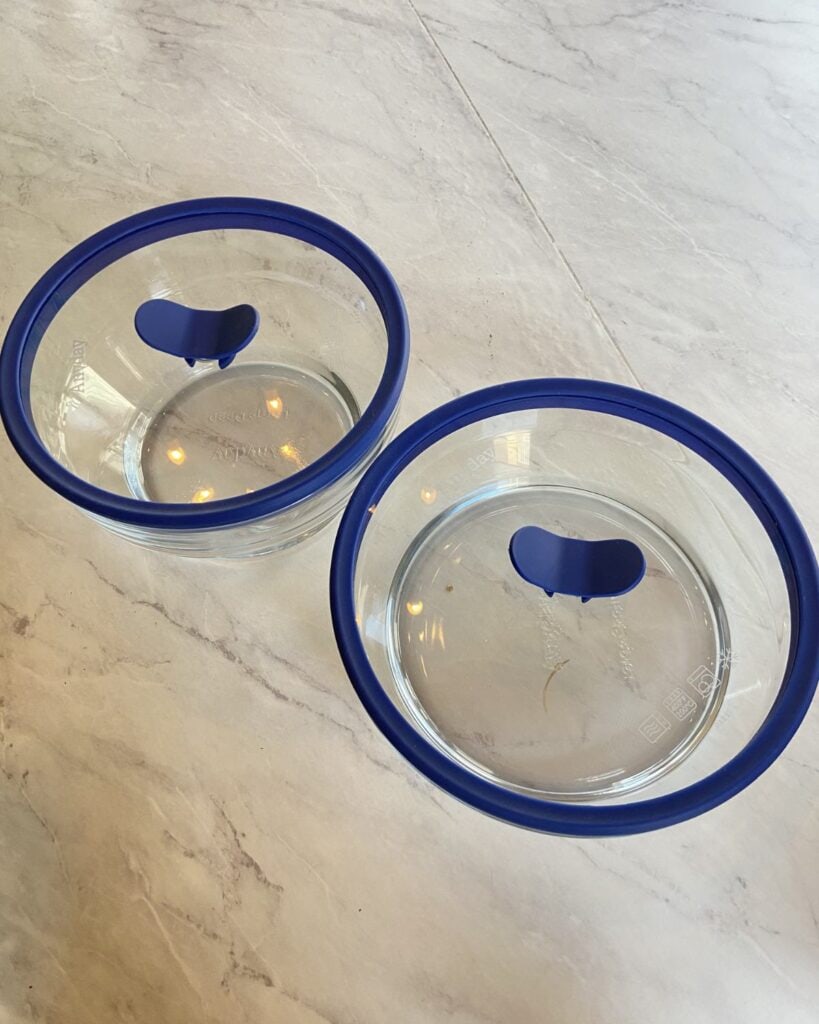
Anyday microwave cookware is a line of borosilicate glass containers designed specifically for cooking full meals in the microwave — not just reheating leftovers.
Unlike traditional “microwave-safe” plastic containers, Anyday bowls are made from oven-safe borosilicate glass with a food-grade silicone gasket and vented lid.
The lid is designed to trap steam while releasing excess pressure, creating a controlled steam-cooking environment inside the bowl.
In practical terms, that means your microwave functions more like a compact steam oven than a simple reheating tool.
Each bowl is designed to:
- Cook
- Steam
- Store
- Reheat
— all in the same container.
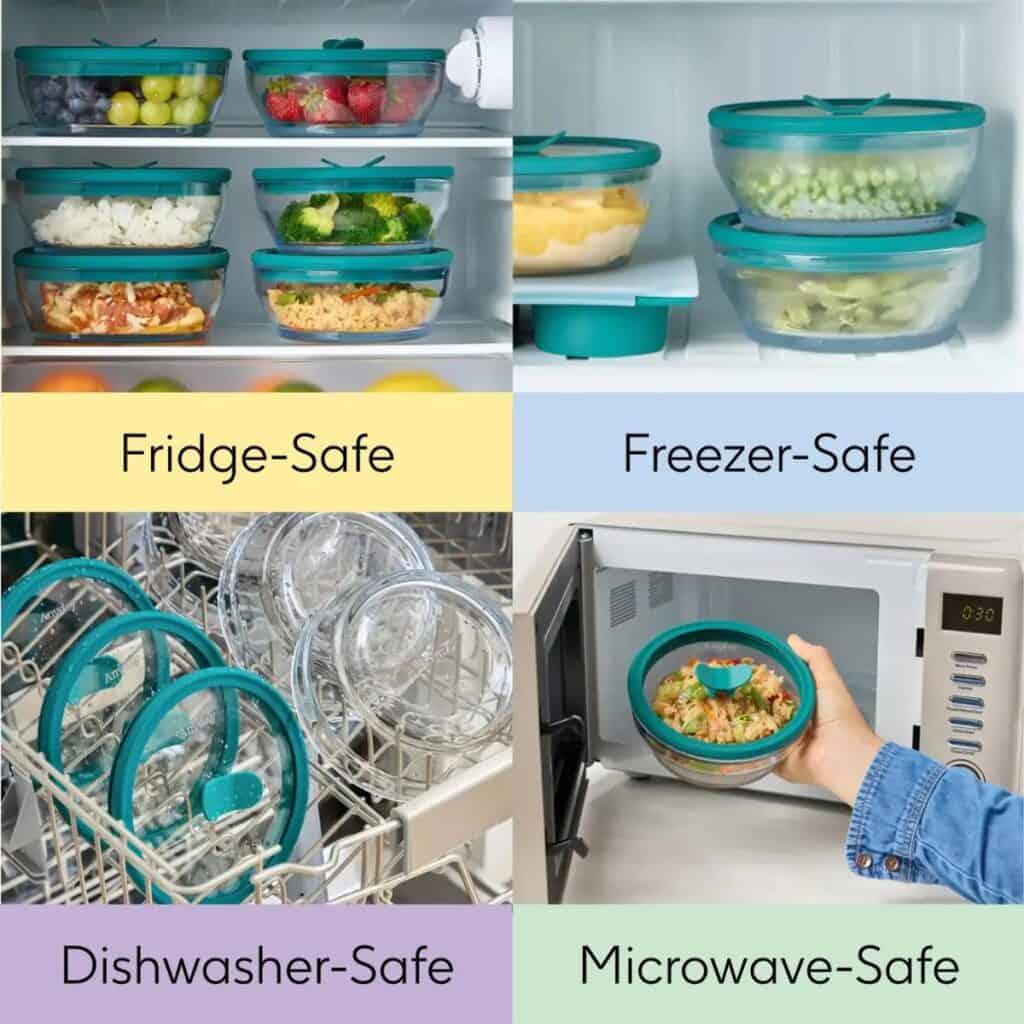
It includes both shallow and deep sizes, allowing you to prepare everything from scrambled eggs and vegetables to rice, mashed potatoes, and smaller portions of protein.
Because the bowls are plastic-free and oven-safe up to 400°F, Anyday positions itself as a safer alternative to plastic microwave containers — while also reducing the need for multiple pots, pans, and storage dishes.
They are, in fact, cookware!
Quick Pros & Cons, at a glance…
Pros:
✅ Genuinely preserves more nutrients than many stovetop methods
✅ One-dish cooking minimizes cleanup (especially great for eggs)
✅ Dual-purpose design: cook, store, and reheat in the same dish
✅ Quality, non-toxic materials. Borosilicate glass with airtight silicone seals that actually work
Cons:
❌ Dishes get extremely hot — oven mitts are absolutely essential (or a solid cool down)
❌ A little bit of a learning curve with microwave power settings (I caught on quickly)
❌ Premium price point for what’s essentially glass bowls with lids
If you’re ready to challenge your assumptions about microwave cooking and want cookware that genuinely simplifies meal prep, this set delivers.
Just be prepared for a small learning curve and the reality that these dishes get extremely hot.
Is Microwave Cooking Safe? (Radiation & Health Explained)
Before I tested the Anyday set, I needed to answer one foundational question:
Is microwave cooking actually safe?
Microwave ovens use non-ionizing radiation (around 2.45 GHz), which heats food by causing water molecules to vibrate. This process generates heat — but it does not break DNA bonds or make food radioactive.
That distinction matters.
Microwave radiation is fundamentally different from ionizing radiation like X-rays or gamma rays.
According to both the U.S. Food and Drug Administration and the American Cancer Society, microwave ovens do not make food radioactive, and the energy stops the moment the appliance is turned off.
In other words, the microwave itself isn’t the safety issue.
The more relevant concern is what you’re cooking in.
Many microwave containers are made from plastic, which can warp, degrade, or potentially leach chemicals when exposed to repeated heat, especially with fatty or acidic foods.
That’s where glass cookware becomes important.
Borosilicate glass is naturally lead-free, heat-stable, and resistant to thermal shock. It doesn’t melt, warp, or release chemicals under normal microwave conditions.
Once I separated the science of microwave radiation from the safety of container materials, the picture became much clearer.
Does Microwave Cooking Destroy Nutrients? (What Research Says)
One of the most common concerns about microwave cooking is nutrient loss — especially in vegetables.
It seems intuitive: high heat and fast cooking must destroy vitamins, right?
But research suggests the opposite.
Studies from Harvard Medical School show that microwaving can retain up to 90% of certain water-soluble vitamins. By comparison, boiling vegetables can significantly reduce nutrient levels — sometimes leaving closer to 50% remaining.
The reason comes down to two factors:
• Prolonged heat exposure
• Excess water
Most nutrient loss occurs when food is cooked for long periods or submerged in water. Because vitamins like vitamin C and B vitamins are water-soluble, boiling allows them to leach into the cooking water, which is often discarded.
Microwave cooking uses shorter cook times and typically requires little to no added water. That combination helps minimize nutrient degradation.
A 2025 study examining mineral retention in vegetables even found that microwave cooking often outperformed steaming and grilling for preserving certain minerals.
So when done properly, microwave cooking isn’t just safe — it can be one of the more nutrient-preserving methods available.
Where Anyday fits into this is practical.
The vented silicone lid creates a controlled steam environment, allowing vegetables, grains, and proteins to cook with minimal added liquid. In real-world use, that means shorter cook times and less nutrient loss to excess water.
For anyone focused on both safety and nutrition, that’s a meaningful advantage.
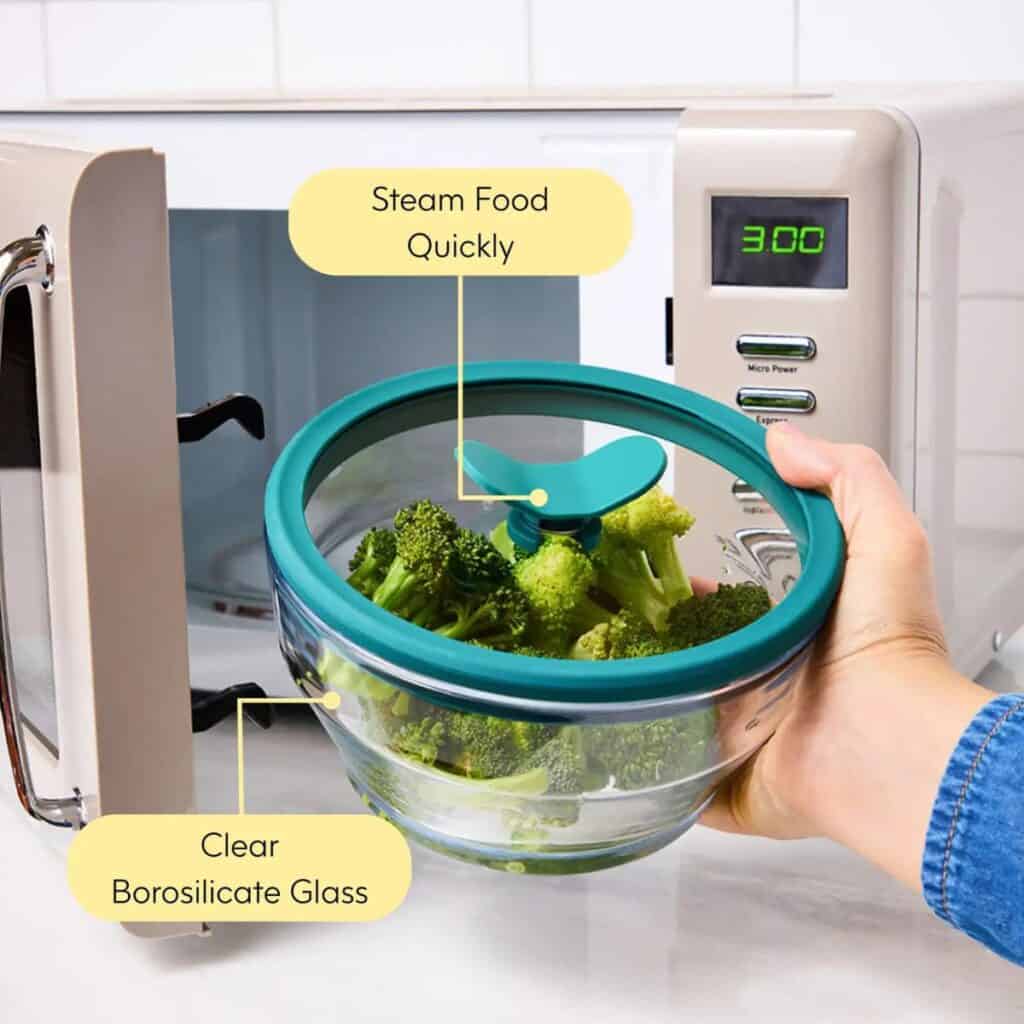
How I Tested the Anyday Microwave Cookware Set
Before recommending any microwave-safe glass cookware, I run it through the same evaluation framework I use for all non-toxic kitchen reviews.
That means assessing material transparency, chemical stability under heat, performance, durability, and real-world usability — not just first impressions.
Here’s exactly how I tested the Anyday Glass Round Dish Set.
1. Material Verification & Transparency
I confirmed the full material composition: borosilicate glass, food-grade silicone gaskets, and stainless steel rim components.
I verified there were:
• No polyurethane coatings
• No ceramic glaze layers
• No hidden adhesives
• No vinyl or synthetic sealants
I also reviewed safety documentation related to lead content, heavy metals, and FDA compliance for repeated food contact.
If a brand isn’t clear about materials, it doesn’t move forward in my testing process.
2. Off-Gassing & Odor Testing
New cookware shouldn’t emit chemical smells — especially under heat.
I checked for:
• Plastic-like odors
• Synthetic sealant smells
• Silicone off-gassing during microwave use
After multiple heating cycles, there were no detectable odors, suggesting stable, heat-safe materials.
3. Heat Performance & Thermal Stability
I tested heat distribution using water, acidic foods (like tomato-based sauces), starches, and oils.
I evaluated:
• Hot spot formation
• Lid seal consistency
• Steam retention
• Overall heat distribution
The borosilicate glass heated evenly and retained heat extremely well, which improves steam cooking performance but requires oven mitts every time.
4. Surface Integrity & Durability
Because this is uncoated glass, I tested:
• Utensil scraping
• Oil staining
• Acid exposure
• Repeated dishwasher cycles
The glass showed no scratching, staining, or clouding. Cleanup was straightforward, and the silicone gasket maintained structure after repeated heating.
5. Silicone Quality Check
Since silicone safety is often debated, I performed a pinch-twist test to check for filler additives. The gasket did not turn white when twisted, indicating high-quality silicone without obvious fillers.
I also confirmed the gasket’s temperature stability within typical microwave ranges.
6. Real-World Cooking Trials
Finally, I tested the bowls in everyday scenarios:
• Mashed potatoes (steam-cooked without added water)
• Scrambled eggs
• White rice
• Steamed vegetables
These trials allowed me to evaluate steam control, timing consistency, and overall practicality for weeknight cooking.
Materials & Construction: Is Anyday Non-Toxic?
Material safety is one of the main reasons people consider Anyday — so here’s a clear breakdown.
The bowls are made from:
• Borosilicate glass
• Food-grade silicone gaskets
• Stainless steel rim components
Borosilicate Glass
Borosilicate glass is lead-free, non-porous, chemically inert, and highly resistant to thermal shock. It remains stable under repeated microwave and oven use without degrading or leaching chemicals.
Compared to standard soda-lime glass, it tolerates rapid temperature changes more effectively — making it a durable and heat-stable choice for cooking.
Food-Grade Silicone Gasket
The vented lid uses FDA-compliant, food-grade silicone designed for repeated heat exposure. It remains stable within normal microwave temperatures and does not melt, warp, or show signs of filler additives under proper use.
In testing, the gasket maintained structure and performance after repeated heating cycles.
No Coatings, No PFAS, No Plastic Liners
Because the cooking surface is pure glass, there are:
• No nonstick coatings
• No PFAS-based layers
• No ceramic glaze coatings
• No plastic in contact with food
Fewer materials mean fewer potential failure points — and fewer chemical concerns over time.
From a construction standpoint, the simplicity works in its favor.
Silicone Safety Deep Dive
There’s an ongoing debate about whether silicone is “basically plastic.”
It isn’t.
While silicone is a synthetic polymer, it’s made from silicon and oxygen — not petroleum — and behaves more like a flexible, heat-resistant rubber than conventional plastic.
Food-grade silicone:
• Is FDA-approved for food contact
• Is heat-stable up to ~428°F
• Does not melt or warp in microwave conditions
• Does not break down into microplastics
To verify quality, I performed the pinch-twist test on the gasket. It did not turn white — indicating filler-free silicone.
Real-World Cooking Tests: How Anyday Performs in an Actual Kitchen
Research matters. But performance matters more.
After verifying material safety and heat stability, I tested the Anyday microwave cookware in everyday cooking scenarios — not just reheating leftovers.
Here’s exactly how it performed.
Mashed Potatoes (No Added Water)
I peeled and cubed Japanese sweet potatoes, placed them in the deep dish, sealed the vented lid, and microwaved according to Anyday’s recommended power settings.
No added water.
In about 10–12 minutes, the potatoes were fork-tender and ready to mash.
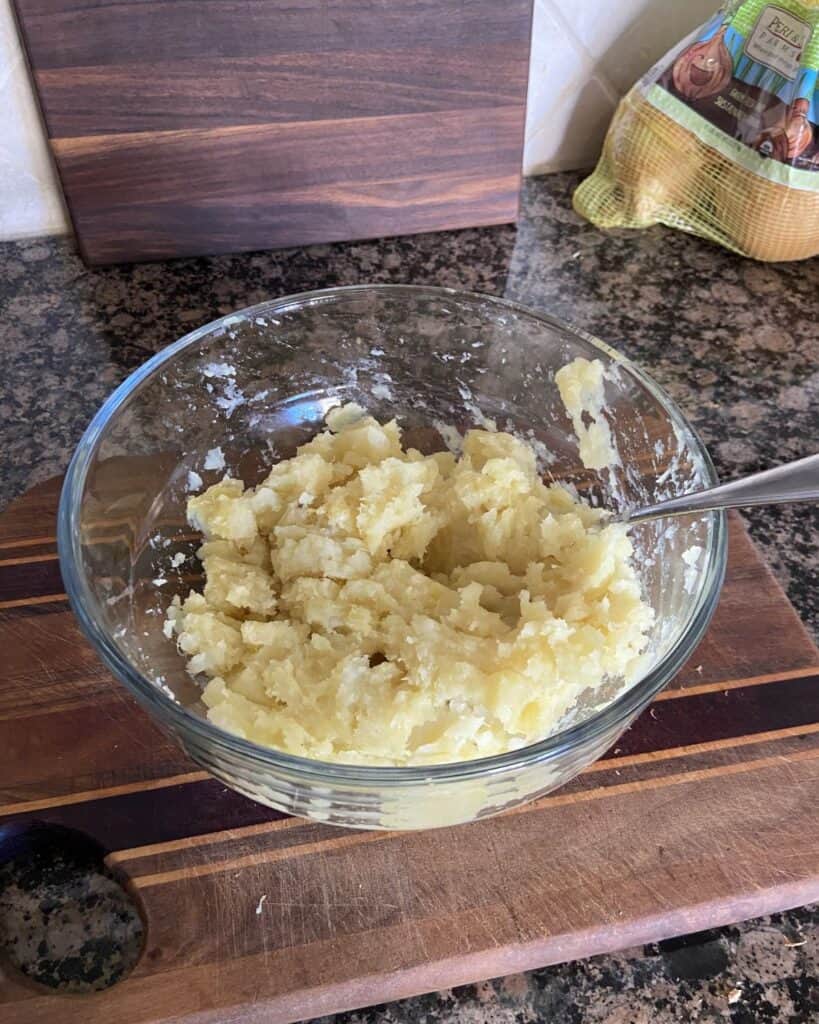
Because the lid traps and regulates steam, the potatoes cooked evenly without becoming waterlogged — something that often happens with stovetop boiling.
For traditional stovetop steaming comparisons, see our guide to the safest non-toxic steamers.
Cleanup? One bowl. No stockpot. No draining.
This alone made weeknight cooking noticeably easier.
Scrambled Eggs (2-Minute Test)
This one surprised me.
Two eggs, a tablespoon of mayo (as suggested in their recipe library), whisked directly in the shallow bowl.
Cook time: about 2 minutes.
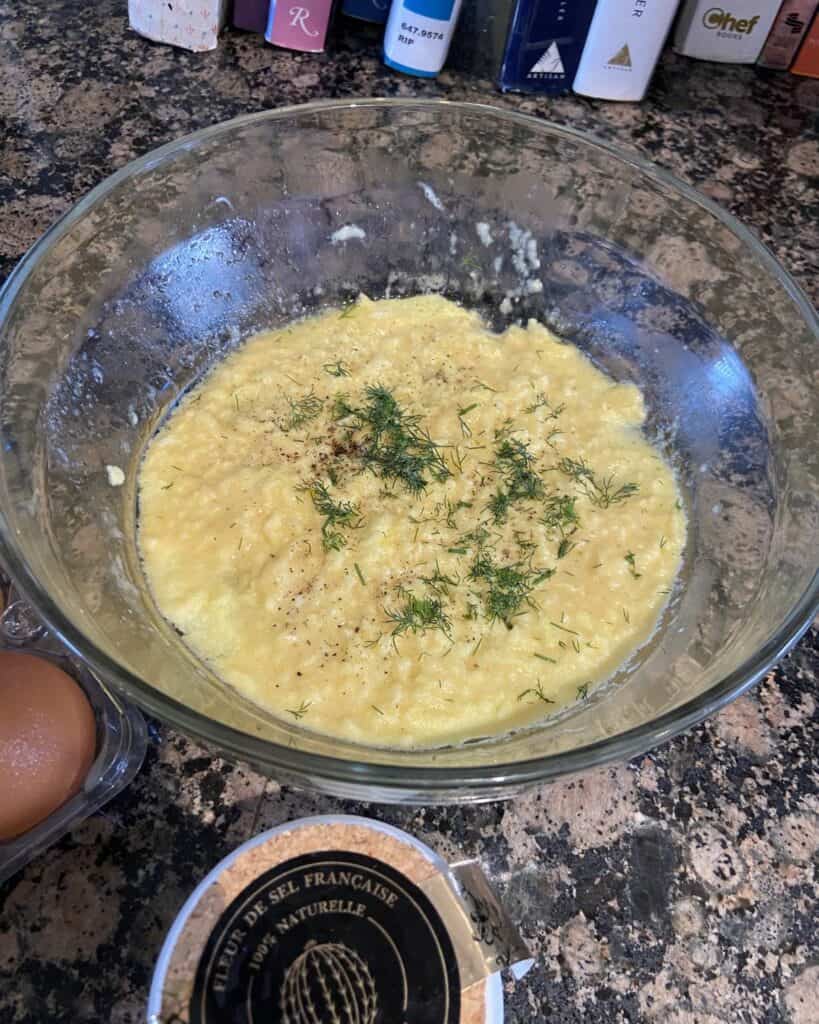
The result was fluffy, evenly cooked scrambled eggs without rubbery edges. The smooth borosilicate surface prevented sticking, and the silicone seal helped retain just enough moisture for even cooking.
For busy mornings, this was one of the most practical wins.
White Rice (Small Batch)
Rice is where the steam-release lid really shines.
One cup of rinsed rice, proper water ratio, and a sealed lid.
Total cook time: roughly 15 minutes with adjusted microwave power.
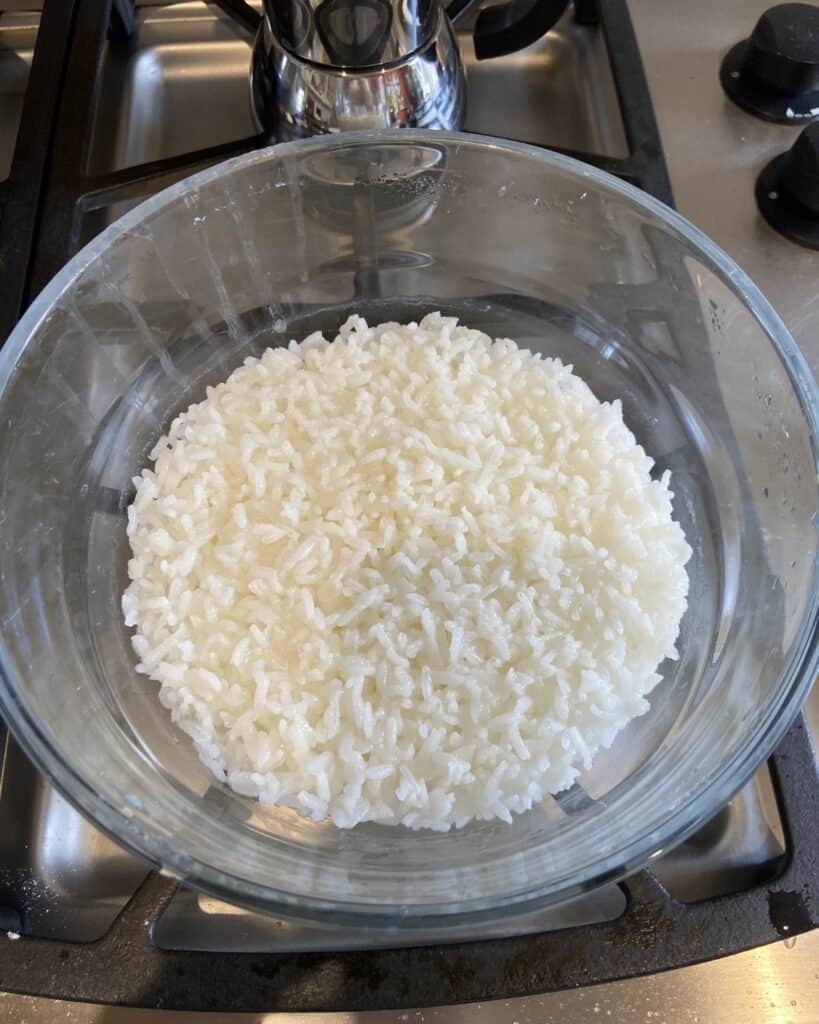
The result: evenly cooked rice without the need for a stovetop pot or rice cooker.
If you prefer a dedicated appliance for grains, our review of non-toxic rice cookers compares stainless and ceramic options.
Steamed Vegetables
Broccoli florets with one tablespoon of water.
Cook time: 2–3 minutes.
The vegetables retained color and texture without turning mushy. Because microwave cooking uses shorter heat exposure and minimal water, this method supports better nutrient retention compared to boiling.
No steamer basket required.
What These Tests Reveal
Anyday performs best when used for:
• Steaming
• Reheating
• Small-batch grain cooking
• Weeknight efficiency
• Meal prep for 1–2 servings
It does not replace:
• Searing
• Browning
• Large family batch cooking
But within its intended use case — fast, non-toxic microwave cookware designed for real cooking — performance was consistent and genuinely practical.
What Anyday Does Well
After weeks of testing, there are several areas where the Anyday microwave cookware genuinely stands out — especially compared to plastic microwave containers or traditional stovetop cooking.
One-Dish Cooking That Reduces Cleanup
One of the biggest advantages of the Anyday glass set is its ability to cook, store, and reheat in the same container.
Instead of using:
- A pot
- A lid
- A colander
- A storage container
You use one bowl.
For scrambled eggs, rice, steamed vegetables, and mashed potatoes, this dramatically reduces cleanup.
The smooth borosilicate glass surface prevents sticking, and because there are no coatings, there’s nothing to chip or degrade over time.
For busy weeknights, this alone is a major advantage.
Steam-Control Design That Actually Works
The vented silicone lid creates a controlled steam environment inside the bowl.
As moisture builds, excess pressure is released through the adjustable knob — effectively turning your microwave into a mini steam oven.
This is why:
- Rice cooks evenly
- Vegetables retain texture
- Potatoes steam without becoming waterlogged
Unlike loosely covered bowls or plastic lids that warp, the silicone gasket forms a tight seal that supports consistent steam circulation.
Non-Toxic, Plastic-Free Construction
Unlike plastic “microwave-safe” containers, Anyday uses borosilicate glass and food-grade silicone — materials chosen for heat stability and long-term durability.
If you’re intentionally reducing plastic in your kitchen, this is a clear material upgrade.
Efficient Cooking Times
In testing, most meals finished significantly faster than their stovetop equivalents — with less water and fewer dishes involved.
The time savings aren’t dramatic for one meal, but they add up quickly if you cook daily.
Dual Microwave + Oven Compatibility
Unlike standard glass storage containers, Anyday bowls are oven-safe up to 400°F.
That means you can:
- Start cooking in the microwave
- Finish in the oven if needed
- Store leftovers in the same dish
That versatility adds real value beyond basic food storage.
What Anyday Doesn’t Do Well
No product is perfect — and Anyday microwave cookware is no exception.
The Bowls Get Extremely Hot
This is not optional. These dishes get very hot.
Because borosilicate glass retains heat so efficiently, the bowls come out of the microwave almost as hot as oven-safe bakeware. You must use oven mitts every single time.
If your microwave is mounted overhead, this requires extra caution. The smooth glass surface can feel slippery when hot, so having a stable surface nearby (like a trivet or cutting board) is essential.
This is the trade-off for excellent heat retention — but it’s worth noting.
No Browning or Crisping
Microwaves cook with steam and internal heat, not dry radiant heat.
That means:
- No crispy bacon
- No browned chicken skin
- No Maillard reaction
If you prioritize texture and caramelization, this set won’t replace stovetop searing or oven roasting.
It excels at steaming, reheating, and efficient cooking — not crisping.
For high-heat crisping without nonstick coatings, explore our guide to non-toxic air fryers.
There Is a Learning Curve
Microwaves vary significantly in wattage and power settings.
To get consistent results, you’ll need to:
- Understand your microwave’s power adjustment settings
- Follow timing guidance carefully
- Sometimes cook in shorter increments
If you’re used to pressing “Start” at full power every time, there will be a small adjustment period.
Once you understand how lower power improves even cooking, results become much more predictable — but it’s not entirely plug-and-play.
Premium Price Point
At around $120 for a four-piece set, Anyday is significantly more expensive than basic glass or plastic containers — and that price will feel steep if you only use it for reheating.
Anyday vs Pyrex
At first glance, Anyday and Pyrex can look surprisingly similar — both are glass containers you can use in the kitchen. But once you start using them in real life, the difference becomes much more about how they’re designed to function.
Pyrex has long been a go-to for basic food storage and reheating. It’s reliable for leftovers, and many people already have a set in their cabinets. But it’s not really built for cooking full meals in the microwave — it’s more of a storage-first system.
Anyday, on the other hand, was designed with a very specific purpose: controlled steam cooking in the microwave. That changes how the lids work, how heat is managed, and how versatile the container becomes.
One thing I’ve personally noticed is the convenience factor. With Anyday, you can go from cooking → to serving → to storing — all in the same dish. That eliminates the need to transfer food into separate containers, which not only simplifies cleanup but also reduces extra plastic use in the kitchen.
There are also some material and durability differences worth paying attention to:
• Anyday uses borosilicate glass, which tends to handle thermal changes more smoothly
• Many Pyrex products today use tempered soda-lime glass
• Anyday lids are designed for controlled steam release during cooking
• Pyrex lids are typically plastic and primarily intended for storage
And this is where things start to matter from a non-toxic living perspective. Plastic lids — especially when used frequently with heat — can wear down over time. While Pyrex lids are convenient, they’re not really designed for repeated microwave cooking in the same way.
👉 If you’re just storing leftovers in the fridge, Pyrex still does the job.
👉 But if you want something that can cook, reheat, and store — without switching containers — Anyday feels much more purpose-built.
It’s less about which one is “better” overall, and more about how you actually use your kitchen day to day — something I always come back to when choosing safer, more practical products for home use.
Anyday vs Traditional Stovetop Cooking
Microwave cooking will never replace stovetop searing.
But it does offer:
• Faster cook times
• Less water usage
• Fewer dishes
• Potentially better nutrient retention
Stovetop cooking is better for:
• Browning
• Crisping
• Large batch meals
Anyday excels at:
• Steaming
• Reheating
• Small-batch cooking
• Weeknight efficiency
It’s not a replacement for every cooking method — it’s a tool optimized for speed and simplicity.
If stovetop cooking is your preference, our guide to stainless steel cookware sets explains why stainless steel remains one of the most durable and non-toxic long-term materials.
Anyday vs Plastic Microwave Containers
If you’re considering Anyday microwave cookware, you’re probably also wondering:
Is this really better than regular microwave-safe plastic containers?
Here’s the real difference.
Material Safety
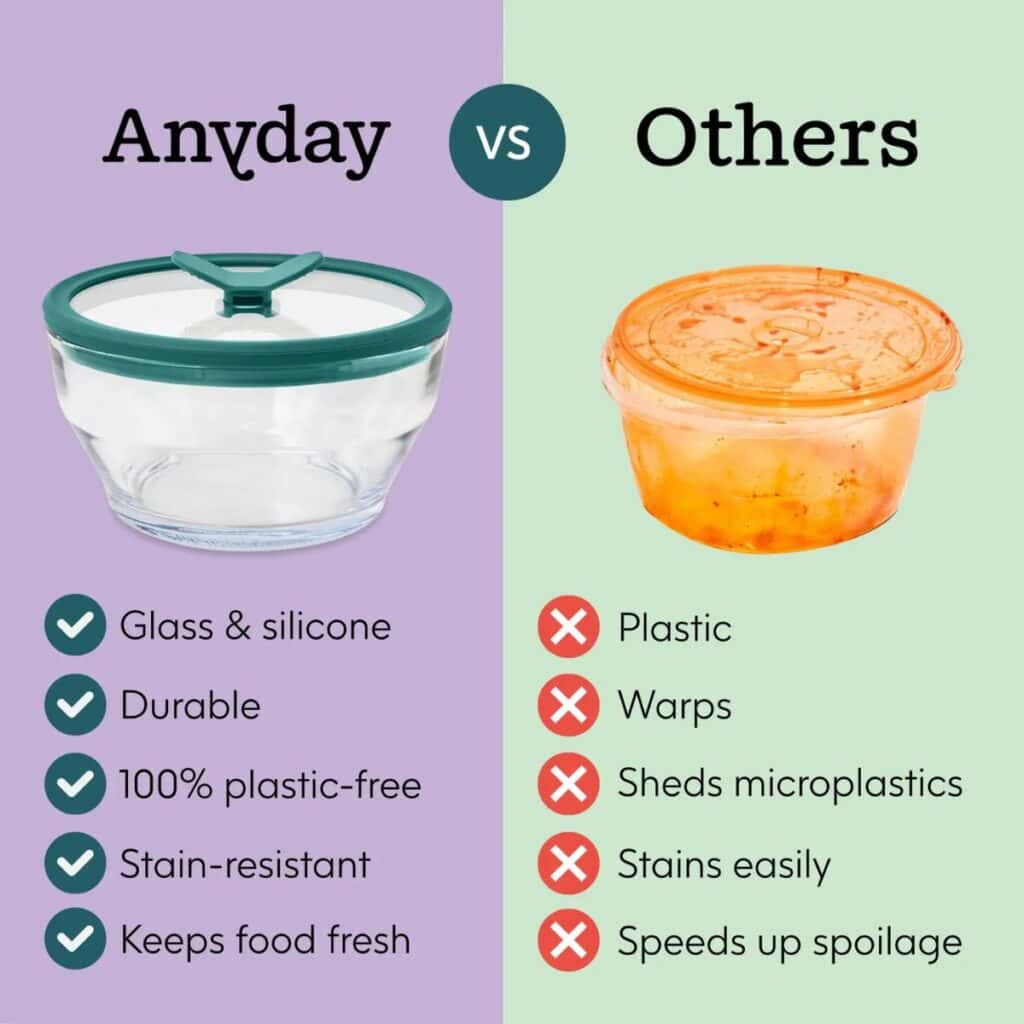
Most microwave containers labeled “microwave safe” are made from polypropylene or similar plastics.
While they may technically tolerate heat, plastic degrades over time — especially when exposed to fatty foods, acidic sauces, and repeated high temperatures.
Concerns with plastic containers include:
- Chemical migration when heated
- Microplastic shedding as plastic ages
- Warping or surface breakdown
- Shorter lifespan overall
Even BPA-free plastics are not necessarily free from all endocrine-disrupting compounds. “Microwave safe” simply means the container won’t melt — not that it’s non-toxic under repeated heat exposure.
Anyday cookware uses borosilicate glass with a food-grade silicone gasket and stainless steel rim — with no plastic touching food.
Glass is chemically inert, meaning it does not leach, warp, or degrade under normal cooking conditions.
Heat Stability & Longevity
Plastic containers tend to:
- Stain with tomato-based foods
- Absorb odors
- Warp over time
- Develop surface scratches
Those scratches can increase the potential for bacterial buildup and chemical migration.
Borosilicate glass is resistant to staining, odor absorption, and scratching. It also tolerates rapid temperature changes far better than standard glass.
In terms of lifespan, a high-quality glass container can last for years, whereas many plastic containers need replacement much sooner.
Cooking Performance
Plastic containers are typically used for reheating, not full cooking.
Anyday’s vented lid system allows you to:
- Steam vegetables
- Cook rice
- Prepare eggs
- Steam potatoes
- Reheat leftovers evenly
The sealed steam environment creates more consistent results than loosely covered plastic containers.
This makes Anyday closer to cookware than simple storage.
Environmental Impact
Plastic containers eventually become waste.
Even if recyclable, many food-contact plastics are not widely recycled due to contamination issues.
Glass and silicone, while not perfect, offer longer usable lifespans — which reduces replacement frequency and overall waste.
If you’re simply reheating leftovers occasionally, plastic may feel “good enough.”
But if you want:
- Non-toxic microwave cookware
- Plastic-free food storage
- A container that cooks, stores, and reheats
- Long-term durability
Glass is objectively the safer and more stable option.
Anyday positions itself not as “microwave-safe plastic,” but as engineered glass cookware designed specifically for microwave cooking.
That distinction matters.
Who Should Skip Anyday
Anyday may not be the right choice if:
- You want crispy textures or seared finishes
- You rarely use your microwave
- You prefer ultra-budget kitchen solutions
This set shines for smaller households, meal preppers, and anyone prioritizing non-toxic cookware over bargain pricing.
It’s also not ideal if you’re looking for traditional browning, crisping, or large-batch family cooking.
💭 Frequently Asked Questions About Anyday Microwave Cookware
Yes. Anyday cookware is made from borosilicate glass, food-grade silicone, and stainless steel — with no plastic touching food.
Borosilicate glass is heat-stable, lead-free, and resistant to thermal shock, making it a safe option for microwave cooking when used as directed.
Anyday bowls are plastic-free and made from borosilicate glass with FDA-compliant silicone gaskets.
The materials are designed to withstand microwave and oven heat without warping, degrading, or leaching chemicals under normal cooking conditions.
No, and in many cases, microwave cooking preserves nutrients better than boiling.
Because microwaving uses shorter cooking times and minimal water, it can retain up to 90% of certain vitamins.
Nutrient loss is often greater with prolonged heat exposure and excess water.
Food-grade silicone is considered safe for microwave use within standard cooking temperatures.
It is heat-resistant, stable, and does not behave like traditional petroleum-based plastic. Anyday’s silicone gaskets are designed specifically for repeated microwave cooking.
Yes. Anyday borosilicate glass bowls are oven-safe up to 400°F. This allows you to start cooking in the microwave and finish in the oven if desired.
Yes. The bowls are designed to cook, store, and reheat in the same container. The airtight silicone gasket helps preserve leftovers, making them suitable for meal prep — especially for 1–2 servings at a time.
Anyday is more expensive than standard glass storage containers, but it functions as both cookware and storage.
For those prioritizing non-toxic materials, reduced plastic use, and faster meal prep, the value can justify the investment.
Yes — borosilicate glass is generally better than regular soda-lime glass for microwave cooking because it is more resistant to thermal shock and rapid temperature changes.
It’s less likely to crack under high heat, making it a safer and more durable option for repeated microwave and oven use.
Yes, for microwave cooking specifically.
While Pyrex containers are designed primarily for storage and reheating, Anyday bowls are engineered for controlled steam-based cooking with vented lids.
For full meal microwave cooking, Anyday offers more consistent results.
Is Anyday Worth It? (Full $120 Cost Breakdown)
This is the real question. At around $120 for a four-piece borosilicate glass set, Anyday is significantly more expensive than standard glass storage containers or microwave-safe plastic bowls.
So is it actually worth it?
The answer depends on how you plan to use it.
You’re Not Just Buying Storage
If you compare Anyday strictly to food storage containers, the price feels high.
But that’s not really what this is.
You’re getting:
- Borosilicate glass cookware
- Engineered steam-release lids
- Oven-safe compatibility up to 400°F
- Plastic-free construction
- A system designed specifically for microwave cooking
Instead of using multiple pieces of cookware — a pot, lid, colander, and storage container — you use one bowl.
For small-medium households, meal preppers, or busy weeknights, that consolidation has real value.
The Time Savings Add Up
In testing, most meals finished significantly faster than stovetop equivalents — with less water and fewer dishes required.
Longevity vs Replacement Cost
Plastic containers often need replacement due to:
- Warping
- Staining
- Odor retention
- Scratching
Borosilicate glass doesn’t degrade in the same way.
If properly cared for, this set could realistically last years — potentially making the upfront cost easier to justify over time.
Who Will Feel It’s Worth It
Anyday is worth the investment if:
- You prioritize non-toxic cookware
- You want to eliminate plastic from microwave use
- You value speed and simplicity
- You prefer multi-functional kitchen tools
It may not feel worth it if:
- You rely heavily on browning and searing
- You rarely use your microwave
- You’re looking for a budget storage solution
My Honest Take
From a materials and safety standpoint, this is one of the cleaner microwave cookware options available.
It’s not revolutionary in terms of culinary complexity — but it is genuinely efficient, thoughtfully engineered, and built with high-quality, non-toxic materials.
If you’ll use it weekly, the price makes sense. If it will sit in a cabinet, it won’t. For my kitchen, it earned its place.
Continue Exploring Non-Toxic Kitchen Essentials
If you’re building a safer, plastic-free kitchen beyond microwave cookware, these in-depth guides go deeper:
- Non-Toxic Air Fryers – A deep dive into nonstick coatings, PFAS concerns, and safer appliance choices.
- Non-Toxic Cookware – A complete breakdown of the safest materials, including stainless steel, ceramic, and cast iron.
- Stainless Steel Cookware Sets – Why stainless steel remains one of the most durable and non-toxic long-term options.
- Non-Toxic Baking Sheets & Bakeware – What to avoid in coated pans and safer oven alternatives.
- Non-Toxic Rice Cookers – Ceramic and stainless steel options for plastic-free grain cooking.
Research & Scientific Sources
Because safety matters, I always review peer-reviewed research and regulatory guidance before recommending any cookware.
The following sources informed this review of Anyday microwave cookware and the broader discussion around microwave safety, nutrient retention, borosilicate glass, and food-grade silicone.
Microwave Safety & Radiation
- U.S. Food and Drug Administration (FDA) – Microwave oven safety guidelines
https://www.fda.gov/radiation-emitting-products/resources-you-radiation-emitting-products/microwave-ovens - American Cancer Society – Radiofrequency radiation overview
https://www.cancer.org/cancer/risk-prevention/radiation-exposure/radiofrequency-radiation.html - BCIT Physics – The physics behind how microwave ovens work (PDF)
https://www.sfu.ca/phys/346/121/resources/physics_of_microwave_ovens.pdf
Microwave Cooking & Nutrient Retention
- Harvard Medical School – Microwave cooking and nutrient preservation
https://www.health.harvard.edu/staying-healthy/microwave-cooking-and-nutrition - Giacomino, M., et al. (2025). Microwave cooking retains more mineral content than steaming and grilling: Evidence from Italian vegetables. Nutrients, 17(3), 423.
https://www.mdpi.com/2072-6643/17/3/423
Borosilicate Glass & Material Safety
- SCHOTT AG – Borosilicate glass properties and thermal stability
https://www.schott.com/en-gb/expertise/materials/borosilicate-glass - L.J. Star Incorporated – Glass comparison chart (thermal and chemical resistance)
https://www.ljstar.com/resources/glass-comparison/
Food-Grade Silicone & Heat Stability
- U.S. Food and Drug Administration – Rubber articles intended for repeated food contact
https://www.ecfr.gov/current/title-21/chapter-I/subchapter-B/part-177/subpart-C/section-177.2600 - Rubber Fab – Temperature tolerances for silicone materials
https://rubberfab.com/resources/technical-articles-documents/temperature-chart/ - HB Silicone – Silicone pinch test analysis
https://www.hbsilicone.com/silicone-pinch-test-is-it-accurate-silicone-products/ - Green Hive – Is silicone plastic? Material composition overview
https://www.greenhive.io/blog/is-silicone-plastic

Steal My Non-Toxic Cleaning Checklist!
Believe us, it’s the BEST…. and it’s free. Does it really get any better than that?! Sign up for our newsletter and get this free checklist to clean your home without any harmful chemicals!