 Click To Shop Danielle's Favorites!
SKL is reader supported. When you buy through links on our site, we may earn affiliate commission. Learn more here.
Non-toxic bedding is one of the most important — and most overlooked — upgrades you can make for a healthier home.
When we talk about creating a safer sleep space, most people focus on mattresses. But your sheets, pillowcases, and duvets are what your skin touches and your lungs breathe in every single night.
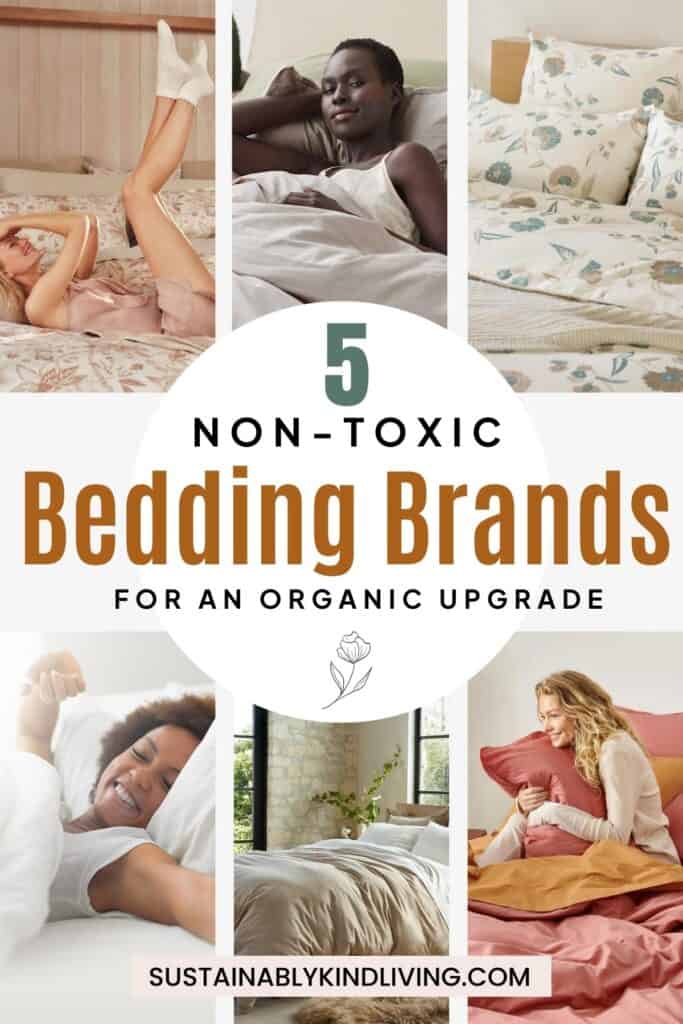
If those layers contain formaldehyde finishes, PFAS stain treatments, or synthetic flame retardants, that exposure happens for 6–9 hours at a time.
As a mom of three and someone who has spent years researching indoor air quality, chemical-free bedding, and the safest bedding materials available, I’ve learned this: not all “organic bedding” is truly non-toxic.
SKL top picks, in a nutshell…
- Pact — Best affordable GOTS-certified organic bedding basics
- Coyuchi — Best premium regenerative organic bedding
- Boll & Branch — Best luxury hotel-quality organic sheets
- PlushBeds — Best organic wool comforters & complete clean sleep systems
- Under the Canopy — Best budget-friendly certified organic bedding sets
Now let’s talk about why non-toxic bedding matters in the first place — and what most conventional brands aren’t telling you.
Why Non-Toxic Bedding Matters More Than You Think
Your bedding has full skin contact and sits directly in your breathing zone.
Conventional sheets and comforters are often treated with wrinkle-resistant coatings, synthetic dyes, or flame retardants.
Some stain-resistant fabrics may even contain PFAS — chemicals known for persistence in the body and environment.
For families with eczema, asthma, allergies, or chemical sensitivities, these exposures can matter even more.
Choosing organic bedding made with certified materials helps reduce unnecessary chemical load in the place where your body is supposed to rest and recover.
Most bedding brands don’t outright lie. They just don’t tell you everything.
You’ll see words like “eco-friendly,” “plant-based,” “natural,” or “bamboo.” What you won’t see clearly disclosed is whether the fabric was treated with formaldehyde, coated with PFAS for stain resistance, or filled with petroleum-based polyester.
And that’s where the problem starts.
Because bedding isn’t decorative. It’s direct skin contact for 6–9 hours every night.
The Most Common Toxic Treatments in Bedding
Most conventional bedding isn’t designed with your long-term health in mind. It’s designed to look smooth on a shelf, resist stains in a showroom, and survive mass production at the lowest cost possible.
Here’s what that often means behind the scenes:
❌ Formaldehyde finishes.
That perfectly smooth, “wrinkle-free” sheet set? It usually didn’t get that way naturally.
Many easy-care or wrinkle-resistant sheets are treated with formaldehyde-based resins to hold their shape and resist creasing. Formaldehyde is classified as a known human carcinogen, and even at lower levels it can trigger skin irritation, headaches, and respiratory sensitivity — especially in children.
If your sheets never wrinkle, that crisp finish likely came from chemical processing.
Your skin shouldn’t have to pay for convenience.
❌ PFAS stain coatings.
If a comforter or sheet set promises to repel spills, resist stains, or bead up water — it may be treated with PFAS.
PFAS are often called “forever chemicals” because they don’t break down easily in the environment or the human body. They’re used to create performance fabrics, not healthier ones.
When you’re sleeping in that fabric for eight hours at a time, performance isn’t the priority. Safety is.
❌ Polyester & microfiber.
Most inexpensive bedding is made from petroleum-based polyester or microfiber. These synthetic fibers are cheap to produce and easy to dye, which makes them profitable — but not ideal for your sleep environment.
Polyester traps heat, holds moisture, and can shed microplastics over time. New synthetic bedding can also release volatile organic compounds (VOCs), especially when sealed in plastic packaging and opened in a warm bedroom.
It may feel soft at first. But softness doesn’t equal safety.
❌ Flame retardants in comforters.
Certain sleep products must meet federal flammability standards, and some manufacturers use treated materials or chemical barriers to comply. Natural wool, on the other hand, is inherently flame-resistant and can meet those standards without added chemical treatments.
These compounds have been associated with hormone disruption and developmental concerns, particularly in children. They aren’t added because they improve your sleep — they’re added because they’re cheap.
Natural wool, on the other hand, is inherently flame-resistant. It meets safety standards without chemical additives.
When a natural solution exists, synthetic shortcuts shouldn’t be the default.
You don’t need to panic.
But you do deserve to know what you’re sleeping on.
That’s exactly why I curated the non-toxic bedding brands below.
The Best Non-Toxic Bedding Brands of 2026
Each of the brands below meets strict material transparency standards and avoids the most common chemical treatments found in conventional bedding.
1. Pact
Best For: Affordable GOTS-Certified Organic Bedding Basics
Use discount code SKL15 to save 15%!
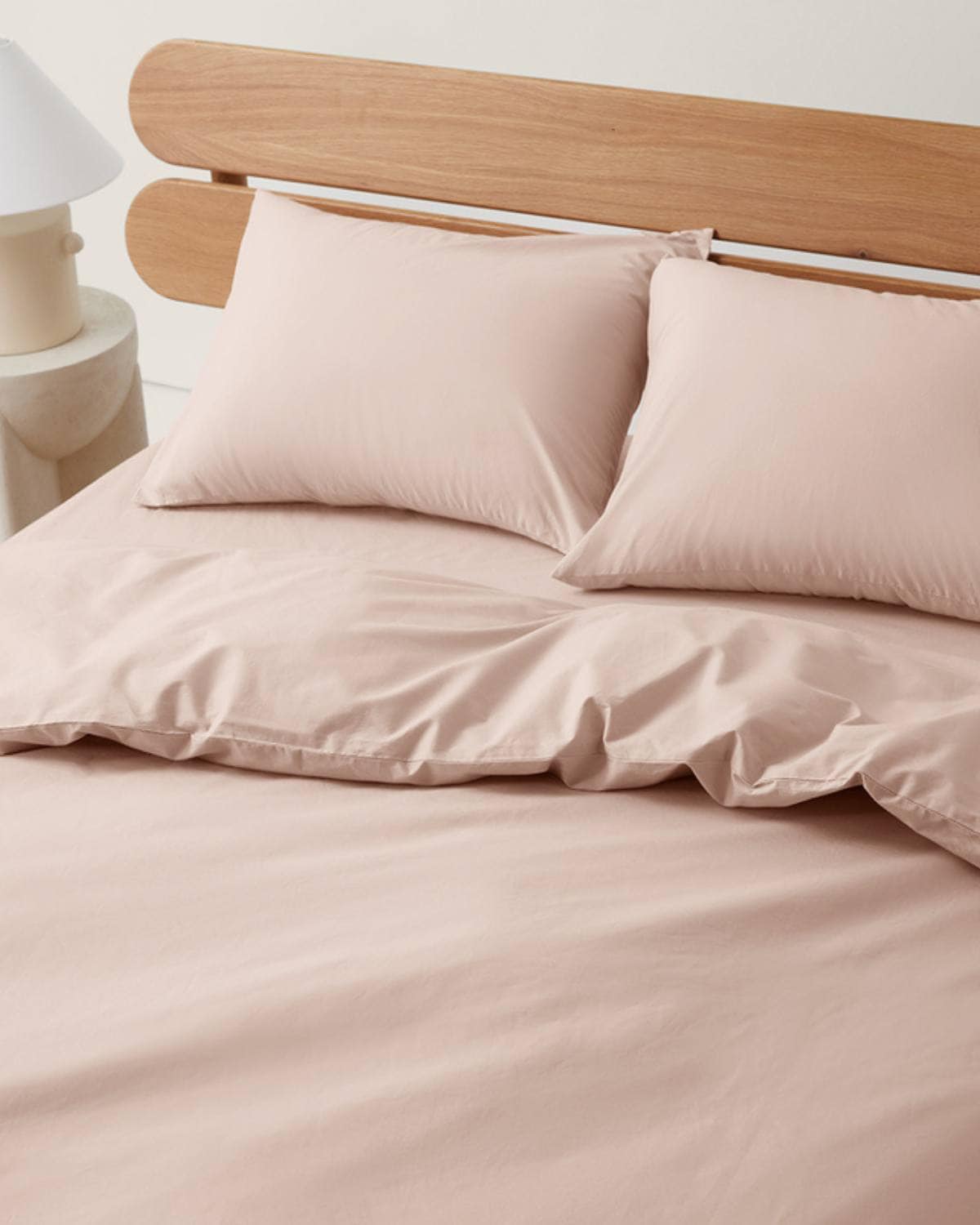
If you’re just starting your non-toxic bedroom journey, Pact is where I usually tell readers to begin.
Their bedding is made with GOTS-certified organic cotton — which means the fibers are grown without synthetic pesticides and processed without harsh chemical finishes like formaldehyde resins.
That matters more than most people realize. Conventional sheets are often treated to be “wrinkle-resistant” or “extra soft,” and those treatments don’t just disappear once they’re on your bed.
I love Pact because they keep it simple. No flashy claims. No mystery blends. Just breathable organic cotton sheets, pillowcases, and duvet covers that feel good and wash well.
If you’re replacing polyester, microfiber, or big-box-store bedding, this is a meaningful upgrade without the luxury markup.
Price Range
~$60–$180
Materials | Bedding
100% GOTS-certified organic cotton sheets, pillowcases, and duvet covers (no duvet inserts or natural-fill comforters)
Location/Shipping
U.S., ships internationally
2. Coyuchi
Best For: Premium Sustainable & Regenerative Organic Bedding
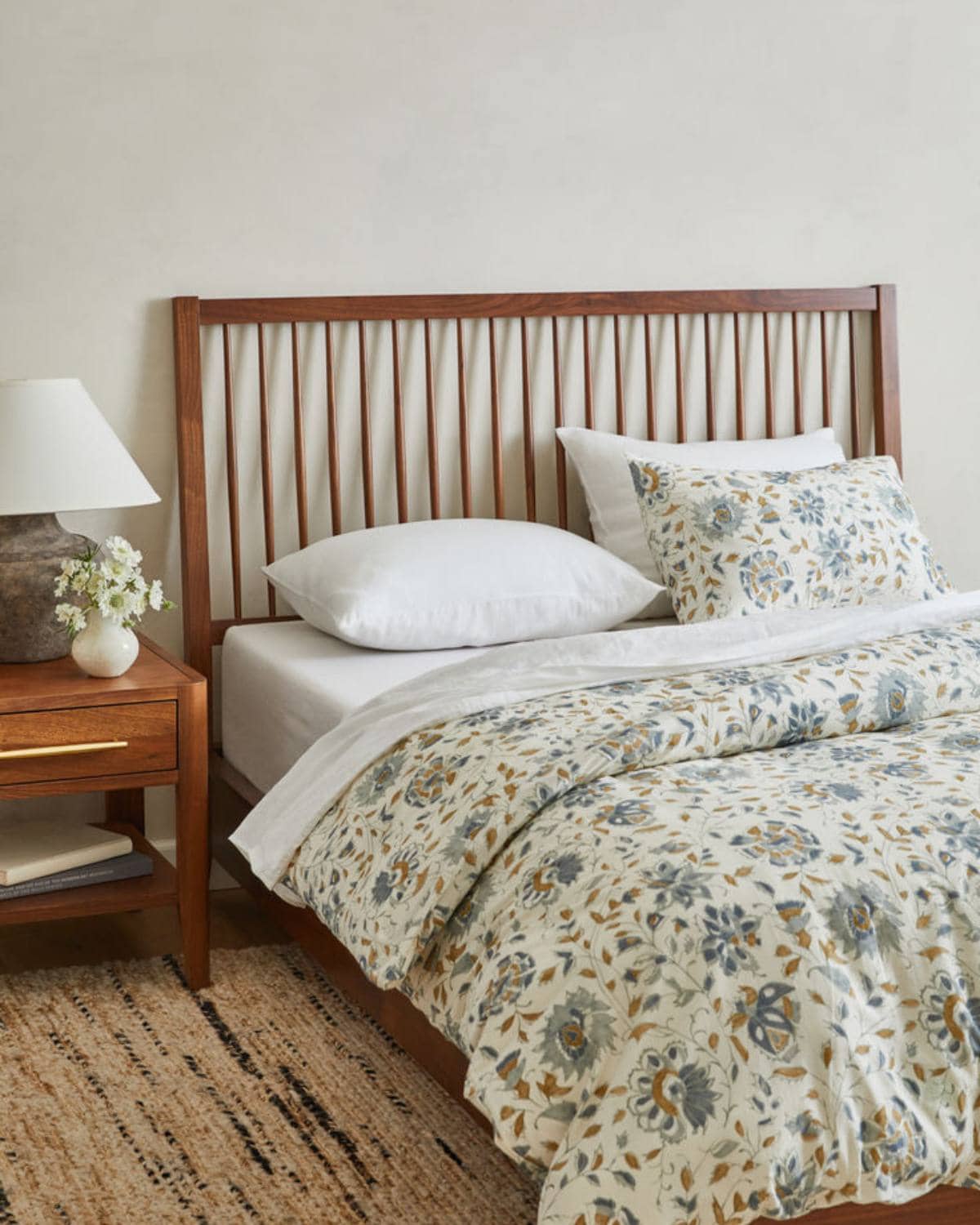
Coyuchi is one of the brands I consistently return to when readers ask me for bedding that goes beyond “just organic.”
Their entire model is rooted in GOTS-certified organic cotton, and they’ve taken it a step further by investing in regenerative farming, which focuses on rebuilding soil health, biodiversity, and long-term environmental stability.
That matters. Because non-toxic living isn’t just about what isn’t in your sheets — it’s also about how those fibers were grown and processed before they ever reached your home.
Coyuchi offers a full bedding lineup: percale and sateen sheets, organic pillowcases, duvet covers, and organic wool comforters made without chemical flame retardants.
The breathability is excellent (especially for hot sleepers), and their fabrics hold up beautifully in the wash — something I always test for.
Price range
~$98–$498
Materials | Bedding
GOTS-certified organic cotton sheets, pillowcases, and duvet covers; organic wool comforters available
Location/Shipping
Ships within the U.S.; limited international availability
3. Boll & Branch
Best For: Luxury Hotel-Quality Organic Sheets
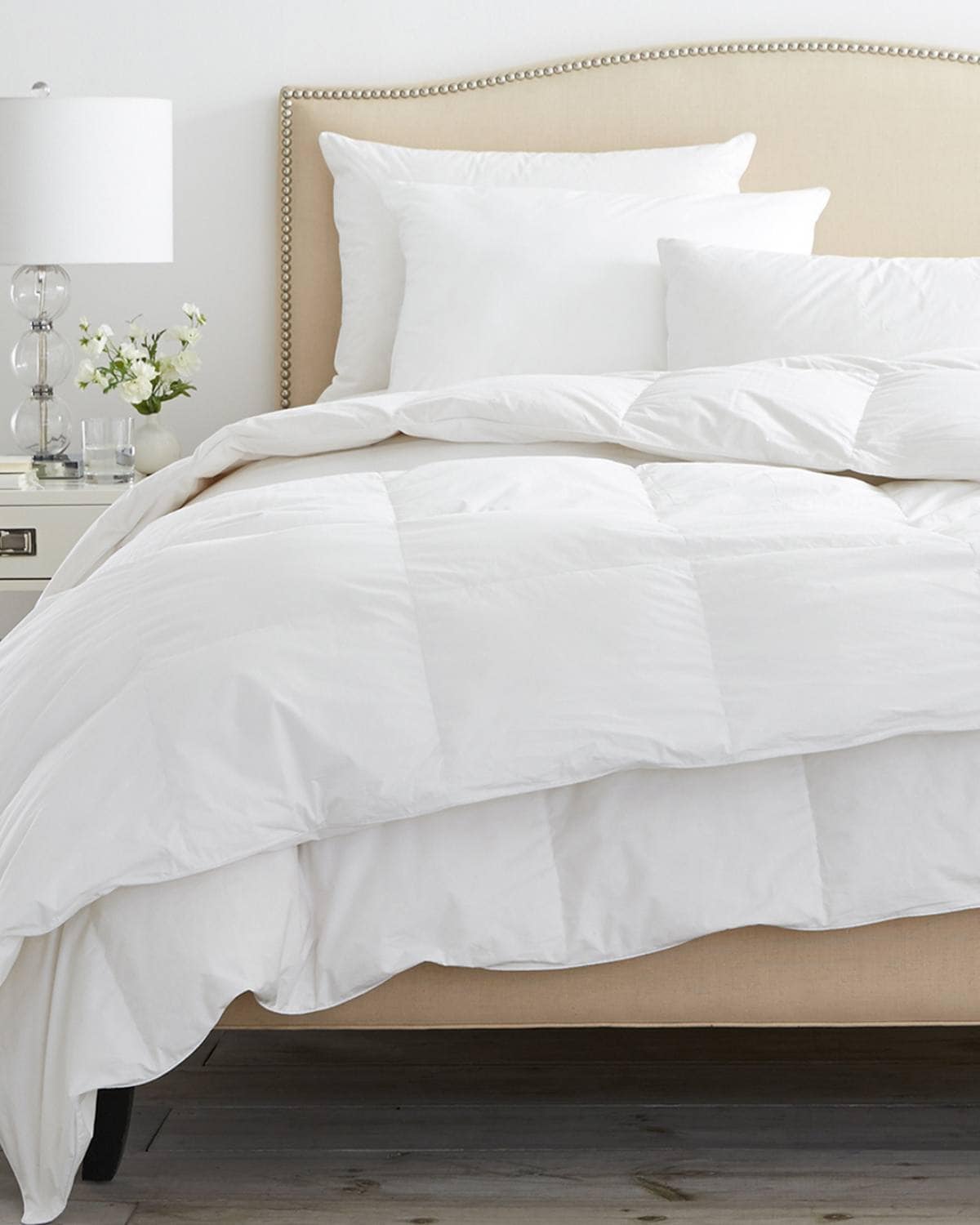
Boll & Branch helped bring certified organic bedding into the luxury mainstream — and they did it without relying on wrinkle-resistant chemical finishes or polyester blends.
Their sheets are made from long-staple, GOTS-certified organic cotton and manufactured in Fair Trade factories.
What I appreciate most is their transparency around materials. If you’ve read ingredient labels the way I have, you know how rare that is in the bedding industry.
They focus primarily on organic cotton sheets, pillowcases, and duvet covers — rather than natural-fill inserts — but they do those core pieces exceptionally well.
The fabric has that elevated, hotel-quality drape while still remaining breathable and free from formaldehyde finishes.
Price range
~$198–$498
Materials | Bedding
100% GOTS-certified organic cotton sheets, pillowcases, and duvet covers (no duvet inserts)
Location/Shipping
Ships within the U.S. and internationally
4. PlushBeds
Best For: Organic Duvets & Complete Clean Sleep Systems
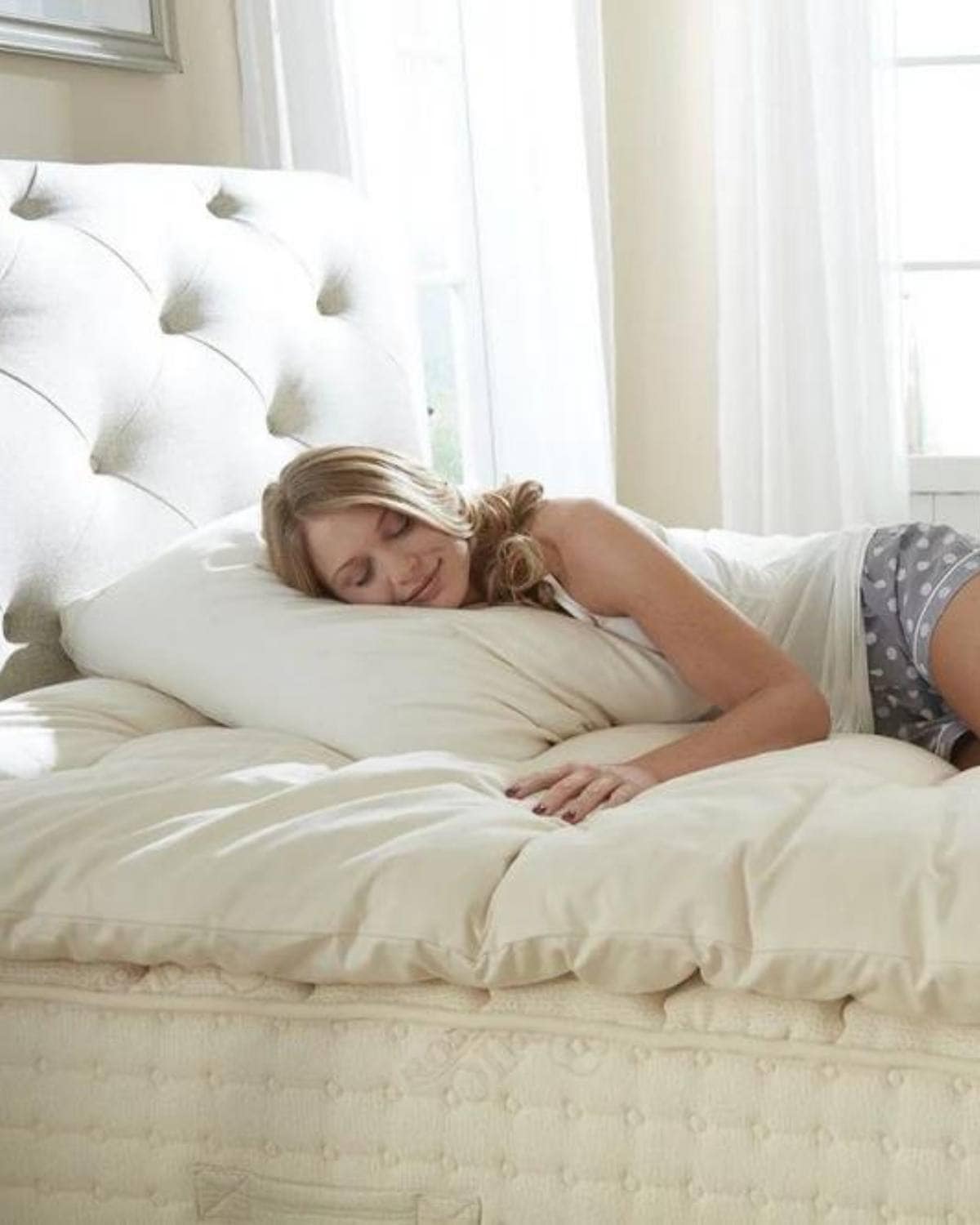
PlushBeds is best known for their certified organic mattresses, but their bedding collection follows the same clean-sleep philosophy — which is exactly what I want to see in a brand.
Their GOTS-certified organic cotton sheets and duvet covers are soft and breathable, but what really sets them apart in this bedding roundup is their organic wool comforters.
Wool naturally meets flammability standards without chemical flame retardants — something many conventional comforters cannot claim.
If you’re building a fully non-toxic sleep environment — mattress, sheets, duvet insert, pillows — PlushBeds offers continuity. That consistency matters when you’re trying to reduce chemical exposure across your entire bed.
price range
~$150–$600
Materials | Bedding
GOTS-certified organic cotton sheets and duvet covers; organic wool comforters and latex pillows available
Location/Shipping
Ships within the U.S.; select international options
5. Under The Canopy
Best For: Budget-Friendly Organic Bedding Sets
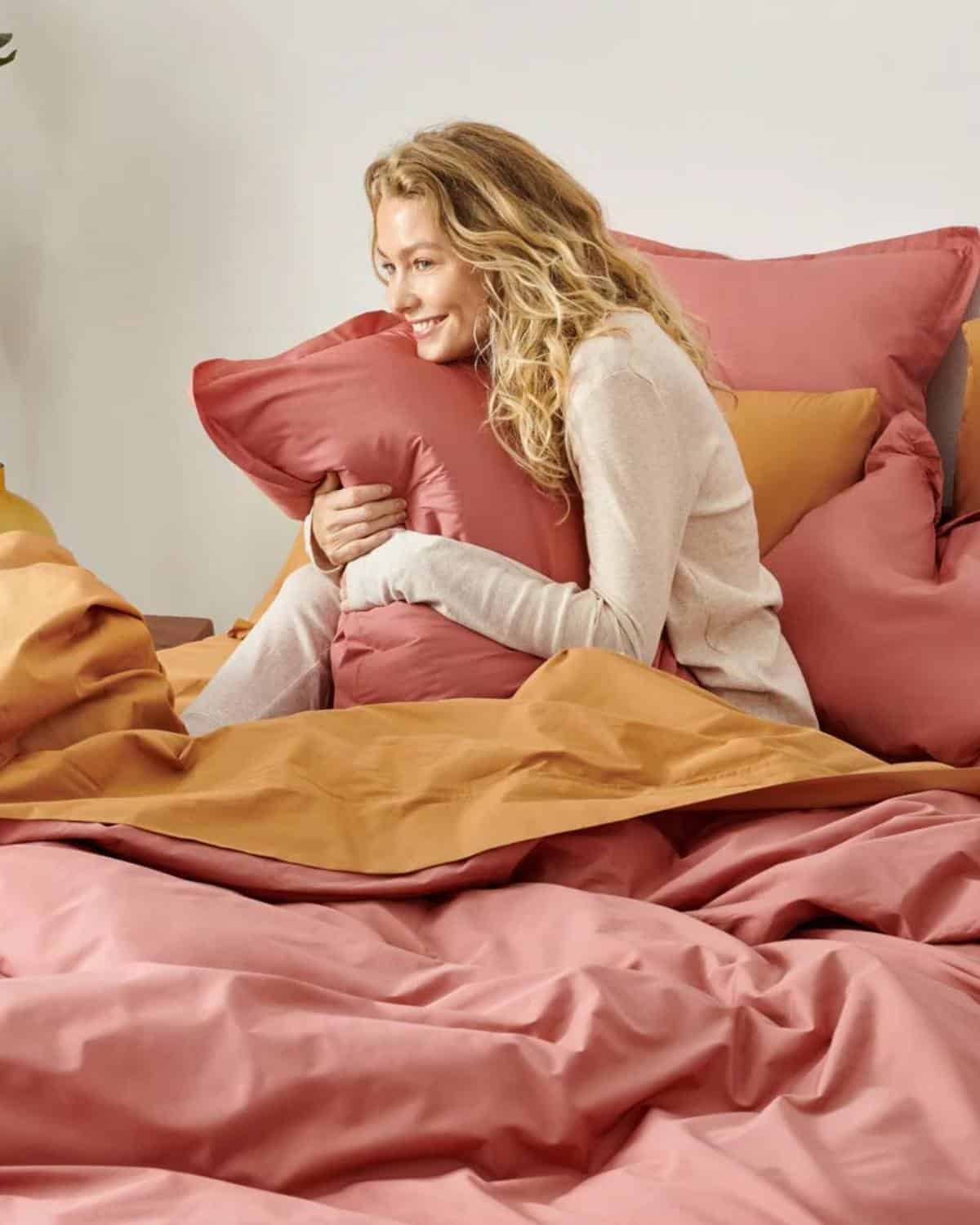
Under the Canopy offers one of the most accessible price points for certified organic bedding, which makes it a great transitional brand for families moving away from conventional polyester or microfiber sheets.
Their collections include GOTS-certified organic cotton sheets, pillowcases, and duvet covers without synthetic wrinkle-resistant treatments.
While they don’t offer natural-fill duvet inserts or wool comforters, their cotton basics are breathable, soft, and far cleaner than most big-box alternatives.
I always remind readers that non-toxic living doesn’t require perfection. It requires progress. And for many households, Under the Canopy makes that first upgrade realistic.
price range
~$58–$168
Materials | bedding
GOTS-certified organic cotton sheets, pillowcases, and duvet covers (no inserts)
Location/Shipping
Ships within the U.S.
My Vetting Process
Why You Can Trust My Non-Toxic Bedding Recommendations
I don’t include brands lightly.
Every company in this guide was evaluated using the same standards I apply inside my own home:
- Verified third-party certifications like GOTS
- No PFAS or stain-resistant treatments
- No formaldehyde finishes
- No polyester microfiber in sheets
- Transparent material disclosures
- Clear information about comforter fill and flammability compliance
If a brand couldn’t clearly explain what was in their bedding, it didn’t make this list.
I’ve tested fabrics for breathability, durability after washing, and overall construction quality. I also pay close attention to marketing language. If something feels vague, misleading, or overly polished without substance, that’s a red flag.
Non-toxic living shouldn’t require detective work.
My goal is to do that work for you — so you can make informed decisions without the overwhelm.
Frequently Asked Questions On Non-Toxic Bedding
Some conventional bedding can contain chemical treatments such as formaldehyde-based wrinkle-resistant finishes, PFAS stain repellents, synthetic dyes, or flame retardants.
Because bedding sits directly against your skin and near your airway for several hours each night, these treatments can contribute to low-level chemical exposure. Choosing certified organic or non-toxic bedding significantly reduces that risk.
Conventional bedding may contain formaldehyde resins used to prevent wrinkles, PFAS coatings for stain resistance, azo dyes, flame retardants in certain comforters, and polyester microfiber made from petroleum-based synthetic fibers.
These treatments are not always clearly disclosed, which is why third-party certification is important when shopping for safer bedding.
The safest bedding materials are GOTS-certified organic cotton, organic wool for comforters and duvet inserts, and certified natural latex for pillows.
Organic cotton avoids pesticide residues and harsh processing chemicals. Wool naturally meets flammability standards without added flame retardants. Certified latex avoids polyurethane foam and petroleum-based fillers.
Yes, but only when it carries a meaningful certification. The term “organic” is not tightly regulated for finished bedding products, so third-party standards like GOTS help ensure both the fiber and processing methods meet strict chemical safety requirements. Without certification, “organic” can simply be a marketing term.
Some conventional bedding does, especially products labeled stain-resistant or water-repellent. PFAS are sometimes applied to textiles to create spill-resistant surfaces and are often referred to as “forever chemicals” because they persist in the body and environment. Certified organic bedding brands do not use PFAS-based treatments.
Polyester sheets are made from petroleum-based synthetic fibers. While they may not always contain additional flame retardants, they can release microplastics and may off-gas volatile organic compounds when new.
Polyester also traps heat and moisture more than natural fibers, which can affect comfort and skin health. Organic cotton is generally a safer and more breathable alternative.
Most bamboo sheets are made from bamboo viscose or rayon, which requires heavy chemical processing to transform the plant into fabric. While the raw material is plant-based, the finished fiber is not necessarily chemical-free.
Unless the brand provides strong third-party certification and processing transparency, bamboo bedding is not automatically safer than certified organic cotton.
If you are upgrading gradually, start with pillowcases since they sit directly against your face and airway. Next replace your sheets, which have full skin contact, and then consider upgrading your duvet insert or comforter. Even replacing one layer at a time can meaningfully reduce exposure.
Organic sheets can wrinkle slightly more because they are typically not treated with formaldehyde-based wrinkle-resistant finishes. That slight wrinkling is often a sign the fabric has not been chemically coated. High-quality long-staple organic cotton in a sateen weave tends to drape more smoothly while remaining chemical-free.
Look for certifications such as GOTS for organic textiles, GOLS for organic latex, MADE SAFE for chemical screening, and GREENGUARD Gold for low emissions. These standards verify material purity and processing safety. Be cautious of vague labels like “natural” or “eco-friendly” without third-party verification.
Considering that you spend nearly a third of your life in bed, reducing unnecessary chemical exposure in that space can be worthwhile. Non-toxic bedding improves breathability, avoids synthetic chemical finishes, and supports a healthier sleep environment, especially for children and individuals with eczema, asthma, or chemical sensitivities.
Building a Truly Non-Toxic Bedroom
If you’re ready to go deeper, these guides will help you create a fully low-tox bedroom without the overwhelm:
- Our complete guide to non-toxic mattresses
- The best organic mattress toppers for an added safety layer
- Non-toxic mattress protectors to protect you and your mattress
- How to avoid PFAS throughout your home
Each layer works together. And when your mattress, sheets, pillows, and air quality all align, that’s when your bedroom truly becomes a place of restoration. And once those layers align, something shifts — your bedroom starts to feel intentional.
Your Bedroom Shouldn’t Be a Source of Exposure
Non-toxic bedding isn’t a trend. It’s a return to common sense.
When you strip away the marketing language, most conventional bedding is built for durability, stain resistance, and shelf appeal — not for long-term skin contact or nightly inhalation. And once you understand that, it’s hard to ignore.
The goal isn’t to make your bedroom perfect overnight.
The goal is to be intentional about what touches your skin for one-third of your life.
Certified organic bedding — whether that’s sheets, pillowcases, or a natural-fill duvet — removes unnecessary chemical treatments from one of the most intimate spaces in your home. That’s not extreme. That’s practical.
If you’re building a healthier sleep environment, start where it matters most. Choose transparency. Choose certified materials. Trust brands that can clearly tell you what’s inside their products.
Because your bed should feel like a place of restoration — not a question mark.
I’d Love to Hear From You!
Have you already made the switch to organic or non-toxic bedding?
Did you notice a difference in comfort, skin sensitivity, or sleep quality?
Drop a comment below and share your experience — your insight might help another family make a safer choice.
And if you have a brand you’re curious about, let me know. I’m always testing.
Sources & Further Reading
When I research non-toxic bedding, I rely on independent regulatory bodies, peer-reviewed studies, and established certification standards — not brand marketing.
If you’d like to dig deeper, these are trusted starting points:
- National Cancer Institute – Formaldehyde Fact Sheet
https://www.cancer.gov/about-cancer/causes-prevention/risk/substances/formaldehyde/formaldehyde-fact-sheet - U.S. Environmental Protection Agency (EPA) – Indoor Air Quality & VOCs
https://www.epa.gov/indoor-air-quality-iaq - Global Organic Textile Standard (GOTS)
https://global-standard.org - MADE SAFE Certification Program
https://madesafe.org - GREENGUARD Certification (UL Solutions)
https://www.ul.com/services/greenguard-certification - Environmental Working Group – Healthy Living Guide
https://www.ewg.org

Steal My Non-Toxic Cleaning Checklist!
Believe us, it’s the BEST…. and it’s free. Does it really get any better than that?! Sign up for our newsletter and get this free checklist to clean your home without any harmful chemicals!