 Shop My Favorite Non-Toxic Gifts Of 2026!
SKL is reader supported. When you buy through links on our site, we may earn affiliate commission. Learn more here.
If you’ve ever tried to cook eggs in a stainless steel pan before your first cup of coffee, you already know the struggle of frying off baked-on bits while you’re trying to get out the door.
I’ve been there more times than I can count.
I’ve spent years learning the right techniques to keep food from sticking, but even with practice, a completely clean release is never guaranteed.
I still avoid scrambled eggs in my traditional carbon steel skillet. Cleanup usually means salt, scrubbing, and a bit of patience.
So yes, I understand why people hold onto their nonstick pans. They make cooking and cleanup easier. For busy weeknight dinners or a slow Sunday breakfast, that convenience is hard to give up.
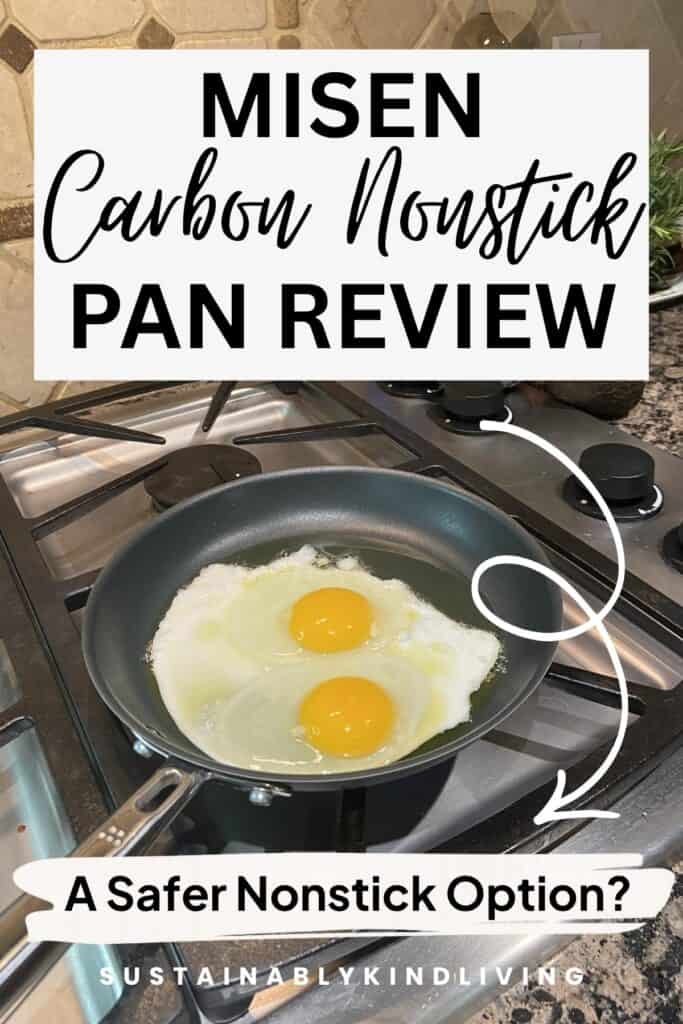
The problem is that traditional nonstick pans come with a tradeoff. Once you learn about PFAS and PTFE, it becomes difficult not to question what you are cooking with.
I’ve tested dozens of pans that claim to be non-toxic alternatives, and most do not live up to the marketing. You are usually forced to choose between convenience and safety.
That is what made me curious about the Misen Carbon Nonstick Pan.
“Carbon nonstick” was not something I had heard before, and my first instinct was skepticism. I have seen too many vague claims in this space. The nitrided surface raised immediate questions.
What does that actually mean? Is this just another coating with a different name? I wanted to test it for myself. This is that review – let’s jump in.
Final Verdict
A genuinely safer alternative to traditional nonstick that delivers strong everyday performance, but not a perfect replacement.
Overall Rating: 8.5 / 10
👉🏼 Best for anyone looking to move away from traditional nonstick without fully switching to stainless steel.
Quick Pros & Cons, at a glance…
Pros:
✅ No PFAS, PTFE, or ceramic coatings
✅ More forgiving than stainless steel or traditional carbon steel
✅ Durable surface that will not peel or flake
✅ Safe for metal utensils
✅ Lower maintenance than cast iron
✅ Oven safe up to 1100°F
Cons:
❌ Not fully nonstick, oil or butter is still required
❌ Does not retain heat like cast iron
❌ Limited independent long-term safety data on nitrided surfaces
❌ Some gaps in material transparency
Key Specs:
Materials: Carbon steel base, aluminum core, stainless steel rivets
Surface: Nitrided carbon steel
Oven Safe: Up to 1100°F
Compatibility: Gas, electric, induction
Price: $109 to $129
Why Many People Are Replacing Traditional Nonstick Pans
Most of us grew up using nonstick pans without thinking twice about them. But, luckily, education on the matter is widespread, and folks are looking for safety over convenience.
The concern centers on PFAS, a group of synthetic chemicals used to create the slick surface in traditional nonstick cookware.
PTFE, commonly known as Teflon, falls into this category. Research has linked PFAS exposure to potential health risks, including hormone disruption and immune system effects.
At the same time, alternatives like stainless steel and cast iron require more technique and maintenance than many home cooks want. This leaves a gap.
People want something easier than stainless steel but without the chemical concerns of traditional nonstick. That is exactly the space the Misen Carbon Nonstick Pan is trying to fill.
Why Traditional Nonstick Is Being Reconsidered
Many pans today are labeled “PFOA-free,” which sounds reassuring but does not tell the full story. PFOA is just one compound within the broader PFAS category. Removing PFOA does not eliminate PFAS entirely.
Replacement chemicals are still being studied, and long-term safety data are limited. This is why more people are searching for PFAS-free cookware and PTFE-free pans that do not rely on chemical coatings.
Instead of applying a coating, some brands are exploring ways to modify the base material itself. That is where nitriding comes in (see next section).
Misen Carbon Nonstick Pan Materials & Construction
The Misen pan uses a layered construction designed for both performance and durability.
Carbon Steel Base
Carbon steel is widely used in professional kitchens. It heats quickly, handles high temperatures, and is lighter than cast iron.
Aluminum Core
The aluminum core improves heat distribution and reduces hot spots. It is fully encapsulated and does not come into contact with food.
Nitrided Surface
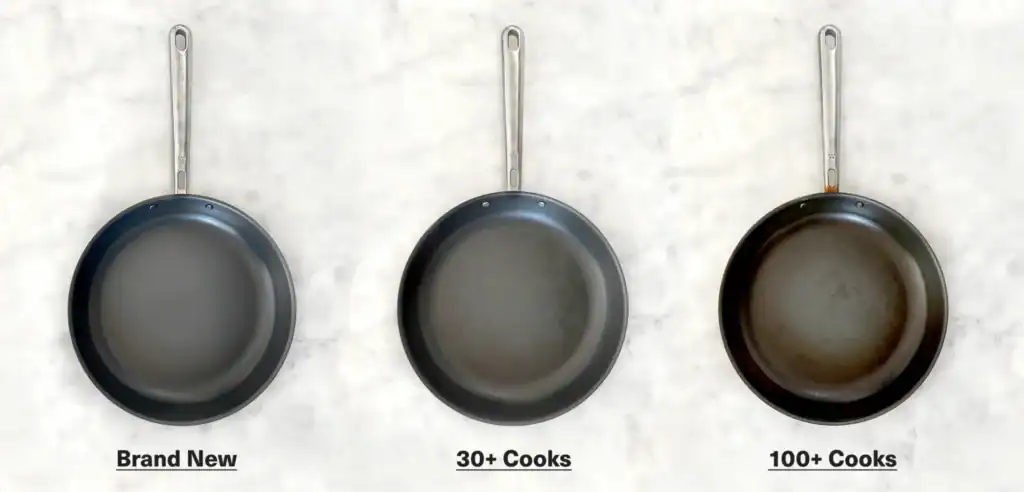
This is the defining feature of the pan. Nitriding is not a coating. It is a heat treatment process that introduces nitrogen into the surface of the steel.
This changes the structure of the metal itself, making it harder, smoother, and more resistant to rust.
Unlike traditional nonstick coatings, there is nothing sitting on top of the surface that can peel or flake away.
What Is a Carbon Nonstick Pan & How Does It Work
The nitrided surface creates a smoother cooking surface than traditional carbon steel, which improves food release.
But listen, it is important to set expectations here. This is not nonstick in the same way as a new Teflon pan.
Food will not slide around without effort. You still need to use oil, ghee, or butter and manage heat properly (which is not a big deal for me at all).
In my experience, performance lands around a seven or eight out of ten compared to traditional Teflon-coated nonstick.
That said, it performs noticeably better than stainless steel or untreated carbon steel. I was able to use less oil and still get reliable results with eggs and pancakes.
Is Nitrided Carbon Steel Safe For Cooking
This is one of the most important questions with any newer cookware material. Nitriding is commonly used in industrial applications to harden metal surfaces and improve durability.
In cookware, it creates a more stable and corrosion-resistant surface without adding a separate chemical layer.
Because the process changes the structure of the steel itself, there is no coating to break down, chip, or flake into food.
The Misen Carbon Nonstick Pan is also free from PFAS and PTFE, which removes the primary concern associated with traditional nonstick cookware.
That said, long-term independent research on nitrided cookware in home kitchens is still limited. While the process itself is well understood, more data over time would provide additional clarity.
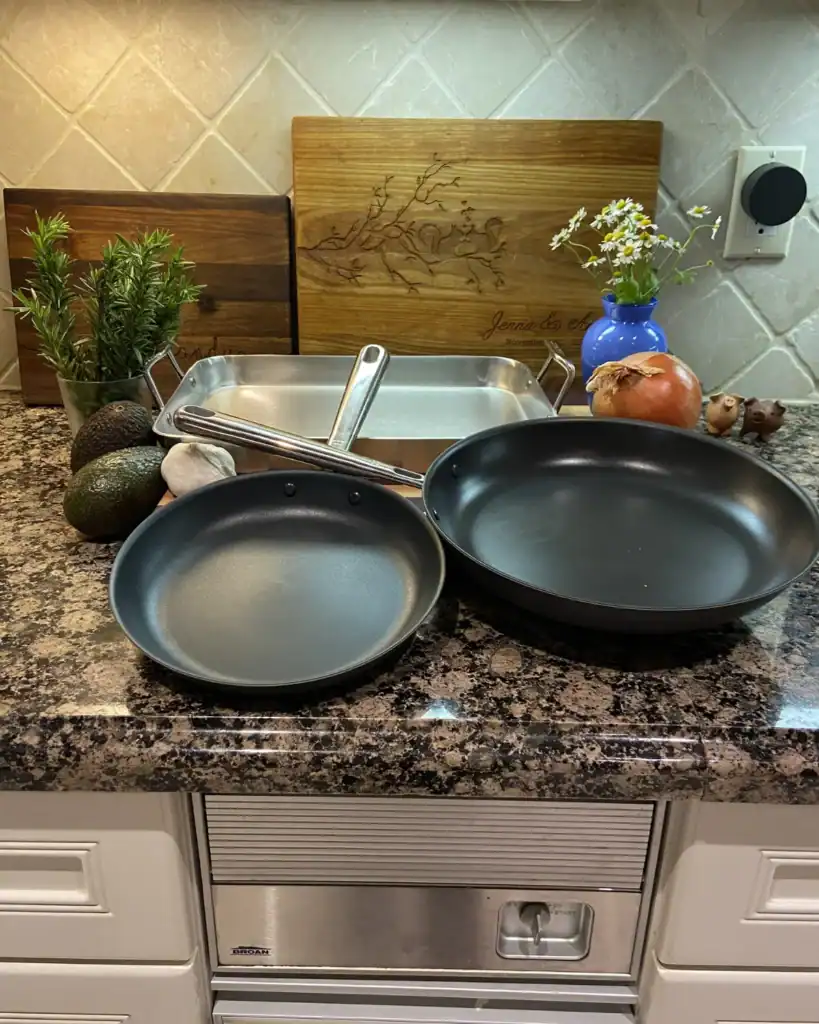
Is The Misen Carbon Nonstick Pan Non-Toxic
The Misen Carbon Nonstick Pan is meaningfully safer than traditional nonstick cookware.
There are no PFAS, no PTFE, and no ceramic coatings applied to the cooking surface. This eliminates the most common concerns associated with chemical-based nonstick pans.
However, it is not the same as cooking on a completely inert surface like stainless steel or raw cast iron. This is still an engineered material.
From a practical standpoint, I would consider it a strong middle-ground option for anyone looking for a non-toxic nonstick pan alternative without fully committing to stainless steel.
How I Tested The Misen Carbon Nonstick Pan
Before recommending any cookware at SKL, I evaluate it across four key areas: material safety, heat performance, durability, and real-world usability.
Here is how I tested this pan:
- Daily cooking trials including eggs, fish, pancakes, and chicken
- Heat responsiveness and control testing
- Oil usage comparison versus stainless and traditional carbon steel
- Cleanup and maintenance after repeated use
- High-heat and oven performance testing
This pan has been in regular rotation in my kitchen, not just tested once and set aside.
Misen Cookware Real-World Cooking Performance
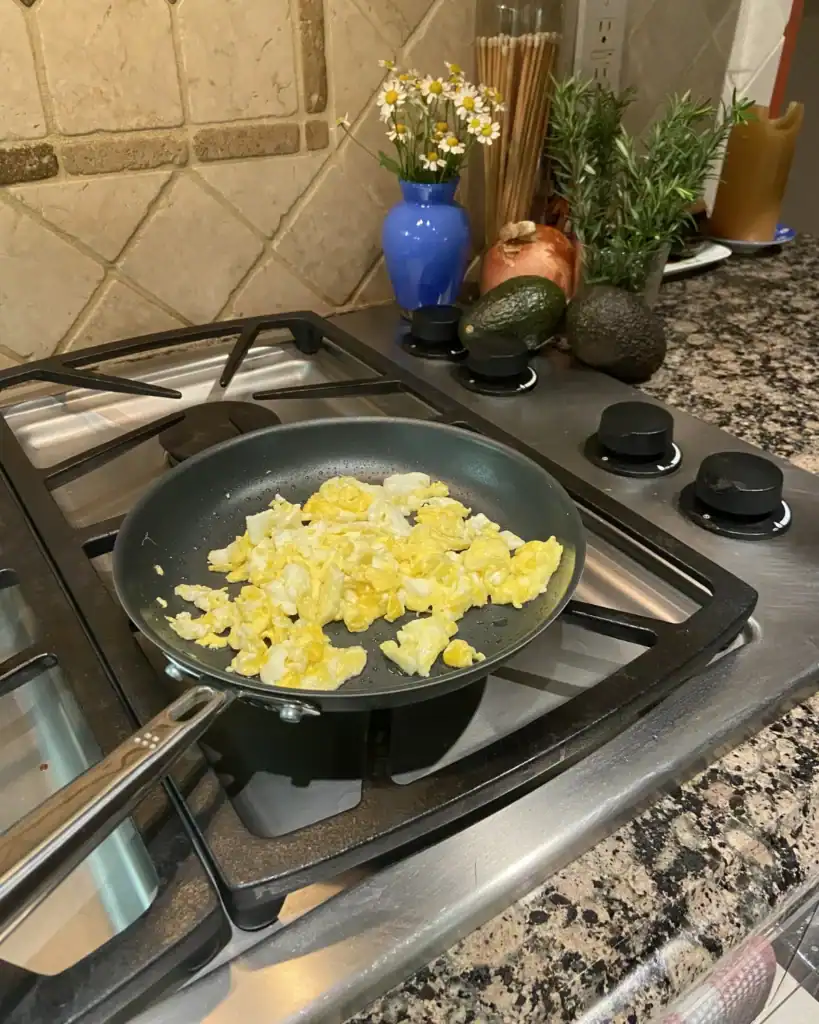
🍳 Eggs
Eggs are always my first test.
With a small amount of butter and medium-low heat, scrambled eggs released cleanly. Cleanup took less than a minute.
Fried eggs were just as straightforward, with no stubborn sticking or residue.
🥞 Pancakes
Heat distribution was even across the surface.
Pancakes browned consistently, and those small drips that usually burn were wiped away easily. I used less butter than usual and still got a clean release.
🐟 Fish
Fish is one of the hardest foods to cook without sticking.
With a light coating of oil and proper preheating, the fish released cleanly without breaking apart. This was one of the most surprising results.
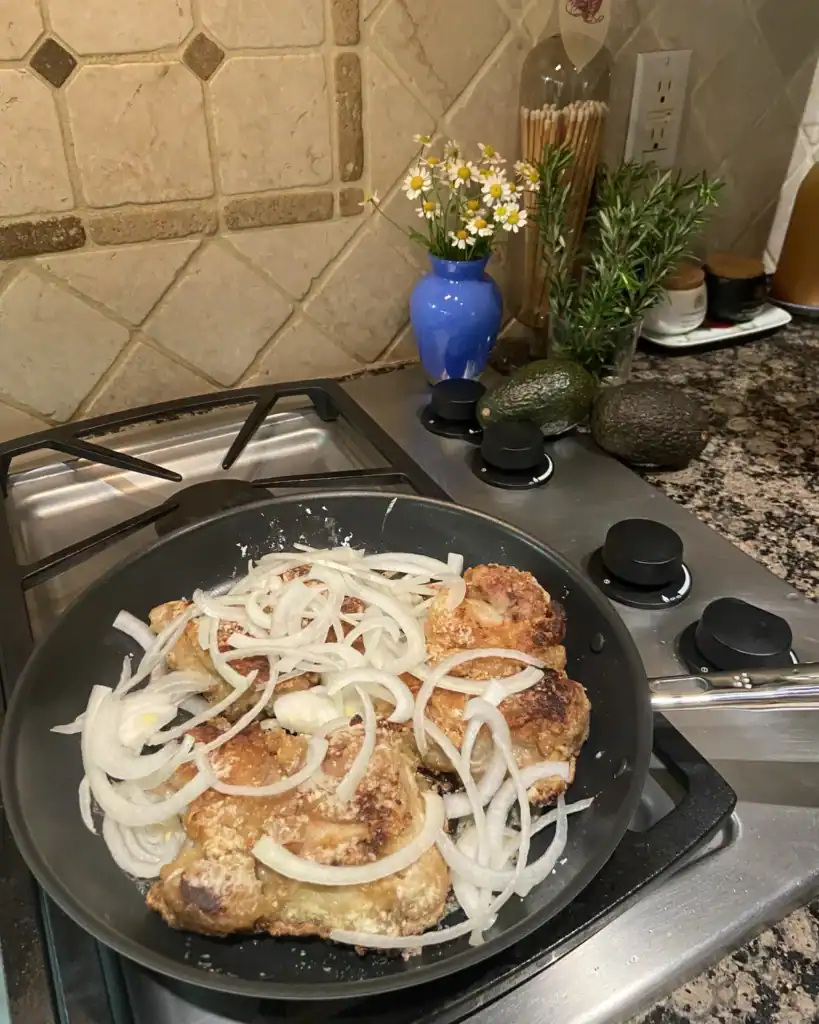
🐔 Chicken
Chicken thighs browned evenly while cooking through completely. The aluminum core makes the pan responsive to heat changes, which helps prevent burning.
👉🏼 This is the pan I reach for when I want something easier than stainless but don’t want to think about coatings.
Our Favorites from Misen:
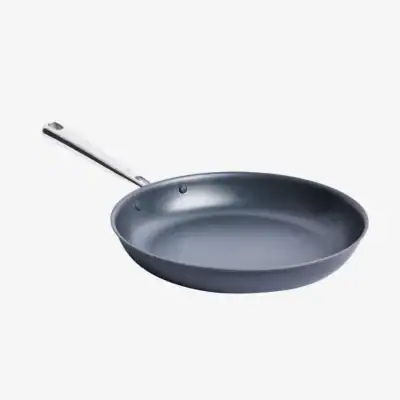
Misen Carbon Nonstick vs Stainless Steel, Cast Iron & Teflon
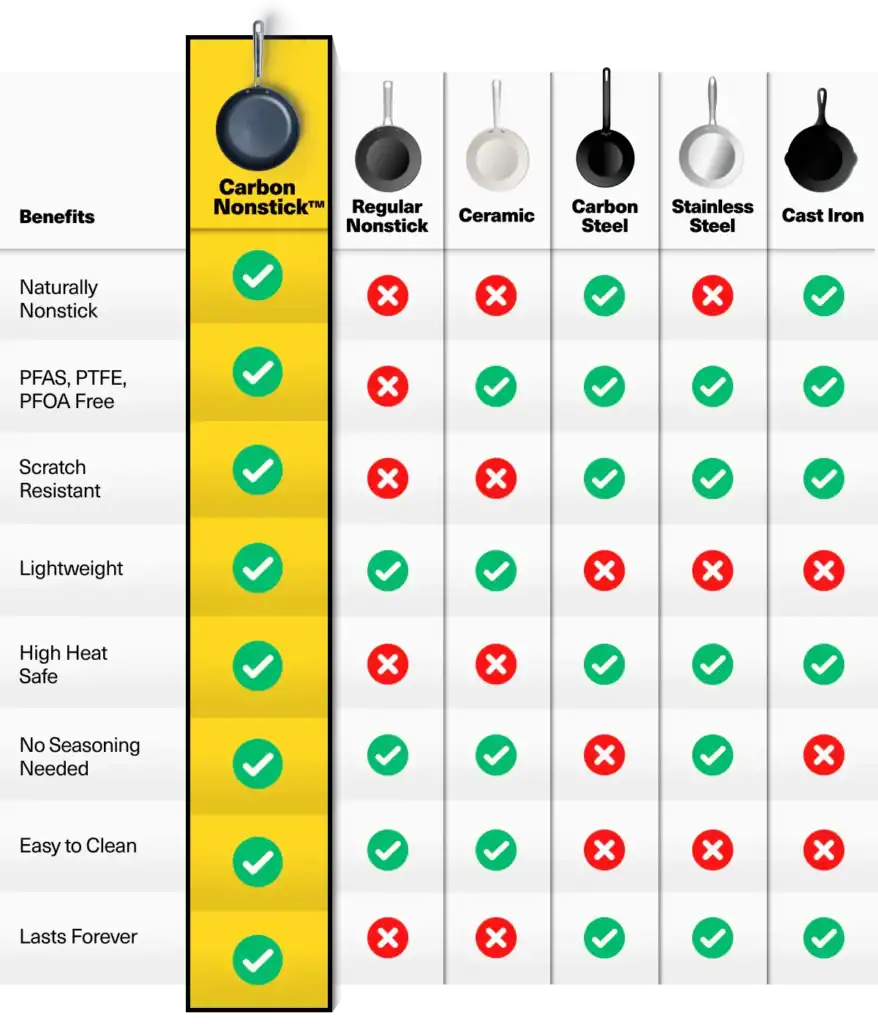
When comparing the Misen Carbon Nonstick Pan to other cookware types, the differences come down to performance, maintenance, and long-term safety.
Misen vs. Traditional Nonstick (PTFE)
You get slightly less effortless release, but far better heat stability and durability. There is no coating to degrade over time.
Misen vs. Stainless Steel
Stainless steel is more inert and well-studied, but much less forgiving. The Misen pan requires less technique and is easier for everyday use.
Misen vs. Cast Iron & Traditional Carbon Steel
You get easier cleanup and no seasoning requirement, but slightly less heat retention and less long-term surface development.
This is why the Misen sits in the middle. It balances convenience and material safety without fully replacing any one category.
Who This Pan Is Best For
- People transitioning away from traditional nonstick
- Home cooks who want lower-maintenance cookware
- Anyone comfortable using a small amount of oil
Who Should Skip It
- Anyone who wants completely effortless nonstick performance
- Those who prefer fully inert, unmodified materials
- Cooks who do not want any learning curve
Is The Misen Carbon Nonstick Pan Worth It?
At around $100 to $120, this pan sits in the middle range. It is more expensive than basic nonstick, but significantly more durable.
You are paying for:
- A surface that will not peel or flake
- High heat tolerance
- Lower maintenance compared to cast iron
If you cook regularly and want to move away from PTFE, the value is there. If you expect zero-effort nonstick performance, it may feel like a compromise.
Frequently Asked Questions About Misen’s Carbon Nonstick Pan
For frequent cooks looking to replace traditional nonstick, yes. It offers better durability and fewer chemical concerns.
It is considered stable and does not rely on a coating, but long-term independent data in home use is still limited.
No. The cooking surface is free from both.
It is more durable and heat-stable, but requires more technique and does not offer the same effortless release.
No. The nitrided surface works without traditional seasoning.
Yes. The surface is durable enough for normal use.
It is a safer alternative to traditional nonstick, though not as inert as stainless steel.
Because it is not a coating, it does not wear off in the same way. With proper care, it should last for years.

Final Thoughts
Where the Misen Carbon Nonstick Pan stands out is in that in-between space that most cookware doesn’t handle well.
It offers noticeably easier cooking than stainless or traditional carbon steel, without relying on the chemical coatings found in typical nonstick pans.
It’s not completely effortless, and it does ask for a bit more attention to heat and oil than traditional nonstick. But in return, you get a surface that’s far more durable and far less likely to degrade over time.
I still want to see more long-term independent research on nitrided cookware. That matters. But based on how this pan performs in daily use, and what we know about the materials, it feels like a meaningful step in the right direction.
If you’ve been trying to move away from PTFE but haven’t found something that fits into your routine, this is one of the few options that actually makes that transition realistic.
Continue Building a Safer Kitchen
If you’re working toward a lower-tox kitchen, these guides can help you make more informed decisions as you upgrade your cookware and everyday tools:
- Non-Toxic Cookware Guide – A full breakdown of stainless steel, cast iron, and safer alternatives.
- Stainless Steel Cookware Review – Why it remains one of the most durable and inert options.
- Non-Toxic Bakeware – Safer options without coatings or chemical layers.
- Non-Toxic Cooking Utensils – What to look for in spatulas, spoons, and tools that come into direct contact with heat and food.
Small changes in your kitchen can add up quickly, especially when it comes to everyday exposure.
Research & Scientific Sources
Because safety matters, I always review peer-reviewed research and regulatory guidance before recommending any cookware.
PFAS, PTFE & Nonstick Cookware Safety
- U.S. Environmental Protection Agency (EPA) – PFAS overview and health effects
https://www.epa.gov/pfas/pfas-explained - Agency for Toxic Substances and Disease Registry (ATSDR) – PFAS toxicological profile
https://www.atsdr.cdc.gov/pfas/index.html - U.S. Food and Drug Administration (FDA) – Authorized uses of PFAS in food contact applications
https://www.fda.gov/food/chemical-contaminants-food/authorized-uses-pfas-food-contact-applications - European Environment Agency (EEA) – PFAS exposure and human health concerns
https://www.eea.europa.eu/publications/emerging-chemical-risks-in-europe
PTFE (Teflon) & Heat Stability
- U.S. Environmental Protection Agency (EPA) – PFOA stewardship and phase-out program
https://www.epa.gov/assessing-and-managing-chemicals-under-tsca/fact-sheet-20102015-pfoa-stewardship-program - National Institute of Environmental Health Sciences (NIEHS) – Perfluorinated chemicals and health
https://www.niehs.nih.gov/health/topics/agents/pfc/index.cfm
Carbon Steel & Cookware Materials
- American Iron and Steel Institute (AISI) – Carbon steel composition and properties https://www.steel.org/
- Cookware Manufacturers Association – Cookware material safety overview https://cookware.org/wp-content/uploads/2020/08/2020-Edition-CMA_Guide_08.06.2020.pdf
Nitrided Carbon Steel & Surface Treatment
- ASM International – Nitriding and nitrocarburizing of steel (material science overview)
https://www.asminternational.org/materials-resources - Bodycote – Industrial nitriding process and surface hardening explanation https://www.bodycote.com/what-we-do/precision-heat-treatment/case-hardening-atmosphere-vacuum/gas-nitriding/
- AZoM Materials – Nitriding process, corrosion resistance, and durability
https://www.azom.com/article.aspx?ArticleID=6117
Aluminum Core & Heat Conductivity
- The Aluminum Association – Aluminum properties and heat conductivity https://www.aluminum.org/industry-standards
General Cookware Safety & Material Stability
- U.S. Food and Drug Administration (FDA) – Food contact substance safety overview https://www.fda.gov/food/food-ingredients-packaging/food-chemical-safety
- World Health Organization (WHO) – Chemical exposure and food safety overview
https://www.who.int/news-room/fact-sheets/detail/food-safety

Steal My Non-Toxic Cleaning Checklist!
Believe us, it’s the BEST…. and it’s free. Does it really get any better than that?! Sign up for our newsletter and get this free checklist to clean your home without any harmful chemicals!