 Shop My Favorite Non-Toxic Gifts Of 2026!
SKL is reader supported. When you buy through links on our site, we may earn affiliate commission. Learn more here.
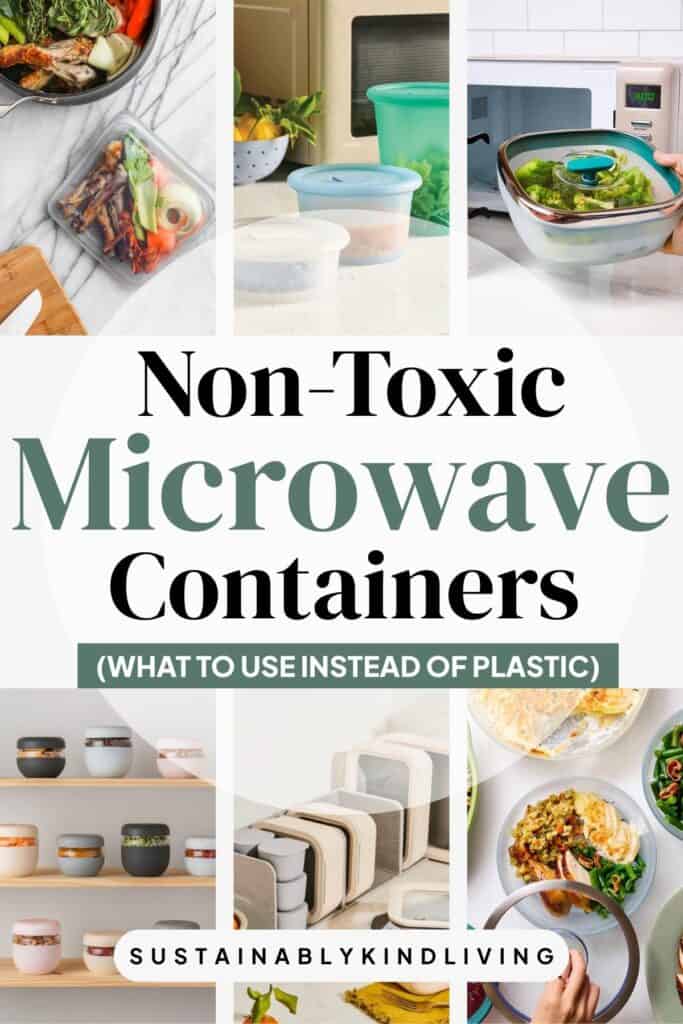
Non-toxic microwave containers are one of those things most of us don’t think twice about — until we realise how often we’re reheating food in plastic.
I’ve been there. Leftovers in yesterday’s takeout container, quick lunches in whatever was already in the fridge, kids’ snacks warmed up in “microwave-safe” bowls without a second thought.
It feels convenient… until you start digging into what actually happens when plastic is exposed to heat. That’s when things shifted for me.
Once I started researching safer kitchen swaps — like these non-toxic kitchen swaps — I realised something surprising: most containers labelled “microwave-safe” aren’t designed for microwave use at all.
They might not melt, but that doesn’t mean they’re stable under heat — or that they won’t release unwanted chemicals into your food over time.
SKL Top Picks: Non-Toxic Microwave Containers (At a Glance)
- Best Overall Non-Toxic Microwave Container: Anyday Glass Cookware
- Best Lightweight Option For Microwaving: Anyday Silicone Delis
- Best For Simple Microwave Reheating & Steaming: Stasher Bags
- Best For Stylish Everyday Reheating: W&P Porter Glass Bowl
- Best For Non-Toxic Ceramic-Coated Storage: Caraway Food Storage
And here’s the part that really stuck with me: the microwave isn’t just warming your food — it’s creating heat, steam, and pressure. That combination matters when it comes to materials.
So in this guide, I’m not just sharing a list of containers that can go in the microwave. I’m focusing on the ones that are actually designed for it.
The ones made with heat-stable materials, thoughtful venting, and safer construction — so you’re not second-guessing what’s happening every time you press “start.”
If you’re trying to reduce everyday exposure and create a cleaner kitchen, this is one of those small changes that can make a meaningful difference — especially alongside other shifts like choosing non-toxic food storage containers.
Let’s get into the safest options — and what to look for before you microwave anything.
Best Non-Toxic Microwave Containers: At a Glance Comparison
Mobile Users: Scroll to see full comparison →
| Brand | Best For | Materials | Microwave Use |
|---|---|---|---|
| Anyday Glass Cookware | Full microwave cooking & reheating | Borosilicate Glass | Food-Grade Silicone | Stainless Steel | Designed for microwave use (lid on, vented) |
| Anyday Silicone Delis | Lightweight, flexible microwave containers | Platinum LFGB-Grade Silicone | Stainless Steel | Designed for microwave use (vented lid) |
| Stasher Bags | Simple reheating & steaming | Food-Grade Platinum Silicone | Microwave safe (naturally releases pressure) |
| W&P Glass Bowl | Stylish everyday reheating | Borosilicate Glass | Silicone | ⚠️ Microwave safe with loose lid (not sealed) |
| Caraway Food Storage | Non-toxic ceramic-coated storage | Borosilicate Glass | Ceramic-Coated Glass | ⚠️ Microwave safe for reheating (not pressure-safe) |
Why Choosing Non-Toxic Microwave Containers Matters
The microwave creates a very specific environment — heat, moisture, and pressure all happening at once. And that combination is exactly what makes material choice more important than most people realise.
It’s not just about whether a container can handle heat without melting. It’s about how that material behaves when it’s exposed to repeated heating, especially when food, oils, and steam are involved.
Because this isn’t something we do occasionally.
For most households, microwaving is a daily habit — reheating leftovers, warming up quick meals, softening ingredients, prepping kids’ food. Sometimes multiple times a day.
That kind of repeated exposure is where small material differences start to matter more — especially when you’re already thinking about things like reducing microplastic exposure in your kitchen.
I always think of it less as a single moment and more as a pattern. Using one plastic container once isn’t the issue.
But using it over and over again, under heat, with food in contact — that’s where the conversation starts to shift.
And when you look at it through that lens, choosing materials that are more stable under heat just becomes a practical decision. Not a perfect one — just a better one.

The Best Non-Toxic Microwave Containers In 2026
Once I started looking for truly non-toxic microwave containers, I expected to find dozens of great options. But that’s not what I found.
Most containers on the market are designed for storage first, and only labelled “microwave-safe” as a secondary feature.
Very few are actually built to handle the combination of heat, steam, and repeated use in a thoughtful way.
So instead of pulling together a long list of “okay” options, I focused on a much smaller group that meets a higher standard.
These are the containers that use more stable materials, are designed to function well in the microwave, and don’t rely on workarounds like removing lids or avoiding certain foods
This is a curated list — not an exhaustive one.
1. Anyday Glass Cookware
Best For: Non-toxic microwave cooking and reheating without plastic
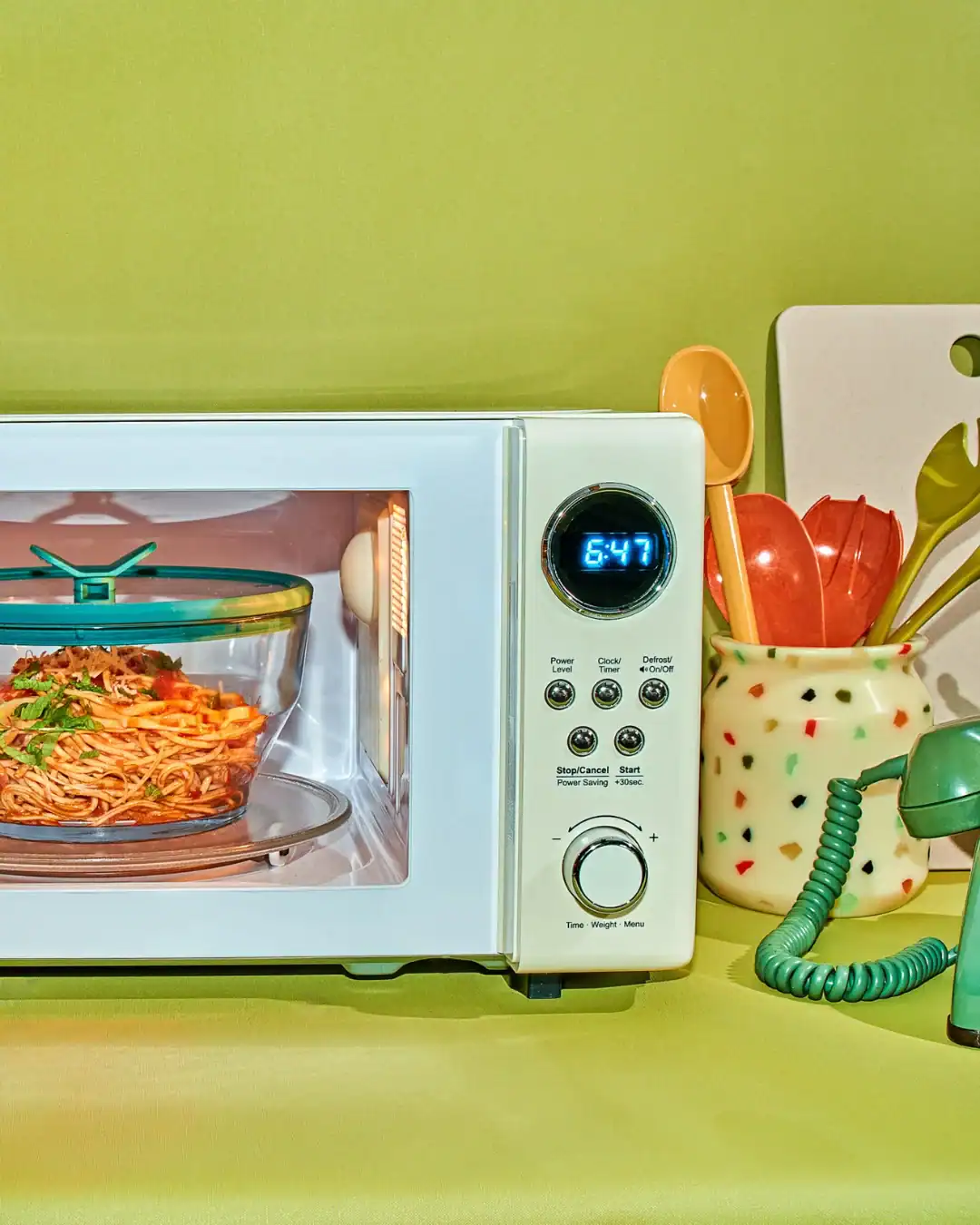
Best for households that use the microwave daily and want something actually designed for it.
Most containers are adapted for microwave use. Anyday is one of the few that was built around it.
The difference shows up immediately in the details — especially the borosilicate glass and vented lid system, which allows steam to circulate and release safely during heating.
That venting piece matters more than you’d expect. It helps prevent pressure buildup, reduces splatter, and makes reheating feel much more controlled compared to traditional storage containers.
It’s also designed to be used with the lid on, which removes the usual guesswork of “should I take this off first?” — something I didn’t realise was such a friction point until I stopped dealing with it.
👉 Best choice if you want a true microwave-specific upgrade that feels easier to use every day.
Price
$90-$220 (Bundles)
Materials
Borosilicate Glass | Food-Grade Silicone | Stainless Steel
Location/Shipping
United States | Ships To Canada & Australia
2. Anyday Silicone Delis
Best For: Lightweight, flexible, non-toxic microwave containers with built-in venting
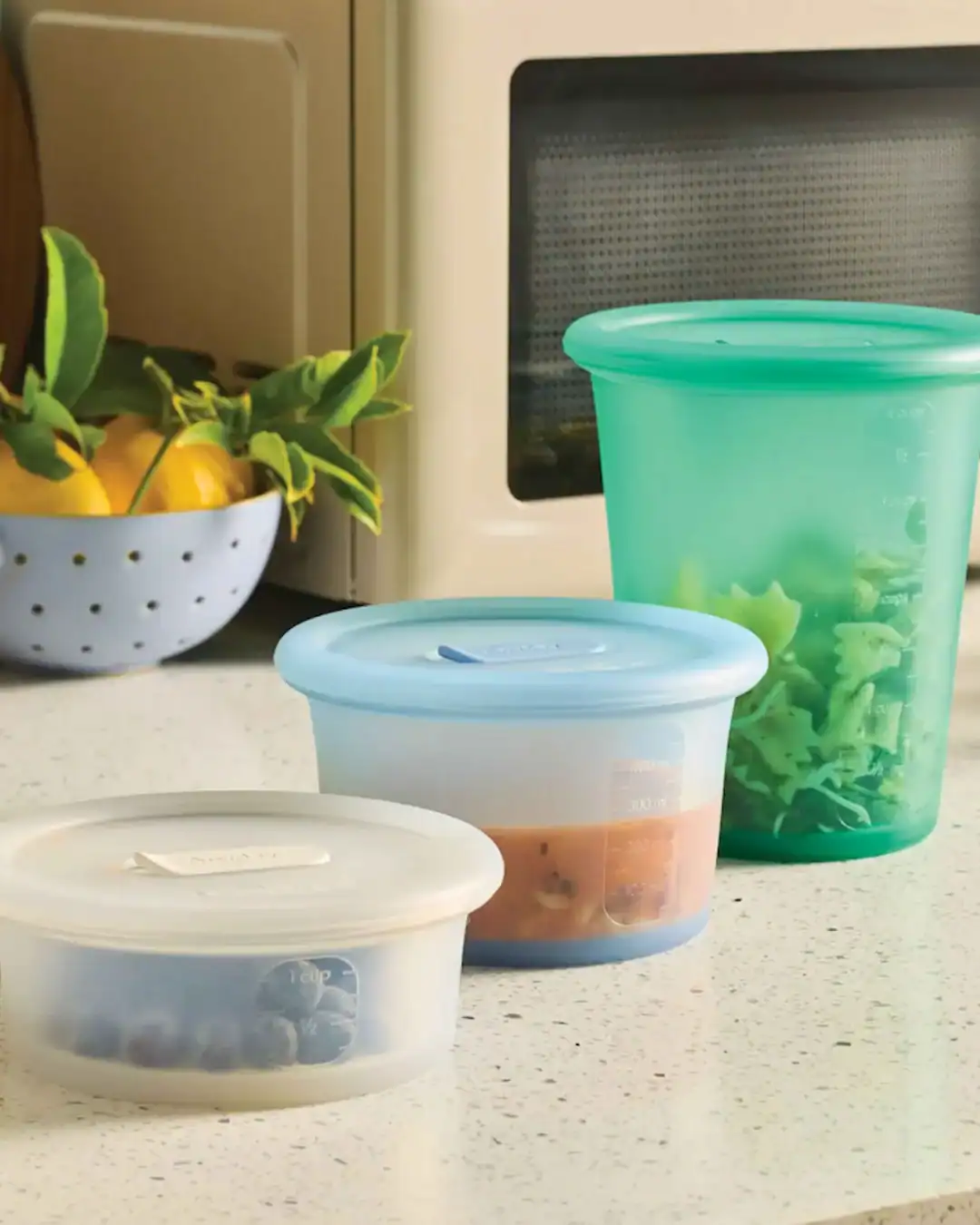
If glass feels a little heavy or impractical for everyday use, this is where these come in.
They’re made from LFGB-certified platinum silicone, which is a higher standard than most “food-grade” silicone — especially important when you’re heating food regularly.
But what really makes them stand out is that they’re designed with the same vented lid concept as Anyday’s glass containers.
So instead of trapping steam or needing to crack the lid open, they allow pressure to release gradually while keeping food covered.
They’re also flexible and lightweight, which makes them easier to grab, store, and use throughout the day — especially for quick meals or leftovers.
👉 A great option if you want something microwave-ready that’s easier to handle than glass.
Price
$46-$104 (Bundles)
Materials
Platinum-Cured LFGB-Grade Silicone | Stainless Steel
Location/Shipping
United States | Ships To Canada & Australia
3. Stasher Bags
Best For: Simple microwave steaming and reheating
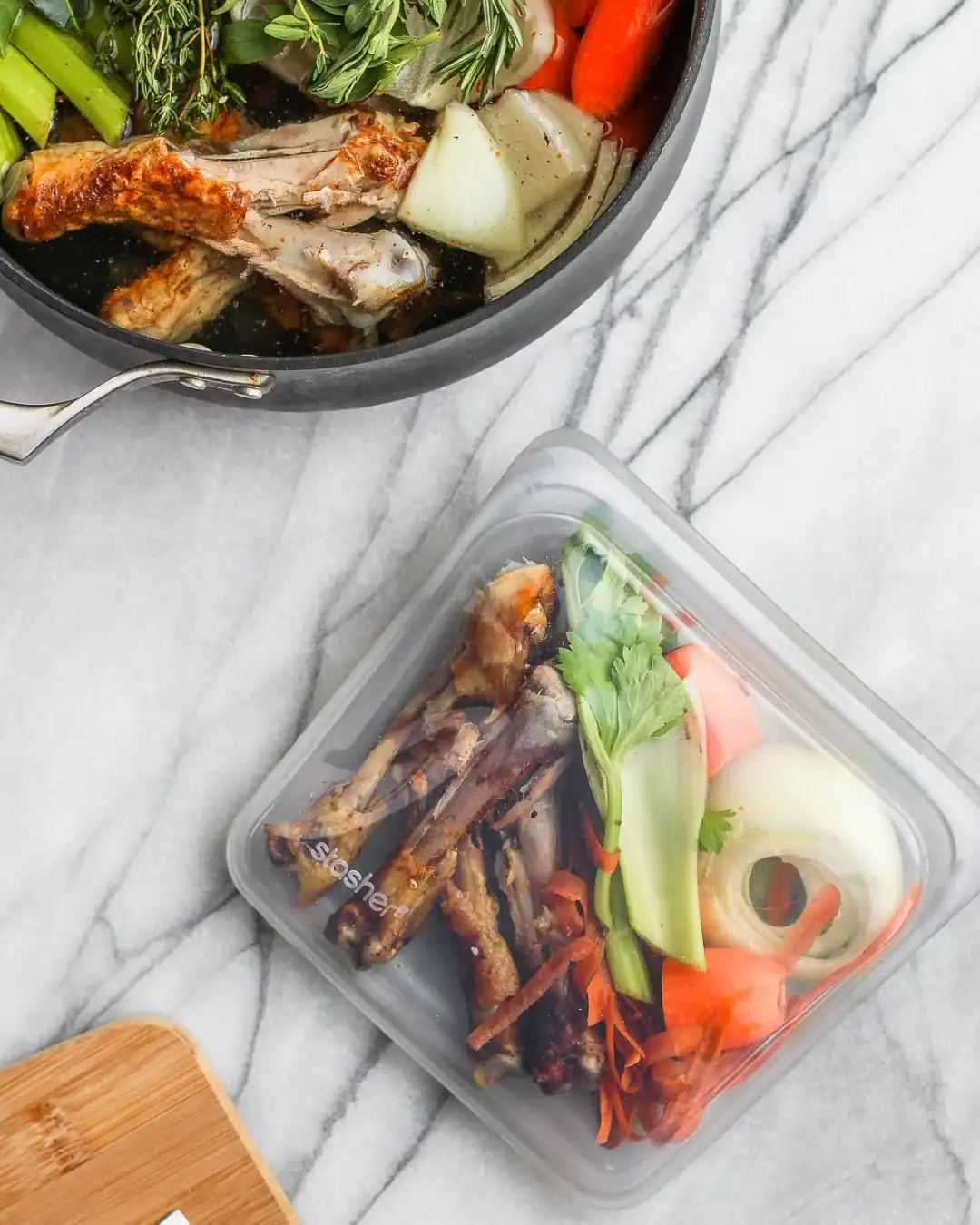
For quick, low-effort reheating, Stasher is one of the easiest options to reach for.
These are made from platinum silicone and work especially well for things like vegetables, grains, or smaller portions.
Because the bags aren’t rigid or sealed under pressure, they naturally allow steam to escape during heating.
That makes them a reliable step up from plastic — without needing to think too much about how you’re using them.
They’re not as structured as a container, though, which means they’re less ideal for full meals or anything that needs even heating. But for simple, everyday use, they do the job well.
👉 Best for quick reheating when you want something flexible and low-maintenance.
Price
$8-$100 (Bundles)
Materials
Food-Grade Platinum Silicone
Location/Shipping
United States | Ships To Canada
4. W&P Glass Bowl
Best For: Everyday reheating with a loose-fitting lid
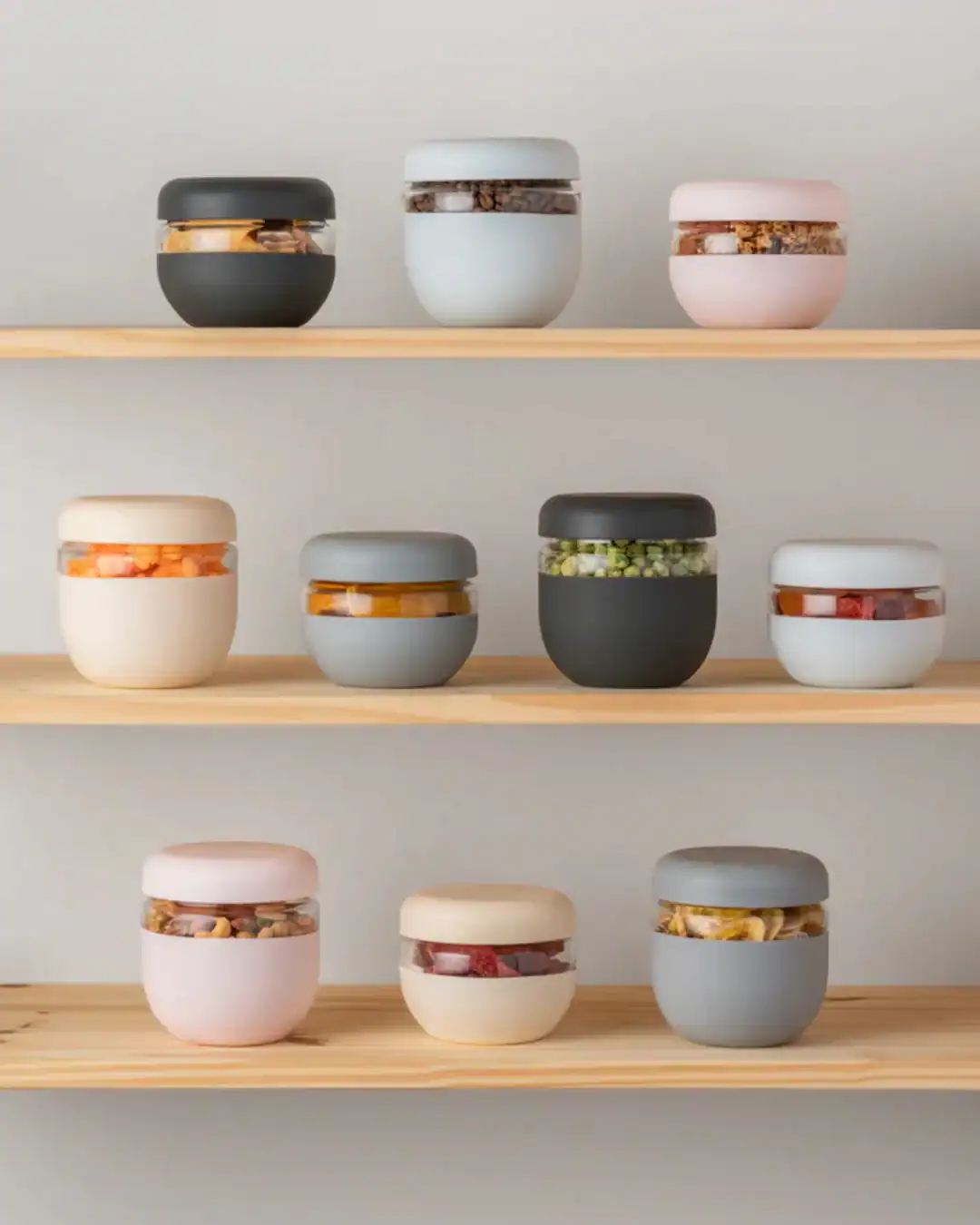
This one sits a little differently on the list — it’s not designed specifically for microwave cooking, but it works well for simple reheating.
The bowl itself is made from borosilicate glass, which handles heat well, paired with a silicone lid that helps reduce splatter.
The key is how you use it: the lid works best when placed loosely, not sealed. That keeps things practical without creating pressure inside the container.
It’s also one of the more streamlined, aesthetic options, which makes it easy to use beyond just reheating — especially for lunches or serving.
👉 Best for casual, everyday reheating when you want something simple that still looks good.
Price
$25-$240 (Bundles)
Materials
Borosilicate Glass | Premium Silicone
Location/Shipping
United States | Ships Internationally
5. Caraway Food Storage
Best For: Non-toxic ceramic-coated containers for gentle reheating
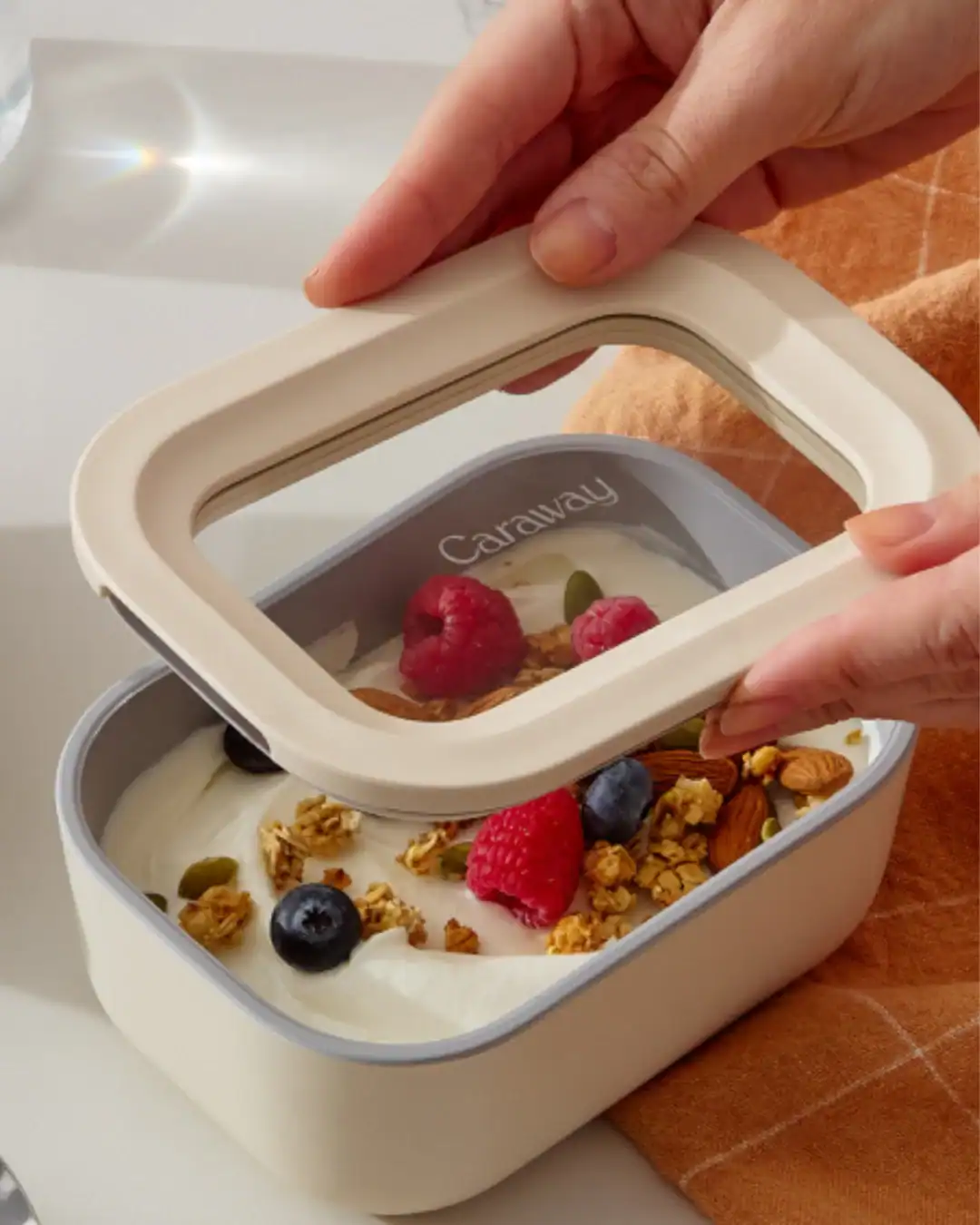
Use the discount code SKL to save 10%!
If your focus is on materials first, Caraway is one of the cleaner options available.
These containers use a ceramic-coated glass base, made without PFAS, PTFE, or other common coatings found in conventional kitchenware.
That material choice is really the main draw here. They can be used in the microwave, but they’re better suited for gentle reheating rather than anything involving steam or pressure.
Like most storage-first containers, they aren’t designed with a venting system.
So this is less about performance in the microwave and more about maintaining a consistent non-toxic setup across your kitchen.
👉 Best for those prioritising cleaner materials and a cohesive, non-toxic kitchen setup.
Price
$30-410 (Bundles)
Materials
Borosilicate Glass | Ceramic-Coated Glass
Location/Shipping
United States | Select International Shipping
The Truth About “Microwave-Safe” Labels
“Microwave-safe” sounds reassuring — but it’s one of those labels that doesn’t mean what most people think it does.
It doesn’t mean a container is non-toxic. It doesn’t mean it won’t leach anything into your food. And it definitely doesn’t mean it was designed for repeated heating.
In most cases, it simply means the material won’t melt or break under microwave heat. That’s it.
There’s no requirement for it to be tested for chemical stability when exposed to heat. No guarantee that it won’t degrade over time.
And no real standard for how it performs after being used again and again — especially with hot food, oils, or steam involved.
That’s where things start to feel a little misleading. Because when most of us see “microwave-safe,” we assume it covers all of that. I used to think the same thing.
But once you start looking at how these materials are actually defined and tested, it becomes clear that the label is more about durability than safety. And that’s a big distinction.
It’s also why so many containers that are technically “microwave-safe” still fall short when it comes to long-term use — especially if they’re made with plastic or lower-quality materials.
So instead of relying on that label, I’ve found it’s much more helpful to look at what something is made from, how it’s designed, and how it actually performs under real conditions.
That’s what we’ll get into next.
Is Microwaving Plastic Safe?
This is usually the question that brings people here — and the answer isn’t as straightforward as most of us were led to believe.
Technically, some plastics are considered “microwave-safe.” But that still doesn’t answer the real question: what happens to that plastic over time, under heat?
Because microwaving isn’t just gentle warming, it creates heat, steam, and pressure — especially when you’re reheating food with moisture or fat. And those conditions can change how materials behave.
With plastic, that’s where concerns start to come in. Even when a container doesn’t visibly melt, heat can cause small amounts of chemicals to migrate into food, particularly when the plastic is older, scratched, or exposed to repeated use.
This is especially true with fatty or acidic foods, which tend to pull more from the material they’re in contact with. And this isn’t always something you can see.
It can look like:
- Containers that become cloudy over time
- Lids warping or softening
- That faint plastic smell after heating
Those are subtle signs that the material is starting to break down.
There’s also the issue of what “BPA-free” actually means. Many plastics have moved away from BPA, but often replace it with similar compounds like BPS, which can behave in very similar ways under heat.
So while the label sounds reassuring, it doesn’t necessarily solve the underlying concern. That’s why I tend to look at this less as a yes-or-no question and more as a pattern of exposure.
Using plastic once in the microwave isn’t likely the biggest issue. But using it daily, over time, under heat — that’s where it becomes worth paying attention.
And once you start thinking about it that way, switching to materials that are more stable under heat just feels like a simple, practical upgrade.
What Happens When You Heat Plastic Food Containers?
Plastic isn’t a stable material — it can change slightly when exposed to heat, especially over time.
Heat Can Increase Chemical Migration
When plastic is heated, especially with moisture or fatty foods, small amounts of compounds can transfer into food.
This is called chemical migration, and it tends to be gradual rather than immediate.
Microplastics Can Be Released Over Time
With repeated use, washing, and heating, plastic can begin to wear down. That wear can lead to microplastic particles breaking off, particularly in older or scratched containers.
Heat + Food Type Matters
Certain foods interact more with plastic:
- Fatty foods (oils, meats, sauces)
- Acidic foods (like tomato-based dishes)
Combined with heat and repeated use, this can increase how much the material changes over time.
“BPA-Free” Doesn’t Mean Inert
“BPA-free” simply means BPA has been removed. In many cases, it’s replaced with similar compounds, which may behave in similar ways under heat.
It’s About Repeated Use
This isn’t about a single use — it’s about patterns. Reheating food in plastic occasionally isn’t the main concern. But doing it daily, over time, is where small exposures can add up.
👉 That’s usually why people start switching to more heat-stable materials like glass or high-quality silicone.
How To Choose The Safest Non-Toxic Microwave Containers
Once you move beyond “microwave-safe” labels, choosing better containers comes down to a few key factors.
Prioritise Heat-Stable Materials
Look for materials that stay consistent under repeated heat.
- Borosilicate Glass → Handles temperature changes well
- Platinum or LFGB Silicone → Flexible and more stable than lower-grade silicone
These tend to perform more reliably over time than plastic.
Choose Containers Designed for Microwaving
Not all containers are built for heat and steam.
Look for:
- Vented lids
- Lid-on functionality
- Designs that allow steam to release safely
If you have to remove the lid every time, it’s usually not designed for microwave use.
Minimise Plastic Exposure During Heating
Plastic is the most variable material under heat. Switching to glass or silicone — especially for daily use — helps reduce that variability.
Pay Attention To Wear Over Time
How a container ages tells you a lot.
Watch for:
- Cloudiness
- Warping
- Lingering odors
- Surface wear
Materials that stay consistent tend to be the better long-term option.
A Quick Reality Check
Very few containers are actually designed for microwave use. Most are adapted for it, not built for it.
And once you see that difference, it becomes much easier to choose products that feel safer and more intentional.
Glass vs Silicone vs Plastic: What’s Actually Safe For Microwaving?
Once you move past the “microwave-safe” label, it really comes down to materials. Not everything handles heat the same way — especially with repeated use.
Here’s how they compare:
Glass → Most Stable Option
This is the most consistent choice for everyday microwaving. Especially borosilicate glass, which handles temperature changes better.
It doesn’t absorb odours, stain, or rely on chemical additives. Just watch for sudden temperature shifts and make sure lids can vent.
Silicone → Flexible, But Quality Matters
This is a solid option — as long as it’s well-made. High-quality platinum or LFGB silicone holds up well under heat and handles steam easily.
Lower-quality silicone can contain fillers, which is where concerns come in.
Plastic → Most Variable Under Heat
Fine occasionally, but not ideal for daily use. Even when labelled “microwave-safe,” plastic can break down over time — especially with repeated heating, fatty foods, or wear.
“BPA-free” doesn’t necessarily mean heat-stable.
What This Means In Practice
- Glass → Most stable and predictable
- Silicone → Safe when high-quality
- Plastic → More variables over time
👉 The goal isn’t what’s “allowed” — it’s what holds up best with repeated heating.
What Containers Should Never Go In The Microwave?
This is where things get simpler than they seem — some containers just aren’t worth the risk.
Here’s what I avoid microwaving altogether:
- Plastic Takeout Containers → Made for short-term use, not heat
- Old or Worn Plastic → Scratches, cloudiness, or warping = breakdown
- Tight-Sealing Lids (No Venting) → Trap steam and create pressure
- Metal or Stainless Steel → Not microwave-safe, can spark
- Low-Quality Silicone → May contain fillers and lack heat stability
A lot of this comes down to reducing unknowns. If something isn’t designed for heat, shows signs of wear, or doesn’t clearly state what it’s made from, it’s usually not worth using in the microwave.
👉 The more consistent and heat-stable the material, the less you have to second-guess it.
Are Glass Containers Always Safe In The Microwave?
Glass is usually the first material people switch to — and for good reason. It’s one of the most stable options under heat and doesn’t carry the same concerns as plastic.
But it’s not completely foolproof. Not all glass is the same.
Borosilicate glass handles temperature changes better and is less likely to crack, while soda-lime glass (more common today) can be more sensitive to sudden shifts.
The biggest issue isn’t the microwave itself — it’s rapid temperature changes. Going straight from freezer to microwave or placing a hot glass on a cold surface can create stress in the material.
Lids are also where problems tend to come in. Many are plastic or not designed to vent, which can trap steam and create pressure during heating.
👉 Glass is still one of the safest options — just use it with a bit of care, especially around temperature changes and lid design.
Are Silicone Containers Non-Toxic For Microwaving?
Silicone can be a great alternative to plastic — but quality is what really matters.
High-quality options like platinum or LFGB-certified silicone are generally stable under heat and designed for repeated use.
They don’t melt like plastic and tend to hold up well with moisture and steam, which is why they’re commonly used in baking and microwave-safe containers.
Lower-quality silicone is where things get less clear. Some products contain fillers, which can affect how the material performs over time — especially when heated. And unfortunately, that’s not always obvious just by looking at it.
In everyday use, silicone also behaves differently from glass. It’s flexible, lightweight, and handles steam easily, but it doesn’t offer the same structure or even heating.
👉 If you’re using silicone, stick with well-made, clearly labelled options — that’s what makes the difference.
Frequently Asked Questions About Non-Toxic Microwave Containers
The safest containers for microwaving are typically borosilicate glass and high-quality silicone (platinum or LFGB-certified).
These materials are more stable under heat and don’t break down the way plastic can over time. Containers designed specifically for microwave use with vented lids are the most reliable option.
Some plastic containers are labelled microwave-safe, but that usually only means they won’t melt or visibly break down under heat.
Heat can still cause small amounts of chemicals to migrate into food over time, especially with repeated use, which is why many people avoid microwaving plastic altogether.
Not necessarily. “Microwave-safe” only refers to how a container handles heat structurally, not whether it’s free from chemical exposure.
A container can be microwave-safe and still not be the best choice for long-term use.
Yes, most glass containers are safe for microwaving — especially borosilicate glass.
The main thing to watch for is sudden temperature changes, which can cause cracking. Lids should also be vented or used loosely to prevent pressure buildup.
High-quality silicone, such as platinum or LFGB-certified silicone, is generally safe for microwaving.
It handles heat and steam well and doesn’t break down like plastic. Lower-quality silicone may contain fillers, so material transparency matters.
Avoid microwaving plastic takeout containers, old or worn plastic, metal, and containers with tight-sealing lids that don’t vent.
Low-quality silicone with unknown materials is also best avoided. These options are more likely to degrade or create pressure during heating.
BPA-free plastic is a step up from older plastics, but it doesn’t necessarily mean it’s completely stable under heat.
Many BPA-free products use alternative compounds that may behave similarly when heated. It’s generally not the preferred option for repeated microwave use.
No, stainless steel should not be used in the microwave. It can reflect microwaves and cause sparking, which can damage the appliance or create safety risks.
Stainless steel is best used for storage, not reheating.
Microwaves themselves don’t create chemicals, but they heat materials.
That heat can cause certain containers — especially plastic — to release small amounts of compounds into food over time. The material you use makes a difference.
For many people, yes. Since microwaving is often a daily habit, using more stable materials like glass or high-quality silicone can help reduce repeated exposure over time.
It’s a simple switch that fits into everyday routines.
Still Deciding?
If you’re not sure where to start, here’s a quick breakdown:
- Anyday Glass Cookware → Best for true microwave cooking and everyday use.
- Anyday Silicone Delis → Best lightweight, flexible alternative.
- Stasher Bags → Best for quick reheating and simple meals.
- W&P Glass Bowl → Best for casual, everyday reheating.
- Caraway Food Storage → Best for non-toxic materials with gentle reheating.
Sometimes it just comes down to how you use your microwave.
If it’s part of your daily routine, investing in something designed for it can make a noticeable difference — both in how your food heats and how confident you feel using it.
Final Thoughts on Non-Toxic Microwave Containers
Switching to non-toxic microwave containers isn’t about overhauling your entire kitchen overnight.
It’s about paying attention to one of the habits you probably repeat every day — and making a small adjustment that feels better long-term.
Once you understand how heat, materials, and repeated use all interact, the decision becomes a lot simpler.
You don’t need dozens of options — just a few containers that are designed well and made from materials that hold up over time.
For most people, that means moving toward glass or high-quality silicone, and being a bit more selective about what gets heated and how.
It’s not about perfection — just reducing the guesswork.
Continue Your Non-Toxic Kitchen Journey
If you’re working toward a cleaner, lower-toxin kitchen, these guides can help you take the next step:
- Non-Toxic Food Storage – A deeper look at plastic-free options for storing leftovers safely.
- Non-Toxic Lunch Gear – Safer containers for school, work, and meals on the go.
- What Is PFAS + How To Avoid It – Understanding hidden chemicals in everyday kitchen products.
- How To Reduce Microplastics – Practical ways to limit plastic in food and water.
- Non-Toxic Dinnerware – What to use instead of conventional plates and bowls.
- Non-Toxic Kitchen Swaps – Simple upgrades for a healthier, more intentional kitchen.
Small changes really do add up — and this is one of the easiest places to start.
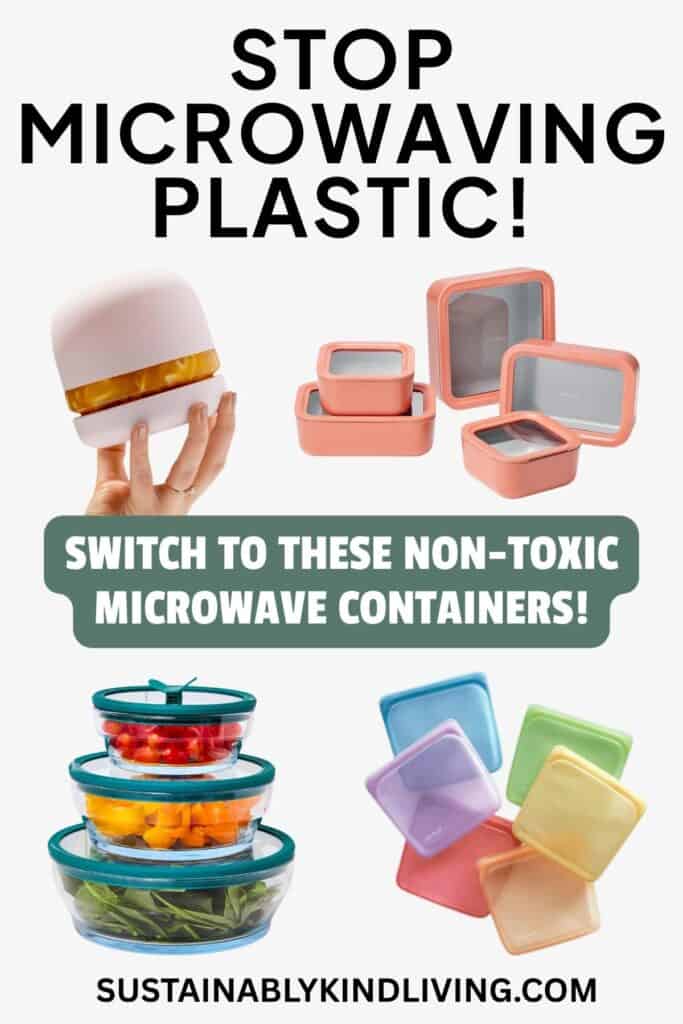
📌 Save This Guide For Later
If you’ve ever wondered what’s actually safe to use in the microwave, this is one of those guides worth coming back to.
This breakdown of non-toxic microwave containers covers what to avoid (like plastic and questionable “microwave-safe” labels), which materials are truly heat-stable, and the safest options for everyday reheating — without the greenwashing.
Save it for later so you have it on hand when you’re ready to make safer, non-toxic swaps in your kitchen.
Sources & Further Reading
The information in this guide is informed by regulatory guidance, peer-reviewed research, and material safety data related to plastics, silicone, glass, and food-contact exposure under heat.
Readers who want to explore the underlying science or verify specific claims can reference the sources below.
Regulatory & Government Sources
- U.S. Food & Drug Administration (FDA) — Food Contact Substances https://www.fda.gov/food/packaging-food-contact-substances-fcs/inventory-food-contact-substances-listed-21-cfr
- U.S. Food & Drug Administration (FDA) — Microwave Oven Safety https://www.fda.gov/radiation-emitting-products/resources-you-radiation-emitting-products/microwave-ovens
- European Food Safety Authority (EFSA) — Food Contact Materials
https://www.efsa.europa.eu/en/topics/topic/food-contact-materials - U.S. Environmental Protection Agency (EPA) — PFAS Explained
https://www.epa.gov/pfas - California Department of Toxic Substances Control (DTSC) — Safer Food Packaging & Cookware https://dtsc.ca.gov/scp/safer-food-packaging-cookware-act-of-2021/
Independent Research & Scientific Sources
- National Institutes of Health (NIH) / PubMed — Microplastics & Food Exposure
https://pubmed.ncbi.nlm.nih.gov/?term=microplastics+food - National Institutes of Health (NIH) / PubMed — Plastic Chemical Migration
https://pubmed.ncbi.nlm.nih.gov/?term=plastic+chemical+migration+food - World Health Organisation (WHO) — Microplastics in Drinking Water
https://www.who.int/publications/i/item/9789241516198 - Agency for Toxic Substances and Disease Registry (ATSDR) — Toxicological Profiles https://www.atsdr.cdc.gov/toxicological-profiles/about/index.html
Standards & Testing Organizations
- NSF International — Food Equipment & Material Safety Standards https://www.nsf.org/nsf-standards/standards-portfolio/food-equipment-standards
- International Organisation for Standardisation (ISO) — Food Contact Materials
https://www.iso.org/committee/54540.html

Steal My Non-Toxic Cleaning Checklist!
Believe us, it’s the BEST…. and it’s free. Does it really get any better than that?! Sign up for our newsletter and get this free checklist to clean your home without any harmful chemicals!