 Shop My Favorite Non-Toxic Gifts Of 2026!
SKL is reader supported. When you buy through links on our site, we may earn affiliate commission. Learn more here.
Looking for the best non-toxic slow cookers in 2026? You’re in the right place!
As more families become aware of the hidden chemicals that can lurk in everyday cookware and appliances, slow cookers are getting a closer look.
After all, these kitchen staples are designed to cook food for hours at a time — which makes the materials they’re made from especially important.
In this guide, we reviewed the safest PFAS-free, stainless steel, ceramic, and clay slow cookers to help you choose the healthiest option for your kitchen.
Top Non-Toxic Slow Cooker Picks in a Nutshell…
- Best Overall Non-Toxic Slow Cooker: GreenPan
- Best Multi-Function Non-Toxic Cooker: Our Place
- Best Pure Stainless Steel Slow Cooker: 360 Cookware
👉🏼 Quick Pick: If you’re looking for the most affordable PFAS-free slow cooker, the GreenPan Healthy Duo is our top recommendation.
Many conventional slow cookers (as with air fryers and cookware) rely on glazed ceramic inserts, synthetic nonstick coatings, or plastic components that may contain chemicals like PFAS, PTFE, BPA, or heavy metals.
When exposed to long cooking times and consistent heat, some of these materials can break down or potentially leach unwanted substances into food.
While not every slow cooker on the market poses a risk, the reality is that many brands are not fully transparent about the materials used in their construction. That’s why choosing the right materials matters.
👉🏼 In each brand’s material breakdown below, we separate food-contact materials from the rest of the appliance so you can clearly see what touches your food.

How We Chose the Safest Non-Toxic Slow Cookers
To find the safest slow cookers on the market, we evaluated dozens of models from well-known kitchen brands and emerging non-toxic cookware companies.
Our goal was simple: identify slow cookers made with the safest materials and the most transparent manufacturing practices.
Each model featured in this guide was reviewed based on the following criteria:
Material Safety
The most important factor was the material used in the cooking insert — the surface that comes into direct contact with food.
We prioritized slow cookers made from stainless steel, natural clay, or certified PFAS-free ceramic coatings while avoiding traditional nonstick coatings containing PTFE, PFOA, or other PFAS chemicals.
Transparency of Materials
Brands that clearly disclose the materials used in their products scored higher in our research.
If a company does not clearly state what the cooking surface, lid, or internal components are made from, it becomes difficult for consumers to make informed decisions.
Third-Party Certifications & Safety Standards
Whenever possible, we looked for brands that meet recognized safety standards or disclose testing related to heavy metals, PFAS, and food-contact safety.
Brand Reputation & Consumer Feedback
We also considered long-term durability, customer reviews, and overall brand reputation. Products with consistent positive feedback regarding performance, safety, and reliability were prioritized.
Practical Everyday Use
Finally, we evaluated whether the slow cooker performs well in real kitchens.
Capacity, durability, and ease of use were considered alongside safety so that every recommendation is both practical and trustworthy.
The result is a curated list of slow cookers made with safer materials and better transparency — helping you cook nourishing meals with greater peace of mind.
The Most Toxic Chemicals in Slow Cookers
Not all slow cookers are made with the same materials.
Because these appliances cook food for long periods of time, the materials used in the inner pot and surrounding components can make a difference when it comes to safety.
Here are a few substances experts often recommend avoiding when choosing a non-toxic slow cooker.
Lead
Some ceramic slow cooker inserts use glazed coatings that may contain trace amounts of lead or other heavy metals.
While modern regulations have improved safety standards, poorly formulated glazes can still pose risks — particularly when cooking acidic foods like tomato sauces for extended periods.
Even small amounts of lead exposure can accumulate in the body over time, which is why many shoppers prefer slow cookers made from stainless steel, natural clay, or certified toxin-free ceramic.
Lead poisoning is a severe condition that can occur even at low levels of exposure.
BPA (Bisphenol A)
BPA is a chemical sometimes used in plastics and resins. When heated, certain plastics may allow small amounts of BPA to migrate into food.
BPA exposure can lead to a host of health issues, including hormonal imbalances, reproductive problems, and an increased risk of certain cancers.
Because slow cookers operate for hours at a time, avoiding plastic components near cooking surfaces is generally recommended.
PTFE & PFOA in Nonstick Coatings
Some nonstick coatings are made with chemicals like PTFE or PFOA, part of the broader PFAS family.
These coatings can degrade over time and have raised concerns in health research. PTFE and PFOA have been linked to various health problems, including thyroid disease, chronic kidney disease, and testicular cancer.
Today, many brands offer PFAS-free ceramic alternatives that provide similar performance without these chemicals.
Heavy Metals
In addition to lead, heavy metals like cadmium may occasionally appear in ceramic pigments or manufacturing materials.
Cadmium accumulates in the body over time, leading to chronic toxicity even at low levels of exposure.
Choosing slow cookers made from transparent materials — such as stainless steel, natural clay, or certified ceramic coatings — helps reduce this risk.
Now that you know what chemicals to watch out for, the next step is choosing a slow cooker made from safer, more transparent materials.
In our research, we focused on brands that clearly disclose their construction materials and prioritize food-safe options like stainless steel, natural clay, and certified PFAS-free ceramic coatings.
We also looked at durability, brand transparency, consumer reviews, and overall value. The slow cookers below represent some of the safest options available in 2026.
Whether you prefer a pure stainless steel insert, a traditional clay pot, or a modern ceramic-coated design, these models allow you to enjoy the convenience of slow cooking while minimizing exposure to questionable materials.
The Safest Non-Toxic Slow Cookers in 2026
1. GreenPan
Best Budget PFAS-Free Slow Cooker
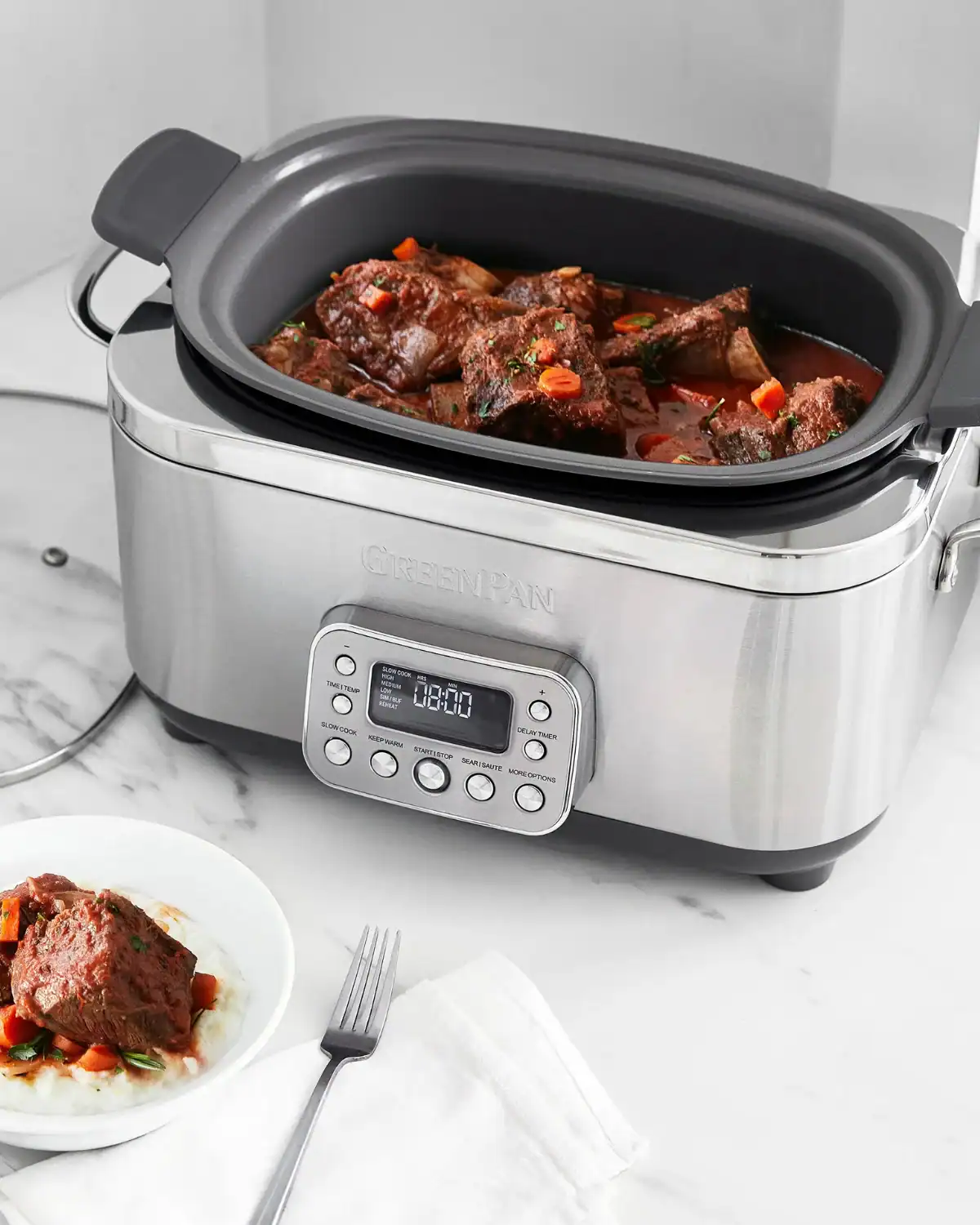
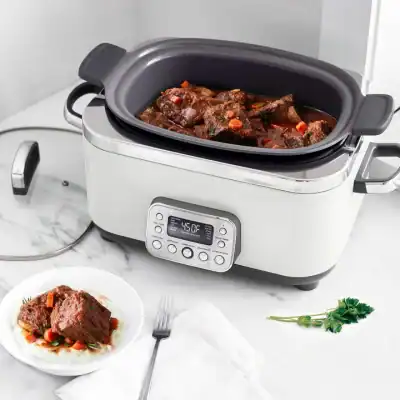
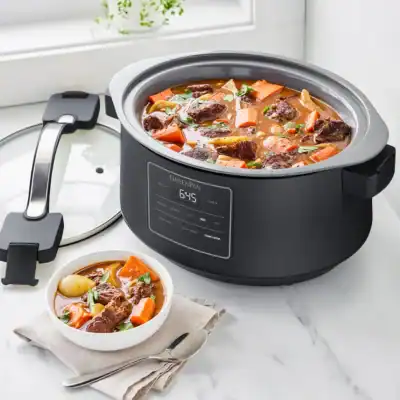
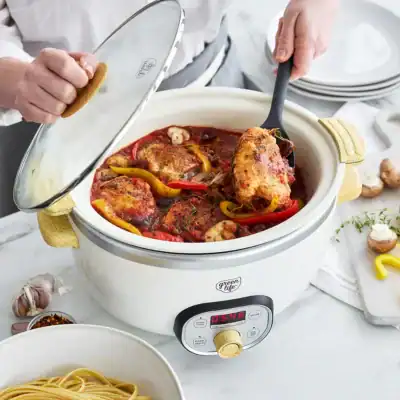
If you’re looking for a PFAS-free slow cooker that’s actually affordable, GreenPan offers one of the safest ceramic options on the market.
The Healthy Duo 6-Quart features a removable Thermolon™ ceramic nonstick pot that’s free from PFAS, PFOA, PTFE, lead, and cadmium.
You can sear directly on the stovetop, then return it to the base for slow cooking — eliminating extra pans and building deeper flavor.
For those wanting upgraded aesthetics and durability, the Elite Reserve model features a reinforced ceramic coating and elevated design details — while maintaining the same toxin-free standards.
This makes GreenPan one of the best choices for families who want a lead-free, PFAS-free slow cooker without spending premium-brand prices.
Price
$60+ (Healthy Duo) | $260+ (Elite Reserve)
Food Contact Material
PFAS-Free Ceramic Nonstick Coating (Thermolon™)
Location/Shipping
United States | Ships Via Region-Specific Websites Only
Our Favorites from GreenPan:
2. Our Place
Best Multi-Function Non-Toxic Cooker
Use discount code SKL10 to save 10%!
From cookware to tea kettles and, of course, display-worthy, nonstick ceramic slow cookers, Our Place is the mecca of healthy kitchen essentials.
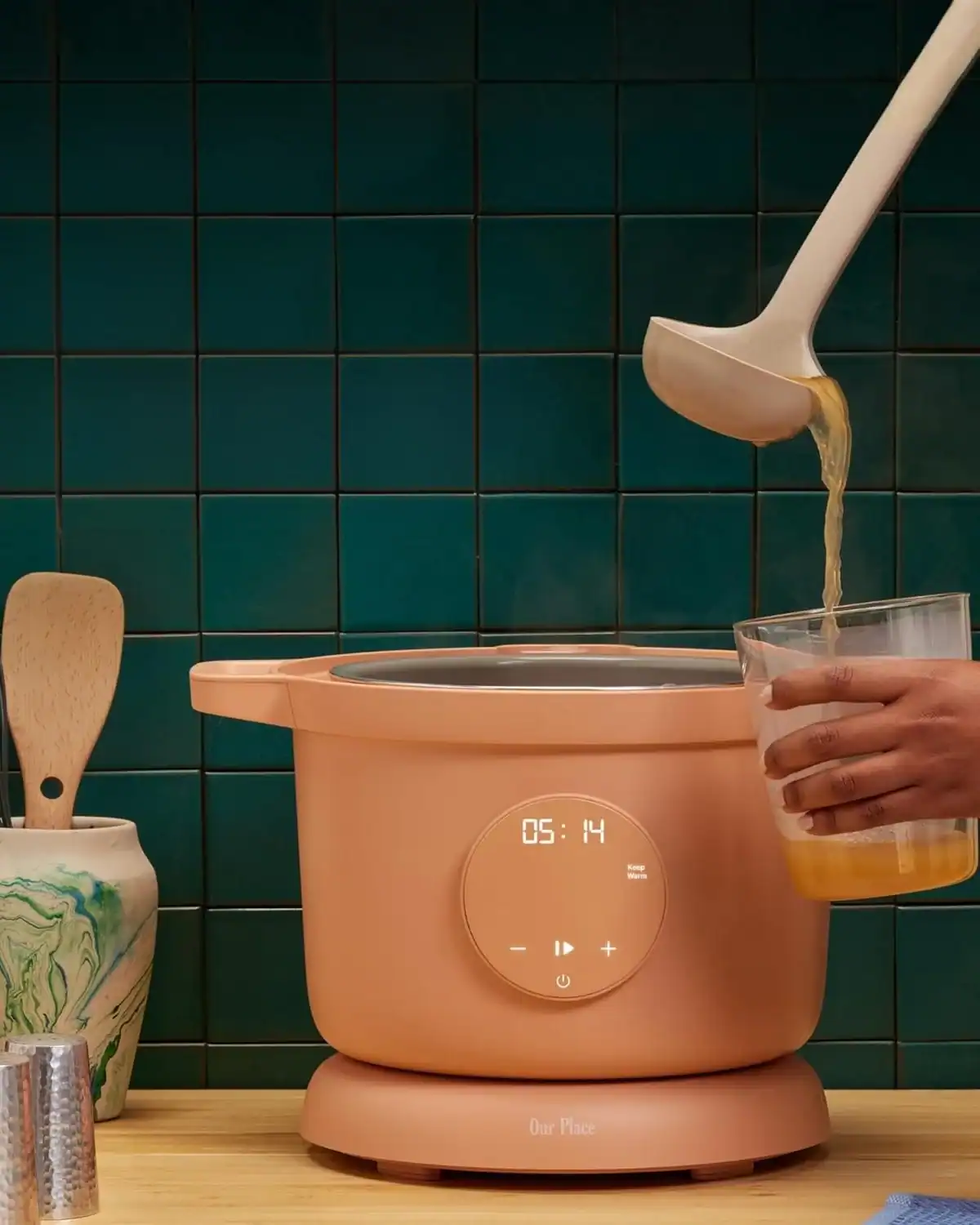
The Dream Cooker® is basically a multi-cooker that allows you to make fork-tender meats, fluffy whole grains, and flavor-rich broths, all in record time, thanks to its ultra-efficient, pressurized power.
This all-in-one lead-free slow cooker can save you up to 80% of your cooking time compared to traditional slow cooking methods.
Its 6-quart inner pot, which can hold up to 9 cups of rice, features a toxin-free ceramic nonstick coating, combining the powers of pressure cooking, slow cooking, sautéing, and more.
You can set it and forget it with hands-free steam release, automatic keep warm, and nine advanced safety features, including pressure cook, slow cook, sauté/sear, and keep warm.
Price
$199
food contact material
Ceramic Nonstick Coating
location/shipping
United States | Ships To Canada, The United Kingdom & Australia
3. All-Clad Stainless Steel Slow Cooker
Best Multi-Use Slow Cooker (Stovetop + Oven Safe Insert)
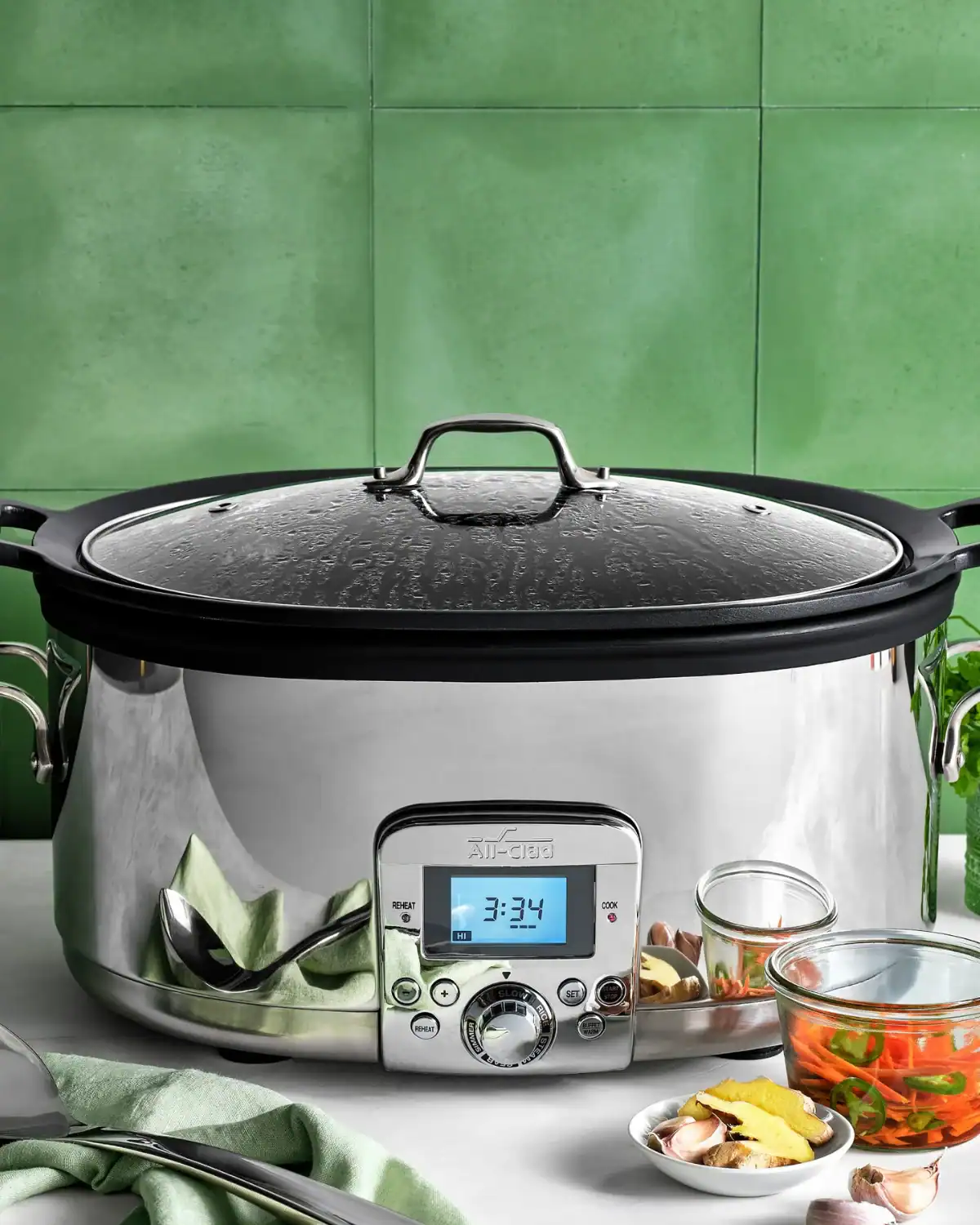
For those who prefer the simplicity and durability of stainless steel, All-Clad offers a well-designed slow cooker with a sleek stainless steel exterior.
Unlike traditional ceramic crockpots that rely on glazed inserts, this model features a removable cast aluminum inner pot with a ceramic-based nonstick coating, which avoids traditional ceramic glazes but still relies on a coated surface.
The spacious 7-quart capacity is ideal for batch cooking soups, stews, and braised meats for the whole family.
It also includes a programmable digital timer and automatic keep-warm function, allowing you to set your meal and let it cook slowly throughout the day.
Price
$300
Food Contact material
Ceramic-Coated Aluminum (Nonstick)
Location/Shipping
United States | Ships Internationally Via Amazon
4. 360 Cookware
Best Premium Stainless Steel Slow Cooker
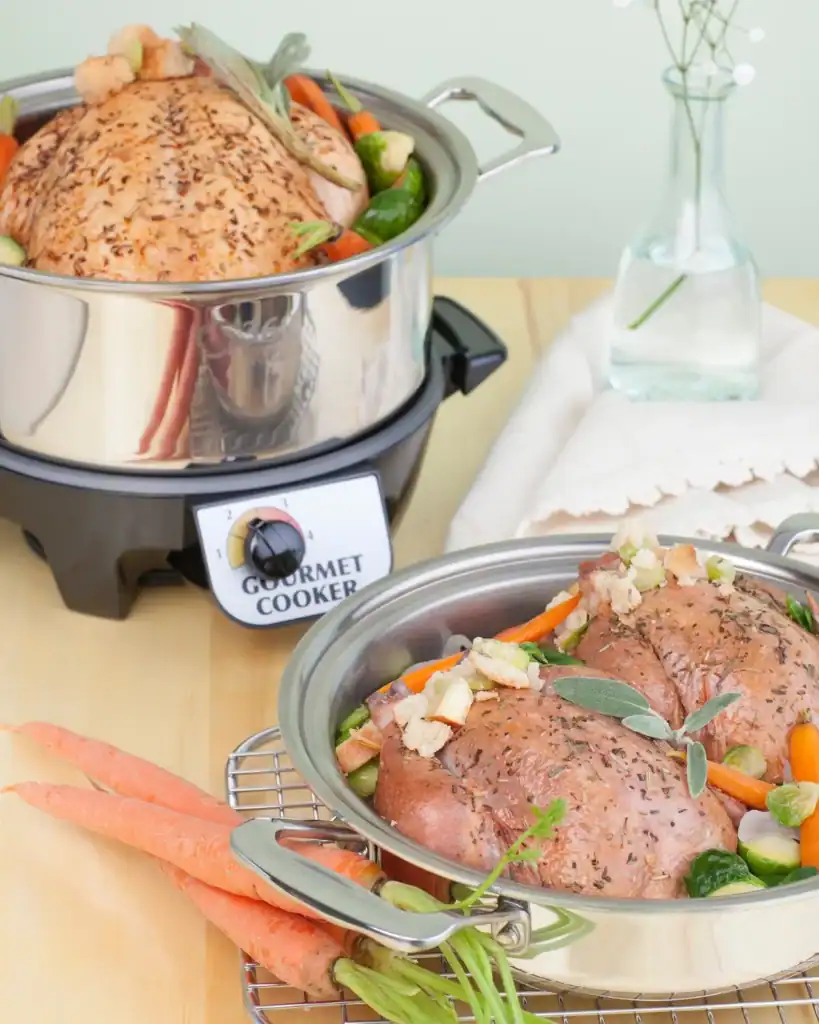
In addition to the amazing stainless steel cookware sets, the premium brand 360 Cookware offers a fantastic non-toxic slow cooker made in the USA from metal with a 110 gauge T-316 surgical grade stainless steel.
Oven-safe capability up to 500 degrees and perfectly sized for sauces and dips, this kitchen appliance is ideal whether you’re entertaining a crowd or preparing an intimate dinner for two.
With this lead-free slow cooker, you can take advantage of the benefits of our Vapor® Cooking Method, which creates healthier, more flavorful dishes without the need for unhealthy fats or oils.
Plus, you can easily move it onto the slow cooker base to turn it into a convenient countertop slow cooker and warmer.
Price
$395-$480
food contact material
T-316 Surgical-Grade Stainless Steel
location/shipping
United States | Select International Shipping
5. VitaClay Chef
Best Natural Clay Slow Cooker
Use discount code SKL10 to save 10%!
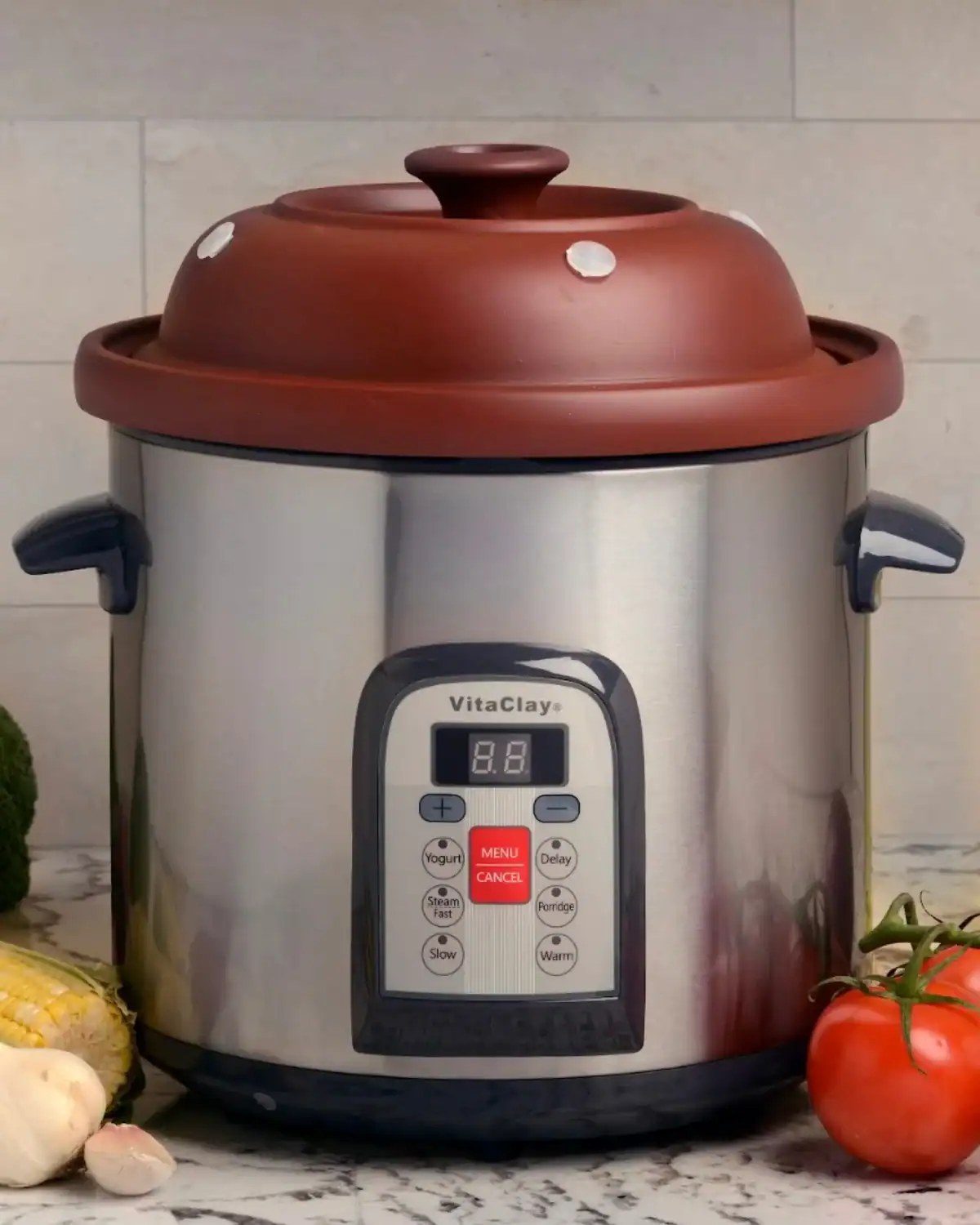
VitaClay Chef’s non-toxic slow cooker doubles as a yogurt maker and baby food maker — making it a great option for smaller households or parents who want more versatility from one appliance.
The removable 2-quart unglazed clay insert gently cooks stews, broths, oatmeal, and more while helping preserve nutrients and flavor.
Unlike many conventional ceramic pots, this insert is made from natural clay without synthetic nonstick coatings.
With simple high, low, and yogurt settings — plus a lightweight, portable design — it’s ideal for small-batch cooking without the bulk of a traditional slow cooker.
Price
$120-$350
food contact material
Natural Unglazed Zisha Clay
location/shipping
United States
Certifications to Look for in Non-Toxic Slow Cookers
When shopping for a non-toxic slow cooker, materials are the most important factor — but certifications can provide an extra layer of reassurance that a product has been tested for safety.
While not every appliance will carry all of these certifications, brands that meet recognized safety standards typically demonstrate stronger transparency and quality control.
FDA Food-Contact Compliance
Most cookware and kitchen appliances sold in the United States must meet FDA standards for materials that come into contact with food.
This helps ensure that cooking surfaces are safe for everyday use and do not release harmful substances during normal cooking conditions.
NSF Certification
NSF International is an independent organization that tests products for public health and safety. Appliances that meet NSF standards have undergone rigorous evaluation for food-contact safety and sanitation.
PFAS-Free or PTFE/PFOA-Free Labels
Many modern cookware brands now disclose when their products are free from PFAS chemicals such as PTFE and PFOA.
While not a formal certification, these labels help consumers identify safer alternatives to traditional nonstick coatings.
Lead and Cadmium Safety Standards
Some cookware manufacturers voluntarily test ceramic coatings and glazes to confirm they meet safety limits for heavy metals such as lead and cadmium.
Brands that openly disclose this testing often demonstrate a stronger commitment to product transparency.
When evaluating slow cookers, we prioritized brands that clearly disclose their materials and avoid questionable coatings whenever possible.
How to Spot Greenwashing in “Non-Toxic” Slow Cookers
As interest in non-toxic cookware grows, many brands have started using marketing terms like eco-friendly, natural, or non-toxic — even when the materials don’t fully support those claims.
This practice, often called greenwashing, can make it harder for shoppers to know which products are genuinely safer.
Here are a few common red flags to watch for when evaluating slow cookers.
Vague “Non-Toxic” Claims Without Material Details
A trustworthy brand will clearly disclose what the cooking insert and lid are made from.
If a product is marketed as non-toxic but doesn’t list the materials used for the food-contact surfaces, that’s a sign to look more closely.
“Ceramic” That Is Actually Just a Coating
Some appliances advertise “ceramic” cooking surfaces, but the ceramic layer may actually be a thin coating applied over aluminum.
While many modern ceramic coatings are PFAS-free, they are still coatings — not solid ceramic.
Missing Information About PFAS or Nonstick Chemicals
Brands that use nonstick coatings should clearly state whether their products are PFAS-free, PTFE-free, and PFOA-free.
If that information isn’t disclosed, it may indicate the coating contains traditional nonstick chemicals.
Lack of Safety Certifications or Testing
While not every slow cooker carries formal certifications, reputable brands typically share information about heavy metal testing, food-contact safety, or compliance with standards such as FDA regulations.
When shopping for a non-toxic slow cooker, transparency is often the most important signal.
Brands that openly share their materials, testing, and manufacturing practices make it much easier to choose appliances that align with a healthier kitchen.
What Slow Cookers to Avoid at All Costs
Brands That Don’t Properly Disclose All Materials
If a manufacturer does not clearly state what materials are used in the construction of their slow cooker, it’s best to steer clear.
When material information is vague or missing, there’s a higher risk that the cooker may contain unsafe substances.
Uncertified Slow Cookers
Certifications from reputable organizations such as the FDA or NSF indicate that the product has undergone rigorous testing to ensure it is safe for use.
Without these certifications, there’s no guarantee that the slow cooker meets essential safety standards.
Models With Plastic Parts in Cooking Areas
Plastics can leach harmful chemicals, especially when exposed to high temperatures over extended periods.
Chemicals like BPA and phthalates can migrate from plastic into food, posing health risks.
Non-Stick Coatings Without Clear Labeling of PTFE/PFOA-Free
Non-stick coatings can make cleanup easier, but they also raise potential health concerns if they contain chemicals like PTFE or PFOA.
These substances can break down at high temperatures, releasing toxic fumes and leaching into food.
FAQs About Non-Toxic Slow Cookers
Traditional nonstick coatings, plastic components, and poorly disclosed ceramic glazes have raised concerns among health-conscious consumers.
As a result, more people are choosing slow cookers made from stainless steel, natural clay, or PFAS-free ceramic coatings for greater transparency and peace of mind.
Not all slow cookers are toxic, but some models may contain materials that raise concerns for health-conscious consumers. Choosing slow cookers made with stainless steel, natural clay, or PFAS-free ceramic coatings helps reduce potential chemical exposure during long cooking times.
Stainless steel is widely considered the safest slow cooker material because it is naturally non-reactive, highly durable, and free from synthetic nonstick coatings.
Natural clay inserts and PFAS-free ceramic coatings can also be safe when manufactured without harmful glazes or heavy metals. Many shoppers looking for non-toxic appliances prefer stainless steel inserts for this reason.
Some slow cookers use traditional nonstick coatings that contain PFAS chemicals such as PTFE, commonly known as Teflon.
These coatings are designed to prevent food from sticking, but can degrade over time and may release compounds when exposed to heat. For a safer alternative, many households choose stainless steel or PFAS-free ceramic slow cookers.
Many traditional slow cookers use glazed ceramic inserts and plastic lids. While most modern brands follow safety standards, some consumers prefer to avoid ceramic glazes and nonstick coatings altogether.
Stainless steel and natural clay slow cookers are often recommended by non-toxic living advocates because they rely on simpler, more transparent materials.
Ceramic slow cookers can be safe if the ceramic glaze is properly formulated and tested for heavy metals like lead and cadmium. However, not all brands clearly disclose their glazing materials.
Because of this, many shoppers choose stainless steel slow cookers or PFAS-free ceramic options from brands that provide transparent material information.
Many people trying to reduce chemical exposure avoid slow cookers with traditional nonstick coatings containing PFAS chemicals, poorly disclosed ceramic glazes, or plastic components that sit near high heat.
Instead, look for slow cookers made from stainless steel, natural clay, or certified PFAS-free ceramic materials.
Stainless steel is often preferred because it does not rely on glazes or coatings and is extremely resistant to corrosion and chemical reactions with food. Ceramic slow cookers can also be safe when made properly, but stainless steel is generally considered the most inert and durable cooking surface.
Older slow cookers may still work well, but some were manufactured before newer safety standards for heavy metals and coatings became common. If your slow cooker is very old or the ceramic insert is chipped or worn, upgrading to a newer stainless steel or PFAS-free ceramic model can provide added peace of mind.
Both appliances can produce healthy meals, but the material of the cooking pot matters more than the cooking method. Slow cookers or pressure cookers with stainless steel, clay, or PFAS-free ceramic cooking surfaces are typically preferred by people trying to avoid synthetic coatings.
Both are excellent tools for slow cooking. Slow cookers are convenient for unattended cooking throughout the day, while Dutch ovens offer more versatility on the stovetop and in the oven. Choosing cookware made from safe materials like stainless steel, cast iron, or ceramic helps ensure healthier cooking with either option.
The healthiest way to slow cook food is to use appliances made from non-reactive materials such as stainless steel, clay, or PFAS-free ceramic coatings.
Non-toxic slow cooker brands typically use safer materials like stainless steel, natural clay, or PFAS-free ceramic coatings instead of traditional nonstick surfaces.
Stainless steel slow cookers are often considered one of the healthiest options because stainless steel is naturally non-reactive and does not rely on synthetic nonstick coatings.
Some ceramic cookware glazes have historically contained trace amounts of lead or cadmium, which is why many manufacturers now test their products to meet strict safety standards.
Continue Your Non-Toxic Kitchen Journey
If you’re building a healthier kitchen, your slow cooker is just the beginning.
Many everyday appliances and cookware items can contain hidden coatings or materials that are worth taking a closer look at.
You might also enjoy exploring these guides:
- The Best Non-Toxic Cookware Brands for everyday cooking
- Our guide to PFAS-Free Air Fryers for safer countertop cooking
- The Safest Non-Toxic Bakeware for ovens and baking
- Our deep dive into What PFAS Are and How to Avoid Them
Each guide is carefully researched to help you create a kitchen that supports both your health and your peace of mind.
Final Thoughts on Choosing a Non-Toxic Slow Cooker
Slow cookers have earned a permanent spot in many kitchens for good reason — they make it easy to prepare nourishing meals with minimal effort.
But as more people pay attention to what their cookware is made from, it’s becoming clear that the materials used in kitchen appliances matter just as much as the ingredients we cook with.
Choosing a slow cooker made from safer materials like stainless steel, natural clay, or PFAS-free ceramic coatings can help reduce exposure to questionable chemicals while still delivering the comforting, slow-simmered meals we all love.
The good news? You don’t have to sacrifice convenience to cook more consciously.
The brands featured in this guide offer some of the safest slow cooker options available today — giving you the ability to enjoy everything from hearty soups and stews to tender braised dishes with greater peace of mind.
When in doubt, remember the simplest rule: the fewer coatings and mystery materials touching your food, the better.
Still deciding?
If you’re short on time and just want the highlights, here’s a quick recap of our top non-toxic slow cooker picks:
- Best Budget PFAS-Free Slow Cooker: GreenPan
- Best Multi-Function Non-Toxic Cooker: Our Place
- Best Stainless Steel Slow Cooker: All-Clad
- Best Premium Stainless Steel Option: 360 Cookware
- Best Natural Clay Slow Cooker: VitaClay Chef
Each of these slow cookers prioritizes safer materials like stainless steel, natural clay, or PFAS-free ceramic coatings — helping you enjoy the convenience of slow cooking without relying on questionable coatings or hidden chemicals.
No matter which option you choose, focusing on transparent materials and trusted brands is one of the simplest ways to build a healthier kitchen.
Let’s Keep the Conversation Going
Have you tried one of the non-toxic slow cookers on this list? Or do you have a favorite brand we should look into?
We’d genuinely love to hear about your experience. Your feedback helps us continue researching safer products and improving our guides for the entire community.
Share your thoughts, questions, or recommendations in the comments below — we read every single one.
Sources & Further Reading
When I’m researching safer kitchen appliances, I always go beyond brand claims and look at what independent health and environmental organizations say about materials, coatings, and long-term exposure.
If you want to dig deeper into the science behind non-toxic slow cookers, these are some of the most helpful resources I’ve come across:
- U.S. Food & Drug Administration (FDA): Explains how materials used in cookware and appliances are evaluated for food safety. https://www.fda.gov/food/food-ingredients-packaging/food-chemical-safety
- Environmental Protection Agency (EPA): A helpful overview of PFAS chemicals, where they’re found, and why many families are choosing to avoid them. https://www.epa.gov/pfas
- Agency for Toxic Substances and Disease Registry (ATSDR): Breaks down how PFAS behave in the body and why long-term exposure is a concern. https://www.atsdr.cdc.gov/pfas/index.html
- National Institute of Environmental Health Sciences (NIEHS): Covers what BPA is, how exposure happens, and potential hormonal impacts. https://www.niehs.nih.gov/health/topics/agents/sya-bpa/index.cfm
- World Health Organization (WHO): A clear, research-backed explanation of why even low levels of lead exposure matter. https://www.who.int/news-room/fact-sheets/detail/lead-poisoning-and-health
- NSF International: Details how food-contact appliances are tested for safety and sanitation. https://www.nsf.org/nsf-standards/standards-portfolio/food-equipment-standards
- European Food Safety Authority (EFSA): Provides additional global perspective on how materials used in cookware are regulated. https://www.efsa.europa.eu/en/topics/topic/food-contact-materials
- Consumer Reports: Offers independent insights into cookware materials and performance considerations. https://www.consumerreports.org/cro/cookware/buying-guide/index.htm

Steal My Non-Toxic Cleaning Checklist!
Believe us, it’s the BEST…. and it’s free. Does it really get any better than that?! Sign up for our newsletter and get this free checklist to clean your home without any harmful chemicals!