 Shop My Favorite Non-Toxic Gifts Of 2026!
SKL is reader supported. When you buy through links on our site, we may earn affiliate commission. Learn more here.
Finding a sustainable winter coat that’s both non-toxic and warm enough for real winter weather isn’t impossible—it just takes a little know-how and a lot of label-reading.
Many so-called “eco” coats still contain PFAS-laced waterproofing, petroleum-based insulation, or vague claims about ethical practices.
In this guide, we’re cutting through the greenwashing. We personally researched and hands-on tested over two dozen options to bring you the 11 best sustainable winter coats—each made from non-toxic, PFAS-free materials and backed by transparent, ethical supply chains.
Whether you’re braving icy commutes or snowy mountain hikes, these winter coats are built to last for years to come—without sacrificing performance, safety, or style.
📌 Save This Sustainable Winter Coat Guide
Pin this to your Eco-Friendly Wardrobe or Non-Toxic Fashion board so you’ll have it handy when winter hits—or when you’re ready to upgrade to a coat that’s truly warm, ethical, and PFAS-free.
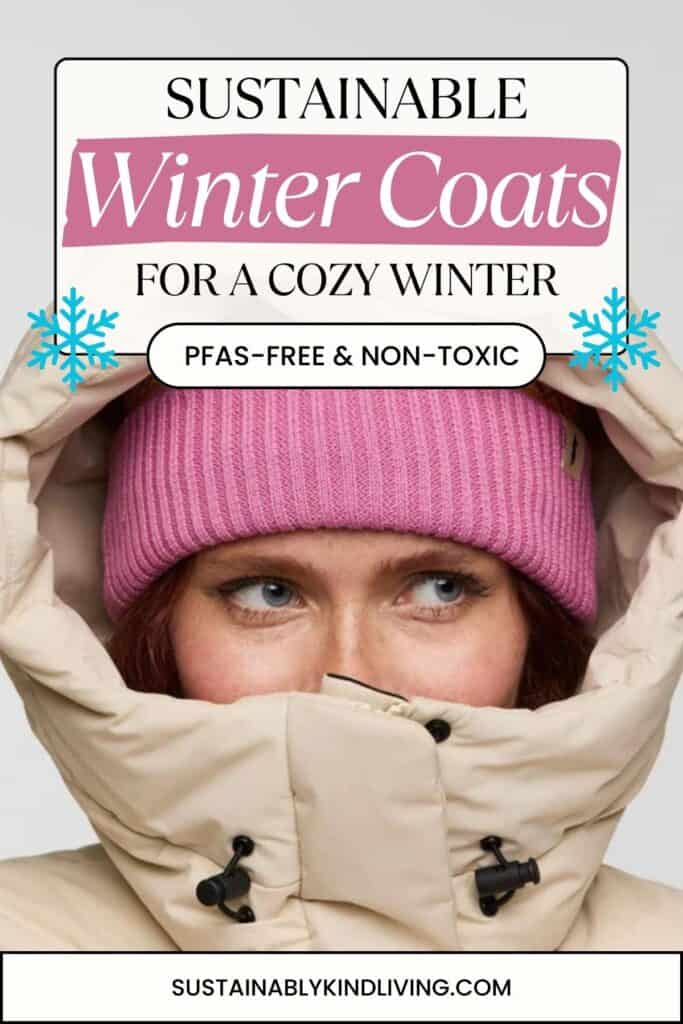
I had my wake‑up call standing in a downpour last March.
My two‑year‑old “weatherproof” parka soaked through at the shoulders, and I found myself googling “why do expensive coats fall apart so fast?” while hunched under a coffee shop awning.
What I discovered sent me down a research rabbit hole and completely changed how I think about winter coats.
Most parkas rely on petroleum‑based synthetics (essentially just plastic) that shed microplastics every time you wear them.
These materials are cheap to produce, not built to last, and once they break down, they end up in landfills after just a season or two.
At A Glance: My 5 Top Picks for the Best Sustainable Winter Coats
If you’re just here for the warmest and safest winter coats—without forever chemicals or fast fashion—these are the ones I recommend most. Each is tested in real winter weather, from icy sidewalks to sub-zero hikes.
✔️ Wuxly (Best for Extreme Cold – Vegan) – Built for –30 °C temps with plant-based Sorona® insulation, recycled materials, and PETA-approved warmth
✔️ Cotopaxi (Best All-Around Performance) – RDS down, PFC-free waterproof shell, Fair Trade Certified™, and a lifetime repair guarantee
✔️ Quince (Best Affordable Down Coat) – RDS-certified down, OEKO-TEX® fabric, recycled materials, and tested in snowy mountain conditions for under $200
✔️ Sézane (Best Ethical Wool Classic) – 100% virgin wool, timeless styling, responsibly made in Europe with audited supply chains
✔️ Tentree (Best Lightweight for Mild Cold) – Recycled PrimaLoft® insulation, Bluesign® shell, PFC-free finish, and trees planted with every purchase
➜ Want more options? Scroll down for the full list of 11 sustainable winter coats, including vegan puffers, Fair Trade favorites, and heirloom-worthy investment pieces.
And to stay dry in the wet winter weather, many coats use waterproof coatings made with toxic PFAS, PFC, and PVC. These chemicals have been linked to serious health issues, including cancer and hormone disruption.
To make matters worse, we live in a world that thrives on fast fashion—pushing out new trends each season and encouraging endless consumption. Toxic, low-quality materials often end up in landfills after just a few months of wear.
It’s a system built for profit, not longevity.
But I wasn’t willing to believe that staying warm and stylish had to come at the cost of my health or the planet. So I started digging. I tested dozens of coats, researched materials, and looked into brand ethics—and what I found surprised me.
Some companies are doing it right. They’re creating sustainable winter coats that don’t just compete with conventional options—they outperform them.
I learned that recycled down can be warmer than new down, and plant-based insulation holds heat even when wet.
With that knowledge, I put together a list of the 11 best sustainable winter coats that prove you can skip toxic materials and fast fashion without sacrificing performance or style.
But first, let’s break down what truly makes a winter coat sustainable.
What makes a winter coat truly sustainable?
A truly sustainable winter coat begins with smart materials…
- Look for recycled synthetics such as polyester rescued from landfills, or natural fibers like responsibly harvested wool and organic cotton.
- It should be manufactured without toxic chemicals. Avoid waterproof coatings that rely on PFAS “forever chemicals,” PFCs, or PVC, and skip formaldehyde‑laden resins.
- Beyond materials, it’s important to confirm it’s ethically made by looking for brands that pay fair wages in safe, verified factories.
- And perhaps most importantly, it should be made to last decades, not designed to fall apart after a season or two.
Caution: Waterproof Materials Are Usually Toxic
When winter weather turns wet and cold, you want a coat you can trust. Many popular waterproof fabrics, including Gore‑Tex and Polartec, use PFAS chemicals that never break down.
The same toxic chemicals appear in conventional rain gear—check out our guide to non-toxic raincoats on our sister site Toxic Free Choice for safer wet-weather options.
Every wear sheds tiny particles onto your skin and into the air. Over time, these toxins build up in your body and have been linked to cancer, fertility problems, hormonal disruption, and immune damage.
Some coats also use PVC, phthalates, or formaldehyde, which present their own risks.
The good news is that there are companies creating PFAS-free waterproof winter coat options using safer water-repelling alternatives like recycled polyester, waxed cotton, or polyurethane coatings.
Sustainable Insulation Does Exist!
Conventional down often comes with serious ethical and environmental concerns—like live-plucking or force-feeding of geese and ducks. On the flip side, many synthetic fills are petroleum-based, contribute to greenhouse gas emissions during production, and shed microplastics in the wash.
But here’s the good news: recycled down can actually outperform virgin down. The recycling process breaks up clumps and increases loft, meaning better insulation and longer-lasting warmth.
If you’re opting for down, look for the RDS (Responsible Down Standard) label to ensure humane treatment.
Wool lovers, go for mulesing-free or recycled wool options. They offer excellent warmth and natural water resistance—without the cruelty.
And synthetic insulation has come a long way. Recycled polyester—often made from plastic bottles—now delivers impressive warmth-to-weight performance. Some advanced recycled fills even retain up to 98% of their loft when wet, a feat most virgin down can’t match.
Whatever insulation you choose, keep an eye out for OEKO-TEX® Standard 100 certification to ensure it’s free from harmful chemicals.
Ethical Production & Timeless Style
Sustainable fashion goes beyond just eco-friendly materials—it starts with ethical production and ends with a mindset shift toward longevity.
True ethical production means more than buzzwords. It requires full transparency, fair wages, and long-term relationships with manufacturers. Look for brands that openly share their supplier lists, audit results (yes, even the failures), and clear information about wages and working conditions.
Fair Trade certifications, regular factory visits, and public supply chain disclosures are strong indicators of real accountability. Vague promises without specifics? That’s usually just greenwashing.
But here’s the other half of the sustainability equation—style that lasts. Fast fashion has trained us to chase trends, but sustainability means choosing pieces you’ll love for years to come. Even the most responsibly made winter coat is wasteful if it’s discarded after one season.
Choose timeless designs, versatile colors, and brands that stand behind their products. The best sustainable companies offer free repairs and lifetime guarantees—Patagonia will mend your coat, and Cotopaxi will replace your broken zipper—because they’re in it for the long haul, just like you.
Now that you know how to spot timeless styles and lasting quality, it’s time to meet the brands putting these principles into action.
Below, you’ll find our 11 top picks for the best sustainable winter coats. Each is chosen for its blend of thoughtful design, durable materials, and ethical production.
The Best Sustainable Winter Coats In 2026
1. Wuxly
Wuxly (Best for Extreme Cold – Vegan & Non-Toxic)
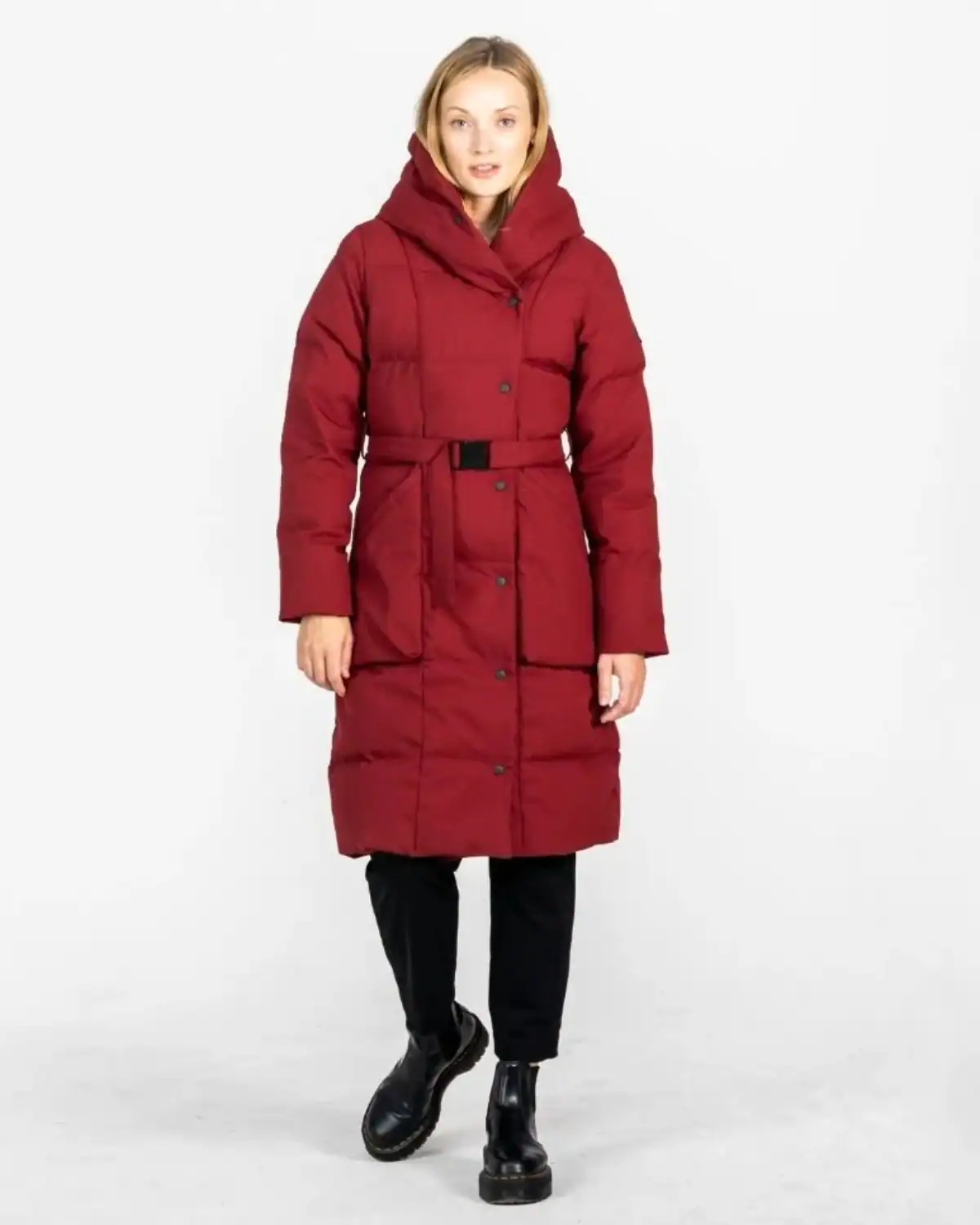
Stay warm through the harshest winters with the Palais Parka from Wuxly, a high-performance vegan winter coat built for sub-zero temps.
Instead of animal down, it’s filled with Sorona®-blended recycled polyester insulation that locks in heat even when wet—perfect for sleet, snow, and slush.
The 100% recycled nylon shell features a non-toxic DWR finish, while the cinchable waist, oversized hood, and faux-fur trim (all made from recycled yarn) bring both function and flair.
I personally tested this coat through a brutal Chicago winter, and it held up beautifully—warm, windproof, and completely PFAS-free.
With a fully traceable supply chain and PETA-Approved Vegan certification, this is one of the warmest, cruelty-free, and non-toxic winter coats available.
Price & Size
$990 | XS-XL
Materials
100 % Recycled Nylon Shell | Sorona® & Recycled Polyester Fill | Recycled Polyester Lining
Location/Shipping
Canada, ships to the United States
2. Cotopaxi
Best All-Around Performance
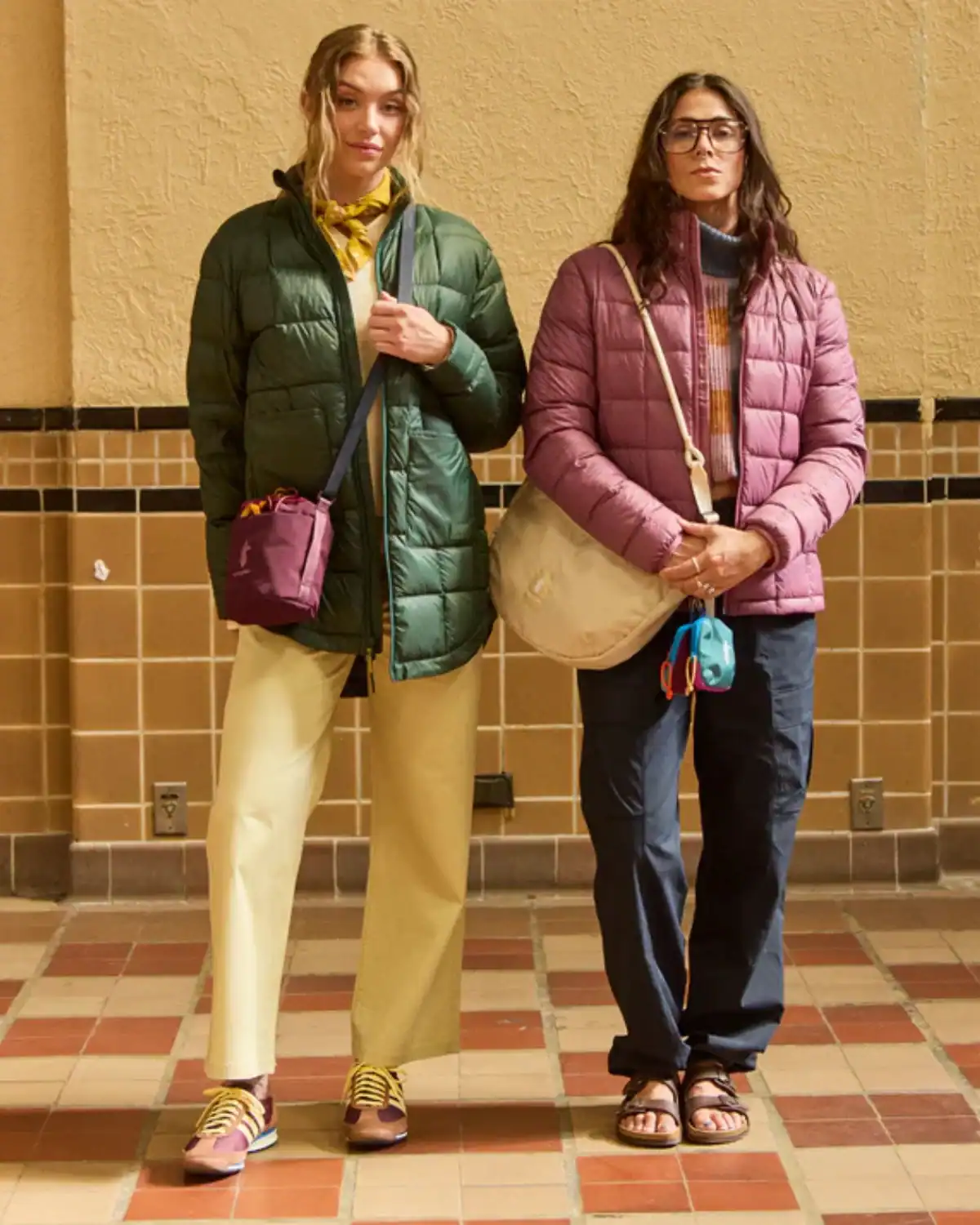
When arctic gusts roll in, the Alivio Down Parka from Cotopaxi delivers serious protection—without toxic materials.
This eco-friendly puffer jacket uses 650-fill Responsible Down Standard (RDS) insulation for cozy, compressible warmth, wrapped in a 100% recycled polyester shell treated with a PFC-free DWR finish.
I tested this coat during frigid Midwest temps and was shocked by how well it held up—lightweight but incredibly warm, even in snow and wind.
The thigh-length cut and adjustable hood are ideal for winter commutes or weekend hikes, while interior pockets (including a tricot-lined hand-warmer) keep your essentials close.
Cotopaxi’s Fair Trade Certified™ production supports ethical working conditions, and their lifetime repair guarantee makes this coat a long-term investment.
High performance. Low impact. No forever chemicals. What more could you want?
Price & Size
$350 | XS-XL
Materials
100 % Recycled Polyester Shell | 650‑Fill RDS Duck Down Insulation | Recycled Polyester Lining
Location/Shipping
Vietnam, ships to the United States, Canada, Mexico & Germany
3. Quince
Best Affordable Down Coat for Cold Climates
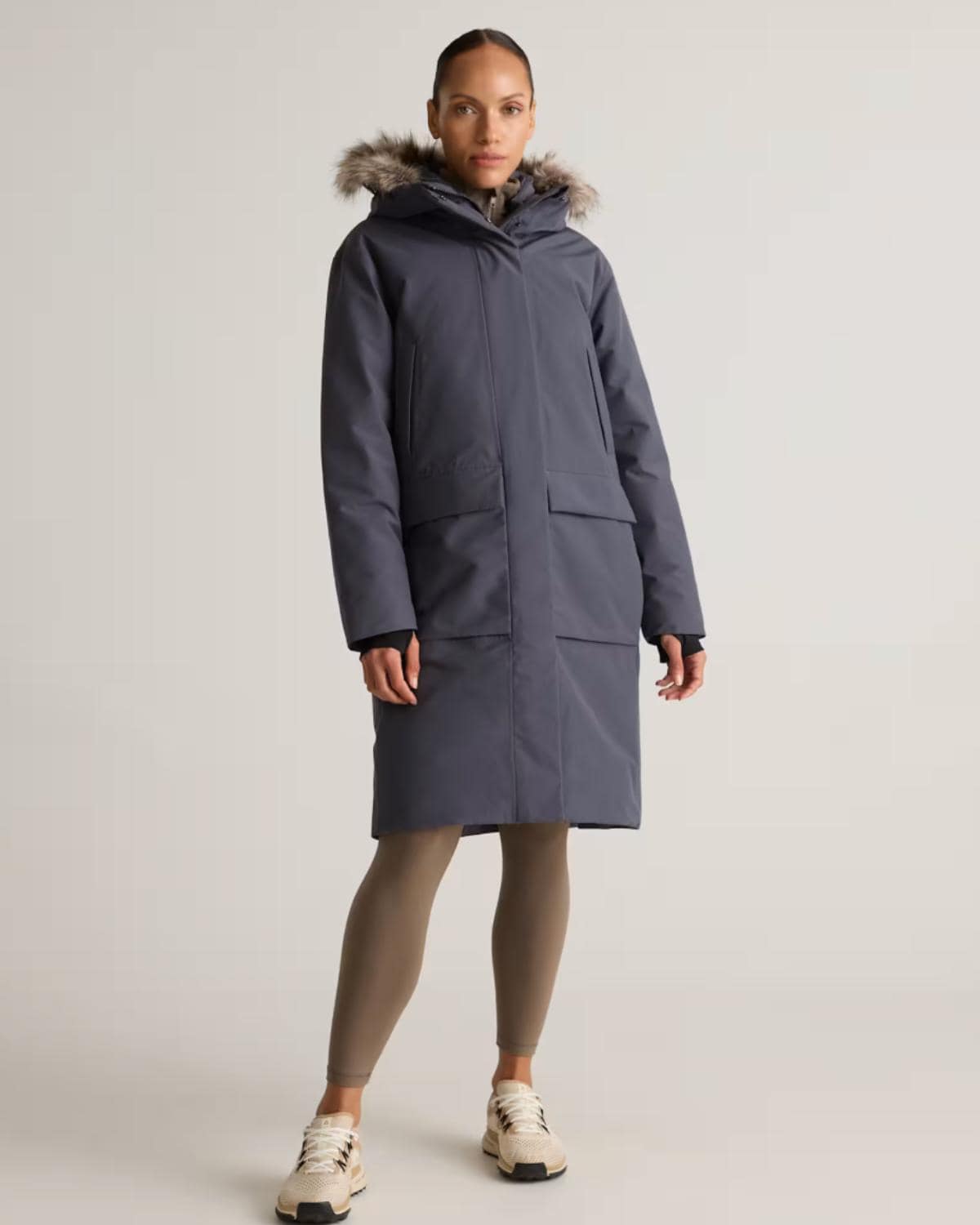
The Responsible Down Hooded Long Parka from Quince delivers serious warmth without the guilt.
Made with RDS-certified down and a 100% recycled polyester shell, this winter coat is built for true cold-weather performance.
The PFC-free DWR finish sheds snow and drizzle without toxic chemicals, and the OEKO-TEX® Standard 100 certification ensures no harmful dyes or finishes touch your skin.
With a long, thigh-grazing cut, cozy hood, and plush insulation, it’s ideal for deep winter. I reviewed it in snowy mountain conditions, and it held up beautifully—proving you don’t need to spend $400+ for a non-toxic coat that actually keeps you warm.
Price & Size
$190 | XS-XXL
Materials
Shell and Lining: 75% recycled polyester, 25% cotton Fill: 90% goose down, 10% goose feathers
Location/Shipping
United States | Ships To Canada
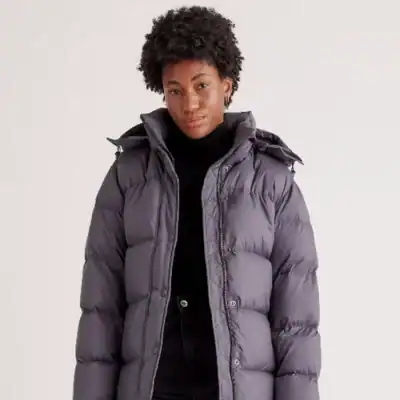
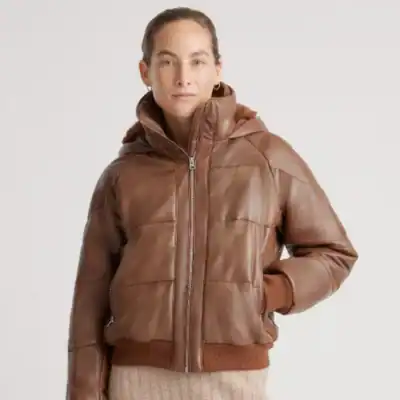
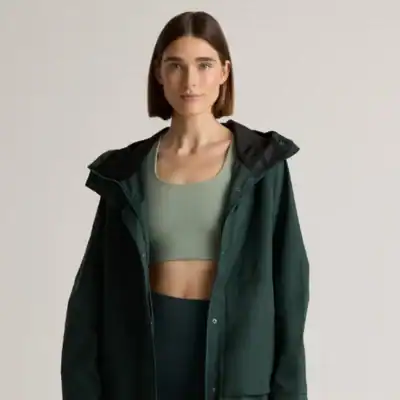
Some more winter favorites:
4. Sézane
Best Wool Coat for Cold City Winters

The Kais Coat from Sézane is a stunning example of how sustainable winter coats can be both timeless and incredibly warm.
Made from 100% virgin wool and crafted in ethical ateliers in Romania, this long, structured coat features a stand-up collar, removable scarf, and elegant raglan sleeves for ease of movement.
The full-length cut (47″) locks in warmth on crisp mornings, while the minimalist French tailoring makes it easy to dress up or down.
It’s an ideal pick for dry, cold winters where style matters as much as insulation.
Sézane’s commitment to transparent supply chains and long-lasting craftsmanship makes this one of the best non-toxic winter coats for women who want warmth without compromising on ethics or aesthetics.
Price & Size
$490 | XXS-4XL (0-16)
Materials
100% Virgin wool
Location/Shipping
Made in Bulgaria, ships to the United States & select international countries
5. Tentree
Best Lightweight Winter Jacket for Mild Cold

Plant trees with every layer you wear in the Cloud Shell Short Puffer from Tentree.
This pint‑sized powerhouse uses PrimaLoft® Black ThermoPlume insulation made from 100 % recycled polyester for lofty warmth in a compact silhouette.
The Bluesign®‑approved shell carries a PFC‑free DWR, so you stave off drizzle without toxic fallout.
The cropped cut pairs with high‑waisted jeans or leggings, and the cozy funnel neck feels like a built‑in scarf.
As a certified B Corp, Tentree literally gives back: ten trees planted per purchase.
Price & Size
$228 | XS-XXL
Materials
100 % Recycled Polyester Shell | PrimaLoft® Black ThermoPlume Insulation | Recycled Polyester Lining
Location/Shipping
Canada, ships to the United States
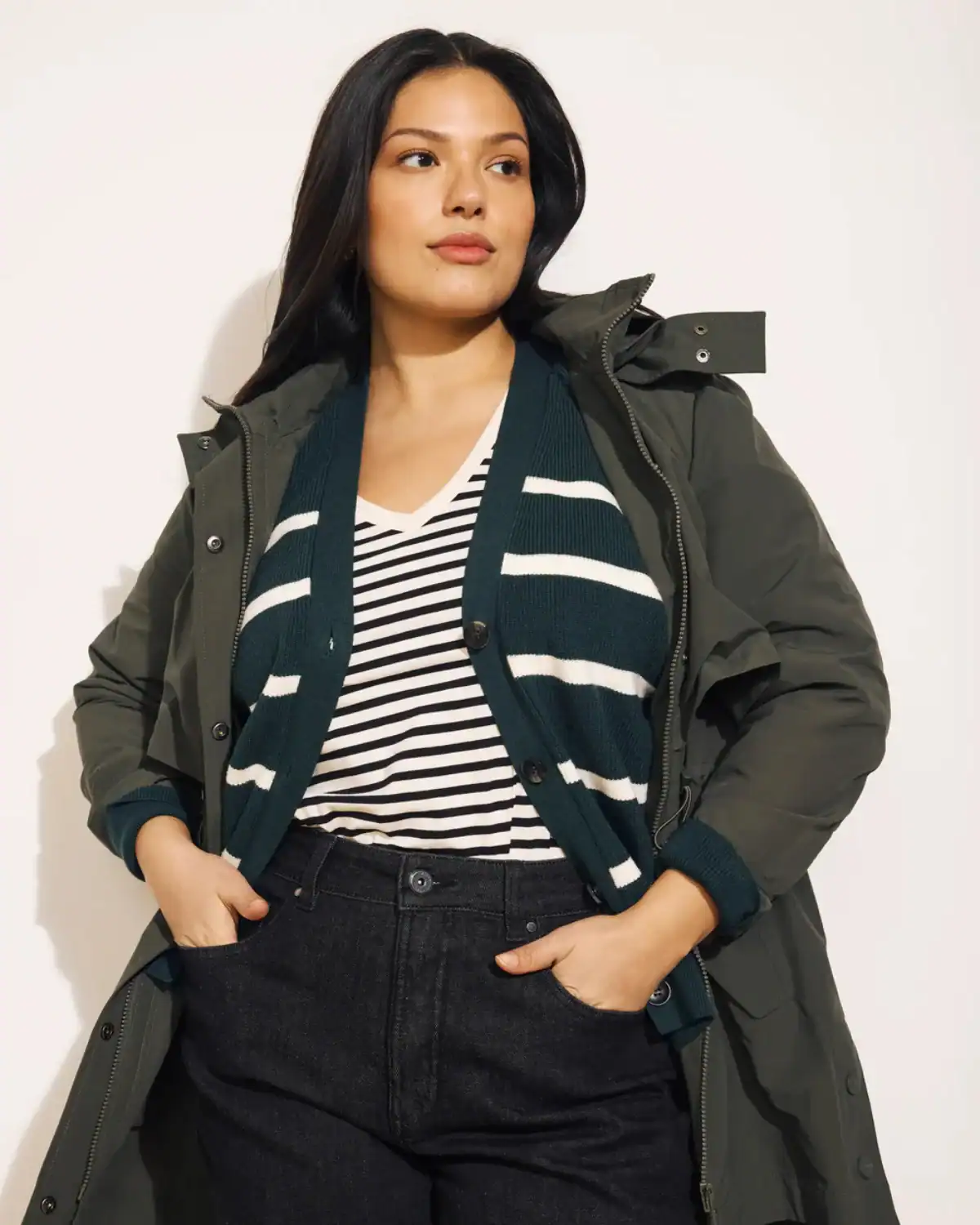
The Precision Parka from Universal Standard is sure to become your everyday wintertime hero.
With its blend of 60% cotton and 40% nylon, this coat feels effortlessly soft and is great for pairing with sustainable base layers since it stands up to wind and light drizzle.
The wire-rimmed hood keeps unexpected showers at bay without flopping forward into your face.
And the simple drawcord waist lets you dial in your look, whether you want a sleek, tailored vibe or to loosen up when you’re layering a chunky sustainable sweater underneath.
What will really win you over is the inclusive sizing from 00 to 40, which means everyone can find that just-right fit.
Price & Size
$298 | 4XS-4XL
Materials
60% Cotton | 40% Nylon
Location/Shipping
United States, ships to Canada, the United Kingdom, Switzerland & Hong Kong
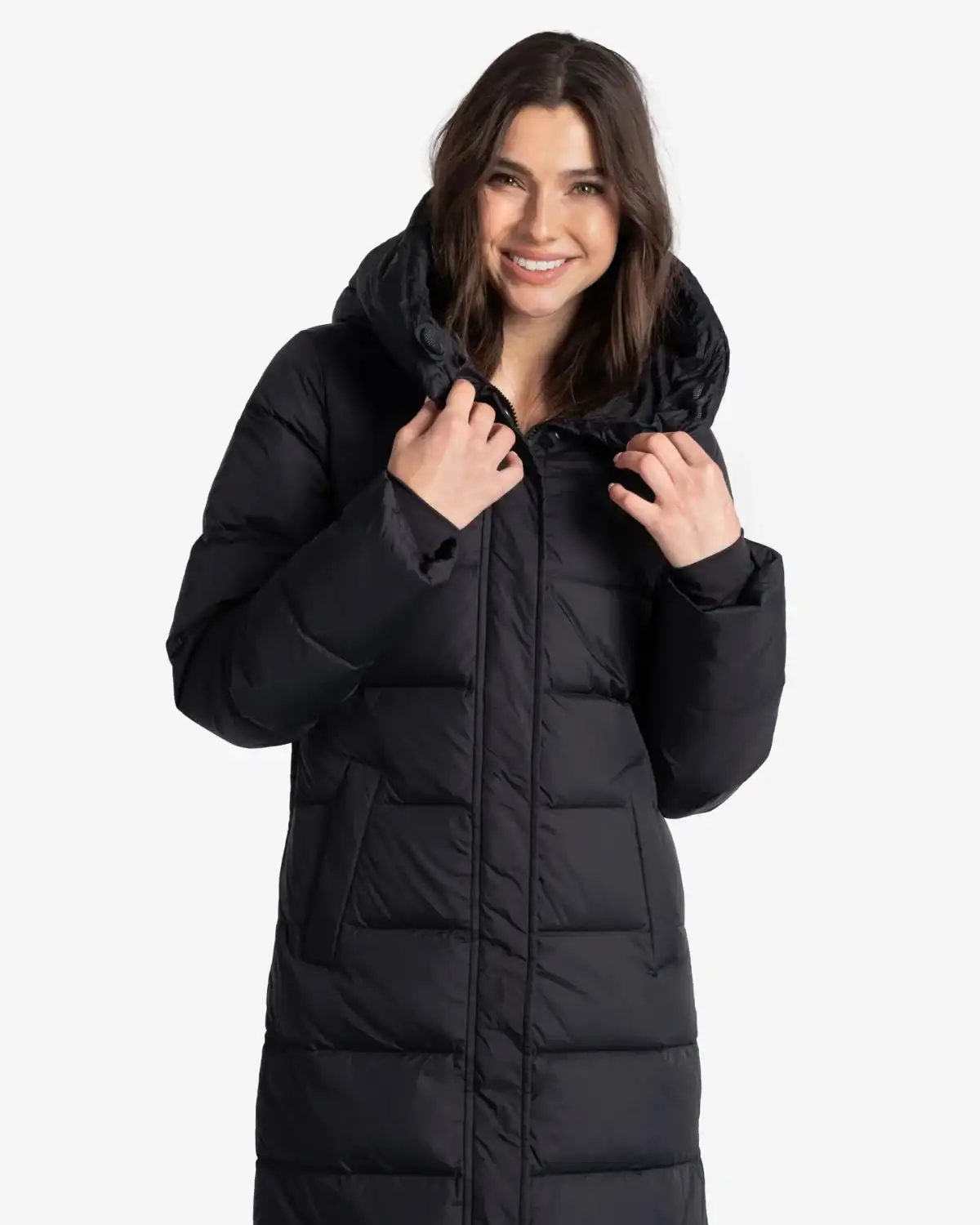
The Nora Winter Down Jacket from Lole proves you can look cool while staying warm.
This sustainable winter coat uses RDS‑certified down insulation for lightweight warmth and a recycled polyester shell with a PFC‑free DWR finish.
The slim, hip‑hugging cut goes down past your knees to keep the draft out, and the high funnel neck feels like a built‑in scarf.
You’ll love slipping your hands into the fleece‑lined pockets, and the two‑way zipper makes it easy to sit down without pulling at the hem.
Lole’s commitment to Fair Trade and Bluesign® fabrics makes it apparent that warm, non-toxic winter coats can look good and do good.
Whether you’re running errands or meeting friends for coffee, this jacket delivers chic style and planet‑kind performance.
Price & Size
$499 | XXS-XXL
Materials
100 % Recycled Polyester Shell & Lining | RDS‑Certified Duck Down Fill
Location/Shipping
Canada, ships to the United States
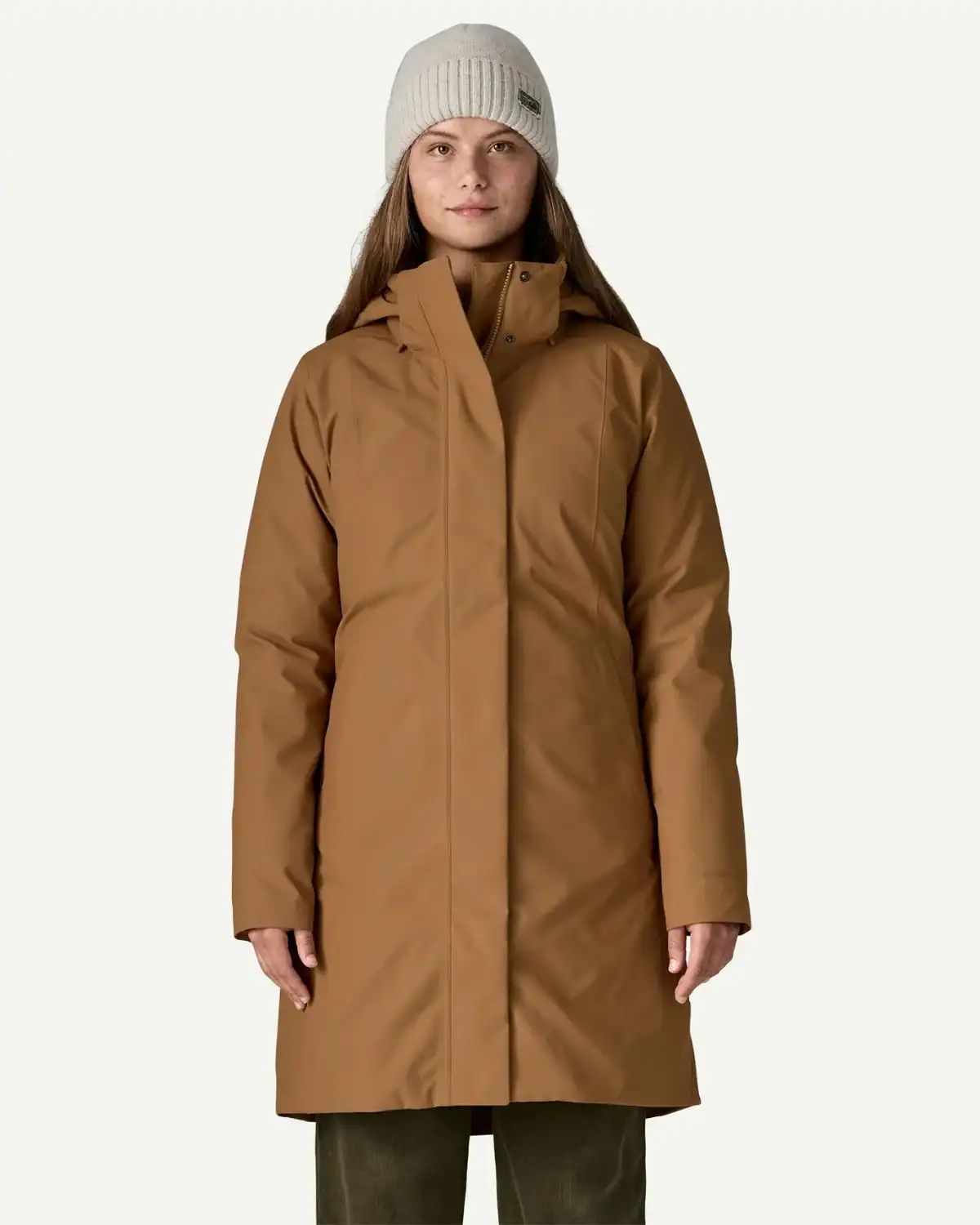
Whether you need a rain‑proof layer or down‑level warmth, the Tres 3‑in‑1 Parka from Patagonia adapts on a dime.
Zip together the waterproof H2No® Performance Standard shell and the 700‑fill‑power recycled down liner—or wear them solo for milder days.
It’s exactly what sustainable insulated coats should be. Designed for the coldest climates, the three‑way hood seals out wind and rain, while the removable down layer gives you Arctic‑grade heat when winter really bites.
Fair Trade Certified™ seams and Bluesign®‑approved fabrics mean you’re wrapping up in ethics as well as style.
The recycled shell carries a PFC‑free DWR, so you stay dry without forever chemicals.
This Parka is proof that warm, non‑toxic winter coats can fit seamlessly into an urban life as well as backcountry adventures.
Price & Size
$699 | XS-XXL
Materials
100 % Recycled Nylon Shell | 700‑Fill Recycled Down Liner | DWR Finish Made Without Intentionally Added PFAS
Location/Shipping
United States
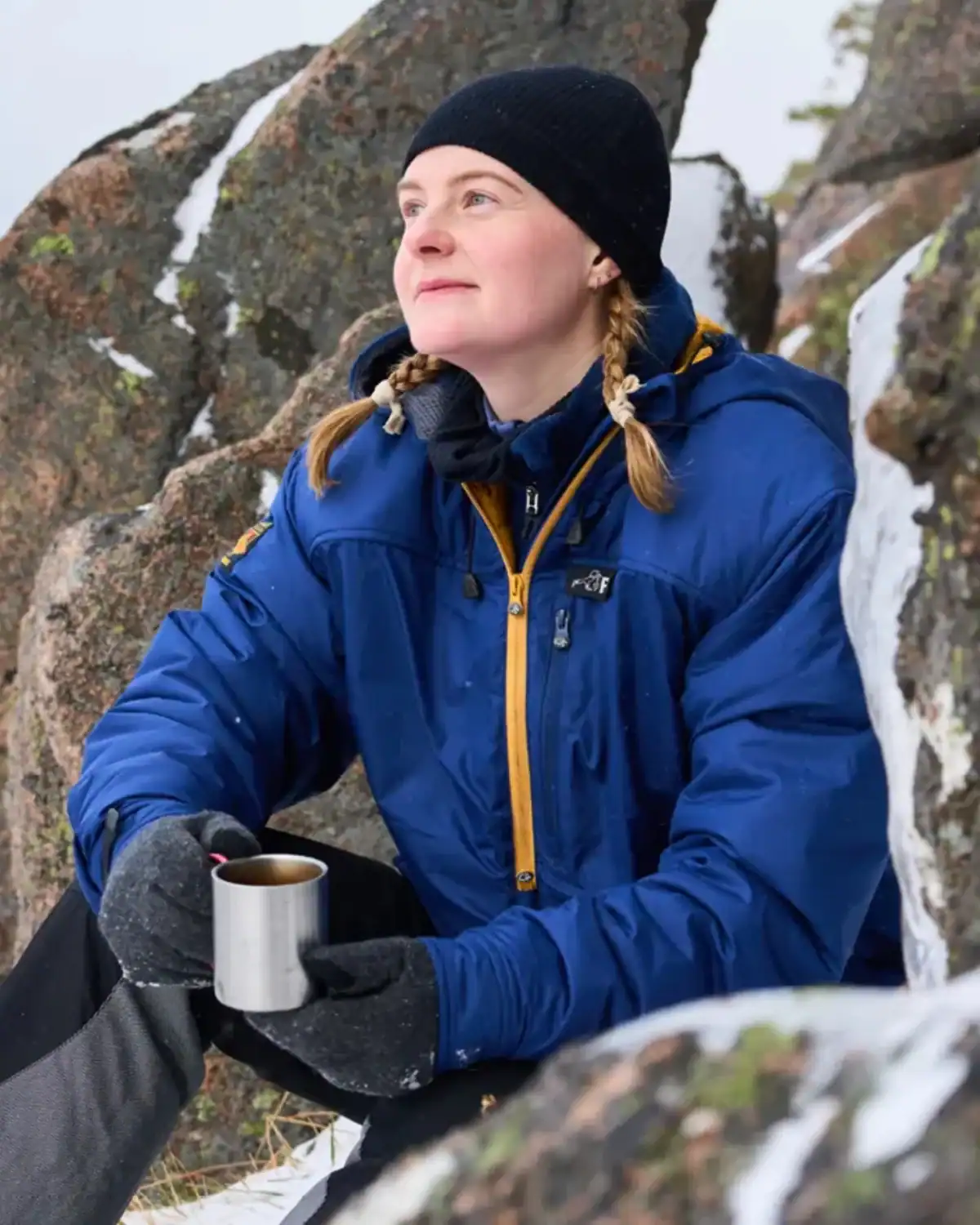
Best extreme cold winter jacket without forever chemicals: Built for the harshest winter conditions, the Torres Smock from Páramo is your go‑to layer when temperatures plummet and winds howl.
This insulated smock combines a windproof Nikwax microfibre shell with Nikwax Analogy synthetic fill.
This is the kind of weather-proof technology trusted by mountain guides to keep warm even in the harshest conditions.
The wired hood and high funnel neck to seal out biting gusts at 2,000 meters, and the insulated chest pocket is perfect for stashing hot hands or a GPS unit.
The low‑bulk design stuffs into its own pocket, so you can carry it in your pack and pull it on over a base layer when the wind chill drops below –10 °C.
The Torres Smock features a PFC‑free water‑repellent finish (no “forever chemicals” next to your skin) and Fair Trade certification through Páramo’s partnership with the Miquelina Foundation.
When it finally wears out, send it back to be recycled through Páramo’s take‑back program.
Price & Size
$420 | S-XXL
Materials
Nikwax Windproof Microfibre Shell | Nikwax Analogy Synthetic Fill | Recycled/Virgin Polyester Lining
Location/Shipping
United Kingdom/Colombia, ships to the United States & select international countries
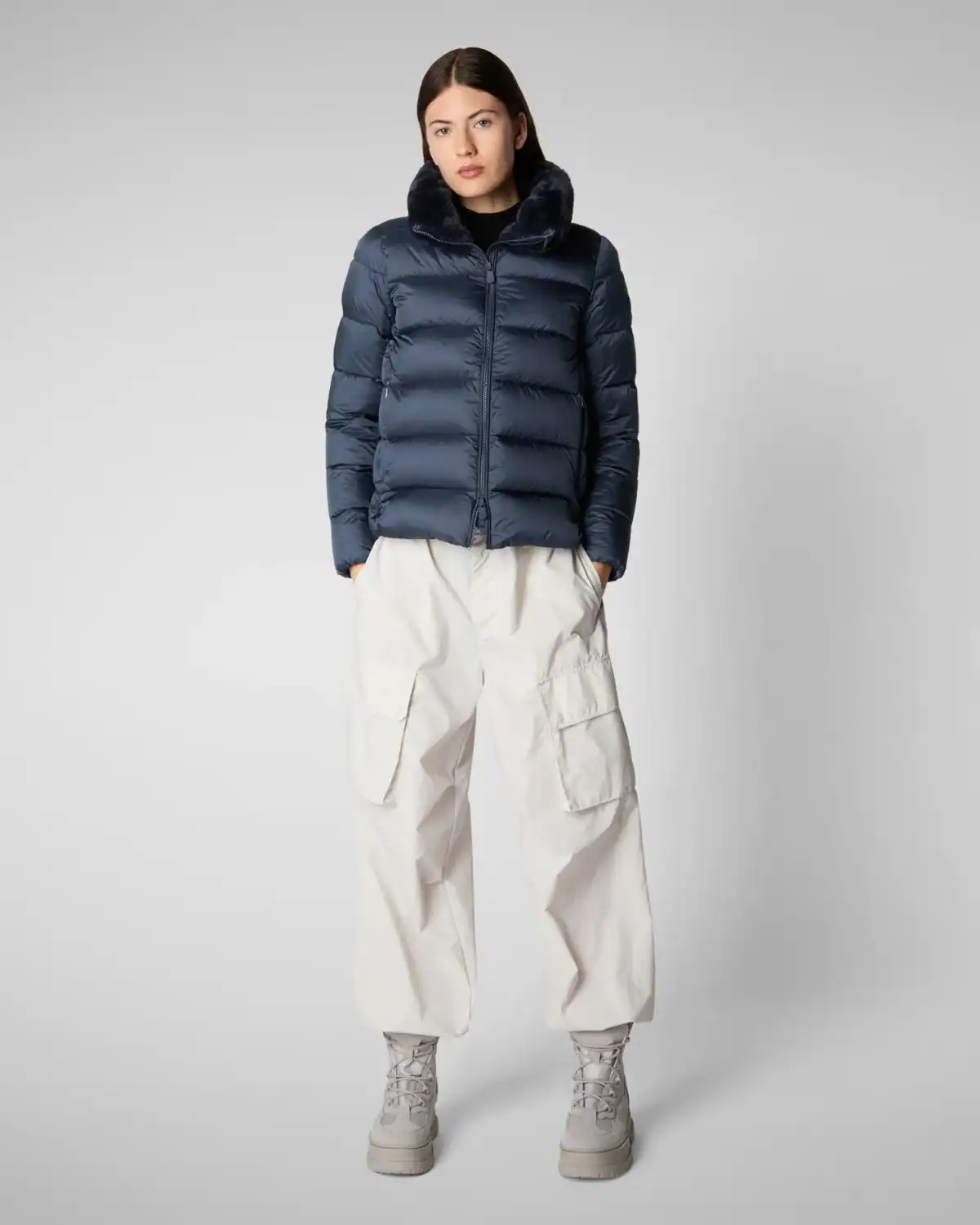
Elevate your cold‑weather wardrobe a Save The Duck winter puffer.
This sleek silhouette is insulated with Dr. Duck® recycled polyester fill and wrapped in a recycled polyester shell treated with PFC‑free DWR.
The oversized hood, long length, and hidden snap placket over the zipper keep icy breezes out, while the interior pockets stash essentials close.
No feathers, no guilt—just plush warmth from vegan winter coat brands you can trust. This is one of the best warm coats for winter that’s as chic as it is sustainable.
Price & Size
$268 | XS-XXL (0-7)
Materials
100 % Recycled Polyester Shell | Dr. Duck® Recycled Polyester Fill | Recycled Polyester Lining
Location/Shipping
Made in Italy; ships to US & Canada
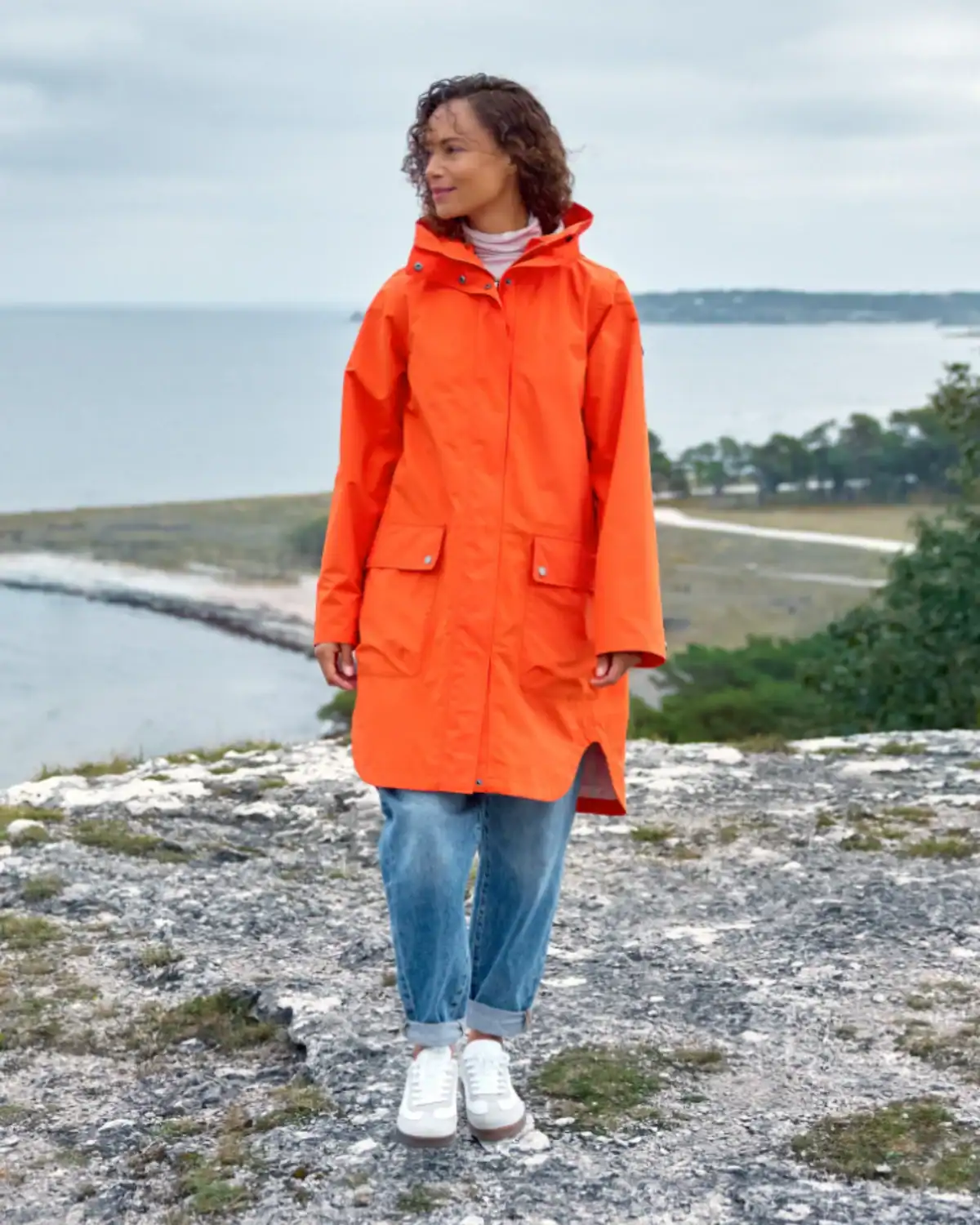
The Adria Parka is a sleek take on the classic winter parka.
It’s a 100 % polyester shell and lining locks out wind and light rain, while the fully insulated interior traps warmth on frigid days.
Best of all, the PFAS‑ and PFC‑free water‑repellent finish keeps you dry without any chemical worries.
A‑line shaping gives the parka a clean, flattering profile, and two front pockets with button closures are perfect for warming your hands or stashing gloves.
If you’ve been hunting for the best waterproof coats for winter, this parka delivers reliable performance with planet‑friendly credentials to match.
Price & Size
$300 | XS-XXL
Materials
Lining: 100% Polyester | Shell: 100% Polyester 10.000 mm
Location/Shipping
Sweden/China, ships to the United States & select international countries
Insulated Without The Toxins: Safer Alternatives to Down
The Problem with Traditional Down
Down delivers unmatched warmth for its weight, but it has drawbacks.
Even RDS‑certified down comes from animal agriculture, and certification cannot guarantee every link in the supply chain.
Worse, once down gets wet, it loses almost all of its insulating power. Not ideal in a sudden sleet storm.
Why Recycled Down Is a Better Option
Recycled down often outperforms virgin feathers because the recycling process breaks up clumps and creates extra loft and air pockets.
Brands like Patagonia reclaim down from old bedding and jackets to create recycled down jackets, giving feathers a second life without harming any birds.
Just remember, even recycled down doesn’t insulate well once wet.
Innovative Sustainable Synthetics
PrimaLoft® Gold Eco has changed the game in synthetic insulation.
Made from recycled plastic bottles, it retains 98 percent of its warmth when wet (something down can’t do) and provides warmth comparable to 650‑fill down with a smaller environmental footprint.
There are also plant‑based innovations like Sorona®, derived from corn sugars. They work well enough to keep you warm in –20 °C conditions while keeping petroleum out of the picture.
🚫 Winter Coat Materials To AVOID
Toxic Shells
- PFAS/PFC waterproof coatings that shed “forever chemicals” every time you move. These particles can enter your body through skin contact and inhalation, and have been linked to cancer, fertility issues, and hormone disruption.
- PVC or formaldehyde‑based resins are used in cheap waterproofing.
Harmful Linings
- Untreated polyester or synthetic blends that release heavy metals or residual formaldehyde.
- Toxic dyes made with heavy metals can leach onto skin when you sweat.
- Non‑certified fabrics are prone to off‑gassing irritating chemicals.
Problematic Hardware
- Petroleum‑based plastic buttons that linger in landfills for centuries.
- Zippers coated in lead or PVC.
- Real fur trims with animal‑welfare concerns and inexpensive faux fur that sheds microplastics.
✅ Best Winter Coat Materials
Safe Shells
- PFAS‑free and PFC‑free DWR treatments that repel water safely.
- Silicone‑based finishes that shed moisture without toxins.
- Wax‑based coatings derived from natural sources.
Healthy Linings
- OEKO‑TEX Standard 100 certified fabrics, tested for more than 100 harmful substances.
- Natural fibers such as organic cotton or merino wool for breathability and comfort.
- Recycled synthetic linings with third‑party safety certifications.
Sustainable Hardware
- Corozo buttons made from tagua nuts—fully biodegradable.
- YKK zippers are finished without toxic coatings.
- Recycled metal snaps and fasteners are free of lead or PVC.
- High‑quality faux fur from brands like Ecopel, which use recycled fibers and avoid microplastic shedding.
Complete your winter look with sustainable beanies and winter hats that match your eco-friendly values.
The Best Vegan Winter Coats
- Save The Duck was born from Italian luxury fashion with a clear mission: to show that vegan insulation can rival down. Their PLUMTECH® fill, made from recycled bottles, delivers –20 °C protection with a fraction of down’s carbon footprint.
- Wuxly calls itself the vegan Canada Goose and backs it up. Their parkas perform at –20 °C thanks to plant‑based Sorona® insulation that keeps you toasty.
- Tentree goes beyond insulation by planting ten trees for every purchase. That program has already added over 100 million trees to the planet.
Most Transparent Supply Chains
- Patagonia maps its entire supply chain online. You can see exactly which mills supply the fabric and which factories sew your coat, plus audit results, even the failures.
- Cotopaxi publishes a Fair Trade impact report showing how worker premiums fund clinics and schools—real names, real stories, real change.
- Universal Standard founders fly to each factory quarterly, not only to audit but to build lasting relationships. They refuse to cut corners on ethics by chasing the cheapest supplier.
Leaders In Circular Design
Lifetime warranties are great, but lifetime repairs are even better.
- Patagonia’s Worn Wear program fixes zippers, patches tears, and replaces buttons free for manufacturing defects or for a small fee for general wear.
- Cotopaxi’s Lifetime Warranty covers repairs for life. From zipper replacements to seam repairs, they keep your Alivio Down Parka in rotation for decades rather than just one season.
How To Choose The Best Warm Coats For Winter For Your Lifestyle
Climate Fit
Those -20°C ratings translate to actual comfort around -10°C if you’re active, -15°C if you’re standing still.
City heat islands bump temperatures 5-10 degrees, so urban dwellers can often choose lighter insulation.
Rain vs. snow changes everything. Wet climates demand fully taped seams and waterproof shells. Dry cold? A wind-resistant shell with hefty insulation wins.
Style Fit
Office-worthy silhouettes like Quince’s tailored puffer or Lole’s sleek design transition from commute to conference room.
Weekend adventurers need technical features like pit zips, adjustable hoods, and reinforced shoulders for backpack straps.
Travel-ready packability is key. While down compresses smaller than synthetic fill, it requires more careful storage. Some coats even pack into their own pockets—a huge plus for carry-on-only trips.
Budget Fit
Sustainable clothing often costs a little more than fast fashion brands. A better way to think about the upfront cost is to think about the cost-per-wear.
A $500 Patagonia coat with lifetime repair, worn 100 days yearly for 10 years: $0.50 per wear. A $100 fast-fashion puffer lasting two seasons: $0.83 per wear. Quality pays.
Sustainable Winter Coat Care Guide
Wash Less, Wear More
- To extend the life of your coat, air it out between wears and wash only when genuinely dirty.
- Hang coats inside-out overnight to let moisture evaporate and odors dissipate.
- A spritz of vodka-water (1:1 ratio) kills bacteria without washing.
Use The Right Detergent
- When washing is unavoidable, use cold water and an eco-friendly detergent.
- Down needs special soap to maintain its loft because regular detergent strips the natural oils.
- Also, skip fabric softener entirely; it coats fibers and reduces breathability.
- We recommend never putting your winter coat in the dryer. Tumble drying breaks down synthetic insulation and water-repellent coatings.
The Right Way To Store Your Winter Coats
- Cool, dry storage prevents mildew and maintains loft. Never cram synthetic insulation into stuff sacks long-term—compression damages the fill structure.
- Hang coats on wide hangers or fold loosely in breathable cotton bags.
Repair vs. Replace
- Small snags? Clear nail polish stops runs. Torn pockets? Iron-on patches from inside prevent further damage.
- Most brands also sell replacement parts—zippers, buttons, drawcords—for DIY fixes.
Frequently Asked Questions
For pure warmth‑to‑weight performance, responsibly sourced down still reigns supreme. RDS‑certified 800‑fill down provides unmatched loft and compressibility.
Surprisingly, recycled down often tests warmer than virgin because the recycling process breaks up clumped feathers and creates extra loft.
For synthetics, PrimaLoft® Gold Insulation Eco offers 98 percent post‑consumer recycled content with warmth equal to 650‑fill down. It also maintains 98 percent of its insulation when wet, something that down can’t do.
Responsibly sourced down can be a surprisingly sustainable choice. RDS‑certified or recycled down uses feathers that would otherwise go to waste, offers a warmth‑to‑weight ratio few insulations can match, and is fully biodegradable.
PFAS (per‑ and polyfluoroalkyl substances) are called forever chemicals because they never break down in the environment or your body.
These man‑made compounds are often used in winter clothing because they repel water. With each wear, PFAS particles shed onto your skin and enter the air.
Over time, they accumulate in your bloodstream and have been linked to decreased fertility, hormonal disruption, increased cholesterol, and some cancers.
Yes. Modern vegan insulation options often outperform traditional down.
Wuxly parkas use Sorona® bio‑based fill that insulates to –30 °C—matching many down parkas without any animal inputs. PrimaLoft® Black Eco retains 98 percent of its warmth when wet and is made entirely from recycled materials.
– OEKO‑TEX Standard 100 tests all textiles for more than 100 harmful substances—crucial since your coat touches your skin for hours.
– Global Organic Textile Standard (GOTS) covers the entire supply chain for organic fibers, requiring 70 percent+ organic content plus strict social and environmental criteria.
– Responsible Down Standard (RDS) guarantees ethical treatment with no live‑plucking or force‑feeding, verified by independent audits.
– Responsible Wool Standard (RWS) ensures that wool comes from farms with high animal welfare and land‑management practices.
– Fair Trade Certified™ ensures fair wages and safe working conditions, with premiums funding community projects.
– Bluesign® audits the entire manufacturing process to eliminate harmful chemicals from the start.
Absolutely. Recycled materials span far beyond down, and they are proving their performance in every category of winter wear:
– Recycled Down breaks up clumped feathers during processing, boosting loft and warmth. Labs show recycled fill matching or even surpassing virgin down’s insulation.
– Recycled Synthetics such as PrimaLoft® Gold Eco and Black ThermoPlume retain nearly all their thermal value when wet and test identically to their virgin counterparts. Brands report up to 20 percent better durability, since recycled fibers often undergo rigorous sorting and bonding.
– Ocean‑Plastic Fleece & Shells spun from reclaimed bottles or ghost nets deliver wind resistance and water repellency on par with new polyester, while diverting waste from landfills and marine ecosystems.
– Plant‑Based Insulation like Sorona® (from corn sugars) and FLWRDWN™ (wildflower and aerogel blend) offer warmth comparable to 600–700‑fill down, with fully biodegradable end‑of‑life profiles.
– Recycled Wool & Tencel Shells provide natural warmth, breathability, and moisture control, with recycled wool adding longevity and Tencel’s closed‑loop production minimizing chemical waste.
Water‑resistant coats repel light rain and snow and offer better breathability, making them ideal for active use or mixed conditions. They use DWR coatings that cause water to bead up and roll off.
Waterproof coats include membranes or sealed coatings that block water even under pressure, ideal for standing in heavy rain. They require complete seam sealing to prevent leakage.
For most people, water‑resistant DWR coatings without PFAS handle 90 percent of weather situations. Reserve fully waterproof coats for prolonged storms or standing wet environments.
The best sustainable winter coats for extreme cold combine high-performance insulation with ethical, non-toxic materials. Look for coats made with:
– RDS-certified or recycled down: These offer the highest warmth-to-weight ratio for sub-zero temperatures.
– Advanced synthetics like PrimaLoft® Gold Eco: Retains 98% of its insulation even when wet and rivals 650-fill down.
– Plant-based insulation like Sorona® or FLWRDWN™: Warm to –20 °C and free of petroleum-based fibers.
– Coats designed for Arctic or alpine use, such as those from Wuxly, Patagonia, Cotopaxi, or Páramo, which offer windproof shells, long lengths, and technical features.
For the warmest eco-friendly option, choose parkas with high-fill insulation, extended coverage, and PFAS-free waterproofing.
Yes, several sustainable brands now offer PFAS-free winter coats that are both waterproof and high-performing. Instead of using toxic “forever chemicals,” these brands rely on safer alternatives like:
– Polyurethane-based waterproof membranes
– Silicone or wax-based DWR (durable water repellent) coatings
– Recycled polyester shells with sealed seams
Look for brands that clearly state “PFAS-free” or “PFC-free” in their product descriptions. Great examples include Patagonia (H2No®), Didriksons, Save The Duck, and Cotopaxi.
Make sure the coat has taped seams and a waterproof rating of at least 10,000 mm for true waterproof performance in rain and snow.
Your Sustainable Winter Wardrobe Awaits
This winter, choose a coat that keeps you warm, looks chic, and supports the planet every time you zip up.
These sustainable winter coats prove you don’t have to choose between performance, durability, and ethics. They outperform traditional parkas both in the lab and in the real world.
Yes, the upfront cost may be higher, but you’ll pay far less per wear, avoid toxic chemicals on your skin, and shrink your carbon footprint.
Your perfect sustainable winter coat is waiting—cozy for countless seasons and kind to the planet we all share.
You Might Also Love…
If you’re building a conscious winter wardrobe, these guides are the perfect next step:
- 🧣 Stay cozy with our favorite sustainable wool sweaters — warm, ethical, and built to last.
- 🧤 Don’t forget the details — check out our roundup of sustainable beanies & winter hats for cold-weather layering.
- 🥾 Ready to hit the streets or trails? These barefoot fall & winter boots are supportive and sustainable.
- 🧦 Warm feet start here — browse the best organic socks for adults and kids alike.
- 🧥 Layer it right — our favorite sustainable base layers & thermals will keep you warm without the synthetics.
- 👢 And for the finishing touch, discover the best vegan leather boots that combine comfort, ethics, and style.
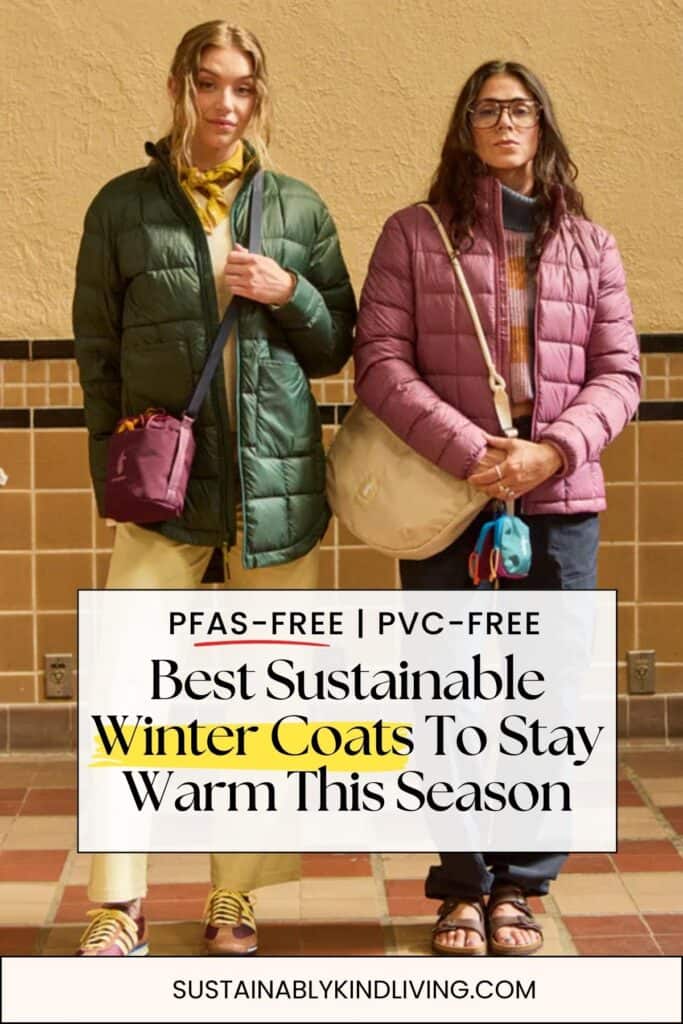
📌 Save This Sustainable Winter Jacket Guide
Planning your conscious cold-weather wardrobe? Save this guide to your Eco Fashion or Non-Toxic Winter Wear board so it’s easy to find when the temps drop—and you’re ready to upgrade to a coat that’s warm, stylish, and made to last.
Further Reading:
- Ayodele, A., & Obeng-Gyasi, E. (2024). Exploring the potential link between PFAS exposure and endometrial cancer: A review of environmental and sociodemographic factors. Cancers, 16(5), 983. https://pmc.ncbi.nlm.nih.gov/articles/PMC10931119/
- Chen, Y., Chen, Q., Zhang, Q., Zuo, C., & Shi, H. (2022, December 14). An overview of chemical additives on (micro)plastic fibers: Occurrence, release, and health risks. Reviews of Environmental Contamination and Toxicology, 260(1), 22. https://pmc.ncbi.nlm.nih.gov/articles/PMC9748405/
- Turner, J. (2024, April 16). The problem of forever chemicals and waterproof clothing. Ethical Consumer. https://www.ethicalconsumer.org/fashion-clothing/problem-forever-chemicals-waterproof-clothing
- U.S. Environmental Protection Agency. (n.d.). Our current understanding of human health and the environmental risks of PFAS. https://www.epa.gov/pfas/our-current-understanding-human-health-and-environmental-risks-pfas

Steal My Non-Toxic Cleaning Checklist!
Believe us, it’s the BEST…. and it’s free. Does it really get any better than that?! Sign up for our newsletter and get this free checklist to clean your home without any harmful chemicals!