 Shop My Favorite Non-Toxic Gifts Of 2026!
SKL is reader supported. When you buy through links on our site, we may earn affiliate commission. Learn more here.
This guide to DIY natural & non-toxic laundry detergent is perfect for anyone looking to create a safer, toxin-free home while ensuring their loved ones aren’t exposed to harmful chemicals through washing clothing and bedding.

If you change just one thing in your home, it should be your laundry detergent at least according to Allison Evans, the co-founder of the best-selling non-toxic plant-based cleaning line Branch Basics, who we love here at SKL. And I couldn’t agree with her more!
We launder a lot more than just our clothes. We launder our sheets, pillowcases, towels, baby blankets, and crib sheets.
That’s all just to say– between the clothes we wear all day and the sheets we sleep on all night, you’re pretty much always in contact with something that has your laundry detergent on it.
The scary reality is that most popular laundry detergent brands contain toxic chemicals like carcinogenic ethoxylated compounds, formaldehyde-releasing preservatives, and synthetic fragrances laden with endocrine-disrupting phthalates.
So you’re absorbing these toxic chemicals as they sit against your skin, or as you breathe on your pillowcase or shower with your washcloth. When I learned about the potential dangers of commercial laundry detergents I didn’t think twice about making a change.
While there are a lot of great non-toxic laundry detergents out there, I found that making my own DIY natural laundry detergent was the best way for me to have complete control over all of the ingredients I was using to wash my family’s clothes.
I never have to question if this ingredient is safe to use.
Why I Love Making My Own Laundry Detergent
A Healthier Alternative
When you make your own laundry detergent at home you can completely bypass all of these toxins so you never have to worry about what you’re wearing against your skin all day long.
When I started making my own homemade laundry detergents I immediately noticed an improvement in my skin – fewer eczema flare-ups and fewer itchy bumps. My husband also noticed he had an easier time breathing at night which helped him to sleep better.
Saving Money
It’s important to keep in mind that the toxic ingredients used by laundry detergent manufacturers allow them to produce large quantities of detergent at a low cost.
This might make the initial cost of purchasing natural ingredients for homemade laundry detergent recipes seem higher, especially when buying high-quality, organic options.
However, in the long run, it often becomes more cost-effective compared to consistently buying commercial laundry detergents.
Plus, by reducing your reliance on commercial products, you can help decrease the environmental impact of plastic packaging and transportation emissions.
Customization
Another reason I love making my own laundry detergent at home is that I can customize it to create exactly what I need. And I know exactly what’s in each and every ingredient I include.
I actually create a few different types of laundry detergents depending on different needs. I use soap nuts to create a liquid detergent for items that need a more heavy-duty clean like towels and sheets.
For everyday needs like washing clothes or dish towels, I make a natural laundry powder from washing soda and borax.
I’m very sensitive to synthetic fragrances, so I love being able to add my favorite essential oils to create my own scents. I really like to use lavender and eucalyptus.
Plus, it’s incredibly rewarding to be self-reliant, knowing that I’m creating my own zero-waste laundry detergent and reducing plastic waste.
3 Simple DIY Natural Laundry Detergent Recipes
A Quick Note About Safety
Before diving into these DIY recipes, please keep these safety precautions in mind.
- Work in a well-ventilated area
- Store all ingredients and finished products out of reach of children
- Clearly label your containers, and never store in containers that will be used for food
- Test new detergent on a small, hidden area of fabric
- If working with borax or washing soda it’s a good idea to wear gloves to prevent irritation
- Stop using immediately if you notice skin irritation
- Pour slowly to avoid inhaling powdered ingredients which can be irritating to your respiratory system
- While essential oils can enhance the scent of your homemade laundry detergent, it’s important to use them in moderation, as they can irritate sensitive skin

This simple powder detergent is perfect for those who prefer a low-suds formula that’s easy to store and transport.
- Difficulty: Easy
- Time Required: 15 minutes
Ingredients
- 1 cup borax
- 1 cup washing soda
- 1 cup baking soda
- 1 bar (4-5 oz) castile soap, finely grated
Instructions
- In a large bowl, combine the borax, washing soda, and baking soda. Mix well.
- Using a cheese grater or food processor, finely grate the castile soap. Add it to the bowl with the other ingredients.
- Stir the mixture until the grated soap is evenly distributed.
- Transfer the detergent to an airtight container for storage.
To Use
- Use 2 tablespoons per load (add directly to the drum in HE machines).
- Shelf Life: Up to 6 months when stored in a cool, dry place.
Tips and Variations
- For extra freshness, add 10-15 drops of your favorite essential oil to the mixture.
- If you have hard water, increase the amount of washing soda to 1 1/2 cups.
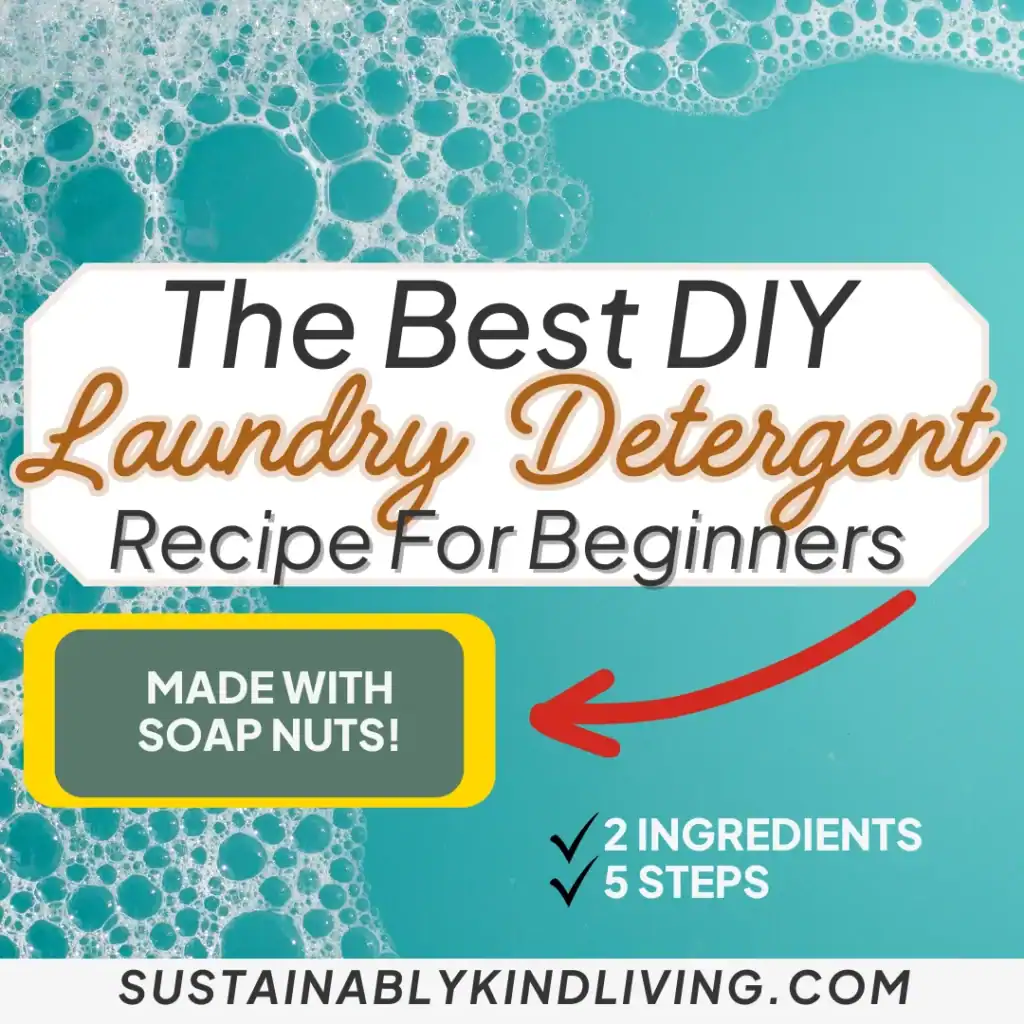
Soap nuts, also known as soap berries, are a natural and sustainable alternative to conventional detergents. This liquid recipe is easy to make and comes together in less than 30 minutes.
- Difficulty: Easy
- Time Required: 30 minutes (plus cooling time)
Ingredients:
- 1 cup soap nuts (about 15-20 soap nuts crushed)
- 4 cups water
Instructions
- Place the soap nuts in a large saucepan and add the water.
- Bring the mixture to a boil, then reduce heat and simmer for 20 minutes.
- Remove from heat and let the mixture cool completely.
- Once cooled, strain out the soap nuts
- Pour the liquid detergent into an airtight container for storage.
To Use
- Use 1/4 cup per load (add directly to the drum in HE machines).
- Shelf Life: Up to 2 weeks when stored in the refrigerator.
Tips and Variations
- Add 1/4 cup of salt to the mixture during the simmering process to help preserve the detergent and extend its shelf life.
- Reuse the soap nuts for a second batch of detergent before composting them.

This versatile detergent combines the cleaning power of castile soap with the softening properties of baking soda and salt.
- Difficulty: Easy
- Time Required: 10 minutes
Ingredients
- 1/2 cup liquid castile soap
- 1/2 cup baking soda
- 1/2 cup washing soda
- 1/4 cup coarse salt
- 15 drops essential oil (optional)
Instructions
- In a large bowl, combine the liquid castile soap, baking soda, washing soda, and salt. Mix well. (Note: The mixture will be clumpy like wet sand. Clumps will dissolve with the water in your washing machine.)
- If desired, add the essential oil and stir to incorporate.
- Pour the detergent into an airtight container jar or storage container.
To Use
- Use 1/4-1/2 cup per load (add directly to the drum in HE machines).
- Shelf Life: Up to 1 month when stored in a cool, dry place.
Tips and Variations
- You can use a bit of boiling water (2-3 tablespoons) to help reduce clumps.
- Customize the scent by using different essential oils or omitting them for a fragrance-free option.
- If the detergent separates or forms clumps, add some warm water and shake as needed.
Tips & Tricks For Using Your DIY Natural Laundry Detergent
Common Challenges
- If your clothes feel stiff after washing, try reducing the amount of washing soda in your recipe or adding 1/2 cup of white vinegar to the rinse cycle.
- For residue issues, ensure you’re not using too much detergent and consider increasing the amount of washing soda if you have hard water. Adding vinegar as a finishing rinse can also help.
Insufficient Cleaning Power
- If your homemade detergent isn’t effectively cleaning your clothes, try pre-treating stains, increasing the amount of detergent used (but not exceeding recommended amounts), or washing in warm/hot water.
- Adding 1-2 drops of non-toxic dishwashing liquid to your laundry can also help to further breakup oils.
- Maintain the effectiveness of your DIY laundry detergent by storing it in an airtight container and using it within 3-6 months.
Stain Removal Challenges
- Pre-treat stubborn stains by applying a paste of equal parts baking soda and water, or a 1:1 mixture of white vinegar and water. Or you can use a non-toxic stain remover.
- Let it sit for 15-30 minutes before washing.
- If stains persist, try soaking the item overnight in a mixture of 1 gallon of warm water and 1 cup of white vinegar before washing.

My Quick List Of Must-Have Natural Laundry Ingredients:
1. Epsom Salt
Natural Fabric Softener

Epsom salt (magnesium sulfate) is a natural mineral that softens water without the harsh chemicals found in many commercial fabric softeners. It helps reduce the use of synthetic additives that can irritate skin.
It also acts as a fabric softener, enhances the cleaning power by preventing mineral buildup, and can help eliminate odors from clothes during washing.
Price
$30.99 for 5 lbs
notable features
100% pure, medium-grain Epsom salts, free of added fragrance
location/shipping
Available on Amazon USA
2. Sea Salt
Natural Fabric Softener
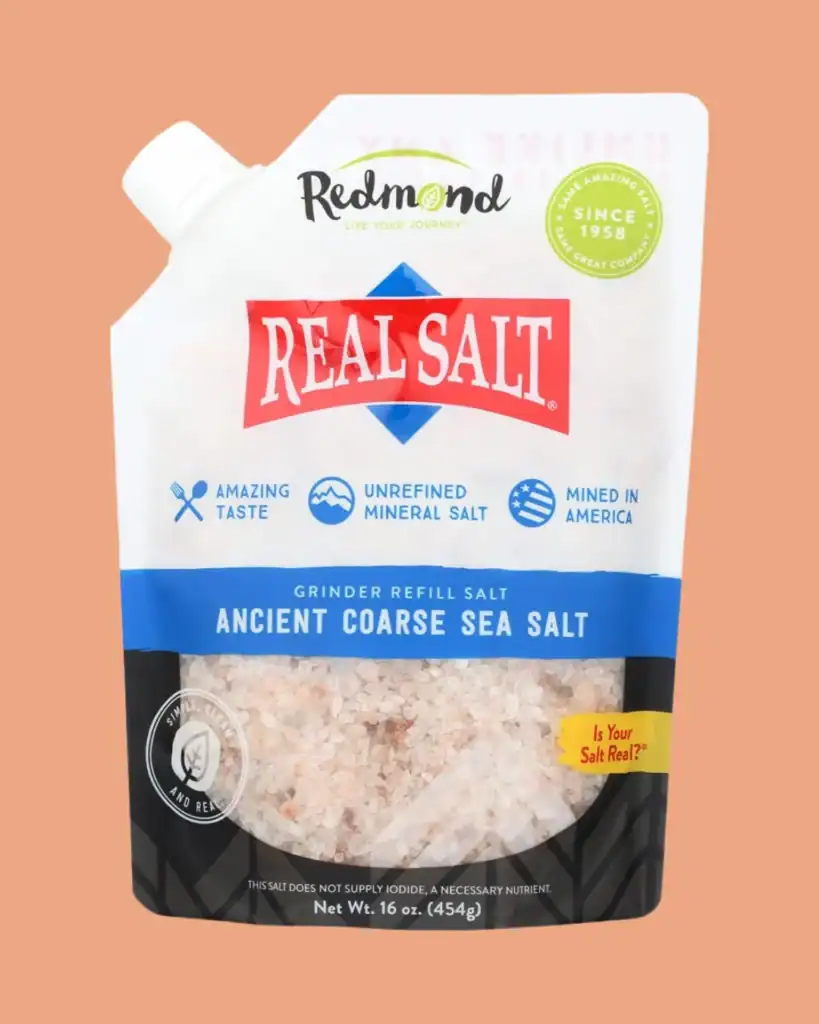
Sea salt is a gentler option compared to chemical fabric softeners and stain removers, which may contain synthetic fragrances and preservatives.
Salt helps brighten colors and provides mild abrasive action to assist in removing stains. It can also act as a fabric softener by mitigating hard water.
Price
$9.99 for 2 lbs
notable features
100% real salt, large crystals don’t dissolve too easily to help control viscosity, gluten-free
location/shipping
Available on Amazon USA
3. Vinegar
Natural Fabric Softener
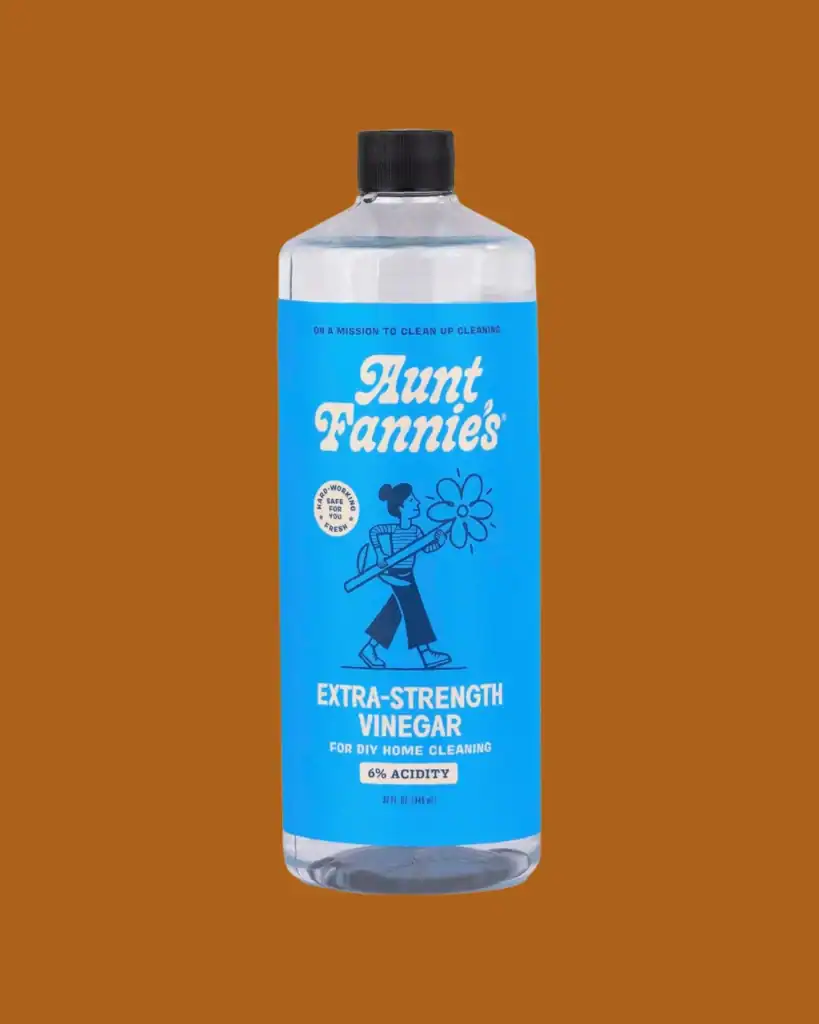
White vinegar is a safe, natural alternative to commercial fabric softeners that often contain synthetic fragrances and chemicals.
It helps to soften clothes, reduce static cling, and eliminate odors during the rinse cycle, enhancing overall laundry freshness.
Price
$13.99 for 32 fl oz.
notable features
Distilled white vinegar specifically formulated for cleaning with 6% acidity, no added scents, dyes, or other additives
location/shipping
Available on Amazon USA
4. Hydrogen Peroxide
Natural Whitener and Stain Remover
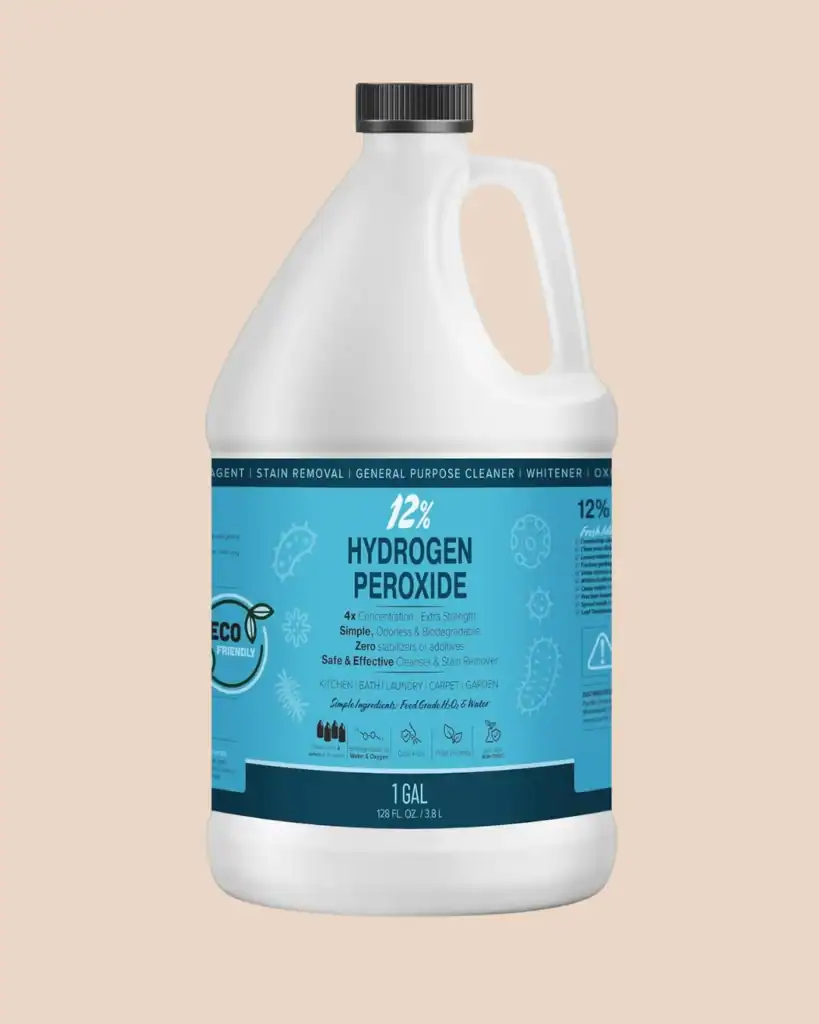
Hydrogen peroxide is a non-toxic bleaching agent that is safer than chlorine bleach, which can release harmful fumes and damage fabrics over time.
It acts as a natural whitener and disinfectant, effectively removing tough stains and brightening whites without the risks associated with harsher chemicals.
Price
$24.95 for 1 gallon
notable features
Food grade, zero stabilizers or additives, extra strength 4x concentration
location/shipping
Available on Amazon USA
5. Oxygen Whitener
Natural Whitener and Stain Remover
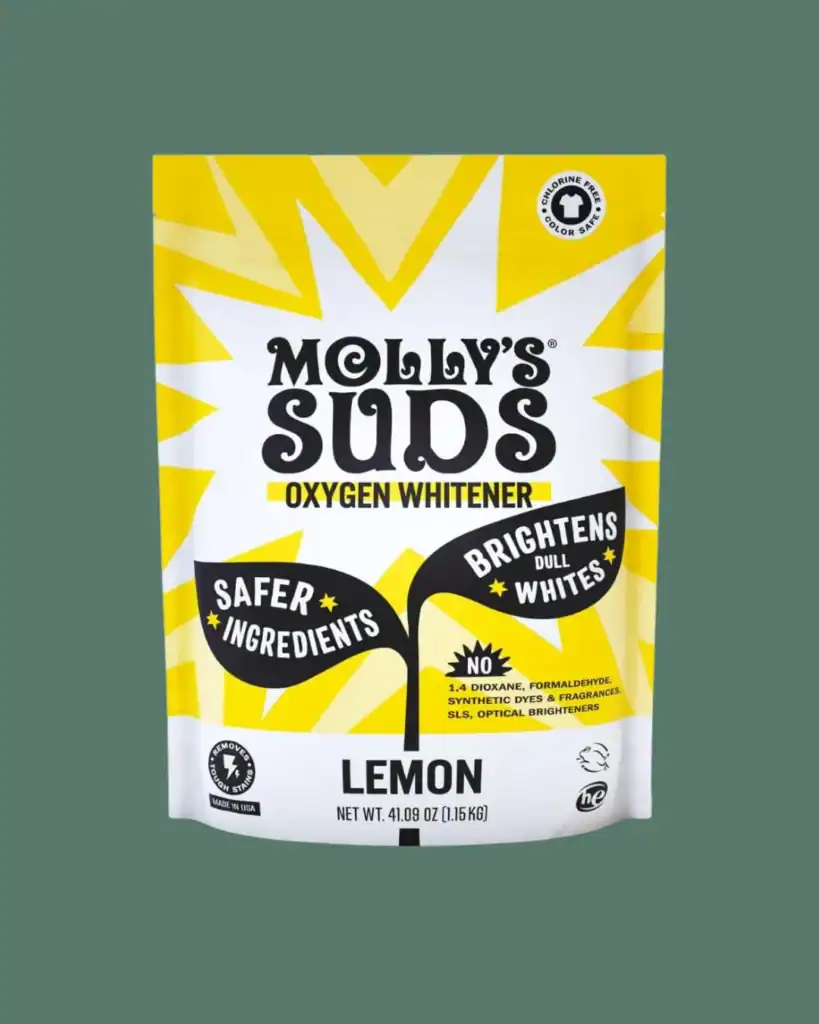
A good, organic oxygen whitener is a great eco-friendly addition to homemade laundry detergent.
It effectively removes tough stains and brightens whites without damaging fabrics.
Made from plant-based ingredients, it’s gentler on both your clothes and the environment.
Beyond laundry, it’s a versatile cleaner for various surfaces around the home like showers and tile grout.
Price
$14.99 for 40 oz.
notable features
Plant-based cleaning ingredients, 100% natural fragrance from essential oils, chlorine-free
location/shipping
Available on Amazon USA
6. Borax
Natural Whitener and Stain Remover
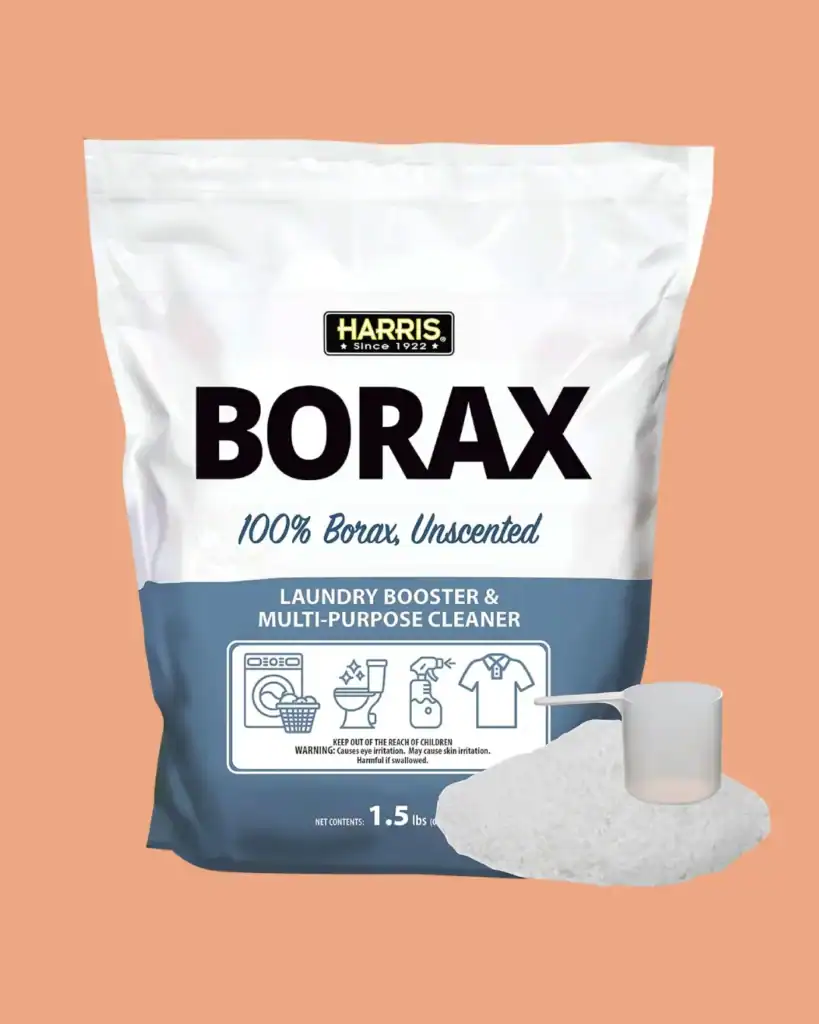
Borax is a natural mineral compound made from boron, sodium, oxygen, and water that offers a gentler cleaning alternative to harsh chemicals often found in commercial detergents.
It acts as a water softener, booster, and mild bleach, helping to remove stains, brighten clothes, and control odors.
Additionally, borax can help to reduce the buildup of residue in washing machines.
Price
$14.99 for 1.5 lbs.
notable features
Unscented, 100% borax– no fragrances or additives of any kind
location/shipping
Available on Amazon USA
7. Washing Soda
Natural Whitener and Stain Remover
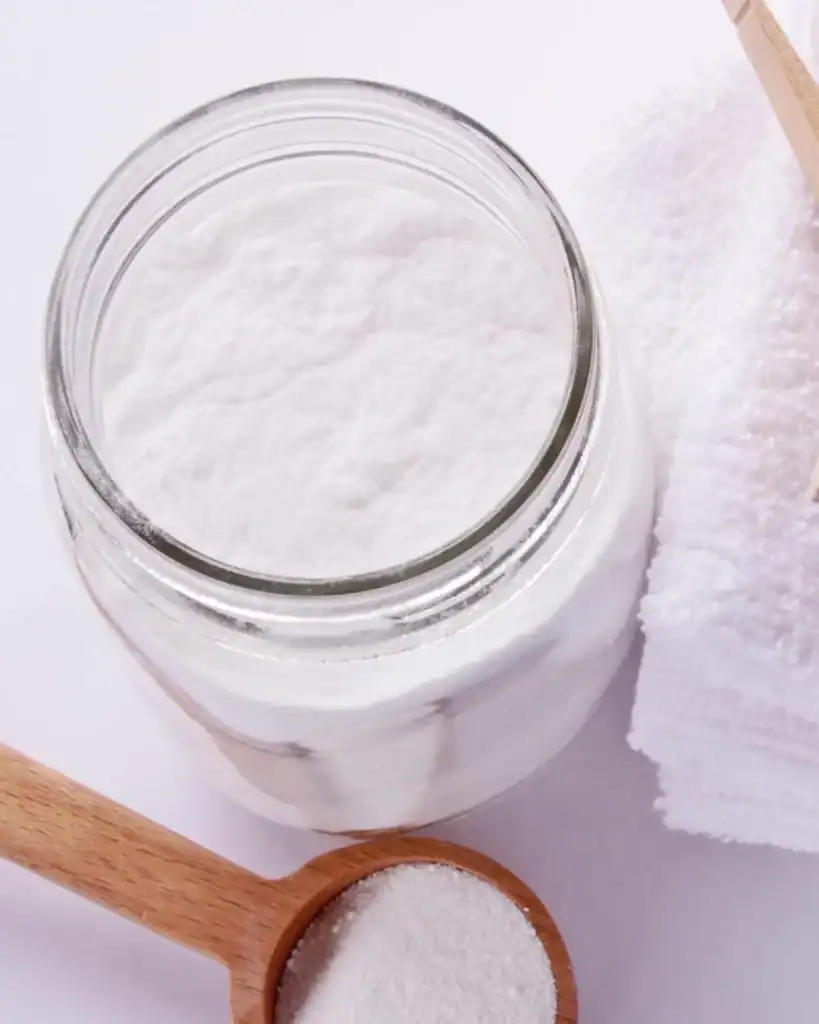
Washing soda, or soda ash, is like a tougher, stronger baking soda.
When added to your laundry it helps to remove dirt, grease, and odors from clothes.
It also helps to soften hard water, improving the cleaning effectiveness of your detergent and preventing mineral buildup in your washing machine.
Price
$12.49 for 2 lbs.
notable features
Hypoallergenic & non-toxic, unscented, no additives
location/shipping
Available on Amazon USA
8. Baking Soda
Natural Whitener and Stain Remover
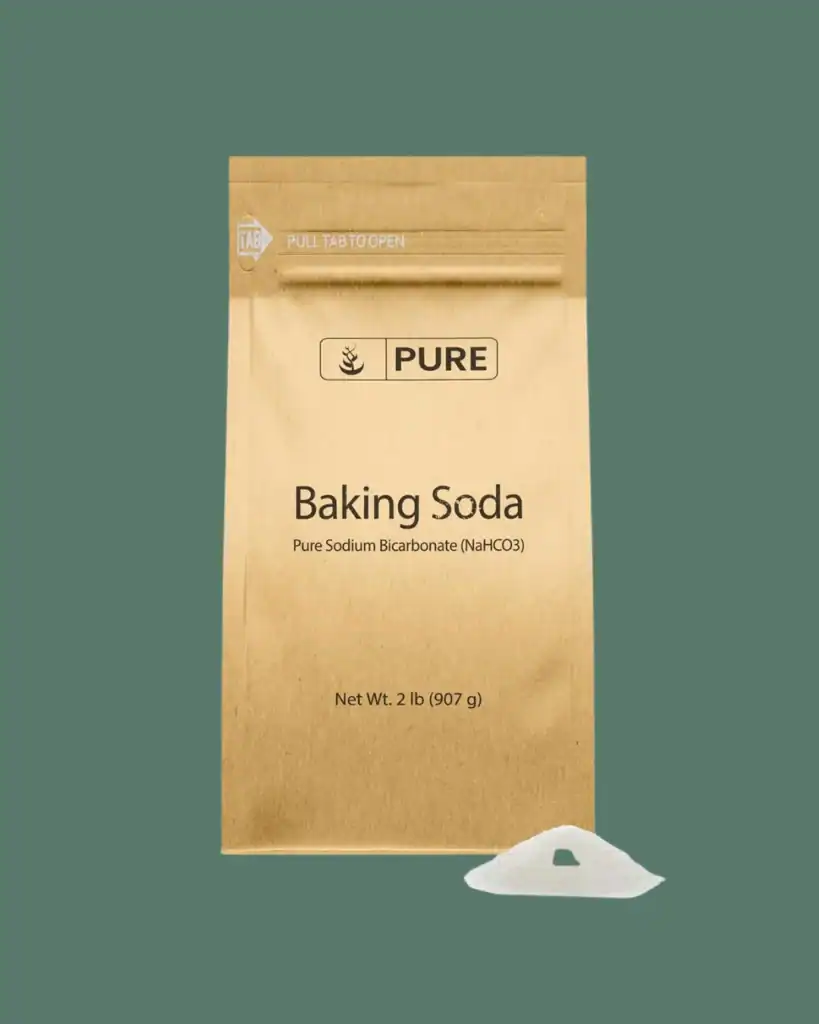
When used in laundry detergent, baking soda acts as a mild abrasive, helping to remove stains and odors.
It also helps to soften fabrics, brighten whites, and neutralize unpleasant smells.
Price
$11.99 for 2 lbs.
notable features
100% sodium bicarbonate, unscented, no additives
location/shipping
Available on Amazon USA
9. Castile Soap (Bar)
Natural Surfactant
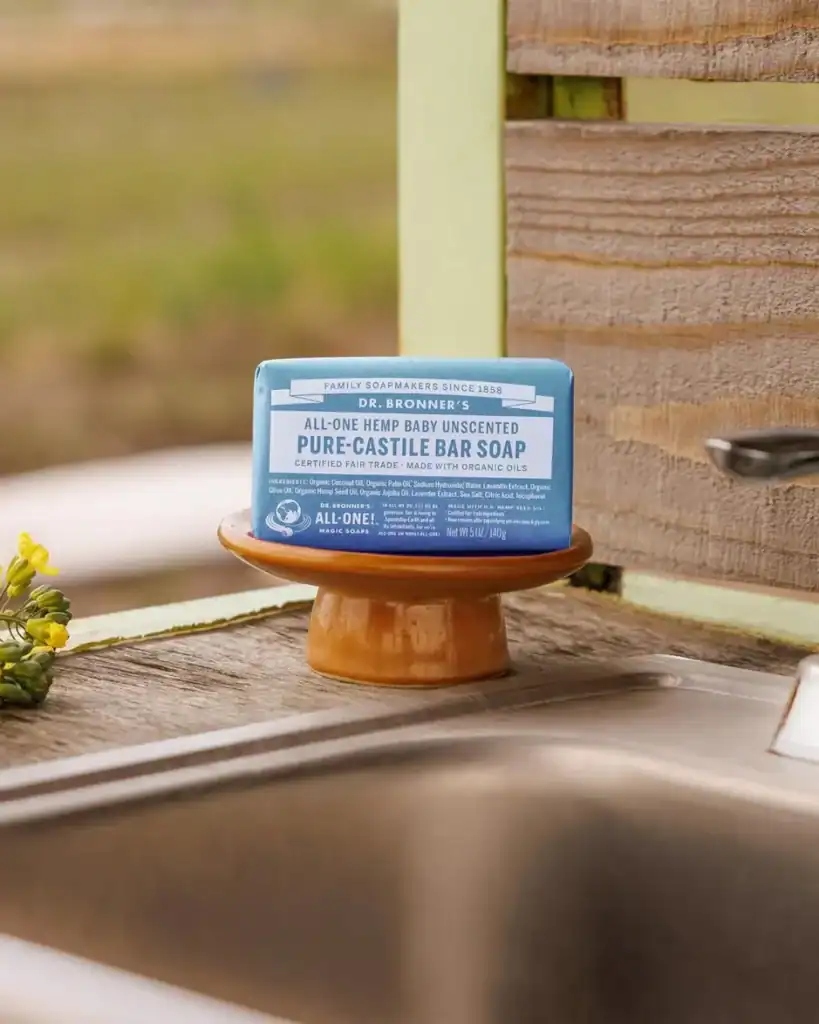
Castile bar soap is made from natural vegetable oils and is free from synthetic additives.
Unlike some liquid soaps, bar soap typically contains fewer preservatives, which is great when you’re looking to avoid additional chemicals in your laundry detergent.
In homemade laundry detergent, grated castile bar soap acts as a natural surfactant that effectively cleans fabrics.
It can be combined with other ingredients like washing soda or baking soda to enhance its cleaning power and is particularly effective in hot or warm water washes.
Price
$9.99 for 2 5 oz. bars
notable features
USDA-certified organic, no chelating agents, dyes, whiteners, or synthetic fragrances
location/shipping
Available on Amazon USA
10. Castile Soap (Liquid)
Natural Surfactant
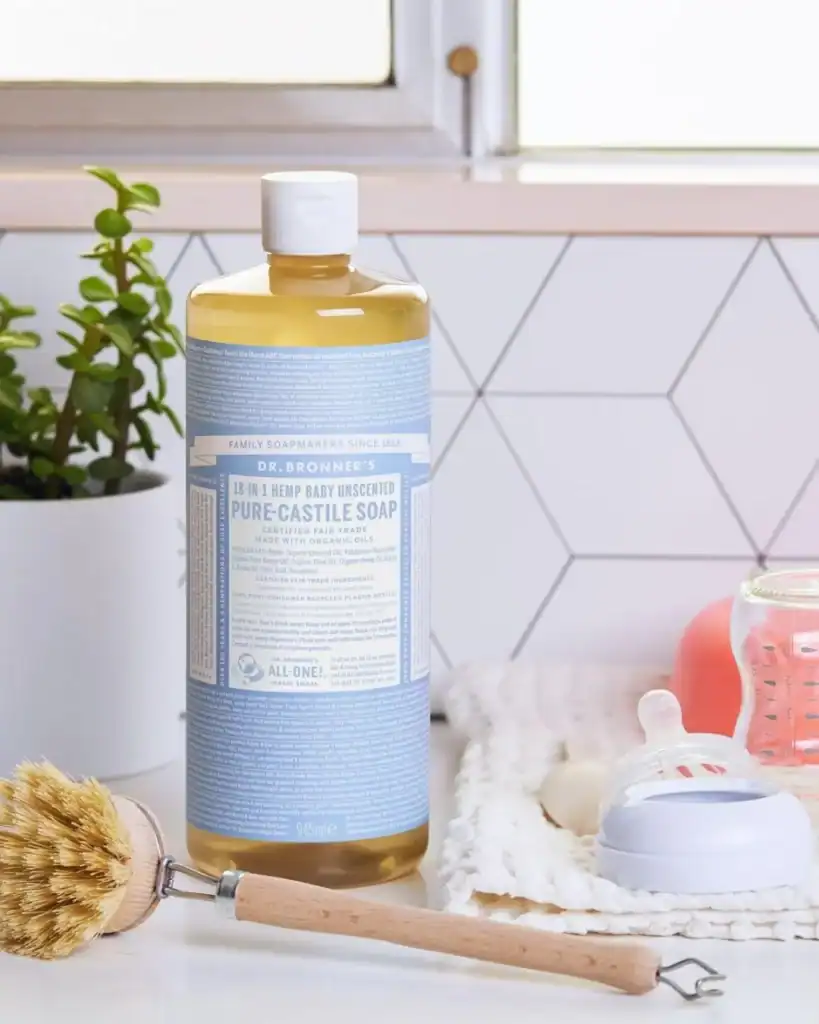
Liquid castile soap is also made from natural ingredients but is more convenient for direct use in washing machines.
It dissolves easily in water, which is good for cold washes or high-efficiency (HE) machines that require low-foam detergents.
It can also double as a stain pre-treatment, allowing it to penetrate fabrics more easily when applied directly to stains.
Price
$28.88 for 32 oz.
notable features
Over 70% certified organic & fair trade ingredients, plant-based ingredients, no synthetic preservatives, thickeners, or foaming agents
location/shipping
Available on Amazon USA
11. Soap Nuts
Natural Surfactant
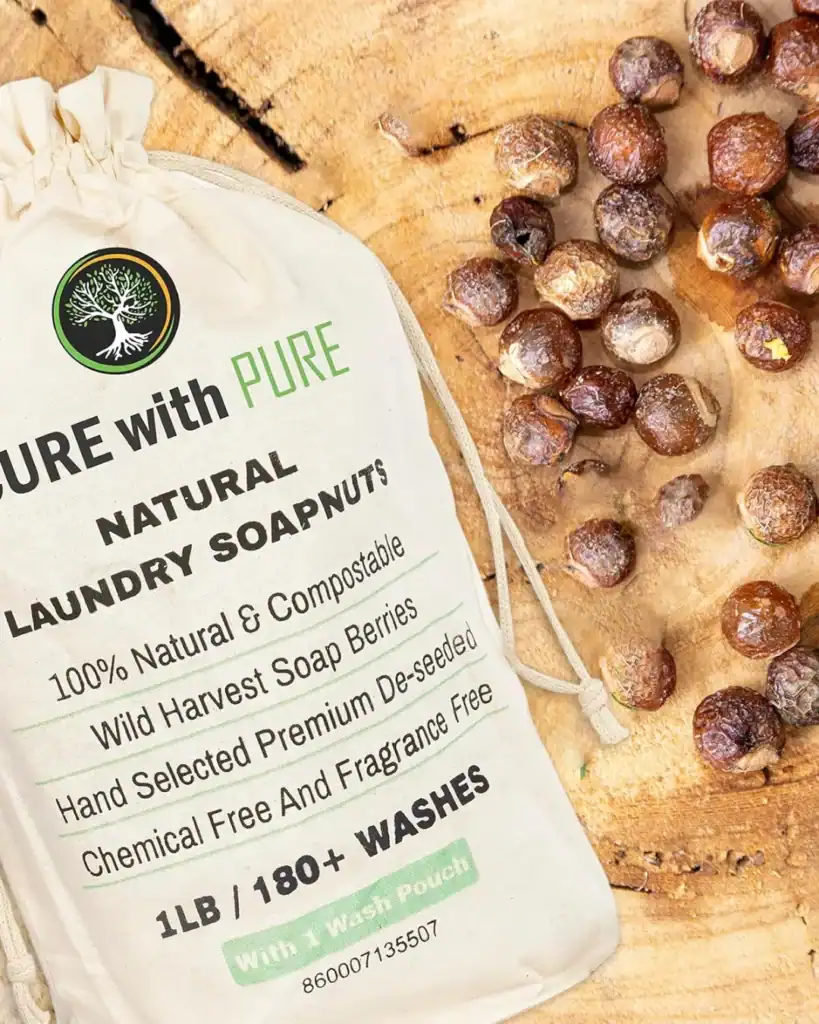
Soap nuts, or soap berries, are the dried shells of the Sapindus tree fruit that contain saponin, a natural detergent effective for cleaning clothes.
Soap nuts produce little to no suds, making them safe for high-efficiency washing machines and gentle on fabrics.
They are eco-friendly, biodegradable, and can be reused multiple times.
Price
$21.99 for 1 lbs.
notable features
100% natural & compostable, wild harvested, handpicked in the Himalayas
location/shipping
Available on Amazon USA
12. Essential Oils
Natural Fragrance
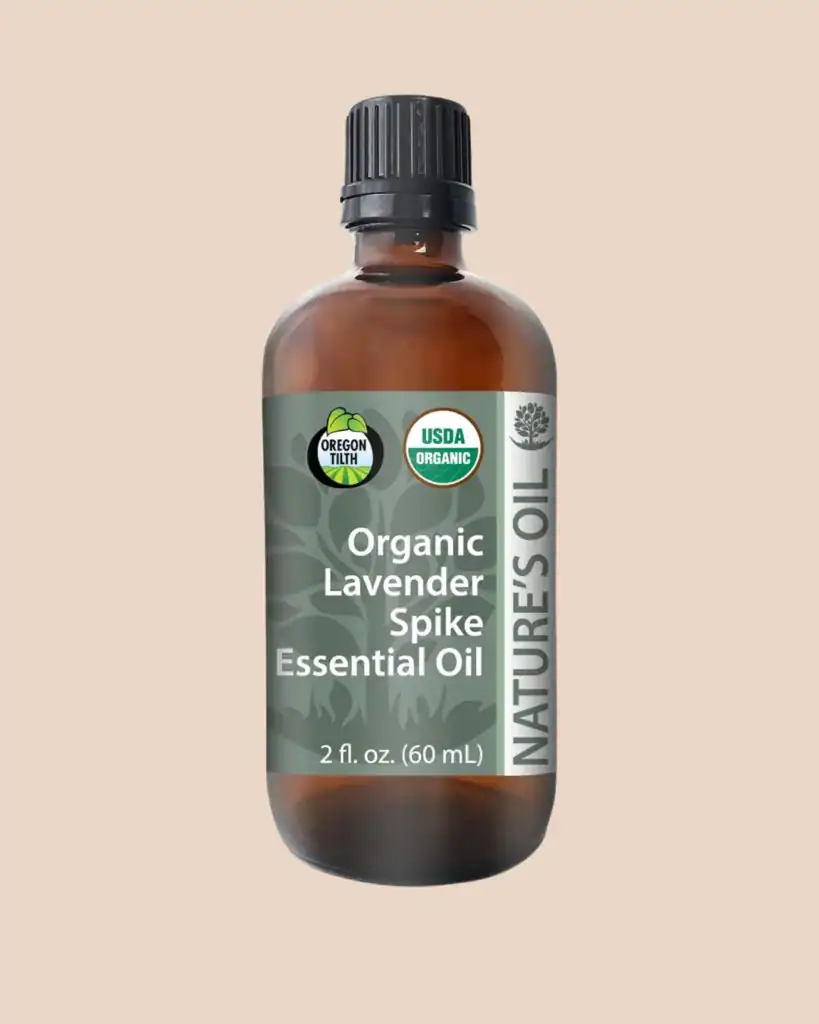
Essential oils are a safer, non-toxic alternative to synthetic fragrances. Plus some even offer antimicrobial properties.
They are biodegradable and often sourced sustainably, minimizing environmental impact compared to petrochemical-derived synthetic fragrances.
Additionally, essential oils provide pleasant, customizable scents without harsh chemical undertones.
Price
$30.88 for 2 fl oz.
notable features
USDA-certified organic, therapeutic grade with no additives, GC/MS tested for purity
location/shipping
Available on Amazon USA
How To Maximize the Cleaning Power of Your DIY Detergent
Don’t Overload Your Machine
Overloading your washing machine can lead to poor cleaning results and potentially damage your machine. Always follow the manufacturer’s guidelines for load capacity to ensure your clothes have enough space to move freely and get clean.
Use The Right Amount of Detergent
When using homemade detergent, it’s important to use the right amount for your machine type and load size.
- For HE washers, use 1-2 tablespoons of detergent per load
- For standard washers, you may need up to 1/2 cup
A good rule of thumb is to fill the drum 1/3 full for a small load, 1/2 full for a medium load, and 3/4 full for a large load. Too much detergent can lead to residue buildup.
HE Washer Compatibility
When using homemade detergent in an HE washer, it’s essential to ensure that your formula is low-sudsing, free from fillers, and contains safe ingredients.
High suds levels can cause damage to HE machines, while fillers can clog the washer’s components.
Stick to ingredients like washing soda, baking soda, salt, and liquid castile soap, and avoid using high quantities of borax which can cause buildup.
Choose The Right Cycle
For delicate fabrics, use the gentle cycle with cold water for lightly soiled items and warm water for heavily soiled items.
Everyday clothing can be washed on the normal cycle with cold water for light soil and the heavy-duty cycle with warm water for heavy soil.
To keep your whites bright, wash them separately using the heavy-duty cycle with hot water.
What’s wrong with commercial laundry detergents?
Manufacturers Aren’t Required to Disclose Their Ingredients
In the United States, major manufacturers aren’t legally required to disclose the ingredients they use in laundry detergents, which is a scary fact in itself.
The regulatory framework surrounding laundry detergents is a complex patchwork of rules and loopholes that are hard to navigate.
- The Federal Hazardous Substances Act (FHSA) requires clear warnings and usage instructions but doesn’t mandate a full ingredient list.
- The Consumer Product Safety Commission (CPSC) focuses on hazard labels rather than full ingredient disclosure.
- The Environmental Protection Agency (EPA) regulates certain chemicals but doesn’t enforce complete ingredient transparency.
To make matters worse, many companies exploit the “fragrance loophole,” which allows them to hide harmful toxic chemicals like phthalates under the vague term “fragrance.”
Ethoxylated Ingredients: Enemy #1
One of the most concerning groups of ingredients commonly found in laundry detergents is ethoxylated compounds.
Manufacturers like to use ethoxylated compounds like sodium laureth sulfate and alcohol ethoxylates because they are cheap to make and extremely powerful solvents that easily break down dirt and grime.
While these ethoxylated compounds may clean really well, they are incredibly hazardous to our health. The ethoxylation process requires the use of ethylene oxide, a known carcinogen.
Beyond using a known carcinogen to create these ingredients the ethoxylation process also creates a dangerous byproduct called 1,4-dioxane. 1,4-dioxane is another probable human carcinogen linked to serious health issues, including liver damage and respiratory problems.
This contamination is particularly concerning because it is not always listed on product labels, making it difficult for us as consumers to avoid.
Scary Long-Term Health Consequences…
- Cancer Risk: Long-term exposure has been linked to various types of cancer, particularly leukemia and lymphoma.
- Endocrine Disruption: These compounds can interfere with normal hormonal functions, potentially leading to reproductive issues and developmental problems.
- Skin Irritations: Allergic reactions and skin irritations, such as perioral dermatitis, can also occur.
Toxic Ingredients To Avoid In Laundry Detergents
Carcinogens and Endocrine Disruptors
- Formaldehyde: Used as a preservative and disinfectant. It is a known carcinogen associated with respiratory issues, skin irritation, and potential reproductive harm. | Look Out For: “formaldehyde” or “formalin” listed as an ingredient; it may also be present under the term “fragrance” or in products labeled as containing preservatives.
- Nonylphenols: Nonylphenols are used as surfactants and emulsifiers due to their effectiveness in breaking down oils and greases. They are endocrine disruptors linked to reproductive toxicity and developmental issues. | Look Out For: “nonylphenol” or “nonylphenol ethoxylates” on ingredient lists.
- Fragrance: Added for scent enhancement and to mask unpleasant odors from other chemical ingredients. Fragrance mixtures can contain allergens and irritants as well as harmful toxins like phthalates. | Look Out For: Listed simply as “fragrance” or “parfum,” which may mask specific harmful components.
- Phthalates: Phthalates are often used in laundry detergents to help fragrances stick to your clothes and sheets longer. These chemicals are endocrine disruptors that can interfere with the body’s hormonal systems, potentially leading to reproductive issues and other health problems. | Look out for: “phthalates,” which may not always be listed explicitly– they are often included under “fragrance” or “parfum.”
Endocrine Disruptors & Irritants
- Lauryl Alcohol-Based Ingredients: Including sodium lauryl sulfate (SLS) and sodium laureth sulfate (SLES), are commonly used to create foaming agents and improve cleaning efficiency. However, they can cause skin irritation and may be contaminated with 1,4-dioxane. | Look Out For: “sodium lauryl sulfate” or “SLS” and “sodium laureth sulfate” or its abbreviation “SLES” on product labels.
- C12-16 Pareth: Enhances cleaning performance by reducing surface tension. It may contain 1,4-dioxane and can cause skin irritation. | Look Out For: “C12-16 pareth” or similar names indicating ethoxylated alcohols.
- Polyethylene Glycol (PEG): PEG acts as a solvent and thickening agent. It can be contaminated with 1,4-dioxane and it may also cause skin irritation. | Look Out For: “polyethylene glycol” followed by a number (e.g., PEG-8).
Is DIY laundry detergent effective?
Yes, DIY laundry detergent can be really effective, but can depend on several factors:
- Water Hardness: Hard water can reduce the effectiveness of homemade detergents. Adding a water softener or using a water softener in your washing machine can improve results.
- Fabric Type: Delicate fabrics may require a gentler detergent than what a homemade recipe can provide.
- Stubborn Stains: While homemade detergents can handle many stains, stubborn stains may require additional treatments or commercial stain removers.
Can I use DIY detergent on delicate fabrics?
Yes, you can use DIY detergent on delicate fabrics, but with caution.
While many DIY detergent recipes are gentle, it’s important to consider the specific ingredients and the fabric’s care instructions. Some ingredients, like borax and washing soda, can be too harsh for delicate fabrics.
- Choose Gentle Ingredients: Opt for recipes that use milder ingredients like castile soap, baking soda, and white vinegar.
- Test on a Small Area: Before washing a full load of delicate items, test the detergent on a small, inconspicuous area of the fabric to ensure it doesn’t cause any damage or discoloration.
- Use a Gentle Cycle: Wash delicate fabrics on a gentle cycle with cold water to minimize wear and tear.
- Avoid Excessive Detergent: Using too much detergent can irritate delicate fabrics. A small amount is often sufficient.
What should I do if my clothes smell musty after using DIY detergent?
If your clothes smell musty after using DIY detergent, there are a few things you can try:
- Check Your Washing Machine: Ensure your washing machine is clean. Mold and mildew can build up in the rubber seals and drum, causing musty odors. Clean your washing machine with white vinegar or a commercial washing machine cleaner.
- Rinse Thoroughly: Make sure your clothes are rinsed thoroughly to remove any residue from the detergent. Sometimes, incomplete rinsing can lead to musty odors.
- Add Essential Oils: Add a few drops of your favorite essential oil to your laundry. Essential oils like lavender, tea tree, or lemon can help to neutralize odors and freshen your clothes.
- Dry Clothes Thoroughly: Ensure your clothes are completely dry before storing them. Damp clothes are more prone to mold and mildew growth, leading to musty odors.
- Adjust Your Recipe: If you’re using too much detergent or the wrong ingredients, it can lead to musty odors.
This has been your guide on how to make DIY natural & non-toxic laundry detergent at home.
In a world where toxic chemicals seem to be almost everywhere, taking control of your laundry routine is a fun and easy way to create a cleaner, greener home.
By making the switch to DIY natural and non-toxic laundry detergent you’ll never have to worry about those scary chemicals in commercial detergents again. Plus softer clothes, saving money, and an easier time breathing are pretty good benefits too!
Let us know in the comments if you try these recipes at home. Or let us know if you have any other natural DIY laundry detergent recipes you’d like us to try. We love hearing from you.
Explore more of our Non-Toxic Laundry articles:
- Non-Toxic, Natural & Organic Laundry Detergents
- Natural & Non-Toxic Stain Removers
- Non-Toxic Laundry Odor Removers
- Eco-Friendly Laundry Detergents
- Natural Baby Laundry Detergents
- Eco-Friendly Washing Machines
- Laundry Detergent Sheets
- Non-Toxic Dryer Sheets
Like It? Pin It!
References:
- Xiong, F., et al. (2018). A review of airborne polycyclic aromatic hydrocarbons (PAHs) and their human health effects. Environment International, 120, 145-162. Retrieved from https://pubmed.ncbi.nlm.nih.gov/30500342/
- U.S. Environmental Protection Agency. (n.d.). Frequently asked questions about Safer Choice. Retrieved from https://www.epa.gov/saferchoice/frequently-asked-questions-safer-choice#:~:text=volatile%20organic%20compounds).-,Are%20cleaning%20product%20manufacturers%20required%20by%20law%20to%20list%20all,health%20and%20environmental%20safety%20benefits.
- U.S. Environmental Protection Agency. (2016). Ethylene oxide. Retrieved from https://www.epa.gov/sites/default/files/2016-09/documents/ethylene-oxide.pdf
- Agency for Toxic Substances and Disease Registry. (2022). Public health statement for ethylene oxide. Retrieved from https://wwwn.cdc.gov/TSP/PHS/PHS.aspx?phsid=953&toxid=199
- National Cancer Institute. (2018). Ethylene oxide. Retrieved from https://www.cancer.gov/about-cancer/causes-prevention/risk/substances/ethylene-oxide
- Rocha, B. A., et al. (2018). Determination of parabens and bisphenol A in human milk from women living in Rio de Janeiro, Brazil. Science of The Total Environment, 644, 1278-1283. Retrieved from https://www.sciencedirect.com/science/article/pii/S0048969718312439
- National Cancer Institute. (2021). Formaldehyde and cancer risk. Retrieved from https://www.cancer.gov/about-cancer/causes-prevention/risk/substances/formaldehyde/formaldehyde-fact-sheet
- Lim, S. K., et al. (2022). Toxicity of 1,4-Dioxane: A review. International Journal of Environmental Research and Public Health, 19(23), 15778. Retrieved from https://pmc.ncbi.nlm.nih.gov/articles/PMC9698202/
- Bai, X., et al. (2021). 1,4-Dioxane in consumer products and the factors influencing its migration from packaging materials: A review. Journal of Hazardous Materials, 407, 124368. Retrieved from https://pmc.ncbi.nlm.nih.gov/articles/PMC7825391/
- Wilbur, S., et al. (2019). Toxicological profile for 1,4-Dioxane. Agency for Toxic Substances and Disease Registry. Retrieved from https://pmc.ncbi.nlm.nih.gov/articles/PMC6701840/
- MADE SAFE. (n.d.). Chemical profile: Dioxane. Retrieved from https://madesafe.org/blogs/viewpoint/chemical-profile-dioxane
- Environmental Working Group. (n.d.). C12-15 PARETH-9. Retrieved from https://www.ewg.org/skindeep/ingredients/717229-C1215_PARETH9/
- U.S. Food and Drug Administration. (2022). 1,4-Dioxane in cosmetics: A manufacturing byproduct. Retrieved from https://www.fda.gov/cosmetics/potential-contaminants-cosmetics/14-dioxane-cosmetics-manufacturing-byproduct

Steal My Non-Toxic Cleaning Checklist!
Believe us, it’s the BEST…. and it’s free. Does it really get any better than that?! Sign up for our newsletter and get this free checklist to clean your home without any harmful chemicals!