 Shop My Favorite Non-Toxic Gifts Of 2026!
SKL is reader supported. When you buy through links on our site, we may earn affiliate commission. Learn more here.
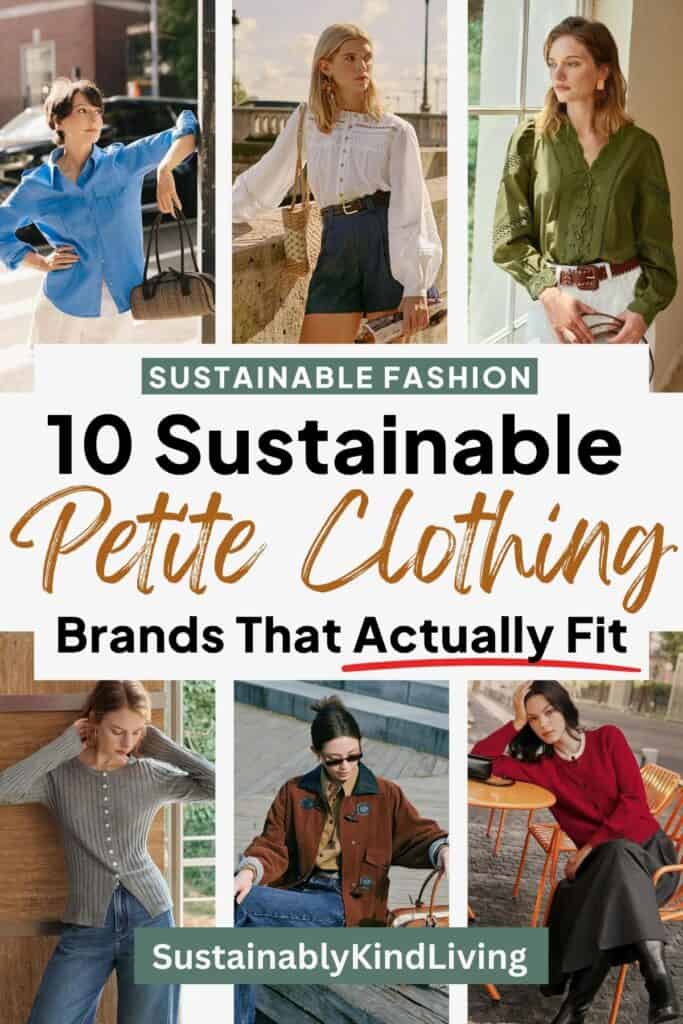
Finding sustainable petite clothing brands that actually fit shouldn’t feel this frustrating… but if you’re under 5’3, you already know how limited the options can be.
This is something I’ve seen up close for years — my mom and niece both fall into that category, and no matter how many “sustainable” brands they tried, the same issues kept coming up.
Pieces would look perfect online… and then feel completely off in real life.
The sleeves were too long. The waist hit in the wrong place. And “cropped” jeans somehow still dragged on the floor — completely throwing off the silhouette.
Because here’s the part no one really talks about: Most petite clothing isn’t actually designed for petite proportions — it’s just scaled down from standard sizing and called a day.
Top Picks For Sustainable Petite Clothing
If you’re just looking for a quick starting point, these are the sustainable petite clothing brands that stood out most for fit, quality, and long-term wear:
- Best For True Petite-First Fit: Petite Studio
- Best For Timeless Petite Staples: Eileen Fisher
- Best For Petite Dresses & Elevated Styles: Reformation
- Best For Custom Petite Sizing: Seams Friendly
- Best For Petite-Friendly Activewear: Girlfriend Collective
And when you’re trying to shop more intentionally — looking for better materials, ethical production, and pieces that actually last — it gets even harder to find options that check every box.
Because now you’re not just dealing with fit — you’re also paying attention to what your clothes are actually made of.
If you’ve ever gone down the rabbit hole of synthetic vs natural fabrics, you already know how quickly that changes how you shop — not just for outerwear, but even basics like underwear and everyday layers.
And this is where things really narrow. A lot of sustainable fashion brands don’t offer true petite sizing at all — and many of the ones that do still rely on adjusted patterns instead of designing for smaller frames.
So instead of wasting money on pieces that almost work, I spent time narrowing down sustainable petite clothing brands that are doing this right — brands that design for shorter frames and prioritize quality, transparency, and long-term wear.
If you’re looking for petite clothing that actually fits — without compromising on sustainability, this is a really good place to start.
Why Petite Clothing Often Doesn’t Fit (& What Petite Sizing Actually Means)
Most brands design for a standard height, and when they offer petite sizing, they usually just shorten the length.
But petite bodies aren’t just shorter. The proportions are different — where the waist sits, how the torso aligns, even where the knees land in jeans.
So even when something technically fits, it can still feel slightly off.
True petite sizing is meant to fix this — not by just shortening garments, but by adjusting the entire structure of the piece.
That includes things like shorter inseams that align with your frame, higher knee placement, shorter torsos, and better-fitting sleeves.
That’s what makes the difference between something you’re constantly adjusting… and something you don’t have to think about once it’s on.
What Makes Sustainable Petite Clothing Brands Sustainable
I don’t consider a brand “sustainable fashion” just because it uses better fabrics.
I look at how much they produce, how often they release new pieces, and whether the clothing is actually designed to be worn for years.
Once you find petite clothing brands that actually fit well, the next question is: what are they made of? Because “sustainable” gets used pretty loosely — especially in fashion.
For me, the brands worth paying attention to are the ones that are clear about:
- The materials they use (like organic cotton, linen, or TENCEL)
- How their pieces are made
- And whether they’re designing for long-term wear, not just trends
And this matters even more with petite clothing. Because when something fits properly, you’re already more likely to keep it.
Pair that with better materials and thoughtful construction, and those pieces actually last — instead of becoming another return or donation.
This is something the industry is still catching up on across the board.
We’re starting to see more progress in plus-size sustainable clothing, but there’s still a major gap when it comes to petite plus sizing — where both proportion and size need to be designed together, not separately.
Petite Fit vs Regular Fit: What Actually Changes
Regular sizing is designed for an average height, so when brands create petite versions by only shortening the length, the rest of the garment stays the same.
That’s why so many pieces technically fit… but still don’t sit quite right.
With true petite clothing, multiple areas are adjusted to match a shorter frame:
- Inseam: Shorter length so pants don’t bunch or drag
- Rise: Higher placement so the waist actually sits where it should
- Torso Length: Prevents bunching or pulling through the midsection
- Sleeve Length: Shortened to avoid excess fabric at the wrists
- Knee Placement: Especially important in jeans, so the silhouette lines up
When these proportions aren’t adjusted together, you end up with clothing that looks slightly misaligned — even if it “fits” on paper.
This is also why tailoring doesn’t always solve the problem — it can fix length, but not the overall silhouette or how the garment sits on your body.
Once you understand this, it becomes much easier to spot which petite clothing brands are actually designing for proportions — and which ones are just resizing standard patterns.
If you’ve been trying to figure out where to buy petite clothing that actually fits, these are the brands that consistently get both fit and sustainability right.
Best Sustainable Petite Clothing Brands For Women Under 5’3
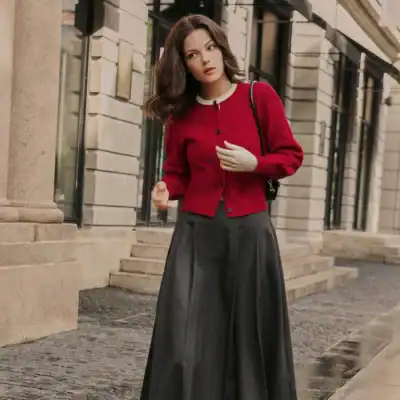
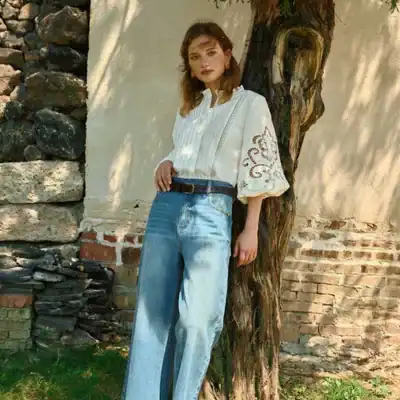
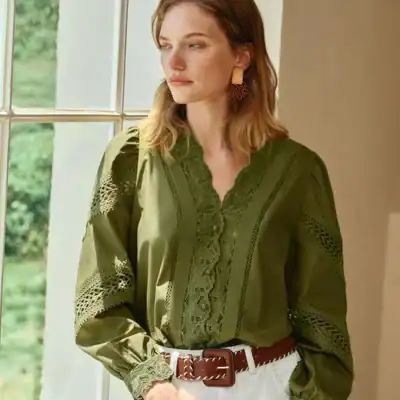
1. Petite Studio — True Petite-First Design
Best For: Petite women under 5’3 who are tired of tailoring everything they buy
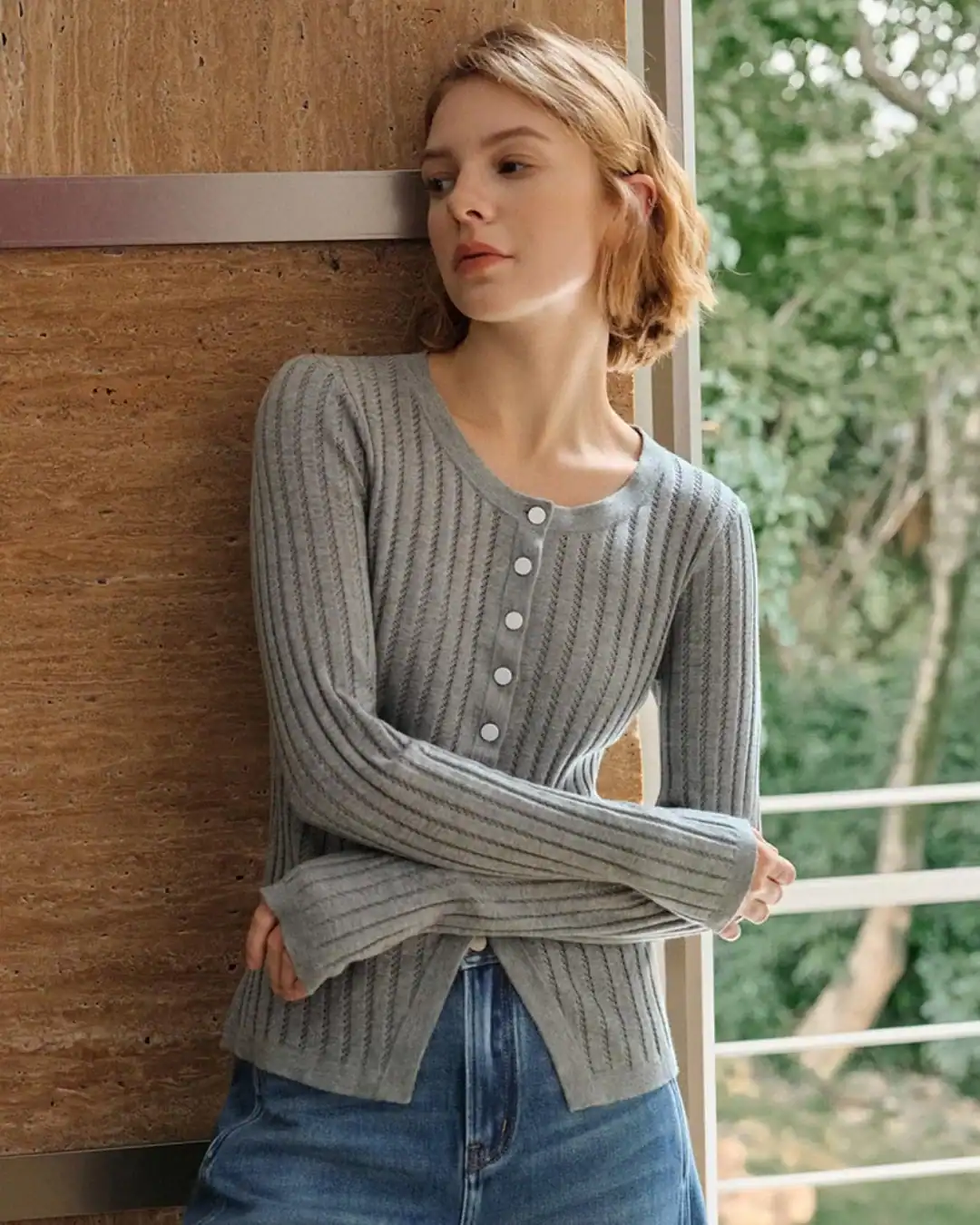
Petite Studio approaches fit in a way most petite clothing brands don’t — everything starts with a petite frame, rather than being adjusted after the fact.
That shows up immediately in the proportions. The rise, sleeve length, and overall silhouette just feel… right.
What I appreciate most is how consistent that fit is across categories. You’re not relearning sizing every time you try something new, which is usually where petite shopping falls apart.
From a sustainability standpoint, production is smaller and more controlled than most conventional brands, which aligns more with slow fashion than trend cycles.
If you’ve struggled with petite clothing for women that actually fits without extra effort, this is one of the few brands that truly solves that problem.
Price
$95-$380
Sizing
Petite XXS-XL
Location/Shipping
United States | Ships Internationally
SKL Top Picks:
2. Sugopetite — Petite-Only Slow Fashion
Best For: Petite shoppers who want intentionally designed pieces without mass production
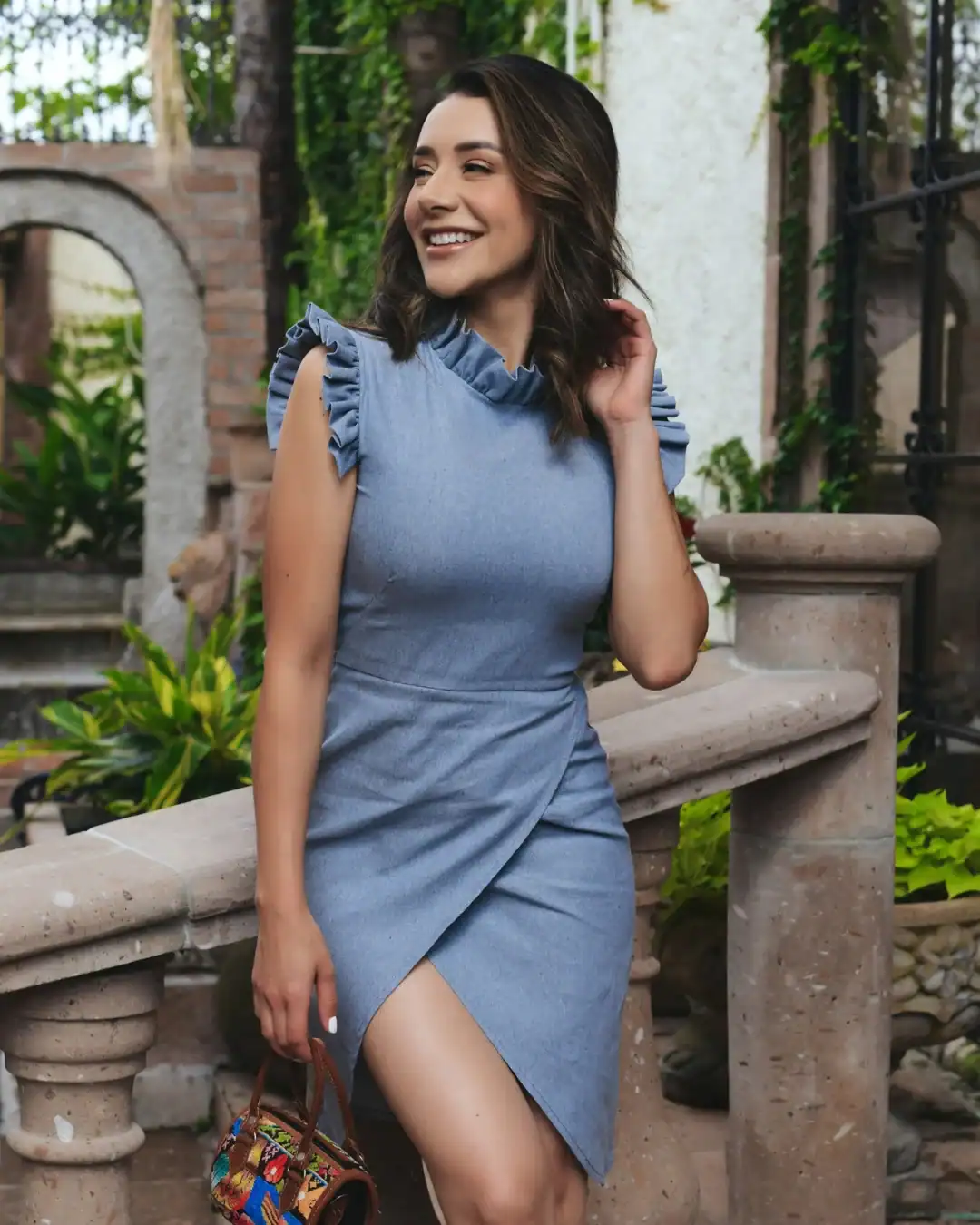
Sugopetite is one of those rare brands where petite isn’t an afterthought — it’s the entire foundation.
Everything is designed specifically for shorter proportions, which creates a noticeably different fit compared to brands that simply offer a petite section.
There’s also a slower, more intentional approach to how collections are released.
You’re not seeing constant drops or trend-driven pieces — just a smaller range of designs that feel considered.
If you’re trying to move away from fast fashion while still finding petite clothing for women under 5’3 that fits correctly, this fills a gap most brands ignore.
Price
$109-$179
Sizing
Petite XS-XL
location/shipping
United States
SKL Top Picks:
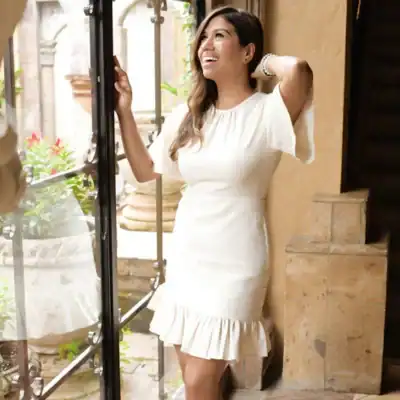


3. Eileen Fisher — Long-Term Wardrobe Staples
Best For: Building a minimalist, petite wardrobe that prioritizes longevity over trends
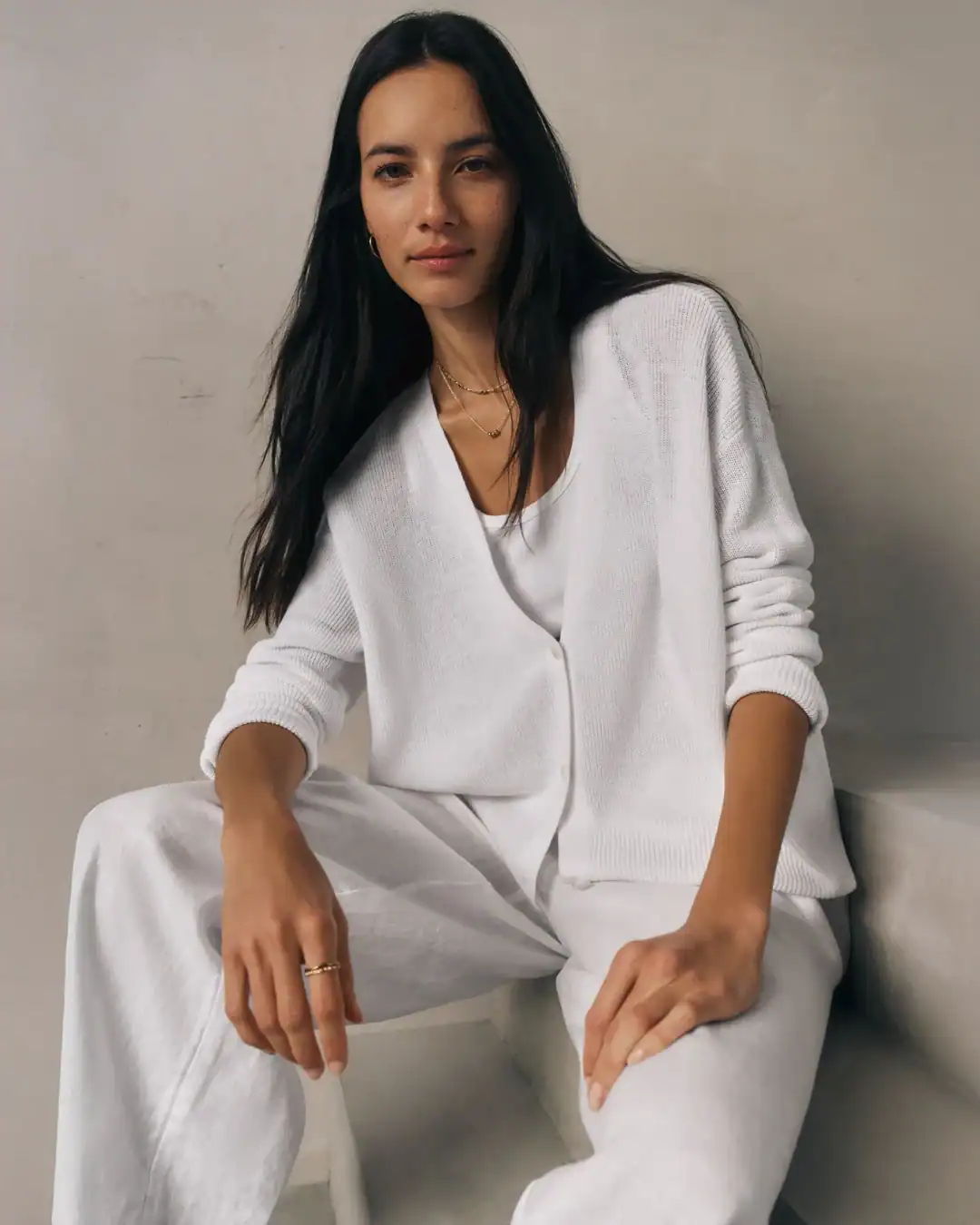
Eileen Fisher tends to attract people who are done cycling through clothing every season — and the petite line follows that same philosophy.
The fit is relaxed but still proportionate, which can be hard to find in petite clothing brands that often skew either too boxy or too tight.
Once you find your size here, it’s consistent, which makes repeat purchases feel less risky.
This is also one of the few brands where circularity is actually built into the business model, not just mentioned in marketing.
It’s not the cheapest option upfront, but it’s designed to last — which is really the point of sustainable petite clothing in the first place.
Price
$88-$548
Sizing
Petite (PP–PL) | XXS–3XL
Location/Shipping
United States
4. Reformation — Style-Driven Petite Options
Best For: Petite dresses and occasion pieces that don’t overwhelm your frame
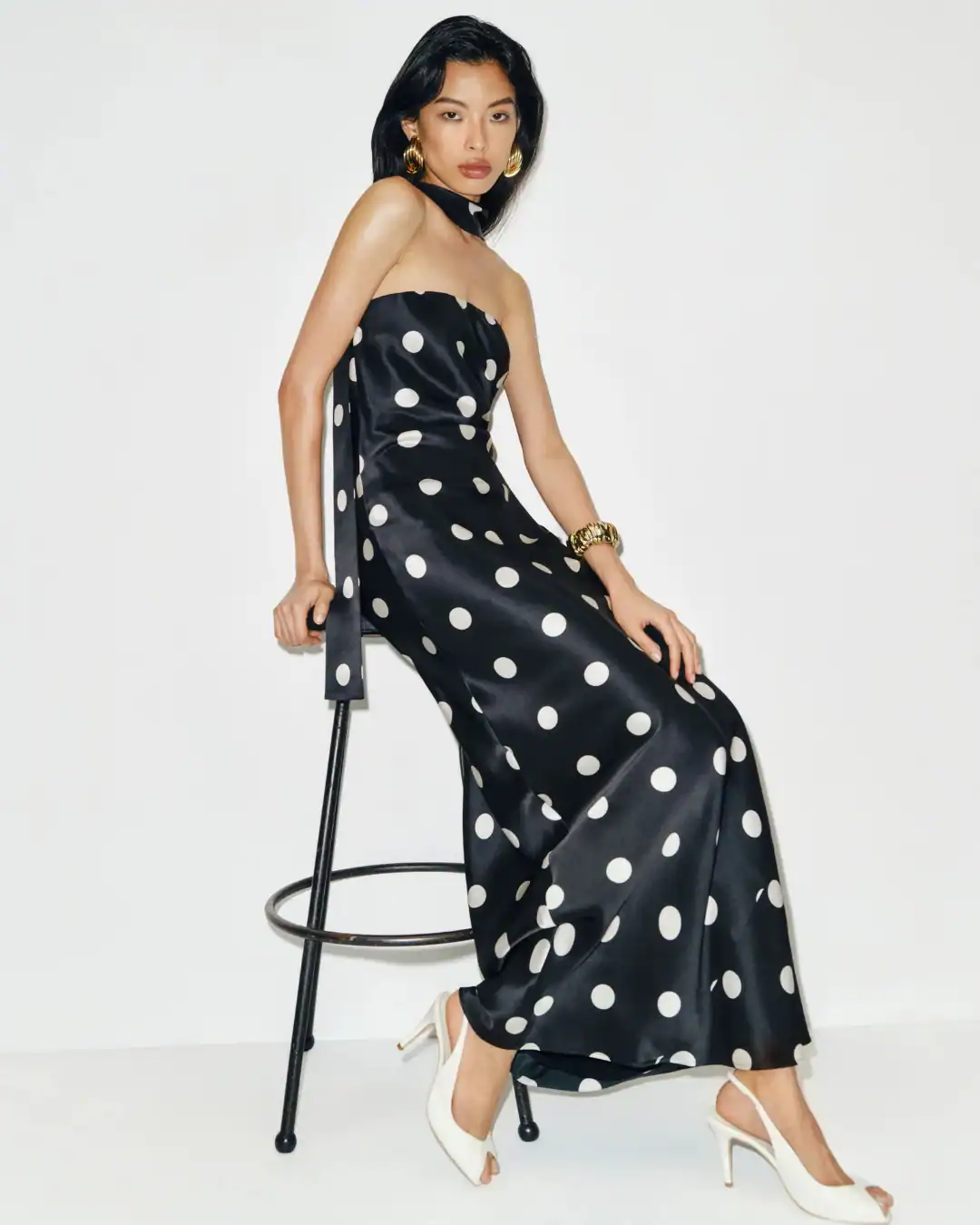
If you’ve ever ordered a dress online and had the waist hit in the wrong place, you already know why petite-specific proportions matter — and this is where Reformation does well.
The petite collection focuses heavily on dresses, and that’s where the fit difference is most noticeable.
The proportions feel more intentional, especially through the waist and length. That said, this sits more in the “better materials, not perfect systems” category.
Reformation does make efforts around fabric sourcing and transparency, but it still operates on a faster production cycle.
For petite clothing for women who want something more elevated or occasion-ready, this tends to be where people land.
Price
$98-$448
Sizing
Petite 0P-12P | US 0-24
Location/Shipping
United States | Ships Worldwide
5. Sea Salt Cornwall — Natural Fabric Everyday Pieces
Best For: Petite clothing made with natural fibers that you can wear on repeat
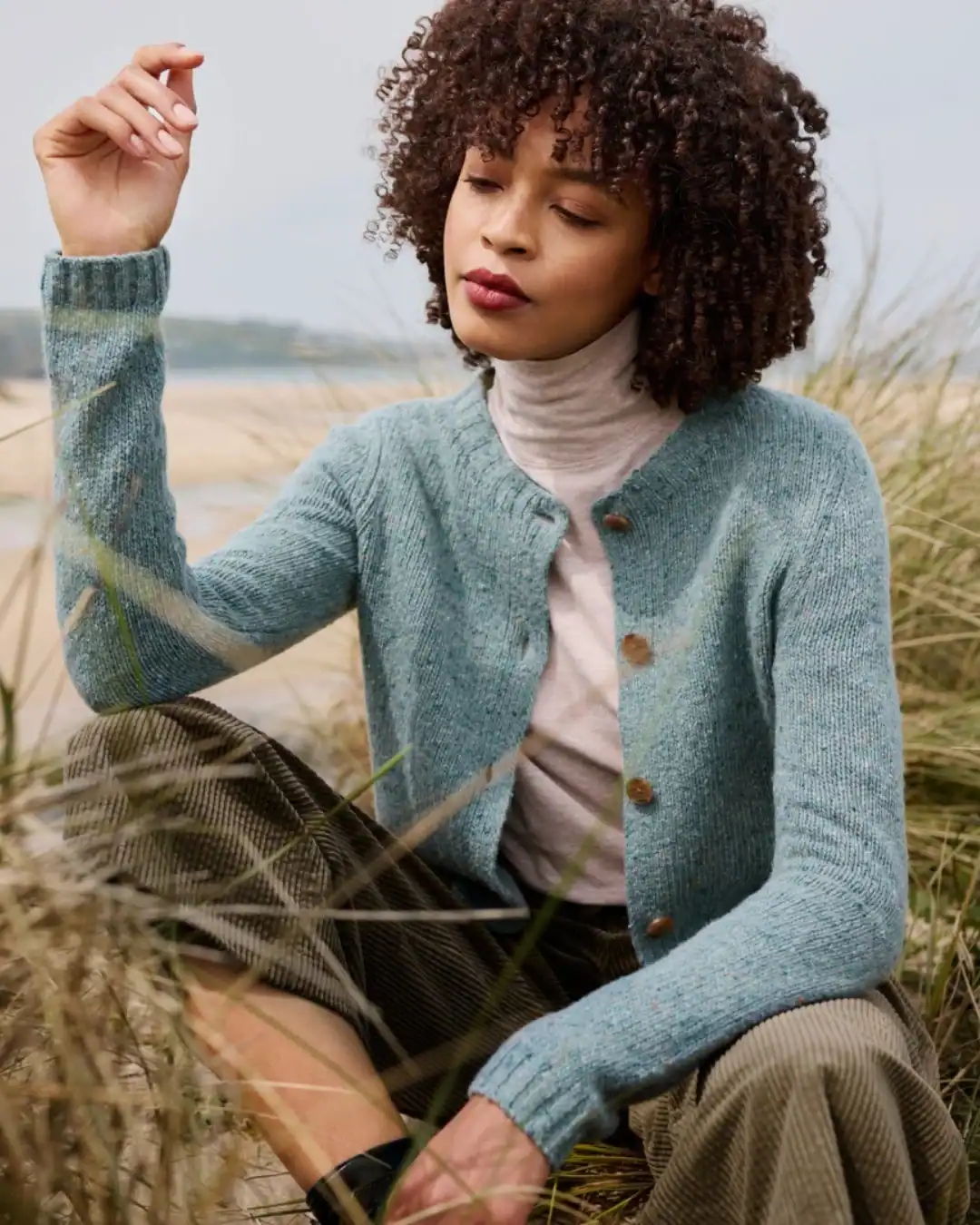
Sea Salt Cornwall leans into the kind of clothing you don’t have to think about too much — which, honestly, is what most wardrobes need more of.
The petite range is proportioned in a way that feels dependable, especially for tops, trousers, and casual dresses. It’s not overly tailored, but it doesn’t feel oversized either.
They also prioritize natural materials like organic cotton and linen, which is something I always look for when evaluating sustainable petite clothing brands.
If your focus is on comfort, fabric quality, and consistency — rather than trend-driven pieces — this is one of the more grounded options.
Price
$118-$398
Sizing
Petite US 8-20
Location/Shipping
United Kingdom | Ships Worldwide
6. Boden — Accessible Petite Fit With Classic Styling
Best For: Petite shoppers who want a reliable fit without investing in higher-end brands
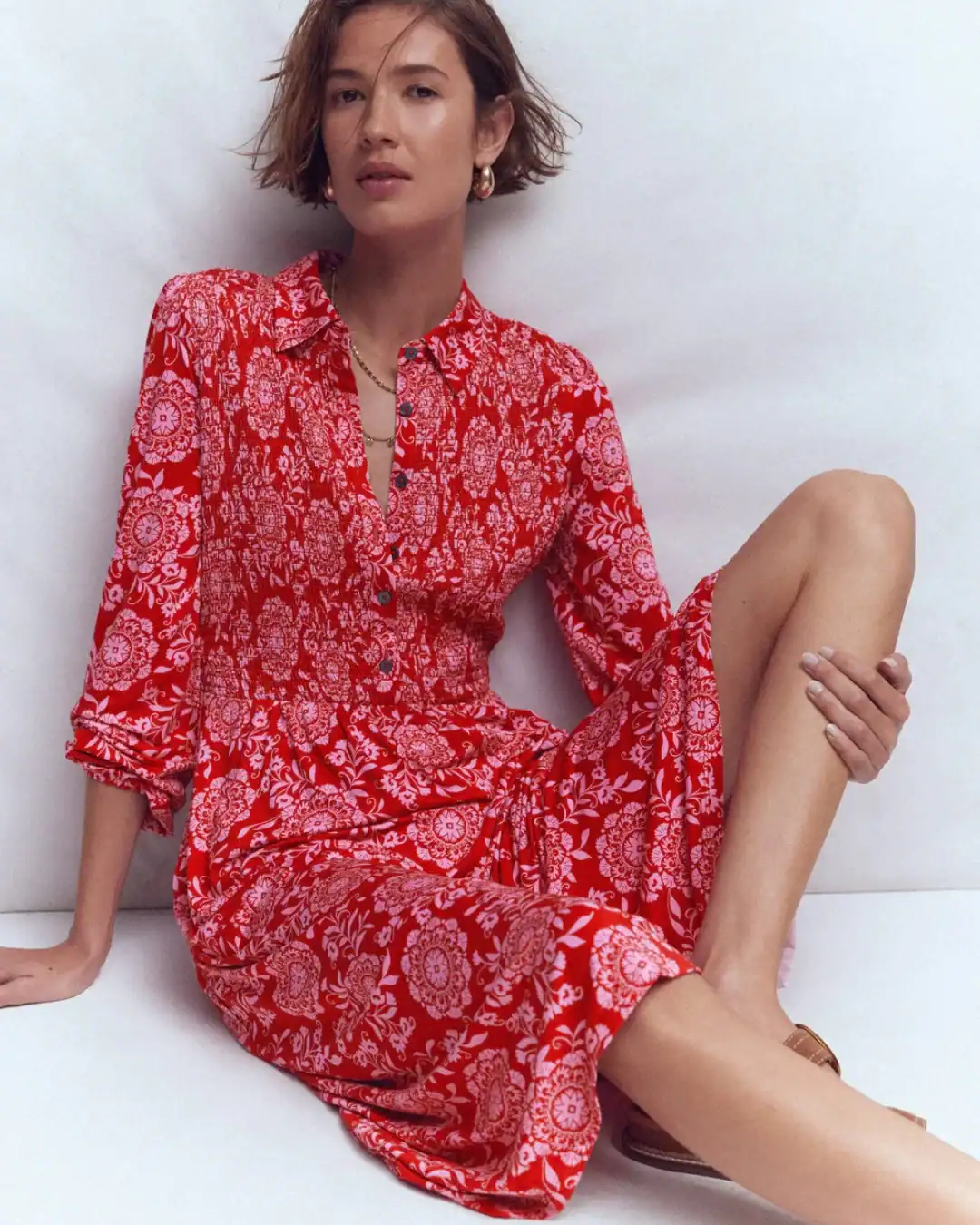
Boden sits in that middle space where fit is noticeably better than standard sizing, but the price point is still relatively accessible.
The petite collection is especially strong in structured pieces like dresses and workwear, where proportion really matters.
You’re less likely to deal with awkward lengths or misplaced seams.
From a sustainability perspective, they’ve made improvements — particularly with materials and supply chain transparency — but it’s not a fully slow fashion model.
Still, compared to most conventional petite clothing brands, it’s a more thoughtful option that balances fit, price, and incremental progress.
Price
$89-$420
Sizing
Petite US 0-22
Location/Shipping
United Kingdom | Ships Internationally
7. Seams Friendly — Custom Petite Fit
Best For: Petite bodies that don’t fit standard sizing charts at all
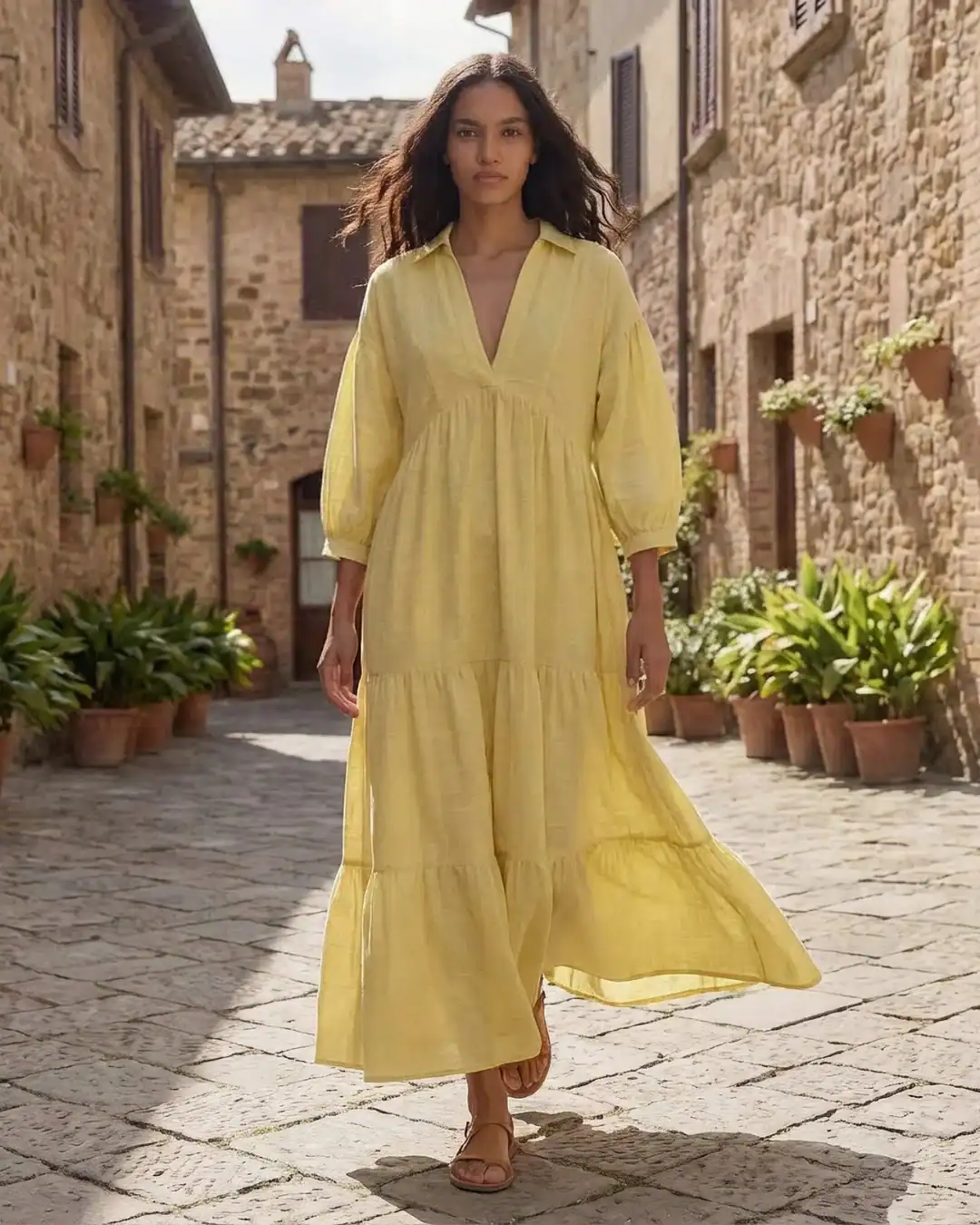
Use discount code SKL15 to save 15%!
Seams Friendly takes sizing out of the equation entirely by offering made-to-order clothing based on your actual measurements.
For petite women, that can be a game-changer — especially if you fall outside typical proportions or are constantly adjusting hems, sleeves, or waistlines.
Because pieces are made to order, there’s also less overproduction, which aligns more closely with sustainable clothing practices.
It’s not instant gratification, but the tradeoff is a garment that’s actually built for your body — not something you have to alter after the fact.
Price
$33-$149
Sizing
All Sizing (Custom-Made)
Location/Shipping
India | Ships Worldwide
8. Universal Standard — Inclusive Petite Sizing
Best For: Petite women who also need extended sizing options that actually overlap
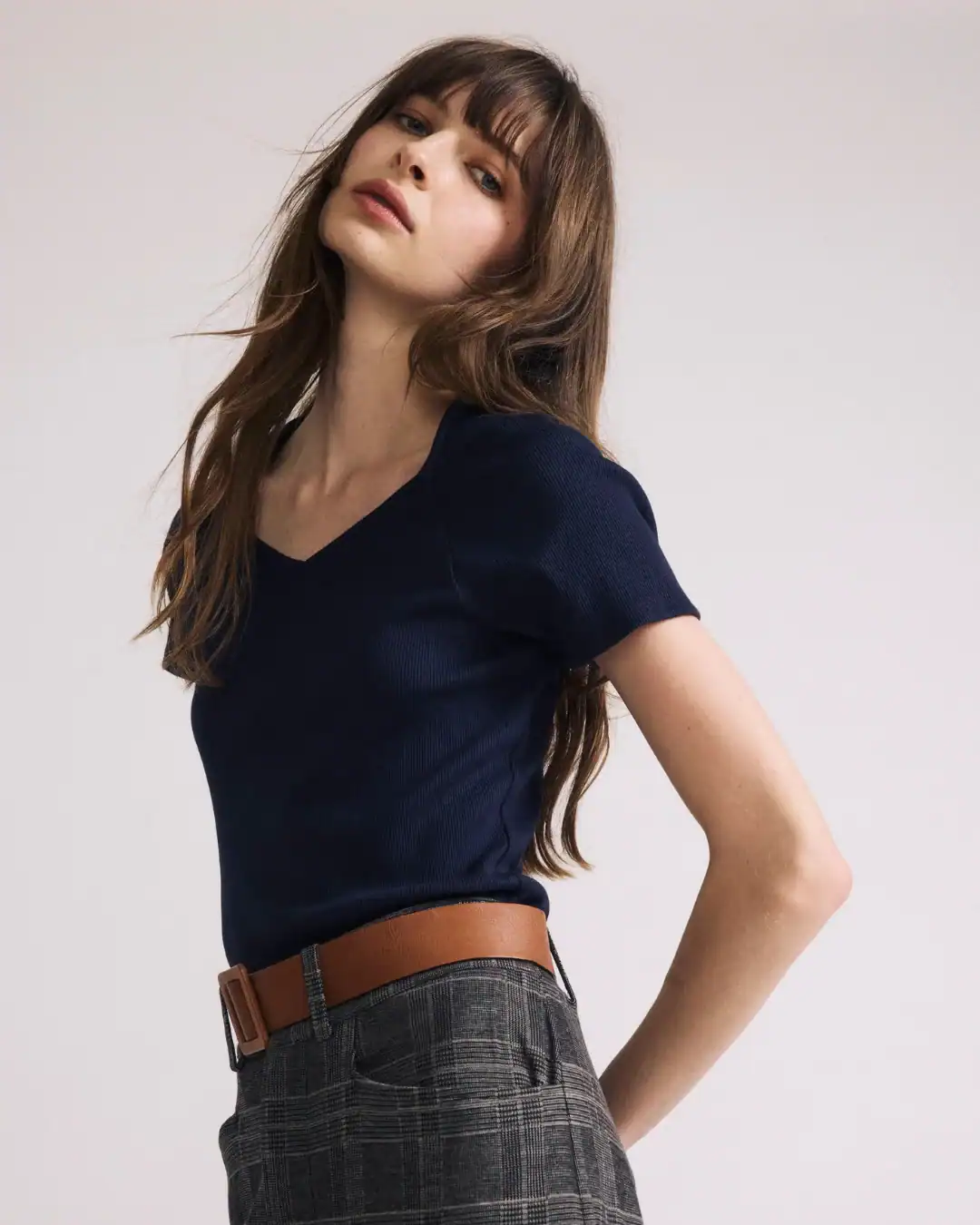
Universal Standard stands out because it addresses something most petite clothing brands ignore — the overlap between height and size inclusivity.
The petite range works across a much broader size spectrum, which makes it more accessible for people who don’t fit into traditional sizing categories.
Fit-wise, it’s more about adjusted proportions than true petite-first design, so it may not feel as precise as brands built exclusively for shorter frames.
But in terms of accessibility and consistency, it fills an important gap in sustainable petite clothing — especially for those who have struggled to find both size and height accommodations in one place.
Price
$50-$300
Sizing
US 00-40 | 4XS-4XL
Location/Shipping
United States | Ships Internationally
9. Girlfriend Collective — Petite-Friendly Activewear
Best For: Leggings and activewear that don’t run excessively long on shorter frames
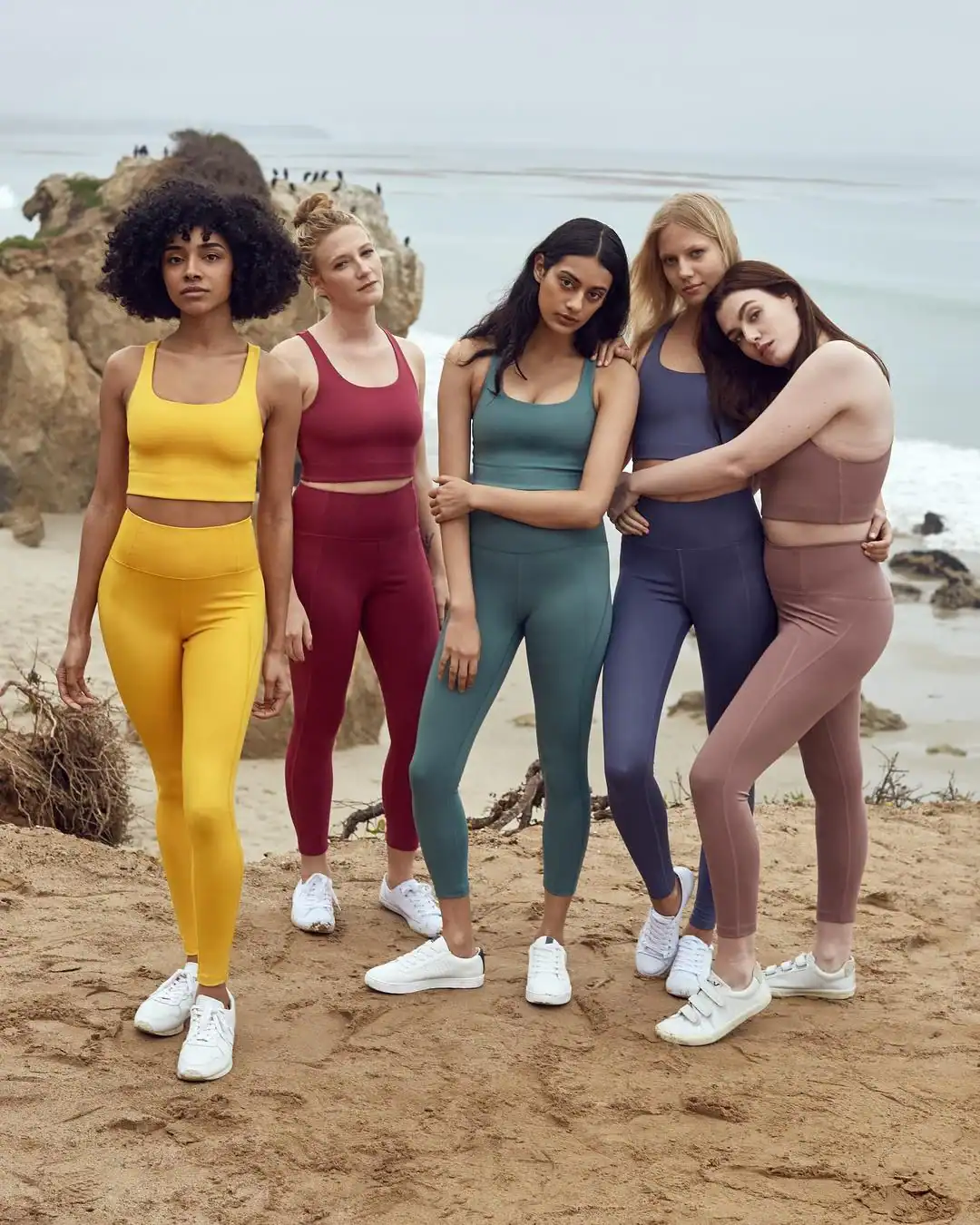
Activewear is one of those categories where petite options are surprisingly limited — and Girlfriend Collective tends to work better than most, even without a dedicated petite line.
The proportions, especially in leggings, feel more balanced. You’re less likely to deal with excess fabric bunching at the ankles or overly high rises.
They also use recycled materials and maintain a relatively high level of transparency compared to many activewear brands.
It’s not designed specifically for petite bodies, but in terms of function and fit, it’s one of the more reliable options if you’re looking for sustainable petite clothing in the activewear category.
Price
$58-$148
Sizing
XXS-6XL
Location/Shipping
United States | Ships To Canada, the United Kingdom & Australia
10. Not Perfect Linen — Petite-Friendly Linen Staples
Best For: Breathable linen pieces with customizable fits for shorter frames
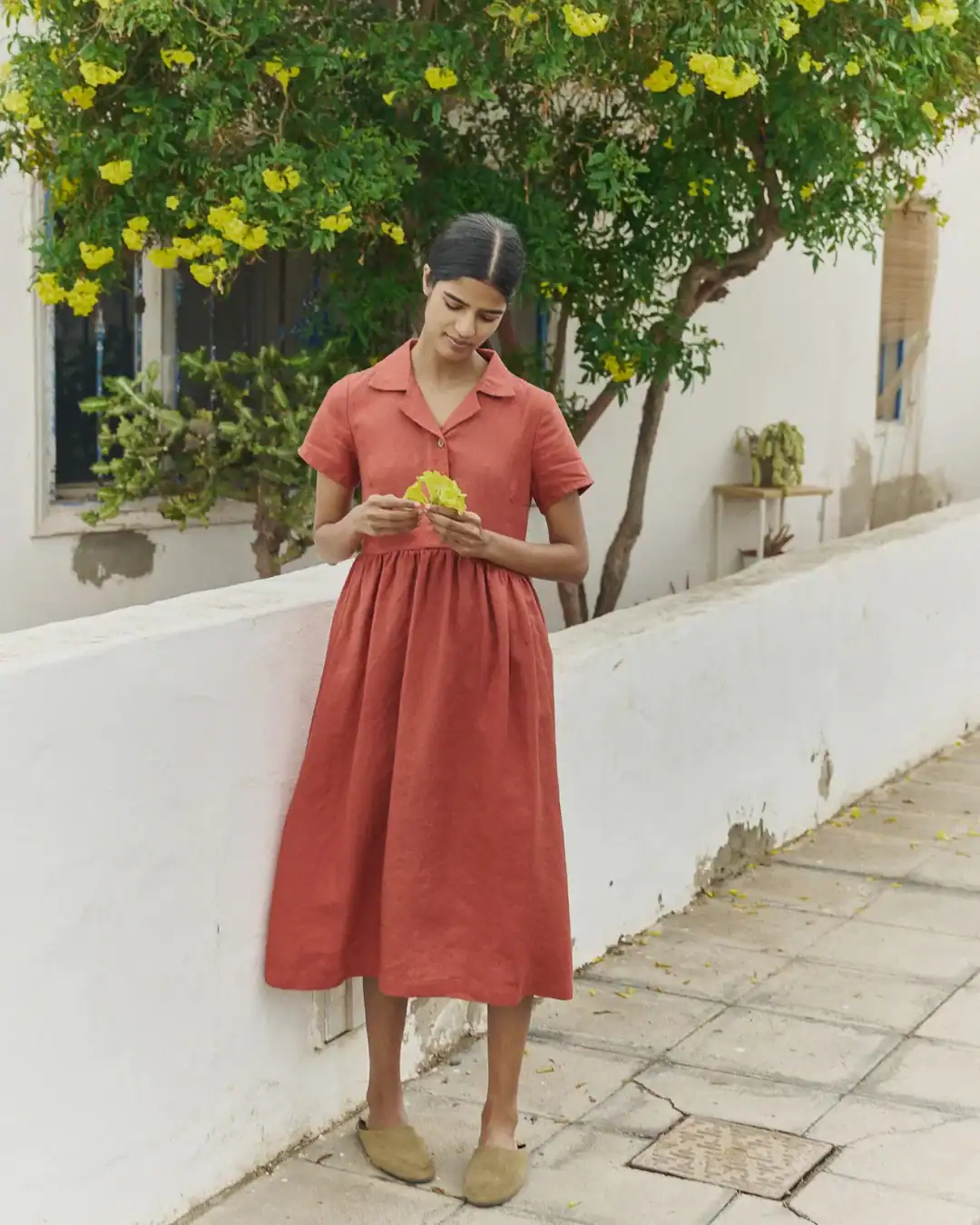
Linen is one of the hardest categories to shop for as a petite — oversized cuts and fixed lengths can easily overwhelm a smaller frame.
Not Perfect Linen stands out because many of their pieces can be customized, allowing you to adjust length and proportions to better suit your body.
The silhouettes lean relaxed and minimal, but that flexibility makes a big difference.
Instead of settling for too-long dresses or wide, dragging pants, you can create a fit that actually works for you.
They use 100% European linen and operate on a made-to-order model, which helps reduce waste and overproduction — a strong step up from traditional fashion brands.
Price
$76-$184
Sizing
XS-XXL + Custom Sizing
Location/Shipping
Lithuania | Ships To The United States & Internationally
How to Choose the Right Sustainable Petite Clothing Brand
Not all petite clothing brands solve the same problem — which is why some work really well for one person and completely miss for another.
The easiest way to narrow it down is to focus on what you actually need:
- If fit is your biggest issue → Look for petite-first brands (not adjusted sizing)
- If you struggle with proportions beyond height → Custom or made-to-order tends to work better
- If you’re rebuilding your wardrobe → Focus on brands with consistent basics
- If you mostly need occasion pieces → Look for brands that specialize in dresses or structured styles
And if you’re trying to shop more sustainably long-term, this is also where things like a closet cleanout can help — getting clear on what you actually wear makes it much easier to choose pieces that won’t just sit unused.
Because once you know what problem you’re solving, it’s much easier to choose something that actually works — instead of guessing and returning things again.
Common Petite Clothing Mistakes To Avoid
A lot of the frustration with petite clothing doesn’t come from your body — it comes from how clothing is designed.
A few things that tend to cause the biggest issues:
- Assuming “cropped” = petite-friendly
- Buying regular sizing and planning to tailor everything
- Ignoring where the waist and rise actually sit
- Choosing oversized cuts that overwhelm smaller frames
- Prioritizing trends over fit
Fixing these alone makes a bigger difference than most people expect.
Most of these come down to the same issue — trying to make standard sizing work for a body it wasn’t designed for.
And you’ll notice this especially with everyday basics — things like organic cotton underwear — where poor fit or low-quality materials get uncomfortable fast.
Frequently Asked Questions About Sustainable Petite Clothing
Sustainable petite clothing refers to clothing designed specifically for women 5’3 and under, made with more responsible materials and production practices. It focuses on both proper fit and long-term wear, rather than simply scaling down standard sizes.
Some of the best sustainable petite clothing brands include Petite Studio, Eileen Fisher, Reformation, Seams Friendly, and Girlfriend Collective.
These brands stand out for combining petite-specific fit with higher-quality materials and more transparent production practices.
Petite clothing is hard to find because most brands design for standard height and only shorten the length for smaller sizes.
True petite clothing requires adjusting overall proportions — including torso, rise, and sleeve placement — which many brands don’t fully address.
Petite clothing is typically designed for women 5’3 and under, though some brands extend to 5’4. The key difference is not just height, but proportion — petite sizing adjusts how garments fit across the entire body.
No, true petite clothing is not just shorter. While many brands only reduce length, proper petite sizing adjusts proportions like waist placement, sleeve length, and overall fit to better suit shorter frames.
The best fabrics for sustainable petite clothing include organic cotton, linen, TENCEL™, and responsibly sourced wool. These materials are typically more breathable, longer-lasting, and less reliant on synthetic processing.
Custom sizing can be a better option for petite clothing, especially if standard proportions don’t fit quite right. Made-to-measure brands create garments based on your exact measurements, which can improve fit and reduce waste.
Start by choosing a few well-fitting essentials you’ll wear often, then build from there. Focus on quality over quantity, prioritize versatile pieces, and choose brands that design specifically for petite proportions.
Final Thoughts on Sustainable Petite Clothing
Petite clothing gets talked about like it’s just a sizing issue — but it’s really a design issue. Most pieces aren’t made for shorter proportions to begin with.
They’re just adjusted after the fact, which is why so many things technically fit… but still feel off.
But the good part is that it’s starting to change. There are brands actually designing for petite bodies now, not just resizing patterns.
And when you find those pieces, the difference is immediate. You wear them more. You keep them longer. You stop settling for “close enough.”
And that’s really the point of sustainable petite clothing — not just better materials, but clothing that fits well enough to stay in your life. Happy shopping!
Continue Your Non-Toxic Fashion Journey
If you’re working toward a more thoughtful, low-tox wardrobe, these guides can help you take the next step:
- Beginner’s Guide to Sustainable Fashion – A simple starting point to help you understand materials, avoid greenwashing, and build a more conscious wardrobe.
- Sustainable Plus-Size Clothing – A curated guide to brands that actually design for plus-size bodies using better materials and more thoughtful fits.
- Sustainable Fashion Brands – A simple breakdown of brands prioritizing responsible production, quality materials, and long-term wear.
- Non-Toxic Clothing Brands – An easy guide to clothing made without harmful chemicals, focusing on safer, skin-friendly fabrics.
- Sustainable Shoe Brands – A curated look at footwear brands using more responsible materials and designing for durability and comfort.
📌 Save This Guide for Later
Save it for later so you have a go-to list the next time you’re building your wardrobe or looking for pieces that actually fit and last.
Sources & Further Reading
If you’re trying to understand what actually makes clothing “sustainable” — beyond the marketing — these are some of the resources I found most helpful while researching petite brands and materials:
- Environmental Protection Agency — Textile waste data, environmental impact of clothing production, and material breakdowns.
- Ellen MacArthur Foundation — Research on circular fashion, clothing waste, and how long garments are actually worn.
- OEKO-TEX — Certification standards for safer textiles and chemical testing in fabrics.
- Global Organic Textile Standard — Certification for organic fibers and responsible textile processing.
I also spent time reviewing individual brand materials, sizing structures, and production details to understand how each company approaches petite fit — because with clothing, what’s not said is often just as important as what is.
As always, this is a space that’s still evolving. Materials, certifications, and brand practices continue to shift — which is why I always come back to the same things: fit, fabric, and transparency.

Steal My Non-Toxic Cleaning Checklist!
Believe us, it’s the BEST…. and it’s free. Does it really get any better than that?! Sign up for our newsletter and get this free checklist to clean your home without any harmful chemicals!




I have very small feet, size 2 in children’s. Any suggestions where to buy shoes that don’t have lights or cartoon characters on them?