 Shop My Favorite Non-Toxic Gifts Of 2026!
SKL is reader supported. When you buy through links on our site, we may earn affiliate commission. Learn more here.
Non-toxic bras are one of those categories I’ve been testing, wearing, and quietly comparing for years, long before I sat down to make a definitive list.
This guide is the result of a lot of trial and error: disappointing “organic” bras that weren’t nearly as natural as they sounded, others that looked great on paper but fell apart after a few washes or never fit right to begin with.
And then the handful of genuinely excellent ones that earned a permanent place in my drawer.
The push to finally write this came while I was researching my non-toxic sports bras article.
A reader who’d gone through a breast cancer scare emailed asking about safer bra materials. Then more emails came in, from women with breast cancer or in remission, asking the same question.
I’m not suggesting bras cause breast cancer. But those conversations made me look even harder at what we wear against our skin for hours a day.
My Quick Picks For The Best Non-Toxic Bras…
- Prettiest Organic Cotton Pick: Q for Quinn
- Full-Support Underwire Pick For Large Breasts: Julie May
- Most Affordable Everyday Pick (A–D Cups): Pact
- Best Bra For Sensitive Skin (Latex- & Spandex-Free): Cottonique
- Plastic-Free Pick For Support & Shape: The Very Good Bra
- Softest Bralette For Lounging & Sleep: MATE the Label
Like with non-toxic underwear, the details matter. A bra labeled “organic cotton” can still contain polyester thread, spandex, synthetic elastic, polyurethane foam, or plastic hardware.
So for this guide, I vetted the whole bra: fabric, lining, elastic, thread, padding, hardware, certifications, fit, and how it actually holds up in real life.
These are the six best non-toxic bras that survived that process.
Best Non-Toxic Bras: At a Glance Comparison
(Mobile Users) Scroll to see full comparison →
| Brand | Support/Style | Size Range | Materials | Price |
|---|---|---|---|---|
| Q for Quinn | Light support, wire-free pointelle bra | XS–3XL / A–D | 100% organic cotton + natural rubber | $58 |
| Julie May | Full-cup underwire, highest structure | 32B–40G | Organic Pima cotton + silk | $97 |
| Pact | Light support, wire-free T-shirt bra | XS–2XL / A–D | 95% organic cotton + 5% elastane | $38 / 3 for $94 |
| Cottonique | Supportive racerback, front closure | 34B–44E | 100% organic cotton + latex/spandex-free elastic | $55 |
| The Very Good Bra | Supportive V-wire, wire-free | U.S. 30–38 / up to G | Organic cotton + natural rubber + cellulose thread | $86 |
| MATE the Label | Light-support triangle bralette | XS–XL / A–DD | 95% organic cotton + 5% spandex | $44 |
Safe vs. Not
Toxic Materials & Finishes To Avoid In Bras
- Synthetic-Heavy Fabrics → Polyester, nylon, and spandex/elastane are all plastic-based fibers. A little elastane for stretch is different from a bra built almost entirely from synthetics with nothing disclosed beyond “polyester.
- PFAS Treatments → Sometimes used for water, stain, or moisture resistance. Look for PFAS-free claims or actual testing, not just the absence of a warning.
- Undisclosed Dyes → Azo dyes and disperse dyes can carry restricted aromatic amines or trigger contact dermatitis. Dark, bright colors and uncertified dye processes are the ones to question.
- Formaldehyde Finishes → Used for wrinkle-resistant, permanent-press, or “easy-care” fabric. A known human carcinogen, and it’s never listed on a bra tag.
- Mystery Antimicrobial/Odor-Resistant Finishes → If a bra says “antimicrobial” or “odor control,” I want to know what creates that effect. It’s usually silver-based treatments or, in some cases, triclosan, and it’s rarely disclosed.
- Hidden Foam & Adhesives → Polyurethane foam padding and the adhesives bonding cups together are some of the least transparent parts of a bra. Formulations are almost never listed.
- Undisclosed Hardware → Nickel in hooks, sliders, and underwire is one of the most common causes of allergic contact dermatitis. “Nickel-free” has to be stated explicitly; it’s not implied by any certification.
- Hidden Synthetic Trims → “100% organic cotton” almost always refers to the main fabric only. Elastic, thread, lace, and closures are usually left out of that claim entirely.
Safe Materials To Look For In Bras
- GOTS-Certified Organic Cotton → My first choice for everyday bras. Minimizes synthetic fiber and restricts chemical inputs during processing, not just how the cotton was grown.
- Silk → A natural, breathable option for cup linings and structured bras, especially useful for sensitive or irritation-prone skin.
- TENCEL™ Lyocell → Semi-synthetic, but made through a closed-loop process that recovers over 99% of the solvent used. A real step up from conventional rayon or viscose linings.
- Natural Rubber Elastic → My favorite alternative to conventional spandex. Biodegradable, petroleum-free, and doesn’t shed microplastics. Bio-based elastane is the next-best option for anyone with a latex allergy.
- Cotton or Cellulose Thread → A small detail most brands skip, and one that tells me they’ve thought through the entire garment, not just the main fabric.
- Disclosed, Natural-Fiber Padding → Organic cotton or silk linings, double-layered fabric cups, or clearly disclosed natural padding instead of hidden polyurethane foam.
- Nickel-Free, Clearly Disclosed Hardware → Explicitly nickel-free hooks and underwire, or metal that’s fully covered so it never touches skin directly.
Scroll past the brand reviews for a full breakdown of the most toxic materials & finishes, popular brands we do not recommend, the safest materials to look for, certifications worth checking, and greenwashing in the bra industry.
Out of more than 19 organic cotton, non-toxic, and low-tox bras I’ve tested over the last five years, purchased, gifted, and worn through everything from breastfeeding to date nights, these six are the ones I keep coming back to.
The Best Non-Toxic Bras, Reviewed
1. Q for Quinn | Best Organic Cotton Bra
Best For: Anyone wanting a soft, feminine organic cotton bra with light everyday support and minimal synthetic materials.
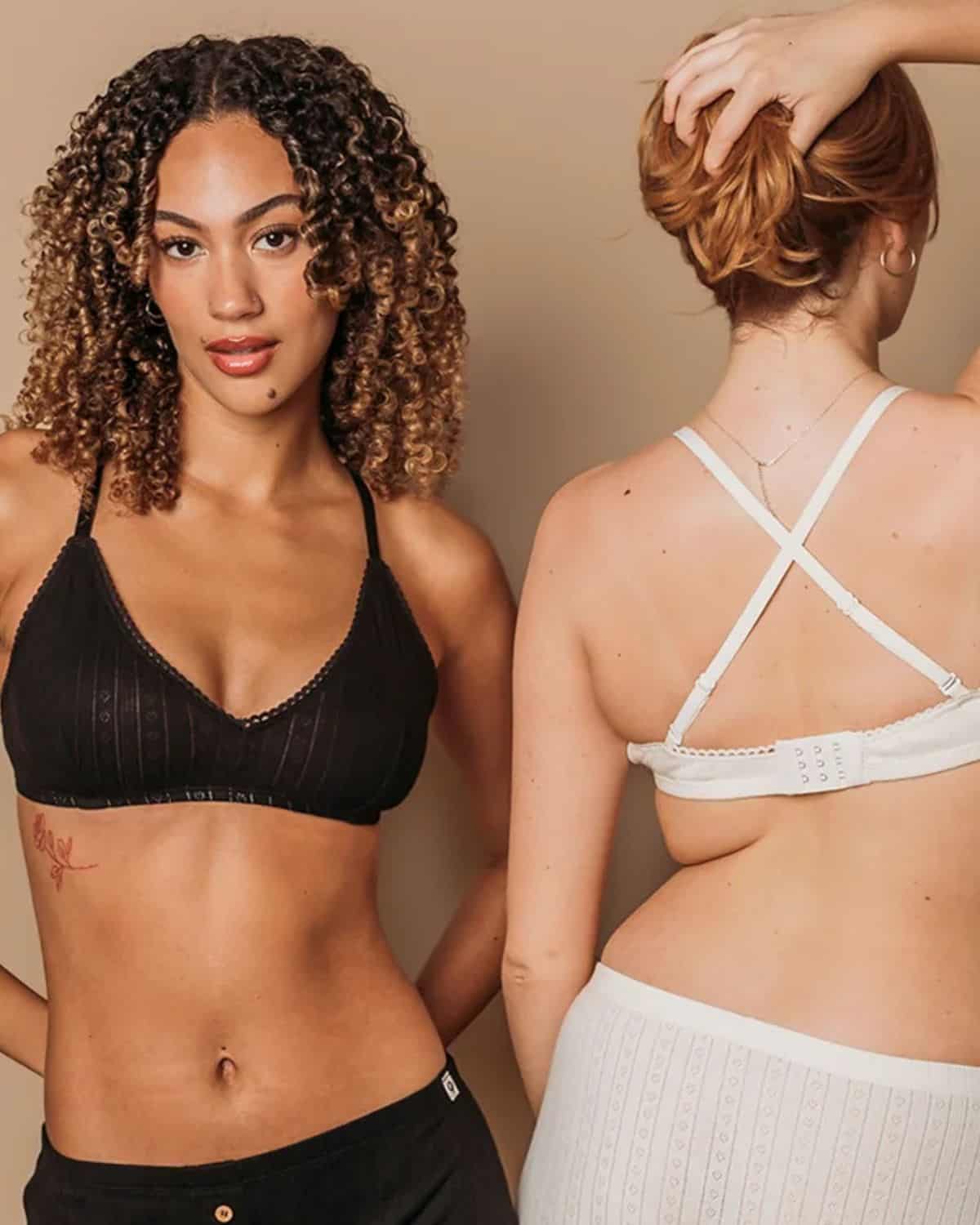
If you want an organic cotton bra that still feels feminine, Q for Quinn’s Pointelle Bra is one of my favorite options.
It’s made from 100% GOTS-certified organic cotton pointelle, lace, and thread, with organic cotton and natural rubber elastic instead of spandex.
I love how soft and lightweight it feels. It has that barely-there bralette comfort, but still enough support to feel comfortable leaving the house.
The pointelle and lace also make it much prettier than most natural-fiber bras I’ve tested. Just note that the band can run snug, so I’d size up if you’re between sizes.
Price & size
$58 | XS-3XL | Best Suited For A–D Cups
Materials
100% GOTS-Certified Organic Cotton | Elastic: 50% Natural Rubber, 50% Organic Cotton
location/shipping
United States/Canada | Ships Internationally
Why it made my list
- Feminine pointelle and lace design.
- 100% organic cotton fabric, lace, and thread.
- Natural rubber and organic cotton elastic instead of spandex.
- GOTS-certified organic construction.
My testing experience
- Soft and lightweight against the skin.
- Barely-there feel without being completely unsupportive.
- Pretty and feminine rather than plain or utilitarian.
- Comfortable enough for everyday wear.
- Band runs snug; size up if you’re between sizes.
More Non-Toxic Bras from Q for Quinn:
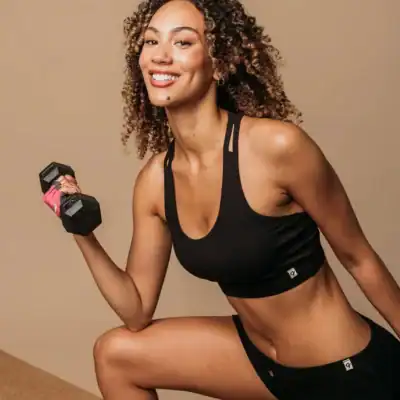
2. Julie May | Best Non-Toxic Underwire Bra For Large Busts
Best For: Fuller busts and anyone wanting a supportive non-toxic underwire bra made with organic cotton and silk.
Use the discount code SKL15 to save 15%!
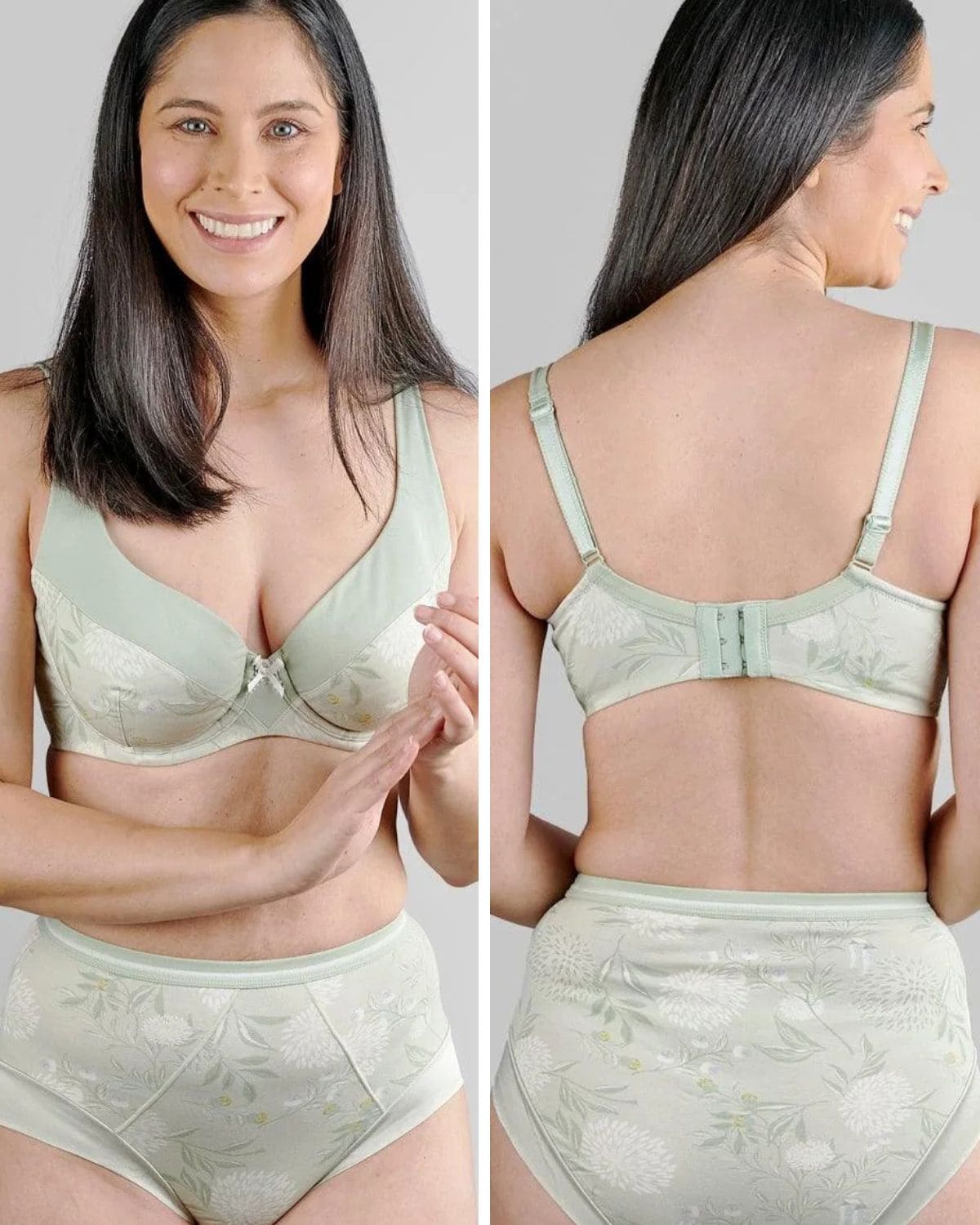
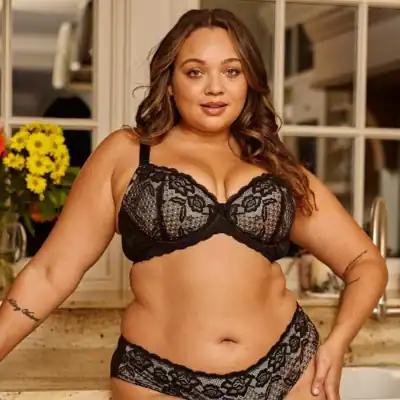
Julie May is my top pick if you want a non-toxic underwire bra for a larger bust and aren’t willing to settle for another stretchy bralette.
The Valentina has proper full-cup support, wide straps, and a traditional underwire, but swaps the usual polyester and nylon cup fabrics for organic Pima cotton and pure silk.
I especially love that the cups are lined in 100% silk and the underwire itself is encased in silk, so you still get lift and separation without that scratchy, synthetic feel against the breast.
It’s soft and luxurious, but still feels like a real bra. Women with sensitive skin and fuller busts consistently praise the comfort, fit, and support.
Julie May has a great selection of non-toxic supportive bras to look through, some underwired some not, so you’ll be sure to find something that works if you.
Price & size
$97 | 32B-42DD | Up To G Cups In Select Band Sizes
Materials
78% Organic Pima Cotton | 22% Silk | 100% Pure Silk Cup Lining
Location/shipping
United Kingdom | Ships To The United States (Unlimited Free UK & USA Returns)
Why it made my list
- One of the few natural-fiber underwire bras with real full-cup support.
- Pure silk lines the cups and even encases the underwire.
- Organic cotton light padding instead of conventional synthetic foam.
- Wide straps help distribute weight without digging in.
My testing experience
- Soft and luxurious against my skin.
- Full cups gave me great coverage without feeling bulky.
- Underwire gave me noticeable lift and separation.
- Supportive and structured while still feeling comfortable.
More Non-Toxic Bras from Julie May:
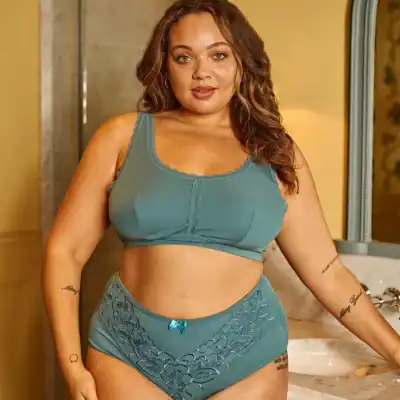
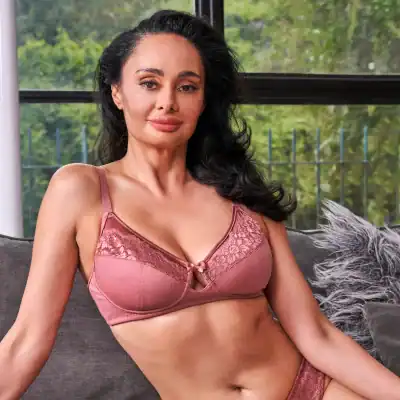
✔️ If you’re shopping for the best non-toxic bras, you might also want to check out our full guide to the best organic cotton underwear for the rest of your drawer.
3. Pact | Best Affordable Organic Cotton Bra
Best For: A–D cups and anyone wanting an affordable organic cotton bra with light, wire-free everyday support.
Use the discount code SKL15 to save 15%!
I’ve been wearing Pact bras for about 10 years, and they’re still my go-to when I don’t feel like wearing a clasp bra.
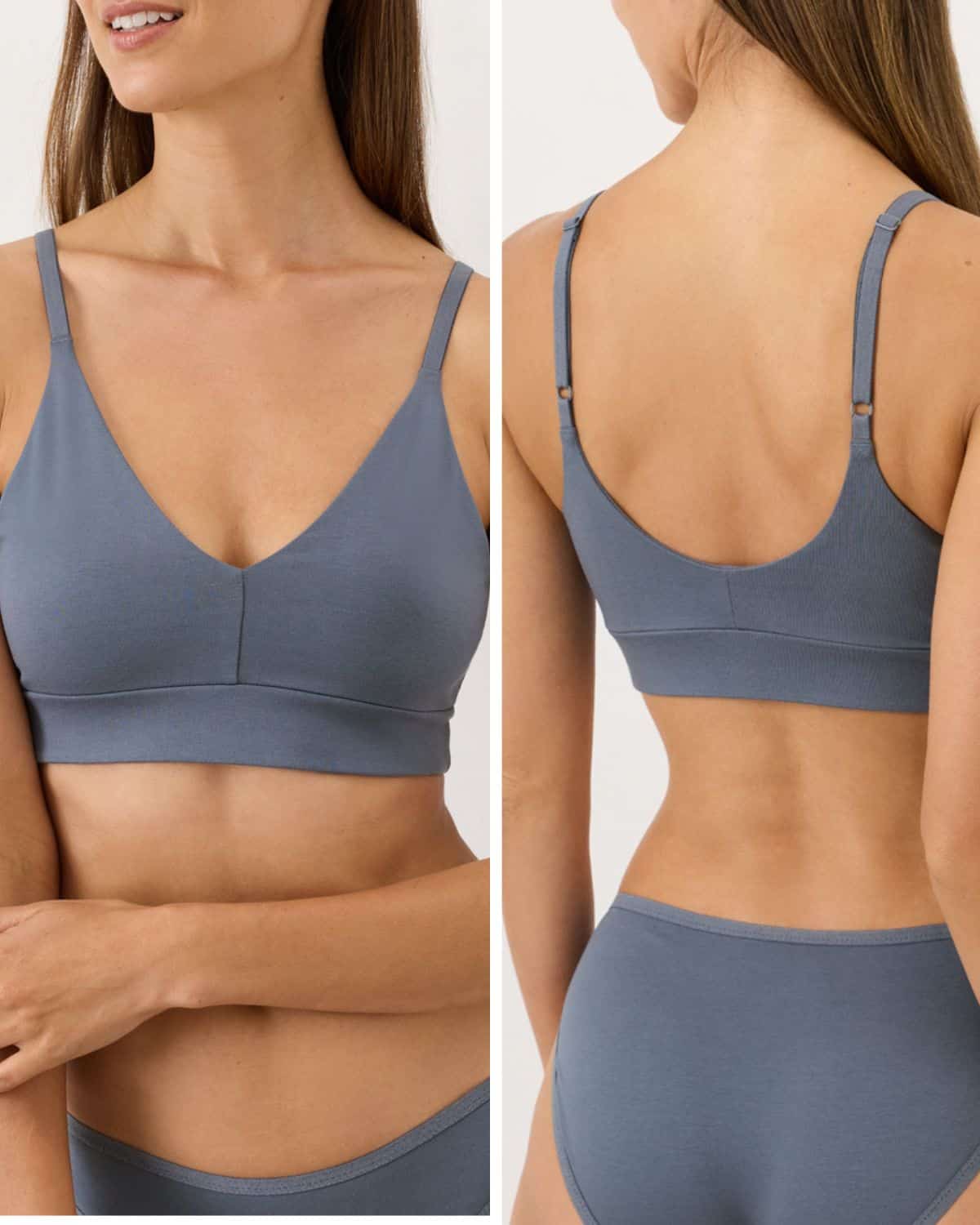
The Organic Everyday Classic T-Shirt Bra is made from 95% GOTS-certified organic cotton with 5% elastane, so it’s soft, stretchy, and comfortable enough to wear for hours.
I’ve worn mine under T-shirts, for lounging, walks, light workouts, and even while breastfeeding because they’re so easy and comfortable to live in.
At $38 each, they’re also one of the most affordable organic cotton bras on my list, and the 3-pack brings the price down even more, to just $31 each.
Price & size
$38 Each | 3-Pack: $94 | XS–2XL | A–D Cups
Materials
95% GOTS-Certified Organic Cotton | 5% Elastane
Location/shipping
United States | Ships Internationally
Why it made my list
- One of the most affordable organic cotton bras I tested.
- 95% GOTS-certified organic cotton.
- Soft, stretchy, wire-free everyday design.
- 3-pack offers even better value.
- Thousands of positive reviews across the size range.
My testing experience
- My go-to for 10 years when I don’t want to wear a structured bra.
- Wore them throughout breastfeeding because they were so comfortable and easy.
- Perfect under T-shirts, for lounging, walks, and light workouts.
- Soft, breathable, and comfortable enough to wear all day.
More Non-Toxic Bras from Pact:
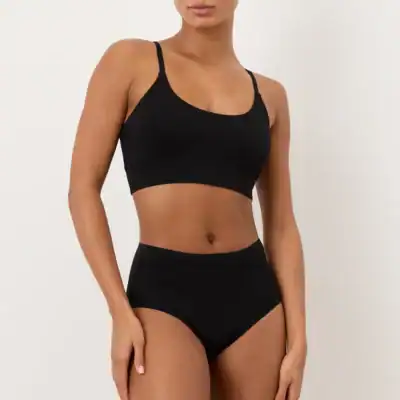
4. Cottonique | Best Non-Toxic Bra For Sensitive Skin
Best For: Sensitive skin, eczema, latex allergies, and anyone wanting a supportive bra without synthetic fibers.
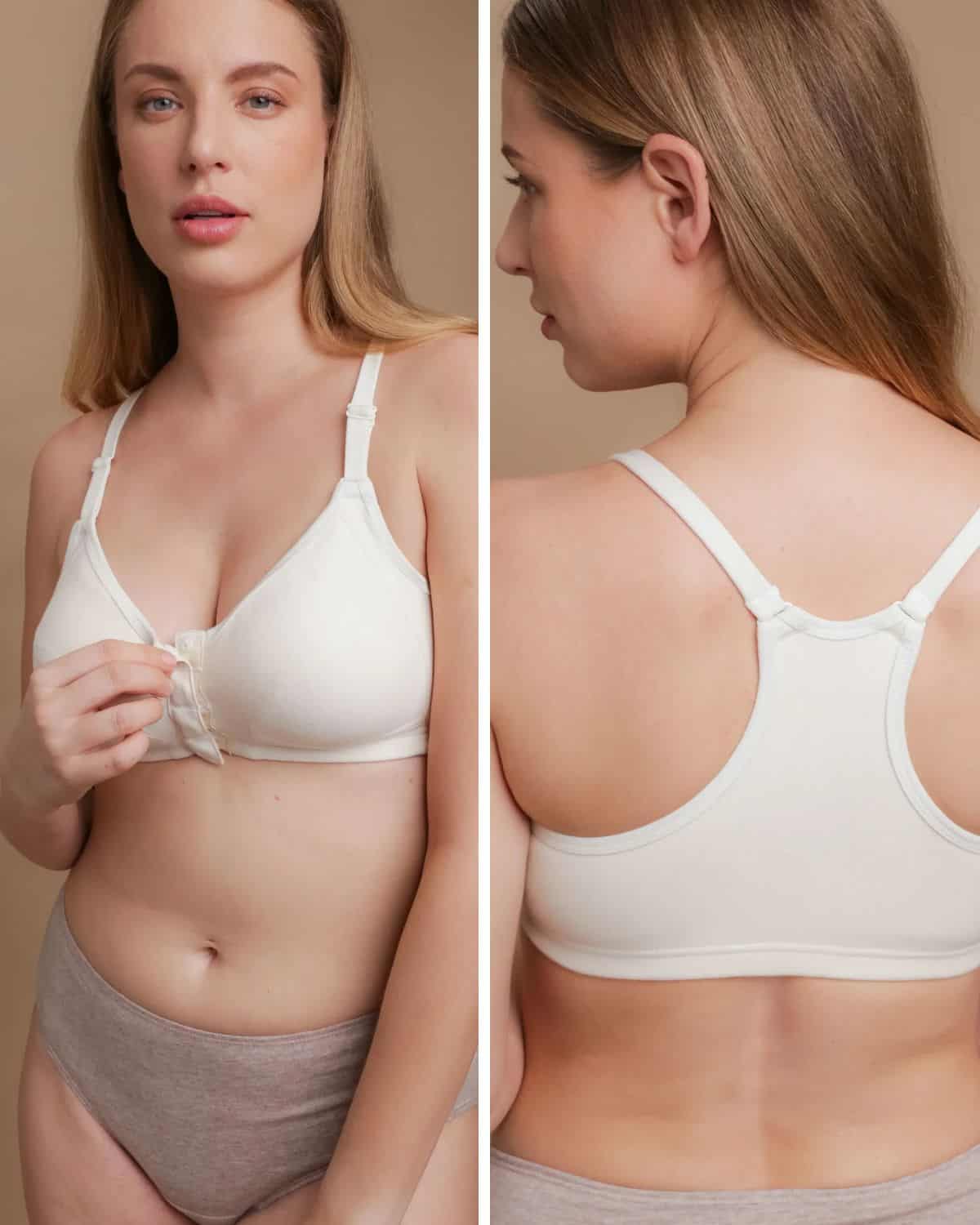
Use the discount code SKL15 to save 15%!
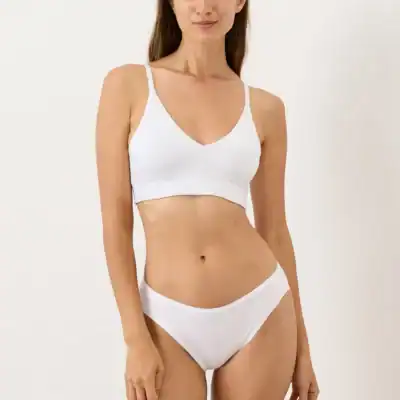
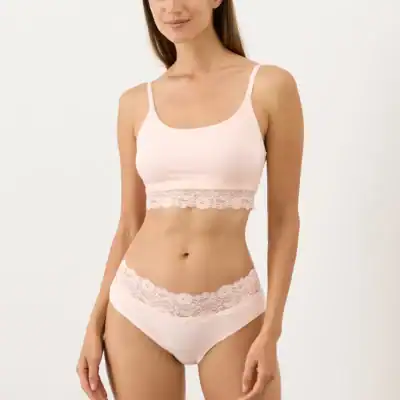
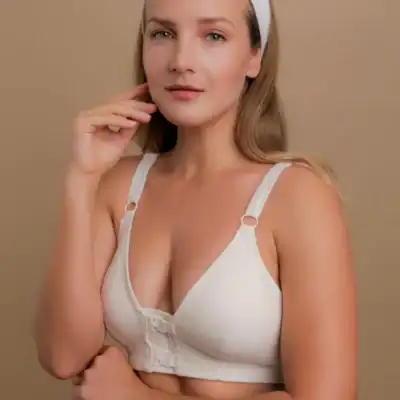
Cottonique is the bra I’d reach for first if itching, rashes, or fabric sensitivities are the reason you’re looking for a non-toxic bra.
The Deborah Latex-Free Support Racerback Bra is made from 100% organic cotton with latex-free and spandex-free elastic, so there are no synthetic fibers sitting against your skin. Cottonique also leaves out dyes, bleach, resins, and formaldehyde.
What stands out most is how comfortable it is despite having almost none of the stretch materials used in conventional bras.
Women with eczema, latex allergies, chemical sensitivities, and contact dermatitis repeatedly describe it as soft, supportive, and comfortable enough that they forget they’re wearing it.
It’s also one of the few allergy-conscious bras I found with real B–E cup sizing and a supportive racerback design, rather than just a simple cotton bralette.
Price & size
$55 | 34B–44E
Materials
100% Organic Cotton | Latex- & Spandex-Free Elastic
Location/shipping
United States | Ships Internationally
Why it made my list
- 100% organic cotton fabric, thread, and trim.
- Latex-free and spandex-free elastic.
- Made without synthetic fibers, dyes, bleach, resins, or formaldehyde.
- Front-snap design with real cup sizing through E.
- One of the strongest options I found for sensitive skin and allergies.
My testing experience
- Soft and comfortable against my skin.
- Supportive without feeling restrictive.
- Less stretchy than a conventional bra, but still comfortable to wear.
- Front closure makes it easy to get on and off.
More Non-Toxic Bras from Cottonique:
👉 Pro Tip: If you’re not ready to replace everything at once, start with the items you use daily—like cookware, water bottles, or food storage. Reducing repeated exposure is where you’ll see the biggest impact.
5. The Very Good Bra | Best Plastic-Free Bra
Best For: Anyone wanting a supportive plastic-free bra without polyester, spandex, or synthetic elastic.
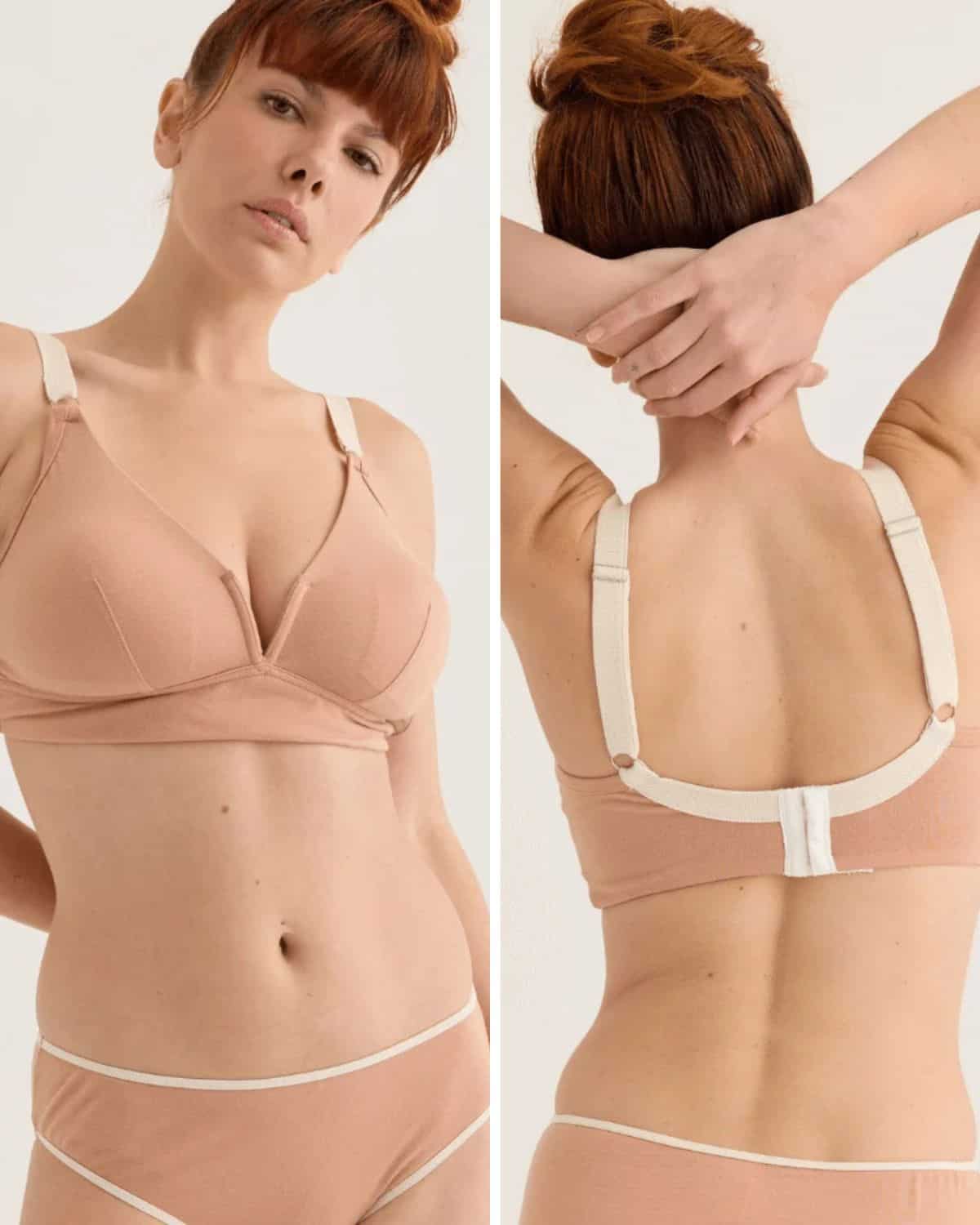
The first thing I noticed about The Very Good Bra’s V for Victory was the support. It is sooo nice and incredibly flattering.
I honestly wasn’t expecting a plastic-free bra to give this much lift and shape, but the small front V-wire creates really nice separation while still keeping the bra wire-free.
The body and lining are 100% organic cotton, with natural rubber and organic cotton elastic, cellulose thread, and plastic-free hook-and-eye components instead of the usual synthetic materials.
It’s comfortable, supportive, and actually feels like a proper bra. That combination is surprisingly hard to find when you’re looking for a plastic-free bra made from natural fibers.
Pad Note: The optional removable pads are polyester, so I’d leave them out if your goal is a completely plastic-free bra
Price & size
$86 | U.S. Bands 30–38 | A–G Cups, depending on band size
Materials
100% Organic Cotton | Organic Cotton & Natural Rubber Elastic | Cellulose Thread
location/shipping
Australia | Ships To The United States & internationally
Why it made my list
- Seriously supportive and flattering fit.
- Plastic-free construction goes far beyond the main fabric.
- No spandex, polyester fabric, or synthetic elastic.
- Organic cotton body and lining with cellulose thread.
- Plastic-free hook-and-eye components and nickel-free metals.
My testing experience
- Fantastic support from the first wear.
- Gave me noticeably nice lift and separation.
- Super flattering shape under clothes.
- Soft and comfortable against my skin.
- Felt much more like a traditional supportive bra than I expected.
👉 You Might Also Like: Bras aren’t the only place synthetic fabric and hidden chemicals hide out. If you work out regularly, check out our guides to the best non-toxic sports bras, PFAS-free leggings, and organic activewear for your whole workout wardrobe.
6. Mate The Label | Best Non-Toxic Bralette
Best For: A–DD cups and anyone wanting a soft, flattering organic cotton bralette with light everyday support.
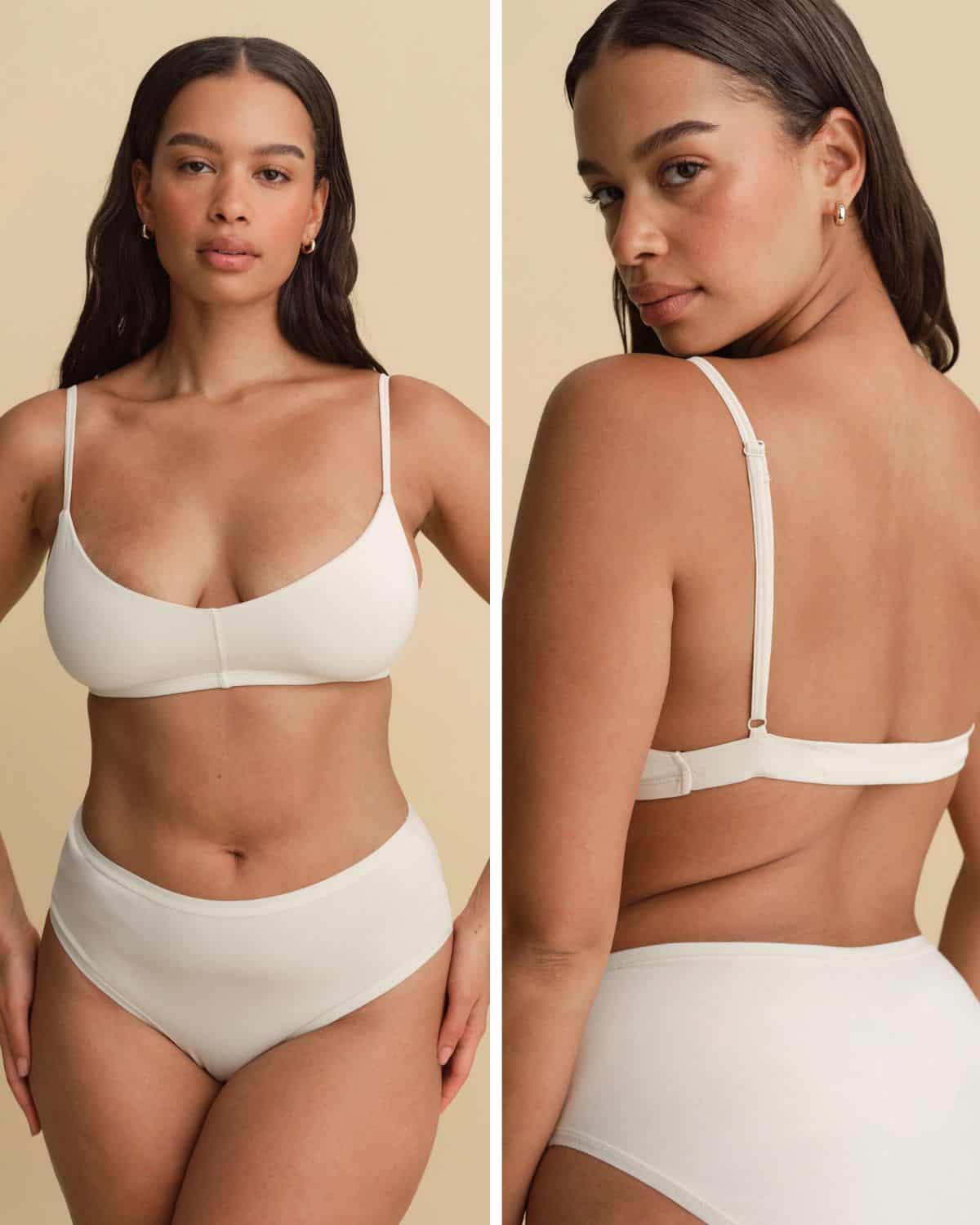
MATE’s Organic Comfort Triangle Bralette is the one I forget I’m wearing (and that’s the entire point).
It’s made from 95% GOTS-certified organic cotton with 5% spandex, so it feels incredibly soft and lightweight while still having enough stretch to stay comfortable for hours.
I’ve worn mine to lounge, relax, and even sleep in, and it never feels restrictive or fussy. At the same time, the fabric feels surprisingly durable and substantial for such a minimal bralette.
The simple triangle shape is flattering under V-necks and tanks, and the adjustable straps make it easy to get the fit just right.
Price
$44 | XS–XL | A–DD Cups
Materials
95% GOTS-Certified Organic Cotton | 5% Spandex
location/shipping
United States | Ships Internationally
Why it made my list
- Ultra-soft organic cotton with comfortable stretch.
- Durable fabric that still feels lightweight.
- Minimal triangle shape with adjustable straps.
- Great for lounging, sleeping, and everyday wear.
- Made without PFAS, BPA, formaldehyde, or pesticides.
my testing experience
- I genuinely forget I’m wearing it.
- Comfortable enough to sleep in.
- Perfect for lounging and relaxing.
- Super soft without feeling flimsy.
- Has held up really well with regular wear & washing.
Popular Brands That Did NOT Make My List
These are the bras I get asked about most. Here’s the material breakdown and why none of them passed.
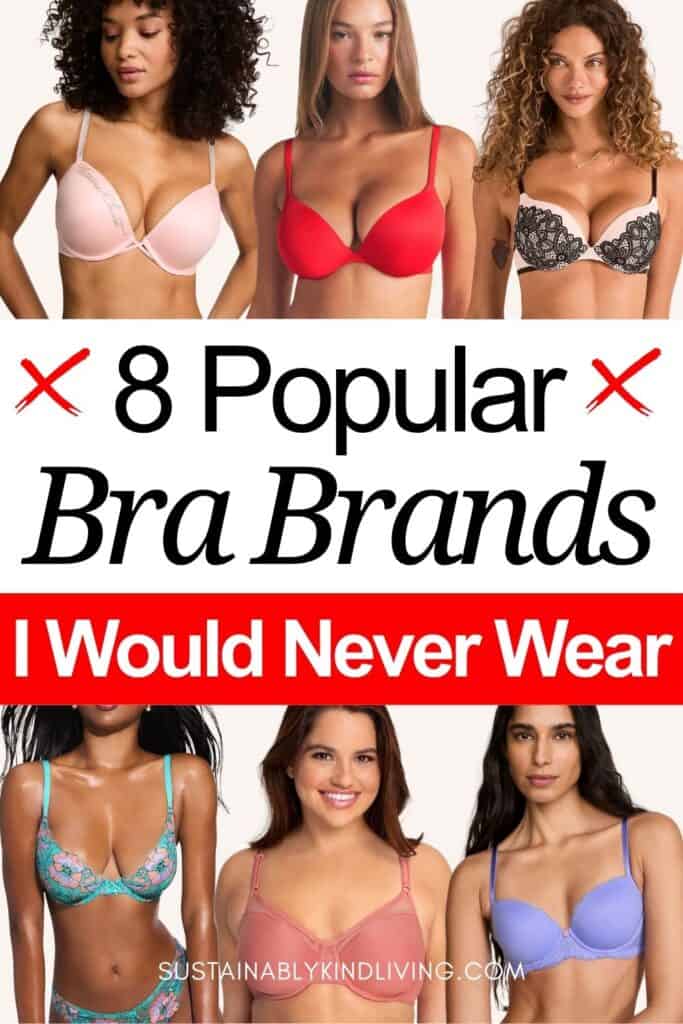
Victoria’s Secret
Why It Didn’t Qualify: Their bras run overwhelmingly on nylon, polyester, and spandex construction with polyurethane foam-padded cups, none of it disclosed beyond the fiber blend on the tag. No elastic sourcing, no dye information, no certification anywhere in the line.
Their PINK sub-brand was also named directly in Center for Environmental Health lab testing that found BPA at up to 22 times California’s Prop 65 safe skin-exposure limit.
Best Alternative: Julie May, for real underwire support without the undisclosed synthetic padding.
SKIMS
Why It Didn’t Qualify: SKIMS’ own fabric guide describes their signature “Fits Everybody” bras as a nylon-and-spandex blend, marketed with “buttery soft” and “breathability” language, both unregulated marketing terms. No certification, no elastic or dye disclosure anywhere on the product page.
Best Alternative: The Very Good Bra, for genuinely supportive, flattering shape without the undisclosed synthetic blend.
Savage X Fenty
Why It Didn’t Qualify: Across their bra line, fabric content runs 75-94% nylon with the remainder spandex, depending on style, essentially all synthetic. No dye, finish, or certification disclosure, and most styles include foam-lined cups with no padding material specified.
Best Alternative: Cottonique, for full coverage and support without a single synthetic fiber in the build.
Aerie
Why It Didn’t Qualify: Aerie’s mainline bras lean on recycled nylon and polyester blended with spandex, marketed with soft, buttery texture language, the same silky-language pattern covered in the greenwashing section above. Their sports bras were also named in CEH’s BPA testing, same lab, same violation.
Best Alternative: Mate The Label, for that same soft, forget-you’re-wearing-it feel, minus the undisclosed synthetic finish.
Natori
Why It Didn’t Qualify: Natori’s bras run 65-80% nylon with spandex, and a 100% polyester cup lining across their core styles. Fully synthetic construction at a premium price point, with no certification or dye disclosure to justify it.
Best Alternative: Julie May, for that same structured, luxury feel in organic Pima cotton and silk instead.
Adore Me
Why It Didn’t Qualify: Adore Me’s bras are built from 84-95% nylon lace and mesh with spandex, all synthetic, no natural fiber content disclosed anywhere in the construction, and no certification behind any of it.
Best Alternative: Q for Quinn, for feminine lace and pointelle detail in GOTS-certified organic cotton instead.
Amazon Essentials
Why It Didn’t Qualify: CEH’s press release names Amazon Essentials directly among the brands whose bras tested with high BPA levels. No certification, no disclosed elastic or dye process, sold at a price point that depends on cutting exactly those corners.
Best Alternative: Pact, for the same low price point without the BPA.
Fruit of the Loom
Why It Didn’t Qualify: The bra Mamavation tested wasn’t even a synthetic style; it’s their Fit for Me Women’s Plus-Size Wireless Cotton Bra, “Cotton” in the name, and it came back with 24 ppm organic fluorine, a PFAS indicator, well above the lab’s 10 ppm threshold. “Cotton” on the label tells you about the main fabric, nothing about the elastic, thread, or finishing chemicals.
Best Alternative: Pact, for genuinely disclosed, GOTS-certified organic cotton instead.
Toxic Materials & Finishes Hiding In Bras, Explained
Bras can contain a lot more than the fabric listed on the label.
Synthetic fibers, chemical finishes, dyes, foam padding, adhesives, elastic, and metal hardware can all introduce substances you may not realize are sitting against your skin for hours at a time.
Here are the main ones I look for when vetting non-toxic bras.
Polyester, Nylon & Spandex
Polyester and nylon are petroleum-based plastics, while spandex/elastane is a polyurethane-based synthetic fiber.
My concern isn’t that every synthetic bra is automatically toxic. It’s that these fibers can involve chemical finishes and additives that brands rarely disclose, while also increasing the amount of plastic sitting directly against the skin.
PFAS
PFAS are a large class of persistent chemicals sometimes used in textiles to repel water, oil, and stains.
They’re concerning because some PFAS are linked to hormone disruption, immune effects, reproductive problems, and certain cancers, and they’re extremely persistent in both the environment and the human body.
Azo Dyes
Azo dyes are among the most widely used textile dyes.
Not all azo dyes are harmful, but certain types can break down into aromatic amines, some of which are carcinogenic and restricted in clothing sold in the EU under REACH.
Disperse Dyes
Disperse dyes are commonly used to color synthetic fabrics such as polyester.
Certain disperse dyes are known skin sensitizers and can trigger allergic contact dermatitis, which is especially relevant if your bra leaves you itchy, red, or irritated.
Formaldehyde
Formaldehyde-based resins can be used to make textiles wrinkle-resistant, permanent-press, or easier to care for.
Formaldehyde is a known human carcinogen (classified Group 1 by IARC) and can also irritate the skin and trigger contact dermatitis in sensitive people.
Antimicrobial & Odor-Resistant Finishes
Bras marketed as antimicrobial, anti-odor, or bacteria-resistant may be treated with silver-based antimicrobial agents or other chemical treatments, including, in some cases, triclosan, which the EPA still permits as a material preservative in textiles even though it’s been banned from consumer soaps.
The biggest problem for me is transparency. Brands often advertise the performance benefit without telling you exactly what chemical treatment was used to create it.
Polyurethane Foam
Polyurethane foam is commonly hidden inside molded, padded, and push-up bra cups.
It’s another petroleum-based plastic, and foam manufacturing can involve formaldehyde-based adhesives, flame retardants such as PBDEs in lower-quality flexible polyurethane foam (EPA notes these were phased out of U.S. production starting 2004 but can still enter the U.S. in imported foam products), and other additives, none of which are required to appear on a bra label. Padding is one of the least transparent parts of bra construction.
Adhesives
Molded and bonded bras can use adhesives to hold foam, fabric layers, and seams together.
The formulations are rarely disclosed, which means it can be almost impossible to know what chemicals are inside a bonded cup unless the brand specifically provides that information.
(No source link here; I couldn’t find a reliable source specifically on bra adhesive formulations. The disclosure gap is the actual claim, and it’s accurate, but there’s nothing authoritative to cite on the chemicals themselves.)
Nickel
Nickel can show up in hooks, sliders, rings, adjusters, front closures, and other metal bra hardware.
It’s one of the most common causes of allergic contact dermatitis and can cause itching, redness, and rashes exactly where the metal touches the skin.
Hidden Synthetic Trims
This is where “organic cotton bra” marketing gets tricky.
A bra can use 100% organic cotton for the main fabric while still containing polyester thread, spandex elastic, nylon lace, polyurethane foam, plastic adjusters, or synthetic hook-and-eye backing.
That’s why I never stop at the fabric percentage. For a bra to make my short list, I want to know what’s in the cups, lining, elastic, thread, padding, and hardware too.
Safest Materials To Look For In Bras, explained
For a safer bra, I look for natural fibers against the skin, fewer synthetic components, clearly disclosed padding and elastic, and as little unnecessary chemical finishing as possible.
There isn’t one perfect material for everyone. Support needs, breast size, and allergies all matter, but these are the materials I give the most weight to when vetting non-toxic bras.
Organic Cotton
Organic cotton is my first choice for everyday bras. It’s soft, breathable, and keeps petroleum-based fibers like polyester and nylon to a minimum.
I especially look for GOTS-certified finished garments because GOTS restricts the chemical inputs used during textile processing, including a ban on toxic heavy metals and other substances known to be harmful, not just how the raw cotton was grown.
Just remember that 100% organic cotton fabric doesn’t necessarily mean the entire bra is 100% cotton. Always check the elastic, thread, padding, lace, and closures too.
Silk
Silk is another natural fiber I like, particularly for cup linings and more structured bras.
It has a smooth, lightweight feel against the skin, and a peer-reviewed review of fabric selection for atopic and sensitive skin lists silk, alongside cotton, as one of the traditionally recommended fabrics for irritation-prone skin.
It also allows brands like Julie May to create traditional supportive bras without relying on polyester or nylon cup fabrics.
For anyone who wants something more structured than a cotton bralette, an organic cotton-and-silk combination can be a really nice option.
Tencel/Lyocell
Tencel, the branded version of lyocell, shows up in some bras too, especially linings and blends. It’s technically semi-synthetic: it starts as wood pulp, usually eucalyptus, and is chemically processed into fiber.
The reason it gets grouped with the safer options is the closed-loop solvent system that recovers over 99.8% of the chemical used, a real step up from the more toxic, open-loop process used for conventional rayon and viscose.
One caveat: that closed-loop process covers fiber production, not what happens after.
Dyeing and finishing happen downstream and aren’t automatically covered by the Tencel name, so the same dye questions below still apply. Generic “lyocell” with no branding or certification attached gets more scrutiny than branded Tencel.
Undyed and Certified-Dye Options
Dyes are one of the least visible parts of a bra and, per the concerns above, one of the more likely places to find azo dyes or disperse dyes that a brand never had to disclose.
The cleanest option is undyed. A handful of brands offer natural, undyed cotton bras for exactly this reason, no dye process to vet at all.
When color matters to you, I look for OEKO-TEX certified dyeing or a brand that states plainly that its dyes are tested against banned aromatic amines, the same 22 amines restricted under the EU’s REACH regulation, rather than just trusting that a pretty color is a safe one.
Natural Rubber Elastic
One of the hardest things to replace in a bra is the stretch.
Natural rubber wrapped in organic cotton is one of my favorite alternatives to conventional spandex and synthetic elastic.
As a natural biopolymer of isoprene units, it’s genuinely biodegradable, unlike synthetic rubber made from petroleum, which gives a bra stretch and recovery while keeping petroleum-based plastic fibers to a minimum.
The important exception is latex allergy. Natural rubber latex can cause allergic reactions in sensitized people, so it isn’t the right choice for everyone.
In that case, I look for bio-based elastane instead, elastane derived from renewable sources like corn rather than petroleum.
It’s still a synthetic manufacturing process, so it doesn’t remove the finishing-chemical question entirely, but it’s a meaningfully better starting material than conventional spandex.
Cotton or Cellulose Thread
Thread seems like a tiny detail until you realize how much of it is running through a bra.
Most conventional bras use polyester thread, even when the main fabric is cotton.
I give extra credit to brands using organic cotton or cellulose sewing thread because it eliminates another hidden synthetic component, one of the “hidden synthetic trims” that a fabric label alone won’t tell you about.
This is one of those details that tells me a brand has actually thought through the whole garment.
Natural-Fiber Linings & Padding
If a bra is lined or padded, I want to know exactly what’s inside it.
I prefer organic cotton or silk linings, double-layered fabric cups, no padding, or padding made from clearly disclosed natural fibers rather than hidden polyurethane foam, the same undisclosed foam additives and flame retardants covered above.
This is especially important with molded and push-up bras, where the outer fabric can tell you almost nothing about what’s actually sitting inside the cup.
Nickel-Free or Clearly Disclosed Hardware
Hooks, rings, sliders, and underwire are small components, but they matter if you have sensitive skin or a metal allergy.
Nickel is one of the most common causes of allergic contact dermatitis, and hardware is one of its most common everyday sources.
I look for nickel-free hardware, stainless steel where it’s disclosed, or metal that is securely covered so it isn’t sitting directly against the skin.
Underwire deserves its own note. It’s almost always a metal core with a coating, usually nylon, polyester, or epoxy paint, and that coating is what actually keeps the wire off your skin.
Once it wears through, which is a common failure point in older or cheaper bras, you’re back to direct metal contact even in a bra that started out nickel-free.
If underwire coating durability isn’t something a brand addresses, or if you’ve had irritation from wires before, wireless removes the question entirely.
And if I’m evaluating a plastic-free bra, I go one step further and check what the adjusters, hook-and-eye backing, and other tiny components are made from too.
What About a Little Spandex?
I don’t automatically eliminate a bra because it contains a small amount of spandex or elastane.
For example, Pact and MATE The Label use about 5% stretch fiber with mostly organic cotton. That can make a bra easier to fit, stretchier, and more familiar for someone transitioning away from mostly synthetic bras.
For me, it comes down to the whole material profile. A 95% organic cotton bra with 5% elastane is very different from a bra made primarily from polyester, nylon, and polyurethane foam.
That’s why the bras on this list aren’t all identical. Some are nearly entirely natural, while others make a small material compromise for stretch, fit, or support. I’d rather explain that difference clearly and let you decide what matters most for your body.
Greenwashing in Bras, explained
The marketing language around bras is doing a lot of work to make synthetic and low-effort materials sound like something they’re not. Here’s what I actually watch for.
“Silky” doesn’t mean silk.
Words like silky, buttery, or luxe-feel almost always describe polyester or a polyester blend, not the fiber silk.
It’s a texture claim, not a material claim, and that distinction is deliberate: “silky” can come from the fiber itself, the yarn, or a surface finish, and brands rarely say which.
“Made with organic cotton” can mean almost nothing.
There’s no floor on how much organic cotton has to be in a product before a brand can say “made with organic cotton” on the label, front and center, while the actual percentage sits in fine print or nowhere at all.
Even under GOTS, the certification with real teeth, there’s a meaningful difference between the “organic” grade (95%+ organic fiber) and “made with organic” (as low as 70%), and that’s the certified version. An uncertified “made with organic cotton” claim could be almost anything.
The small-percentage synthetic gets buried on purpose.
This is the organic cotton claim’s twin problem. A bra can be marketed with wildflower photography and kraft paper packaging while the product page, in small print, says something like 97% organic cotton, 3% elastane.
That 3% isn’t nothing; it’s synthetic, petroleum-derived, and it’s exactly why “mostly organic” and “organic” aren’t the same claim.
“Recycled” doesn’t tell you what was actually recycled from.
Recycled polyester or nylon can come from ocean plastic, post-consumer bottles, or factory floor scraps that were never headed for a landfill in the first place, and the label rarely says which.
It’s still plastic against your skin either way; the recycled sourcing is an environmental claim, not a safety one, and brands let those two things blur together.
“Breathable” is not a regulated term.
There’s no industry standard that defines what “breathable” actually means, so a fabric with any measurable moisture transfer at all can legally be marketed as breathable, even if it performs badly in practice.
Polyester in particular gets this treatment often: a looser weave gets called breathable when nothing about the fiber itself is managing moisture the way a natural fiber does.
“Non-toxic” and “clean” are unregulated too.
Nothing stops a brand from printing “non-toxic” or “clean” on a bra with no testing behind it; these aren’t legally defined terms the way “organic” is through USDA/GOTS.
If a brand makes that claim, I want a certification backing it up (OEKO-TEX, GOTS, MADE SAFE), not just the word on the tag.
One certification gets stretched to cover the whole bra.
A brand might hold GOTS certification for its cotton and let that certification imply the whole product- elastic, thread, dye, hardware included- is equally vetted. It usually isn’t.
This is the same “hidden synthetic trims” problem from earlier in this guide, just repackaged as a sustainability claim instead of a safety one.
The pattern across all of these: the word is doing the reassurance, and the actual material, percentage, or process is left vague on purpose. That’s exactly why I don’t stop at a headline claim for any bra on this list.
Certifications to Look For In Bras
Certifications aren’t interchangeable, and none of them cover everything. Here’s what each one actually checks, and what it doesn’t.
GOTS (Global Organic Textile Standard)
GOTS covers the fiber and the processing behind it.
To carry the label, a product needs a minimum organic fiber content, plus restrictions on the chemical inputs used at every stage of processing, including a ban on toxic heavy metals, only GOTS-approved dyes and auxiliaries, and social criteria across the supply chain.
What it doesn’t automatically cover: elastic, hardware, or trims that aren’t part of the certified organic fiber content, unless the brand has separately certified those too.
OEKO-TEX Standard 100
OEKO-TEX tests the finished product for harmful substances, not how the raw fiber was grown.
When applied to the whole garment rather than just the main fabric, it means the thread, elastic, and trims have also been tested for things like formaldehyde, restricted azo dyes, and nickel release, with stricter limits the more intensive the skin contact.
The gap: it doesn’t require organic fiber, or confirm anything about how or where the product was made beyond the chemical testing itself.
MADE SAFE
MADE SAFE screens a product against a list of thousands of banned or restricted substances, including known and probable carcinogens, endocrine disruptors, and hazardous flame retardants, and it requires full disclosure of every substance in the formulation, not just the visible ingredient list.
It shows up far less often on bras specifically than GOTS or OEKO-TEX, but it’s worth checking for.
What none of them guarantee on their own
None of these certifications require nickel-free hardware. That’s a separate, voluntary claim a brand has to make explicitly; GOTS and OEKO-TEX both allow trace nickel within defined limits rather than banning it outright.
And holding one certification for one component (organic cotton fabric, for example) doesn’t mean the rest of the bra- elastic, thread, dye, hardware- was held to the same standard.
I check what’s actually certified, not just whether a certification logo appears somewhere on the page.
How I Researched, Tested & Updated This Guide
When you read a “best non-toxic bras” list online, it can be hard to tell whether the bras were actually worn and tested or simply pulled from brand websites and bestseller lists.
That is not how I build guides at Sustainably Kind Living. Over the last five years, I have purchased, been gifted by brands, and even received from family more than 19 bras and bralettes marketed as non-toxic, organic, natural, or low-tox.
These six are what survived that process.
1. Researching the Brand
Before a bra makes it anywhere near this guide, I research the company behind it.
Every brand featured talks to me one-on-one, either by phone or email, and has provided all the paperwork, certifications, and material documentation I’ve asked for so I can verify claims myself rather than take a product page at its word.
If a company leans heavily on words like “clean,” “natural,” or “organic” but won’t tell me what the rest of the bra is made from, it doesn’t make this list.
2. Reviewing the Whole Bra
Bras are made from much more than the cup fabric, so I also look at the lining, elastic, thread, lace, padding, hardware, underwire, trims, and closures whenever that information is available.
I also verify certifications and look for information about PFAS, formaldehyde, dyes, synthetic finishes, and other treatments.
That is often where the difference between a genuinely thoughtful bra and good marketing becomes obvious.
3. Testing Every Bra in Real Life
Every bra on this list has been worn and tested by me in real life.
I paid attention to support, lift, coverage, band comfort, straps, softness, breathability, fit, stretch, and how the materials actually felt against my skin.
And because bras serve very different purposes, I wore them the way I would naturally use them: under T-shirts, lounging at home, running errands, sleeping, breastfeeding, walking, light workouts, and regular all-day wear.
Several have been in my wardrobe for years, so I can also speak to durability and how they hold up beyond the first few wears.
4. Testing Across Changing Bust Sizes
I’ve also been breastfeeding for the last two years, which gave me a very real opportunity to test these bras through significant changes in breast size and support needs.
A bra that worked beautifully for me at a smaller cup size did not always perform the same way with a fuller bust. That experience made me pay much closer attention to cup coverage, band support, lift, separation, strap comfort, and how well each design accommodates larger breasts.
I still dig through verified feedback from women across a wide range of band and cup sizes, especially sizes I cannot personally test. That helps me spot consistent fit patterns and give more useful sizing guidance than my experience alone could provide.
5. Choosing the Final Six
A bra does not make this list simply because it is organic cotton or because I liked wearing it.
Each finalist needed a clear reason to be here, whether that was exceptional underwire support for larger breasts, unusually plastic-free construction, sensitive-skin-friendly materials, affordability, feminine organic cotton, or an ultra-soft bralette I can practically forget I am wearing.
More importantly, these are the bras and brands I find myself recommending most often to family, friends, and SKL readers when they ask me what I would actually buy.
That is why this guide stays intentionally short. Out of more than 19 bras and bralettes I have tried over the last five years, these six are the ones I genuinely recommend.
6. Keeping This Guide Updated
This guide is not static.
I continue testing new non-toxic bras and revisiting the brands already featured as materials, certifications, designs, and availability change.
If a brand changes its construction, a favorite disappears, or I test something that genuinely performs better, I update the list.
Most Common Questions On Non-Toxic Bras
There isn’t one certification that automatically makes a bra “non-toxic.”
For SKL, I look for bras made with safer, well-disclosed materials, minimal synthetic components and chemical finishes, and credible certifications or testing rather than relying on vague marketing claims.
There isn’t one universally safest bra material, but I generally prioritize organic cotton and silk, especially for fabric sitting directly against the skin.
GOTS-certified textiles are particularly helpful because the standard goes beyond organic fiber content and restricts chemical inputs throughout textile processing.
Some textiles can contain PFAS, particularly when they’re treated for water, stain, or oil resistance, but that doesn’t mean every bra contains them.
I prefer brands that explicitly avoid PFAS or use credible standards such as GOTS or OEKO-TEX, which include PFAS restrictions or testing within their chemical requirements.
For me, organic cotton bras are a better starting point because cotton is breathable, soft, and less reliant on petroleum-based fibers such as polyester and nylon.
But “organic cotton” alone isn’t enough; I still check the elastic, thread, padding, dyes, and finishes, and I give extra weight to finished-product certifications such as GOTS.
No. A bra can have a 100% organic cotton body and still contain spandex or elastane, polyester thread, nylon lace, synthetic elastic, foam padding, or plastic hardware.
If plastic-free construction matters to you, look at the entire materials list rather than just the percentage printed beside “cotton.”
Yes, although the options are much more limited because bras need stretch and support. The best synthetic-free bras I found replace conventional elastane with materials such as natural rubber wrapped in organic cotton, and some even use cotton or cellulose thread instead of polyester.
100% cotton is one of the most commonly recommended clothing materials for eczema-prone skin because it’s soft, breathable, washable, and absorbs moisture well.
I’d also look closely at dyes, latex, elastic, and textile finishes since irritation can come from more than the main fabric itself.
A bra rash can come from friction, heat, and sweat, tight elastic, textile dyes, formaldehyde finishing resins, glues, or other fabric additives, and some people also react to latex or specific fibers.
If irritation keeps returning or becomes severe, a dermatologist can help identify allergic contact dermatitis and may recommend patch testing.
Yes, but construction and fit matter just as much as fiber content. Look for a firm supportive band, properly sized cups, wider straps, multi-part cups, and, if you prefer it, underwire; research on larger-breasted women also shows that better-fitting support garments can meaningfully improve breast support.
There’s no scientific or clinical evidence that wearing an underwire bra increases breast cancer risk, according to the American Cancer Society.
The more practical concern is fit: an underwire that digs, rubs, or sits on breast tissue can simply be uncomfortable, so I focus on proper sizing and materials rather than avoiding underwire out of fear.
Still Deciding?
If you’re torn between a few, here’s the quickest way I’d narrow it down:
- Q for Quinn → Prettiest natural-fiber option with feminine pointelle and light everyday support.
- Julie May → Best choice if you want real underwire structure and fuller-bust support.
- Pact → Easiest budget-friendly pick for A–D cups, T-shirts, lounging, and light activity.
- Cottonique → My first choice for sensitive skin, eczema, or latex/spandex sensitivities.
- The Very Good Bra → Strongest pick if plastic-free construction matters most but you still want support and shape.
- MATE the Label → Softest, barely-there option for lounging, sleeping, and relaxed everyday wear.
Danielle’s Final Thoughts On Non-Toxic Bras
My underwear drawer is entirely non-toxic bras and underwear at this point. After nearly a decade of researching this space, that’s not a coincidence; it’s the standard I hold my own drawer to.
These are the bras I actually reach for: nursing my youngest at 2 am, chasing a toddler through the yard, the one I forget I’m wearing under a T-shirt on a normal Tuesday, and the one I put on for date night.
A bra has to survive real life before it earns a spot on this list, not just look good on a product page.
If you’re starting from a drawer full of bras you’ve never thought twice about, that’s normal; most of us started there. You don’t need to overhaul everything this week. Pick the bra you reach for most often and start there.
I’ll keep wearing these, keep testing new ones as they come across my desk, and keep this guide updated as materials, certifications, and my own family’s needs change.
If something on this list stops holding up, or something better comes along, you’ll hear about it here first.
Continue Your Non-Toxic Intimates Drawer
- Non-Toxic Nursing Bras: Explore our favorite non-toxic nursing bras made with organic and natural materials for comfortable support throughout pregnancy, breastfeeding, and postpartum.
- Non-Toxic Sports Bras: Looking for more support? See the best non-toxic sports bras we have tested for workouts, with options made from organic cotton, TENCEL, and other carefully vetted materials.
- Organic Cotton Underwear: Shop the best organic cotton underwear we have researched and tested for breathable fabrics, safer materials, comfort, and everyday wear.
- Sustainable Lingerie: Discover our favorite sustainable lingerie brands using organic, natural, and lower-impact materials for bras, bralettes, underwear, and more.
- Organic Men’s Underwear: Find our top organic men’s underwear brands using breathable organic cotton and thoughtfully chosen materials for comfortable everyday basics.
📌 Save This Guide For Later
Save this guide for the next time you’re shopping for a bra and want to quickly check which materials, certifications, and brands are actually worth choosing.
Sources & Further Reading
If you’re like me and want to understand what’s actually going on with bra materials, not just what brands claim, these are some of the resources I found most helpful while researching this guide:
- FTC, Green Guides: Federal Trade Commission guidance on environmental marketing claims, including why “organic” and “sustainable” remain largely unregulated for textiles.
- U.S. EPA, Our Current Understanding of the Human Health and Environmental Risks of PFAS: EPA overview of PFAS health effects, including hormone disruption, immune impacts, and cancer risk.
- U.S. EPA, Flame Retardants Used in Flexible Polyurethane Foam: EPA data on PBDE flame retardants in foam padding and their phase-out timeline.
- OSHA, Formaldehyde Hazard Recognition: Federal summary confirming formaldehyde’s IARC Group 1 human carcinogen classification.
- NIH/StatPearls, Nickel Allergy: Clinical overview of nickel as the most common cause of allergic contact dermatitis.
- DermNet NZ, Textile Contact Dermatitis: Dermatology reference on disperse dyes and finishing chemicals as the actual source of most fabric-related skin reactions.
- European Chemicals Agency, Annex XVII Entry 43 (Azocolourants and Azodyes): The EU regulation restricting azo dyes that release carcinogenic aromatic amines in skin-contact textiles.
- Global Organic Textile Standard, Ecological and Social Criteria: Official GOTS documentation on chemical input restrictions across the certified supply chain.
- OEKO-TEX, Standard 100: Official documentation on what OEKO-TEX Standard 100 tests for and how certification limits scale with skin contact.
- MADE SAFE, Made Safe Certification: Official documentation on MADE SAFE’s banned/restricted substance screening.
- Fabric Selection in Atopic Dermatitis: An Evidence-Based Review, American Journal of Clinical Dermatology: Peer-reviewed review recommending silk and cotton for irritation-prone skin.
- Antimicrobial Properties of Hemp Fabric, Journal of Nanotechnology: Peer-reviewed research on hemp’s natural antimicrobial properties.
- Center for Environmental Health, New Testing Shows High Levels of BPA in Sports Bras and Athletic Shirts: Independent lab testing naming PINK by Victoria’s Secret, Aerie, and Amazon Essentials among brands with high BPA levels.
- EHN.org, Evidence of “Forever Chemicals” Found in Everyday Bras: Mamavation/EHN lab testing on everyday (non-sports) bras, naming Fruit of the Loom among the highest-fluorine brands and Cottonique as non-detect.
- Mamavation, Bras Tested for Indications of PFAS “Forever Chemicals”: Full raw lab results by brand and product, including the Fruit of the Loom “Cotton Bra” specifically.
- The Very Good Bra, The 100% Cotton Bra Hunt: Industry breakdown of why “100% cotton” marketing almost never covers elastic, lining, or thread.
- The Conversation, “Silky” Doesn’t Mean It’s Made From Silk: Academic breakdown of vague comfort-word marketing in textiles.
This post was graciously sponsored by Q for Quinn. As always, we only work with brands that we 100% stand behind. Would you like to sponsor one of our sustainable round-ups? Contact us here.

Steal My Non-Toxic Cleaning Checklist!
Believe us, it’s the BEST…. and it’s free. Does it really get any better than that?! Sign up for our newsletter and get this free checklist to clean your home without any harmful chemicals!