 Shop My Favorite Non-Toxic Gifts Of 2026!
SKL is reader supported. When you buy through links on our site, we may earn affiliate commission. Learn more here.
Five years ago, an SKL reader emailed me after a breast cancer scare and asked a question I honestly hadn’t thought much about at the time: Where can I find a truly non-toxic sports bra?
That email sent me down a rabbit hole researching the fabrics, dyes, finishes, elastics, and performance treatments used in activewear, and I’ve been testing options ever since.
Over the last five years, I’ve ordered and tested more than 15 sports bras marketed as non-toxic, organic, or made with natural fibers.
I looked closely at materials, certifications, chemical testing, support, comfort, fit, durability, and how they actually perform during workouts.
Some have only been in rotation for a shorter time, while others I’ve worn for four or five years, which has given me a much better sense of what actually holds up.
SKL Best Non-Toxic Sports Bras (Quick Picks)
- Best Full-Support Pick For Large Breasts: Q for Quinn
- Best For Medium-Impact Workouts: Mate The Label
- Best Buttery-Soft Non-Toxic Sports Bra: Tripulse
- Best For Sensitive Skin (Latex-Free): Cottonique
- Best For Low-Impact Workouts: Pact
- Best For High-Impact Workouts: Reprise Activewear
This list is intentionally short, with just 6 of the best non-toxic sports bras that genuinely earned a spot after testing, researching, and comparing more than 15 options over the years.
I do not think shopping for a safer sports bra should mean sorting through dozens of nearly identical recommendations or trying to decode every fabric label yourself.
Each bra here has a clear reason for making the cut, whether that is better support, cleaner materials, sensitive-skin-friendly construction, high-impact performance, or long-term durability.
My Goal Is To Make The Decision Simple: What is actually worth buying, who each bra is best for, how it performs, and where the tradeoffs are.
Best Non-Toxic Sports Bras: At A Glance Comparison
(Mobile Users) Scroll to see full comparison →
| Brand | Support | Impact | Best For | Materials | Price |
|---|---|---|---|---|---|
| Q for Quinn | Full Bust Support | Low-Medium | Larger breasts / C–G cups | 100% organic cotton + natural rubber/cotton elastic | $64 |
| Mate The Label | Medium / double-layered | Medium | Broad cup range + snug, stretchy fit | 92% organic cotton + 8% spandex | $58 |
| Tripulse | Light–Medium Adaptive | Low-Medium | Odor resistance + long-term wear | 86% TENCEL™ Lyocell +14% recycled elastane | $150 |
| Cottonique | Light | Low | Sensitive skin + latex allergies | 100% organic cotton + latex/spandex-free elastic | $44 |
| Pact | Light shelf-bra support | Low | Smaller busts + yoga/Pilates | 90% organic cotton + 10% spandex | $28 |
| Reprise Activewear | Maximum / High Support | High | HIIT, running & high-intensity workouts | 85% biodegradable polyamide + 15% recycled spandex | $89 |
Safe vs. Not
Toxic Materials & Finishes To Avoid In Sports Bras
- Synthetic-Heavy Fabrics → Polyester, nylon, and recycled versions are still plastic-based fibers. A little elastane for stretch is different from a bra made almost entirely from synthetics.
- PFAS Treatments → Sometimes used for water, stain, or performance resistance. Look specifically for PFAS-free claims or testing.
- Mystery Antimicrobial/Anti-Odor Finishes → If a bra says “antimicrobial” or “odor control,” I want to know what creates that effect; it usually isn’t good.
- Undisclosed Performance Finishes → “Buttery soft,” moisture-wicking, cooling, and quick-dry are benefits, not ingredient lists. Look for brands that disclose treatments or test the finished fabric.
Safest Materials To Look For In Sports Bras
- GOTS-Certified Organic Cotton → My top choice for minimizing synthetic fibers and stricter processing standards.
- TENCEL™ Lyocell → A softer, performance-friendly option when you want more of that silky activewear feel.
- Minimal, Clearly Disclosed Stretch Fibers → Small amounts of spandex/elastane can provide necessary support without making up most of the bra.
- Finished-Fabric Testing → Look for OEKO-TEX® Standard 100, PFAS/BPA testing, and clearly disclosed dyes and treatments.
Scroll past the brand reviews for a full breakdown of the most toxic materials & finishes, popular brands we do not recommend, the safest materials to look for, greenwashing in the sports bra industry, and so much more.
I personally tested every sports bra featured below, wearing them for the types of movement they were actually designed for, from running and HIIT to cycling, lifting, yoga, Pilates, hiking, and everyday wear.
Beyond workout performance, I compared materials, fit, support, comfort, durability, certifications, chemical testing, and brand transparency. Let’s jump in.
The Best Non-Toxic Sports Bras, Reviewed
1. Q for Quinn | Best Organic Cotton Sports Bra For Large Breasts
Best For: Large breasts, fuller busts, and anyone wanting a supportive organic cotton sports bra.
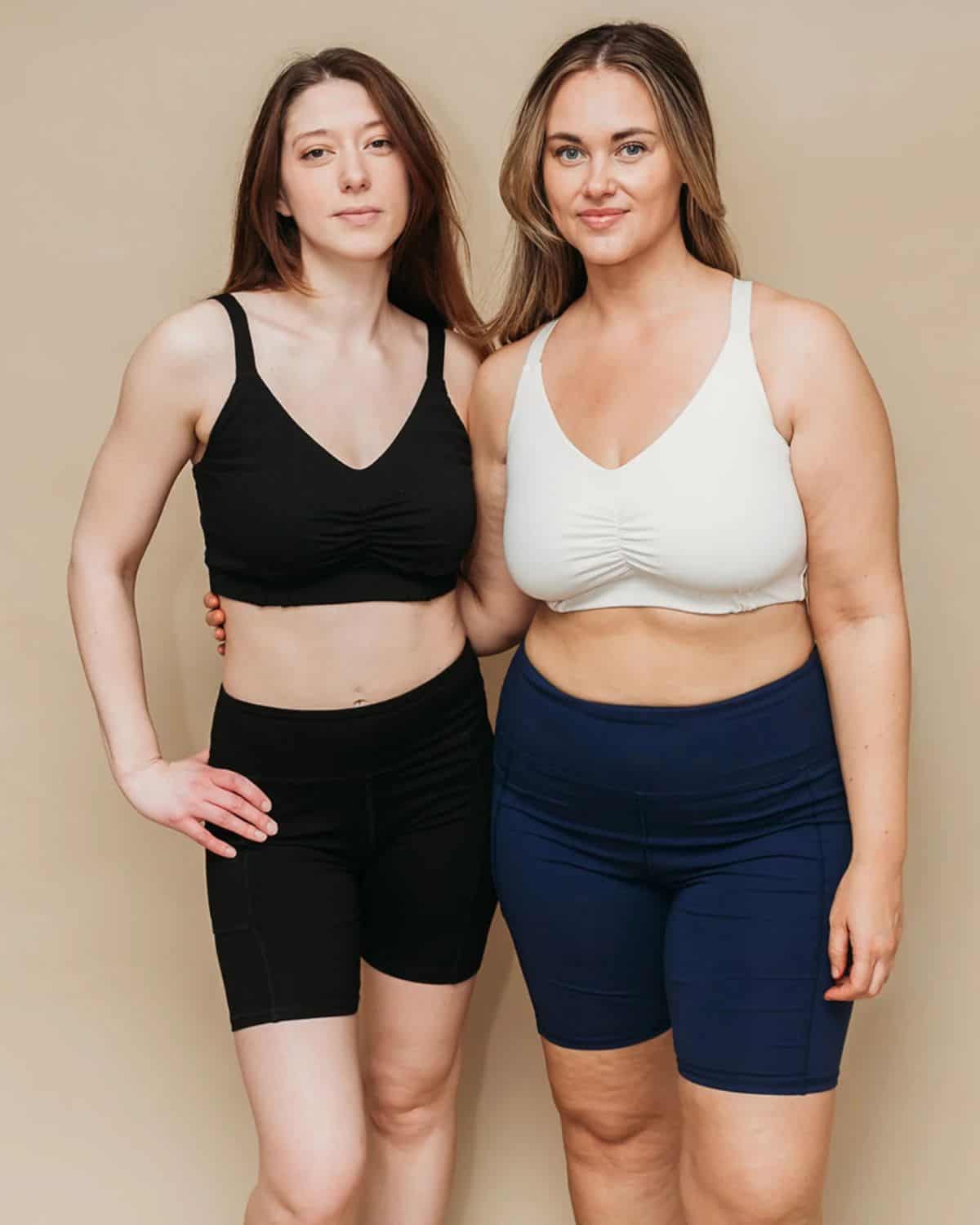
If you’re looking for the best non-toxic sports bra for a fuller bust, Q for Quinn’s Organic Full Bust Sports Bra is one of my top picks.
As a breastfeeding mom, I need real support, and I’ve found this one supportive enough for everything from higher-impact workouts to Pilates, walks, and lounging.
It’s made from 100% GOTS-certified organic cotton with natural rubber and organic cotton elastic, so there’s no polyester, elastane, or plastic.
The wire-free design gives good coverage without digging in; the straps can be worn straight or crossed for extra support, and there are pockets for optional pads.
Just note that the natural rubber means it isn’t suitable for anyone with a latex allergy.
Price & Size
$64 | XS-3XL | B-G Cup
materials
100% Organic Cotton | Trims & Underband: 50% Natural Rubber, 50% Organic Cotton | Thread: 100% Organic Cotton
location/shipping
United States/Canada | Ships Internationally
Why It Made My (short) List
- The most comfortable and supportive full-bust organic cotton sports bra I tested.
- Fantastic reviews across a wide range of sizes, from B cups to G cups.
- Made without polyester, elastane, or plastic, using GOTS-certified organic cotton and natural rubber.
- Supportive enough for workouts, but comfortable enough for walking, Pilates, and everyday wear.
My testing experience
- Great support for my fuller bust.
- Comfortable without digging in.
- Stayed supportive during higher-impact workouts.
- Soft and breathable for everyday wear.
- Versatile enough for workouts and lounging.
2. Mate The Label | Best Organic Cotton Sports Bra For Medium-Impact Workouts
Best For: Anyone who wants a snug, stretchy organic cotton sports bra with medium support and a broad A–DDD cup range.
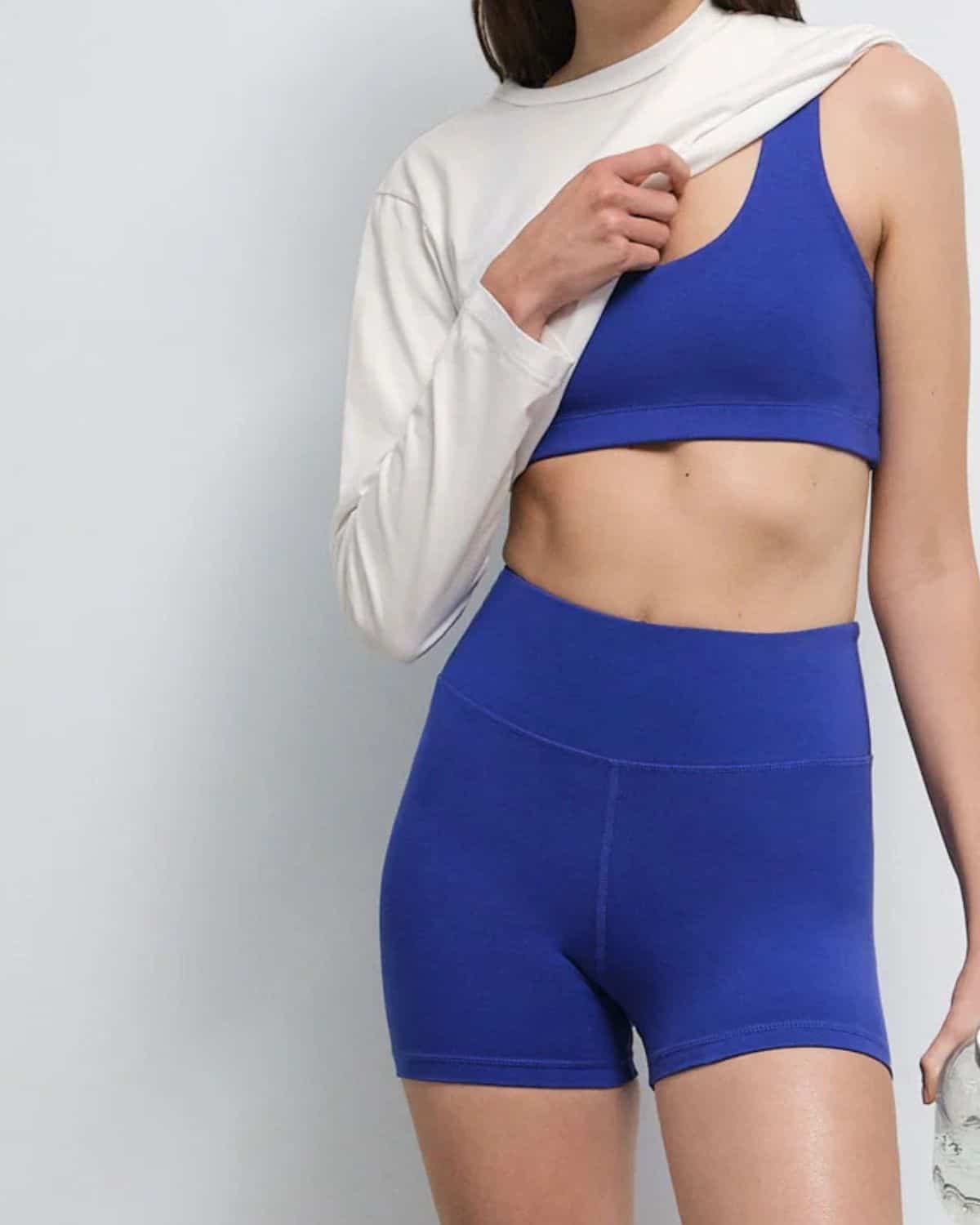
Mate The Label’s Organic Stretch Sports Bra is one of the best non-toxic Lululemon sports bra dupes I have found.
It has 783+ reviews and a 4.6-star rating, and my experience was just as good.
The 92% GOTS-certified organic cotton and 8% spandex blend is soft, breathable, and stretchy, while the double-layered design kept everything in place during workouts.
I also love the clean racerback shape and 9 color options, including coral and sky blue. The color options in this space are seriously lacking, but Mate The Label pulled through.
The fit does run snug: I ordered a small for my B cup, and I’d size up if you’re between sizes or want more room in the band.
Price & Size
$58 | XS-XL | A-DDD Cup
materials
92% GOTS-Certified Organic Cotton | 8% Spandex
location/shipping
United States | Ships Internationally
Why It Made My (short) List
- Soft, stretchy organic cotton blend that moves well.
- Double-layered support that keeps everything in place.
- Great color selection with 9 shades.
- One of the best Lululemon-style alternatives I tested.
My testing experience
- Soft, stretchy, and comfortable.
- Kept everything in place during workouts.
- Supportive without feeling overly restrictive.
- Fit ran a little snug in my usual size.
- Loved the clean fit and color options.
3. Tripulse | Best Buttery-Soft Non-Toxic Sports Bra
Best For: Anyone who wants that ultra-soft, silky activewear feel without relying on polyester, plus excellent odor resistance and long-term durability.
Use the discount code 15SKL to save 15%!
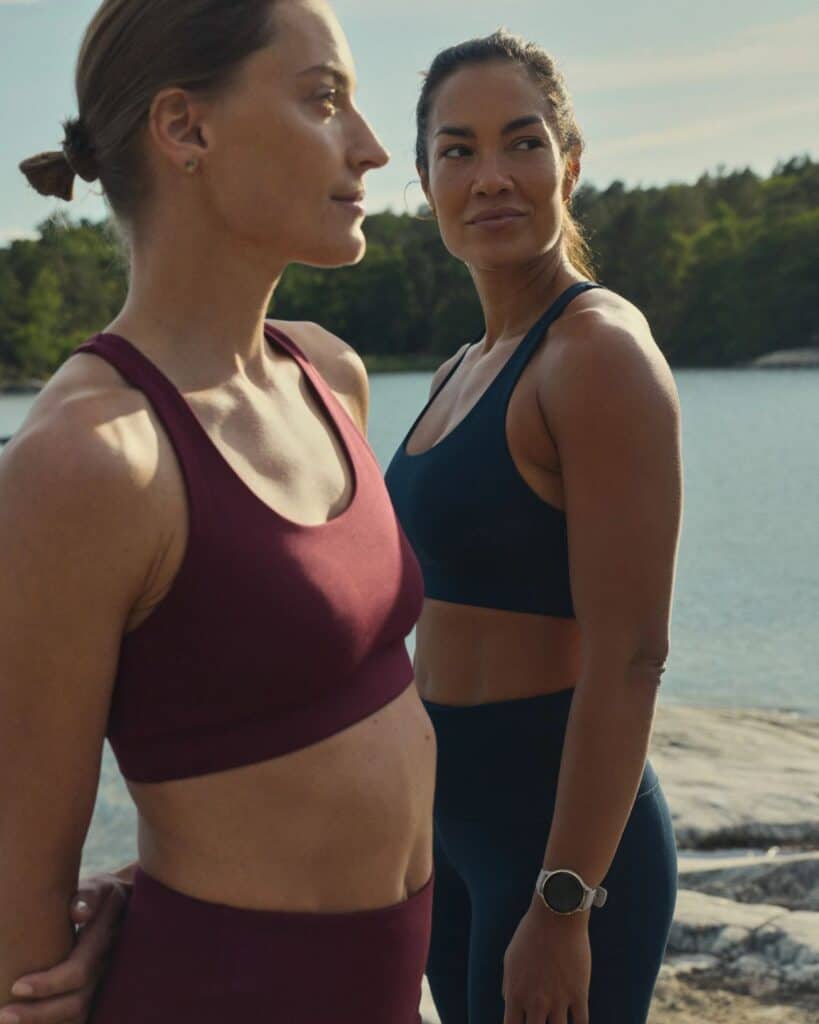
If you’re looking for one of the best non-toxic sports bra options for long-term performance (and no stink), the Tripulse Next Gen Tencel Sports Bra is hard to beat.
I’ve worn mine for over four years for cycling, weightlifting, hiking, and everyday workouts, and it still has no snags, pulls, or visible wear.
The 86% TENCEL™ Lyocell fabric is silky, breathable, and genuinely buttery soft, giving you that smooth, luxe feel people love in conventional activewear but with a much cleaner material profile.
It’s also naturally odor-resistant, so I wash it far less often, and it never holds onto smell.
It’s OEKO-TEX® Standard 100 certified and independently tested with zero PFAS, PFOA, and BPA detected.
Price & Size
$149 | XS – 6XL | A-G Cups
materials
86% TENCEL™ Lyocell | 14% ROICA® EF385 (Recycled Elastane)
location/shipping
Sweden | Ships Worldwide
Why It Made My (short) List
- Silky, buttery-soft TENCEL™ fabric.
- Naturally odor- and bacteria-inhibiting.
- Independently tested for PFAS and BPA.
- Excellent XXS–6XL size & color range.
- Exceptional quality and durability.
My testing experience
- Worn regularly for over 4 years.
- Still no snags, pulls, or visible wear.
- Never seems to hold onto odor.
- Soft and comfortable even when sweating.
- Great for cycling, lifting, and hiking.
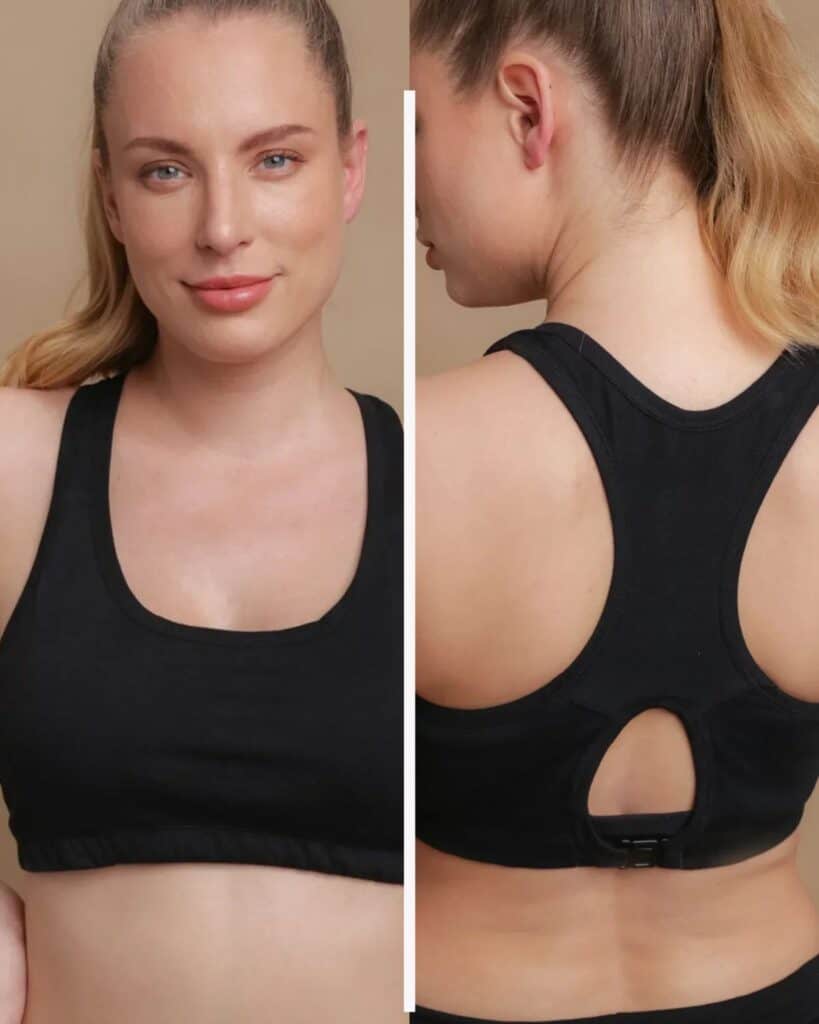
4. Cottonique | Best Non-Toxic Sports Bra For Sensitive Skin
Best For: Anyone with sensitive skin, latex allergies, or who wants a synthetic-free sports bra.
Use the discount code SKL15 to save 15%!
Cottonique takes the “non-toxic” part of sports bras further than almost any brand I tested.
This Racerback Croptop Bra is made from 100% organic cotton with cotton thread and a cotton label, plus latex-free and spandex-free elastic.
It’s also free from synthetic fibers, harsh dyes, bleach, resins, and formaldehyde.
I’ll be upfront: it has very little stretch, which I’m used to with Cottonique, but I still found it surprisingly comfortable and lightweight.
For me, the biggest win is knowing there’s almost nothing questionable sitting against my skin while I work out.
It’s one of the only synthetic-free, spandex-free sports bras I tested, and it’s even suitable for latex allergies.
Price & Size
$44 | 4-12 | Bust: 32.5-58in | Underbust: 27-48in
materials
100% Organic Cotton | Elastic: Latex & Spandex-Free | Thread & Label: 100% Cotton | Hardware: Hypoallergenic, Nickel-Free Rings & Sliders
location/shipping
United States | Ships Internationally
Why It Made My (short) List
- 100% organic cotton against the skin.
- Latex-free, spandex-free construction.
- No synthetic fibers, harsh dyes, bleach, resins, or formaldehyde.
- Great option for sensitive skin and allergies.
- Lightweight and surprisingly comfortable.
My testing experience
- Very little stretch, as expected with Cottonique.
- Still felt comfortable and easy to wear.
- Lightweight rather than compressive.
- No itching or irritation during wear.
- Loved knowing there were no synthetic fibers touching my skin.
Fit Note: Cottonique uses its own number sizing and runs less stretchy than conventional sports bras, so measure your bust and underbust and follow the brand’s size chart rather than ordering your usual size.
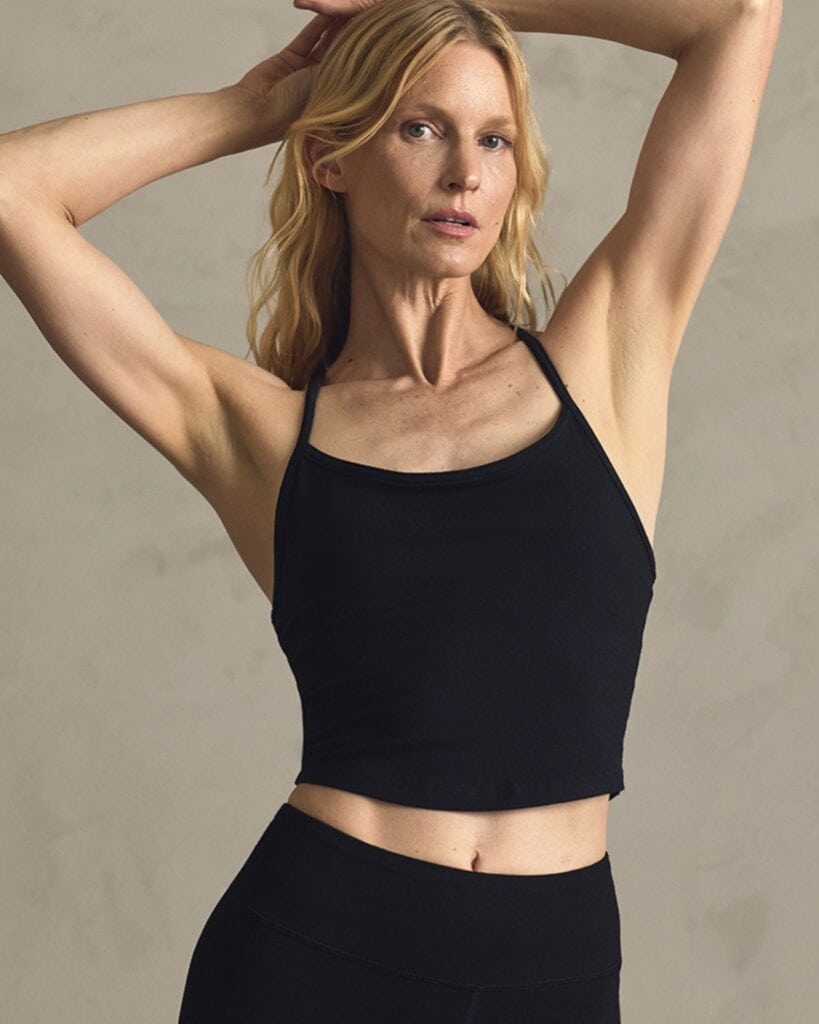
5. Pact | Best Non-Toxic Sports Bra For Low-Impact Workouts
Best For: Anyone with a smaller bust who wants an affordable organic cotton option for yoga, Pilates, walking, and everyday wear.
Use the discount code SKL15 to save 15%!
I almost left Pact’s Organic On The Go-To Shelf Bra Tank off this list because it isn’t technically a sports bra, but after wearing mine for years to yoga and Pilates, I couldn’t leave it out.
The built-in shelf bra gives just enough support for light-impact movement, especially for smaller busts, and the price makes it one of the most accessible picks here.
It’s made from 90% GOTS-certified organic cotton and 10% spandex, with a soft, stretchy racerback fit that moves easily with you.
It’s also made without PFAS or toxic dyes, which makes it an easy pick for light-impact days when I want something comfortable and supportive enough to wear well beyond the workout.
Price & Size
$28 | XS-2XL
materials
90% GOTS-Certified Organic Cotton | 10% Spandex
location/shipping
United States | Ships Internationally
Why It Made My (short) List
- Built-in shelf bra for easy light support.
- Free from PFAS and toxic dyes.
- One of the most affordable picks here.
- Great for yoga, Pilates, walking, and lounging.
My testing experience
- Worn mine for years (10+).
- Perfect support for my smaller bust.
- Comfortable for yoga and Pilates.
- Soft, stretchy, and easy to move in.
- Still one of my most-reached-for workout tops.
6. Reprise Activewear | Best High-Impact Low-Tox Sports Bra
Best For: Running, HIIT, and higher-intensity workouts, particularly for smaller to medium busts.
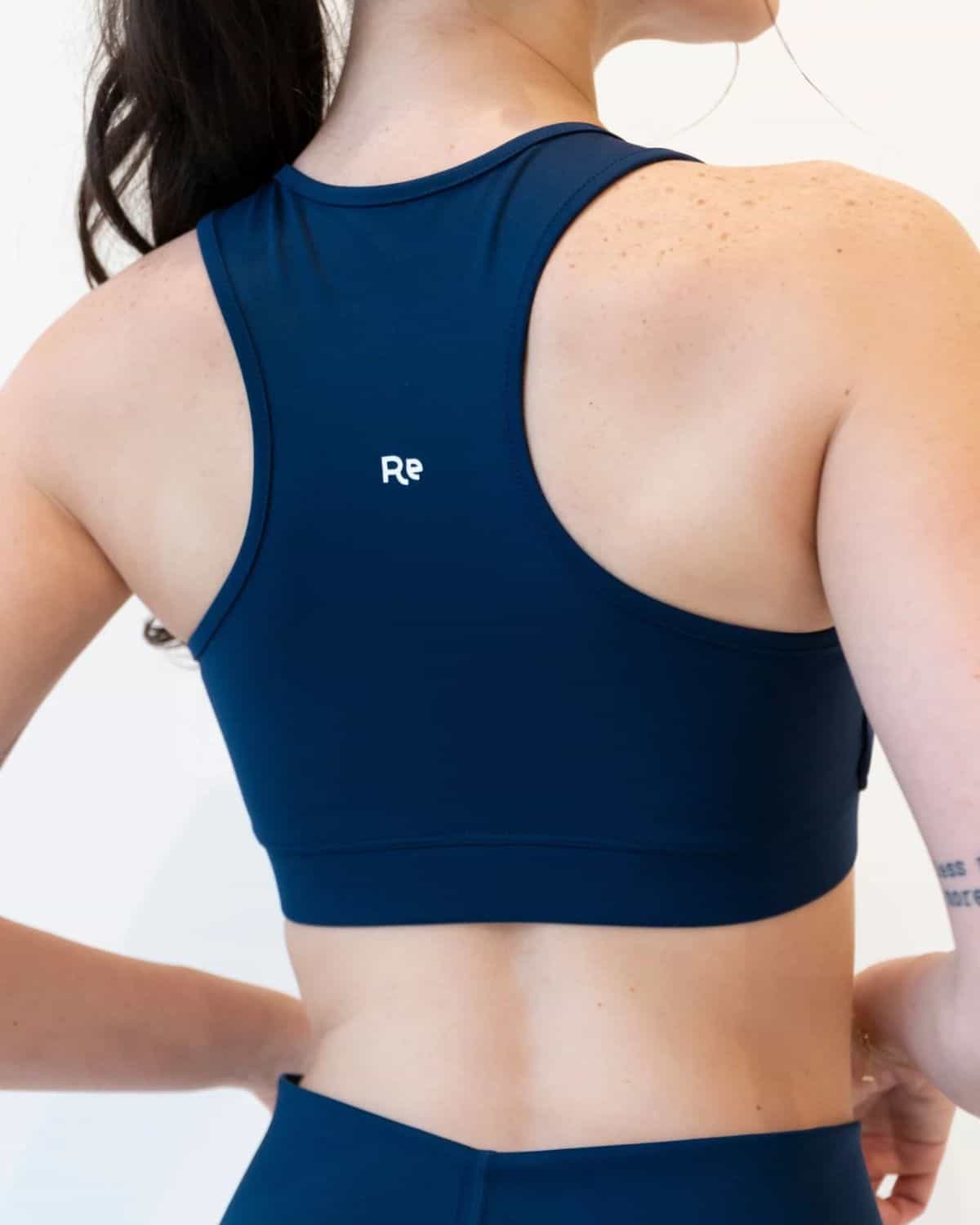
Reprise Activewear’s Fusion Bra is my top high-impact, low-tox sports bra pick after testing it for running and HIIT workouts.
It gave me the secure, supportive feel I want for higher-intensity movement without feeling heavy or restrictive.
The fabric is 85% biodegradable polyamide and 15% recycled spandex, with OEKO-TEX® Standard 100 certification and testing for more than 2,000 harmful substances.
It’s lightweight, breathable, quick-drying, and has wide racerback straps plus removable padding.
I also found the fit comfortable once I sized up, which Reprise recommends since it runs small.
Price & Size
$89 | XS-6XL | A-D Cup
materials
85% Biodegradable Polyamide | 15% Recycled Spandex
location/shipping
United States | Ships Internationally
Why It Made My (short) List
- The only true high-impact option on my list.
- Designed specifically for running, HIIT, and intense training.
- OEKO-TEX® Standard 100 certified.
- Lightweight, breathable, and quick-drying.
Why I Call It Low-Tox, Not Non-Toxic
- 85% Polyamide: A synthetic fiber, even though this version uses Amni Soul Eco® technology designed to biodegrade more readily at end of life.
- 15% Recycled Spandex: Still a synthetic stretch fiber.
- OEKO-TEX® Standard 100: Tested for more than 2,000 harmful substances.
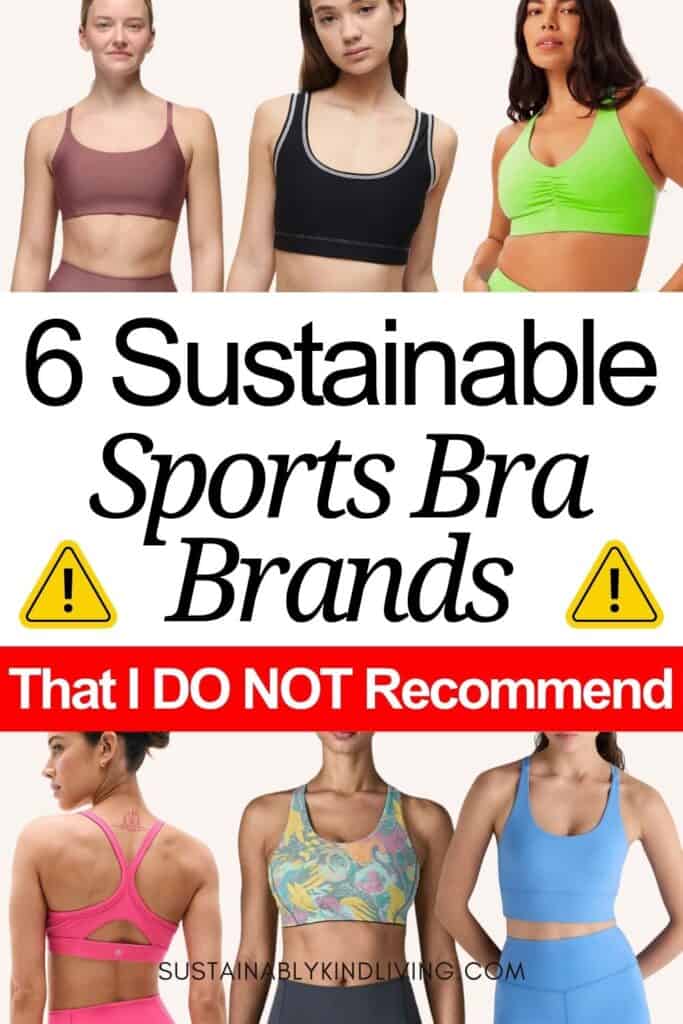
Popular Sustainable Activewear Brands That Didn’t Make This List (& Why)
Not necessarily a safety issue, a materials one.
A sports bra made from recycled polyester or recycled nylon may be a better sustainability choice than one made from virgin plastic, but recycled synthetics are still plastic-based fibers.
For this guide, I prioritized organic cotton, TENCEL™, minimal synthetics, and fabrics with stronger chemical testing and transparency.
These brands are doing some genuinely good things. Their sports bras just did not meet the material standards I used for my top picks.
Girlfriend Collective
Why It Didn’t Qualify: Their bestselling Paloma Racerback Bra is 79% recycled polyester made from post-consumer plastic bottles and 21% spandex. Girlfriend Collective has a strong sustainability story, but the bra itself is still overwhelmingly plastic-based. The brand even recommends using a microfiber filter or washing bag to help capture fibers shed during washing.
Best Alternative: Mate The Label for a stretchy, supportive sports bra made from 92% GOTS-certified organic cotton.
Quince
Why It Didn’t Qualify: The Power-Up Sports Bra is 77% recycled nylon and 23% spandex. It is also marketed as moisture-wicking, quick-drying, and antimicrobial, but the product information does not explain what creates that antimicrobial effect. Recycled content is a sustainability win, but it does not make a synthetic sports bra non-toxic.
Best Alternative: Pact for an affordable, mostly organic cotton option for yoga, Pilates, walking, and other low-impact workouts.
Athleta
Why It Didn’t Qualify: Many Athleta sports bras rely heavily on recycled polyester or recycled nylon blended with Lycra. I appreciate the use of recycled materials, but for this guide I wanted a much higher percentage of natural or better-vetted fibers.
Best Alternative: Q for Quinn if you need more coverage and support for a fuller bust without relying on a synthetic-heavy fabric blend.
Patagonia
Why It Didn’t Qualify: Patagonia is one of the more transparent conventional activewear brands, but many of its sports bras are still predominantly polyester. Some styles also use added odor-control technology such as HeiQ® Mint. I appreciate that Patagonia actually identifies the treatment, but the overall material profile still did not beat the bras that made my list.
Best Alternative: Tripulse if odor resistance is important to you. Its TENCEL™ blend naturally inhibits odor and bacteria, and mine requires far less washing.
Outdoor Voices
Why It Didn’t Qualify: The Solar Bra is 80% recycled polyester and 20% spandex. It is designed to be smooth, quick-drying, and exceptionally soft, but it is still predominantly synthetic.
Best Alternative: Pact for light-impact movement if you want a soft, stretchy feel with 90% GOTS-certified organic cotton.
prAna
Why It Didn’t Qualify: Some prAna performance bras use blends around 64% recycled nylon and 36% elastane, along with moisture-wicking properties and specialized fabric finishes. Better from a recycled-material standpoint, but far more synthetic than my top picks.
Best Alternative: Mate The Label for a fitted, stretchy sports bra that still gives you a more conventional activewear feel while using 92% organic cotton.
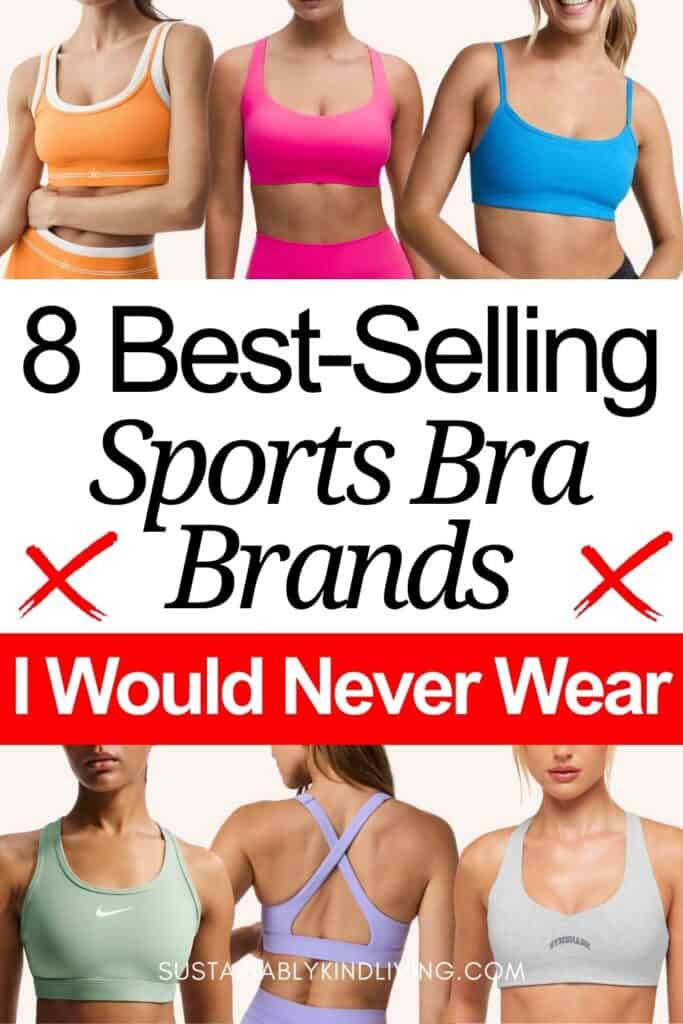
❌ Best-Selling Sports Bra Brands I Would Never Wear
Every brand on this list is built primarily from polyester, nylon, and elastane. That’s the first problem, not a footnote.
Antimony trioxide is classified by IARC as a possible human carcinogen, and research has shown it can leach out of the fiber under heat, sweat, and friction, the exact conditions your bra sits in for the length of a workout.
Polyester also sheds microplastic fibers directly against the skin. That baseline applies to every brand below.
Nike
Why It Didn’t Qualify: Center for Environmental Health lab testing found Nike sports bras with BPA levels up to 22 to 40 times California’s Prop 65 safe skin-exposure limit. BPA is a recognized endocrine disruptor.
Best Alternative: Reprise Activewear for running and other high-impact workouts.
OFFLINE By Aerie
Why It Didn’t Qualify: OFFLINE By Aerie activewear is built largely around synthetic stretch and performance fabrics. Also named in CEH’s testing round for elevated BPA in sports bras, same lab, same violation.
Best Alternative: Cottonique if sensitive skin is your priority. Its bra uses 100% organic cotton fabric with latex-free, spandex-free elastic and no synthetic fibers.
Lululemon
Why It Didn’t Qualify: Lululemon sports bras are largely built from nylon, polyester, elastane, Lycra®, and other synthetic performance materials. Under active civil investigation by the Texas Attorney General as of April 2026 over PFAS in its activewear, with the AG’s office citing “forever chemicals” tied to a brand that markets itself on wellness and safety.
Best Alternative: Tripulse if you want that silky, buttery-soft performance feel with a much more thoroughly vetted material profile.
Under Armour
Why It Didn’t Qualify: Many Under Armour bras are predominantly polyester and elastane and include performance claims such as sweat wicking and odor control. Independent testing found fluorine, a PFAS indicator, in roughly two-thirds of the sports bras tested across a set of mainstream brands that included Under Armour.
Best Alternative: Reprise Activewear for high-impact support, quick-dry performance, and odor control with OEKO-TEX® Standard 100 certified fabric.
Alo Yoga
Why It Didn’t Qualify: Alo Yoga relies heavily on synthetic proprietary performance fabrics without any third-party testing.
Best Alternative: Pact if you mainly wear Alo Yoga for yoga, Pilates, and lower-impact movement and want a much more affordable, mostly organic-cotton option.
Gymshark
Why It Didn’t Qualify: Gymshark sports bras are typically dominated by nylon, polyester, and elastane without any third-party testing or transparency around finishes.
Best Alternative: Reprise Activewear when you need true high-impact performance but want independently tested fabric.
Beyond Yoga
Why It Didn’t Qualify: Beyond Yoga is famous for its buttery-soft Spacedye fabric, but that feel comes from a blend that is predominantly polyester with elastane.
Best Alternative: Tripulse for buttery-soft activewear with a cleaner material profile.
Vuori
Why It Didn’t Qualify: Vuori’s popular sports bras rely heavily on polyester and elastane without any third-party testing or certifications.
Best Alternative: Tripulse for a similarly smooth, performance-focused feel with a much cleaner, better-vetted material profile.
Safest Materials To Look For In Sports Bras, Explained
The safest sports bra is not always the one with zero synthetic fibers.
Sports bras need stretch, recovery, and support, so I look at the entire fabric blend, how much synthetic material is being used, and what testing or certifications back up the finished fabric.
GOTS-Certified Organic Cotton
This is my first choice whenever the level of support allows for it. Organic cotton is breathable, soft against the skin, and avoids the plastic-heavy construction of conventional polyester and nylon activewear.
I especially look for GOTS certification, which goes beyond how the cotton is grown and places restrictions on dyes, processing chemicals, and textile finishing throughout manufacturing.
For a sports bra, a mostly organic cotton fabric with a small amount of stretch fiber can be a practical sweet spot between cleaner materials and actual workout performance.
TENCEL™ Lyocell
TENCEL™ Lyocell is made from wood-derived cellulose that is processed into a soft regenerated fiber. It is not the same thing as an unprocessed natural fiber like cotton, but it can be an excellent alternative to polyester-heavy performance fabrics.
What I love about it for activewear is the feel. A good TENCEL™ blend can be silky, breathable, and genuinely buttery soft, giving you more of that luxe performance-activewear feel without making polyester the primary material.
Small Amounts of Spandex or Elastane
I do not automatically reject a sports bra because it contains spandex or elastane.
A small percentage can provide the stretch, compression, and recovery a sports bra actually needs. What I try to avoid is a garment made almost entirely from polyester or nylon with additional elastane on top.
For me, 92% organic cotton + 8% spandex is a very different material profile from a bra made from 75% nylon + 25% elastane.
Natural Rubber + Organic Cotton Elastic
For readers trying to minimize synthetics even further, elastic made from natural rubber wrapped in organic cotton is one of the best options I have found.
It allows brands like Q for Quinn to create stretch and support without conventional synthetic elastic. The obvious exception is anyone with a latex allergy, who should avoid natural rubber entirely.
Better-Vetted Performance Synthetics
For true high-impact sports bras, natural fibers become much harder to work with. Running and HIIT require significantly more compression, stretch, and recovery.
In those cases, I would rather choose a synthetic performance fabric that has undergone meaningful finished-fabric testing than pretend an organic cotton bra can do a job it was never designed to do.
That is where certifications such as OEKO-TEX® Standard 100, along with specific PFAS and BPA testing, become especially important.
What I Look For Overall
My ideal sports bra is mostly organic cotton or TENCEL™, uses only as much synthetic stretch fiber as necessary, avoids PFAS and undisclosed chemical treatments, and has credible testing or certification behind the finished fabric.
The cleaner the material profile, the better, but it still has to function as a sports bra.
Toxic Materials & Finishes In Sports Bras, Explained
Most conventional sports bras are made primarily from polyester, nylon, spandex, or recycled versions of the same plastic-based fibers.
These are the materials I try to avoid or minimize whenever possible. But the fiber label is only part of the story.
Activewear can also be dyed, softened, coated, or treated to make it moisture-wicking, antimicrobial, odor-resistant, quick-drying, stain-resistant, water-resistant, or buttery soft. Brands do not always disclose exactly what was added to the finished fabric.
That is why I look at both what a sports bra is made from and what may have been added to it during processing and finishing.
Polyester
Polyester is a petroleum-derived plastic fiber and one of the main materials I try to avoid in activewear.
It can shed microplastics during wear and washing, and polyester-heavy performance fabrics may also undergo additional dyeing, softening, antimicrobial, or performance treatments.
A sports bra that is 80 or 90% polyester is very different from one that uses a small amount of synthetic stretch fiber alongside mostly organic cotton.
Nylon
Nylon is another petroleum-based synthetic fiber commonly used in sports bras because it is strong, stretchy, smooth, and quick-drying. Like polyester, it sheds microplastic fibers during washing.
Like polyester, my concern increases when nylon makes up most of the garment, and there is little information about the dyes, treatments, or chemical testing performed on the finished fabric.
Recycled Polyester & Nylon
Recycled polyester and nylon may reduce the use of virgin plastic, but recycled plastic is still plastic.
A 2025 lab study of garments from major activewear brands found recycled polyester actually shed more microplastic fibers than virgin polyester, and that the released particles were smaller.
These fibers can still shed microplastics and do not automatically tell us anything about the dyes, finishes, or other chemicals used to turn that recycled fiber into performance activewear.
PFAS
PFAS are a large group of highly persistent chemicals commonly called “forever chemicals.” They have been used in textiles to create water, oil, stain, and other resistance properties.
I specifically look for PFAS-free claims or independent PFAS testing, especially with technical performance fabrics.
BPA
BPA is an endocrine-active chemical most people associate with plastics, but independent testing has also detected BPA in some sports bras and other synthetic activewear.
That does not mean every polyester or nylon sports bra contains BPA. It does mean I give extra weight to brands that test the finished fabric for BPA instead of simply assuming it is absent.
Antimicrobial & Anti-Odor Treatments
“Antimicrobial,” “antibacterial,” and “odor control” sound great on an activewear label, but those terms tell you what the fabric does, not necessarily how it does it.
Some fabrics naturally resist odor. Others use added antimicrobial agents or biocidal treatments, such as silver or triclosan.
If a brand is using an added treatment, I want to know what it is or see meaningful testing on the finished textile.
Formaldehyde & Resin Finishes
Formaldehyde and formaldehyde-based resins can be used during textile processing to help control shrinking, wrinkling, shape, and other fabric characteristics.
Because formaldehyde is a known irritant and sensitizer, this is one reason I prefer certifications that evaluate the finished textile, not simply the raw fiber.
Phthalates
Phthalates are plasticizers associated with endocrine and reproductive concerns. In clothing, they can potentially show up in plastic components, coatings, prints, logos, and other synthetic applications rather than simply appearing on a fiber-content label.
This is another reason reading “90% cotton” does not necessarily tell you everything touching your skin.
Dyes, Softeners & Performance Finishes
Dyeing and finishing are some of the biggest blind spots in activewear.
U.S. labeling requirements do not require disclosure of finishing chemicals like formaldehyde resins, which is part of why this stays a blind spot for shoppers.
Terms like buttery soft, cooling, sweat-wicking, quick-drying, stain-resistant, and odor-resistant describe performance, but they do not tell you whether that performance comes from the fiber itself, the fabric construction, an added finish, or a combination of all three.
Those claims are not automatically red flags. Lack of transparency is.
I prefer brands that disclose their treatments, use stronger textile certifications, or provide independent testing on the finished fabric so we have a clearer picture of what is actually sitting against our skin.
Greenwashing in Sports Bras, Explained
Activewear has a health halo problem.
A brand shows a toned woman doing Pilates in a bright studio, drinking green juice, talking about movement and mindfulness and “feeling your best.”
The clothing is shot in earthy tones, the packaging is minimal, and somehow the product itself starts to feel healthy by association. Researchers have studied this exact effect in food marketing: a single wellness-coded claim makes people stop checking the actual label, not just the vibe.
None of that tells you what the sports bra is made from.
A woman can be doing everything “healthy” and still be wearing a bra made mostly of polyester, nylon, and elastane, treated with dyes and performance finishes the brand never explains.
This is where activewear marketing gets especially misleading, because wellness aesthetics and material safety are two completely different things. If this pattern sounds familiar, I go through the broader version of it in my greenwashing guide.
The “Healthy Lifestyle” Halo
Alo Yoga, Lululemon, and most premium activewear brands are built around yoga, Pilates, fitness, and self-care. That association quietly convinces us the clothing itself must be cleaner too.
It can be beautifully designed. It can perform well. It can even come wrapped in a sustainability initiative. None of that makes it a non-toxic sports bra.
Earthy Colors Aren’t Natural Fibers
Cream, sage, oatmeal, clay. A muted color palette makes a collection look natural before you’ve read a single ingredient. Flip the label, and it’s still mostly nylon, polyester, and elastane.
Shop the fiber content, not the color story.
“Sustainable” Doesn’t Mean Non-Toxic
This is probably where most of the confusion lives. A sports bra made from recycled plastic can genuinely have environmental benefits. That still doesn’t mean it’s safer to wear.
Those are two separate questions, and FTC guidance on environmental marketing claims exists specifically because brands keep blurring them.
I Want To Know Both: What problem is this material solving environmentally, and what is actually sitting against my skin while I sweat in it?
Premium Doesn’t Mean Cleaner
A $100 sports bra isn’t automatically made from safer materials than a $30 one.
Sometimes you’re paying for branding, fit, proprietary fabric tech, or marketing. Price alone tells you almost nothing about what’s touching your skin.
I’ve reviewed plenty of both ends of that range in my non-toxic fashion brand list, and the pattern holds.
My Rule
When I evaluate a sports bra, I try to strip away the model, the studio, the wellness copy, the sustainability badge. Then I ask one question: what is this actually made from?
That question alone cuts through most of the greenwashing in this category.
How I Researched, Tested, and Updated This Guide
When you read a “best” list online, it can be hard to tell whether the products were actually worn and tested or simply pulled from brand marketing and bestseller lists.
That is not how I build guides at Sustainably Kind Living. I have been researching non-toxic activewear for years, including testing more than 15 sports bras, along with non-toxic leggings and organic activewear from many of the same brands.
Every sports bra featured here had to make it through the same process before earning a spot.
1. Researching the Brand
Before ordering anything, I research the brand itself.
I look at material transparency, manufacturing, certifications, chemical testing, dyes, finishes, and whether the company clearly explains what is actually used in its activewear.
If a brand makes big “clean,” “non-toxic,” or “sustainable” claims without giving me enough information to verify them, that matters.
2. Reviewing the Entire Material Profile
I do not stop at “organic cotton” or “PFAS-free.”
I look at the full fiber composition, including spandex or elastane percentages, elastic, padding, trims, and other components when brands disclose them.
Certifications and testing are also important, especially for concerns like PFAS, BPA, formaldehyde, problematic dyes, and antimicrobial or odor-control treatments.
This helps me judge the finished sports bra rather than a single marketing claim.
3. Testing Every Sports Bra in Real Life
Every sports bra I recommend gets worn during actual workouts.
Depending on the bra, I tested them for running, HIIT, weight lifting, cycling, hiking, yoga, Pilates, walking, and everyday wear.
I paid attention to support, bounce, compression, breathability, softness, straps, band comfort, sweat, odor, fit, and how the fabric felt against my skin.
Several of these bras have also been in my wardrobe for years, which lets me evaluate something a quick try-on cannot: how well they actually hold up over time.
4. Comparing and Ranking the Final Picks
A sports bra does not earn a place simply because I liked it.
I compare the finalists against one another and look for a clear reason each one deserves to be here, whether that is fuller-bust support, high-impact performance, cleaner materials, sensitive-skin-friendly construction, buttery-soft fabric, or low-impact comfort.
That is why this list stays intentionally short.
5. Keeping This Guide Updated
This guide is not static. I continue testing new sports bras and revisiting the brands already featured as materials, certifications, formulations, and product designs change.
If I find something better, a brand changes its fabric or finishes, or one of my current picks no longer meets my standards, the list changes too.
Questions From The SKL Community, Answered!
Absolutely, but support depends on the design, your breast size, and what you are doing in it. Double layers, a firm underband, wider straps, and compression can make an organic cotton bra surprisingly supportive.
Most cotton-rich options still fall into the low-to-medium-impact range, which is why finding natural-fiber bras for running and jumping is one of the biggest complaints I found from shoppers.
This is where things get complicated. True high-impact support requires a lot more compression, stretch, and recovery than most 100% natural-fiber bras can provide.
That is exactly why I included Reprise Activewear, but labeled it low-tox rather than non-toxic.
It uses synthetic performance fibers, but the finished fabric is OEKO-TEX® Standard 100 certified. After testing it myself for running and HIIT, it is the option I would choose when high-impact support is non-negotiable.
For C-G cups and low-to-medium-impact movement, Q for Quinn is my pick. It was specifically designed for fuller busts and gives substantially more coverage than a standard cotton bralette.
High-impact support for larger breasts is still one of the biggest gaps in natural-fiber activewear.
Reader discussions from women with D, DD, DDD, and larger cups repeatedly come back to the same problem: plenty of cotton bras exist, but very few control movement well enough for running and jumping.
I think amount matters.
I look at a bra that is 90-92% organic cotton with 8-10% spandex very differently from one that is almost entirely polyester or nylon plus additional elastane.
Spandex is still a synthetic fiber, but that small percentage can give a sports bra the stretch and recovery it needs to actually function.
My preference is to keep synthetic stretch fibers as low as practical rather than demand 100% natural fibers at the expense of support
GOTS verifies organic fiber content and places requirements on processing, dyes, chemical inputs, manufacturing, and other parts of the textile supply chain. OEKO-TEX® Standard 100 focuses on testing the finished textile for a broad range of harmful substances.
Think of it this way: GOTS tells me a lot about how an organic textile was made. OEKO-TEX tells me a lot about what was found in the finished textile.
Research using human skin models found that chemicals associated with microplastics could move from sweat across the skin barrier, with more hydrated or “sweatier” skin showing greater absorption.
That study examined flame-retardant chemicals and was not a direct test of sports bras, so it does not prove that every synthetic bra is exposing you to harmful amounts of chemicals. But it does show why tight, plastic-based clothing worn against sweaty skin deserves more scrutiny.
If it is soaked with sweat, yes. Breast Research Australia notes that sweat can affect the elasticity of sports-bra materials. If the bra is not wet, they say it can generally be worn several times before washing.
This is also one reason I love Tripulse so much. Its TENCEL™ Lyocell manages moisture and odor extremely well, and I can get significantly more wear between washes. Lenzing attributes TENCEL™ Lyocell’s reduced odor development to its moisture-regulating fiber structure.
Cold water, gentle washing, and air drying. Avoid high dryer heat, which can degrade elastic and stretch fibers over time.
Breast Research Australia recommends hand washing or using a delicates bag and drying on a rack rather than in the dryer.
And skip fabric softener on performance fabrics. It can coat fibers and interfere with moisture management.
Check the elastic, not just the main fabric.
A bra can say “100% organic cotton” while still using natural rubber in the straps or underband. Q for Quinn’s Full Bust Bra, for example, uses natural rubber and is not appropriate for someone with a latex allergy.
That is exactly why Cottonique made my list. Its construction is latex-free and spandex-free, making it the option I would look at first for latex allergies or highly sensitive skin.
The band should sit firm and level around your body without riding up, your breasts should be fully contained without spilling or gaping, and the straps should stay in place without digging into your shoulders.
Red marks on the breasts, significant chafing, straps digging in, or a band that moves around are signs the fit or style needs adjusting. Breast Research Australia also emphasizes that underwire itself is not required for good breast support.
They remove two important chemical concerns, but those claims do not tell you everything about a garment. I still look at the full fiber blend, dyes, finishes, treatments, and finished-fabric testing before calling a sports bra a safer choice.
Still Deciding? Here’s a Quick Way to Choose
- Choose Q for Quinn for fuller-bust support and 100% organic cotton.
- Choose Mate The Label for a stretchy organic cotton bra for medium-impact workouts.
- Choose Tripulse for buttery-soft fabric, odor resistance, and long-term durability.
- Choose Cottonique for sensitive skin, latex allergies, and no synthetic fibers.
- Choose Pact for smaller busts and low-impact workouts like yoga or Pilates.
- Choose Reprise Activewear for running, HIIT, and true high-impact support.
My Final Thoughts on Non-Toxic Sports Bras
This guide started with one reader. Five years ago, she emailed me after a breast cancer scare and asked where she could find a non-toxic sports bra.
I had no idea that one question would turn into years of researching fabrics, emailing brands, reading certifications, questioning finishes, and testing more than 15 sports bras.
To be clear, I am not saying sports bras cause breast cancer. That is not what this guide is about. Her email simply made me start asking a question I had never really considered before: what are we actually wearing tightly against our breasts while we sweat, sometimes for hours at a time?
Five years later, I think we deserve better answers than “it’s sustainable” or “it’s moisture-wicking.”
I want to know what the fabric is made from. I want to know what was added to it. I want to know whether those buttery-soft, antimicrobial, quick-dry claims come with actual transparency. And I still need the bra to do its job.
That is why this list looks the way it does. Sometimes the best answer is 100% organic cotton. Sometimes it is TENCEL™. And when I need serious support for running or HIIT, I would rather choose a thoroughly tested low-tox performance fabric than pretend cotton can do everything.
The goal was never to find the “perfect” sports bra. It was to finally give that reader, and anyone who has asked the same question since, a clear answer about the best options we have right now.
Continue Your Non-Toxic Workout Routine
If you’re trying to build a lower-tox workout wardrobe, these guides may help next:
- Non-Toxic Yoga Mats: Safer yoga mats made without PVC, including natural rubber, cork, and organic cotton options.
- Non-Toxic Protein Powders: Cleaner protein powder picks made with simpler ingredients and fewer unnecessary additives.
- Non-Toxic Leggings: My favorite leggings made with organic, PFAS-free, and lower-tox materials.
- Organic & Non-Toxic Activewear: A broader guide to safer workout clothes, including leggings, shorts, skirts, tops, bras, and matching sets made with better materials.
- Barefoot Running Shoes: Minimalist shoes and sandals designed to support more natural movement.
📌 Save This Guide For Later
Save this guide for the next time you’re shopping for a sports bra and want to quickly check which materials, certifications, and brands are actually worth choosing.
Sources & Further Reading
If you’re like me and want to understand what’s actually going on with activewear materials, not just what brands claim, these are some of the resources I found most helpful while researching this guide:
- U.S. EPA, PFAS Explained: EPA overview of what PFAS are and where they show up in textiles.
- U.S. EPA, Triclosan: EPA data on triclosan use as an antimicrobial treatment in fabrics.
- NIEHS, Bisphenol A (BPA): NIEHS research summary on BPA as an endocrine-active chemical.
- NIEHS, Endocrine Disruptors: NIEHS overview of phthalates and other endocrine-disrupting chemicals used in consumer products.
- ATSDR, Formaldehyde ToxFAQs: Federal fact sheet on formaldehyde health effects and exposure limits.
- U.S. GAO, Formaldehyde in Textiles: Government Accountability Office report on formaldehyde levels in clothing and gaps in disclosure requirements.
- Hernandez, Nowack & Mitrano, Environmental Science & Technology: Peer-reviewed study on polyester textiles as a source of microplastics during washing.
- Environmental Science and Pollution Research, Microfiber Shedding Study: Peer-reviewed comparison of microfiber shedding from nylon, polyester, and acrylic fabrics.
- International Agency for Research on Cancer, Antimony Trioxide Summary: IARC’s classification of antimony trioxide, the catalyst used in most virgin polyester production.
- Center for Environmental Health, New Testing Shows High Levels of BPA in Sports Bras and Athletic Shirts: Independent lab testing that found BPA in Nike and other brands’ activewear at multiples of California’s Prop 65 skin-exposure limit.
- Texas Attorney General, Investigation into Lululemon Over PFAS: Official press release on the active civil investigation into PFAS claims in Lululemon activewear.
- EHN.org & Mamavation, PFAS in Athletic Wear: Independent lab testing that found fluorine, a PFAS indicator, in roughly two-thirds of sports bras tested, including Under Armour.
- Abafe et al., Science of the Total Environment / Environment International: Peer-reviewed study using 3D human skin models showing chemicals from microplastics can cross the skin barrier, with sweatier skin absorbing more.
- University of Wollongong, Breast Research Australia: Academic research group’s guidance on sports bra washing, fit, and support.
- Lenzing, TENCEL Lyocell: Manufacturer data on TENCEL Lyocell’s moisture management and odor resistance.
- Global Organic Textile Standard, How the System Works: Official GOTS documentation on what the certification covers across the supply chain.
- FTC, Green Guides: Federal Trade Commission guidance on environmental marketing claims, including textiles.
- Cowry Consulting, The Health Halo Effect: Summary of the consumer psychology research behind wellness-coded marketing claims.
I also spent time reviewing individual brand ingredient lists, restricted substances lists, and certification pages directly to understand how each sports bra is actually made, beyond marketing claims.
This post was graciously sponsored by Q for Quinn. As always, we only work with brands that we 100% stand behind. Would you like to sponsor one of our sustainable round-ups? Contact us here.

Steal My Non-Toxic Cleaning Checklist!
Believe us, it’s the BEST…. and it’s free. Does it really get any better than that?! Sign up for our newsletter and get this free checklist to clean your home without any harmful chemicals!