 Shop My Favorite Non-Toxic Gifts Of 2026!
SKL is reader supported. When you buy through links on our site, we may earn affiliate commission. Learn more here.
We’ve researched and rigorously tested the 11 safest, highest-quality organic matcha brands of 2026.
These ceremonial-grade picks are free from pesticides, heavy metals, and fillers, and sourced with transparency from trusted Japanese farms. And they’re delicious, too!

Maybe you’re switching from organic & fair trade coffee and craving something gentler in your system. Or perhaps you’ve heard about matcha’s skin-brightening benefits and metabolism support.
Either way, you’re probably here because you want that calm, focused energy that only quality matcha can deliver. But there’s a catch. Not all matcha is created equal.
Some matcha brands have tested positive for lead, arsenic, and pesticide residues.
While this would be worrisome with any tea you’re drinking, it’s extra troublesome when it comes to matcha, because you’re drinking the entire leaf, not just a steeped infusion.
Even ceremonial-grade matcha isn’t always what it seems. In fact, less than 1% of Japanese tea farms are certified organic.
That’s why finding the right matcha means looking past pretty packaging and understanding how to identify real quality.

SKL top picks, in a nutshell…
- Best Organic Matcha Brand Overall: Pique Life
- Best Nutrient-Rich Organic Ceremonial Matcha: Zuma Nutrition
- Best Organic Matcha For Everyday Use: Jade Leaf Matcha
- Best Organic Cold-Water Soluble Matcha: Matcha Ninja
- Best Organic Matcha For Lattes & Superfood Lovers: Mantra Matcha
From decoding labels and spotting greenwashing to understanding which certifications actually matter, I created this guide to help you choose matcha that’s safe, sustainable, and delicious.
I’ll walk you through the differences between ceremonial and culinary grades, how to assess matcha at a glance, and which brands are going the extra mile to test for toxins like heavy metals, pesticides, mold, and even radiation.
And of course, I’m bringing you my curated list of the top organic picks for every kind of matcha drinker, from latte lovers to busy parents to ritual-driven purists.
Why Organic Matcha Matters
One of the most surprising things I discovered while researching? Lead and arsenic contamination in matcha is more common than most people think.
Unlike regular tea, where you steep and discard the leaves, matcha is made from finely ground whole leaves.
That means you’re consuming everything. The antioxidants, the nutrients, and, unfortunately, any toxins that may be hiding inside.
So What Might Be Hiding In Your Non-Organic Matcha?
- Heavy Metals Like Lead & Arsenic: These accumulate in tea plants, especially those grown near industrial sites or using contaminated water. Since matcha is more concentrated than steeped tea, even small amounts can add up fast.
- Pesticide Residues: Non-organic farms may use synthetic pesticides that linger in the leaves and are linked to hormone disruption and long-term toxicity. Unlike other foods you can rinse or scrub, you’re drinking these chemicals directly.
- Hidden Ingredients: Some lower-quality brands cut corners with fillers, artificial sweeteners, or preservatives. The result? A bitter, less potent powder that might look like matcha but doesn’t deliver the benefits or the purity.
Matcha Isn’t Exempt From Greenwashing
Like most wellness products, matcha has become a hotspot for greenwashing.
Brands use vague buzzwords like “natural,” “premium,” or “Japanese-grown” to create the illusion of quality. But here’s the truth:
- “Natural” Has No Legal Definition: A matcha loaded with pesticides can still claim it’s natural because, technically, tea leaves come from nature.
- “Japanese Matcha” ≠ Organic: While Japan produces exceptional matcha, less than 1% of Japanese tea farms are certified organic. Sourcing location alone doesn’t guarantee safety or sustainability.
Here’s What I Look For In A Good Organic Matcha Brand
- USDA Organic: Ensures no synthetic pesticides, GMOs, or chemical fertilizers are used.
- JAS (Japan Agricultural Standards): Japan’s official organic certification, held to strict standards.
- Third-Party Test Results: Reputable brands will test for heavy metals, mold, radiation, and pesticide residues, and share those results openly.
If a brand can’t show you any of the above? That’s a big clue they might be hiding more than just bitter-tasting matcha in their pretty tin.
What Makes Matcha Truly Organic (& Safe)
Certifications Are Just The Start
USDA Organic and JAS certifications are essential, but they’re not the whole story. The most trustworthy brands go beyond certification by testing their matcha to ensure it is free from:
- Pesticides (over 200+ types)
- Heavy Metals (lead, arsenic, cadmium, mercury)
- Toxic Mold (aflatoxins, ochratoxins)
- Radioactive Isotopes (still relevant post-Fukushima)
Sourcing & Terroir Matter More Than You Think
Like fine wine or olive oil, where your matcha comes from (the “terroir”) makes a big difference.
- Volcanic soil (think regions like Kagoshima in southern Japan) delivers naturally mineral-rich nutrition and tends to be farther from industrial pollution.
- High-altitude farms reduce the need for pesticides thanks to cooler temps and less insect activity.
And these aren’t just marketing terms; they’re meaningful quality indicators backed by centuries of traditional farming wisdom.
You Can Spot Quality Matcha With Your Senses
Here’s something about matcha that no one tells you at the café counter: you can literally see, touch, and smell good matcha.
- Color: The brighter and greener, the better. Electric, vibrant green means high chlorophyll and proper shading. Dull, yellowish tones = low quality or poor processing.
- Texture: Run it between your fingers; great matcha should feel like silk. Gritty or clumpy powders mean shortcuts were taken during the grinding process.
- Aroma: Trust your nose. Quality matcha smells fresh, grassy, and clean like springtime meets sea breeze. Bitter, fishy, or hay-like smells? That’s your cue it may not be so high-quality.
Now that you know what to look for in truly organic matcha- certifications, testing, terroir, and sensory clues- let’s get to the good part!
We’ve reviewed dozens of brands to find the ones that deliver on purity, taste, transparency, and safety.
Whether you’re a ceremonial purist, a latte lover, or just looking for a cleaner caffeine fix, these 11 organic matcha picks offer something for every preference and budget.
The Best Organic Matcha Brands (Toxin-Free & Full Of Benefits)
Use this link to get 20% off + FREE Starter Kit
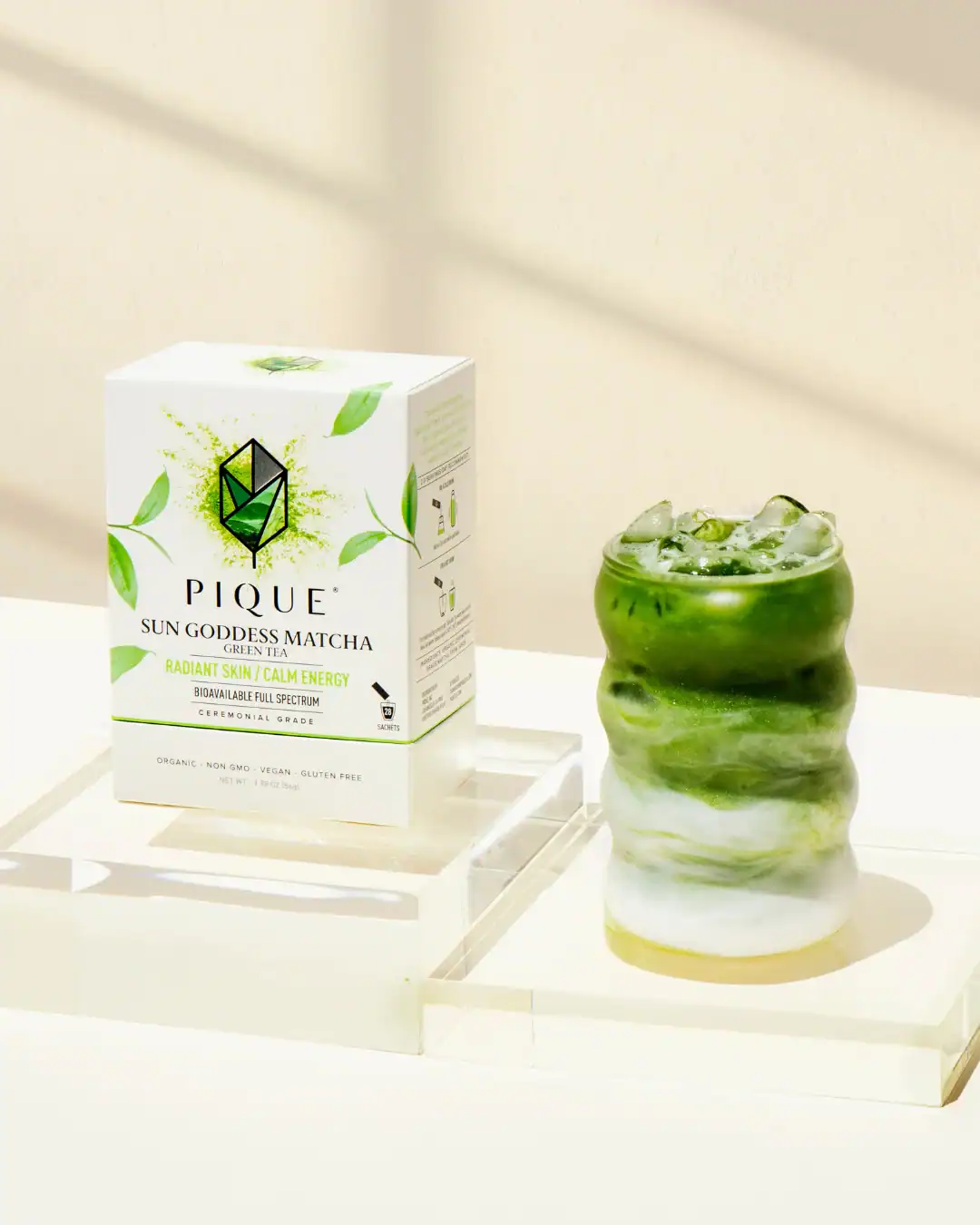
If purity tops your priority list, Pique Life’s Sun Goddess Matcha might be your holy grail.
This USDA-certified organic, ceremonial-grade powder is sourced from pristine volcanic regions in Kagoshima, Japan, far away from industrial pollution.
The tea plants are shaded 35% longer than usual, boosting chlorophyll, L-theanine, and EGCG content for radiant skin, calm focus, and metabolism support.
But what really sets this matcha apart? It’s triple toxin-tested for heavy metals, mold, pesticides, and radioactive isotopes. It’s one of the most rigorously tested matchas on the market.
Crafted by third-generation tea masters with beauty and wellness in mind, this matcha boasts a smooth, umami-rich flavor with no bitterness. It whisks into a creamy cup that feels more like a ritual than a routine.
Price
$58 (28 Sachets)
Sustainability
USDA-Certified Organic | Quadruple Toxin-Tested | Ceremonial-Grade | Traditional Japanese Production |
Location/Shipping
United States, ships worldwide
My Personal Review

I didn’t expect to taste a huge difference from my usual matcha, but one sip of Pique Life’s Sun Goddess Matcha, and I was sold.
The powder is vibrant, ultra-fine, and comes in individually sealed packets that lock in freshness (especially helpful when you’re investing in a premium product).
Compared to the Costco organic matcha I normally drink, this one is noticeably lighter, brighter, and fresher-tasting (a lovely, light grassy flavor).
I mix mine with coconut milk and a splash of vanilla extract for a creamy latte, and the included rechargeable frother makes it easy to whip up a perfectly blended, foamy cup.
The biggest surprise? My skin actually looks glowier after a week of sipping it daily.
But, just a heads up, if you’re sensitive to caffeine, you might want to start with half a packet. This matcha is pure, potent, and absolutely worth it.

Use the discount code SKL to save 15%!
Zuma Nutrition delivers premium Organic Japanese Matcha Tea Powder without the premium price tag.
Their ceremonial-grade powder is sourced from the rare 1% of Japanese farms that are USDA-certified organic.
It’s stone-ground from first-harvest leaves to preserve nutrients, L-theanine, and flavor.
Each batch is tested under strict GMP standards for heavy metals, pathogens, solvents, and more—proving you don’t have to sacrifice safety to save money.
The taste? Smooth, earthy, and slightly sweet with no harsh bitterness—perfect for your morning matcha ritual or an afternoon energy boost.
Price
$44.95 for 30g | Subscription Discounts Available
Sustainability
USDA-Certified Organic | Sourced From Traditional Japanese Tea Makers | Third-Party Lab Tested | Small Batch Production | No Artificial Flavors, Preservatives/Fillers
Location/Shipping
United States, ships to Canada, Switzerland & Norway

Jade Leaf Matcha is the kind of matcha brand that makes going organic feel easy.
Sourced from the Kizuna Tea Collective, a network of small family farms across Japan, Jade Leaf Matcha blends first-harvest leaves for a smooth, well-balanced ceremonial experience.
It’s USDA-certified organic, non-GMO, and tested both in Japan and the U.S. to confirm safety from lead, cadmium, and radiation.
Their Organic Ceremonial Matcha has a gorgeous, vibrant green hue and a creamy, nutty flavor that works beautifully in lattes or traditional whisked preparations.
With single-serve sticks, affordable kits, and a 100% satisfaction guarantee, it’s an approachable pick for anyone new to matcha, or looking for a solid everyday staple
Price
$25.95 (15-30 Servings) | $57.95 (50-100 Servings)
Sustainability
USDA-Certified Organic | Ceremonial-Grade | Lab-Tested
Location/Shipping
United States

Mantra Matcha adds a fun twist to your matcha routine, without compromising quality.
Their blends start with Super Premium Ceremonial-Grade Matcha from small Japanese farms and layer in organic superfoods like turmeric, cacao, beetroot, rosehip, and goji berry.
They have super-fun flavor combinations like Strawberry Lemon Matcha for immune support or Cinnamon Goji Berry Matcha for brain and heart health.
Each blend is 100% natural and free from sweeteners, artificial flavors, or fillers. Just pure matcha and purposeful plants.
Despite the bold flavors, the base matcha shines through, smooth, vibrant, and delicious on its own or as a latte. It’s wellness with personality.
Price
$45 (1 Pack) | $100 (3 Pack) | Subscription Discounts Available
Sustainability
Organic Superfoods | Clean-Label & Non-GMO | Internally Tested For Safety | Small Batch Production | No Artificial Flavors/Sweeteners | KETO-Friendly
Note: Base matcha is pesticide-free & shade-grown, though not JAS certified
Location/Shipping
United State

With 20+ years of sourcing expertise, Rishi Tea & Botanicals knows a thing or two about quality, and their Teahouse Matcha proves it.
Sourced directly from organic farms in Kyushu, Japan, this USDA-certified organic ceremonial matcha is shade-grown and stone-ground from first-harvest tencha.
The flavor? Balanced and vibrant with mellow grassiness, a touch of umami, and just enough sweetness.
Rishi Tea & Botanicals matcha is regularly tested in-house and through third parties to ensure it’s lead-free and pesticide-free.
Independent labs (including ConsumerLab) have found no detectable contaminants.
It’s a fantastic choice for those starting a daily matcha routine. Refined enough to whisk straight, but budget-friendly enough for creamy lattes and smoothies.
Price
$78.50 (50+ Servings)
Sustainability
USDA-Certified Organic | Certified Kosher | In-House & Third-Party Testing |
Location/Shipping
United States, ships to Canada

Aprika Life doesn’t just sell matcha, they tell a story with every scoop.
This farm-direct Organic Japanese Green Tea Powder is grown by the Yamada family in Yokkaichi, Japan, on an 800-year-old estate overlooking Ise Bay.
That heritage shows in the vibrant, creamy taste and bright green color that rivals the best in the world.
Their matcha is USDA and JAS-certified organic and independently tested for over 250 agricultural chemicals, radiation, and heavy metals.
It’s smooth enough for ceremonial prep but affordable enough for daily lattes. And because AprikaLife cuts out the middlemen, you get top-tier matcha at a fraction of the usual price.
Price
$9.99 for 1oz | $84 for 1.1lb | Subscription Discounts Available
Sustainability
USDA & JAS Certified Organic | Lab-Tested For Purity | Cafe-Grade
Location/Shipping
United States, ships to Panama

Encha Matcha was one of the first brands to make organic matcha mainstream, and their commitment to safety and quality hasn’t wavered.
Their Latte Grade Matcha Powder is grown on USDA-certified organic farms in the hills of Uji, Japan, and harvested during the spring’s first flush for peak flavor and nutrients.
Founder Li Gong is fanatical about transparency. Each batch is tested for heavy metals, radiation, and pesticide residues, with full lab reports available on their site.
Encha Matcha passed ConsumerLab’s independent tests with flying colors.
Flavor-wise, it’s grassy-sweet with smooth umami—never bitter, never dull. Even their “latte grade” uses first-harvest leaves, so you’re getting premium quality at every level.
Price
$17.95 (15 Cups) | $119.95 (250 Cups) | Subscription Discounts Available
Sustainability
USDA-Certified Organic | Grown In Japan | Extensively Tested
Location/Shipping
United States

Cymbiotika brings their gold-standard supplement philosophy to matcha, with stunning results.
Their Organic Matcha Powder is sourced from multi-generational family farms in Uji and Kagoshima, Japan.
These volcanic regions are nutrient-dense and naturally shielded from environmental toxins.
Every batch is third-party lab tested and reviewed by Cymbiotika’s board of health professionals.
That means no pesticides, heavy metals, or other sneaky additives—just clean, vibrant matcha that tastes as good as it feels.
It blends beautifully into lattes, with zero bitterness and a mellow sweetness that makes mornings feel luxurious.
Plus, their eco-conscious packaging and subscription options make it easy to stay stocked.
Price
$44 (30 Servings) | Subscription Discounts Available
Sustainability
USDA-Certified Organic | GMP-Certified | Ceremonial-Grade | Third-Party Tested For Toxins | No Artificial Flavors/Preservatives
Location/Shipping
United States, ships to Switzerland

Matcha Ninja lives up to its name with a sleek, no-fuss approach to matcha.
This Matcha Ninja ceremonial-grade powder is ultra-fine and actually dissolves in cold water, so there’s no whisking, clumping, or gritty texture. Just scoop, shake, and sip.
It’s grown in pristine, high-altitude Japanese farms, where longer shading boosts chlorophyll and L-theanine levels for calm focus and glowing skin.
The vibrant green hue and naturally sweet taste speak for themselves.
But what really earns Matcha Ninja its stripes? Every batch is USDA, Canadian, and EU-organic certified, and third-party tested at Eurofins for heavy metals, pesticides, and radiation. COAs confirm undetectable levels of lead, mercury, and more.
It’s 100% pure. No sweeteners, no fibers, no starches. Just smooth, super-soluble matcha for on-the-go rituals.
Price
$34.99 (70 Servings) | Subscription Discounts Available
Sustainability
USA/Canadian/EU-Certified Organic | Ceremonial-Grade | Third-Party Tested | No Fillers, Sugar/Flavorings
Location/Shipping
United States

Don’t let the influencer branding fool you, Emma Chamberlain Coffee’s matcha is the real deal.
Sourced from Shizuoka, Japan (a region with 750+ years of tea-growing tradition), this Organic Matcha Green Tea Powder is grown in mineral-rich soil under solar-shaded fields.
It’s a beautifully vibrant matcha with a smooth, nutty, slightly earthy flavor that’s ideal for first-timers.
Chamberlain Coffee’s matcha is USDA-certified organic, vegan, gluten-free, and tested in Japan for heavy metals and radiation.
There are no additives or fillers, just clean, plant-based energy in every tin.
Behind the scenes, the brand collaborates with expert tea masters to make sure every batch is top quality.
Cool factor aside, this is a genuinely solid ceremonial matcha that happens to come with excellent vibes.
Price
$29.95 for 1.06oz
Sustainability
USDA-Certified Organic | Ceremonial-Grade A | Tested In Japan
Location/Shipping
United States

Golde’s Pure Matcha is a smooth operator, especially if you’re big on lattes.
Sourced from Uji, Japan (the birthplace of matcha) this ceremonial-grade powder is shade-grown and cold-processed to retain maximum antioxidants and flavor.
The result? A mellow, slightly sweet flavor with no bitterness—perfect with oat milk or sipped on its own.
It’s so smooth, that New York Magazine named it “Best Matcha Powder for Lattes.”
Golde is a black-owned, Brooklyn-based brand on a mission to make superfood wellness more inclusive.
Their matcha is a shining example. It’s certified organic, lab-tested for toxins, and totally free of additives.
Expect a clean energy lift (around 60mg caffeine) and a deliciously easy ritual that fits into any morning routine.
Price
$28 for 1.4oz | Subscription Discounts Available
Sustainability
Organically Grown In Uji, Japan | Certified Radiation-Free & Heavy Metal-Free | Independently Tested | Ceremonial-Grade
Location/Shipping
United States
Tips For Choosing The Best Organic Matcha
Visual Quality Clues: What Premium Matcha Should Look Like
- Color = Your First Clue: Bright, electric green is the gold standard. Think vibrant jade, not dusty olive. This hue means the tea was properly shade-grown and freshly ground. Jade Leaf Matcha ceremonial grade gets this exactly right. If it looks like dried oregano? Keep walking.
- Texture = Processing Quality: Rub a little between your fingers. It should feel silky—finer than flour, almost weightless. Gritty or clumpy means poor grinding. Chamberlain Coffee’s matcha, for instance, practically disappears in water without a whisk. That’s the power of proper stone milling.
- Scent = Freshness Factor: Fresh matcha smells alive: grassy, sweet, and softly creamy. If it reminds you of kinako (roasted soybean flour), like Golde’s matcha does, you’re on the right track. If it smells musty, bitter, or like wet cardboard… it’s past its prime.
- Packaging = Longevity Promise: Matcha is delicate. Look for airtight, opaque containers that shield it from light and air. Jade Leaf Matcha’s tall tins help prevent spills, while Golde’s screw-on lid slows the “matcha cloud” that escapes when you open it too quickly. Bonus points for freshness seals.
Choose Based on Your Matcha Personality
- The Ceremonial Purist: You love ritual and savoring flavor nuance. Look for small-batch, first-harvest matcha from brands like Aprika Life or Ippodo Tea. These require proper whisking but offer a complex, traditional experience worth slowing down for.
- The Latte Lover: You’re all about cozy mornings and creamy blends. Jade Leaf’s Organic Ceremonial Matcha or Cafe Style blend was practically made for oat milk. Smooth, rich, and easy to froth—no bitterness here.
- The Busy Bee: You need a matcha that fits your hustle. No whisk? No problem. Matcha Ninja’s super-soluble formula dissolves instantly in hot or cold water, making it perfect for water bottles, gym bags, or travel mugs.
- The Wellness Stacker: You want more bang per scoop. Sprout Living’s Mindful Matcha adds functional mushrooms and adaptogens like lion’s mane and ashwagandha to organic matcha, creating a multi-benefit boost for mind and body.
Red Flags To Avoid When Shopping For Organic Matcha
❌ No USDA Organic Seal/Third-Party Testing: If a brand can’t prove it’s organic or show test results, skip it. Trustworthy companies like Pique Life and Cymbiotika wear their certifications as a badge of honor and often publish their COAs online.
❌ Buzzwords Without Receipts: “Premium.” “All-natural.” “Traditionally crafted.” These sound nice but mean nothing without details. Always ask: What grade? Sourced where? Tested how? Vague language often hides subpar tea.
❌ Too Good (& Cheap) To Be True: High-quality matcha takes time, skill, and care—from shading the leaves to stone-grinding by hand. If a tin costs $8 and doesn’t list the farm or region, you’re probably buying mass-produced powder with cut corners.
❌ Dull Color, Gritty Texture/Harsh Flavor: These are dead giveaways of poor processing or low-grade leaves. In Food & Wine tests, even “Grand Cru” matcha from David’sTea couldn’t froth properly and clumped on contact. Quality matcha should be vibrant, fine, and smooth.
❌ Poor Reviews From Pros: When trained tasters say matcha has “flat, single-note flavor” or “gets lost in lattes” (like Tenzo did), take the hint. Expert reviews aren’t just snobby—they’re your cheat sheet for avoiding disappointment.
How to Prepare Organic Matcha for Maximum Benefits
- Temperature Is Everything: Matcha is delicate. Use water between 140–150°F, never boiling. Boiling water will scorch the leaves and destroy the very compounds you’re paying a premium for. I use a non-toxic tea kettle with a temperature gauge to ensure I don’t overheat my water.
- Whisk Like You Mean It: Forget stirring in circles. Use a Z or W motion for 20 seconds to fully suspend the powder and create that silky froth. It’s not just tradition, it’s science. Froth = flavor + mouthfeel.
- Always Sift First: Even the highest-grade matcha can clump. Run it through a fine-mesh strainer before whisking to avoid bitter lumps. (Ask me how I learned this after ruining a $40 tin.)
Storage Tips To Keep Your Matcha Fresh
Proper storage can make or break your matcha. Here’s how to keep it vibrant from the first scoop to the last:
- Go Airtight & Opaque: Light and air are matcha’s enemies. Transfer foil pouches to a sealed, opaque tin ASAP. Caraway makes some great non-toxic food storage options that are great for keeping your matcha fresh.
- Store It Cold (But Smartly): Once opened, refrigerate your matcha in an airtight container. Just let it come to room temp before unsealing. Condensation can ruin the powder.
- Portion With Purpose: Keep a smaller amount in a separate tin for daily use. This reduces air exposure to your main stash. (Trust me, watching ceremonial-grade matcha go bad is a special kind of heartbreak.)
Is organic matcha really worth the higher price?
Yes! Especially when it’s been tested for toxins.
High-quality, certified organic matcha is grown without synthetic pesticides or chemical fertilizers, and reputable brands go even further by screening for heavy metals, mold, and radiation.
This matters because matcha is made by consuming the entire tea leaf, meaning any contaminants aren’t filtered out, you ingest them directly.
Investing in organic matcha ensures you’re getting the clean, nutrient-rich product that people seek out for its wellness benefits in the first place.
If matcha is a part of your everyday routine, organic options are well worth the upgrade.
How do I know if a matcha is truly organic?
Start by looking for the USDA Organic or JAS (Japanese Agricultural Standard) certification on the label. These are the gold standards.
Next, check whether the brand provides third-party lab testing for pesticides, heavy metals, and radiation. Truly transparent companies often publish Certificates of Analysis or provide them upon request.
You’ll also want to review the sourcing information:
- Is it grown in Japan?
- Do they mention the region, the farm, or the harvest process?
Generic claims like “all-natural” or “clean” don’t mean much unless they’re backed by real data.
Lastly, be wary of ultra-low prices. Quality organic matcha is rare and resource-intensive to produce, so unusually cheap powders often signal lower standards or cutting corners.
What’s the difference between ceremonial and culinary grade matcha?
Ceremonial grade matcha is made from the youngest, most tender tea leaves picked during the first harvest.
It’s vibrant green, naturally sweet, and smooth with very little bitterness. Perfect for whisking into hot water and sipping traditionally.
Culinary grade, on the other hand, is usually made from later harvests. It has a bolder, more astringent flavor designed to hold up in lattes, smoothies, or baking. That doesn’t mean it’s “bad,” it’s just formulated for a different use.
For drinking straight, ceremonial is best. For blending with milk or adding to recipes, culinary matcha works beautifully and is often more affordable
Why are some matcha powders so cheap compared to others?
Lower prices often come from cutting corners in sourcing, farming, and testing. Cheap matcha may be harvested later in the season when leaves are tougher and less nutrient-dense.
It’s often grown with synthetic pesticides and fertilizers, then minimally tested (if at all) for heavy metals or other contaminants.
The result can be a duller green powder with a fishy, bitter taste, and a bigger health risk. Some budget matchas also include fillers, added sugars, or anti-caking agents that dilute the benefits.
My Final Thoughts – Why Organic Matcha Is Worth It!
After all this testing, researching, and sipping, I can confidently say this: Organic matcha isn’t a luxury, it’s essential. When you drink matcha, you’re consuming the entire leaf. That means everything (good or bad) goes in.
Choosing certified organic, third-party tested matcha means saying no to pesticides, heavy metals, and shady sourcing. And saying yes to clean, focused energy and antioxidants you can actually feel.
But it’s not just about you. Every time we support those rare, certified organic farms, we’re keeping 800 years of tea tradition alive.
Yes, good matcha costs more. But remember, you’re investing in clean ingredients, better energy, and real peace of mind.
When you choose truly organic, tested matcha, you’re choosing transparency over toxins, and wellness that doesn’t cut corners.
This post was graciously sponsored by Pique Life. As always, we only work with brands that we stand behind. Would you like to sponsor one of our sustainable round-ups? Contact us here.
Explore more of our incredible Non-Toxic Kitchen articles:
- Non-Toxic Food Processors & Choppers
- Non-Toxic Baking Sheets & Bakeware
- Non-Toxic Coffee Makers & Machines
- Non-Toxic Toasters & Toaster Ovens
- Organic & Fair Trade Coffee Brands
- Our Place Wonder Oven Review
- Great Jones Cookware Review
- Stainless Steel Cookware Sets
- Non-Toxic Cooking Utensils
- Non-Toxic Waffle Makers
- Non-Toxic Rice Cookers
- Our Place Titanium Pan
- Non-Toxic Dutch Ovens
- Non-Toxic Tea Kettles
- Non-Toxic Cookware
- Non-Toxic Loaf Pans
- Non-Toxic Fish Pans
- Non-Toxic Steamers
- Non-Toxic Blenders
Like It? Pin It!


Steal My Non-Toxic Cleaning Checklist!
Believe us, it’s the BEST…. and it’s free. Does it really get any better than that?! Sign up for our newsletter and get this free checklist to clean your home without any harmful chemicals!







Sadly, Pique matcha tested positive for heavy metals just this year (2025).
We’re aware of a chart published by Tamara Rubin (Lead Safe Mama) comparing heavy metal levels in various matcha powders, including Pique’s Sun Goddess Matcha.
It’s important to clarify:
No lab report has been publicly shared for the Pique sample, unlike the Matcha.com test which includes full documentation from SimpleLab.
We are not questioning that a test may have been run, but without a full report, there’s no way to confirm:
The product’s origin or harvest batch
Chain of custody or sample handling
Which lab ran the analysis, or whether the values meet safety thresholds defined by regulatory bodies
At Sustainably Kind Living, we personally tested and verified Pique’s Sun Goddess Matcha before recommending it. Pique also:
Publishes third-party COAs
Triple-screens for heavy metals, pesticides, and mycotoxins
Sells a USDA Organic, shade-grown, first-harvest product sourced from Japan
We’ll continue to monitor all claims with transparency and care. If Tamara publishes the full Pique lab report, we’ll review it in detail and update our readers accordingly. Until then, we encourage consumers to make decisions based on full lab documentation—not partial charts without sourcing context.
Your trust means everything to us.
I asked Rishi about test results and they replied that they do not share them with the public, so it sounds like the results are not something they’re proud of. I’ve read that many tea companies commonly do third party testing do, but do not share the results because they are not impressive. They only have to say they test, they do not say the results are good. Very disappointing because I enjoy Rishi Ceremonial Matcha.